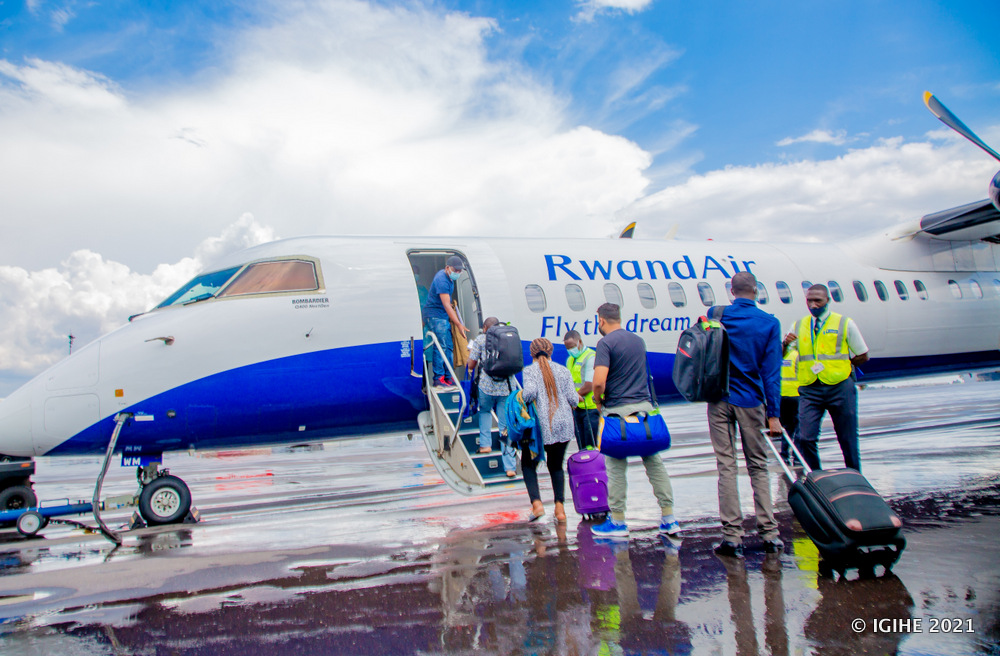
The flight to Goma is an addition to other DRC destinations including Kinshasa and Lubumbashi.
It is expected that RwandAir will be conducting bi-weekly flights to Goma on Monday and Wednesday.
The maiden flight to Goma on Friday saw the airline carrying 33 passengers traveling to Goma for different purposes.
Passengers expressed delight for the launch of flights to Goma noting that they will no longer use land transport in urgent situations.
Patrick Nzoloka who was among passengers flying with RwandAir to Goma said that he was would travel through Ethiopia to reach Goma in some instances. He explained that the new destination comes in handy to facilitate movements.
“I usually travel from Goma to Dubai through Addis Ababa. It is my first time flying with RwandAir from Kigali to Goma. This development will help Congolese nationals flying to different destinations particularly Nigeria, Benin and Kenya among others,” said Nzoloka.
In March 2019, Rwanda and DRC signed agreements to open airspace which saw RwandAir commencing flights to Kinshasa and vice versa.
Later in April 2019, RwandAir started operating three flights per week from Kigali International Airport to N’Djili International Airport in Kinshasa.
Recently in June 2021, both countries also signed three cooperation agreements on the promotion and protection of investments, avoidance of double taxation and tax evasion between the two countries as well as a memorandum on gold mining.
The launch of new flight to DRC is expected to further ease movements and give a significant boost to trade between both countries.
Operating from Kigali, RwandAir is one of the world’s fastest growing airlines and operates one of the youngest state-of-the-art fleets on the African continent.
With a reputation for delivering a premium service to all its customers, RwandAir operates 12 aircraft with an average age of just under six years. The airline currently offers services to 25 destinations across 21 countries throughout Africa, Europe, the Middle East and Asia.
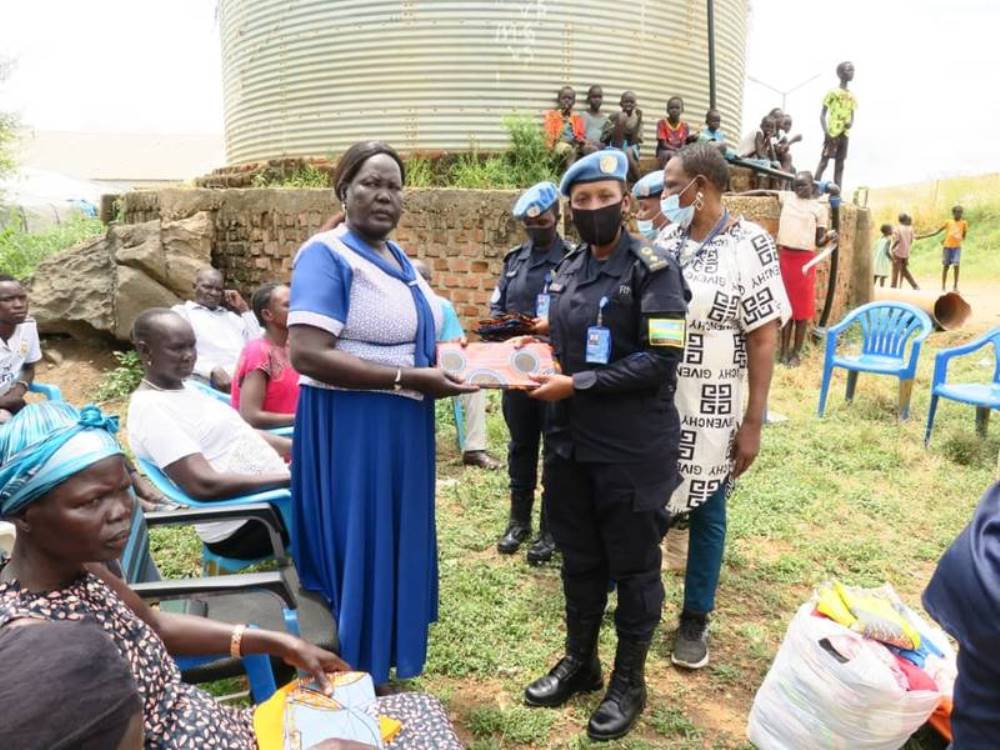
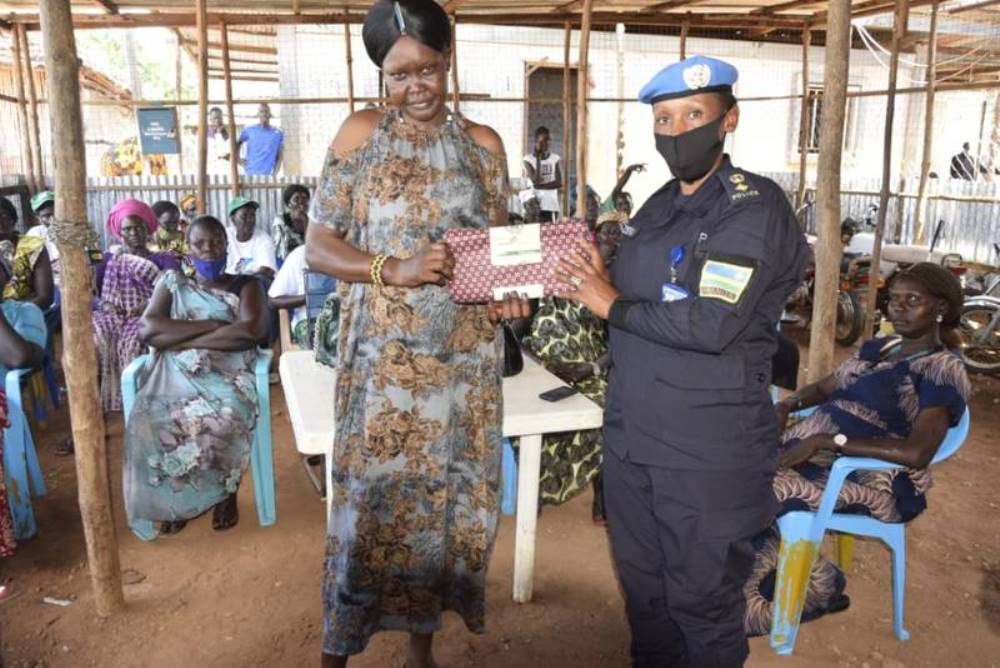
The donations handed over separately on Thursday and Friday, were extended to women forums in two internally displaced camps in Juba.
Rwanda FPU-3 contingent commander, Senior Superintendent of Police (SSP) Jeannette Masozera, handed over the items, which falls under the contingent’s human security and community assistance programme.
The handover of the items to beneficiaries in IDP camp 3 on Friday, October 15, preceded a community work–Umuganda–where the Rwandan peacekeepers joined the local police to improve cleanliness around Yei check-point police station.
Yei police station handles the policing matters of the displaced persons in the two camps in the area.
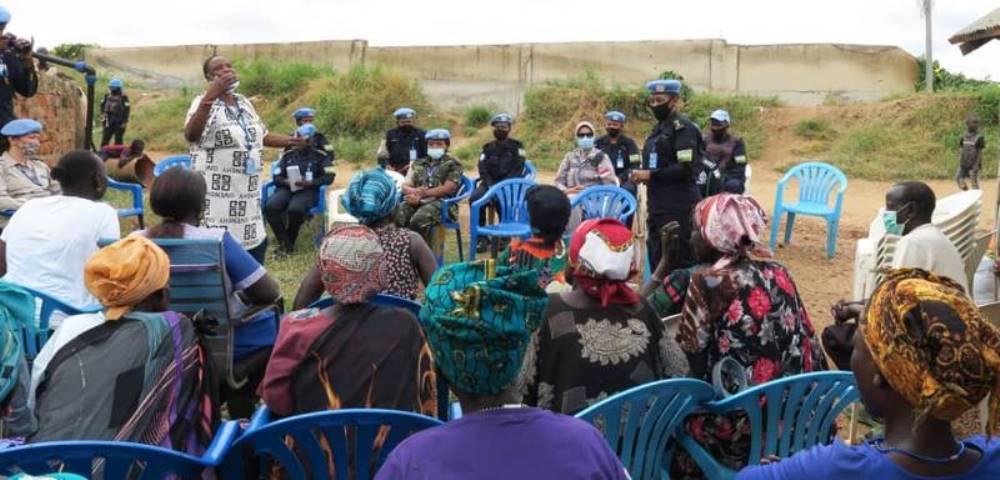
The handover of the donations also provided platforms to educate the women on fighting breast cancer, women empowerment, child protection, early marriage, and to encourage them to actively engage in peace and conflict resolution programmes.
“Young girls are facing challenges related to sexual violence and early marriage. In most cases, these are forced marriages where parents have a hand. These are young girls, whose future is shattered. As mothers, give your young daughters hope, protect them, encourage them to go to school,” SSP Masozera told members of the displaced women groups.
The women were further enlightened on life-threatening risks under such circumstances like complications while giving birth, depression, and suicide.
SSP Masozera encouraged them to break the traditional norms that influence early marriages and to form anti sexual and gender-based violence forums to discuss and act against such human rights violations.
Dr. Joseph Ndamiye Rugazura, the Chief Medical Officer for Rwanda FPU-3, educated the women on signs of breast cancer such as swelling of part of the breast, pain, and flaky skin and encourage them to always go for early medical checkup.
The statement released last night also shows that 80 people caught the virus out of 9748 sample tests while the positivity rate stands at 0.8%.
The death toll remains at 1313 since the pandemic emerged in March last year.
A total of 1,718,424 have been fully vaccinated while 2,828,443 received the first dose of COVID-19 since Rwanda began countrywide inoculation program on 5th March 2021.
Coronavirus symptoms include coughing, flu, and difficulty in breathing. The virus is said to be transmitted through the mucous membranes of the respiratory tract.
Rwandans are urged to adhere to COVID-19 health guidelines, washing hands frequently using soaps and safe water, wearing face masks and respecting social distancing.
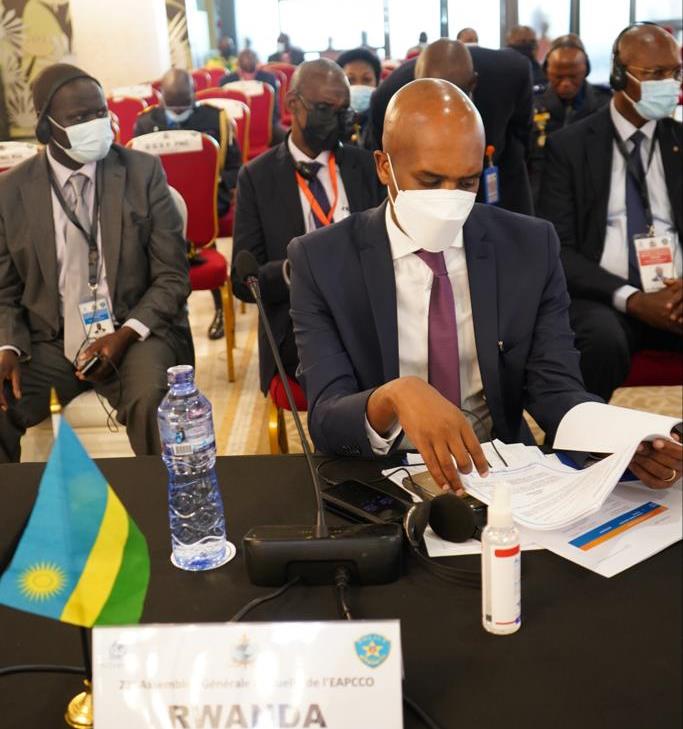
The meeting for Council of Ministers responsible for Police affairs in the 14-member countries, preceded the Council of Police Chiefs held on Thursday under the theme “Enhancing law Enforcement Strategies in Combating Transnational Organized Crimes in the Wake of COVID-19 and Beyond.”
EAPCCO member states are Burundi, Comoros, Democratic Republic of Congo (DRC), Eritrea, Ethiopia, Kenya, Rwanda, Seychelles, Somalia, South Sudan, Sudan, Tanzania and Uganda.
The ministers appreciated EAPCCO member countries for their effort in combating terrorism and transnational organized crimes through enhanced cooperation and collaboration.
While officially opening the meeting, the Prime Minister and Chief of Government for DRC, Jean-Michel Sama Lukonde, emphasized the importance of sub-regional organizations in the fight against transnational organized crimes.
“There is need to foster cooperation and to build capacity of law enforcement officers, continually share information and conduct due diligence on suspects,” Lukonde said.
He commended member countries for the continued support to DRC President, Félix Antoine Tshisekedi Tshilombo in his roles as the current President of African Union.
DR Congo took over the chairmanship for both councils of Police Chiefs and ministers responsible for the Police affairs, from Tanzania.
The ministers welcomed the decision by the Council of Police Chiefs to elevate the Marine Police College in Mwanza, Tanzania to EAPCCO Centre of Excellence in Maritime Police training.
DR Congo was also given the responsibility to establish a regional operation unit under EAPCCO Counter Terrorism Centre of Excellence (CTCoE) to collect, analyze and disseminate terrorism related information for action.
Other resolutions include expediting EAPCCO Centers of Excellence by host countries, strengthening sharing of crime-related information on transnational organized crimes and heightening the use of Interpol policing capabilities to facilitate the process.
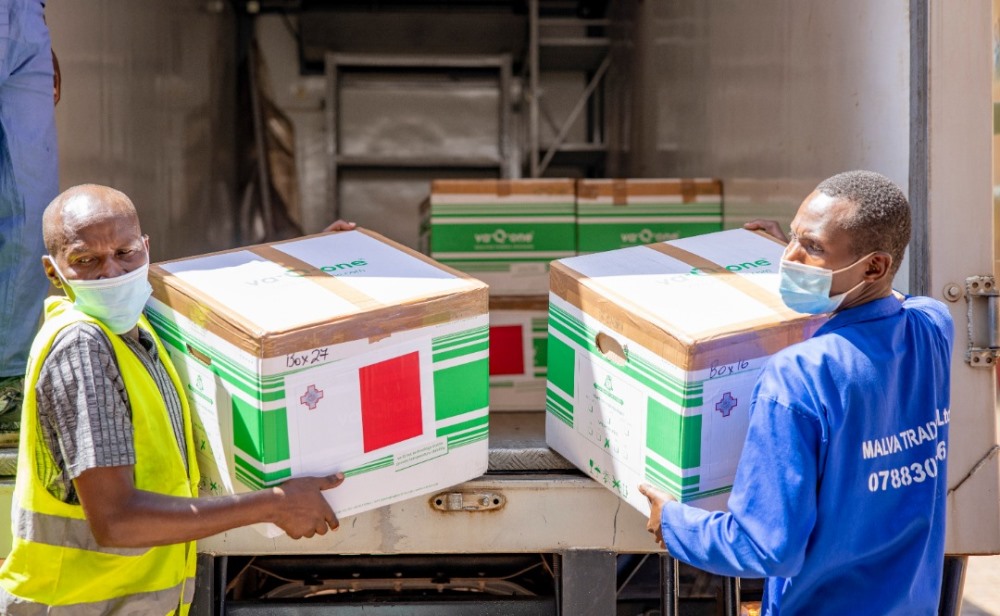
The Ministry of Health has revealed that received vaccines are set to be directly distributed across different districts in an ongoing effort to vaccinate Rwandan residents.
Since March 2021, Rwanda has been receiving vaccine doses through COVAX initiative, donations from partner countries or direct purchases.
The Ministry of Health recently announced that more than 21% of the target population of 7.8 million people (representing 60% of the Rwandan population) is fully vaccinated against COVID-19.
As of today; a total of 1,712,081 people have been fully vaccinated while 2,865,234 received the first dose of COVID-19 since Rwanda began countrywide inoculation program on 5th March 2021.
The country targets to have vaccinated 30 percent of the population by December 2021 and 60% by June 2022.
The number of new COVID-19 cases has been decreasing gradually which is considered a great milestone towards defeating the pandemic.
However, citizens are reminded of the critical importance of adhering to COVID-19 health guidelines, washing hands frequently using soaps and safe water, wearing face masks and respecting social distancing to consolidate gains.
In the United States, rumors are circulating that the COVID vaccine is the “mark of the beast.” This apocalyptic biblical term is from Revelation 13 and is usually interpreted as being attached to Satan and subsequently diverging from God. Additionally, people regardless of religious background frequently encounter the question – does the COVID-19 signify “the end of the earth?”
Shincheonji Church of Jesus, the Temple of the Tabernacle of the Testimony, announced that it will hold a round of weekly seminars titled, “Testimony on Prophecy and Fulfillment of Revelation, God’s New Covenant” from October 18th to December 27th.
The seminars, broadcasting live on YouTube, will provide explanation of prophecies recorded from every chapter of Revelation based on the 5W1H (who, what, when, where, why, how) method. The lecturers include Chairman Lee Man-hee, who has said that he is a witness who saw and heard all the events of the book physically fulfilled in the real world (Revelation 22:16).
Previously, the SCJ Word Seminar held in August attracted 1,700 pastors and 28,000 people globally.
“The number of participants at this time reflects their interest and effort to understand the words of Revelation consistently with the words of the rest of the books of the Bible,” said Mr. Kim Shin-chang, General Director of the International Mission Department of Shincheonji Church.
The Shincheonji Church also added that the book of Revelation is written in parables and has not been explained through the real world, but instead only through human thoughts and non-biblical speculative theories which has misguided believers and instigated social disorder. The church also emphasizes that understanding the true meaning of the book of Revelation is to see how the prophecies expressed in parables have been physically fulfilled in the world today according to the Bible.
When the first Covid-19 vaccines landed in the Rwandan capital Kigali on March 3rd, the country was ready.
Within an hour, the vaccines reached the health ministry’s central warehouse, where vehicles from the country’s 47 district hospitals were waiting with fridges on board. In a deployment that had already been tested and tweaked, the trucks fanned out across Rwanda’s green hills and valleys, and army helicopters lifted off to deliver the vaccines to the most remote pockets.
“It was all about preparation. Our experience of preparing for outbreaks of contagious diseases in the past has helped us develop detailed crisis plans, which we were able to put into effect as soon as Covid-19 was identified,” says Dr Daniel Ngamije, Rwanda’s Minister of Health.
“Planning the logistical elements of our vaccine rollout, similarly, was set in motion shortly after a state of emergency was declared.”
On a continent where fewer than 5 per cent of people are fully vaccinated, Rwanda’s vaccine rollout stands out as a success, not just in Africa but by any global comparison. In a Covid Performance Index compiled by the Lowy Institute, Rwanda ranked 7th in the world.
It’s not a competition, Dr Ngamije insists. “We are all part of the same fight to defeat this pandemic, and given the interconnectedness of our continent, we are not safe until everyone in Africa is safe.”
Nevertheless, Rwanda’s experience could provide lessons for other African nations, both in their response to Covid-19 and to future pandemics.
“One of the important things is that our vaccine programme was not born in the time of Covid. From the central planning, the warehousing, logistics and transport to the communities – the whole supply chain – the foundations were already there,” says Dr Sabin Nsanzimana, Director General of the Rwanda Biomedical Center, which coordinates the rollout.
“We just had to strengthen them because not only were Covid vaccines coming in big numbers, we also had other vaccination programmes for children that were continuing,” he explains.
As well as preparing regular refrigerators used for other vaccines, Rwanda also purchased ultra-low temperature freezers able to store the Pfizer vaccine at -70 degrees Celsius, becoming the first African country to use Pfizer’s doses that require ultra-cold storage.
Without the resources to front up funds to make large pre-orders, many African countries had to stand by last year as the world’s richest countries reserved doses to vaccinate their populations against Covid-19 several times over.
Rwanda, like most African nations, has received supplies from the vaccine-sharing facility COVAX. But when those supplies dried up in April – as vaccines were diverted to combat India’s massive infection wave – Rwanda cut deals directly with manufacturers Pfizer and AstraZenca to secure 4 million doses, says Health Minister Dr Ngamije.
Once on the tarmac, the shots reached people’s arms within hours. After the 1994 Genocide against Tutsi, the administration of President Paul Kagame prides itself on efficiency and technological expertise.
“We have a saying here that we don’t store vaccines in fridges or warehouses, we store vaccines in people’s arms,” says Dr Nsanzimana.
Known as The Land of a Thousand Hills for its lush, mountainous terrain, Rwanda deployed “helicopters from day one and we had purchased vehicles for each of the district hospitals, so they could transport vaccines overland to the health centres,” he says.
First in line were the elderly and most vulnerable, followed by jabs for those most exposed to infection – key workers, moto-taxi drivers and hospitality staff. Next came a mass campaign across the capital city.
“Kigali has been the most significant hub for transmission,” says Dr Ngamije. “By vaccinating over 90 per cent of adults in the city, we can reduce transmissions and protect the entire nation.”
On a continent where misinformation and hesitancy around the Covid-19 vaccine is rife, again Rwanda has trodden its own path.
Building on trust built over years of routine vaccinations for children, Rwanda mobilised everyone from heads of households and village elders to district and provincial leaders to disseminate accurate information on the Covid jab, says Dr Ndoungou Salla Ba, the World Health Organisation’s Representative in Rwanda.
Radio and TV channels hosted interviews and answered questions about the vaccine in local languages and daily updates are posted on social media.
“Our top leaders, the president himself, religious leaders, teachers, scientists and celebrities have also come forward to take the vaccine in public,” says Dr Nsanzimana of the RBC. “So in Rwanda we have not had the issue of vaccine hesitancy. Actually, it’s more about the pressure on us to bring in more vaccines.”
Rwanda’s target now is to vaccinate at least a third of its population by the end of the year, rising to 60 per cent next year. And it is laying the foundations for a longer term solution by positioning itself as Africa’s vaccine manufacturing centre.
“We hope that before long, and with support from the international community, we can become a hub for the home-grown vaccines that Africa needs in order to be self-sufficient in the fight against future pandemics and outbreaks of infectious diseases,” says Dr Ngamije.
The country is in talks to establish the first mRNA vaccine plant in Africa, with Rwanda, Senegal and South Africa on the shortlist for U.S. drugmaker Moderna’s planned factory.
“When the Rwandan government commits, it makes it happen,” concludes WHO’s Dr Salla. And the government is really committed to ending this pandemic.”
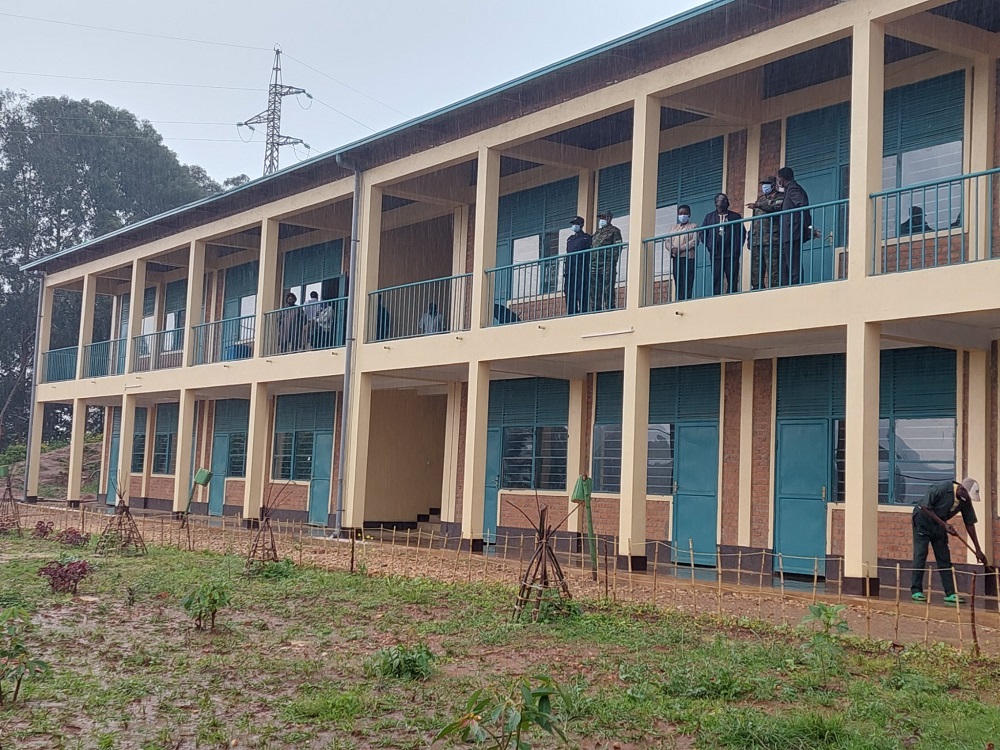
In June 2020, the Government of Rwanda launched a project to build 22,505 classrooms and 31, 932 latrines to reduce overcrowding and long walk for some students to reach schools.
They were built on funding of the World Bank in collaboration with the Government of Rwanda while citizens lend a hand through community work.
Habitegeko has said that construction of 4759 classrooms in Western Province nears completion.
“President of the Republic capacitated us to build 4759 classrooms in this province through performance contracts of the just ended year. We have not yet reached 100% by the time schools resumed but we are glad that 96,3% of targeted classrooms have been completed. The remaining 3.7% will also be completed in the near future,” he said.
Father Paulin Mushimiyimana, the head teacher of Saint Pierre Groupe Scolaire in Kivumu sector has said that eight newly constructed classrooms have helped to reduce overcrowding.
“New classrooms have played a significant role in reducing students’ overcrowding especially in Kivumu sector and the school I am heading. Before, a classroom would accommodate 70 students, a number which has reduced to 45 and 50. This shows how the classrooms were very much needed,” he said.
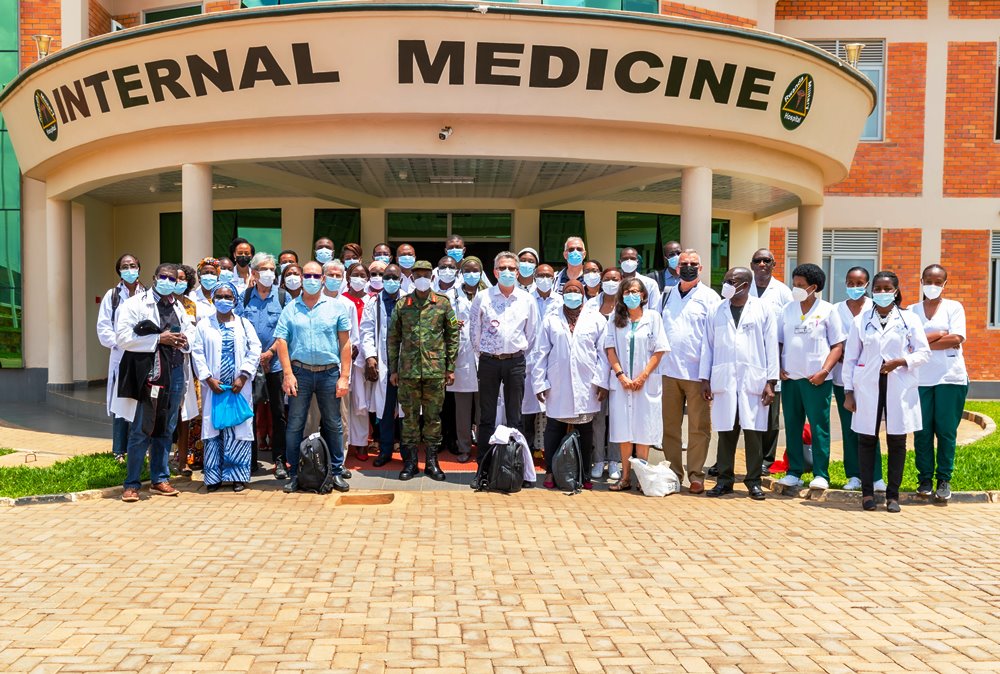
Allergology is branch of medical science that studies the causes and treatment of allergies according to Col Dr. Jean Chrisostome Kagimbana, the Chairperson and focal point of the National Association for Continuing Education in Allergology in Rwanda.
The Rwanda Military Hospital leadership that hosted the delegation that treated at least 150 special cases, welcomed the good initiative and wished a warm stay in Rwanda.
The delegation was officially welcomed by the RMH Commandant, Brig Gen Dr. Ephrem Rurangwa.
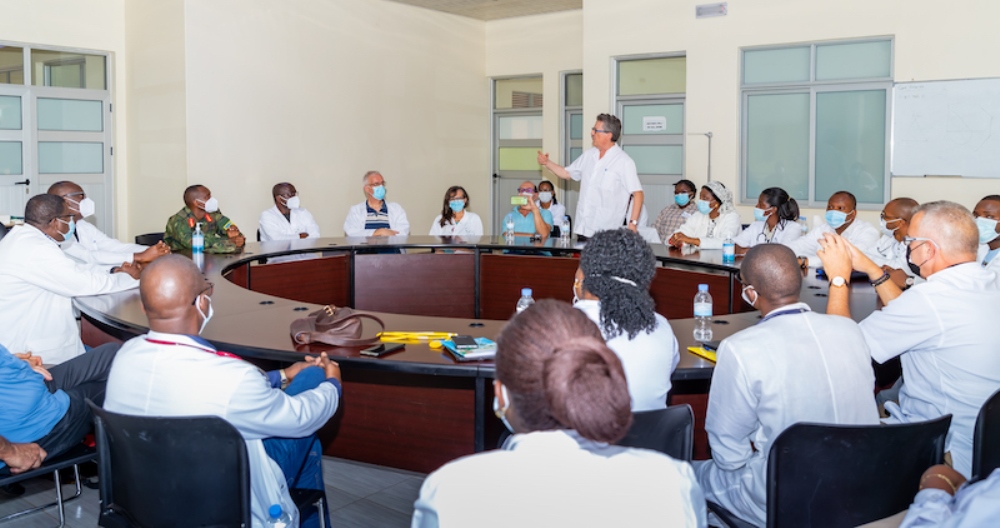
“This is the second time that the students and their lecturers from French-speaking University Diploma of Allergology select to do their long practical training of Allergology, the University chooses a francophone African region to visit every year. This is the second time they choose to train in Rwanda, the 4th intake also conducted their practical training of allergology in Rwanda in 2018,” he said.
Col Dr. Kagimbana a dermatologist and allergist at Rwanda Military Hospital lauded the services rendered to Rwandan patients by the visiting delegation.
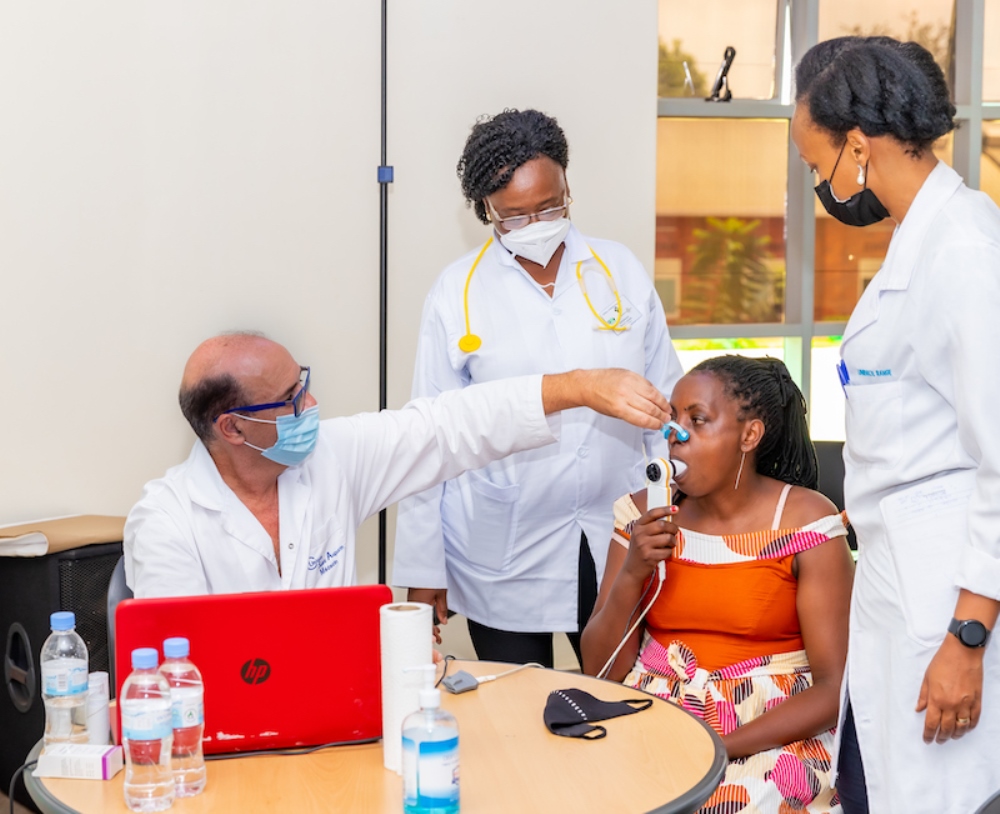
“This is very useful to Rwanda. It is about training, providing special medical care to patients and capacity building of allergology service. They have treated 150 special cases in one week”.
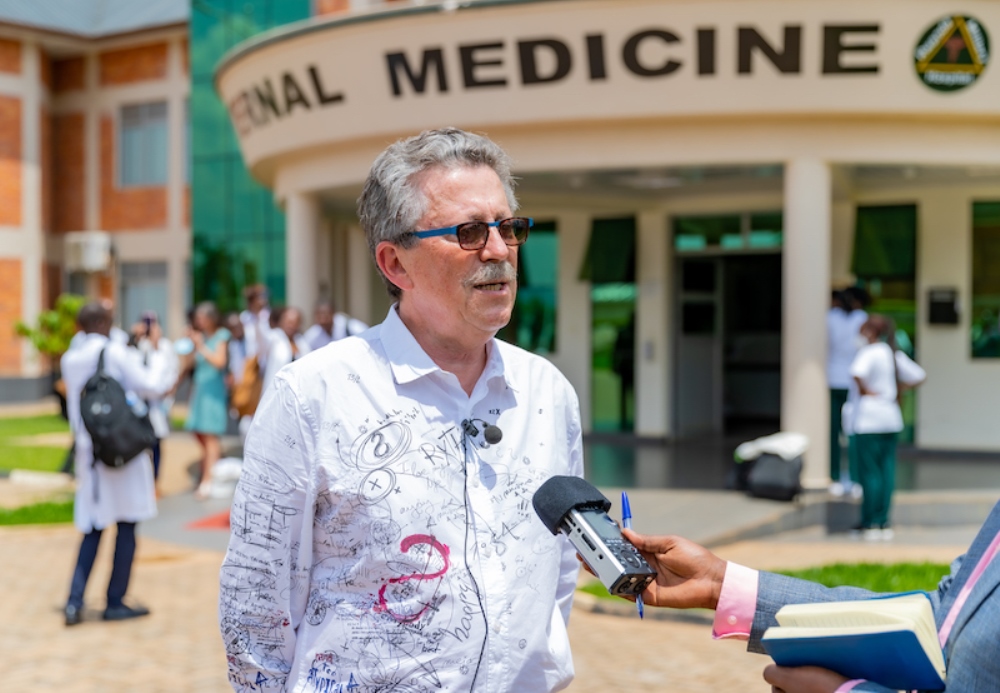
Dr. Dumur Jean Pol from Claude Bernard University of Lyon and head of delegation said that everyone was satisfied with the week-long medical work done.
“We have been receiving and treating at least 40 cases a day in different medical services in pneumology, dermatology, in ENT (Ear, Nose and Throat) allergy related diseases and in paediatrics as well”.
The practical seminar for DUFRAL Africa, takes place alternately in the capitals of one out of 17 African countries with appropriate conditions of safety for both teachers and students.
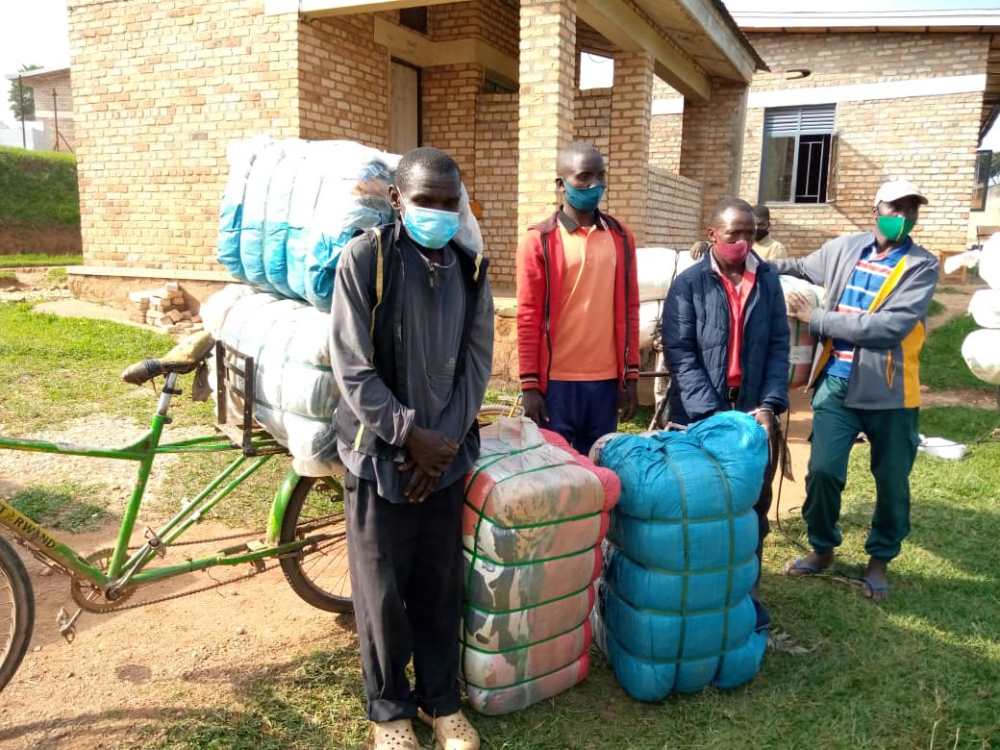
They were intercepted in Giheta village, Munini sector as they crossed into Rwanda from Burundi transporting sacks of clothes on bicycles.
Two of the suspects; Bosco Ntawigira, 38, and Emmanuel Kamanayo, 29, are the rightful owners of the clothes.
Five others are cyclists whom they had hired to transport the clothes.
At least five sacks of caguwa weighing 245kgs belong to Ntawigira while other 55kgs belong to Kamanayo.
According to the Southern region Police spokesperson, Superintendent of Police (SP) Theobald Kanamugire, the smugglers used a porous border to and from Burundi.
“Residents in Giheta reported people, who had crossed to Burundi through an illegal border to smuggle goods.
Police conducted an operation on Wednesday morning at about 8am and arrested all the seven smugglers including two owners of the clothes,” SP Kanamugire said.
SP Kanamugire lauded the impact of community policing through which information on the smuggling ring was shared and suspects arrested red-handed.
He further warned cyclists and taxi moto operators against facilitating smugglers.
The suspects were handed over to RIB at Munini station for further legal process while the seized clothes were taken to RRA Huye branch.
Under article 199 of the East African Community Management Act, which is also applicable in Rwanda, seized smuggled goods are auctioned.
{{Tax fraud}}
A taxpayer, who commits fraud, is subject to an administrative fine of one hundred percent (100%) of the evaded tax.
With exception to that penalty, the Tax Administration refers the case to the Prosecution service if the taxpayer voluntarily evaded such tax, like through the use of false accounts, falsified documents or any other act punishable by law.
In case of conviction, the taxpayer can be imprisoned for a period between six months and two years.
Article 87 of law N° 026/2019 of 18/09/2019 on tax procedures states that a person who, while intending tax evasion, commits one of the following acts: use of forged documents in his or her accounts; counterfeit and use of documents or materials of the tax administration used for taxation; hiding taxable goods or assets related to business; making a declaration indicating that the taxpayer has not made sales; changing the trade name by a person prosecuted in relation to tax; fraudulent registration of trade under the name of another person; hiding accounting documents from the tax administration or damaging them; use of forged accounting records; commits an offence of tax evasion.
Upon conviction, he or she is liable to imprisonment for a term of not less than two (2) years and not more than five (5) years.