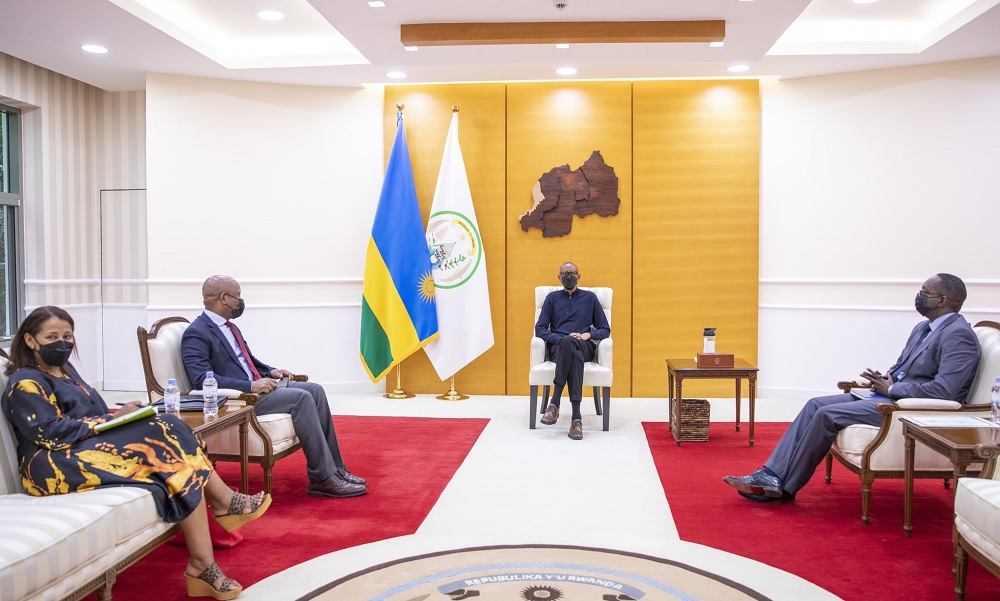
Rwanda’s Presidency has revealed that they were hosted at Village Urugwiro on Sunday 5th December 2021 but did not mention areas of discussions.
The discussions were also attended by Rwanda’s Minister of Health, Dr. Daniel Ngamije.
The Meeting on Partnerships for Vaccine Manufacturing in Africa will take place in Rwanda from 6th to 7th December 2021.
It is taking place at a time when Rwanda is among other African countries selected as vaccine manufacturing hubs.
The plant to be established in Rwanda is expected to help the continent reduce over-reliance on imported vaccines.
Dr. Nkengasong and Prof. Fisseha last met with Kagame in May 2021 at Village Urugwiro.
Susan Thompson Buffet Foundation is a charitable not-for-profit organization focused on promoting the health of women and girls throughout the world.
Prof. Fisseha is a globally-recognized leader in reproductive health and rights and a lifelong gender champion.
She currently serves as the Director of Global Programs at the Susan Thompson Buffett Foundation, as well as Chief Advisor to the Director General of the World Health Organization.
Dr. Nkengasong is also a leading virologist with over 30 years’ experience in public health.
As the founding director of the Africa Centres for Disease Control and Prevention and former deputy principal director of the U.S. Centers for Disease Control and Prevention’s Center for Global Health, Dr. Nkengasong has used his public health expertise to champion effective and accessible approaches to strengthening global health equity.
During COVID-19, he was also appointed as special envoy to the director general of the World Health Organization for pandemic preparedness and response.
IGP Munyuza made the call on Saturday, December 4, while officially closing a six-day workshop for 106 Police officers on “community policing approaches” held at the RNP General Headquarters in Kacyiru.
The workshop was attended by District Police Commanders (DPCs), directors from specialized units and Police station commanders.
The third intake covered various aspects of proactive policing including force discipline, strategic Police leadership, role of RNP in promoting gender equality, role of social media in crime prevention, stress management and counselling, counterterrorism strategies and crime prevention, among others.
IGP Munyuza reminded Police officers that discipline, hard work and visionary command are the key to professional services impacting sustainable security.
He added that police officers should be characterized by ideological clarity and avoid any temptations that may lead to lack of professional qualities that define an efficient Police officer.
“RNP officers in particular commanders, should always have an ambition to work better, build capacity, detect and fight any temptation that may lead to failure such as bribery, drunkenness, negative thoughts, and other inappropriate behaviors,” IGP Munyuza said.
He reminded them to exhibit moral values, avoid selfish practices, prioritize national over individual interests and contribute first to the institutional development as well as that of the country and security.
“Place general interests first and set by example. The moral values, team work and sacrifice you implement will be portrayed by the results of your service delivery. With the knowledge and skills you have acquired, think of how your command and leadership can create impact to the national security and development in areas of your responsibility,” IGP Munyuza said.
He urged them to be defined by empathy, collective understanding and contribute to the improvement of people’s welfare.
The Police Chief appealed to them to share the acquired knowledge and skills with their subordinates to improve performance.
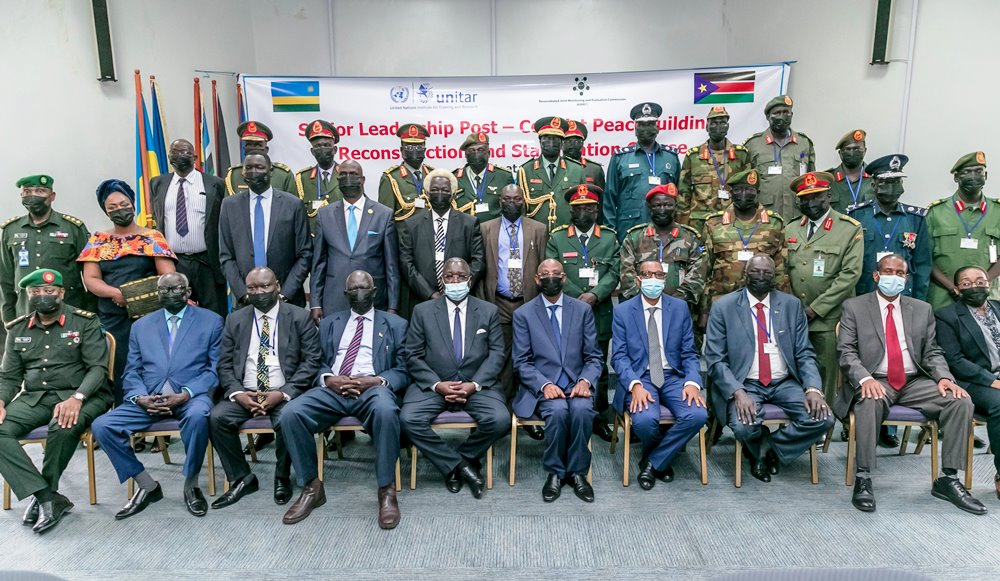
The Minister of Justice and Attorney General, Dr. Emmanuel Ugirashebuja who presided over the official closing ceremony on Friday 3rd December 2021, expressed optimism that the positive ideas that South Sudan Officials have generated from the seminar will contribute to full implementation of the Revitalised Agreement on the Resolution of the Conflict in South Sudan.
“Rwanda’s experience has taught Rwandans that peace is costly and that transformative leadership, political will and commitment, accountability, ownership, inclusivity, justice, building trust and confidence, as well as drawing positive lessons from the past, are important factors in nation and state building. Equally important, is the courage and vision to make difficult strategic choices and above all, audacity and commitment to implement what has been agreed upon,” said Minister Ugirashebuja.
The South Sudan Minister of Cabinet Affairs Martin Elia Lomuro who was heading the delegation said that they learnt a lot from Rwanda’s experience.
“We were able to take Rwanda’s experience specifically on conflict analysis; to analyse our own conflict and to put together some solutions based on the root causes of the conflict. This has been a very useful seminar and I believe that all my colleagues will be ambassadors of peace,” said Minister Lomuro.
In 2019, Rwanda’s exports to DRC were estimated at US$372 million accounting for 32% of total exports.
Despite effects of COVID-19 pandemic which saw the value of exports to the country dropped to US$ 88.6 million, DRC remained the second largest export market for Rwanda.
Besides, both countries are members of the Economic Community for the Great Lakes Region (CEPGL) while DRC is in final processes to become members of East African Community (EAC).
As both countries’ heads of state exchanged visits in June 2021, they agreed on enhancing trade cooperation and free movements.
The latter implies the need for upgraded border infrastructures, increasing flights connecting both countries, building ports and railway among others to facilitate trade.
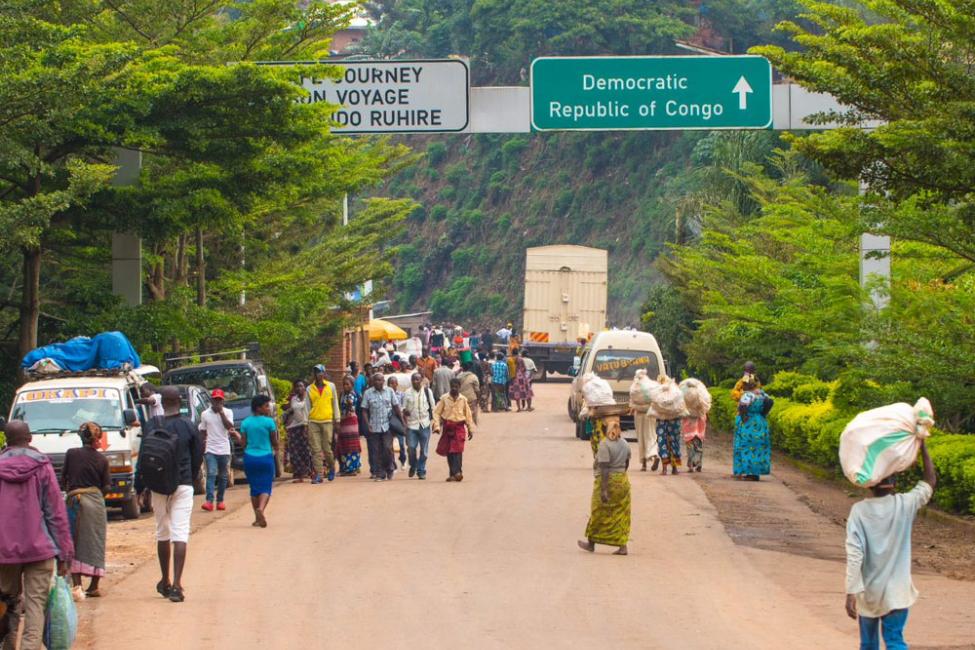
Cross border trade between both countries is mainly exercised in the districts of Rubavu and Rusizi through different border points including La Corniche One Stop Border Post known as Grande Barrière (main border).
Similar infrastructures are set to be developed in Mururu sector of Rusizi district on the side of Rwanda and Rusizi II in Bukavu on the side of DRC.
The One Stop Border Post to be built in Rusizi is expected to give a boost to the implementation of projects under the framework of both countries’ heads of state.
Figures from the Directorate General of Rwanda Immigration and Emigration shows that more than 12,000 people crossed through Rusizi border before COVID-19 emerged on daily basis.
These include informal cross-border traders, passengers using public transport buses from or to Bukavu town, pedestrians crossing for business reasons and truck drivers.
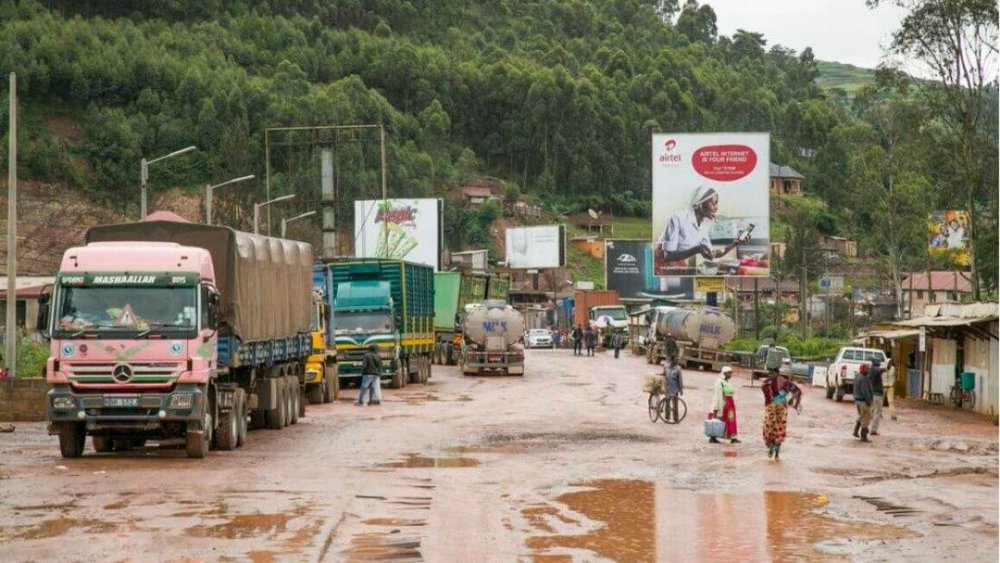
Every day, the Rusizi-Bukavu border was crossed by 150 cargo cars including 60 trucks before the pandemic which fuelled a drop in traffic to between 6,000 and 7,000 traders. The traffic for cargo cars also dropped to between 70 and 100 daily.
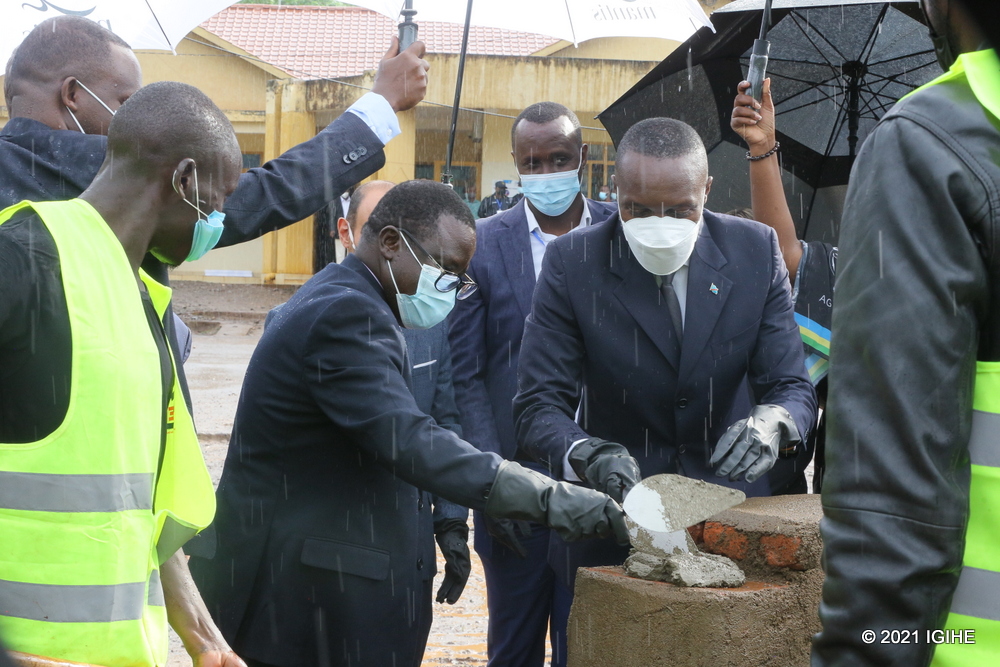
As he laid the foundation stone marking the beginning of construction activities of the a $22 million One Stop Border Post known as Rusizi II, the Governor of Western Province, François Habitegeko told IGIHE that the project will facilitate free movement of people and goods and improve service delivery as well.
“We need state-of-the art border infrastructure to improve services. Once completed, the latter is anticipated to increase traffic because we don’t want people to spend long time seeking clearance,” he said.
{{Investors urged to tap into presented opportunities}}
Rusizi One Stop Border Post is a joint project between Rwanda and DRC where both countries immigration and emigration officials will be operating in the same building.
This means, passengers will get movement clearance at one time from both sides.
Banking, customs clearance and foreign currency exchange will be among other services offered in the same building.
The Chairman of Private Sector in Rusizi district, Théophile Rugamba has told IGIHE that the one stop border post is expected to improve services and boost trade.
“The facility was long overdue as it is expected to improve services for Rwandans and Congolese. I would like to encourage fellow businesspeople to work together to tap into presented huge opportunities so that we can smoothly carry out our activities and increase exports to the country,” he said.
The Deputy Governor of Northern Kivu Province, Marc Malago Kashekere also stressed that the border facility will be beneficial for both country’s security and enhanced trade among others.
He made the revelation on Friday 3rd December 2021 as he presented national plans to recover the economy and boost national vaccination efforts.
As at 2nd December 2021, a total of 100,381 people had caught the virus out of 3,497,196 sample tests since COVID-19 pandemic emerged in Rwanda on 13th March 2020. Of these, more than 48,000 (48%) are men while men are 51,250 (52%).
Among others, 38347 people who tested positive are aged 29 while 62,034 (62%) are aged 30 and above.
The report from the Ministry of Health shows that 98,830 (98%) have recovered while 208 are active cases including 175 patients attended to through home-based care.
Moreover, 1343 have succumbed to the virus of whom 726 (54%) are men while 617 (46%) are women.
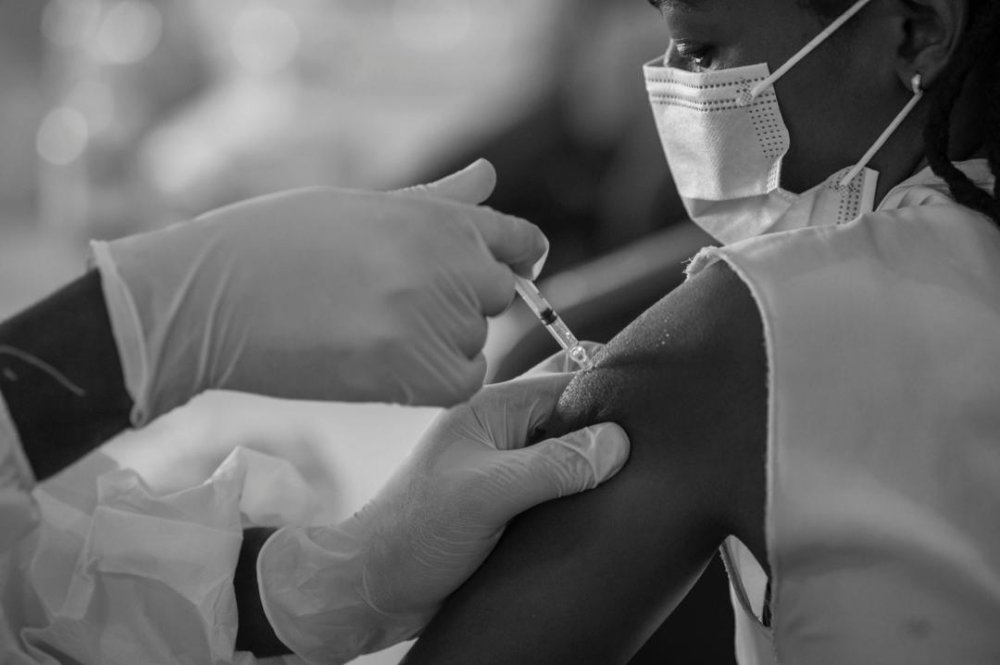
Rwanda began countrywide inoculation program on 5th March 2021 as part of the country’s response to the pandemic where the target of vaccine recipients might be reached before the set deadlines.
“The number of vaccine recipients increases gradually as fruitful results of rolled out campaign. As at 2nd December 2021, a total of 6,065,691 people (46%) had received at least one dose of COVID-19 vaccine since the program began,” Premier Ngirente said.
Rwanda is among countries that hit the target of vaccinating 10% of their population by September 2021 as recommended by the World Health Organization (WHO).
Premier Ngirente said that Rwanda targets to cover 30% (3,915,533) of the population by December this year and 60% (7,831,066) by the end of next year.
“We are about exceeding these targets,” he revealed.
{{Increased vaccine recipients}}
Premier Ngirente said that the number of COVID-19 vaccine recipients are expected to reach 9,063,245 (69,4%) next year, following the country’s commitment to start administering vaccines to people in the age bracket between 12 and 17.
“All these people will have been vaccinated by December 2022 but we might hit the number before in consideration of expended efforts,” he revealed.
In Kigali City alone, more than 869,000 dwellers (89.2%) aged 12 and above have received two doses of COVID-19 vaccine while 1,032,499 have received the first dose.
The vaccination efforts in the remaining parts of the country have seen 2,755,727 (34%) people fully vaccinated while 5,033,192 (62%) have received the first dose of COVID-19.
Rwanda has been administering eight types of COVID-19 vaccines. As at 2nd December 2021, the country had received 12,900,760 doses that can be used to vaccinate 6,736,220 people excluding the booster dose.
Rwanda received these doses through COVAX, a global initiative aimed at ensuring equitable distribution of vaccines, direct purchases while others were donated by partner countries.
The duo was sentenced by Nyarugenge Primary Court on Friday 3rd December 2021.
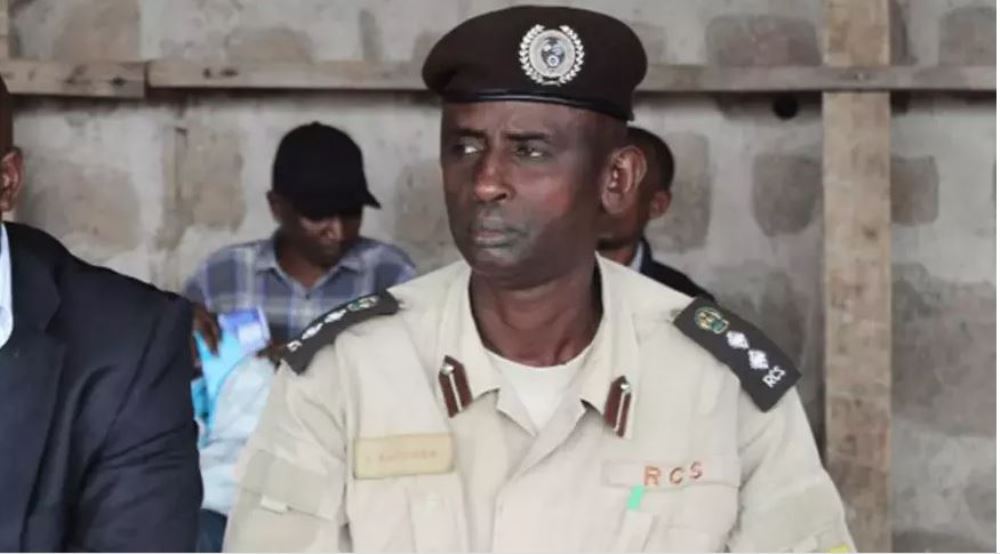
CSP Kayumba and SP Ntakirutimana were found guilty of crimes including theft, unauthorized access to computer system data and impersonation while co-accused intelligence officer at the prison identified as Ephraim Mutamaniwa has been acquitted.
Another co-accused Olivier Amani Twizere was also acquitted even though he had pleaded guilty of charges against him.
During trial proceedings, the Prosecution said that CSP Kayumba approached Olivier Amani, an inmate at Nyarugenge Prison who has IT skills, to help him steal money belonging to Kassem Ayman Mohamed, a British national also incarcerated in Nyarugenge Prison.
Kassem would normally use his visa card to buy medication and food, and leave the card to the person in charge of social affairs at the prison after use.
The Prosecution explained that Kayumba ordered the officer to give him the visa card, and took it to Amani to help him withdraw money that was on it.
In January 2021, it was reported that Kassem Ayman Mohamed, a resident from the United Kingdom detained at the prison was robbed Rwf9, 144,300,000 equivalent to 7,679,911 pounds.
The money was stolen from his ATM card which he used to shop medication and foods twice a month.
Twizere admitted that he stole money from Kassem on order of CSP Kayumba.
Twizere explained that he was obliged to obey his boss lest he would be threatened and accepted after reporting himself several times to the office of CSP Kayumba to plot the theft.
As Twizere said, he was requested to check balance on inmates’ ATM cards where he established the amount of money possessed by Kassem.
CSP Kayumba who was also present in court immediately appealed against the ruling.
He had appeared in court for the first time along with co-accused, ten months ago.
The proactive act is meant to ensure that traffic rules and regulations are respected for the safety of everyone on the road.
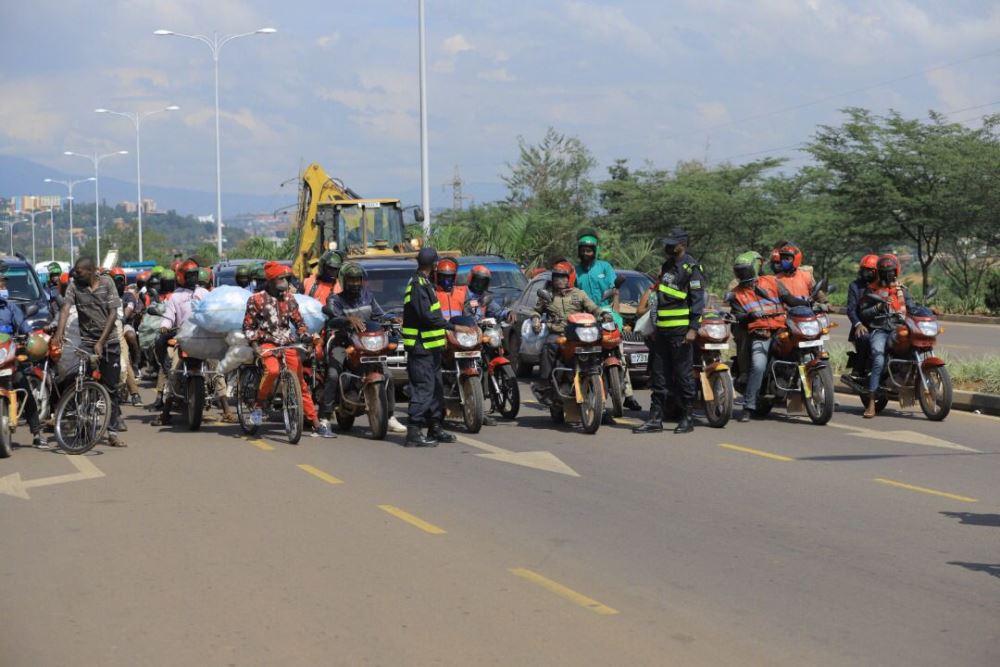
The campaign started on different roads in City of Kigali where drivers, taxi-moto operators, passengers and pedestrians were explained on the meaning of road symbol signs, including traffic control lights and red-light cameras.
Assistant Commissioner of Police (ACP) Gerald Mpayimana, the Commissioner for Traffic and Road Safety said that the red light cameras were introduced to counter violations of traffic lights and bad maneuvers, which cause traffic jam and road crashes.
“We need road users to beware of the meaning of traffic light colour, understand that their violations especially in intersection that have cameras will lead to penalties, and know the meaning of different road traffic symbols including cross-walks,” ACP Mpayimana said.
RNP spokesperson, Commissioner of Police (CP) John Bosco Kabera said that this is part of the continuous Police campaigns to remind road users of their individual responsibility when using the road to prevent accidents.
“This campaign was initiated to remind road users on the traffic regulations and how to use the road safely. Road users should know and respect traffic control lights, sign posts and road lines, which direct traffic flow,” CP Kabera said.
He added that in addition to the speed cameras set to penalize speeding motorists red light cameras were also installed to detect those, who enter intersections in wrong manner violating road lines or violate traffic lights.
Rwanda National Police installed CCTV, speed cameras and Red-Light Cameras (RLC). The RLC is an automated system that detects and captures images of automobiles entering an intersection after the traffic signal controlling the intersection has turned red.
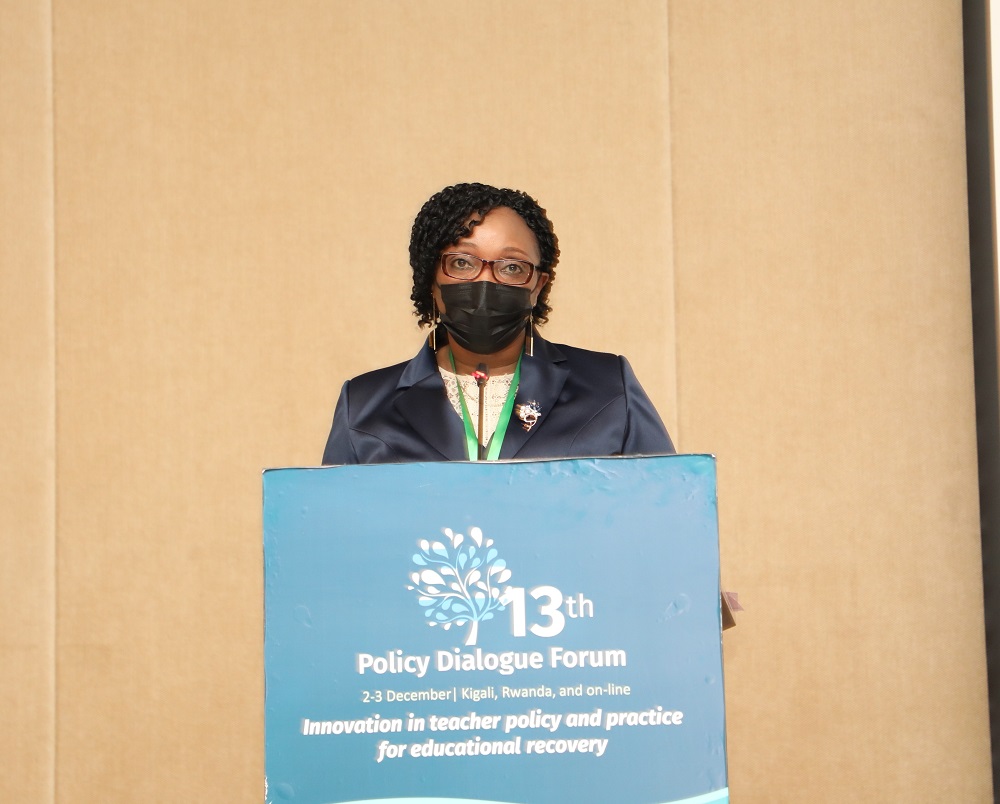
Dr. Uwamariya made the revelation on Tuesday 2nd December 2021 as she officially opened the 13th Policy Dialogue Forum of the International Task Force on Teachers.
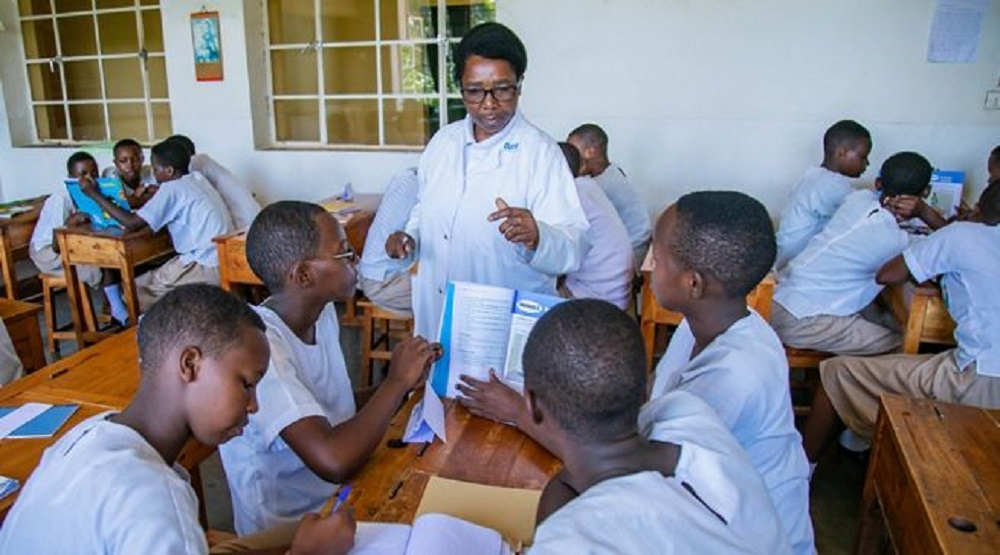
The centre is expected to provide training for primary, secondary school and universities’ management with a view to equip them with relevant skills to carry their tasks efficiently.
“Responding to the question of teachers requires Governments, International Organizations and civil society members to work in synergy and find adequate solutions for teachers together. In this line, the Ministry of Education, in collaboration with partners, is in the process of establishing an African Centre for School Leadership, with the aim of supporting Governments in Africa to build capacity in promoting effective school leadership, for improved quality of teaching, and learning outcomes,” said Dr. Uwamariya.
She explained that teachers also benefit from other training programs polishing their competencies especially in ICT.
Dr. Uwamariya also shared Rwanda’s solutions to address emerging challenges in the education sector where teachers were provided with laptops and equipped with relevant skills to continue assisting students through online classes during COVID-19 pandemic.
Some school leaders have revealed that teachers still need more training programs because they have not yet acquired enough skills.
“Many teachers have not yet acquired enough ICT skills but we are grateful that the Government of Rwanda and other partners have expended much effort in teachers’ training to carry out their jobs smoothly,” said Father Jean Paul Mushimiyimana, the head teacher of teacher Training College (TTC) Zaza.
{{Teachers’ gap}}
Figures from the United Nations Educational, Scientific and Cultural Organization (UNESCO) show that Sub-Saharan Africa alone requires 15 million more teachers to reach the educational goals by 2030 whereby stakeholders need greater investments and innovative approaches to face this issue.
Carlos Vargas-Tamez, Head of Teacher Development at UNESCO’s Task Force for Teachers attributed the gap to two major reasons including meager salary and the nature of teacher’s job.
Carlos Vargas explained that the percentage of national budget allocated to the education sector is still insufficient where it should be between 15 and 20% instead of the current 3 to 6% within all countries.
He revealed that the inadequate budget results into low salaries for teachers and discourages people interested to pursue courses in education.
Teachers play a critical role to advance quality education. However, they need to be provided with an environment that values willingness to take risks and help them improve livelihoods.
Considering their outstanding contribution to the society, the Government of Rwanda has put in place different initiatives to improve their wellbeing, facilitating them to access financial services and salary increment among other social protection programs.
To this end, Rwanda plans to facilitate interested teachers to pursue studies up to Master’s degree with fully paid and non-refundable scholarship.
Among others, the Government has committed to provide half of school fees for students enrolled in Teacher Training Colleges (TTC) after revising existing curriculum.
Students pursuing courses in education at the university will not be required to refund the scholarship as so long as they are serving in the education sector after graduation.
Other incentives for teachers include salary increment to motivate them, improve their wellbeing and subsequently paving the way for quality education.
Since 2019, teachers from secondary and primary schools started receiving 10% annual salary increment. An additional 10 percent was made in 2020.
The increment was also considered in the fiscal year 2021/2022 despite difficult times of COVID-19 the country is going through.
Dr. Uwamariya explained that these incentive programs are expected to attract public’s attention to this profession.
It also goes hand in hand with increasing the number of teachers and reduce students’ overcrowding.
In 2020 academic year, the Government of Rwanda recruited 28,000 teachers and placed more 30,000 in 2021.
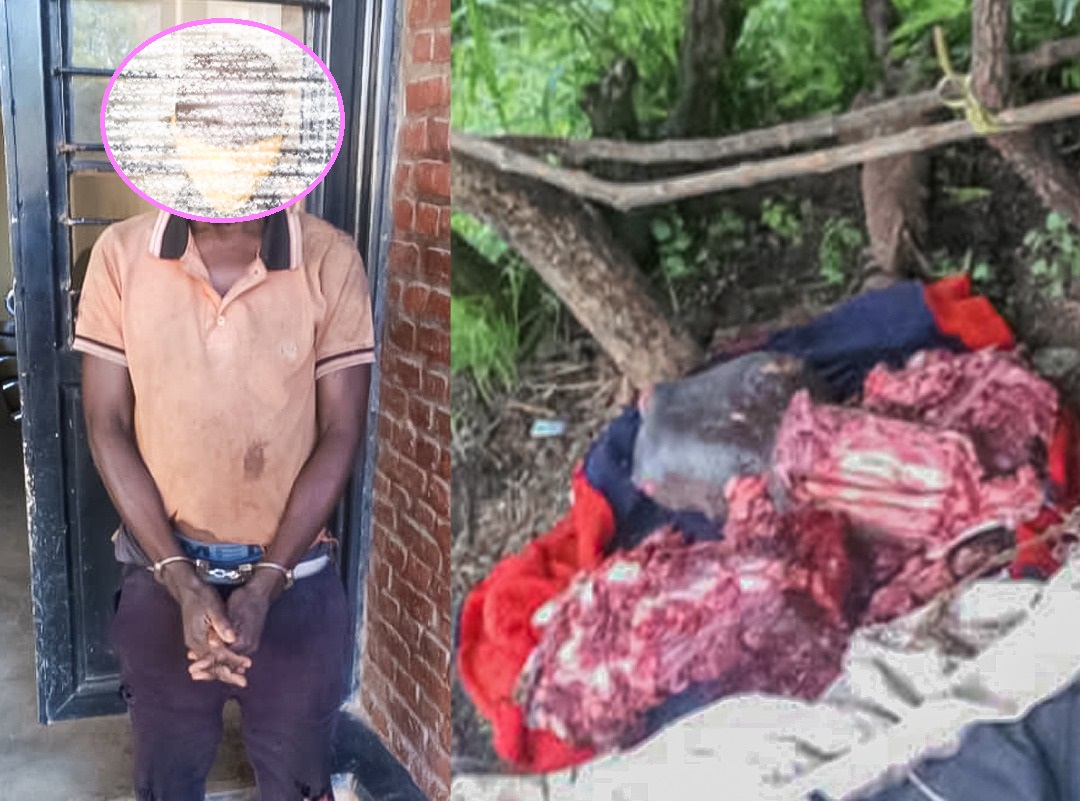
Hakizisuka was arrested in Nyamwiza Village, Munini Cell, in Rwimbogo Sector with the meat after killing the hippopotamus in Akagera National Park.
The Eastern region Police spokesperson, Chief Inspector of Police (CIP) Hamduni Twizeyimana said that the suspect was apprehended red-handed on the way home with a sack of hippo meat.
“Hakizisuka was intercepted coming from Akagera National Park at about 7:30pm, following information provided by residents,” said CIP Twizeyimana.
He warned against killing protected animals in gazetted areas
Hakizisuka along with the exhibit were handed over to RIB at Rwimbogo station for further legal process.
Article 44 of Law N°48/2018 of 13/08/2018 on environment prohibits the following acts in order to protect biodiversity: burning forests, national parks and reserved areas, burning swamps, grazing land, bushes, grass with the aim of agriculture or organising grazing land, killing, injuring and capturing animals of endangered species, destroying or damaging habitats, larvae, pupae or the young animals of the endangered species, causing death or burning protected plants, harvesting or destroying them, transporting or selling the remains of a whole or part of an animal and plants of endangered species, and cutting trees in forests or protected areas or in national parks.
In the article 58, Any person who hunts, sells, injures or kills a protected animal species and products thereof, commits an offence.
Upon conviction, he/she is liable to imprisonment for a term of not less than five (5) years and not more than seven (7) years and a fine not less than five million Rwandan francs (Rwf 5,000,000) and not more than seven million Rwandan francs (Rwf7,000,000).
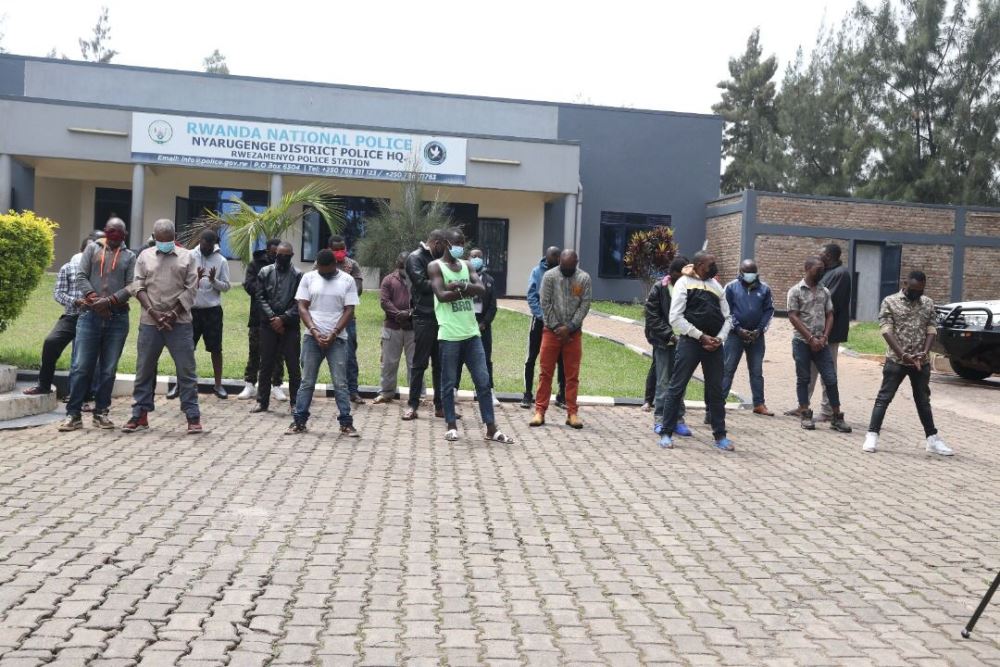
The group was paraded to the media on Wednesday, December 1, at Nyarugenge District Police offices in Rwezamenyo sector, Nyarugenge district.
Patrick Mugisha is one the drivers paraded who was arrested after he declined to be tested whether he had taken alcohol.
“I was in my car parked on the road side in Nyamirambo on Monday, when Police officers who were on duty approached me and tried to test if I had taken alcohol but I refused because it was observable by everyone that I was drunk as I had even a bottle of Konyagi liquor in my car,” said Mugisha.
Murwanashyaka was also arrested driving a truck with luggages from Rusumo to City of Kigali. He said that he was arrested after he involved in an accident.
“I had taken alcohol during the previous night which I was thinking it could not affect me driving during morning however in the wee hours when I started driving the truck, I hit a vehicle which was parked on the side of the road and immediately when Police officers arrived to examine the accident detected through a breathalyzer that my blood had alcohol content and I was brought here,” said Murwanashyaka.
Murwanashyaka along with Mugisha asked for forgiveness and advised their colleagues to avoid driving when they had taken alcohol otherwise to seek someone else to help them or suspend the journey to other occasion.
Senior Superintendent of Police (SSP) Rene Irere, The Spokesperson for Traffic and Road Safety Department reminded the public that rejecting to be tested whether you have taken alcohol does not clean your drunken status.
“A big number of drivers are being currently found under influence of alcohol, others refuse to be tested and those who deny to be tested do it because they know that they had taken quantities of alcohol beverages which they want to conceal despite that they possess driving licenses which they got after studying road safety regulations,” said SSP Irere.
SSP Irere warned motorists that deliberately violating road safety rules and regulations especially driving under influence of alcohol is exposing their lives and those of others in high traffic risks adding that operations are meant to ensure safer road usage and will be continuous across the country.”