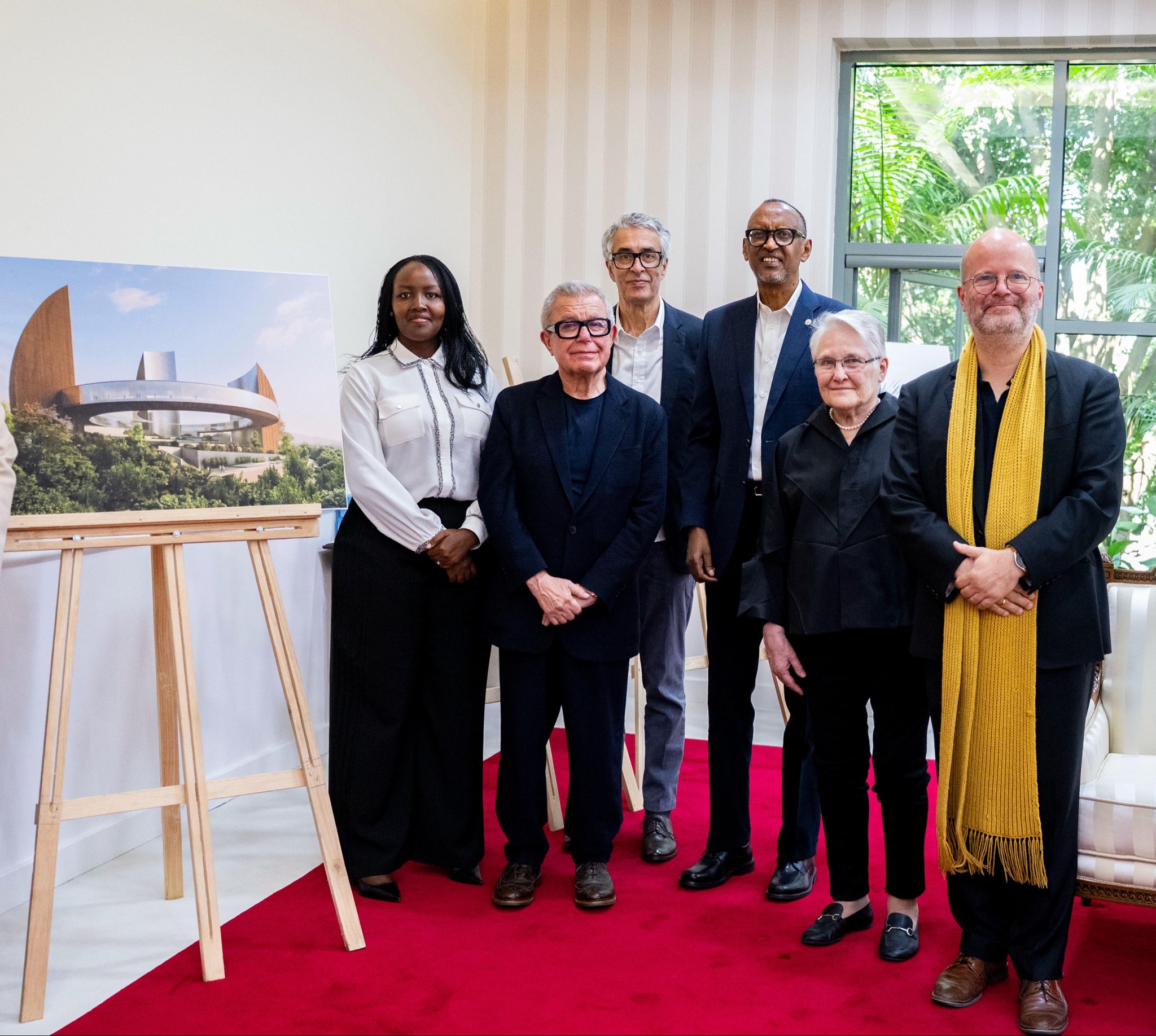
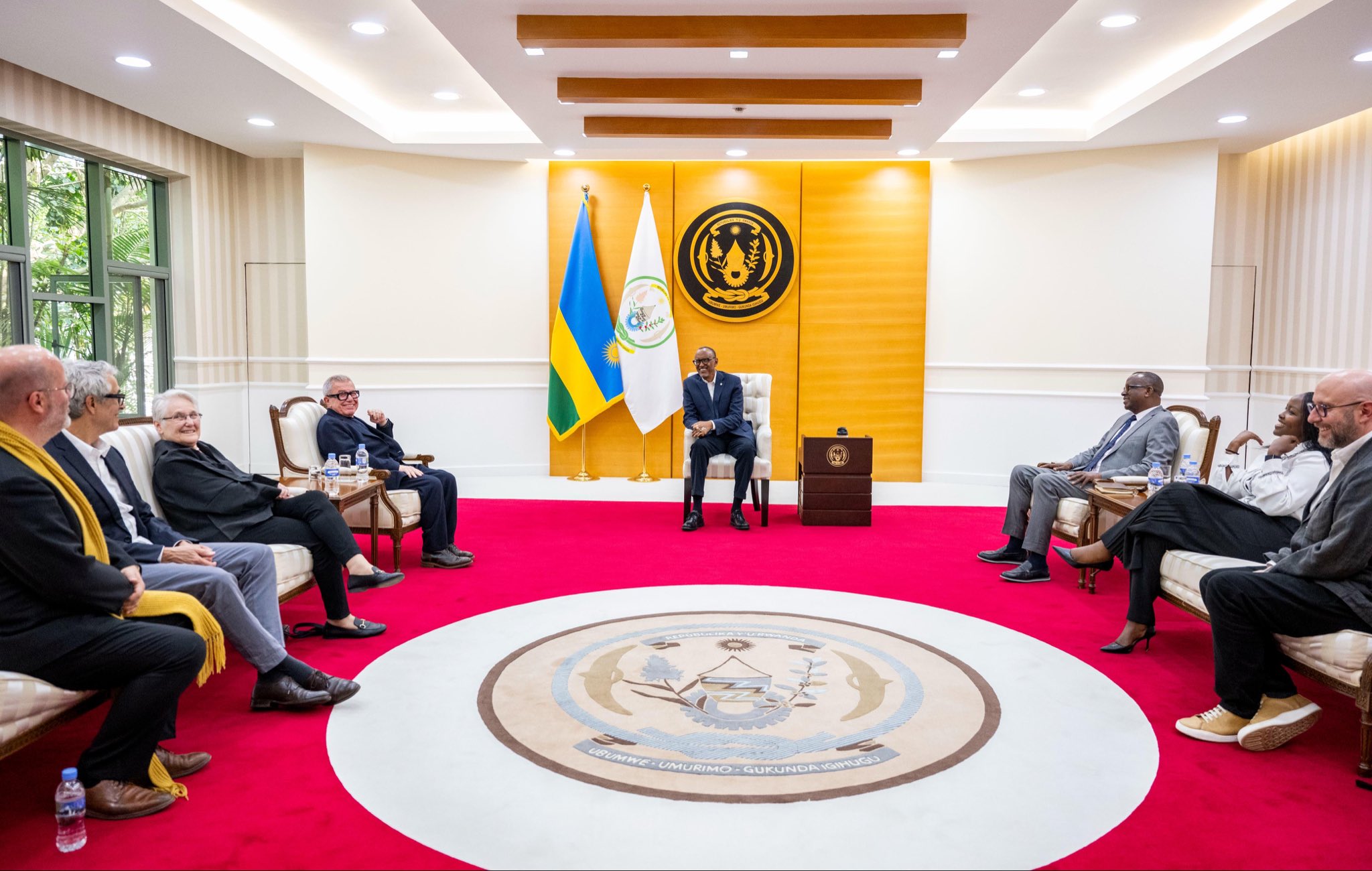
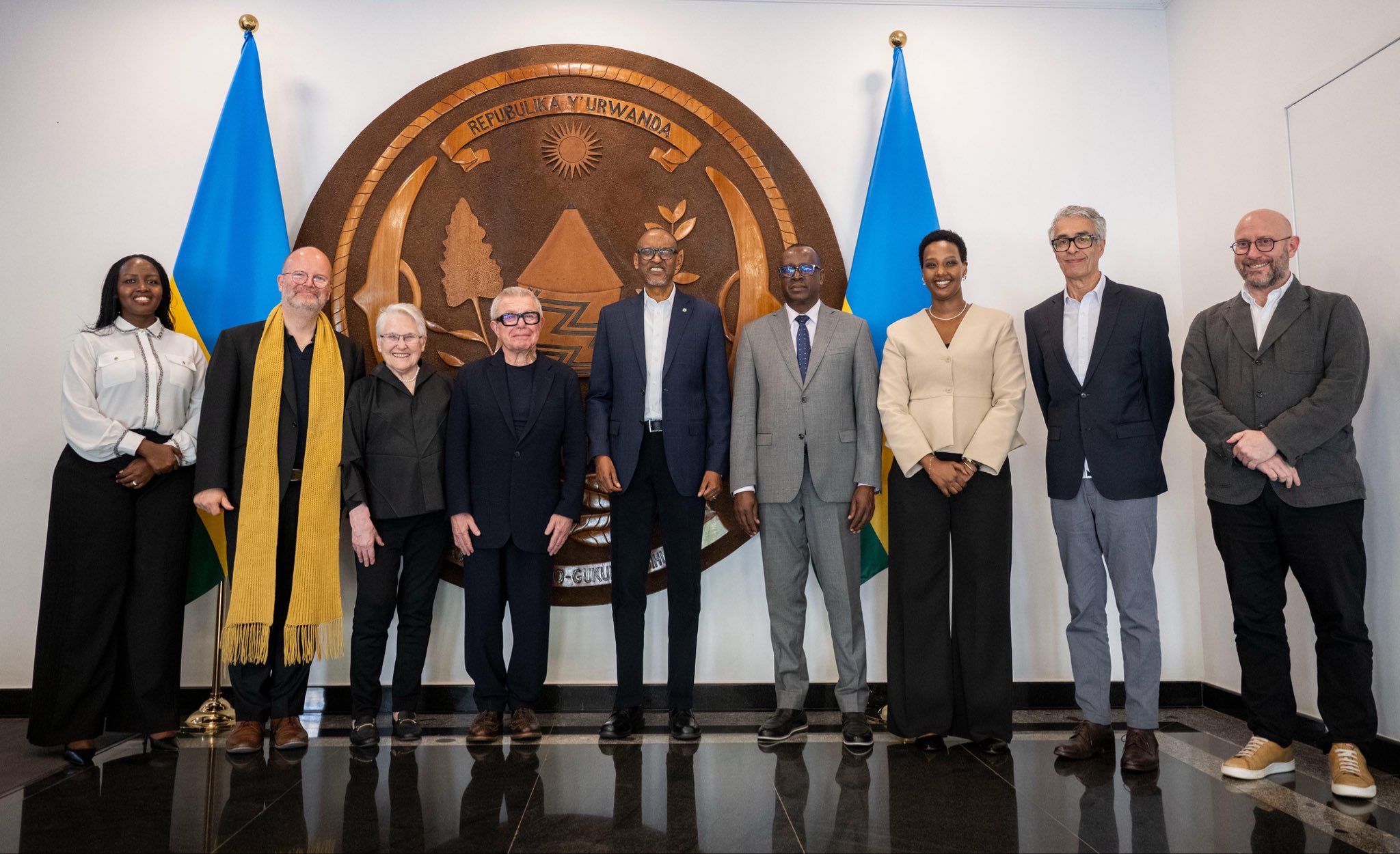
According to the Office of the President, the meeting took place at Urugwiro Village and brought together Daniel Libeskind, Founder and Principal Architect of Studio Libeskind; Nina Libeskind, Co-founder of Studio Libeskind; Stefan Blach, Partner at Studio Libeskind; and Holm Keller, Chairman of the kENUP Foundation.
The planned monument is expected to transform the Kigali Genocide Memorial in Gisozi, where more than 250,000 victims of the 1994 Genocide against the Tutsi are laid to rest, into a powerful space for remembrance, education, and reflection through cutting-edge technology and a deeply immersive, personal visitor experience.
The involvement of Studio Libeskind signals the project’s global significance. The New York-based architectural firm is widely regarded as one of the world’s leading practices in memorial architecture, renowned for designing spaces that confront historical trauma while promoting reflection, resilience, and healing.
Daniel Libeskind, who was born in Poland in 1946 to Holocaust survivors, has built an international reputation for what has become known as the “architecture of memory.” His designs draw on philosophy, literature, music, and history to create emotionally powerful spaces that tell stories through geometry, light, and movement.
Together with Nina Libeskind, who co-founded Studio Libeskind in 1989 and oversees its international operations, the firm has delivered some of the most important remembrance and memorial projects of the modern era.
Among its most celebrated works is the Jewish Museum Berlin, completed in 2001, which catapulted the studio onto the global stage. The museum’s distinctive zigzag form and its series of empty concrete “Voids” were designed to symbolize the absence left by the destruction of Jewish life during the Holocaust, creating an architectural experience that immerses visitors in the weight of history.
The studio also gained international recognition after winning the competition to develop the master plan for the World Trade Center site in New York following the September 11, 2001 attacks. Libeskind’s vision, known as “Memory Foundations,” sought to preserve the memory of the victims while enabling the site’s renewal, incorporating key symbolic elements that remain central to the area today.
More recently, Studio Libeskind designed the Dutch Holocaust Memorial of Names in Amsterdam, which commemorates all 102,000 Dutch victims of the Holocaust through a labyrinth of engraved bricks bearing individual names. In Canada, the firm designed the National Holocaust Monument in Ottawa, where fractured geometric forms and dramatic spatial experiences evoke themes of loss, displacement, and hope.
The planned National Genocide Monument in Kigali will build on this legacy of memorial architecture, bringing world-class expertise to Rwanda’s efforts to preserve the memory of the 1994 Genocide against the Tutsi and educate future generations.
While details of the final design have yet to be unveiled, the project is expected to create a powerful new destination for remembrance and learning, using immersive storytelling, innovative technology, and architectural symbolism to honor the lives lost and reinforce the enduring lessons of “Never Again.”
The discussions between President Kagame and the Studio Libeskind team mark a significant step forward in the development of what could become one of the world’s most important contemporary memorial sites, placing Rwanda alongside other nations that have used architecture as a powerful tool for remembrance, reflection, and collective healing.
Daniel Libeskind, who was born in Poland in 1946 to Holocaust survivors, has built an international reputation for what has become known as the “architecture of memory.”The planned monument is expected to transform the Kigali Genocide Memorial in Gisozi into a powerful space for remembrance, education, and reflection through cutting-edge technology and a deeply immersive, personal visitor experience.
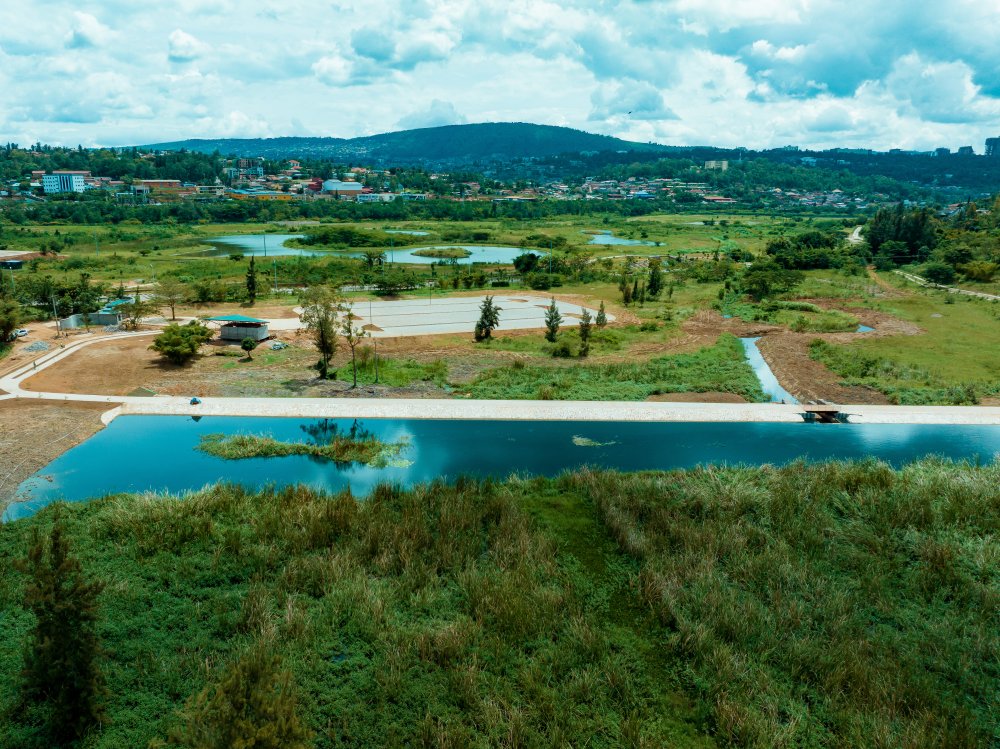
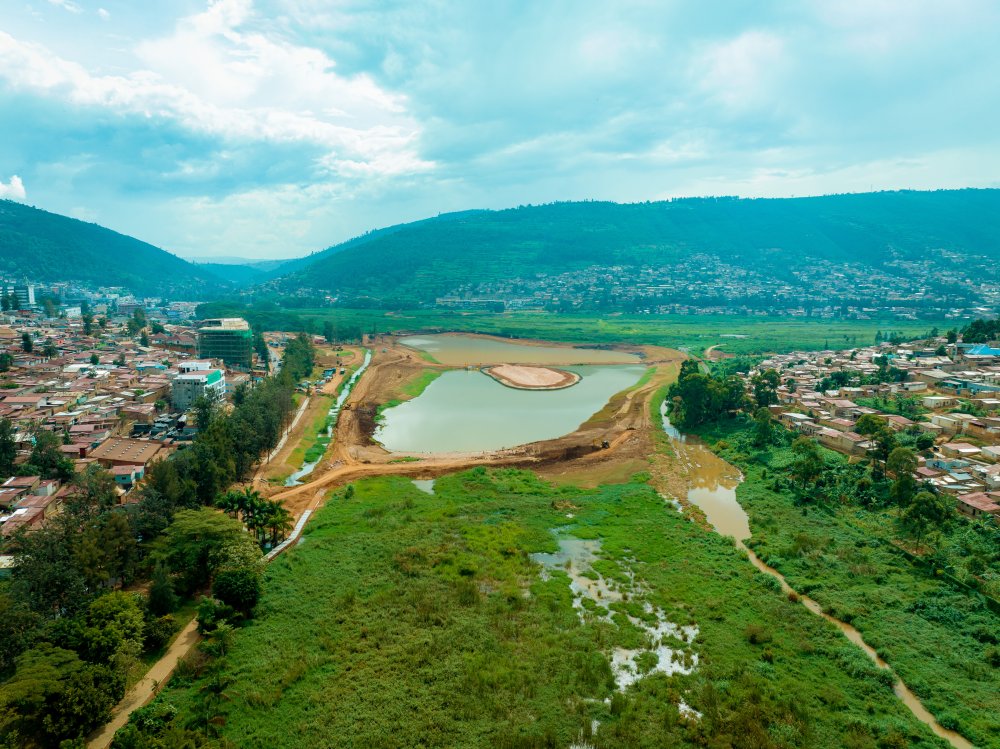
The initiative covers five rehabilitated wetlands in Kigali City: Nyabugogo, Gikondo, Kibumba, Rwampara, and Rugenge-Rwintare, which are being developed as part of the city’s broader environmental restoration and urban development agenda. Interested parties have until July 4, 2026, to submit their applications.
According to RDB, eligible applicants may include private companies, non-governmental organisations, investment firms, or consortia of organisations. Interested parties are required to demonstrate strong technical expertise, financial capacity, and proven management capability to sustainably operate and manage the wetlands.
Applicants must also show the ability to manage infrastructure and staff, provide professional and inclusive security, conserve biodiversity, and deliver visitor services and environmental education. They are further expected to develop sustainable financial models outlining how the wetlands will generate revenue and attract investment.
In addition, the selected partner will be responsible for engaging surrounding communities and stakeholders to raise awareness of wetland conservation and environmental protection. This includes collaboration with local institutions, small financial entities, adjacent landowners, and relevant government agencies.
The management of the wetlands will be overseen by a Kigali City committee responsible for developed wetland parks, which will also provide strategic guidance on conservation and service delivery. The committee brings together representatives from RDB, the Ministry of Infrastructure (MININFRA), REMA, the City of Kigali, the Rwanda Water Resources Board (RWB), and the Ministry of Finance and Economic Planning (MINECOFIN).
The five wetlands cover a combined area of 491 hectares, distributed across Gikondo (162 ha), Nyabugogo (131 ha), Kibumba (68 ha), Rwampara (65 ha), and Rugenge-Rwintare (65 ha). They have been developed in line with Kigali’s Master Plan Vision 2050, which designates 25% of the city for environmental conservation and recreation to improve urban livability and promote tourism.
The project builds on the success of Nyandungu Eco-Park, a restored wetland linking Gasabo and Kicukiro districts that has become a model for urban ecological parks, attracting both local and international visitors. Nyandungu Eco-Park, covering 164.8 hectares, integrates biodiversity conservation, recreation, and urban tourism. In 2025, it received 111,842 visitors and continues to provide daily employment opportunities.
Under the new project, the Kibumba and Gikondo wetlands will feature mixed-use recreational and commercial facilities, including restaurants, retail shops, fitness areas, tea and coffee outlets, event spaces, fish ponds, children’s play areas, sports courts, gardens, and a culinary training school.
Meanwhile, the Nyabugogo Wetland will be developed with a “lake-like” recreational concept, featuring boat rides, relaxation areas, food and beverage outlets, parking facilities, and small retail spaces.
The rehabilitation works for the five wetlands began in March 2024 under the Second Rwanda Urban Development Project (RUDP II). By early June 2026, Phase One of the works had reached 94% completion.
The first phase, which utilized USD 36 million in mobilized funding, focused on essential land development, hydraulic infrastructure, and engineering works. Phase Two, estimated at USD 46 million, is designed to actively attract private capital for the construction of commercial infrastructure, including restaurants, parking areas, libraries, and sports and entertainment facilities.
Gikondo wetland covers an area of 162 hectares.
Kibumba covers 68 hectares. Rugenge-Rwintare wetland covers an area of 65 hectares.
The projects were funded under the Innovation Challenge Fund, an initiative implemented through the Commercialization and De-Risking for Agricultural Transformation (CDAT) program at the Rwanda Agriculture and Animal Resources Development Board (RAB).
Launched in late 2025, the programme supports innovative agricultural solutions that leverage technology to address challenges across the farming value chain. To date, beneficiaries have received about Rwf438 million, representing 45 percent of the total funding allocated.
Funding is tailored to the needs of each project, with grants ranging between Rwf60 million and Rwf130 million, disbursed in three phases.
The selected innovations span several areas, including smart irrigation systems, digital marketplaces for agricultural products, farmer data management platforms, technology-enabled greenhouse farming, and other solutions designed to boost agricultural productivity and market access.
Among the beneficiaries is Extra Technologies, a company that has developed a digital platform to help cooperatives manage member information and streamline operations.
The platform enables agricultural cooperatives to digitize records and maintain comprehensive profiles of their members, replacing traditional paper-based systems.
According to the company’s founder and Chief Executive Officer, Frank Muhiza, the application records all information related to cooperative members and their activities.
“The application stores all information related to a cooperative member and their activities. It enables members to apply for loans based on their production records, purchase insurance, and communicate directly with cooperative leaders,” Muhiza said.
The platform also serves a broader ecosystem of stakeholders. Financial institutions can use the data to assess farmers’ creditworthiness, insurance providers can evaluate clients, while government agencies and development partners can access relevant information to support their programmes.
Muhiza noted that the company has already introduced technology-driven weighing systems for tea farmers in Nyamasheke District.
“For tea farmers in Nyamasheke that we work with, we provided digital weighing scales. When farmers bring their harvest, the produce is weighed and the information is automatically recorded without requiring anyone to enter it manually. The data is instantly uploaded to the application and cannot be altered,” he explained.
The system automatically calculates payments due to farmers after deductions and allows farmers to monitor transactions through their mobile phones.
By integrating production, financial and market data into a single platform, the technology eliminates the need for manual record-keeping and simplifies information sharing among stakeholders.
The platform also supports market linkages by providing buyers with real-time information about available produce, enabling them to identify and source products directly through the system.
In addition, cooperative payments are processed digitally, allowing deductions for loan repayments and contributions to programmes such as Ejo Heza and community-based health insurance schemes.
“This technology brings together services that farmers often access separately, including financing, social security contributions and market access,” Muhiza said.
Extra Technologies generates revenue through subscription fees paid by cooperatives and other institutions that utilize the platform’s data and services.
The company says support received through the CDAT Innovation Challenge Fund has enabled it to expand its operations by approximately 70 percent, including reaching more cooperatives and acquiring additional equipment.
Currently, Extra Technologies works with 210 cooperatives across 14 districts and employs 12 permanent staff members alongside 24 temporary workers.
Nyamasheke tea farmers embrace technology for tracking and managing harvest data.Agri-tech projects continue to receive support from CDAT.Frank Muhiza, founder and CEO of Extra Technologies, said the platform serves as a one-stop solution for services that users previously accessed separately.
Modern weighing scales used to record and manage farmers’ production data.
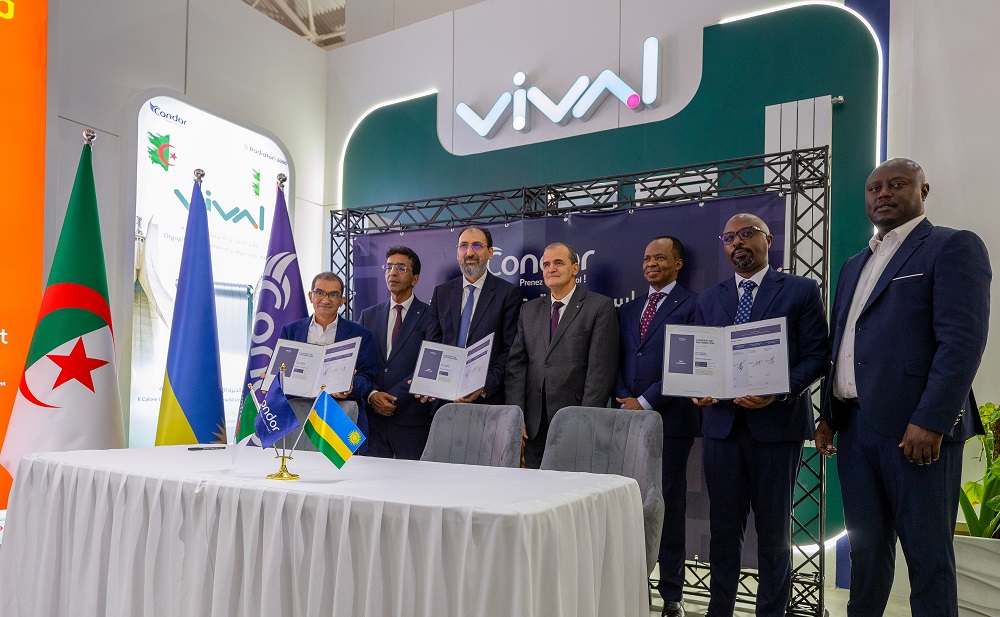
The signing ceremony took place on June 24, 2026, and was attended by Rwanda’s Ambassador to Algeria, Vincent Karega, and Algeria’s Minister of Trade and Export Promotion, Prof. Kamel Rezig.
According to Algeria’s Ministry of Trade and Export Promotion, the partnership is aligned with the country’s strategy to expand its footprint in African markets. It also supports the objectives of the African Continental Free Trade Area (AfCFTA), which seeks to boost intra-African trade and economic integration.
Beyond product exports, SPA Condor Electronics plans to support skills development in Rwanda through its “Condor Academy,” which will train Rwandans in the repair and maintenance of electronic devices. The initiative is expected to strengthen local technical capacity and improve after-sales service delivery.
Condor Group, established in 2002 and based in the Bordj Bou Arréridj industrial zone in Algeria, is the parent company of SPA Condor Electronics, one of the country’s leading manufacturers of electronics and household appliances.
The group holds a significant position in the Algerian market, with over 35 percent share in household appliances and around 70 percent in locally manufactured mobile phones and other electronic products.
Its product portfolio includes televisions, smartphones, tablets, computers, air conditioners, refrigerators, and washing machines.
Condor Group also operates an energy division, Condor Solar, which produces solar energy equipment designed to convert sunlight into electricity.
The company already has operations in several African countries, including Tunisia, Libya, Mauritania, Senegal, and Benin. Its expansion into Rwanda reflects growing investor confidence in the country, which continues to position itself as a competitive and attractive business destination in Africa.
Condor Electronics is set to expand its footprint into Rwanda through a new export agreement, marking a strategic entry into one of East Africa’s fast-growing markets.
The hearings, scheduled to run until July 10, form part of Parliament’s oversight role aimed at promoting accountability and ensuring the prudent management of public resources.
According to a communiqué issued by the Chamber of Deputies on June 24, the institutions were selected based on specific risk indicators highlighted in the Auditor General’s report.
The criteria include entities that received adverse audit opinions in financial, compliance or value-for-money audits, as well as those that were issued qualified opinions in value-for-money performance audits.
Other institutions were selected due to their poor implementation of recommendations previously issued by the Auditor General. These include entities that implemented less than 80 percent of the recommendations, particularly where unresolved issues were deemed significant.
The hearings will also cover entities that were subject to comprehensive performance audits, special audits or information technology system audits. PAC Chairperson Valens Muhakwa said the objective of the hearings goes beyond identifying shortcomings and seeks to strengthen accountability and improve public sector performance.
“Our primary objective is to ensure that every public penny is utilised for its intended purpose, expended in a timely manner, and managed without wastage,” Muhakwa said.
“Public hearings are not solely intended to point out mistakes; they also provide an opportunity for public institutions to show corrective measures they intend to undertake to address identified deficiencies and enhance performance, towards promoting the efficient management of public resources for the benefit of Rwandans,” he added.
The annual public hearings are a key mechanism through which Parliament examines the management of public funds and follows up on findings raised by the Auditor General. They also provide an opportunity for government institutions to report on measures taken to address weaknesses identified in previous audits.
The upcoming hearings are expected to focus on accountability, implementation of audit recommendations and efforts by institutions to improve financial management and service delivery.
The hearings, scheduled to run until July 10, form part of Parliament’s oversight role aimed at promoting accountability and ensuring the prudent management of public resources.
The indictment was announced on June 23 as part of the U.S. Department of Justice’s 2026 National Health Care Fraud Takedown, a nationwide enforcement operation that resulted in charges against 455 defendants accused of participating in healthcare fraud and opioid-related schemes involving more than $6.5 billion in false claims.
Muyumbu, 38, faces charges of conspiracy to commit healthcare fraud and wire fraud, healthcare fraud, conspiracy to launder money, and money laundering.
According to the U.S. Attorney’s Office for the District of Arizona, Muyumbu owned and operated Motherland Counseling LLC, an outpatient treatment center in Phoenix that provided addiction treatment services to individuals struggling with alcohol and drug dependency.
Prosecutors allege that Muyumbu enrolled the company as a provider with the Arizona Health Care Cost Containment System (AHCCCS), Arizona’s Medicaid agency, and targeted patients enrolled in the American Indian Health Program, a fee-for-service healthcare program serving Native American beneficiaries.
The indictment alleges that between the operation of the business and the submission of claims, Muyumbu and his co-conspirators exploited vulnerable patients by billing AHCCCS for services that were never provided, improperly billed, medically unnecessary, or so substandard that they failed to serve any legitimate treatment purpose.
Federal authorities claim that approximately $44.9 million in false and fraudulent claims were submitted to AHCCCS, which subsequently paid out about $36.7 million based on those claims.
The Justice Department further alleges that some of the claims were linked to illegal kickbacks and bribes and that patients were used primarily to generate Medicaid reimbursements rather than receive meaningful treatment.
Investigators also accuse Muyumbu of laundering proceeds from the alleged scheme through the purchase of real estate in the greater Phoenix area. Authorities said they have seized approximately $104,463 believed to be proceeds of the alleged fraud.
The case is among four major Arizona prosecutions announced as part of the national crackdown. Other defendants include medical biller Susie Kamien, sales representative Sandra Peters, and pharmaceutical executive Brian Rowan, whose separate cases involve alleged healthcare fraud schemes ranging from tens of millions to more than $1 billion.
Announcing the charges, U.S. Attorney Timothy Courchaine said the scale of fraud uncovered nationwide should concern American taxpayers.
“The billions of dollars of fraud highlighted in today’s announcement should shock and anger every American,” Courchaine said. “We must protect our valuable federal health care programs from exploitation by criminals.”
The nationwide operation involved federal and state law enforcement agencies across 56 federal districts and 45 states and territories. Authorities reported the seizure of more than $182 million in cash, luxury vehicles, jewelry, and other assets connected to healthcare fraud investigations.
Muyumbu is said to have entered the United States through refugee resettlement after spending time at Nyabiheke Refugee Camp in Rwanda’s Eastern Province, which for many years hosted refugees who had fled conflict in eastern Democratic Republic of Congo.
Court documents indicate that after settling in Arizona, Muyumbu established Motherland Counseling LLC and expanded its operations in the Phoenix area. Prosecutors now allege that the business became central to one of the largest individual Medicaid fraud cases announced in Arizona during this year’s national healthcare fraud enforcement action.
Muyumbu is also known within Rwanda’s entertainment circles and among members of the Rwandan diaspora in the United States. He gained wider public recognition after serving as the best man at singer The Ben’s wedding and has on various occasions been seen supporting Rwandan artists, including Kevin Kade. His visibility within entertainment and diaspora communities made him a familiar figure to many Rwandans long before the allegations announced by U.S. prosecutors this week.
Muyumbu’s case is being prosecuted by attorneys from the Justice Department’s National Rapid Response Strike Force and the U.S. Attorney’s Office for the District of Arizona.
Federal authorities emphasized that an indictment is merely an allegation and that Muyumbu, like all defendants charged in the operation, is presumed innocent unless and until proven guilty in a court of law. No trial date has been announced.
Muyumbu, 38, faces charges of conspiracy to commit healthcare fraud and wire fraud, healthcare fraud, conspiracy to launder money, and money laundering.Muyumbu is said to have entered the United States through refugee resettlement after spending time at Nyabiheke Refugee Camp in Rwanda’s Eastern Province, which for many years hosted refugees who had fled conflict in eastern Democratic Republic of Congo.
According to the Office of the President, discussions focused on The Wood Foundation’s longstanding partnership with Rwanda, including its investments in the tea sector, as well as the work of Kids Operating Room, the global health charity co-founded by Garreth and Nicola Wood to expand access to safe pediatric surgery.
The Wood Foundation is a venture philanthropy organization established in 2007 by Scottish businessman Sir Ian Wood and his family. Through its Africa-focused initiatives, the Foundation works to support sustainable economic development by combining financial investment with business expertise.
In Rwanda, the Foundation has played a significant role in the development of the tea industry through its Imbarutso programme, which partners with more than 17,000 smallholder tea farmers. The initiative seeks to improve tea quality and productivity, enhance factory efficiency, and promote farmer ownership in tea processing factories, helping growers build more sustainable and profitable agricultural enterprises.
The Foundation’s work extends across several East African countries, where it supports smallholder farmers and agricultural value chains as part of broader efforts to strengthen rural livelihoods.
President Kagame’s meeting with the Foundation’s leadership also highlighted the work of Kids Operating Room, an international health charity dedicated to improving access to safe pediatric surgical care in low-resource settings.
The Wood Foundation has maintained a longstanding presence in Rwanda, supporting initiatives aimed at advancing agricultural productivity and creating opportunities for inclusive economic growth.
President Paul Kagame held talks with Garreth Wood, Chairman of The Wood Foundation, at Urugwiro Village on Wednesday.According to the Office of the President, discussions focused on The Wood Foundation’s longstanding partnership with Rwanda, including its investments in the tea sector, as well as the work of Kids Operating Room, the global health charity co-founded by Garreth and Nicola Wood to expand access to safe pediatric surgery.
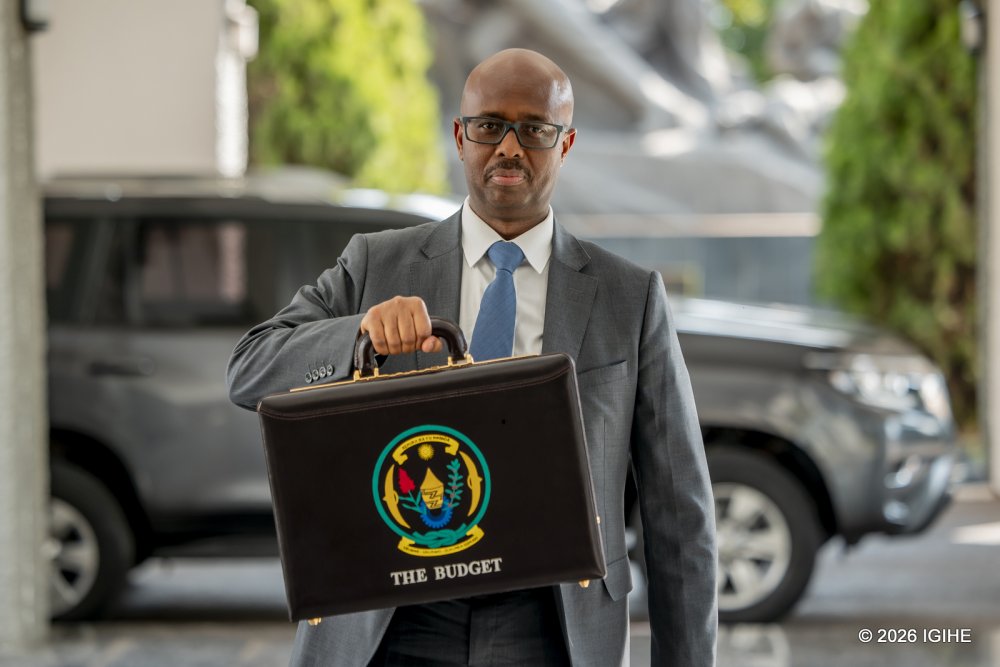
The budget law was passed during a plenary sitting attended by 63 lawmakers on June 24, following the initial presentation by the Minister of Finance and Economic Planning, Yusuf Murangwa.
The approved budget represents a 12% increase from the revised 2025/26 budget approved in February, which stood at Rwf 6,952.1 billion. Total government spending is set to rise by roughly Rwf 844.2 billion to hit the new Rwf 7.796 trillion ceiling.
According to Parliament’s Budget Committee Chairperson, Odette Uwamariya, the financing structure reflects Rwanda’s solid path toward economic self-reliance. Total domestic resources, consisting of tax and non-tax revenues, will cover 64.3% of the entire budget envelope. When combined with domestic borrowing, internal financing funds 67.7% of national expenditure, meaning that roughly 68% of the budget is self-funded, while external loans and grants cover the remaining 32%.
In the finalized financing breakdown, tax revenues will contribute 56.8% of the total budget, while non-tax revenues will account for 7.5%. External borrowing through foreign loans is projected to provide 25.3% of the funding, while foreign grants will cover 7.0%. The remaining 3.4% of the budget will be financed through domestic borrowing.
Unlike earlier draft iterations, the finalized budget prioritizes robust operational and strategic execution across public institutions by dividing expenditure clearly between day-to-day costs and capital investments.
The recurrent budget, which covers operational costs and civil service salaries, has been set at Rwf 4,785.5 billion, representing 61.4% of total expenditure. The development budget, which is dedicated to public and capital infrastructure projects, stands at Rwf 3,010.8 billion, equivalent to 38.6% of the total envelope.
The spending structure closely aligns with the strategic pillars of the Second National Strategy for Transformation. The Economic Transformation Pillar receives the largest share, totaling Rwf 4,900.9 billion, or 63% of the entire budget. Under this pillar, priorities include boosting inclusive growth in agriculture and livestock production, promoting local industrialization, expanding electricity and clean water access, strengthening climate resilience, and creating decent jobs.
The Social Transformation Pillar has been allocated Rwf 1,711.3 billion, representing 22% of the budget. Funding in this segment will focus on improving education quality, upgrading healthcare infrastructure, expanding early childhood development centers to combat malnutrition, and supporting social protection programs to lift vulnerable households out of poverty.
The Transformational Governance Pillar has been allocated Rwf 1,184.0 billion, which accounts for the remaining 15% of the spending. This allocation will prioritize improving public service delivery, strengthening public financial management, promoting justice and the rule of law, and safeguarding national peace and security.
Committee Chairperson Uwamariya noted that while Rwanda’s budget expands annually, public development needs are growing rapidly as the country pursues ambitious socioeconomic targets. Following rigorous institutional consultations, Parliament reallocated approximately Rwf 400 billion from lower-priority operational areas to urgent public programs.
As part of these parliamentary adjustments, agriculture and livestock support received a crucial supplementary boost of Rwf 3.08 billion to finalize its core footprint. A major win in this sector allocation is the substantial expansion of agricultural fertilizer subsidies, which nearly doubled from Rwf 39 billion in the previous fiscal year to Rwf 64 billion to counter rising costs on international markets. Funding for social protection safety nets targeting vulnerable populations was also increased by Rwf 4.3 billion to secure a stronger social support floor.
The transport sector’s immediate development allocation for the 2026/27 fiscal year adjusted to Rwf 305.3 billion. This localized reduction reflects the successful completion of several major infrastructure projects alongside strategic transitions toward new investments. Despite this short-term consolidation, medium-term expenditure projections indicate aggressive growth in infrastructure spending.
Transport networks are slated to scale up with planned increases of Rwf 83.8 billion in the 2027/28 fiscal year and Rwf 92.6 billion in the 2028/29 fiscal year to fund key arterial links, feeder roads, and logistics infrastructure supporting the new Bugesera International Airport.
The budget law was passed during a plenary sitting attended by 63 lawmakers on June 24, following the initial presentation by the Minister of Finance and Economic Planning, Yusuf Murangwa.
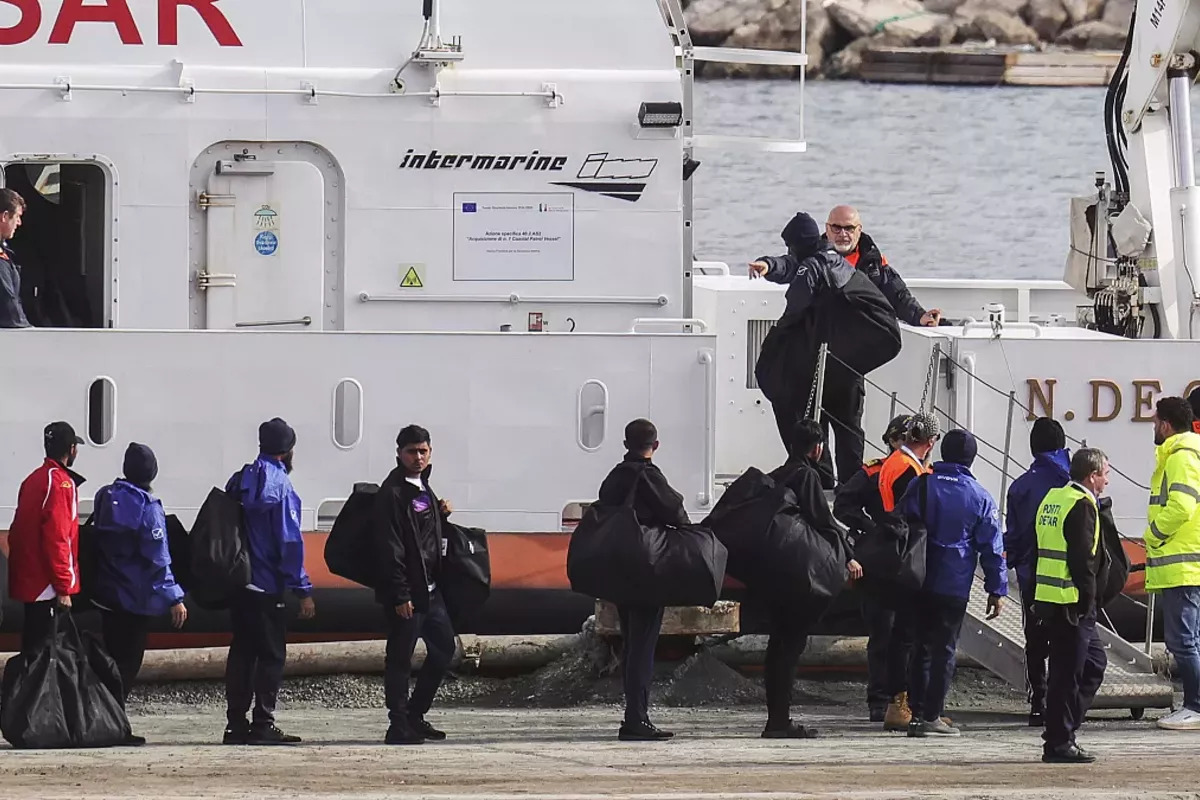
Several European Union (EU) member states are actively exploring agreements to send asylum seekers and undocumented migrants to third countries in Africa and Asia, including Rwanda and Uzbekistan.
The move highlights a major policy shift within the bloc toward externalizing migration management and asylum processing beyond European borders.
The strategy gained significant momentum last week when the European Parliament approved a sweeping new EU return regulation by a 418-to-218 vote. The legislation grants member states the legal framework to establish extraterritorial centers, commonly referred to as “return hubs.”
Under the approved rules, transfers to non-EU nations can only occur after rigorous individual assessments ensure the host countries uphold human rights, comply with international law, and respect the principle of non-refoulement (not returning individuals to danger).
A leaked document obtained by Politico revealed that more than half of the EU’s 27 member states recently called for urgent, coordinated action to set up these offshore reception facilities. A coalition led by Germany, Austria, the Netherlands, Denmark, and Greece is driving the initiative.
Timelines and diplomatic targets
While specific partner nations have not been finalized, the political wheels are already turning. Speaking on the strategy, Greece’s Migration and Asylum Ministry confirmed that active contacts are underway to secure bilateral partnerships. The overarching goal among the coalition is to conclude the first external agreements before the end of this year so that the hubs can become fully operational next year.
Defenders of the law argue it is a necessary step to restore order to Europe’s strained migration system.
“Today Europe delivered. People rightly expect that those with no right to stay return to their countries of origin,” said Malik Azmani, the European Parliament’s lead rapporteur for the legislation. “Return is the final piece in Europe’s migration system.”
Nicholas Ioannides, the Deputy Migration Minister for Cyprus, which currently holds the rotating presidency of the EU Council, echoed the sentiment, noting that the legislative shift is focused on practical enforcement.
“The new regulation will speed up the return process and increase returns of persons who have no legal right to stay in the EU,” Ioannides stated.
Deep fault lines remain
Despite passing the parliamentary threshold, the plan faces fierce resistance from other countries like France and Spain, who argue that offshoring migration is both ineffective and ethically compromised.
French President Emmanuel Macron directly attacked the concept following a tense EU leaders’ summit in Brussels, explicitly stating that Paris would oppose any attempts to use EU funds to build or maintain these centers.
“France does not support that policy,” Macron told reporters. “I’m not sure that’s the Europe we want. I’m not sure those are the fundamental principles on which our Europe was built. And I don’t believe, for that matter, that it’s effective. The proof is that, so far, I haven’t seen anyone make it work.”
Though individual member states are legally permitted to negotiate their own independent third-country agreements under the new regulation, the European Commission remained notably absent from the preliminary talks regarding potential host destinations. However, the law mandates that any nation intending to implement a transfer must formally notify the Commission and fellow member states before execution.
Diplomatic sources indicate that Uganda is also on the table as a potential African partner, while North African neighbors like Egypt and Libya were dropped from initial shortlists due to acute human trafficking risks.
To mitigate humanitarian concerns, European officials are pushing for deep involvement from global bodies. The EU intends to have both the United Nations High Commissioner for Refugees (UNHCR) and the International Organization for Migration (IOM) embedded in the framework to monitor these external hubs and ensure international human rights benchmarks are strictly met.
The EU’s pivot toward structured “return hubs” reflects a global evolution of migration management, heavily drawing on blueprints pioneered across the English Channel. The landmark “UK-Rwanda Asylum Partnership” served as the world’s first major experiment in state-to-state relocation frameworks.
While that bilateral initiative was ultimately paused due to shifts in British domestic politics before full implementation, it fundamentally proved the concept of external partnership, establishing Rwanda as a forward-looking pioneer in hosting and co-managing complex global migration solutions.
Now, the European Union is attempting to scale this concept, transitioning from the UK’s single-nation approach toward a highly formalized, multi-state system backed by broader institutional and humanitarian guardrails.
This strategic shift comes amidst seismic political transitions in London. On Monday, June 22, 2026, UK Prime Minister Keir Starmer announced his resignation outside 10 Downing Street, yielding to intense pressure from within his own parliamentary party following a turbulent two years in office.
Starmer’s administration struggled to find its footing against a backdrop of persistent economic stagnation and intense domestic pressure surrounding immigration policy, a domestic crisis that ultimately triggered a transition of power within the Labour Party.
The move highlights a major policy shift within the bloc toward externalising migration management and asylum processing beyond European borders.
The strategy gained significant momentum last week when the European Parliament approved a sweeping new EU return regulation by a 418-to-218 vote. The legislation grants member states the legal framework to establish extraterritorial centres, commonly referred to as “return hubs.”
Under the approved rules, transfers to non-EU nations can only occur after rigorous individual assessments ensure the host countries uphold human rights, comply with international law, and respect the principle of non-refoulement (not returning individuals to danger).
A leaked document obtained by Politico revealed that more than half of the EU’s 27 member states recently called for urgent, coordinated action to set up these offshore reception facilities. A coalition led by Germany, Austria, the Netherlands, Denmark, and Greece is driving the initiative.
Timelines and diplomatic targets
While specific partner nations have not been finalised, the political wheels are already turning. Speaking on the strategy, Greece’s Migration and Asylum Ministry confirmed that active contacts are underway to secure bilateral partnerships.
The overarching goal among the coalition is to conclude the first external agreements before the end of this year so that the hubs can become fully operational next year.
Defenders of the law argue it is a necessary step to restore order to Europe’s strained migration system.
“Today, Europe delivered. People rightly expect that those with no right to stay return to their countries of origin,” said Malik Azmani, the European Parliament’s lead rapporteur for the legislation. “Return is the final piece in Europe’s migration system.”
Nicholas Ioannides, the Deputy Migration Minister for Cyprus, which currently holds the rotating presidency of the EU Council, echoed the sentiment, noting that the legislative shift is focused on practical enforcement.
“The new regulation will speed up the return process and increase returns of persons who have no legal right to stay in the EU,” Ioannides stated.
Deep fault lines remain
Despite passing the parliamentary threshold, the plan faces fierce resistance from other countries like France and Spain, who argue that offshoring migration is both ineffective and ethically compromised.
French President Emmanuel Macron directly attacked the concept following a tense EU leaders’ summit in Brussels, explicitly stating that Paris would oppose any attempts to use EU funds to build or maintain these centers.
“France does not support that policy,” Macron told reporters. “I’m not sure that’s the Europe we want. I’m not sure those are the fundamental principles on which our Europe was built. And I don’t believe, for that matter, that it’s effective. The proof is that, so far, I haven’t seen anyone make it work.”
Though individual member states are legally permitted to negotiate their own independent third-country agreements under the new regulation, the European Commission remained notably absent from the preliminary talks regarding potential host destinations. However, the law mandates that any nation intending to implement a transfer must formally notify the Commission and fellow member states before execution.
Diplomatic sources indicate that Uganda is also on the table as a potential African partner, while North African neighbors like Egypt and Libya were dropped from initial shortlists due to acute human trafficking risks.
To mitigate humanitarian concerns, European officials are pushing for deep involvement from global bodies. The EU intends to have both the United Nations High Commissioner for Refugees (UNHCR) and the International Organisation for Migration (IOM) embedded in the framework to monitor these external hubs and ensure international human rights benchmarks are strictly met.
The EU’s pivot toward structured “return hubs” reflects a global evolution of migration management, heavily drawing on blueprints pioneered across the English Channel. The landmark “UK-Rwanda Asylum Partnership” served as the world’s first major experiment in state-to-state relocation frameworks.
While that bilateral initiative was ultimately paused due to shifts in British domestic politics before full implementation, it fundamentally proved the concept of external partnership, establishing Rwanda as a forward-looking pioneer in hosting and co-managing complex global migration solutions.
Now, the European Union is attempting to scale this concept, transitioning from the UK’s single-nation approach toward a highly formalised, multi-state system backed by broader institutional and humanitarian guardrails.
This strategic shift comes amidst seismic political transitions in London. On Monday, June 22, 2026, UK Prime Minister Keir Starmer announced his resignation outside 10 Downing Street, yielding to intense pressure from within his own parliamentary party following a turbulent two years in office.
Starmer’s administration struggled to find its footing against a backdrop of persistent economic stagnation and intense domestic pressure surrounding immigration policy, a domestic crisis that ultimately triggered a transition of power within the Labour Party.
Several European Union (EU) member states are actively exploring agreements to send asylum seekers and undocumented migrants to third countries in Africa and Asia, including Rwanda and Uzbekistan.
Under the initiative launched on Monday, shareholders can trade shares at a price ranging between RWF 2,371 and RWF 2,906 per share, subject to a 10% tax deduction.
Shareholders interested in buying or selling shares are required to complete the relevant application forms available through BPR Bank Rwanda’s share trading portal and submit them, together with identification documents, either via email or through any BPR branch. Following verification, applications will be forwarded to BK Capital, which will act as an intermediary matching buyers and sellers.
Participants may specify a preferred trading price within the approved range or authorize BK Capital to execute transactions at the most competitive price available.
Addressing longstanding shareholder needs
Speaking during the launch, BPR Bank Rwanda Managing Director Patience Mutesi said the initiative responds to requests received from shareholders over the past several years.
“We have spent nearly three years engaging with shareholders and their representatives to better understand their concerns,” she said. “During this period, we also conducted a shareholder registration exercise to update shareholder records and contact information. Many shareholders expressed interest in selling their shares, but there was previously no formal mechanism to facilitate such transactions.”
According to Mutesi, the absence of an organized share-trading framework and the bank’s non-listing on the stock market had previously limited opportunities for shareholders wishing to trade their holdings.
Majority shareholder holds 87.56%
BPR Bank Rwanda’s shareholding structure consists of two principal shareholder groups. KCB Group remains the majority shareholder with a stake of 87.56%, while Rwandan shareholders collectively own the remaining 12.44%.
Although individual holdings among local shareholders are generally small, their numbers remain significant. Mutesi noted that the bank continues efforts to identify and register shareholders whose records remain incomplete.
Pascal Nyiringango, a member of BPR Bank Rwanda’s Board of Directors, said that many individuals remain unaware that they are shareholders in the bank.
According to Nyiringango, when the former People’s Banks were transformed into a commercial banking institution, all members automatically became shareholders. As a result, many beneficiaries never realized they held shares, while others have shown limited interest in registration due to the relatively small size of their holdings.
Despite this, he emphasized that local shareholders have played a vital role in the bank’s development both as investors and customers and should actively seek to benefit from the institution’s growth.
He encouraged anyone who held an account with a former People’s Bank before July 31, 2007 to visit their nearest BPR branch with proof of account ownership in order to verify and register their shareholding status.
Dividend payments strengthen investment appeal
Romuald Mukwiye, President of the Association of Rwandan Shareholders, said the bank’s improved performance has strengthened the value proposition for shareholders.
He noted that since returning to profitability and distributing dividends beginning in 2024, BPR Bank Rwanda has delivered shareholder returns that compare favorably with those offered by many listed companies in Rwanda.
Mukwiye described BPR shares as an attractive long-term investment opportunity and observed that when shareholders choose to sell, existing shareholders frequently purchase the shares to increase their stakes.
Anyone seeking further information about buying or selling shares can contact BK Capital by phone at 0788143434 or 0788143141, send an SMS or WhatsApp message to 0798284430, or email registrar@bk.rw.
Speaking during the launch, BPR Bank Rwanda Managing Director Patience Mutesi said the initiative responds to requests received from shareholders over the past several years.Pascal Nyiringango, a member of BPR Bank Rwanda’s Board of Directors, said many individuals remain unaware that they are shareholders in BPR Bank Rwanda.Representing minority shareholders, Romuard Mukwiye said the platform addresses a challenge that shareholders had faced for years. BPR Bank Rwanda has launched an internal share trading platform that enables its shareholders to buy and sell shares among themselves, establishing a structured mechanism for minority investors to trade their stakes.