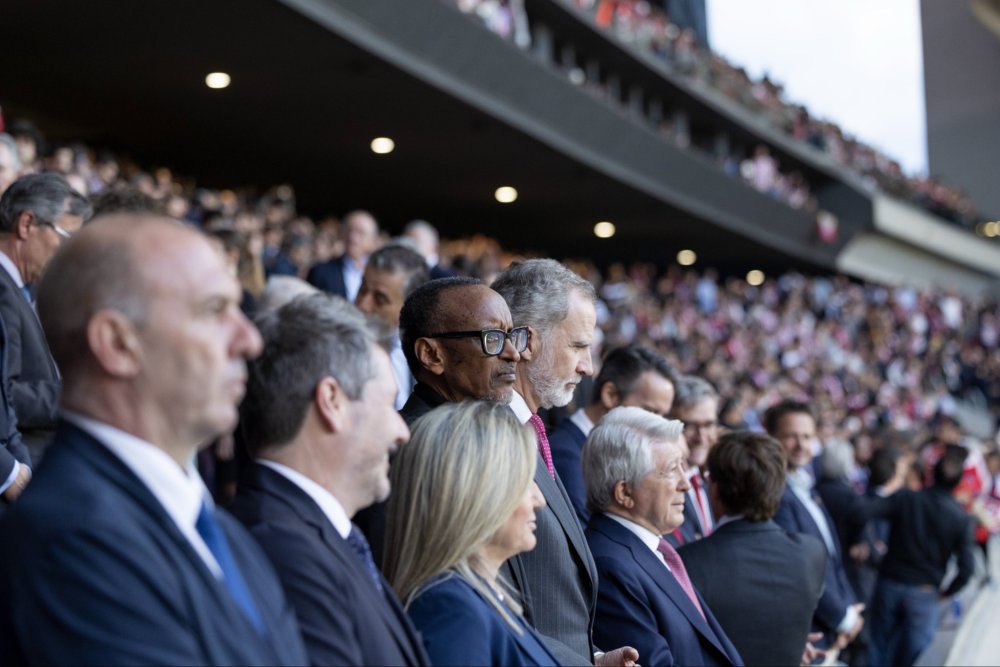
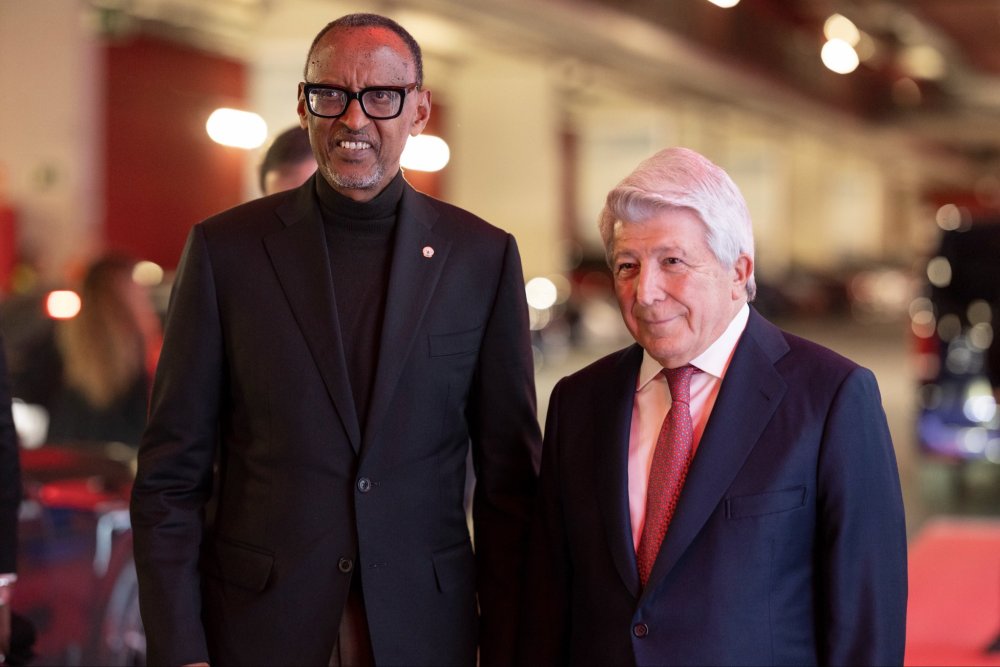
The talks come at a time when Rwanda–EU relations are undergoing a notable shift from traditional development assistance toward strategic, high-value economic cooperation. This transformation is largely driven by the EU’s Global Gateway strategy, a multi-billion-euro initiative aimed at building sustainable partnerships through investments in digital, energy, transport and health infrastructure.
Under the current multiannual financial framework, the EU allocated €260 million in grant funding to Rwanda for the 2021–2024 period, including €49 million in EFSD+ provisioning. For 2025–2027, an additional €134 million has been earmarked, alongside Rwanda’s participation in several multi-country EU programmes.
Through the “Team Europe” approach in Rwanda, the EU works alongside the European Investment Bank and member states including France, Germany, Belgium, Luxembourg, the Netherlands, Lithuania, Greece, Sweden, Austria and Denmark.
A key highlight of the evolving partnership has been support for Rwanda’s ambition to become a regional biotechnology and pharmaceutical hub. In October last year, during bilateral talks in Brussels between President Paul Kagame and Ursula von der Leyen, the EU announced €95 million in new funding to strengthen vaccine manufacturing in Rwanda.
The financing builds on earlier EU support of more than €93 million toward BioNTech’s Kigali facility, inaugurated in 2023 as the company’s first mRNA manufacturing site in Africa. The project is seen as a major step toward ensuring equitable access to vaccines and strengthening Africa’s capacity to respond to future health emergencies.
Rwanda’s development ambitions are guided by the National Strategy for Transformation and Vision 2050, which aim to achieve upper-middle-income status by 2035. The EU has positioned its cooperation framework to align with these goals, supporting economic transformation, green transition efforts and inclusive growth.
The discussions focused on further strengthening the longstanding partnership between Rwanda and the EU.
Speaking on Africa TV YouTube channel, Sindimwo suggested that those pressuring Rwanda to lift security measures along its border may have ulterior motives.
“If you come and tell me to lift my country’s defensive measures, what do you want? You want to attack me,” he said. “As for the Washington agreement, I don’t see anything meaningful in it given the ongoing tensions in the DRC.”
The government of the Democratic Republic of the Congo has called on countries including the United States to impose sanctions on Rwanda, accusing it of violating a peace agreement signed in Washington on December 4, 2025.
Sindimwo argued that sanctions would have little real impact on a country, noting that Burundi itself faced sanctions in 2016 yet continued to function. In his view, such measures mainly serve to intimidate.
“There are things that make me laugh,” he said. “They impose sanctions on you, so what happens? Were we not sanctioned? Did we stop existing? That is intimidation.”
At the National Dialogue Council held on February 5, 2026, President Paul Kagame explained that Rwanda deployed defensive measures along its border to prevent attacks by the FDLR terrorist group operating in eastern DRC.
President Kagame stressed that Rwanda will not accept any situation that undermines its security.
Sindimwo expressed support for Kagame’s decision to safeguard Rwanda’s security, saying no form of intimidation should prevent a leader from protecting their country and its citizens.
Gaston Sindimwo served as the Vice President of Burundi from 2015 to 2020.
The originally approved budget stood at Rwf 7,032.5 billion. The proposed adjustment trims Rwf 80.4 billion, primarily through more favorable financing terms for major initiatives like the New Kigali International Airport and a rescheduled RwandAir loan repayment, bringing the revised total to Rwf 6,952.1 billion.
Revenue collection from July to September 2025 reached Rwf 1,156.6 billion, closely aligning with the targeted Rwf 1,157.2 billion.
Presenting the progress update, Minister of Finance and Economic Planning Yusuf Murangwa highlighted advances across agriculture, infrastructure, energy, health, and social protection.
Agricultural production support featured prominently during the first quarter of the fiscal year. Farmers received 4,162 tonnes of improved seeds, including maize, wheat, and soybean, along with 50,452 tonnes of mineral fertilizer.
Climate resilience efforts are expanding through irrigation development, with Mahama I and II agricultural zones in Kirehe District now 75% complete. Crop and livestock insurance coverage also broadened, protecting 14,783 hectares of farmland, more than 16,000 cattle, and over 96,000 small livestock.
Industrial supply chains performed above expectations, with processing plants receiving more raw materials than initially projected. Export revenues remained strong, generating $104.6 million from coffee, $49.5 million from tea, $3.1 million from flowers, and $53.2 million from fruits and vegetables.
Transport infrastructure works continue to reshape connectivity across the country. Construction of 184.8 kilometers of tarmac roads is progressing steadily, including major corridors linking eastern and northern regions. Rehabilitation of feeder roads is also advancing, particularly in Rutsiro District and Karongi District, improving access between production areas and markets.
Energy access has expanded through grid extension, solar installations, and network upgrades. More than 34,000 households have been connected to the national electricity grid, while over 8,000 households now use solar power and dozens of public institutions have been electrified. Construction of the Nyabarongo II Hydropower Plant, expected to generate 43.5 megawatts, has reached 60% completion.
Water supply projects are advancing in multiple districts. Pipeline construction is underway in Nyamagabe District and Gisagara District, while rehabilitation of water networks across 13 districts is nearing completion under programs aimed at improving nutrition and public health outcomes.
Urban development initiatives are expanding housing and basic infrastructure. Servicing works are underway for more than 500 housing units in Gasabo District, while development of the planned Nyabisindu model settlement is progressing as part of broader efforts to promote organized urban growth.
Education and health investments remain central to the budget’s implementation. Thousands of teachers have been recruited, and new teacher training colleges are approaching completion.
Technology-focused education infrastructure continues to expand, while the modernization of Masaka University Teaching Hospital is nearing completion.
Digital health systems are now operational in hundreds of health centers, strengthening patient record management and continuity of care. At the same time, thousands of patients diagnosed with non-communicable diseases have begun receiving structured follow-up treatment.
Social protection programs have provided employment and direct support to vulnerable households. Public works initiatives created jobs for tens of thousands of people, while nutrition programs supplied milk and fortified foods to young children, pregnant women, and breastfeeding mothers.
Environmental management efforts are also advancing. Restoration of major wetlands in Kigali has reached 78%, and tens of thousands of fuel-efficient cookstoves have been distributed to reduce reliance on firewood.
In the justice sector, community mediation committees and legal aid services resolved the vast majority of cases received, while authorities reported the recovery of approximately Rwf 300 million in misappropriated public funds.
Minister of Finance and Economic Planning Yusuf Murangwa highlighted advances across agriculture, infrastructure, energy, health, and social protection in the 2025/2026 fiscal year.
The clarification followed remarks by Jeune Afrique journalist Romain Gras, who appeared to question why President Kagame did not attend the summit, noting that he had been in the United States over the weekend attending the NBA All-Star Game.
Responding to the comments, Nduhungirehe emphasized that many African leaders were also absent and that Rwanda had official representation at the highest level.
“President Paul Kagame did not personally attend the 39th Session of the African Union Assembly, just like nearly half of the African Heads of State. In Addis Ababa, he was duly represented by Prime Minister Justin Nsengiyumva. So, there is nothing new under the sun!” the minister said.
The AU summit was held in Addis Ababa, Ethiopia, on February 14 and 15, 2026. Rwanda was represented by Prime Minister Justin Nsengiyumva, who addressed key continental priorities, including health and security, in line with the AU’s Agenda 2063 framework.
On regional security, Nsengiyumva told fellow African leaders that the government of the Democratic Republic of the Congo continues to violate the Washington peace agreements and the Doha principles. He stressed that all parties concerned must honour their commitments to create conditions for sustainable peace.
The Prime Minister further argued that actors directly involved in the conflict in eastern DRC should not participate in mediation efforts led by the AU, warning that such involvement undermines trust and raises concerns over impartiality.
Meanwhile, President Kagame was in Los Angeles on a working visit. He met with Adam Silver, Commissioner of the National Basketball Association, and Deputy Commissioner Mark Tatum, to discuss ongoing cooperation between the league and Rwanda in developing basketball talent.
He also held talks with Steve Ballmer, owner of the Los Angeles Clippers, whose franchise promotes Rwanda’s tourism brand through the “Visit Rwanda” partnership launched in September 2025.
The NBA All-Star Game took place at the Intuit Dome, the Clippers’ 18,000-seat arena in Los Angeles, where Visit Rwanda branding has been displayed since last year.
Nduhungirehe emphasized that many African leaders were also absent and that Rwanda had official representation at the highest level.President Paul Kagame was represented by Prime Minister Justin Nsengiyumva.
These figures are part of the 2025 annual report released by African Parks, which manages the park in partnership with the Rwanda Development Board. The report highlights the park’s achievements across conservation, tourism, community development, and global recognition.
In 2025, Rwandan nationals and international tourists each accounted for 47 percent of visitors, while foreign residents made up 6 percent.
The park was able to cover its core operating costs through its own revenue, marking a milestone as the first park under African Parks management to achieve operational self-sufficiency.
Besides, Akagera earned international acclaim after being listed among the world’s top 25 must-visit destinations for 2026 by National Geographic. The recognition celebrates over a decade of restoration work that has reestablished the park as a Big Five destination, showcasing Rwanda’s growing presence in global conservation and tourism.
Akagera National Park received nearly 60,000 visitors in 2025.
Wildlife conservation milestones also marked the year. In June, 70 southern white rhinos were translocated from South Africa in the largest movement of its kind under the Rhino Rewild Initiative. Some of these rhinos have already given birth, signaling successful adaptation.
Routine wildlife monitoring continued, with 17 white rhinos and 7 black rhinos darted for tracking, along with elephants and lions. A ground survey counted 70 giraffes, while elephant identification projects documented 92 individuals, representing about 75 percent of the park’s estimated 142 elephants.
Tourism infrastructure expanded with the opening of Wilderness Magashi Peninsula, an exclusive retreat overlooking Rwanyakizinga Lake. The new facility strengthens premium tourism offerings and supports the park’s sustainability goals.
Law enforcement and anti-poaching efforts remained effective. Rangers completed over 21,000 field days, covering 134,076 kilometers in patrols. Only five animals were poached inside the park, while collaborative operations outside the park resulted in 135 arrests and 20 prosecutions. The number of illegal fires dropped dramatically, from 13 in 2024 to just one in 2025.
Community engagement and capacity building were a key focus. More than 124,000 community members participated in 30 outreach events, including the Rhino Velo Race, Rhino Foot Race, and Lion’s Cup football tournament. Over 4,000 individuals accessed the Savannah Learning Centre, nearly 2,000 visited the community library, and 4,300 students and teachers participated in school visits. The park also supported 30 local teachers in strengthening eco-clubs focused on biodiversity and climate change.
Community enterprises benefited significantly, generating $555,242 in revenue for approximately 1,200 individuals. Beekeeping cooperatives produced over 17 tons of honey, while fishing groups earned $122,356. Other income came from guiding services, hospitality initiatives, and procurement of goods and services from local businesses, contributing an additional $637,000. Through Rwanda’s Tourism Revenue Sharing Program, $886,379 was allocated for local development projects.
Infrastructure development in 2025 included the completion of the Gishanda Fish Farm Aquaculture Training Centre, fencing of Karenge Bush Camp, maintenance of Ruzizi Tented Lodge, and road upgrades totaling 27 kilometers, bringing the park’s operational road network to 511 kilometers. New ranger facilities, expanded gift shops, and a café kitchen were also completed.
Akagera National Park spans more than 1,200 square kilometers, covering the districts of Kayonza, Gatsibo, and Nyagatare.
Over the past 30 years, Rwanda has made significant efforts to restore the park, which was once heavily impacted by poaching, resulting in the extinction of some species.
In 2025, elephant identification projects documented 92 individuals, representing about 75 percent of Akagera National Park’s estimated 142 elephants.Akagera National Park is home to diverse species including giraffes.
In a message posted on X on February 13, 2026, President Kagame praised Mottley’s renewed mandate, writing, “Warm congratulations to my sister, Prime Minister Mia Amor Mottley, on her well-deserved re-election.”
He emphasized that Rwanda values the strong friendship between the two countries, grounded in shared principles of self-determination, resilience, and commitment to delivering prosperity and dignity for our people.
“We look forward to further deepening our cooperation in the years ahead.I wish you and the people of Barbados continued success and progress,” he added.
Mottley secured a decisive victory after her Barbados Labour Party won all 30 seats in the parliamentary general elections. She defeated Ralph Thorne of the opposition Democratic Labor Party.
Addressing citizens after her victory, Mottley said her administration was committed to transforming the country, pledging continued progress in healthcare, public security, and transport.
Barbados, a Caribbean island nation covering 439 square kilometres, is known for its advanced tourism sector and its ability to attract foreign investment.
Rwanda and Barbados maintain strong bilateral relations. The two countries have signed cooperation agreements in several sectors, including aviation, paving the way for RwandAir to operate flights to Barbados.
In November 2022, Prime Minister Mottley inaugurated Barbados’ diplomatic mission in Rwanda during an official visit that followed President Kagame’s trip to Barbados earlier that year.
In February 2025, President Kagame held talks with Prime Minister Mottley and Daniel Chapo in Addis Ababa during the 38th Ordinary Session of Heads of State and Government of the African Union.
The summit, taking place from February 14–15, 2026, is being held under the theme: “Assuring Sustainable Water Availability and Safe Sanitation Systems to Achieve the Goals of Agenda 2063.” It marks the pinnacle of the AU Summit and brings together African leaders to deliberate on key political, security and development priorities.
Upon arrival at Bole International Airport, the Prime Minister was received by Ethiopia’s Minister of Peace, Mohamed Edris, and State Minister for Foreign Affairs, Ambassador Berhanu Tsegaye.
This year’s theme places water security at the center of Africa’s transformation agenda. With more than 400 million Africans lacking access to clean water, leaders are expected to discuss sustainable water management and sanitation systems as essential pillars for public health, climate resilience and conflict prevention. The discussions align with Agenda 2063, the AU’s long-term blueprint for inclusive growth and prosperity.
Beyond the thematic focus, the Assembly is expected to address high-stakes political and security issues. Leaders will review the situation in Sudan and South Sudan, deliberate on developments in the Sahel region, and appoint 10 new members to the Peace and Security Council, the AU organ responsible for decisions on peace operations and sanctions.
The summit also marks a leadership transition within the Union, as Angola hands over the rotating AU Chairpersonship for 2026 to Burundi.
On the margins of the summit, Prime Minister Nsengiyumva will attend the second Italy–Africa Summit on February 13, which will assess progress under Italy’s Mattei Plan aimed at strengthening political and economic partnerships with African countries.
On February 15, he is scheduled to participate in the AU High-Level Ad Hoc Committee on South Sudan, where regional leaders are expected to review the evolving security situation, assess progress in the implementation of the peace agreement, and deliberate on coordinated efforts to prevent further escalation of tensions.
The concert will take place at BK Arena on March 17, before the tour continues to SunBet Arena in Pretoria, South Africa, on March 20.
Move Afrika blends world-class live music with social impact programs, aiming to create jobs, support youth entrepreneurship, and provide skills training across Africa. The initiative also engages local artists, production crews, and vendors, boosting capacity in host cities while delivering a world-class entertainment experience.
The first Move Afrika in Rwanda, held in December 2023, featured Kendrick Lamar and employed over 1,000 Rwandans, with 75% of the production crew sourced locally. The event showcased African talent including Zuchu, Bruce Melodie, DJ TOXXYK, Sherrie Silver, Ariel Wayz, Kivumbi King, and Bruce The 1st.
The 2025 edition saw EGOT-winning John Legend take the stage at BK Arena, performing hits such as “All of Me” and “Ordinary People” in outfits designed by Rwandan fashion brands Moshions and Tanga. That edition employed 90% local production staff and extended the tour to Lagos, Nigeria.
Move Afrika 2026 promises to continue this tradition, with Doja Cat delivering an electrifying performance while supporting local entrepreneurship and skill development. Tickets for Kigali and Pretoria are [already on sale->https://www.moveafrika.org/tour], with fans encouraged to secure their spots early for one of Africa’s most high-profile music events of the year.
{{Who is Doja Cat?
}}
Born Amala Ratna Zandile Dlamini, Doja Cat is an American rapper, singer, songwriter, and producer who has become one of the most prominent figures in modern pop and hip-hop. Known for her “chameleon” ability to switch between hard-hitting rap and melodic pop, she combines eccentric, internet-savvy personality with bold artistic vision.
The 30-year-old first gained massive attention in 2018 with the viral novelty track “Mooo!”, a DIY music video that showcased her talent for creating viral content. Her 2019 album Hot Pink featured the global hit “Say So”, which topped the Billboard Hot 100 after a remix with Nicki Minaj.
The 2021 album Planet Her solidified her superstar status with hits such as “Kiss Me More” (feat. SZA), “Need to Know”, and “Woman”, earning her a Grammy for Best Pop Duo/Group Performance. In 2023, she pivoted to a darker, rap-focused sound with Scarlet, led by the #1 hit “Paint the Town Red”, and her 2025 album Vie returned to her pop-leaning roots while maintaining her experimental edge.
Doja Cat is also known for her visual artistry, treating fashion and music videos as performance art, and her digital-native approach, often interacting directly with fans on social media. A self-taught musician, she learned to sing, rap, and produce after dropping out of high school at 16, using GarageBand to hone her craft.
With Move Afrika 2026, Kigali audiences will get a front-row experience of one of today’s most innovative and genre-defying artists, combining global stardom with a uniquely African stage experience.
The Minister of Finance and Economic Planning, Yusuf Murangwa, told Parliament on February 12, 2026, that the overall cost of financing the new airport has decreased after the government shifted from more expensive commercial borrowing options to concessional funding arrangements.
He made the remarks while presenting a draft amendment to Law No. 018/2025 of June 30, 2025, which sets out the national budget for the 2025/2026 fiscal year.
Bugesera International Airport is one of Rwanda’s flagship infrastructure projects and is expected to play a central role in boosting economic growth and positioning the country as a regional and continental aviation hub.
According to Minister Murangwa, initial financing plans included borrowing nearly $400 million, primarily through commercial financial institutions, which typically charge higher interest rates. However, continued engagement with development partners, particularly the World Bank, resulted in a 95% guarantee on funds allocated for the airport’s construction.
The guarantee has enabled Rwanda to secure significantly lower interest rates and more flexible borrowing terms.
“This arrangement allows us to draw funds when needed,” Murangwa said. “Construction activities are ongoing and will not be interrupted. The key difference is that financing will now be cheaper, and we will access funds based on actual requirements.”
He added that while financing costs for the airport have declined, allocations for other government projects have increased by nearly Rwf 250 billion.
{{Construction progress
}}
In May 2025, Jules Ndenga, Chief Executive of Rwanda’s aviation company, told IGIHE that major works, including the runway, drainage systems, and other critical infrastructure, were completed at the end of 2024. Construction has since continued on terminal buildings and related facilities.
The airport is being built by a consortium comprising Mota-Engil of Portugal, which initiated the project, UCC Holding of Qatar, and Consolidated Contractors Company of Greece. The three firms formed a joint venture known as UMC, which holds the construction contract with the government.
The first phase of the project has created approximately 2,000 jobs, with total employment expected to reach 6,000 once the airport is fully completed.
Beyond direct employment, the project has stimulated local economic activity in Bugesera District. New businesses, including restaurants in areas such as Nyabagendwa and Nyamata that cater to construction workers, have emerged, creating additional jobs and income opportunities for residents.
The airport is scheduled for completion in 2027. Upon conclusion of the first phase, it will have the capacity to handle seven million passengers annually. A second phase, planned for completion in 2032, is expected to expand capacity to 14 million passengers per year.
Middle Eastern carrier Qatar Airways holds a 60% stake in the airport project, which is estimated to cost around $2 billion.
On Thursday, February 12, 2026, the Minister of Finance and Economic Planning, Yusuf Murangwa, told lawmakers that the current law was enacted in 2017 and revised in 2021.
However, he said, recent assessments, including a 2024 safeguards review by the International Monetary Fund (IMF), found legal gaps in the law governing BNR and recommended reforms to address them.
He emphasized that the revision aims to establish a stronger operational framework aligned with the central bank’s mandate, enhance its autonomy in staff management, governance and financial management, strengthen transparency in cooperation, and reinforce accountability.
While some provisions will remain unchanged, others will be revised and new ones added so that BNR’s legal and regulatory framework aligns with governance practices used by central banks worldwide and with international standards.
One major change concerns capital increases from the government. The current law does not clearly provide for recapitalizing BNR when its capital declines. Article 67 of the draft law establishes a clear procedure requiring the government to cover any capital shortfall within six months after receiving BNR’s request.
Murangwa noted that such recapitalization would be rare and used only when it is the sole way for BNR to maintain the financial independence necessary for sustainable operations.
The draft law also protects BNR leaders, staff, agents and decision-making bodies from external interference when exercising their authority or performing their duties. The existing law does not fully guarantee institutional autonomy in implementing BNR’s powers or achieving its objectives. The revised Article 4 strengthens independence for staff, representatives and decision-makers, shielding them from outside influence.
Another proposed change limits the powers that the Board of Directors can delegate to the Governor of the central bank. Supervisory and oversight responsibilities would no longer be transferable to the Governor.
The bill also gives BNR authority to impose administrative sanctions on individuals or legal entities that fail to comply with its regulations, regardless of criminal proceedings, while remaining consistent with other applicable laws.
Regarding governance, the number of Board members would increase to at least 11, selected based on expertise in accounting, risk management, law, technology or other fields relevant to BNR’s work. To strengthen independence, no more than 30% of Board members would be public officials, excluding the Governor, Deputy Governor and one member drawn from academia or research.
The proposal also allows the appointment of non-BNR members to the Monetary Policy Committee and the Financial Stability Committee to reinforce their independence.
The draft law reaffirms that BNR manages Rwanda’s currency, while the authority to change the currency remains with the President of the Republic as provided by the Constitution. BNR would retain an advisory role on currency changes.
Another expected reform expands BNR’s powers in foreign exchange management and protection of other financial assets.
The current law provides limited authority in this area. Given rapid financial sector growth and the increasing range of financial instruments, permitted operations would expand to include currency and other eligible assets such as support for cross-border trade, collateral instruments and a wider range of approved investments.
Murangwa added that, to strengthen financial stability and sound monetary management, the law will also establish a clear timeframe for repayment of loans BNR grants to the government.
Finally, the bill formally establishes an internal audit function within BNR (as provided in Article 63 of the draft law) to enhance oversight, risk management and operational effectiveness.