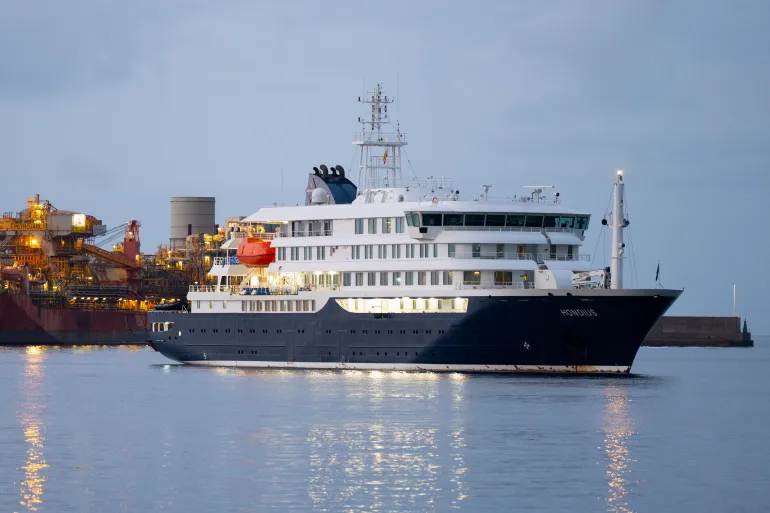
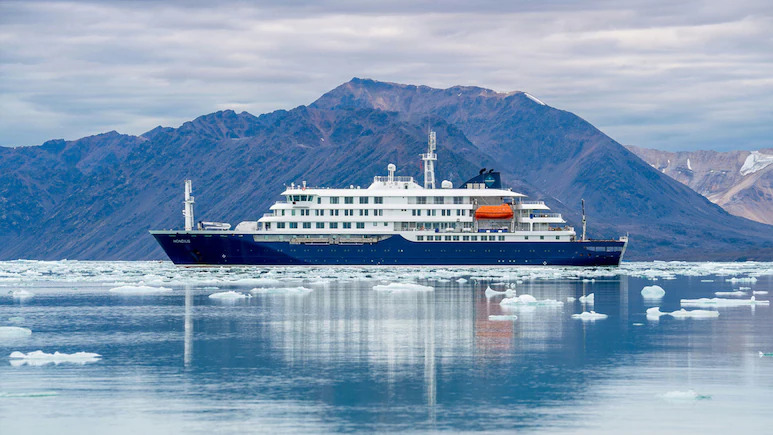
The Dutch-flagged MV Hondius reached waters near the Port of Granadilla early on Sunday, escorted by a Spanish Civil Guard vessel, according to maritime tracking data. The ship had departed from Cape Verde on Wednesday after the World Health Organisation (WHO) and the European Union requested Spain take charge of managing the evacuation.
Health authorities confirmed the outbreak has so far been linked to at least eight illnesses on board, including three deaths, a Dutch couple and a German national. Six cases have been confirmed as hantavirus infections, with two additional suspected cases under investigation, according to the WHO.
The Dutch-flagged hantavirus-stricken cruise ship MV Hondius arrives at the industrial port of Granadilla de Abona on the island of Tenerife in Spain’s Canary Islands.
Hantavirus is typically transmitted through contact with infected rodents or their droppings, though rare person-to-person transmission has been reported in limited circumstances. European public health officials have classified all passengers as high-risk contacts as a precaution.
Spanish authorities said medical teams boarded the vessel on Sunday morning to test passengers and crew before disembarkation begins. Evacuations are expected to start between 7:30am and 8:30am local time, with Spanish nationals leaving first, followed by other nationalities in staged groups.
Passengers will be transferred from the ship in small boats to shore, where sealed buses will take them to Tenerife’s main airport, roughly 10 minutes away. From there, they will board flights arranged by their respective governments.
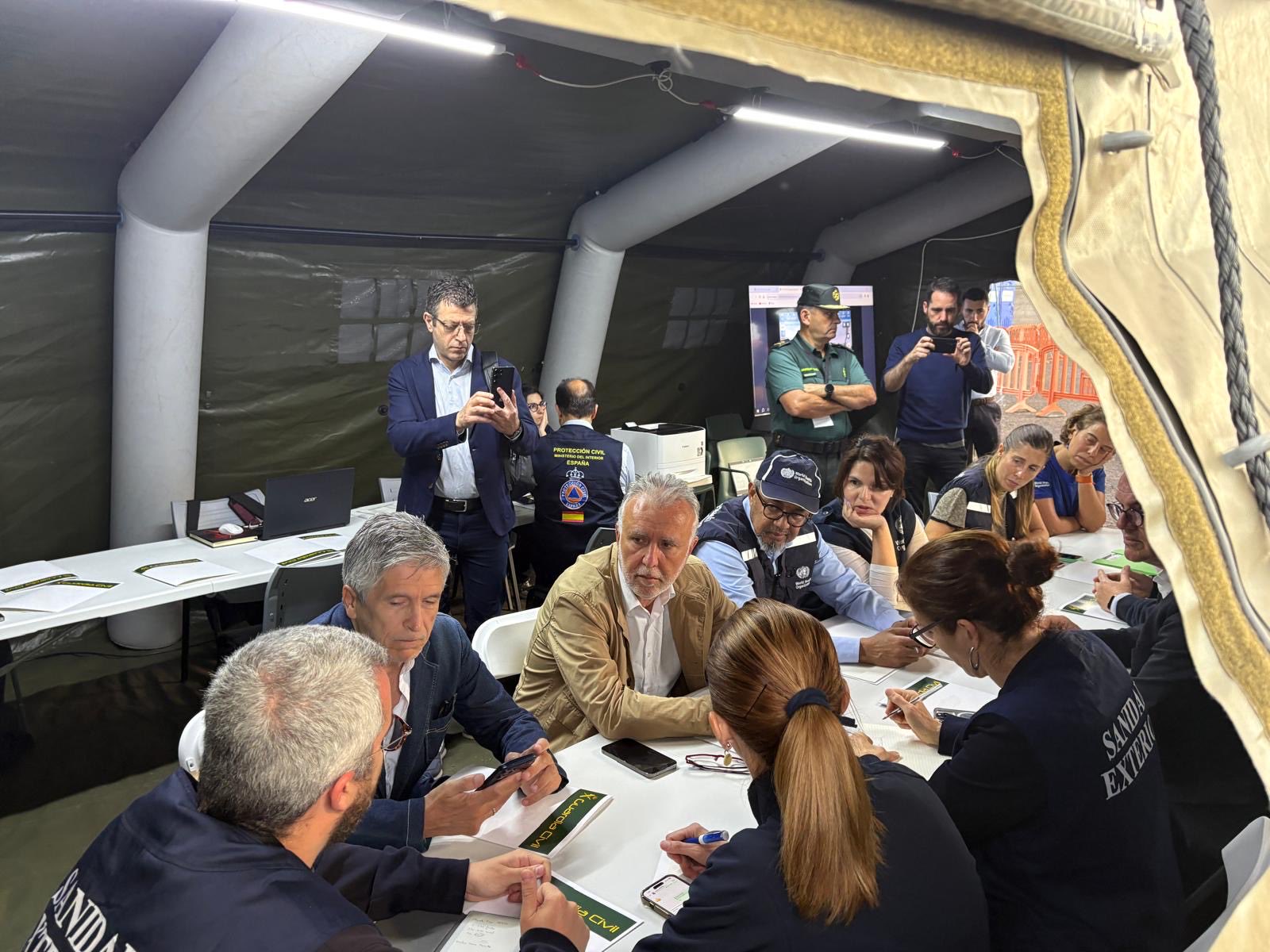
WHO Director-General Tedros Adhanom Ghebreyesus travelled to Tenerife to coordinate the response alongside Spanish ministers.
Several countries, including the United States, Germany, France, Belgium, Ireland, and the Netherlands, are sending aircraft for repatriation. The ship’s 147 passengers will undergo further medical monitoring upon return, with some facing quarantine or extended observation periods depending on national protocols.
In Spain, fourteen nationals will be transported to a military hospital for isolation and testing, while 17 American passengers will be taken to the University of Nebraska Medical Center’s National Quarantine Unit. Two Dutch passengers will be among the second group to disembark.
WHO Director-General Tedros Adhanom Ghebreyesus travelled to Tenerife to coordinate the response alongside Spanish ministers. In an open letter, he reassured residents, stressing: “This is not another Covid,” while officials emphasised that the risk to the wider public remains low.
Despite the scale of the operation, daily life in Granadilla appeared largely unaffected on Sunday morning, with residents continuing routine activities as emergency teams prepared nearby.
After evacuation, the MV Hondius is expected to sail to Rotterdam, where it will undergo full disinfection. Meanwhile, health authorities across multiple countries continue tracing potential contacts linked to passengers who had already disembarked during the voyage, which began in Argentina in early April.
The Dutch-flagged hantavirus-stricken cruise ship MV Hondius arrives at the industrial port of Granadilla de Abona on the island of Tenerife in Spain’s Canary Islands.
“We classify everybody on board as what we call a high-risk contact,” Maria Van Kerkhove, WHO’s director of epidemic and pandemic preparedness and prevention, told a media briefing.
She noted that currently “nobody on board has any symptoms,” but recommended “active monitoring and follow-up of all the passengers and crew who disembark for a 42-day period.”
However, she stressed that the risk to the public and people in the Canary Islands, where the MV Hondius is expected to dock on Sunday, remains “low.”
According to a WHO Disease Outbreak News update on Saturday, severe respiratory illness was first reported on the cruise ship on 2 May. At the time, there were 147 passengers and crew members onboard, while 34 others had already disembarked. All WHO’s contact points in concerned countries have been informed and are supporting international contact tracing.
As of 8 May, eight symptomatic cases have been reported, including three deaths. Six cases are laboratory-confirmed as Andes virus (ANDV) hantavirus infections.
The WHO urged the countries involved to continue public health coordination, including contact tracing, case management, infection prevention and transparent communication.
Early symptoms of hantavirus infection include headache, dizziness, chills, fever, myalgia, and gastrointestinal problems, such as nausea, vomiting, diarrhoea, and abdominal pain, according to the WHO.
Given that pre-symptomatic transmission in past ADNV outbreaks cannot be entirely ruled out, WHO also recommends self-monitoring, medical evaluation and mask-wearing for low-risk contacts if symptoms occur.
The World Health Organization (WHO) said on Saturday that all people aboard a cruise ship affected by a hantavirus outbreak should be considered “high-risk” contacts and actively monitored for 42 days.
On May 6, 2026, Tshisekedi told journalists in Kinshasa that Congolese citizens were examining the Constitution to determine whether amendments were necessary. He also stated that if the conflict in eastern Democratic Republic of the Congo continues until 2028, elections may not be held.
“If we fail to stop this war, unfortunately we may not be able to organize elections in 2028,” Tshisekedi said. “But it would not be because I refused to organize them. The capacity exists, we could do it, but we cannot organize elections without North Kivu and South Kivu.”
The Congolese president also questioned whether the current Constitution should remain unchanged, while rejecting claims that constitutional reform was linked to ambitions for a third term in office.
“What is so special about this Constitution? Should we leave it as it is? What prevents us from reviewing it?” Tshisekedi said. “One thing we should not do is connect this to a third term. I do not want a third term, but if the people ask me to lead for a third term, I would accept.”
Speaking during a press conference in Goma on May 8, Nangaa criticized Tshisekedi, who recently apologized to Congolese citizens for failing to carry out the war against Rwanda that he had promised during the final stages of his 2023 presidential campaign.
Tshisekedi had said he was misled into believing that the Congolese army was strong, only to later discover that it had been infiltrated by enemies. He linked this to the growing number of arrests and prosecutions involving military officers accused of betraying the country.
Nangaa suggested that Tshisekedi’s departure from office could come sooner than expected.
“Do not be surprised if he leaves in the coming days. He will go,” Nangaa said. “And do not be surprised to hear him say, ‘I did not know I was president.’ He will say, ‘I did not know it was my responsibility to guarantee Congo’s security or to do this or that.’”
The AFC/M23 leader argued that efforts to amend the Constitution would fail and called on Congolese citizens from different sectors to unite behind the alliance in order to block Tshisekedi’s plans.
“He wants to change the Constitution. If he is capable, let him try,” Nangaa said. “But as far as we are concerned, and I speak on behalf of AFC/M23, the time is now. This press conference allows Congolese people to understand our objective. AFC/M23 calls on all politicians and all citizens to support the struggle to protect the DRC.”
Nangaa further stated that AFC/M23 seeks support from Congolese living in Kinshasa, those in exile, and even some members of the ruling Union Sacrée coalition, claiming that certain figures within the alliance are already holding secret talks with AFC/M23.
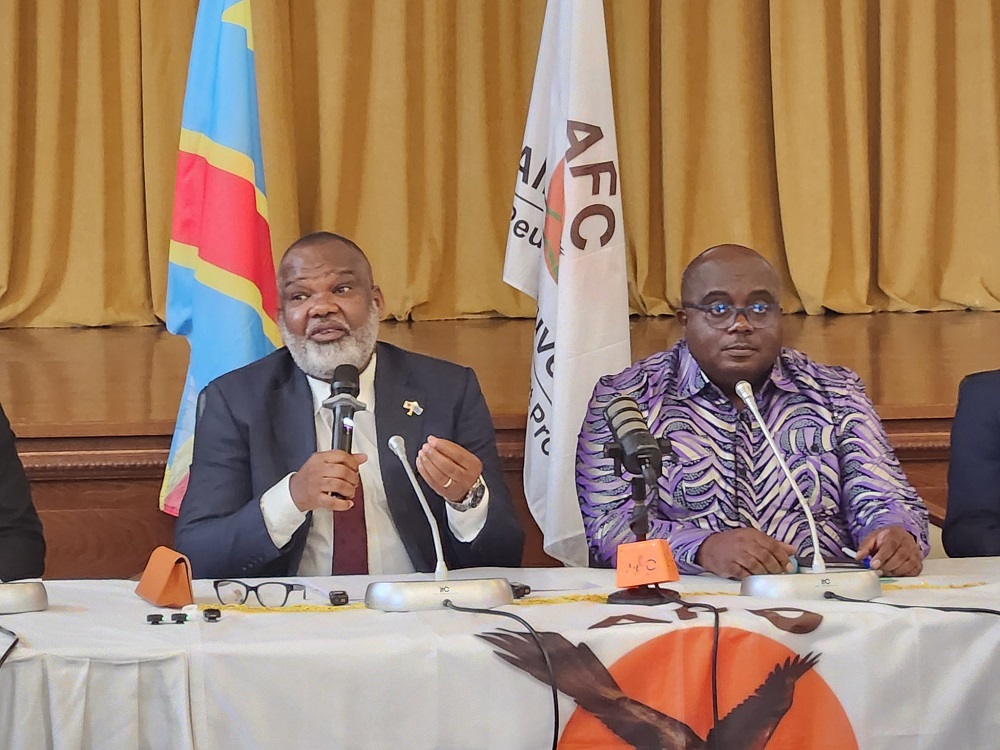
Corneille Nangaa, the leader of the AFC/M23 alliance, has declared that President Félix Tshisekedi has limited time left in office
According to the fund, the savings were collected between May 1 and May 8, 2026. The increase pushed the total assets under management to Rwf97.4 billion.
RNIT-Iterambere also indicated that investors withdrew Rwf380 million from the fund during the same period. The value of one unit share stood at Rwf271.72 during the week.
Individuals who save through RNIT-Iterambere Fund begin earning returns the following day after making their investment. The returns continue to accumulate throughout the year, with investors currently receiving an annual return of 11.78%.
The RNIT-Iterambere Fund was established by the Government of Rwanda in 2014 and became fully operational in 2016.
The initiative was introduced to promote a savings culture among Rwandans while helping them understand investment management and earn returns on their savings over time. Savings in the fund can start from as little as Rwf2,000.
RNIT-Iterambere also indicated that investors withdrew Rwf380 million from the fund during the same period.
The move comes as Rwanda continues encouraging residents to use public transport following the sharp rise in global and local fuel prices.
Since the campaign began, the number of daily bus commuters in the City of Kigali has increased from 180,000 to 230,000 passengers.
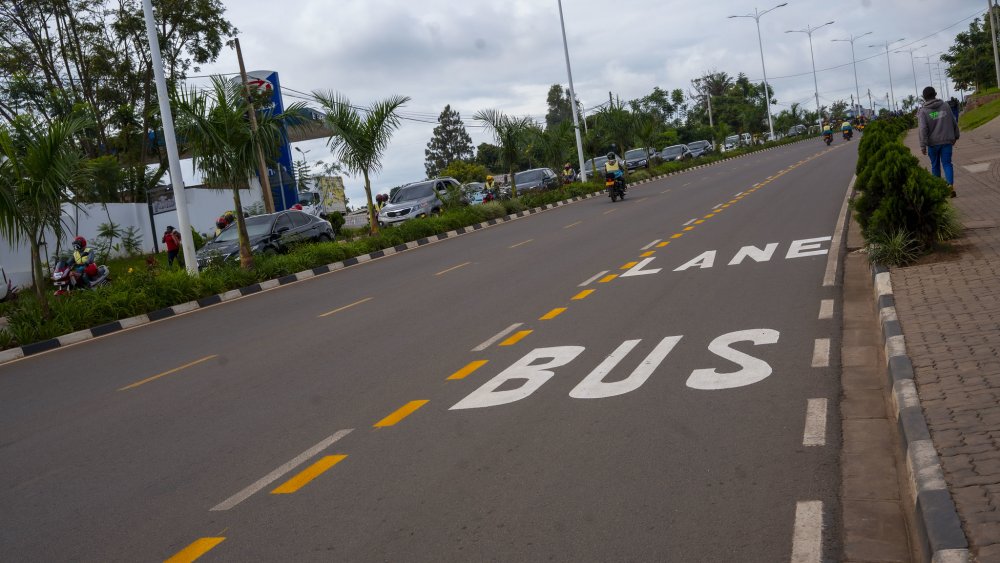
Uwihanganye explained that the recently introduced bus lanes were designed to improve efficiency by allowing buses to move faster and depart at intervals of five minutes.
“Since last week, when these bus lanes were introduced, buses operating within those lanes are expected to depart every five minutes and move quickly,” he said.
Passengers using the buses say transport services have improved compared to before, noting that buses no longer spend excessive time stuck in traffic or waiting to fill up with passengers before departing.
“The fact that people appreciate the service is reflected in the numbers. In just one week, 10,000 more passengers started using buses, and this is only the beginning,” Uwihanganye added.
He also noted that traffic congestion has eased, especially during peak hours when vehicles previously remained stuck for long periods during morning and evening commutes.
The City of Kigali recently designated several large public parking areas to support the park-and-ride initiative, where motorists can leave their private cars and continue their journeys using buses.
The designated parking areas include Kabuga Bus Park, Stade Amahoro parking area in Rwahama, Kigali Pele Stadium, the former Magerwa site in Ruyenzi, Kamonyi District, and Gahanga.
Fuel prices in Rwanda have continued to rise sharply, with a litre of petrol currently costing Rwf2,938 while diesel is priced at Rwf2,205 per litre.
Passengers using the buses say transport services have improved compared to before, noting that buses no longer spend excessive time stuck in traffic or waiting to fill up with passengers before departing.
“This is not COVID” and its risk to the general population remains “absolutely low,” Lindmeier said at a briefing in Geneva, as the agency continues to coordinate the response to the outbreak on a cruise ship in the Atlantic.
“I need to stress again and again, even those who have been sharing cabins don’t seem to be both infected in some case … it’s not spreading anything close to how COVID was spreading,” he said.
Three people have died and several others have fallen ill aboard the cruise ship MV Hondius, prompting a major international public health response involving countries across Europe, Africa and Latin America.
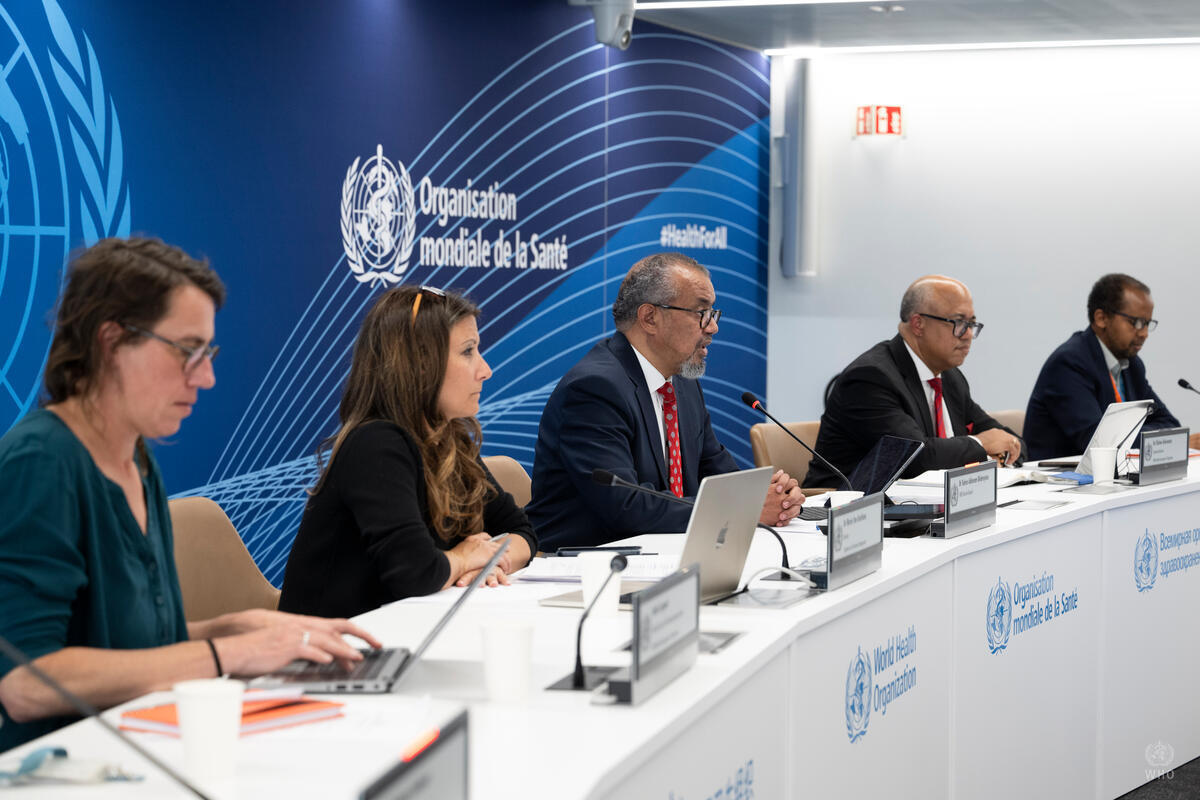
Media briefing on Hantavirus hosted by Dr Tedros at WHO headquarters, Geneva, Switzerland, May 7. [Photo / WHO]
The move came after Ghana requested that the African Union (AU) debate at the upcoming AU Mid-Year Coordination Summit in June what it described as “xenophobic attacks” against African nationals in South Africa.
In a statement, South Africa’s Department of International Relations and Cooperation (DIRCO) said the government had “swiftly condemned acts of confrontation and intimidation” following sporadic incidents since late April involving some immigrants, including citizens of fellow African countries.
Since late April, protests against illegal migration, some of which turned violent, have taken place in cities including Johannesburg, Pretoria and Durban, with protesters accusing foreign nationals of taking jobs and business opportunities.
DIRCO said law enforcement agencies had been instructed to ensure the safety of citizens, residents and visitors, and to hold perpetrators accountable in accordance with the law.
DIRCO Minister Ronald Lamola has engaged counterparts from several African countries, including Ghana and Nigeria, to brief them on developments and reaffirm South Africa’s commitment to protecting the rights of all people living in the country, said the department.
The department also dismissed social media claims that Ghanaian and Nigerian nationals had been killed during recent protests, saying there was “no credible evidence” to support such allegations.
According to DIRCO, about 3 million migrants currently reside in South Africa, around 90 percent of whom are from other African countries.
The government acknowledged that migration pressures, unemployment and irregular migration had at times contributed to tensions between local communities and foreign nationals.
Pretoria reiterated its support for regional and continental migration frameworks, noting that many African countries continue to face economic and border management challenges linked to migration.
DIRCO said South Africa was reviewing its immigration policy framework to better address these challenges and remained open to “continued diplomatic engagement and constructive dialogue” with African countries on issues of mutual concern.
“South Africa will continue to lead with a Pan-African heart,” Lamola said. “Our commitment is to solidarity, the rule of law, and the safety of all who reside within our borders. Migration must be managed through cooperation, compassion and continental responsibility.”
A march protesting against undocumented migrants in Durban on 6 May, 2026. AFP
Speaking about her past, Shakira revealed that her troubles began when she was just 20 years old after being impregnanated by a Burundian footballer who later became a well-known figure in Rwandan football. Although she once considered him the man of her dreams, their relationship eventually turned toxic.
“He made me pregnant before we got married. At that time, he left for Kinshasa to play for AS Vita Club while I was four months pregnant. By the time he returned, our child was already one year old,” she said.
According to Shakira, the footballer later married her and initially treated her well. However, life in marriage soon became unbearable due to his repeated infidelity, emotional mistreatment, and violence.
“I truly loved him, and I believe he loved me too because he would not have married me otherwise. But after taking me into his home, life became extremely difficult,” she explained.
She said she struggled emotionally after constantly hearing reports that her husband was spending time with other women, including girls featured in popular music videos. The rejection she faced from her in-laws only made the situation worse.
“For me, moving to Dubai felt like an escape because I wanted to get far away from him. People were always calling me saying they had seen him with another girl in a car or with some famous video vixen. It reached a point where I felt like my heart would explode,” she said.
At the time, Shakira was still attending university. She recalled how difficult life became, explaining that even after returning home late from classes, her husband refused to eat food prepared by a housemaid, forcing her to cook for him late into the night.
Eventually, the footballer demanded that they begin sleeping in separate rooms and instructed her never to question where he went or what he was doing.
Exhausted by the toxic relationship, Shakira decided to leave the marriage despite criticism from her own family, who accused her of destroying her home.
“After we separated, I had a group of friends who were also Slay Queens. They helped me arrange a flight to Dubai,” she said.
Before leaving Rwanda, she entrusted her child to one of her close friends.
Life among celebrities in Dubai
In 2012, Shakira moved to Dubai, where she spent the next seven years. Upon arrival, she was welcomed by acquaintances who had already settled there, and she initially lived with another woman who also had a child.
After becoming familiar with the city, she entered the nightlife industry through a job commonly known as “hosting,” which involved entertaining and receiving guests in clubs and bars.
Through that work, she interacted with wealthy and influential individuals, including international celebrities, many of whom became part of her social circle.
Shakira recalled that shortly after suffering a miscarriage and while still struggling emotionally, she met a foreign man on her first day working in Dubai who took interest in her and gave her $1,300, money she says helped her begin rebuilding her life.
“I used to host celebrities like Davido and Kizz Daniel. Many people knew me there,” she said.
“I lived a life surrounded by influential people. I met children of presidents, musicians, and other powerful individuals almost every day while working there. There were also several well-known girls from Rwanda involved in the same lifestyle, but I cannot mention their names.”
Among the celebrities Shakira says she interacted with during her time as a “Slay Queen,” she mentions Nigerian music star Davido as one of the famous artists she met and hosted.
How she connected wealthy men with escorts in Dubai
Mukaruziga revealed that although she became part of the high-end escort lifestyle often associated with “Slay Queens,” she personally tried to avoid becoming deeply involved in prostitution despite being surrounded by wealthy and influential men in Dubai.
Instead of sleeping with the celebrities and rich clients she met through nightlife hosting, she said she chose to introduce them to other women.
“In order to maintain that lifestyle and keep my connections, I avoided becoming sexually involved with them because I knew that once a celebrity sleeps with you, the next day he may never speak to you again,” she explained.
“So instead, I connected them with other girls. The man would meet the girl he wanted, they would do whatever they wanted together, but afterward he would still continue calling me and keeping in touch with me because I had protected myself from getting directly involved.”
Shakira said one of the reasons she managed to avoid going too deep into prostitution was because she was in a relationship with a Kenyan man during her years in Dubai. According to her, he often accompanied her to hosting events and nightlife venues, which limited opportunities for her to become intimate with other men.
“While I was in Dubai, I dated a Kenyan man who was financially stable. During the time I worked in hosting, he was always by my side, and that helped me avoid getting deeply involved in prostitution. We went everywhere together,” she said.
‘Slay Queens’ and the illusion of luxury
After spending nearly a decade living the “Slay Queen” lifestyle, traveling between countries and entertaining wealthy clients who paid enormous sums of money, Shakira says many women involved in that world begin to believe there is no better life outside of it.
However, looking back today, she says she eventually realized that much of the money earned through that lifestyle brought no real value or lasting happiness.
According to her, the experience made her question whether there was something spiritually dangerous behind the extravagant wealth and gifts some men freely offered to young women.
“When you are living that kind of life, you feel like there is no other life better than it. Someone can simply hand you $50,000 for what seems like nothing,” she said.
“It was only after leaving that lifestyle, even after falling into drug abuse, that I started thinking deeply about it.”
She questioned how a man could give a woman tens of thousands of dollars after spending only one night with her, suggesting that such situations may sometimes hide darker motives.
“How can someone sleep with you for one night and give you $50,000? Isn’t there something hidden behind it? Sometimes I feel like people may be trying to gain something spiritually or personally from those interactions,” she said.
She added that despite receiving large amounts of money during those years, very little of it brought meaningful progress to her life.
“Even the huge amounts of money I received never truly benefited me in any meaningful way. Most of it disappeared without changing my life for the better, and many other Slay Queens know exactly what I mean and how that money is usually spent,” she explained.
Concerns about spiritual manipulation
Shakira also claimed that many of the men she encountered who lavishly spent money on Slay Queens sometimes without even engaging in sexual relations were foreigners, particularly Nigerians. She said some of the experiences left her suspicious that certain individuals may have been involved in spiritual practices or hidden agendas.
“You are not that special for a man to simply give you huge amounts of money or buy you expensive cars without expecting something in return,” she said.
“Most of the people who did that were foreigners, especially Nigerians. Since childhood, we have watched movies about spiritual practices and rituals, and sometimes some situations I witnessed felt very suspicious.”
Although she acknowledged that these were her personal reflections and beliefs, Shakira warned that many women involved in transactional relationships with wealthy foreigners often do not end up with happy lives in the long run.
“We should call things by their real names. Some people go looking for what they call ‘stars’ or special blessings and powers. They may be given instructions to do certain things while you are with them, without you even realizing what is happening,” she said.
Here, she was pictured alongside Vincent Kigosi, the renowned Tanzanian film actor.
Former Kigali ‘Slay Queen’ linked to Nigerian Billionaire and Husband of Actress Regina Daniels
Shakira has revealed that during her years living in Dubai, she was once introduced to Nigerian billionaire and politician Ned Nwoko, the husband of Nigerian actress Regina Daniels.
Ned Nwoko is widely known in Nigeria for his luxurious lifestyle and for being married to multiple women at the same time. His marriage to Regina Daniels attracted major media attention, partly because of the nearly 40-year age difference between them.
According to Shakira, she was invited to travel to Nigeria to meet the billionaire for what was allegedly expected to become a sexual relationship.
“I arrived and found a private jet waiting for me,” she recalled. “When I got there, I found around 10 other girls who had also been brought there the same way I had.”
She said the group included women from different African countries, including South Africa and Kenya.
“At night, they would prepare a very long dining table where all the girls sat in a line, while he sat in the middle. The atmosphere looked almost royal, like something you only see in movies about kings and wealthy families,” she explained.
Shakira described the environment as luxurious and highly organized. The women were reportedly treated well, each having her own room, access to recreational facilities like tennis courts, and other forms of entertainment.
However, she claimed that despite the assumptions surrounding the gatherings, the billionaire did not pressure every woman into a sexual relationship.
“He never came and announced that he had brought the girls there for sex,” she said. “There was usually one girl who spent the night in his room, although I cannot confirm what happened there. Personally, he never touched me, and there were other girls I knew he never approached either.”
According to Shakira, although she never had a sexual relationship with Ned Nwoko, he still gave her a large amount of money, the biggest sum she had ever received at one time in her life.
“He liked spending time with me and preferred sitting with me in the car even though there was another woman he was closer to,” she said.
She also described being taken to what she believed was a mysterious underground location that appeared luxurious and unusual.
“We were taken to a place that looked like a huge underground structure. Inside, there were strange decorations, traditional-looking carvings, and small woven baskets. Some of the objects looked unusual, almost symbolic,” she explained.
According to her, the billionaire later gave her $15,000.
She added that after returning to Abuja, the capital of Nigeria, he reportedly gave her an additional $30,000 along with a smartphone worth around $2,000.
“That was the largest amount of money I had ever received at once in my entire life,” she said. “Looking back now, I can say that was the moment my life truly began falling apart.”
Drug addiction and financial collapse
Shakira admitted that although she had experimented with drugs before, receiving such a huge amount of money pushed her deeper into addiction.
She said that immediately after returning to Rwanda, she contacted a drug supplier she already knew and arranged to buy cocaine.
“I had used cocaine before, but after getting that money, I called someone I knew and told him to make sure he had enough prepared for me,” she recalled.
She claimed that within just three nights, she had spent nearly $16,000 on drugs. During that period, she was also robbed of another $10,000.
From that point onward, her addiction worsened rapidly. She exhausted the remaining money she had received from the Nigerian billionaire, spent her personal savings, and eventually sold nearly everything she owned in order to continue buying drugs.
Shakira said the addiction completely destroyed her life and reputation.
“Drugs took me to a terrible place,” she said. “I reached a point where I was constantly begging people for small amounts of money, stealing, and even selling small personal belongings just to survive.”
She added that some of the same “Slay Queen” friends she once socialized with including women who are now prominent figures in Rwanda’s entertainment industry eventually abandoned and ignored her.
After realizing the seriousness of her addiction, Shakira voluntarily sought rehabilitation, but her initial attempts failed. She was later arrested by security authorities and taken to Gikondo Transit Center, where she spent seven months.
Shortly after giving birth, she was eventually transferred to Gitagata Rehabilitation Center for further rehabilitation and recovery.
Shakira is among the women who were widely known as part of Rwanda’s “Slay Queen” scene between 2013 and 2022.
Former ‘Slay Queen’ warns Rwandan women living double lives on social media
Shakira has claimed that some women and girls who have built large followings and glamorous reputations on social media in Rwanda are secretly living the same lifestyle she once lived receiving large sums of money through transactional relationships while presenting different public careers to hide the reality behind their wealth.
According to Shakira, many of these women use other businesses or professions as a cover to make it appear as though their luxurious lifestyles are financed entirely through legitimate work.
She said that women who have already gone through such experiences should use whatever money they earned to build stable and respectable businesses instead of continuing in a lifestyle she now believes is destructive.
“If you have already lived that life and managed to gain even a small amount from it, use it as capital to build a better future,” she said.
“What happened cannot be erased, and you cannot go back in time to change it, but you can still transform your life. Instead of pretending that your side business is your only source of income, make it become your real and honest work.”
Shakira warned that refusing to leave the lifestyle behind can eventually destroy a person’s life, reputation, and future.
“If you refuse to use the opportunity you already have to change your life, one day you may end up like me or someone else who lost everything,” she said.
“I would never wish that kind of life on anyone because, in the end, it is not worth it.”
Mukaruziga Shakira is currently undergoing rehabilitation at Gitagata Rehabilitation Center after being admitted for drug abuse treatment.
Scientists have long recognized the importance of coral reefs in maintaining marine biodiversity, but a new study reveals that the true diversity of these ecosystems exists at a much smaller scale within the microbial communities that thrive alongside the coral.
Researchers from the University of Galway, in collaboration with the international Tara Pacific consortium, collected microbiome samples from 99 coral reefs across 32 Pacific islands. They successfully reconstructed the genomes of 645 microbial species, many of which had never been genetically described before.
These microbes, living in close association with specific coral species, are more than just bystanders in the reef ecosystem; they are integral to the health and functioning of the coral and the surrounding marine environment.
Coral reefs have earned the title of the “rainforests of the sea” due to their remarkable biodiversity, with many species relying on these reefs for shelter and food.
However, this new study suggests that much of the true diversity of coral reefs is found at the microscopic level, in the unseen coral microbiome. These microorganisms play key roles in nutrient cycling, helping corals thrive in nutrient-poor waters, and protecting them from disease.
One of the most exciting findings of the research is that many of these newly identified microbes contain biosynthetic gene clusters genetic blueprints that can produce bioactive compounds.
These compounds may have a wide range of applications in medicine, including the development of new drugs or treatments. For example, they could potentially be used to treat cancer, infections, or inflammatory diseases. The discovery of these gene clusters in coral reef microbes has opened up new possibilities for drug development.
Dr. Maggie Reddy, a lead researcher from the Ryan Institute at the University of Galway, pointed out that fewer than 1% of the microbial species identified in this study had been previously studied, underscoring the massive knowledge gap that still exists in the field of coral microbiomes.
This lack of data highlights the need for more research and further exploration of the complex interactions between coral reefs and their microbial inhabitants.
As coral reefs continue to face threats from climate change, pollution, and overfishing, the findings emphasize the urgency of protecting these ecosystems.
Coral reef destruction could lead to the loss of not just biodiversity, but also the molecular treasures hidden within these reefs, which could offer groundbreaking medical discoveries in the future.
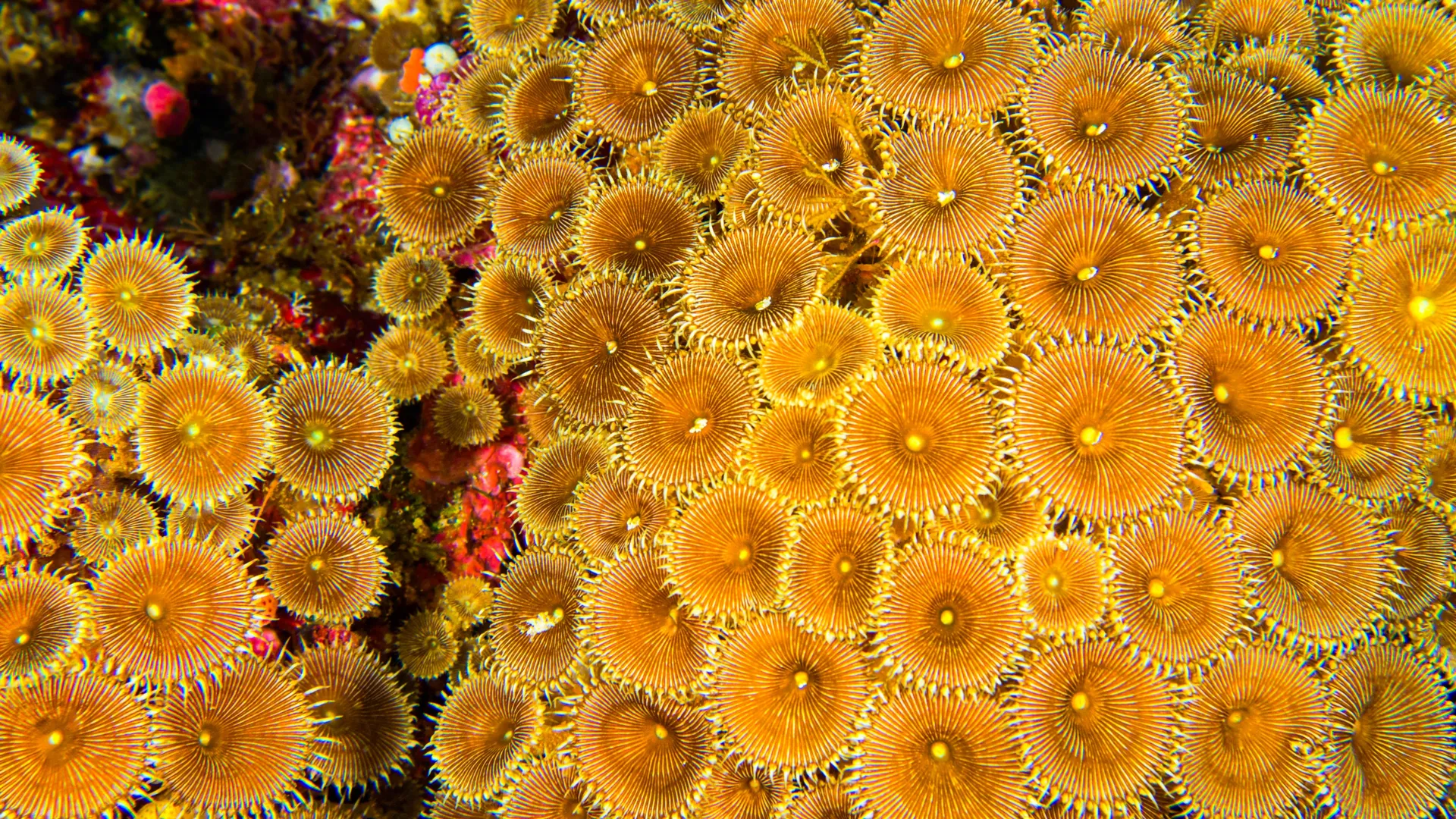
Coral reefs’ hidden microbes hold potential for groundbreaking medical discoveries.
The report, which applies international auditing standards, is intended to help the country accurately assess the value of its public assets and financial resources and better understand its overall fiscal position.
Such comprehensive asset valuation exercises remain a challenge in many African countries, where governments may hold significant wealth but lack precise and consolidated records of its total value.
The Office of the Auditor General launched this initiative to support Rwanda’s development agenda by providing a clearer picture of the state’s financial standing and asset base.
The assessment covered all government-owned assets, regardless of location, as well as financial holdings.
Breakdown of government assets
The report shows that government-owned land is valued at Rwf 3,052.9 billion, while buildings are valued at Rwf 3,568.3 billion. Road infrastructure accounts for Rwf 3,776.6 billion.
Other state assets include vehicles worth Rwf 92 billion, machinery and construction equipment valued at Rwf 242.9 billion, and ICT equipment worth over Rwf 113 billion. Intangible assets, including government IT systems, are valued at Rwf 161.3 billion, while heritage assets are valued at approximately Rwf 0.9 billion.
Overall, total government assets amount to Rwf 18,370 billion, with cash and cash equivalents standing at Rwf 3,644 billion.
Year-on-year increase
The report indicates a significant increase in public assets and finances, rising from Rwf 18,342 billion in the previous year to Rwf 22,187 billion in 2024/2025.
It also highlights that government investments are distributed across 30 public institutions, five private entities, and 15 international organisations.
Improvements in financial management
Presenting the report to both chambers of Parliament on May 6, 2026, Auditor General Kamuhire Alexis noted continued progress in the management of public resources.
The audit found that financial statements were properly prepared at a rate of 97%, compliance with laws and regulations stood at 83%, while efficiency in the use of public resources reached 79%.
Despite these improvements, Kamuhire emphasised the need for further strengthening in project planning and implementation, service delivery, management of government assets and equipment, and follow-up on audit recommendations.
Concerns over idle assets
The report also identified 436 unused government assets, valued at Rwf 8.2 billion, up from Rwf 7.9 billion in 2024.
These idle assets include medical equipment, land and buildings, market facilities, ICT equipment, livestock weighing scales, and primary healthcare infrastructure.
The Auditor General recommended that such assets be put to productive use or disposed of where utilisation is not feasible.
“Those responsible for managing public assets should coordinate with relevant institutions to ensure these resources are effectively utilised, or sold where necessary,” he said.
Rwanda’s public assets and financial position have reached over Rwf 22 trillion, according to the 2024/2025 report by the Auditor General of State Finances.