Heavy elements like gold and platinum are not formed on Earth. They are created during powerful cosmic events such as exploding stars or collisions between neutron stars.
During these extreme moments, a process known as the Rapid neutron capture process occurs. In this process, atomic nuclei quickly absorb neutrons, becoming heavier and unstable before breaking into more stable elements.
To better understand this transformation, scientists carried out experiments at the CERN using its ISOLDE Facility. The team studied a rare atomic form called indium-134 and tracked how it decays into different tin isotopes.
Their research revealed three major discoveries. The most important was the first measurement of energy released when unstable nuclei emit two neutrons during decay. This rare reaction helps scientists understand how heavy elements form during violent stellar events.
The researchers also identified a long-predicted nuclear state in tin-133 that had remained hidden for two decades. This discovery shows that the atomic nucleus still “remembers” how it was formed, challenging earlier theories that suggested the process erased such information.
Finally, scientists observed behavior that does not match existing nuclear models, suggesting that current theories may need to be revised.
The findings provide new clues about how elements like gold are created in the universe and could help scientists improve models that explain the origins of matter in space.
Scientists have made a breakthrough in understanding how precious metals such as gold are created in the universe.
The Republic of Maldives has nominated Virginia Gamba, former UN under-secretary-general, for the position, according to a joint letter signed by UN General Assembly (UNGA) President Annalena Baerbock and Michael Waltz, president of the UN Security Council for March.
According to her curriculum vitae, Gamba is an Argentine scholar, practitioner and recognized authority on war and peace studies with over 40 years relevant experience on all themes related to peace and security, including crisis management.
At the United Nations, she served as under-secretary-general in two dockets: Children and Armed Conflict (2017-2025), and the Prevention of Genocide (2024-2025).
The four other candidates are former Chilean President Michelle Bachelet, nominated by Chile, Brazil and Mexico; Rafael Grossi, the current director general of the International Atomic Energy Agency, nominated by Argentina; Macky Sall, former president of Senegal, nominated by Burundi; and Rebeca Grynspan, economist and former vice president of Costa Rica, nominated by Costa Rica.
The UNGA is scheduled to conduct interactive dialogues with the candidates in the week of April 20.
Virginia Gamba served as the Special Representative of the UN Secretary-General for Children and Armed Conflict
Barrot made the announcement during a two-day trip to the country.
“This is the first time in eight years that a French foreign minister is present in Bangui and my presence marks the complete restoration of relations between our two countries after a period of strain and tension,” Barrot told reporters.
He said France was looking forward to “reinforcing our relations in all sectors”.
In 2024, Faustin-Archange Touadera, president of the Central African Republic, met with his French counterpart Emmanuel Macron in Paris as part of efforts to resume ties.
FUFA announced the punitive measures following an investigation into a match played on December 21, 2024, in which Kitara FC defeated Express FC 7–0.
The suspended individuals include Mike Mutyaba, a former player for Uganda Cranes, Ivan Katende, a former FUFA staff member, Ashiraf Miiro, the Chief Executive Officer of Express FC, and two players —Emmanuel Kalyowa and Ashiraf Mbaziira.
FUFA’s Investigatory Chamber of the Ethics and Disciplinary Committee revealed that the match was reportedly fixed for betting purposes.
“After the match, FUFA was informed by FIFA via a betting report that the game had been fixed for betting purposes, with prior knowledge that Express FC would lose and concede at least five goals,” FUFA said in a statement.
Preliminary investigations suggest that Mutyaba coordinated the fix with Katende, who has previously been implicated in match-fixing cases. Mutyaba reportedly introduced Katende to Express FC CEO Miiro, and the three conspired to manipulate the match outcome.
Evidence shows that Ugandan betting accounts linked to Katende won millions of shillings at a Tanzanian-based betting company, which later blocked the payments after detecting fraud.
The inquiry also points to the involvement of players Kalyowa and Mbazira, who were allegedly recruited by Mutyaba to execute the fix on the field. Mutyaba assumed technical responsibilities for the team during the match due to the absence of head coach Kaddu Badru.
FUFA has formally engaged the Criminal Investigations Directorate, and the process remains ongoing.
“FUFA remains committed to protecting the integrity of football in Uganda by fighting all forms of match manipulation,” the federation said in a statement.
The suspended individuals include Mike Mutyaba, a former player for Uganda Cranes.Preliminary investigations suggest that Mutyaba coordinated the fix with Katende, who has previously been implicated in match-fixing cases.
The contingent was briefed on Friday by Vincent Nyakarundi, the Army Chief of Staff of the RDF, during a ceremony held at Kami Barracks.
The briefing was also attended by the Deputy Inspector General of Police in charge of Operations, Commissioner of Police Vincent B. Sano.
During the briefing, Maj Gen Nyakarundi reminded the contingent that their mission is to protect civilians from terrorism and urged them to serve as good ambassadors of Rwanda. He emphasised the importance of discipline, teamwork, and professionalism, encouraging them to remain fully committed to their duties, just as their predecessors have done.
Rwandan troops were first deployed to Cabo Delgado in July 2021 at the request of the Mozambican government, following years of attacks by Islamic State-linked insurgents.
Since then, the joint operations between Rwanda Security Forces and the Mozambican army have significantly weakened the insurgency, restored security in several areas, and enabled thousands of displaced residents to return to their homes.
The latest deployment comes a few months after a visit by Mozambican President Daniel Francisco Chapo to Rwanda, during which a renewed Status of Forces Agreement on the support to fight terrorism in Mozambique was signed. The agreement extended Rwanda’s military support in Cabo Delgado province.
“Thanks to this cooperation, we can see peace returning to the region,” President Chapo said, acknowledging Rwanda’s role in stabilising Cabo Delgado despite ongoing sporadic attacks.
Maj Gen Nyakarundi reminded the contingent that their mission is to protect civilians from terrorism and urged them to serve as good ambassadors of Rwanda. The new contingent will relieve colleagues currently serving in Rwanda’s counter-terrorism mission in Cabo Delgado.The briefing was also attended by the Deputy Inspector General of Police in charge of Operations, Commissioner of Police Vincent B. Sano.
New Faces New Voices Rwanda is a non-profit organization that advances women’s economic participation through financial inclusion, entrepreneurship development, and leadership strengthening, ensuring women are active contributors to Rwanda’s economic growth.
Since its establishment in Rwanda in 2015, NFNV has worked to expand women’s access to finance, entrepreneurship skills, cooperative structures, and leadership opportunities.
The organization equips women with practical tools to earn income, manage finances, access markets, and participate in local economic decision-making.
Over the past decade, this work has contributed to visible shifts at the community level. Young women who once operated informal or subsistence activities have formalized businesses through cooperatives, entered trades traditionally dominated by men, and strengthened household income through collective enterprise.
Young women with disabilities have also expanded their economic independence through targeted support and improved access to financial services.
The anniversary event in Ruhango highlighted these experiences as examples of how women shape local economic systems when barriers are reduced and opportunities are expanded.
NFNV’s progress has been supported by strong partnerships over the past decade, including collaboration with the Mastercard Foundation and Rugori Investment Network through the Women-led, Women-owned MSME Investment Readiness Program, as well as partnerships with UN Women and other institutions advancing inclusive economic empowerment.
NFNV also established Rugori Investment Network as a sister organization to strengthen access to capital for women entrepreneurs.
Within this ecosystem, New Faces New Voices Rwanda operates as an incubator supporting women-led businesses with training, mentorship, and investment readiness, while Rugori Investment Network serves as the investment partner investing in prepared entrepreneurs.
As guest of honor, Reeta Roy, former CEO and President of the Mastercard Foundation, emphasized the importance of generational leadership: “There is something deeply generational about the work being done. When older women pass their skills and knowledge to younger ones, they ensure continuity and long-term resilience. That is exactly what New Faces New Voices Rwanda is helping to achieve.”
A young program participant also reflected on her experience: “New Faces New Voices helped me believe in myself. Through this journey, I learned that I can lead others and have a clear direction for my life, especially knowing that NFNV is walking alongside me.”
Joy S. Rwamwenge, CEO of New Faces New Voices Rwanda, highlighted the organization’s impact, from supporting 35 cooperatives in its early pilot to over 460 cooperatives creating 11,500 youth in work today.
“With a presence in 28 districts across Rwanda, we are witnessing what happens when preparation meets opportunity for women entrepreneurs,” she said
As NFNV enters its second decade, the organization seeks to focus on strengthening pathways from skills to income, deepening financial inclusion for underserved women, and working with partners to embed inclusive economic practices within cooperatives, financial institutions, and local markets.
With ten years of progress, the organisation emphasizes, the next phase will focus on scale, sustainability, and systems that work for women over the long term.
Reeta Roy, Former President of Mastercard Foundation, with Ivan Ntwali, Mastercard Foundation Country Director for Rwanda. Reeta Roy, former CEO and President of the Mastercard Foundation, toured the exhibitions and interacted with the participants.Joy Ndungutse Board Chair of New Faces, New Voices also graced the event. Joy S. Rwamwenge, CEO of New Faces New Voices Rwanda, highlighted the organization’s impact, growing from 35 pilot cooperatives to over 460, now engaging 11,500 youth in work.Representatives from partner institutions joined the celebration of a decade of women’s economic empowerment.Participants gather in Ruhango as New Faces New Voices Rwanda marks 10 years of advancing women’s economic participation.Participants listen during discussions on strengthening women-led enterprises.Women who benefited from entrepreneurship programs showcased the impact of skills training and mentorship.Leaders and partners reflected on a decade of empowering women economically across Rwanda. The anniversary event highlighted how women are shaping local economies through entrepreneurship and financial inclusion.Young women supported by New Faces New Voices Rwanda shared their experiences during the 10-year anniversary event in Ruhango District.Women entrepreneurs attended the anniversary event celebrating a decade of impact by New Faces New Voices Rwanda.Women were appreciated for their dedication. Young women supported by New Faces New Voices showcased their agricultural products.Other showcased art products. Different products were showcased by the beneficiaries.The organization seeks to focus on strengthening pathways from skills to income, deepening financial inclusion for underserved women
According to sources familiar with the matter, the alleged strategy hinges on cooperation with the Democratic Forces for the Liberation of Rwanda (FDLR), an terrorist group formed by individuals linked to the perpetrators of the 1994 Genocide against the Tutsi in Rwanda. The effort reportedly seeks to create a broader coalition of groups opposed to Rwanda’s government.
At the center of the reported initiative is Jean‑Luc Habyarimana, the son of the late president. Sources indicate he is being positioned as a figure capable of rallying remnants of the Hutu Power network and helping reorganize opposition groups under a new structure.
During a recent visit to Kinshasa, Jean-Luc reportedly met Désiré Cashmir Eberande Kolongele, President Tshisekedi’s special advisor on security matters.
According to individuals familiar with the meeting, he conveyed a message that plans were being developed to form a strong military alliance initially focused on confronting AFC/M23, before potentially expanding operations toward Rwanda.
Sources further claim that Jean-Luc, working with officials in the Congolese Ministry of Communication and Media, helped establish a platform known as Xtrafrica. The platform is reportedly used to promote narratives rehabilitating the image of Habyarimana, criticize the Rwandan government and support Tshisekedi’s regional agenda.
Meanwhile, Agathe Kanziga, the widow of Habyarimana, along with other figures associated with the Hutu Power ideology, is said to have advised Jean-Luc to rebrand the FDLR under a new name, the FCLR (Front Commun pour la Libération Rwandaise), in an effort to improve its international image while maintaining its existing structure and ideology.
The broader strategy reportedly involves bringing together political and military figures opposed to Rwanda’s government by offering them refuge and support in Congo.
Attention has also reportedly turned to Nyamwasa, a former senior officer in the Rwanda Defence Force who later founded the Rwanda National Congress (RNC).
Sources say he has been attempting to unite armed, political and propaganda networks in opposition to Rwanda’s leadership.
During a reported trip to Kinshasa in September 2024, Nyamwasa is said to have met leaders of the FDLR to discuss strengthening cooperation. Congolese officials familiar with the matter claim he has remained in close contact with Gaston Iyamuremye, the commander of the FDLR, a relationship described as key to efforts to align the RNC with the group.
In January 2026, Byiringiro reportedly appointed his brother-in-law Cyprien Ngabo as a liaison between the FDLR and an RNC faction led by Frank Ntwali, further indicating growing coordination between the groups.
Sources also claim that cooperation dates back several years. In early 2025, Byiringiro is said to have sent Emmanuel Hakizimana, an RNC member based in Canada, to the United States to represent the FDLR at a meeting of so-called Rwandan opposition figures.
The meeting was reportedly part of a long-running effort to unite fragmented groups opposed to Rwanda’s government. With alleged financial and political backing from individuals close to Tshisekedi, recruitment into the anti-Rwanda coalition is said to have intensified, involving supporters based in Uganda and prominent RNC-associated figures such as Charles Kambanda, Eugène Gasana, and Christine Uwizera Coleman.
Sources claim the initiative is becoming increasingly visible, pointing to alleged logistical support for the FDLR and outreach to individuals linked to or associated with the genocide, as part of a broader effort to unite groups opposed to Rwanda’s government under a single front.
New details have emerged on the coordination between President Félix Tshisekedi of the Democratic Republic of the Congo and son of former Rwandan President Jean Luc Habyarimana.
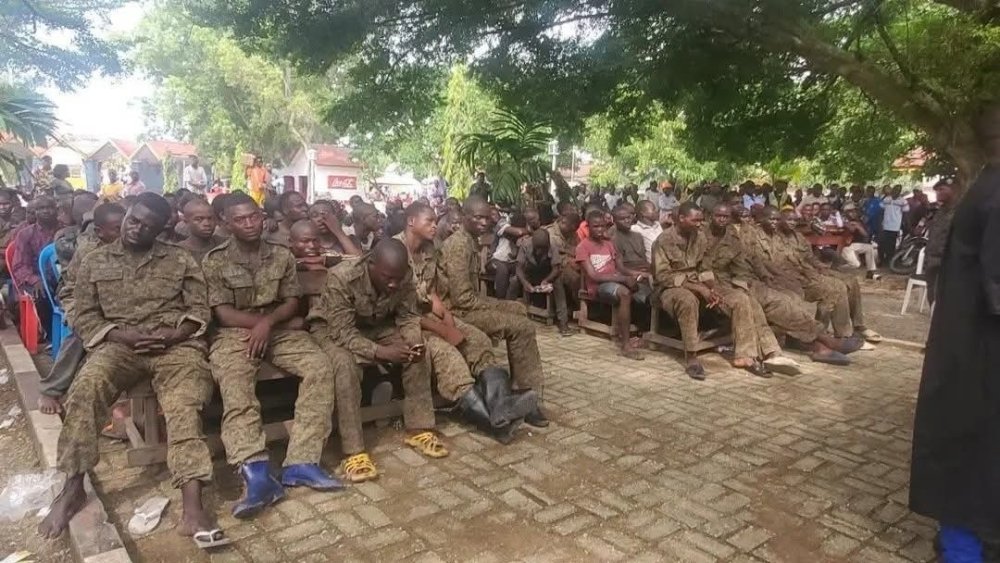
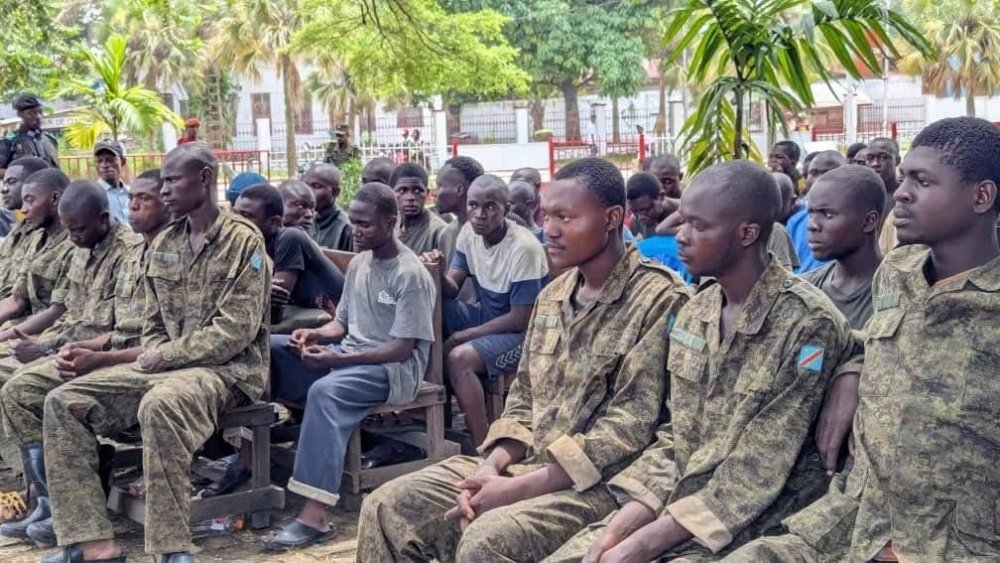
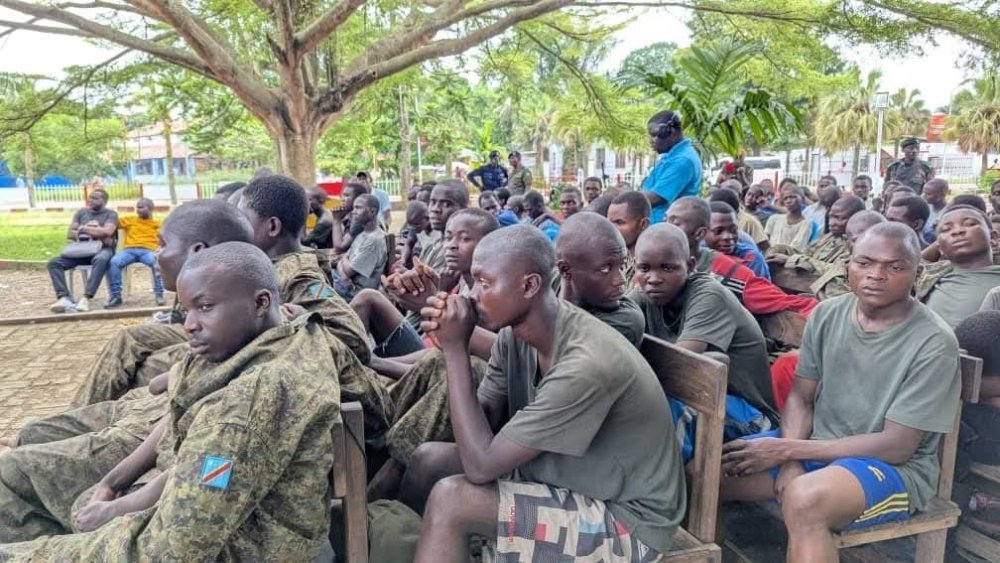
The group crossed into Rwanda on Thursday, March 12, 2026, through the main border post linking the two countries in Rubavu District, where they were received by the district’s Vice Mayor in charge of Social Affairs, Ishimwe Pacifique.
Most of the returnees are women and children, many of whom were born in the Democratic Republic of the Congo.
Speaking to the Rwanda Broadcasting Agency, several of them said they decided to return after being encouraged by fellow Rwandans who had previously repatriated and successfully rebuilt their lives back home.
Many of those returning had spent years under the control of the FDLR, a militia group formed by perpetrators of the 1994 Genocide against the Tutsi who fled to the DRC after being defeated by the Rwandan Patriotic Army (RPA).
Since the M23 rebel forces began taking control of large parts of eastern DRC, the returnees say security conditions have improved, allowing them to consider going back to Rwanda.
In cooperation with the United Nations High Commissioner for Refugees, those willing to return are being facilitated to repatriate.
The returning Rwandan nationals were welcomed by the district’s Vice Mayor in charge of Social Affairs, Ishimwe Pacifique.
Under the new legislation, any driver found with a blood alcohol content above the legal limit commits an offence. Convicted drivers face a fine ranging from Rwf 100,000 to Rwf 400,000 and imprisonment of three to six months.
The law specifically targets drivers of public transport, school buses, employee shuttles, tourist vehicles, and cargo trucks over 3.5 tons. Drivers whose blood alcohol level is at least twice the legal limit may face fines between Rwf 200,000 and Rwf 500,000 and imprisonment of three to six months, or one of these penalties.
Refusing a blood alcohol test is also criminalised. Drivers convicted of this offence face fines of Rwf 300,000 to Rwf 600,000 and imprisonment of three to six months if they operate public transport, school, or tourist vehicles, or cargo trucks over 3.5 tons. Drivers of other vehicles may face fines of Rwf 400,000 to Rwf 600,000 and imprisonment of up to 10 days.
The law sets the maximum permissible blood alcohol content at 0.80 grams per litre of blood. It also prohibits driving without a valid license, punishable by fines of Rwf 100,000–200,000 and 15–30 days in jail. Additionally, refusing to stop when signalled by a traffic officer is punishable by fines of Rwf 400,000–700,000 and imprisonment of three to six months.
The revision incorporates modern technology to enhance transparency and accountability in law enforcement, aiming to improve road safety and reduce accidents and fatalities. Traffic officers will prepare case files for prosecution in accordance with criminal procedure law.
Under the new legislation, any driver found with a blood alcohol content above the legal limit commits an offence. Convicted drivers face a fine ranging from Rwf 100,000 to Rwf 400,000 and imprisonment of three to six months.
Seventy-four Burundians, who had sought refuge in Rwanda over the years, have voluntarily returned to their home country, expressing gratitude for the safety and support they received while in Rwanda.
The group crossed the Rwanda-Burundi border at Nemba One Stop Border Post in Bugesera District on Thursday, March 12. The group included 44 men and 30 women from 47 families. Among them, 62 had lived in Mahama Refugee Camp in Kirehe District, while 12 had been residing in Kigali City.
They were received by officials from Burundi following their transfer, with representatives from Rwanda’s Ministry of Emergency Management (MINEMA) and the United Nations High Commissioner for Refugees (UNHCR) accompanying them.
The group crossed the Rwanda-Burundi border at Nemba One Stop Border Post in Bugesera District on Thursday, March 12.
Jérémie Havugiyaremye, who spent 25 years in Rwanda, said he lived a normal life during his stay and had four children there, adding to three he had brought with him, making seven in total.
“Life in the camp was not easy, but we did not face any problems while in Rwanda,” Havugiyaremye said. “However, a camp is not a place to stay permanently. I miss my country, and I have decided to return to rebuild my life there.”
He added that his decision was influenced by friends who had returned earlier and reported that peace had been restored in Burundi.
The voluntary repatriation was facilitated by the United Nations High Commissioner for Refugees (UNHCR) in coordination with officials from Rwanda and Burundi.
Oda Mariya, who had lived in Rwanda for 11 years after fleeing the unrest in Burundi in 2015, said she returned after learning that peace had returned.
“I fled alone, leaving my family behind,” she said. “Friends who returned earlier told us it was peaceful. I decided to go back and live normally with others, as we had no issues here in Rwanda.”
Karagire Gonzague, Refugee Programme Manager at MINEMA, said that since 2020, more than 31,000 Burundians have voluntarily returned home, with Burundi actively encouraging returns.
“In 2022, Burundi officials visited Mahama Camp and Kigali to speak with refugees and encourage them to return,” he said. “Last year, online discussions were held to explain to refugees the reasons for going back home.”
The 74 returnees join 115 others who returned in November 2025 from Mahama Camp and Kigali. MINEMA reports that since 2020, more than 30,000 Burundian refugees have returned home, while Rwanda continues to host over 50,000 others.
The Burundian nationals expressed gratitude for the safety and support they received while in Rwanda.