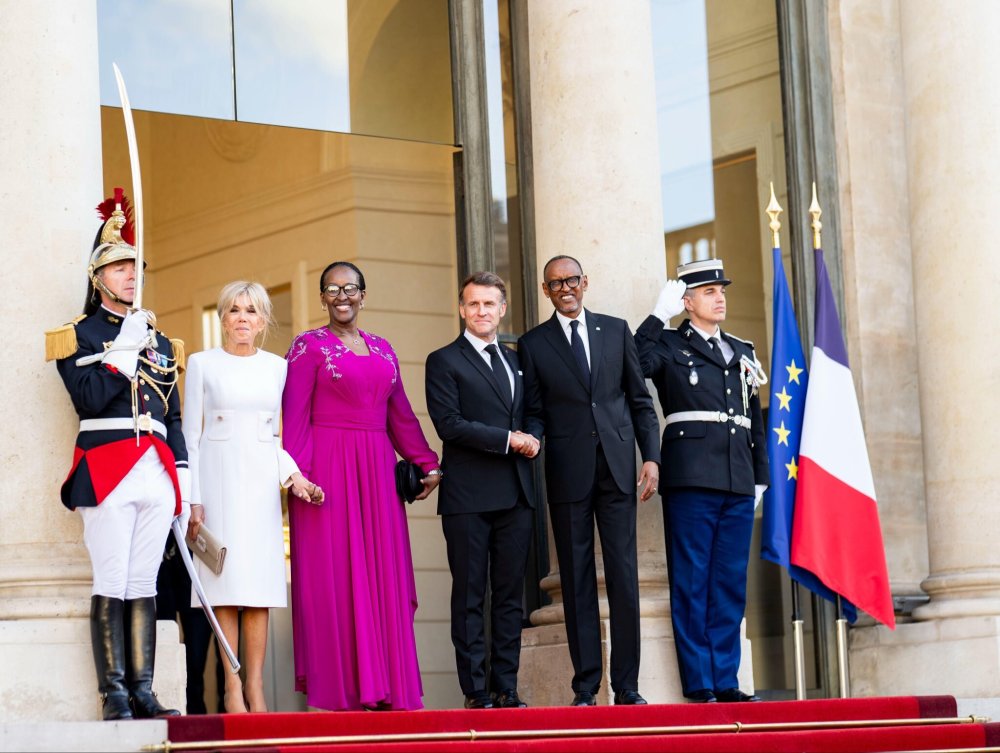
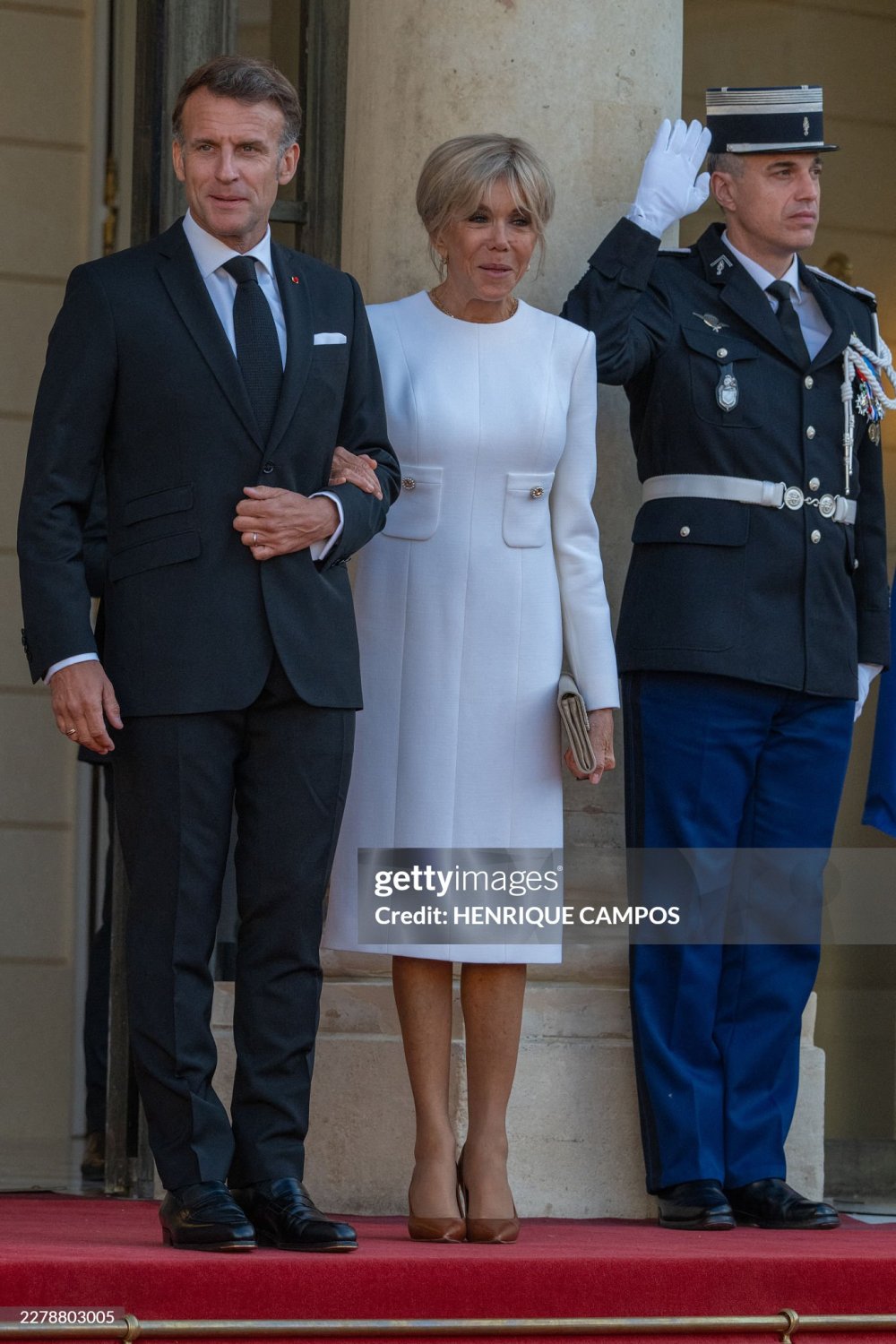
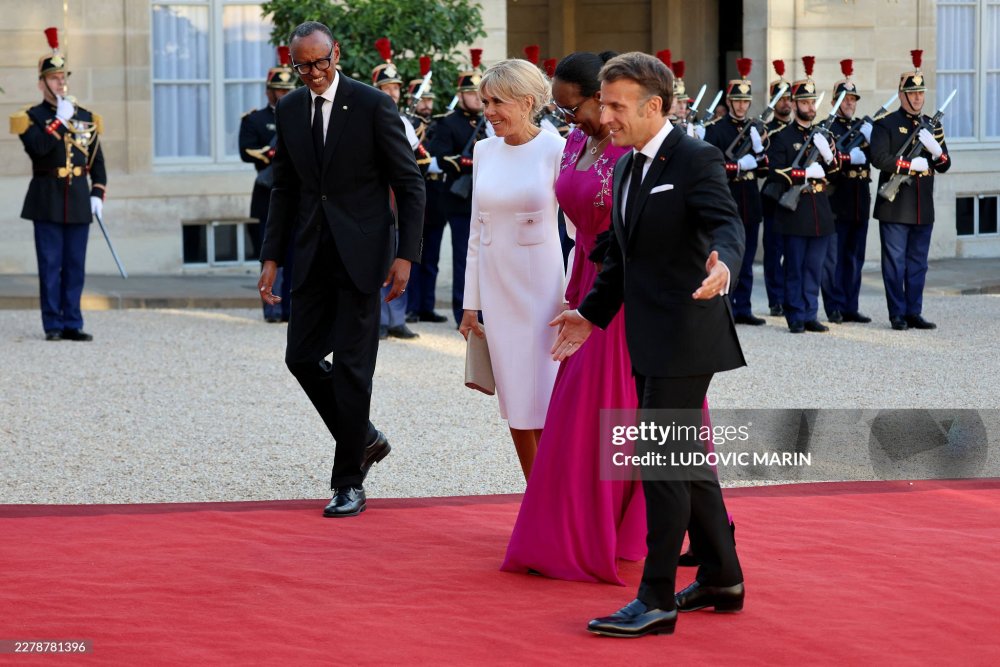
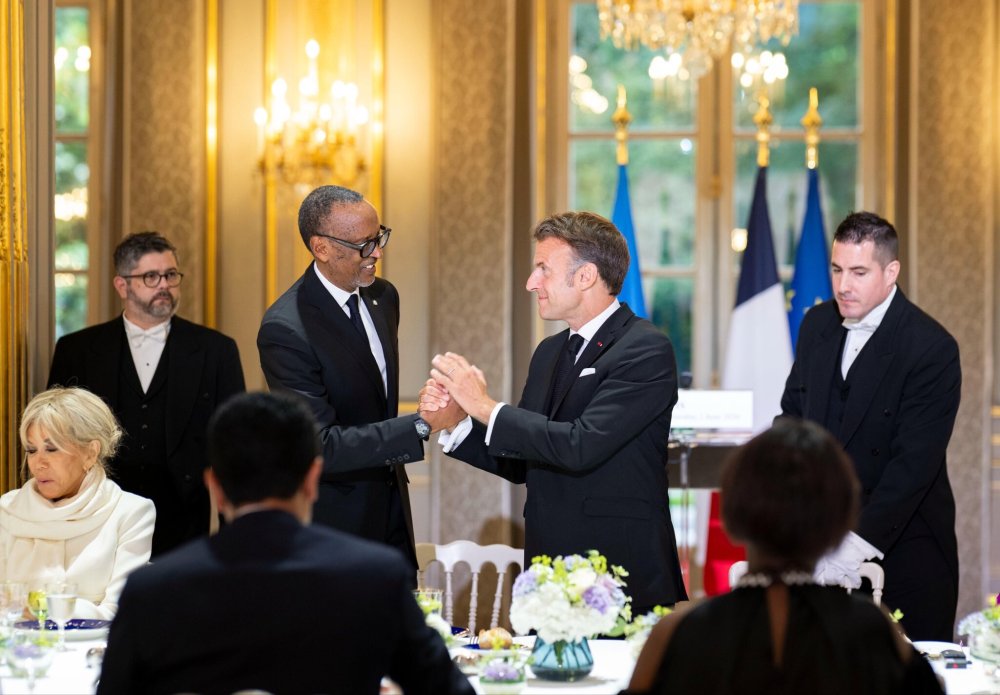
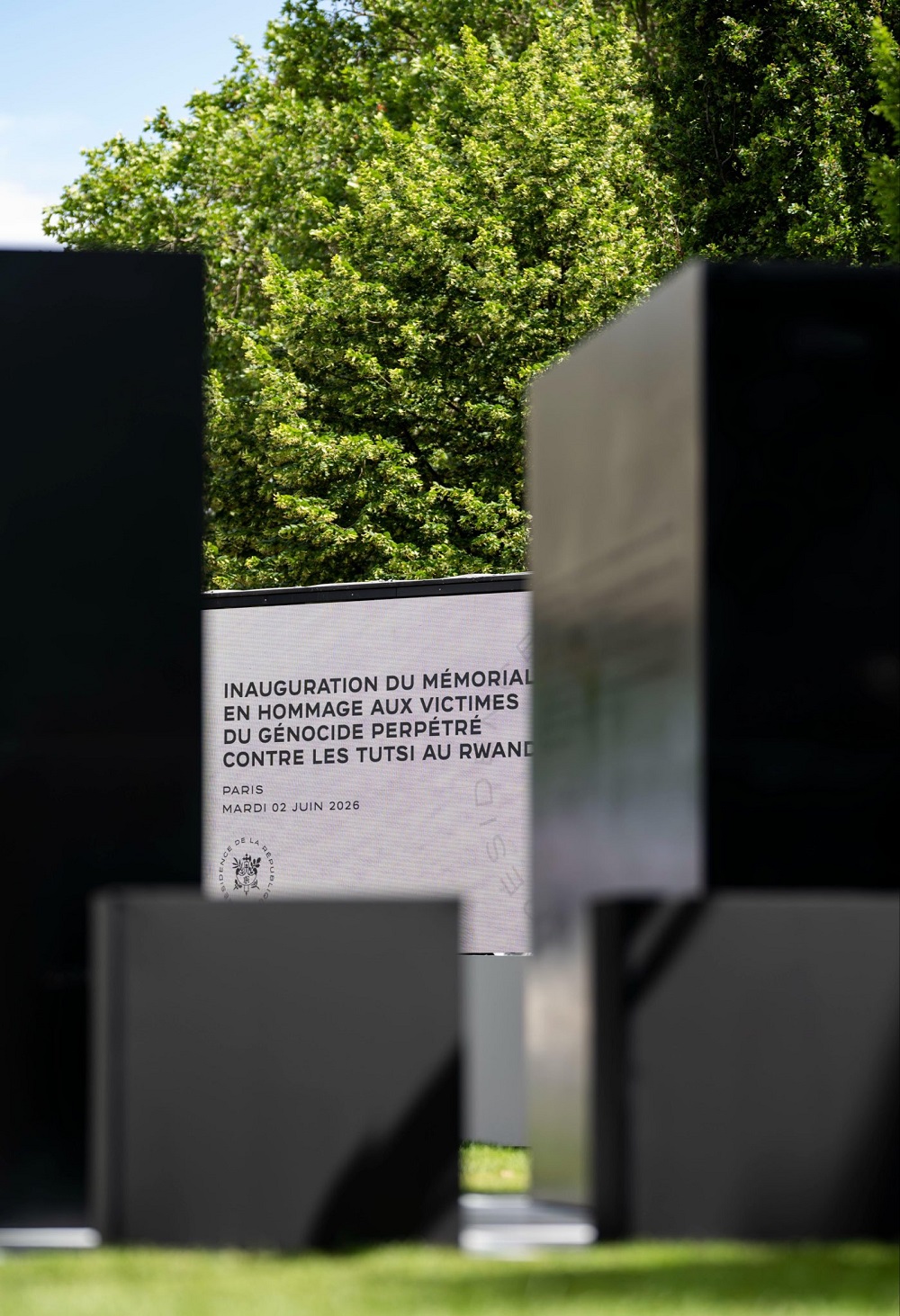
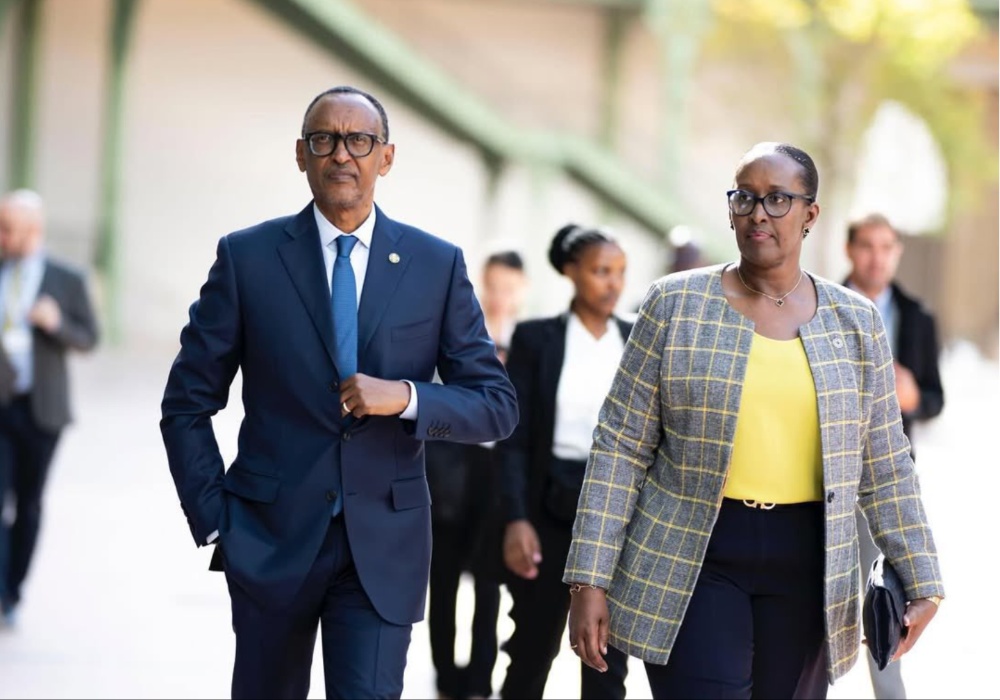
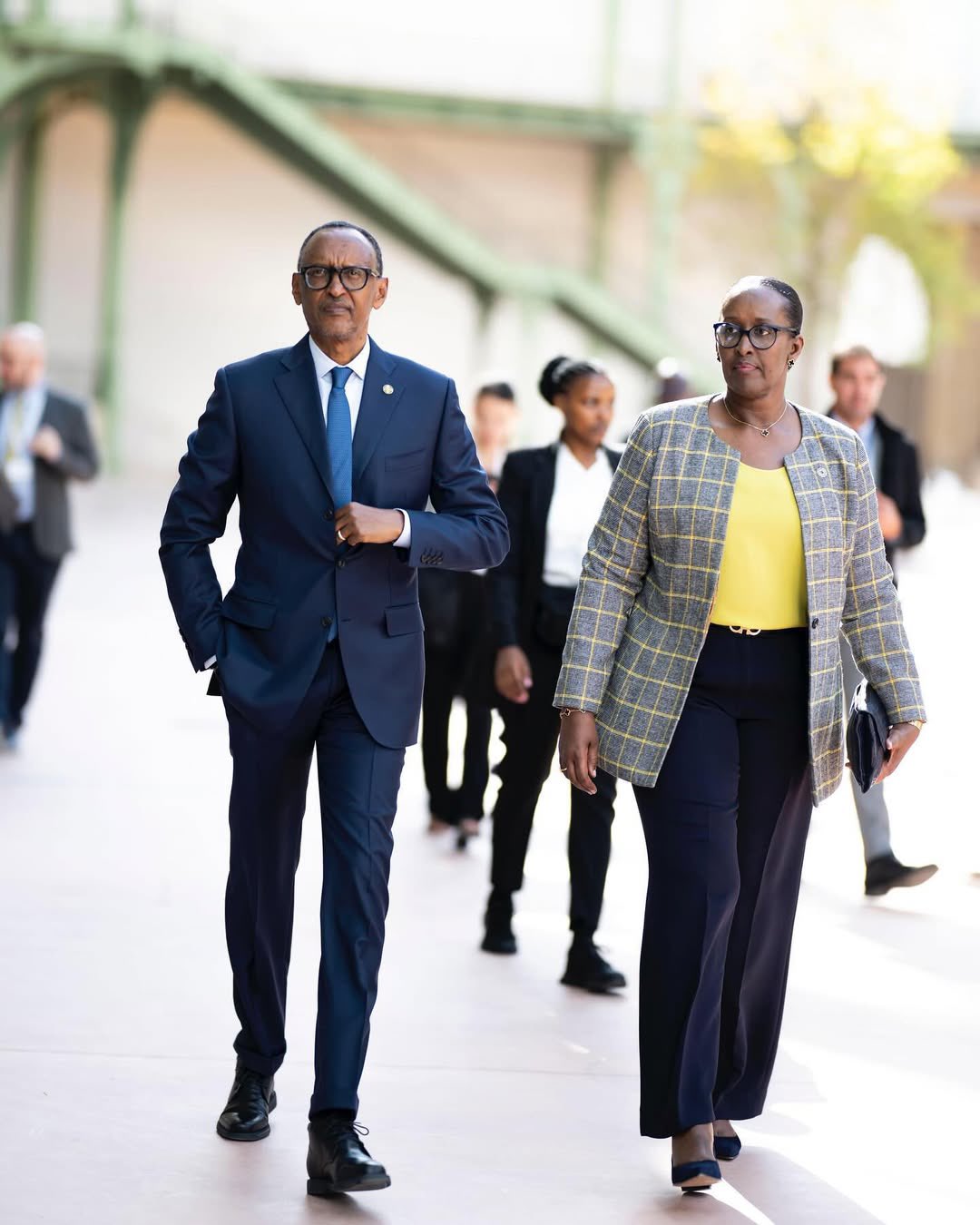
The dinner followed the inauguration of the memorial dedicated to the 1994 Genocide against the Tutsi, known as “Les Archives.”
The event forms part of President Macron’s broader efforts since taking office to rebuild and strengthen bilateral relations between Rwanda and France. In 2021, he visited Rwanda, where he joined Rwandans in commemorating the Genocide against the Tutsi and acknowledged France’s role in the events that led to the genocide, issuing an apology for the country’s past failures.
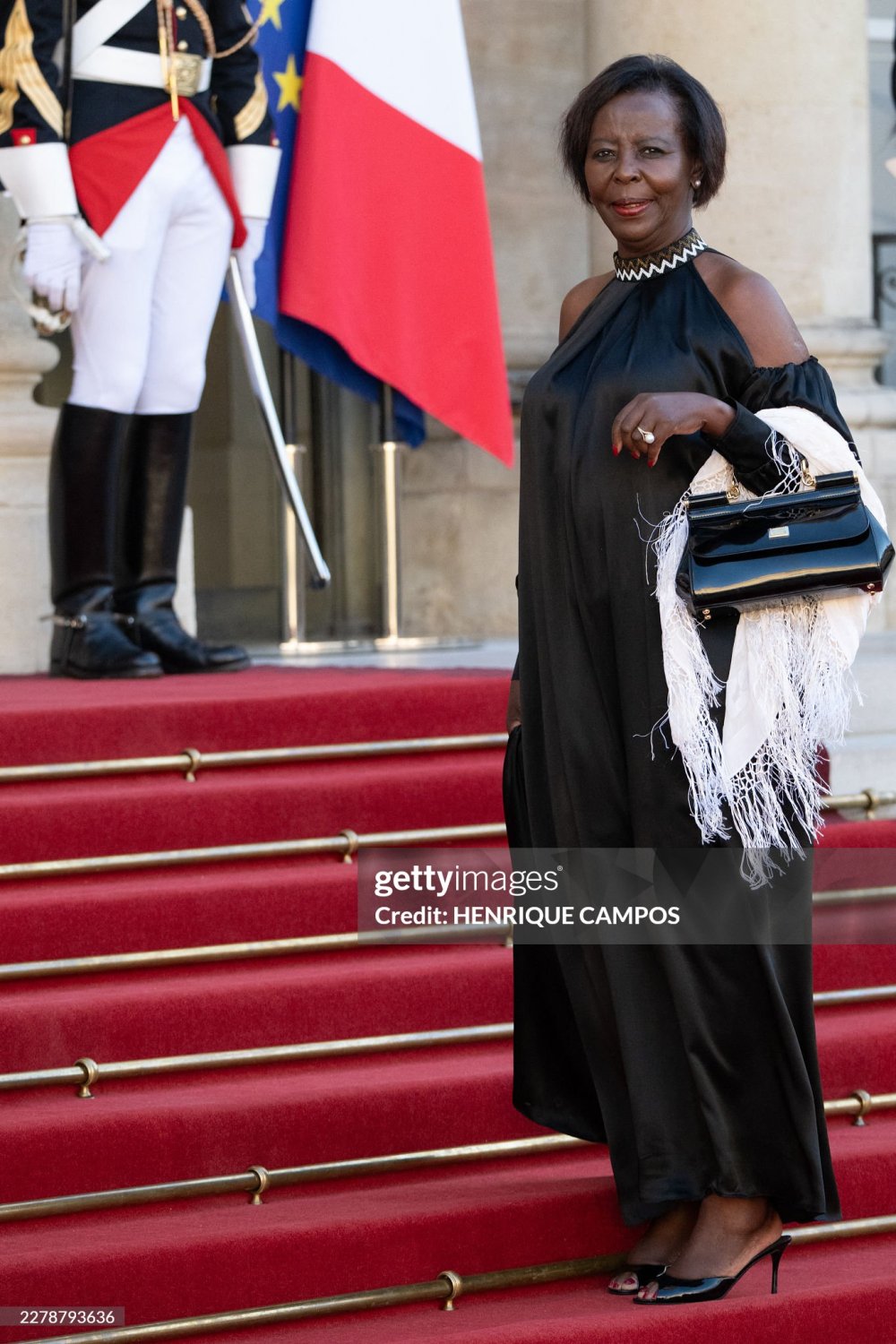
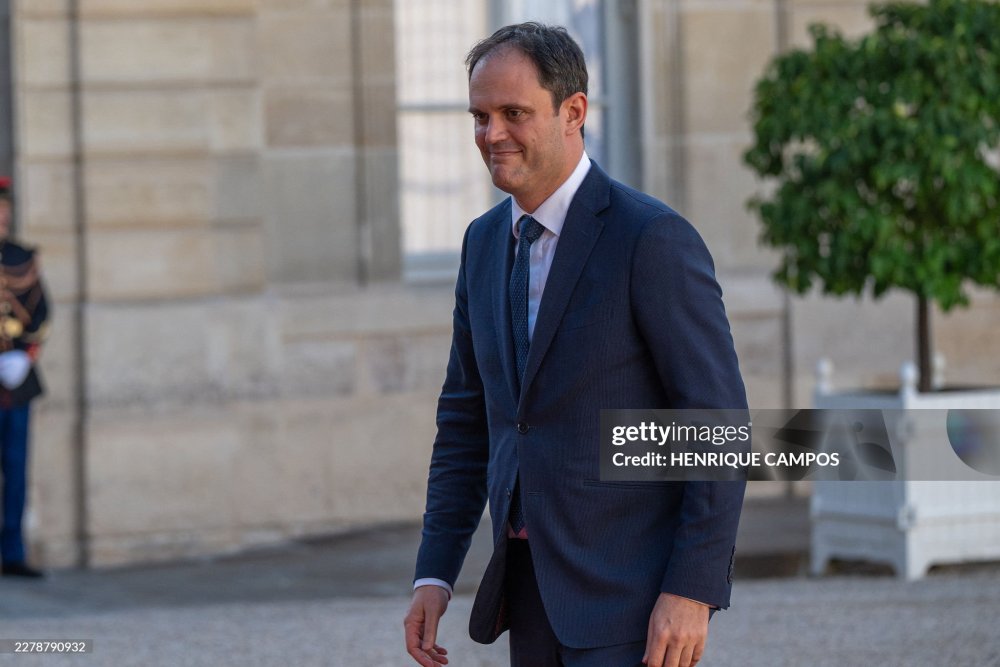
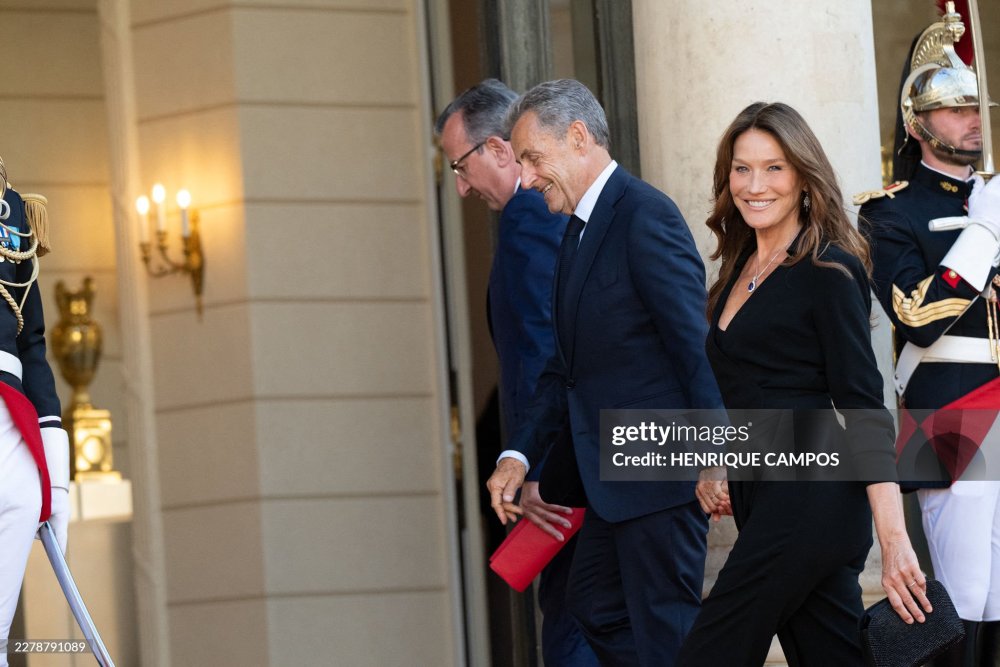
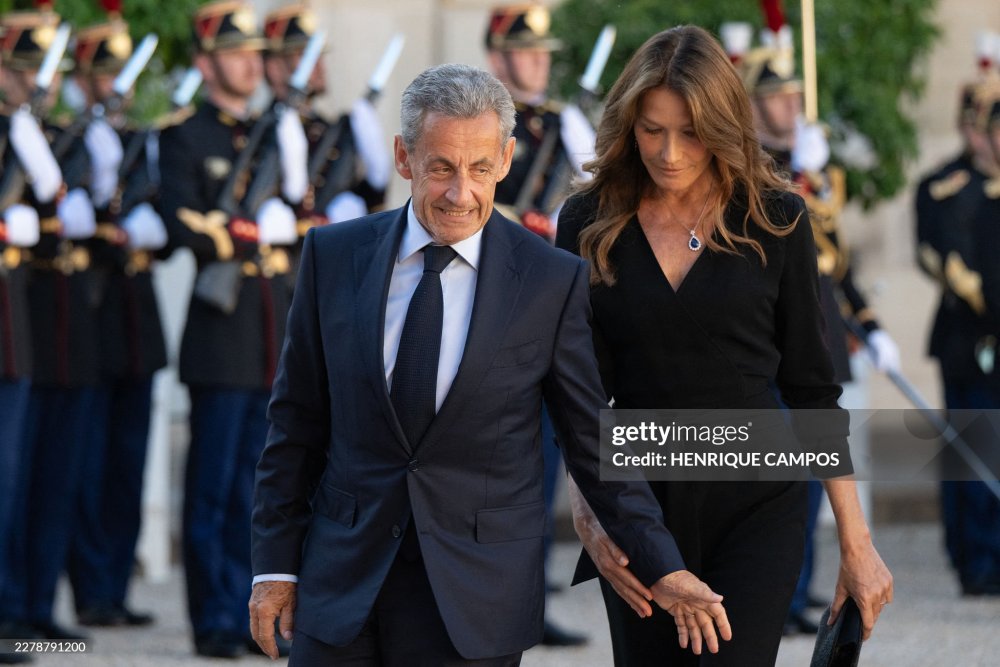
The dinner was attended by several high-profile figures, including Louise Mushikiwabo, Secretary General of the Organisation internationale de la Francophonie (OIF), and former French President Nicolas Sarkozy. Also present was Yonathan Arfi, President of the Representative Council of Jewish Institutions of France.
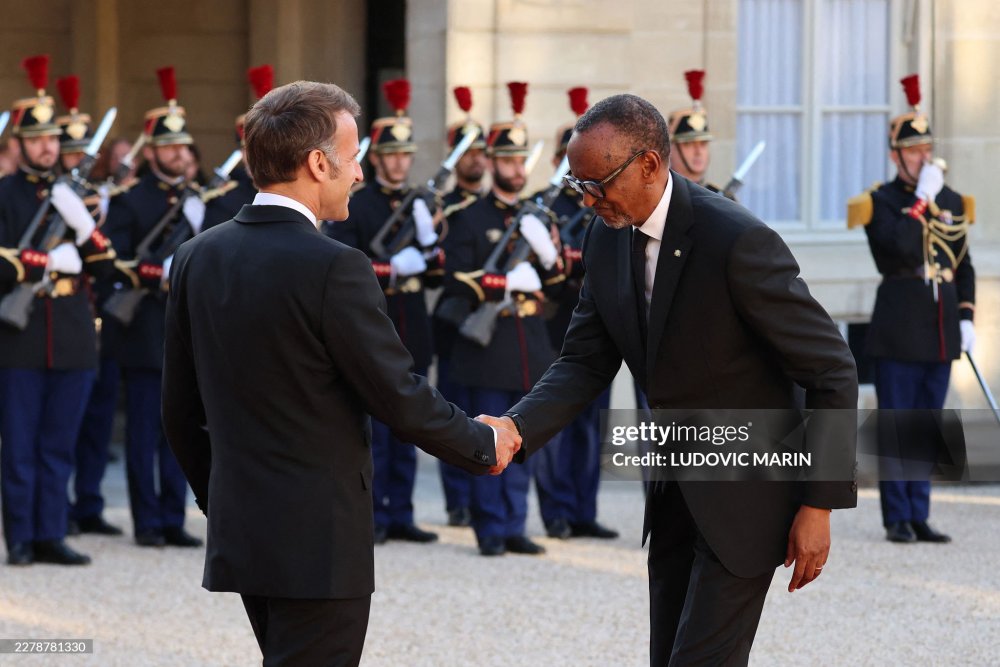
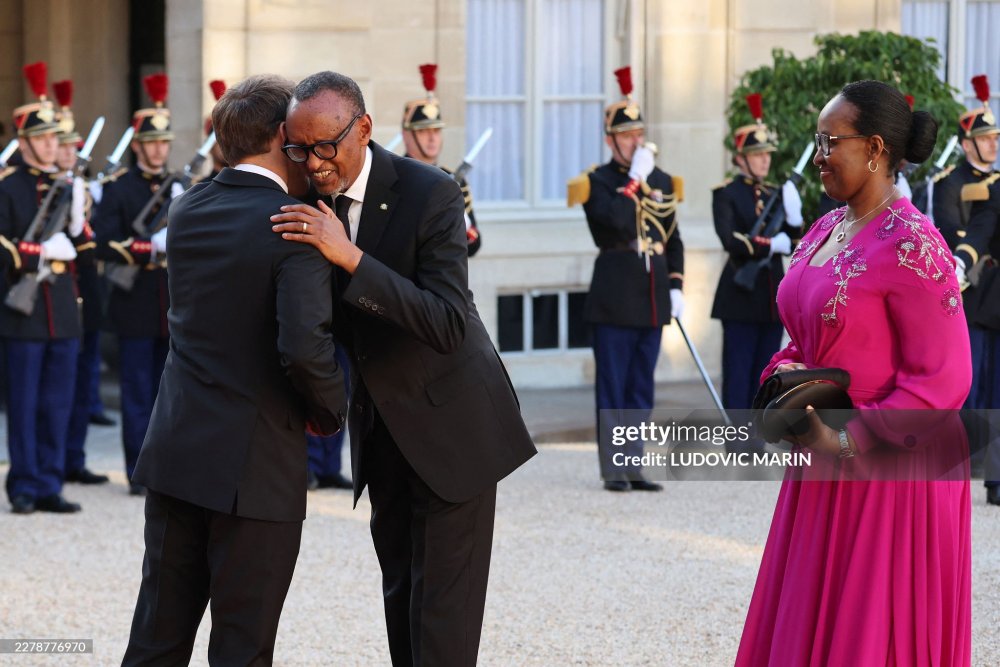
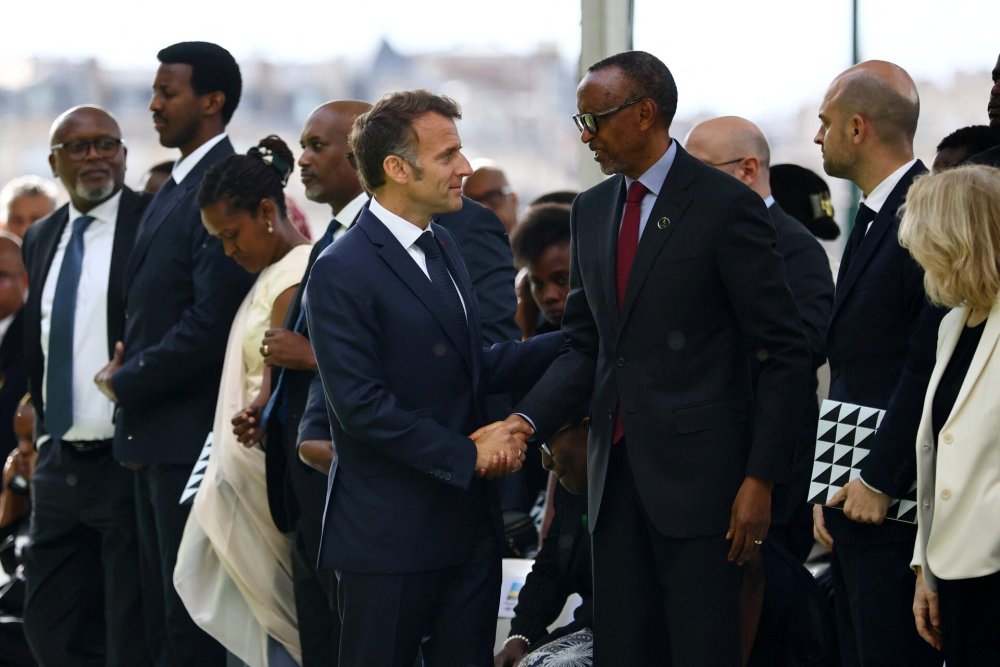
The dinner followed the inauguration of the memorial dedicated to the 1994 Genocide against the Tutsi, known as “Les Archives.”President Kagame as he was received by his French counterpart, Emmanuel Macron.The dinner was attended by several high-profile figures.Louise Mushikiwabo, Secretary General of the Organisation internationale de la Francophonie (OIF, attended the dinner.Yonathan Arfi, President of the Representative Council of Jewish Institutions of France, as he arrived at the Élysée Palace to attend the ceremony.
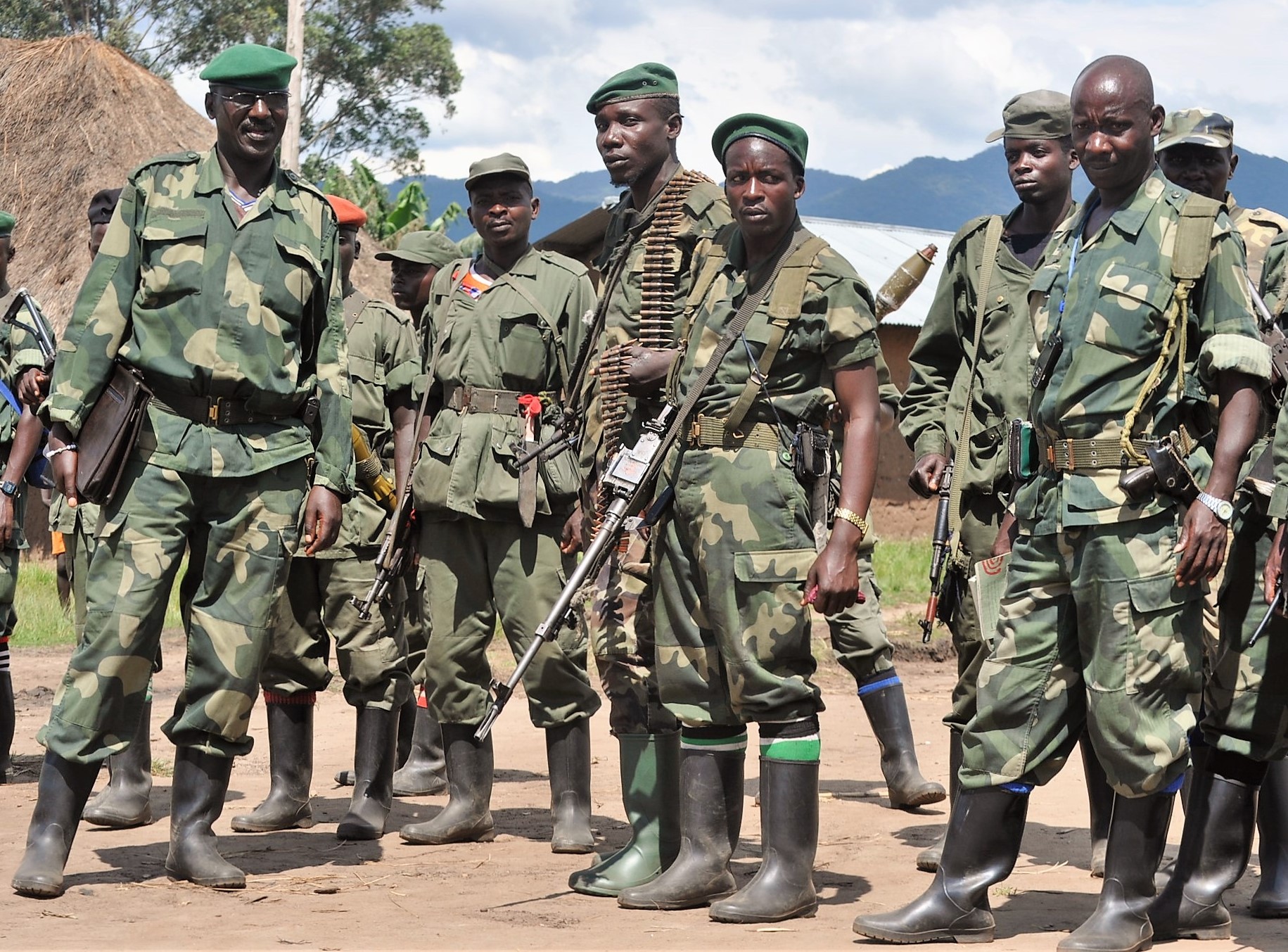
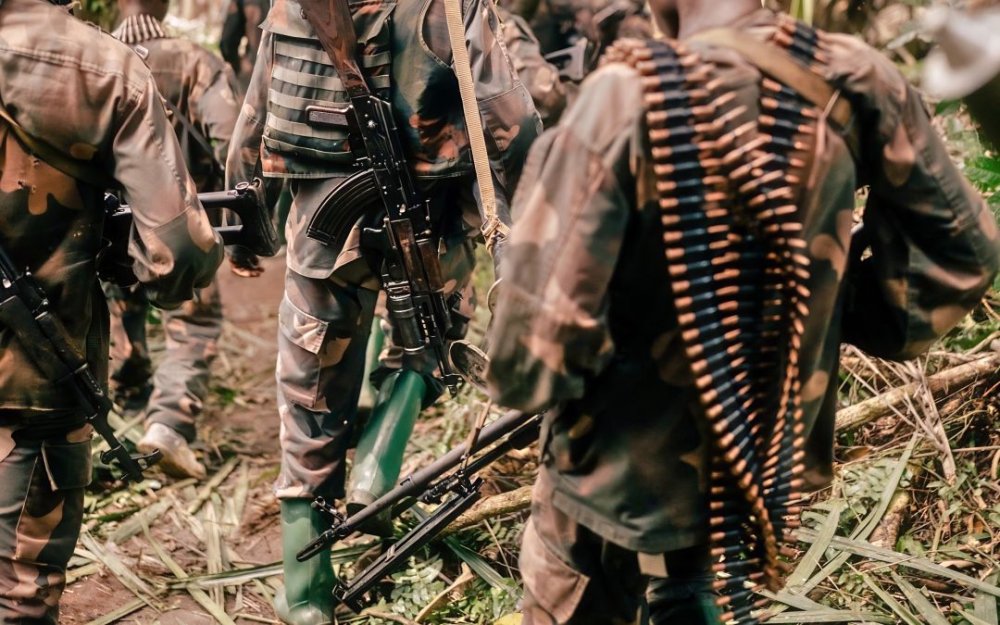
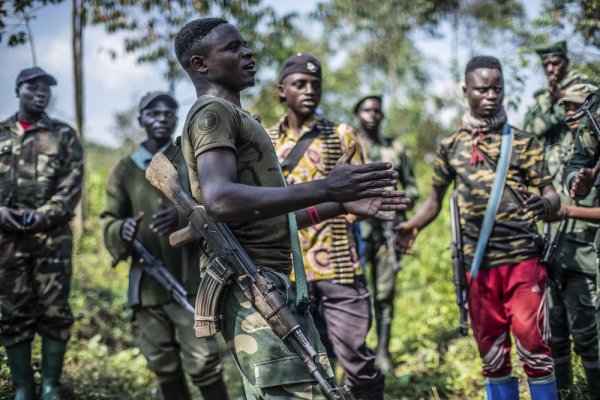
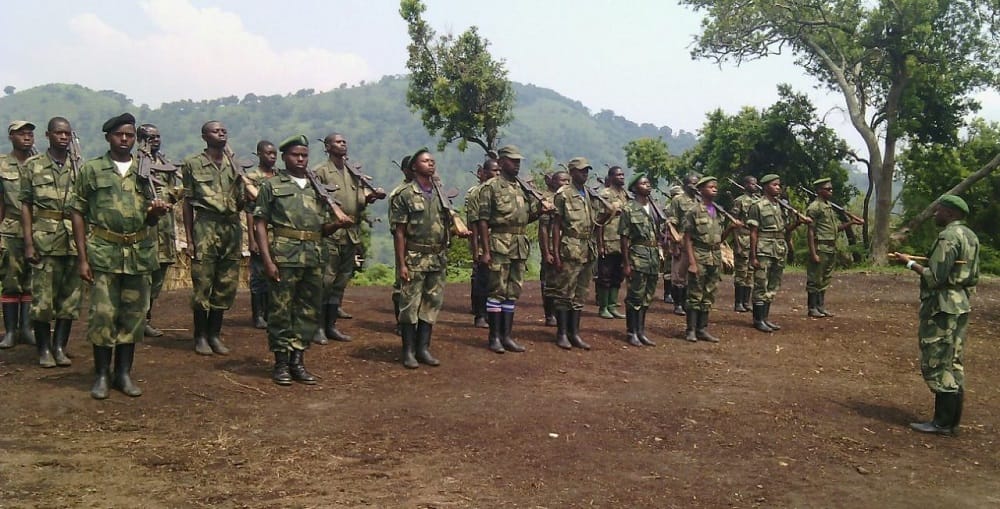
To sustain its activities, the FDLR, whose operations commander, Gustave Kubwayo, commonly known as Colonel Sirkoof, was on Tuesday sanctioned by the United States of America (USA), has relied on a network of revenue-generating activities in eastern DRC, including illegal mining, agriculture, cannabis cultivation and trafficking, and the charcoal trade. The proceeds have enabled the group to purchase weapons, maintain its operations, and recruit new fighters.
The FDLR armed group was formed by remnants of the former Rwandan Armed Forces and extremist militias that fled Rwanda after committing the 1994 Genocide against the Tutsi.
Over the years, FDLR has strengthened its presence by recruiting from Rwandan communities that have remained in the DRC and by establishing strongholds in territories such as Rutshuru and Walikale. Despite facing repeated military setbacks, the group has managed to adapt and survive.
The group’s anti-Tutsi ideology has not only targeted Rwandans but also Congolese Tutsis. In areas where it has operated, FDLR has been accused of killings, looting, and the displacement of local communities, forcing many residents to flee to neighbouring countries.
Rise of local resistance
As FDLR expanded its influence, local communities increasingly organised armed groups to defend themselves.
In 2005, residents of South Kivu, including Pastor Jean Musumbu, established the Mai Mai Raia Mutomboki militia to resist FDLR attacks.
A year later, former Congolese army officers led by Gen. Laurent Nkunda formed the National Congress for the Defence of the People (CNDP), citing the need to protect Congolese Tutsis from persecution by FDLR, particularly in North Kivu.
The emergence of CNDP highlighted growing frustration among communities that felt abandoned by both the Congolese state and the international community.
In 2008, members of the Nyanga community in Walikale created Nduma Défense du Congo (NDC) under Ntabo Ntaberi Sheka to counter FDLR violence and protect local populations.
Although NDC initially weakened FDLR’s influence in parts of North Kivu, internal divisions later led to the creation of NDC-R under Guidon Shimiray Mwisa, reducing pressure on armed group.
To sustain its activities, the FDLR has relied on a network of revenue-generating activities in eastern DRC, including illegal mining, agriculture, cannabis cultivation and trafficking, and the charcoal trade.
Joint military operations
In December 2008, Rwanda and the DRC launched a joint military offensive against FDLR known as Operation Umoja Wetu, followed by Operation Kimia II.
The operations dealt significant blows to the group, killing senior commanders and hundreds of fighters while encouraging others to return voluntarily to Rwanda.
During the 35-day Umoja Wetu operation in early 2009, 153 FDLR combatants were killed, including Lt. Col. Anaclet Hitimana, commonly known as Gasasira Kabuyoya. Thirteen fighters were wounded, 37 captured, and 103 repatriated to Rwanda.
Creation of proxy forces
Facing increasing military pressure, FDLR adopted a new strategy aimed at ensuring its survival.
According to retired Col. Augustin Nshimiyimana, widely known as Bora Manassé and a former FDLR operations commander, the group began organising and training Congolese armed groups composed mainly of Kinyarwanda-speaking Congolese Hutu communities.
The militias, collectively known as Nyatura, were established as local allies that would share FDLR’s ideology and help shield the organisation from military offensives.
“I was sent to establish Nyatura on the orders of Gen. Omega, the commander of FOCA,” Bora said in testimony about the group’s strategy. He explained that FDLR sought to recruit young people from Masisi and Rutshuru after suffering losses during confrontations with Raia Mutomboki fighters.
Training of the newly formed Nyatura groups reportedly began around 2010 and was conducted largely by FDLR’s elite CRAP unit under Guillaume Rurakabije.
Over time, multiple Nyatura factions emerged, including Nyatura-Domi, Nyatura John Love, Nyatura Kasongo, Nyatura Jean-Marie, Nyatura Kigingi, Nyatura Gatuza, Nyatura Abazungu, Nyatura Kalume, and Nyatura Karume.
According to former FDLR members, these groups operated in close coordination with FDLR and shared the same anti-Tutsi ideology.
Alliance with APCLS
FDLR also developed close ties with the Alliance of Patriots for a Free and Sovereign Congo (APCLS), a Hunde militia formed in 2010 under Janvier Karairi.
The two groups found common ground in their opposition to Congolese Tutsi communities and later cooperated in military operations.
APCLS traces its origins to PARECO-Hunde and previously fought alongside Congolese government forces against the M23 rebellion during earlier phases of the conflict in North Kivu.
Former fighters and regional analysts say FDLR, Nyatura factions, and APCLS often operate together, making it difficult to distinguish between members of the various groups on the battlefield.
FDLR fighters have also reportedly adopted tactics designed to avoid detection, including frequently changing names, rotating between units, and blending into local communities.
The Democratic Forces for the Liberation of Rwanda (FDLR) continues to pursue its long-standing objective of destabilising Rwanda.
Ongoing debate over FDLR’s future
The dismantling of FDLR has remained a key issue in regional diplomacy.
Since 2025, discussions involving Rwanda, the DRC, and the United States have increasingly focused on neutralising the group as part of broader efforts to restore stability in eastern DRC.
However, critics argue that progress remains limited.
According to Congolese researcher Dr. Alex Mvuka, FDLR has become deeply intertwined with armed groups operating under the Wazalendo umbrella, including some Nyatura factions and APCLS.
Mvuka argues that disarming FDLR without simultaneously addressing Wazalendo groups would be difficult because of their operational links and shared networks.
As of June 2026, estimates placed FDLR’s strength at between 7,000 and 10,000 fighters. The group’s military spokesperson, Lt. Col. Octavien Mutimura, has claimed that its actual numbers are higher.
Mvuka further argues that FDLR continues to draw recruits from segments of the Rwandan population that remain in the DRC, as well as from Congolese communities influenced by anti-Tutsi narratives, while cooperation with allied armed groups continues to bolster its capabilities.
The FDLR armed group was formed by remnants of the former Rwandan Armed Forces and extremist militias that fled Rwanda after committing the 1994 Genocide against the Tutsi.
In a statement issued on June 2, the U.S. Department of the Treasury announced that Col Sirkoof had been designated for sanctions as the head of the FDLR’s Commando de Recherche et d’Action en Profondeur (CRAP), an intelligence and special operations unit.
According to the Treasury Department, Col Sirkoof also led an FDLR operational command structure in North Kivu’s Nyiragongo Territory that was established in 2022 after M23 offensives forced FDLR fighters to disperse geographically.
The FDLR armed group was formed by remnants of the former Rwandan Armed Forces and extremist militias that fled Rwanda after committing the 1994 Genocide against the Tutsi.
The United States said the FDLR group has carried out ethnically motivated violence against civilians, recruited child soldiers, committed conflict-related sexual violence, and cross-border attacks that continue to threaten Rwanda’s security.
Washington said the group finances its activities through looting civilians, imposing unlawful taxes, kidnapping people for ransom, illegal logging in Virunga National Park, and other illicit activities.
The U.S. government further stated that the FDLR has received support from local militias and units of the Congolese army despite a government ban on cooperation with the group.
The FDLR was first sanctioned by the United States on January 3, 2013, for serious violations of international law involving children in armed conflict, including killings, sexual violence, abductions, and forced displacement.
The Treasury Department said Col Sirkoof was sanctioned for being a leader of the FDLR, an entity already subject to U.S. sanctions.
In the same announcement, the United States also imposed sanctions on John Imani Nzenze, the intelligence chief of the M23 rebel group. U.S. authorities said Nzenze is a senior M23 commander and a close associate of the group’s military leader, Gen Sultani Makenga.
Treasury Secretary Scott Bessent said the sanctions are part of broader efforts by the United States to support peace and stability in eastern Democratic Republic of the Congo.
“Persistent violence by armed groups is exacerbating an already dire humanitarian crisis and presents a threat to U.S. interests in the region,” Bessent said. “Today’s sanctions support a peaceful resolution and end to the bloodshed.”
As a result of the sanctions, any property or interests in property belonging to the designated individuals that are within the United States or under the control of U.S. persons are blocked. U.S. persons are also generally prohibited from engaging in transactions involving them.
The United States said the FDLR group has carried out ethnically motivated violence against civilians, recruited child soldiers, committed conflict-related sexual violence, and cross-border attacks that continue to threaten Rwanda’s security.
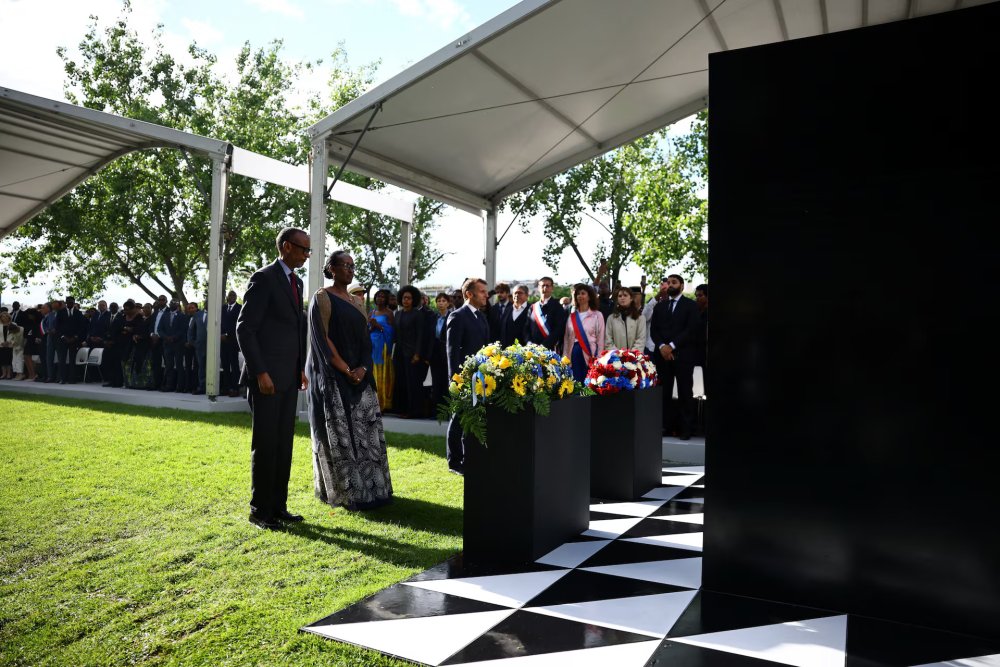
He made the remarks on June 2, 2026, during the inauguration of Les Archives, a memorial dedicated to the victims of the Genocide against the Tutsi, where he was accompanied by First Lady Jeannette Kagame and other dignitaries.
In his address, Kagame reflected on his personal experience of displacement and Rwanda’s history of repeated tragedy, noting what he described as a “cycle of thirty years” between earlier violence in the 1960s and the 1994 Genocide against the Tutsi.
He said, “The events of the Genocide against the Tutsi are within living memory. And so the work of memory necessarily begins with the word of survivors.”
Kagame stressed that survivors themselves carry the burden of history, describing them as “living memorials, not only by virtue of the visible scars of the body, but also the indelible wounds of the spirit.”
Speaking about the significance of the newly unveiled memorial, he said it plays a critical role in preserving truth for future generations: “The memorial before us is powerful because it sets the truth in stone and protects it from the heartlessness of time, by instructing the living.”
Kagame added that the memorial is not about validation, but respect, saying it stands as “a mark of respect for the dignity of Rwandans and our history.”
Turning to relations with France, Kagame commended President Emmanuel Macron for his approach to historical responsibility, stating: “President Macron, I want to commend you on both counts: courage and humanity.”
He referenced France’s acknowledgment of its past during Macron’s 2021 visit to Rwanda, noting the recognition that France “could have stopped the genocide but did not,” and describing such acknowledgment as more meaningful than an apology.
Kagame also praised earlier steps taken by France, including historic remarks by former President Nicolas Sarkozy, and efforts by journalists and researchers who helped document the truth of the genocide.
He said Rwanda’s engagement with its past and international dialogue has contributed to what he called an “irreversible journey towards truth.”
Kagame further emphasized Rwanda’s internal responsibility and resilience, saying the country has chosen to confront its history directly and invest in educating younger generations to prevent repetition of past atrocities.
He concluded by stressing that overcoming history requires political will, adding that the unveiling of the memorial in Paris represents a deeper commitment to peace, understanding, and remembrance.
French President Emmanuel Macron also paid tribute to the victims during the official inauguration of the memorial, emphasizing the importance of remembrance.
The French Head of State described the memorial as “the culmination” of the long process of recognition undertaken in recent years regarding the Genocide against the Tutsi.
According to Macron, the construction of the memorial in Paris now places the Genocide against the Tutsi “at the heart of the French capital and its history.”
He noted that the project is the result of years of dedicated work based on survivors’ testimonies, historical research, academic publications, and the sustained commitment of memory and remembrance associations.
The French President also recalled the speech he delivered at the Kigali Genocide Memorial in Gisozi in May 2021, when he acknowledged France’s responsibilities in the events that led to the Genocide against the Tutsi.
“I do not wish to take back a single word of what I said,” Macron stated, reaffirming his commitment to continuing the pursuit of truth between the two countries.
The memorial was inaugurated in Paris on Tuesday, June 2, 2026. President Kagame has hailed Macron for ‘humanity’ and the role played by his country to preserve memory of the 1994 Genocide against the Tutsi. President Kagame and First Lady Jeannette Kagame honored victims of the 1994 Genocide against the Tutsi at the unveiled memorial in Paris.
The sanctions were announced on March 2, 2026, with the United States accusing Rwanda of supporting the M23 rebel group fighting the Congolese government, an allegation Kigali has consistently rejected.
Those sanctioned include the Chief of Defence Staff of the RDF, Gen Mubarakh Muganga; the Army Chief of Staff, Maj Gen Vincent Nyakarundi; the Commander of Special Forces, Brig Gen Stanislas Gashugi; and the Commander of the RDF 5th Division, Maj Gen Ruki Karusisi, as well as the RDF as an institution.
The measures are economic in nature. They restrict access to any assets held in the United States or under U.S. jurisdiction, as such property is frozen and placed under the control of the U.S. Office of Foreign Assets Control (OFAC).
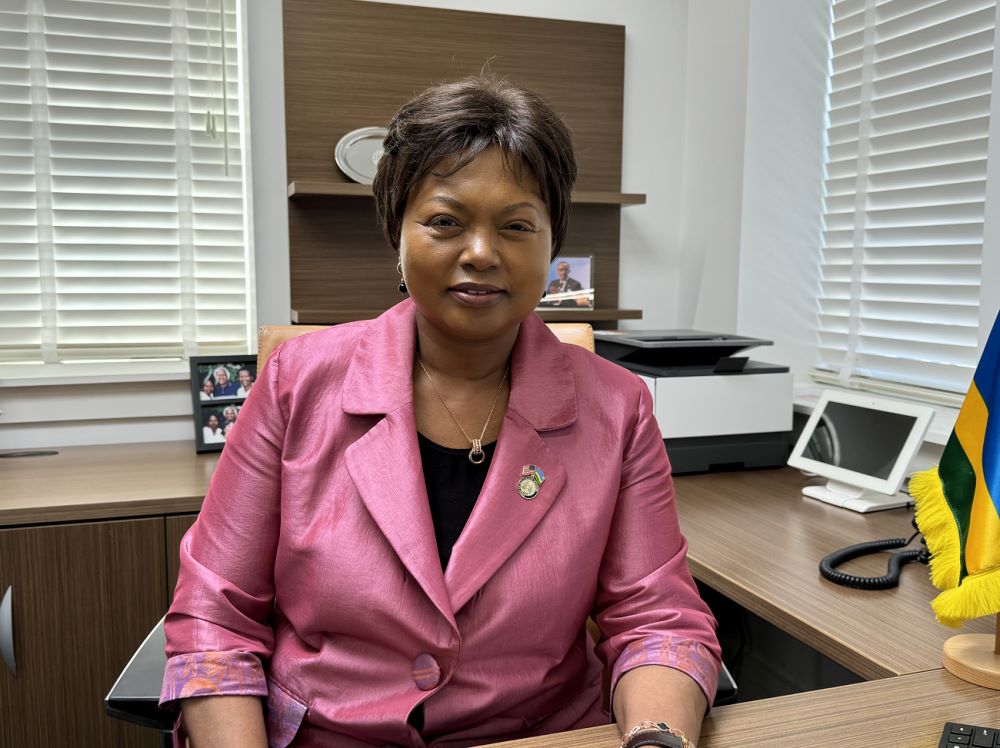
In an interview with journalist Ally Soudy, Ambassador Mukantabana said the crisis in eastern DRC is rooted in the presence of groups originating from Rwanda who played a role in the 1994 Genocide against the Tutsi and later fled into Congo, where she said they continue to spread genocidal ideology.
“Thirty-two years after the Genocide against the Tutsi in Rwanda, which was stopped by Rwandans themselves, the country is at peace. However, as I have explained before, the ideology of genocide did not disappear; it spread among some of our neighbouring communities.
“Those who left after killing victims, they continued to target other communities across the border in Congo. That is what we are still dealing with today. We have not abandoned this issue, and as you know, we are currently engaged in peace agreements with the DRC, including agreements supported by the United States.”
She added that addressing injustices faced by Congolese citizens who speak Kinyarwanda, particularly Tutsi communities allegedly targeted or neglected by the Congolese government, contributed to the emergence of the M23 movement, which says it is fighting for their rights.
The group is among those that some foreign governments accuse Rwanda of supporting—an accusation Rwanda has repeatedly denied, insisting that M23 is composed of Congolese citizens and that Kigali has no involvement in its activities.
Asked what Rwanda is doing to ensure the sanctions are lifted, Ambassador Mukantabana said the measures have not closed diplomatic channels between Rwanda and the United States, and that discussions are ongoing.
She said: “They have not closed doors. We are still following up, we are still engaging. They made their decision, but this is not something where you give up. Instead, it is something you stand firm on and continue addressing.”
She further noted that some Americans understand Rwanda’s position and believe the sanctions were not justified.
“The positive thing is that there are Americans who also do not agree with how those measures were taken. It is about continuing collaboration with such friends so that they can eventually be lifted. Above all, peace in that region must be achieved, because even if they are lifted now, other accusations will continue as long as the conflict persists,” she said.
Mukantabana added that the key solution lies in the full resolution of the conflict in eastern DRC, arguing that as long as instability continues, Rwanda will continue to be blamed.
She said: “That country has many problems, but whenever difficulties arise, Rwanda is often pointed at as a way of shifting responsibility. These are challenges we did not create, but we will continue to engage and we will not back down. We will prevail.”
Since the signing of peace agreement between Rwanda and DRC in June and December 2025, in the United States, DRC has continued to violate agreed commitments.
Rwanda has consistently stated that it remains committed to implementing the agreements and is ready to lift its defensive measures once the DRC fully neutralizes the FDLR terrorist group.
Ambassador Mukantabana said the crisis in eastern DRC is rooted in the presence of groups originating from Rwanda who played a role in the 1994 Genocide against the Tutsi and later fled into Congo.
In a letter issued on June 1, 2026, the city administration, which has been a key sponsor of both clubs, officially notified them that the current funding arrangements will come to an end at the close of the existing contract period.
According to a letter signed by the City of Kigali Mayor, Samuel Dusengiyumva, the sponsorship agreements took effect on July 1, 2025, and were set to run until June 30, 2026.
Earlier, on March 12, 2026, the City of Kigali had written to Kiyovu Sports proposing a consolidation of its supported clubs under a single structure, involving AS Kigali and Gasogi United.
However, the proposed arrangement was not accepted by Gasogi United.
Dusengiyumva thanked the clubs for their cooperation throughout the partnership period, noting that the collaboration had contributed to the development of sports and talent promotion in the city.
“I am writing to inform you that the financial support provided by the City of Kigali will cease upon the expiration of the partnership agreement on June 30, 2026,” he stated.
“I also take this opportunity to appreciate the partnership and results achieved during our collaboration in promoting sports and nurturing talent within the City of Kigali.”
Gasogi United FC president Kakoza Nkuriza Charles also expressed gratitude for the partnership, saying it had contributed positively to the club’s development and youth empowerment.
“I would like to take this opportunity to thank you for the fruitful journey we have shared, which ensured smooth cooperation between Gasogi United Football Club and the City of Kigali,” he said.
He added that the partnership had helped identify and develop young talent, giving opportunities to Rwandan youth and improving their access to education and football-related prospects.
“Throughout this journey, we have worked together to change many lives,” he noted.
Under the arrangement, the City of Kigali had been providing an annual sponsorship of about Rwf 150 million to each club. In return, the teams promoted city campaigns related to hygiene, security, and other public awareness initiatives.
With the end of these agreements, AS Kigali remains the only club still directly supported by the City of Kigali.
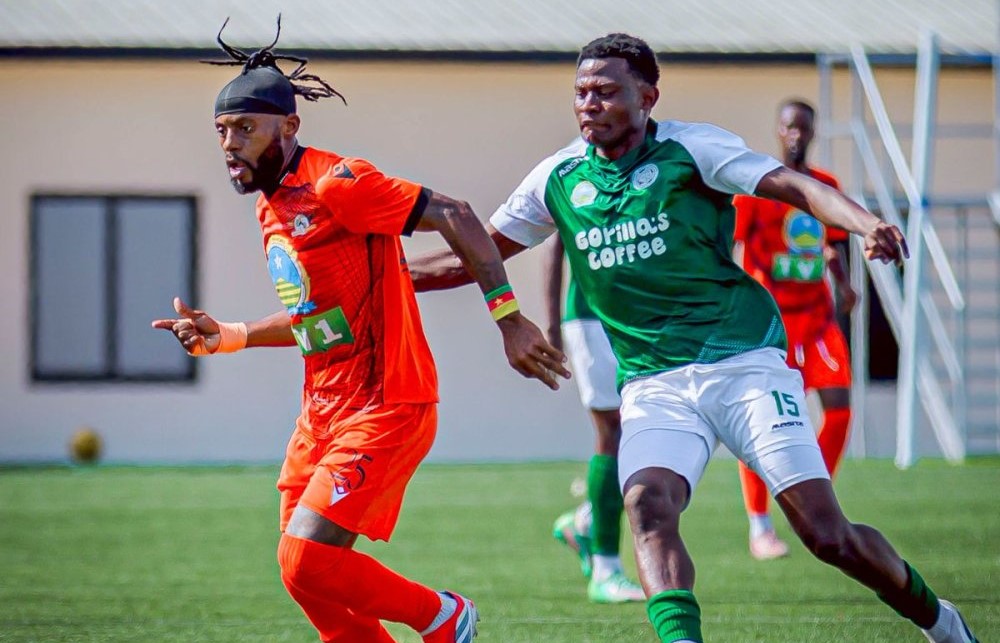
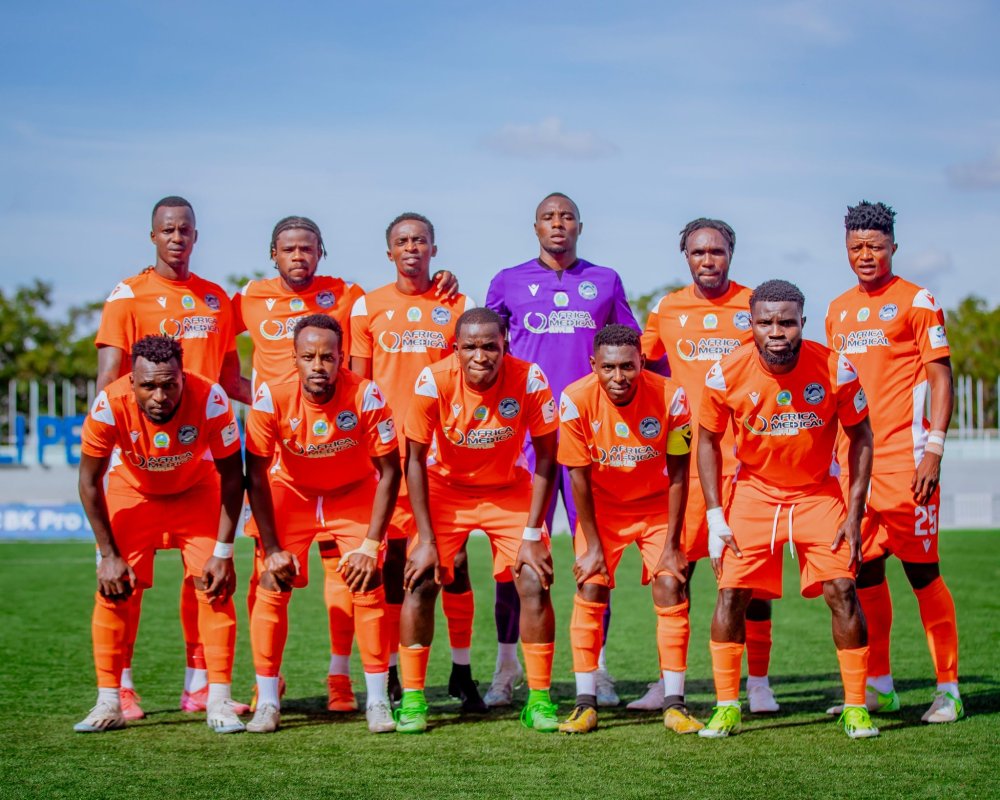
AS Kigali remains the only team sponsored by the City of Kigali. The City of Kigali has announced the end of sponsorship partnership with Kiyovu Sports and Gasogi United FC effective June 30, 2026.
The ceremony comes as Rwanda continues the commemoration of the 32nd anniversary of the Genocide Against the Tutsi, a period marked by remembrance, reflection, and renewed commitments to preserving the memory of more than one million lives lost during the 100-day genocide.
The unveiling will bring together senior government officials from Rwanda and France, members of the diplomatic corps, academics, researchers, and other distinguished guests.
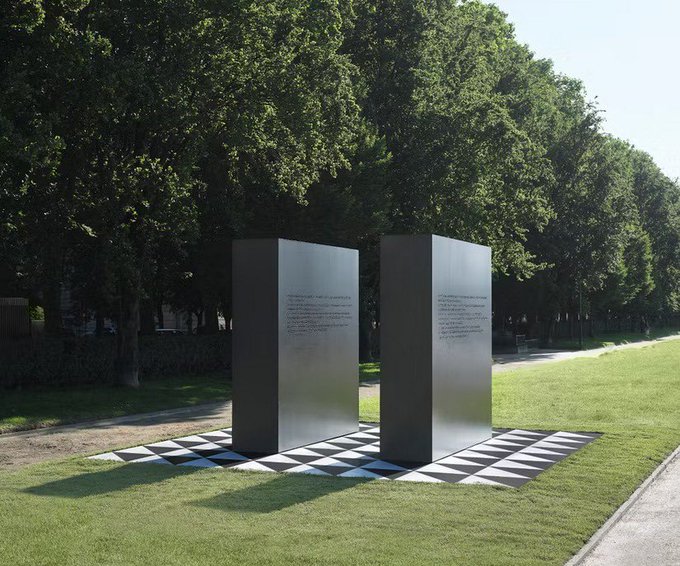
The monument, titled Les Archives, was commissioned by the French State in partnership with the City of Paris and Ibuka France. It was created by Portuguese-born artist Grada Kilomba and is intended to serve as a permanent place of remembrance and reflection.
Located along the Esplanade Habib-Bourguiba in the heart of Paris, Les Archives consists of two large-scale rectangular structures designed to honour the victims of the Genocide Against the Tutsi and provide a space for contemplation and tribute.
Following the ceremony, President Kagame and First Lady Jeannette Kagame will attend a dinner at the Palais de l’Élysée hosted by President Macron and First Lady Brigitte Macron.
The unveiling of Les Archives is expected to stand as a lasting symbol of remembrance in one of Europe’s most prominent capitals, ensuring that the memory of the victims of the 1994 Genocide Against the Tutsi continues to endure for generations to come.
President Paul Kagame and First Lady Jeannette Kagame are in Paris, France, where they will join French President Emmanuel Macron for the unveiling of a monument honouring the victims of the 1994 Genocide Against the Tutsi.The monument, titled Les Archives, was commissioned by the French State in partnership with the City of Paris and Ibuka France. It was created by Portuguese-born artist Grada Kilomba and is intended to serve as a permanent place of remembrance and reflection.
The announcement marks the official confirmation from Maputo following concerns over the future financing of the mission after the European Union signalled reluctance to continue supporting the deployment through the European Peace Facility (EPF).
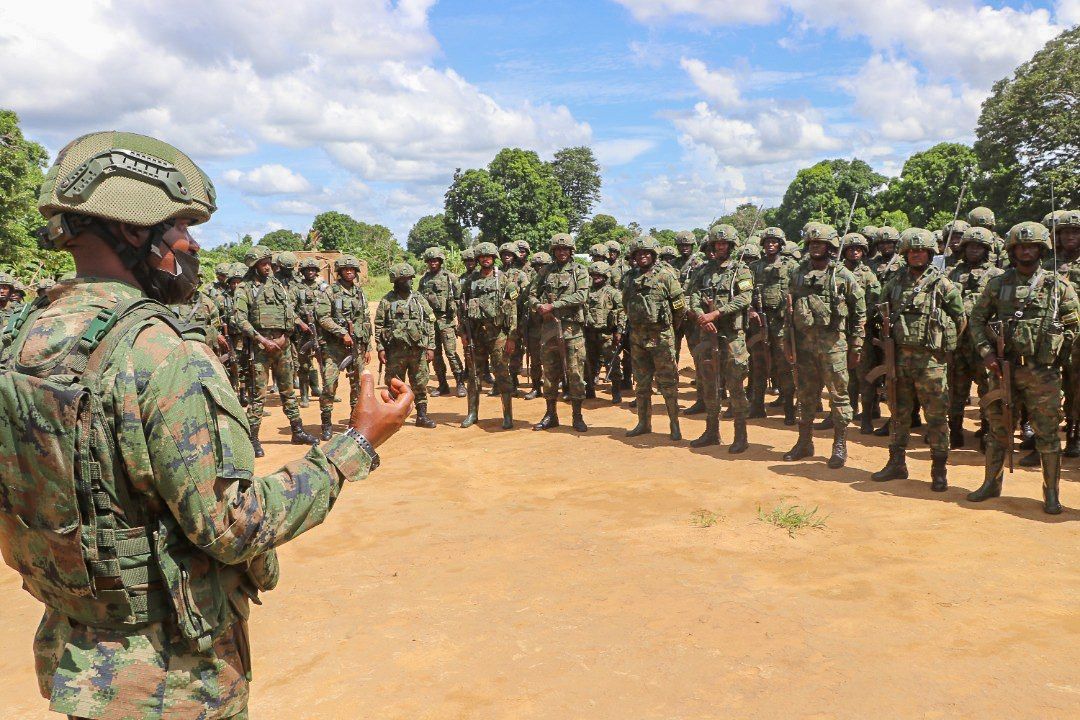
Speaking to reporters in Maputo on Friday, government spokesperson and Minister of State Administration Inocêncio Impissa said the presence of Rwandan troops remains essential as Mozambique continues to strengthen its own security capabilities.
“I do not know the costs or how long they will stay, but the agreements will strictly clarify this matter in the near future, but having this reinforcement allows us to continue to build our country’s capacity,” Impissa said.
He added that the continued support of Rwandan forces gives Mozambique time to reorganise and modernise its armed forces.
“This gives us time to continue reorganising our forces in terms of capacity, equipment, and technology, among others, while we also benefit from the support of friendly forces who secure the region,” he said.
Rwandan forces were deployed to Cabo Delgado in July 2021 at the request of the Mozambican government to help contain an Islamist insurgency that has plagued the province since 2017. Their intervention has been widely credited with helping recapture key towns, restoring stability in strategic districts such as Palma and Mocímboa da Praia, and enabling displaced residents to return home.
The confirmation from Maputo follows remarks made in March by Rwanda’s Minister of Foreign Affairs and International Cooperation, Olivier Nduhungirehe, who said the Government of Mozambique had committed to directly financing the mission after some European Union member states became reluctant to continue funding support.
“Rwanda came back to the basics and decided to deal exclusively with the Government of Mozambique,” Nduhungirehe said at the time, stressing that the partnership between Kigali and Maputo remained strong and effective.
He noted that the mission had delivered significant results over the past several years, including improved security, the reopening of businesses and schools, and the return of displaced families.
Nduhungirehe also argued that the intervention created the conditions necessary for major international energy investments to resume, including an estimated $50 billion in liquefied natural gas (LNG) projects led by European and American companies.
The EU has provided approximately €20 million in support for the Rwandan deployment through the EPF. However, Kigali has consistently maintained that the contribution covered only a fraction of the actual costs incurred by Rwanda, which it says has spent at least ten times more on the mission.
The funding question gained prominence after Rwandan authorities warned earlier this year that the deployment could be reconsidered if sustainable financing was not secured.
In August last year, Rwanda and Mozambique renewed their Status of Forces Agreement on Support to the Fight Against Terrorism during a visit by Mozambican President Daniel Chapo to Kigali. The agreement extended Rwanda’s military support in Cabo Delgado, with Chapo praising the partnership for helping restore peace in the region.
The security gains achieved by Mozambican and Rwandan forces have also helped revive confidence in Cabo Delgado’s economic prospects. The insurgency had forced French energy giant TotalEnergies to suspend construction of its LNG project and declare force majeure in 2021. Following improvements in security, the company lifted the declaration and, in January this year, agreed with the Mozambican government to resume construction activities.
As Mozambique continues efforts to build the capacity of its own security forces, officials say the presence of Rwandan troops remains a critical component of maintaining stability and preventing a resurgence of insurgent activity in Cabo Delgado.
The Mozambican government has confirmed that it will secure the necessary funding to ensure the continued deployment of Rwandan security forces in Cabo Delgado, reinforcing a security partnership that has played a key role in combating insurgency in the country’s northern region.
According to an internal State Department memo obtained by the Associated Press, the number of US diplomatic missions in Africa handling visa applications is set to be cut from nearly 50 to just 20 in the coming weeks.
Although no official implementation date has been announced, the changes are expected to take effect before the end of June.
The move forms part of the Trump administration’s broader efforts to tighten immigration controls, including stricter scrutiny of both immigrant and non-immigrant visa applications and measures aimed at reducing visa overstays.
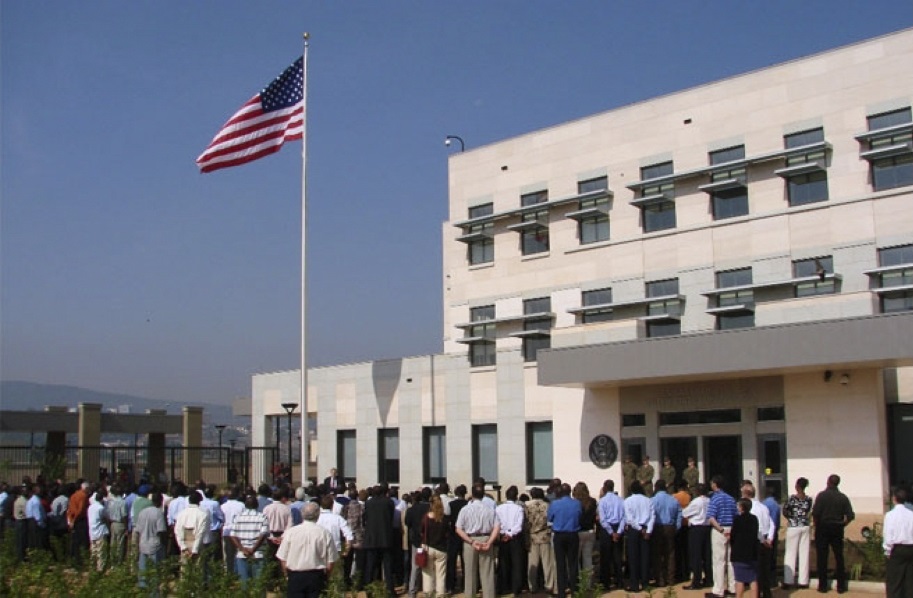
Under the proposed restructuring, only a limited number of US embassies in Africa will continue processing visa applications. In East Africa, the embassies in Rwanda, Kenya, Uganda, Tanzania and the Democratic Republic of Congo are expected to retain visa services.
The US embassies in Burundi, Somalia and South Sudan are among those likely to lose the authority to process routine visa applications.
Other countries expected to continue offering visa services include Senegal, Djibouti, South Africa, Nigeria, Togo, Angola, Equatorial Guinea, Liberia, Mauritius, Cape Verde and Cameroon.
If the plan is implemented, applicants from countries where visa services are discontinued will have to travel to designated regional hubs to submit their applications.
The change is expected to increase costs for many travelers, who may need to cover additional expenses for transport, accommodation and other logistics.
Embassies that no longer process regular visa applications will continue to provide consular services such as passport renewals for US citizens, emergency assistance and the handling of diplomatic visa requests.
According to US officials cited by the Associated Press, American diplomats and consular officers were informed during a conference call last week that visa operations across Africa would be consolidated as part of the restructuring.
U.S. is set to scale back visa services at dozens of embassies in Africa with Kigali among visa processing hubs to be retained.
Patrick Nkurunziza, who was born in the neighboring DRC, is among those who lived a life they did not choose. At a very young age, he was recruited into the armed ranks of the FDLR militia group while still a child.
The FDLR is an armed group founded by individuals who participated in the 1994 Genocide against the Tutsi and who have, over time, maintained an agenda aimed at destabilizing the Government of Rwanda.
The group has continued to operate despite concerns over its genocidal ideology and its frequent collaboration with Congolese forces.
As some of its founding members aged and others chose to return to Rwanda, the group increasingly turned to recruiting children born in the DRC into its ranks. It also expanded its activities to include the training of Congolese youth and the creation of allied militias such as Nyatura, alongside other groups influenced by divisive ideology.
Recruitment into the group has largely targeted children born in areas where it operates, particularly Congolese nationals.
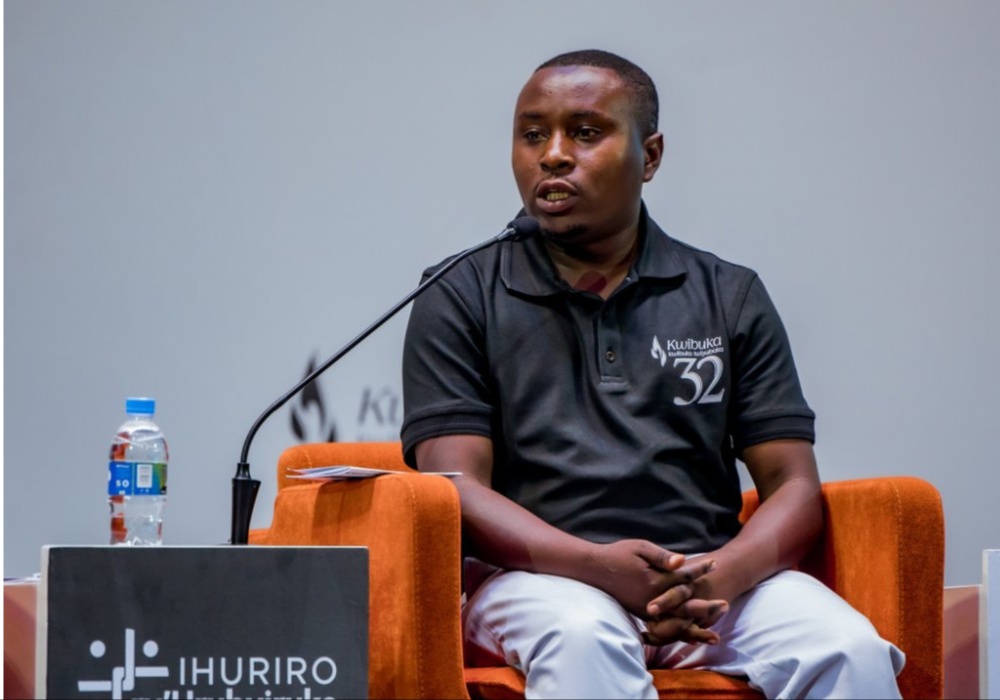
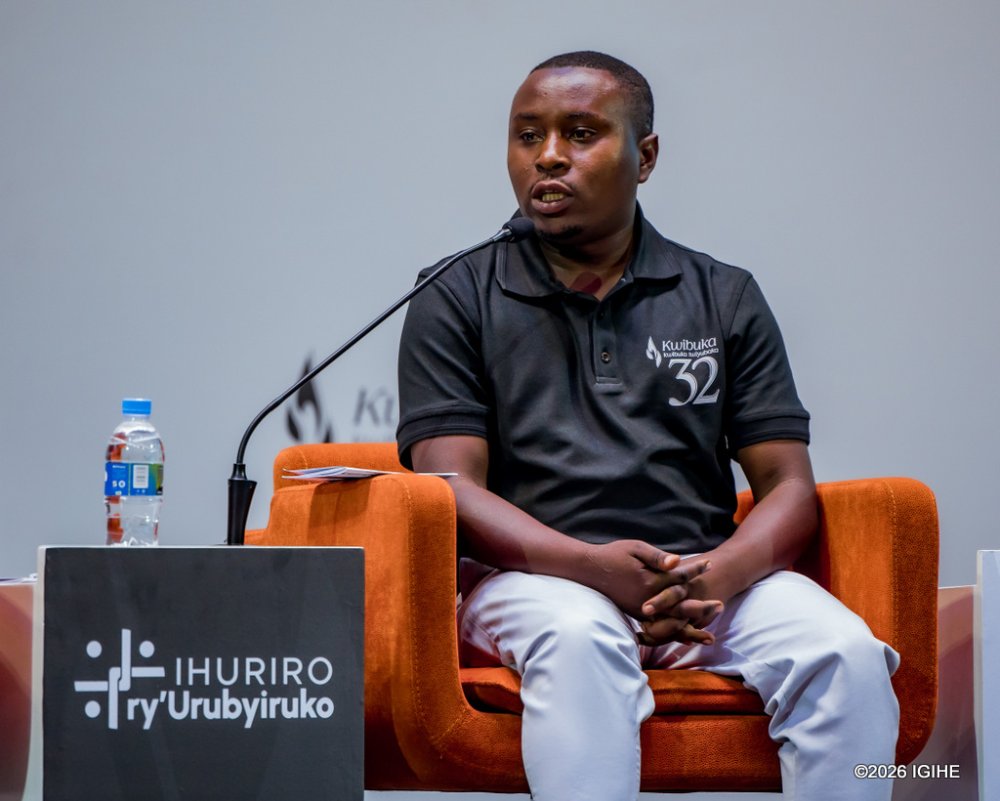
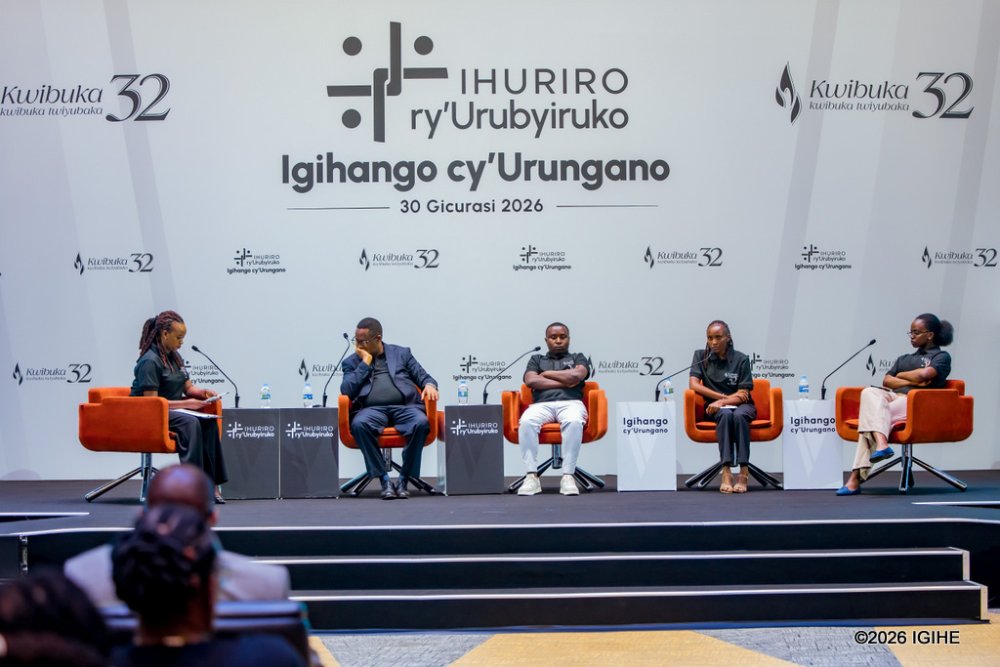
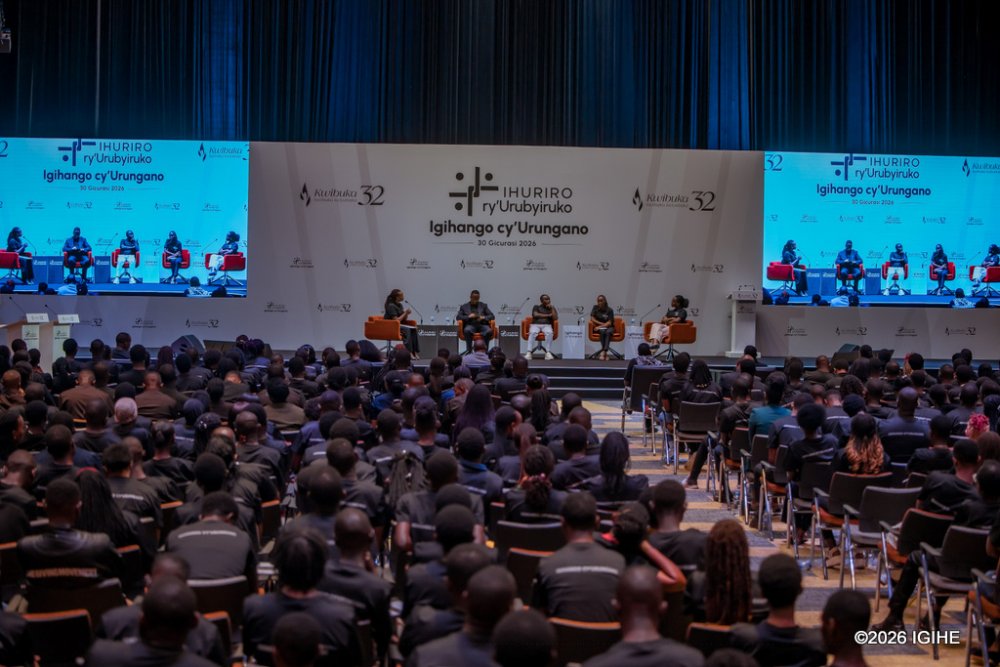
Nkurunziza shared his testimony during an “Igihango cy’Urungano” youth dialogue forum, which brings together young people from across Rwanda to reflect on the country’s history and to honor the memory of youth who were killed during the Genocide against the Tutsi.
He explained that he was born in 1997 and was forcibly recruited into the FDLR at a very young age, beginning to handle a firearm at just 14 years old.
He also noted that his father had resisted joining the FDLR despite living in the DRC, but the group attempted to pressure him by forcibly recruiting his child.
“They captured me and another boy called John, blindfolded us, and took us to Rutshuru, into the forests of Walikale. The second aspect was constant psychological pressure, torture, indoctrination, training, and forced participation in harmful narratives aimed at denying the Genocide against the Tutsi,” he recounted.
“We were beaten daily and forced into activities such as stealing, carrying heavy loads, and transporting ammunition. I was a 14-year-old child, but they did not care. I was made to carry loads of up to 60 kilograms. I had no option to refuse; I had to comply until they decided otherwise.”
After this period, he was subjected to military training. He underwent a three-month training program and was issued a firearm at the age of 14, despite lacking the physical or technical ability to use it.
“I was given a gun at 14. They did not care whether I could use it or not. I held it until I learned how to use it, and I became a soldier like others. At that time, we were trained to say: ‘Work hard, we want to attack Rwanda, we want to destroy the Tutsi completely,’” he said.
He further explained that access to food within the group often depended on looting civilians, and in some cases, this involved violence and killings.
Patrick Nkurunziza, who was born in the neighboring DRC, is among those who lived a life they did not choose. At a very young age, he was recruited into the armed ranks of the FDLR militia group while still a child.
While the FDLR is often perceived as being composed mainly of older fighters due to its long history, Nkurunziza emphasized that the group also includes many young recruits, some of whom are his age or even younger, and who live under extremely difficult conditions.
After approximately six months, he began contemplating escape, despite the significant risks faced by a 15-year-old in such an environment.
He eventually approached a soldier he knew and expressed his desire to leave, stating that he no longer wished to remain in the forest due to exhaustion and continuous abuse.
“Even within the military I saw, there was no strength or hope that they would ever take Rwanda. I had no confidence in them at all,” he explained.
In 2010, he made the decision to flee the forest, embarking on a dangerous and uncertain journey.
Reaching peacekeeping MONUSCO forces proved extremely difficult for the 15-year-old and his companion. Along the way, they encountered individuals who attempted to stop them and force them back, with the intention that they be killed as a warning to others considering escape.
Despite these dangers, they managed to persevere and eventually reached MONUSCO protection after days of struggle.
Fearing capture and torture, they continued to move day and night until they reached safety.
While in Bukavu on his way home, Nkurunziza received devastating news that his parents had been killed by the FDLR in retaliation for his escape. The news was deeply distressing, but he continued his journey back to Rwanda.
“When I reached Rusizi at the border, I saw Rwandan citizens happy, healthy, and welcoming. The leaders received me with great warmth, and I heard people speaking Kinyarwanda,” he recounted.
Shock at the absence of heavy security around leaders
Nkurunziza explained that upon returning to Rwanda, he initially believed he might be killed, as he had previously been told that anyone who returned would be eliminated and used in staged recordings to discourage others from coming back.
“I told myself I might as well die like others. If they record me, so be it. In reality, I was already expecting death.”
After crossing the border, he was taken to the Nyarushishi transit center before being transferred to the Mutobo Reintegration Centre in Musanze District, a facility that supports former combatants in returning to civilian life.
At Mutobo, although he initially remained cautious and fearful, he encountered individuals he had previously seen in the DRC, including some with senior ranks, who were alive and well. This reassured him that he had indeed entered a safe environment.
He frequently recounts his experiences with a mix of humor and reflection, describing both the trauma he endured and the choices he made during that period.
During a graduation ceremony for trainees at the centre, he was surprised to see that the Mayor of Musanze District and the Governor of the Northern Province were not accompanied by armed escorts.
“In Congo, I was used to seeing mayors surrounded by soldiers and police. I wondered how there could be peace in a country we were told was full of killers, and that Tutsi were snakes who would be exterminated,” he narrated.
“Then I saw senior generals arriving with only a few soldiers. I immediately realized I had come to a peaceful country. From that moment, life began to feel different.”
Afterwards, the leadership at Mutobo sent him to the Nyarubande centre, which supports children and young people in learning Rwandan cultural values and taboos.
He later enrolled in a six-month hotel management course.
Upon completing his studies, he and other graduates were encouraged to identify and develop their talents. Having never had the opportunity to explore his own abilities due to life in the forest, he discovered his talent for singing.
He was supported and mentored, and went on to record 12 songs in both audio and video formats, marking the beginning of a new chapter in his life.
He used his music to encourage others still in the forests of eastern DRC to return home and participate in national development.
Nkurunziza also secured employment, which further helped him rebuild his life.
In 2023, after rebuilding stability, he got married and started a family. He is now a husband and father of one child.
He expressed appreciation for the Government of Rwanda, security institutions, and citizens whose efforts contributed to building a peaceful and prosperous Rwanda where movement is free and life continues without disruption.
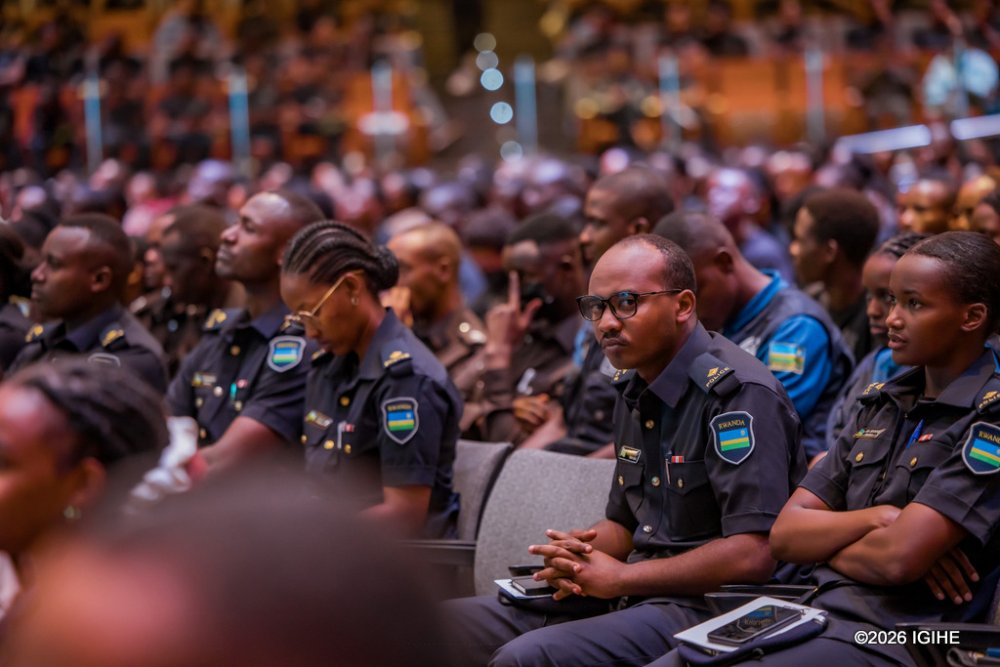
Speakers at the “Igihango cy’Urungano” dialogue urged young people to take part in rejecting and combating genocide ideology.