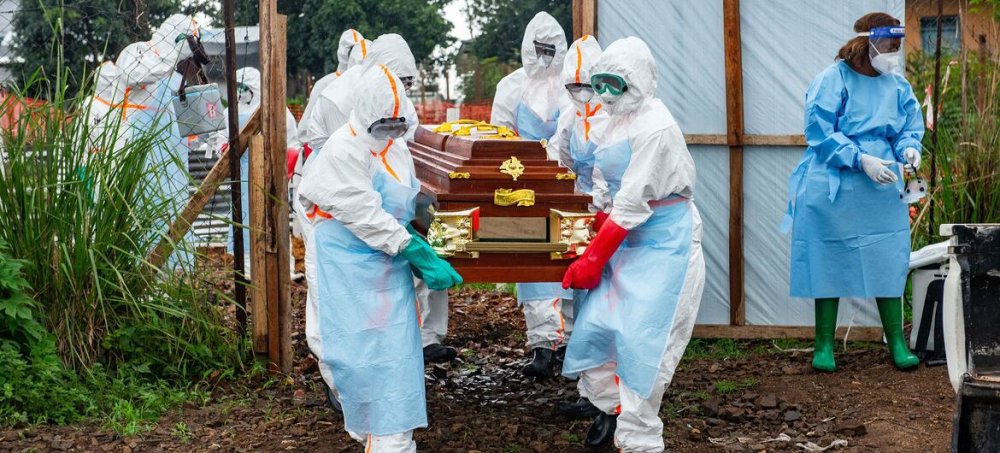
Reports indicate that residents of Kivoga, a neighborhood in Bujumbura, noticed a car parked off the road in a palm grove at around 8:00 a.m. on Thursday. When they moved closer to check, they found him dead inside the vehicle.
People who recognized him confirmed he was Minister Bugaga and promptly alerted security authorities, who have since opened an investigation into the circumstances surrounding his death.
The spokesperson for the Burundian government, Jérôme Niyonzima, confirmed Bugaga’s death but told the media that more details would be released later.
Security personnel, including soldiers and police officers, arrived at the scene where Bugaga was found before taking it to hospital.
Preliminary investigation reports indicate that before his death, Bugaga was not accompanied by his security detail, raising concerns about the circumstances surrounding his death.
Bugaga was widely known for his earlier career as a journalist with the national broadcaster, RTNB. He also held various positions, including roles in the Senate and the National Independent Electoral Commission (CENI).
He was appointed Minister of Communication and Media in early August 2025.
Gabby Bugaga had been serving as Burundi’s Minister of Communication and Media since August 2025.His vehicle was found parked in a palm plantation near the roadside, raising suspicion among nearby residents.Security forces have since arrived in the Kivoga area to begin investigations into the circumstances surrounding his death.Bugaga was found dead in his vehicle.
Speaking at a Council briefing on the Peace, Security and Cooperation Framework for the DRC and the Great Lakes region on Wednesday, Rwanda’s Deputy Permanent Representative, Robert Kayinamura, said the continued presence of the FDLR in eastern DRC constitutes an “existential threat” to Rwanda and a major obstacle to peace efforts in the region.
“There can be no credible path to peace without its effective and irreversible neutralisation,” he told Council members, reiterating Kigali’s long-standing position on the armed group.
The meeting came a week after Rwanda commemorated the 32nd anniversary of the Genocide against the Tutsi at the UN General Assembly Hall. Kayinamura noted that some of those responsible for the genocide fled into the DRC and remain active today, a factor he said partly motivated the establishment of the regional Peace, Security and Cooperation Framework in 2013.
Rwanda maintained that it has consistently upheld its commitments under the Framework over the past decade, but argued that key drivers of instability have not been addressed. According to Kayinamura, this reflects “a failure of implementation” rather than a weakness in the agreement itself.
He stressed that the FDLR issue has remained unresolved despite repeated engagement with UN officials, regional mediators, and successive Special Envoys.
Rwanda also expressed concern over what it described as escalating hate speech, ethnic targeting, and violence against Rwandophone communities in eastern DRC, including the Banyamulenge. Kayinamura said the continued portrayal of these communities as foreigners undermines the objectives of the Framework.
“These realities point to deep-rooted challenges that must be addressed directly. Sustainable peace cannot be built on avoidance,” he said.
The Rwandan envoy emphasised that peace in the DRC and stability in the broader Great Lakes region are inseparable, warning that selective implementation and accountability would not produce meaningful results.
While reaffirming support for ongoing diplomatic efforts, including ceasefire arrangements and processes in Washington and Doha, Rwanda also backed interim security measures such as a buffer or interposition force to help stabilise the situation as political negotiations continue.
Kayinamura posed two recurring questions Rwanda has raised in implementation discussions: how the root causes of the conflict remain unresolved after 13 years of the Framework’s existence, and why hate speech and persecution of communities continue unabated.
“If these issues remain unresolved, what basis do we have to expect a different outcome?” he asked Council members.
He concluded that after more than a decade, the path forward is clear and requires full and consistent implementation of agreed commitments. Rwanda, he said, remains engaged in good faith but stressed that success depends on all parties meeting their obligations.
“There is no military solution to this crisis,” he said. “Only a genuine return to the principles of accountability, cooperation, and mutual respect will deliver sustainable peace for our region.”
Speaking at a Council briefing on the Peace, Security and Cooperation Framework for the DRC and the Great Lakes region on Wednesday, Rwanda’s Deputy Permanent Representative, Ambassador Robert Kayinamura, said the continued presence of the FDLR in eastern DRC constitutes an “existential threat” to Rwanda and a major obstacle to peace efforts in the region.
According to SOS Médias, on the evening of April 14, 2026, a large Burundian military vessel was seen at Rumonge port on Lake Tanganyika, carrying soldiers and military equipment.
The vessel continued its journey to the town of Baraka in Fizi Territory, South Kivu. The deployed troops are expected to be sent to frontline areas including Gakenke, Mikenke, Kalingi, and Mulima.
Reports indicate that Burundian forces, together with DRC government troops and Wazalendo militia groups, are planning an offensive aimed at capturing Minembwe commune, a strategic area currently controlled by Twirwaneho, a group formed to protect the Banyamulenge community.
By early December 2025, Burundi reportedly had more than 20,000 troops in South Kivu. Some of these forces were withdrawn after the AFC/M23 coalition took control of several areas in Uvira Territory, including Uvira town.
Sources in South Kivu say that after months of regrouping, the Burundian government has recently resumed military deployments to the front lines in an effort to retake previously lost positions and capture new areas.
The AFC/M23 alliance has claimed that DRC forces, Burundian troops, Wazalendo fighters, FDLR elements, and mercenaries have continued launching attacks in several parts of South Kivu, including Gakenke, Kalingi, and Bidegu.
The group says these operations are aimed at disrupting ongoing peace talks taking place in Switzerland since April 13, accusing the DRC government of preferring military escalation over dialogue.
AFC/M23 maintains that it seeks a political solution to its conflict with the DRC government, but insists it will continue to defend itself and protect civilians if attacks persist.
According to SOS Médias, on the evening of April 14, 2026, a large Burundian military vessel was seen at Rumonge port on Lake Tanganyika, carrying soldiers and military equipment. Sources in South Kivu say that after months of regrouping, the Burundian government has recently resumed military deployments to the front lines in an effort to retake previously lost positions and capture new areas.
Edwin Njuguna Ngugi, a driver from Malava in Busia County, was transporting goods from Mombasa to Bunia when he ran into trouble. His truck reportedly broke down in the volatile Ituri province, an area plagued by armed groups.
According to his family, Njuguna’s last known contact was on April 3 at exactly 2:22 p.m., when his phone went silent.
His mother, Rose Ngugi, said he had earlier expressed fear for his life.
“I started speaking with him on April 2 when he complained that the vehicle had broken down in a dangerous place and he was in the wrong hands,” she told the Kenyan media.
In a final call to his cousin in Mombasa, Njuguna described the dire situation he was facing.
“You can see the trouble I have encountered here. The road is very bad, the truck broke down yesterday and the trailer got stuck. I am now being guarded by soldiers… yesterday I was almost attacked by people with machetes who wanted to rob me, but luckily soldiers came because I am in the bush… the cargo owner said he would bring another truck to transfer the load and then burn this trailer, so I am waiting for them,” he said.
Desperate for safety, Njuguna reportedly sought protection from local soldiers. However, his family alleges that the same soldiers later took his money and abandoned him.
He is believed to have been subsequently attacked by armed groups, killed, and his truck looted.
Days later, fellow Kenyan truck drivers operating in the region discovered his decomposing body and shared images in a WhatsApp group in an attempt to identify him. It was through these images that his family confirmed his death, nearly ten days after he went missing.
His body is currently at Bunia Main Hospital, while the truck remains at the scene of the attack.
The family says it lacks the financial means to travel to the DRC to retrieve the body and is now appealing to the Kenyan government for assistance with repatriation.
Eastern DRC remains one of the most unstable regions in Africa, with hundreds of armed groups operating in the region. Ituri province, where Bunia is located, has faced persistent violence from militias, including the Allied Democratic Forces (ADF) and local ethnic groups such as Cooperative for Development of the Congo (CODECO).
Edwin Njuguna Ngugi, a driver from Malava in Busia County, was transporting goods from Mombasa to Bunia when he ran into trouble. His truck reportedly broke down in the volatile Ituri province, an area plagued by armed groups.
In a statement, AFC/M23 spokesperson Lawrence Kanyuka said government forces shelled civilian areas on Saturday and continued the attacks into Sunday.
“The Kinshasa authorities have deliberately chosen to sabotage the negotiation process underway in Switzerland,” the statement said. “On the night of April 11, 2026, between 22:00 and 04:00, drone strikes targeted densely populated areas of Minembwe and surrounding locations.”
Kanyuka further protested that the actions reflect a refusal by the Congolese government to honor commitments linked to the peace process, and were intended to weaken the planned negotiations.
Delegations from the Democratic Republic of Congo and the AFC/M23 coalition are expected to meet for peace talks in Switzerland from April 13 to April 17, 2026.
The talks are being facilitated by Qatar, which requested Switzerland to host the discussions. They were previously held in Doha but were relocated due to regional instability linked to the conflict involving the United States, Israel, and Iran, which has affected several countries in the Middle East.
Media reports indicate that while Switzerland serves as the host, the process remains under the mediation of Qatar, with Qatari representatives expected to facilitate the proceedings via video conference to maintain the “Doha Process” framework.
In a statement, AFC/M23 spokesperson Lawrence Kanyuka said government forces shelled civilian areas on Saturday and continued the attacks into Sunday.
These talks, initially held in Doha, were relocated at the request of Qatar, the mediator in the process. The move comes as a result of escalating conflict involving the United States and Israel against Iran, which has destabilized parts of the Middle East and affected the region’s ability to host such diplomatic engagements.
According to reports published on April 10 by Jeune Afrique, the meetings will not take place in Geneva, and Switzerland will not play a direct role in the discussions. Instead, Qatari representatives are expected to participate remotely via video conference.
Among the key international figures expected to attend are Massad Boulos, Special Advisor to the U.S. President on Africa , and Vivian van de Perre, Deputy Head of the United Nations peacekeeping mission in DRC (MONUSCO) in charge of operations.
Mubita Luwabelwa, Executive Secretary of the International Conference on the Great Lakes Region (ICGLR), is also expected to take part.
The AFC/M23 delegation will consist of six members led by its Permanent Secretary, Benjamin Mbonimpa. At the time of reporting, the composition of the DRC government delegation had not yet been made public.`
This phase of the peace talks will primarily focus on facilitating humanitarian assistance. Both sides are expected to discuss practical measures to ensure that aid organizations can effectively deliver support to civilians affected by the ongoing conflict in eastern DRC.
One of the major expectations from the international community is the reopening of Goma International Airport, which has been under AFC/M23 control since January 2025. Earlier in 2026, Vivian van de Perre visited Goma and formally conveyed this request to AFC/M23 leadership.
However, tensions remain. Reports indicate that AFC/M23 has been reluctant to proceed with discussions on humanitarian matters while key prior agreements remain unfulfilled. These include adherence to the ceasefire and the mutual release of prisoners.
AFC/M23 continues to accuse DRC government forces of carrying out daily attacks on areas under its control using drones, fighter jets, and heavy weaponry, resulting in civilian casualties.
Although both parties previously agreed to establish a joint ceasefire monitoring mechanism involving MONUSCO and the ICGLR, this initiative has yet to become operational.
Following AFC/M23’s withdrawal from the city of Uvira in January 2026, MONUSCO forces were expected to take over and oversee ceasefire compliance. While assessment missions have been conducted, full deployment and active monitoring have not yet begun.
In a previous humanitarian gesture, AFC/M23 allowed the International Committee of the Red Cross (ICRC) to transfer over 1,300 soldiers and police officers who had taken refuge in its controlled areas near Goma back to Kinshasa.
In March 2026, AFC/M23 announced plans to release 5,000 DRC soldiers, expressing hope that the government would reciprocate by freeing detained members of the group. However, confidence in such a reciprocal move has been steadily declining.
Available information indicates that by early 2026, the ICRC had already identified the locations and identities of AFC/M23 detainees. Despite this, no progress has been made, as the DRC government has not agreed to release them.
AFC/M23 maintains that continued military offensives and the refusal to release prisoners demonstrate a lack of genuine commitment to peace on the part of the DRC government.
Instead, the group argues that the government still appears to believe that the conflict can be resolved through military means rather than dialogue.
Peace talks are set to resume in Switzerland amid unfulfilled commitments by the DRC Government.
Facing rising fuel prices driven by international disruptions in oil supply, President Samia directed that government institutions immediately cut down on fuel use and unnecessary travel. At a ceremony for newly appointed officials in Dodoma, she said the government must act responsibly and lead by example.
Under her directive, the size of the presidential motorcade will be dramatically reduced. Instead of dozens of vehicles that previously traveled together, she will now be accompanied by a maximum of four cars: her official vehicle, security escort, police detail, and a backup car while the rest of the delegation will travel together on a single bus to further save fuel.
“From today, whenever I travel, the officers accompanying me will use consolidated transport in small buses to reduce fuel consumption and operational costs during this period,” President Samia said on Wednesday, stressing that the government must adapt its operations to the current economic pressures.
The decision also aims to reduce operational costs and demonstrate effective use of public resources at a time when many citizens are already experiencing higher prices for basic goods and services. Tanzania’s Energy and Water Utilities Regulatory Authority (EWURA) recently confirmed that petrol and diesel prices have risen significantly, influenced by global market volatility.
President Samia warned traders against taking advantage of the fuel situation by inflating prices on existing stocks. She said that while some price increases are unavoidable due to increased costs for imported goods, fairness is essential so that everyday citizens are not unfairly burdened.
The fuel cost increases come at a time of geopolitical uncertainty, including disruptions near the Strait of Hormuz, a key shipping route for global oil supplies. Tanzania is not alone in facing these challenges, as several other African countries including Madagascar, South Africa, Ethiopia, and Senegal have also taken measures to manage fuel scarcity and rising prices.
Tanzanian leader orders smaller convoys and shared buses to cut fuel use as prices rise.
AFC/M23 is currently holding thousands of Congolese government troops, most of whom were captured during fighting in late January 2025, when the group seized the city of Goma and surrounding border areas.
On March 8, 2026, AFC/M23 announced plans to hand over 5,000 detainees to the International Committee of the Red Cross (ICRC) for transfer to the capital, Kinshasa. The group said the soldiers are being held at the Rumangabo military base and that their release is intended to support ongoing peace efforts and facilitate dialogue with the DRC government.
RFI reported on April 8, 2026, that the ICRC is prepared to transport the soldiers to Kinshasa, but that Congolese authorities have not yet authorized their reception. According to the report, the hesitation is linked to concerns that some of the soldiers could have been compromised or may pose a threat, although no official government statement has been issued.
The report also noted that AFC/M23 has been encouraging the DRC government to receive the soldiers, while a source close to President Félix Tshisekedi said the government was taking time to consider the offer.
Earlier, on February 20, 2026, AFC/M23 political coordinator Corneille Nangaa Yobeluo announced the release of 230 soldiers captured in Goma, though it remains unclear whether they were subsequently transferred to Kinshasa by the ICRC.
In a related development, in April 2025, 1,359 Congolese soldiers and police officers who had taken refuge at United Nations peacekeeping bases (MONUSCO) on the outskirts of Goma were repatriated to Kinshasa following negotiations involving the ICRC and AFC/M23.
Many of the soldiers captured by AFC/M23 are being held at the Rumangabo military base.
American diplomat James Swan has officially assumed leadership of the United Nations Organization Stabilization Mission in the Democratic Republic of the Congo (MONUSCO).
António Guterres appointed Swan as his Special Representative for MONUSCO early March 2026, succeeding Bintou Keita of Guinea, who left office on November 30, 2025.
Upon his arrival in Kinshasa on April 7, Swan underscored that the crisis in eastern DRC cannot be resolved through military means, pointing instead to dialogue, regional engagement, and the implementation of existing agreements as essential pathways to progress.
He reaffirmed that the protection of civilians remains MONUSCO’s central responsibility.
Swan further indicated that the mission will continue to support efforts aimed at reducing violence and creating conditions conducive to sustainable peace in the eastern region.
Swan assumes his duties at a time when MONUSCO has been tasked with overseeing the implementation of a ceasefire in Uvira territory, South Kivu Province, following the Doha negotiations between the Congolese government and the AFC/M23 coalition.
The United Nations Security Council has maintained that MONUSCO’s core mandate includes protecting civilians, preventing and responding to attacks on displacement camps, supporting the reintegration of former combatants, and monitoring compliance with sanctions related to arms flows.
In addition, the mission’s Force Intervention Brigade has been restructured to enhance its effectiveness in restoring stability in eastern DRC, with a strengthened mandate to conduct operations against armed groups independently or in coordination with national forces.
MONUSCO staff members welcomed Swan upon arrival The United Nations Secretary-General António Guterres appointed Swan as his Special Representative for the United Nations Organization Stabilization Mission in the Democratic Republic of the Congo (MONUSCO) early March 2026. Upon his arrival in Kinshasa on April 7, Swan underscored that the crisis in eastern DRC cannot be resolved through military means.
The night of March 31, 2026, was filled with celebration across the country as the national team defeated Jamaica 1-0, securing a World Cup spot for the first time in 52 years.
Residents in regions under AFC/M23 control, including the city of Goma, also celebrated the victory, demonstrating a sense of shared joy with citizens in other parts of the country, despite being under the rule of opposing factions.
On April 5, 2026, during festivities in Kinshasa honoring the team and thanking the players for their achievement, President Tshisekedi noted that the happiness of people in the eastern regions reinforced his confidence in reclaiming these areas.
He stated, “You saw the footage—there is joy in these territories controlled by the enemy, and we will reclaim them soon because of these forces, because of this momentum.”
The Head of State expressed optimism about regaining the regions, even as AFC/M23 maintained that it had no plans to relinquish control and warned that any government attacks would be dealt with.
Whenever the Congolese government has tried to retake lost areas, AFC/M23 has countered effectively, often seizing additional territory.
The international community has emphasized political negotiations as the only viable solution to halt the conflict, but President Tshisekedi has remained adamant.
There are reports that peace talks between the DRC government and AFC/M23 could resume in April 2026, though not in Doha, Qatar, due to the ongoing conflict in the Middle East; suggesting the venue may be moved to Switzerland.
President Tshisekedi noted that the happiness of people in the eastern regions reinforced his confidence in reclaiming AFC/M23 controlled areas.