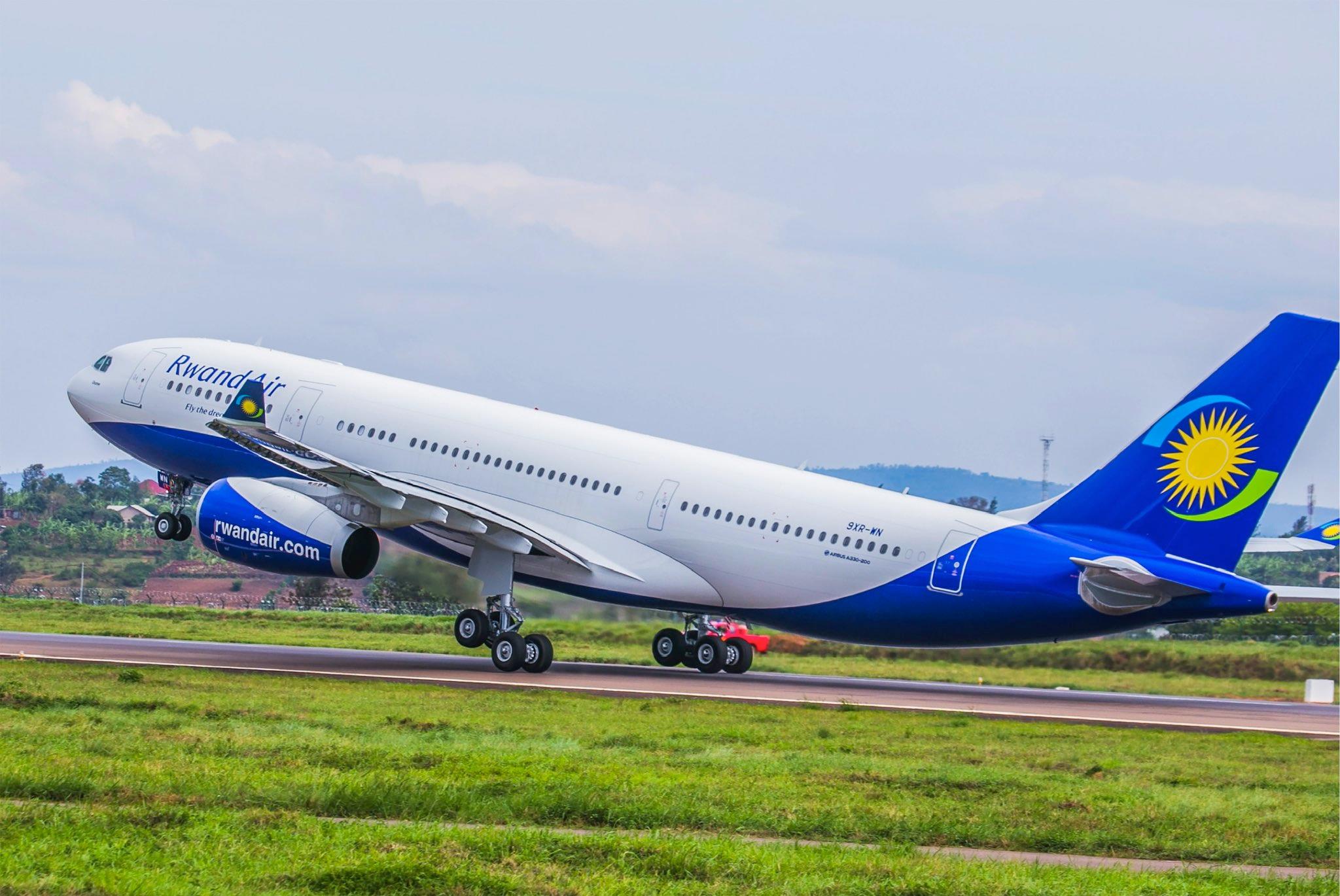
In a statement on Wednesday, April 17, the management urged the affected passengers to check their emails regularly for updates about the interruptions.
“Due to severe weather conditions in Dubai (DXB), we’re experiencing flight disruptions to and from Dubai. Passengers are advised to check their emails regularly for updates,” the airline stated.
This comes as heavy rains continue to batter Gulf States, leading to floods, including at Dubai International Airport, one of the world’s busiest airports.
Earlier on Wednesday morning, the airport authorities described the weather conditions as “very challenging,” urging passengers “not to come to the airport unless absolutely necessary.”
“Flights continue to be delayed and diverted. Please check your flight status directly with your airline. We are working hard to recover operations as quickly as possible in very challenging conditions,” the management added.
Kenya’s Kenya Aiways (KQ) and Fly Emirates are among airlines that have been forced to cancel flights due to heavy storms.
“We are monitoring the situation and are in close contact with Dubai authorities to minimise the inconvenience and disruption to our customers’ travels,” KQ said while announcing the cancellation of two flights on Wednesday.
Fly Emirates, while asking its customers to rebook their flights said, “Dubai customers with flights scheduled for today (17 April) are advised not to go to DXB, as check-in remains suspended for all flights. Your safety is our top priority.”
At least 18 people have been reported dead due to the floods in Oman, even as weather forecasts predict further storms across the United Arab Emirates (UAE).
Schools across the UAE shut before the storms, with experts saying that the rains, which began on Monday, are equal to a year and a half’s worth of rain for the desert region.
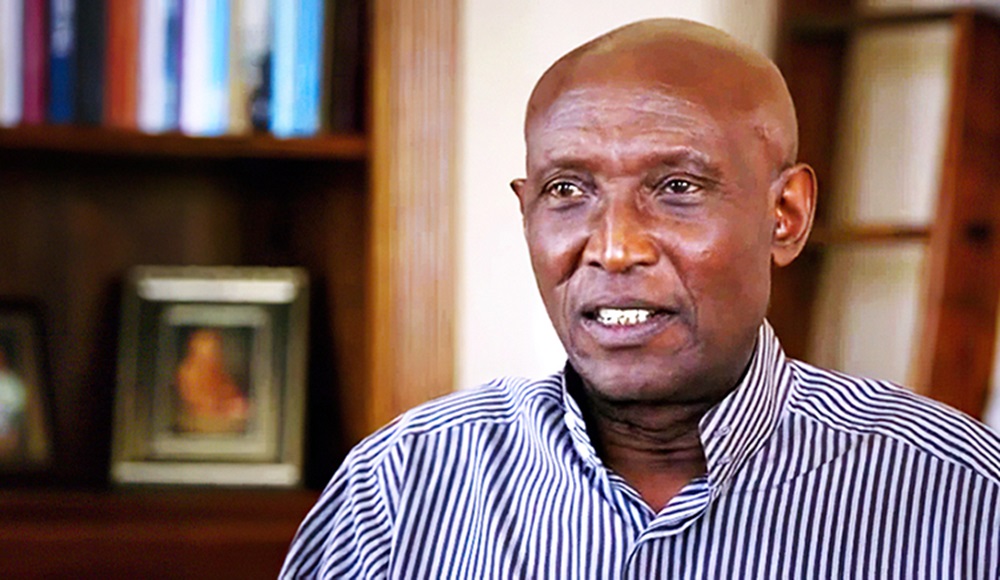
He was last in Rwanda in 2010, after which it was revealed that he fled to South Africa, a country where he had been running business.
This move came following discoveries that he was involved in tax evasion and had connections with subversive groups aiming to destabilize Rwanda’s security, whom he also supported financially.
Born around 1941 in Rwanda, Rujugiro spent a significant portion of his life in Burundi as a refugee, where he began his tobacco business.
Emphasizing the paramount importance of national security, he credited it as the cornerstone of Rwanda’s post-genocide accomplishments, achieved through the intervention of RPF Inkotanyi forces.
Over the past thirty years, Rwanda has transcended ethnic and regional tensions, fostering a society where no individual faces persecution based on identity. Educational curricula have been purged of divisive ideologies, and ethnic affiliations have been removed from identification documents.
Addressing a gathering comprising staff from various government agencies during the commemoration of the 30th anniversary of the genocide against the Tutsis, Gen (Rtd) Ibingira asserted Rwanda’s newfound stature on the global stage, stating, “For 30 years, Rwanda has stood as a nation of principles.” He metaphorically illustrated the meticulousness of Rwanda’s governance by suggesting that even a rabbit crossing into the country one would require proper documentation to come collect it.
Reflecting on historical events, he recounted an incident in the 1970s when Burundians laid claim to Rwandan territory, highlighting Rwanda’s vulnerability at the time. Additionally, he recalled the audacious act of Idi Amin, who, during his presidency in Uganda, unauthorizedly landed military planes at Kigali Airport, causing widespread panic.
Noting a shift in diplomatic demeanor, Gen (Rtd) Ibingira remarked on Rwanda’s transformation from a nation with a somewhat volatile disposition and diplomatic humility to a strong fearless country , contrasting the past with the present.
Acknowledging the post-genocide reconstruction efforts, he shared the journey of healing and progress, emphasizing the restoration of the Rwandan society, both physically and emotionally.
Highlighting the remarkable socio-economic advancements from 1994 to 2024, he underscored Rwanda’s robust growth in various sectors, including infrastructure, education, trade, industry, and employment opportunities, culminating in a significant rise in per capita income and gross domestic product.
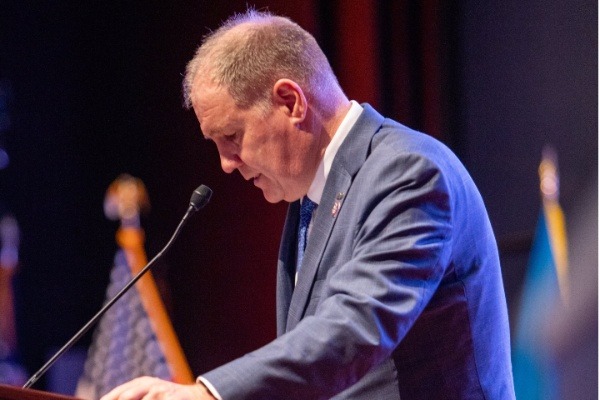
Trent Kelly, a member of the House of Representatives from Mississippi’s 1st congressional district, confirmed on Monday, April 15, 2024, that he had introduced a resolution calling for the government to adopt the official definition of the Genocide, a move he said would ensure lessons from Rwanda’s painful history are not forgotten.
“The facts are the facts, it’s not the Rwandan Genocide it’s the 1994 Genocide against the Tutsi in Rwanda. I call on the State Department administration to call it exactly what it is. I’ve introduced a house resolution calling for United States to adopt the official definition of Genocide.
We have a moral obligation to ensure the lessons of history are not forgotten and the voices of the victims are heard,” he said.
Kelly spoke at Capitol Hill in Washington D.C, where members of the Diplomatic corps, congress, academia, media, Rwandan community and friends of Rwanda gathered to honour the victims of the 1994 Genocide against the Tutsi.
The US has been in the spotlight several times due to its failure to clearly state in its messages, especially during the annual ‘Kwibuka’ commemorations, that the Tutsis were the targeted group in the 1994 genocide, as established by the Trial Chamber of the UN International Criminal Tribunal for Rwanda (ICTR).
Early this month, Secretary of State Antony Blinken came under fire from Rwandans on social media over his vague message to the country during the 30th commemoration of the Genocide against the Tutsi.
President Paul Kagame also condemned intentional vagueness in reporting the Genocide against the Tutsi during his speech at BK Arena on April 7, stating that it fuels denial.
“Rwandans will never understand why any country would remain intentionally vague about who was targeted in the genocide. I don’t understand that. Such ambiguity is, in fact, a form of denial, which is a crime in and of itself, and Rwanda will always challenge it,” Kagame stated during Kwibuka30.
Corina Sanders, the Deputy Assistant Secretary for African Affairs at the US Department of State, echoed Kagame’s sentiments at Capitol Hill Monday, insisting that denial of the Genocide against the Tutsi distorts facts about the victims of the crimes.
“As we join in remembering the victims and reaffirm our support for the people of Rwanda in the continued efforts for the unity and renewal, we oppose any attempt to misrepresent the historical record for political purposes, in particular we strongly oppose any denial or minimization of the Genocide that targeted Tutsi,” Sanders stated.
The keynote speaker, Emmanuel Ugirashebuja, shared insights into how remembering and honoring the victims of the 1994 Genocide Against Tutsi serves as a crucial step in preventing future genocides.
“It’s our solid duty to remember the victims, to honor their resilience and to ensure that their stories are kept in our collective consciousness. By doing so we not only pay tribute to those who suffered but also lay the ground for preventing such atrocities from happening again,” Ugirashebuja averred.
Congressman Jonathan Jackson, on his part, lauded President Kagame’s leadership, for the transformation witnessed in the country over the last 30 years and his commitment to leading a united country.
“I commend President Paul Kagame for his leadership in guiding the country to heal, reconciliate and unite. His courage, dedication and ability to move the country from the Genocide to become one of the fastest growing countries in the world must be commended,” he said, adding, “Rwanda continues to be a beacon for many African countries and across the world.”
The message was echoed by Congresswoman Sheila Cherfilus-McCormick, who said, “I was impressed by your administration’s progress on the development front, combating corruption and improving governance. I commend President Paul Kagame and Rwandans for the leadership and commitment for building the Rwanda we see today that serves as a model to other countries.”
Speaking on Sanny Ntayombya’s podcast the ‘Long Form’, the seasoned international lawyer maintained that there was no evidence to support the claims that the Tutsi-led Rwandan Patriotic Front (RPF) engaged in a counter-genocide against the Hutus after taking control of the country and stopping the government-led killing of the Tutsi in July 1994.
According to Adeogun-Phillips, while there were killings of members of the Hutu community during the period, there was no evidence to prove that the murders were coordinated or state-sponsored, as witnessed during the 100 days of targeted killings of the Tutsi.
“There was clear evidence that there was some reprisal attacks but there is no evidence that those reprisal attacks were coordinated or state sponsored,” Adeogun-Phillips stated.
He maintained that the RPF soldiers had no means to commit a genocide as they were “too busy trying to gain ground to be able to secure and take over the country as best as they could.”
“It was not humanly possible for them to have spread to be chasing the refugees and doing what they are alleged to have done. Not on a concerted national planning level as we saw with the genocide.”
“Widespread and systematic attacks in international criminal law require coordination not only on the local level but also on the central level. If you knew the amount of planning that went into planning the Genocide against the Tutsi, the purchase of machetes, how machetes were imported, how refugees were gathered in preconceived safe locations, how political leaders were earmarked and eliminated here in Kigali and other parts of the country, there was no such evidence of a plan against the Hutu,” he added.
As an investigator, he claimed to have been aware of court martial processes against soldiers suspected to have been involved in the isolated cases of reprisal attacks.
“There were some cases of court martials taking place. As part of my work, I was privy to some of the investigations that we did and shared with government. I was privy to some of the prosecutions that took place,” the lawyer noted.
Adeogun-Phillips played a leading role in the probed and prosecution of 12 war crime trials before the United Nations International Criminal Tribunal for Rwanda UN-ICTR.
Reflecting on the tribunal’s works as the country marks the 30th commemoration of the Genocide against the Tutsi which claimed the lives of a million people, the lawyer said there were many challenges ranging from inadequate facilities to limited number of judges to hear the cases in Arusha, Tanzania.
“Our infrastructural needs as an institution did not progress as fast as our procedural needs. Maybe there were two cases on at a time but there was no court room, the judges had to alternate,” he revealed.
The ICTR was established pursuant to United Nations Security Council Resolution 955 of November 8, 1994.
Curtains came down on the tribunal in December 2015 after more than two decades of trial that led to indictment of 93 individuals, 61 convictions and 14 acquittals.
During the period, the ICTR withdrew two indictments, and three individuals died before the conclusion of their trials. Furthermore, five cases were transferred to national courts in Rwanda and France.
In Rwanda’s security apparatus, collaboration with the populace occurs without intimidation, fostering a culture of disciplined interaction both domestically and internationally, where Rwandan forces contribute to peacekeeping missions.
A study conducted by the Rwanda Governance Board (RGB), tasked with promoting good governance and monitoring service delivery, highlights security as the foremost pillar, with a rating of 93.63%.
Addressing workers from the National Rehabilitation Service, the Office of the Ombudsman, and the National Electoral Commission during the 30th commemoration of the 1994 Genocide against the Tutsis, Gen (Rtd) Fred Ibingira emphasized the soldier’s authority to make decisions while on duty.
Illustrating with an incident in Nyanza, Gen (Rtd) Ibingira recounted how a soldier, after being rejected by a girl, resorted to violence, eventually leading to her death. In response, the soldier was executed by hanging him on a tree, as a demonstration of maintaining discipline within the ranks.
“We administered punishment through hanging and shooting to ensure discipline within our forces,” Gen (Rtd) Ibingira affirmed, citing the existence of an ethics committee and a court martial to address misconduct.
Attributing the restoration of peace in Rwanda to divine intervention, Gen (Rtd) Ibingira stressed the importance of leadership in upholding discipline, particularly during turbulent times such as the genocide.
Recognizing the doubts that soldiers harbored during the genocide, Gen (Rtd) Ibingira expressed gratitude for divine intervention, averting further catastrophe and enabling visionary leaders under the command of President Paul Kagame to restore order and humanity.
In emphasizing the ethos of non-discrimination within the RPA forces, Gen (Rtd) Ibingira underscored the importance of treating all individuals equally, regardless of ethnicity.
He urged citizens with national responsibilities to excel and contribute to the nation’s progress, emphasizing that their actions are pivotal indicators of Rwanda’s development.
Gen (Rtd) Ibingira also implored the youth to uphold the nation’s values, shunning discrimination and genocide ideologies, recognizing that the future of the country rests in their hands.
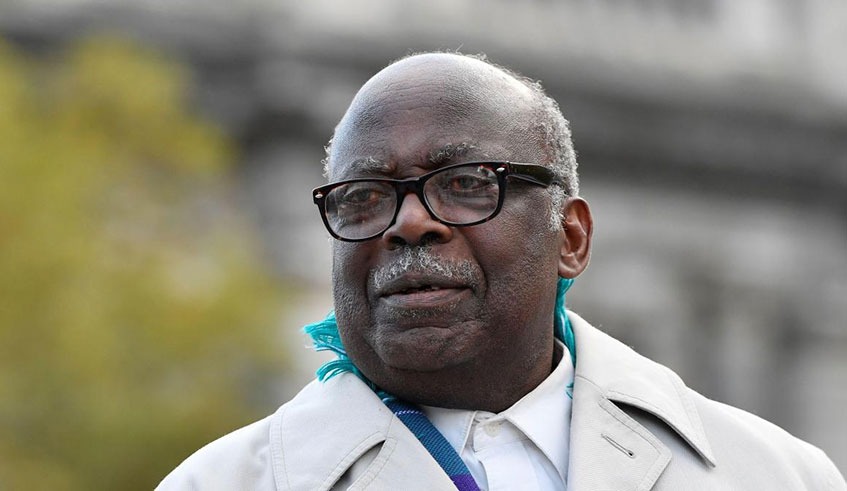
Neretse passed away in Liège on Tuesday, April 9, 2024. A funeral ceremony was held for him on Saturday, April 13, his family said.
The agricultural scientist was the first person tried by Belgian courts for his involvement in the Genocide against the Tutsi and sentenced to 25 years in prison in December 2019.
He was found guilty of 11 war crimes committed between April 6, 1994 to July 14, 1994.
“All of these facts established points that the accused committed the crime of genocide in Rwanda between 6 April to 14 July 1994 in Kigali, Ruhengeri and Gitarama,” Sophie Leclercq, President of the criminal court, ruled.
Neretse was arrested in France in 2011 where he had rebuilt a professional life as a refugee.
The prosecution had cited Neretse’s appearance at public rallies, where he is said to have incited fellow members of the Hutu ethnic group to slaughter the minority Tutsi community, resulting in the deaths of 13 people in Nyamirambo.
Some of the victims were shot dead by soldiers as they were preparing to flee their homes to join the United Nations Assistance Mission for Rwanda (UNAMIR) camp.
While convicting Neretse, the court said there was evidence that the accused created, sustained, and financed militia members of the Interahamwe, who were out to exterminate the Tutsi.
The accused had denied involvement in the atrocities during the trial, insisting and was an inactive party member and a friend to Tutsi.
“I will never stop insisting that I neither planned nor took part in the genocide,” he told the jury.
Neretse’s death comes as Rwanda marks the 30th commemoration of the Genocide against the Tutsi that claimed the lives of more than a million people.
According to The Telegraph, the list of 13 military top brass includes three former Chiefs of the Defence Staff as well as a former Chief of the General Staff and a former Chief of the Naval Staff.
In a letter quoted by the British publication, the group sent a strong warning to Prime Minister Rishi Sunak, saying deporting Afghans who fought alongside the British army would be a “dereliction of our moral duty”.
“Any brave men and women who have fought alongside our armed forces or served the UK Government overseas must be exempt from removal to Rwanda,” the letter signed by Marshal of the Royal Air Force Lord Craig of Radley, Gen Lord Richards of Herstmonceux and Gen Lord Houghton of Richmond—all former Chiefs of the Defence Staff—was quoted as saying.
The group further accused the government of mismanaging the Afghan Relocations and Assistance Policy – known as the ARAP scheme – which was launched in April 2021.
The scheme was established to help current or former Afghan staff who were employed by the UK government in Afghanistan.
The military chief’s warning comes amid reports that Afghan soldiers have been subjected to torture and murder by the Taliban after being denied help by the UK Government, despite extensive evidence showing they were paid, trained, and worked “shoulder to shoulder” with British special forces.
The military top brass argue that the Arap scheme was “intended to be a lifeline for brave Afghans who worked alongside UK forces but there is a huge backlog of applications”.
“It is essential that those who have made it to British shores are not unduly punished by being removed to Rwanda when the Government’s scheme is up and running,” the group is further quoted.
The sentiments come at a time Sunak’s Safety of Rwanda Bill, which proposes the relocation of certain asylum seekers from the UK to Rwanda for processing their claims, returns to the Commons on Monday after a series of defeats in the Lords.
Rwanda and the UK signed the Migration and Economic Development Partnership in April 2022.
Officials said the migrants caught trying to enter UK territory illegally by boat or hiding in vehicles would be sent to Rwanda.
The scheme faced headwinds last November after the UK Supreme Court ruled that it was unlawful.
This forced the government to amend the legislation, including a new treaty and stating in law that Rwanda is a safe country.
MPs are expected to vote on those amendments when they return to parliament.
This week, Sunak, while expressing his confidence that the scheme would succeed, faulted the Labour Party for the delays in the implementation of the programme.
“First of all we need to get it through parliament, where the Labour Party has been blocking it for a long time.
“Once it is up and running I am confident we will be able to operationalise the scheme [and] get people on flights because that’s how we set up a deterrent and ultimately end the unfairness of people jumping the queue, coming here illegally, putting pressure on local services and risking their own lives,” he stated in response to a question from the reporters seeking to know when the first flight would depart to Rwanda.
In March 2024, UK authorities announced that the government would offer failed asylum seekers up to £3,000 (Rwf4,866,727) to move to Rwanda under the new voluntary scheme.
The two-year waiver means that traders can export unlimited quantities of flowers to the UK at zero per cent tariff, even if the commodities were to be transported through third parties.
While the rest of the world is set to benefit from the waiver, the UK named the East African region—comprising other countries such as Kenya, Ethiopia, Tanzania, and Uganda —as the primary beneficiaries.
“The suspension of eight percent duty for cut flowers applies across the world but will be a big win for major flower growing regions in Kenya, Ethiopia, Rwanda, Tanzania, and Uganda. The duty suspension will remain in place for two years from 11 April 2024 to 30 June 2026,” the UK said in a statement.
UK noted that the waiver is also aimed at increasing and strengthening economic ties between the UK and the region.
“The UK’s relationship with East Africa is rooted in mutually beneficial trade. This additional flower power will allow trade to bloom. We go far when we go together… or in this case, we grow far when we grow together, further reinforcing the UK’s commitment to the expansion of trade in East Africa,” UK Trade Commissioner for Africa John Humphrey said.
“This is particularly important for East African flower growers who transport their blooms via third countries or auction houses before they arrive in the UK.”
According to the UK trade office, Kenya ranked as the fourth largest exporter of cut flowers globally in 2022, accounting for six percent of total global exports.
On the other hand, Ethiopia is the second-largest cut flower producer in Africa, accounting for 23 percent of sub-Saharan African exports.
In 2023, the UK imported cut flowers worth £12.6 million ($13.5 million) from Ethiopia, £727,000 ($780,736.36) from Rwanda, £839,000 ($901,138.12) from Tanzania, and £1.1 million ($1.18 million) from Uganda.
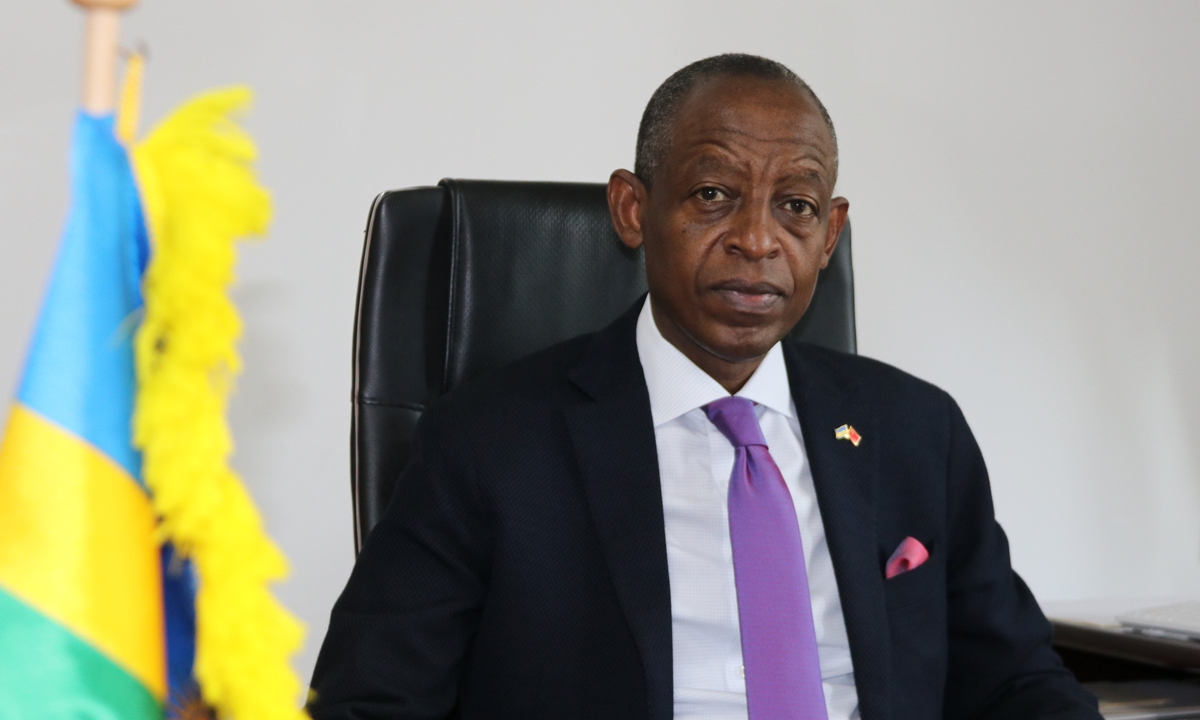
Speaking during a recent interview with a Chinese news outlet, Kimonyo affirmed that both Washington and Beijing were crucial partners of Rwanda as it continues to rebuild itself after the 1994 Genocide against the Tutsi, which left at least one million people dead and a trail of destruction of property.
Besides its support for Rwanda, the envoy emphasized that China has been helpful to many other African economies.
“The United States is our friend. In the same way, China is our friend,” Kimonyo said, adding, “We can’t be bullied, we can’t be forced. We think China is a very good friend of ours, and nobody can tell us otherwise.”
He defended China’s investments in Africa – including those under its Belt and Road Initiative – and dismissed claims that Beijing has been using the projects as debt traps for developing economies as “illogical”.
“When we meet with China, we discuss these projects based on our national priorities – unless you want to assume that we’re stupid, that we can’t think and we can’t set priorities for our countries,” Kimonyo said.
“China has never ever – even before I came to China, I know for a fact – come to a country and said I want to build you a road, I want to build this hospital, I want to do this project,” he added.
He said that Rwanda’s infrastructure suffered extensive damage during the genocide and China had “stayed on the forefront in terms of supporting Rwanda in [its] socio-economic transformation agenda” and Beijing’s investments had placed China “at the centre of [Rwanda’s] transformation”.
The ambassador, however, noted that there was room for more partnerships as President Paul Kagame’s administration seeks to transform itself into a tech hub and middle-income country.
Kimonyo, who served as Rwanda’s ambassador to the US from 2007 to 2013, also noted that issues between major super powers should be addressed using well defined frameworks.
“For us, we are very categorical and very clear that you cannot come to us … and force us to choose our friends,” Kimonyo said. “That’s our sovereign issue and we decide on our own destiny.”
Reacting to controversial issues pitting the two superpowers including China’s alleged human rights abuses in Xinjiang, the seasoned diplomat said “these are purely internal matters of China, period”.
He was speaking on the sidelines of an embassy event to commemorate the 30th anniversary of the 1994 genocide against the Tutsi in Rwanda.
Speaking at the same event on Sunday, Wu Peng, the Chinese foreign ministry’s director general of African affairs, committed to strengthening Rwanda’s deep ties with China.
“We will continue to support Rwanda in following a development path compatible with its realities, further deepen bilateral relations and promote practical cooperation for greater benefits of our two peoples,” he said.
“I believe the Chinese government wants, through FOCAC, to make our own contribution to peace in Africa to avoid this tragic genocide from happening again,” Peng remarked while referring to the Forum on China-Africa Cooperation which is set to hold its next iteration in Beijing later this year.
“China always views and develops its relations with Africa from a strategic and long-term perspective. We will continue to stand firmly with our African brothers.”