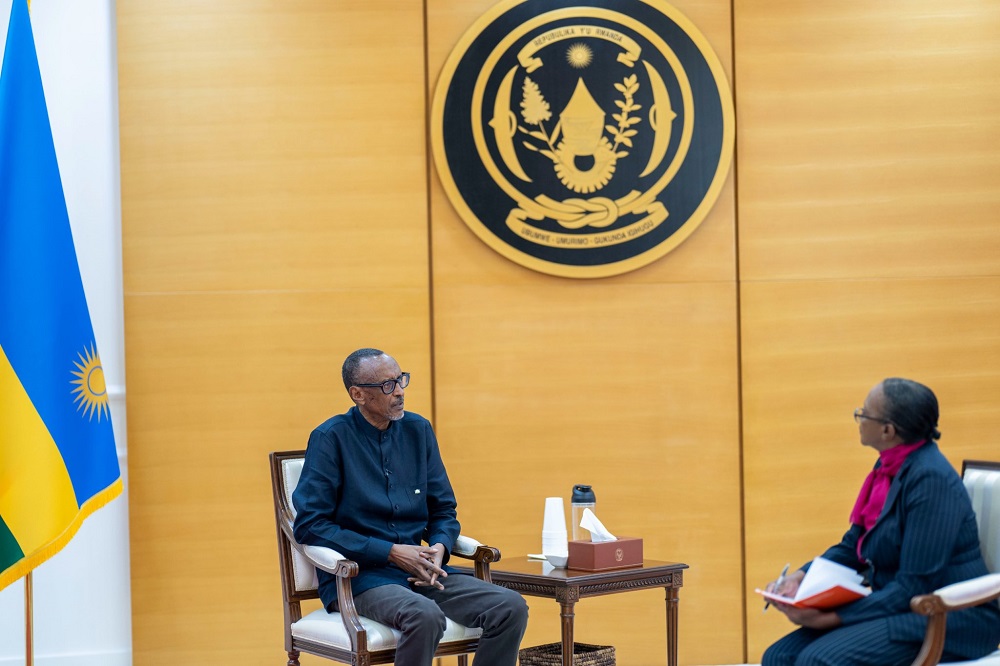
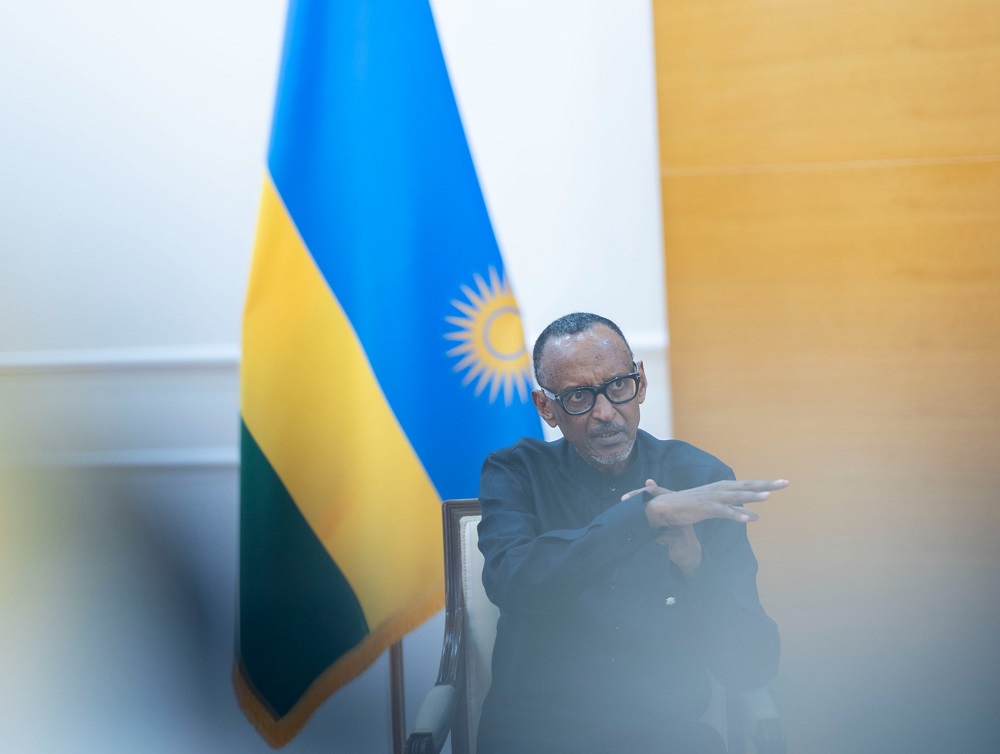
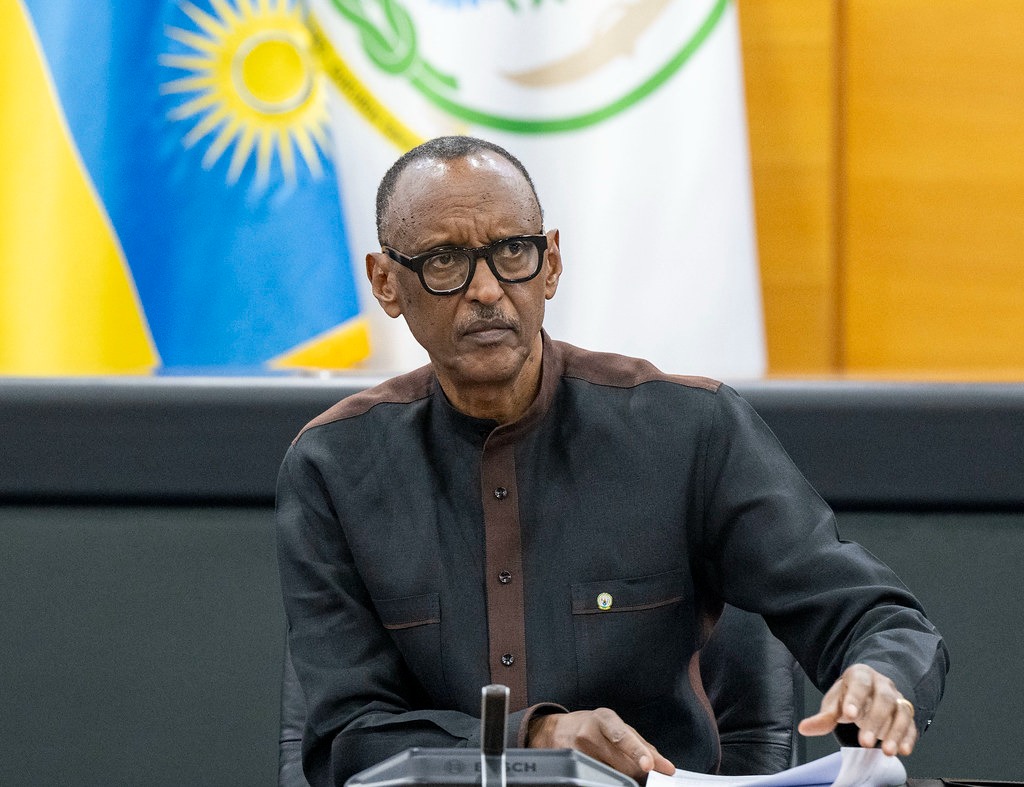
In a conversation with SABC News’ Sophie Mokoena, Kagame underscored the pivotal role South Africa, under Nelson Mandela’s stewardship, played in Rwanda’s progress by providing educational avenues for Rwandan youth.
Kagame looked back on the era of Mandela and [Thabo] Tabo Mbeki with fondness, noting that during their time, the relationship between the two countries was mutually beneficial.
They facilitated the education of Rwandan youth in South Africa, a group that included both those impacted by the genocide and descendants of perpetrators, by sending them in significant numbers.
He mentioned that the support from South Africa was instrumental in Rwanda’s development, highlighting the importance of the financial aid provided for tuition fees at local rates.
The President recalled that the relationship soured when Colonel Patrick Karegeya, a former head of Rwanda’s intelligence, was killed in South Africa.
At the time, the Rwandan government was accused of being involved in his death, an allegation Rwanda has consistently denied.
Based on the strong historical ties between the two countries, President Kagame argued that it is not fitting for the nations to continue their current strained relations but instead should resolve their differences.
The journalist reported that South African President Cyril Ramaphosa and Foreign Minister Naledi Pandor are planning to join Rwandans in commemorating the 30th anniversary of the Genocide against the Tutsi on Sunday, April 7th.
The visit by Ramaphosa and Pandor is expected to include discussions aimed at revitalizing the relationship between the two countries.
The White House, in a statement on April 3, 2024, confirmed that the 42nd President of the USA will lead a five-member team designated to the East African country by President Joe Biden during the event dubbed ‘Kwibuka 30’.
“President Joseph R. Biden, Jr. today announced the designation of a Presidential Delegation to attend Kwibuka 30, the 30th Commemoration of the 1994 Genocide, on April 7, 2024, in Kigali, Rwanda.”
“The Honorable William Jefferson Clinton, 42nd President of the United States of America, will lead the delegation,” the statement reads in part.
Other members of the Presidential Delegation are Eric Kneedler, United States Ambassador to the Republic of Rwanda, Mary Catherine Phee, Assistant Secretary of State for the Bureau of African Affairs, U.S. Department of State, Casey Redmon, Special Assistant to the President and Senior Director for Legislative Affairs, National Security Council, and Monde Muyangwa, Assistant Administrator of the Bureau for Africa, U.S. Agency for International Development.
Clinton was the US President when the Genocide against the Tutsi happened, having served as Head of State from 1993 to 2001.
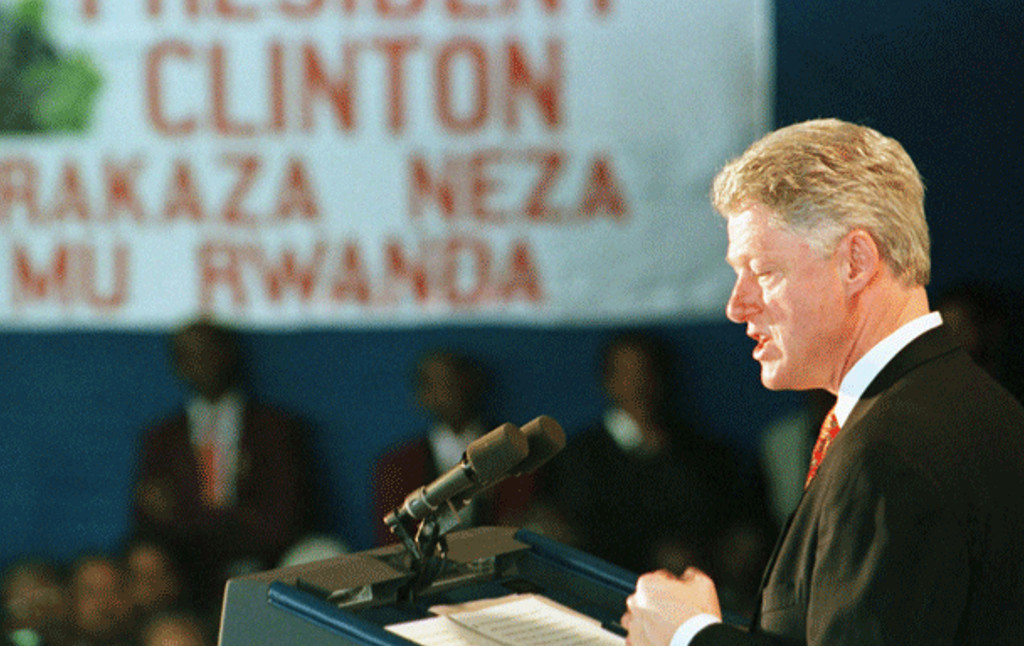
He made his first visit to Rwanda – the first of such a visit by a US President to the country – four years after the genocide on March 25, 1998, and apologized to the Rwandan people for the killing of more than a million people during the genocide.
Clinton, while addressing genocide survivors at Kigali International Airport during a brief three-hour visit, said the international community together with nations in Africa bear responsibility for the killings. He said US and other countries did not act ‘quickly enough’ after ‘a government-led effort to exterminate Rwanda’s Tutsi and moderate Hutus began’.
“The international community, together with nations in Africa, must bear its share of responsibility for this tragedy, as well. We did not act quickly enough after the killing began. We should not have allowed the refugee camps to become safe haven for the killers. We did not immediately call these crimes by their rightful name: genocide. We cannot change the past. But we can and must do everything in our power to help you build a future without fear, and full of hope,” Clinton said.
He called for increased vigilance in the world to prevent such atrocities in the future.
“We owe to those who died and to those who survived who loved them, our every effort to increase our vigilance and strengthen our stand against those who would commit such atrocities in the future here or elsewhere,” he added.
Clinton further made a $2 million contribution to the Genocide Survivors Fund and encouraged other nations to follow suit to help the survivors and their communities find the care they need.
Clinton’s successor, George Bush, also visited Rwanda in February 2008 as part of his five-nation African tour.
Bush affirmed that the US would stand with Rwandans in their country’s rebuilding process after the Genocide against the Tutsi.
“Laura and I have just finished going to a memorial for the – that recognizes the horrors of the genocide that took place here. This is a moving place that can’t help but shake your emotions to your very foundation. It reminds me that we must not let these kind of actions take place; that – and that the people of Rwanda need help to reconcile, to move forward, after a brutal period,” he said after his visit to the Kigali Genocide Memorial.
He added, “I guess the only thing I can finish saying is that, you know, we ask for God’s blessings on those who still hurt, and on those who long for help, and on the kids whose lives had to have been deeply affected by the trauma of the moment. And we thank the museum officials for their generosity and hospitality, and for putting on such an exhibit to remind people that there is evil in the world, and evil must be confronted.”
During the visit, Bush also opened the US Embassy offices in Kacyiru within Kigali City.
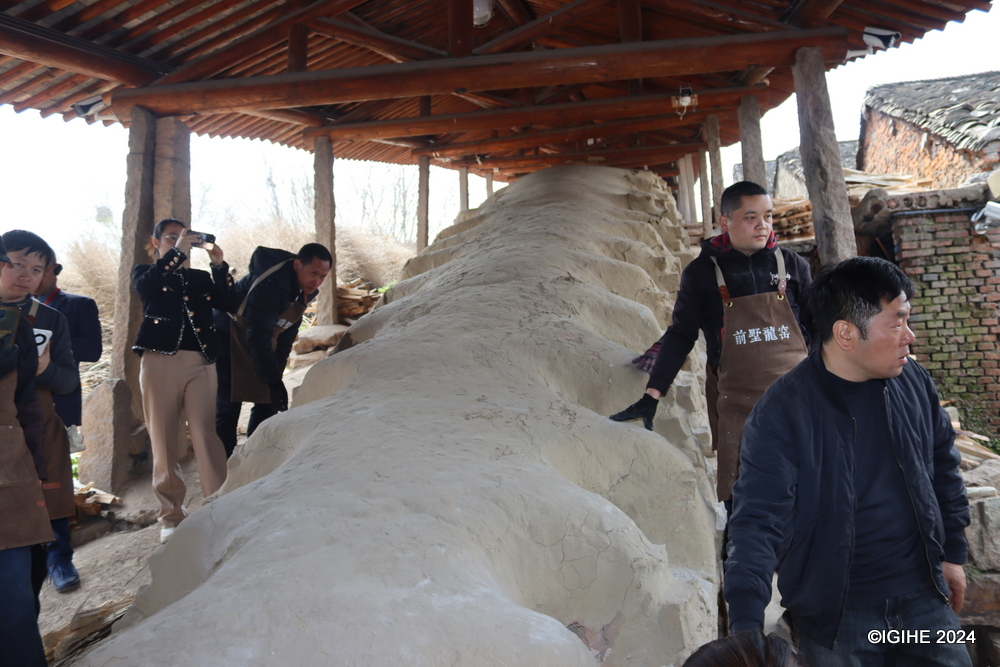
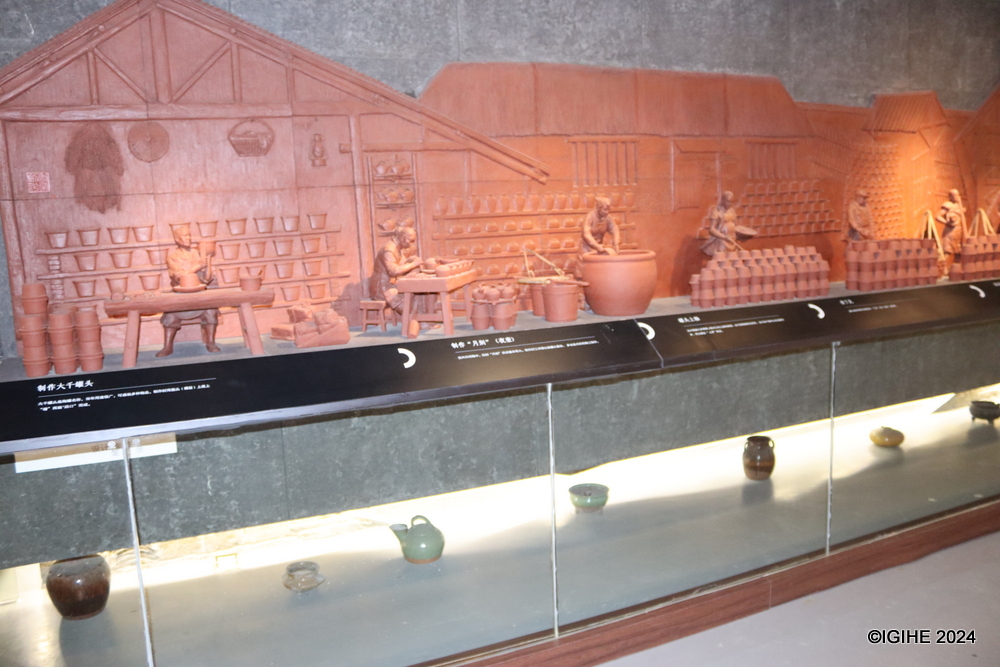
The allure of the Qianshu Ancient Dragon Kiln is not merely in its longevity but in the living legacy it upholds as the sole practitioner of traditional firing methods in the country, earning it the affectionate moniker, “the living dragon kiln.”
Constructed in the architectural likeness of a majestic Chinese dragon, the kiln’s design is both functional and symbolic, embodying the strength and resilience of a tradition that has withstood the test of time.
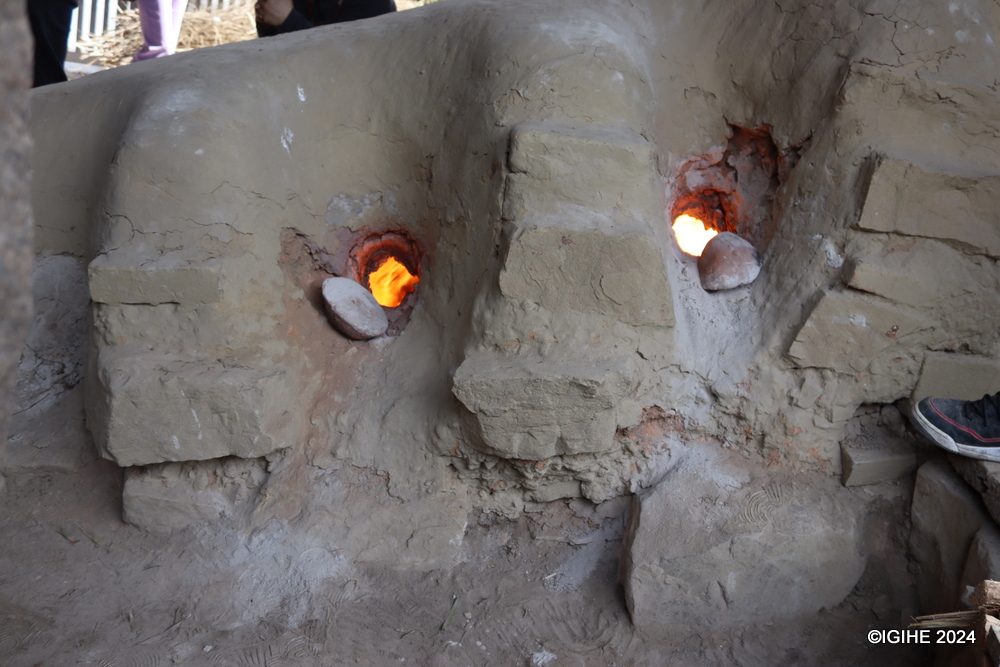
Spanning 43.4 meters in length and adorned with 42 pairs of wood-feeding “scale eye holes,” this ancient kiln mimics the intricate scales of a dragon’s body. Its unique trunk-arched tunnel, which elegantly slopes at approximately 30 degrees, facilitates a natural heating process from the bottom up, showcasing an ingenious energy-efficient method perfected over centuries.
The Qianshu Dragon Kiln is divided into three parts: the head, the main body, and the tail, each serving a distinct purpose in the pottery-firing process. With five strategically placed loading openings (kiln doors) on its west side, artisans skillfully arrange ceramics for firing, utilizing coal, pine, and bamboo branches as fuel.
This traditional approach to pottery-making not only preserves ancient techniques but also imparts a distinct character and quality to the ceramics produced, distinguishing them from their contemporarily fired counterparts.
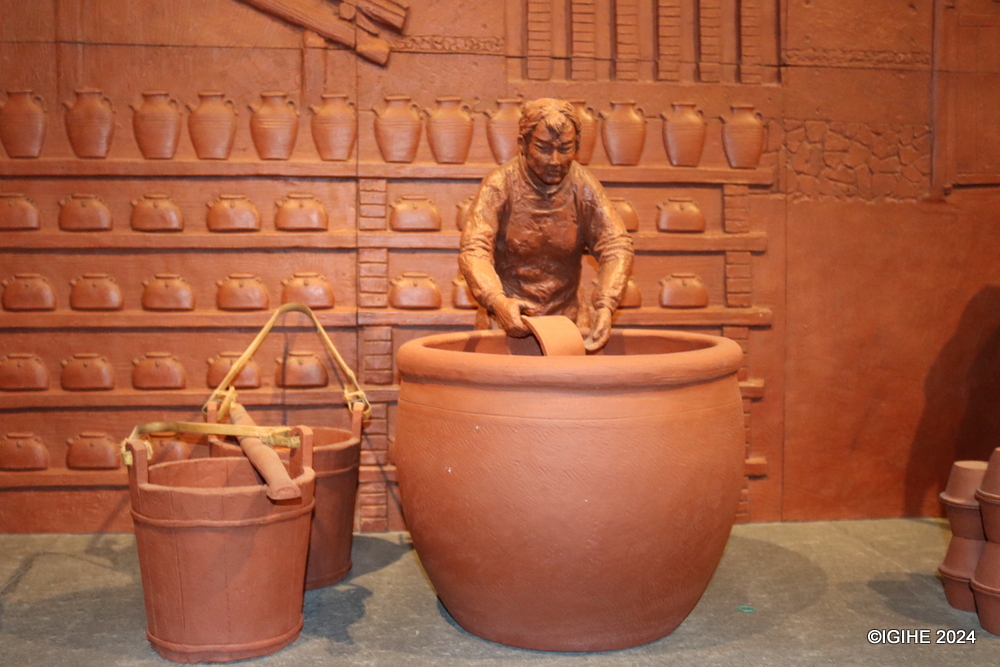
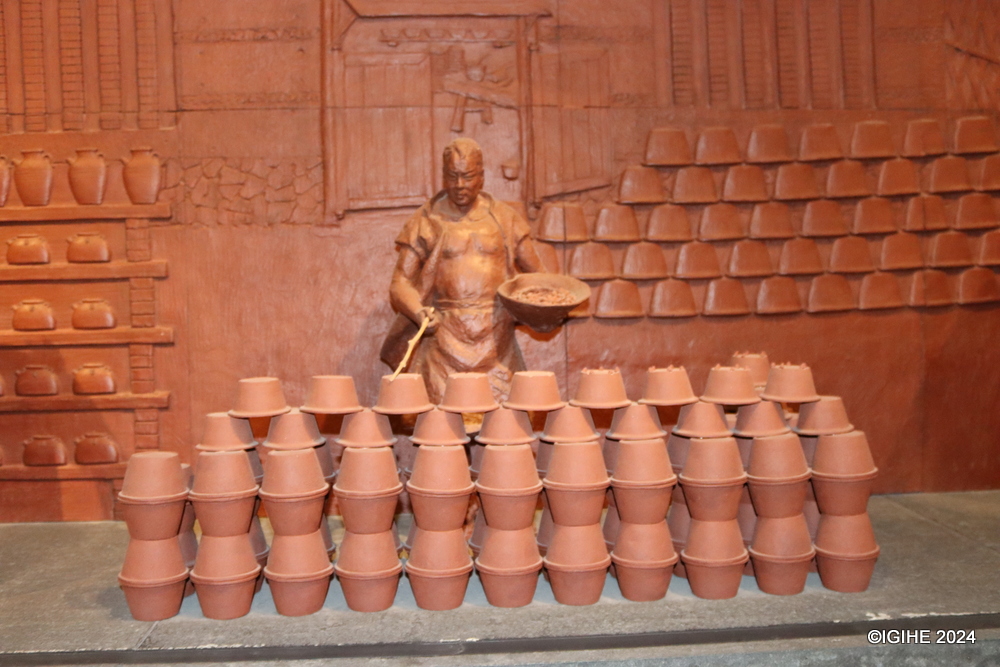
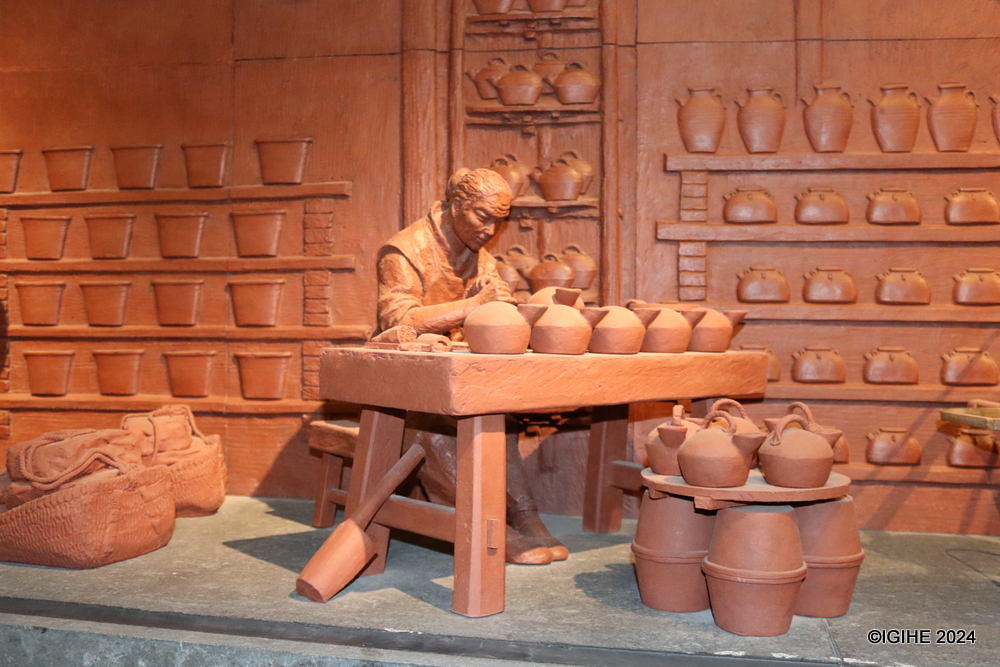
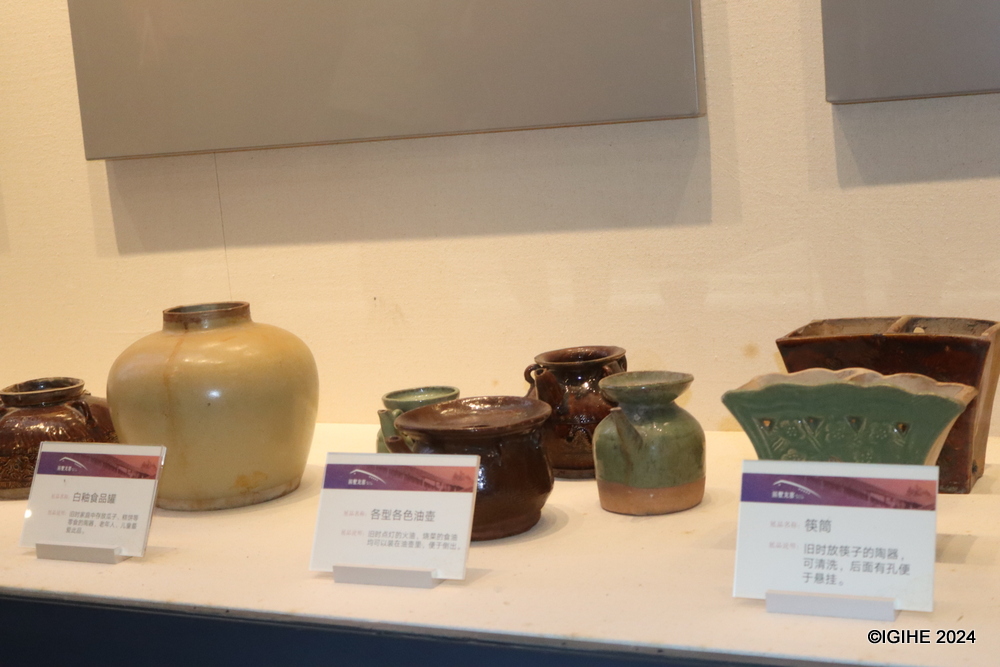
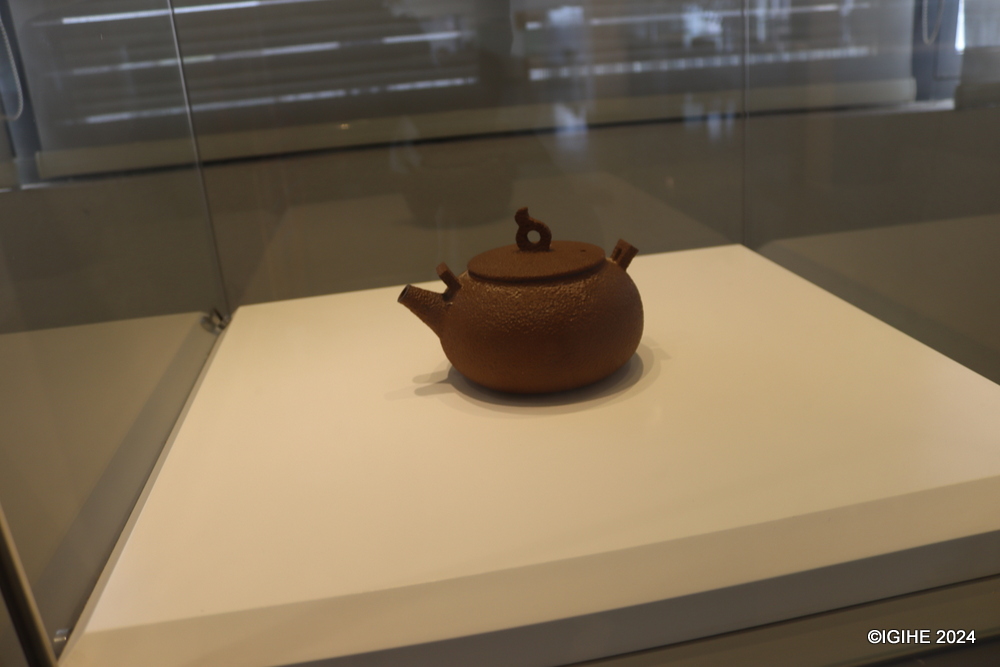
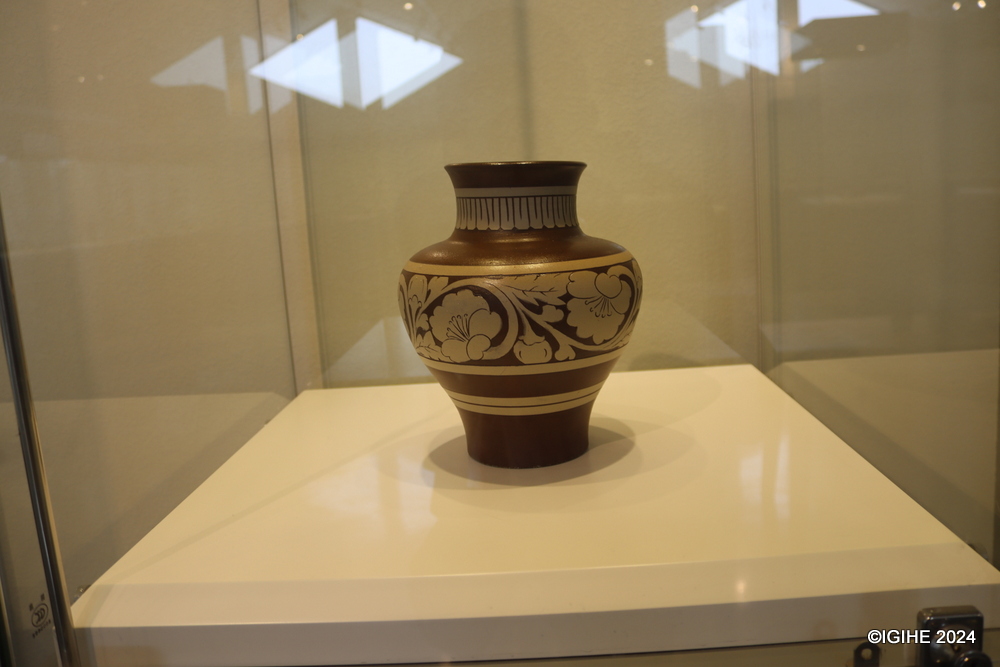
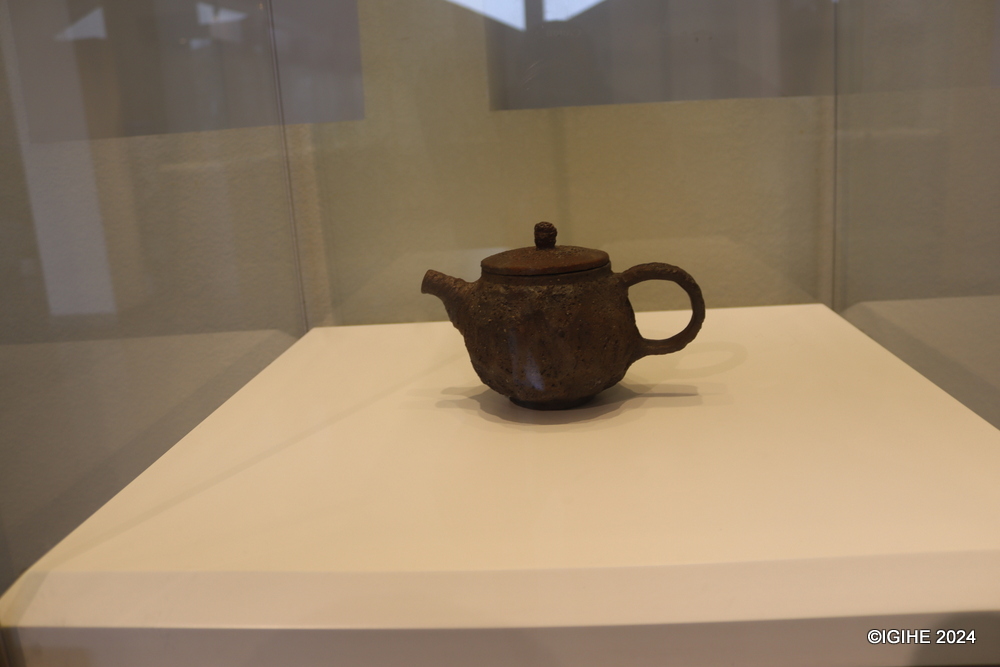
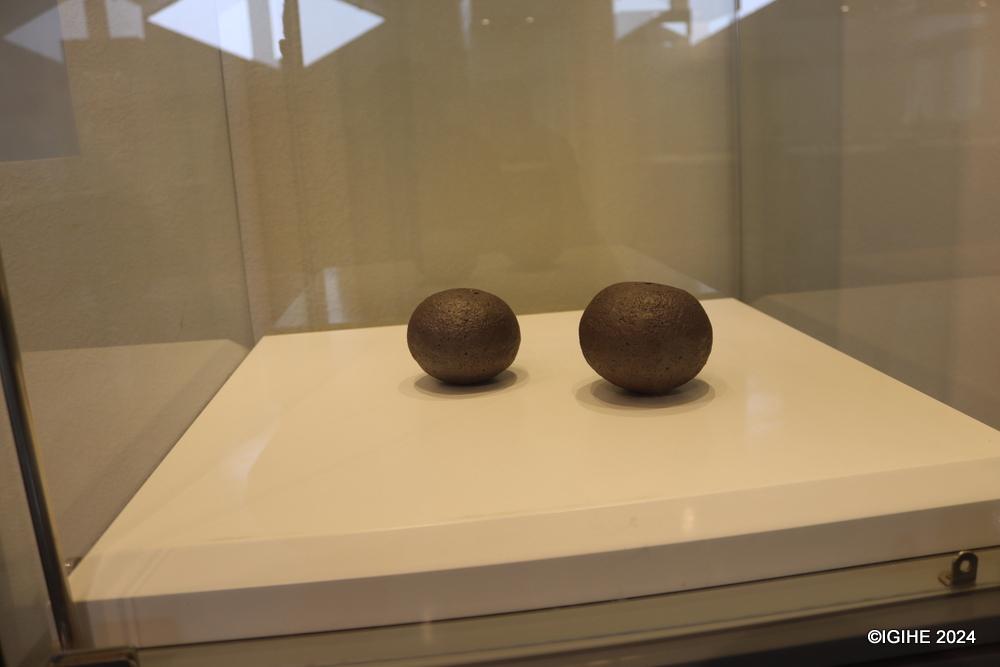
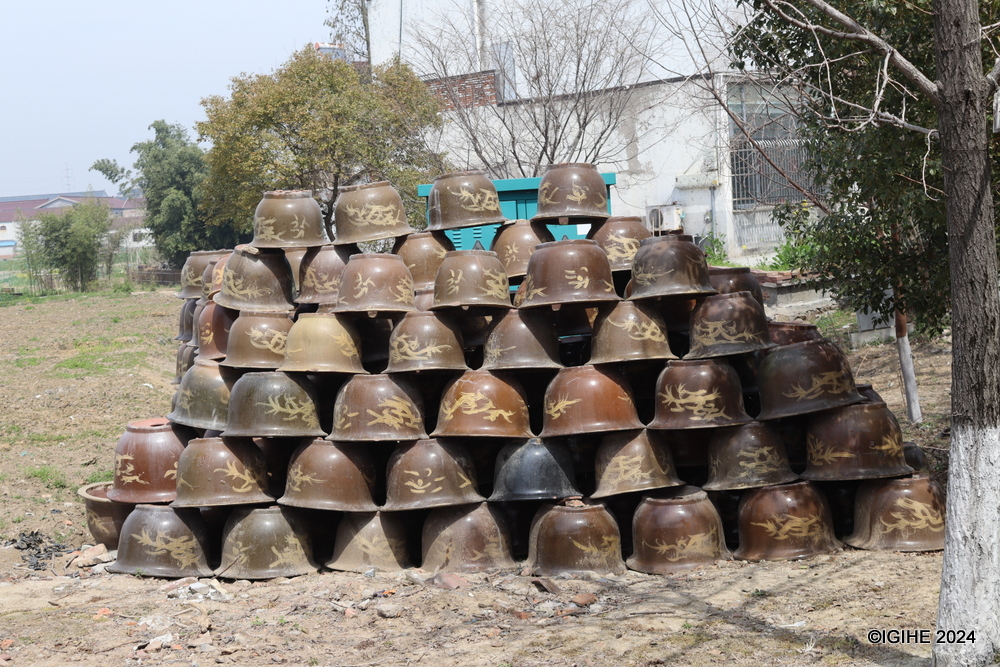
Today, the Qianshu Ancient Dragon Kiln continues to breathe life into daily-use coarse ceramics, including basins, jars, pots, and kettles, as well as a select assortment of purple clay teapots.
These creations are not mere objects but stories molded from the earth, each piece a bearer of the kiln’s rich history and the artisan’s skill. Particularly notable are the Yixing sand-fired teapots, revered for their unique clay texture, modeling, and the timeless beauty they encapsulate.
These teapots, synonymous with the Qianshu Kiln, have garnered acclaim both domestically and internationally, underscoring the kiln’s prestigious status in the realm of ceramic artistry.
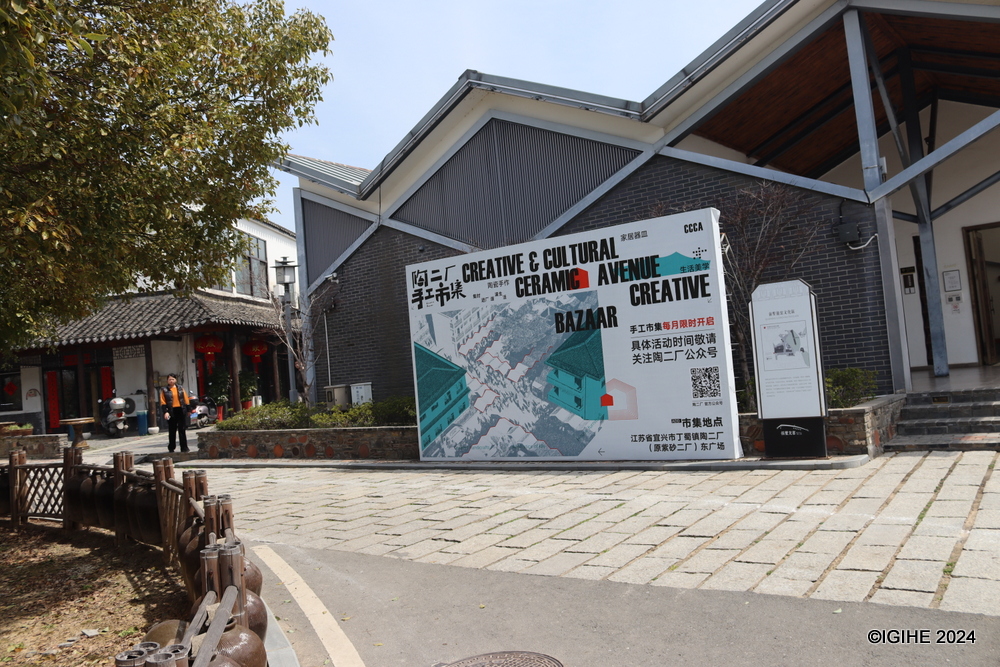
The Qianshu Ancient Dragon Kiln’s location in an ordinary village in Yixing adds to its charm, standing in stark contrast to the bustling urban landscapes that characterize much of modern China.
This juxtaposition serves as a poignant reminder of the enduring nature of tradition amidst the relentless march of progress. The kiln, seen from afar, resembles a colossal dragon coiled upon a slope, a silent guardian of history and culture in the midst of everyday village life.
Embarking on a visit to the Qianshu Ancient Dragon Kiln is not just a journey through a physical space but a passage through time. It offers an intimate glimpse into the heart of Chinese ceramic tradition, where every fire-fueled breath of the kiln whispers tales of generations of artisans who have passed through its fiery maw.
This living relic is a place where the past and present converge, making it a must-visit destination for anyone yearning to connect with the essence of traditional Chinese culture and inviting us to ponder the enduring value of tradition in a rapidly changing world.
News of the arrest of 82-year-old Mbonampeka Stanislas was reported by Echo d’Afrique, which disclosed that he was arrested on March 28, 2024, and is now detained in a prison located in Haren, north of Brussels in Belgium.
Mbonampeka resided in Ndera, where he allegedly committed his crimes by leading the Interahamwe militias that killed Tutsis in a seminary, the CARAES hospital, and the parish.
Stanislas Mbonampeka hails from the former Ruhengeri Prefecture. He joined the military, then left to study at the University of Butare.
He is a son-in-law of Mbonyumutwa as he married his daughter Marie Claire Mukamugema.
He also served as the Minister of Justice before the Genocide against the Tutsi.
Mbonampeka was a member of the PL party but later aligned with a rebel faction known as PL Power, which collaborated with the MRND and CDR parties, both of which played roles in the Genocide against the Tutsi.
Dr. Philbert Gakwenzire, President of IBUKA, an organization advocating for the survivors of the Genocide against the Tutsi, expressed satisfaction with the arrest of Mbonampeka Stanislas.
He noted that they had been anticipating his arrest and prosecution for his actions, despite him having evaded justice for 30 years.
Dr. Gakwenzire stated, “It’s something we have been waiting for a long time, as the arrest warrants were issued long ago, and Belgian investigators had visited Rwanda some time ago. We were waiting to see when it would happen because we know there could be excuses made about their age, claiming they are too old, which has become like a song to them.”
Dr. Gakwenzire mentioned that Mbonampeka played a role in planning and overseeing the Genocide in the area that was formerly Rubungo commune, especially around the parish, the seminary, and nearby areas.
He emphasized their readiness to receive justice after many years of the suspect being in hideouts.
Dr. Gakwenzire revealed that Mbonampeka had been known to be in Belgium for some time despite using various tactics to evade detection.
He often pretended to be in France, where he had a known address, but did not stay there long, instead residing in Belgium in an undisclosed manner to mislead authorities.
Dr. Gakwenzire noted that it had been over five years since they had known about his whereabouts in Belgium.
“It had been a while since we knew exactly where he lived, house by house. It has been about five years or slightly more, which is why the documents could be prepared and the process to arrest him initiated.”
He expressed concerns about Mbonampeka’s age being used as a defense, similar to what happened with Félicien Kabuga, but trusted in the judiciary’s capability.
“The concerns are there, but we trust in the judicial system’s capability, as it is in their hands now. Those who committed Genocide, wherever they are, must know that even if they are old, the crime does not age, and they will be pursued at any time. Old age should not be an excuse, we will provide information and trust that justice will be served.”
The Belgian prosecution recently announced that it has 49 cases yet to be tried, even 30 years after the Genocide was halted.
Dr. Gakwenzire urged the Belgian justice system to exert more effort in arresting those who are still at large to be held accountable for their actions.
He also called on the survivors of the Genocide against the Tutsi to maintain courage and resilience during this 30th commemoration of the Genocide against the Tutsi that Rwanda is about to enter.
His resolve was further cemented by the hardships he witnessed during visits to relatives in Rwanda, which motivated him to work towards improving their living standards and the nation’s political scene.
Forced to flee to Uganda at the age of four, Kagame spent his childhood in a refugee camp. By the time he was 15, he had lost his father, but questions about their refugee existence were already swirling in his mind.
In a conversation with Radio10 and Royal FM on Monday, Kagame reflected on his youth, a time when the innocence of childhood often masks the harsher realities of life.
Around the age of 11 or 12, curiosity led him to inquire about their refugee status, a question that stemmed from a deeper sense of inquiry that had not yet been satisfied.
Kagame, the youngest in his family, was particularly struck by the sight of his older siblings queuing for food rations, a stark reminder of their challenging circumstances.
He shared how, as a child, witnessing his siblings line up for rations made him question their circumstances even more deeply.
This imagery of his family’s struggle and the explanations he received about their status, albeit not fully comprehended at the time, stayed with him.
These early experiences seeded a persistent thought in Kagame’s mind about the disparity between their past security and their current state as refugees.
Kagame’s connection to Rwanda remained strong through his youth, marked by frequent visits back to the country. During these visits, he explored various locales, further familiarizing himself with the land of his heritage.
His travels included journeys to see family members and traversing roads less traveled, which painted a vivid picture of Rwanda’s landscape and its people’s resilience. These experiences were pivotal in shaping his understanding of Rwanda and its potential for transformation.
During his twenties, Kagame’s visits to the National University of Rwanda (UNR) and interactions with acquaintances studying there provided him with insights that deepened his resolve to address the challenges facing his homeland.
Kagame’s involvement in the Ugandan liberation movement provided a practical framework for his ambitions for Rwanda. He saw their participation as a stepping stone, leveraging their experiences and successes in Uganda as a foundation for initiating change back home.
Among the small group that embarked on this mission were notable figures including Maj Gen Fred Gisa Rwigema, with Kagame himself among the 27 individuals armed for the cause.
This collective effort marked the beginning of a broader movement, attracting many young Rwandans passionate about their country’s liberation.
Despite the monumental task ahead, Kagame disclosed that leadership was not a predetermined goal but rather a role that emerged organically as they navigated the complexities of liberation.
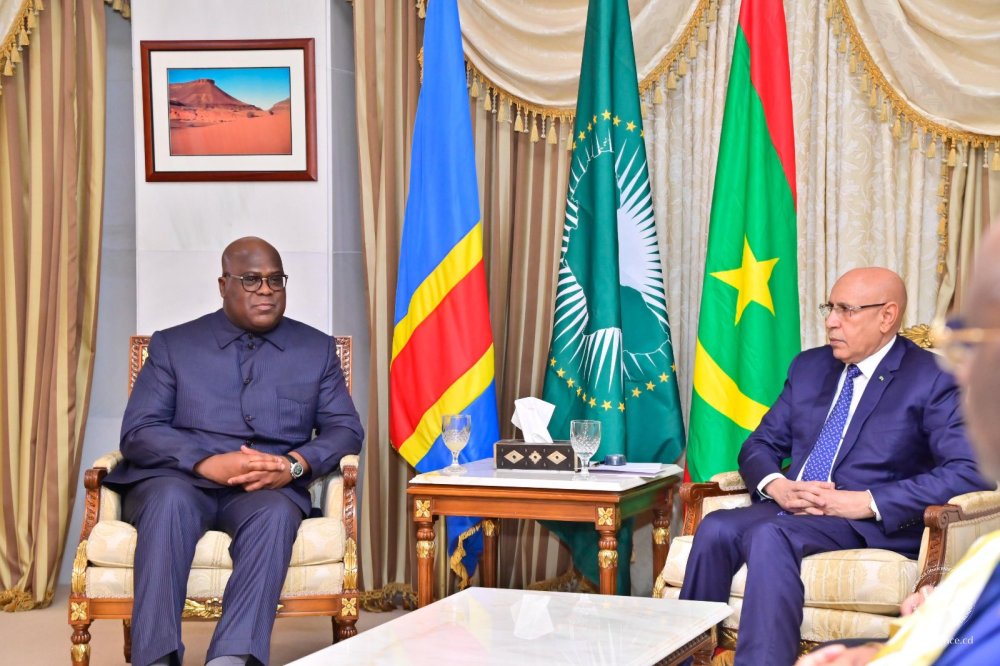
The meeting not only aimed to bolster the bilateral ties between Mauritania and the DRC but also tackled the persistent security issues plaguing the eastern regions of the DRC and the strained relations with Rwanda. In response to these security dilemmas, President Ghazouani pledged to offer diplomatic aid to support the ongoing Luanda and Nairobi peace dialogues.
According to reports, this high-level engagement followed closely on the heels of a visit from Rwandan President Paul Kagame’s envoy, Dr. Vincent Biruta, who serves as Rwanda’s Minister of Foreign Affairs.
Post-discussion, Minister Biruta shared his honor at being welcomed by President Ghazouani and the opportunity to relay messages from his Rwandan counterpart, emphasizing the importance of their bilateral relationship and the broader challenges facing the continent.
Prior to this, a significant phone conversation between President Ghazouani and Angolan President João Lourenço, who has been mediating the Rwanda-DRC conflict, underscored Mauritania’s commitment to peace in the region. Despite the lack of an official statement from Mauritania, there is strong evidence of President Ghazouani’s dedication to resolving Africa’s conflict issues, notably the crisis in the DRC.
The urgency of President Ghazouani’s involvement has been heightened by the escalating conflict in the eastern DRC, driven by clashes between the national military and the M23 rebel faction.
Corneille Nangaa, leader of the Alliance Fleuve Congo (AFC), a political and military coalition, has openly expressed their intent to urgently dismantle the DRC government, condemning the lack of security and attributing it to governance that neglects and exploits the populace.
He criticized the Kinshasa administration for exacerbating division, deprivation, and corruption, thereby deflecting responsibility onto external figures.
Nangaa’s bold declaration of plans to seize control over significant territories, including Goma and the capital, Kinshasa, speaks to the profound discontent with the centralization of wealth and power in the capital, which is seen as unjust.
Adding to the discourse, Bintou Keita, the UN’s head of peace missions in the DRC, informed the UN Security Council about the strengthening position of the M23 group. She noted the group’s significant territorial advancements, including the strategic encirclement of Goma, following their recapture of regions previously held by the East African Community Regional Force (EACRF) in late 2023.
In the wake of President Ghazouani’s peace-making endeavors, other political figures, including ex-Kenyan President Uhuru Kenyatta, French President Emmanuel Macron, representatives from Qatar, and the United States, have all contributed their efforts towards quelling the unrest, showcasing a unified global stance on peace and stability in the region.
He mentioned that the citizens’ request for him to continue leading is not due to a love for power but rather because of his perspective on the country’s condition.
Kagame made these remarks on Monday in a conversation with Radio 10 and Royal FM, where various topics were covered.
He said, “I, too, see the existing problems, as I have eyes. If it were a country of choice and there was a capability for things to go well, I would have left a long time ago. If continuing would pose a problem to people’s livelihoods, then I would feel it.”
“People will say what they say, but we must look and provide a platform for Rwandans to express their thoughts. It won’t take much time, and it won’t escape me; if they were to say ‘this person has brought us this far’, I would leave before they say so,” added Kagame.
He commented that those criticizing him for staying in power for too long fail to recognize that the countries they govern are different from Rwanda or other African countries.
Kagame gave the example of the United States, a country that has been long established and has set its course, suggesting that what is done there should not necessarily be replicated in developing countries.
He stated, “Not all countries are the same around the world, what is done in one country cannot necessarily be done in another.”
The Head of State explained that some countries criticizing African leaders also have leaders in their ranks who may have different titles but have stayed in power for a long time.
He said, “Let’s say because it’s the Prime Minister of a certain country, they have the right to continue, they just change the title from President to Prime Minister or Chancellor, and stay there until they are tired. You know some who have been there for 20 years.”
He emphasized that what should be considered is what a leader does for the people, rather than counting the years.
“Citizens reach a point of fatigue. There should be policies to correct things so people don’t get stuck in that rut. If they haven’t grown tired, why should you?” Kagame wondered.
The President has agreed to run for presidency again in the elections that will take place in July this year, having been nominated by the RPF Inkotanyi party.
He began leading Rwanda in 2000, succeeding Pasteur Bizimungu who had resigned, and ran for his first term in 2003, in the first elections after the 1994 Genocide against the Tutsi.
This issue was addressed by President Kagame on April 1, 2024, during his conversation with Radio10 and Royal FM, in a discussion that covered various national concerns.
Journalist Aissa Cyiza asked President Kagame why the issues in the eastern DRC remain unresolved despite numerous discussions aimed at solving the situation, including agreements signed in Luanda, Angola, Nairobi, Kenya, and elsewhere, which have been largely ineffective.
President Kagame pointed out that the problem lies within the DRC itself, although people tend to focus only on the country’s eastern part. He highlighted that the issues in this region are due to the country’s leadership.
The President noted that while these problems are generally caused by the country’s governance, sometimes different leaders impose this burden on Rwanda.
However, he stated it is inappropriate and that the DRC’s burden should be borne by the Congolese and their leaders, not Rwanda or its leaders. “The burden should be on the Congolese and the leaders of Congo, not on Rwanda or the leaders of Rwanda. Rwanda has been carrying the burden of the DRC for a long time, and it is enough. Carrying the burden of Congo is like carrying the corpse of a hyena.”
The President mentioned that Rwanda has many of its issues to solve, making it infeasible to take on the burdens of other countries, including those of the DRC, which continues to be imposed on Rwanda.
President Kagame described the problems of this country west of Rwanda as a mix of numerous political dynamics, including regional and international politics, sometimes leading to some countries preventing others from exploiting this nation’s wealth.
“The Europeans say if we don’t treat Congo well and give it everything it wants, even if it’s not reasonable, Congo will fall to the Chinese, to the Russians, accepting the evil of Congo and emulating it, and carrying its burden so others don’t have to carry it so they can do what they do there.”
President Kagame expressed that whatever they do there and their cooperation does not bother Rwanda. However, he is concerned that those seeking to benefit from the DRC misuse Rwanda.
He mentioned that the issues in Congo are due to its leadership and the frequent changes in leadership, but even with these changes, nothing improves; the problems remain the same.
“Why do they do it if it yields nothing? What are they suffering from then? It’s said we have a problem because we have a leader who doesn’t change, but if nothing changes, even Rwanda will change. It’s about planning to ensure that this change does not become a reason for things not going well in Rwanda. A positive change is no problem.”
Besides these, President Kagame talked about the oppression of Congolese who speak Kinyarwanda, particularly the Tutsis in this country, stating that the hunt against them all should remind them of the need for peaceful coexistence.
“Among themselves, they should not be divided into Tutsis and Hutus. Once they start seeing it that way, those who persecute them find a gap to mistreat them, and all of them suffer.”
He stated that they should not have to ask for rights but should be granted them, asserting that the denial of these rights is why there are endless wars today, with people being killed and others becoming refugees in different countries. The President emphasized that the solution must come from the Congo, not Rwanda or even the United Nations.
President Kagame highlighted that another reason for the ongoing conflicts in the eastern DRC is the FDLR, who committed genocide in Rwanda but have been given a place in the country, provided with military equipment, with the goal of attacking Rwanda.
“This is not something we can solve; it is up to the DRC to address. We can only help in solving it. But what remains is to ensure that it does not adversely affect us and cause security issues. That is the responsibility we all bear.”
In a recent interview with the French newspaper Le Monde, Tshisekedi reiterated his campaign threats to wage war against Rwanda “at the slightest skirmish”, warning that dialogue was his “last chance”.
“I did not embark on the path of peace out of weakness, but it is the path of last chance, beyond which we will respond to skirmishes because we have the means,” he warned when he was asked if there is a plan to attack Rwanda.
Tshisekedi was referring to a mediation process spearheaded by Angolan President João Lourenço on the resolution of ongoing instability in the Eastern DRC fueled by the ongoing fight between the Congolese army and the M23 rebel group, which he accuses Rwanda of backing.
At the beginning of this week, President Kagame told Jeune Afrique that he does not take Tshisekedi’s threats to invade Rwanda lightly.
“I don’t think he has the capacity to understand what he is saying as the leader of the country. That’s a serious problem I need to prepare for and take care of… This means that one night he could wake up and do something that you never thought normal people would do,” Kagame remarked.
President Kagame went on to call out what he termed as primitive politics driving the new working relations between Congolese and Burundian politicians and their collaboration with the FDLR, a militia group that orchestrated the 1994 Genocide against Tutsi in Rwanda.
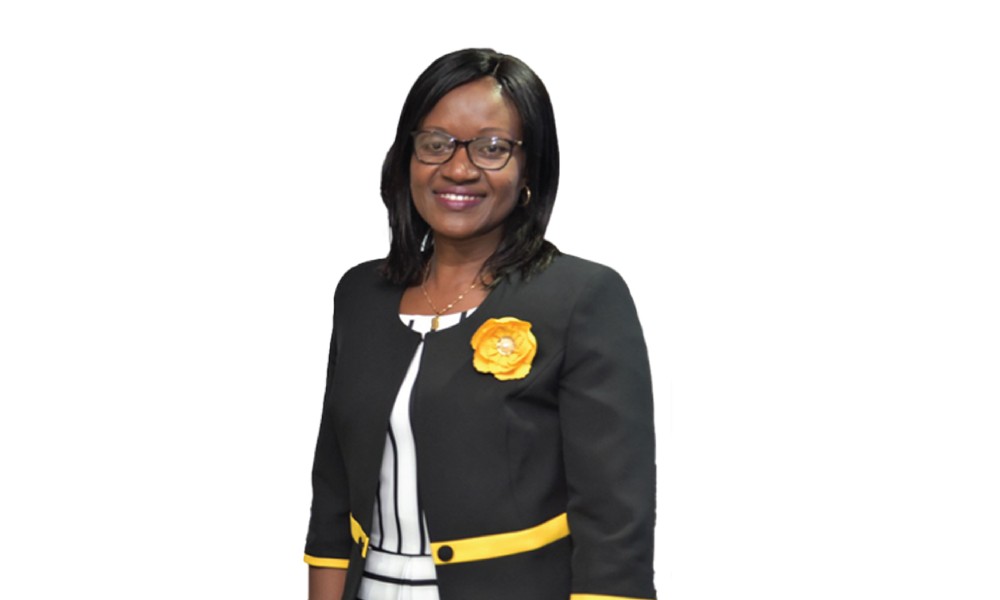
John Ntirushwamaboko, her husband, confirmed to IGIHE that Mukaruliza’s illness was sudden and brief.
“The tragic event occurred today, roughly two hours ago. She was under medical care in Brussels for approximately two weeks,” he stated.
In early March, President Paul Kagame appointed her as Ambassador at Large with a focus on regional integration efforts within the Ministry of Foreign Affairs and International Cooperation.
Prior to this role, she served as an Advisor within the same ministry.
Amb. Mukaruliza’s most notable tenure was as Rwanda’s first Minister to the East African Community (EAC), a position she held from 2008 until February 25, 2013.
Her leadership significantly contributed to Rwanda’s diplomatic and regional integration initiatives.
Between 2016 and 2017, she led the City of Kigali as Mayor, leaving a lasting impact on the city’s development and governance.
Her diplomatic career also included serving as the Rwandan Ambassador to Zambia and Malawi, roles she assumed after her mayoral tenure in Kigali.
Furthermore, from 2006 to 2007, she was the acting representative of the African Union in Sudan and previously the deputy head of the African Union mission in Sudan from 2004 to 2006.
Amb. Mukaruliza was not only a seasoned diplomat but also a skilled financial expert. She played a crucial role in establishing the Rwanda Revenue Authority, where she served as Commissioner of Internal Audit and later Commissioner of Domestic Taxes.
Her financial expertise also extended to the Bank of Kigali, where she worked as an auditor, and to the SOS Children’s Villages International-Rwanda, where she was the Chief Financial Officer.
Amb. Mukaruliza’s contributions to Rwanda’s diplomatic, financial, and governance sectors have left an indelible mark on the nation, and she will be remembered for her dedication, expertise, and leadership.