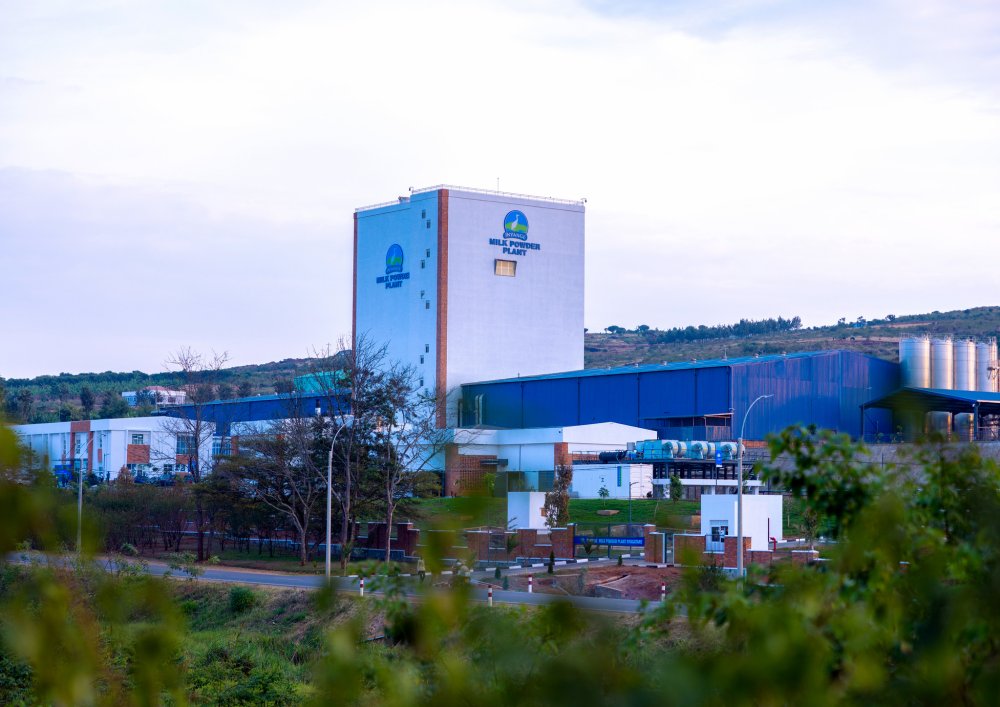
The acquisition, announced through a statement released on August 27, 2026, follows RSSB’s previous ownership of 40% in Inyange Industries and 50% in Ruliba Clays.
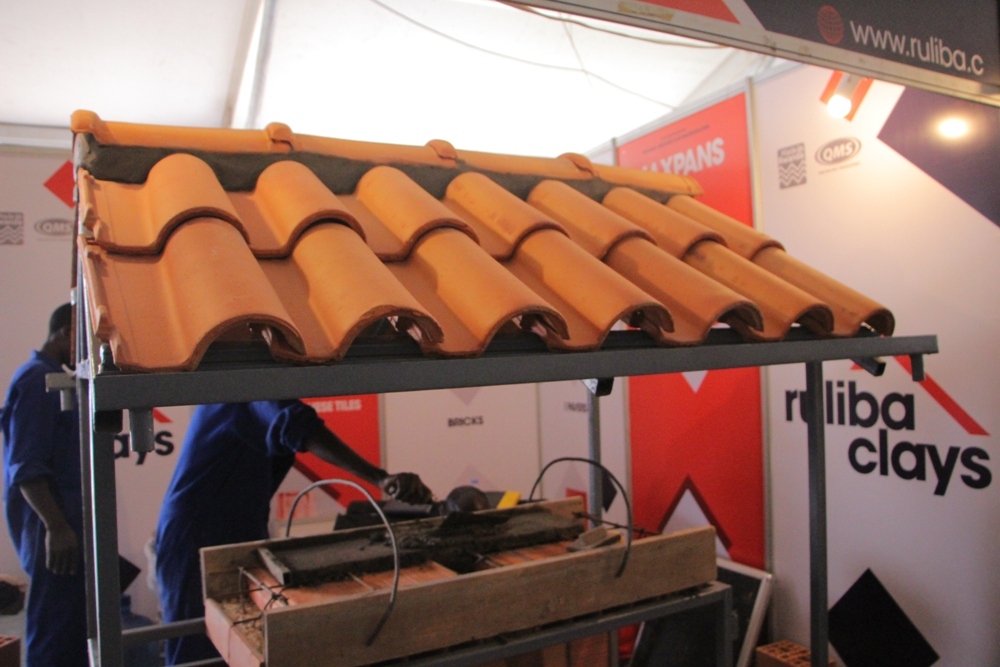
Inyange Industries is one of Rwanda’s major food and beverage processing companies, having built a strong reputation in both the local and regional markets. Meanwhile, Ruliba Clays plays an important role in the construction industry, particularly in the production of building materials.
RSSB said the move reflects its confidence in the long-term growth potential of the two companies and is in line with its mandate to protect and grow members’ funds through investments that can generate sustainable, risk-adjusted returns.
Inyange Industries has established a strong position in the market and continues to record business growth, according to RSSB.
Ruliba Clays, meanwhile, is entering a new phase of expansion following the completion of its second manufacturing plant, which has doubled its initial production capacity and positioned the company to meet growing demand in Rwanda and the region.
With full ownership, RSSB said it will support the companies’ next phase of development, focusing on stronger governance, operational performance, disciplined use of capital, regional expansion and sustainable profitability.
The pension fund also said it will explore strategic partnerships and capital-market opportunities over time, including the possible involvement of institutional investors or public listings where such moves can create long-term value for its members.
RSSB has co-invested with CVL in Inyange Industries since 2014 and in Ruliba Clays since 2009. The transaction is also consistent with CVL’s strategy of divesting from mature businesses after they reach an appropriate level of scale and stability.
RSSB Chief Executive Officer Regis Rugemanshuro said the acquisition demonstrates the institution’s confidence in the future of the two businesses.
“Moving to full ownership reflects our conviction in the long-term potential of these businesses,” Rugemanshuro said.
He added that RSSB’s ambition is to help build stronger, more competitive and profitable companies that can expand beyond their current markets, attract strategic partners and generate sustainable returns for members.
Beyond financial returns, RSSB said the continued growth of the two companies is expected to contribute to Rwanda’s industrial development through stronger domestic manufacturing, support for local value chains, job creation and improved competitiveness of Rwandan products in regional markets.
RSSB said it will continue to pursue prudent and active investment management aimed at protecting and growing members’ funds while supporting the long-term financial sustainability of the social security schemes it manages.
Inyange Industries has established a strong market position and continues to demonstrate robust business performance and growth.Ruliba Clays is entering a new phase of expansion after completing its second manufacturing plant, which has doubled its initial production capacity.RSSB has acquired the remaining shares in Inyange Industries and Ruliba Clays, bringing its ownership of both companies to 100%.
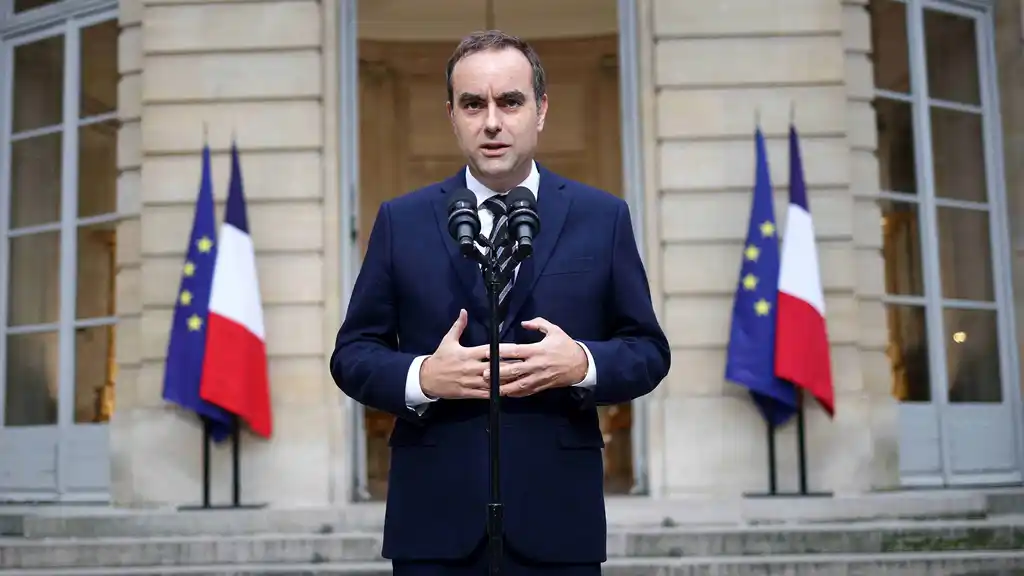
French Prime Minister Sébastien Lecornu announced the proposal on August 26, 2026, during a two-day visit to Mayotte, saying France intends to introduce a “bonus-malus” mechanism under which development aid would be tied to countries’ cooperation on migration-related issues.
The countries identified under the proposed framework are Rwanda, Burundi, Tanzania, the Democratic Republic of Congo, the Comoros, Somalia and Kenya.
Lecornu said he had asked France’s Ministry for Europe and Foreign Affairs to develop a framework for the initiative, with implementation expected to begin in 2026 and be strengthened in 2027.
Under the proposed system, countries demonstrating cooperation in tackling migration challenges, combating human trafficking networks and accepting the return of their nationals from Mayotte could receive increased development assistance.
“It is normal for a country to receive more when it plays a role in meeting our expectations regarding migration,” Lecornu said.
He stressed, however, that humanitarian assistance to countries from which migrants originate would not be affected, with the proposed mechanism focusing primarily on development aid.
Matthieu Paris, from CCFD-Terre Solidaire, a civil society organisation, said development assistance should serve as a tool for cooperation rather than a means of exerting pressure on other countries.
Mayotte, a French-administered island in the Indian Ocean, has for years faced challenges related to irregular migration, particularly from neighbouring countries and other parts of East Africa.
French Prime Minister Sébastien Lecornu announced the proposal on August 26, 2026, during a two-day visit to Mayotte, saying France intends to introduce a “bonus-malus” mechanism under which development aid would be tied to countries’ cooperation on migration-related issues.
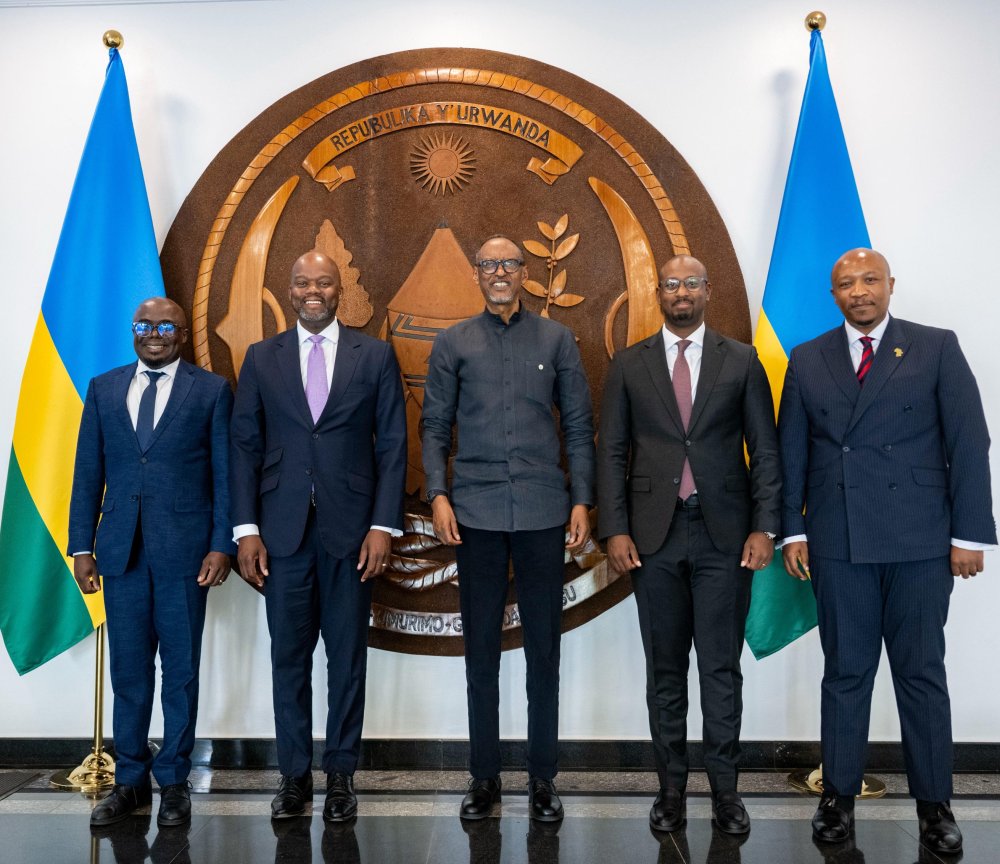
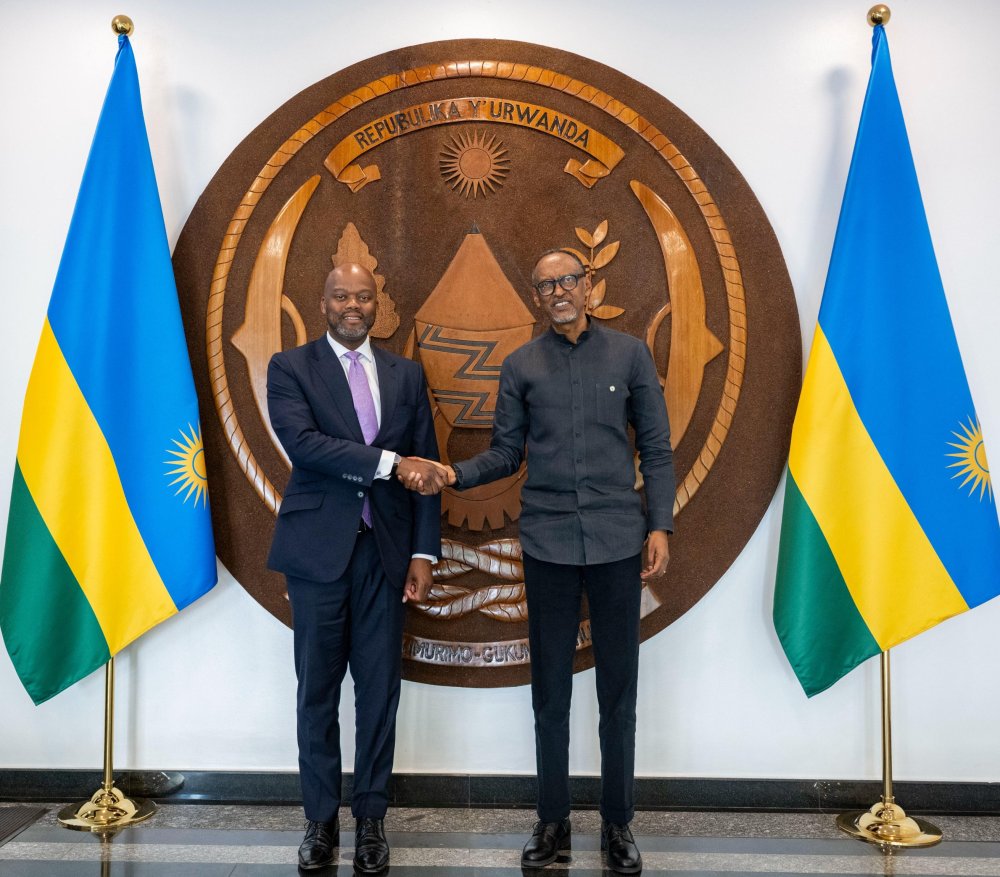
Kagame met Wamkele Mene, Secretary-General of the African Continental Free Trade Area (AfCFTA), at Urugwiro Village as Rwanda reiterated its commitment to implementing the continental trade agreement.
The discussions also highlighted the need for African countries to honour their commitments under AfCFTA if the continent is to achieve its ambition of expanding trade among member states.
The agreement establishing AfCFTA was signed in Kigali in March 2018 and entered into force in May 2019 after securing the required ratifications. It seeks to create a single African market by progressively removing trade barriers, including tariffs on 90% of goods traded across the continent. In 2024, intra-African trade was estimated at about $220 billion.
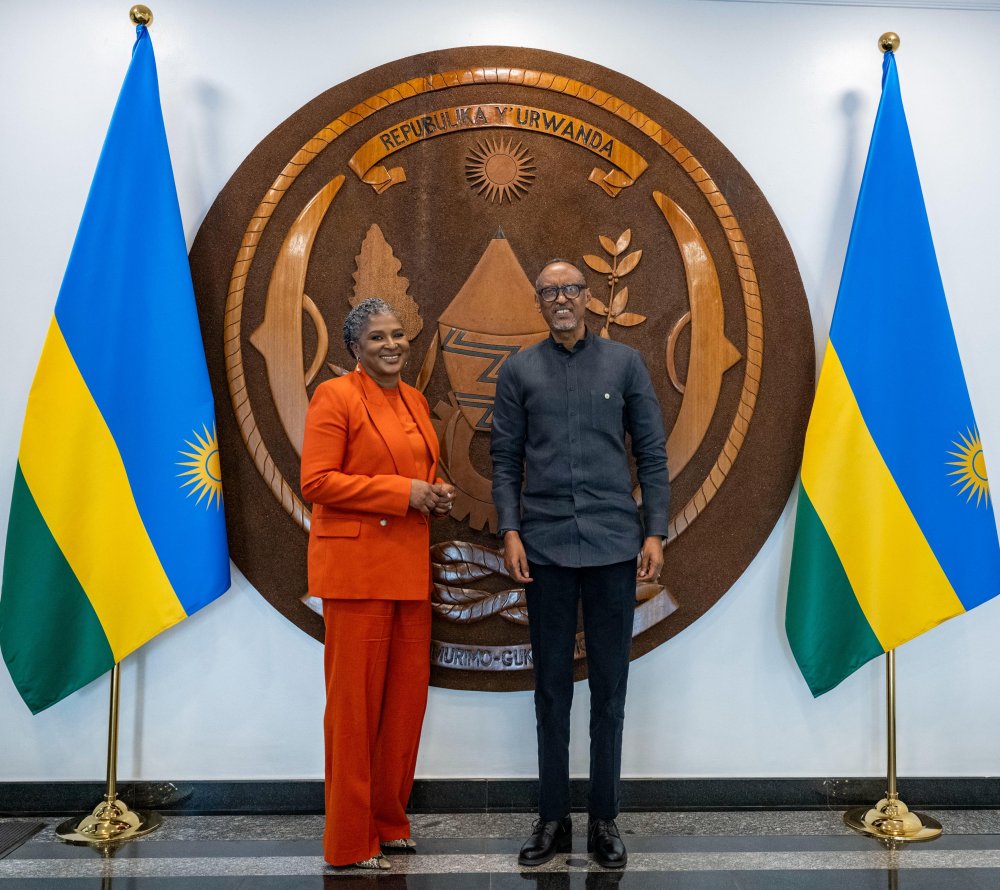
Kagame also received Monica Geingos, former First Lady of Namibia and Chancellor of Kepler College, who was in Kigali for the Africa Mindset Reset Forum.
Their discussions focused on education and access to opportunity in advancing youth empowerment in Rwanda and across the continent.
Geingos, who served as Namibia’s First Lady from 2015 until the death of her husband, former President Hage Geingob, in February 2024, has been involved in initiatives supporting youth and social development. She was appointed Chancellor of Kepler College in July 2024.
Kepler began in Rwanda in 2004 as Orphans of Rwanda before becoming Generation Rwanda and later developing into Kepler, an institution focused on expanding access to higher education and employment opportunities for young people from disadvantaged backgrounds.
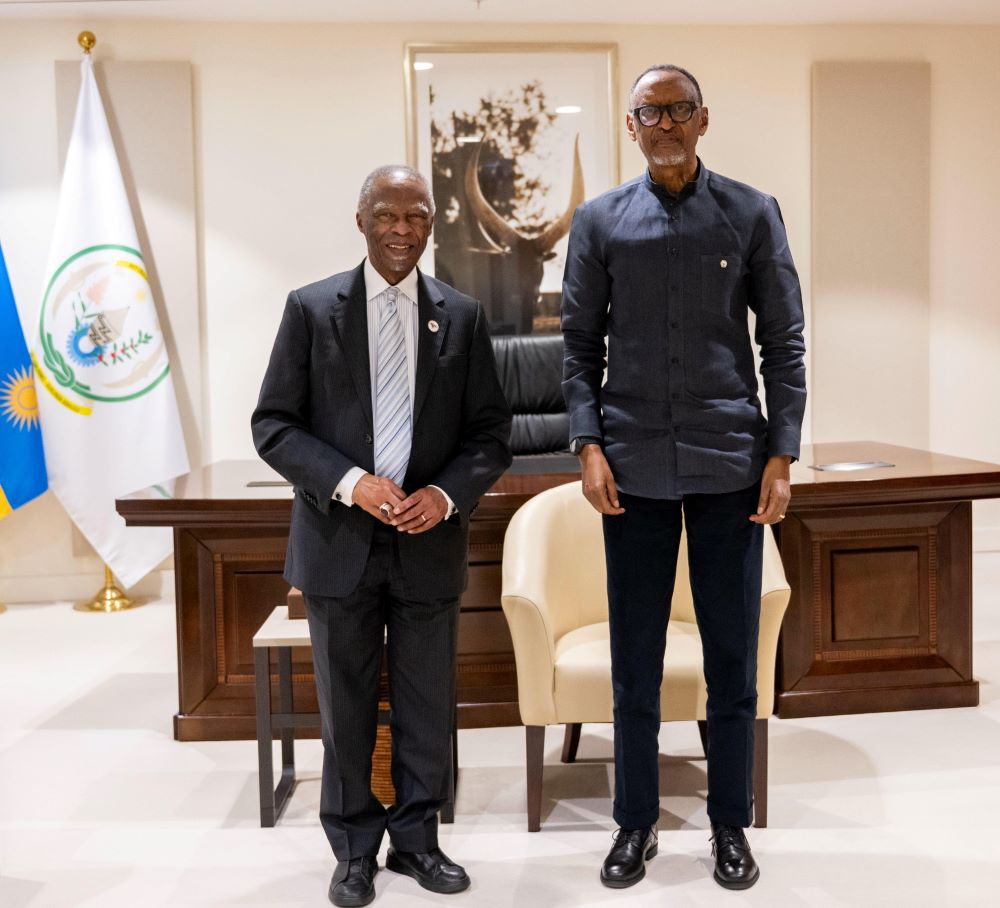
Kagame also met Mbeki, who was in Kigali for the Africa Mindset Reset Forum. Their discussions focused on the objectives of the forum and the need for good governance to support Africa’s mindset shift. Mbeki served as President of South Africa from 1999 to 2008.
The two-day Africa Mindset Reset Forum brought together African leaders, policymakers, young people and other participants in Kigali to discuss approaches to the continent’s development and leadership.
Speaking at the forum, Kagame said Africa has the people and resources needed to succeed but is held back by attitudes that Africans need to confront.
He urged Africans to recognise and support one another’s achievements instead of continually looking outside the continent for validation and inspiration.
President Paul Kagame and Thabo Mbeki discussed the objectives of the Africa Mindset Reset Forum and the need for good governance to support Africa’s mindset shift.President Paul Kagame met Wamkele Mene, Secretary-General of the African Continental Free Trade Area (AfCFTA), at Urugwiro Village on August 26, 2026.President Paul Kagame held talks with AfCFTA Secretary-General Wamkele Mene on Rwanda’s commitment to implementing the continental trade agreement.Monica Geingos, former First Lady of Namibia and Chancellor of Kepler College, met President Paul Kagame during her visit to Kigali for the Africa Mindset Reset Forum.President Paul Kagame and Monica Geingos discussed the importance of education and access to opportunities in advancing youth empowerment in Rwanda and across Africa.
Among confirmed her release in a message posted on X on August 26, expressing gratitude to Museveni and saying she looked forward to resuming her work as Bukedea Woman Member of Parliament.
“I take this opportunity to thank the Almighty God for the gift of life and freedom,” Among wrote. “My profound and heartfelt appreciation goes to His Excellency, President Yoweri Museveni, for his unmatched parental grace and decision to grant me mercy.”
She also thanked Chief of Defence Forces Gen. Muhoozi Kainerugaba, saying she appreciated his professionalism during the period of her restricted movement.
“As the Woman MP for Bukedea, I look forward to continuing my work for my constituents and standing firm with our revolutionary leadership,” she said.
Her release came a day after Gen. Muhoozi announced on X that President Museveni had instructed him to release the former Speaker and that she would not face prosecution.
“Mzee has also instructed me to release AAA from house arrest. We shall do that as well. We shall not prosecute AAA. She made mistakes but Mzee has decided to forgive her,” Gen. Muhoozi wrote on August 25.
The decision brings an end to more than 100 days of restricted movement for Among, who had been confined to her residence in Kampala’s Nakasero neighbourhood since mid-May as authorities investigated allegations of corruption, abuse of office, illicit enrichment and possible violations of Uganda’s Leadership Code.
The investigation had reportedly focused, among other issues, on the acquisition of a luxury Rolls-Royce Cullinan valued at billions of Ugandan shillings, which prompted complaints to the Inspectorate of Government over possible failures to fully declare assets.
Security agencies had also searched properties linked to Among and reportedly seized electronic devices as part of the wider investigation.
According to reports, Special Forces Command personnel deployed at her residence have since withdrawn, allowing her to resume her normal activities and legislative duties.
While the decision means Among is no longer expected to face prosecution over the allegations, several parliamentary staff and associates arrested during the wider investigation remain before the courts on separate charges related to alleged financial losses and money laundering.
Among’s release marks a dramatic turn in a political and legal saga that had placed one of Uganda’s most prominent political figures under intense scrutiny in the months following her tenure as Speaker of the 11th Parliament.
Among confirmed her release in a message posted on X on August 26, expressing gratitude to Museveni and saying she looked forward to resuming her work as Bukedea Woman Member of Parliament.
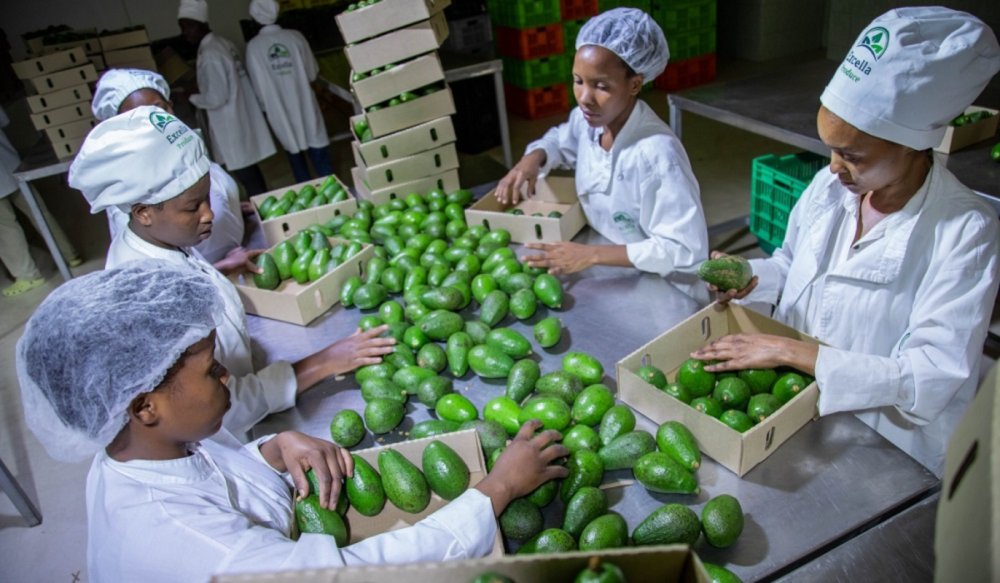
During the five-day period, the country exported 9,629 tonnes of agricultural and livestock products to international markets.
Coffee was the biggest contributor to export earnings, generating $4.94 million from 851 tonnes shipped abroad.
Tea exports generated more than $1.2 million from 426 tonnes. Rwanda also exported 657 tonnes of vegetables worth $497,200. The vegetables were sold in markets including the United Kingdom, the Netherlands, France and several African countries.
Fruit exports stood at 321 tonnes and generated $521,900. The produce was shipped to markets in the United Arab Emirates, Japan and Africa.
The country exported five tonnes of flowers worth $29,668, with the shipments going to the Netherlands and the United Kingdom.
Livestock products accounted for 300 tonnes and generated $515,200 in export revenue. These products were destined for markets across Africa.
Other agricultural products accounted for the largest export volume, with 7,069 tonnes generating more than $4.2 million. The shipments went to Bangladesh and various African markets.
Rwanda exported 9,629 tonnes of agricultural and livestock products to international markets within five days.
U.S. embassies in Israel, Lebanon, Saudi Arabia, Qatar, Jordan, Oman, Iraq and Kuwait are among the missions expected to increase staffing, the report said Tuesday, citing an internal U.S. State Department document and three U.S. officials.
According to the document obtained by the NYT, the first diplomats to return will be at the U.S. embassy in Lebanon, though the embassy would not reach full staffing under the plan.
Posts in the United Arab Emirates, Saudi Arabia, Qatar and Lebanon will initially cap staffing at 85 percent, and posts in Iraq, Kuwait and Bahrain at 75 percent.
In the six Gulf countries and Lebanon, the State Department will enforce restrictions on bringing family members, the document added.
The restaffing is set to proceed as the Trump administration threatens new economic sanctions on Iran after talks between Washington and Tehran floundered, suggesting that the United States does not expect an imminent renewal of full-scale conflict, said the report.
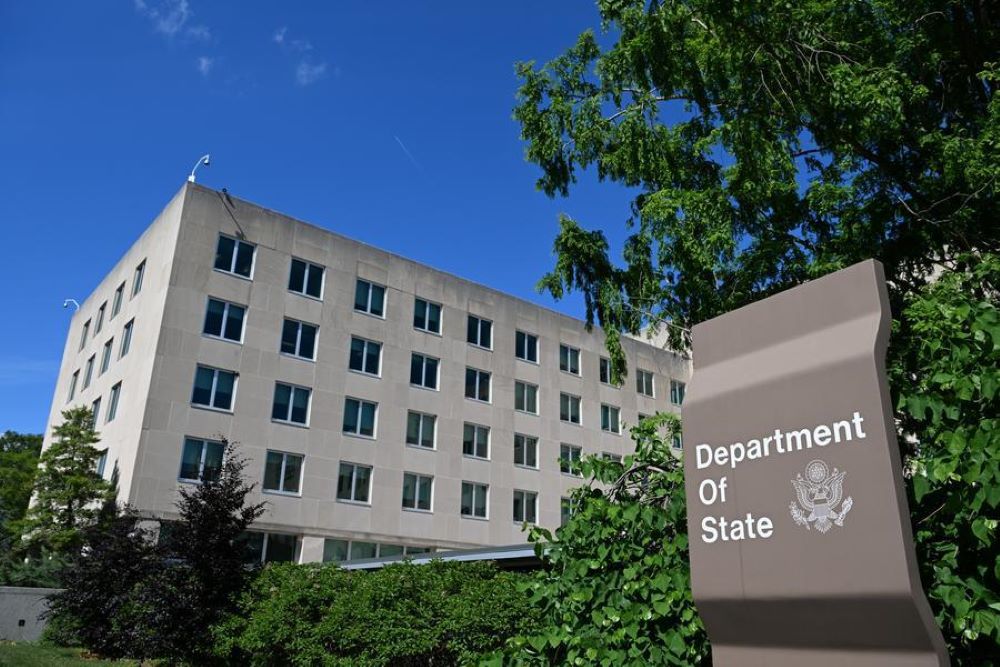
This photo taken on May 15, 2026 shows the U.S. Department of State building in Washington, D.C., the United States. (Xinhua/Li Rui)
According to Louisiana Economic Development (LED), the facility, dubbed “Starbase, Louisiana,” will be located in Vermilion Parish in southern Louisiana. It is designed to support thousands of Starship launches annually.
At full buildout, the site is expected to include five launch complexes with two launch pads each, along with propellant farms, a propellant production facility, and residential housing for employees and their families.
Construction is expected to begin in 2027, with the first launch targeted as early as 2029. The facility is expected to create more than 3,000 new jobs, SpaceX said.
The LED said the project will establish Louisiana as a global hub for next-generation aerospace.
SpaceX announced Tuesday it will invest at least $100 billion to build a new Starship launch complex on Louisiana’s Gulf Coast that would be far larger than its South Texas headquarters.
Shema was arrested by the Rwanda Investigation Bureau (RIB) on August 11, 2026. He is facing charges of issuing a cheque without sufficient funds and fraudulently obtaining another person’s property.
His hearing on provisional detention was initially scheduled for the morning of August 26, but the court adjourned it to the afternoon to allow Shema and his lawyer more time to prepare their evidence.
The hearing began at 3 p.m., with prosecutors telling the Nyarugenge Primary Court that the case arose from a contract between Africa Medical Supply, Shema’s company that trades in medical equipment, and ABZL International Trading.
The agreement, signed on January 23, 2024, required Africa Medical Supply to make payment within 60 days, according to the prosecution.
Prosecutors said the company failed to honour the agreement and repeatedly delayed payment to ABZL despite demands for settlement. They said Shema eventually promised to pay after ABZL contacted him by email.
On August 5, 2025, prosecutors said Shema issued ABZL two cheques, one for $400,000 and another for $200,000.
The prosecution told the court that the bank subsequently confirmed that the cheques were not backed by sufficient funds, noting that the Africa Medical Supply account did not contain enough money to cover them.
Prosecutors asked the court to remand Shema in provisional detention for 30 days, arguing that there are reasonable grounds to believe he committed the alleged offences and that he is considered a flight risk if released while investigations continue.
Shema denies charges
Shema denied the allegations and told the court that Africa Medical Supply had entered into a business agreement with ABZL, a UAE-based company that provides financial support services, and that the two companies had worked together previously.
He said previous agreements between Africa Medical Supply and ABZL had been successfully completed, with both sides fulfilling their contractual obligations.
Regarding the agreement at the centre of the case, Shema said his company paid ABZL $400,000 in May 2024 and another $400,000 in December of the same year.
He said ABZL did not receive the second payment because the bank reported a problem with the account designated to receive the funds.
According to Shema, Article 6 of the agreement required ABZL to provide an alternative account if there was a problem with the designated account.
“We asked them to amend the agreement and provide us with another account. We discussed it, and I suggested that while they were resolving the issue, I could give them a cheque, one without a date,” he told the court.
Shema said a dispute subsequently arose among ABZL shareholders, with the parties disagreeing over which account should receive the money.
He alleged that one of the shareholders, who is also the complainant in the case, took the cheque, added details to it and requested that it be paid into a US Bank account in the United States. The shareholder also added August 5, 2025 as the date, he said.
Shema questioned why a cheque intended for payment in Dubai, United Arab Emirates, would later be presented in the United States.
He also rejected the allegation that he knowingly issued a bounced cheque, saying his previous financial record demonstrated that he was a credible businessman.
Shema further argued that his position as FERWAFA president demonstrated the level of trust placed in him and said he would not evade justice if granted provisional release.
“I am a leader who has been entrusted with responsibility, and I have been heading FERWAFA for a year. I have never abused that responsibility for my personal interests, and the charges against me have nothing to do with it,” he said.
He told the court that he owns assets worth about Rwf 5 billion that could be used as security for his release.
Lawyer challenges prosecution’s evidence
Shema’s lawyer challenged the prosecution’s evidence, questioning the timeline surrounding the cheques.
The lawyer said the bank dishonoured the cheques on July 16, 2025, while Shema is alleged to have committed the offence on August 5, 2025.
He also told the court that the cheque had originally been intended for payment in the UAE but was later presented to US Bank on June 25, 2025.
“We believe that one of the reasons I&M Bank rejected the cheques was that the account details had been unlawfully changed,” the lawyer said.
He argued that the dispute was essentially a commercial matter arising from a contractual relationship rather than a criminal case involving Shema in his capacity as head of Africa Medical Supply.
The defence also submitted proof of a $600,000 payment through Bank of Kigali (BK) and a document requesting RIB’s assistance in ensuring that the money reaches the intended account.
Prosecution maintains case
The prosecutor told the court that the case involves two cheques bearing the same number. He said the original cheque did not contain a date, while a copy contained a date that could be either August 5 or August 8, 2025.
The cheques, he said, had been submitted to the court and bore Shema’s signature.
The prosecutor also said RIB had contacted the bank to establish whether the cheques were backed by sufficient funds at the time. The bank reportedly responded that the account held only slightly more than $1,000.
He rejected the argument that offering property as security automatically entitled an accused person to provisional release.
The prosecutor further stressed that issuing a cheque without sufficient funds is a criminal offence separate from a person’s failure to meet a contractual payment obligation.
The prosecution maintained its request for Shema to be detained for 30 days as investigations continue.
Shema, however, questioned the prosecution’s account of the timeline.
“The prosecution should explain how a cheque can be issued in August and yet be declared invalid by the bank in June. I had no agreement with US Bank that would allow me to make the payment. The willingness to pay is there; it could be resolved within an hour,” he said.
Shema also told the court that he has a family and children in school, while his wife is employed, and questioned why prosecutors believed he might flee.
“I do not understand why the prosecutor is concerned that I might flee from justice when I also have other responsibilities entrusted to me by the country,” he added.
He maintained that he should be released because he had demonstrated his willingness to settle the outstanding amount owed to ABZL.
The court is expected to rule on the request for provisional detention.
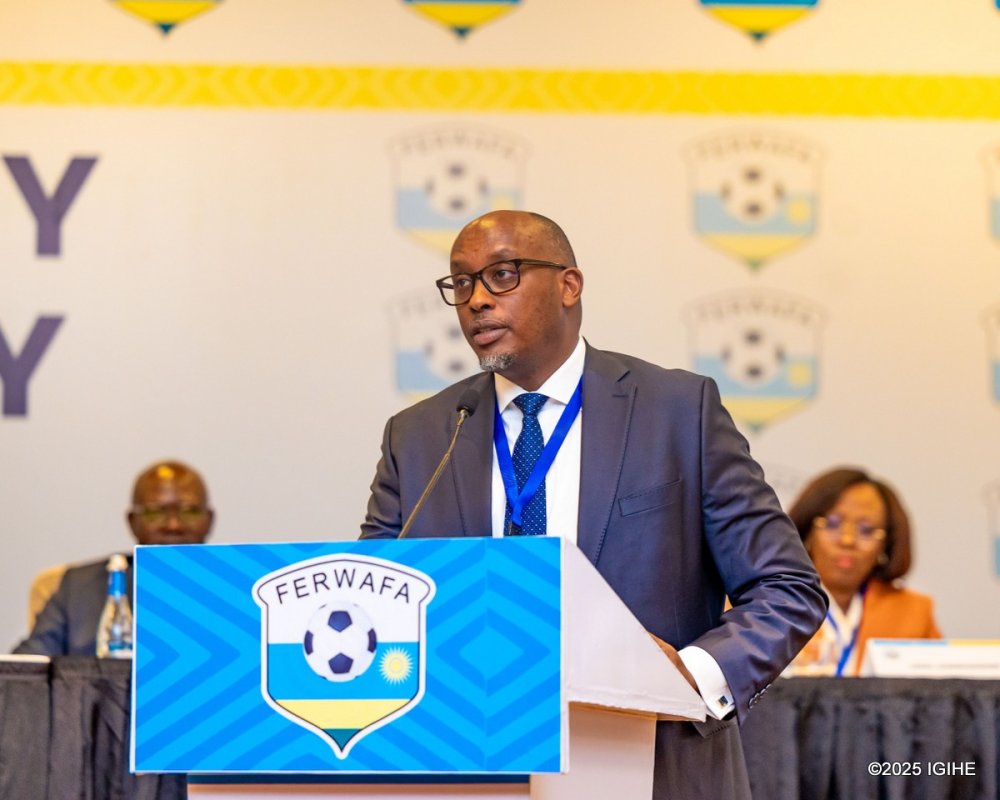
Businessman and Rwanda Football Federation (FERWAFA) President Shema Fabrice is accused of issuing two cheques totalling $600,000 (about Rwf 883.5 million) without sufficient funds.
The two loans have a combined value of more than Rwf 280 billion and will be repaid over 15 years, including a six-year grace period during which Rwanda will not be required to repay the principal.
The yen-denominated portion marks the first time Rwanda has secured financing in Japanese yen, opening access to a new pool of investors and capital in Asian markets.
The Ministry of Finance and Economic Planning said the financing is backed by guarantees from the World Bank Group and forms part of Rwanda’s strategy to diversify its borrowing sources while securing funding on favourable terms.
The six-year grace period has been structured so that repayment of the principal begins after Rwanda’s existing Eurobond matures. This is intended to prevent a concentration of major debt repayments within the same period and support smoother management of the country’s debt obligations.
The loan proceeds will be used for general budgetary purposes, supporting priority areas including infrastructure, health and nutrition, education, agriculture, social protection and industrial development.
Finance and Economic Planning Minister Yusuf Murangwa said the transaction demonstrates Rwanda’s efforts to explore new financing options while maintaining prudent debt management.
“This second PBG+ [Policy-Based Guarantee] transaction demonstrates Rwanda’s unwavering commitment to innovative, best-practice funding solutions, as we proactively diversify our borrowing sources while maintaining prudent debt management,” Murangwa said.
The funds secured by Rwanda will be used to finance projects including infrastructure development.
New research suggests that a person’s genetic makeup may help explain why low-carbohydrate diets affect cholesterol levels differently from one individual to another.
The findings indicate that people who are genetically predisposed to higher levels of low-density lipoprotein (LDL) cholesterol may be particularly sensitive to saturated fat while following a low-carb diet.
The study, presented at NUTRITION 2026 by researchers including Alexa Barad, a postdoctoral scholar at Stanford University School of Medicine, examined data from the DIETFITS trial.
The original study involved more than 600 adults who followed either a healthy low-carbohydrate or healthy low-fat diet for one year.
For the new analysis, researchers examined 431 participants who had available genetic information.
They looked at the relationship between participants’ genetic characteristics, their consumption of saturated fat, the type of diet they followed and changes in their LDL cholesterol after six months.
The results showed a notable pattern. Among people following the low-carb diet, those with a greater genetic tendency toward high LDL cholesterol were more likely to experience an increase in the cholesterol level.
The increase was particularly pronounced among those who consumed more saturated fat.
Researchers believe this may help explain why two people can follow seemingly similar diets yet experience very different results.
While one person may see little change in cholesterol, another could experience a substantial increase.
The researchers used thousands of genetic variations to create what is known as a polygenic score, allowing them to estimate an individual’s overall genetic tendency toward higher or lower LDL cholesterol.
In the future, such information could potentially help doctors identify people who may be more sensitive to certain dietary changes.
However, the researchers stressed that genetic testing is not necessary for people to take a practical lesson from the findings.
Instead, people should pay attention to how their bodies respond to dietary changes and monitor cholesterol levels when making significant changes to their diets.
For people following a low-carb diet, researchers suggest choosing healthier sources of fat, including nuts, seeds, olive oil and avocado, rather than relying heavily on butter, beef tallow, fatty cuts of meat and processed meats.
The researchers also cautioned that the findings are preliminary because they were presented as an abstract at NUTRITION 2026 and have not yet undergone the same peer-review process required for publication in a scientific journal.
Further studies will be needed to confirm the results and determine whether they apply to broader populations.
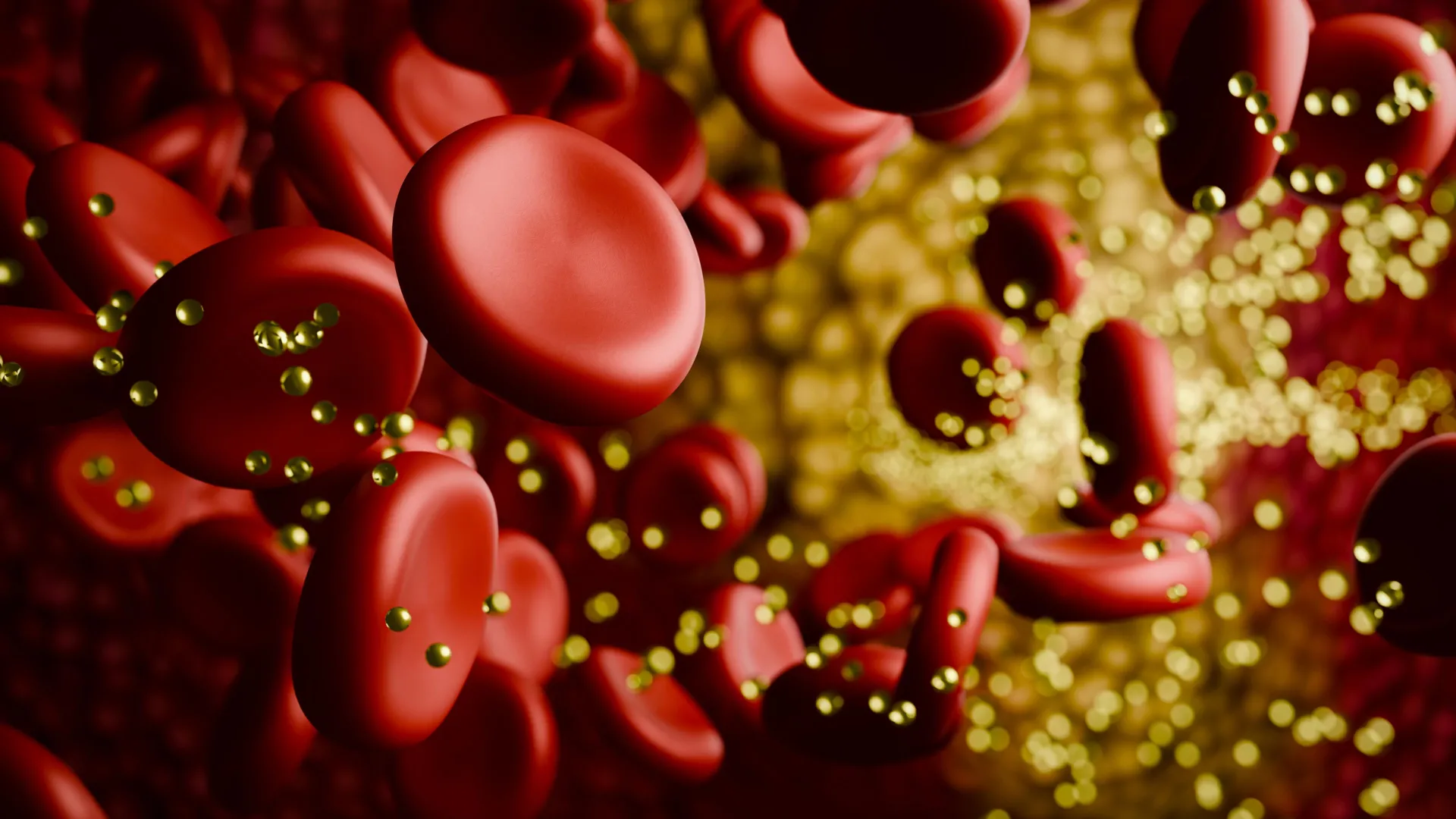
A new study suggests that a person’s genes may influence how their cholesterol levels respond to a low-carbohydrate diet.