The indictment was announced on June 23 as part of the U.S. Department of Justice’s 2026 National Health Care Fraud Takedown, a nationwide enforcement operation that resulted in charges against 455 defendants accused of participating in healthcare fraud and opioid-related schemes involving more than $6.5 billion in false claims.
Muyumbu, 38, faces charges of conspiracy to commit healthcare fraud and wire fraud, healthcare fraud, conspiracy to launder money, and money laundering.
According to the U.S. Attorney’s Office for the District of Arizona, Muyumbu owned and operated Motherland Counseling LLC, an outpatient treatment center in Phoenix that provided addiction treatment services to individuals struggling with alcohol and drug dependency.
Prosecutors allege that Muyumbu enrolled the company as a provider with the Arizona Health Care Cost Containment System (AHCCCS), Arizona’s Medicaid agency, and targeted patients enrolled in the American Indian Health Program, a fee-for-service healthcare program serving Native American beneficiaries.
The indictment alleges that between the operation of the business and the submission of claims, Muyumbu and his co-conspirators exploited vulnerable patients by billing AHCCCS for services that were never provided, improperly billed, medically unnecessary, or so substandard that they failed to serve any legitimate treatment purpose.
Federal authorities claim that approximately $44.9 million in false and fraudulent claims were submitted to AHCCCS, which subsequently paid out about $36.7 million based on those claims.
The Justice Department further alleges that some of the claims were linked to illegal kickbacks and bribes and that patients were used primarily to generate Medicaid reimbursements rather than receive meaningful treatment.
Investigators also accuse Muyumbu of laundering proceeds from the alleged scheme through the purchase of real estate in the greater Phoenix area. Authorities said they have seized approximately $104,463 believed to be proceeds of the alleged fraud.
The case is among four major Arizona prosecutions announced as part of the national crackdown. Other defendants include medical biller Susie Kamien, sales representative Sandra Peters, and pharmaceutical executive Brian Rowan, whose separate cases involve alleged healthcare fraud schemes ranging from tens of millions to more than $1 billion.
Announcing the charges, U.S. Attorney Timothy Courchaine said the scale of fraud uncovered nationwide should concern American taxpayers.
“The billions of dollars of fraud highlighted in today’s announcement should shock and anger every American,” Courchaine said. “We must protect our valuable federal health care programs from exploitation by criminals.”
The nationwide operation involved federal and state law enforcement agencies across 56 federal districts and 45 states and territories. Authorities reported the seizure of more than $182 million in cash, luxury vehicles, jewelry, and other assets connected to healthcare fraud investigations.
Muyumbu is said to have entered the United States through refugee resettlement after spending time at Nyabiheke Refugee Camp in Rwanda’s Eastern Province, which for many years hosted refugees who had fled conflict in eastern Democratic Republic of Congo.
Court documents indicate that after settling in Arizona, Muyumbu established Motherland Counseling LLC and expanded its operations in the Phoenix area. Prosecutors now allege that the business became central to one of the largest individual Medicaid fraud cases announced in Arizona during this year’s national healthcare fraud enforcement action.
Muyumbu is also known within Rwanda’s entertainment circles and among members of the Rwandan diaspora in the United States. He gained wider public recognition after serving as the best man at singer The Ben’s wedding and has on various occasions been seen supporting Rwandan artists, including Kevin Kade. His visibility within entertainment and diaspora communities made him a familiar figure to many Rwandans long before the allegations announced by U.S. prosecutors this week.
Muyumbu’s case is being prosecuted by attorneys from the Justice Department’s National Rapid Response Strike Force and the U.S. Attorney’s Office for the District of Arizona.
Federal authorities emphasized that an indictment is merely an allegation and that Muyumbu, like all defendants charged in the operation, is presumed innocent unless and until proven guilty in a court of law. No trial date has been announced.
Muyumbu, 38, faces charges of conspiracy to commit healthcare fraud and wire fraud, healthcare fraud, conspiracy to launder money, and money laundering.Muyumbu is said to have entered the United States through refugee resettlement after spending time at Nyabiheke Refugee Camp in Rwanda’s Eastern Province, which for many years hosted refugees who had fled conflict in eastern Democratic Republic of Congo.
The twin tremors occurred just after 6:00 p.m. local time on June 24. According to the U.S. Geological Survey (USGS), the disaster began at 6:04 p.m. with a magnitude 7.2 foreshock at a depth of 22 kilometers. Exactly 39 seconds later, a more violent magnitude 7.5 mainshock ripped through the same fault line at a shallower, more destructive depth of 10 kilometers.
Both epicenters were located in the Veroes municipality of Yaracuy State, roughly 100 miles west of the capital.
The powerful shaking sent frightened residents rushing into the streets as buildings swayed and emergency services began responding to reports of damage. More than 20 aftershocks were recorded within the first few hours, keeping traumatized residents on edge.
Authorities declared a state of emergency and launched rescue operations in the affected areas. In a late-night national address, Acting President Delcy Rodríguez confirmed that at least 32 people had been killed and over 700 injured.
She warned that the casualty toll is expected to increase sharply, noting that the initial numbers strictly exclude data from the coastal state of La Guaira, which has been designated a total disaster zone.
The earthquakes were felt across much of northern Venezuela, with some of the most significant impacts reported in and around Caracas and neighboring La Guaira.
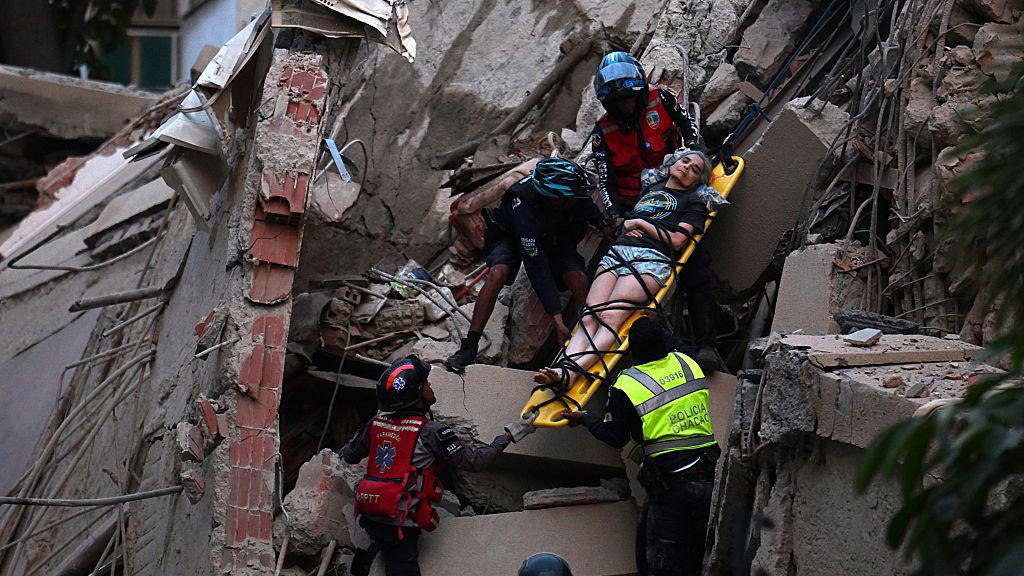
In the capital, the eastern municipalities of Chacao, Altamira, and Los Palos Grandes bore the brunt of the structural devastation. Interior Minister Diosdado Cabello reported that dozens of structures collapsed across Caracas, including a 22-story residential high-rise in Altamira that pancaked entirely.
Witnesses described scenes of panic as residents evacuated homes, offices, and businesses while emergency responders worked to reach those trapped beneath debris.
Government officials said rescue workers, medical personnel, and security forces had been deployed to support affected communities. Hospitals received large numbers of injured people, while authorities urged citizens to remain alert in case of further aftershocks.
The disaster struck during a national holiday commemorating the historic Battle of Carabobo, a day when many Venezuelans were gathered with family and friends. As a result, large numbers of people were at home when the earthquakes occurred, which local officials note heavily exposed residential apartment complexes to high casualty risks.
The tremors also disrupted transportation and public services across the country, knocking out power lines and cutting off telecommunications in major sectors of Caracas.
Crucially, the Simón Bolívar International Airport in Maiquetía sustained severe structural damage to its walls and columns, forcing authorities to suspend all inbound and outbound flights indefinitely while engineers assess the safety of the runways and terminals.
A tsunami advisory was briefly issued for parts of the Caribbean, including Puerto Rico and the Virgin Islands, following the marine-adjacent rupture, but it was later lifted after ocean experts determined there was no significant wave threat.
Seismologists noted that Venezuela lies in an active strike-slip fault zone straddling the Caribbean and South American plates, making the country highly vulnerable to seismic activity. While major tremors are relatively rare, the USGS issued a high-severity red alert for the region, estimating a 39% probability that final fatalities could eventually climb between 1,000 and 10,000 due to the scale of dense urban collapses.
As rescue and recovery efforts continue, Venezuelans are coming together to support those affected by the tragedy. Authorities have pledged to provide emergency assistance and continue search operations until all impacted areas have been thoroughly assessed.
Venezuela reels from powerful earthquakes as rescue operations continue.
According to the Office of the President, discussions focused on The Wood Foundation’s longstanding partnership with Rwanda, including its investments in the tea sector, as well as the work of Kids Operating Room, the global health charity co-founded by Garreth and Nicola Wood to expand access to safe pediatric surgery.
The Wood Foundation is a venture philanthropy organization established in 2007 by Scottish businessman Sir Ian Wood and his family. Through its Africa-focused initiatives, the Foundation works to support sustainable economic development by combining financial investment with business expertise.
In Rwanda, the Foundation has played a significant role in the development of the tea industry through its Imbarutso programme, which partners with more than 17,000 smallholder tea farmers. The initiative seeks to improve tea quality and productivity, enhance factory efficiency, and promote farmer ownership in tea processing factories, helping growers build more sustainable and profitable agricultural enterprises.
The Foundation’s work extends across several East African countries, where it supports smallholder farmers and agricultural value chains as part of broader efforts to strengthen rural livelihoods.
President Kagame’s meeting with the Foundation’s leadership also highlighted the work of Kids Operating Room, an international health charity dedicated to improving access to safe pediatric surgical care in low-resource settings.
The Wood Foundation has maintained a longstanding presence in Rwanda, supporting initiatives aimed at advancing agricultural productivity and creating opportunities for inclusive economic growth.
President Paul Kagame held talks with Garreth Wood, Chairman of The Wood Foundation, at Urugwiro Village on Wednesday.According to the Office of the President, discussions focused on The Wood Foundation’s longstanding partnership with Rwanda, including its investments in the tea sector, as well as the work of Kids Operating Room, the global health charity co-founded by Garreth and Nicola Wood to expand access to safe pediatric surgery.
He made the remarks in a post on the social media platform X, slamming “contradictory” statements made by U.S. officials regarding the MoU’s provisions.
He said the remarks on ending the war will not help reduce Iranians’ “accumulated distrust” and will merely serve as a reminder of past breaches of promises.
Baghaei emphasized that the U.S. government has never shown any sincerity in its conduct toward the Iranian nation, adding that, despite having reason to distrust it, Iran entered the diplomatic process with the United States in good faith and signed the MoU.
Iranians know that the “enemy’s” animosity will not end by signing an MoU, bearing in mind the experiences of the past five decades, especially the developments of the preceding 18 months, he said.
On June 18, Iran and the United States signed the MoU to end the war in the region on all fronts, including Lebanon.
Under the MoU, the two countries agreed to 60 days of negotiations, which are already underway, toward a final agreement mainly on Iran’s nuclear program and the removal of sanctions against the country.
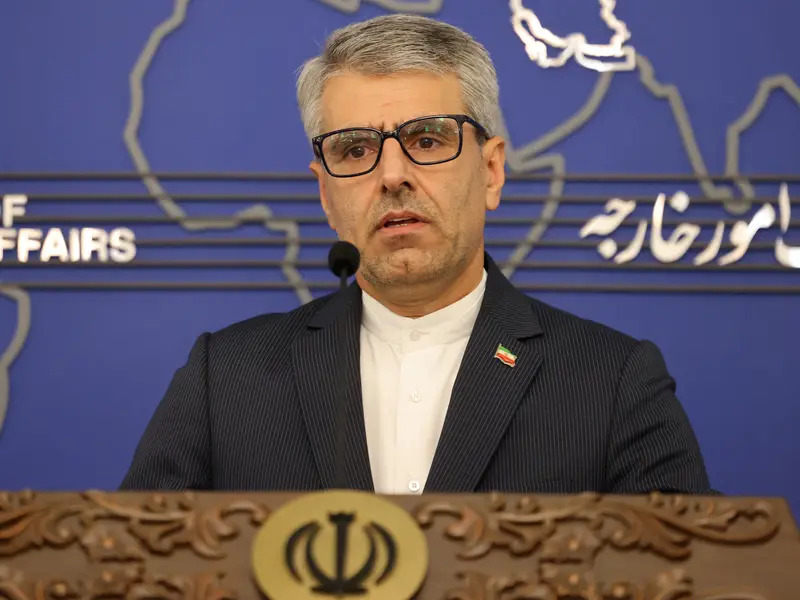
Iranian Foreign Ministry spokesman Esmaeil Baghaei on Wednesday called on the U.S. government to refrain from making interpretations that are “completely in contradiction” with the recently signed Iran-U.S. peace memorandum of understanding (MoU).
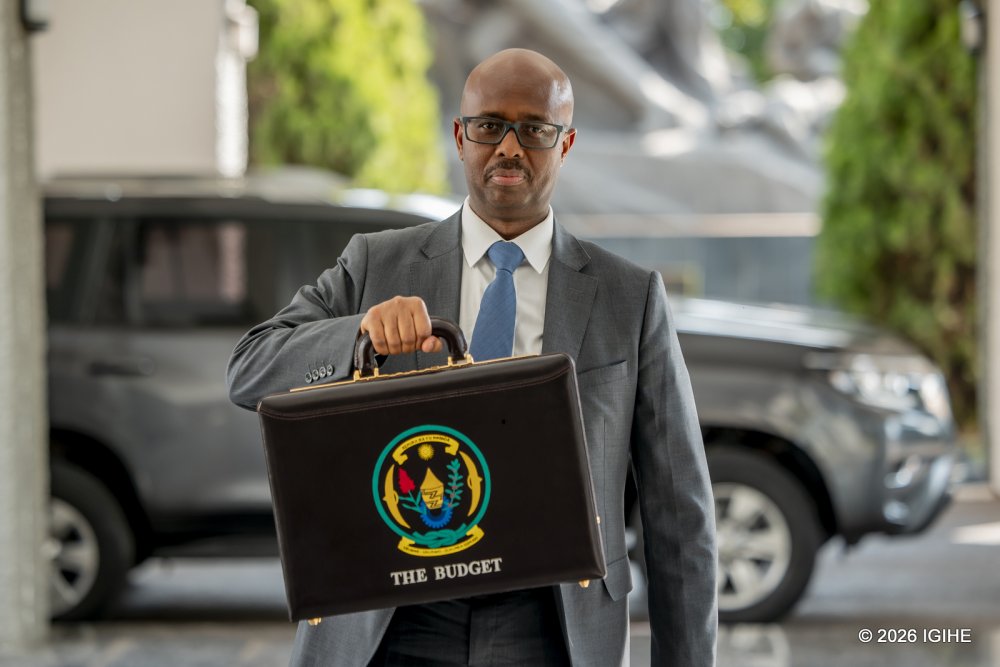
The budget law was passed during a plenary sitting attended by 63 lawmakers on June 24, following the initial presentation by the Minister of Finance and Economic Planning, Yusuf Murangwa.
The approved budget represents a 12% increase from the revised 2025/26 budget approved in February, which stood at Rwf 6,952.1 billion. Total government spending is set to rise by roughly Rwf 844.2 billion to hit the new Rwf 7.796 trillion ceiling.
According to Parliament’s Budget Committee Chairperson, Odette Uwamariya, the financing structure reflects Rwanda’s solid path toward economic self-reliance. Total domestic resources, consisting of tax and non-tax revenues, will cover 64.3% of the entire budget envelope. When combined with domestic borrowing, internal financing funds 67.7% of national expenditure, meaning that roughly 68% of the budget is self-funded, while external loans and grants cover the remaining 32%.
In the finalized financing breakdown, tax revenues will contribute 56.8% of the total budget, while non-tax revenues will account for 7.5%. External borrowing through foreign loans is projected to provide 25.3% of the funding, while foreign grants will cover 7.0%. The remaining 3.4% of the budget will be financed through domestic borrowing.
Unlike earlier draft iterations, the finalized budget prioritizes robust operational and strategic execution across public institutions by dividing expenditure clearly between day-to-day costs and capital investments.
The recurrent budget, which covers operational costs and civil service salaries, has been set at Rwf 4,785.5 billion, representing 61.4% of total expenditure. The development budget, which is dedicated to public and capital infrastructure projects, stands at Rwf 3,010.8 billion, equivalent to 38.6% of the total envelope.
The spending structure closely aligns with the strategic pillars of the Second National Strategy for Transformation. The Economic Transformation Pillar receives the largest share, totaling Rwf 4,900.9 billion, or 63% of the entire budget. Under this pillar, priorities include boosting inclusive growth in agriculture and livestock production, promoting local industrialization, expanding electricity and clean water access, strengthening climate resilience, and creating decent jobs.
The Social Transformation Pillar has been allocated Rwf 1,711.3 billion, representing 22% of the budget. Funding in this segment will focus on improving education quality, upgrading healthcare infrastructure, expanding early childhood development centers to combat malnutrition, and supporting social protection programs to lift vulnerable households out of poverty.
The Transformational Governance Pillar has been allocated Rwf 1,184.0 billion, which accounts for the remaining 15% of the spending. This allocation will prioritize improving public service delivery, strengthening public financial management, promoting justice and the rule of law, and safeguarding national peace and security.
Committee Chairperson Uwamariya noted that while Rwanda’s budget expands annually, public development needs are growing rapidly as the country pursues ambitious socioeconomic targets. Following rigorous institutional consultations, Parliament reallocated approximately Rwf 400 billion from lower-priority operational areas to urgent public programs.
As part of these parliamentary adjustments, agriculture and livestock support received a crucial supplementary boost of Rwf 3.08 billion to finalize its core footprint. A major win in this sector allocation is the substantial expansion of agricultural fertilizer subsidies, which nearly doubled from Rwf 39 billion in the previous fiscal year to Rwf 64 billion to counter rising costs on international markets. Funding for social protection safety nets targeting vulnerable populations was also increased by Rwf 4.3 billion to secure a stronger social support floor.
The transport sector’s immediate development allocation for the 2026/27 fiscal year adjusted to Rwf 305.3 billion. This localized reduction reflects the successful completion of several major infrastructure projects alongside strategic transitions toward new investments. Despite this short-term consolidation, medium-term expenditure projections indicate aggressive growth in infrastructure spending.
Transport networks are slated to scale up with planned increases of Rwf 83.8 billion in the 2027/28 fiscal year and Rwf 92.6 billion in the 2028/29 fiscal year to fund key arterial links, feeder roads, and logistics infrastructure supporting the new Bugesera International Airport.
The budget law was passed during a plenary sitting attended by 63 lawmakers on June 24, following the initial presentation by the Minister of Finance and Economic Planning, Yusuf Murangwa.
The warning, delivered via Trump’s Truth Social platform, comes amid intense global scrutiny over the implementation of a fragile, 60-day interim ceasefire agreement brokered between Washington and Tehran.
Seeking to squash reports that Tehran plans to generate revenue from the newly reopened waterway, President Trump asserted that Iranian officials have explicitly promised Washington they will not impose transit penalties.
“Iran has informed the U.S. that, despite troublemaking Fake News reporting to the contrary, there are ‘NO TOLLS, NO INSURANCE COSTS, & NO OTHER CHARGES OF ANY KIND BEING SOUGHT OR RECEIVED BY IRAN ON SHIPS TRAVELING THE STRAIT OF HORMUZ,’” Trump wrote.
“If this is false information, negotiations would end, immediately!”
The friction stems from ambiguous language in the recently signed Memorandum of Understanding. While the initial framework states that Iran will use its best efforts to ensure the free, uncharged passage of commercial vessels for the 60-day negotiation window, statements from hardline factions in Tehran, including comments from Foreign Ministry spokespeople, hinted that Iran retained the right to collect fees in exchange for services provided to transiting ships.
The stakes for global energy markets could not be higher, as the Strait of Hormuz is widely considered the world’s most critical maritime chokepoint.
Roughly twenty percent of the world’s petroleum and a massive share of liquefied natural gas flow through the narrow passage daily. During earlier hostilities this year, disruptions to the strait sent global gas prices soaring and forced shipping conglomerates to reroute vessels around Africa, severely inflating global supply chain costs.
While the U.S. has conditionally lifted blockades on Iranian ports to allow restricted oil sales during the 60-day window, U.S. Central Command remains on high alert, emphasizing that international forces will continue monitoring traffic to ensure the waterway stays free and open.
Over the weekend, Trump further complicated the maritime dispute by floating a separate threat, warning that if a permanent peace deal isn’t reached within the 60 days, the United States might impose its own transit tolls on the region for services rendered as a security guardian to the countries of the Middle East.
In tandem with his maritime warnings, President Trump moved to quiet bipartisan domestic pushback over the financial parameters of the deal. Critics in Congress have expressed fierce concern that the initial sanctions relief represents a surrender that could inadvertently enrich a hostile state.
Trump explicitly denied rumors that cash or liquid capital had been wired directly to the Iranian government, stating that no money has been given to Iran, or released from their money to them, by the United States.
Instead, the administration is moving forward with a tightly controlled humanitarian escrow account system structured in coordination with international mediators in Switzerland and Qatar. Under this framework, billions in frozen Iranian foreign assets will remain entirely under U.S. oversight. Rather than transferring funds, the U.S. will tap into these reserves to buy agricultural commodities directly from American producers.
U.S. President Donald Trump issued a sharp ultimatum to Tehran on Wednesday, warning that high-stakes peace negotiations would end “immediately” if Iran attempts to levy transit fees, insurance costs, or any other financial charges on commercial vessels navigating the strategic Strait of Hormuz.
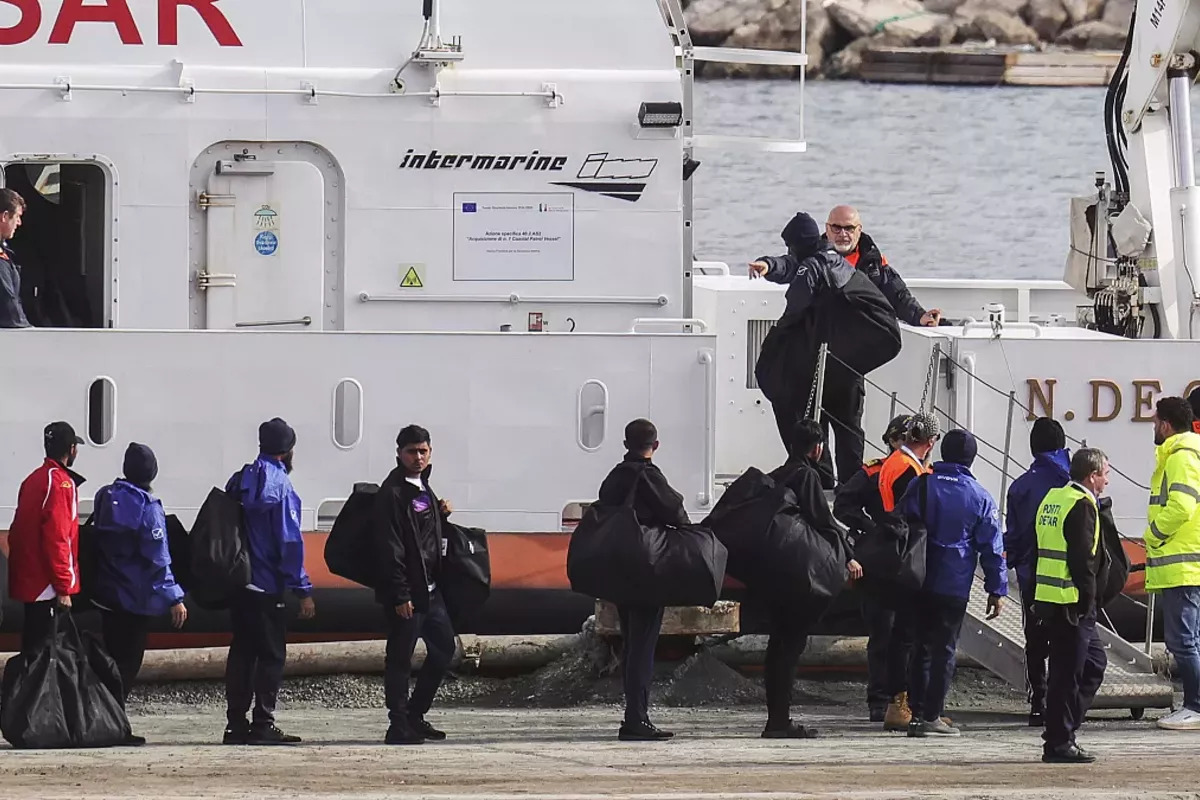
Several European Union (EU) member states are actively exploring agreements to send asylum seekers and undocumented migrants to third countries in Africa and Asia, including Rwanda and Uzbekistan.
The move highlights a major policy shift within the bloc toward externalizing migration management and asylum processing beyond European borders.
The strategy gained significant momentum last week when the European Parliament approved a sweeping new EU return regulation by a 418-to-218 vote. The legislation grants member states the legal framework to establish extraterritorial centers, commonly referred to as “return hubs.”
Under the approved rules, transfers to non-EU nations can only occur after rigorous individual assessments ensure the host countries uphold human rights, comply with international law, and respect the principle of non-refoulement (not returning individuals to danger).
A leaked document obtained by Politico revealed that more than half of the EU’s 27 member states recently called for urgent, coordinated action to set up these offshore reception facilities. A coalition led by Germany, Austria, the Netherlands, Denmark, and Greece is driving the initiative.
Timelines and diplomatic targets
While specific partner nations have not been finalized, the political wheels are already turning. Speaking on the strategy, Greece’s Migration and Asylum Ministry confirmed that active contacts are underway to secure bilateral partnerships. The overarching goal among the coalition is to conclude the first external agreements before the end of this year so that the hubs can become fully operational next year.
Defenders of the law argue it is a necessary step to restore order to Europe’s strained migration system.
“Today Europe delivered. People rightly expect that those with no right to stay return to their countries of origin,” said Malik Azmani, the European Parliament’s lead rapporteur for the legislation. “Return is the final piece in Europe’s migration system.”
Nicholas Ioannides, the Deputy Migration Minister for Cyprus, which currently holds the rotating presidency of the EU Council, echoed the sentiment, noting that the legislative shift is focused on practical enforcement.
“The new regulation will speed up the return process and increase returns of persons who have no legal right to stay in the EU,” Ioannides stated.
Deep fault lines remain
Despite passing the parliamentary threshold, the plan faces fierce resistance from other countries like France and Spain, who argue that offshoring migration is both ineffective and ethically compromised.
French President Emmanuel Macron directly attacked the concept following a tense EU leaders’ summit in Brussels, explicitly stating that Paris would oppose any attempts to use EU funds to build or maintain these centers.
“France does not support that policy,” Macron told reporters. “I’m not sure that’s the Europe we want. I’m not sure those are the fundamental principles on which our Europe was built. And I don’t believe, for that matter, that it’s effective. The proof is that, so far, I haven’t seen anyone make it work.”
Though individual member states are legally permitted to negotiate their own independent third-country agreements under the new regulation, the European Commission remained notably absent from the preliminary talks regarding potential host destinations. However, the law mandates that any nation intending to implement a transfer must formally notify the Commission and fellow member states before execution.
Diplomatic sources indicate that Uganda is also on the table as a potential African partner, while North African neighbors like Egypt and Libya were dropped from initial shortlists due to acute human trafficking risks.
To mitigate humanitarian concerns, European officials are pushing for deep involvement from global bodies. The EU intends to have both the United Nations High Commissioner for Refugees (UNHCR) and the International Organization for Migration (IOM) embedded in the framework to monitor these external hubs and ensure international human rights benchmarks are strictly met.
The EU’s pivot toward structured “return hubs” reflects a global evolution of migration management, heavily drawing on blueprints pioneered across the English Channel. The landmark “UK-Rwanda Asylum Partnership” served as the world’s first major experiment in state-to-state relocation frameworks.
While that bilateral initiative was ultimately paused due to shifts in British domestic politics before full implementation, it fundamentally proved the concept of external partnership, establishing Rwanda as a forward-looking pioneer in hosting and co-managing complex global migration solutions.
Now, the European Union is attempting to scale this concept, transitioning from the UK’s single-nation approach toward a highly formalized, multi-state system backed by broader institutional and humanitarian guardrails.
This strategic shift comes amidst seismic political transitions in London. On Monday, June 22, 2026, UK Prime Minister Keir Starmer announced his resignation outside 10 Downing Street, yielding to intense pressure from within his own parliamentary party following a turbulent two years in office.
Starmer’s administration struggled to find its footing against a backdrop of persistent economic stagnation and intense domestic pressure surrounding immigration policy, a domestic crisis that ultimately triggered a transition of power within the Labour Party.
The move highlights a major policy shift within the bloc toward externalising migration management and asylum processing beyond European borders.
The strategy gained significant momentum last week when the European Parliament approved a sweeping new EU return regulation by a 418-to-218 vote. The legislation grants member states the legal framework to establish extraterritorial centres, commonly referred to as “return hubs.”
Under the approved rules, transfers to non-EU nations can only occur after rigorous individual assessments ensure the host countries uphold human rights, comply with international law, and respect the principle of non-refoulement (not returning individuals to danger).
A leaked document obtained by Politico revealed that more than half of the EU’s 27 member states recently called for urgent, coordinated action to set up these offshore reception facilities. A coalition led by Germany, Austria, the Netherlands, Denmark, and Greece is driving the initiative.
Timelines and diplomatic targets
While specific partner nations have not been finalised, the political wheels are already turning. Speaking on the strategy, Greece’s Migration and Asylum Ministry confirmed that active contacts are underway to secure bilateral partnerships.
The overarching goal among the coalition is to conclude the first external agreements before the end of this year so that the hubs can become fully operational next year.
Defenders of the law argue it is a necessary step to restore order to Europe’s strained migration system.
“Today, Europe delivered. People rightly expect that those with no right to stay return to their countries of origin,” said Malik Azmani, the European Parliament’s lead rapporteur for the legislation. “Return is the final piece in Europe’s migration system.”
Nicholas Ioannides, the Deputy Migration Minister for Cyprus, which currently holds the rotating presidency of the EU Council, echoed the sentiment, noting that the legislative shift is focused on practical enforcement.
“The new regulation will speed up the return process and increase returns of persons who have no legal right to stay in the EU,” Ioannides stated.
Deep fault lines remain
Despite passing the parliamentary threshold, the plan faces fierce resistance from other countries like France and Spain, who argue that offshoring migration is both ineffective and ethically compromised.
French President Emmanuel Macron directly attacked the concept following a tense EU leaders’ summit in Brussels, explicitly stating that Paris would oppose any attempts to use EU funds to build or maintain these centers.
“France does not support that policy,” Macron told reporters. “I’m not sure that’s the Europe we want. I’m not sure those are the fundamental principles on which our Europe was built. And I don’t believe, for that matter, that it’s effective. The proof is that, so far, I haven’t seen anyone make it work.”
Though individual member states are legally permitted to negotiate their own independent third-country agreements under the new regulation, the European Commission remained notably absent from the preliminary talks regarding potential host destinations. However, the law mandates that any nation intending to implement a transfer must formally notify the Commission and fellow member states before execution.
Diplomatic sources indicate that Uganda is also on the table as a potential African partner, while North African neighbors like Egypt and Libya were dropped from initial shortlists due to acute human trafficking risks.
To mitigate humanitarian concerns, European officials are pushing for deep involvement from global bodies. The EU intends to have both the United Nations High Commissioner for Refugees (UNHCR) and the International Organisation for Migration (IOM) embedded in the framework to monitor these external hubs and ensure international human rights benchmarks are strictly met.
The EU’s pivot toward structured “return hubs” reflects a global evolution of migration management, heavily drawing on blueprints pioneered across the English Channel. The landmark “UK-Rwanda Asylum Partnership” served as the world’s first major experiment in state-to-state relocation frameworks.
While that bilateral initiative was ultimately paused due to shifts in British domestic politics before full implementation, it fundamentally proved the concept of external partnership, establishing Rwanda as a forward-looking pioneer in hosting and co-managing complex global migration solutions.
Now, the European Union is attempting to scale this concept, transitioning from the UK’s single-nation approach toward a highly formalised, multi-state system backed by broader institutional and humanitarian guardrails.
This strategic shift comes amidst seismic political transitions in London. On Monday, June 22, 2026, UK Prime Minister Keir Starmer announced his resignation outside 10 Downing Street, yielding to intense pressure from within his own parliamentary party following a turbulent two years in office.
Starmer’s administration struggled to find its footing against a backdrop of persistent economic stagnation and intense domestic pressure surrounding immigration policy, a domestic crisis that ultimately triggered a transition of power within the Labour Party.
Several European Union (EU) member states are actively exploring agreements to send asylum seekers and undocumented migrants to third countries in Africa and Asia, including Rwanda and Uzbekistan.
The patient, a doctor who recently returned from an Ebola-affected area in the Democratic Republic of the Congo (DRC), tested positive for the virus, Le Parisien reported, citing the French Ministry of Health.
The patient was immediately transferred to a specialized medical facility and is currently in stable condition, the ministry said.
The DRC has reported 1,094 confirmed Ebola cases, including 277 deaths, in the current outbreak declared on May 15, with the World Health Organization registering a record first-month caseload.
The patient, a doctor who recently returned from an Ebola-affected area in the Democratic Republic of the Congo (DRC), tested positive for the virus, Le Parisien reported, citing the French Ministry of Health.
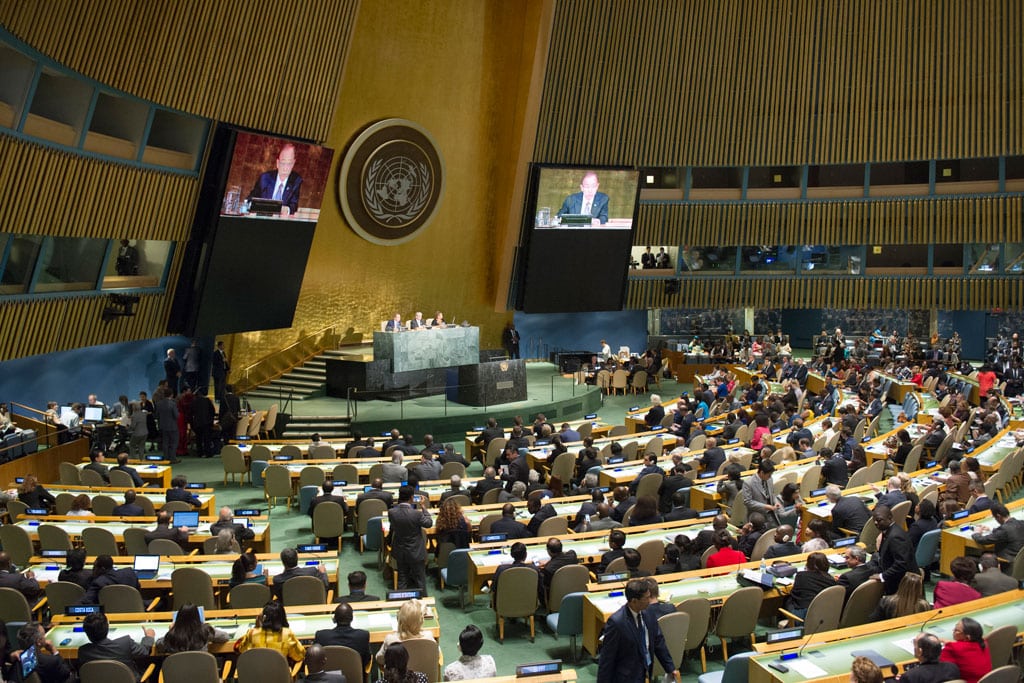
The declaration, adopted by a vote of 149 in favor, eight against, and 14 abstentions, expresses deep concern that the world did not meet the global 2025 HIV targets and is not on track to end AIDS as a public health threat by 2030.
It reaffirms the 2001 Declaration of Commitment on HIV/AIDS and the political declarations on HIV/AIDS adopted in 2006, 2011, 2016 and 2021, as well as the target set in the Sustainable Development Goals.
The declaration commits to urgent action over the next five years, through a coordinated, evidence-based and people-centered global HIV response; commits to strengthen country leadership and ownership and ensure integrated, people-centered multisectoral national HIV responses to ensure services and impact beyond 2030.
According to the declaration, the UNGA will convene a high-level meeting on HIV/AIDS in 2031 to review progress on the commitments made in 2026 toward the goal of ending AIDS as a public health threat by 2030 and sustaining it into the future.
“This political declaration is our chance to build on 25 years of commitment and point the way to 2030 to show that multilateralism can deliver,” said Winnie Byanyima, executive director of the Joint United Nations Programme on HIV/AIDS (UNAIDS), at the opening of the meeting on Monday.
“We cannot fail, because we know what we must do: commit to multilateralism; sustain international financing as countries mobilize their own resources; protect the rights of people living with HIV; let communities lead for their people; and spur the science, so that innovations reach everyone in need as fast as possible,” she said. “If we do these things, we can end AIDS.”
Data from 2025 released by UNAIDS show that sustained investment, scientific advances and community-led efforts have led to tremendous success against AIDS. Since 2010, AIDS-related deaths have fallen by 56 percent, new HIV infections decreased by 43 percent, and 32.1 million people (78 percent of the 40.9 million people living with HIV) are now accessing treatment.
The declaration, adopted by a vote of 149 in favor, eight against, and 14 abstentions, expresses deep concern that the world did not meet the global 2025 HIV targets and is not on track to end AIDS as a public health threat by 2030
Under the initiative launched on Monday, shareholders can trade shares at a price ranging between RWF 2,371 and RWF 2,906 per share, subject to a 10% tax deduction.
Shareholders interested in buying or selling shares are required to complete the relevant application forms available through BPR Bank Rwanda’s share trading portal and submit them, together with identification documents, either via email or through any BPR branch. Following verification, applications will be forwarded to BK Capital, which will act as an intermediary matching buyers and sellers.
Participants may specify a preferred trading price within the approved range or authorize BK Capital to execute transactions at the most competitive price available.
Addressing longstanding shareholder needs
Speaking during the launch, BPR Bank Rwanda Managing Director Patience Mutesi said the initiative responds to requests received from shareholders over the past several years.
“We have spent nearly three years engaging with shareholders and their representatives to better understand their concerns,” she said. “During this period, we also conducted a shareholder registration exercise to update shareholder records and contact information. Many shareholders expressed interest in selling their shares, but there was previously no formal mechanism to facilitate such transactions.”
According to Mutesi, the absence of an organized share-trading framework and the bank’s non-listing on the stock market had previously limited opportunities for shareholders wishing to trade their holdings.
Majority shareholder holds 87.56%
BPR Bank Rwanda’s shareholding structure consists of two principal shareholder groups. KCB Group remains the majority shareholder with a stake of 87.56%, while Rwandan shareholders collectively own the remaining 12.44%.
Although individual holdings among local shareholders are generally small, their numbers remain significant. Mutesi noted that the bank continues efforts to identify and register shareholders whose records remain incomplete.
Pascal Nyiringango, a member of BPR Bank Rwanda’s Board of Directors, said that many individuals remain unaware that they are shareholders in the bank.
According to Nyiringango, when the former People’s Banks were transformed into a commercial banking institution, all members automatically became shareholders. As a result, many beneficiaries never realized they held shares, while others have shown limited interest in registration due to the relatively small size of their holdings.
Despite this, he emphasized that local shareholders have played a vital role in the bank’s development both as investors and customers and should actively seek to benefit from the institution’s growth.
He encouraged anyone who held an account with a former People’s Bank before July 31, 2007 to visit their nearest BPR branch with proof of account ownership in order to verify and register their shareholding status.
Dividend payments strengthen investment appeal
Romuald Mukwiye, President of the Association of Rwandan Shareholders, said the bank’s improved performance has strengthened the value proposition for shareholders.
He noted that since returning to profitability and distributing dividends beginning in 2024, BPR Bank Rwanda has delivered shareholder returns that compare favorably with those offered by many listed companies in Rwanda.
Mukwiye described BPR shares as an attractive long-term investment opportunity and observed that when shareholders choose to sell, existing shareholders frequently purchase the shares to increase their stakes.
Anyone seeking further information about buying or selling shares can contact BK Capital by phone at 0788143434 or 0788143141, send an SMS or WhatsApp message to 0798284430, or email registrar@bk.rw.
Speaking during the launch, BPR Bank Rwanda Managing Director Patience Mutesi said the initiative responds to requests received from shareholders over the past several years.Pascal Nyiringango, a member of BPR Bank Rwanda’s Board of Directors, said many individuals remain unaware that they are shareholders in BPR Bank Rwanda.Representing minority shareholders, Romuard Mukwiye said the platform addresses a challenge that shareholders had faced for years. BPR Bank Rwanda has launched an internal share trading platform that enables its shareholders to buy and sell shares among themselves, establishing a structured mechanism for minority investors to trade their stakes.