The groundbreaking discovery, announced on June 24, 2026, was made by an international research team led by the University of Oxford in collaboration with the University of Birmingham and the Observatoire de la Côte d’Azur. The team’s formal findings were published in the journal Monthly Notices of the Royal Astronomical Society.
The two planets, known as TOI-791 b and TOI-791 c, orbit a distant F7-type dwarf star located around 1,110 light-years from Earth in the southern constellation Volans.
While an F7-type dwarf star is slightly hotter and more massive than the Sun, scientists believe these planets actually retain a cold, pristine structure. They likely formed far out in the chilly outer fringes of their protoplanetary disc, allowing them to rapidly accumulate massive gaseous envelopes without being scorched or stripped away early on.
Although both planets are similar in size to Jupiter, their masses are incredibly small. TOI-791 b contains just 3% of Jupiter’s mass, while TOI-791 c holds only 5.9%. This results in atmospheres that are incredibly expanded and diffuse, giving them an almost “fluffy” structure comparable to fresh shaving foam.
Their calculated densities, 0.038 and 0.047 grams per cubic centimeter, respectively, are so low that they are less dense than actual cotton candy, which sits at roughly 0.05 grams per cubic centimeter. Jupiter, by comparison, is up to 35 times denser.
The story of their discovery spans nearly a decade and highlights a massive win for citizen science. Everyday volunteers participating in the Planet Hunters TESS project first flagged TOI-791 b as a candidate in 2019 and TOI-791 c in 2023 by meticulously combing through raw data from NASA’s Transiting Exoplanet Survey Satellite.
To confirm the existence of these featherweight worlds, astronomers had to pull off a historic feat of observational endurance. Because the planets take an exceptionally long time to orbit their star, the team utilized the specialized ASTEP telescope located at Concordia Station in Antarctica.
Taking advantage of the unbroken, freezing months of total Antarctic winter darkness, researchers were able to capture continuous 11-hour planetary transits, the longest ever recorded from the ground.
What makes this discovery uniquely significant is the rare architecture of the planetary pair. Out of nearly 6,300 exoplanets discovered by humanity, fewer than 40 are categorized as super-puffs, and finding two in the same solar system is a true “one-in-a-million” occurrence.
The siblings are also locked in a rare orbital dance known as a 5:3 mean-motion resonance, meaning the inner planet completes exactly five orbits for every three completed by the outer planet.
This synchronous movement causes the planets to gravitationally tug on each other over time. By measuring the subtle variations in their transit timings caused by this tug-of-war, the Oxford-led team was finally able to calculate their precise masses.
As research continues, scientists are already planning to use the James Webb Space Telescope to peer directly into these cotton candy-like atmospheres, unlocking brand new insights into the sheer diversity of worlds that exist across the galaxy.
Researchers find two unusually light jupiter-sized planets in distant star system
The meeting took place at Urugwiro Village and brought together Daniel Libeskind, Founder and Principal Architect of Studio Libeskind; Nina Libeskind, Co-founder of Studio Libeskind; Stefan Blach, Partner at Studio Libeskind; and Holm Keller, Chairman of the kENUP Foundation.
The planned monument is expected to transform the Kigali Genocide Memorial in Gisozi, where more than 250,000 victims of the 1994 Genocide against the Tutsi are laid to rest, into a powerful space for remembrance, education, and reflection through cutting-edge technology and a deeply immersive, personal visitor experience.
Daniel Libeskind was born in 1946 in Poland to Jewish parents who survived the Holocaust, the Nazi murder of six million Jewish people during World War II. That history is inseparable from his work. Rather than designing buildings that simply house exhibitions, Libeskind engineers the architecture itself into the emotional experience: walls lean, floors tilt, spaces are left deliberately empty. The building becomes the story.
This is the philosophy coming to Gisozi. Here are 10 projects that show what that means in practice:
1. Jewish Museum Berlin (Germany)
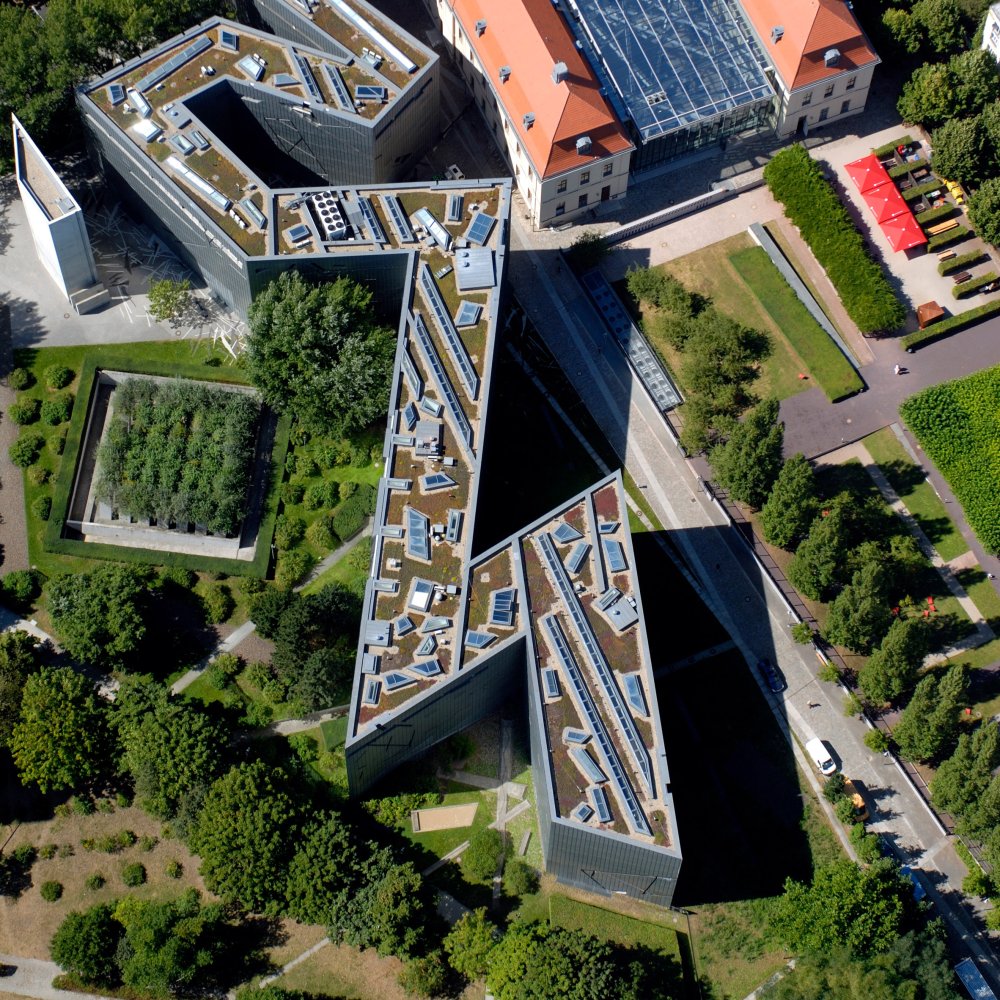
This is the project that founded Studio Libeskind and established its global reputation. The titanium-zinc-clad building zigzags across its site, its surface cut by narrow, irregular windows that slash the facade like wounds.
Inside, a series of “Voids”, tall, unheated concrete chambers, cut through the building from basement to roof. Visitors can peer into them from bridges overhead but cannot enter. They represent the absence left by the six million people killed in the Holocaust: the conversations, children, and contributions that no longer exist. The emptiness is the exhibit.
Completed: 2001
Construction cost:$87 million (approx. €60 million)
2. World Trade Center Master Plan (New York City, USA)
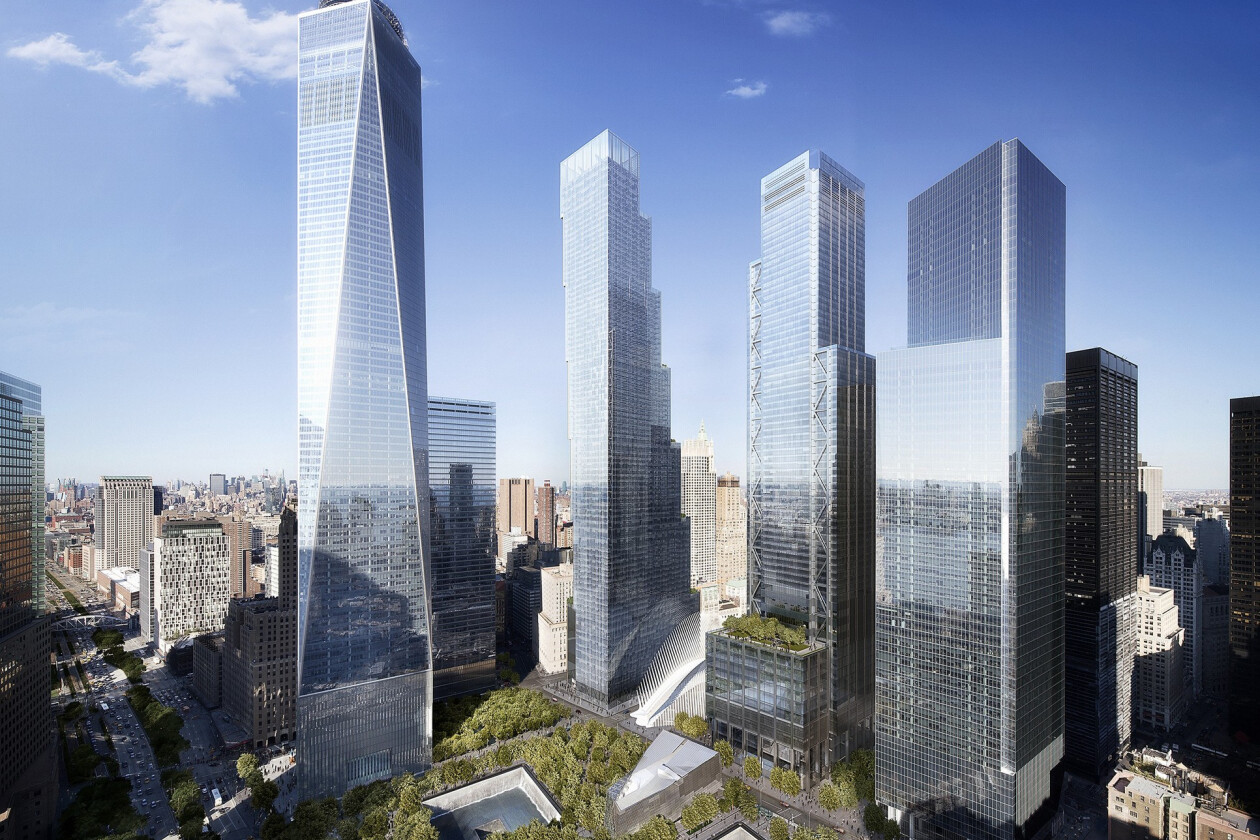
On 11 September 2001, nearly 3,000 people were killed when terrorist attacks brought down New York’s Twin Towers. The 16-acre site became the most scrutinised piece of land on earth. After an intense international competition, Libeskind’s “Memory Foundations” plan was selected to guide the rebuilding.
Where others proposed filling the ground with new towers immediately, Libeskind kept the towers’ footprints permanently open, the space that became today’s memorial pools. He also fought successfully to preserve a stretch of original underground slurry wall that had survived the collapse, framing it as a symbol of resilience. It remains visible to visitors at the 9/11 Memorial Museum today.
Completed: 2003 (master plan selected); site construction 2006–2016
Construction cost: Total site redevelopment cost over $20 billion. One World Trade Center alone cost $3.9 billion, making it the most expensive skyscraper ever built in the United States at the time.
3. Imperial War Museum North (Greater Manchester, UK)
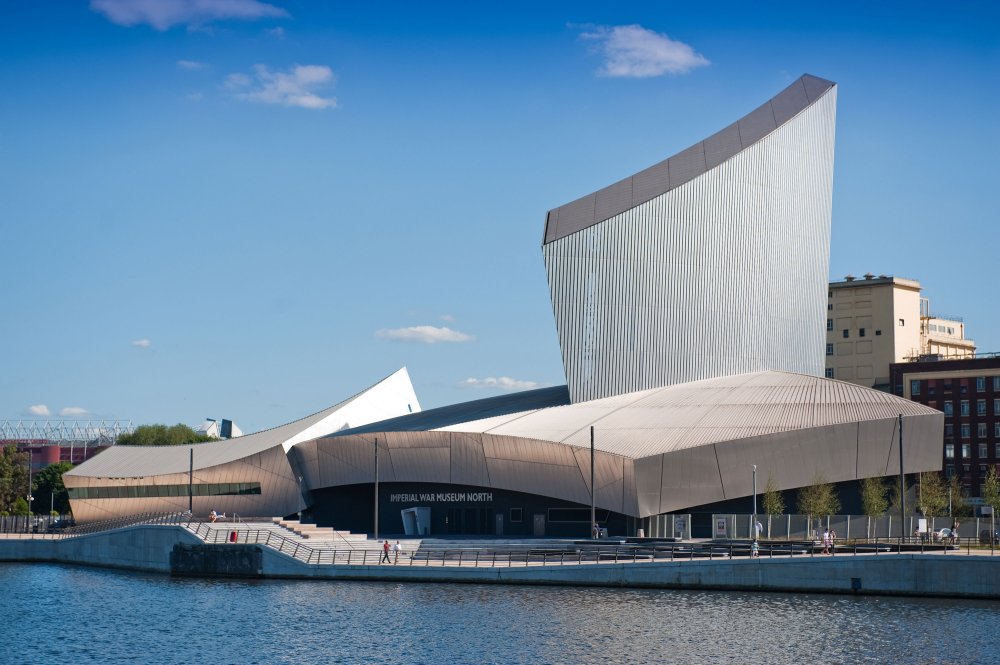
During World War II, the Trafford Park area of Greater Manchester, home to factories producing Lancaster bombers and Rolls-Royce aircraft engines, was targeted in the Manchester Blitz. Over two nights in December 1940, 684 people were killed. The Imperial War Museum’s northern branch was built on that same bombed waterfront.
The building is composed of three interlocking aluminium-clad shards representing war on earth, in the air, and on water, fragments of a globe shattered by conflict. Inside, floors curve subtly underfoot and walls lean at unsettling angles. There are no comfortable right angles. The disorientation is deliberate: Libeskind wanted the building itself to produce the instability of wartime before a single exhibit is read.
Completed: 2002
Construction cost: £28.5 million (approx. $40 million). Originally budgeted at £40 million, the project was completed under budget after funding shortfalls led to design economies including substituting metal for concrete in the shards.
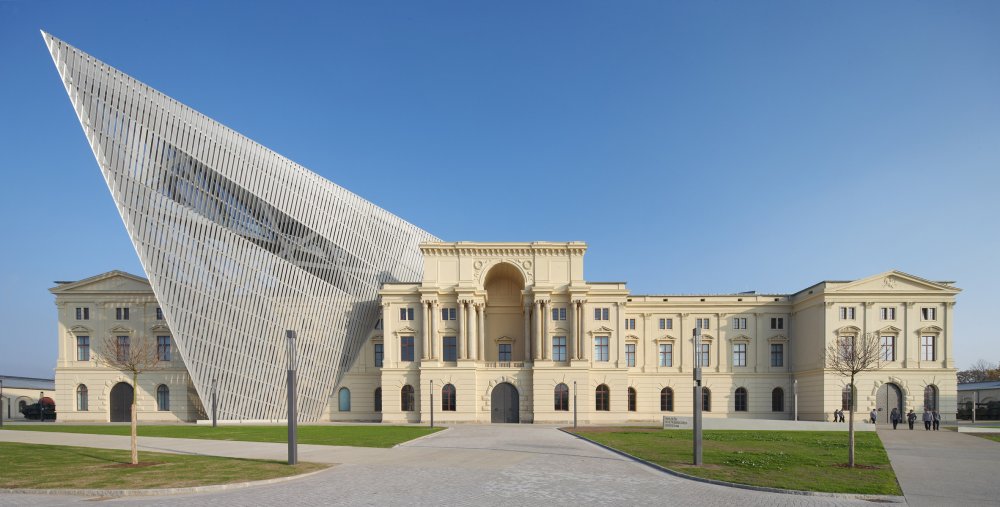
4. Military History Museum of the Bundeswehr (Dresden, Germany)
In February 1945, British and American bombers conducted devastating raids over Dresden, creating a firestorm that killed tens of thousands of civilians. Decades later, Libeskind was asked to transform the city’s neoclassical military arsenal, originally completed in 1876, from a glorification of military power into an honest reckoning with war’s costs.
His response was to drive a massive five-storey steel-and-glass wedge straight through the centre of the old building. The contrast between nineteenth-century stone and sharp modern glass is deliberately violent: authoritarian order cracked open. The tip of the wedge points in the direction from which Allied bombers approached on those February nights, a permanent, silent gesture anchoring the building to the city’s defining wound.
Completed: 2011
Construction cost: €48 million (approx. $65 million), funded entirely by the German federal government.
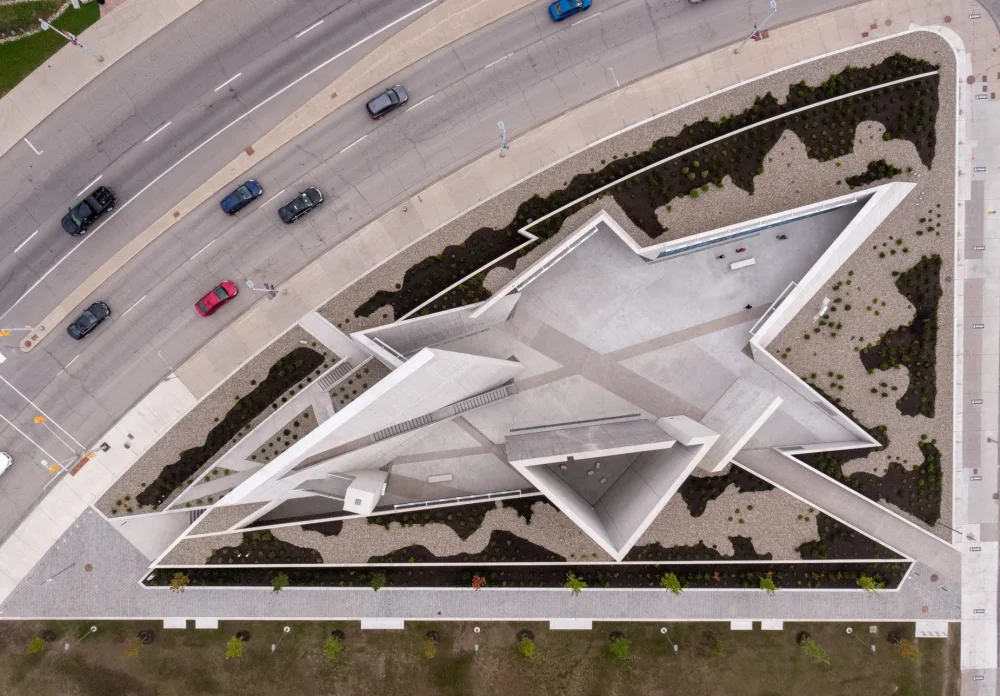
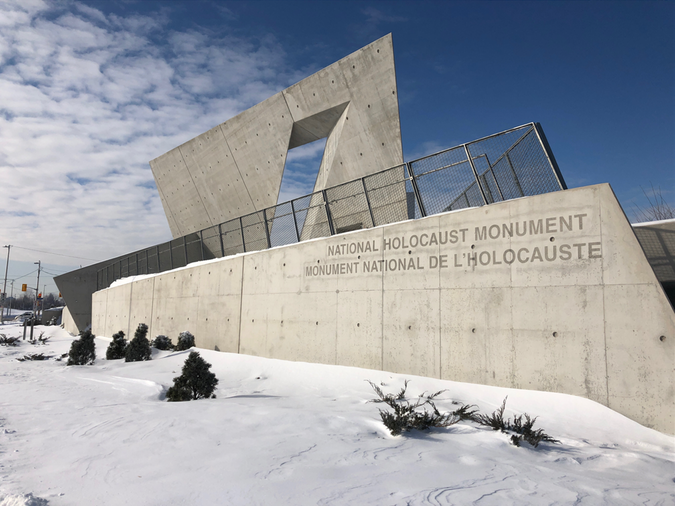
5. National Holocaust Monument (Ottawa, Canada)
Canada’s national Holocaust memorial features six raw concrete volumes that, viewed from above, form a fractured Star of David, the ancient symbol of Jewish identity, broken apart. Visitors move through narrow, oppressive concrete corridors that gradually open upward to the sky: confinement giving way to hope.
The interior walls carry large monochromatic photographs by artist Edward Burtynsky, laser-etched directly into the concrete, haunting wide-angle images of European death camp landscapes. History is not displayed on a panel to be walked past. It is built into the walls themselves.
Completed: 2017
Construction cost:C$7.2 million (approx. $5.6 million USD), split between the Canadian government and private donors.
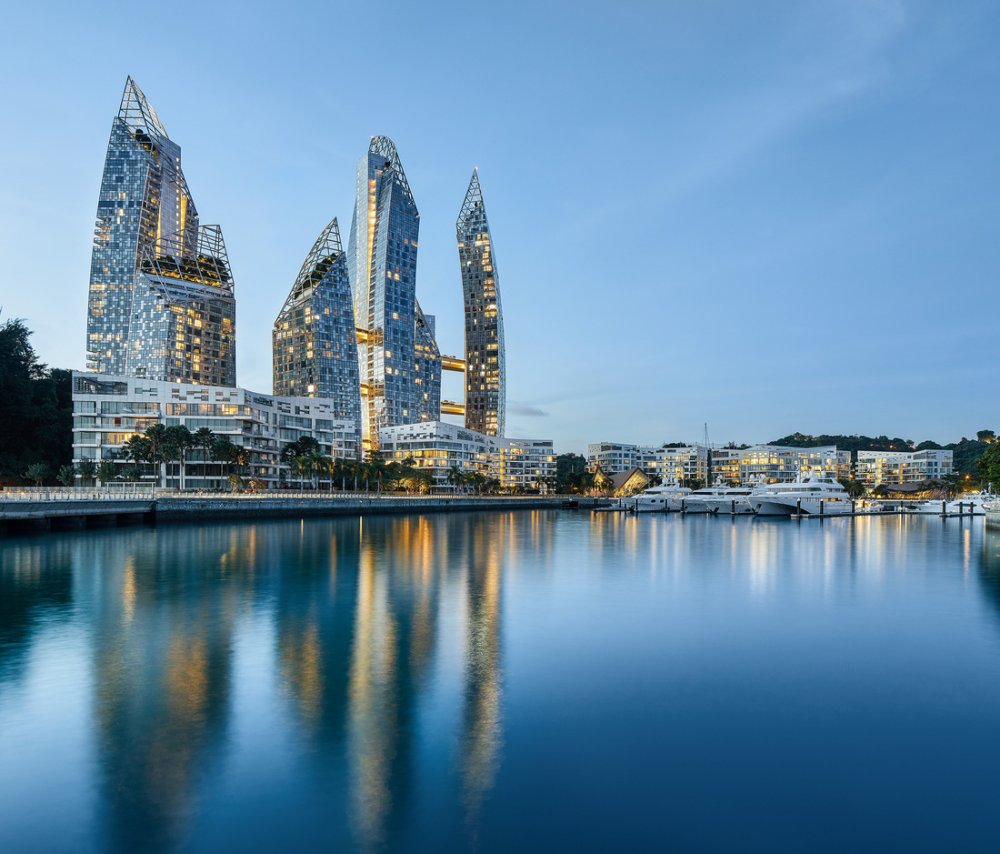
6. Reflections at Keppel Bay (Singapore)
Not every Libeskind project is a memorial. This luxury waterfront development—six curved glass towers between 24 and 41 storeys, demonstrates that the studio’s philosophy translates equally into the architecture of everyday life.
In a city defined by residential uniformity, the development was designed so that no two apartments across the entire complex share the same floor plan or view. Shifting angles, alternating orientations, and changing crown geometry give every home its own character. It is Libeskind’s argument, made in glass and steel, that people deserve to live in spaces shaped for them, not mass-produced around them.
Completed: 2011
Construction cost: Construction cost not publicly disclosed. The development sold 1,129 luxury apartments across a 750-metre waterfront site, with unit prices at the time of sale ranging from SGD $1.5 million to over SGD $10 million.
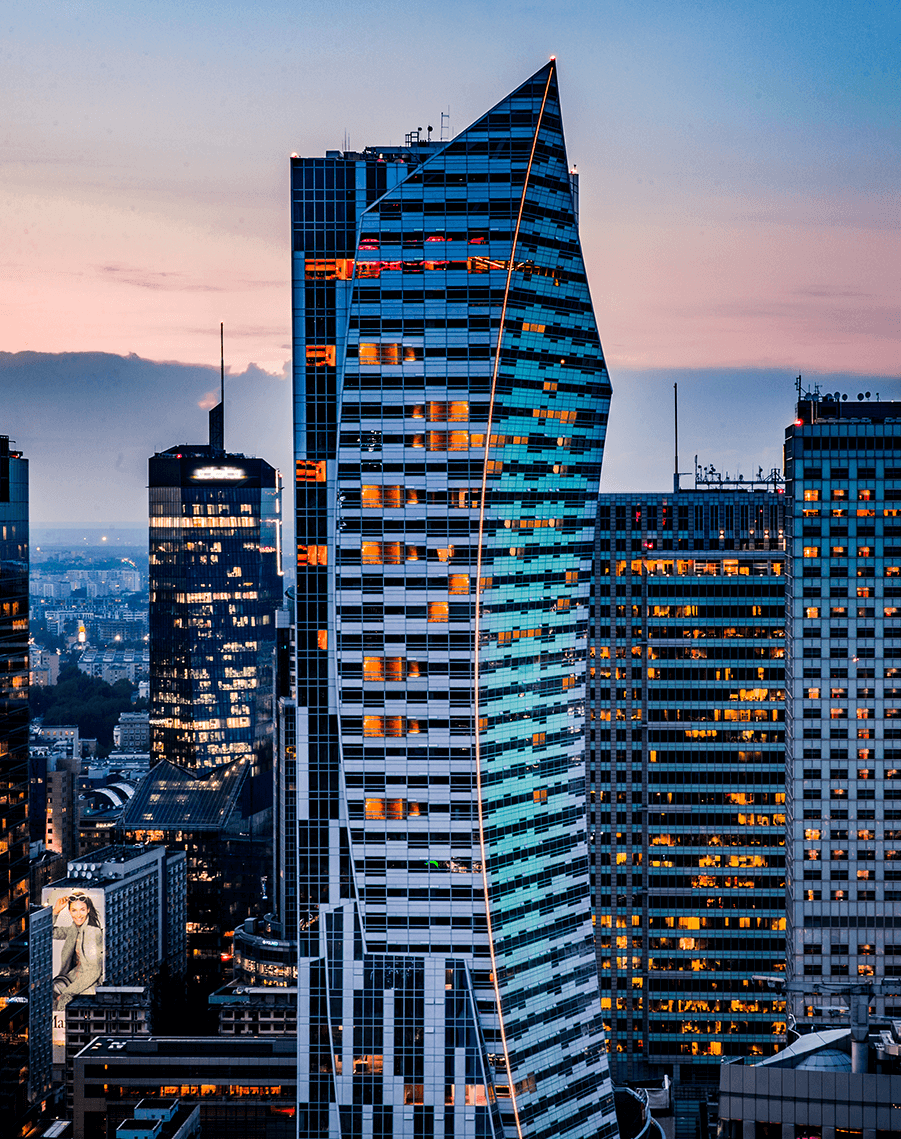
7. Złota 44 (Warsaw, Poland)
Warsaw was systematically destroyed by Nazi Germany during World War II, over 85% of the city razed. That it stands today, rebuilt and thriving, is one of history’s great acts of collective will. It was into this city that Libeskind returned to build his first major project in his birth country.
The 52-storey, 192-metre luxury residential tower’s sweeping glass facade curves upward in the shape of an eagle’s wing, Poland’s national emblem, representing freedom and sovereignty. Across the street, the heavy communist-era Palace of Culture looms. Złota 44 rises in direct contrast: light, fluid, and forward-looking.
Completed: 2016
Construction cost: Estimated €163 million (approx. $175 million) construction cost. The project faced severe financial difficulties; the original developer sold it midway through construction for just €50 million after significant losses.
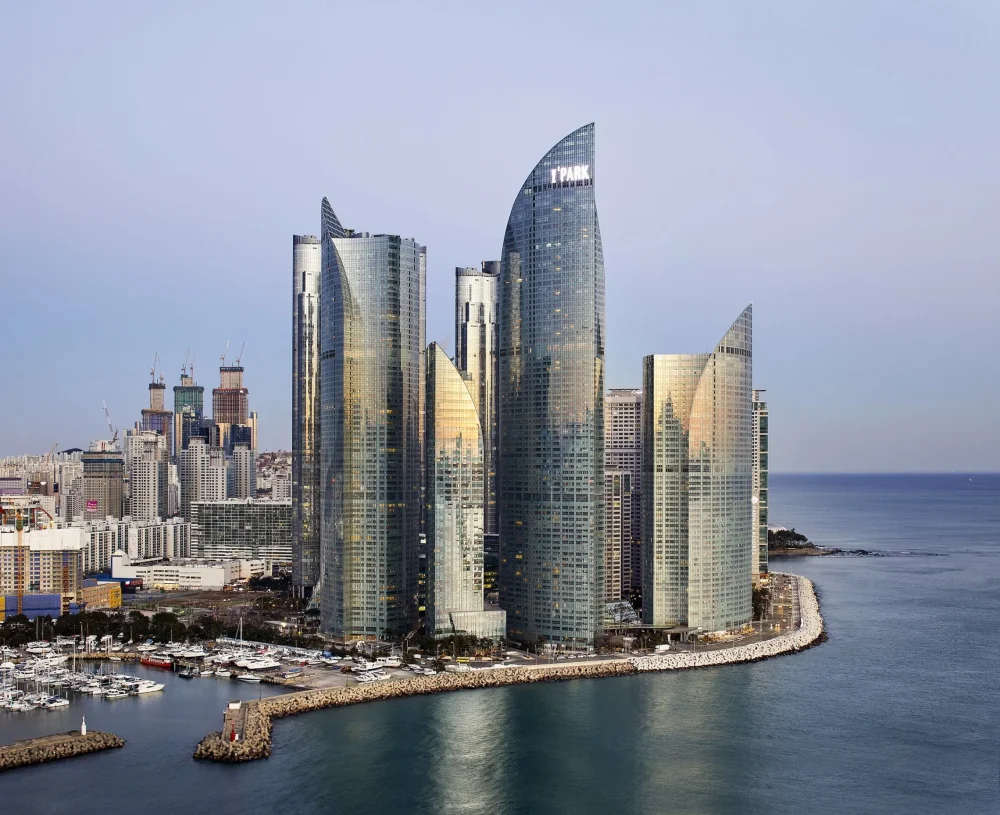
8. Haeundae Udong Hyundai I’Park (Busan, South Korea)
Busan is South Korea’s second largest city and its largest port, a place whose identity is inseparable from the ocean. This waterfront development comprises three residential towers, the tallest reaching 72 storeys, alongside a hotel, offices, and retail.
Each tower was mathematically modelled to present a completely different silhouette depending on the angle of approach, the buildings seem to shift and breathe as you move around them. The curves draw on Korean natural tradition: ocean waves, wind-filled sails. The result is a large-scale modern complex that belongs unmistakably to the coastline it occupies.
Completed: 2011
Construction cost: Construction cost not publicly disclosed. The full 4.5-million-square-foot mixed-use development is one of the largest residential complexes in South Korea.
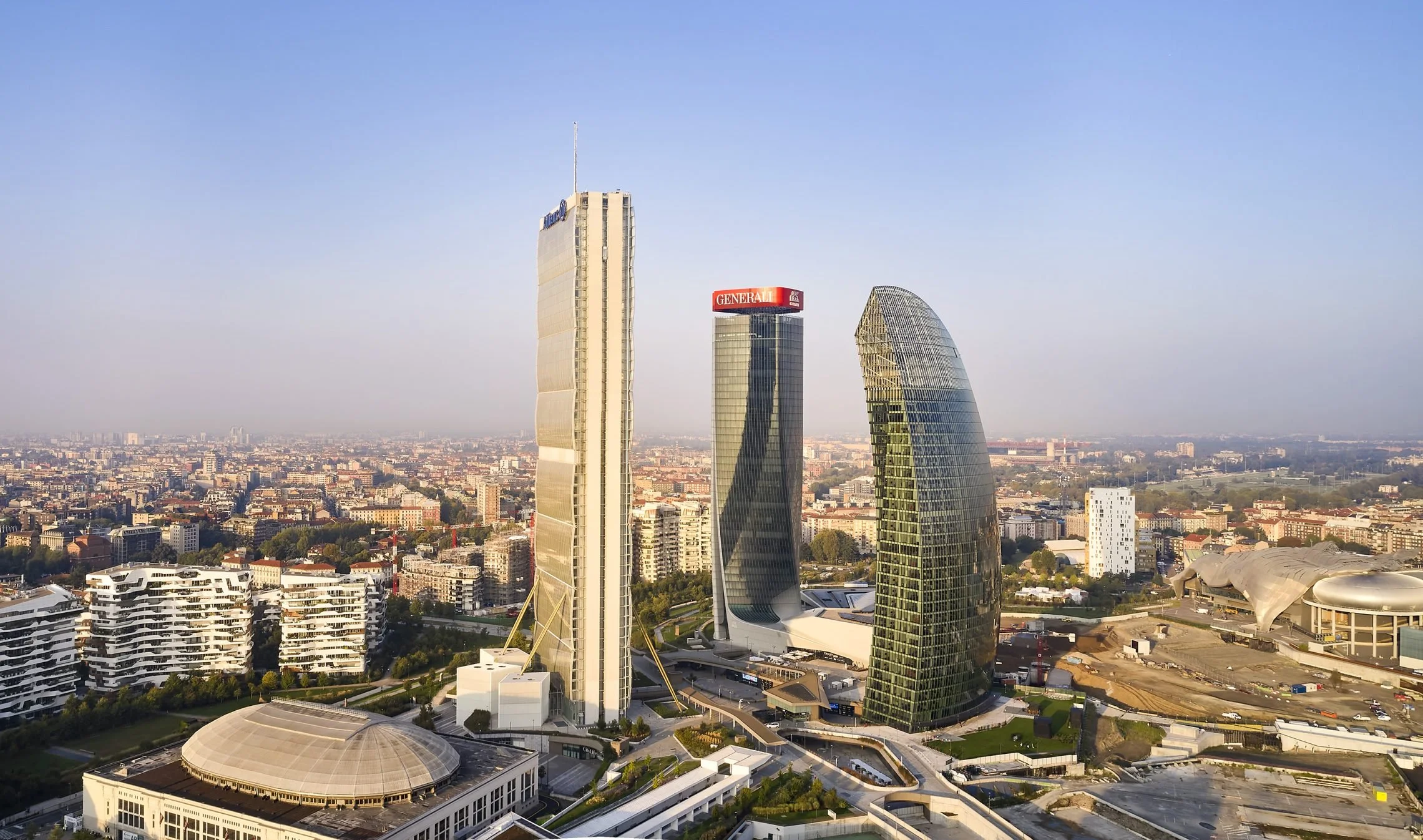
9. PwC Tower / CityLife Master Plan (Milan, Italy)
Part of a major regeneration of Milan’s historic fairgrounds, this 175-metre office tower, known locally as Il Curvo (The Curved One), tilts and arcs in a single clean geometric sweep from base to summit. In a skyline of vertical towers, its curve is immediately legible from across the city.
The design is a contemporary reinterpretation of the arcing forms found throughout Italian architectural history, translated into glass and steel. A building that speaks to where it stands rather than ignoring it.
Completed: 2020
Construction cost: Construction cost not publicly disclosed. The broader CityLife masterplan, encompassing three towers by Libeskind, Zaha Hadid, and Arata Isozaki, plus residential and retail, represents a total investment of over €2 billion.
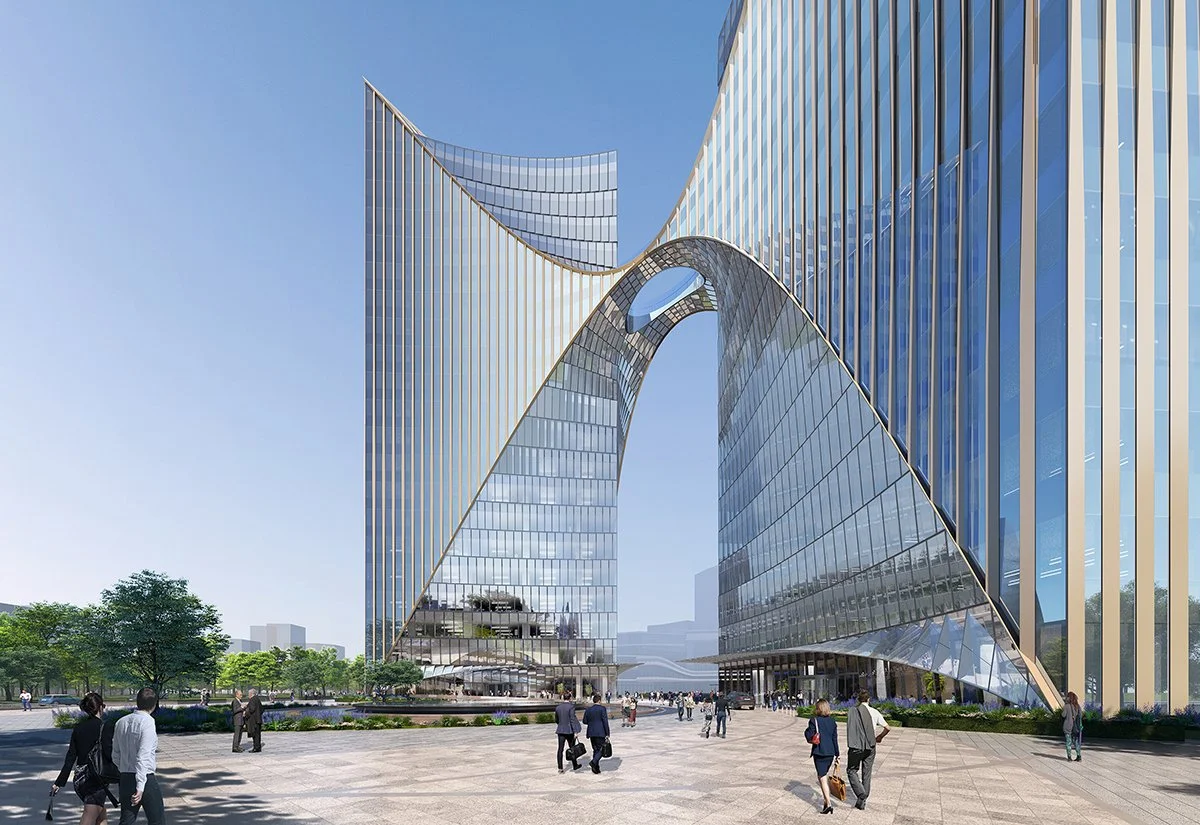
10. Infinity Towers (Shanghai, China)
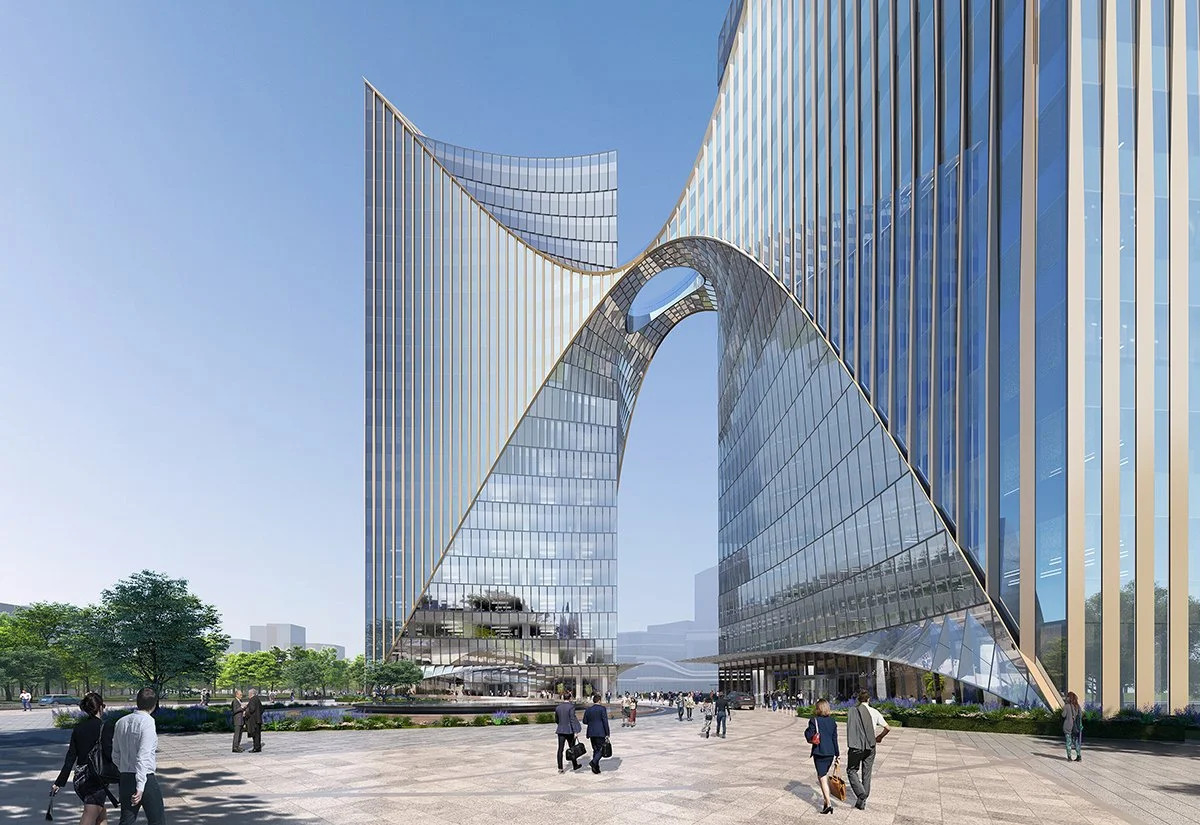
Currently under construction for the Lingang Group, these twin 100-metre commercial towers twist as they rise, their forms designed to evoke two dancing cranes, ancient Chinese symbols of longevity and wisdom, leaning toward each other mid-step.
The towers are connected at the 15th floor by a skybridge whose centre features a circular opening in the floor, looking directly down onto public water plazas below. It is a small gesture but a characteristic one: in a building designed to function, Libeskind finds the moment where structure, nature, and wonder briefly meet.
Completed: Under construction (expected completion not publicly confirmed)
Construction cost: Construction cost not publicly disclosed.
Other Notable Projects
Studio Libeskind has also designed the
Zhang Zhidong Museum (Wuhan, China)
Tikva Jewish Museum (Lisbon, Portugal)
Modern Art Center Vilnius (Lithuania)
Danish Jewish Museum (Denmark)
The Garden of Earthly Worries
The Wheel of Conscience Crystals at CityCenter (United States)
Bord Gáis Energy Theatre (Ireland)
Run Run Shaw Creative Media Centre (Hong Kong)
Ogden Centre at Durham University (United Kingdom)
Memoria e Luce 9/11 Memorial (Padua, Italy)
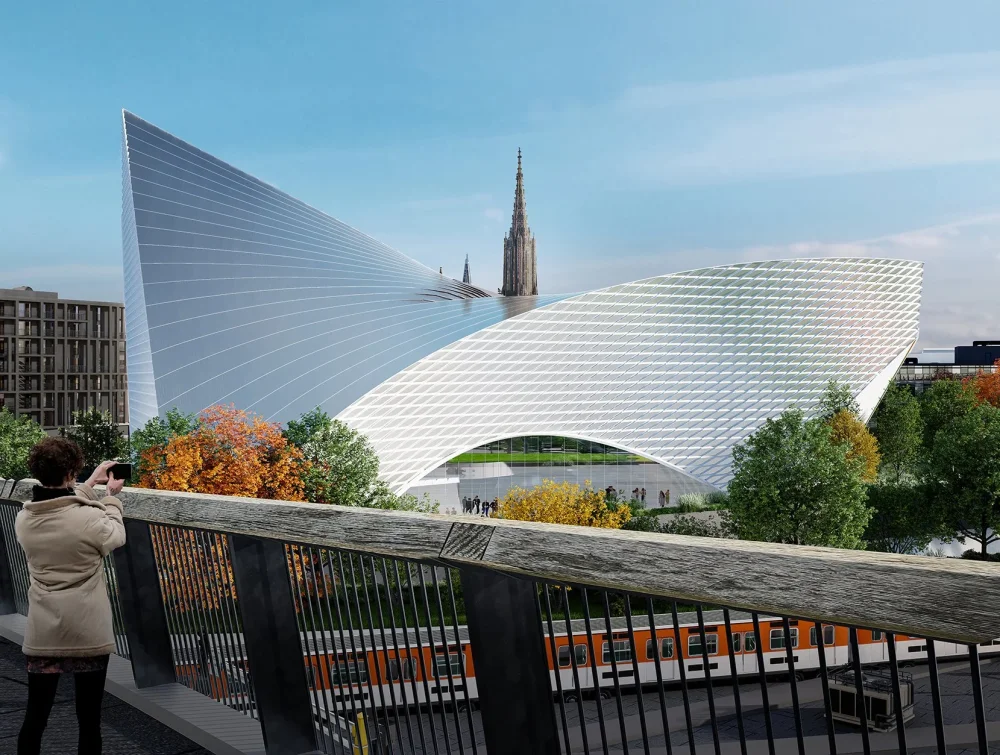
Albert Einstein Discovery Center (Ulm, Germany)
Together, these projects demonstrate Studio Libeskind’s defining conviction: that architecture is not a container for history, it is a way of making history felt. It is an approach that speaks directly to what Kigali will build at Gisozi.
Zhang Zhidong Museum.Albert Einstein Discovery Center in Ulm, Germany.
Ariana Grande has recently drawn public attention after being reportedly seen spending time with her former boyfriend, Ricky Alvarez, during her stay in Austin, Texas. The sighting quickly circulated across social media, prompting renewed discussion among fans about their past relationship and current friendship.
Grande and Alvarez previously dated between 2015 and 2016, during a period when he worked as a backup dancer and was part of her professional circle.
Although their romantic relationship ended years ago, the two have been known to maintain a friendly connection, with Alvarez occasionally mentioned by fans in relation to Grande’s earlier music era.
Following the recent public attention, speculation began online regarding the nature of their interaction. However, there has been no official confirmation from Ariana Grande, Ricky Alvarez, or their representatives suggesting any romantic reunion.
At this stage, their reported meeting is understood to be a casual and friendly interaction between two people who share history.
Ricky Alvarez and Ariana Grande attended The Creators Party, presented by Spotify, held at Cicada in Los Angeles, California.
The renewed interest also comes at a time when Grande continues to remain in the spotlight due to her ongoing music and acting projects, including her involvement in major entertainment productions and public appearances connected to her career.
As with many high-profile celebrities, even ordinary social interactions often become the subject of intense public discussion and interpretation.
Fans have also revisited Grande’s earlier music, where references to past relationships including Alvarez were once part of her lyrical storytelling. This has further fueled online conversation, though such interpretations remain speculative and not indicative of current events.
As of now, there is no verified information confirming any romantic development between Ariana Grande and Ricky Alvarez.
Ariana Grande and Ricky Alvarez spark online discussion after being seen together in Austin, reigniting public interest in their past connection.
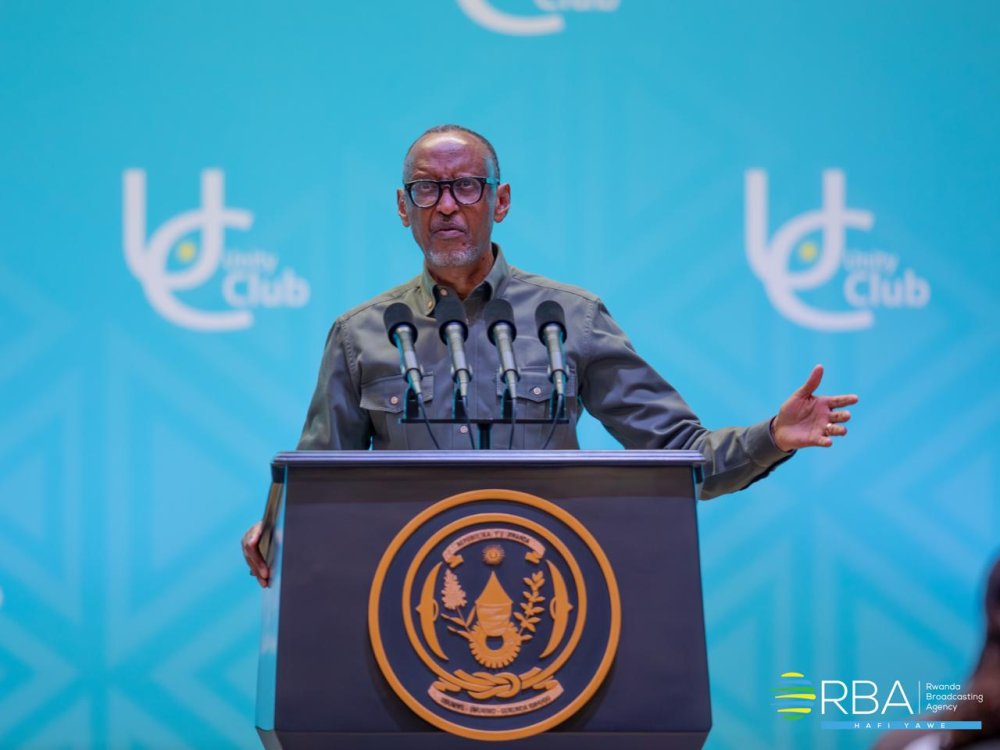
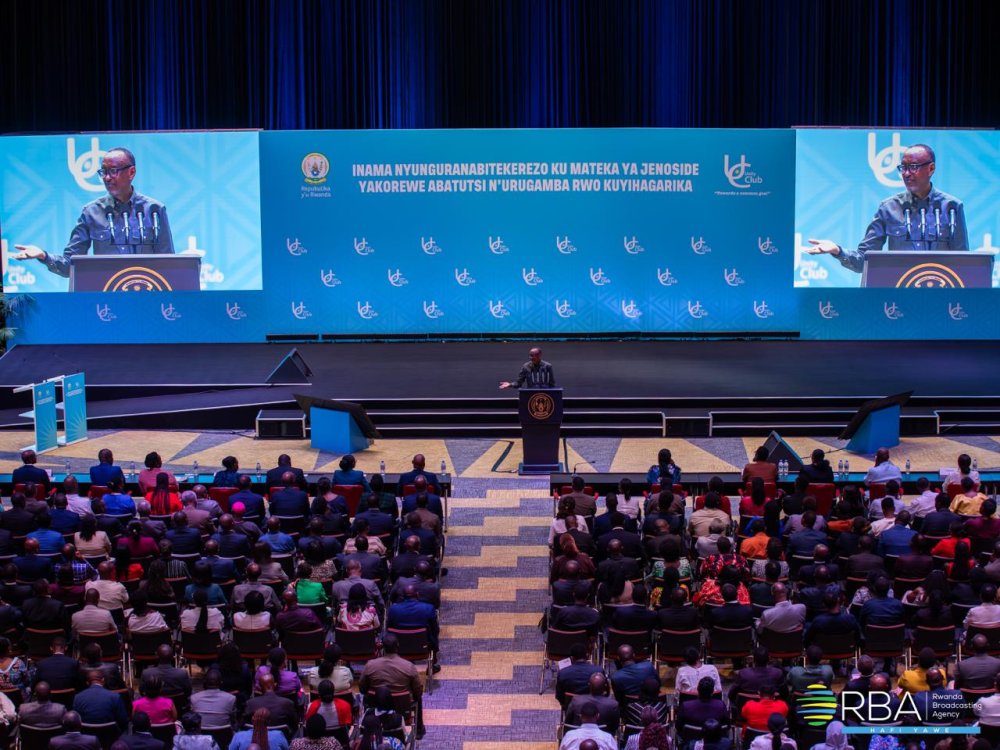
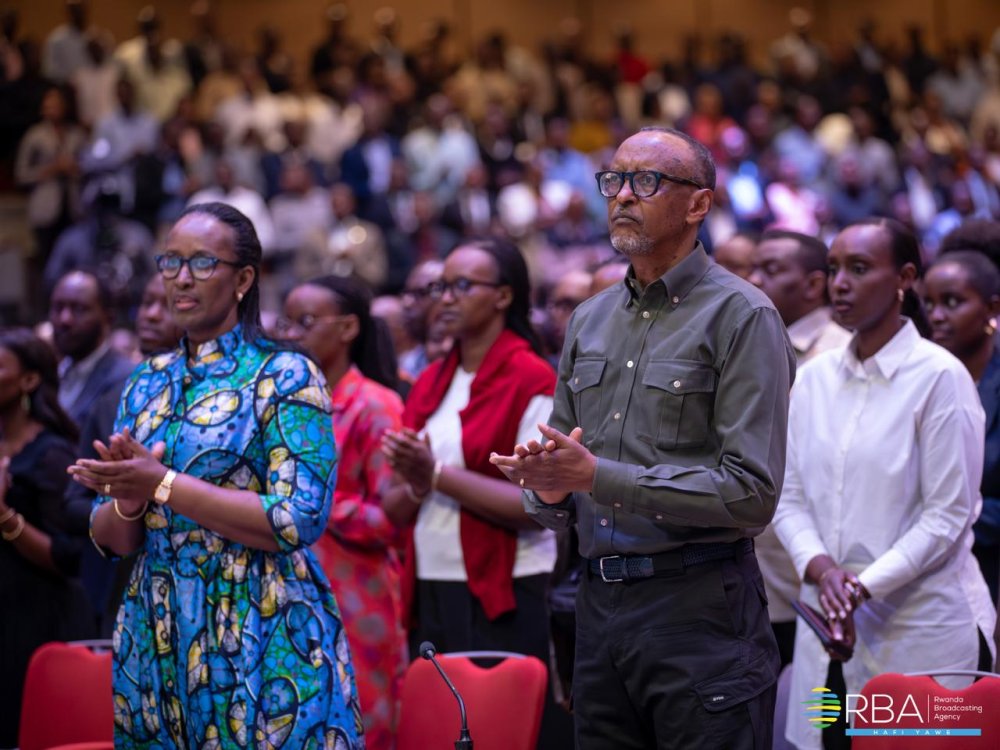
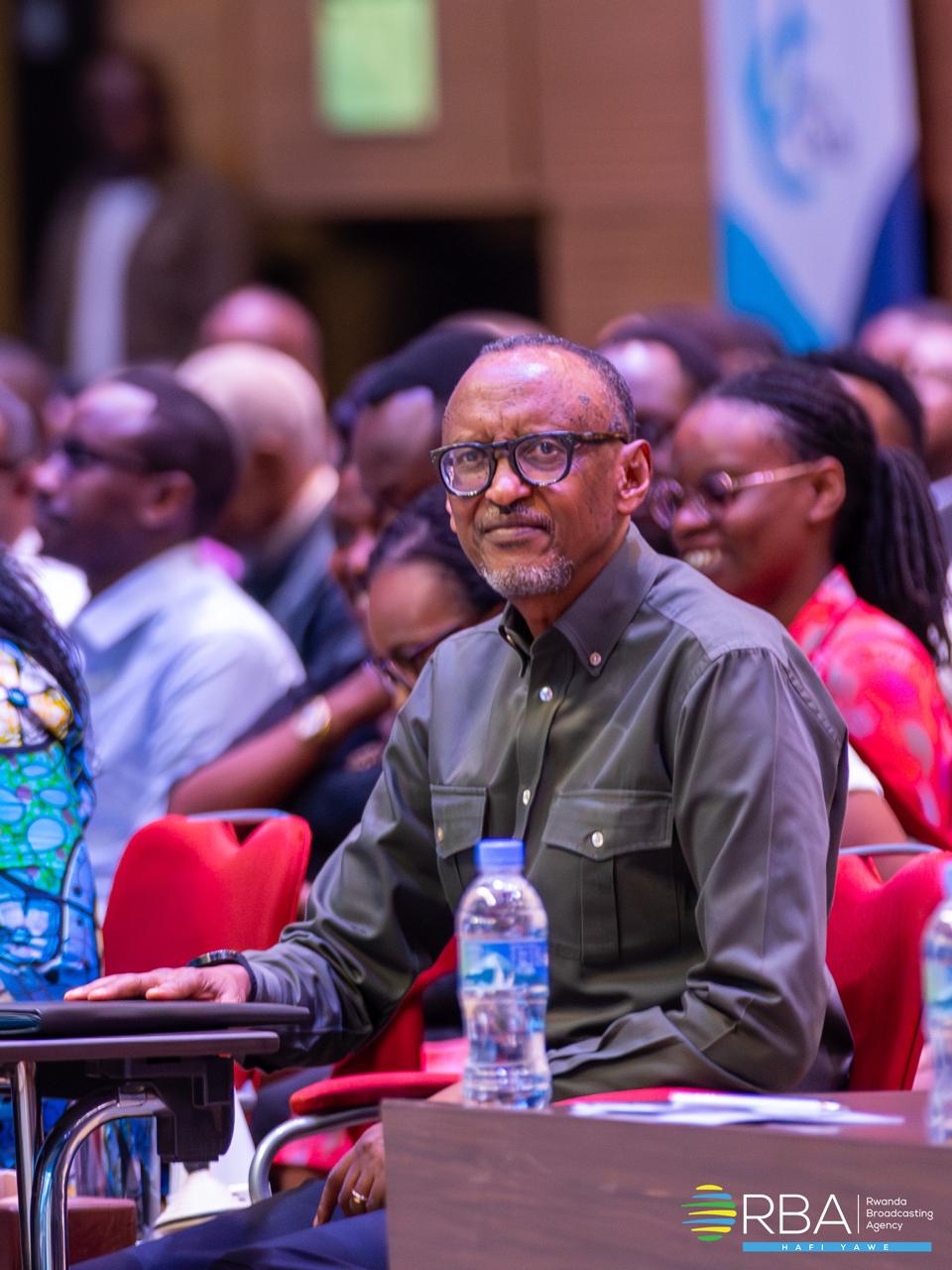
He made the remarks on Saturday at Intare Arena, where he and First Lady Jeannette Kagame joined members of Unity Club and other leaders in a dialogue on the history of the Genocide against the Tutsi and the Liberation War that ended it.
The discussions focused on the events that led to the 1994 Genocide against the Tutsi, the role of those who planned and executed it, and the Liberation War that stopped the genocide and restored the country, paving the way for national recovery and renewed unity among Rwandans.
President Kagame said the history of a country such as Rwanda is often contested because people interpret it through different perspectives shaped by their involvement, interests, or connection to past events.
He noted that historical accounts are sometimes distorted or selectively interpreted, adding that such disagreements are partly understandable given the differing roles and experiences of those involved, as well as interests that may have influenced past actions.
“History of a country like ours and what we went through involves many things that people even distort and turn into something it is not or should not be. There are many debates, which is understandable, and they are justified because how one person understands things is not how another understands them, depending on the role people played or had in them, depending on the interests that may have been involved earlier, even when it later becomes clear that those were not the right interests to guide actions in history.”
President Kagame made the remarks on Saturday at Intare Arena, where he and First Lady Jeannette Kagame joined members of Unity Club and other leaders in a dialogue on the history of the Genocide against the Tutsi and the Liberation War that ended it.
President Kagame said that discussions about history are often complicated by factors such as denial, discomfort, or reluctance to acknowledge responsibility.
“There are many things involved. There is shame as people feel uncomfortable with the role they played or their connection to it, and they do not want to revisit it. That is understandable. But what is more important is trying to go beyond that and work towards gathering everything so it becomes a truth we can base other actions on,” he noted.
The Head of State emphasized that some truths are supported by clear evidence or testimonies, including from individuals acknowledging their own involvement.
“There is also truth that cannot be reversed or reinterpreted because of evidence. Or even evidence where some people admit: ‘This is what happened! What I said about myself is true.’”
President Kagame said that when individuals acknowledge their role, continued debate becomes unnecessary, and attention should shift to lessons that support positive change.
“If the person themselves tells you that, what more debate is there? Instead of arguing, you should take the lesson and use it to achieve what we want. Many of these debates often come from those who, instead of saying ‘What has been said about me is true, and I am ready to start from there and change to become a better person,’ they instead resist it.”
He further noted that some individuals remain resistant to accepted accounts of history and attempt to reshape or reinterpret events, but stressed that the country cannot be held hostage by such positions.
“Many remain stubborn for the reasons I mentioned, which is understandable. But the country cannot be held hostage. Even when a country allows certain things and gives space for people to better understand what they previously misunderstood, that space is given, and it should be given, but it must have limits,” he remarked.
“The country cannot be held hostage by people who want history to be as they wish or to be understood in a way that is not how it truly is. All those debates should have space, research should happen, many things should take place in the search for truth, and they should be given adequate time,” he added.
President Kagame noted that historical accounts are sometimes distorted or selectively interpreted.
President Kagame said Rwanda has already provided sufficient space for discussion, research, and the pursuit of historical truth, but cautioned that such space should not be misused to distort facts or mislead the public.
“And I think over the years that space has been provided or has been available, except if we misuse it. But again, as human beings, we know people have issues.”
He observed that resistance to truth is sometimes driven not by lack of knowledge, but by personal or emotional connections to individuals implicated in historical events, whether through family, friendship, ideology, or shared interests.
“In normal life, a person may say in their heart: ‘They are talking about someone who has a problem, who did bad things,’ but because it is their relative or friend, even when there is evidence, they try to protect that person and deny the truth, and even tell others it is not true.”
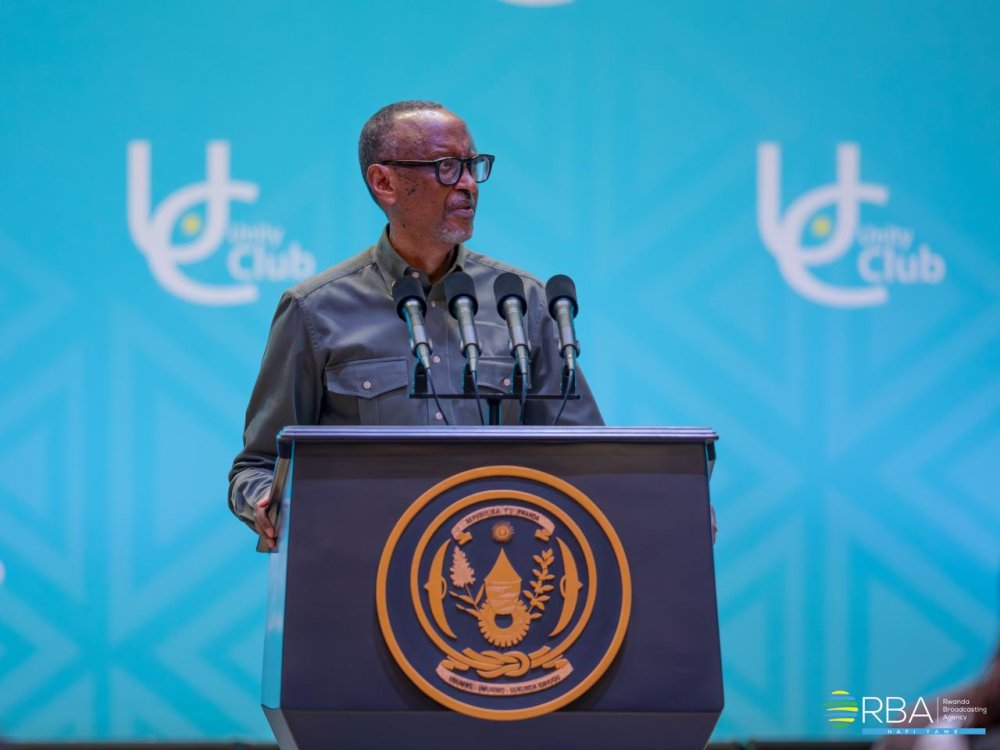
President Kagame and First Lady Jeannette Kagame joined members of Unity Club and other leaders in a dialogue on the history of the Genocide against the Tutsi and the Liberation War that ended it.
President Kagame added that in some cases, opposition to truth is motivated by fear that acknowledging certain crimes may have wider implications for those connected to them.
“Some do so because if that crime is acknowledged, even if it comes from testimony, it may eventually circle back to them. So they try to prevent it early. In other words, I have a connection with person X, who is accused of certain things. That connection is not only blood-related; it can also be ideological or based on shared beliefs.”
He further explained that in such situations, individuals may attempt to defend or protect others from accountability in order to avoid broader scrutiny.
“They then fight the truth to protect that person, sometimes a friend or relative, from being held accountable. The aim is to prevent it from spreading and people saying, ‘So you are also involved?’ or even saying that those crimes affect everyone connected to it, and asking, ‘So what about me, do I also accept it?’”
President Kagame noted that a deeper issue arises when denial goes as far as questioning whether crimes occurred at all, or suggesting that victims somehow deserved their fate.
“If it is someone who was killed, it becomes as if you are saying: ‘They deserved to die anyway! Why should they have lived?’ These are things we Rwandans have experienced, and we must find ways and solutions to address them.”
He stressed that Rwanda’s painful history cannot be ignored or bypassed, and that Rwandans have a responsibility to confront it honestly and draw lessons that guide the country’s future.
“Especially when I speak about Rwanda, I am talking about the country I am part of, where I am a Rwandan. There are others for whom this may not mean much; they may choose to live as they are. That is possible elsewhere… But in Rwanda, our country and our history, what we say is: ‘We had a very bad history, but we cannot go around it.’”
He added that while Rwanda’s past was deeply painful, it should not be allowed to define or dictate the country’s present and future.
President Kagame said Rwanda has reached a point of clarity about its values and direction, and that citizens should be prepared to defend them, even at great cost if necessary.
“That is what we should live for, and what we would even die for if necessary,” he affirmed.
The Head of State emphasized that dialogue, explanation, and persuasion have limits, particularly when continued resistance risks dragging the country back into its violent past.
“When you see it is reaching a point where it may take another direction that could return people to the bad history we know, then no! You draw a clear line. Whoever crosses it pays the price. We are not afraid of that at all!”
President Kagame said Rwanda has reached a point of clarity about its values and direction, and that citizens should be prepared to defend them, even at great cost if necessary.
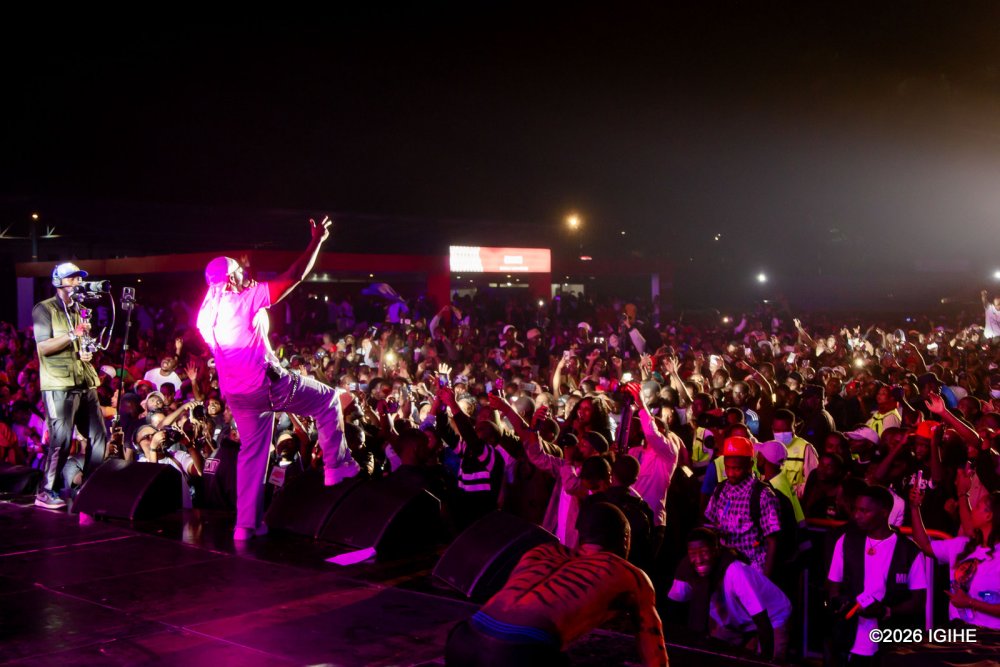
The concert will feature some of Rwanda’s leading artists, including Bruce Melodie, The Ben, Kitoko, and Bwiza.
Since the tour began, all performances have been streamed on Onstage.rw, where viewers can purchase access for 5,000 Rwandan francs and watch the full concert live from start to finish.
Amani Africa, who represents Artland, the company organising the tour in partnership with Watu Wave, said those unable to travel to Bugesera should not worry, as arrangements have been made to ensure they can still follow the event online.
He noted that lessons learned from the previous two concerts have helped improve the streaming experience, making it more reliable and enjoyable for viewers.
The Bugesera concert will be the third stop of the four-part Summer Country Tour, which began in Musanze on June 13, 2026, continued in Nyagatare on June 20, 2026, and will conclude on July 4, 2026, in Rubavu.
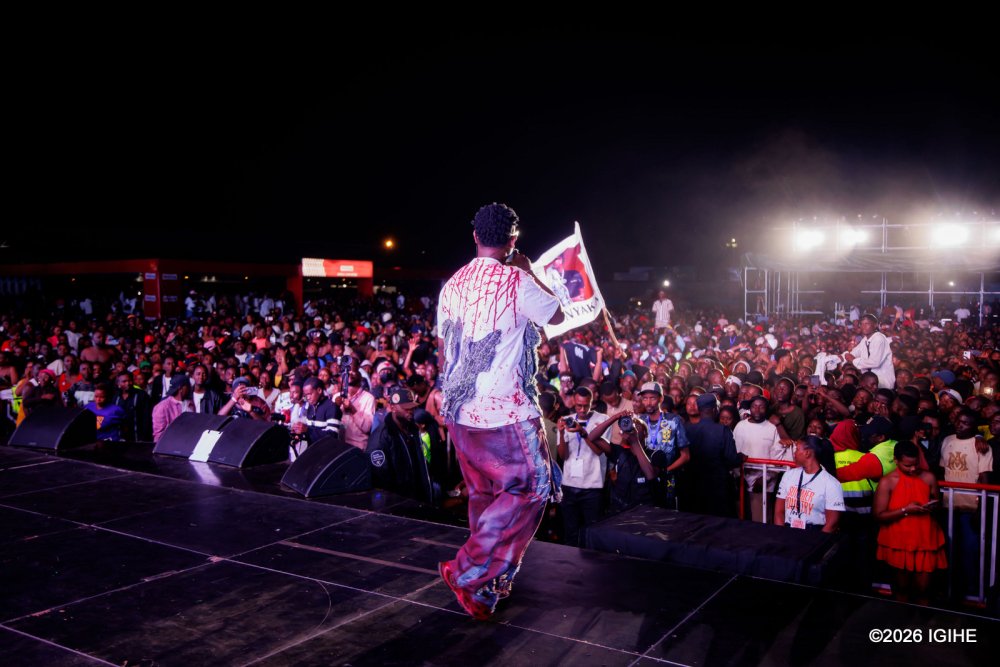
The concert has attracted a large number of music fans.Music fans attending the concerts continue to enjoy the experience.
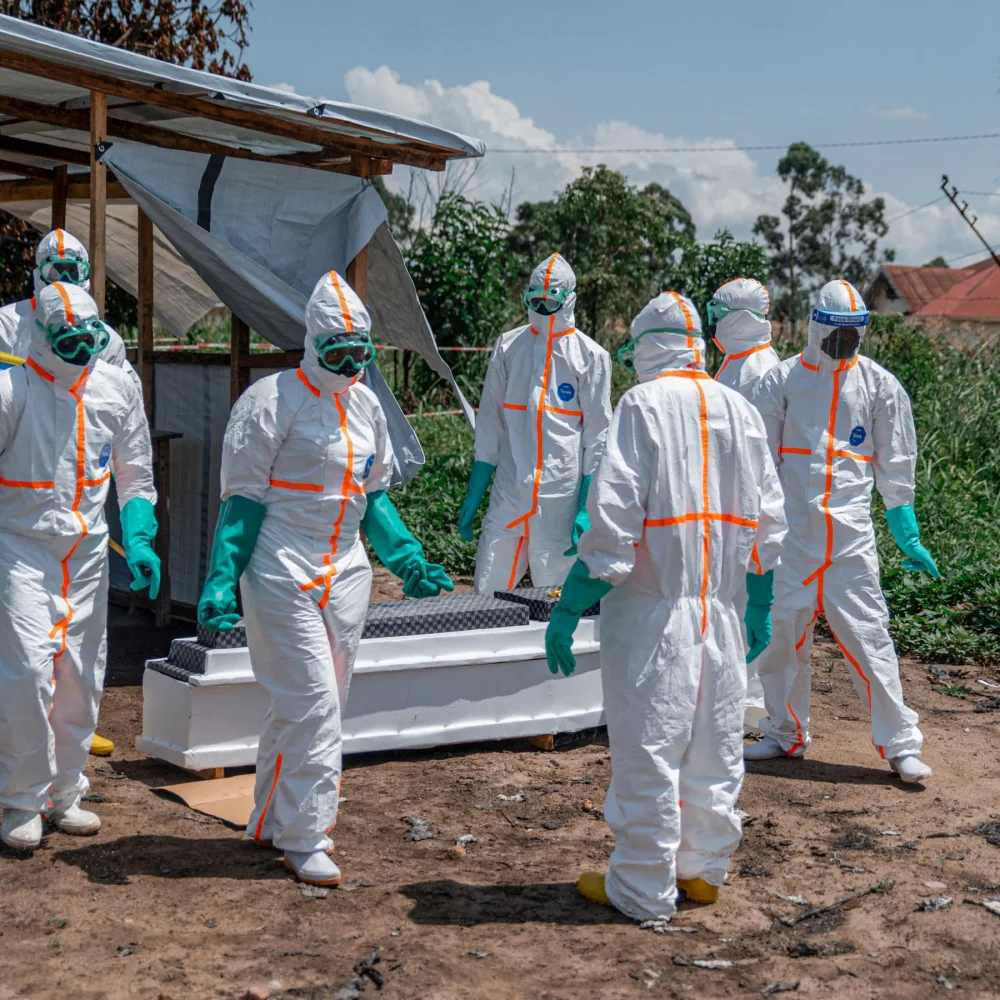
The outbreak has been reported in the eastern provinces of Ituri, North Kivu, and nearby areas. Health authorities report a case fatality rate of 26.7%.
So far, 148 patients have recovered and returned to their families, while 326 others remain under medical care in designated treatment centres. Between 24 and 25 June, health teams screened 1,175 people showing symptoms similar to Ebola, while 142,503 travellers were tested at border points.
Authorities also report progress in contact tracing, which has now reached 82.8%. This improvement is expected to strengthen efforts to contain the spread of the virus.
The outbreak was first declared on May 15 in Mongbwalu, in Ituri. This marks the 17th recorded Ebola outbreak in the country, and one of the most significant in recent years.
The current outbreak is caused by the Bundibugyo strain of Ebola, which has also spread to Uganda, where 20 cases have been confirmed, including two deaths. In France, one case has also been reported, involving a doctor who recently travelled from eastern DRC.
The World Health Organization (WHO) has warned that the Bundibugyo strain poses a serious international concern, noting that there is currently no confirmed treatment or vaccine for it.
Officials further stress that ongoing conflict and insecurity in eastern DRC are making response efforts more difficult, as medical teams struggle to access affected areas. Limited public awareness in some communities is also slowing down efforts to control the outbreak.
Over 1,200 Ebola cases have been confirmed in the DRC, with 321 deaths reported.
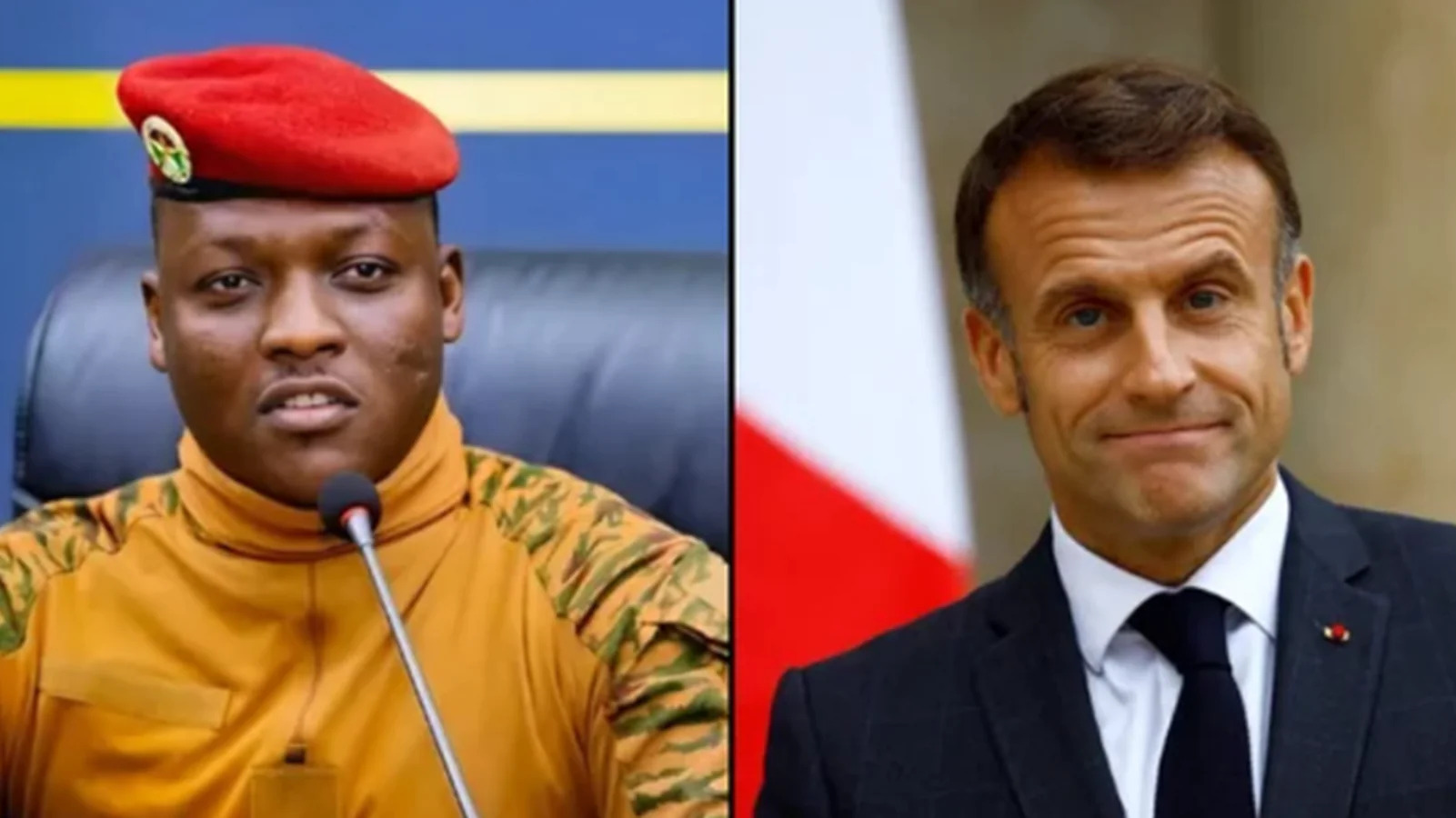
Burkina Faso’s military junta announced an immediate and total rupture of formal diplomatic ties with Paris on Friday evening. The statement, issued by the Prime Minister’s Office and communicated by Communications Minister Pingdwende Gilbert Ouédraogo, noted that the decision followed “a thorough assessment of the current state of bilateral relations.”
“The conditions essential for promoting relations based on mutual respect, reciprocal trust, respect for the principle of non-interference in internal affairs and national sovereignty are no longer in place,” the Burkinabè government declared.
The junta further accused Paris of persistent activism against Burkinabè interests, alleging “blatant neo-colonial ambitions” and active support for “subversive networks and terrorists” operating within the region.
The French Foreign Ministry responded swiftly to the announcement. Spokesperson Pascal Confavreux firmly rejected the allegations, characterizing the immediate cutoff as an unfounded decision that “illustrates the worrying drift of the Burkinabè authorities.”
Paris indicated that it is actively monitoring the safety of its remaining diplomatic personnel and expatriates, urging French citizens in the country to exercise heightened vigilance. The ministry also signaled a firm diplomatic counter-response, confirming that necessary reciprocal measures are currently under review.
Relations between Paris and several Sahelian capitals have imploded in recent years following successive military coups. Regional governments have aggressively rolled back their traditional political, military, and diplomatic reliance on the West.
France, which long maintained extensive post-colonial influence in West and Central Africa, had already withdrawn its military forces and suspended development aid to Burkina Faso in 2023.
This formal diplomatic break aligns with a broader foreign policy shift by the Alliance of Sahel States (AES), comprising Burkina Faso, Mali, and Niger, as they pivot away from European partnerships to diversify international cooperation and strengthen ties with alternative global powers.
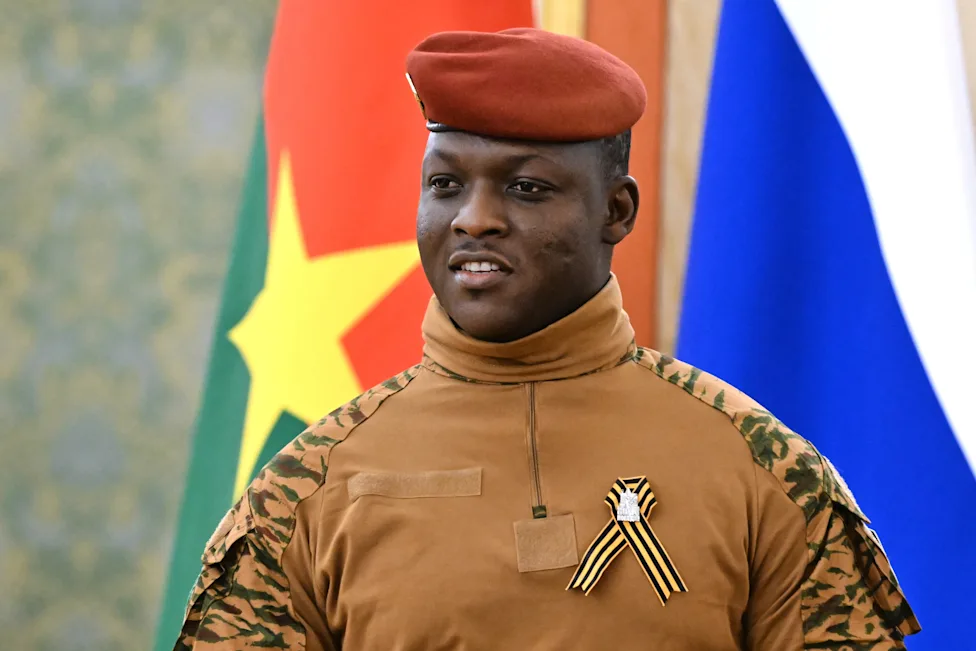
Burkina Faso’s military junta, led by Captain Ibrahim Traoré, announced the immediate and complete severance of formal diplomatic ties with Paris on Friday evening.
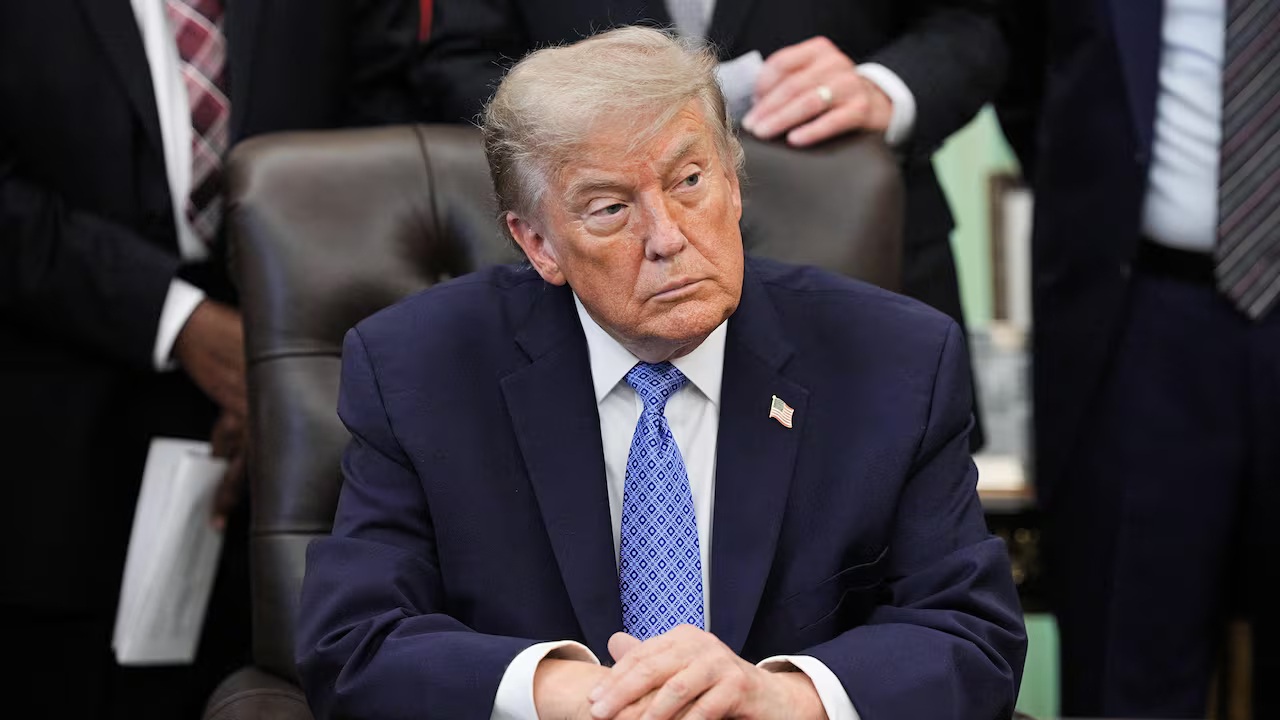
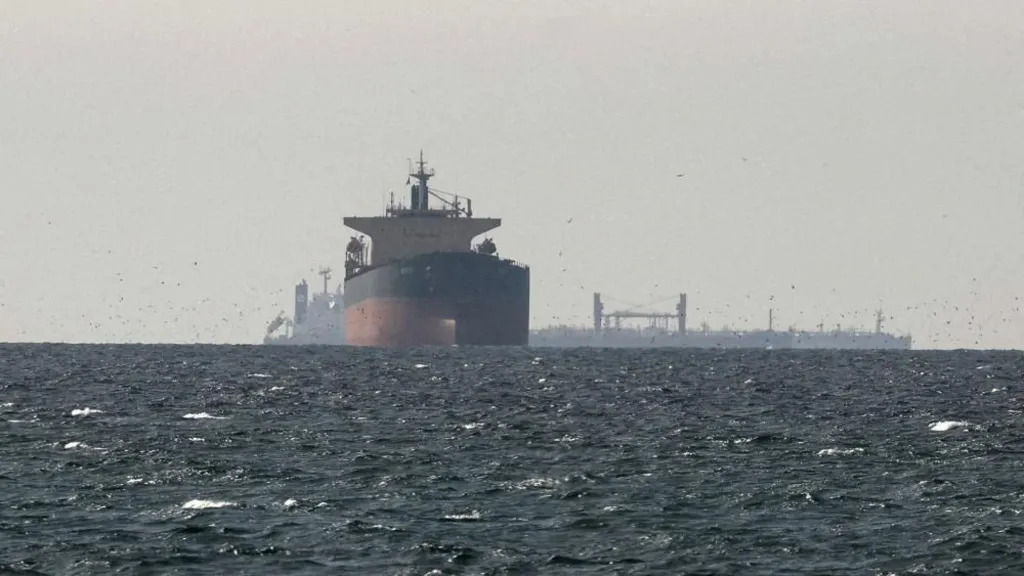
“One of the Drones solidly hit the upper deck of a large and very expensive cargo-carrying ship,” Trump wrote in a post on Truth Social.
“Damage was done, but the ship was able to proceed on its way,” he said. “We knocked down three other drones.”
Trump said the drone attack “obviously” violated the newly signed U.S.-Iran ceasefire agreement.
He did not name the ship or specify when the strike occurred. However, the British military said Thursday that a vessel had been hit by a projectile off the coast of Oman.
The International Maritime Organization, a UN agency, said Thursday in a statement that it had suspended efforts to evacuate ships stranded in the crucial global energy waterway in the wake of the drone attack.
On June 18, Iran and the United States signed the MoU to end the war in the region on all fronts, including Lebanon.
Under the MoU, the two countries agreed to 60 days of negotiations, which are already underway, toward a final agreement mainly on Iran’s nuclear program and the removal of sanctions against the country.
Trump said the drone attack “obviously” violated the newly signed U.S.-Iran ceasefire agreement.
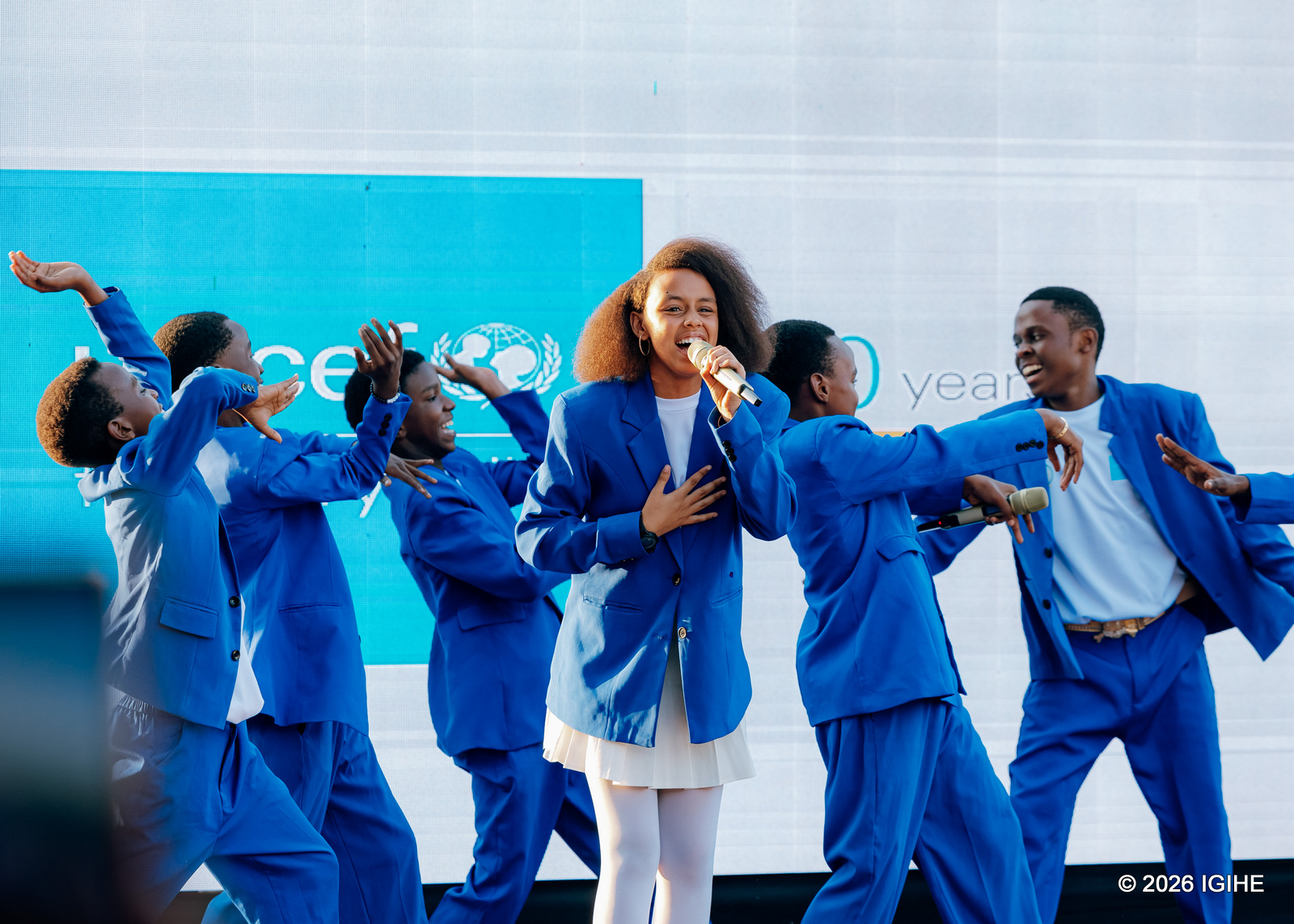
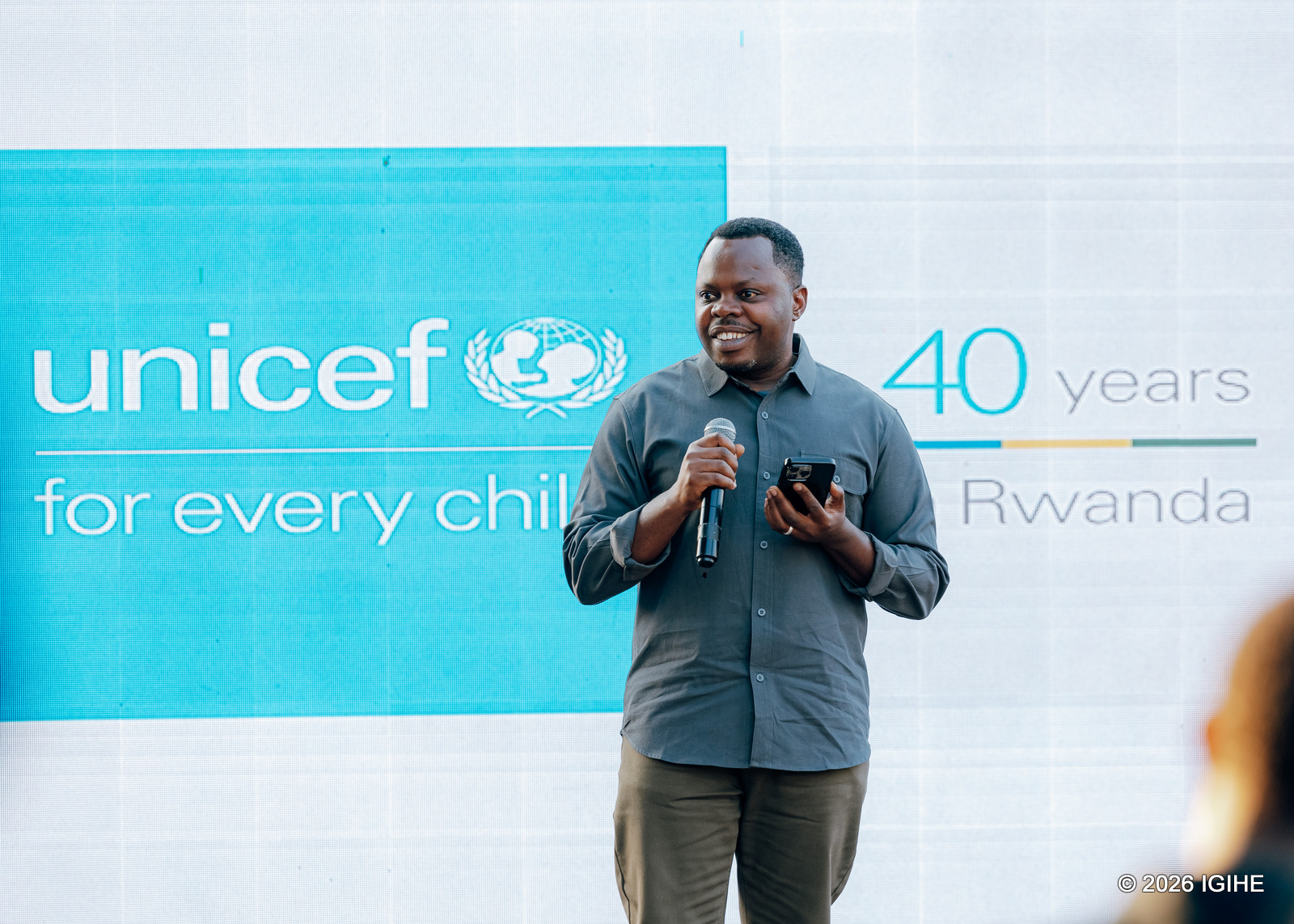
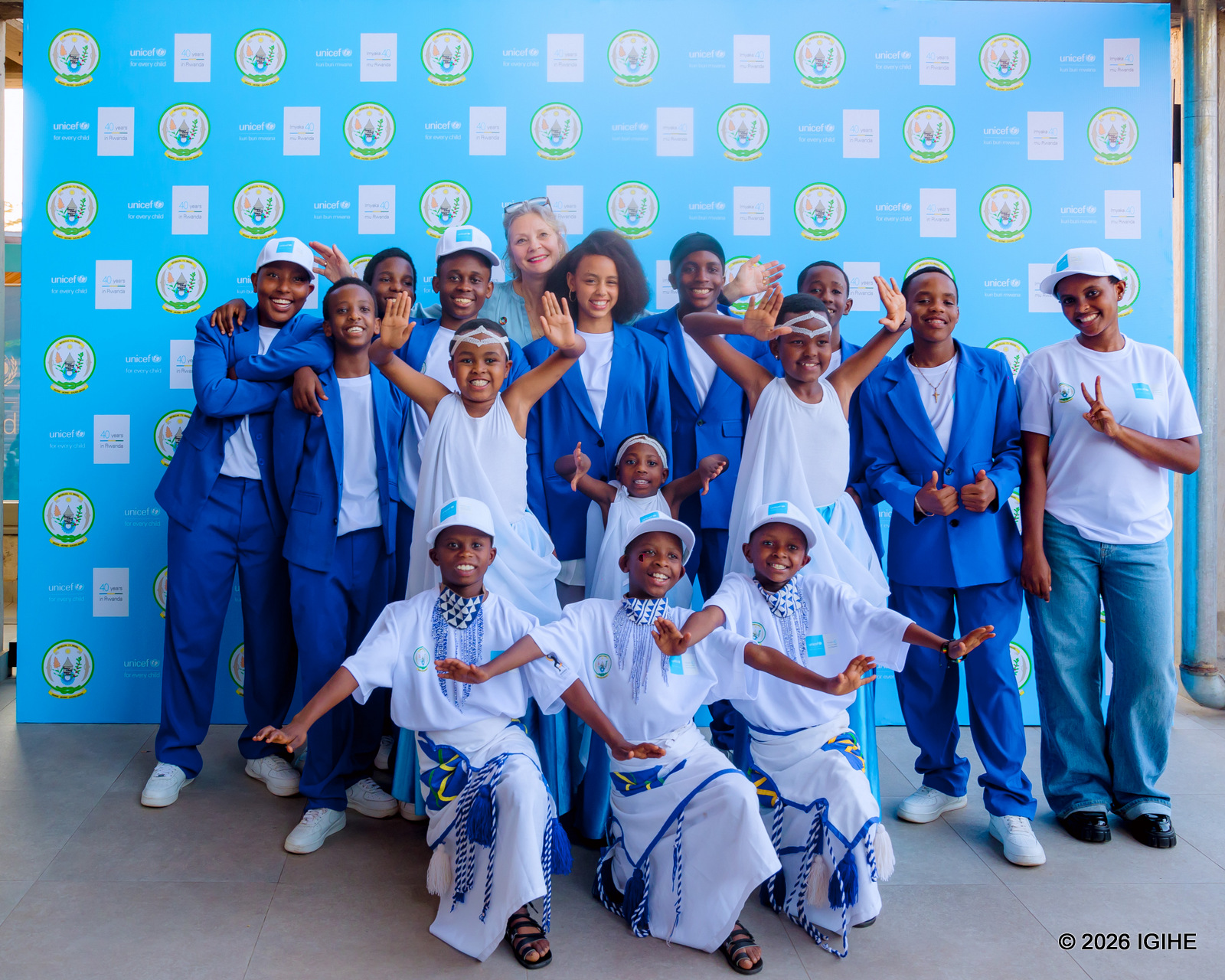
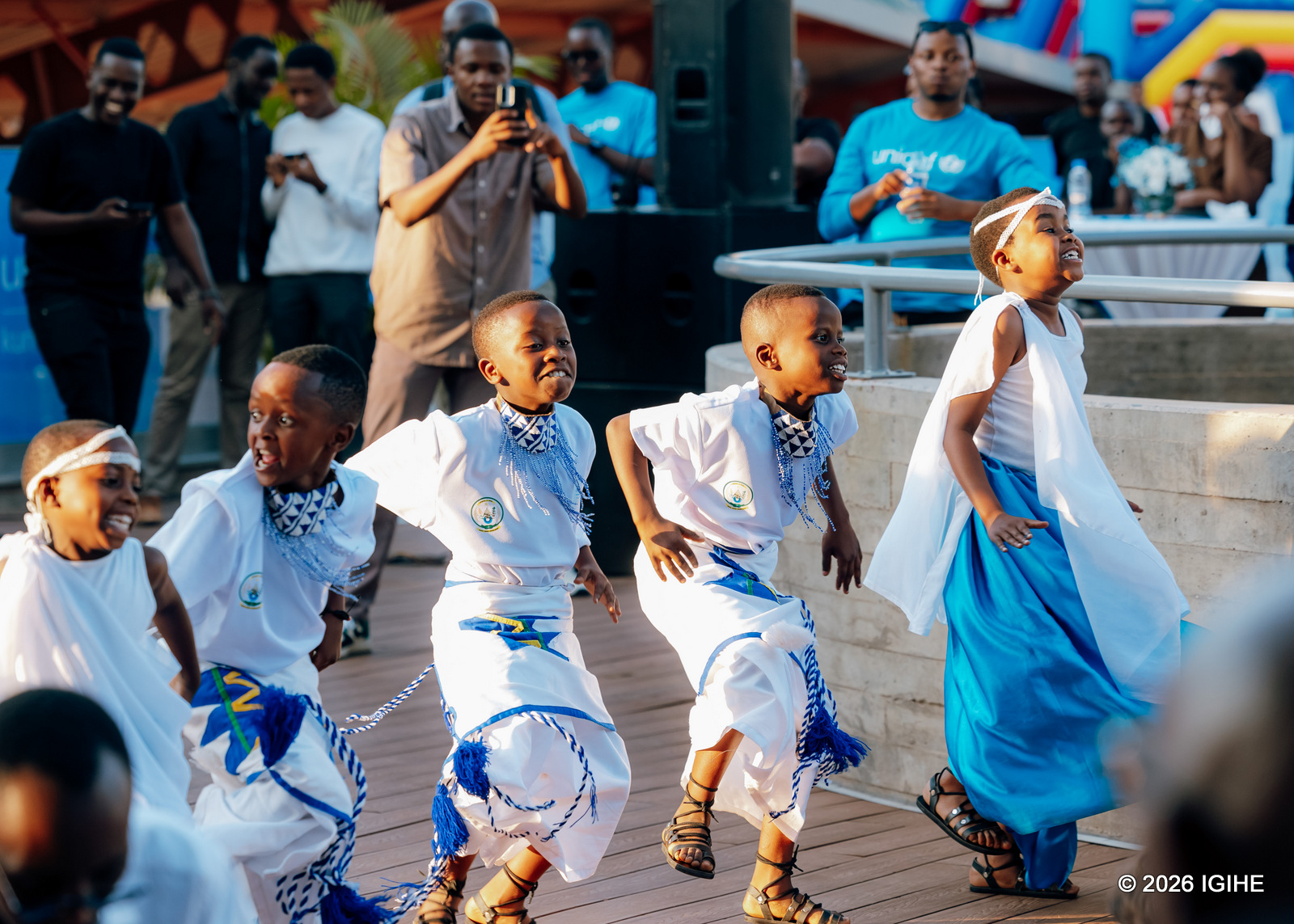
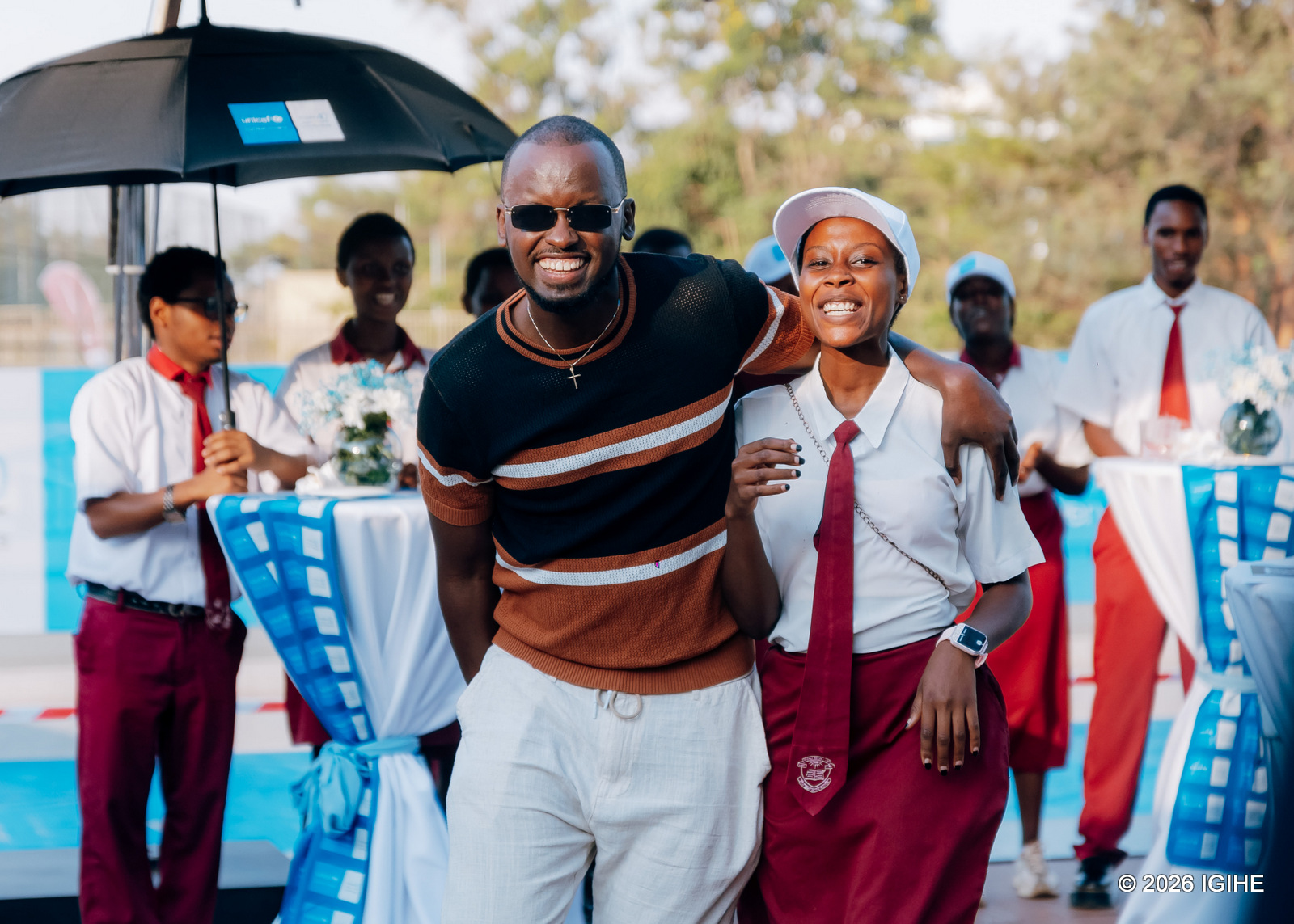
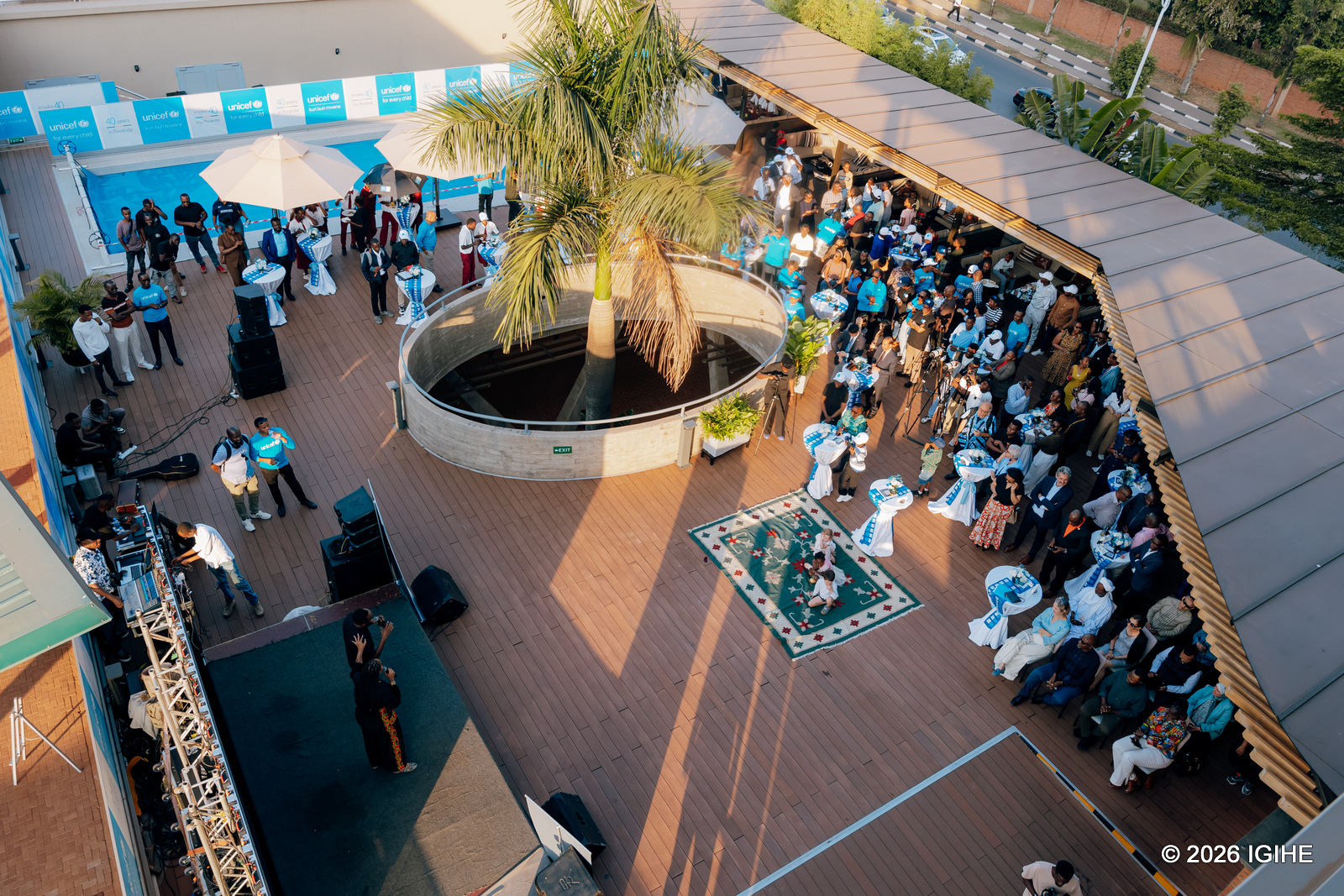
The colorful event, held at Zaria Court on Friday evening, opened with an energetic performance by children from the Sherrie Silver Foundation, whose dance reflected the confidence and potential of a generation that has benefited from improved healthcare, education and protection.
The anniversary song was performed by UNICEF Champion Andy Bumuntu and brought to life through choreography by internationally acclaimed dancer Sherrie Silver, alongside children from her foundation. Their performance captured the voices and aspirations of young people determined to shape Rwanda’s future.
Over the past 40 years, UNICEF and the Government of Rwanda have worked together to improve child survival, expand immunization, strengthen maternal healthcare, increase school enrolment, improve nutrition and widen access to clean water and child protection services.
Through the anniversary campaign, UNICEF hopes to inspire renewed commitment from all sectors of society to continue investing in every child’s future.
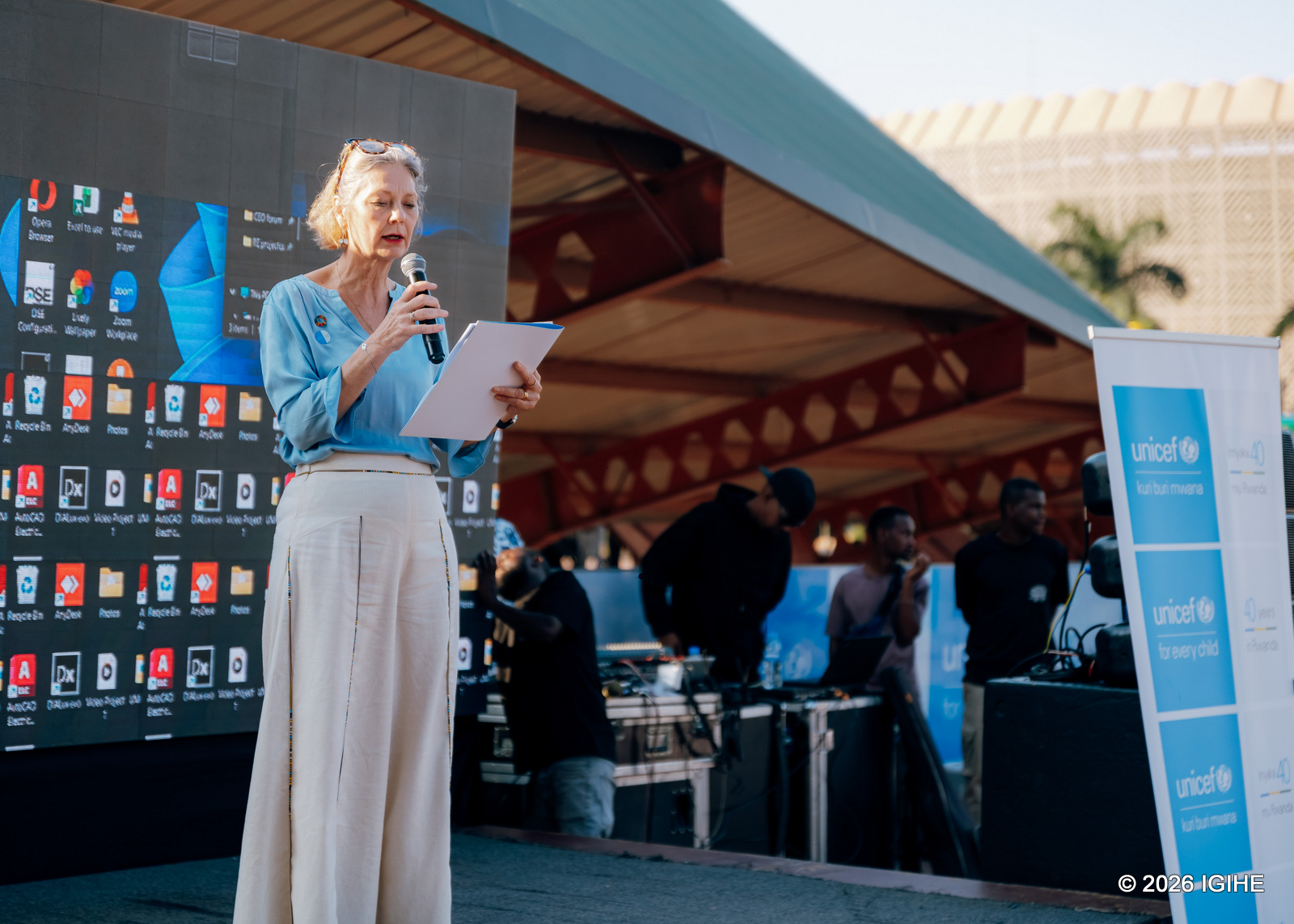
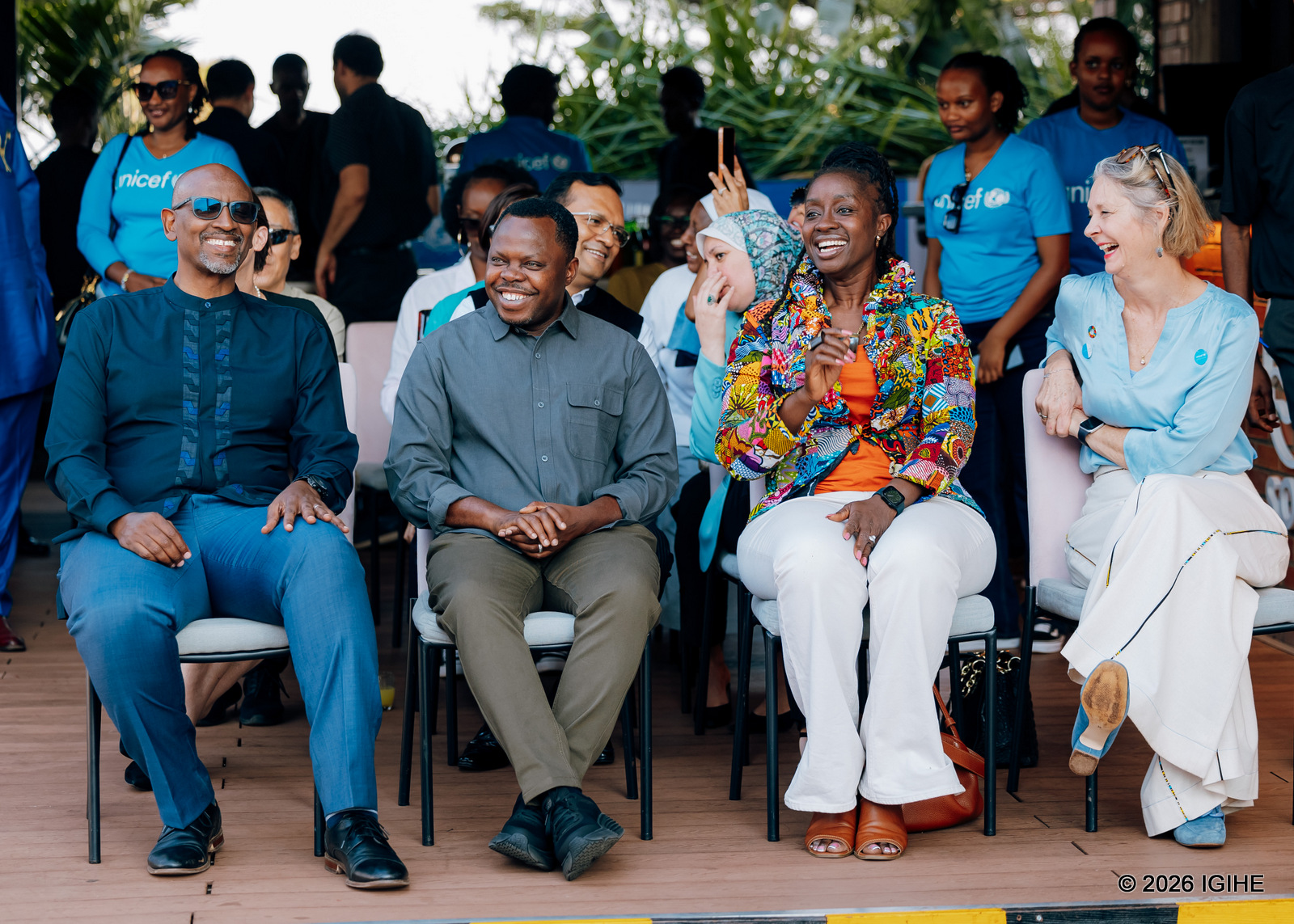
Speaking during the celebration, UNICEF Rwanda Country Representative Lieke van de Wiel described the anniversary as a tribute to everyone who has contributed to improving children’s lives over the years.
“Today is about celebrating every partner, every family, every community and every young person who has helped shape a Rwanda where children have greater opportunities than ever before,” she said.
She added that she hopes the anniversary song will become part of children’s everyday lives.
“My dream is that children will be singing this song in schools while planting trees, in summer camps, on playgrounds and in their homes. When music becomes part of children’s daily lives, so too can the values of hope, unity and protecting every child’s future,” she said.
UNICEF Rwanda Country Representative Lieke van de Wiel addresses guests during the launch of the Rwanda@40 anniversary song, celebrating four decades of partnership in advancing children’s rights.
The celebration also unveiled several initiatives that will be implemented throughout the anniversary year, including the planting of 40 fruit trees in every primary school across Rwanda in partnership with government ministries.
UNICEF will also engage university students through nationwide competitions and dialogue sessions aimed at promoting children’s rights.
Minister of Youth and Arts Dr. Utumatwishima Jean Nepo Abdallah praised the long-standing partnership between Rwanda and UNICEF.
“For forty years, our partnership with UNICEF has helped ensure that more children begin life with hope and opportunity. Together we have chosen that every child receives healthcare, proper nutrition, quality education and protection,” he said.
While celebrating four decades of achievements, speakers emphasized that continued collaboration will be essential to address remaining challenges and ensure that every child in Rwanda has the opportunity not only to survive, but also to thrive and fulfil their potential.
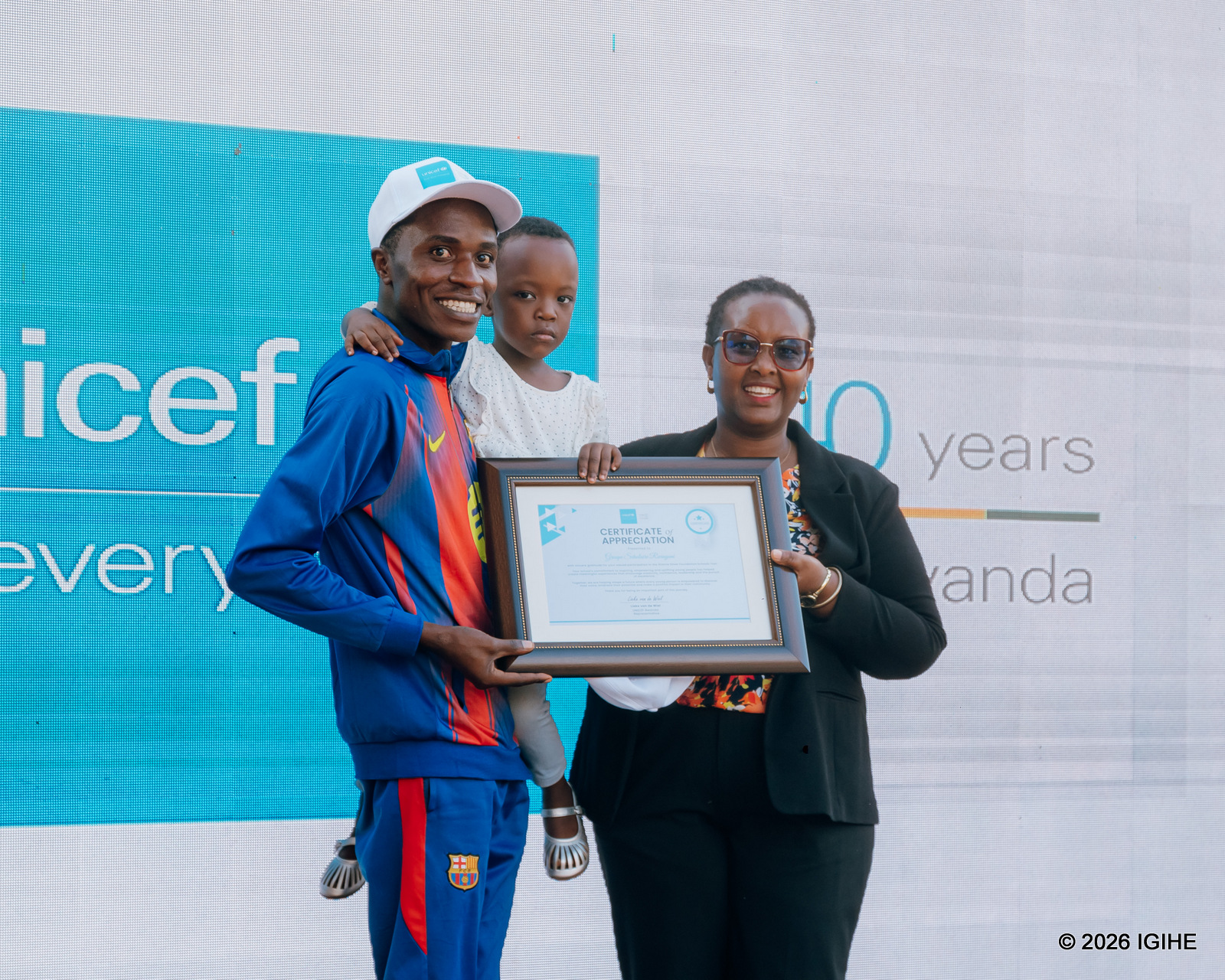
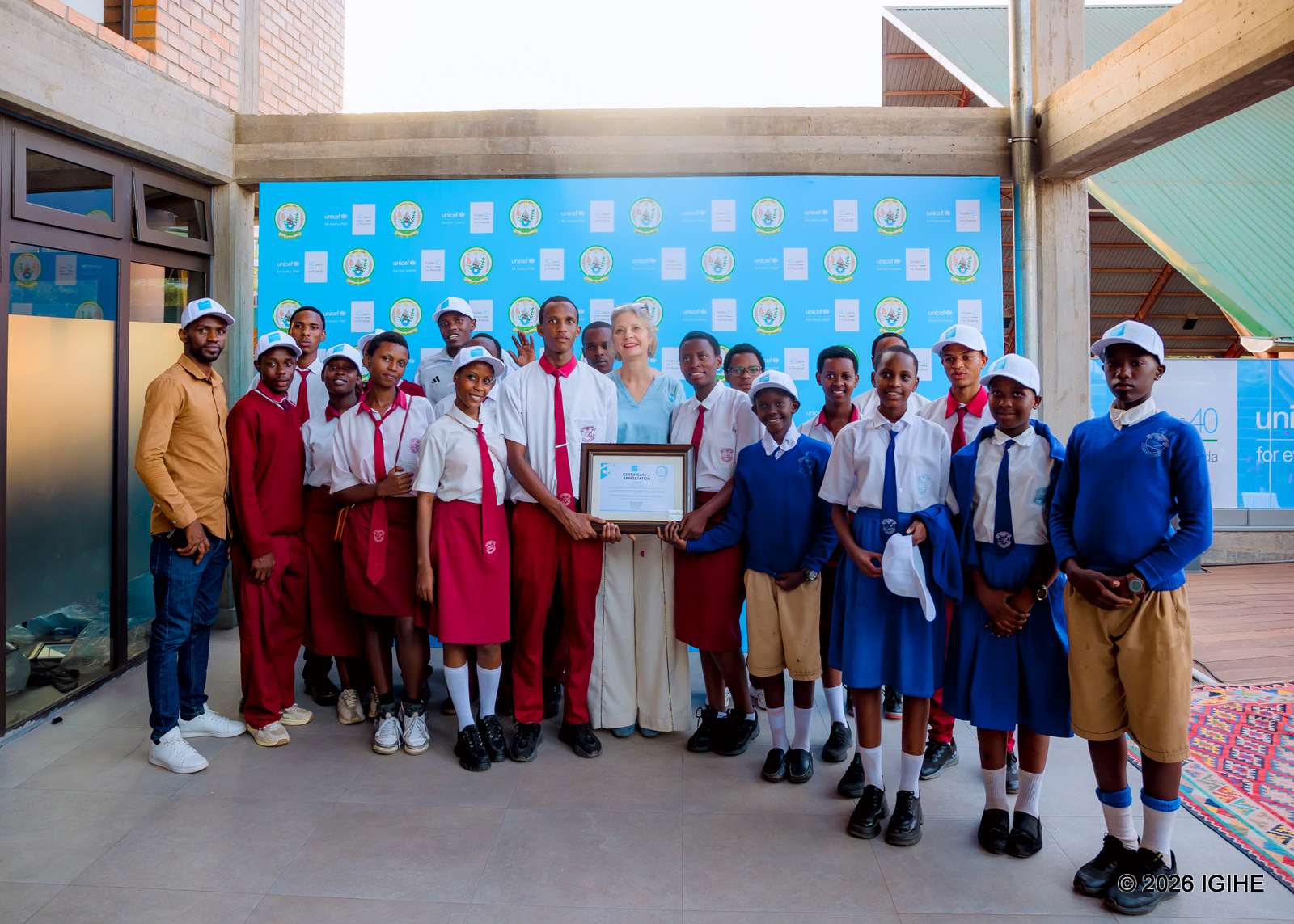
Minister of Youth and Arts Dr. Utumatwishima Jean Nepo Abdallah speaks during the UNICEF Rwanda@40 celebration, reaffirming the country’s commitment to improving the lives of every child.Children from the Sherrie Silver Foundation perform during the launch of UNICEF Rwanda’s 40th anniversary song,Outstanding schools receive awards during the UNICEF Rwanda@40 anniversary celebration, acknowledging their efforts in supporting children’s learning and wellbeing.
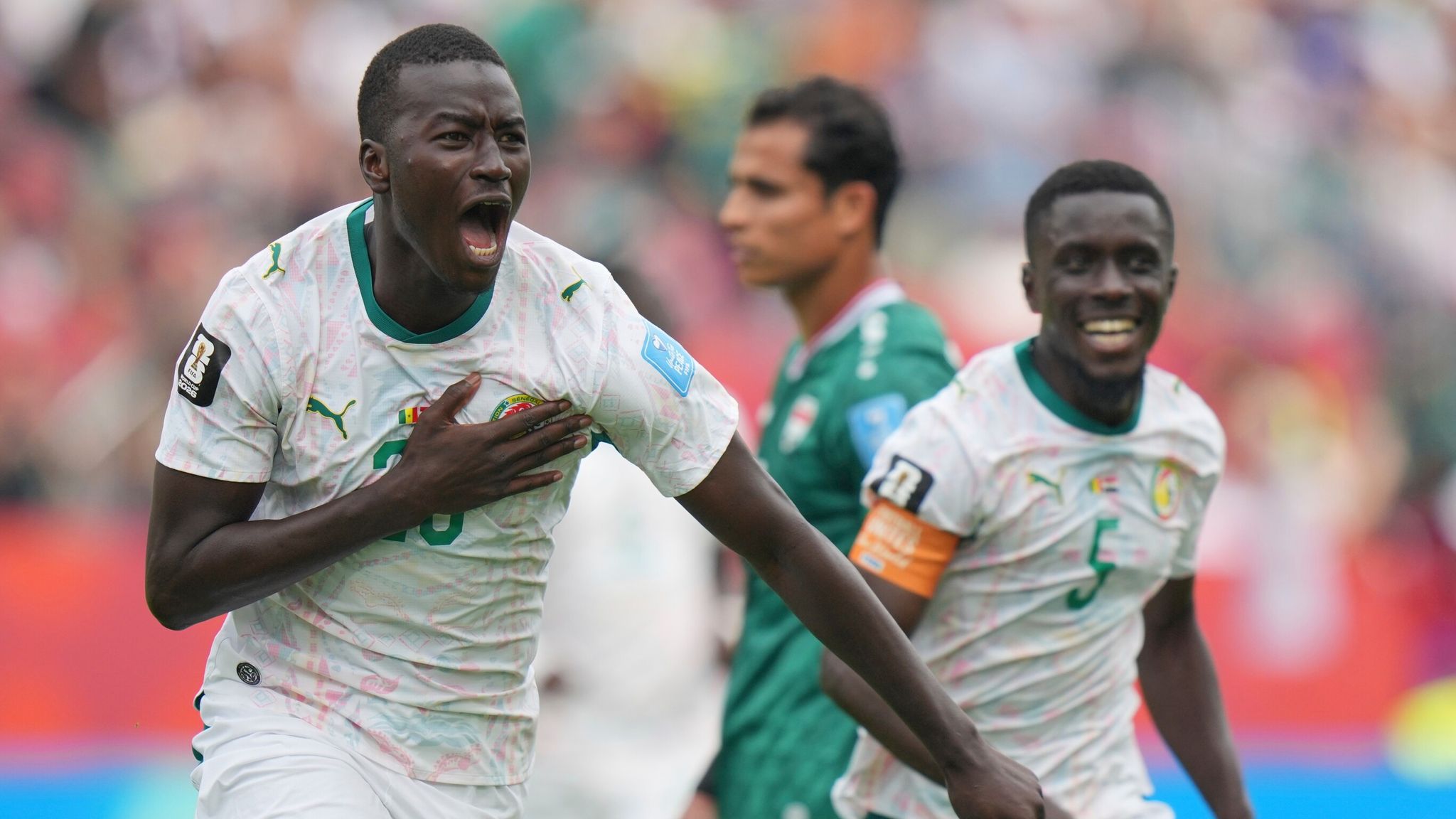
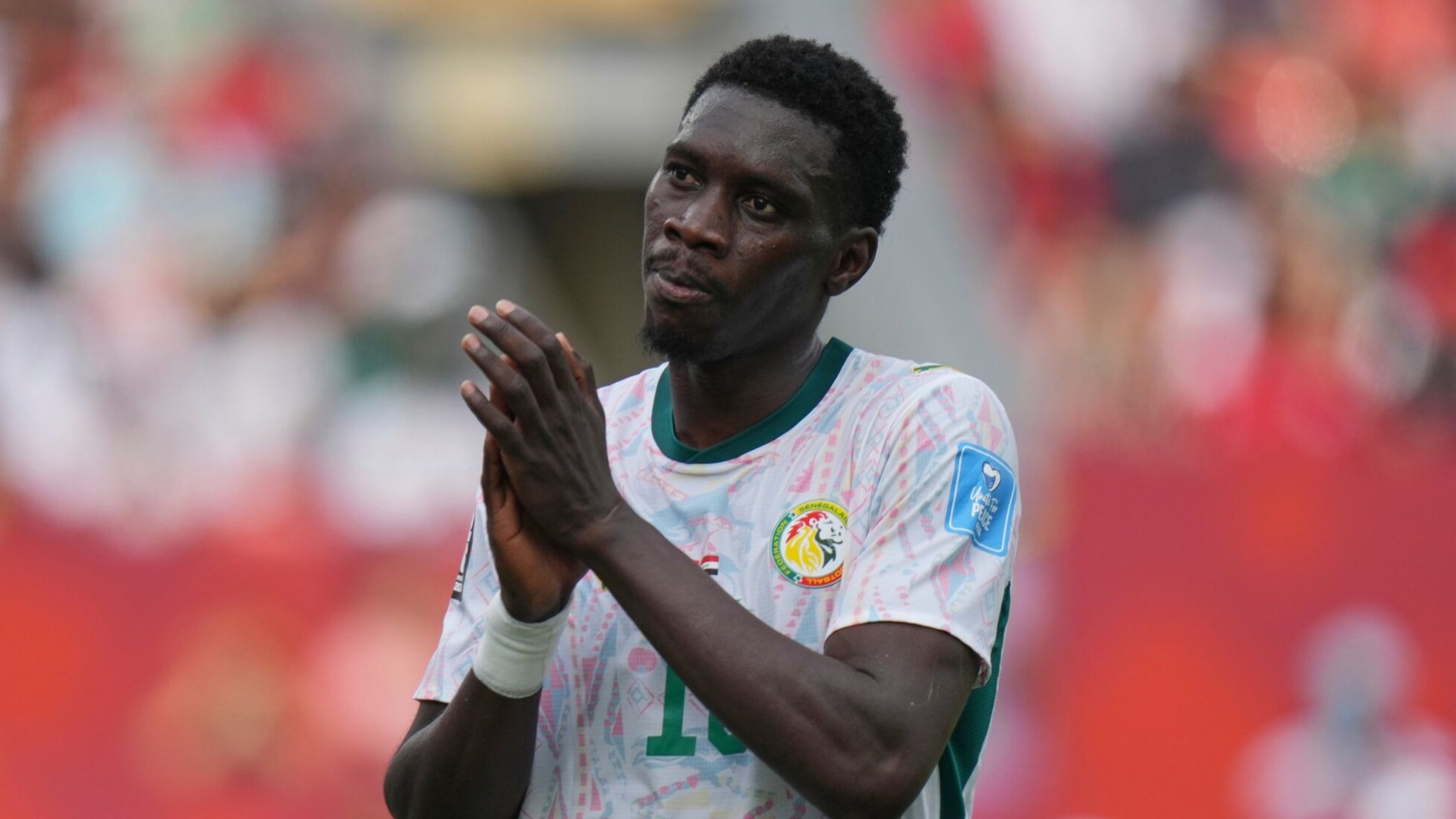
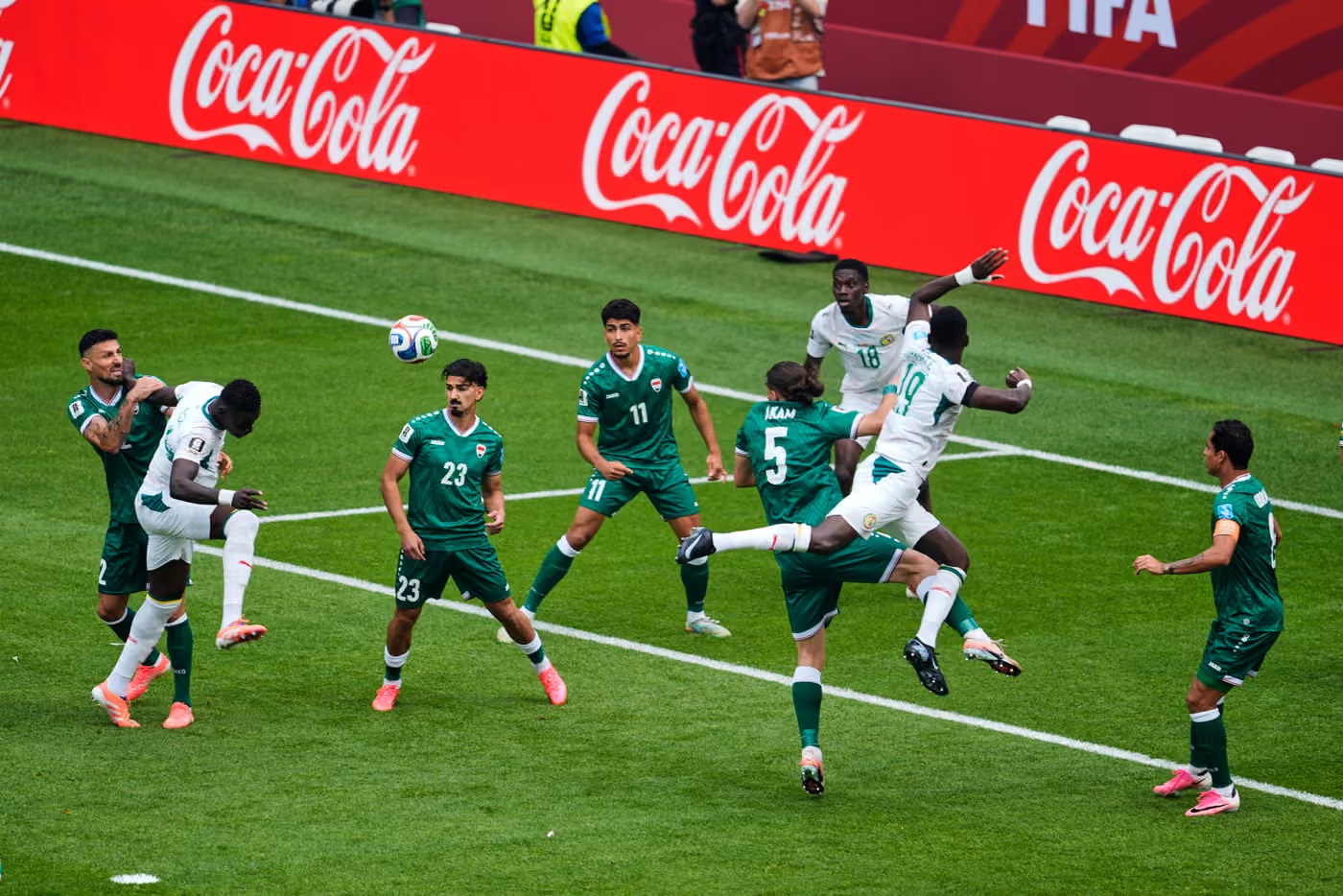
The Lions of Teranga produced a clinical attacking display after the break, with Pape Gueye scoring twice in spectacular fashion, while Habib Diarra, Ismaila Sarr and Iliman Ndiaye also got on the scoresheet.
Senegal made a fast start, taking the lead in the fourth minute when Habib Diarra got the final touch on Abdoulaye Seck’s header to put his side ahead while both teams were still at full strength.
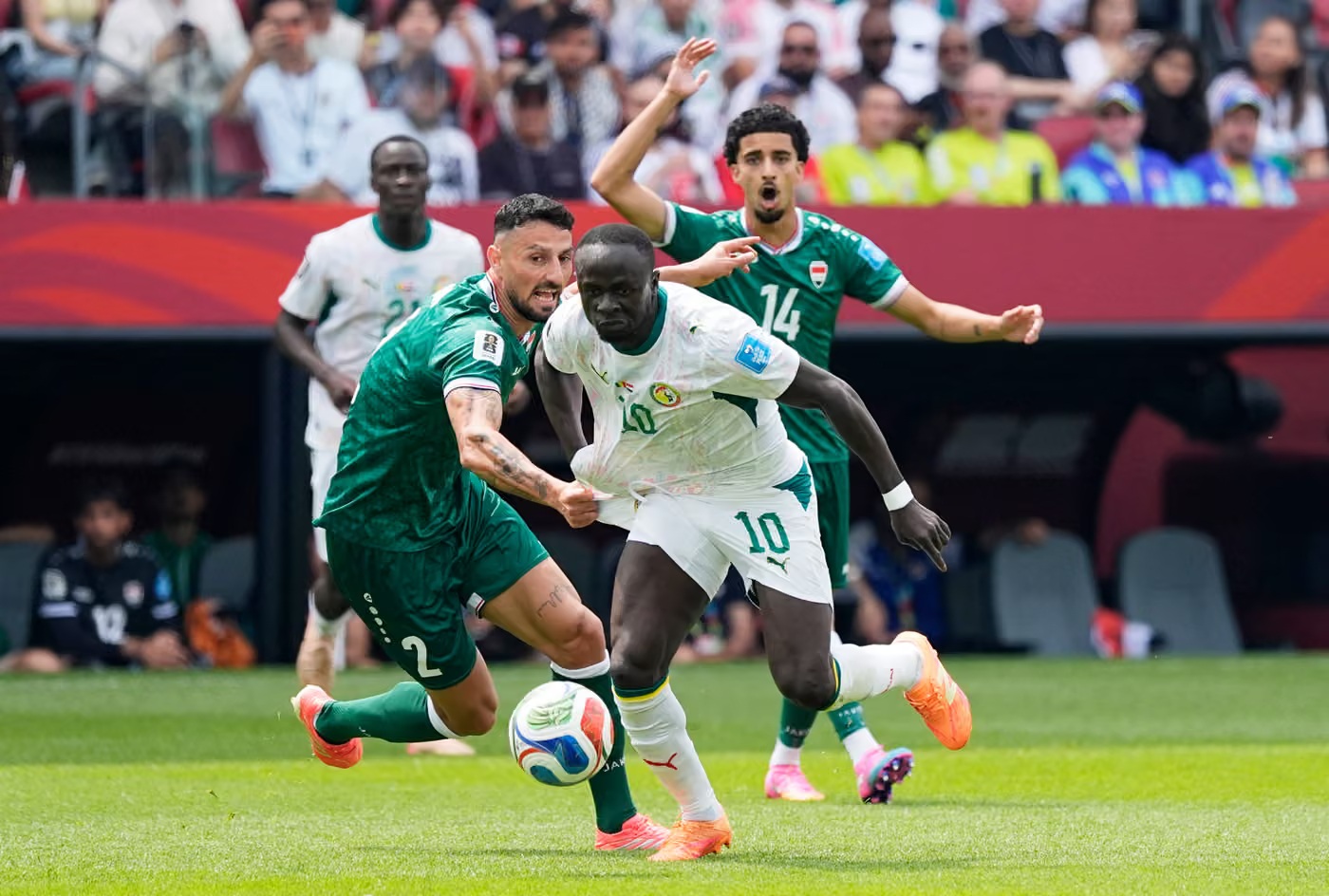
Iraq’s task became significantly harder shortly after. In the 13th minute, defender Rebin Sulaka was initially shown a yellow card for pulling back Sadio Mané as he broke through on goal. However, referee Anthony Taylor reviewed the incident on the pitchside monitor and upgraded the decision to a red card for denying an obvious goalscoring opportunity.
Despite their numerical advantage, Senegal were unable to extend their lead before halftime, going into the break 1-0 up after a frustrating remainder of the first half.
After the restart, however, the game shifted decisively in Senegal’s favour.
Lamine Camara sparked the second-half surge in the 56th minute, forcing a turnover inside the Iraq penalty area before driving to the byline and cutting the ball back for Ismaila Sarr, who tapped into an empty net to score his third goal of the tournament.
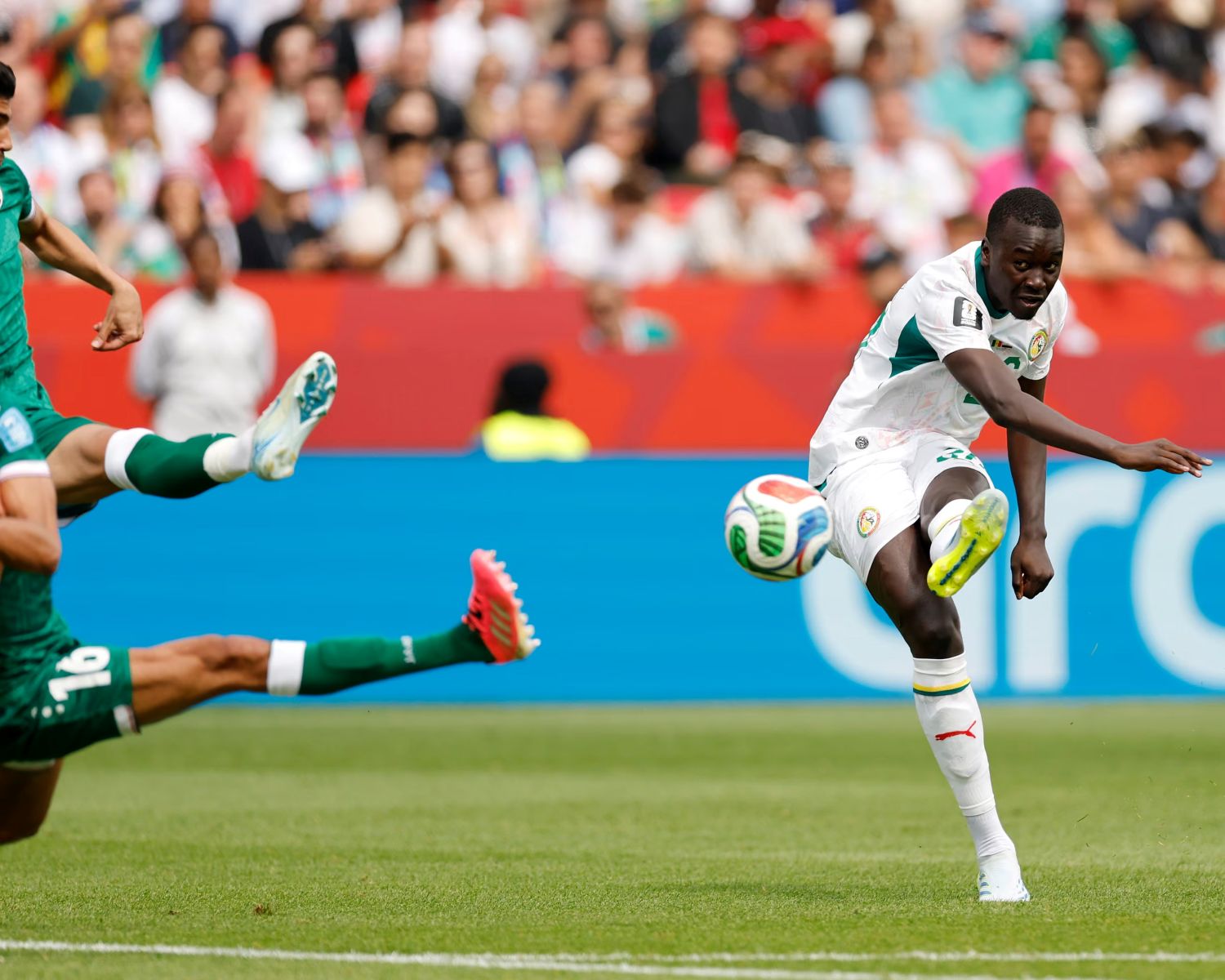
Pape Gueye, introduced shortly after, made an immediate impact. In the 59th minute, he collected a pass near the edge of the box, shifted onto his left foot and curled a superb effort into the top corner beyond goalkeeper Ahmed Basil.
He struck again in the 71st minute, reacting quickest to Iliman Ndiaye’s bouncing delivery and unleashing a powerful half-volley that gave Basil no chance.
Ndiaye then added the fifth in the 82nd minute, finishing from distance to complete a comprehensive victory.
The result saw Senegal finish third in Group I with three points and a goal difference of +2, keeping their hopes alive in the race for the best third-placed finishers.
They were later confirmed among the top eight third-placed teams and progressed to the round of 32, where they are set to face England, depending on final group outcomes.
For Iraq, it was a disappointing end to their campaign. They lost all three group matches and were eliminated from their second World Cup appearance and first since 1986.
Pape Gueye came off the bench to score twice for Senegal.Pape Gueye celebrates with his teammates after scoring against Iraq.
Ismaila Sarr scored his third goal of the tournament.Iraq’s Rebin Sulaka grabbed Senegal’s Sadio Mané, resulting in him being sent off with a red card. Senegal delivered a dominant second-half performance to overwhelm 10-man Iraq 5-0 at Toronto Stadium on Friday.