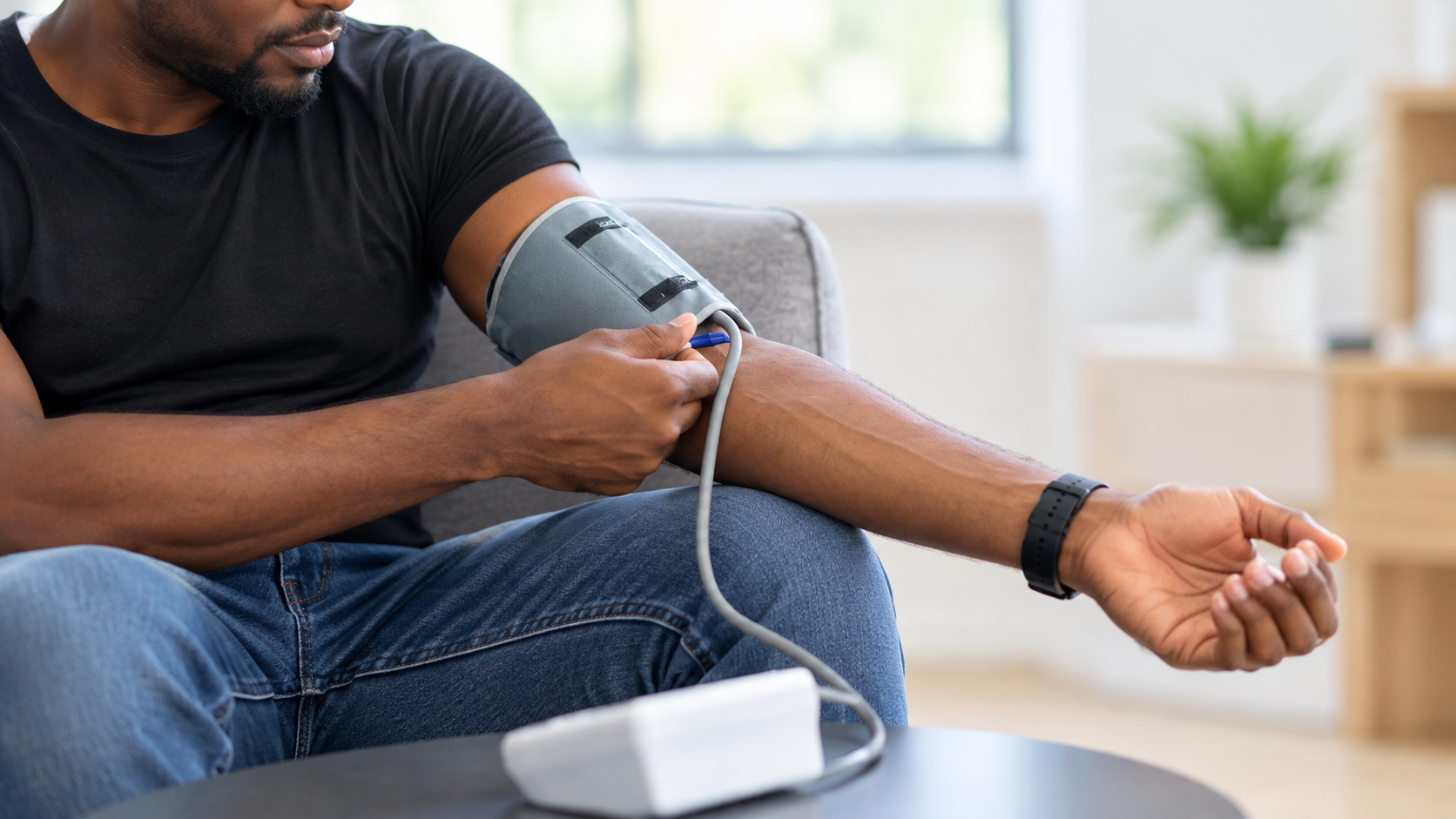
The way a person holds their arm during a blood pressure check can significantly affect the result, according to research led by Johns Hopkins Medicine.
The study found that leaving the arm unsupported at the side can make systolic blood pressure, the upper number in a reading, appear about 6.5 millimeters of mercury (mmHg) higher than it would when the arm is properly supported.
Resting the arm on the lap also produced higher readings, although the difference was smaller.
Researchers compared three different arm positions: supporting the arm on a desk, resting it on the person’s lap and leaving it unsupported at the side.
Compared with the recommended desk-supported position, resting the arm on the lap increased systolic blood pressure by 3.9 mmHg and diastolic pressure by 4.0 mmHg.
When participants allowed their arms to hang unsupported at their sides, systolic pressure was 6.5 mmHg higher and diastolic pressure was 4.4 mmHg higher.
The researchers said these differences could matter when doctors assess whether someone has hypertension.
For example, an increase of 6.5 mmHg could turn a reading of 123 into approximately 130, or a reading of 133 into about 140, potentially placing the measurement into a different blood pressure category.
The study involved 133 adults between 18 and 80 years old. Participants were tested during a single visit, with researchers carefully controlling the conditions under which their blood pressure was measured.
Each participant had their blood pressure measured repeatedly while using the different arm positions.
Before the measurements, participants walked for two minutes and then rested for five minutes.
Researchers used appropriately sized upper-arm cuffs and digital blood pressure devices.
Participants were also asked not to talk or use their phones during the measurements.
The findings support existing recommendations for accurate blood pressure measurement.
The American Heart Association recommends that people sit with their back supported, keep both feet flat on the floor with their legs uncrossed, use an appropriately sized cuff and rest the arm on a surface so that the middle of the cuff is positioned at heart level.
The researchers noted that blood pressure is sometimes measured in clinical settings while a patient’s arm is unsupported or resting on their lap, despite these recommendations.
The study was led by researchers at Johns Hopkins and included Tammy Brady, M.D., Ph.D., as senior author, along with Sherry Liu and other researchers.
The findings were published in JAMA Internal Medicine. The researchers cautioned that their findings may apply specifically to measurements taken with automated blood pressure devices and may not necessarily extend to other types of equipment.
Leave a Reply