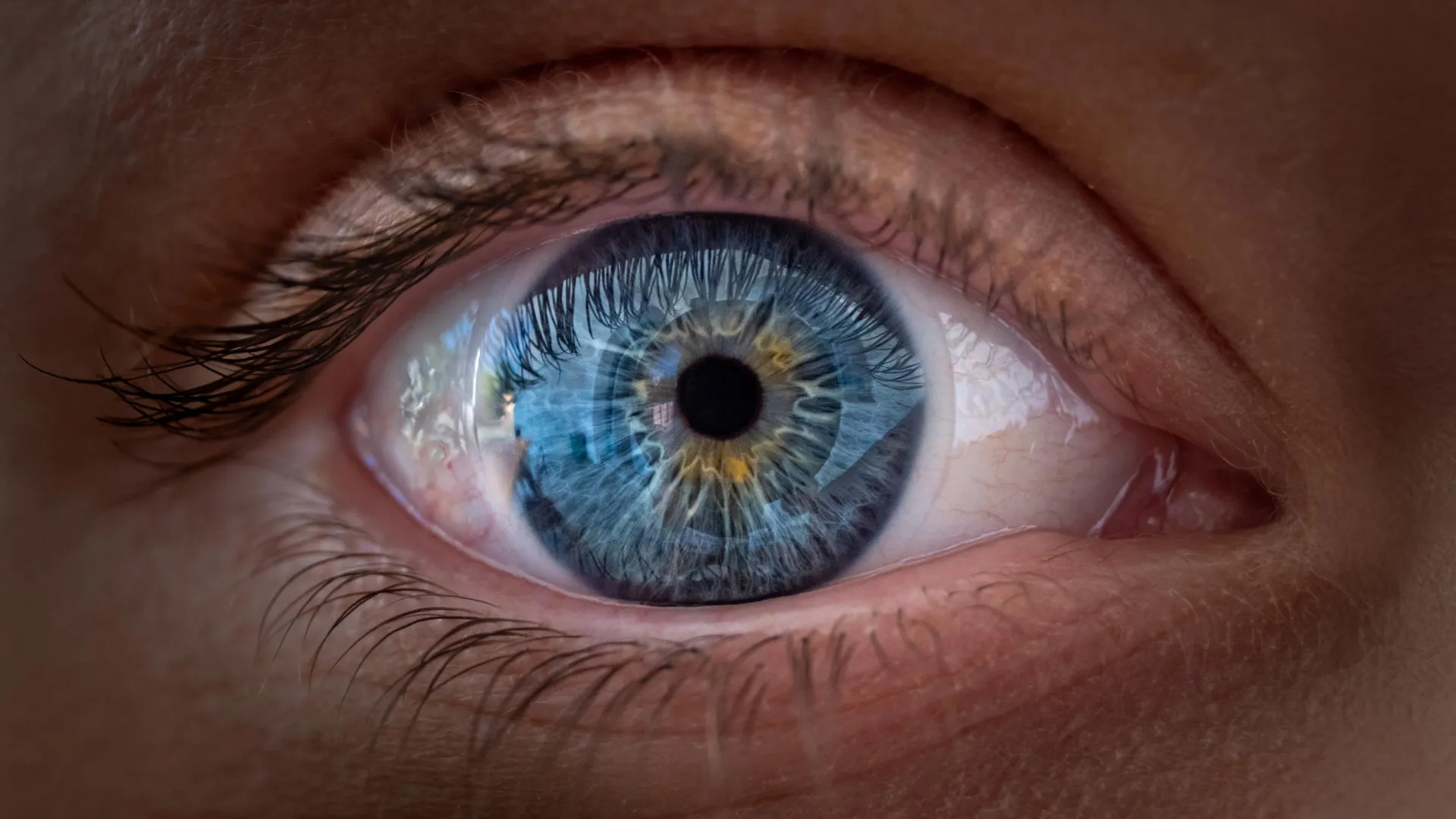
The discovery offers new insights into how human eyesight develops before birth and could eventually contribute to research into treatments for conditions that cause vision loss.
The research, published in the Proceedings of the National Academy of Sciences (PNAS), examined the foveola, a small area located at the centre of the retina that enables people to see fine details, read and recognise faces.
Led by Associate Professor Robert J. Johnston Jr., the researchers used laboratory-grown miniature human retinal tissues, called organoids, to study how cells in the eye develop over time.
Their observations revealed that during early fetal development, some cells that initially detect blue light may change into cells responsible for detecting red and green light.
The transformation is influenced by retinoic acid, a substance derived from vitamin A, and thyroid hormones, which play important roles in regulating growth and development.
The researchers found that retinoic acid helps organise the developing retina by restricting the formation of blue-light-sensitive cells in its central region.
Meanwhile, thyroid hormones appear to trigger some of the remaining blue-sensitive cells to develop into red- and green-sensitive cells.
The discovery challenges a long-standing scientific explanation, which suggested that blue-sensitive cells simply moved away from the centre of the developing retina without changing their function.
Instead, the new findings indicate that some of these cells may undergo a transformation, adopting different roles as the eye develops.
“This is a key step toward understanding the inner workings of the center of the retina, a critical part of the eye and the first to fail in people with macular degeneration,” Johnston said.
The findings could help advance future research into treatments for vision-threatening conditions, including macular degeneration and glaucoma.
Scientists hope that further improvements in laboratory-grown retinal tissues could eventually make it possible to develop specialised light-sensitive cells capable of replacing those damaged by eye diseases.
However, the technology is still at an experimental stage, and further studies will be necessary to determine whether it can safely and effectively restore vision in patients.
The research provides new insight into the biological processes that enable the human eye to develop the ability to distinguish fine details.
Leave a Reply