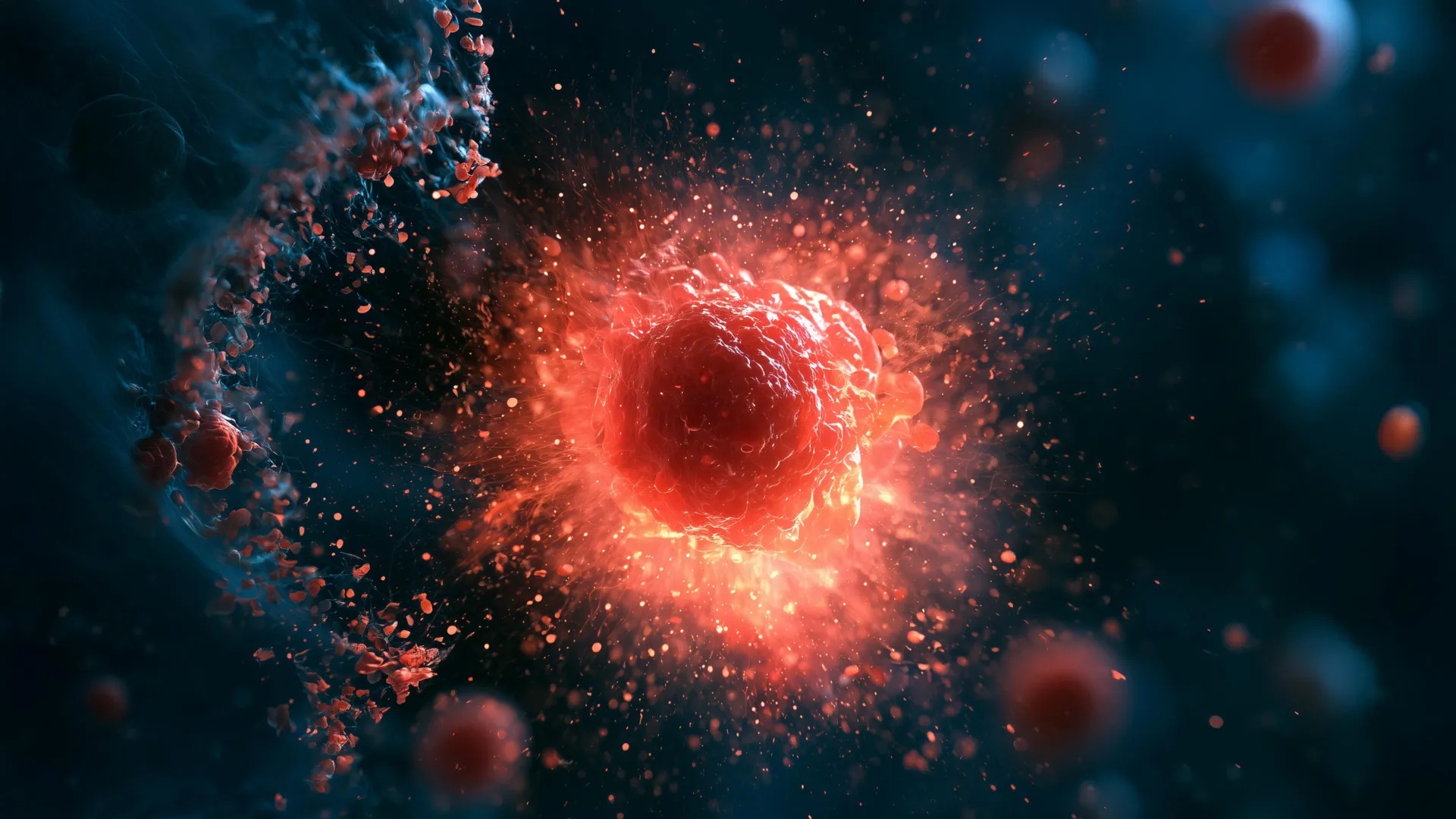
The newly identified cells, called ruptoblasts, were found in planarian flatworms, small freshwater creatures famous for their extraordinary ability to regenerate lost body parts.
Researchers say the cells react to a specific hormone by bursting within minutes, killing nearby bacteria and foreign cells before disappearing completely, leaving almost no trace behind.
The findings, published in the journal Cell, surprised scientists because such an explosive immune response had never been observed before.
“We never expected that a cell could just explode like a bomb and kill the cells surrounding it,” said senior author Bo Wang, an associate professor of bioengineering at Stanford University’s Schools of Engineering and Medicine.
The discovery was made while researchers were investigating whether flatworms can distinguish between their own tissues and those of another individual.
During the study, postdoctoral researcher Chew Chai noticed a unique group of cells behaving unlike any previously known immune cells.
Further investigation revealed that these cells rapidly self-destruct in order to eliminate nearby threats.
Planarian flatworms have long fascinated scientists because of their remarkable regenerative abilities.
Even when their bodies are cut into multiple pieces, they can regrow missing organs and, in some cases, develop into entirely new organisms.
Researchers believe studying these ancient animals can provide valuable insights into how immune systems have evolved over hundreds of millions of years.
According to the researchers, the ruptoblasts act with exceptional speed and precision, making them different from many immune cells found in humans and other animals.
Instead of launching a prolonged immune response, they sacrifice themselves almost instantly to destroy invading cells in their immediate surroundings.
Scientists say understanding how this mechanism works could eventually help inspire new therapies that attack cancer cells or infectious microbes while minimizing damage to healthy tissue.
Although the research is still in its early stages and was conducted only in flatworms, the discovery opens a new avenue for studying immune defense and targeted cell destruction.
The study was supported by several organizations, including the National Science Foundation, the National Institutes of Health, the Human Frontier Science Program, and the European Research Council, highlighting the broad scientific interest in uncovering new strategies used by living organisms to fight disease.
Leave a Reply