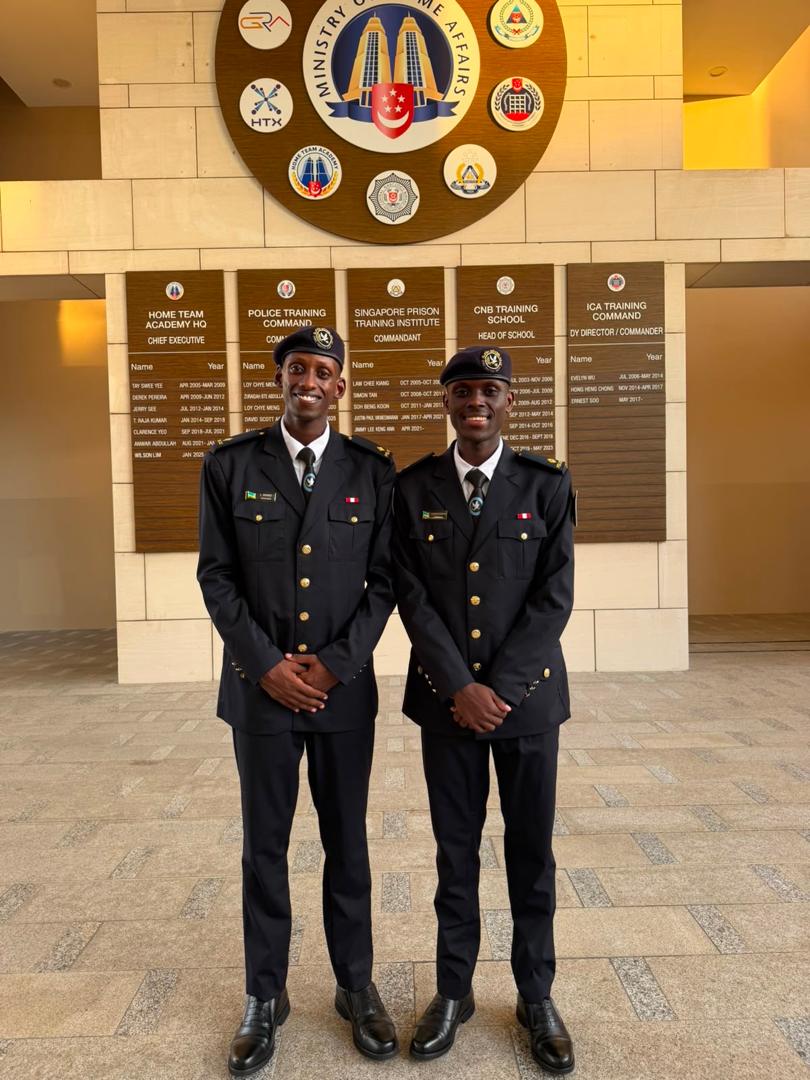
The officers, Lawrence Manzi and Emmanuel Rusingizandekwe, graduated with the rank of Assistant Inspector of Police (AIP).
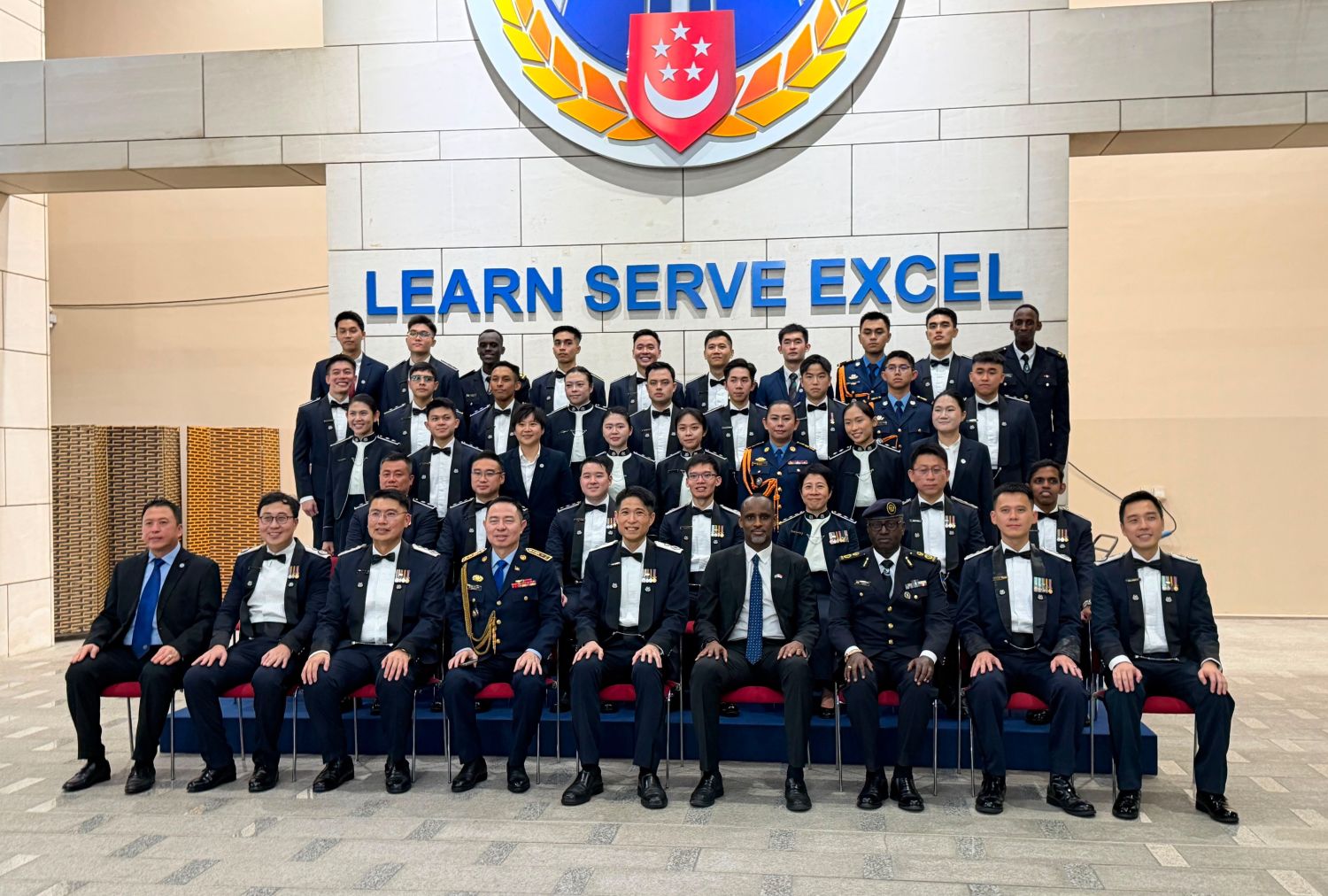
The graduation ceremony was held on Friday in Singapore.
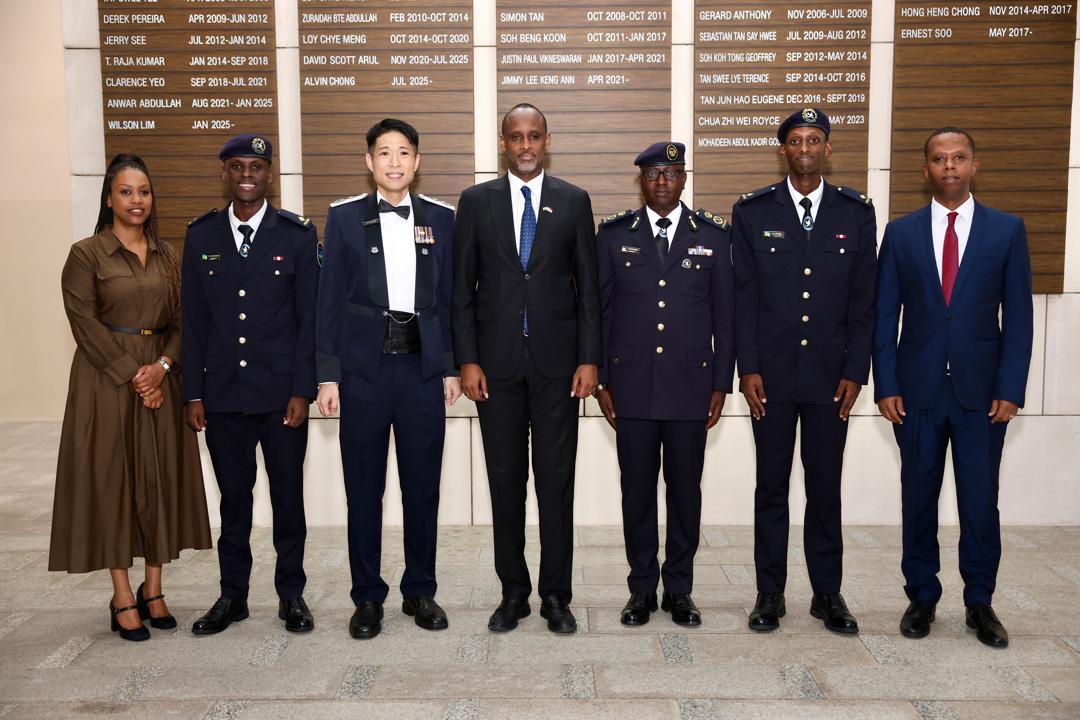
The event was attended by the High Commissioner of Rwanda to Singapore, Innocent B. Muhizi, Rwandan diplomats in Singapore, and ACP Augustin Ntaganira, Deputy Commandant and Chief Instructor at the National Police College in Musanze.
The training forms part of ongoing institutional cooperation between the two police forces aimed at strengthening professional development and capacity building for officers.
Rwanda–Singapore cooperation
Rwanda and Singapore maintain strong bilateral relations rooted in cooperation in governance, innovation, and institutional development.
The current security partnership was formalised in August 2022 and includes training and capacity building, exchange of expertise, information sharing, and coordination in addressing transnational crimes such as cybercrime and money laundering.
Beyond security cooperation, the two countries collaborate in ICT, innovation, education, and public sector transformation. Rwanda has also drawn inspiration from Singapore’s development model, particularly in economic transformation, digital governance, and efficient public service delivery.
Singapore has supported Rwanda’s efforts to develop its digital economy, including initiatives in financial technology (Fintech) and innovation-led growth.
The officers, Lawrence Manzi and Emmanuel Rusingizandekwe, graduated with the rank of Assistant Inspector of Police (AIP).The event was attended by the High Commissioner of Rwanda to Singapore, Innocent B. Muhizi, Rwandan diplomats in Singapore, and ACP Augustin Ntaganira, Deputy Commandant and Chief Instructor at the National Police College in Musanze.The training forms part of ongoing institutional cooperation between the two police forces aimed at strengthening professional development and capacity building for officers.
The weekend operation marks the second consecutive day of U.S. military action and the sharpest deterioration in relations since Washington and Tehran signed a landmark memorandum of understanding (MoU) on June 18 designed to end months of hostilities.
According to U.S. Central Command (CENTCOM), the latest strikes were ordered directly by President Donald Trump following a maritime attack early Saturday morning.
At approximately 4:30 a.m. local time, an Iranian one-way attack drone struck the M/T Kiku, a Panama-flagged oil tanker carrying more than two million barrels of crude oil from Qatar to the United Arab Emirates.
While the UK Maritime Trade Operations (UKMTO) reported that the M/T Kiku sustained damage to its bridge, all crew members were reported safe.
“Iran was given a chance to honour the ceasefire agreement but elected not to,” CENTCOM said in an official statement, framing the subsequent operation as a direct response to continued aggression against commercial shipping in the vital energy corridor.
U.S. targets and Trump’s ultimatum
U.S. military aircraft targeted a broad array of assets, primarily focused along Iran’s southern coastal regions and Qeshm Island. The precision strikes took aim at military surveillance infrastructure and coastal radar sites, command-and-control communication systems, air defence sites, drone and missile storage facilities, and minelayer capabilities used to disrupt commercial shipping.
Shortly after the operation concluded, President Trump issued a severe warning to Tehran on Truth Social, signaling that further non-compliance could lead to total conflict.
“United States aircraft just struck Iranian missile and drone storage locations… for violating the Cease Fire Agreement, AGAIN!” Trump wrote. “There may come a point when we are no longer able to be reasonable, and will be forced to militarily complete the job that we very successfully started. If that happens, the Islamic Republic of Iran will no longer exist!”
Vice President JD Vance echoed the firm stance on social media, writing, “Iran signed a ceasefire agreement. We have honoured it… But violence will be met with violence.”
Iran retaliates against U.S. bases
The escalation quickly triggered a regional chain reaction. The Islamic Revolutionary Guard Corps (IRGC) announced it had launched a joint missile and drone operation targeting eight U.S. military sites across Kuwait and Bahrain.
In Bahrain, home to the U.S. Navy’s 5th Fleet, officials strongly condemned a “flagrant violation” of their sovereignty after several Iranian drones crossed into their airspace. A U.S. defence official confirmed that two one-way attack drones were detected approaching the Navy base; one was intercepted by ground defences, while the other landed harmlessly in a remote airfield area. No U.S. casualties or major structural damage were reported.
Meanwhile, Iranian state television reported that the IRGC had fired “warning shots” at merchant vessels attempting to pass through unauthorised channels, asserting that ships must now seek Iranian permits to traverse the Strait.
Mohsen Rezaei, a senior advisor to Iran’s Supreme Leader, publicly accused Washington of violating the peace MoU by continuing to stoke tensions and supporting proxy actions.
The rapid back-and-forth has raised the maritime security threat level in the region to “substantial.” The 14-point peace deal reached earlier in June had initially brought down global oil prices and mapped out a 60-day window for technical negotiations. With both sides now trading direct military blows, diplomatic processes appear to be on the verge of a total halt.
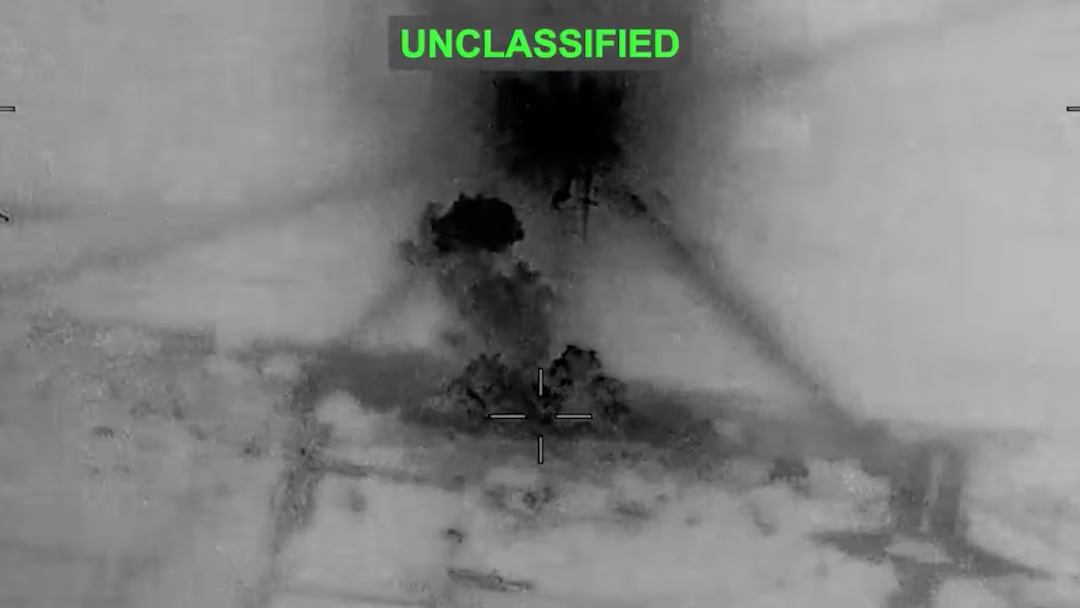
Smoke rises from explosions at an unknown location following U.S. Central Command (CENTCOM) strikes on Iran in response to an Iranian drone attack on a cargo ship in the Strait of Hormuz, in this screen grab from video released June 26, 2026.
African football has delivered a historic breakthrough at the 2026 FIFA World Cup, with nine of its ten representatives advancing to the Round of 32 after a dramatic and tightly contested group stage campaign.
The Democratic Republic of Congo’s 3-1 victory over Uzbekistan and Algeria’s thrilling 3-3 draw against Austria on Saturday night sealed the final qualification spots, completing an unprecedented achievement for the continent. Only Tunisia failed to progress beyond the group stage.
The scale of the success marks a dramatic leap for African nations on football’s biggest stage. The previous record for teams reaching the knockout rounds had been just two in a single tournament, set in both 2014 and 2022. Before this year, only six African countries had ever reached the knockout phase across World Cup history, underscoring just how significant the 2026 performance has been.
The nine nations progressing are Morocco, South Africa, Senegal, Ivory Coast, Ghana, Cape Verde, Egypt, DR Congo and Algeria.
Morocco once again leads the continent’s ambitions after becoming the first African nation to reach the World Cup semifinals four years ago in Qatar. The team has continued its strong form, including a 1-1 draw against Brazil, and arrives in the knockout rounds as one of the more experienced contenders. Morocco will also co-host the 2030 World Cup, adding further weight to its growing football profile.
Elsewhere, Cape Verde and DR Congo have emerged as surprise packages of the tournament, both reaching the Round of 32 in their World Cup debut appearances at this stage. Their progress has been emblematic of a deeper shift in African football strength across the continent.
DR Congo’s qualification was particularly emotional after a hard-fought win over Uzbekistan. Forward Fiston Mayele scored in the 78th minute, sandwiched between two goals from Yoane Wissa, including a penalty and a stoppage-time strike.
“It’s really historic for our country, Congo,” Mayele said after the match. “It’s the first win and the first knockout stage. Today, I have to be proud here, and almost everywhere in my country, everyone is happy with what we did. We’re proud to be Congolese, and I think we will keep going.”
DR Congo now face a daunting Round of 32 clash with England, but the squad has embraced its breakthrough moment. Wissa reflected on the long road to reaching this stage, highlighting the team’s resilience through qualification setbacks and early tournament challenges.
“It’s only the second time we are in the World Cup, 52 years later,” Wissa said. “Nothing is easy in football. We just need to show resilience, and when a time like this comes, you have to enjoy.”
Algeria’s path was no less dramatic. In a tense encounter with Austria, captain Riyad Mahrez struck in stoppage time to edge his side ahead after a match that appeared destined for a draw. Austria responded immediately with a goal on the final play, but the result was enough for both sides to advance.
The broader success of African teams has reshaped expectations at this year’s tournament, with established powers like Senegal, Ghana, and Ivory Coast progressing alongside emerging sides such as Cape Verde and DR Congo. The depth of qualification has reinforced the continent’s growing competitiveness on the global stage.
As the knockout phase begins, African football carries both momentum and belief. What was once an occasional breakthrough has become a collective surge, and for nine nations, the World Cup journey is far from over.
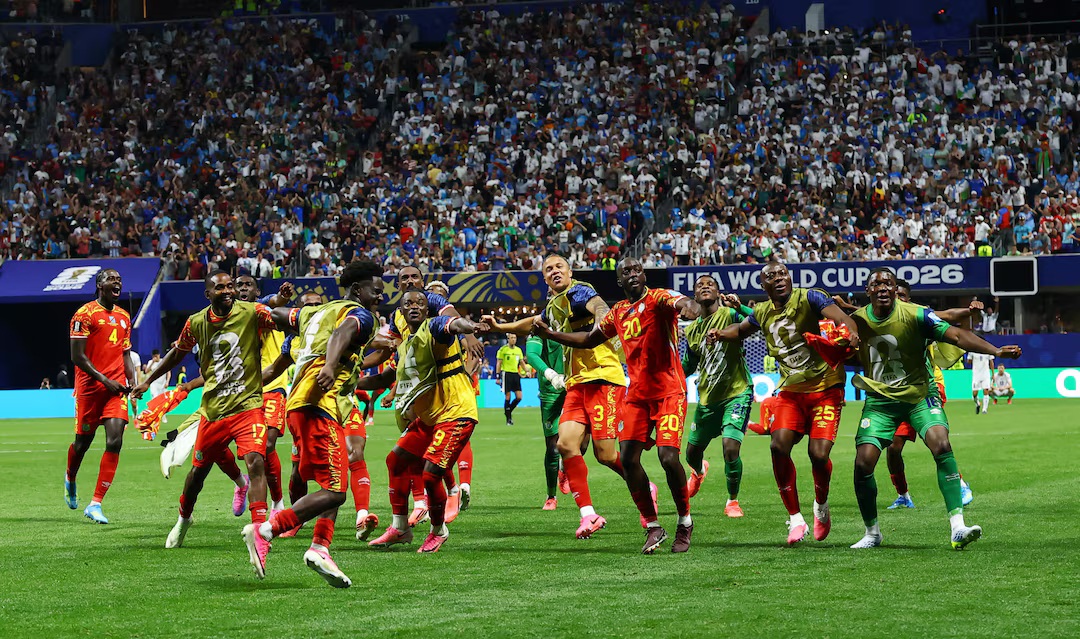
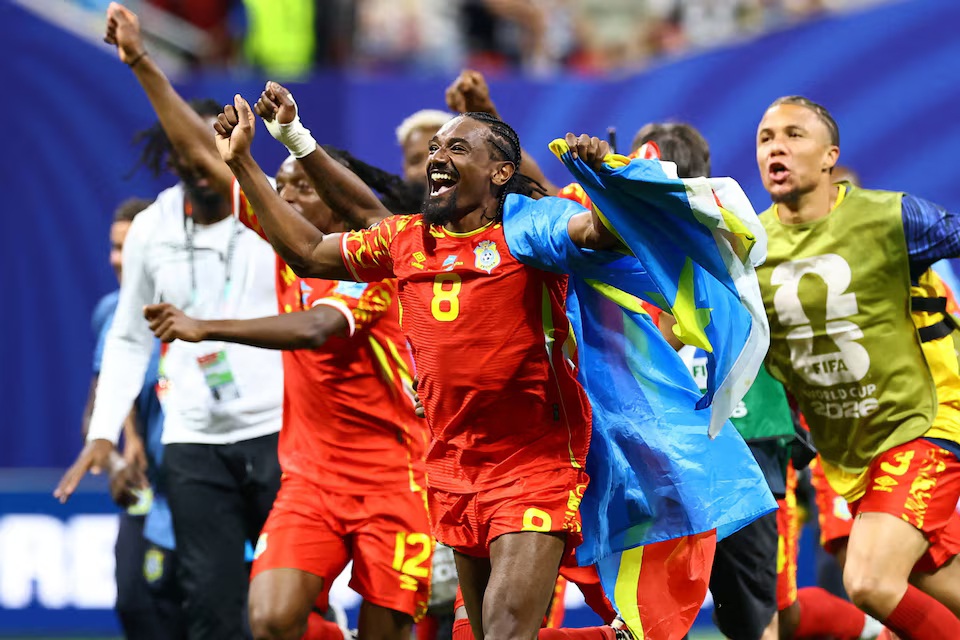
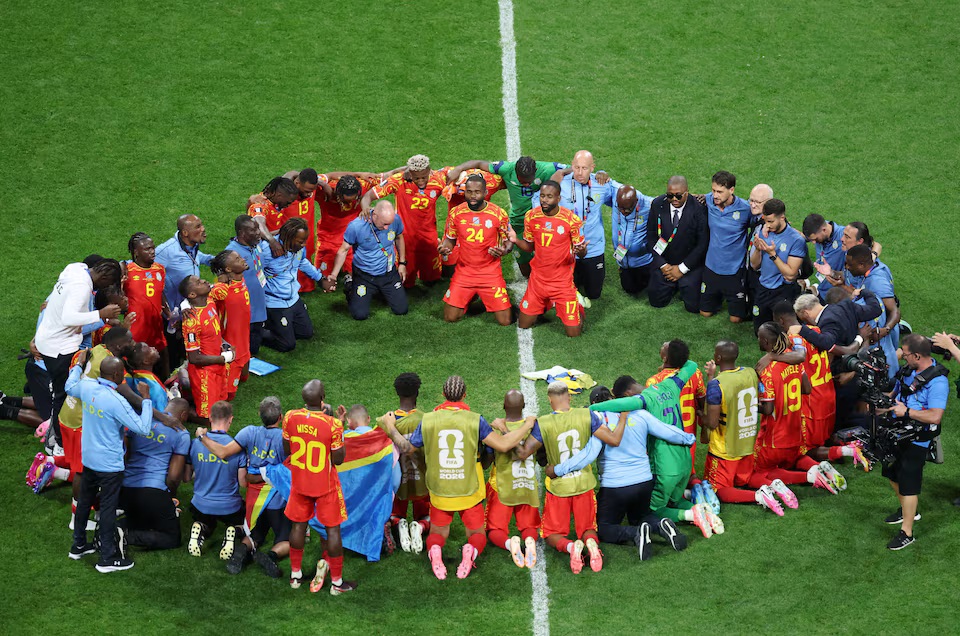
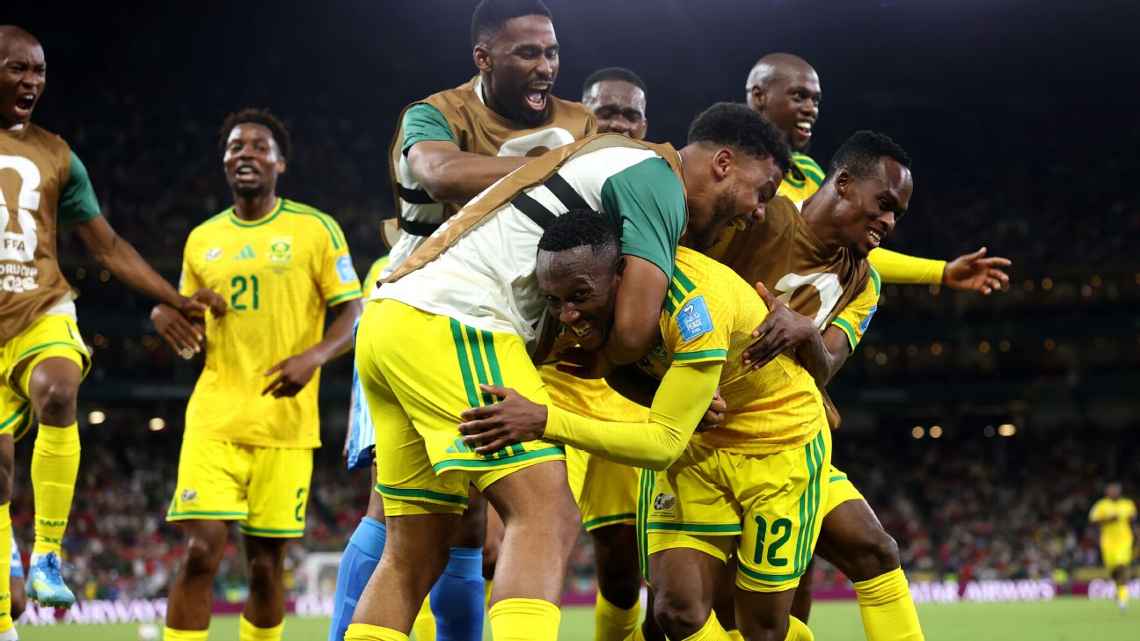
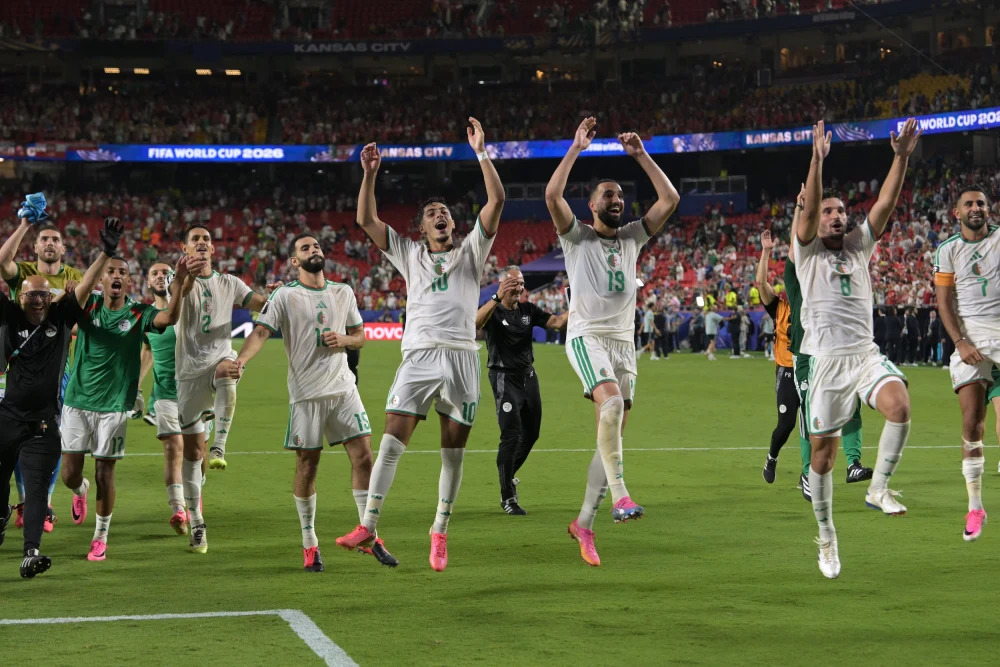
DR Congo’s Samuel Moutoussamy celebrates with their national flag after the match against Uzbekistan as they qualify for the knockout stages of the World Cup.DR Congo’s Yoane Wissa celebrates scoring their third goal with teammates.South Africa celebrate Thapelo Maseko’s goal against South Korea.Algeria’s Rafik Belghali, Aissa Mandi, Rayan Ait-Nouri, Fares Chaibi, Nabil Bentaleb, Houssem Aouar and Riyad Mahrez celebrate after the 2026 World Cup Group J match between Algeria and Austria ended in a draw Saturday in Kansas City.
NTV Uganda and Spark TV went off air in the early hours of Sunday after security personnel carried out an overnight operation at the Nation Media Group (NMG) Uganda offices in Namuwongo, Kampala.
The developments followed several posts by Gen. Muhoozi announcing that the media houses would be closed, amid what he described as increasingly critical coverage from the outlets.
In one of the posts, President Yoweri Museveni’s son wrote: “Mzee has approved my plan to close both NTV and Monitor. We are moving immediately!”
This picture, taken on June 28, 2026, shows a television screen displaying NTV Uganda and Spark TV channels on DSTV after the stations were taken off air by security operatives in Kampala.
Gen. Muhoozi also stated that media coverage concerning Uganda would henceforth require clearance from his office, saying: “From now on ALL bad stories about Uganda have to be cleared by my office!”
He further wrote that he does not believe in a free press and added that “the press should be guided by cadres of the revolution.”
In another post, the CDF asserted that he has had the authority to shut down any media house in Uganda since 2017, attributing that authority to President Yoweri Museveni.
“I have the power in Uganda to shut down ANY media house I want to. I have had this power since 2017. This power was given to me by my great father President @KagutaMuseveni. NTV and Daily Monitor are learning about it today,” he posted.
In a separate post, Gen. Muhoozi said that NTV Uganda and Daily Monitor would remain closed until he authorises their reopening.
“Both NTV and Monitor will not re-open without my permission,” he wrote.
Nation Media Group Uganda operates several media outlets, including NTV Uganda, Daily Monitor, The EastAfrican, Dembe FM and Spark TV.
The latest developments recall events in May 2013, when security agencies raided the Daily Monitor’s offices following the publication of a letter attributed to then Coordinator of Intelligence Services Gen. David Sejusa. The government at the time said the operation formed part of investigations into the leaked document, while the newspaper’s premises, along with KFM and Dembe FM, were temporarily closed.
As of Sunday morning, there had been no official communication from Nation Media Group Uganda regarding when the affected media outlets would resume normal operations.
VIDEO: Armed soldiers are on guard outside the headquarters of Daily Monitor newspaper in Namuwongo, Kampala.
The offices remain under military siege following an order by President Museveni's son and military chief Gen Muhoozi Kainerugaba to shut down Nation Media Group (NMG)… pic.twitter.com/MLIzhcocu5
The groundbreaking discovery, announced on June 24, 2026, was made by an international research team led by the University of Oxford in collaboration with the University of Birmingham and the Observatoire de la Côte d’Azur. The team’s formal findings were published in the journal Monthly Notices of the Royal Astronomical Society.
The two planets, known as TOI-791 b and TOI-791 c, orbit a distant F7-type dwarf star located around 1,110 light-years from Earth in the southern constellation Volans.
While an F7-type dwarf star is slightly hotter and more massive than the Sun, scientists believe these planets actually retain a cold, pristine structure. They likely formed far out in the chilly outer fringes of their protoplanetary disc, allowing them to rapidly accumulate massive gaseous envelopes without being scorched or stripped away early on.
Although both planets are similar in size to Jupiter, their masses are incredibly small. TOI-791 b contains just 3% of Jupiter’s mass, while TOI-791 c holds only 5.9%. This results in atmospheres that are incredibly expanded and diffuse, giving them an almost “fluffy” structure comparable to fresh shaving foam.
Their calculated densities, 0.038 and 0.047 grams per cubic centimeter, respectively, are so low that they are less dense than actual cotton candy, which sits at roughly 0.05 grams per cubic centimeter. Jupiter, by comparison, is up to 35 times denser.
The story of their discovery spans nearly a decade and highlights a massive win for citizen science. Everyday volunteers participating in the Planet Hunters TESS project first flagged TOI-791 b as a candidate in 2019 and TOI-791 c in 2023 by meticulously combing through raw data from NASA’s Transiting Exoplanet Survey Satellite.
To confirm the existence of these featherweight worlds, astronomers had to pull off a historic feat of observational endurance. Because the planets take an exceptionally long time to orbit their star, the team utilized the specialized ASTEP telescope located at Concordia Station in Antarctica.
Taking advantage of the unbroken, freezing months of total Antarctic winter darkness, researchers were able to capture continuous 11-hour planetary transits, the longest ever recorded from the ground.
What makes this discovery uniquely significant is the rare architecture of the planetary pair. Out of nearly 6,300 exoplanets discovered by humanity, fewer than 40 are categorized as super-puffs, and finding two in the same solar system is a true “one-in-a-million” occurrence.
The siblings are also locked in a rare orbital dance known as a 5:3 mean-motion resonance, meaning the inner planet completes exactly five orbits for every three completed by the outer planet.
This synchronous movement causes the planets to gravitationally tug on each other over time. By measuring the subtle variations in their transit timings caused by this tug-of-war, the Oxford-led team was finally able to calculate their precise masses.
As research continues, scientists are already planning to use the James Webb Space Telescope to peer directly into these cotton candy-like atmospheres, unlocking brand new insights into the sheer diversity of worlds that exist across the galaxy.
Researchers find two unusually light jupiter-sized planets in distant star system
A rare encounter with a juvenile great white shark has renewed scientific interest in one of the Mediterranean Sea’s most elusive marine predators, raising fresh questions about whether a hidden population may still persist in the region.
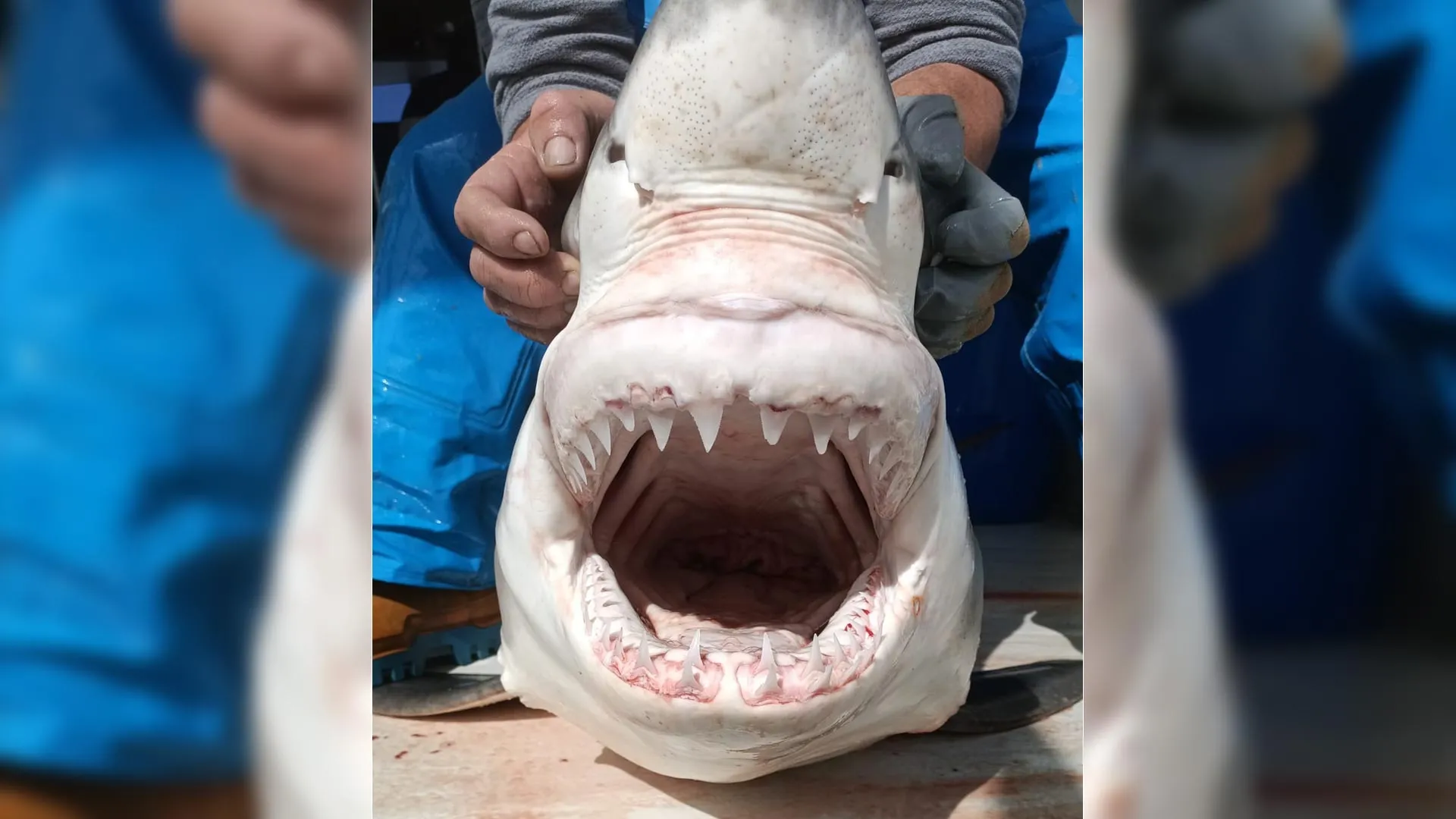
The incident, reported by Pensoft Publishers, took place on April 20, 2023, when local fishermen accidentally caught a young shark off the eastern coast of Spain. The juvenile measured approximately 210 centimeters in length and weighed between 80 and 90 kilograms.
While the physical encounter occurred in 2023, the full scope of the discovery was only revealed on January 27, 2026, when the formal peer-reviewed study was officially published in the scientific journal Acta Ichthyologica et Piscatoria. Following its academic release, global science media broke the story to the public in June 2026, shedding light on the extensive analysis that followed the initial catch.
Although great whites are among the most well-known marine predators worldwide, confirmed sightings in the Mediterranean remain extremely uncommon.
For decades, scientists have debated whether these occasional records represent a small surviving local population or simply individual sharks moving in from the Atlantic Ocean.
What makes this discovery particularly significant is the age of the animal. As a juvenile, it raises the possibility that great white sharks may not only be passing through Mediterranean waters but could also be reproducing in the region, challenging long-standing assumptions about their presence there.
Following the capture, researchers spent nearly three years reviewing more than 160 years of historical records, including sightings, captures, and stranding reports dating back to 1862. Their analysis suggests that while these apex predators remain rare in the basin, their occurrence may be more consistent than previously assumed.
However, scientists emphasize that the evidence is still limited. A single juvenile sighting is not sufficient to confirm a stable breeding population. They also note that factors such as fishing pressure, habitat changes, and broader ecosystem shifts over time may have influenced shark distribution patterns.
Despite the uncertainty, the discovery has renewed scientific attention on the species and highlights the need for further research, including genetic studies and long-term tracking. For now, the “ghost” great white shark remains an enduring mystery, an example of how much the ocean still holds yet to be fully understood.
Rare juvenile great white shark revives 160-year mediterranean mystery.
The meeting took place at Urugwiro Village and brought together Daniel Libeskind, Founder and Principal Architect of Studio Libeskind; Nina Libeskind, Co-founder of Studio Libeskind; Stefan Blach, Partner at Studio Libeskind; and Holm Keller, Chairman of the kENUP Foundation.
The planned monument is expected to transform the Kigali Genocide Memorial in Gisozi, where more than 250,000 victims of the 1994 Genocide against the Tutsi are laid to rest, into a powerful space for remembrance, education, and reflection through cutting-edge technology and a deeply immersive, personal visitor experience.
Daniel Libeskind was born in 1946 in Poland to Jewish parents who survived the Holocaust, the Nazi murder of six million Jewish people during World War II. That history is inseparable from his work. Rather than designing buildings that simply house exhibitions, Libeskind engineers the architecture itself into the emotional experience: walls lean, floors tilt, spaces are left deliberately empty. The building becomes the story.
This is the philosophy coming to Gisozi. Here are 10 projects that show what that means in practice:
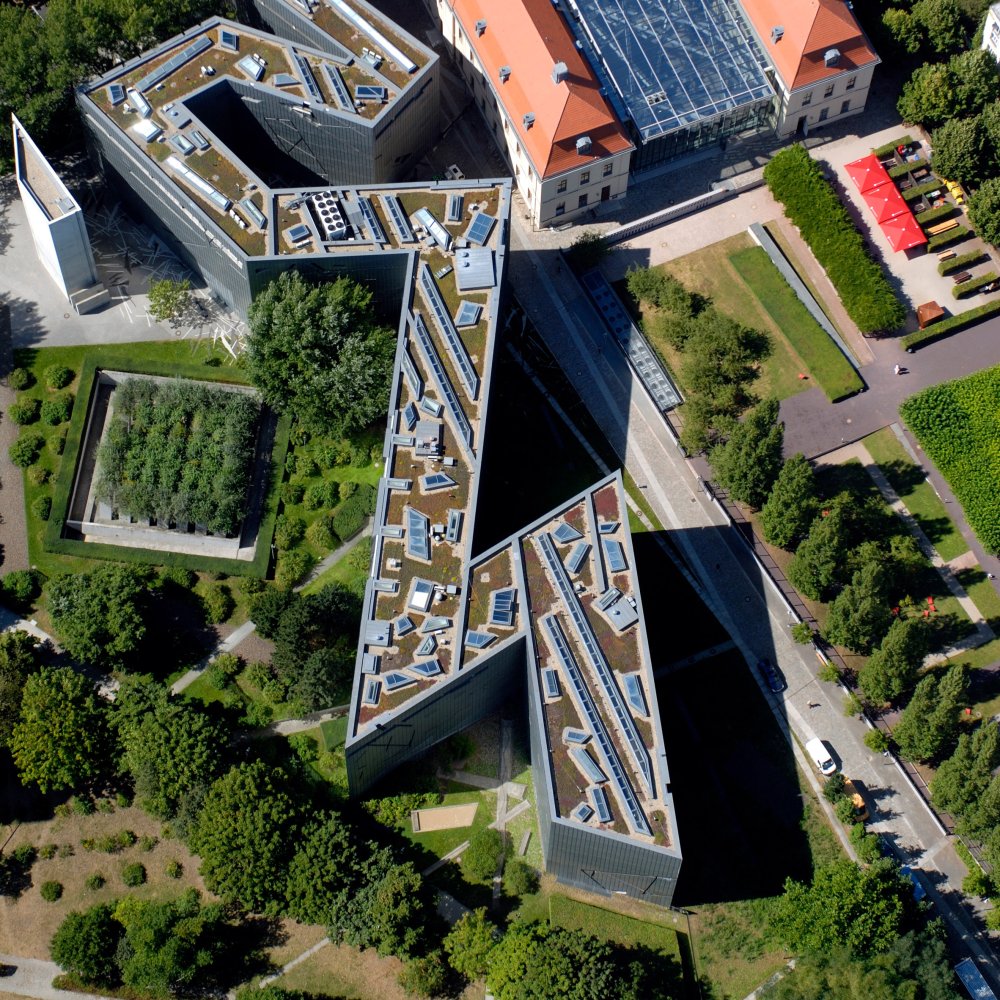
1. Jewish Museum Berlin (Germany)
This is the project that founded Studio Libeskind and established its global reputation. The titanium-zinc-clad building zigzags across its site, its surface cut by narrow, irregular windows that slash the facade like wounds.
Inside, a series of “Voids”, tall, unheated concrete chambers, cut through the building from basement to roof. Visitors can peer into them from bridges overhead but cannot enter. They represent the absence left by the six million people killed in the Holocaust: the conversations, children, and contributions that no longer exist. The emptiness is the exhibit.
Completed: 2001
Construction cost:$87 million (approx. €60 million)
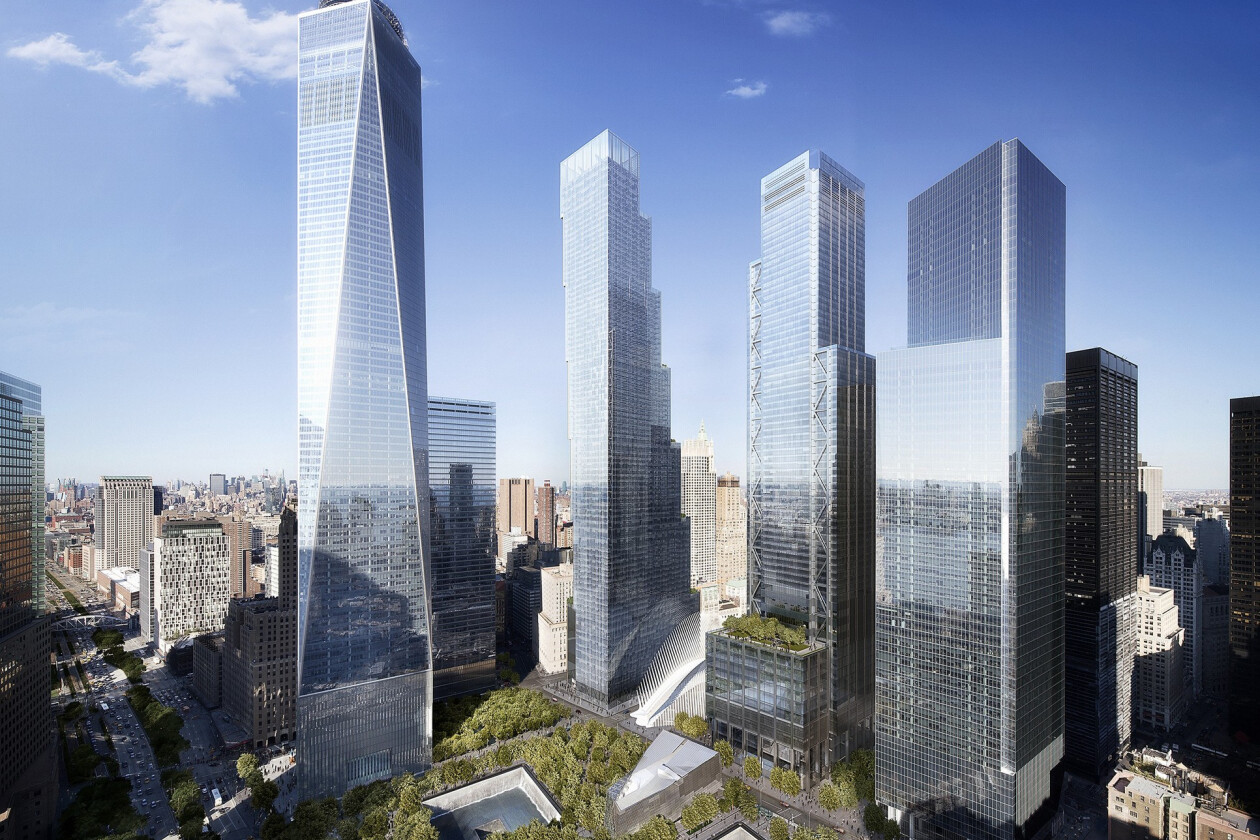
2. World Trade Center Master Plan (New York City, USA)
On 11 September 2001, nearly 3,000 people were killed when terrorist attacks brought down New York’s Twin Towers. The 16-acre site became the most scrutinised piece of land on earth. After an intense international competition, Libeskind’s “Memory Foundations” plan was selected to guide the rebuilding.
Where others proposed filling the ground with new towers immediately, Libeskind kept the towers’ footprints permanently open, the space that became today’s memorial pools. He also fought successfully to preserve a stretch of original underground slurry wall that had survived the collapse, framing it as a symbol of resilience. It remains visible to visitors at the 9/11 Memorial Museum today.
Completed: 2003 (master plan selected); site construction 2006–2016
Construction cost: Total site redevelopment cost over $20 billion. One World Trade Center alone cost $3.9 billion, making it the most expensive skyscraper ever built in the United States at the time.
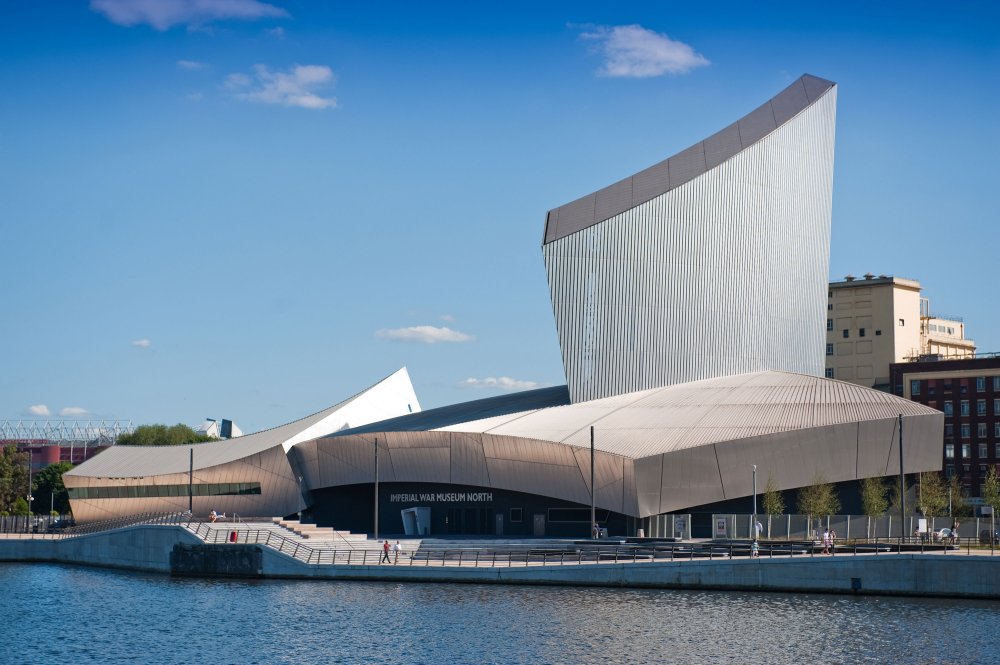
3. Imperial War Museum North (Greater Manchester, UK)
During World War II, the Trafford Park area of Greater Manchester, home to factories producing Lancaster bombers and Rolls-Royce aircraft engines, was targeted in the Manchester Blitz. Over two nights in December 1940, 684 people were killed. The Imperial War Museum’s northern branch was built on that same bombed waterfront.
The building is composed of three interlocking aluminium-clad shards representing war on earth, in the air, and on water, fragments of a globe shattered by conflict. Inside, floors curve subtly underfoot and walls lean at unsettling angles. There are no comfortable right angles. The disorientation is deliberate: Libeskind wanted the building itself to produce the instability of wartime before a single exhibit is read.
Completed: 2002
Construction cost: £28.5 million (approx. $40 million). Originally budgeted at £40 million, the project was completed under budget after funding shortfalls led to design economies including substituting metal for concrete in the shards.
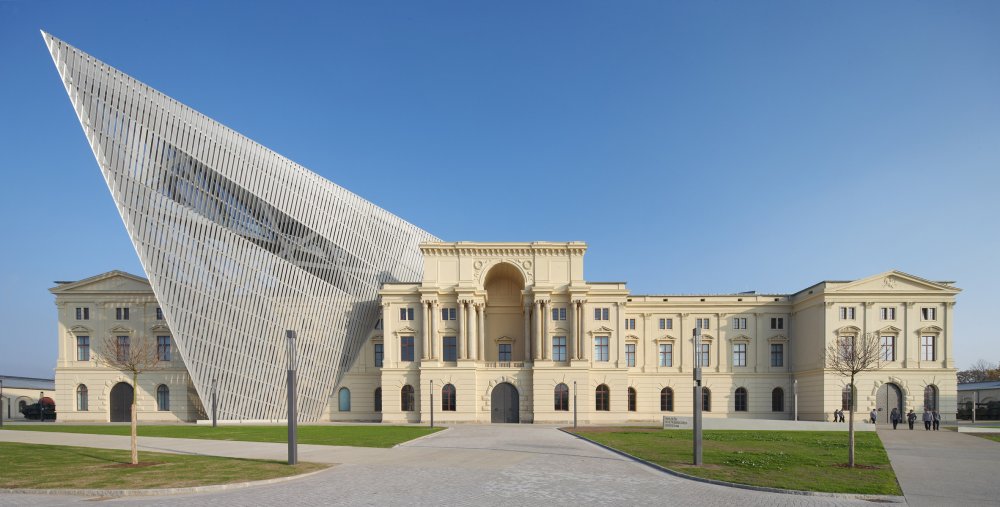
4. Military History Museum of the Bundeswehr (Dresden, Germany)
In February 1945, British and American bombers conducted devastating raids over Dresden, creating a firestorm that killed tens of thousands of civilians. Decades later, Libeskind was asked to transform the city’s neoclassical military arsenal, originally completed in 1876, from a glorification of military power into an honest reckoning with war’s costs.
His response was to drive a massive five-storey steel-and-glass wedge straight through the centre of the old building. The contrast between nineteenth-century stone and sharp modern glass is deliberately violent: authoritarian order cracked open. The tip of the wedge points in the direction from which Allied bombers approached on those February nights, a permanent, silent gesture anchoring the building to the city’s defining wound.
Completed: 2011
Construction cost: €48 million (approx. $65 million), funded entirely by the German federal government.
5. National Holocaust Monument (Ottawa, Canada)
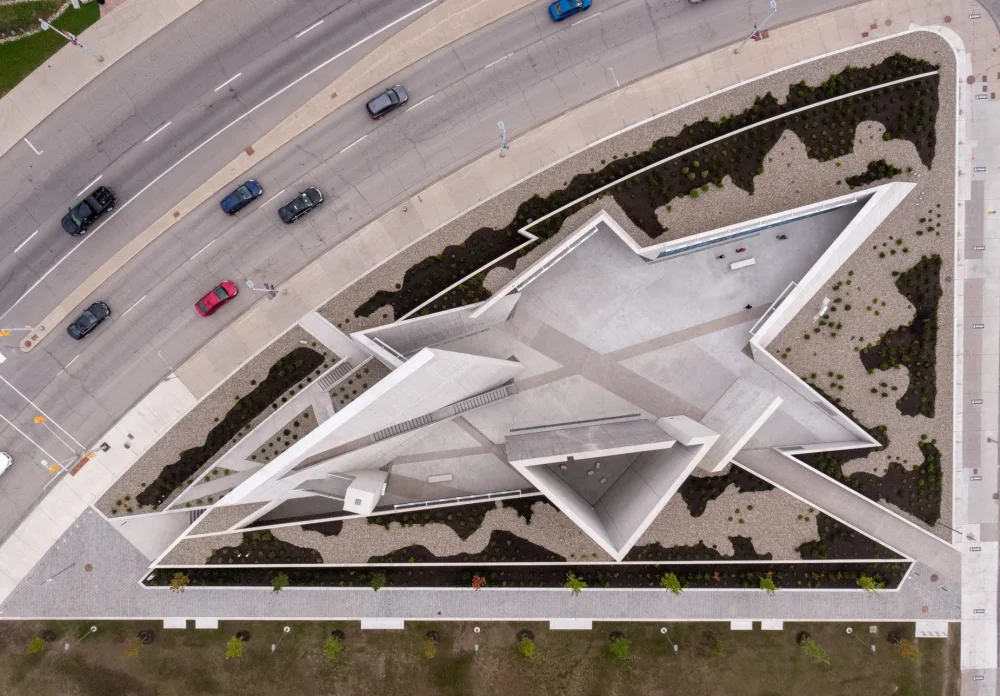
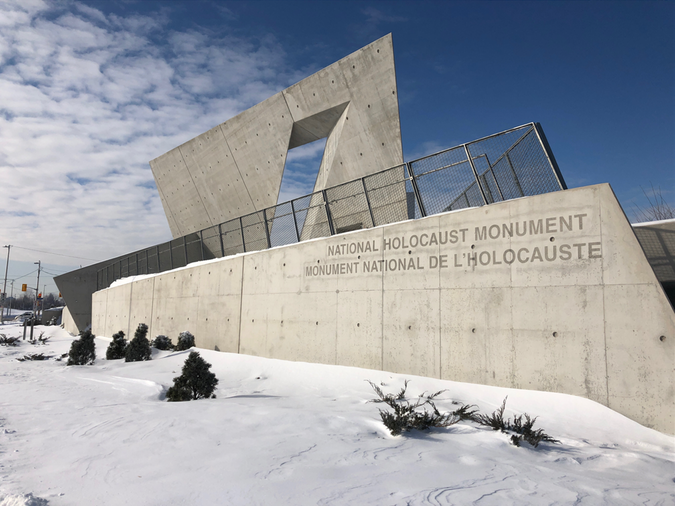
Canada’s national Holocaust memorial features six raw concrete volumes that, viewed from above, form a fractured Star of David, the ancient symbol of Jewish identity, broken apart. Visitors move through narrow, oppressive concrete corridors that gradually open upward to the sky: confinement giving way to hope.
The interior walls carry large monochromatic photographs by artist Edward Burtynsky, laser-etched directly into the concrete, haunting wide-angle images of European death camp landscapes. History is not displayed on a panel to be walked past. It is built into the walls themselves.
Completed: 2017
Construction cost:C$7.2 million (approx. $5.6 million USD), split between the Canadian government and private donors.
6. Reflections at Keppel Bay (Singapore)
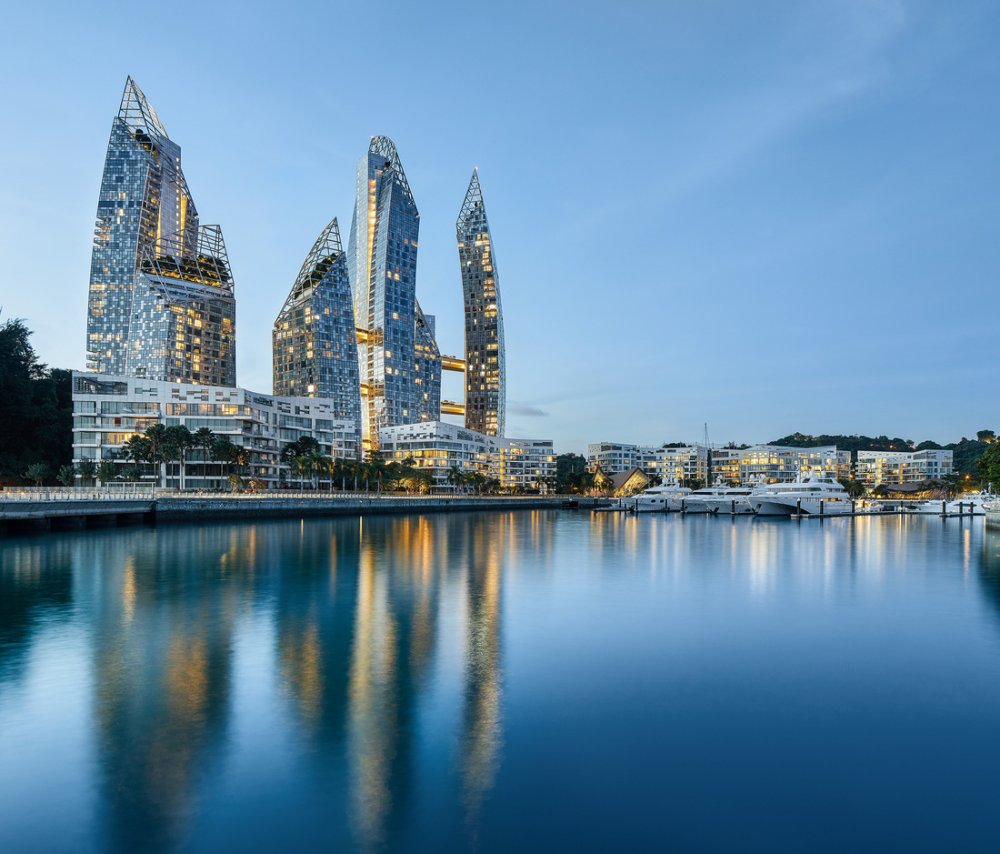
Not every Libeskind project is a memorial. This luxury waterfront development—six curved glass towers between 24 and 41 storeys, demonstrates that the studio’s philosophy translates equally into the architecture of everyday life.
In a city defined by residential uniformity, the development was designed so that no two apartments across the entire complex share the same floor plan or view. Shifting angles, alternating orientations, and changing crown geometry give every home its own character. It is Libeskind’s argument, made in glass and steel, that people deserve to live in spaces shaped for them, not mass-produced around them.
Completed: 2011
Construction cost: Construction cost not publicly disclosed. The development sold 1,129 luxury apartments across a 750-metre waterfront site, with unit prices at the time of sale ranging from SGD $1.5 million to over SGD $10 million.
7. Złota 44 (Warsaw, Poland)
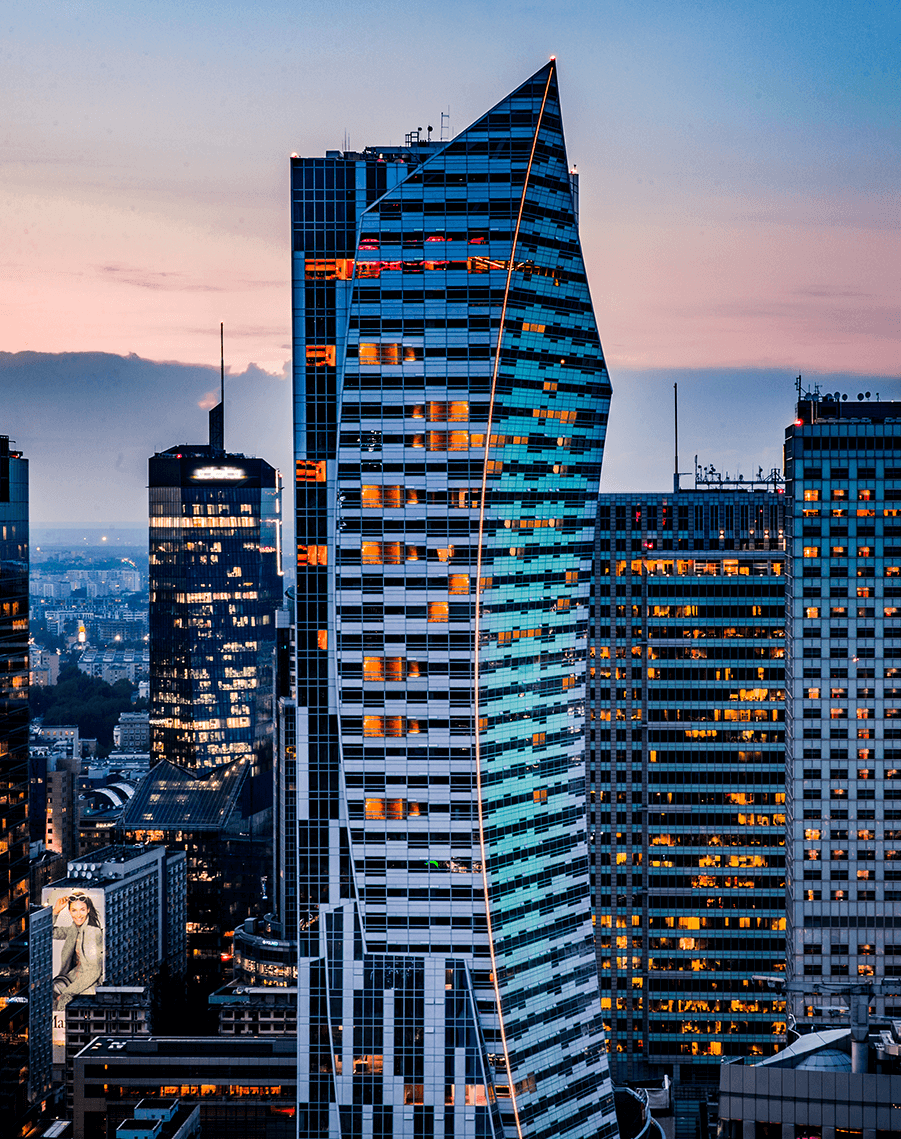
Warsaw was systematically destroyed by Nazi Germany during World War II, over 85% of the city razed. That it stands today, rebuilt and thriving, is one of history’s great acts of collective will. It was into this city that Libeskind returned to build his first major project in his birth country.
The 52-storey, 192-metre luxury residential tower’s sweeping glass facade curves upward in the shape of an eagle’s wing, Poland’s national emblem, representing freedom and sovereignty. Across the street, the heavy communist-era Palace of Culture looms. Złota 44 rises in direct contrast: light, fluid, and forward-looking.
Completed: 2016
Construction cost: Estimated €163 million (approx. $175 million) construction cost. The project faced severe financial difficulties; the original developer sold it midway through construction for just €50 million after significant losses.
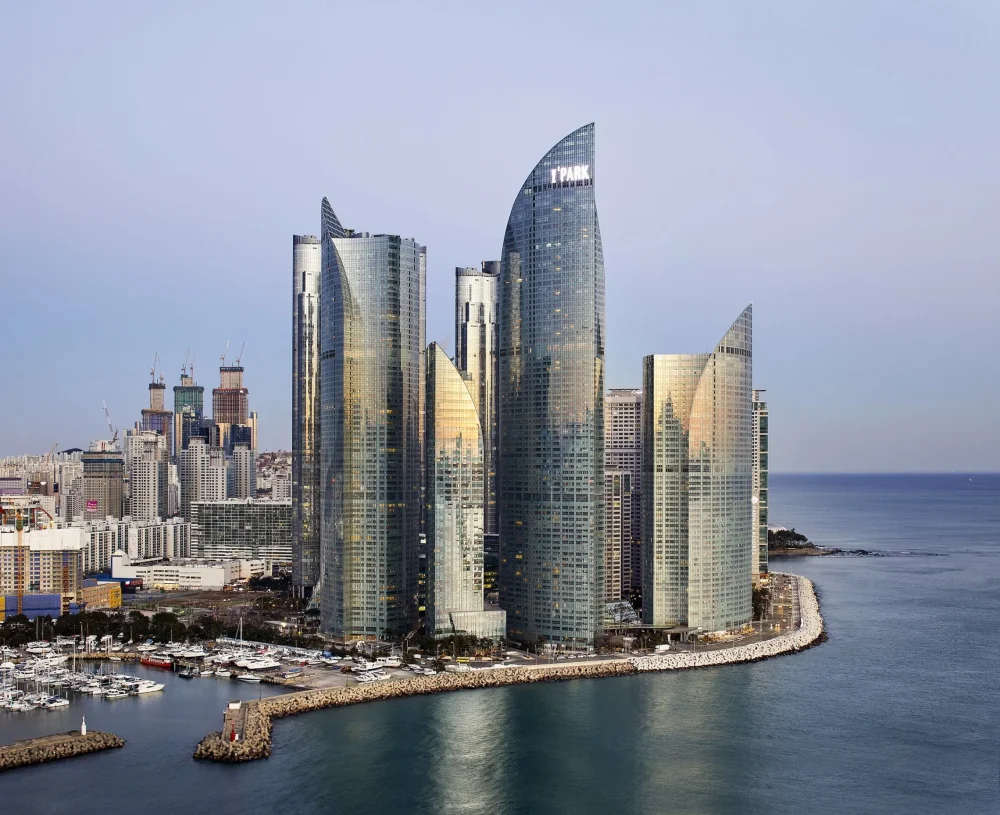
8. Haeundae Udong Hyundai I’Park (Busan, South Korea)
Busan is South Korea’s second largest city and its largest port, a place whose identity is inseparable from the ocean. This waterfront development comprises three residential towers, the tallest reaching 72 storeys, alongside a hotel, offices, and retail.
Each tower was mathematically modelled to present a completely different silhouette depending on the angle of approach, the buildings seem to shift and breathe as you move around them. The curves draw on Korean natural tradition: ocean waves, wind-filled sails. The result is a large-scale modern complex that belongs unmistakably to the coastline it occupies.
Completed: 2011
Construction cost: Construction cost not publicly disclosed. The full 4.5-million-square-foot mixed-use development is one of the largest residential complexes in South Korea.
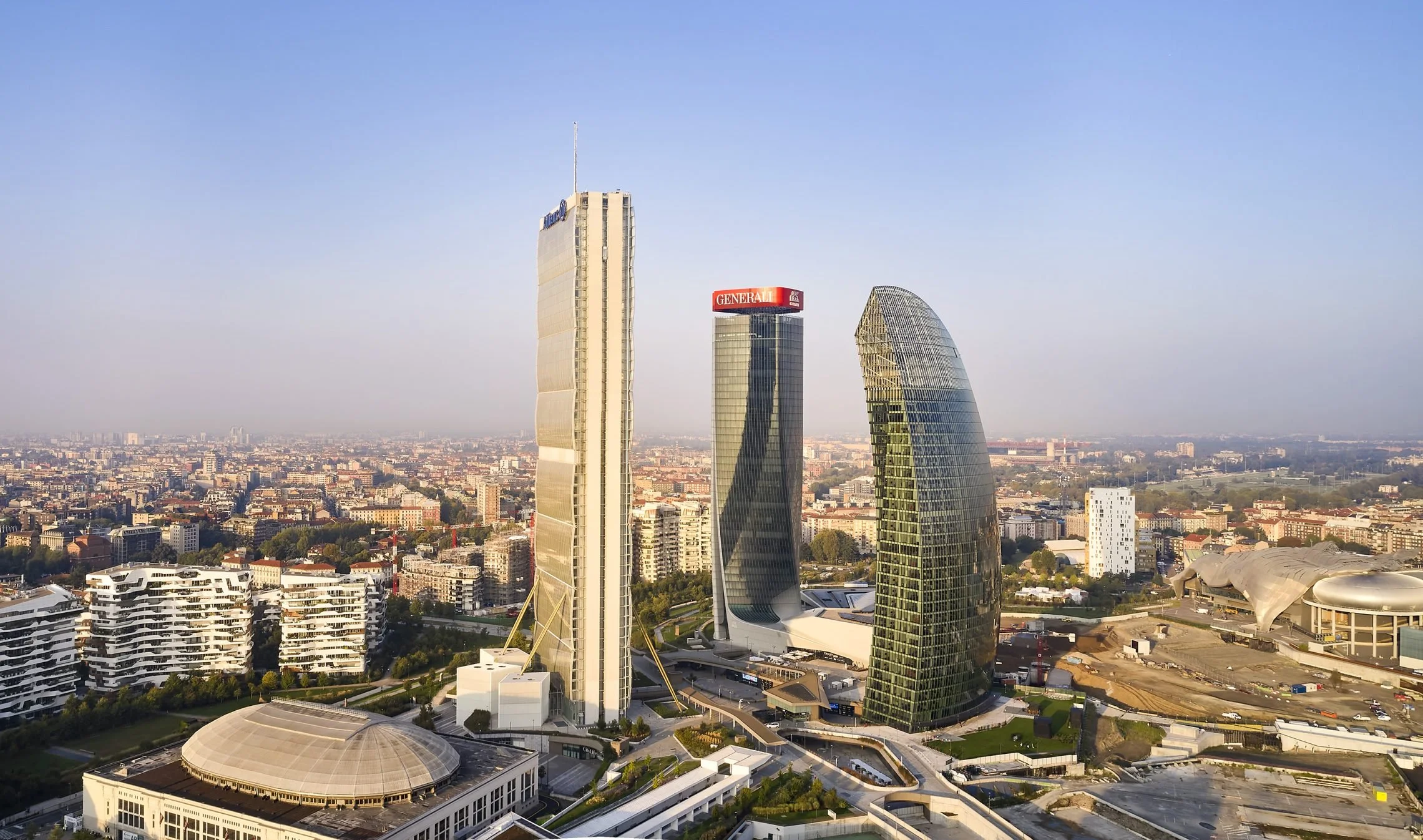
9. PwC Tower / CityLife Master Plan (Milan, Italy)
Part of a major regeneration of Milan’s historic fairgrounds, this 175-metre office tower, known locally as Il Curvo (The Curved One), tilts and arcs in a single clean geometric sweep from base to summit. In a skyline of vertical towers, its curve is immediately legible from across the city.
The design is a contemporary reinterpretation of the arcing forms found throughout Italian architectural history, translated into glass and steel. A building that speaks to where it stands rather than ignoring it.
Completed: 2020
Construction cost: Construction cost not publicly disclosed. The broader CityLife masterplan, encompassing three towers by Libeskind, Zaha Hadid, and Arata Isozaki, plus residential and retail, represents a total investment of over €2 billion.
10. Infinity Towers (Shanghai, China)
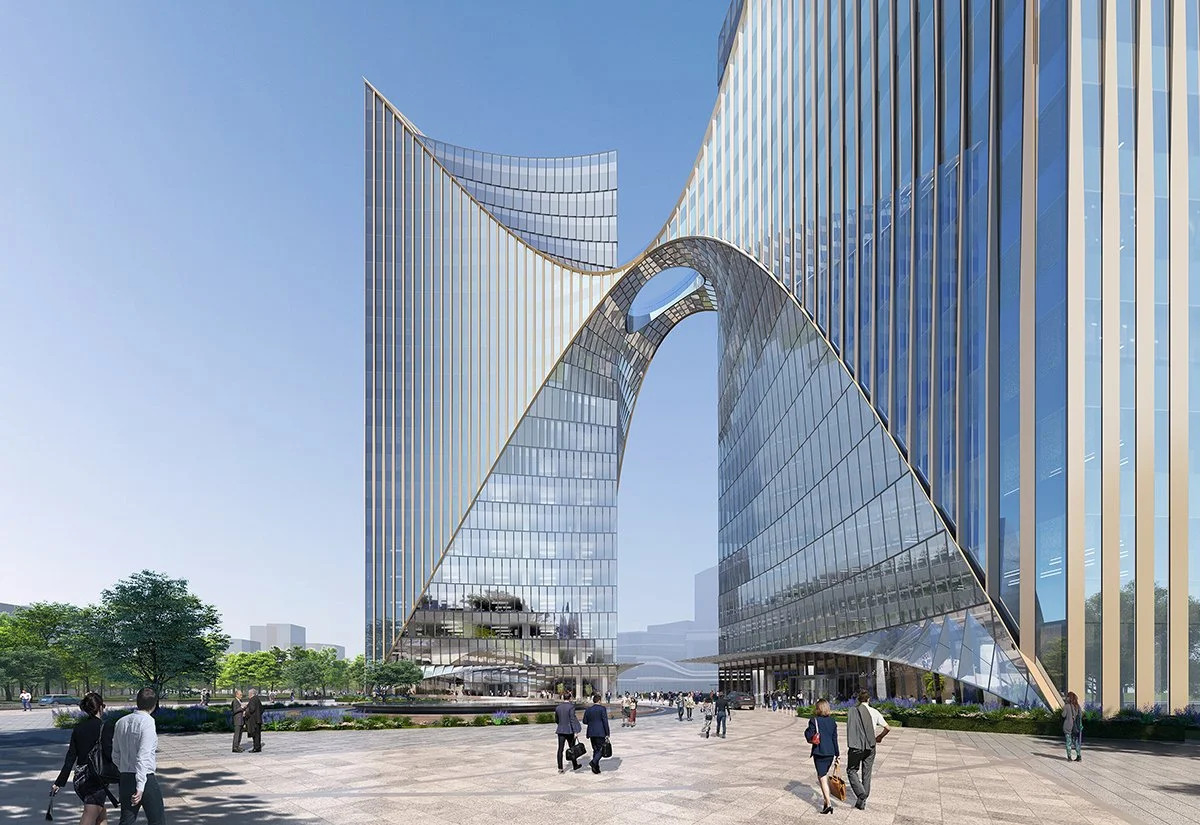
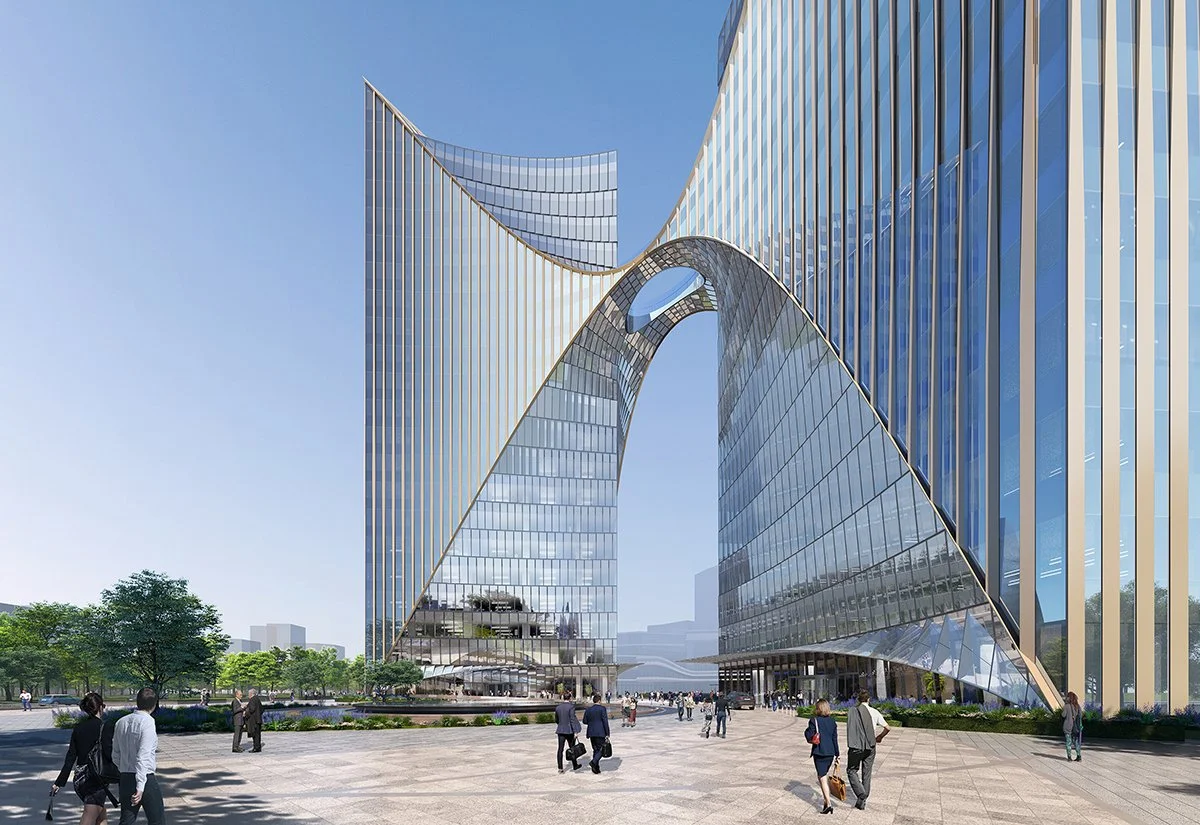
Currently under construction for the Lingang Group, these twin 100-metre commercial towers twist as they rise, their forms designed to evoke two dancing cranes, ancient Chinese symbols of longevity and wisdom, leaning toward each other mid-step.
The towers are connected at the 15th floor by a skybridge whose centre features a circular opening in the floor, looking directly down onto public water plazas below. It is a small gesture but a characteristic one: in a building designed to function, Libeskind finds the moment where structure, nature, and wonder briefly meet.
Completed: Under construction (expected completion not publicly confirmed)
Construction cost: Construction cost not publicly disclosed.
Other Notable Projects
Studio Libeskind has also designed the
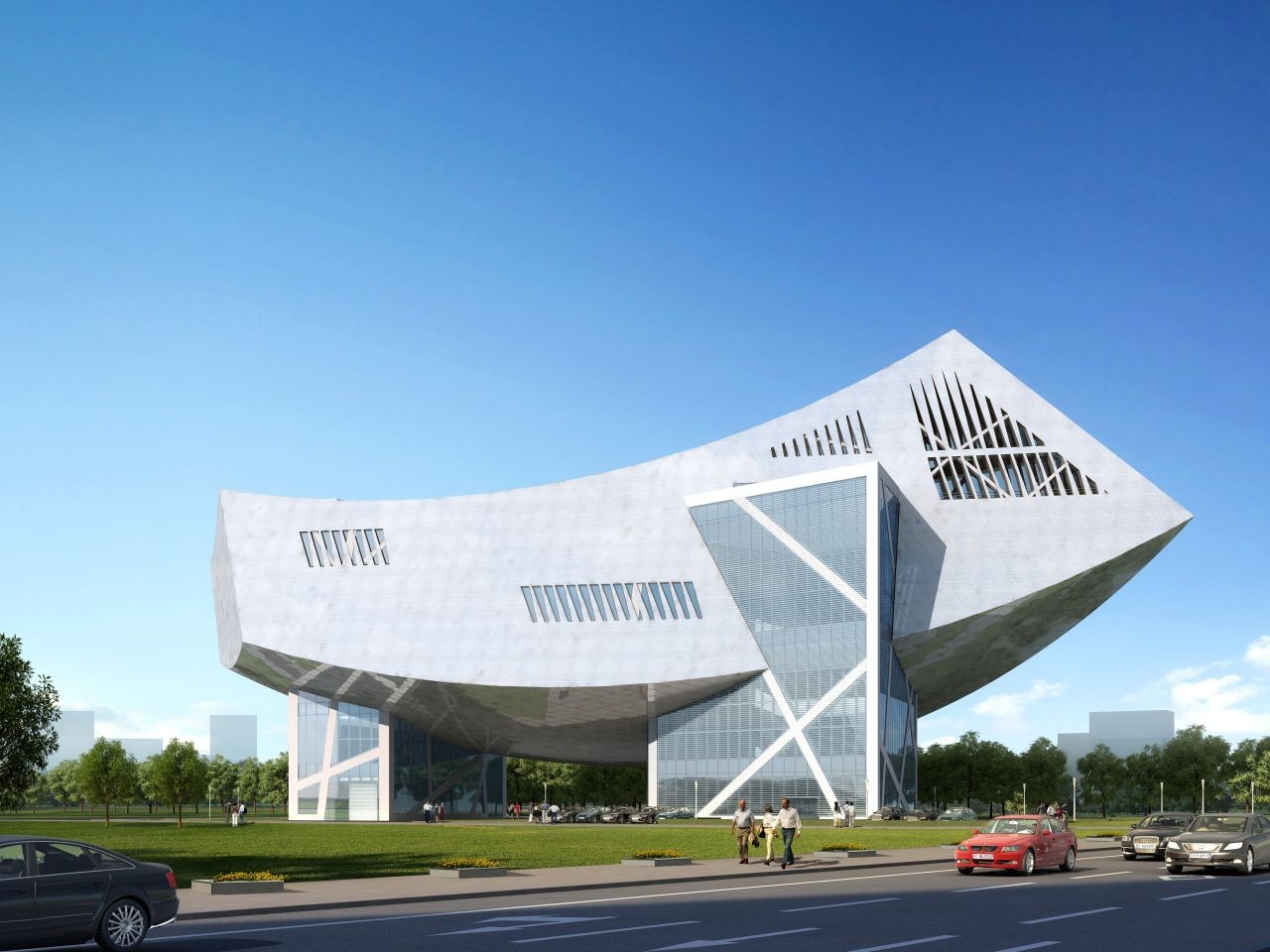
Zhang Zhidong Museum (Wuhan, China)
Tikva Jewish Museum (Lisbon, Portugal)
Modern Art Center Vilnius (Lithuania)
Danish Jewish Museum (Denmark)
The Garden of Earthly Worries
The Wheel of Conscience Crystals at CityCenter (United States)
Bord Gáis Energy Theatre (Ireland)
Run Run Shaw Creative Media Centre (Hong Kong)
Ogden Centre at Durham University (United Kingdom)
Memoria e Luce 9/11 Memorial (Padua, Italy)
Albert Einstein Discovery Center (Ulm, Germany)
Together, these projects demonstrate Studio Libeskind’s defining conviction: that architecture is not a container for history, it is a way of making history felt. It is an approach that speaks directly to what Kigali will build at Gisozi.
Zhang Zhidong Museum.Albert Einstein Discovery Center in Ulm, Germany.
Ariana Grande has recently drawn public attention after being reportedly seen spending time with her former boyfriend, Ricky Alvarez, during her stay in Austin, Texas. The sighting quickly circulated across social media, prompting renewed discussion among fans about their past relationship and current friendship.
Grande and Alvarez previously dated between 2015 and 2016, during a period when he worked as a backup dancer and was part of her professional circle.
Although their romantic relationship ended years ago, the two have been known to maintain a friendly connection, with Alvarez occasionally mentioned by fans in relation to Grande’s earlier music era.
Following the recent public attention, speculation began online regarding the nature of their interaction. However, there has been no official confirmation from Ariana Grande, Ricky Alvarez, or their representatives suggesting any romantic reunion.
At this stage, their reported meeting is understood to be a casual and friendly interaction between two people who share history.
Ricky Alvarez and Ariana Grande attended The Creators Party, presented by Spotify, held at Cicada in Los Angeles, California.
The renewed interest also comes at a time when Grande continues to remain in the spotlight due to her ongoing music and acting projects, including her involvement in major entertainment productions and public appearances connected to her career.
As with many high-profile celebrities, even ordinary social interactions often become the subject of intense public discussion and interpretation.
Fans have also revisited Grande’s earlier music, where references to past relationships including Alvarez were once part of her lyrical storytelling. This has further fueled online conversation, though such interpretations remain speculative and not indicative of current events.
As of now, there is no verified information confirming any romantic development between Ariana Grande and Ricky Alvarez.
Ariana Grande and Ricky Alvarez spark online discussion after being seen together in Austin, reigniting public interest in their past connection.
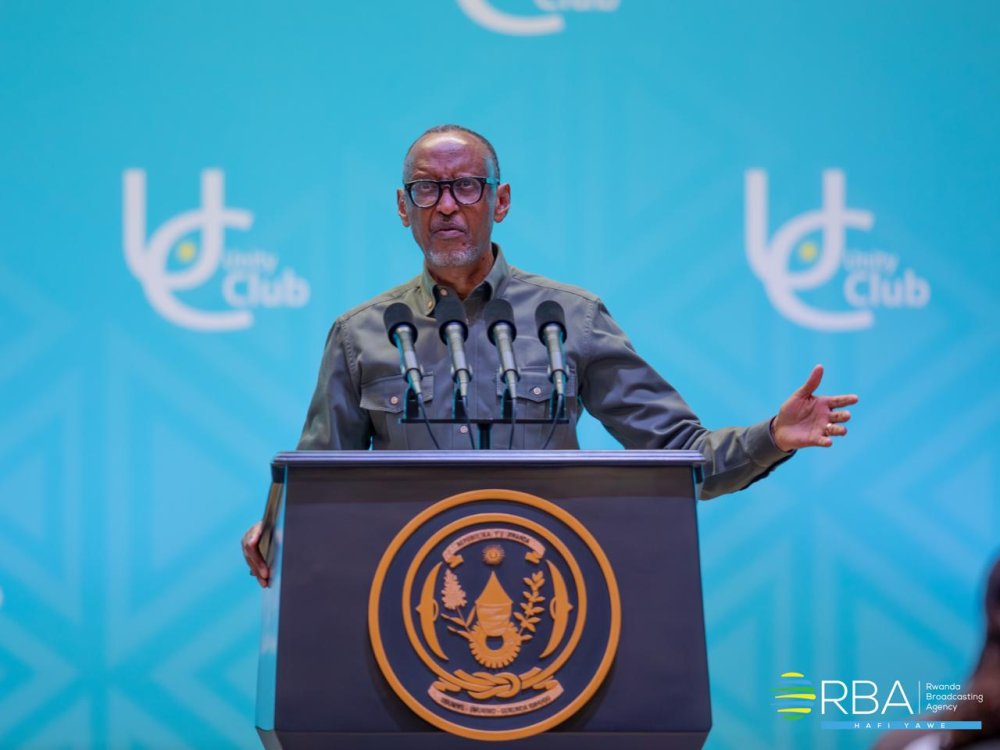
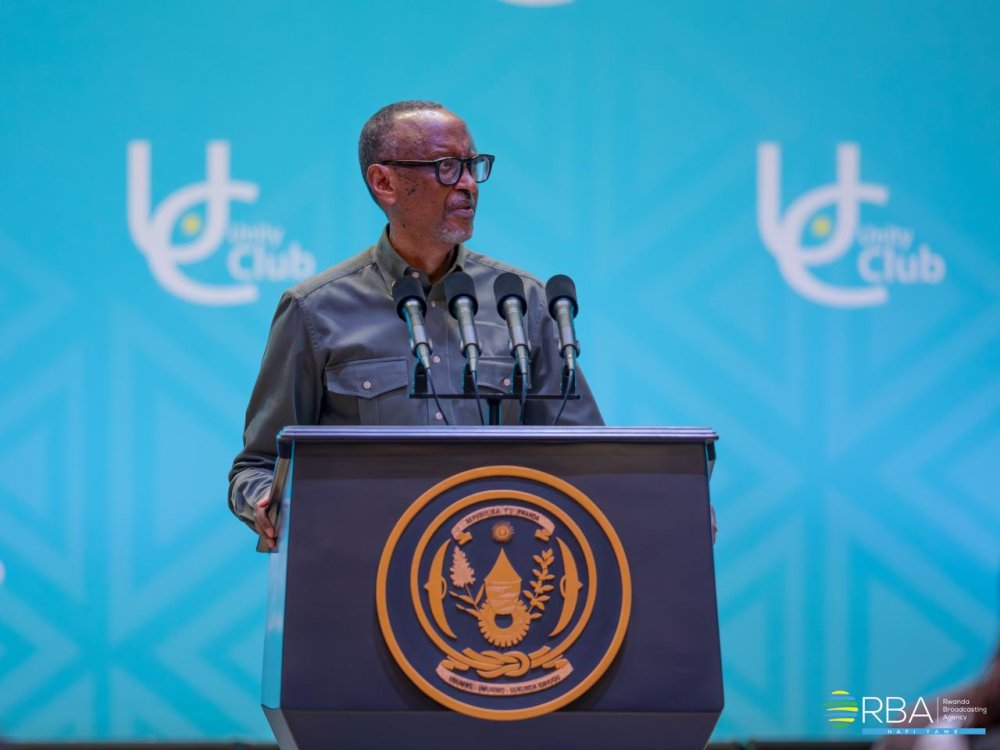
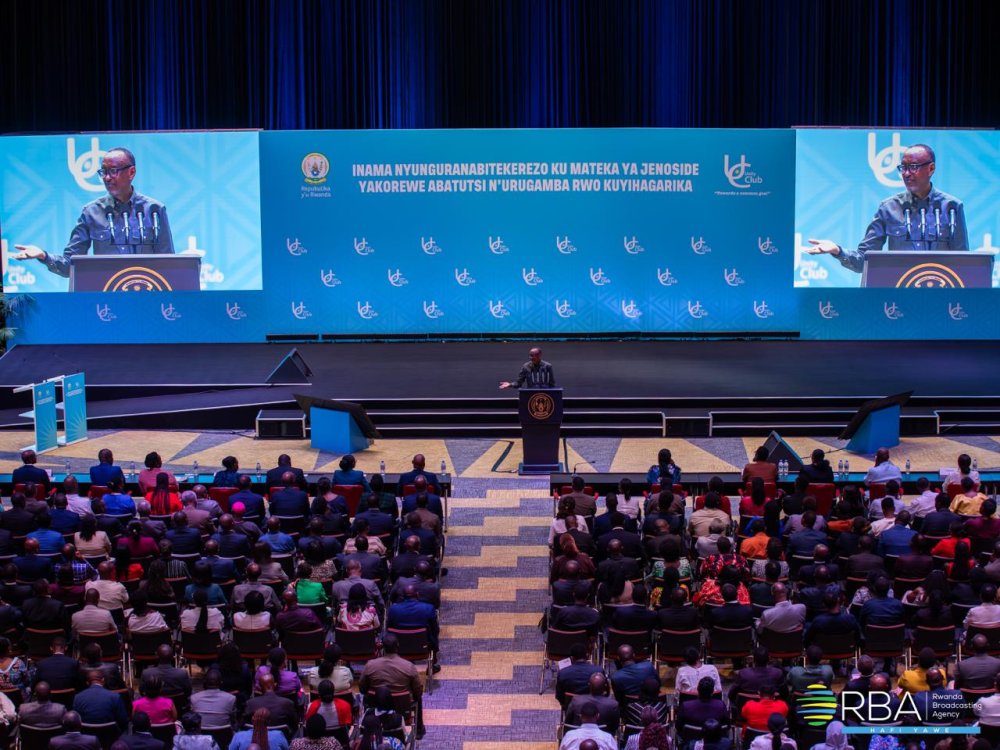
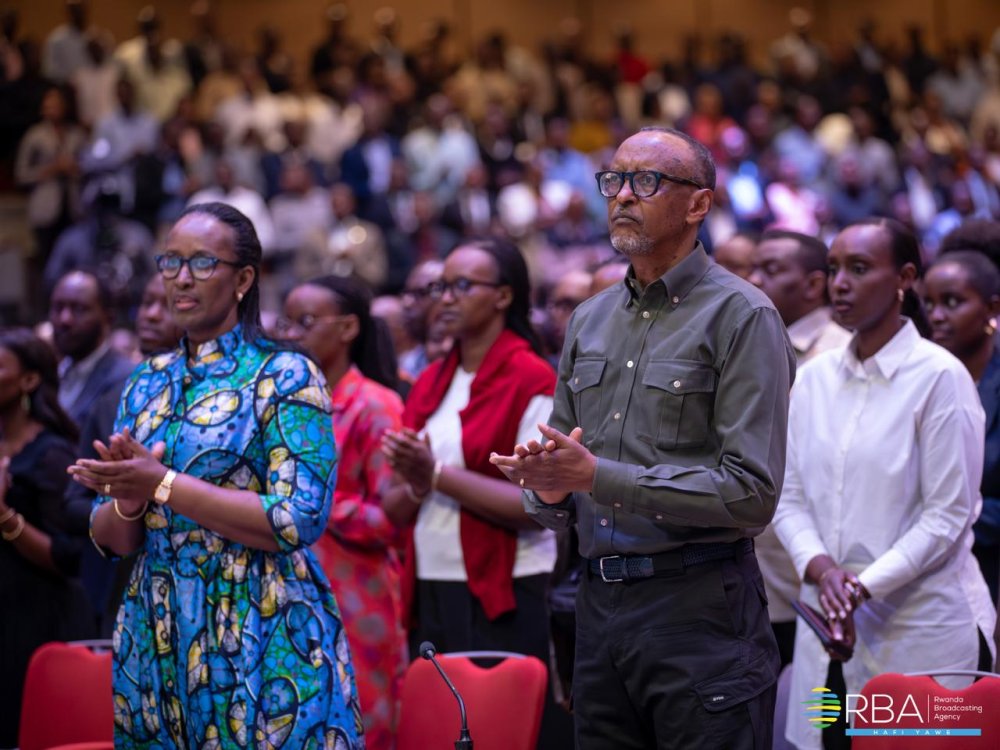
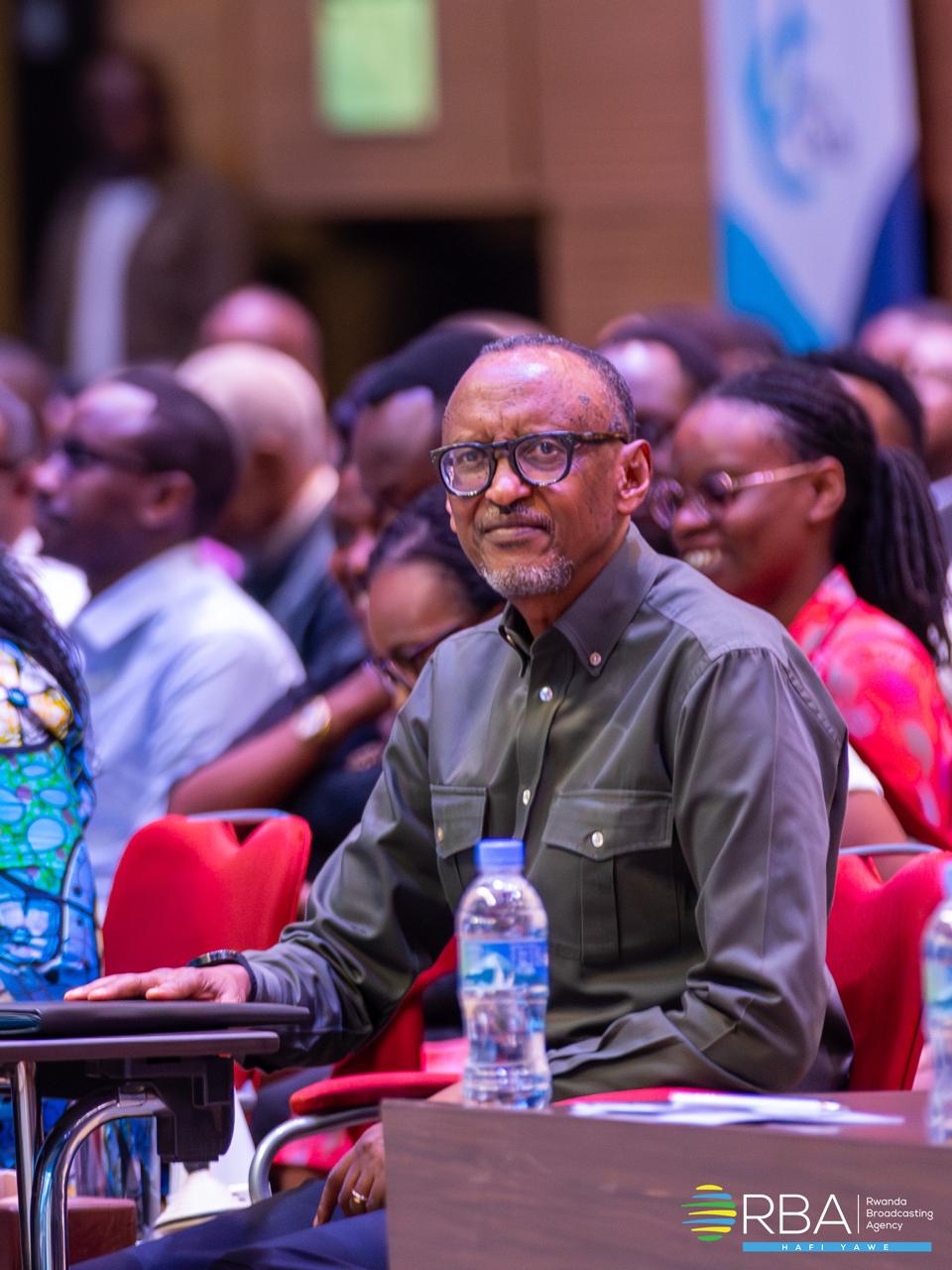
He made the remarks on Saturday at Intare Arena, where he and First Lady Jeannette Kagame joined members of Unity Club and other leaders in a dialogue on the history of the Genocide against the Tutsi and the Liberation War that ended it.
The discussions focused on the events that led to the 1994 Genocide against the Tutsi, the role of those who planned and executed it, and the Liberation War that stopped the genocide and restored the country, paving the way for national recovery and renewed unity among Rwandans.
President Kagame said the history of a country such as Rwanda is often contested because people interpret it through different perspectives shaped by their involvement, interests, or connection to past events.
He noted that historical accounts are sometimes distorted or selectively interpreted, adding that such disagreements are partly understandable given the differing roles and experiences of those involved, as well as interests that may have influenced past actions.
“History of a country like ours and what we went through involves many things that people even distort and turn into something it is not or should not be. There are many debates, which is understandable, and they are justified because how one person understands things is not how another understands them, depending on the role people played or had in them, depending on the interests that may have been involved earlier, even when it later becomes clear that those were not the right interests to guide actions in history.”
President Kagame made the remarks on Saturday at Intare Arena, where he and First Lady Jeannette Kagame joined members of Unity Club and other leaders in a dialogue on the history of the Genocide against the Tutsi and the Liberation War that ended it.
President Kagame said that discussions about history are often complicated by factors such as denial, discomfort, or reluctance to acknowledge responsibility.
“There are many things involved. There is shame as people feel uncomfortable with the role they played or their connection to it, and they do not want to revisit it. That is understandable. But what is more important is trying to go beyond that and work towards gathering everything so it becomes a truth we can base other actions on,” he noted.
The Head of State emphasized that some truths are supported by clear evidence or testimonies, including from individuals acknowledging their own involvement.
“There is also truth that cannot be reversed or reinterpreted because of evidence. Or even evidence where some people admit: ‘This is what happened! What I said about myself is true.’”
President Kagame said that when individuals acknowledge their role, continued debate becomes unnecessary, and attention should shift to lessons that support positive change.
“If the person themselves tells you that, what more debate is there? Instead of arguing, you should take the lesson and use it to achieve what we want. Many of these debates often come from those who, instead of saying ‘What has been said about me is true, and I am ready to start from there and change to become a better person,’ they instead resist it.”
He further noted that some individuals remain resistant to accepted accounts of history and attempt to reshape or reinterpret events, but stressed that the country cannot be held hostage by such positions.
“Many remain stubborn for the reasons I mentioned, which is understandable. But the country cannot be held hostage. Even when a country allows certain things and gives space for people to better understand what they previously misunderstood, that space is given, and it should be given, but it must have limits,” he remarked.
“The country cannot be held hostage by people who want history to be as they wish or to be understood in a way that is not how it truly is. All those debates should have space, research should happen, many things should take place in the search for truth, and they should be given adequate time,” he added.
President Kagame noted that historical accounts are sometimes distorted or selectively interpreted.
President Kagame said Rwanda has already provided sufficient space for discussion, research, and the pursuit of historical truth, but cautioned that such space should not be misused to distort facts or mislead the public.
“And I think over the years that space has been provided or has been available, except if we misuse it. But again, as human beings, we know people have issues.”
He observed that resistance to truth is sometimes driven not by lack of knowledge, but by personal or emotional connections to individuals implicated in historical events, whether through family, friendship, ideology, or shared interests.
“In normal life, a person may say in their heart: ‘They are talking about someone who has a problem, who did bad things,’ but because it is their relative or friend, even when there is evidence, they try to protect that person and deny the truth, and even tell others it is not true.”
President Kagame and First Lady Jeannette Kagame joined members of Unity Club and other leaders in a dialogue on the history of the Genocide against the Tutsi and the Liberation War that ended it.
President Kagame added that in some cases, opposition to truth is motivated by fear that acknowledging certain crimes may have wider implications for those connected to them.
“Some do so because if that crime is acknowledged, even if it comes from testimony, it may eventually circle back to them. So they try to prevent it early. In other words, I have a connection with person X, who is accused of certain things. That connection is not only blood-related; it can also be ideological or based on shared beliefs.”
He further explained that in such situations, individuals may attempt to defend or protect others from accountability in order to avoid broader scrutiny.
“They then fight the truth to protect that person, sometimes a friend or relative, from being held accountable. The aim is to prevent it from spreading and people saying, ‘So you are also involved?’ or even saying that those crimes affect everyone connected to it, and asking, ‘So what about me, do I also accept it?’”
President Kagame noted that a deeper issue arises when denial goes as far as questioning whether crimes occurred at all, or suggesting that victims somehow deserved their fate.
“If it is someone who was killed, it becomes as if you are saying: ‘They deserved to die anyway! Why should they have lived?’ These are things we Rwandans have experienced, and we must find ways and solutions to address them.”
He stressed that Rwanda’s painful history cannot be ignored or bypassed, and that Rwandans have a responsibility to confront it honestly and draw lessons that guide the country’s future.
“Especially when I speak about Rwanda, I am talking about the country I am part of, where I am a Rwandan. There are others for whom this may not mean much; they may choose to live as they are. That is possible elsewhere… But in Rwanda, our country and our history, what we say is: ‘We had a very bad history, but we cannot go around it.’”
He added that while Rwanda’s past was deeply painful, it should not be allowed to define or dictate the country’s present and future.
President Kagame said Rwanda has reached a point of clarity about its values and direction, and that citizens should be prepared to defend them, even at great cost if necessary.
“That is what we should live for, and what we would even die for if necessary,” he affirmed.
The Head of State emphasized that dialogue, explanation, and persuasion have limits, particularly when continued resistance risks dragging the country back into its violent past.
“When you see it is reaching a point where it may take another direction that could return people to the bad history we know, then no! You draw a clear line. Whoever crosses it pays the price. We are not afraid of that at all!”
President Kagame said Rwanda has reached a point of clarity about its values and direction, and that citizens should be prepared to defend them, even at great cost if necessary.
The concert will feature some of Rwanda’s leading artists, including Bruce Melodie, The Ben, Kitoko, and Bwiza.
Since the tour began, all performances have been streamed on Onstage.rw, where viewers can purchase access for 5,000 Rwandan francs and watch the full concert live from start to finish.
Amani Africa, who represents Artland, the company organising the tour in partnership with Watu Wave, said those unable to travel to Bugesera should not worry, as arrangements have been made to ensure they can still follow the event online.
He noted that lessons learned from the previous two concerts have helped improve the streaming experience, making it more reliable and enjoyable for viewers.
The Bugesera concert will be the third stop of the four-part Summer Country Tour, which began in Musanze on June 13, 2026, continued in Nyagatare on June 20, 2026, and will conclude on July 4, 2026, in Rubavu.
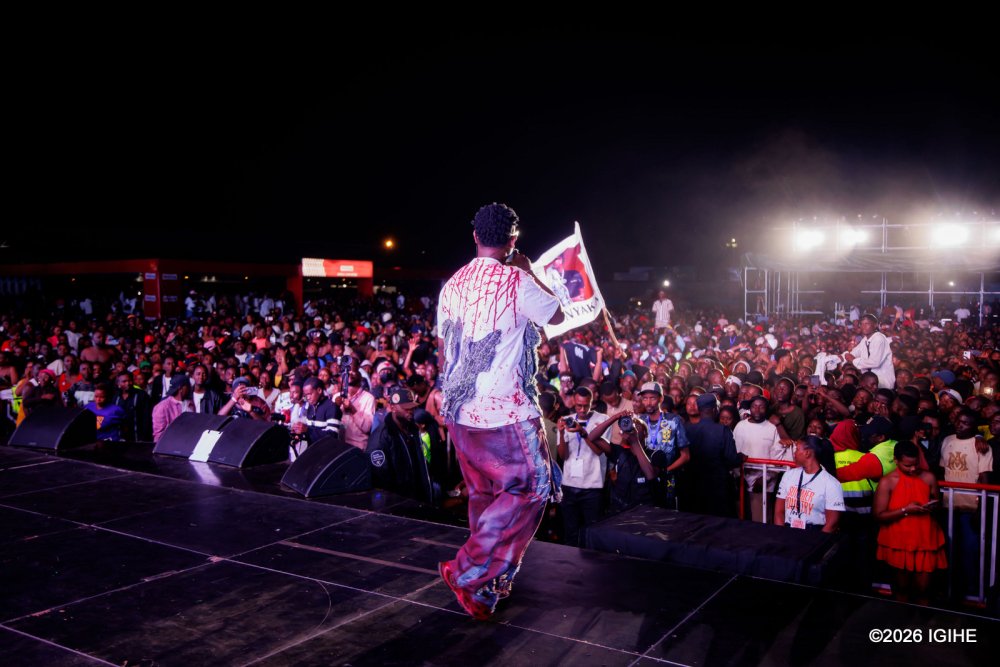
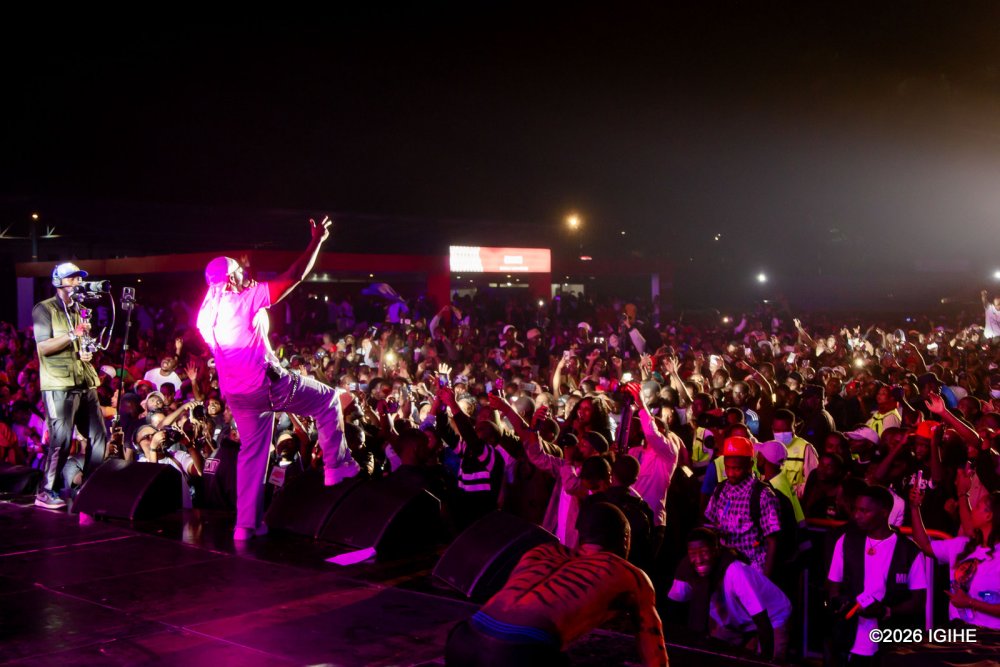
The concert has attracted a large number of music fans.Music fans attending the concerts continue to enjoy the experience.