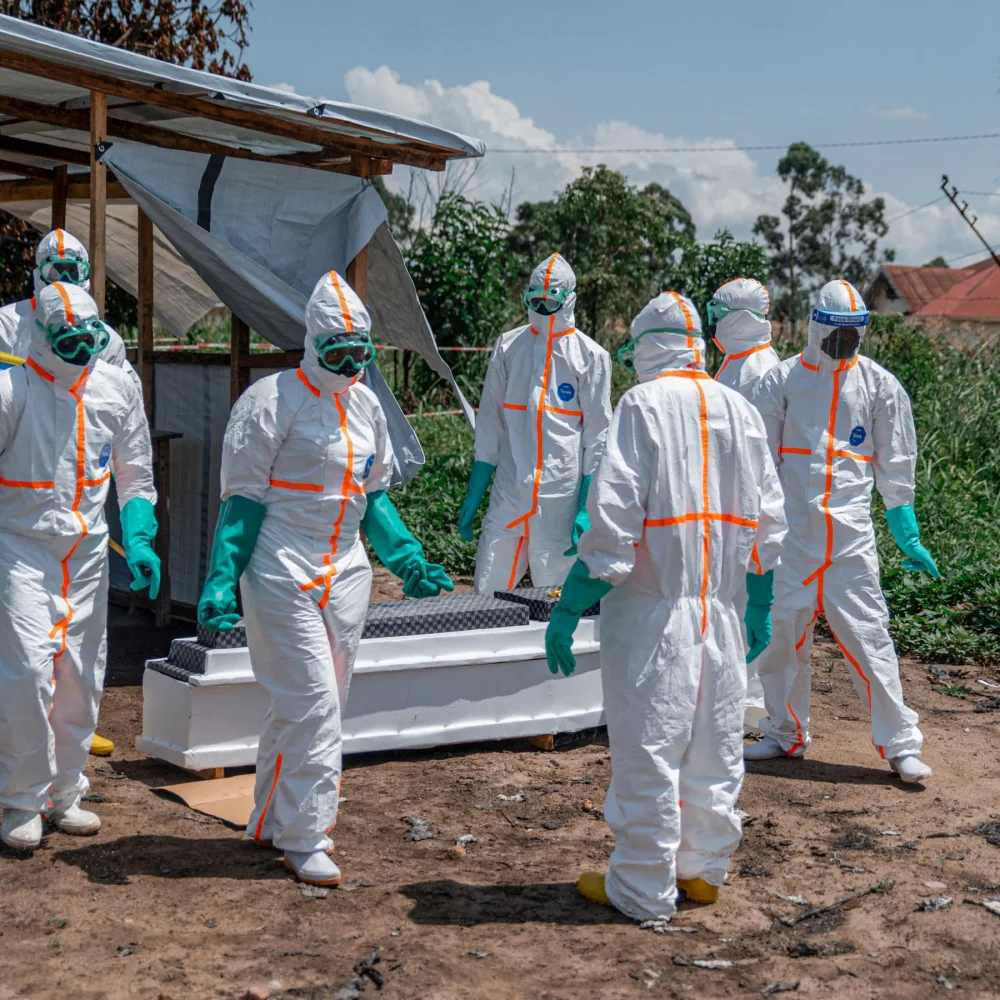
The outbreak has been reported in the eastern provinces of Ituri, North Kivu, and nearby areas. Health authorities report a case fatality rate of 26.7%.
So far, 148 patients have recovered and returned to their families, while 326 others remain under medical care in designated treatment centres. Between 24 and 25 June, health teams screened 1,175 people showing symptoms similar to Ebola, while 142,503 travellers were tested at border points.
Authorities also report progress in contact tracing, which has now reached 82.8%. This improvement is expected to strengthen efforts to contain the spread of the virus.
The outbreak was first declared on May 15 in Mongbwalu, in Ituri. This marks the 17th recorded Ebola outbreak in the country, and one of the most significant in recent years.
The current outbreak is caused by the Bundibugyo strain of Ebola, which has also spread to Uganda, where 20 cases have been confirmed, including two deaths. In France, one case has also been reported, involving a doctor who recently travelled from eastern DRC.
The World Health Organization (WHO) has warned that the Bundibugyo strain poses a serious international concern, noting that there is currently no confirmed treatment or vaccine for it.
Officials further stress that ongoing conflict and insecurity in eastern DRC are making response efforts more difficult, as medical teams struggle to access affected areas. Limited public awareness in some communities is also slowing down efforts to control the outbreak.
Over 1,200 Ebola cases have been confirmed in the DRC, with 321 deaths reported.
The graduation ceremony brought together distinguished guests, including the Guest of Honour, Dr. Mutezigaju Flora, Deputy Director General of the Rwanda Basic Education Board (REB), the Chairperson and members of the Wellspring Academy Board of Directors, the Senior Pastor of Christian Life Assembly, the Executive Director of the Wellspring Foundation for Education, alumni, parents, education partners, staff, and students.
Delivering remarks on behalf of the School Principal, Deputy Principal Mr. George Wilson welcomed guests and reflected on the significance of the occasion.
“Graduation is more than the completion of secondary education. It is a celebration of perseverance, character formation, faith, and leadership,” he said.
He also highlighted the school’s remarkable journey since its establishment in 2007 and its transition to the Cambridge International Curriculum in 2014, a milestone that expanded opportunities for students to access internationally recognised education while maintaining a strong Christian foundation.
This year, Wellspring Academy graduated 77 students, comprising 30 girls and 47 boys. To date, the school has produced 572 graduates, a growing community of graduates making a positive impact in their communities and beyond
The academy emphasised its vision of producing a new generation of servant leaders to bless Rwanda and display the best of Rwanda to the world.
The Class of 2026 distinguished itself not only through academic excellence but also through leadership, spiritual growth, and community engagement. As part of their holistic educational journey, students actively participated in leadership development and character formation.
During the Leadership and Reflection Camp held in Nyamasheke District in September 2025, they strengthened their leadership capacity through Bible study, mentorship, and team-building activities.
Addressing the graduates, Dr. Mutezigaju Flora congratulated the Class of 2026 and encouraged them to apply the knowledge, skills, and values they have acquired to contribute to Rwanda’s development.
She commended Wellspring Academy for producing disciplined, ethical, and purpose-driven graduates, emphasising that quality education remains a cornerstone of national transformation.
The graduating class was also recognised for strong academic performance and active participation in regional and international learning opportunities, including Pan-African academic programmes that broadened their perspectives and strengthened their global outlook.
Academically, the Class of 2026 was commended for its strong performance and participation in external academic platforms, including regional initiatives such as Pan-African programs.
During the ceremony, speakers underscored the importance of discipline, leadership, faith, and service as defining qualities of Wellspring Academy graduates, encouraging them to use their education to influence their professions and communities positively.
Throughout its 20-year journey, Wellspring Academy has remained committed to its mission of educating and equipping students to become highly skilled, Godly leaders, and agents of community transformation.
The school continues to equip learners with the knowledge, values, and skills needed to serve God and society with integrity and purpose.
Deputy Principal George Wilson delivers remarks reflecting on 20 years of academic excellence and transformation.
Graduates of the Class of 2026 joyfully mark the completion of their secondary education journey.Proud alumni of Wellspring Academy joined the graduation ceremony, celebrating 20 years of shaping Christ-centred servant leaders.Guest of Honour Dr. Mutezigaju Flora congratulated the Class of 2026 and encouraged them to apply the knowledge, skills, and values they have acquired to contribute to Rwanda’s development.Pastor Amos Kajuga addresses graduates and guests during the graduation ceremony.Wellspring Academy students stage a performance during their graduation ceremony in Kigali.This year, Wellspring Academy graduated 77 students, comprising 30 girls and 47 boys. To date, the school has produced 572 graduates, a growing community of graduates making a positive impact in their communities and beyond
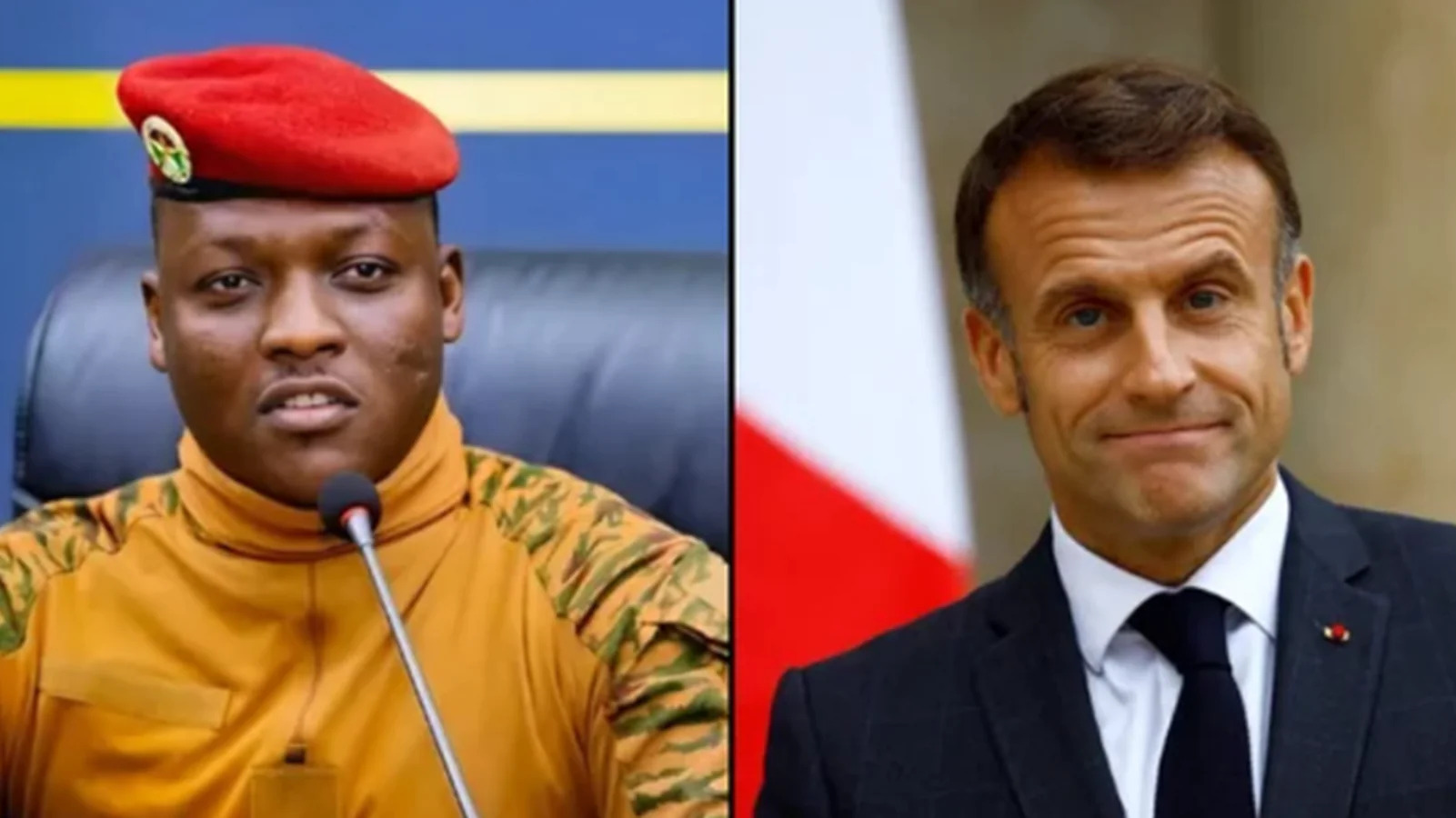
Burkina Faso’s military junta announced an immediate and total rupture of formal diplomatic ties with Paris on Friday evening. The statement, issued by the Prime Minister’s Office and communicated by Communications Minister Pingdwende Gilbert Ouédraogo, noted that the decision followed “a thorough assessment of the current state of bilateral relations.”
“The conditions essential for promoting relations based on mutual respect, reciprocal trust, respect for the principle of non-interference in internal affairs and national sovereignty are no longer in place,” the Burkinabè government declared.
The junta further accused Paris of persistent activism against Burkinabè interests, alleging “blatant neo-colonial ambitions” and active support for “subversive networks and terrorists” operating within the region.
The French Foreign Ministry responded swiftly to the announcement. Spokesperson Pascal Confavreux firmly rejected the allegations, characterizing the immediate cutoff as an unfounded decision that “illustrates the worrying drift of the Burkinabè authorities.”
Paris indicated that it is actively monitoring the safety of its remaining diplomatic personnel and expatriates, urging French citizens in the country to exercise heightened vigilance. The ministry also signaled a firm diplomatic counter-response, confirming that necessary reciprocal measures are currently under review.
Relations between Paris and several Sahelian capitals have imploded in recent years following successive military coups. Regional governments have aggressively rolled back their traditional political, military, and diplomatic reliance on the West.
France, which long maintained extensive post-colonial influence in West and Central Africa, had already withdrawn its military forces and suspended development aid to Burkina Faso in 2023.
This formal diplomatic break aligns with a broader foreign policy shift by the Alliance of Sahel States (AES), comprising Burkina Faso, Mali, and Niger, as they pivot away from European partnerships to diversify international cooperation and strengthen ties with alternative global powers.
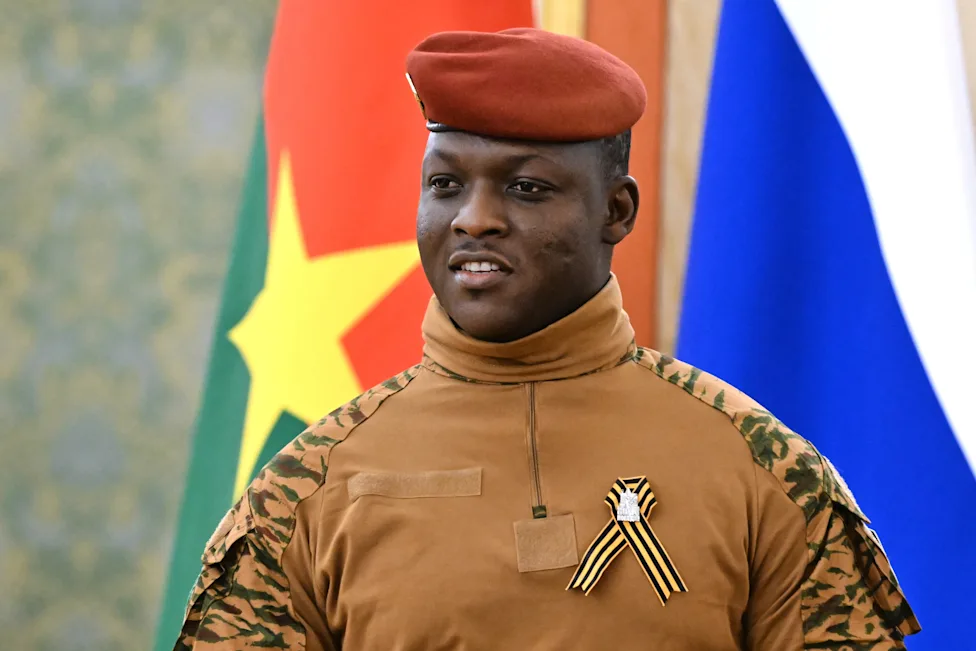
Burkina Faso’s military junta, led by Captain Ibrahim Traoré, announced the immediate and complete severance of formal diplomatic ties with Paris on Friday evening.
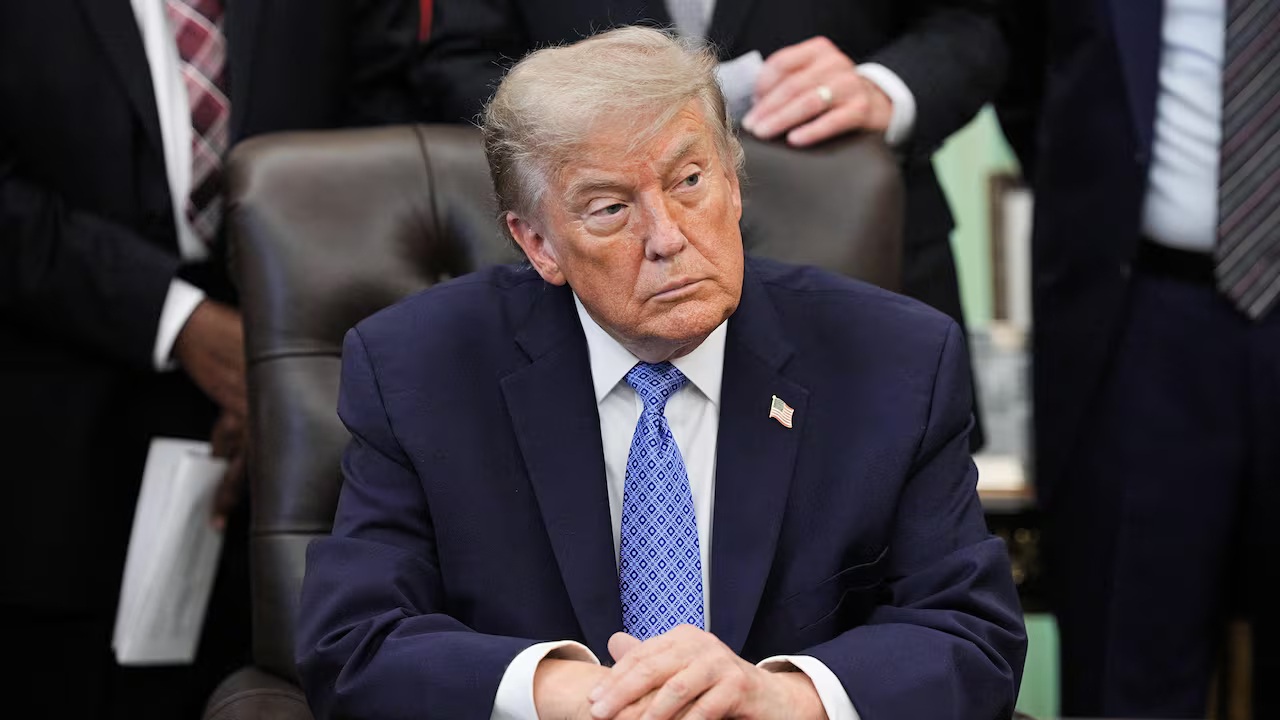
“One of the Drones solidly hit the upper deck of a large and very expensive cargo-carrying ship,” Trump wrote in a post on Truth Social.
“Damage was done, but the ship was able to proceed on its way,” he said. “We knocked down three other drones.”
Trump said the drone attack “obviously” violated the newly signed U.S.-Iran ceasefire agreement.
He did not name the ship or specify when the strike occurred. However, the British military said Thursday that a vessel had been hit by a projectile off the coast of Oman.
The International Maritime Organization, a UN agency, said Thursday in a statement that it had suspended efforts to evacuate ships stranded in the crucial global energy waterway in the wake of the drone attack.
On June 18, Iran and the United States signed the MoU to end the war in the region on all fronts, including Lebanon.
Under the MoU, the two countries agreed to 60 days of negotiations, which are already underway, toward a final agreement mainly on Iran’s nuclear program and the removal of sanctions against the country.
Trump said the drone attack “obviously” violated the newly signed U.S.-Iran ceasefire agreement.
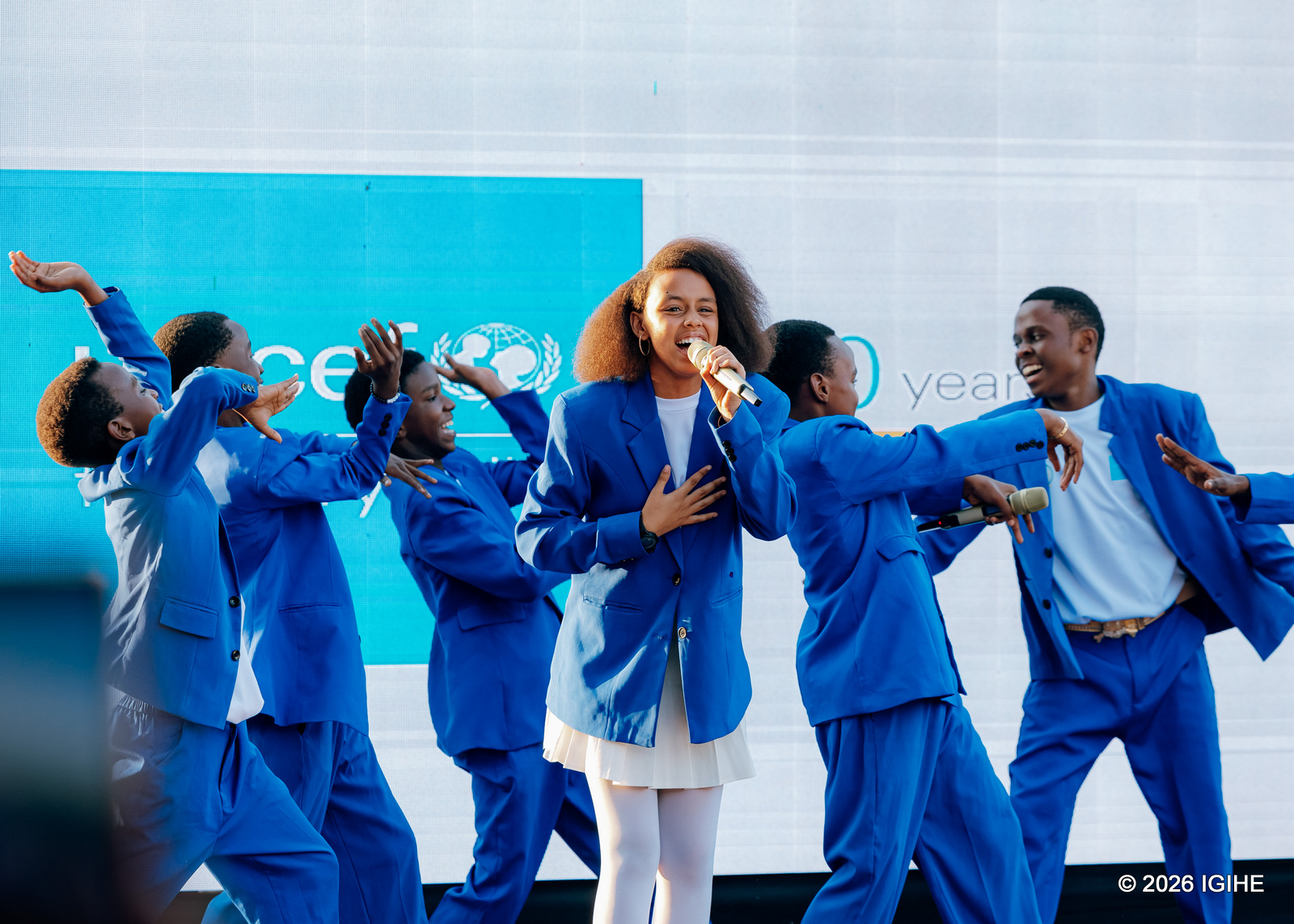
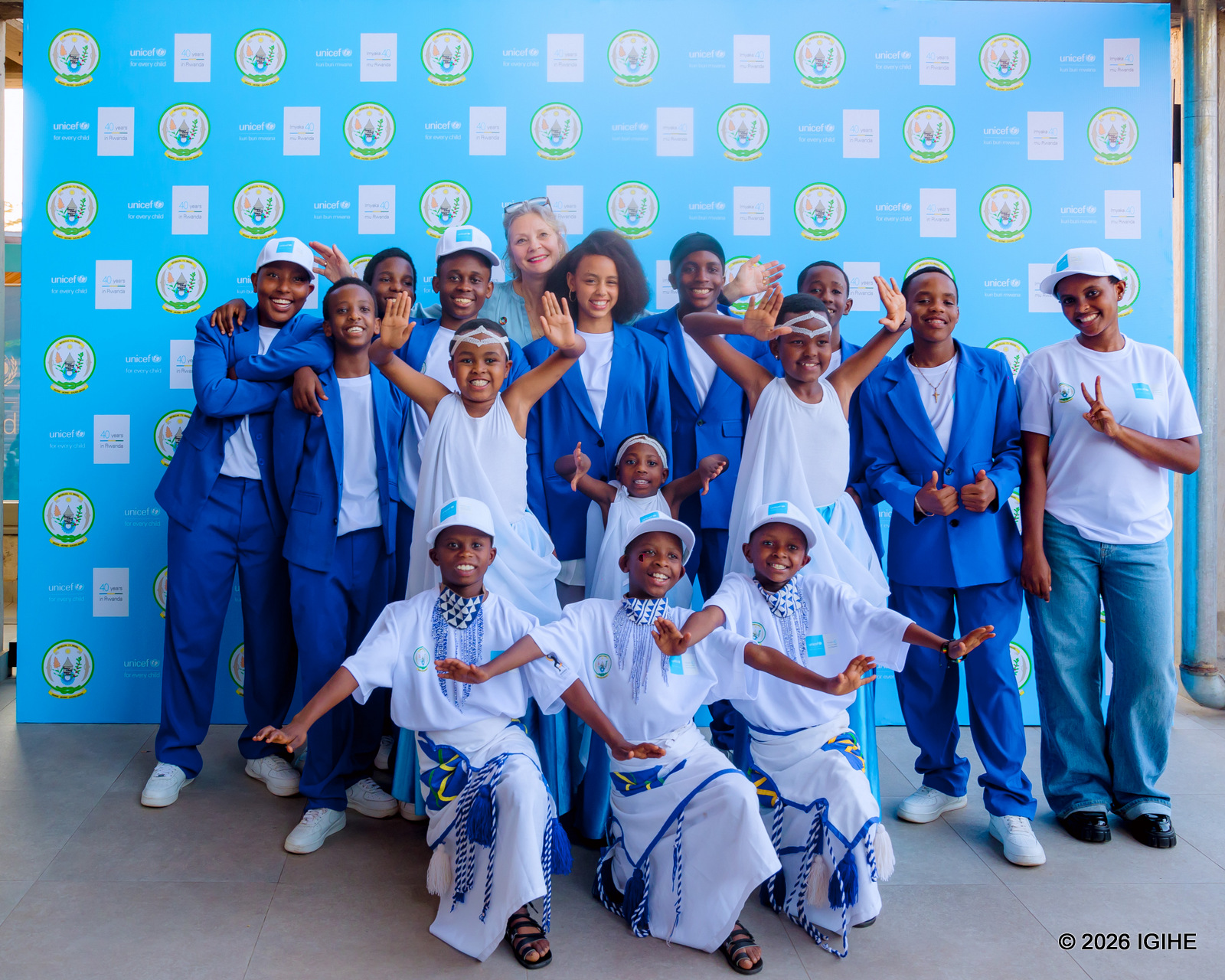
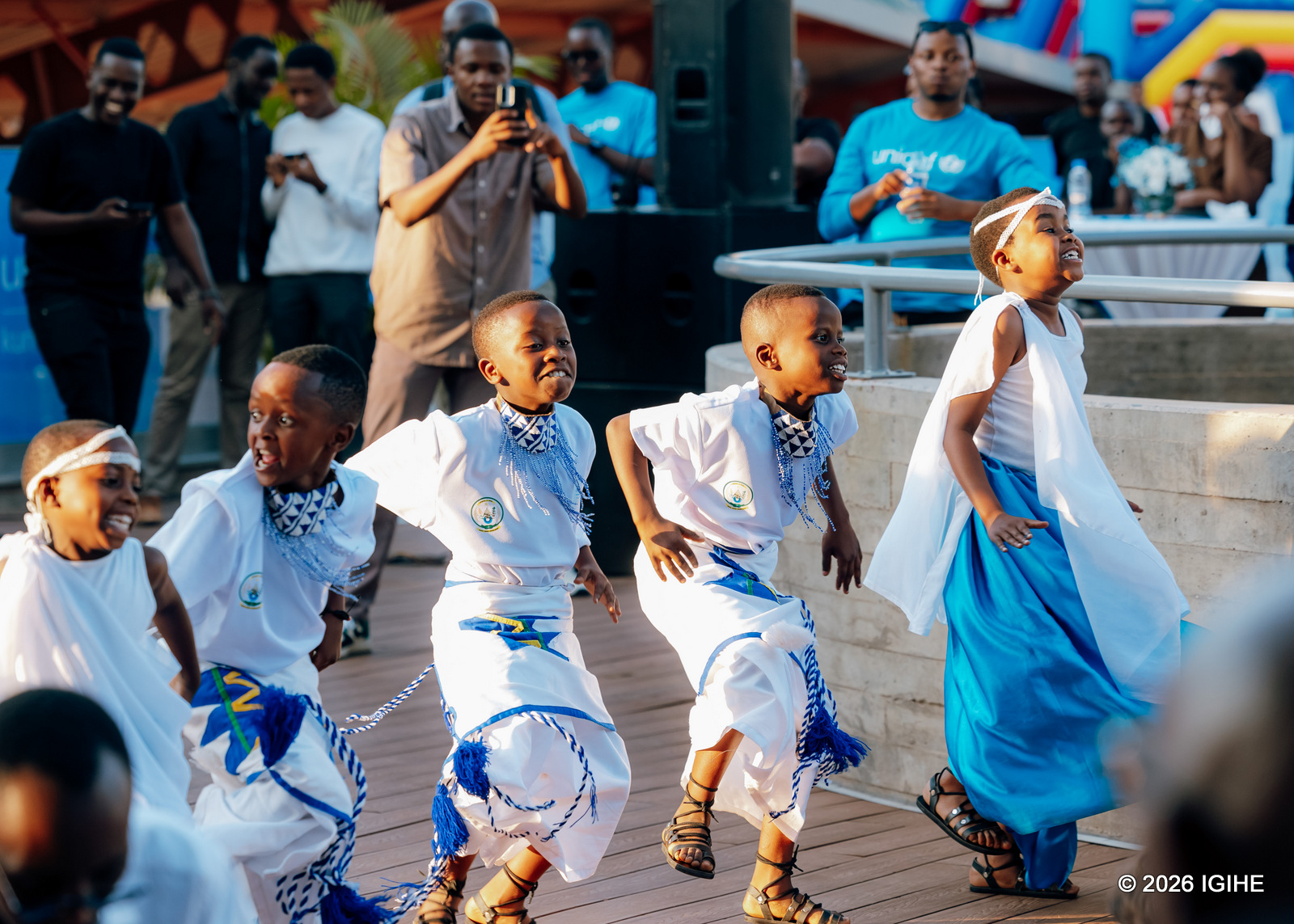
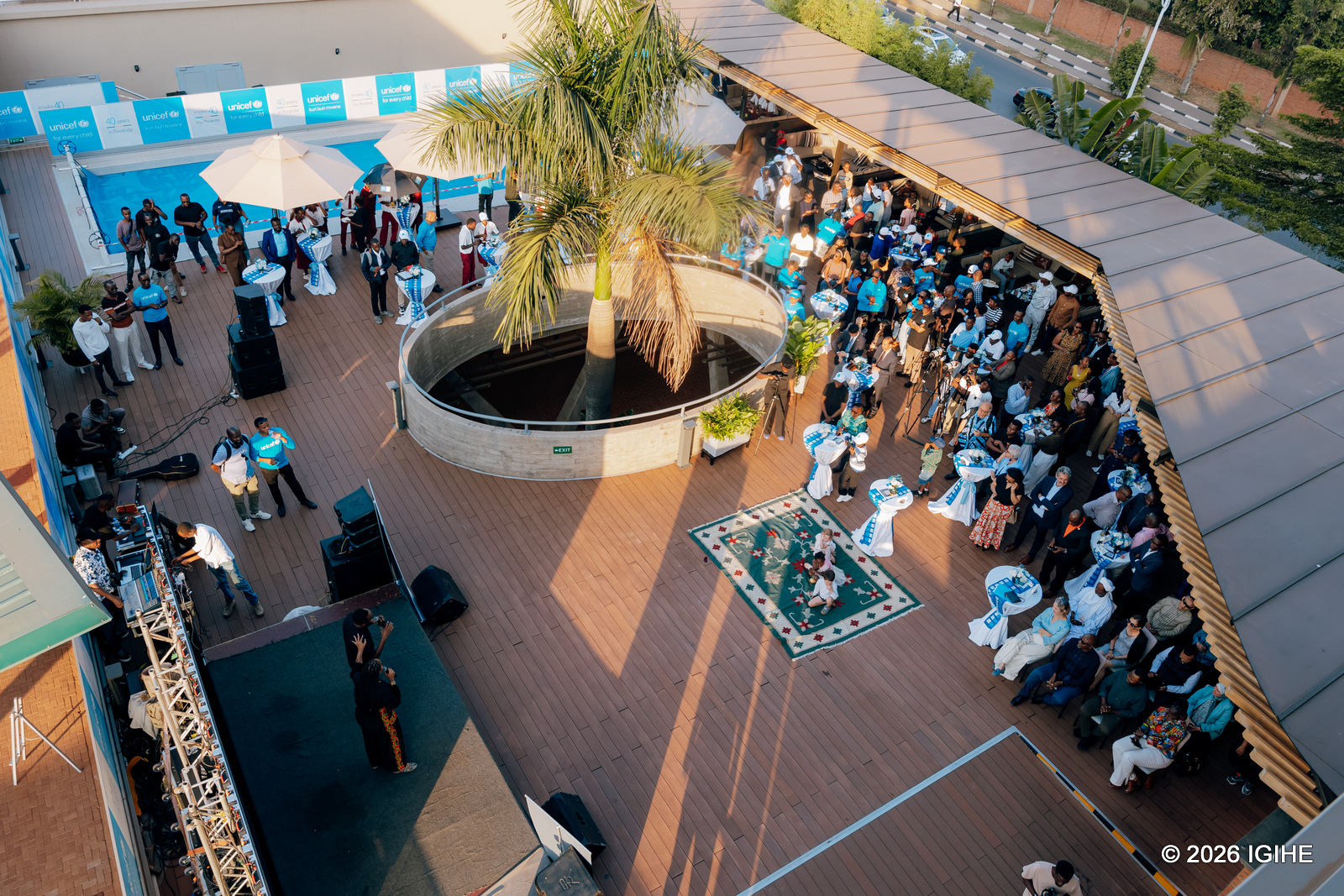
The colorful event, held at Zaria Court on Friday evening, opened with an energetic performance by children from the Sherrie Silver Foundation, whose dance reflected the confidence and potential of a generation that has benefited from improved healthcare, education and protection.
The anniversary song was performed by UNICEF Champion Andy Bumuntu and brought to life through choreography by internationally acclaimed dancer Sherrie Silver, alongside children from her foundation. Their performance captured the voices and aspirations of young people determined to shape Rwanda’s future.
Over the past 40 years, UNICEF and the Government of Rwanda have worked together to improve child survival, expand immunization, strengthen maternal healthcare, increase school enrolment, improve nutrition and widen access to clean water and child protection services.
Through the anniversary campaign, UNICEF hopes to inspire renewed commitment from all sectors of society to continue investing in every child’s future.
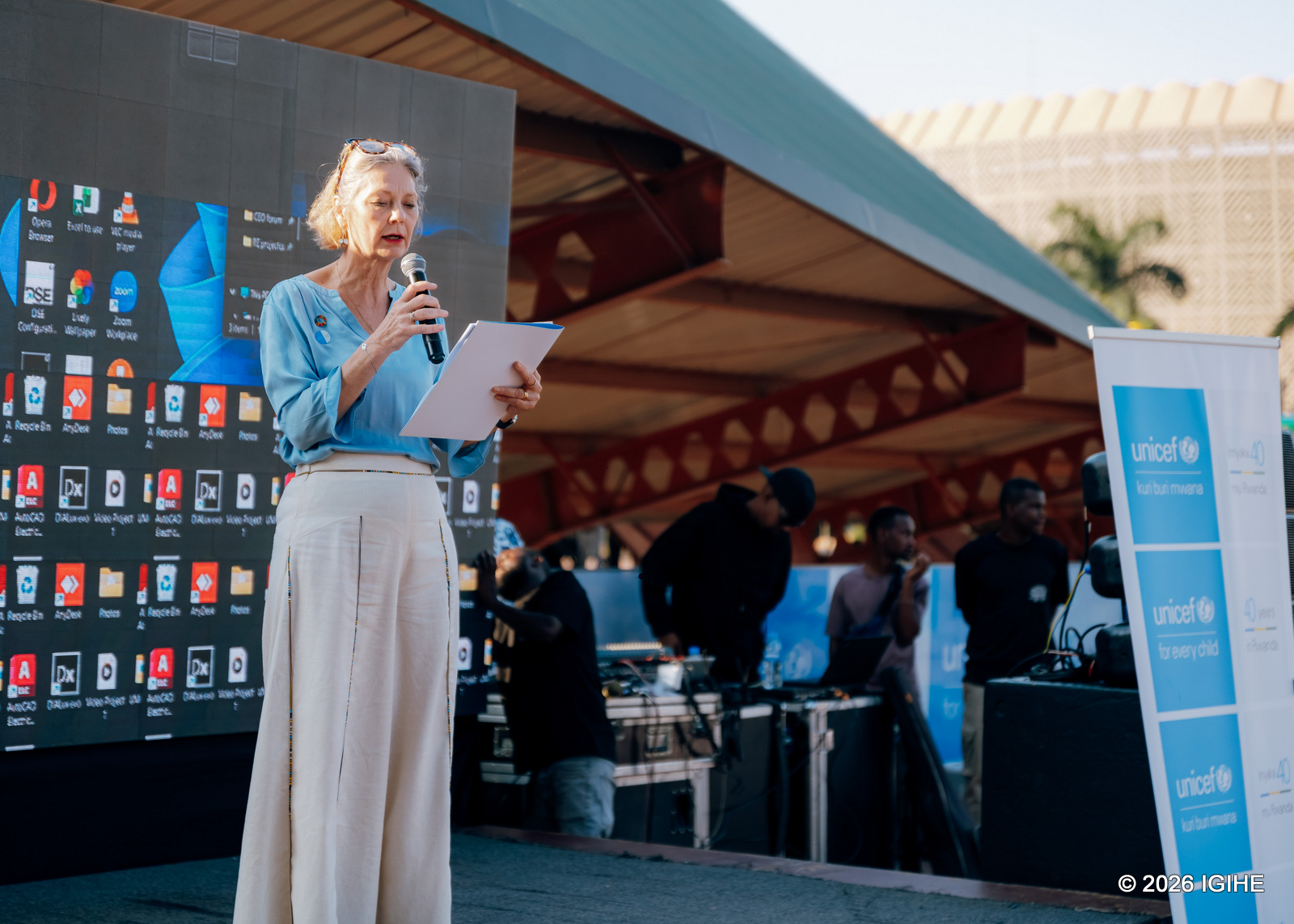
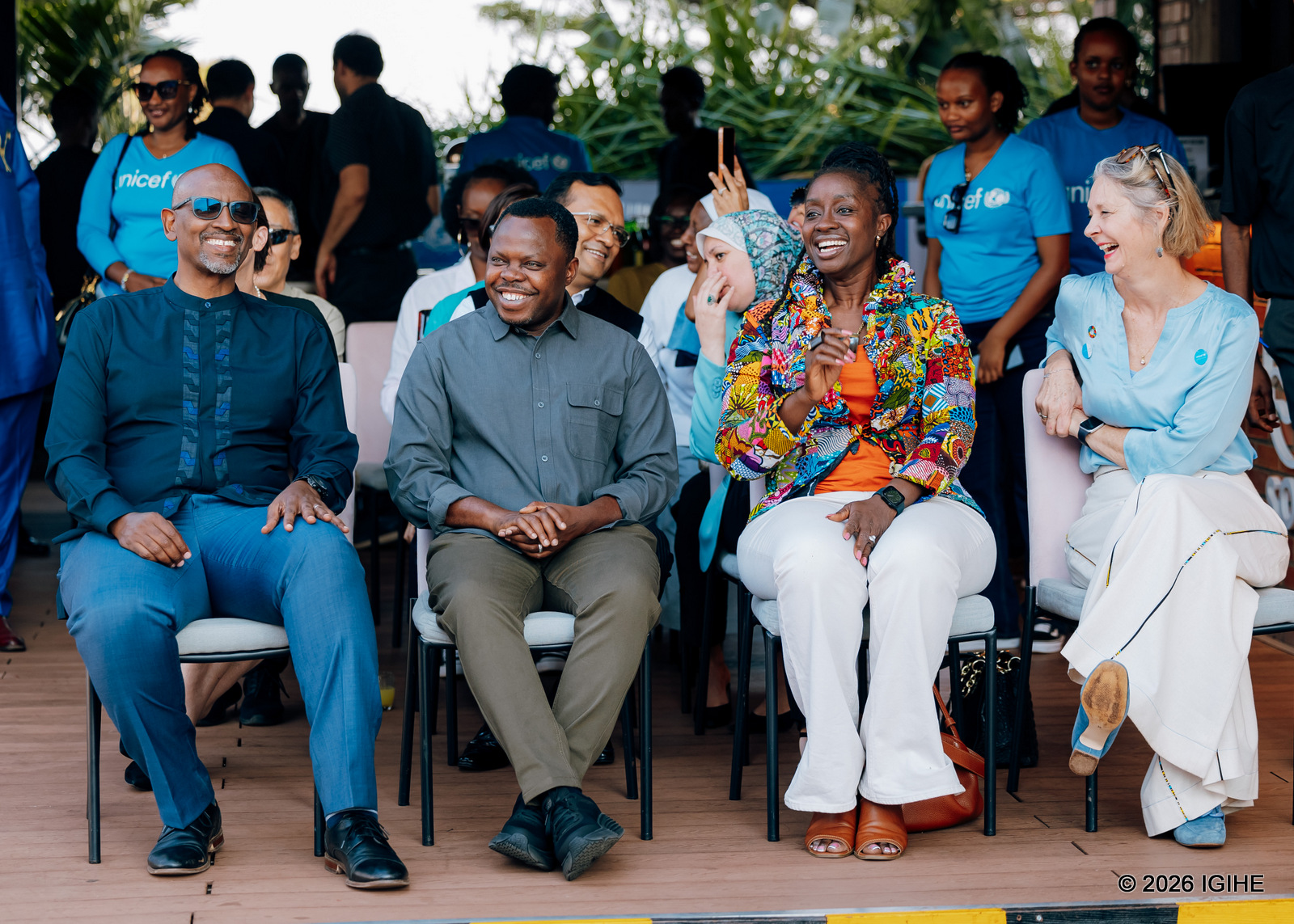
Speaking during the celebration, UNICEF Rwanda Country Representative Lieke van de Wiel described the anniversary as a tribute to everyone who has contributed to improving children’s lives over the years.
“Today is about celebrating every partner, every family, every community and every young person who has helped shape a Rwanda where children have greater opportunities than ever before,” she said.
She added that she hopes the anniversary song will become part of children’s everyday lives.
“My dream is that children will be singing this song in schools while planting trees, in summer camps, on playgrounds and in their homes. When music becomes part of children’s daily lives, so too can the values of hope, unity and protecting every child’s future,” she said.
UNICEF Rwanda Country Representative Lieke van de Wiel addresses guests during the launch of the Rwanda@40 anniversary song, celebrating four decades of partnership in advancing children’s rights.
The celebration also unveiled several initiatives that will be implemented throughout the anniversary year, including the planting of 40 fruit trees in every primary school across Rwanda in partnership with government ministries.
UNICEF will also engage university students through nationwide competitions and dialogue sessions aimed at promoting children’s rights.
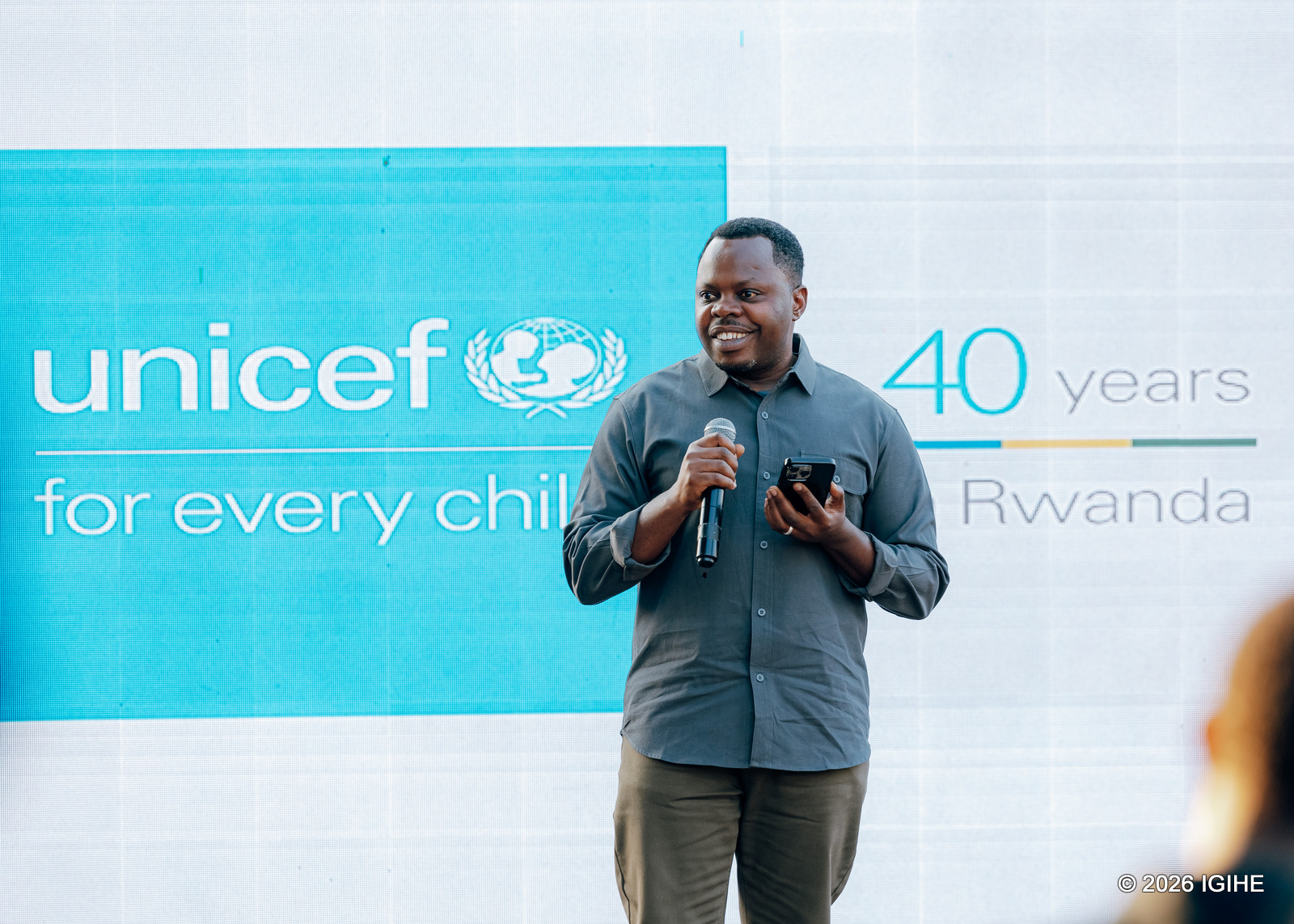
Minister of Youth and Arts Dr. Utumatwishima Jean Nepo Abdallah praised the long-standing partnership between Rwanda and UNICEF.
“For forty years, our partnership with UNICEF has helped ensure that more children begin life with hope and opportunity. Together we have chosen that every child receives healthcare, proper nutrition, quality education and protection,” he said.
While celebrating four decades of achievements, speakers emphasized that continued collaboration will be essential to address remaining challenges and ensure that every child in Rwanda has the opportunity not only to survive, but also to thrive and fulfil their potential.
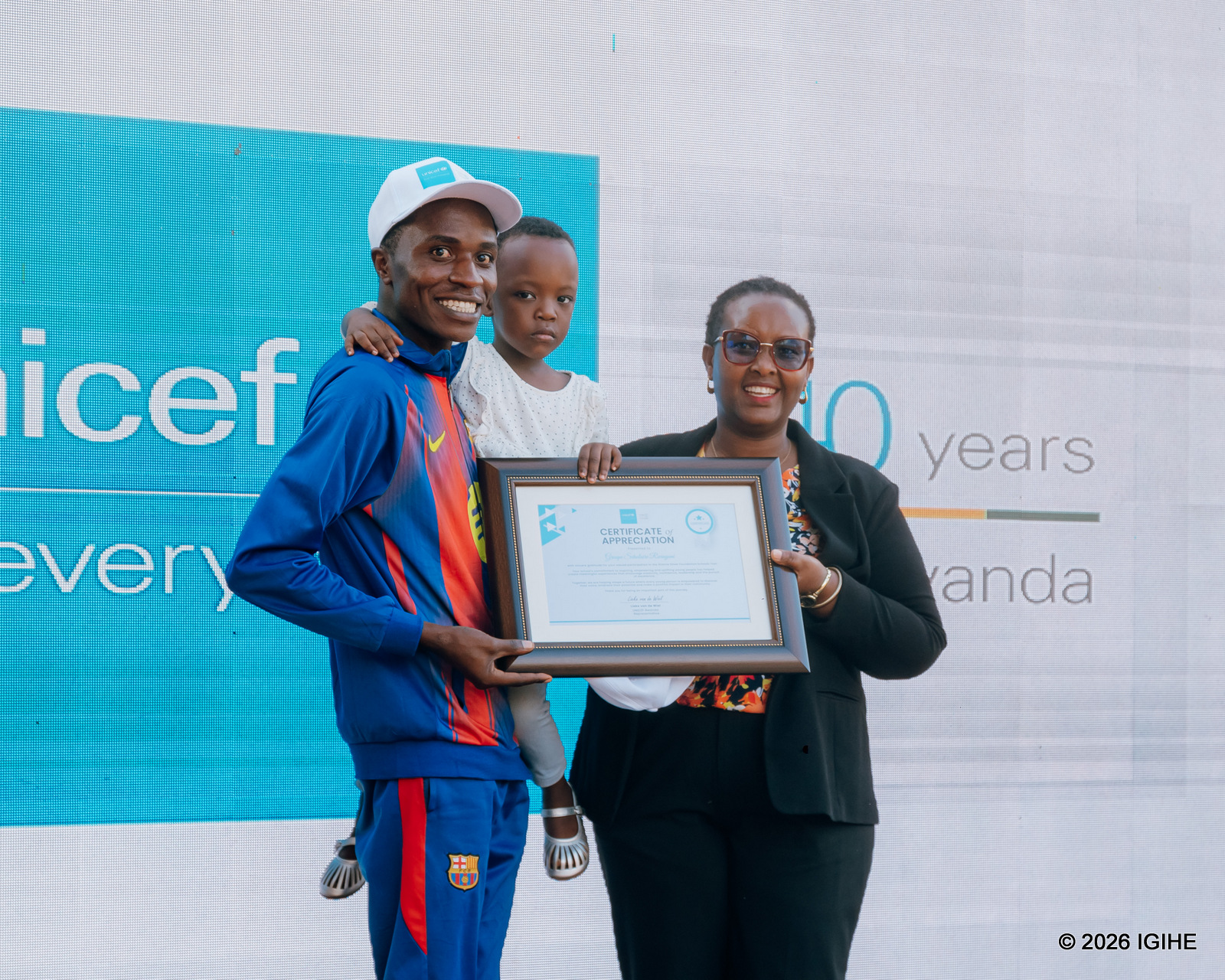
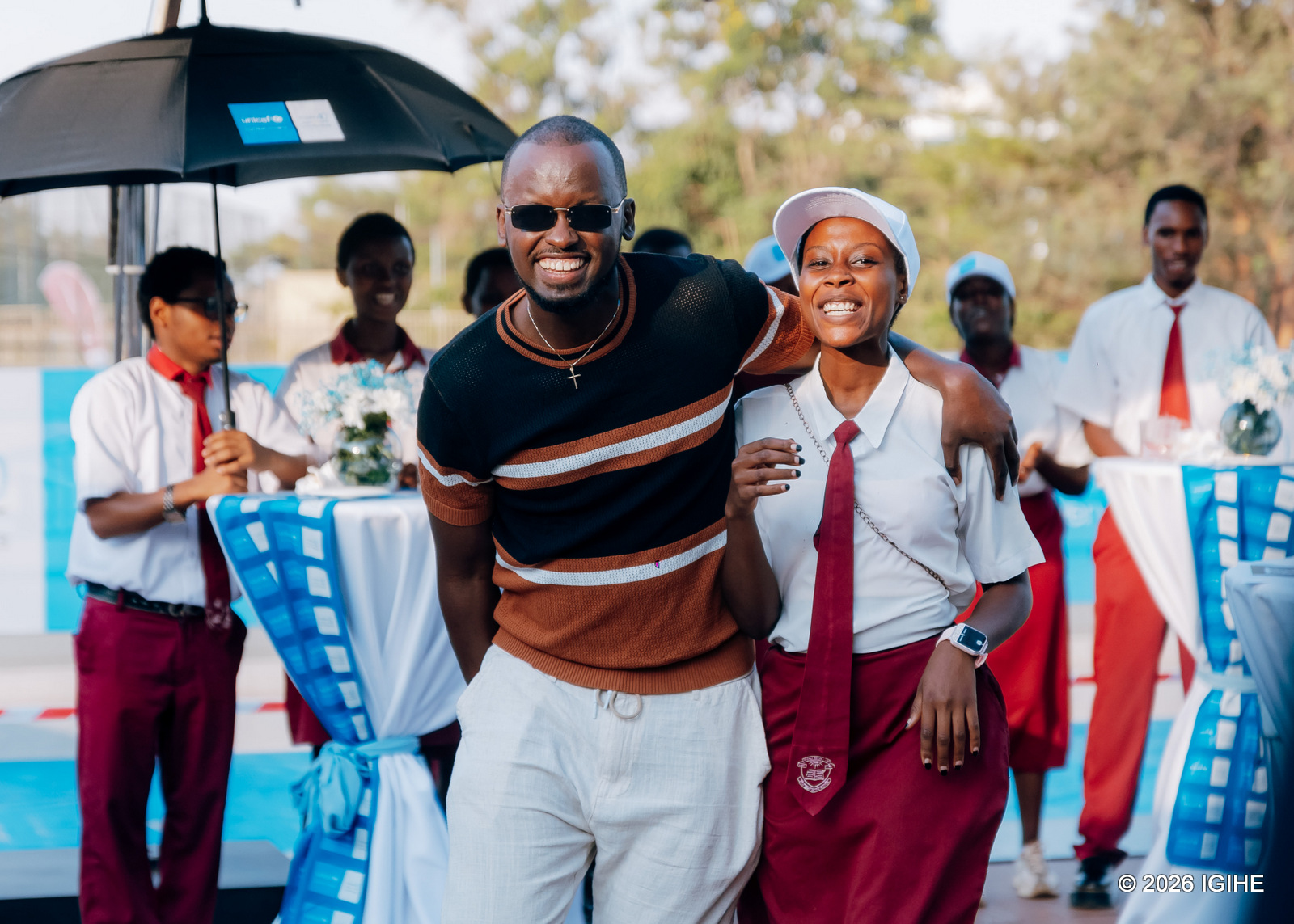
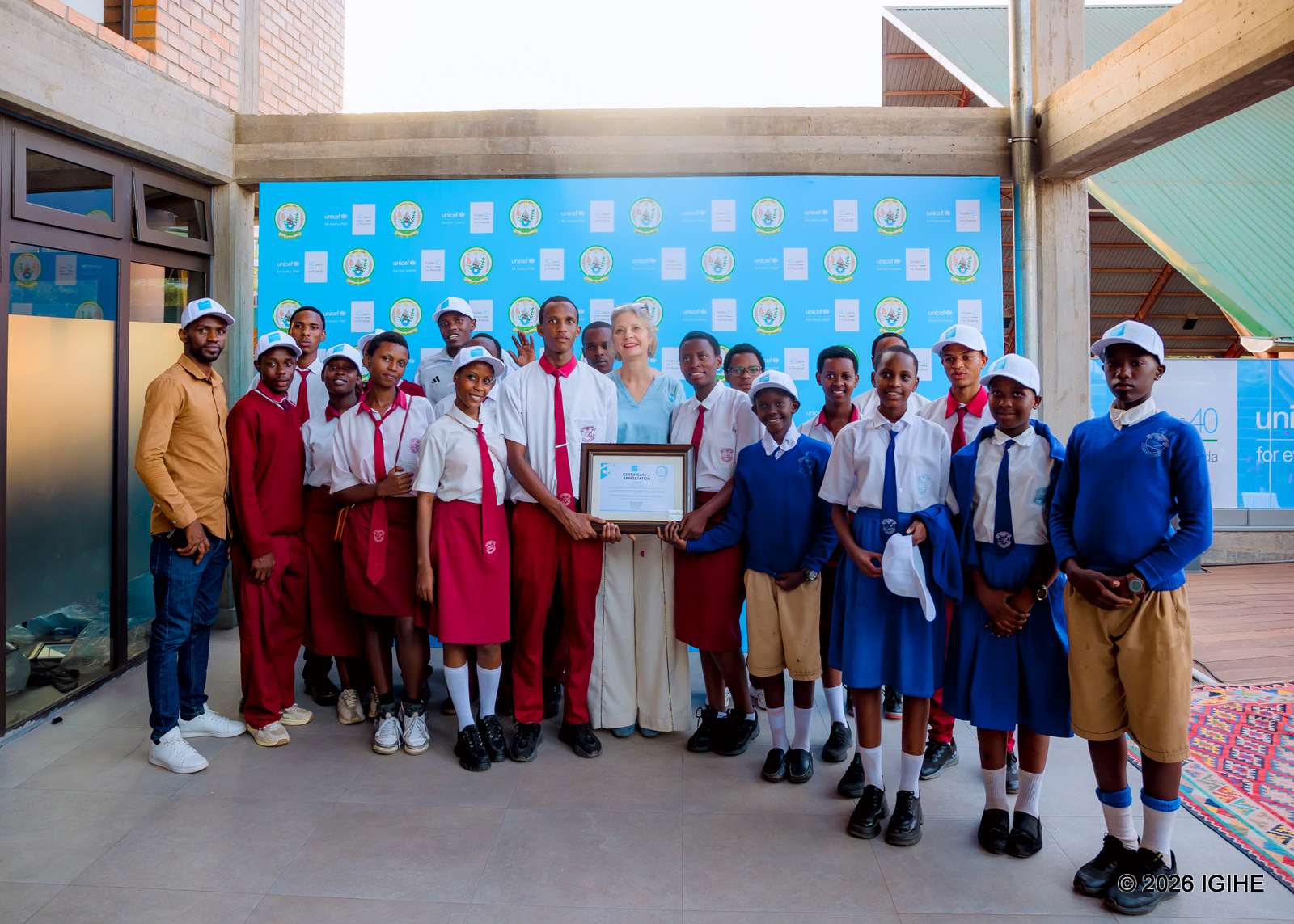
Minister of Youth and Arts Dr. Utumatwishima Jean Nepo Abdallah speaks during the UNICEF Rwanda@40 celebration, reaffirming the country’s commitment to improving the lives of every child.Children from the Sherrie Silver Foundation perform during the launch of UNICEF Rwanda’s 40th anniversary song,Outstanding schools receive awards during the UNICEF Rwanda@40 anniversary celebration, acknowledging their efforts in supporting children’s learning and wellbeing.
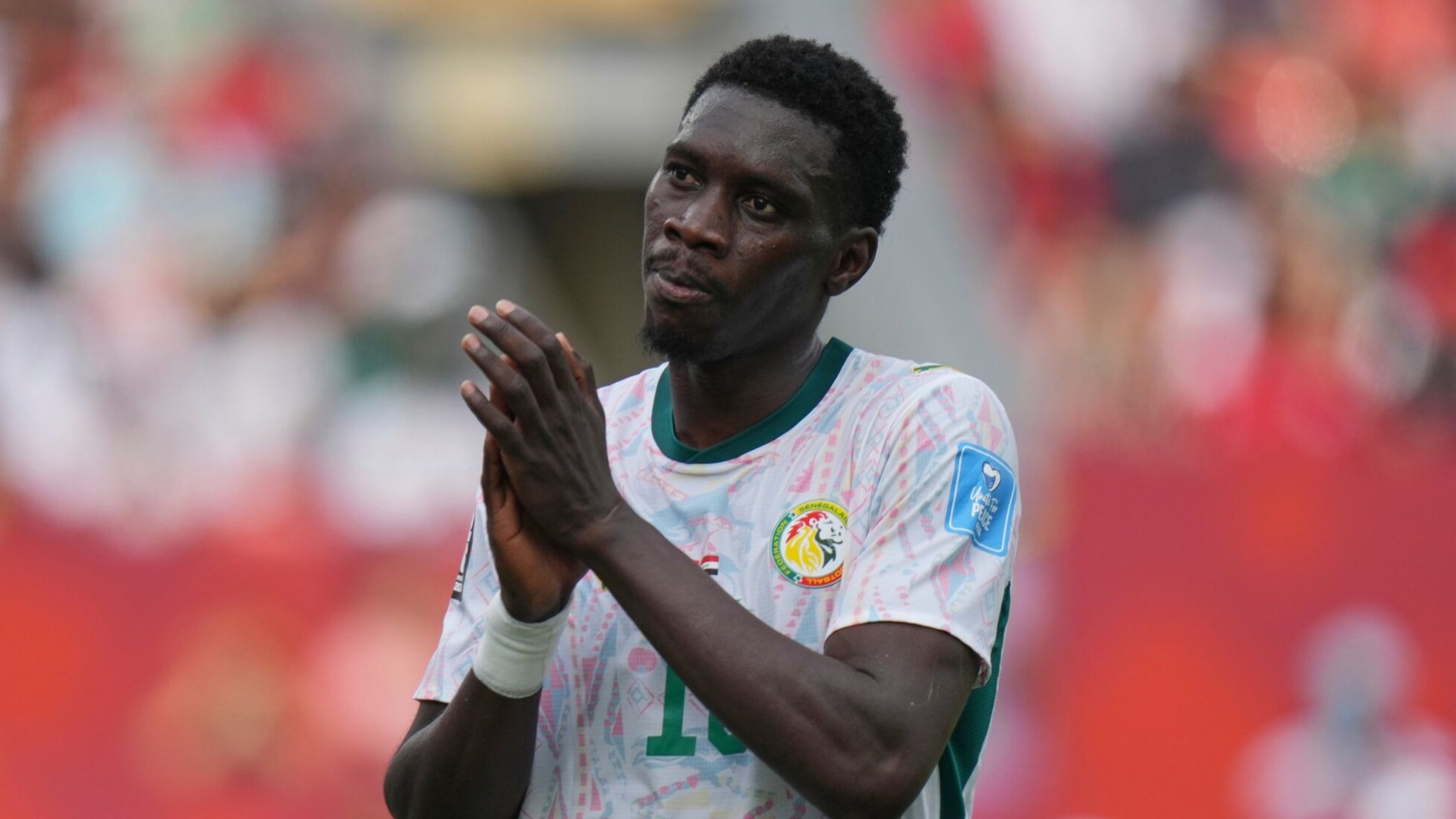
The Lions of Teranga produced a clinical attacking display after the break, with Pape Gueye scoring twice in spectacular fashion, while Habib Diarra, Ismaila Sarr and Iliman Ndiaye also got on the scoresheet.
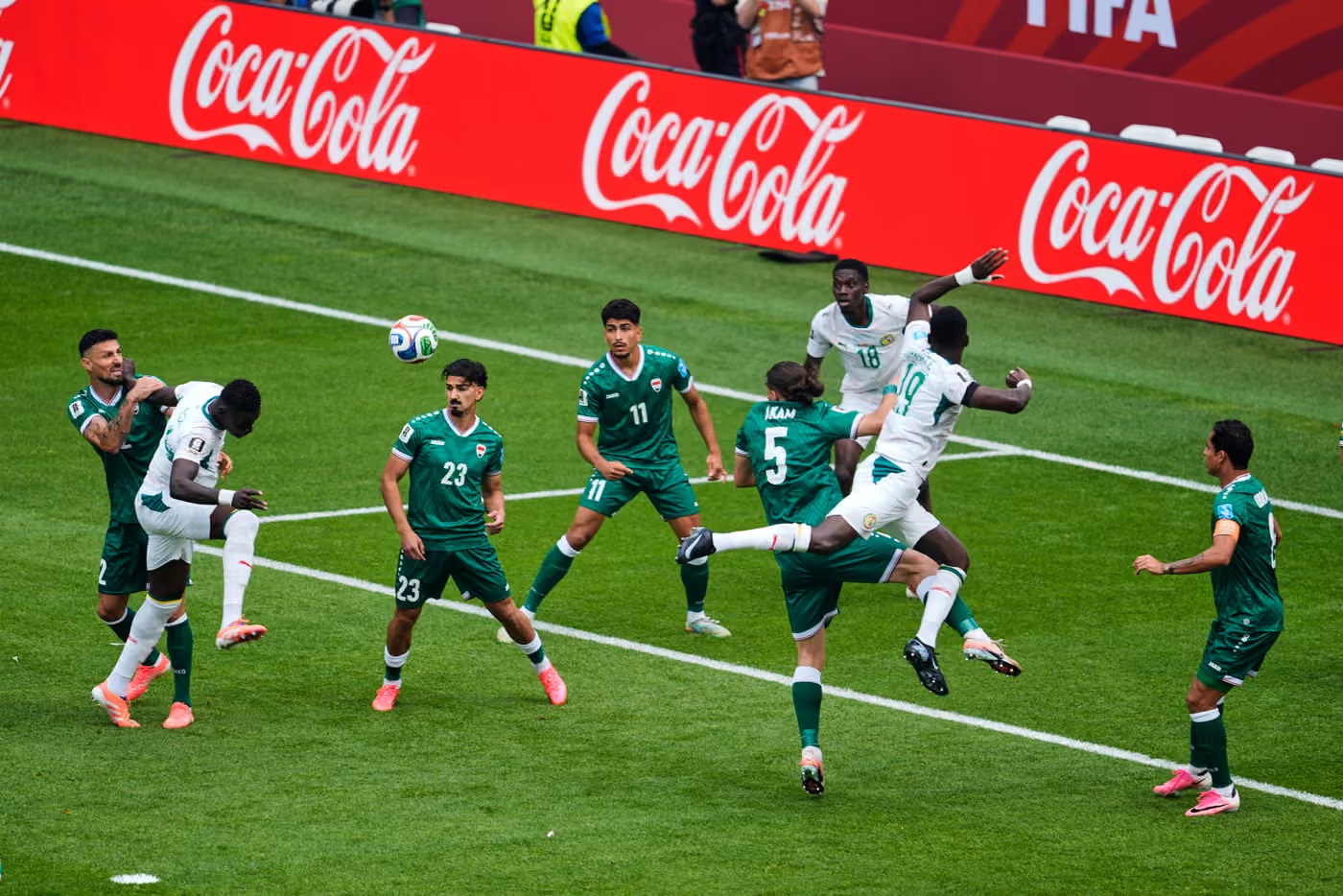
Senegal made a fast start, taking the lead in the fourth minute when Habib Diarra got the final touch on Abdoulaye Seck’s header to put his side ahead while both teams were still at full strength.
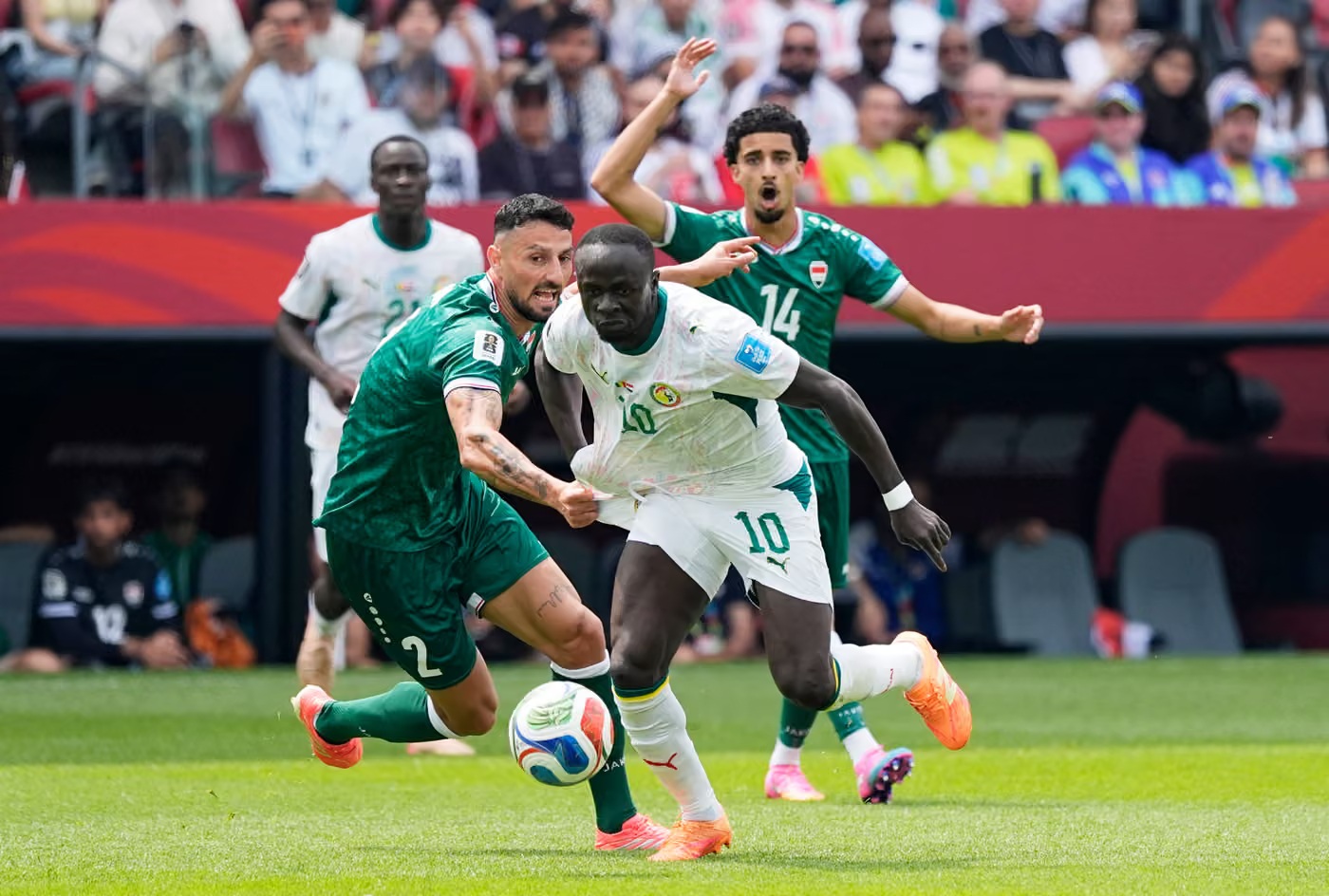
Iraq’s task became significantly harder shortly after. In the 13th minute, defender Rebin Sulaka was initially shown a yellow card for pulling back Sadio Mané as he broke through on goal. However, referee Anthony Taylor reviewed the incident on the pitchside monitor and upgraded the decision to a red card for denying an obvious goalscoring opportunity.
Despite their numerical advantage, Senegal were unable to extend their lead before halftime, going into the break 1-0 up after a frustrating remainder of the first half.
After the restart, however, the game shifted decisively in Senegal’s favour.
Lamine Camara sparked the second-half surge in the 56th minute, forcing a turnover inside the Iraq penalty area before driving to the byline and cutting the ball back for Ismaila Sarr, who tapped into an empty net to score his third goal of the tournament.
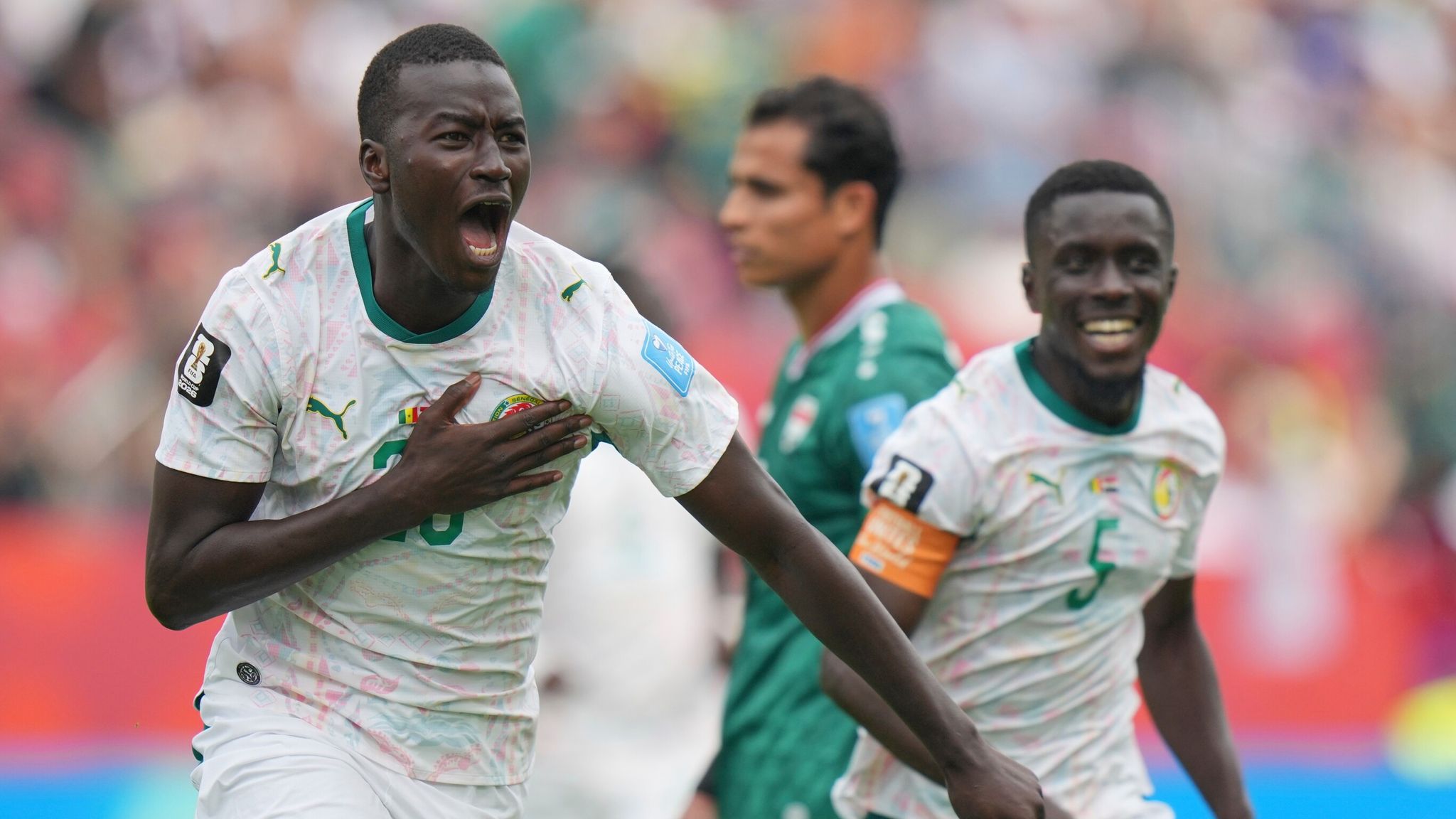
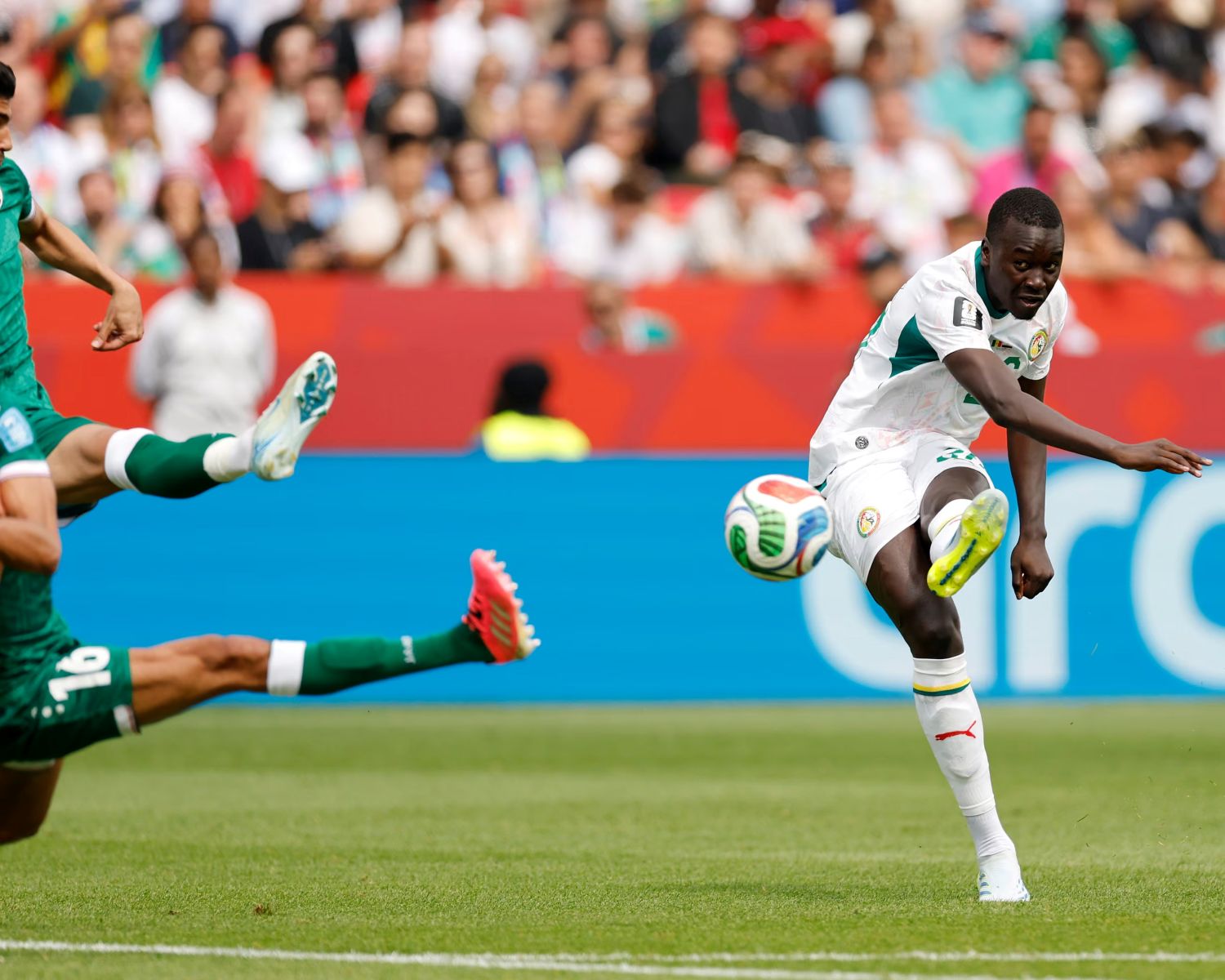
Pape Gueye, introduced shortly after, made an immediate impact. In the 59th minute, he collected a pass near the edge of the box, shifted onto his left foot and curled a superb effort into the top corner beyond goalkeeper Ahmed Basil.
He struck again in the 71st minute, reacting quickest to Iliman Ndiaye’s bouncing delivery and unleashing a powerful half-volley that gave Basil no chance.
Ndiaye then added the fifth in the 82nd minute, finishing from distance to complete a comprehensive victory.
The result saw Senegal finish third in Group I with three points and a goal difference of +2, keeping their hopes alive in the race for the best third-placed finishers.
They were later confirmed among the top eight third-placed teams and progressed to the round of 32, where they are set to face England, depending on final group outcomes.
For Iraq, it was a disappointing end to their campaign. They lost all three group matches and were eliminated from their second World Cup appearance and first since 1986.
Pape Gueye came off the bench to score twice for Senegal.Pape Gueye celebrates with his teammates after scoring against Iraq.
Ismaila Sarr scored his third goal of the tournament.Iraq’s Rebin Sulaka grabbed Senegal’s Sadio Mané, resulting in him being sent off with a red card. Senegal delivered a dominant second-half performance to overwhelm 10-man Iraq 5-0 at Toronto Stadium on Friday.
The decision was announced on Friday evening, June 26, 2026, in a statement read on national television by the military government of Captain Ibrahim Traoré, who has led the country since September 2022.
“The government of Burkina Faso hereby informs the national and international community that it has decided to sever diplomatic relations with France with effect from today, June 26, 2026,” Communications Minister Pingdwende Gilbert Ouédraogo stated.
Ouédraogo said the move followed a thorough review of bilateral relations, concluding that the “essential conditions for promoting relations based on mutual respect, reciprocal trust, respect for the principle of non-interference in internal affairs and national sovereignty are not in place.”
The junta went on to accuse Paris of persistent activism against Burkinabè interests, accusing it of “blatant neo-colonial ambitions” and active support for “subversive networks and terrorists” operating within the region.
Paris responds
France responded swiftly to the announcement through its Ministry of Foreign Affairs, firmly rejecting the accusations and condemning the move.
French Foreign Ministry spokesperson Pascal Confavreux denounced the immediate cutoff as a “hostile and unfounded decision.” In an official statement, Paris noted that the development “illustrates the worrying drift of the Burkinabè authorities.”
Confavreux added that France is actively monitoring the safety of its diplomatic personnel and French citizens remaining in the country, urging expatriates to exercise heightened vigilance. Furthermore, the ministry signaled a firm diplomatic counter-response, stating that “necessary reciprocal measures are currently under review.”
People-to-people ties preserved
In its initial statement, the Burkinabè government emphasised that the complete break concerns only the formal institutional framework between the two states.
“This decision exclusively concerns diplomatic relations between the two states and does not call into question the historical, human, cultural and social ties between the people of Burkina Faso and France,” the communiqué read.
Ouagadougou added that French nationals residing in Burkina Faso would continue to be protected in accordance with national laws, calling on citizens to show responsibility, restraint, and civic-mindedness toward expatriates.
Burkina Faso has been battered by a grueling security crisis for more than a decade, with armed extremist groups linked to Al-Qaeda and the Islamic State operating across its territory and the wider Sahel region. The ongoing conflict has caused thousands of deaths and displaced millions of people.
Relations between Paris and several Sahelian capitals have imploded in recent years. Following successive military coups, regional governments have aggressively reassessed their traditional political, military, and diplomatic reliance on the West.
France, which long maintained extensive post-colonial influence in West and Central Africa, already withdrew its military forces and suspended development aid to Burkina Faso in 2023.
This formal diplomatic break aligns with a broader foreign policy shift by the Alliance of Sahel States (AES), comprising Burkina Faso, Mali, and Niger, as they pivot away from traditional European partnerships to diversify international cooperation and strengthen ties with emerging global powers.
Burkina Faso has announced the immediate severance of diplomatic relations with France, marking a definitive rupture in the relationship between the West African country and its former colonial ruler.
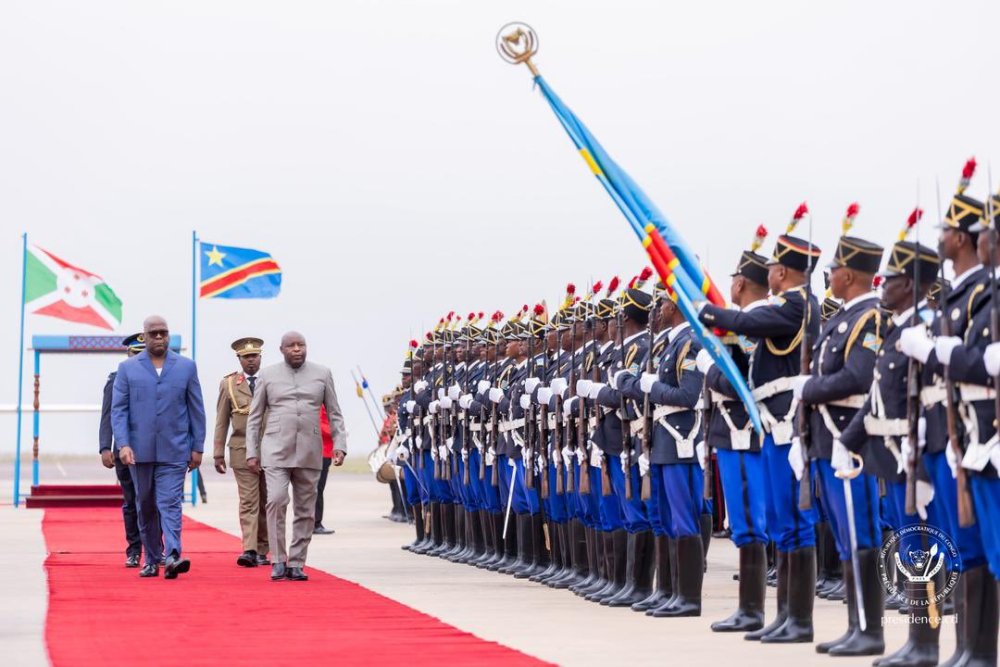
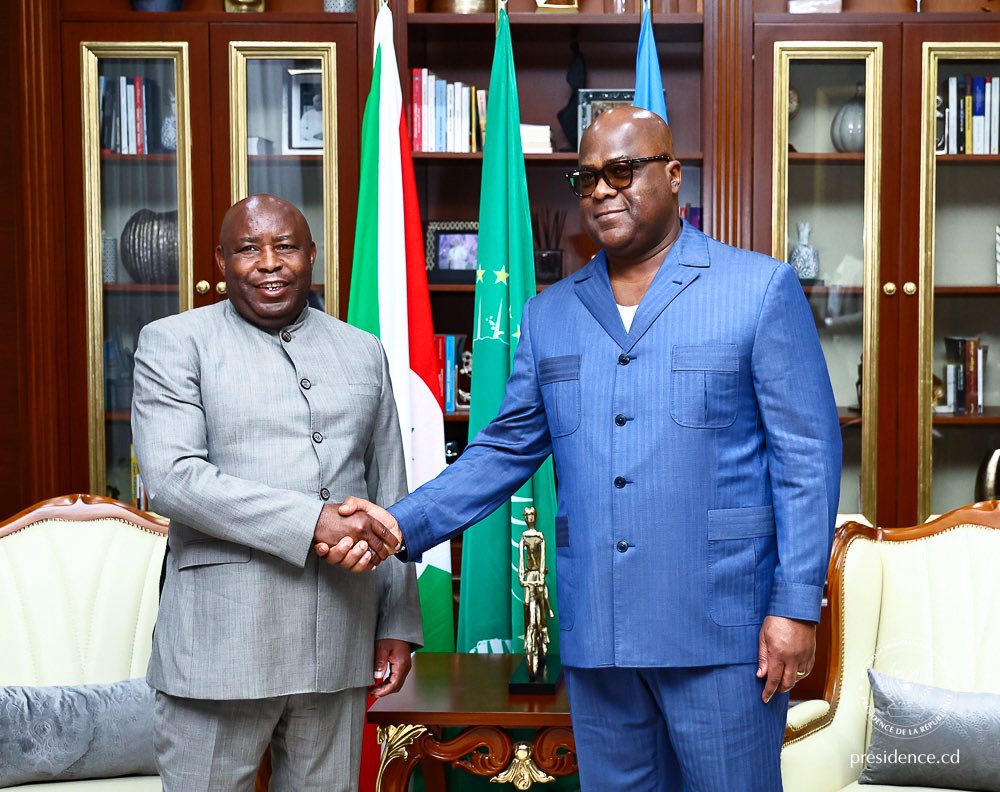
Addressing a Congolese audience alongside President Félix Tshisekedi, Ndayishimiye declared: “You must have confidence that you have a common enemy. When you have a common enemy, to fight it, unity is required.”
There is little doubt that this message is directed against Tutsi communities, particularly the Banyamulenge and other Congolese Tutsi populations who have long faced discrimination, exclusion, and violence in eastern DRC.
The context only reinforces this interpretation: Burundian forces are currently operating alongside a coalition that includes the Armed Forces of the DRC (FARDC), the FDLR genocidal group, Wazalendo militias, and foreign mercenaries.
Ndayishimiye’s remarks are neither a message of reconciliation nor de-escalation. On the contrary, they directly undermine diplomatic efforts led by the United States, Qatar, and the African Union.
The Washington peace agreement between Kigali and Kinshasa, as well as ongoing discussions between the Congolese government and the AFC/M23, are centered on peaceful conflict resolution and political dialogue, not military confrontation. Yet Ndayishimiye’s intent is to stir conflict and incite further violence against Congolese Tutsi communities.
Ndayishimiye’s remarks are neither a message of reconciliation nor de-escalation.
Shortly after his meeting with Tshisekedi, Ndayishimiye recommitted to sending several hundred additional Burundian troops to the DRC. This development coincides with reports that the FARDC-FDLR-Burundian coalition is reorganizing following recent battlefield setbacks. Military units are reportedly being reassembled around Minembwe, Kamanyola, and the Rusizi Plain, potentially in preparation for renewed large-scale operations.
Ndayishimiye has increasingly positioned himself as a central actor in policies and military actions that contribute to the marginalization and displacement of Tutsi communities in eastern DRC. Burundi has already deployed more than 20,000 troops, operating primarily in South Kivu, including Fizi, Mwenga, and areas surrounding Minembwe.
Concerns regarding Ndayishimiye’s stance toward the Congolese Tutsi, or Banyamulenge, are not new. In previous statements, he questioned the existence of the Banyamulenge as a distinct ethnic community, arguing that they lack a traditional chieftaincy, a claim that is historically inaccurate and politically significant, as it challenges the identity and legitimacy of a community that has lived in the region for centuries.
The Burundian president has also argued that the Banyamulenge issue emerged only after Rwanda’s intervention in Zaire in 1996. Historians and regional experts dispute this characterization, noting that disputes over the citizenship, identity, and political status of the Banyamulenge long predate the wars of the mid-1990s. The roots of these tensions stretch back decades and are deeply intertwined with colonial-era policies, questions of nationality, and local power struggles.
Ndayishimiye’s reference to a “common enemy” carries significant weight. In a region where ethnic tensions have repeatedly fuelled cycles of violence, such language cannot be interpreted as a simple call for unity. Instead, it reinforces narratives that portray entire communities as threats, inciting ethnic violence at a moment when political dialogue and reconciliation are urgently needed.
As peace initiatives continue to gain international support, the key question remains: will regional leaders pressure the Ndayishimiye-Tshisekedi alliance to embrace inclusive political solutions, or will they stand by as military escalations continue and eventually spiral out of control?
Shortly after his meeting with Tshisekedi, Ndayishimiye recommitted to sending several hundred additional Burundian troops to the DRC. This development coincides with reports that the FARDC-FDLR-Burundian coalition is reorganizing following recent battlefield setbacks.
The discussions focused on the ongoing work towards the East African Political Confederation, with particular attention to progress on drafting its Constitution and the next steps in advancing the regional integration agenda.
The meeting comes as the EAC continues region-wide consultations on the proposed Political Confederation, a transitional arrangement adopted by Heads of State in 2017 as a pathway towards the eventual Political Federation of East African States.
In Rwanda, the consultations were launched on June 15 and were conducted across different parts of the country, including Kigali, Rubavu, Huye and Nyagatare. The two-week exercise, which concludes on June 27, is aimed at gathering citizens’ and stakeholders’ views to inform the drafting of the Constitution of the Political Confederation.
The consultations have brought together participants from government institutions, Parliament, the judiciary, academia, civil society, the private sector, youth and women’s groups, faith-based organisations, persons with disabilities, political parties and the media.
According to the EAC Secretariat, the views collected across Partner States will inform the development of the governance framework of the Political Confederation and help define institutional structures for the next phase of regional integration.
EAC officials describe the process as a key milestone in the broader integration agenda, which also includes the Customs Union, Common Market, and ongoing implementation of the Monetary Union Protocol, as Partner States work towards deeper economic and political integration.
Speaking during earlier phases of the consultations, EAC officials emphasized the importance of citizen participation in shaping the integration framework.
“This is not merely an exercise. The Treaty is very clear that the Community is people-centred, and therefore, citizens must be consulted when major decisions about our integration are being made,” said EAC Secretary General Ambassador Stephen Mbundi.
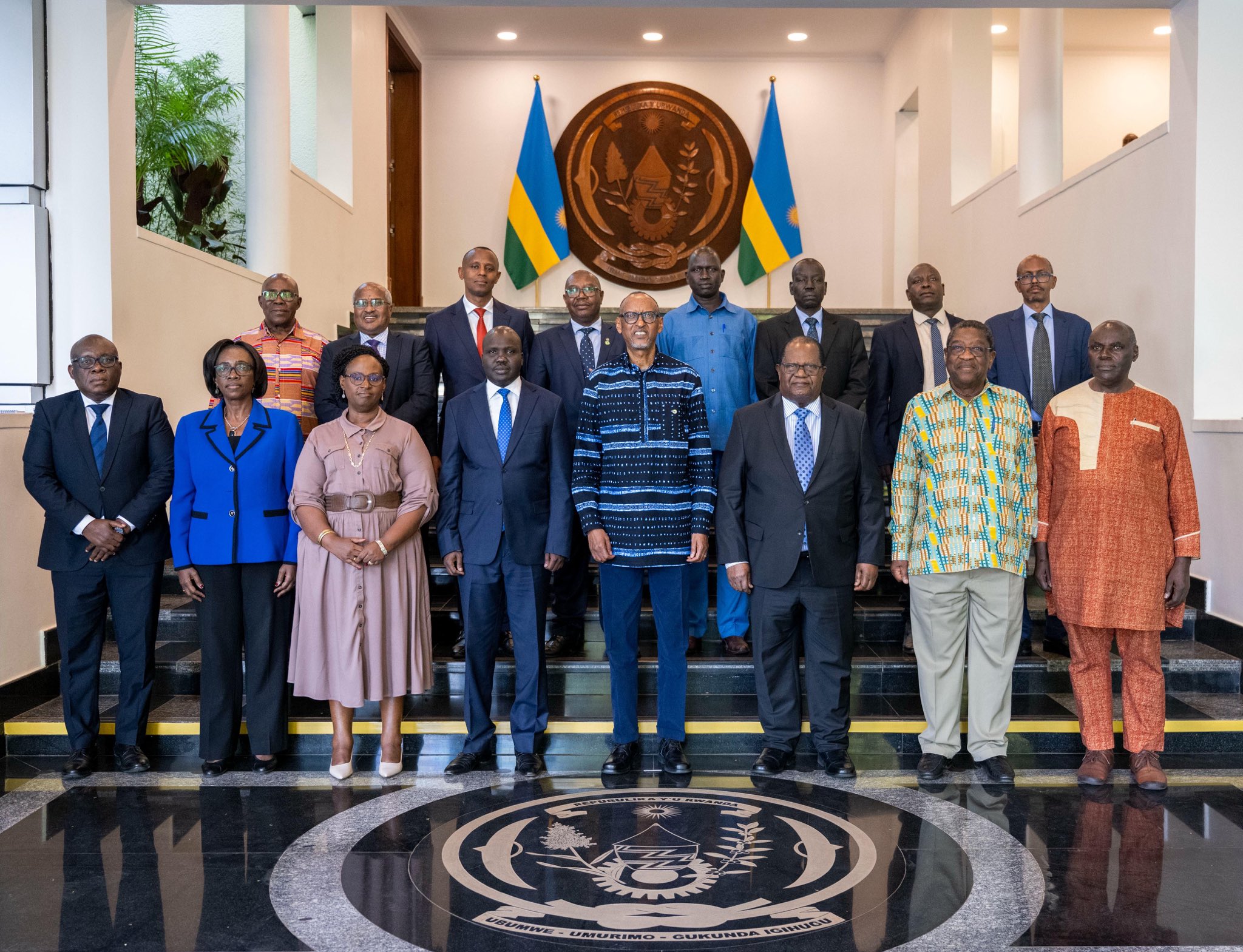
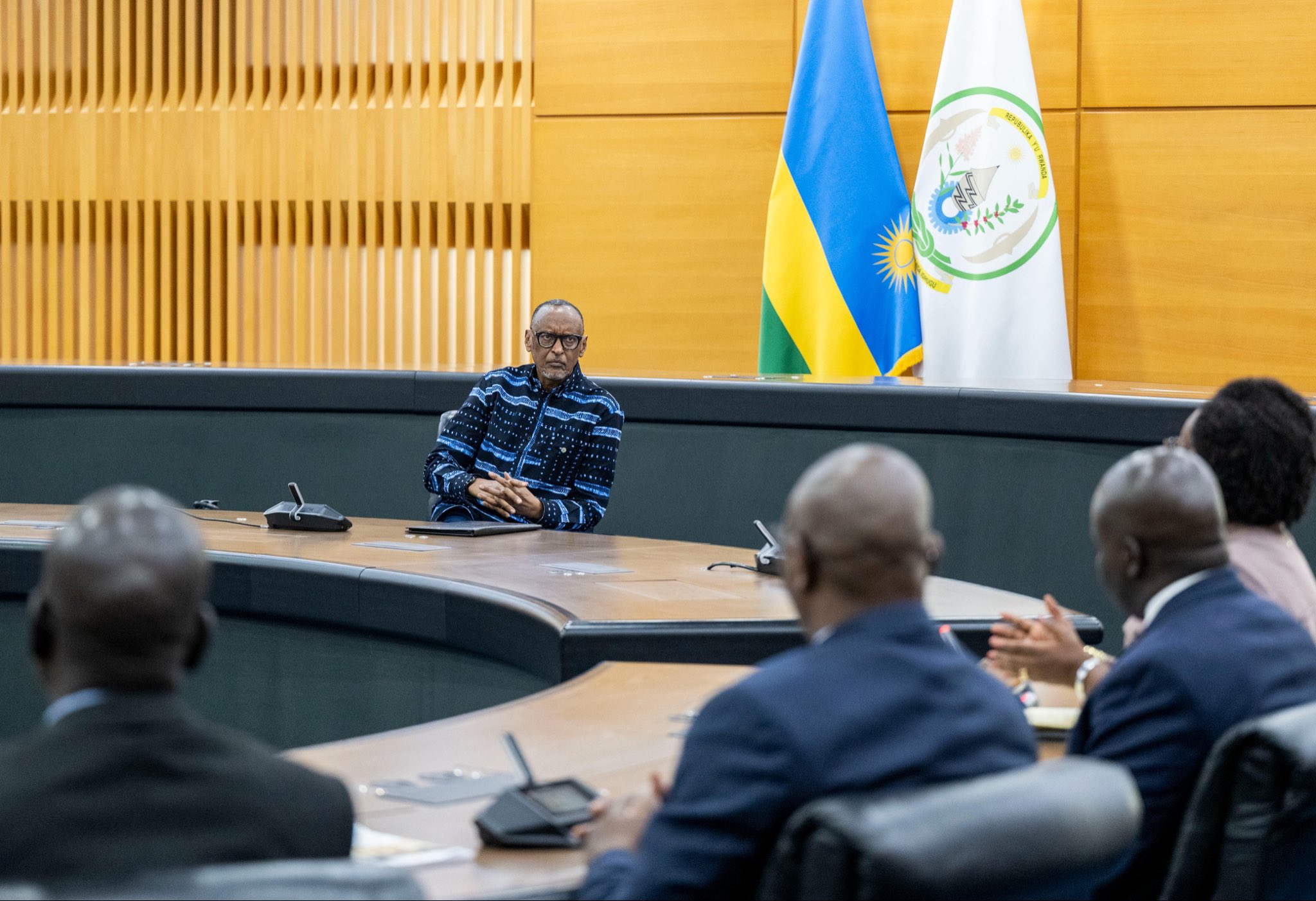
President Paul Kagame hosted the EAC delegation at Urugwiro Village.The discussions focused on the ongoing work towards the East African Political Confederation, with particular attention to progress on drafting its Constitution and the next steps in advancing the regional integration agenda.
The firm says, unlike general-purpose graphics processing units (GPUs) used in most AI servers today, this Application-Specific Integrated Circuit (ASIC) is built from scratch strictly for AI inference, the day-to-day work of running an existing model to answer user prompts, write text, or execute code.
Why this matters
Today, most AI systems rely on powerful GPUs. While highly effective, these processors were originally designed for broad graphics processing, making them incredibly expensive and power-hungry when handling massive, everyday consumer traffic.
OpenAI’s new chip shifts the strategy toward total architectural optimization.
“Jalapeño was designed from the ground up for LLM inference using detailed insights from our close collaboration with OpenAI researchers,” Richard Ho, Head of OpenAI’s Hardware Program said at the launch.
“We optimized the architecture around the kernels, memory movement, networking, and serving patterns that matter most for frontier AI models. Based on early testing, Jalapeño will efficiently execute our most important workloads close to the hardware’s theoretical limits.”
What changes with Jalapeño?
By tailoring the hardware directly to the software, OpenAI and its partners say the chip delivers a few massive upgrades.
First, it brings drastically lower costs, with early industry reports indicating it could cut inference costs by roughly 50% compared to standard cloud infrastructure.
Second, the chip offers massive energy efficiency by delivering substantially better performance-per-watt than current state-of-the-art options. This allows data centers to pull more compute capacity out of the exact same power grid allocation.
Finally, the project achieved unprecedented development speed, moving from an initial blank-slate concept to final manufacturing readiness (tape-out) in just nine months. This process was partially accelerated by OpenAI using its own AI models to optimize the layout and architecture.
OpenAI co-developed the chip with semiconductor giant Broadcom, which provided critical silicon implementation and networking technology, including its Tomahawk networking platform. Physical server hardware, circuit boards, and rack integration are being handled by engineering partner Celestica, with manufacturing slated for Taiwan Semiconductor Manufacturing Company (TSMC).
OpenAI, the company behind ChatGPT, has announced a new custom-built computer chip called “Jalapeño.” It is designed to make artificial intelligence faster and significantly cheaper to run at scale.