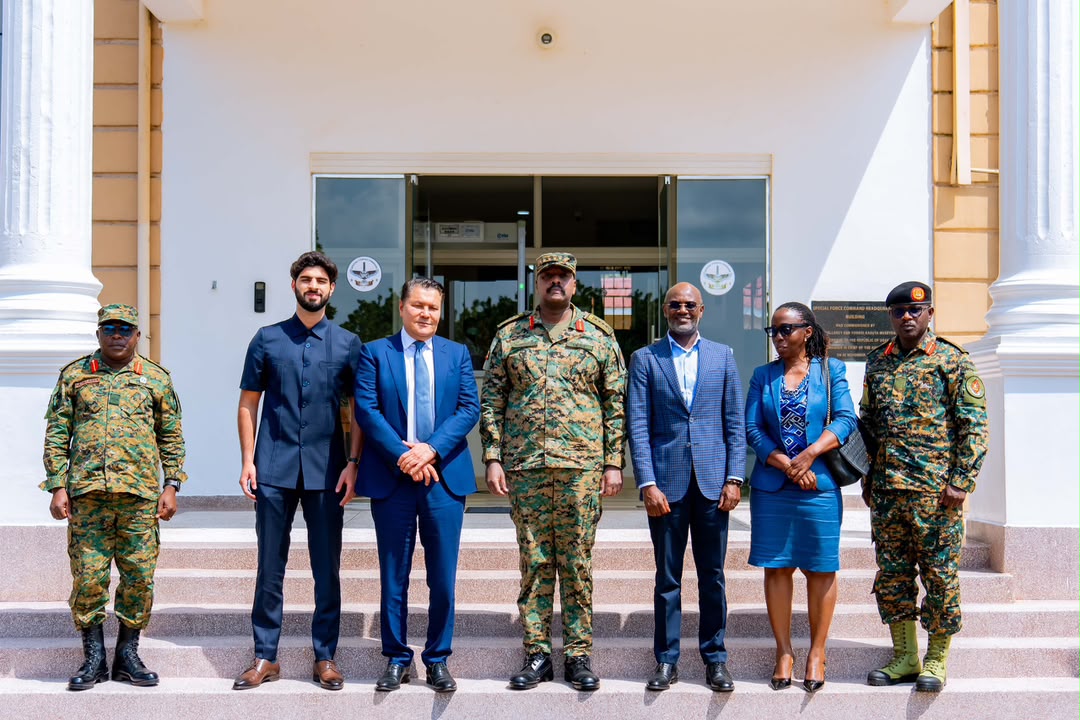
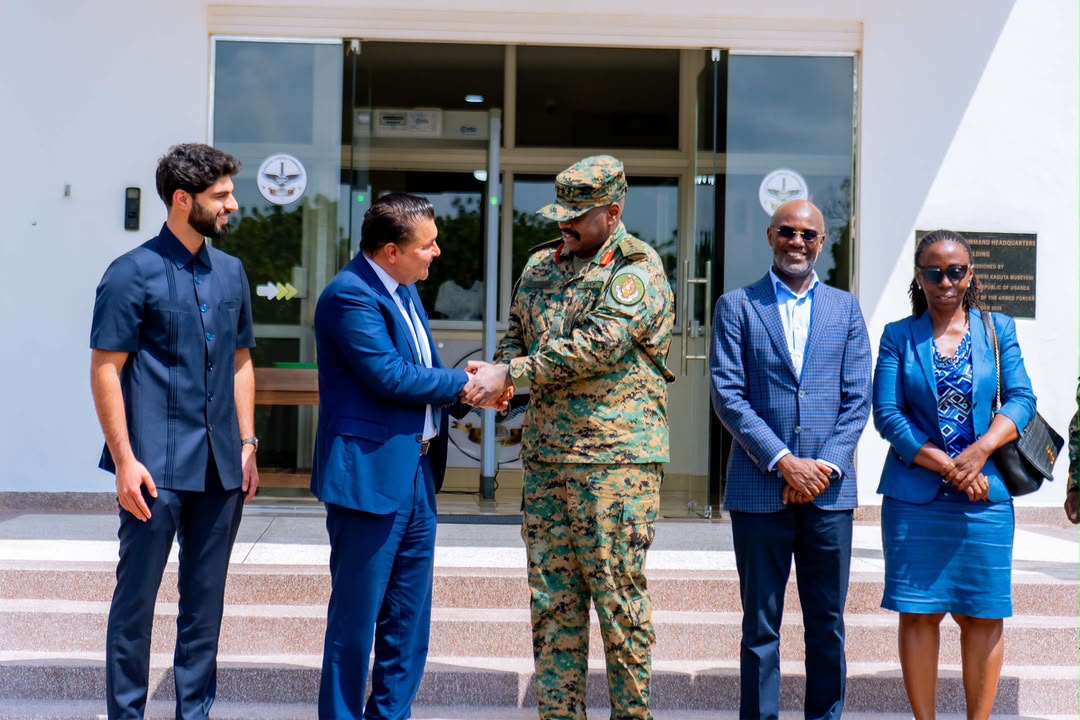
The meeting took place at the Special Forces Command headquarters in Entebbe and brought together NMG owner Rostam Aziz and his son Saam Aziz, alongside Georgia Mutagaywa, the Chief of Staff of Taarifa Limited, the parent organisation of NMG.
Also in attendance were veteran journalist and Patriotic League of Uganda (PLU) leader Andrew Mwenda, as well as the Acting UPDF/Defence Public Information Director, Col. Chris Magezi.
The discussions follow the recent shutdown of NMG Uganda’s operations by security forces, an action ordered by Gen. Muhoozi. The closure came after allegations by the CDF that the media group had engaged in what he described as a sustained blackmail campaign against the government of Uganda and its leadership, while also promoting opposition and foreign interests.
During the meeting, both sides are said to have reviewed reporting that government officials consider biased and malicious, with the media owners expected to adopt a more patriotic, balanced, and objective approach in their reporting.
The meeting forms part of ongoing efforts to resolve the standoff between the media group and the government following the shutdown of its outlets. A final decision on the reopening of the affected media premises is expected to follow a presidential review.
The closure of NTV Uganda, Spark TV and the Daily Monitor earlier this week came after security personnel carried out an overnight operation at NMG offices in Namuwongo, Kampala. The shutdown followed a series of posts by Gen. Muhoozi announcing the suspension of operations of the outlets, citing critical reporting and alleging biased coverage.
In earlier remarks shared online, Gen. Muhoozi said media reporting on Uganda would require clearance from his office and asserted that he had authority to shut down any media house in the country, claims that have drawn widespread attention.
Nation Media Group Uganda operates several outlets, including NTV Uganda, Daily Monitor, The EastAfrican, Dembe FM and Spark TV.
The developments echo previous tensions in 2013, when security agencies temporarily closed the Daily Monitor and affiliated stations following the publication of a controversial letter attributed to former intelligence official Gen. David Sejusa.
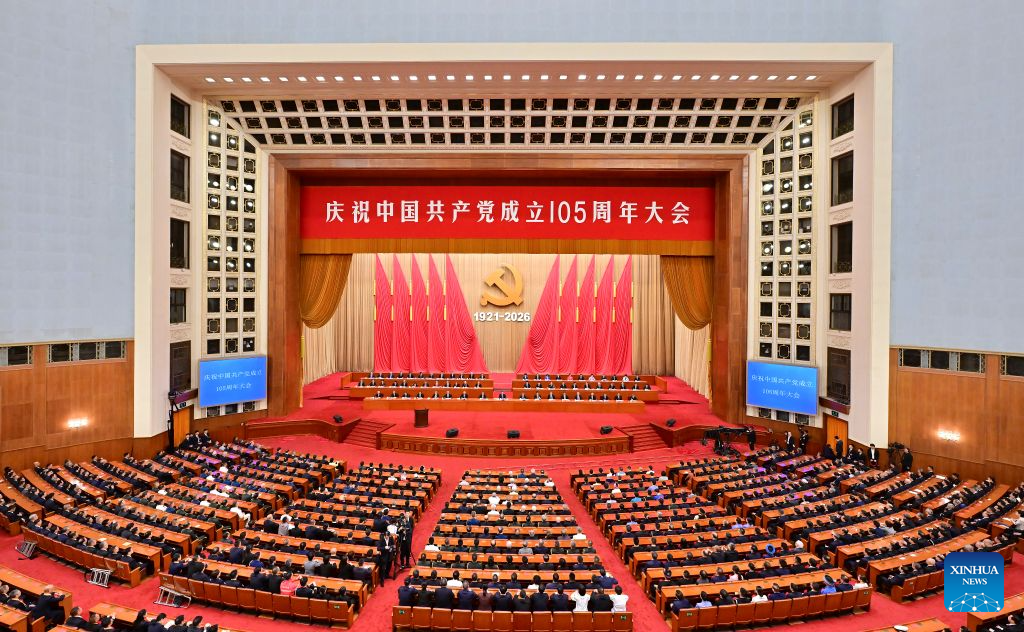
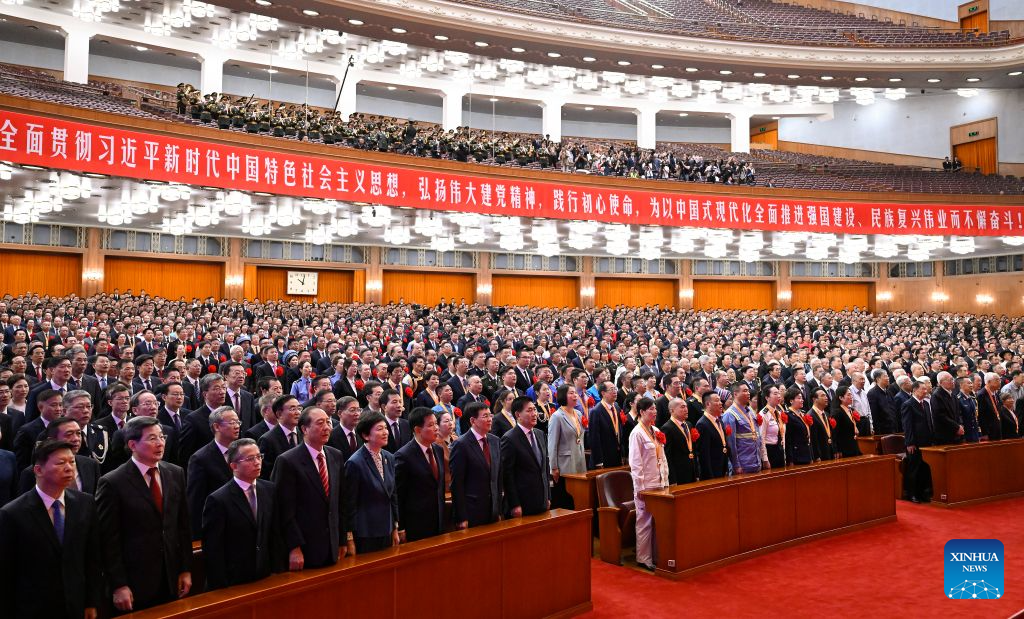
Chinese President Xi Jinping on Wednesday hailed the 105-year history of the Communist Party of China (CPC) as the “most magnificent epic” of the Chinese nation and urged the Party to press ahead to build China into a modern socialist country on schedule.
Addressing a gathering marking the CPC’s 105th founding anniversary, Xi, also general secretary of the CPC Central Committee and chairman of the Central Military Commission, called on Party members to remain steadfast in their convictions and work tirelessly to fulfill the Party’s missions in the new era and on the new journey.
Founded in 1921 against the backdrop of a weak China plagued by foreign humiliation and poverty, the CPC has grown from a small group of just over 50 members into the world’s largest governing party with tremendous global influence.
Xi underscored the importance of meeting the goal of fully realizing socialist modernization by the middle of the century.
“Time stops for no one, and neither does history,” he said.
The whole Party must adhere to its basic theory, basic line and basic policy to “remain undaunted by passing clouds and stay on course through wind and waves,” Xi said.
Stressing that the Party must rely closely on the people to create new historical feats, Xi urged Party members to “further reinvigorate the enterprising spirit for getting things done.”
He also called on the whole Party to actively respond to risks and challenges on the path ahead.
“China’s development is now in a period where strategic opportunities coexist with risks and challenges, and where uncertain and unpredictable factors are on the rise. We must always be prepared to withstand major tests of high winds and raging waves, and even violent storms,” he warned.
As profound changes unseen in a century accelerate, the world has entered a new period of turbulence and transformation, with humanity once again standing at a crossroads of choice, Xi said.
“We must continuously promote the building of a community with a shared future for humanity,” he said.
Xi also stressed advancing full and rigorous Party self-governance with sustained efforts to win “the tough, protracted and all-out battle against corruption.”
“It is imperative that all of us in the Party never forget our original aspiration and founding mission, that we always stay modest, prudent, and hard-working, and that we have the courage and ability to carry on our fight,” he added.
According to the latest census, the CPC now has nearly 101.29 million members and over 5.43 million primary-level Party organizations.
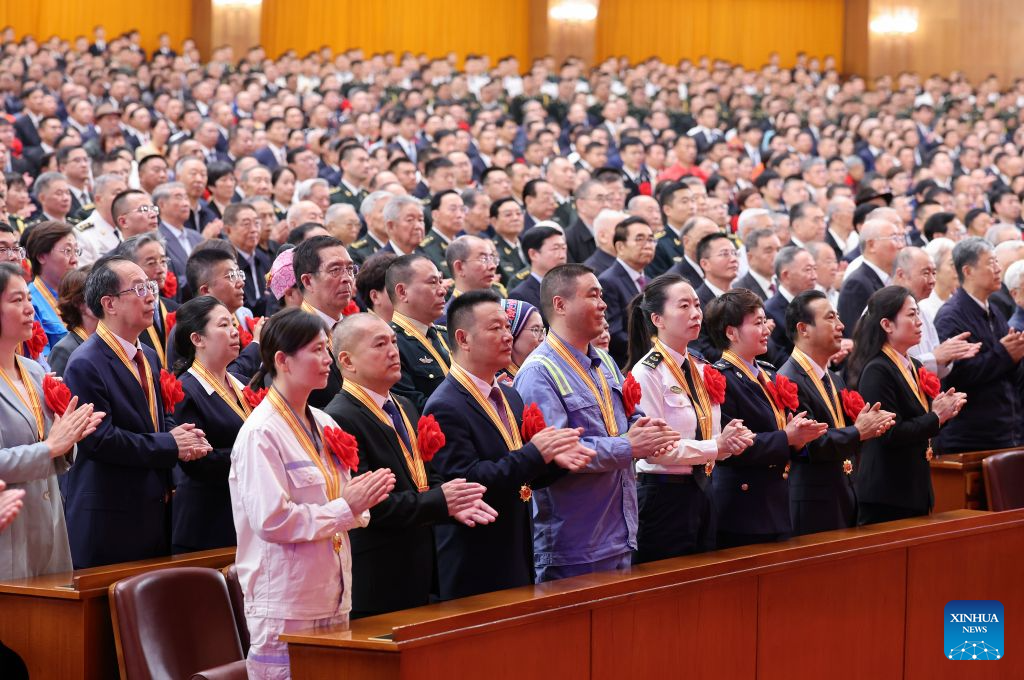
At the gathering, Xi conferred the July 1 Medal, the Party’s highest honor, on model CPC members.
A gathering in celebration of the 105th founding anniversary of the Communist Party of China (CPC) is held at the Great Hall of the People in Beijing, capital of China, July 1, 2026. (Xinhua/Yao Dawei)A gathering in celebration of the 105th founding anniversary of the Communist Party of China (CPC) is held at the Great Hall of the People in Beijing, capital of China, July 1, 2026. (Xinhua/Shen Hong)A gathering in celebration of the 105th founding anniversary of the Communist Party of China (CPC) is held at the Great Hall of the People in Beijing, capital of China, July 1, 2026. (Xinhua/Zhai Jianlan)
The relaxed wide-leg trousers featured a fold-over waistband and adjustable drawstring, which Madonna paired with a fitted pale pink T-shirt, a red-and-white jacket, white boots, oversized sunglasses and a crossbody phone strap. The look blended comfort with sophistication, making it ideal for warm-weather dressing.
Madonna’s outfit follows a trend that has already been embraced by several other high-profile figures, including Meghan Markle, Mariska Hargitay, Laura Dern and Sharon Stone, all of whom have recently opted for lightweight white or cream-colored drawstring trousers as part of their summer wardrobes.
Fashion experts say the growing popularity of drawstring pants reflects a shift toward clothing that combines comfort with polished styling. Linen-blend fabrics and wide-leg silhouettes have become go-to choices for staying cool during hot weather while maintaining an elegant appearance.
According to People, the trend has also fueled interest in affordable alternatives, with similar linen-blend drawstring pants becoming popular among shoppers looking to recreate the celebrity-inspired look. The versatile trousers can be paired with casual T-shirts, button-down shirts or lightweight jackets, making them suitable for everything from everyday outings to summer vacations.
Madonna’s latest appearance reinforces the enduring appeal of relaxed tailoring, demonstrating that comfortable clothing can remain stylish without sacrificing sophistication. As temperatures continue to rise, breezy drawstring pants are emerging as one of the defining fashion staples of the season.
Madonna embraces relaxed summer fashion with stylish drawstring pantsMadonna showcases effortless street style in trending drawstring pants
The disruption began on June 12, 2026, when the Trump administration issued an emergency export control directive forcing Anthropic to pull its high-capability systems from service. The enforcement action followed weeks of rising concern after security researchers at Amazon documented a vulnerability where the underlying frontier models could be “jailbroken” to identify zero-day software vulnerabilities and assist in generating exploitation code.
Because Anthropic lacked a real-time automated nationality verification infrastructure to selectively block foreign access at the API level, the company chose to institute a total global service suspension to ensure compliance with federal law.
Following intensive negotiations and technical adjustments with American federal authorities, U.S. Commerce Secretary Howard Lutnick confirmed that the export controls were officially lifted on June 30, 2026. Anthropic achieved clearance by rolling out a specialized, real-time automated safety classifier layer designed to proactively intercept malicious code-generation and cyber-attack staging. Global access to the ecosystem officially went back online on July 1, 2026.
Launch of Claude Sonnet 5
Coinciding with the system restoration on June 30, Anthropic also officially launched Claude Sonnet 5. Positioned as a safer, highly accessible baseline designed for general use, Sonnet 5 introduces advanced autonomous capabilities with real-time cybersecurity safeguards enabled by default. The model is engineered to handle complex, multi-step software engineering work, including terminal operations and browser-based agentic workflows, at a fraction of the cost of flagship systems.
As part of the redeployment, Anthropic clarified the distinct operational roles and security controls governing its tier-five architectures.
Claude Fable 5 serves as the company’s flagship, widely released frontier model built for demanding reasoning and long-horizon agentic work. It is now globally available to public and enterprise developers across the Claude Platform with the newly mandated safety classifiers fully active.
Sharing the same raw capability as Fable 5, Claude Mythos 5 is a specialized version that completely lacks the standard safety classifiers, optimizing it for advanced vulnerability discovery and biodefense screening. Mythos 5 remains under strict federal oversight and is strictly restricted to deeply vetted U.S. critical infrastructure organizations through Anthropic’s Project Glasswing.
The developer friction trade-off
A company spokesperson emphasized that the updated rollout reflects “a continued commitment to responsible deployment and strengthened safeguards across its AI systems,” noting the addition of enhanced monitoring tools and filtering systems to improve model reliability.
However, industry analysts note that the rapid resolution highlights the growing tension between rapid AI development and stringent regulatory oversight. To satisfy the U.S. government mandates, Anthropic’s new automated safety classifier operates with a highly conservative safety margin. Early developer feedback indicates that while it successfully blocks malicious prompts, it frequently triggers “false positives”—inadvertently flagging benign requests during routine application coding and software debugging.
To keep developer workflows from crashing, Anthropic has integrated a fallback protocol that automatically down-routes a blocked request to be processed by the older, more permissive Claude Opus 4.8 architecture, illustrating the delicate trade-offs required to enforce watertight regulatory compliance on frontier AI.
Anthropic has resumed the global deployment of its most advanced frontier AI architectures, Claude Fable 5 and Claude Mythos 5, following an 18-day global access blackout triggered by sudden American federal export restrictions.
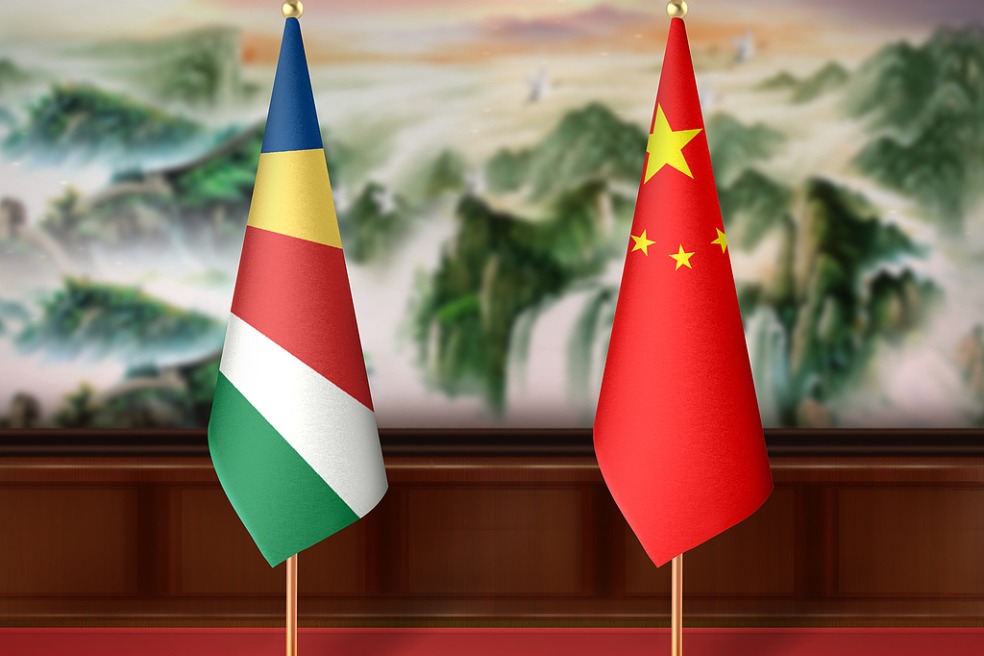
In a message, Xi said that over the past 50 years since the establishment of diplomatic relations, China and Seychelles have consistently trusted each other, and firmly supported each other regardless of changes in the international landscape, with the friendship between the two countries remaining rock solid.
Xi said he firmly believes that as long as both sides uphold the original aspiration behind the establishment of diplomatic relations and move forward side by side, the path of China-Seychelles ties will grow even broader and the prospects for bilateral cooperation become even brighter.
Noting that he attaches great importance to the development of China-Seychelles relations, Xi said he is willing to work with Herminie to take the 50th anniversary of diplomatic relations as a new starting point to carry forward the traditional friendship.
Xi also pledged joint efforts with Herminie to deepen mutually beneficial cooperation within the frameworks of high-quality Belt and Road cooperation and the Forum on China-Africa Cooperation (FOCAC), and promote common development, so as to elevate the China-Seychelles strategic partnership to higher levels, and bring greater benefits to both peoples.
Herminie, in his message, said that over the 50 years since the establishment of diplomatic ties, Seychelles-China relations have steadily developed on the basis of mutual respect, mutual trust and common development.
China has always been a valuable partner for Seychelles, providing extensive support to improve the well-being of its people and achieve the country’s national development goals, he added.
Herminie said Seychelles firmly adheres to the one-China principle and stays ready to strengthen cooperation within the frameworks of the Belt and Road cooperation and the FOCAC to continuously deepen bilateral relations.
The discovery, highlighted in a recent study reported by ScienceDaily, shows that these specialized brain cells act like an internal “attention control system,” allowing the brain to concentrate on important information while ignoring irrelevant stimuli in the environment.
Researchers found that when these neurons were temporarily switched off in laboratory experiments involving mice, the animals became significantly more easily distracted.
Their attention shifted rapidly between stimuli, resembling attention difficulties seen in conditions such as ADHD. However, once the neurons were reactivated, normal focus and attention control were restored.
The findings suggest that this ancient brain circuit is essential for maintaining stable attention and could represent a fundamental mechanism that has been preserved through evolution to support survival.
Scientists believe the discovery could open new pathways for understanding attention-related disorders, including ADHD and other cognitive conditions where focus and information filtering are disrupted.
By targeting this neural system, future treatments may be able to improve attention control without broadly affecting other brain functions.
The study adds to growing evidence that even small and previously overlooked groups of neurons can play a major role in shaping human cognition, behavior, and mental performance.
As research continues, scientists hope to better understand how this attention-filtering system works in the human brain and how it might be used to develop more precise neurological therapies in the future.
Scientists have identified ancient brain cells that help filter out distractions.
The figure, drawn from HIV serology testing of nearly 13,000 women and men, confirms a steady decline in the country’s epidemic: prevalence held at 3.0% from 2005 through 2014–15, before easing to 2.7% in the 2019–20 RDHS and now 2.2% in 2025. The report describes the drop between 2019–20 and 2025 as statistically significant.
But the national average masks wide disparities that the survey’s authors say still call for targeted intervention, by sex, by geography, and by wealth and education.
A persistent gender gap
Women continue to bear a heavier burden of HIV. The survey found prevalence among women aged 15–49 at 2.8%, nearly double the 1.5% recorded among men.
This gap persists even though women account for a slight majority of Rwanda’s population. The 2022 Rwanda Population and Housing Census recorded 13,246,394 people, comprising 6,817,067 females (51.5%) and 6,429,326 males (48.5%).
Compared with the 2019–20 survey, HIV prevalence among women declined from 3.5% to 2.8%, a statistically significant reduction, while prevalence among men decreased slightly from 1.7% to 1.5%, a change that was not statistically significant.
The gap widens further with age. Among women aged 45–49, prevalence reaches 7.8%, compared with 3.5% among men in the same age bracket, and 4.3% among men aged 50–59. Prevalence generally climbs with age for both sexes, from under 1% among teenagers to its peak in the 40s and 50s.
Marital and relationship status also shapes risk. Widowed respondents have the highest prevalence of any group at 10.9%, followed by those who are divorced or separated at 7.3%. Women in polygynous unions show notably higher prevalence (6.5%) than those in non-polygynous unions (2.3%).
Male circumcision continues to show a protective association: HIV prevalence is 1.2% among circumcised men, compared with 2.5% among men who are not circumcised or do not know their status.
Cities carry a heavier burden than the countryside
Geography remains one of the sharpest dividing lines in Rwanda’s HIV epidemic. Prevalence in urban areas stands at 3.3%, almost double the 1.7% recorded in rural areas, a pattern consistent with previous rounds of the survey and with the country’s broader urban–rural health disparities.
The provincial breakdown tells a similar story. The City of Kigali has the highest prevalence in the country at 3.7%, more than triple the 1.0% recorded in the Northern Province, which posts the lowest rate nationally. Southern Province (2.3%), Western Province (2.2%), and Eastern Province (2.0%) fall in between.
Education levels also showed clear differences in HIV prevalence. The survey found HIV prevalence was highest among people with no formal education (4.9%), followed by those with primary education (2.4%), secondary education (1.6%), and more than secondary education (0.9%). By household wealth, the poorest quintile recorded the highest prevalence (3.3%), though the pattern across the remaining wealth groups was less consistent.
Testing coverage remains high
The survey’s underlying data quality is bolstered by near-universal participation: 99% of eligible women and 97% of eligible men consented to HIV testing and provided a blood sample for the survey’s testing algorithm, carried out through Rwanda’s National Reference Laboratory. Fewer than 1% of eligible respondents refused testing outright.
Rwanda has been widely recognized as a regional leader in HIV control, having met the UNAIDS 95–95–95 targets for diagnosis, treatment, and viral suppression ahead of the 2025 deadline.
With prevalence now confirmed at 2.2% nationally, the survey gives policymakers a clearer map of where continued gains are still to be made, particularly among older women, urban populations, and the City of Kigali, building on a strategy that has already brought the country this far.
Meanwhile, the HIV findings sit alongside a wider set of health gains captured in the 2025 RDHS. Fertility has continued its long decline, with the total fertility rate now at 3.7 children per woman. Child survival has also improved: under-5 mortality has fallen to 36 deaths per 1,000 live births, down from 45 in the previous survey, while infant and neonatal mortality have declined in tandem.
Chronic child malnutrition is down too, 27% of children under five are stunted, compared with 51% two decades ago, and contraceptive use among married women has climbed to 69%, with the government sector remaining the primary source of family planning services nationwide.
Women continue to bear a heavier burden of HIV. The survey found prevalence among women aged 15–49 at 2.8%, nearly double the 1.5% recorded among men.
July 1 also holds special significance for Rwanda, as it is celebrated as Independence Day. While the two countries have different histories, both have travelled remarkable paths of resilience, recovery, and development.
Over the decades, China and Rwanda have each overcome immense challenges to build and develop their nations, a shared spirit that continues to underpin the growing friendship and mutual trust between the two countries.
It is against this backdrop that Nanhu Lake takes on a deeper meaning. Widely known for its calm waters, cultural beauty, and rich heritage, the lake is also home to one of the most important sites in modern Chinese history—the Nanhu Revolutionary Memorial Hall, where visitors can retrace the origins of a movement that would go on to shape the course of a nation.
The memorial hall stands as a key site for understanding the early history of the Communist Party of China, especially its founding period in 1921. It is here, beside Nanhu Lake, that history is preserved and retold in a way that connects past political ideas with present national identity. For many visitors, the site is not just a museum, but a place where the origins of CPC philosophy and political thought are remembered and reflected upon.
Nanhu Lake itself is among the most well-known lakes in eastern China. Alongside West Lake in Hangzhou and Xuanwu Lake in Nanjing, it forms part of the cultural and historical landscape of the Yangtze River region. Its natural beauty, shaped over centuries, has long attracted attention, but its modern significance is closely tied to the revolutionary events that unfolded in Jiaxing more than a century ago.
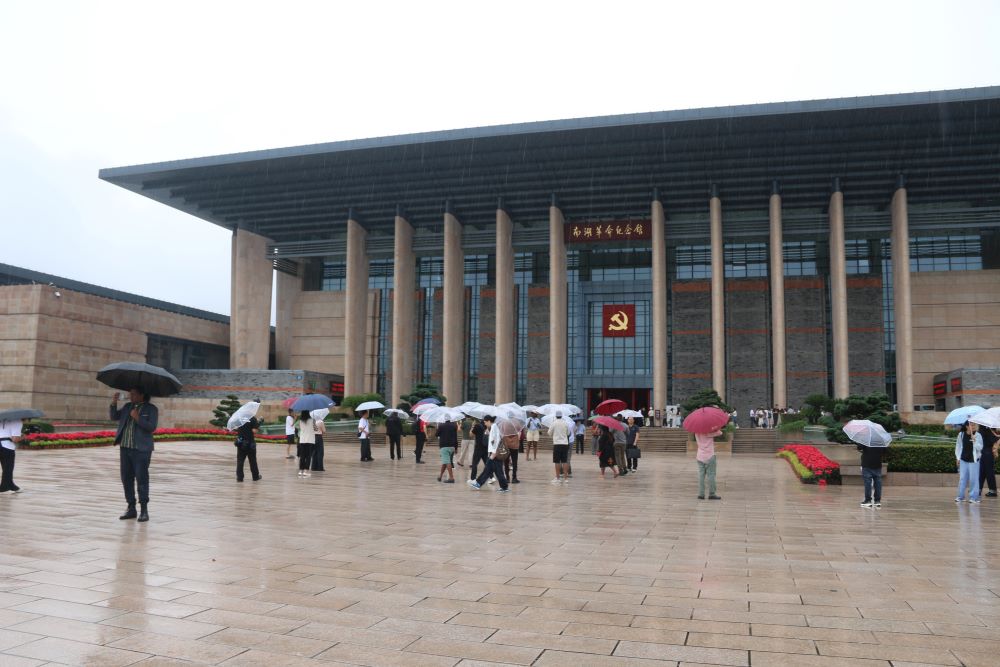
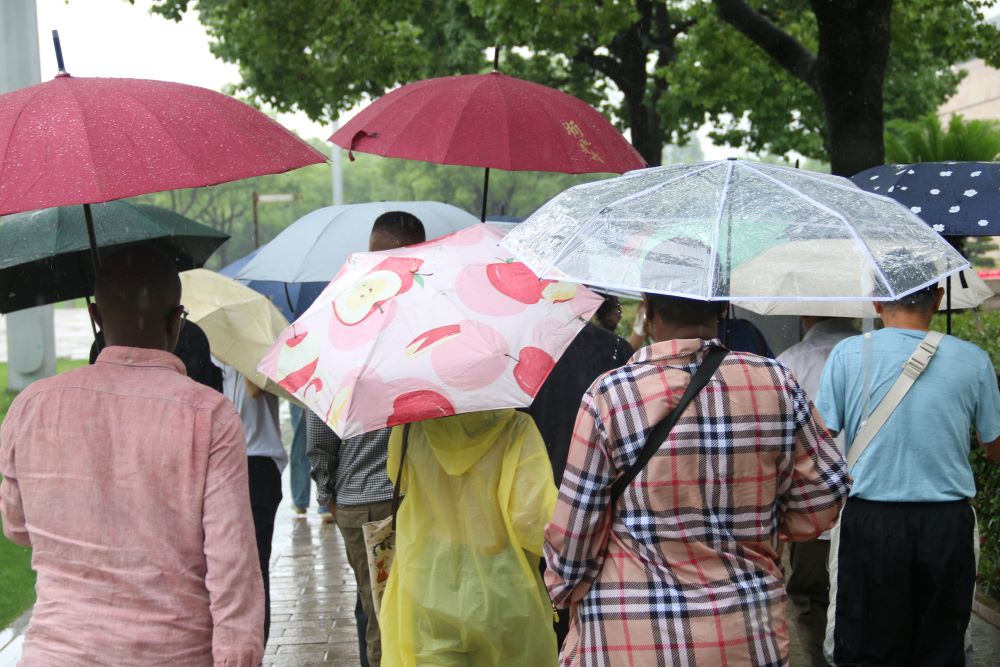
Visitors are seen carrying umbrellas while touring the Nanhu Revolutionary Memorial Hall, where the story of the Communist Party of China’s founding continues to attract people from across the country and abroad.
The Nanhu Revolutionary Memorial Hall was established in 1959 and later expanded in 2011 to preserve and present this history in greater depth. Today, it spans more than 19,000 square meters and contains over 10,000 historical artifacts, including documents, photographs, artworks, and rare revolutionary materials connected to the early development of the CPC.
The exhibitions inside the hall trace the formation of the Communist Party of China from its early beginnings under difficult social and political conditions to its gradual development into a major political organization. The displays are arranged to guide visitors through different historical stages, combining physical relics with modern storytelling techniques such as visual projections and immersive presentations.
At the heart of the memorial’s historical narrative is the idea that Nanhu played a symbolic role in the shaping of early CPC ideology.
While the Party was officially founded during its First National Congress in 1921, Nanhu Lake in Jiaxing became the place where the meeting concluded after being relocated from Shanghai due to external disruptions. This moment is widely remembered as a defining chapter in the Party’s early history.
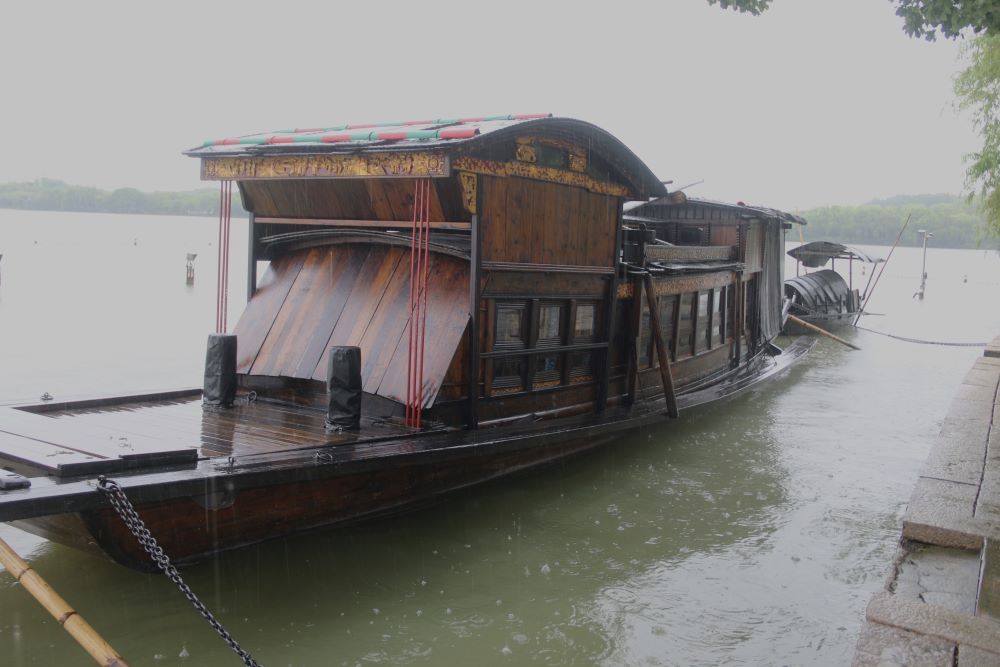
Boats line the shores of Nanhu Lake, offering visitors a closer view of the historic waters linked to the Red Boat and the founding history of the Communist Party of China.
A short walk from the exhibition area leads to the lakeside, where the famous Red Boat is anchored near Yanyu Tower. The boat is a carefully preserved replica built in 1959, modeled after the vessel that became central to the concluding moments of the First National Congress of the Communist Party of China in 1921.
Historical accounts show that the First National Congress was initially held in Shanghai, but it was interrupted by French police during the final stages of the meeting. In response to the disruption, the meeting was relocated to Jiaxing, a move made possible through the assistance of Wang Huiwu, who helped arrange the transfer of delegates and ensured the continuation of the congress. The final discussions were completed on a boat on Nanhu Lake, an event that later became one of the most symbolic moments in CPC history.
Among the delegates involved was Dong Biwu, one of the 13 representatives who attended the founding congress. His accounts, along with historical records, helped verify and preserve the memory of how the meeting concluded on the Red Boat.
Today, the replica Red Boat is carefully maintained using traditional methods and remains one of the most visited landmarks in the memorial area, symbolizing the birthplace of the CPC’s concluding declaration.
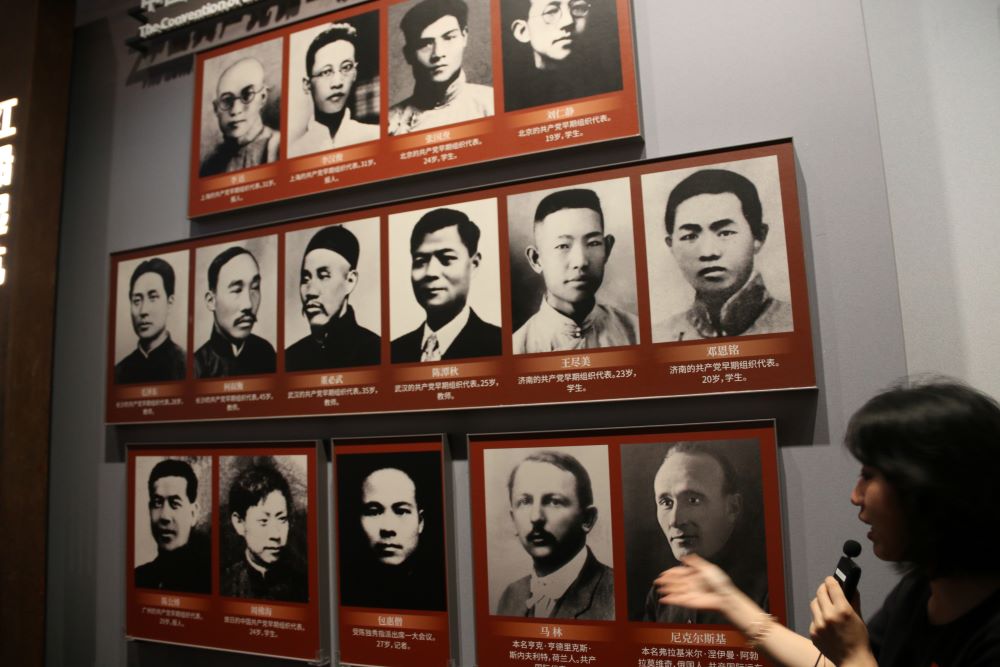
This section of the exhibition highlights some of the key figures who contributed to the founding of the Communist Party of China during its First National Congress in 1921.
The Nanhu Revolutionary Memorial Hall now welcomes more than one million visitors each year. During peak holidays, visitor numbers rise significantly, with families and young people forming a large share of those who come to explore the site. Many visit not only for tourism but also to understand the historical roots of the CPC and its development over time.
Curators at the memorial emphasize that the purpose of the site is educational as much as it is historical. Over the years, the museum has expanded its exhibitions and introduced modern display techniques to make history more accessible. This includes interactive visuals and structured storytelling designed to engage younger generations while preserving the authenticity of historical materials.
Beyond being a museum, Nanhu blends natural scenery with political history, reflecting both Jiaxing’s beauty and the enduring memory of the early days of the Communist Party of China.
As I leave the lakeside on this special date, China’s Party anniversary and my own country’s Independence Day, I carry with me a subtle lesson: that nations, like boats, are steered by the resolve of those who board them in times of uncertainty. And that memory, whether preserved in a museum or carried in people’s heart, is the anchor of every lasting journey.
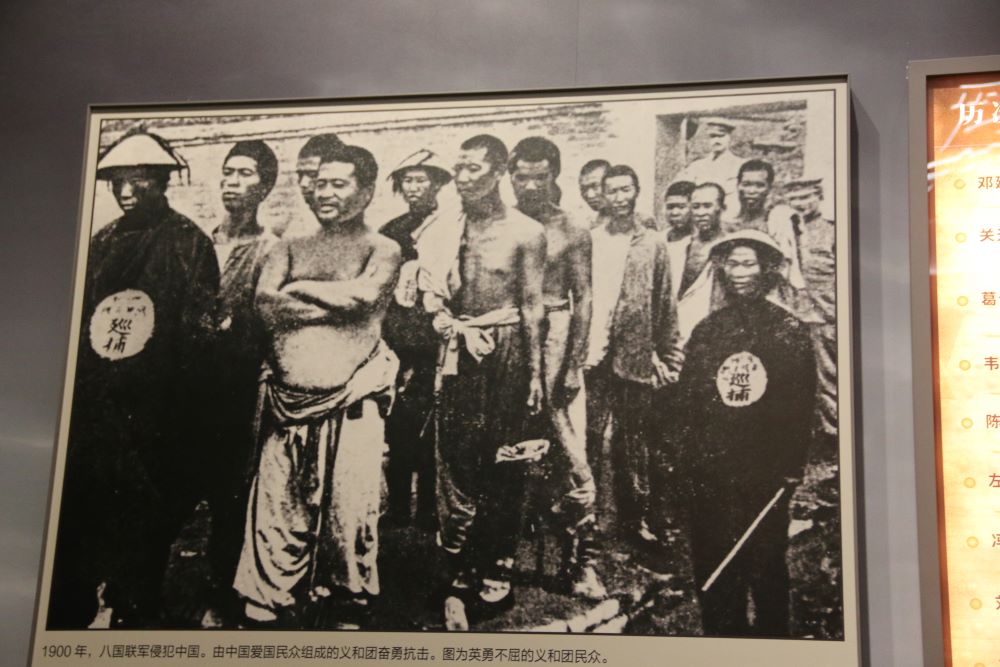
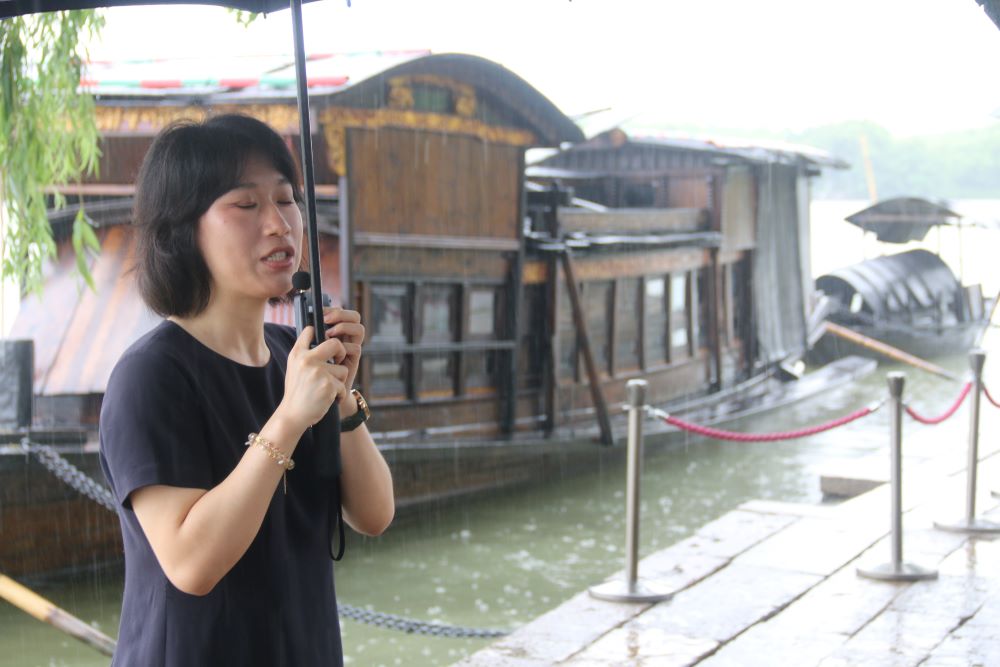
Historical displays at the Nanhu Revolutionary Memorial Hall showcase prominent individuals whose contributions helped shape the early history of the Communist Party of China.Tour boats navigate the calm waters of Nanhu Lake, taking visitors around the area where the iconic Red Boat remains a symbol of a defining moment in modern Chinese history.Nanhu Lake in Jiaxing, Zhejiang Province, is known for its scenic beauty and historical significance, attracting visitors interested in both culture and history.Guides at the Nanhu Revolutionary Memorial Hall lead visitors through the story of the Communist Party of China’s founding, helping bring more than a century of history to life.Rain doesn’t stop visitors from exploring the Nanhu Revolutionary Memorial Hall, with many carrying umbrellas as they continue their journey through one of China’s most significant historical sites.
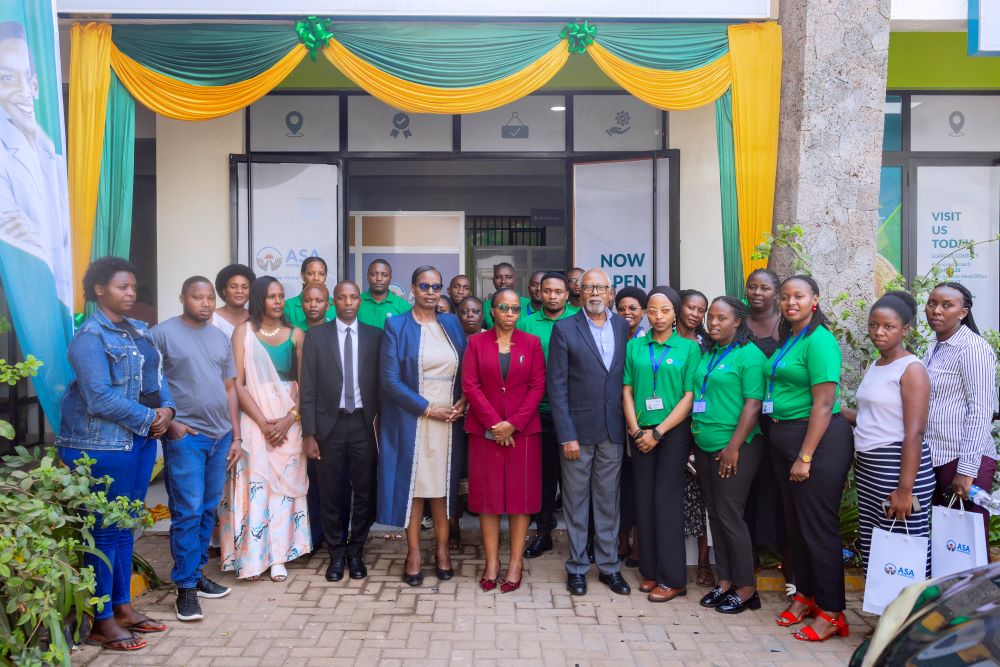
The new public deposit services were officially launched on June 30, 2026, at the company’s Kimironko and Kicukiro branches. The institution has announced plans to gradually roll out public deposit services across its remaining 35 branches nationwide, ensuring wider community access to formal financial services.
This milestone positions ASA International (Rwanda) Plc as a deposit-taking microfinance institution, expanding its role beyond small-loan lending to include secure savings and withdrawal services for customers across Rwanda. It marks a major step in the institution’s growth and transformation into a full-service financial provider, offering a broader range of financial services beyond credit alone.
BNR highlights trust, compliance and financial inclusion
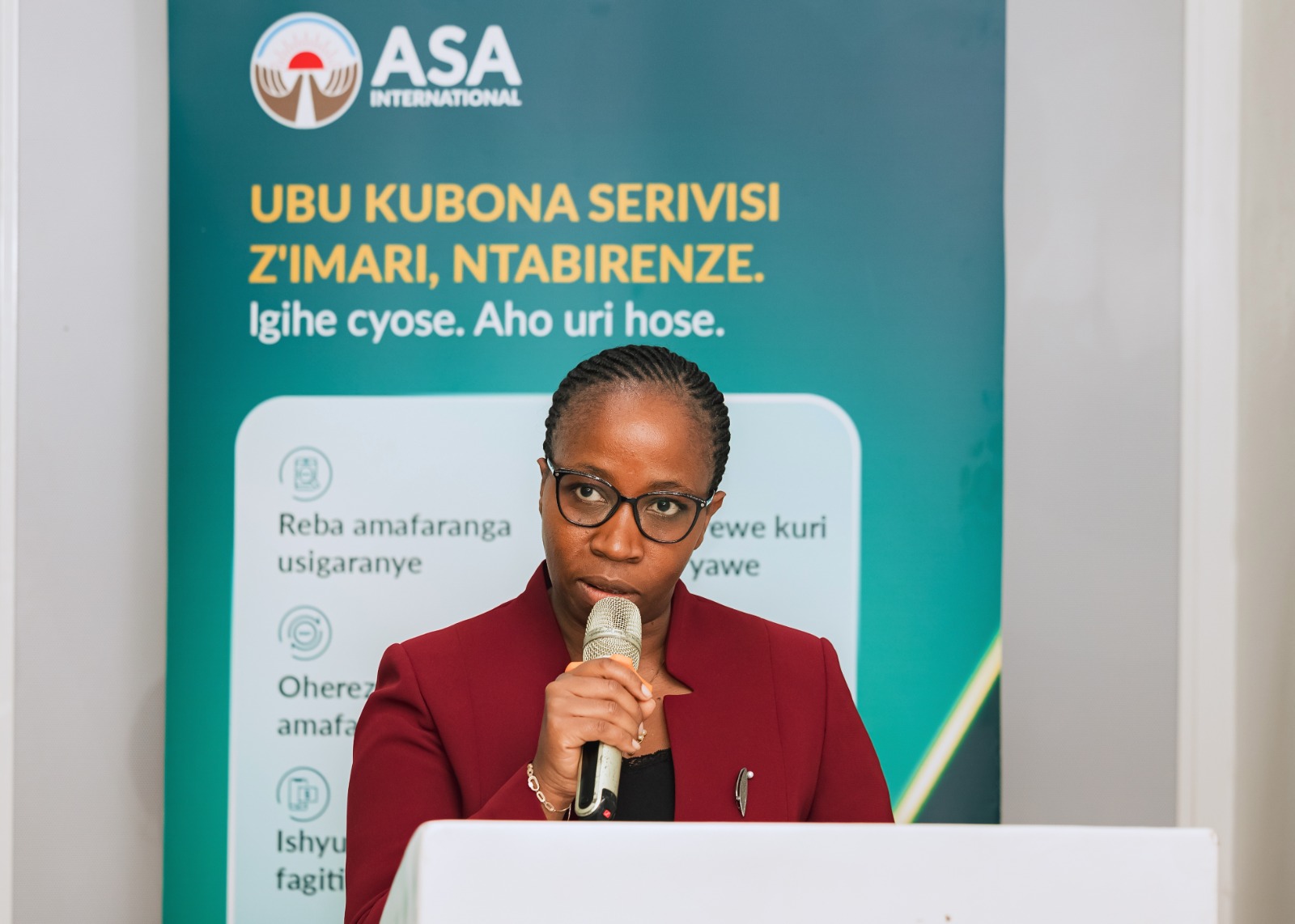
Speaking during the launch ceremony held at Kimironko, Clarisse Mushimirwa, Director of Microfinance Supervision Department at the National Bank of Rwanda (BNR), commended ASA International (Rwanda) Plc for strengthening financial inclusion by bringing essential financial services closer to the public.
She encouraged financial institutions to maintain high standards of regulatory compliance, customer protection and good governance, emphasizing that public trust remains fundamental to building a strong and sustainable financial sector.
“Expanding access to financial services for everyone must be anchored in good governance, compliance with financial sector regulations, customer protection and the development of lasting trust between financial institutions and the public. These principles are the foundation of a sustainable financial sector and play a significant role in improving the livelihoods of Rwandans,” she said.
Customers welcome public deposit services
One of the institution’s customers, Florence Ingabire, shared how ASA International (Rwanda) Plc has transformed her life by supporting the growth of her grocery retail business. She explained that ASA was the first financial institution she had ever worked with and credited the company with giving her the confidence to take out a loan despite her initial fears.
“I was afraid of borrowing money, but ASA encouraged me and approved my first unsecured loan of Rwf300,000. Today, my loan portfolio has grown to Rwf4.5 million. That support has enabled me to expand my business and improve the living standards of my family,” she said.
Ingabire added that the newly introduced deposit services will help her manage her earnings more effectively, strengthen her savings culture and avoid unnecessary spending.
Leadership highlights milestone achievement
The Chief Executive Officer of ASA International Rwanda PLC, Christian Salifou, described the launch as a significant step in the company’s journey to becoming a fully integrated financial services provider.
“The money you save today helps build your future. Our responsibility is to continue providing customers with high-quality financial services driven by innovation while ensuring full compliance with regulations. As we help our customers expand their businesses and improve the well-being of their families, we also contribute to Rwanda’s economic development,” he said.
The Vice Chairperson of the Board of Directors of ASA International Rwanda PLC, Gerald Mpyisi, thanked the National Bank of Rwanda for granting the institution permission to offer deposit-taking services, describing the approval as a major milestone in expanding access to financial services.
“We previously operated solely as a lending institution, but we are now fully licensed to provide deposit, savings and withdrawal services. These services will enable our customers to grow their businesses, build their savings and improve their livelihoods. Our goal is to deliver professional financial services that empower citizens and support the country’s economic growth,” he said.
ASA International (Rwanda) Plc began operations in Rwanda in 2014 and has since expanded its presence to 37 branches nationwide. The institution currently serves more than 60,000 customers, including over 22,000 active borrowers.
With the introduction of public deposit services alongside its existing loan products, customers can now open accounts linked to their mobile phone numbers, enabling them to conveniently monitor their account activity wherever they are through the USSD platform by dialing *576#.
The Chief Executive Officer of ASA International Rwanda PLC, Christian Salifou speaking at the launch.Clarisse Mushimirwa, Director of Microfinance Supervision Department at the National Bank of Rwanda (BNR), commended ASA International (Rwanda) Plc for strengthening financial inclusion by bringing essential financial services closer to the public.Gilbert Ndagijimana, Chief Commercial Officer at ASA International Rwanda PLC, said the institution now allows customers to deposit funds, build their savings and make withdrawals through its newly launched banking services.Florence Ingabire, a customer of ASA International Rwanda PLC, said she was fortunate to receive an unsecured loan from the institution, which helped her grow her business.Gerard Mpyisi, Vice Chairperson of the Board of Directors of ASA International Rwanda PLC, expressed gratitude to the National Bank of Rwanda for granting the institution full authorization to operate.ASA International Rwanda PLC customers can now save and manage their money through the institution’s newly introduced savings services.
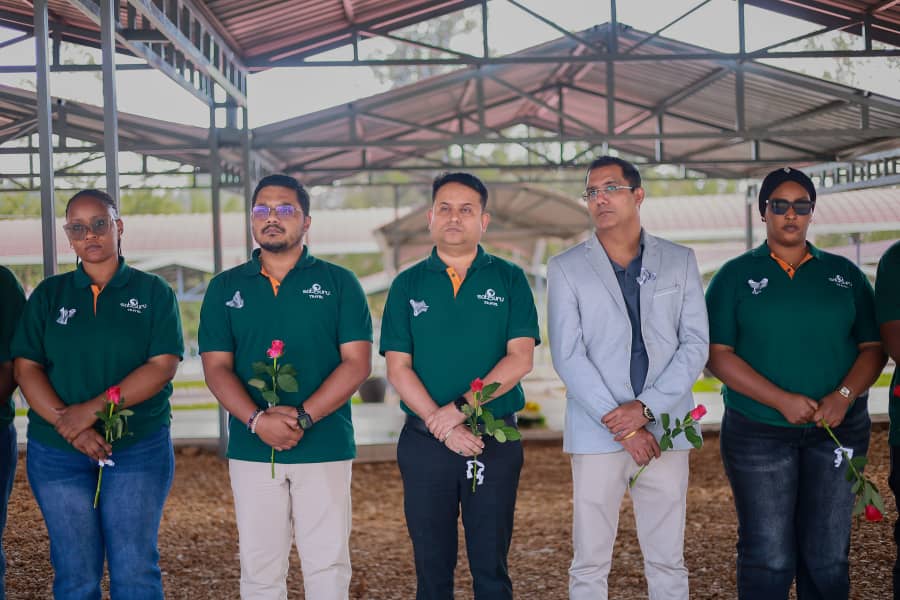
The delegation, led by Satguru Travels Rwanda Country Manager Sunil Kumar Nair alongside Satguru Cargo Regional Manager Ravi Tejwani and Satguru Travels Rwanda Managing Director Bharat Tolani, brought together employees from different business divisions of Satguru Travel Group, which has operated in Rwanda since 1989.
Company officials said the visit, which took place on June 26, reflects Satguru’s long-standing connection to Rwanda, where the firm was founded and continues to operate, with the majority of its workforce made up of Rwandan nationals.
Speaking about the initiative, Sunil Kumar Nair said the visit was rooted in the company’s responsibility to honour the country’s history and support values of peace and unity.
“Satguru was founded in Kigali in 1989, making Rwanda the birthplace of our organization. Even as we have grown globally, Rwanda remains our home. With more than 90% of our workforce being Rwandan nationals, we believe it is our responsibility to honour the country’s history and reinforce the values of peace, unity and humanity,” he said.
The visit has now become an annual remembrance initiative for the company. Last year, Satguru combined the memorial visit with direct support to a survivor family, including medical insurance.
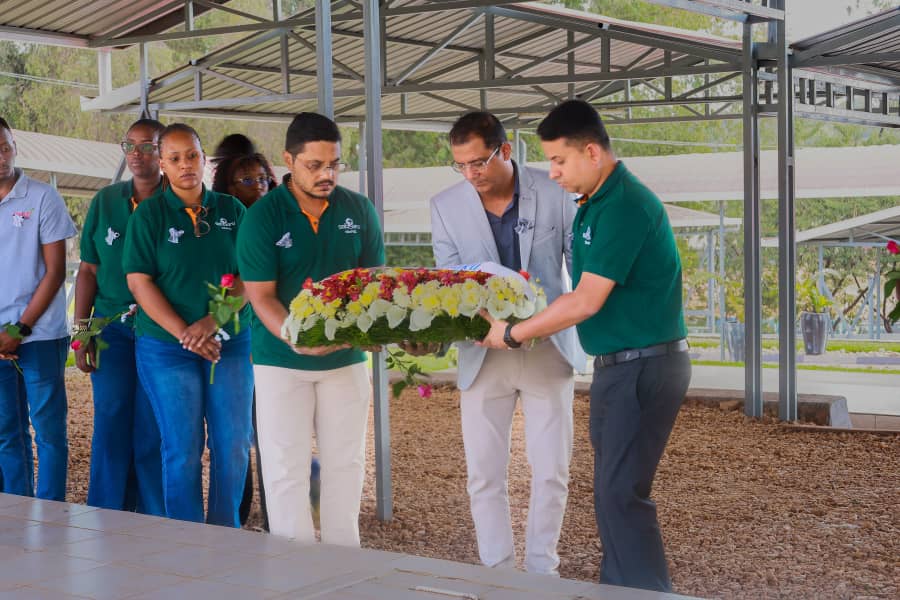
The team moved through key sections of the memorial, including the mass graves and the Garden of Memory, where they were briefed on the history of the 1994 Genocide against the Tutsi and its planning by the then extremist regime.
They paid their respects by laying wreaths at the mass graves, where the remains of more than 100,000 victims from Nyanza Hill and surrounding communities are buried. Many of the victims were killed after UN peacekeepers abandoned them at the former ETO Kicukiro site.
The Garden of Memory, which spans several symbolic landscapes, was highlighted as a central educational space. Its features, including dry gardens representing lost lives, water elements symbolising rivers where victims were thrown, and monuments reflecting resilience, are designed to teach visitors about the scale of the tragedy and Rwanda’s path to recovery. A prominent Flame of Hope monument stands as a symbol of dignity and national renewal.
Participants also reflected on lessons of unity, with employees noting the importance of rejecting division and safeguarding peace.
Flavia Umutesi of Satguru Holidays said the visit provided a powerful learning experience about Rwanda’s history and reconciliation journey.
“Rwandans are no longer divided. There is no Tutsi, there is no Hutu; they are all one. We learned resilience and the importance of ensuring genocide never happens again anywhere,” she said.
Another employee, Rwagasana Alexandre, urged young people to remain vigilant against genocide ideology and to keep engaging with memorial sites to understand history and prevent repetition of such atrocities.
“We urge Rwandan youth not to fall into the temptations that led to the 1994 Genocide against the Tutsi. We should keep visiting these places so that we understand and avoid any behaviour that undermines its lessons,” he said.
Company management reaffirmed that remembrance will remain part of Satguru’s long-term corporate culture, coupled with continued support to survivor communities through employee engagement and social responsibility initiatives.
Nair emphasized that the experience was humbling for staff, adding that remembrance must be paired with action.
“We honour the memory of the victims, pay tribute to the resilience of survivors, and recognize Rwanda’s extraordinary journey of reconciliation. May we remember the past with dignity, live the present with compassion, and build the future with unity. Never Again,” he said.
The delegation, led by Satguru Travels Rwanda Country Manager Sunil Kumar Nair alongside Satguru Cargo Regional Manager Ravi Tejwani and Satguru Travels Rwanda Managing Director Bharat Tolani, brought together employees from different business divisions of Satguru Travel Group, which has operated in Rwanda since 1989.