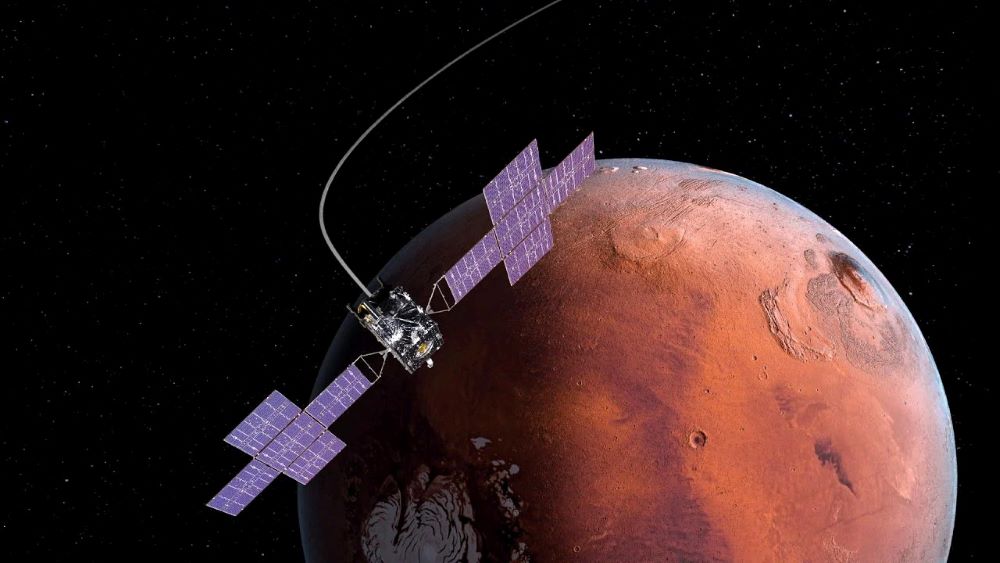
On May 15, the spacecraft will pass about 4,500 kilometers above the surface of Mars while traveling at nearly 20,000 kilometers per hour.
Scientists say the flyby will allow Mars’ gravity to pull the spacecraft forward, increasing its speed and changing its direction without using much fuel.
The spacecraft was launched in October 2023 and is expected to reach the asteroid in 2029. NASA says using a planet’s gravity in this way, known as a “gravity assist,” helps save fuel and makes long space missions more efficient.
During the flyby, Psyche will also collect images and scientific data from Mars. Engineers will use the opportunity to test the spacecraft’s cameras and other instruments before it reaches the asteroid.
NASA said the spacecraft has already started sending back early images showing Mars as a tiny point of light in space.
Scientists are especially interested in how Mars will appear during the flyby. Since Psyche is approaching from the dark side of the planet, it will first see Mars as a thin crescent rather than a fully bright planet.
Researchers also hope the spacecraft may detect faint dust around Mars, possibly caused by small impacts on the planet’s moons, Phobos and Deimos.
The spacecraft carries several scientific instruments, including tools that can study magnetic fields, radiation, and particles in space.
“Ultimately, though, the only reason for this flyby is to get a little help from Mars to speed us up and tilt our trajectory in the direction of the asteroid Psyche,” said Lindy Elkins-Tanton, the mission’s principal investigator.
NASA and European space missions already orbiting Mars will also help monitor the flyby.
NASA’s Psyche spacecraft will skim past Mars to gain speed on its long journey to a strange metal asteroid. Along the way, it could capture spectacular images of the Red Planet and gather new scientific data during the high-speed flyby. Credit: NASA/JPL-Caltech/ASU
Researchers followed more than 131,000 nurses and healthcare workers for up to 43 years. During that time, about 11,000 participants developed dementia.
The study found that people who regularly drank moderate amounts of caffeinated coffee or tea were less likely to develop the condition.
The strongest results were seen in adults aged 75 and below. Scientists found that consuming around 250mg to 300mg of caffeine per day, equal to about two to three cups of coffee, was linked to a 35% lower risk of dementia.
However, researchers said drinking more caffeine than that did not provide extra protection for the brain.
Scientists believe caffeine may help by blocking a brain chemical called adenosine, which slows down important brain activity. Caffeine may also reduce inflammation and help regulate blood sugar, both of which are linked to brain health.
The study also found that drinking one to two cups of tea daily may help protect the brain. Researchers noted that tea contains antioxidants and other compounds that could support healthy blood vessels and brain function.
At the same time, experts warned that too much caffeine may have negative effects. High caffeine intake can interfere with sleep and increase anxiety, which may harm brain health over time.
Researchers also observed that people who drank more decaffeinated coffee experienced faster memory decline. They suggested this may be because some people switched to decaf after developing health problems already linked to dementia risk.
Although the study focused on healthcare professionals, researchers said similar findings appeared in 38 other studies they reviewed.
Overall, the evidence suggests that moderate caffeine intake, especially from coffee or tea, may help support brain health as people age.
New research suggests that drinking a moderate amount of caffeinated coffee or tea could help lower the risk of dementia as people age.
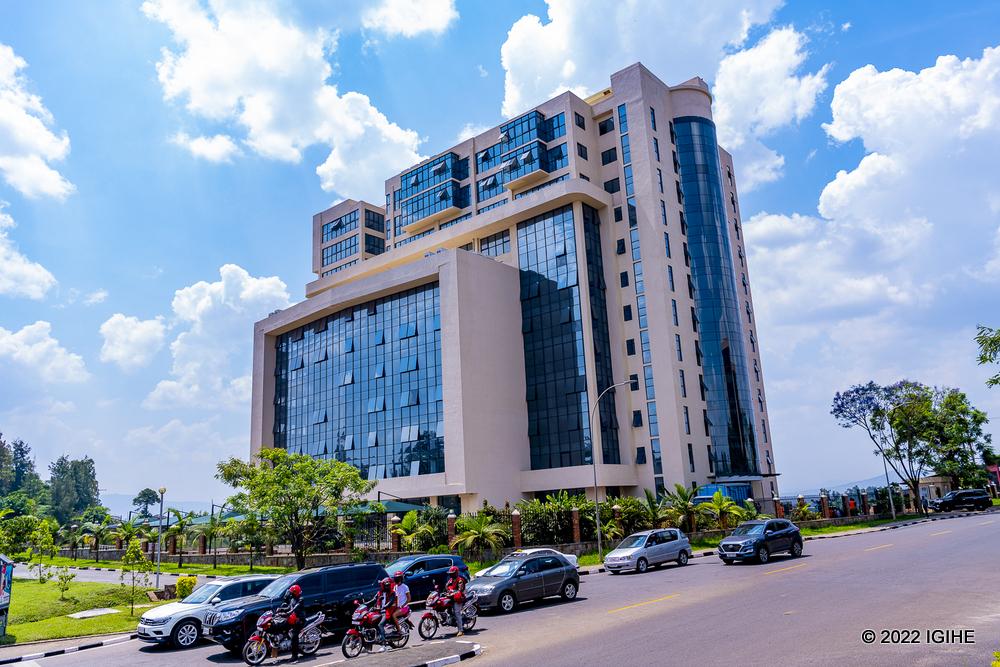
An initial budget of Rwf 997.7 million has been allocated to kick-start the works, as part of broader infrastructure projects undertaken by the Rwanda Housing Authority (RHA) for the 2026/2027 fiscal year.
The renovation will include upgrades to the building’s electrical systems, installation of backup generators to ensure power supply during outages, and relocation of transformers linked to the facility’s power infrastructure.
RDB announced temporary closure of the building on May 5, 2026 to allow renovation works to begin.
All institutions and offices that were operating in the building have since been relocated to facilitate the refurbishment process.
Following the temporary closure, Minister of Infrastructure Jimmy Gasore told TV10 that initial inspections had identified issues in the building’s wastewater treatment system, particularly in the drainage of wastewater from sanitary facilities, although further assessments were still required.
He said the decision to vacate the building was made to allow a comprehensive review of its condition.
“We can say the main reason is that we decided to fix the issues while the building is empty. We want to reassess everything to ensure that if there are other problems, they can also be addressed at once,” he said.
He further noted that inspections had revealed problems in parts of the electrical wiring system, which affected the performance of elevators, making them operate more slowly than expected for such a modern structure. He added that a full technical study would be carried out during the renovation to identify any additional issues.
The minister also clarified at the time that the building would not be demolished, dismissing speculation that had circulated earlier, and stressing that the works were focused on repairs and improvements.
The Gishushu-based building, covering 42,000 square metres, was purchased by the government for Rwf 42 billion but concerns were raised about its quality. The Rwanda Housing Authority had previously conducted assessments to determine its structural condition.
The evaluation reportedly identified several defects, leading to corrective measures targeting both design and construction-related issues.
Over time, these defects became more visible, with reports indicating that some structural weaknesses worsened, raising safety concerns.
Authorities ultimately decided to temporarily evacuate the building to ensure the safety of occupants while comprehensive renovation works are carried out.
The RDB Building, located in Gishushu, is a 12-storey structure with four underground floors that can be used for various purposes, including parking and gym facilities.
Under the revised system, which is already in effect, a vehicle owner cannot transfer a car or motorcycle without the consent of their spouse if they are married under a community property regime, even where the vehicle is registered in the name of only one partner.
Although vehicle ownership transfers are expected to be completed within five days of a sale, the process can be blocked if the seller has unpaid taxes or other unresolved obligations with the tax authority.
To initiate a transfer, a seller logs into the RRA E-Tax system, selects the vehicle using its plate number and chassis details, and requests ownership transfer to a buyer. The system then generates a security code, which is sent to the seller’s phone.
This code is shared with the buyer or a notary, who can use it to verify whether the vehicle or its owner has any outstanding tax issues through the RRA platform.
Where no arrears or restrictions are detected, the transaction proceeds and an official agreement is generated. If issues are identified, the seller is required to clear them before continuing with the process.
The Deputy Commissioner for Taxpayer Services and Communication at Uwitonze Jean Paulin said the system is designed to ensure that no one acquires a vehicle that is legally or fiscally encumbered, or relies on unofficial sale documents.
He noted that in the past, some transactions involved informal arrangements, including cases where vehicles were resold before being formally transferred into the buyer’s name.
“The agreements now follow a standard format produced by the system and are signed accordingly. This helps eliminate disputes and ensures that tax obligations are settled before any transfer is completed,” he said.
The system-generated contracts will now be authenticated by a notary, replacing the previously handwritten agreements between individuals. They will also serve as the official documents used in the transfer of vehicle ownership.
The requirement for spousal consent has also been introduced
According to Uwitonze Jean Paulin, public awareness campaigns on property transfers revealed cases where one spouse would dispose of jointly owned assets without the knowledge or approval of the other, often leading to disputes and blocked transactions.
In such situations, the aggrieved spouse could object, preventing the transfer from being completed even after payment had been made.
He explained: “For couples married under a community property regime, both spouses will now be required to sign the agreement, confirming their consent to the sale of a family asset.”
“This measure ensures that decisions involving shared property are made jointly, with both signatures required on the contract.”
Authorities say the changes are aimed at reducing fraud and disputes in vehicle transactions.
Notaries have also been instructed to verify that contracts comply with system requirements and match official records in the RRA database before approving any transfer.
RRA has further advised buyers to confirm that a vehicle is free of restrictions or tax arrears before making any payment, in order to avoid financial losses.
Once a seller logs into E-Tax and is cleared of outstanding obligations—or placed under an approved repayment plan—the system generates a form capturing buyer details. For foreign buyers, passport information and a copy of the document are required.
After verification, the seller receives a pre-filled contract generated from system data. Both parties then add the date and place of signing before finalisation.
The agreement is then validated by a notary and used as the official basis for completing the ownership transfer and related procedures.
Notaries are also required to cross-check chassis numbers against system records to ensure consistency before approving any sale or donation of a vehicle.
Rwanda has overhauled vehicle ownership transfer system with online contracts and stricter checks.
The two sides will meet in a Matchday 33 fixture of the BK Pro League at Kigali Pelé Stadium at 3:00 PM. This match marks a poignant moment for the “Blue Wave,” who have spent the season playing as guests in the Rwandan league due to the devastating civil war in Sudan.
A season in exile
Since the conflict broke out in April 2023 between the Sudanese Armed Forces (SAF) and the Rapid Support Forces (RSF), professional football in Sudan has been at a total standstill. With stadiums damaged and safety impossible to guarantee in Khartoum, Al-Hilal and their rivals, Al-Merrikh, sought refuge in the Rwandan top flight to maintain match fitness and provide a sense of continuity for their displaced supporters.
The match against Gasogi United was rescheduled because the Sudanese club is expected to return to neutral territory or safe zones within Sudan to attempt a restart of their domestic campaign.
Honorary trophy
In an announcement released on Wednesday, the Rwanda Premier League stated that if Al-Hilal SC win or draw the match, the club will officially be awarded their Honorary trophy and medals for the 2025/2026 season.
Al-Hilal currently lead the table with 70 points, which is 12 ahead of fellow Sudanese exiles Al-Merrikh SC, while both teams still have four matches remaining. Second-placed APR FC follows with 59 points and three games left.
Defining the dual champions
Because Al-Hilal and Al-Merrikh are guest participants, the Rwanda Premier League created a unique format to honor their dominance without displacing local clubs from continental qualification. The Honorary Trophy is awarded to
Al-Hilal SC as the overall points leader in recognition of their sporting excellence while in exile.
Meanwhile, the BK Pro League National Champions 2025/26 title will go to the highest-ranked Rwandan club, expected to be APR FC, who will represent Rwanda in the CAF Champions League.
Al-Hilal SC could be awarded the honorary trophy this Wednesday.In the first-leg matches, Gasogi United lost 2–0 to Al-Hilal SC.
The appeal was lodged with the Nyarugenge High Court, challenging the court’s verdict and sentence.
DJ Toxxyk had been prosecuted on charges of involuntary manslaughter, unlawful involvement with narcotic drugs or psychotropic substances, fleeing the scene after causing or being involved in a road accident, and refusing to take a breathalyser test.
The case stemmed from a road accident that occurred in the early hours of December 20, 2025, which resulted in the death of a police officer. During the investigation, drugs were also reportedly found at his residence.
On May 4, the Kicukiro Primary Court delivered its verdict, finding DJ Toxxyk guilty on all charges. The court sentenced him to three months of community service, suspended for six months, and imposed a fine of 1,050,000 Rwandan francs.
Following the judgment, DJ Toxxyk, who had been held in pre-trial detention at Mageragere Prison in Nyarugenge, was released.
During the trial proceedings, the Prosecutor’s Office had requested a two-year prison sentence and a fine of 1 million Rwandan francs. DJ Toxxyk admitted to involuntary manslaughter and fleeing the scene of the accident, but denied the drug-related charges. He also stated that he had apologised to the family of the deceased officer, who he said had forgiven him.
The Prosecutor’s Office has filed an appeal against the ruling issued by the Nyarugenge Primary Court in the recently concluded case involving Shema Arnaurd De Bosscher, commonly known as DJ Toxxyk.
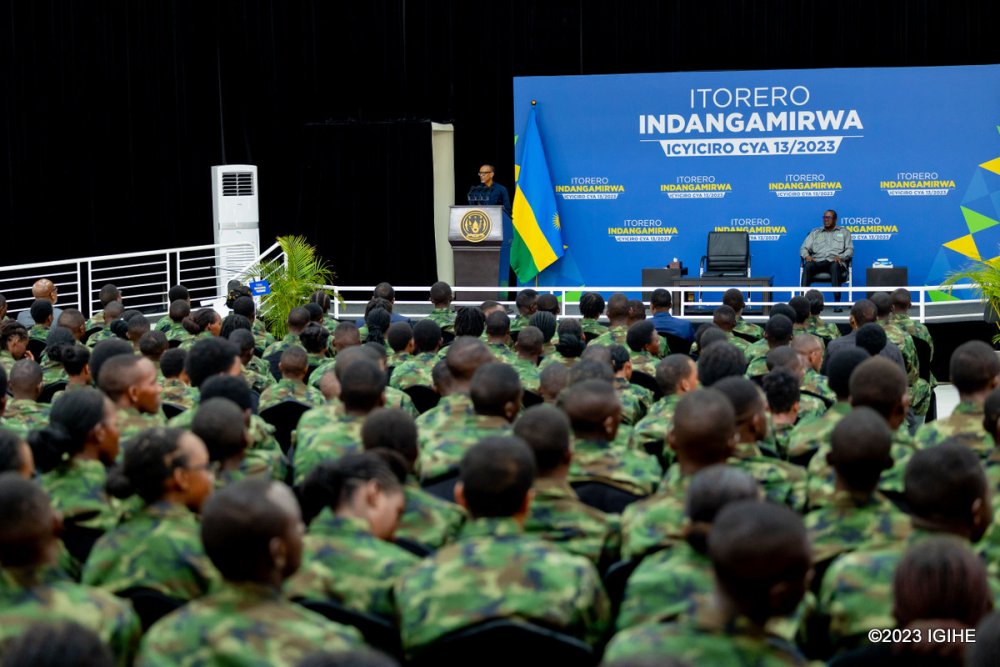
In August 2023, the Minister of National Unity and Civic Engagement Dr. Jean Damascène Bizimana had revealed that the program would temporarily be hosted at Nkumba Civic Training Center in Burera District which had enough accomodations, noting that it would undergo further upgrades to fully meet the required standards.
However, on May 11, 2026, MINUBUMWE confirmed that this year’s edition of Itorero Indangamirwa will take place in Gabiro from July 1 to August 10. The ministry further announced that students from universities and higher learning institutions will also join this year’s intake.
Traditionally, the program was designated for young people aged between 18 and 25. This year, however, participation will be limited to youth between the ages of 18 and 23.
Established in 2008, Itorero Indangamirwa brings together young Rwandans living abroad, students studying in international schools operating in Rwanda, and outstanding participants who excelled in the national service program known as Rugerero.
Participants receive training aimed at instilling patriotism, discipline, cultural values, and a spirit of responsibility and leadership.
They are also taught Rwanda’s history and encouraged to share ideas on how they can contribute to the country’s development while safeguarding its achievements.
In addition, security personnel provide the youth with basic defense and military orientation through practical exercises. The training includes introductory lessons on firearm handling, basic combat planning, and military tactics.
Since 2023, Itorero Indangamirwa had been relocated to the Nkumba Civic Training Center.
The report, based on new data from 146 countries, shows that global enrollment in higher education rose from about 100 million in 2000 to 269 million in 2024.
However, this growth masks sharp regional disparities: in Western Europe and North America, 80 percent of young people are enrolled in higher education, compared with 9 percent in sub-Saharan Africa. Meanwhile, only 3 percent of students worldwide go abroad for higher education.
Women also remain underrepresented at the doctoral level and hold only about one quarter of leadership positions in academia, the report said.
The lack of complete and verifiable documents proving qualifications also poses a major barrier to refugees’ access to higher education, particularly in Global South countries, the report added.
To address this issue, UNESCO has introduced the Qualifications Passport, a tool designed to help recognize the academic, professional and vocational qualifications of refugees and forcibly displaced people, according to the report.
The report indicated that women also remain underrepresented at the doctoral level and hold only about one quarter of leadership positions in academia.
Early March 2026, the United States imposed sanctions on members of the Rwanda Defence Force and some of its senior officials, accusing them of destabilising the eastern Democratic Republic of the Congo through alleged support for the AFC/M23 rebel coalition.
Rwanda has repeatedly denied supporting AFC/M23 or playing any role in destabilising DR Congo. Kigali has instead accused the government in Kinshasa of threatening Rwanda’s security by supporting the FDLR terrorist group responsible for the 1994 Genocide against the Tutsi.
The Congolese government welcomed the U.S. sanctions and called on other countries, particularly members of the European Union, to take similar measures against Rwanda.
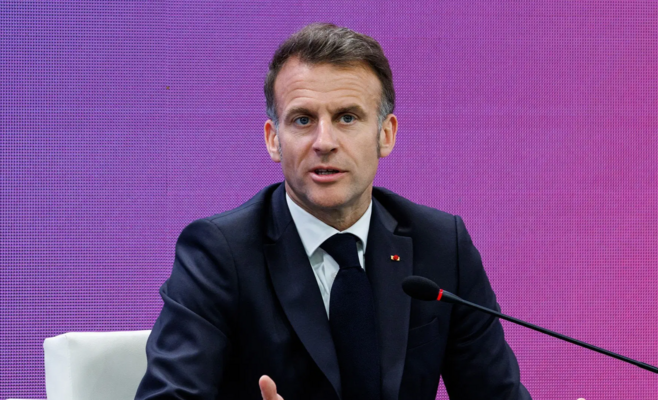
Speaking in an interview with Radio France Internationale, France 24 and TV5Monde on the sidelines of the Africa Forward Summit in Nairobi, the French head of state was asked about the absence of European or French sanctions against Kigali.
He responded that supporting peace negotiations should be optimal.
“If today everyone rushes toward sanctions because the Americans have done so and isolates Rwanda, there is little chance of convincing Rwanda to adopt a cooperative policy. I believe more in the value of dialogue with the two main leaders,” Macron said.
Macron also stressed that while the Congolese government should regain control of territories lost in the east, it also has a responsibility to dismantle the FDLR, which he said poses a threat to Rwanda’s security.
He further suggested that countries in the region should work together in combating armed and terrorist groups that continue to destabilise neighbouring states.
Rwandan President Paul Kagame, Macron, and Congolese President Félix Tshisekedi attended the Africa Forward Summit held in Nairobi, Kenya, on May 12, 2026.
Asked whether he had met Kagame and Tshisekedi to discuss tensions between Rwanda and DR Congo, Macron said he met them separately because bringing the two leaders together remains difficult.
He emphasised the need for direct talks involving both Kagame and Tshisekedi, alongside key mediators, saying that this remains France’s top priority.
A journalist also asked Macron whether he believed the United States was favouring one side in the conflict. Macron replied that Washington appears focused on achieving peace and that he did not consider its mediation efforts biased.
In June 2025, Rwanda and DR Congo signed a peace agreement, followed in December by another accord that included provisions for regional economic cooperation. However, tangible results from those agreements have yet to emerge.
Macron argued that all parties involved should exercise caution in handling the regional crisis, insisting that sanctions alone are unlikely to bring peace. Instead, he said efforts should focus on easing tensions and encouraging Rwanda and DR Congo to return to negotiations with the support of mediators.
The French president also noted that addressing the wider regional security crisis would require the involvement of neighbouring countries, including Uganda and Burundi, in the peace talks.
Emmanuel Macron said the government of Democratic Republic of the Congo also bears responsibility for dismantling the FDLR, which Rwanda considers a security threat.French President Macron and Rwandan counterpart Paul Kagame attended the Africa Forward Summit in Nairobi. Emmanuel Macron said sanctions alone are unlikely to resolve the conflict in eastern Democratic Republic of the Congo, calling instead for renewed dialogue involving Rwanda and regional leaders.
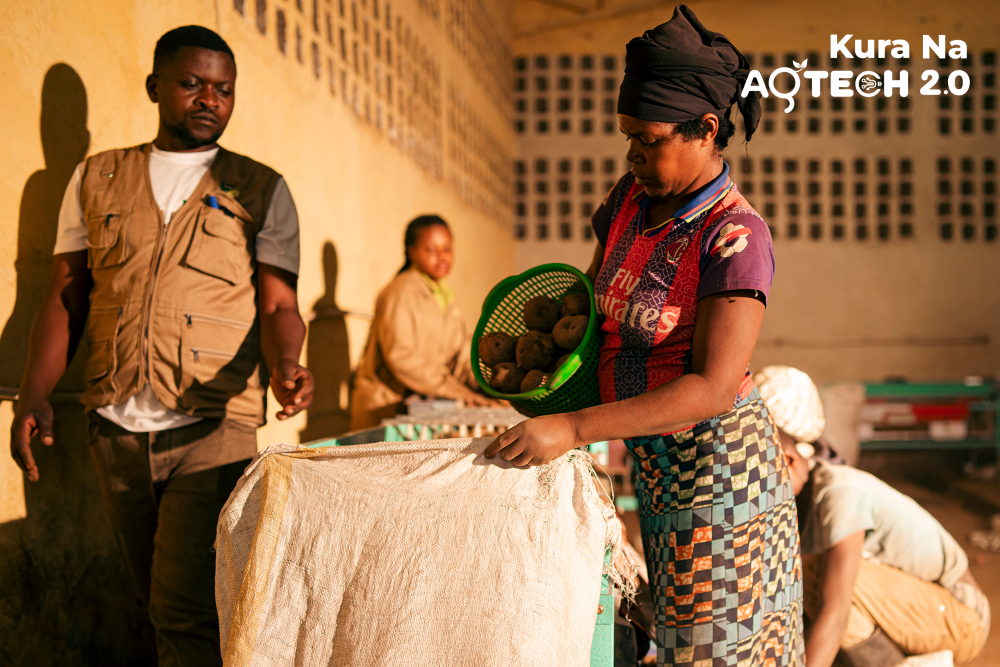
The program focuses on ventures that improve the livelihoods of smallholder farmers, especially women, youth, and persons with disabilities, through innovations addressing farm productivity, market access, financial inclusion, post-harvest losses, climate resilience, and regenerative agriculture.
Four selected startups will receive up to Rwf 15,000,000 in milestone-based grant funding, along with up to 100 hours of technical assistance, coaching, cohort-wide masterclasses, and facilitated introductions to investors, cooperatives, development finance institutions, and commercial off-takers.
Applications are open to agritech startups and SMEs operating in Rwanda with at least two years of active operations, proven market traction, and technology-enabled solutions addressing challenges within the agricultural sector. Ventures must also demonstrate clear potential for scalability and measurable impact for smallholder farmers.
Commenting on the development, Fina Kayisanabo, Project Manager for AgroInnovation at Swisscontact highlighted that the second edition of Kura Na AgTech builds on the learnings from the first edition.
“Many promising agritech startups struggle to access the technical support, financing, and strategic networks needed to scale. Through this program, we are directly supporting entrepreneurs to strengthen and grow their solutions to reach more smallholder farmers, while also contributing to a stronger ecosystem by fostering strategic connections, collaboration, and linkages between ventures and key stakeholders,” she said.
Drawing from the experience of working closely with ventures in the first cohort, Mafer Betancourt, Director of Programs and Impact at Impact Hub Kigali, added: “Rwandan entrepreneurs are building strong agritech innovations with the potential to improve productivity, market access, financial inclusion and resilience for smallholder farmers.
“What is often missing is tailored support that helps these ventures refine their business models, strengthen operations,and scale sustainably, while delivering measurable impact. Kura Na AgTech offers customized acceleration support that respond to the specific needs of each venture, combining technical assistance, funding, and strategic connections.”
The selection process will include an open call for applications, pitch interviews for up to 10 shortlisted startups, and due diligence visits for the pre-selected ventures. Four startups will be selected to participate in the four-month acceleration phase running from June to October 2026.
Interested startups are encouraged to apply as soon as possible ahead of the application deadline on May 31, 2026.
Entrepreneurs interested in learning more about the program can also join the virtual information session scheduled for 19 May 2026, with details to be shared on Impact Hub Kigali social media platforms.
Swisscontact is an independent non-profit development organisation that promotes inclusive economic, social, and ecological development to foster sustainable prosperity and improve the living standards of people in developing and emerging economies.
Meanwhile, Impact Hub Kigali is an innovation hub that supports impact-driven entrepreneurs and innovators to start, grow, and scale sustainable ventures that drive economic growth while maximizing their positive impact. Through tailored incubation and acceleration programs, and ecosystem building initiatives, it provides technical support and resources, and facilitates connections to partners, investors, and the public sector.
Applications are open to agritech startups and SMEs operating in Rwanda with at least two years of active operations.