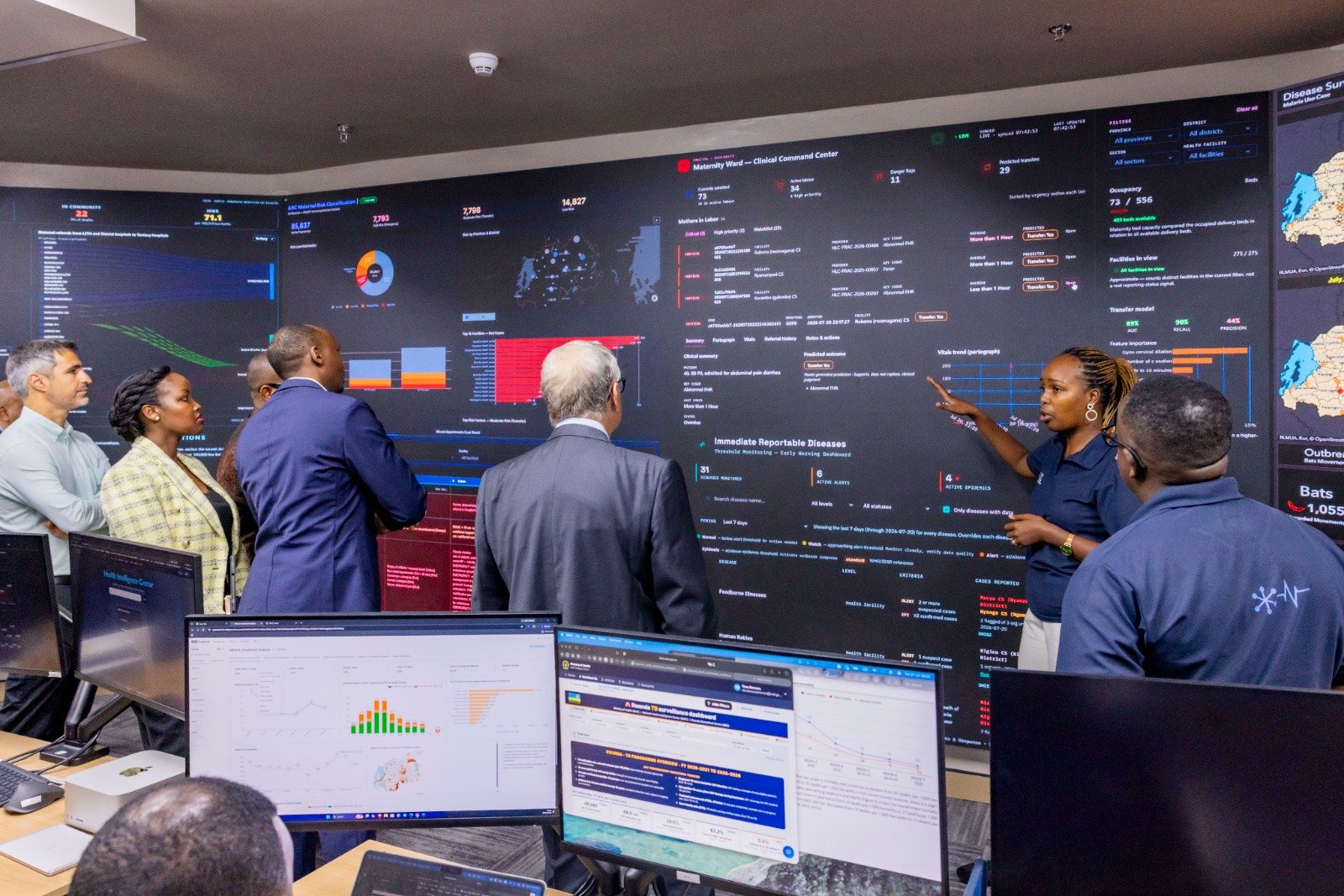
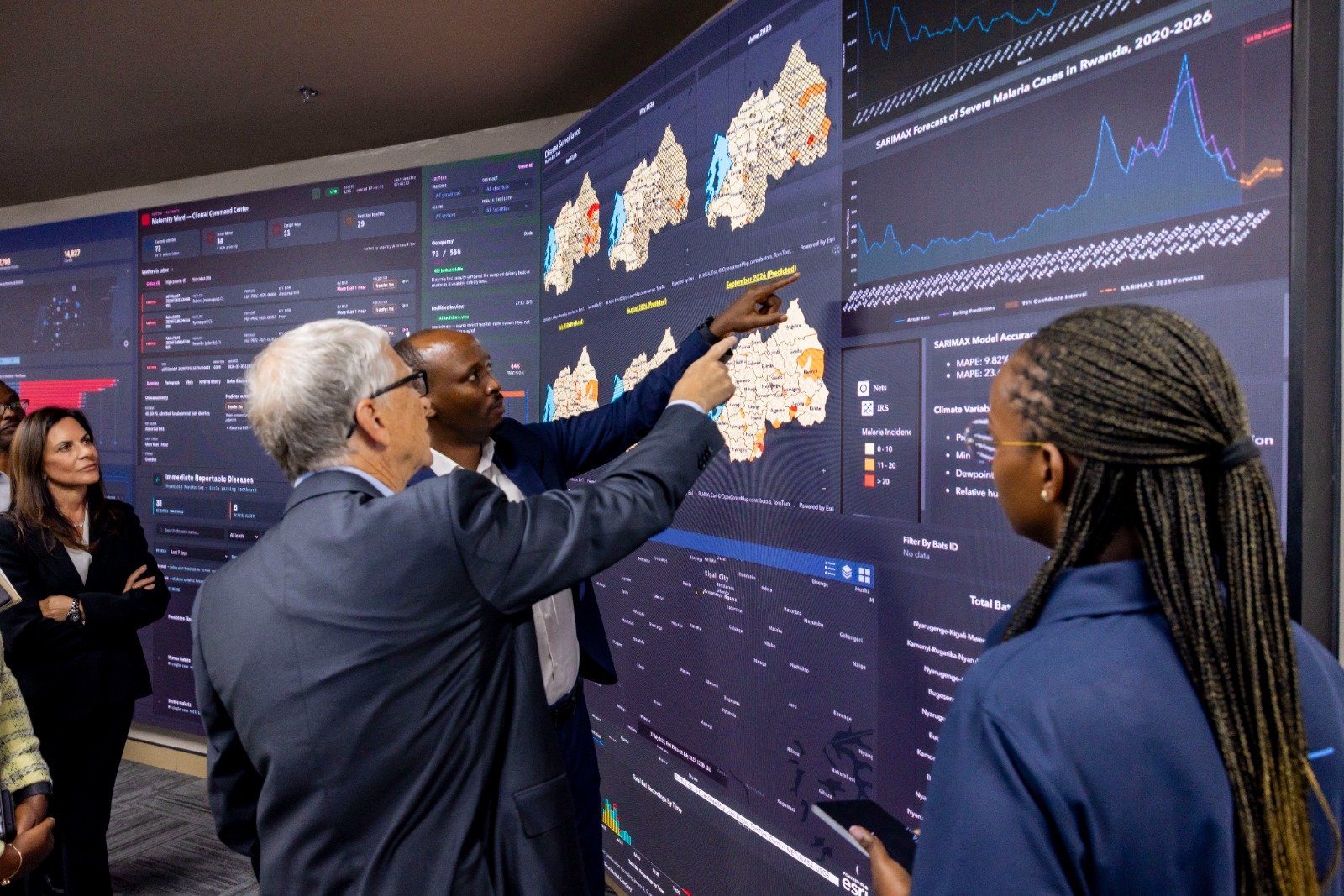
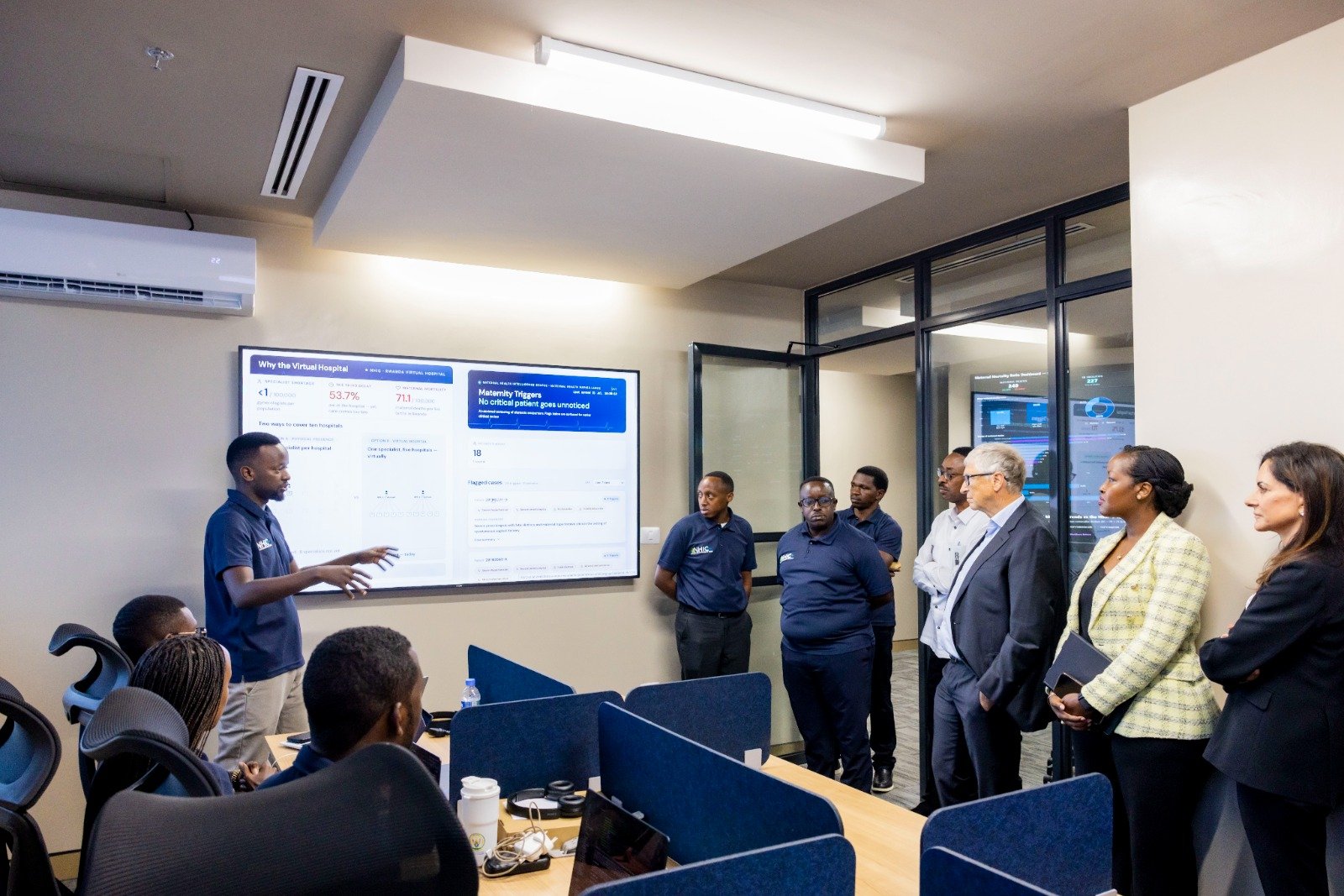
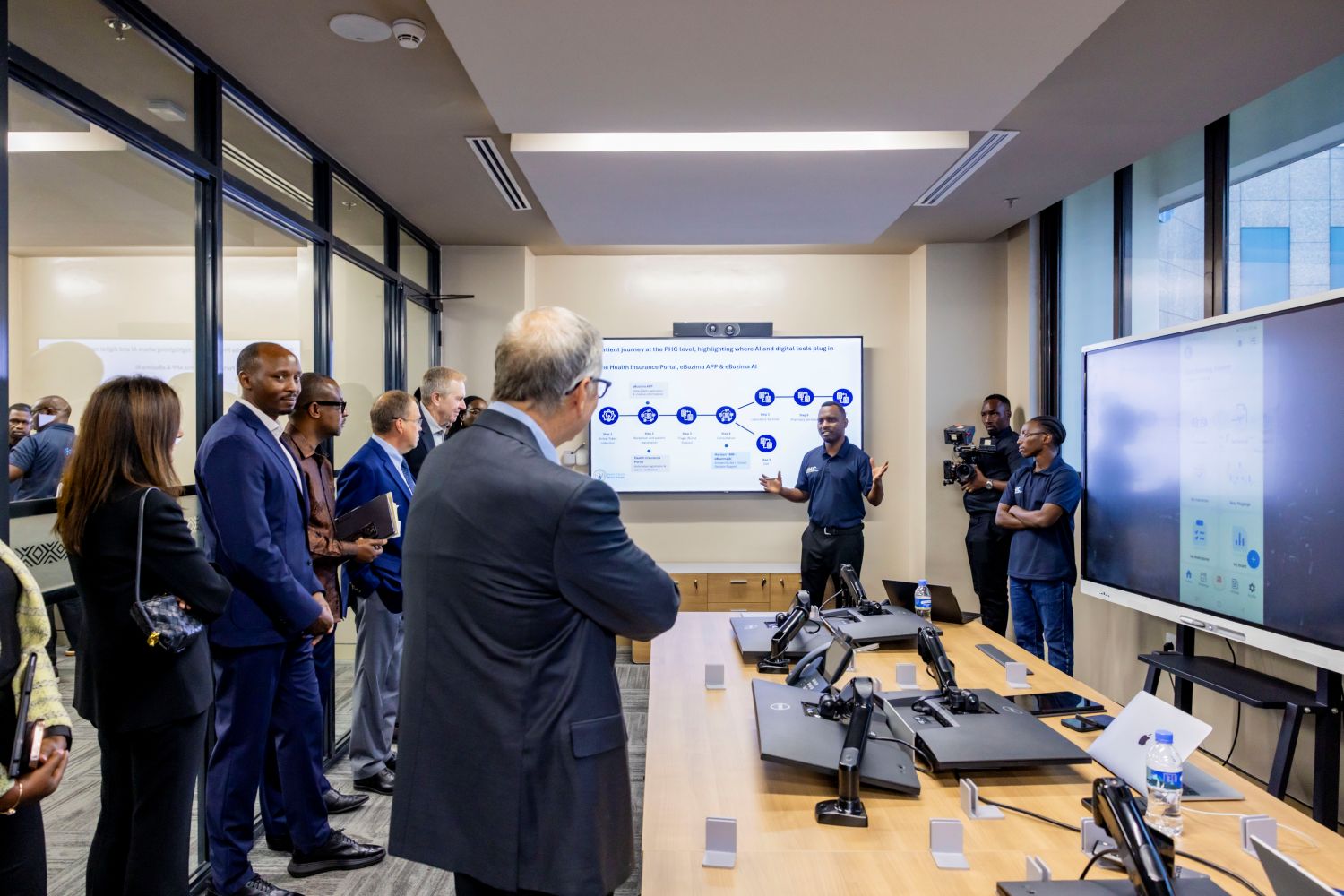
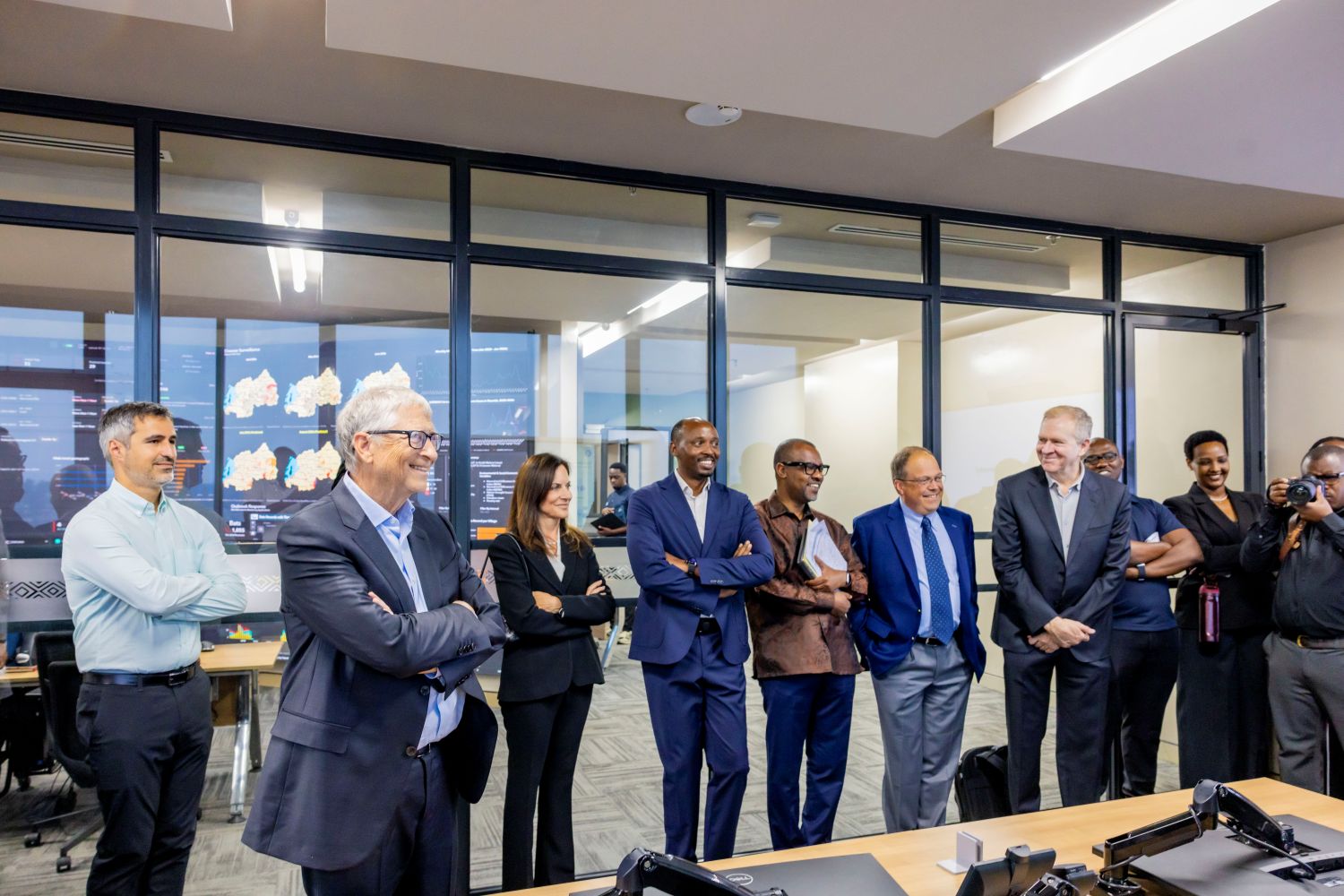
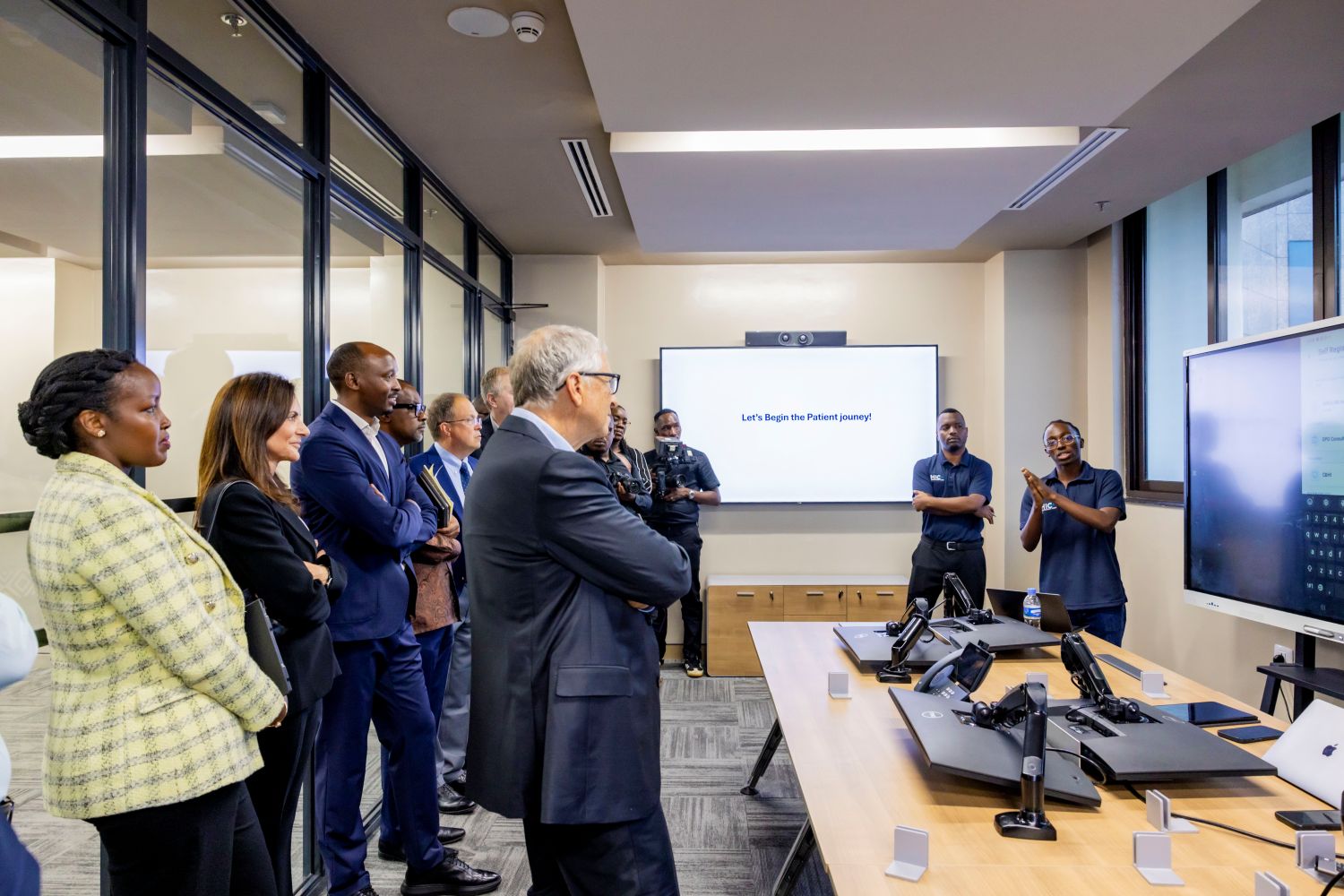
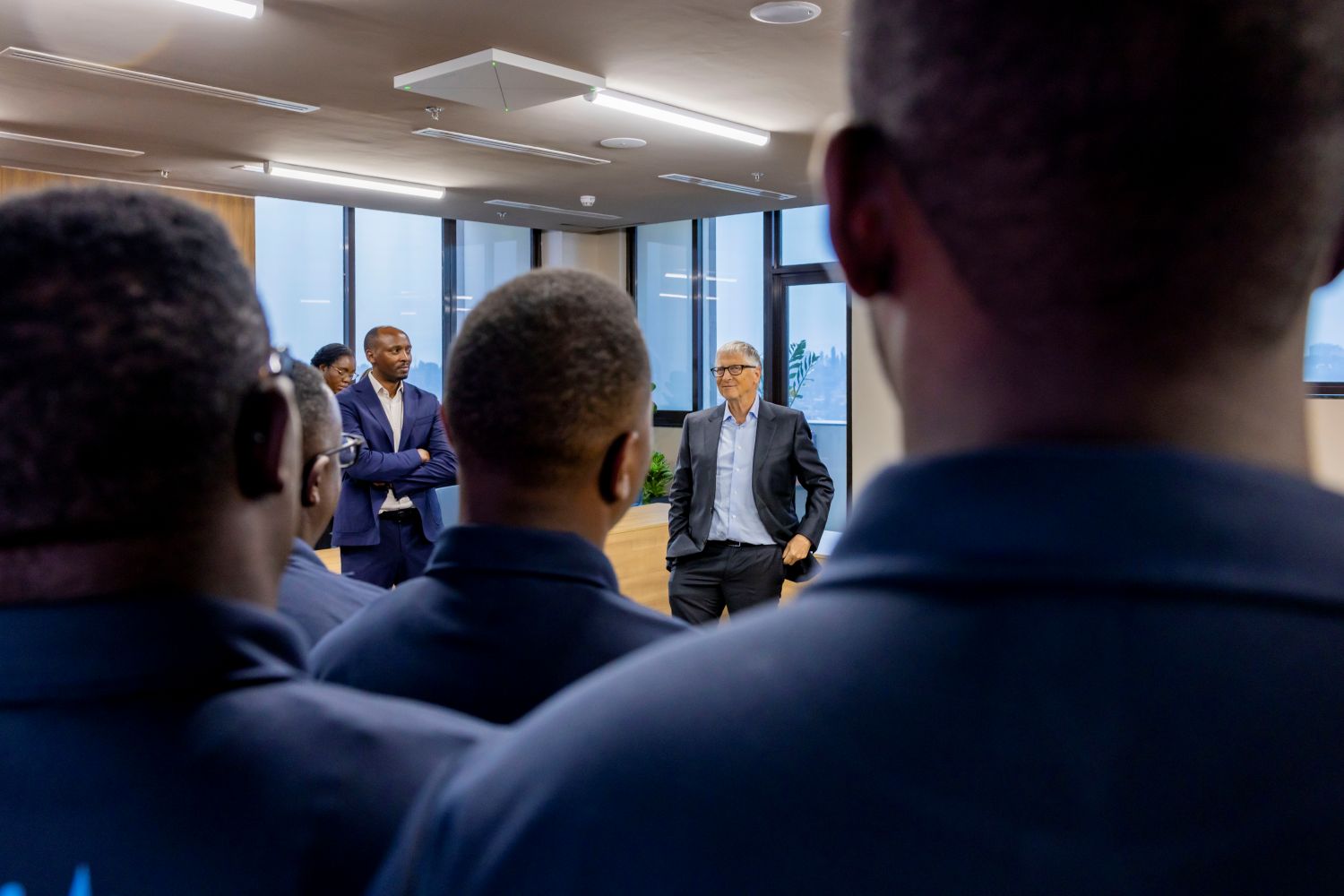
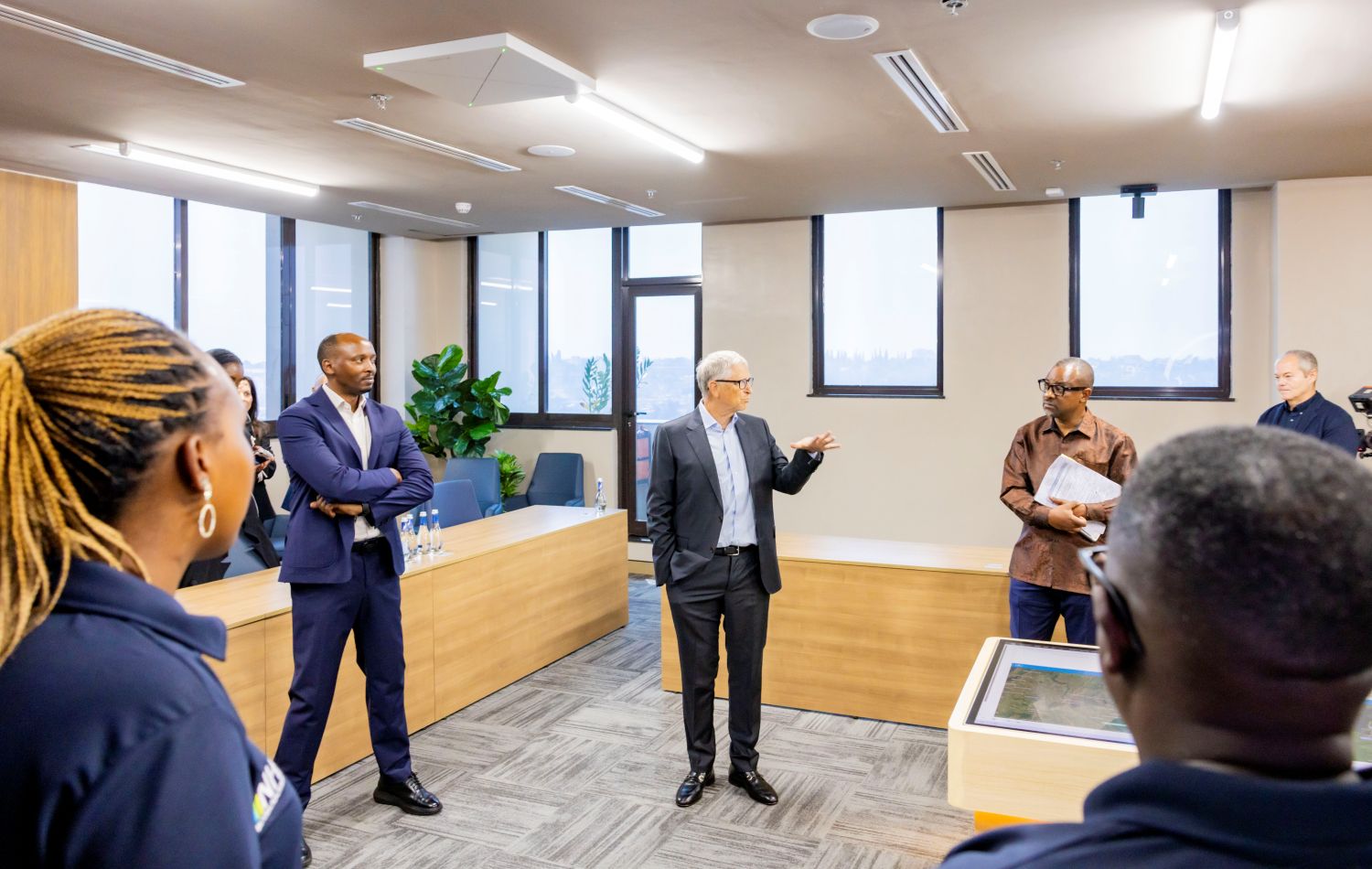
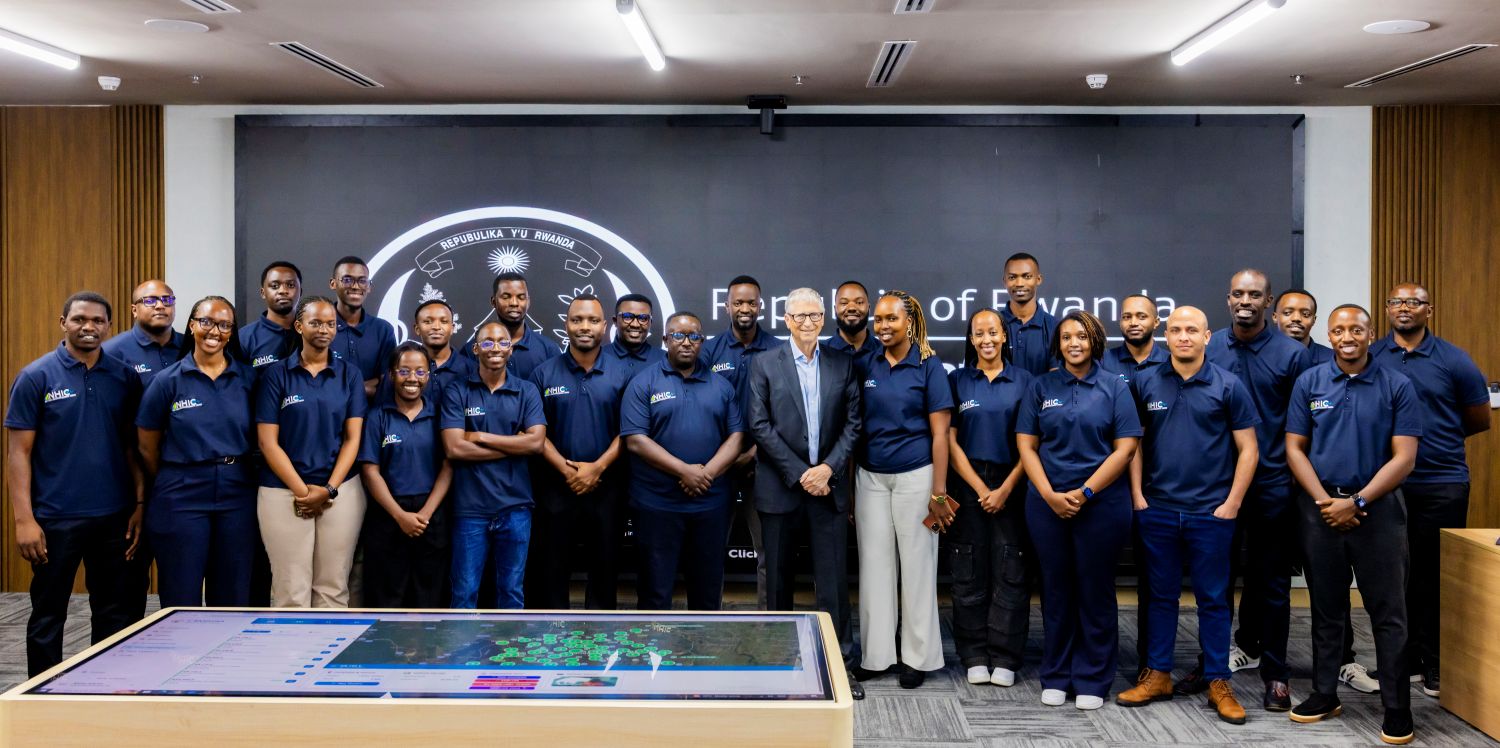
Gates was received at the facility by the Minister of Health, Dr. Sabin Nsanzimana, and the Minister of ICT and Innovation, Paula Ingabire, alongside other senior government officials.
The visit formed part of Gates’ trip to Rwanda, during which he has been engaging with government leaders, health workers, innovators, and researchers to better understand the country’s development model and explore how technology can further improve people’s lives.
During the visit, officials showcased the NHIC as the nerve centre of Rwanda’s healthcare system, where health data from across the country is centralized, processed, and analyzed in real time to provide a comprehensive picture of the nation’s health.
According to officials, the center has already delivered tangible improvements within its first year of operation by enabling health authorities to “shift from reactive to proactive decision-making”.
The Ministry of Health said insights generated by the platform have helped reduce patient waiting times across health facilities, improve emergency dispatch and ambulance response, strengthen disease surveillance and containment, and support more targeted allocation of healthcare resources.
Looking ahead, Rwanda plans to expand the center’s capabilities toward predictive health intelligence with support from partners, including the Gates Foundation. The next phase will focus on anticipating disease outbreaks, issuing intelligent early-warning alerts, and preventing health threats before they escalate.
By consolidating health data from across the country and applying advanced technologies, the ministry said the NHIC is strengthening Rwanda’s ability to provide high-quality, efficient, and responsive healthcare.
The National Health Intelligence Center was officially launched on April 3, 2025, on the sidelines of the Global AI Summit on Africa by Health Minister Dr. Sabin Nsanzimana and Minister of State Dr. Yvan Butera, together with fellow African health ministers and development partners.
Located at the Rwanda Utilities Regulatory Authority (RURA) headquarters in Kiyovu, the facility brings together medical doctors, data scientists, software developers, and programmers to analyze information collected from communities and health facilities nationwide.
Gates’ visit to the NHIC came a day after he met President Paul Kagame to discuss strengthening the Gates Foundation’s long-standing partnership with Rwanda. According to the Office of the President, their discussions focused on strengthening collaboration in health, agricultural transformation, artificial intelligence, and digital public infrastructure in line with Rwanda’s national development priorities.
Since arriving in Rwanda, Gates has also toured the TKMD syringe manufacturing plant in Rwamagana District, visited Mwulire Health Centre, and met community health workers to gain deeper insight into Rwanda’s primary healthcare system.
The Gates Foundation has worked with Rwanda for more than two decades, supporting programmes in healthcare, agriculture, nutrition, and innovation. Earlier this year, Rwanda became the first beneficiary of the Horizon1000 initiative, a $50 million artificial intelligence programme launched by the Gates Foundation in partnership with OpenAI to help African countries use AI to strengthen healthcare delivery.
During the visit, officials showcased the NHIC as the nerve centre of Rwanda’s healthcare system, where health data from across the country is centralized, processed, and analyzed in real time to provide a comprehensive picture of the nation’s health.The Ministry of Health said insights generated by the platform have helped reduce patient waiting times across health facilities, improve emergency dispatch and ambulance response, strengthen disease surveillance and containment, and support more targeted allocation of healthcare resources.The visit formed part of Gates’ trip to Rwanda, during which he has been engaging with government leaders, health workers, innovators, and researchers to better understand the country’s development model and explore how technology can further improve people’s lives.
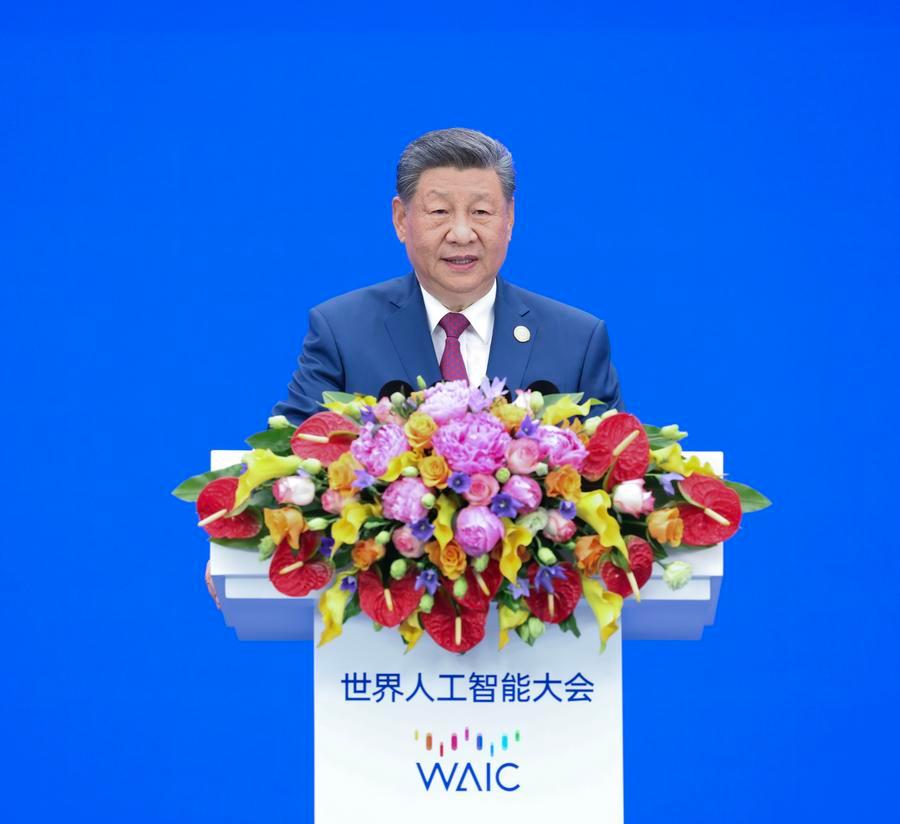
“All countries should take a people-centered approach and develop AI for the positive and for good. We should ensure that AI is an important driver for shared prosperity and common security,” Xi said while addressing the opening ceremony of the 2026 World AI Conference (WAIC) and High-Level Meeting on Global AI Governance in Shanghai.
China is a global leader in AI development. In 2025, its core AI industries were worth over 1.2 trillion yuan (about 176.6 billion U.S. dollars), while the number of AI enterprises nationwide exceeded 6,200.
The country’s open-source large AI models have been downloaded more than 10 billion times in total, continuing to create new and broader opportunities for global cooperation in AI innovation.
The world has entered an unprecedented period of active innovation on AI technologies, Xi said in his keynote address. He raised questions about how humans can get along with thinking machines, how security can be ensured when algorithm is part of decision-making, how ethical challenges by technologies can be tackled through adaptive governance, and how AI for all can be realized when the divide keeps widening.
“These questions demand serious consideration and real answers from the whole international community,” he said.
Xi stressed the need for adhering to the principles of openness and win-win and boosting innovation-driven development, strengthening risk-awareness and ensuring that AI is secure and controllable, encouraging inclusiveness and promoting mutual learning between civilizations, and advocating solidarity and improving global governance.
“We should jointly oppose overstretching the national security concept in the field of AI and placing one country’s security over that of others,” he said.
The important role of the United Nations should be recognized in global AI governance, Xi noted, calling for enhancing alignment and coordination on AI development strategies, governance rules and technical standards.
“We must carry out extensive international cooperation and help Global South countries with capacity building to bridge the AI and digital divides, promote sustainable development, and prevent creating new historical injustice in AI,” he said.
As a responsible major country, China is always committed to providing international public goods relating to AI, said Xi, who proposed the Global AI Governance Initiative in 2023.
The country has also provided Chinese solutions for global AI governance through various efforts, including the launch of the AI Capacity-Building Action Plan for Good and for All and the AI Plus International Cooperation Initiative.
“AI development should not be a solo performance by a single country, but a symphony of international cooperation,” said the Chinese president.
The establishment of the WAICO, Xi said, is a major move by China to answer the call of the Global South and unite the international community together to promote vigorously AI development and governance. “It will be an important milestone in the history of AI development,” he said. Twenty-nine countries have signed the agreement on the organization’s creation as its founding members.
To further advance global AI capacity building, China will provide developing countries with 5,000 opportunities in AI training and seminar programs in the next five years, Xi pledged.
China will develop international AI application cooperation centers with the Association of Southeast Asian Nations, the League of Arab States, the African Union, the Community of Latin American and Caribbean States, the Shanghai Cooperation Organization and BRICS. It will also enable 30 countries to use the AI-powered meteorological warning system, known as MAZU, to safeguard homes around the world, Xi said.
China has hosted the WAIC annually since 2018 as a key platform to forge global AI partnerships to unlock AI’s benefits for all. Themed “AI Partnership for a Brighter Future,” this year’s event includes more than 140 forums, bringing together 1,400 guests from home and abroad.
Kazakh President Kassym-Jomart Tokayev, Cambodian Prime Minister Hun Manet, Thai Prime Minister Anutin Charnvirakul and Secretary-General of the United Nations Antonio Guterres delivered speeches at the opening ceremony.
Speaking highly of China’s contribution to advancing global AI governance, they said the opportunities and challenges brought by AI know no borders and should be seized and addressed by all parties.
They expressed confidence that the WAICO will play an important role to this end.
Chinese President Xi Jinping delivers a keynote speech at the opening ceremony of the 2026 World AI Conference and High-Level Meeting on Global AI Governance in Shanghai, east China, July 17, 2026. (Xinhua/Huang Jingwen)
The startup, which has established its regional operating base at Norrsken House in Kigali, will travel to San Francisco and London in October to participate in the FINCA Ventures Final Celebrations and Pitch Event, where it will compete alongside other leading African startups developing solutions to expand financial inclusion.
Launched in 2023, ChatCash has developed APOMA, an artificial intelligence-powered conversational operating system that enables businesses to create fully automated digital storefronts within messaging applications such as WhatsApp, Instagram and Facebook.
Instead of directing customers to external websites, the platform allows users to browse products, ask questions, negotiate prices and complete purchases without leaving the chat conversation. Merchants can also manage inventory, process payments and track sales from the same interface.
“Our platform turns WhatsApp into a fully automated digital storefront in six minutes,” John Sakala, the startup CEO, told IGIHE. “Customers can browse, negotiate and pay securely without ever leaving the chat thread.”
The recognition by FINCA Ventures comes as the startup accelerates plans to grow from Rwanda into other African markets.
Launched in 2024, the FINCA Ventures Financial Inclusion Prize supports early-stage African startups developing scalable technologies that improve access to financial services for underserved communities across Sub-Saharan Africa. The competition offers equity-free grant funding of up to $100,000 per category, alongside technical assistance and access to international investors.
This year’s finalists were selected through a competitive process that evaluated startups on innovation, commercial viability and their potential to drive financial inclusion.
Rwanda as regional launchpad
Sakala says choosing Kigali as ChatCash regional headquarters aligns with Rwanda’s ambition to become a leading financial technology hub through the Kigali International Financial Centre (KIFC).
The company is currently working with the National Bank of Rwanda on licensing and sandbox integrations that would enable its payment infrastructure to connect directly with mobile money operators, commercial banks and Rwanda’s national payment switch, RSwitch.
It is also pursuing partnerships with local banks and fintech companies, including DDIN, to accelerate adoption of its conversational commerce platform.
According to the company, nearly 3,900 merchants in Rwanda have already joined its waiting list ahead of the commercial rollout.
“We’ve established our regional headquarters in Kigali because we believe Rwanda offers the right regulatory environment and innovation ecosystem to scale financial technology across Africa,” Sakala said.
Bringing informal businesses into the digital economy
ChatCash argues that its platform addresses one of Africa’s biggest barriers to digital commerce by allowing businesses to operate entirely through messaging platforms that many merchants already use daily.
Rather than requiring websites, expensive hardware or specialised e-commerce software, businesses can create AI-powered storefronts through simple instructions while customers complete purchases inside familiar chat applications.
The company says this approach is particularly relevant for small and informal businesses that often rely on low-cost smartphones and social messaging to communicate with customers.
By digitising transactions and automatically recording sales, ChatCash believes merchants can build verifiable transaction histories that may improve their ability to access formal financial services, including bank credit.
“Our goal is to help businesses move from informal cash transactions into the formal financial ecosystem without changing how they already interact with customers,” Sakala said.
Expanding from Kigali base
As ChatCash scales across Africa, Rwanda serves as its regional headquarters and strategic launchpad for growth. From its Kigali base, the startup plans to expand into Ghana and Nigeria, where it says more than 100,000 small and medium-sized enterprises have already expressed interest through strategic partnerships.
The company also aims to facilitate seamless cross-border payments by leveraging its planned licensing in Rwanda alongside partnerships with regional payment providers such as Onafriq.
According to Sakala, the long-term vision is to enable users in different African countries to send and receive payments natively within a single chat conversation, eliminating many of the complexities associated with cross-border transactions.
He described the FINCA Ventures recognition as an important validation of both the company’s technology and Rwanda’s growing position as a hub for fintech innovation.
“Being selected among the top global fintech finalists is a huge validation,” he said. “It shows that startups building from Rwanda can create globally competitive technology, and the exposure we’ll gain in San Francisco and London will help us scale conversational commerce across Africa.”
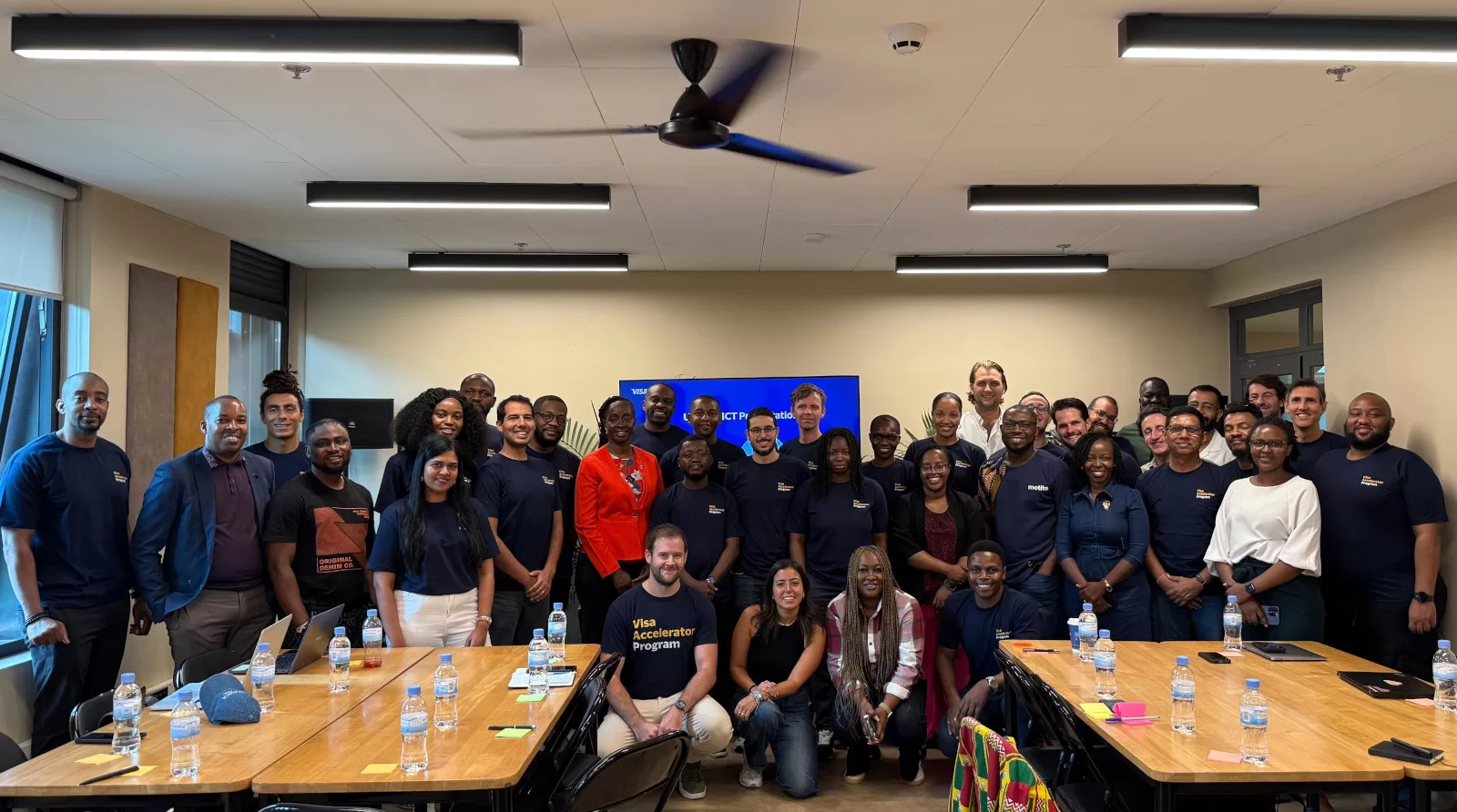
The startup was previously selected for the Visa Africa Fintech Accelerator, gaining access to mentorship, product development support and Visa’s global investor network.
The FINCA Ventures recognition adds to a series of milestones that have elevated ChatCash’s profile within the global fintech ecosystem. The startup was previously selected for the Visa Africa Fintech Accelerator, gaining access to mentorship, product development support and Visa’s global investor network. It has also joined the Microsoft Azure AI Cloud Partner Program, giving it access to enterprise-grade artificial intelligence and cloud infrastructure to scale its APOMA platform.
Earlier this year, the company showcased its technology at The Pitch Dubai and has secured partnerships and support from organisations including Bitrix24, ZB Bank Innovation Hub, Darena Ventures, and the US-Africa Trade Commission as it prepares for broader expansion across the continent.
Sakala says choosing Kigali as ChatCash regional headquarters aligns with Rwanda’s ambition to become a leading financial technology hub through the Kigali International Financial Centre (KIFC).
A graduate in International Business with a specialization in Modern Logistics from WSG University (Wyższa Szkoła Gospodarki) in Poland, he currently works for Thales Alenia Space, a Franco-European company specializing in satellite and space technologies.
In an interview with IGIHE, Kevin Ishimwe spoke about the creation of Gerayo App, a mobile application he co-founded with Shema Aimé César, 24, from Nyarugenge, along with other Rwandan students living in Poland.
Designed to facilitate bus travel in Rwanda, the application aims to make public transport more accessible, predictable, and efficient for commuters.
An idea inspired by life in Poland
According to Kevin Ishimwe, the idea for Gerayo App emerged after observing the efficiency of Poland’s public transport system.
“As students living in Poland, we saw how transport applications make daily commuting easier. They allow users to know exactly when a bus, tram, or train will arrive, helping them avoid long waiting times at stations. We believed that introducing a similar system in Rwanda could further modernize public transport and make it more efficient and reliable,” he explained.
The knowledge gained through studies in international business, logistics, and modern technologies helped transform the idea into a practical solution tailored to Rwanda’s realities.
An application that helps users plan their journeys
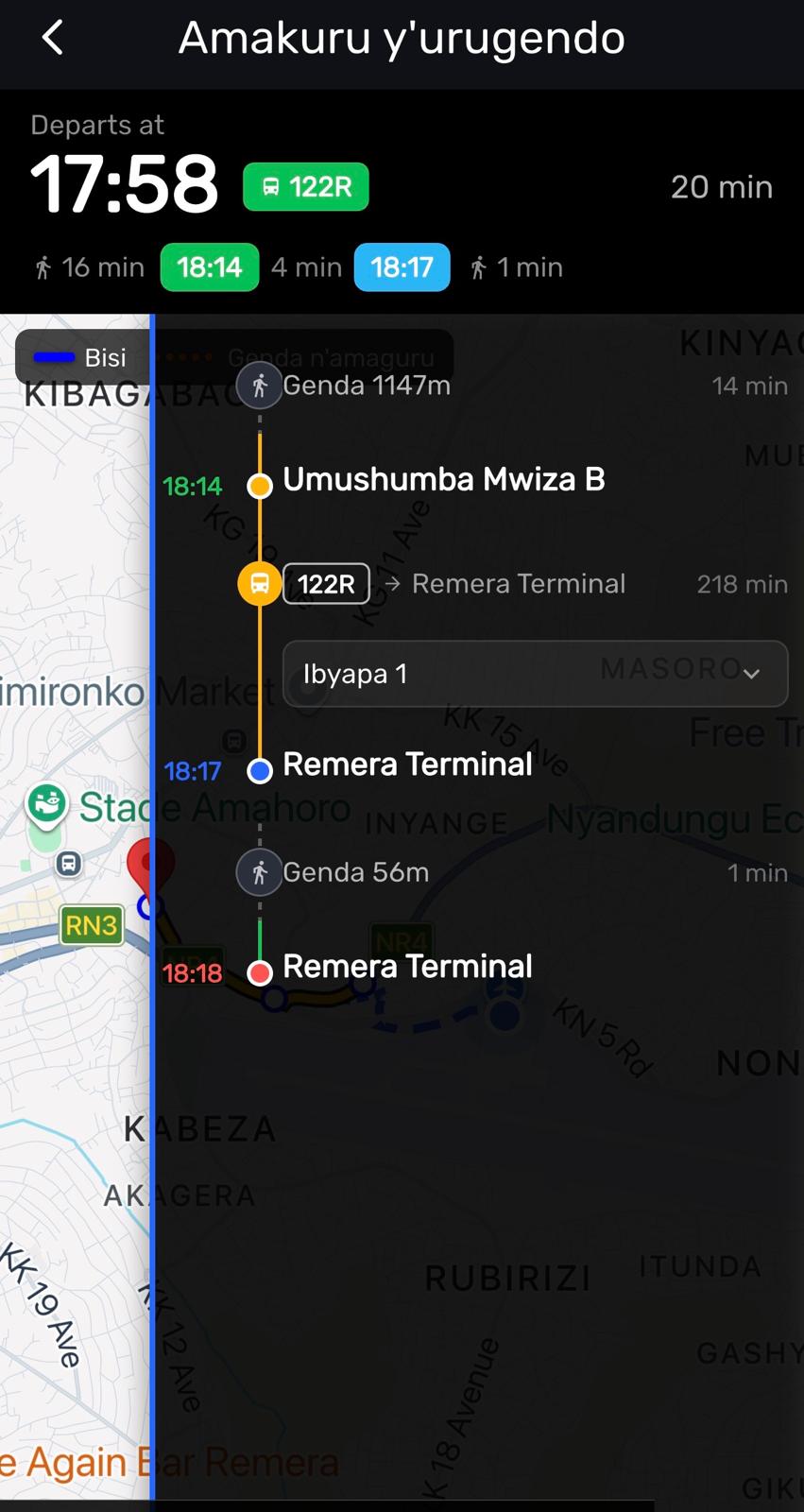
Launched recently, Gerayo App enables passengers to plan their trips before leaving home.
Available free of charge on both the App Store and Google Play Store, the application provides essential information such as bus schedules, available routes, transfer options, and the exact locations of departure and arrival bus stops.
“If you do not know when your bus will arrive or which route to take to reach your destination, Gerayo App provides that information. The application also suggests connecting routes when a journey requires more than one bus,” Ishimwe said.
Thanks to these features, users can better organize their daily travel and significantly reduce the time spent waiting at bus stops.
An innovation covering Kigali’s entire bus network
One of Gerayo App’s main strengths is its ability to centralize information related to Kigali’s public transport network.
The application displays bus routes operating across the city, bus stops, and scheduled arrival times. It also informs users about possible delays and helps them quickly identify the best options to reach their destinations.
“Our goal is to enable users to know exactly when their bus will arrive, where their bus stop is located, and what options are available to reach their destination,” he said.
The application also helps passengers identify the necessary connections to reach a particular destination, a feature that is especially useful for people who are not yet familiar with Kigali’s transport network.
More than 1,500 weekly users
Just two months after its launch, Gerayo App has already received an encouraging response from the public.
According to Ishimwe, the application currently records more than 1,500 active users every week.
Feedback from users has been overwhelmingly positive.
“Many users tell us that the application helps them avoid being late for work or school. Others appreciate not having to spend time searching for bus stops or waiting without knowing when the next bus will arrive,” he explained.
Some users also say the application helps them manage their time more effectively and plan their journeys with greater confidence.
Ambitions to expand services
The developers of Gerayo App aim to continue improving the platform by strengthening collaboration with institutions responsible for public transport as well as with the City of Kigali.
“We would like to work more closely with stakeholders in the public transport sector and with the City of Kigali to improve data quality and provide users with a faster and more reliable service,” Ishimwe explained.
The team also hopes to establish a partnership with the Tap&Go system, allowing users to access and manage their accounts directly through the application.
In addition, Gerayo App’s developers are exploring the possibility of integrating a digital ticket payment solution within the application. This feature would allow passengers to pay for their journeys even if they have forgotten their Tap&Go card or have not had enough time to top it up before the bus arrives.
Beyond Kigali, the team is already considering the gradual expansion of its services to other parts of Rwanda.
“We are currently exploring opportunities to extend our services to different provinces across Rwanda so that more citizens can benefit from this technology and better plan their daily journeys,” Ishimwe told IGIHE.
This ambition reflects the team’s vision of making Gerayo App a nationwide reference platform for public transport.
A solution designed for all users
The creators of Gerayo App believe the application meets the needs of different categories of users.
For professionals, it helps prevent delays to important meetings through better journey planning.
For students, it reduces the risk of missing classes or examinations due to transport uncertainty.
For visitors and tourists, it makes it easier to explore Kigali and use the public transport network like a local resident.
“Your bus. Your route. Your time,” summarizes the Gerayo App team.
Driven by Kevin Ishimwe, Shema Aimé César, and other young Rwandans trained in Poland, this innovation demonstrates how technology can improve citizens’ daily lives and contribute to the modernization of public services in Rwanda.
Already available on the App Store and Google Play Store, Gerayo App continues to evolve with the ambition of becoming a national reference in public transport information and mobility services across Rwanda.
Kevin Ishimwe, Managing Director of Gerayo App, is part of the team behind the public transport application.Byiringiro Ishimwe Etienne, IT Director at Gerayo App, is part of the team driving the application’s technology development.Shema Aimé César, Chief of Operations and Marketing at Gerayo App, is among the team members developing the platform.
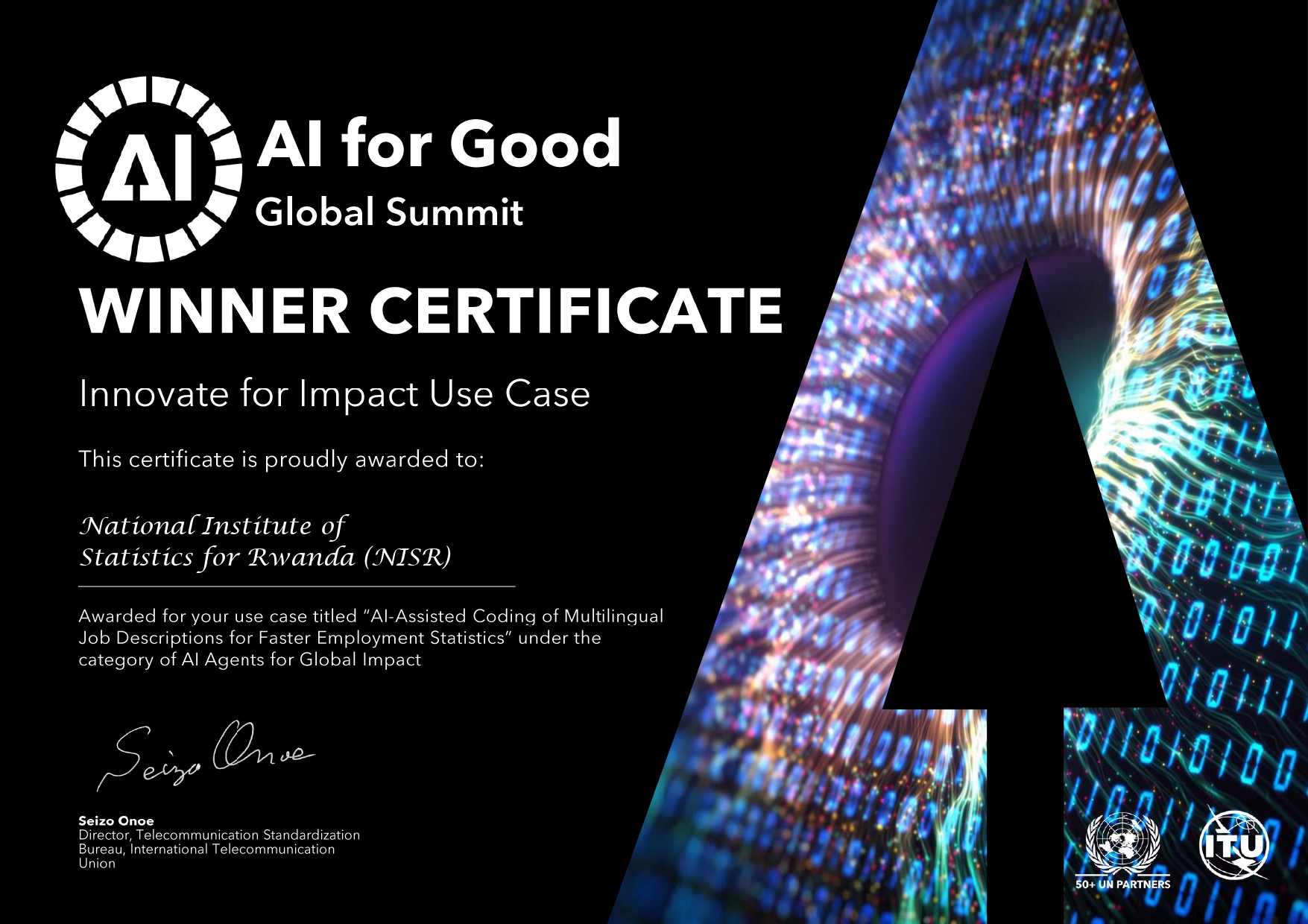
The National Institute of Statistics of Rwanda (NISR) received the Innovative Project for Impact Award for its AI-Assisted Coding of Multilingual Job Descriptions for Faster Employment Statistics project, which uses artificial intelligence to classify job and economic activity descriptions in Kinyarwanda, English and French.
The AI-powered tool is designed to accelerate the processing of Labour Force Survey data by automating the coding of job descriptions, a critical step in producing employment statistics. The innovation is expected to improve efficiency, reduce processing time and strengthen the production of timely official statistics for policy and planning.
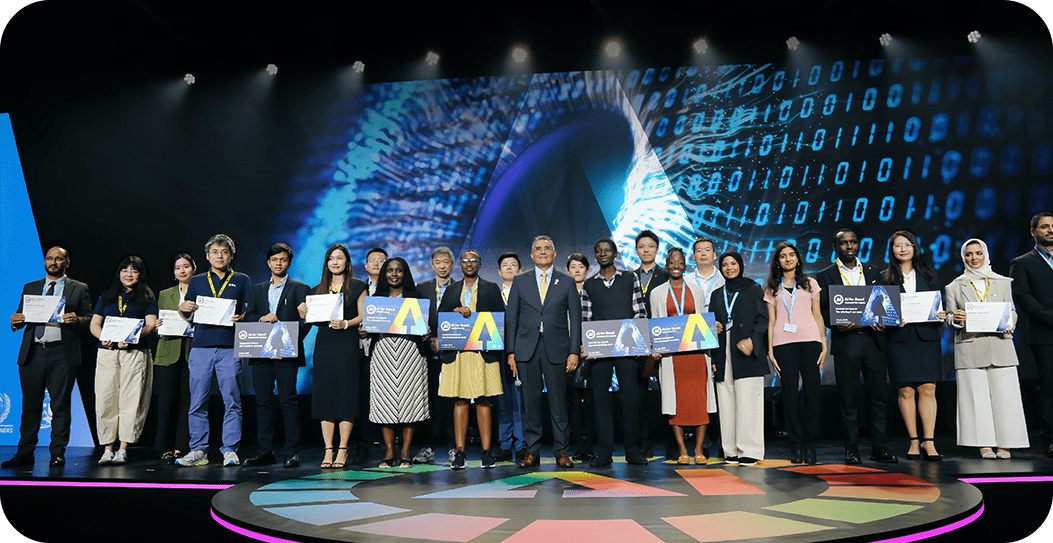
The award was announced during Innovate for Impact 2026, a programme under the AI for Good platform by the International Telecommunication Union (ITU) that identifies and supports AI solutions developed to address real-world challenges. The 2026 edition recognised 59 projects selected from nearly 400 global submissions.
The AI for Good Summit highlighted projects demonstrating how artificial intelligence can be applied to practical challenges, particularly in areas where scalable and resource-efficient solutions can deliver meaningful impact.
NISR’s project was among innovations recognised for its ability to address local needs while offering a model that can be adapted to other contexts. The use of multilingual AI is particularly significant in environments where language diversity can create challenges for data processing and digital services.
The project was developed under the first cohort of the Data Science Capacity Building Initiative (DSCBI) through collaboration with the Ministry of ICT and Innovation, the Rwanda Information Society Authority (RISA), the African Institute for Mathematical Sciences – Rwanda (AIMS Rwanda), Mastercard, and Cenfri. The initiative aimed to strengthen data science capacity and support the adoption of advanced technologies in addressing development challenges.
NISR said the recognition reflects the Government of Rwanda’s visionary leadership and commitment to leveraging artificial intelligence to strengthen the production of official statistics.
The award comes as Rwanda continues to expand its focus on responsible AI development and adoption. President Paul Kagame attended the AI for Good Global Summit 2026 in Geneva, Switzerland, in his capacity as Co-Chair of the newly launched AI for Good Global Commission.
Addressing heads of state, technology leaders, investors and development partners, President Kagame called for greater investment in infrastructure, skills development and accountable governance to ensure AI benefits communities worldwide.
“We must be intentional about designing, funding, and governing AI so that it can reach its full potential,” Kagame said last Wednesday.
He identified access to computing infrastructure, connectivity and reliable energy as key priorities, alongside the development of skills needed for an AI-driven economy and governance frameworks that promote trust and transparency.
President Kagame also highlighted Rwanda’s practical applications of AI, including the Health Intelligence Center, which uses real-time health data and artificial intelligence to support disease prediction and policy decisions.
In June 2026, Rwanda’s Cabinet approved the establishment of the National Artificial Intelligence Agency, which will coordinate AI development, innovation, investment, adoption and governance as part of the country’s digital transformation agenda.
The AI for Good Global Summit, organised by the International Telecommunication Union (ITU), continues to serve as a platform for showcasing AI solutions that advance inclusive development. Rwanda’s recognition at the summit demonstrates how locally developed technologies can contribute to global efforts to use artificial intelligence for social and economic progress.
The National Institute of Statistics of Rwanda (NISR) received the Innovative Project for Impact Award for its AI-Assisted Coding of Multilingual Job Descriptions for Faster Employment Statistics project.The award was announced during Innovate for Impact 2026, a programme under the AI for Good platform by the International Telecommunication Union (ITU) that identifies and supports AI solutions developed to address real-world challenges. The 2026 edition recognised 59 projects selected from nearly 400 global submissions.
The GPT-5.6 family includes three models: Sol, the company’s new flagship model; Terra, a balanced model for everyday work; and Luna, its fastest and most cost-efficient model, OpenAI said in a statement.
The company said GPT-5.6 Sol sets a new standard for intelligence and efficiency across coding, knowledge work, cybersecurity and science, while using fewer tokens and lowering estimated costs compared with previous and competing frontier models.
OpenAI also introduced two new capability settings for the model family. The “max” setting gives GPT-5.6 more time to reason, check and revise its approach, while the “ultra” setting coordinates multiple agents in parallel to handle more complex tasks.
According to the company, GPT-5.6 became available on Thursday across ChatGPT, Codex and the OpenAI API, with the global rollout expected to continue gradually over the next 24 hours.
OpenAI said GPT-5.6 is launching with its “most robust safeguards to date.” The company said the models are more capable than earlier models in biology and cybersecurity, but do not cross the “critical” threshold in either category under its preparedness framework.
The company added that the models underwent its most extensive safety evaluations to date before general availability.
GPT-5.6 became available on Thursday across ChatGPT,
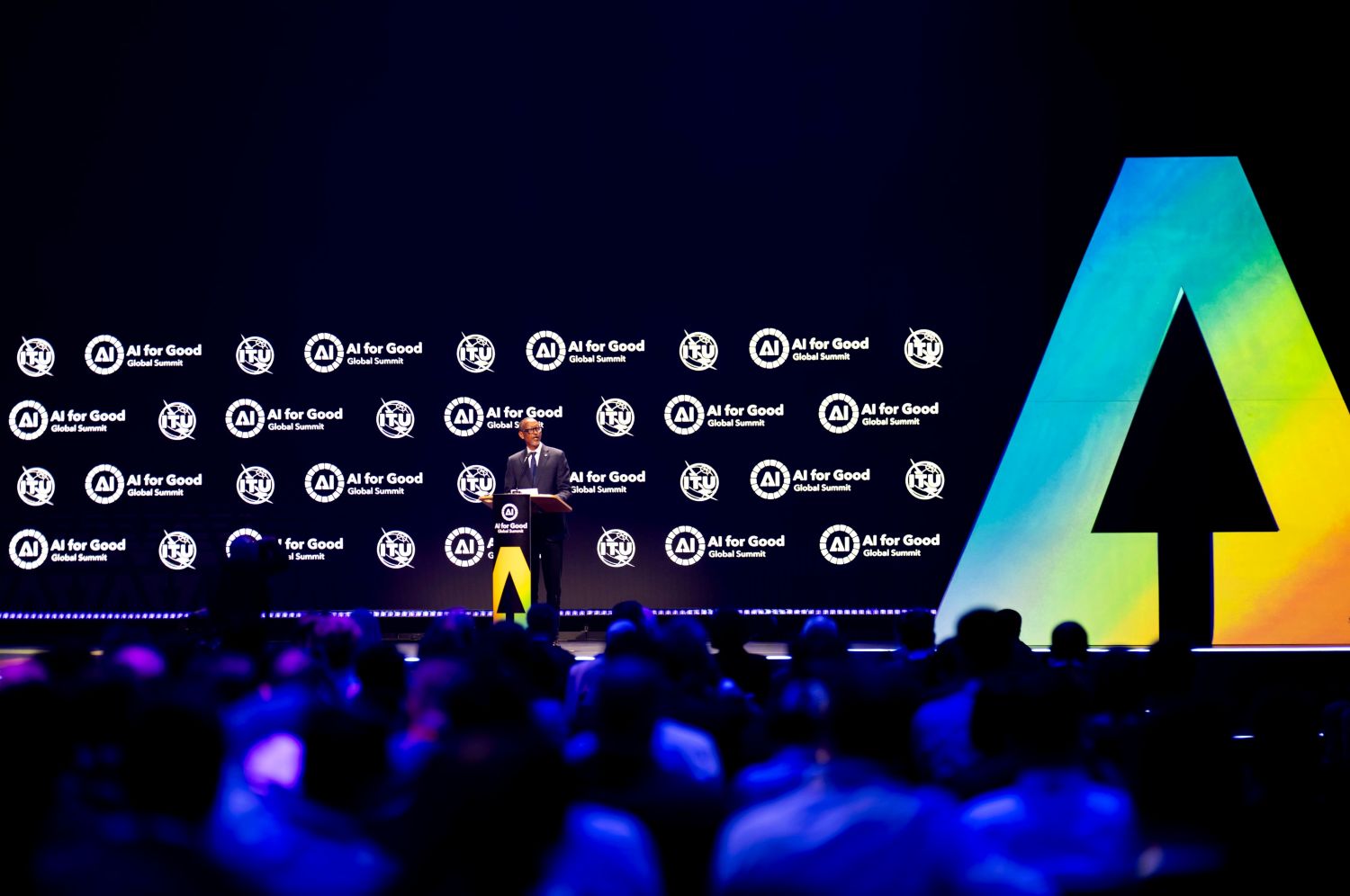
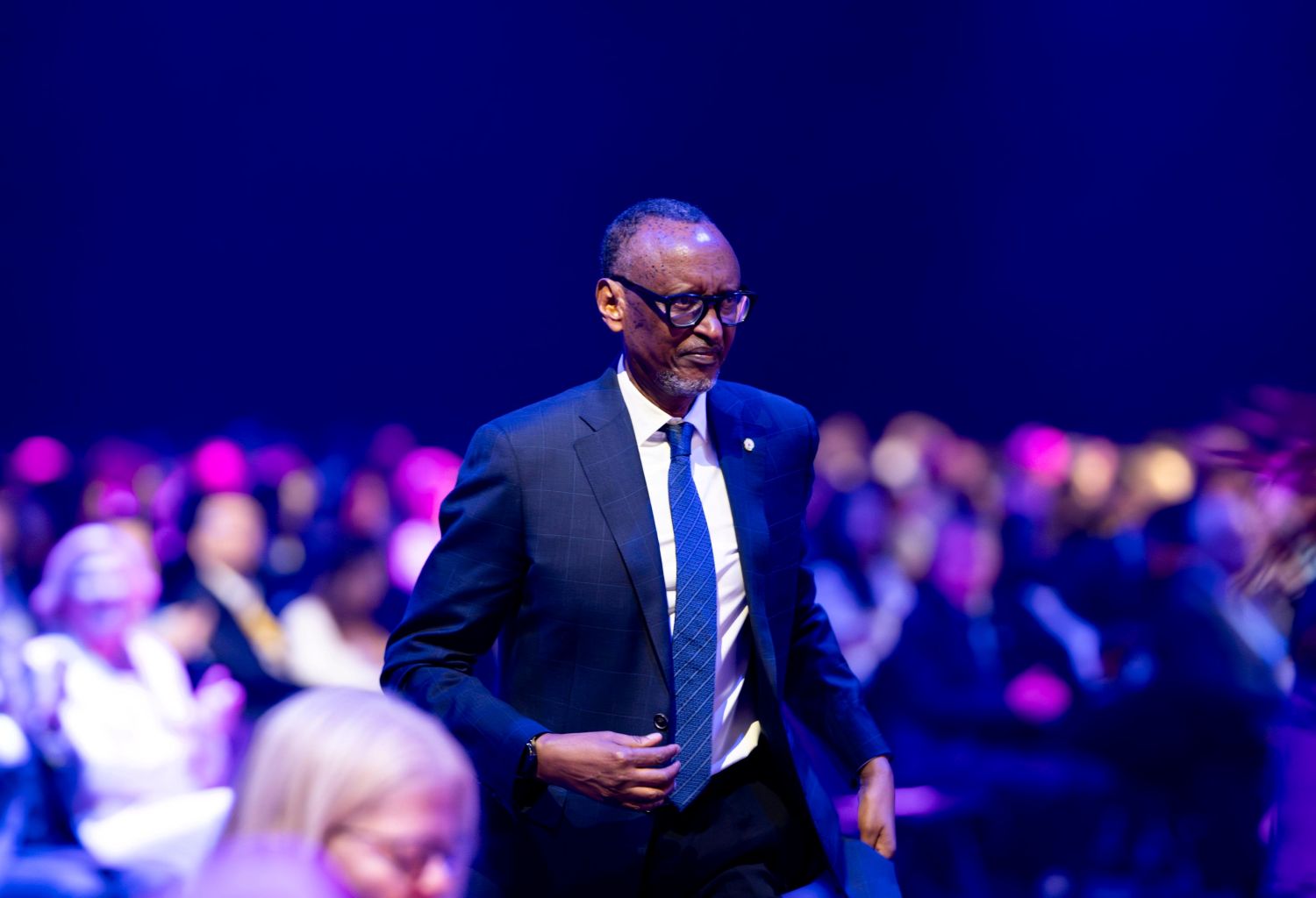
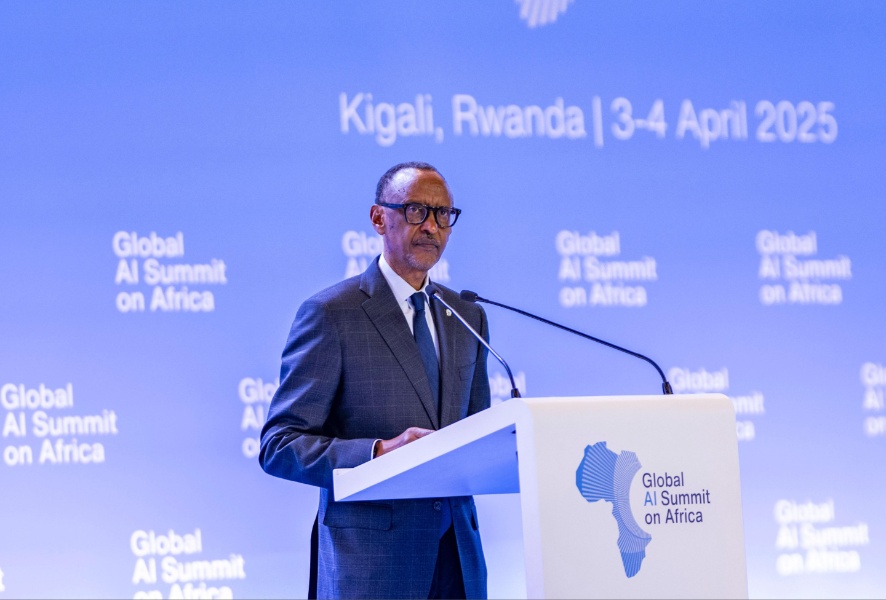
Kagame delivered the remarks at the summit in Geneva, Switzerland, which also marked the official launch and inaugural meeting of the AI for Good Global Commission, a new global initiative he co-chairs that seeks to advance inclusive and responsible AI development.
The AI for Good Global Summit 2026 is organised by the International Telecommunication Union (ITU), the United Nations specialised agency for information and communication technologies (ICTs) and digital technologies.
Addressing heads of state, technology leaders, investors and development partners, Kagame said AI has the potential to transform lives and strengthen economies, but stressed that deliberate action is needed to ensure its benefits are shared equitably.
“We must be intentional about designing, funding, and governing AI so that it can reach its full potential,” he said.
The Head of State highlighted three areas that should be prioritised to unlock AI’s potential.
The first, he said, is infrastructure, noting that computational power, connectivity and reliable energy must become more accessible through stronger collaboration between governments and the private sector.
Secondly, President Kagame underscored the importance of skills development, saying talent exists everywhere but opportunities do not. He urged educational institutions to continually adapt their curricula to prepare young people for an AI-driven economy.
His third priority was accountability, calling for AI governance frameworks that promote trust and transparency rather than creating new divisions.
Kagame said Rwanda is already demonstrating the practical use of AI through its Health Intelligence Center, which uses real-time health data and artificial intelligence to help predict disease outbreaks and support better policy decisions.
In June 2026, the Cabinet, chaired by President Kagame, approved the establishment of the National Artificial Intelligence Agency, which will drive AI development, innovation, adoption, investment and governance in support of Rwanda’s digital transformation and economic growth.
The agency is expected to play a central role in coordinating Rwanda’s AI agenda as the country seeks to strengthen its position as a regional technology and innovation hub.
In his speech on Wednesday, President Kagame also highlighted continental efforts through Smart Africa, noting that the alliance established the Africa AI Council last year to strengthen Africa’s role in shaping the future of AI.
While acknowledging growing geopolitical competition over technology and persistent uncertainty surrounding AI, President Kagame noted that Africa is well positioned to contribute to the global digital economy, pointing to the continent’s rapidly growing and youthful workforce.
“In Africa, we are no longer satisfied to be passive consumers of technology. We want to build and deploy that technology at scale as well,” he said.
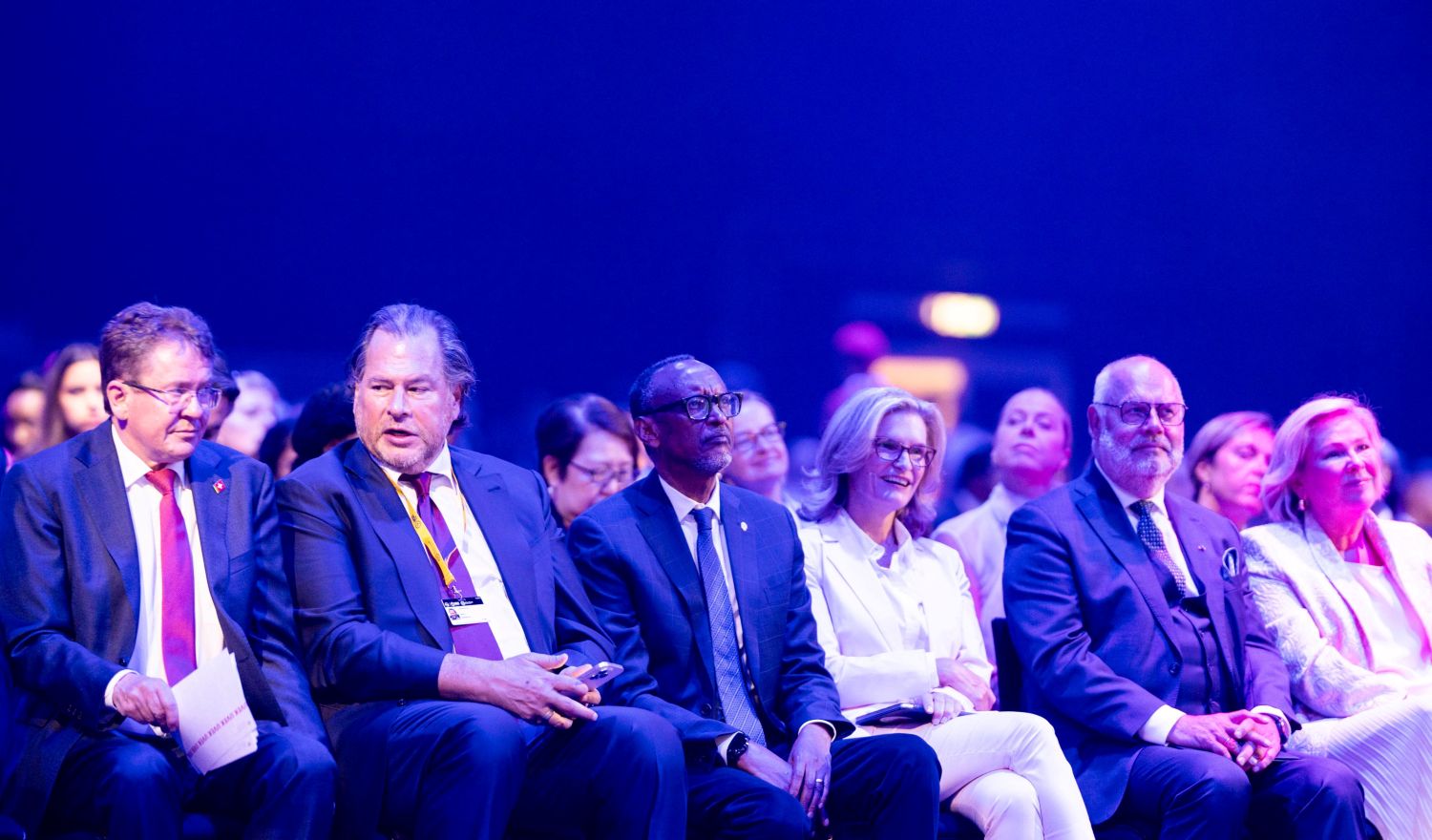
President Kagame is serving as co-chair of the newly launched AI for Good Global Commission alongside Salesforce Chair and CEO Marc Benioff. The commission builds on the legacy of the Broadband Commission and brings together governments, business leaders, international organisations, investors and civil society to help ensure AI advances opportunity and development worldwide.
During the commission’s inaugural fireside discussion hosted by ITU Secretary-General Doreen Bogdan-Martin, Benioff described AI as a technology unlike any before it and said its impact would depend on how humanity chooses to develop and govern it.
“This is not a regulatory body, this is not a rule-making body, this is a conversation,” Benioff said. “Technology is never good or bad. It’s what we do with the technology that matters.”
He stressed the importance of a multi-stakeholder approach, saying governments, industry and civil society must work together to guide AI’s development in a way that benefits people around the world.
Kagame echoed that view, saying the commission would build on lessons learned from the Broadband Commission over the past 15 years, where public-private cooperation helped expand digital connectivity across continents, including Africa.
“The main task is to deliver,” Kagame affirmed. “We want to harness the good of AI.”
The AI for Good Global Commission aims to foster international collaboration on AI policy, investment and innovation, ensuring the technology is developed responsibly and its benefits are shared more broadly across countries and communities.
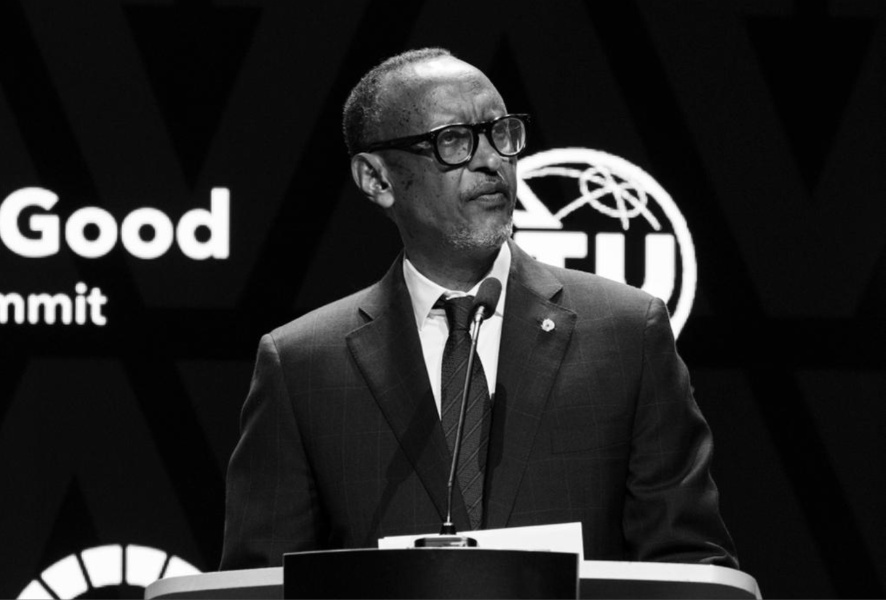
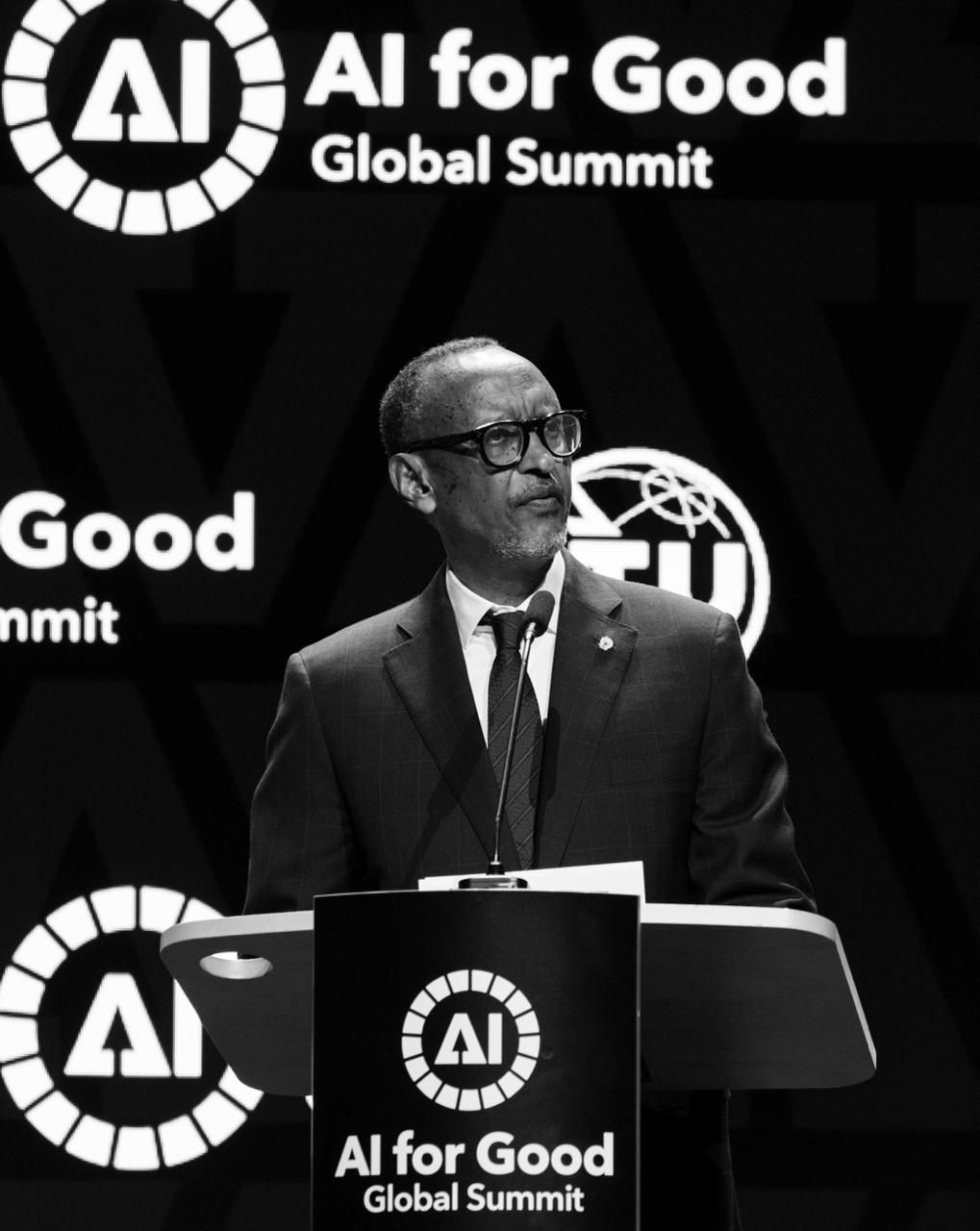
Kagame delivers his remarks during the official launch and inaugural meeting of the AI for Good Global Commission, a new global initiative he co-chairs that seeks to advance inclusive and responsible AI development.The AI for Good Global Summit 2026 is organised by the International Telecommunication Union (ITU), the United Nations specialised agency for information and communication technologies (ICTs) and digital technologies.
Kagame, who is co-chairing the Commission, will be joined by co-chair Marc Benioff, CEO and Co-Founder of Salesforce, and vice-chair Doreen Bogdan-Martin, Secretary-General of the International Telecommunication Union (ITU), amongst others.
Kagame was appointed co-chair of the newly launched AI for Good Global Commission on July 2, 2026, alongside Marc Benioff.
The initiative brings together global leaders to promote responsible artificial intelligence development.
The Summit, co-convened by the ITU and Switzerland, brings together Heads of State and Government, industry leaders, policymakers, researchers, innovators and civil society representatives from across the globe, to explore AI’s potential, develop standards leading to more inclusive opportunities, and examine the evolving role of AI in supporting innovation.
This year’s Summit is being held under the theme, “Unlocking AI’s potential to serve humanity”.
Kagame will deliver remarks during the opening of the AI for Good Global Summit and participate in a fireside chat during the official launch of the AI for Good Global Commission. The head of state will also co-chair the inaugural meeting of the AI for Good Global Commission.
The AI for Good Global Commission is a high-level initiative uniting leaders from government, business, and international institutions to address the technical, socio-economic, and policy questions surrounding AI.
Its mandate is to define practical pathways to strengthen trust, expand access, build infrastructure and reduce inequalities, positioning AI as a tool for solving global challenges.
The initiative brings together global leaders to promote responsible artificial intelligence development.President Paul Kagame was appointed co-chair of the newly launched AI for Good Global Commission on July 2, 2026, alongside Marc Benioff.
The announcement was made by the International Telecommunication Union (ITU), the specialised United Nations agency for digital technologies and information and communication technologies, on July 2, 2026. President Kagame will co-chair the commission alongside Marc Benioff, while ITU Secretary-General Doreen Bogdan-Martin will serve as vice-chair.
The AI for Good Global Commission brings together more than 40 founding members, including heads of state and government, technology executives, and leaders of international institutions, with the goal of identifying practical ways to strengthen trust, expand access and unlock AI’s potential to address global challenges.
The commission seeks to connect leaders involved in building technology, deploying it at scale, shaping policy and representing communities to promote responsible AI solutions across sectors and borders, while ensuring developing countries are part of the global AI conversation.
“Technology is supposed to be a force for good, and we have a responsibility to use it accordingly,” Kagame said, according to the statement announcing the launch of the commission. “Let us work together to reduce inequality, and allow more and more of our citizens to benefit from the good AI can deliver to all of us.”
The commission’s launch comes amid growing global efforts to ensure artificial intelligence contributes to inclusive development. According to the statement, about 2.2 billion people remain offline, limiting their ability to benefit from advances in AI and other digital technologies.
A key focus of the commission will be bridging digital divides and ensuring AI becomes a tool for solving global challenges rather than widening existing inequalities.
Benioff said the future of AI depends not only on economic opportunities created by the technology but also on building trust.
“The promise of AI is built on not only incredible opportunities for the growth of our economy, but on the foundation of trust that is required for our shared success,” he said.
The commission builds on the work of the multi-stakeholder ITU/UNESCO Broadband Commission for Sustainable Development, which has contributed to global efforts on connectivity, digital inclusion and economic development.
Bogdan-Martin said collaboration across sectors would be essential to ensure AI serves communities worldwide.
“No organization can single-handedly put AI at the service of all humanity,” she said. “It will take collective leadership and the combined expertise of partners from across sectors to ensure AI benefits all people, everywhere.”
The AI for Good Global Commission will hold its inaugural meeting in Geneva, Switzerland, during the AI for Good Global Summit 2026, scheduled for July 7–10, 2026.
Kagame’s appointment builds on his continued advocacy for Africa’s participation in the global AI revolution. During the inaugural Global AI Summit on Africa 2025, he called on African countries to invest in digital infrastructure, skills development and cooperation to ensure the continent competes in AI rather than remains a consumer of technologies developed elsewhere.
“We have to adapt, cooperate, and compete because it is in our best interest to do so,” Kagame said at the summit.
He has also emphasised the need for AI to be used as a tool for economic transformation, social progress and reducing inequalities, while warning against allowing the technology to negatively influence critical areas such as politics and diplomacy.
Following his 2025 remarks, Rwanda has continued to position itself at the forefront of efforts to harness AI for good through initiatives across sectors such as healthcare, agriculture, public administration, and urban planning.
In June 2026, the Cabinet, chaired by President Kagame, approved the establishment of the National Artificial Intelligence Agency, which will drive AI development, innovation, adoption, investment and governance in support of Rwanda’s digital transformation and economic growth.
The agency is expected to play a central role in coordinating Rwanda’s AI agenda as the country seeks to strengthen its position as a regional technology and innovation hub.
The founding members of the AI for Good Global Commission include leaders from major technology companies, international organisations and governments, including representatives from Microsoft, Google, Amazon, NVIDIA, UNDP, UNESCO and the World Trade Organization.
President Paul Kagame has often advocated for Africa’s active role in the global AI revolution, urging investment in digital infrastructure, skills and cooperation to help the continent compete in AI.
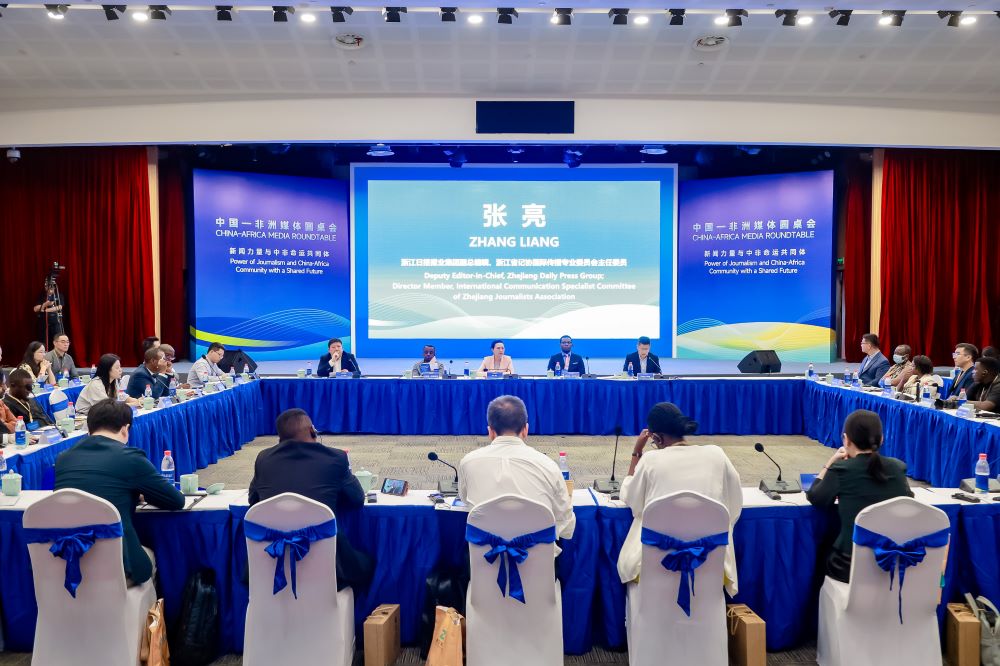
That question was at the heart of a recent roundtable held in Hangzhou, China’s Zhejiang Province, where journalists from Rwanda and Ethiopia joined Chinese media professionals and researchers to discuss the future of journalism and China–Africa cooperation in an AI-driven world.
Organized by the All-China Journalists Association under the theme “The Power of Journalism and the China–Africa Community with a Shared Future,” the discussions focused on a growing challenge facing both media and technology sectors; ensuring that artificial intelligence reflects the realities of Africa and China rather than reproducing incomplete or externally shaped narratives.
While participants touched on broader China–Africa cooperation, including trade and economic ties, the conversation quickly turned to a different kind of exchange—one involving data, knowledge, and representation.
This year marks a significant milestone in relations between China and Africa. Over the past decades, the partnership has demonstrated that sustainable development is not built on charity, but on mutual respect and equal cooperation.
Zhang Qiaowen, Deputy Director of the Institute of African Studies at Zhejiang Normal University, briefly highlighted the depth of China–Africa engagement, noting that Zhejiang accounts for around a quarter of China’s trade with Africa and hosts thousands of businesses involved in Africa-related commerce.
Under the framework of the Forum on China–Africa Cooperation (FOCAC), economic ties have evolved from a focus on aid and basic infrastructure to a more balanced model driven by trade and investment.
Trade between China and Africa has grown dramatically, rising from US$10 billion in 2000 to nearly US$350 billion today. Since 2009, China has remained Africa’s largest trading partner for 16 consecutive years and has also become one of the continent’s fastest-growing sources of investment, even as the global economy faces a growing wave of protectionism.
However, she stressed that the next stage of cooperation is not only about trade volumes but also about how African realities are understood and communicated.
“These are the real stories waiting to be told,” Zhang said, referring to the experiences of African businesses, farmers, entrepreneurs, and communities navigating a rapidly changing global environment.
Participants at the June 24, 2026, Hangzhou roundtable examined emerging AI tools such as Ubuntu AI and their role in improving knowledge exchange and narrative balance between Africa and China.
From trade partnership to knowledge partnership
That concern forms the foundation of Ubuntu AI, a platform introduced during the discussions as a new tool designed to improve how Africa-related knowledge is collected, interpreted, and shared.
Developed jointly by the Zhejiang International Communication Center (ZICC), Zhejiang Normal University’s Institute of African Studies, and other partners, Ubuntu AI is described as China’s first intelligent application dedicated to African studies and China–Africa knowledge exchange.
According to Yang Jidong, Director of the Converged Media Innovation Hub at Zhejiang Daily Press Group, the project emerged from a recognition that many existing large AI models are trained predominantly on Western datasets and information systems.
“The core point of this smart application is that many big models today are based on traditional or Western database training,” Yang explained.
Ubuntu AI seeks to address that imbalance by building a knowledge base rooted more directly in African realities, cultures, research, and experiences.
“The main purpose of Ubuntu is to train local African-related cultures,” Yang said, adding that the platform is designed to ensure that “our database can represent local African cultures.”
Unlike general-purpose AI systems that pull information from vast and often inconsistent online sources, Ubuntu AI relies on what Yang described as a “clean and authoritative database” specifically curated around African studies.
“Ubuntu AI is very different from traditional big models because big models are more susceptible to AI hallucinations,” he said.
AI hallucinations refer to instances where artificial intelligence systems generate information that appears credible but is inaccurate or entirely fabricated.
According to Yang, Ubuntu AI addresses this challenge through its underlying architecture, which combines specialized databases with Retrieval-Augmented Generation (RAG) technology. Rather than generating responses solely from a model’s internal training, the system first retrieves verified information from its knowledge base before producing an answer.
“This allows me to search for the information I want to understand from my clean database and then generate the corresponding answer through big models,” Yang explained.
For journalists covering Africa, he believes the implications are significant.
“When journalists are collecting data, they can get very authoritative and core information, which can help the media produce content,” he said.
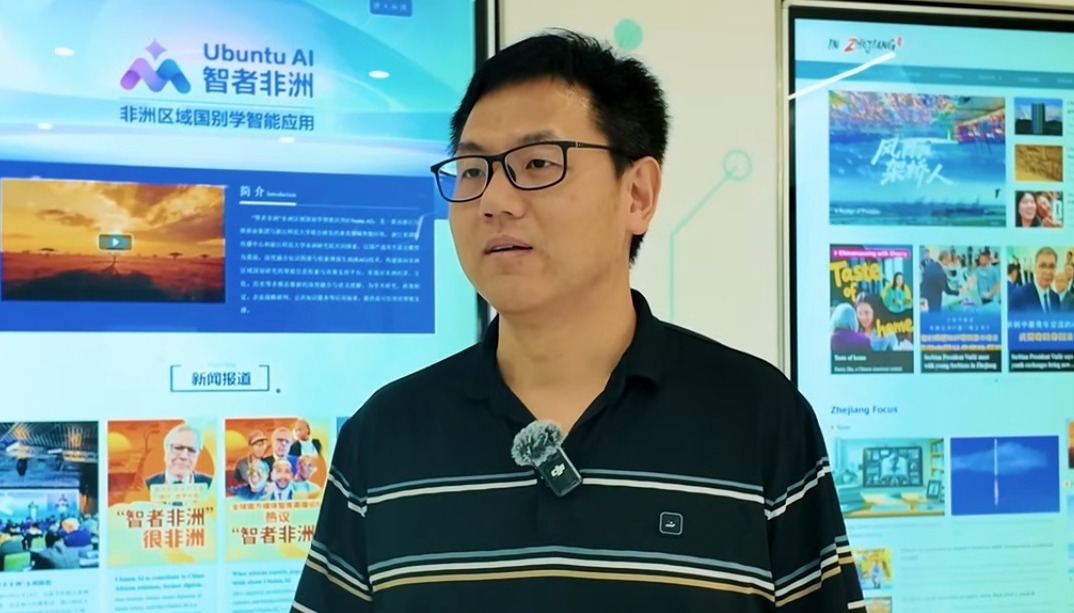
Yang Jidong is the Director of the Converged Media Innovation Hub at Zhejiang Daily Press Group
Building an AI model rooted in African realities
The platform supports multiple languages and draws from a wide range of sources, including academic research, media archives, and policy materials. Its goal is not simply to provide information, but to improve context and accuracy in reporting and research.
For African journalists in particular, the initiative raises the prospect of having AI tools that better reflect local realities rather than relying exclusively on datasets developed elsewhere.
Yang argued that Ubuntu AI’s greatest strength lies not in the technology itself but in the quality of the knowledge that powers it.
“I think the core of Ubuntu AI is its database,” he said. “With the expansion of the database, Ubuntu’s ability will become stronger.”
He also emphasized that the project’s long-term success will depend on collaboration.
“I hope that Chinese research institutions, local African media, and database research institutions can work together to build this database,” Yang said.
Why Ubuntu AI could matter for the future of journalism
That vision aligns closely with the philosophy behind the platform’s name. Derived from the African concept of Ubuntu—often translated as “I am because we are”—the system is intended to function as a shared knowledge ecosystem rather than a one-sided technological product.
Participants at the roundtable repeatedly emphasized that despite advances in AI, journalism remains fundamentally a human profession.
Technology can assist with research, translation, analysis, and content production, but journalists remain responsible for verification, context, and ethical judgment.
As artificial intelligence becomes increasingly embedded in global information systems, initiatives such as Ubuntu AI reflect a growing effort to ensure that Africa is not merely represented in those systems but actively helps shape them.
For both Africa and China, the challenge ahead is not simply building smarter technologies. It is building technologies that understand people, cultures, and societies on their own terms.
And in an era where algorithms increasingly influence how the world sees itself, that may be one of the most important stories of all.