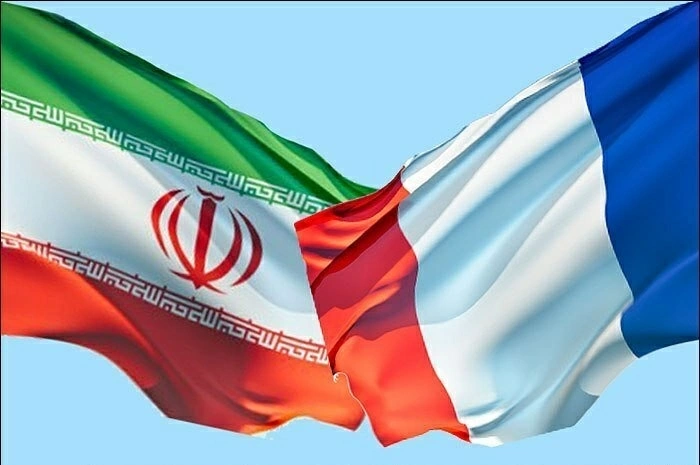
The Iranian Foreign Ministry announced the move days after the country’s Intelligence Ministry said the two French diplomats had taken part in a secret meeting in Tehran in July with suspects of a “major case involving foreign infiltration and interference.”
The Foreign Ministry said in a statement that the French diplomats’ activities were “in violation of international law, especially the Vienna Convention on Diplomatic Relations of 1961.”
The ministry said it declares the two French embassy staff persona non grata, thus prohibiting their entry into Iran, in view of the fact that the French government has not taken any action to rectify their behavior and guarantee the non-recurrence of such conduct weeks after the disclosure of their “illegal behaviors.”
In a post on social media platform X on Tuesday, French Foreign Minister Jean-Noel Barrot reiterated his claim that the two French diplomats had been “scandalously and deliberately” assaulted on July 19, saying in retaliation, the French government will expel two Iranian diplomats from France in the coming days.
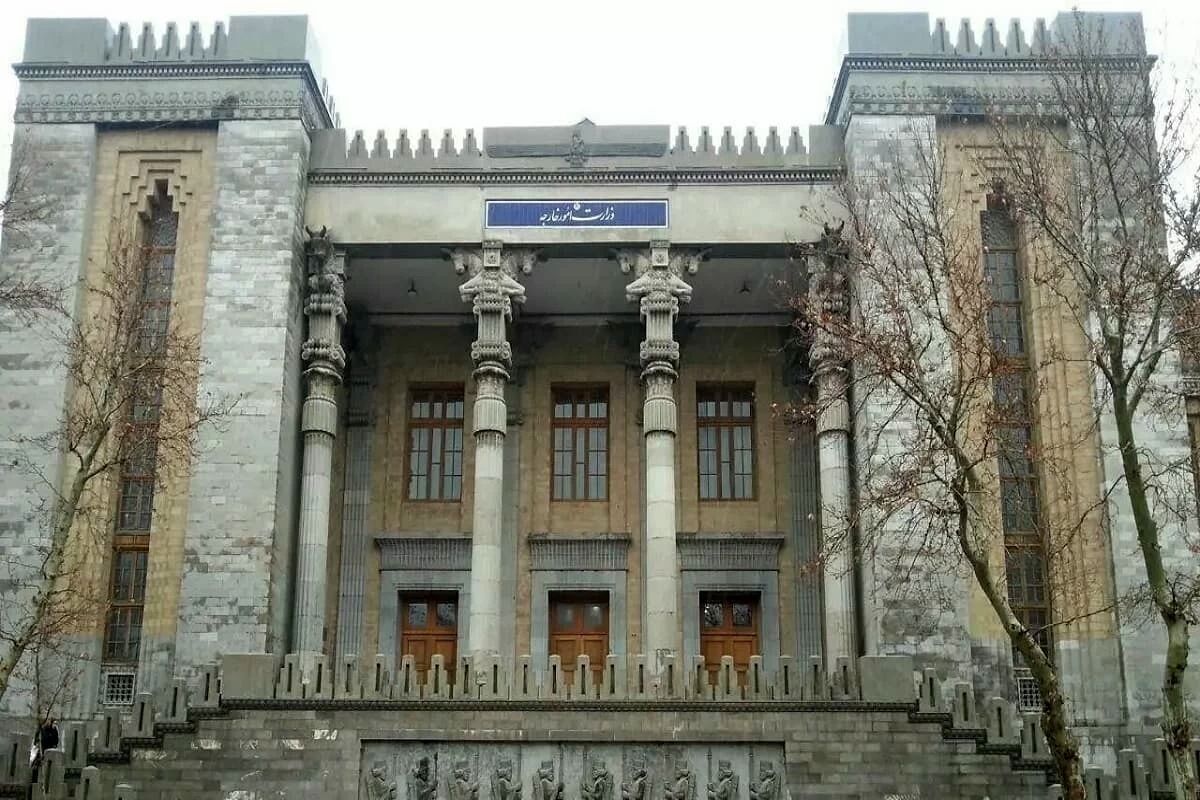
The exterior of the Ministry of Foreign Affairs in Tehran
In an interview with the semi-official Tasnim news agency, IRGC spokesperson Hossein Mohebbi called Trump’s claim a “delusion,” saying no dialogue is going on between the IRGC officials and the Americans.
Even Iran’s diplomatic apparatus is not currently negotiating with the United States owing to Washington’s “breach of promises,” Mohebbi added.
Separately, at Monday’s press conference, Iranian foreign ministry spokesman Esmaeil Baghaei denied media reports of unofficial contact between Washington and the IRGC via Iraqi Kurdistan officials and an alleged secret U.S.-Iran meeting in Erbil.
The news is “media techniques and psychological operations used to sow discord among Iran’s decision-making bodies,” Baghaei said.
Fox News reported earlier that Trump confirmed there is a backchannel for peace talks between Washington and the IRGC.
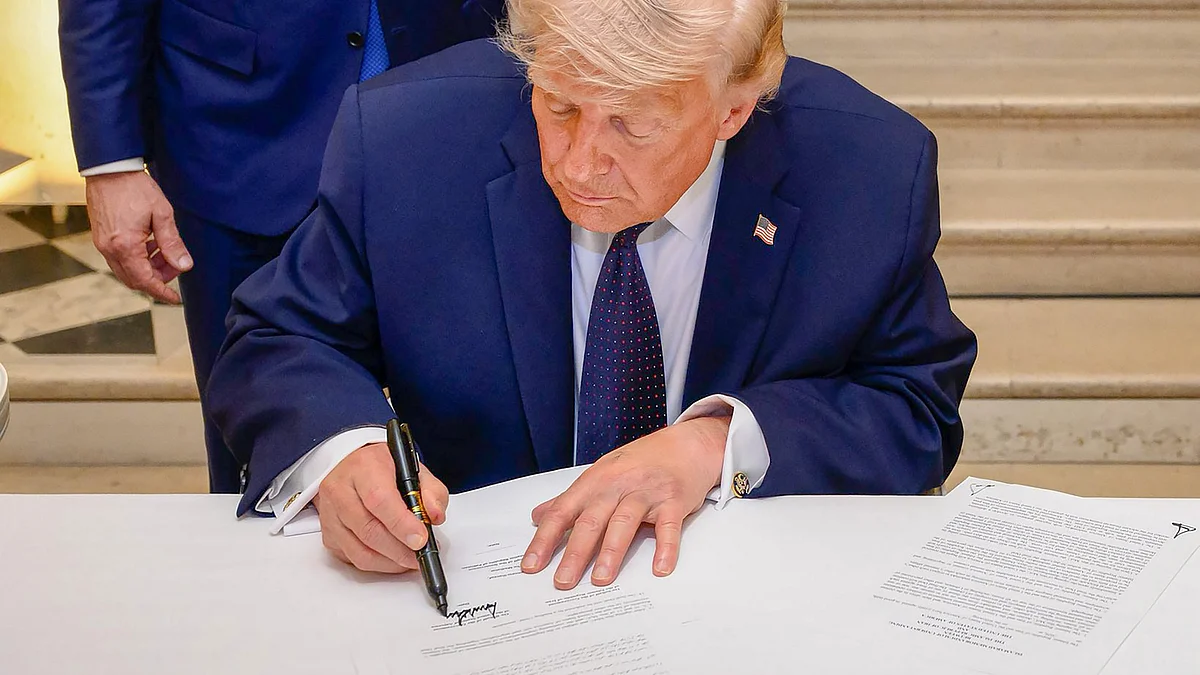
Iran’s Islamic Revolution Guard Corps (IRGC) on Monday rejected U.S. President Donald Trump’s claim that there is a backchannel for talks between Washington and the IRGC.
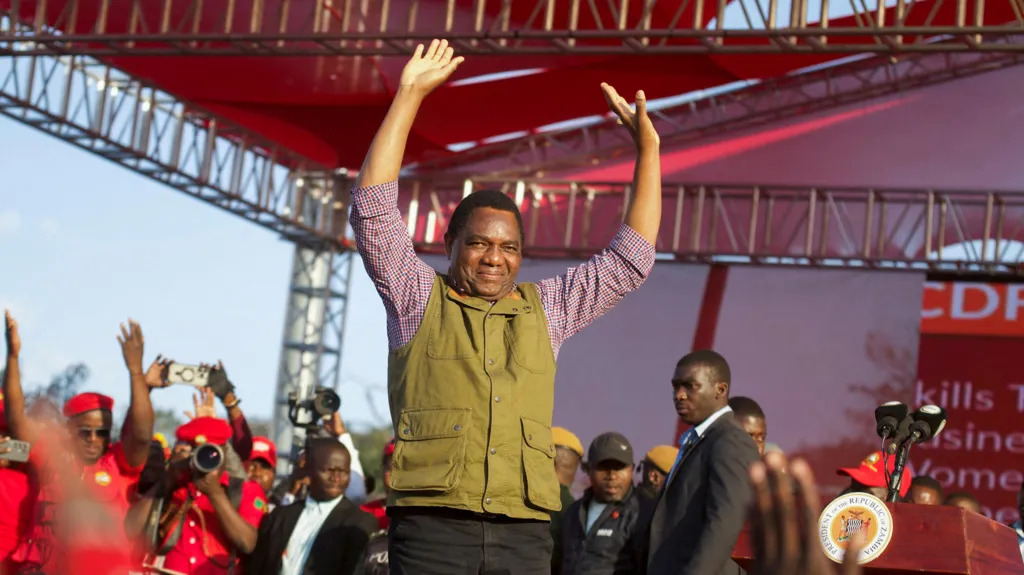
The Electoral Commission of Zambia declared Hichilema president-elect early on Tuesday, after the incumbent won a clear majority over his main challenger, Brian Mundubile, who received about 38% of the vote. The remaining candidates trailed well behind the two leading contenders.
Under Zambia’s electoral system, a presidential candidate who receives more than 50% of the vote wins in the first round without the need for a runoff.
“I therefore declare Hichilema Hakainde S to be president-elect of the Republic of Zambia,” commission chairperson Mwangala Zaloumis said.
Hichilema, 64, said he was “truly humbled by the trust” placed in him and pledged to continue working for citizens who had supported opposition candidates.
“We hear you, and we will continue to work for you,” he said.
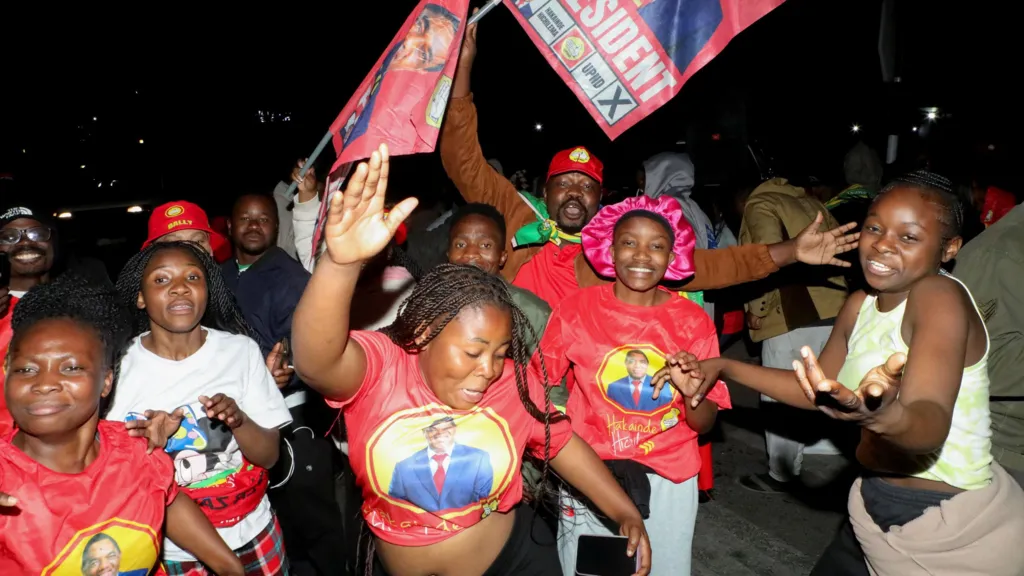
Hundreds of Hichilema supporters gathered in Lusaka following the announcement, wearing the red colours of his United Party for National Development and celebrating with singing, dancing and firecrackers.
The election was, however, marked by allegations of irregularities and tensions between the government and opposition. Mundubile had questioned the results, alleging discrepancies between polling-station records and officially announced figures and calling for an independent investigation. His campaign also raised concerns over events surrounding the vote-counting process.
The electoral commission temporarily suspended the counting of votes a day after polling, citing reports of violence against election officials and the theft of marked ballot papers in some areas. The suspension was lifted later the same day.
The government had also accused opposition figures of involvement in an alleged armed insurrection, claims Mundubile and his National Reconciliation Party for Unity and Prosperity rejected. Eleven people, including senior opposition figures, were arrested in a raid shortly after voting.
International observers described election day as largely peaceful but raised concerns about the wider electoral environment. The European Union observation mission cited late legal changes, restrictions on opposition activity, media access and unequal campaign conditions, saying these factors had affected the fairness of the contest.
Zambia has nevertheless maintained a record of peaceful transfers of presidential power since the return to multiparty democracy in 1991, with successive changes of government taking place through elections.
Hakainde Hichilema’s supporters poured onto the streets to celebrate his victory.
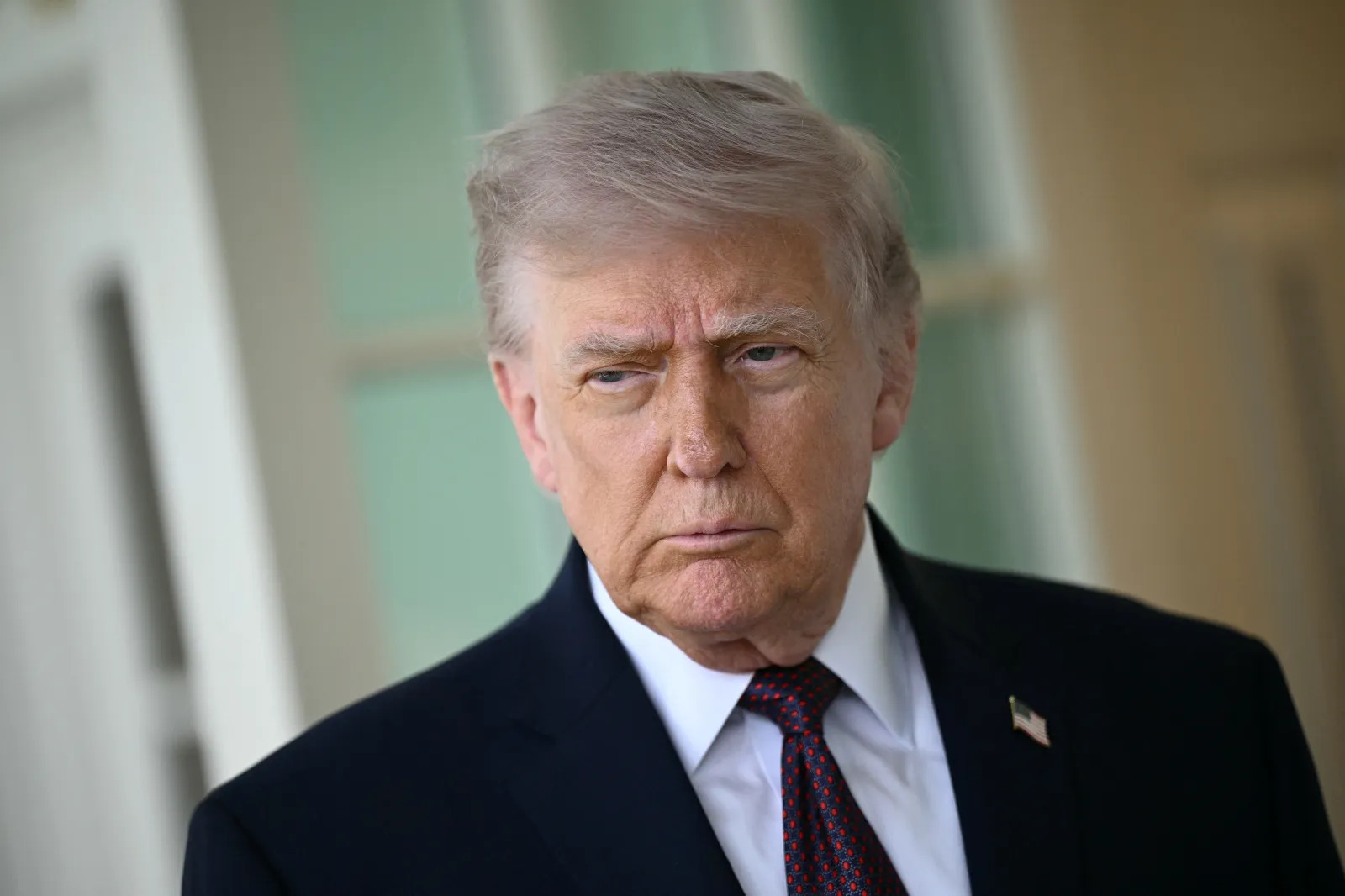
Just 33 percent of respondents in the four-day survey said they approved of Trump’s performance in the White House, while 64 percent disapproved, the poll showed.
It noted that Trump’s approval rating, down from 35 percent in a poll that closed earlier this month and lower than at any point in his current term, “has now tied the lowest level of his prior term reached in December 2017.”
The latest poll was released as a 60-day negotiation period under a U.S.-Iran memorandum of understanding was set to expire Monday, with no progress toward a broader peace agreement between the two sides.
Trump has sought to ease public concerns over high gas prices in recent remarks. At a political rally in Garden City, New York on Friday, Trump said that paying “a tiny little bit more for your gasoline” is worth the cost of ensuring “a very evil country” cannot have a nuclear weapon.
Meanwhile, a Financial Times poll released Sunday showed that 53 percent of U.S. voters said they had become worse off under Trump, amid growing discontent over his handling of the economy and cost of living.
“Inflation is outstripping wage gains and people are having difficulty paying their bills. Many feel they are falling behind and not able to keep up with the cost of food, gas, and healthcare,” Brookings Institution Senior Fellow Darrell West told Xinhua.
U.S. President Donald Trump’s approval rating fell to 33 percent, the lowest level of his presidency, amid public concerns over the U.S. war against Iran, according to a Reuters/Ipsos poll that concluded Monday.
Kinshasa has said it has been holding talks with the FDLR to persuade the group to lay down its weapons. However, the group has reportedly rejected proposals that would see its members return to Rwanda. The DRC has yet to disclose the name of the country that has agreed to receive them.
The decision to keep the country’s identity confidential has raised questions over which nation is prepared to accept members of a group that has been linked to a security crisis in the Great Lakes region for more than three decades.
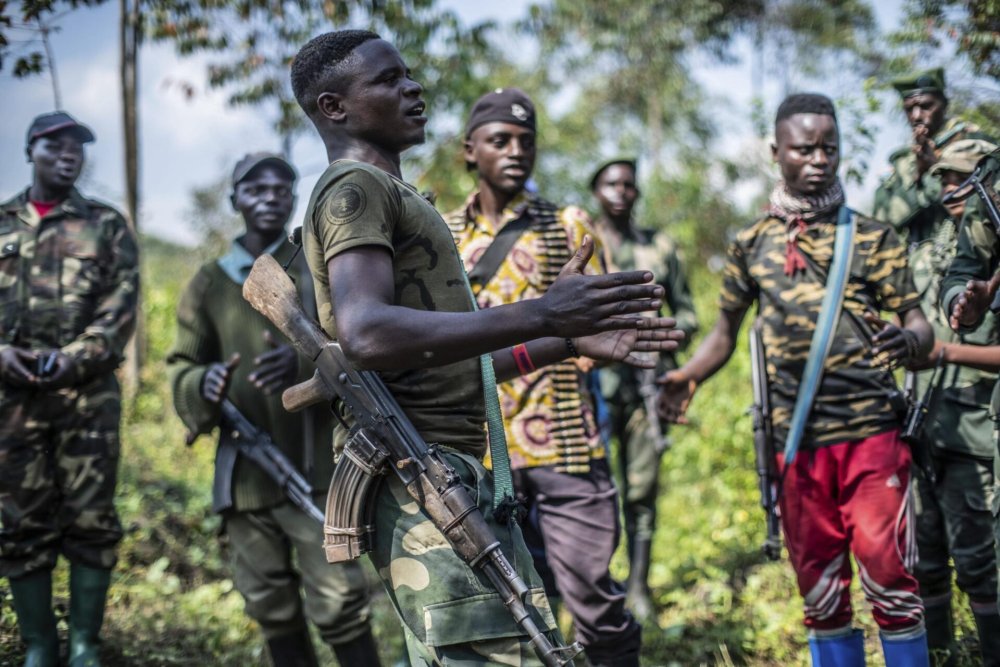
The FDLR, which is deeply entrenched in eastern DRC, remains a major security concern for the Great Lakes region, including Rwanda. Its history is closely linked to the 1994 Genocide against the Tutsi, in which more than one million people were killed over 100 days.
The group was established by former members of the former Rwandan Armed Forces (ex-FAR) and the Interahamwe militia who were involved in the genocide. Over the years, the FDLR has maintained an armed presence in eastern DRC and has been accused of propagating an ideology of hatred and violence.
The Washington Accords, signed in December 2025, called for the accelerated dismantling of the FDLR. The FDLR subsequently put forward a proposal for voluntary disarmament and demobilisation, which the Congolese government took up in its engagements with regional and international partners. Rwanda rejected the proposal, arguing that it was inconsistent with the commitments made under the Washington agreements.
Floribert Anzuluni, Congo’s minister responsible for regional cooperation, said talks with a country that could receive disarmed FDLR members had reached an advanced stage.
“One country has already given its consent,” Anzuluni told RFI, adding that Kinshasa would announce the country’s identity publicly soon.
Under the DRC’s proposal, FDLR members would first surrender their weapons. Those willing to return to Rwanda would be repatriated, while those unwilling or unable to return would be given the option of relocating to one or more other countries.
But any country considering accepting FDLR members would need to conduct thorough background checks and carefully assess the implications of their admission.
The FDLR is not simply a group of refugees seeking a place to settle. Its history is inseparable from the role played by some of its members in the 1994 Genocide against the Tutsi.
The group’s activities have also had consequences beyond its strongholds in eastern DRC. The region has served as a base from which the FDLR has recruited fighters and conducted operations. The group has also been accused of involvement in the conflict between the Congolese army, FARDC, and the AFC/M23, as well as attacks affecting civilians.
A UN Security Council assessment has attributed serious violations of international law to the FDLR, including killings, injuries, sexual violence and forced displacement. Women and children have been among those affected.
Rwanda has consistently argued that an armed group associated with genocide ideology should not be treated as a legitimate political interlocutor or given a platform for negotiations.
For any country considering accepting FDLR members, the central question is whether relocation would contribute to dismantling the group’s armed structures and ideology, or simply provide it with a new environment in which to operate.
If the receiving country is genuinely committed to supporting peace and stability, accepting disarmed FDLR members should not substitute for efforts to dismantle the group’s military and organisational structures and address the ideology that has sustained it.
The relocation of FDLR members could either form part of a broader effort to resolve a security crisis that has persisted for more than 30 years, or simply change the location and nature of the problem. The country that ultimately accepts them will therefore face an important question: whether it is prepared to assume responsibility for the consequences.
How large is the FDLR?
A July 2026 report by UN experts presents conflicting estimates of the FDLR’s strength.
The FDLR itself claims to have more than 10,000 fighters, nearly half of whom it says are engaged in regular military activities. The FDLR-CRAP faction has separately claimed to have more than 20,000 fighters.
The UN report, however, says those figures are not considered reliable. UN officials and intelligence agencies estimate that the FDLR has between 3,500 and 4,500 fighters.
The Washington Accords put the group’s strength at between 3,000 and 3,500 fighters.
The disparity between the group’s own claims and external estimates underscores the difficulty of establishing the FDLR’s exact military strength, and the challenge facing any effort to disarm, dismantle and relocate its members.
The FDLR militia was established by members of the former Rwandan Armed Forces (ex-FAR)and the Interahamwe militia who were involved in the genocide.
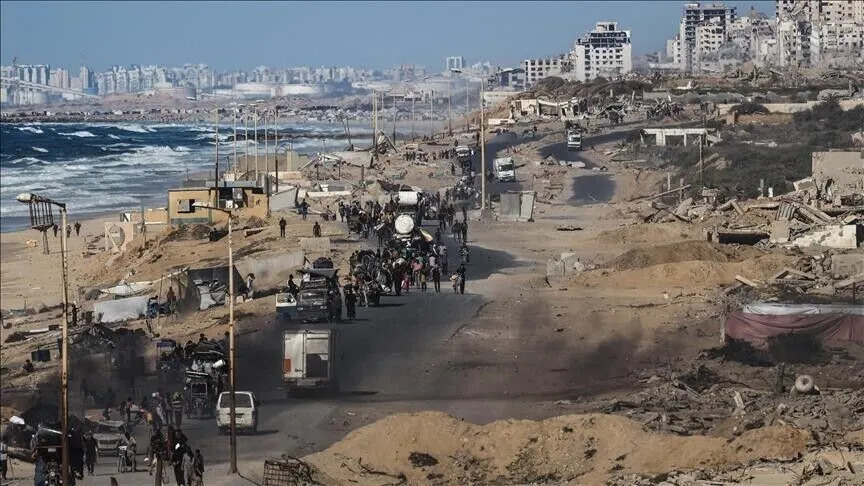
Hamas spokesperson Hazem Qassem said in a press statement that the meetings are part of the movement’s ongoing “contacts and diplomatic efforts with mediators to inform them of Israeli violations.”
Qassem provided no further details about the visit.
A source within Hamas told Xinhua that a delegation headed by Khalil al-Hayya arrived in Cairo late Saturday, marking his first visit since assuming the post of head of Hamas’ political bureau in July.
The source said the delegation is expected to meet with Egyptian intelligence chief Hassan Rashad to discuss developments concerning the Palestinian issue and efforts to consolidate the ceasefire agreement in the Gaza Strip.
The visit comes as mediators from Egypt, Türkiye and Qatar continue efforts to consolidate the ceasefire agreement amid disagreements over the implementation of its next phases.
Earlier this month, Israeli Prime Minister Benjamin Netanyahu formally rejected a U.S.-backed 15-point plan for ending the Gaza conflict, insisting that Israel will not withdraw its forces from the enclave until Hamas is fully disarmed.
The Islamic Resistance Movement (Hamas) said Sunday that its delegation is holding meetings in the Egyptian capital Cairo to ensure Israel’s compliance with a roadmap agreed upon with the U.S.-led “Board of Peace.”
Speaking at a political rally in New York state on Friday, Trump said the United States would soon impose measures on Iran that Treasury Secretary Scott Bessent had described a day earlier as unprecedented, according to media reports.
“After we finish defeating Iran — which is being very badly defeated — pretty soon I’ll be declaring the Hormuz Strait a territory of the United States,” Trump said, though it remained unclear whether the remark represented a serious policy proposal.
Iran rejected the threat. Deputy Foreign Minister Kazem Gharibabadi said Tehran would not be intimidated and insisted that control over the strategic waterway remained with Iran.
The comments came as shipping through the Strait of Hormuz, a major global energy route, fell sharply. Media reports said only a handful of vessels were recorded passing through the waterway on Friday, with no crude oil shipments visible.
The Strait normally handles about 20% of global oil and liquefied natural gas shipments, making prolonged disruption a major concern for energy markets. Brent crude has approached $90 a barrel, while US gasoline prices have risen to around $4 per gallon.
Trump has urged Americans to accept higher fuel prices, saying the cost was necessary to prevent Iran from obtaining a nuclear weapon.
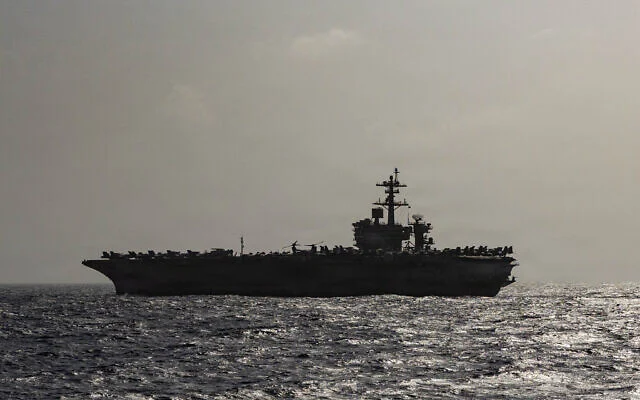
Meanwhile, US media have reported concerns over the welfare of sailors aboard the USS Abraham Lincoln, which has been deployed for about nine months. Trump said the carrier would soon be replaced by another ship.
The Nimitz-class aircraft carrier USS Abraham Lincoln (CVN 72) transits the Arabian Sea, in a photo released July 1, 2026. (US Navy photo)
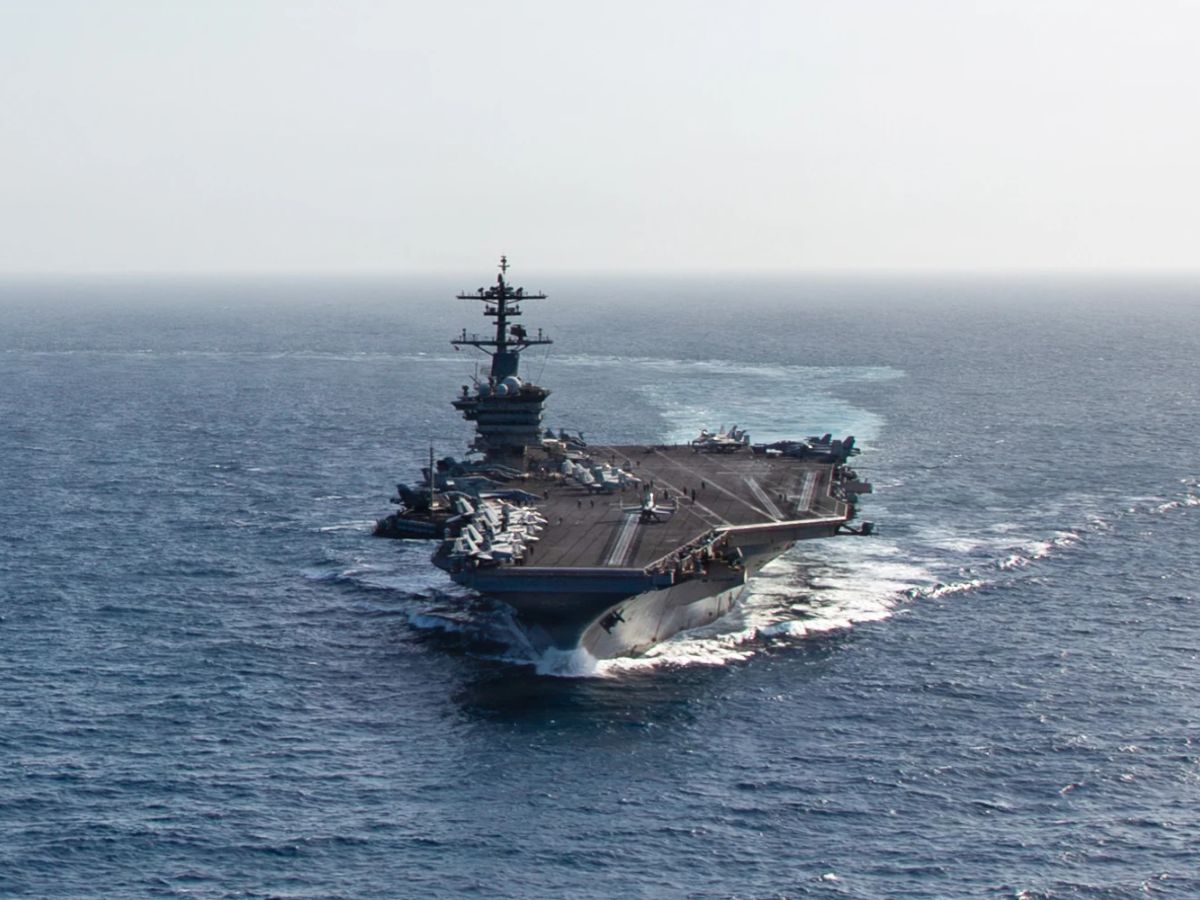
The USS George Washington, the U.S. Navy’s “premier forward-deployed aircraft carrier” in the Pacific, was spotted Thursday transiting the Strait of Malacca, which links the Pacific and Indian oceans.
A Navy official confirmed to USNI News, the U.S. Naval Institute’s online news and analysis portal, that the aircraft carrier was moving westward after passing through the Singapore Strait.
The deployment came amid growing concerns over conditions aboard the Lincoln, including reported shortages of basic supplies, water contamination, plumbing issues, deck safety concerns, mail disruptions, and deteriorating mental health among the crew onboard.
Sen. Richard Blumenthal said the Lincoln hasn’t made a port call in 200 days during its extended deployment in the Iran war, setting a record for consecutive days at sea.
Amid the strain of the war, the U.S. military has lost about 25 percent of its MQ-9 Reaper drones, The Washington Post reported on Thursday, citing three U.S. officials.
Each drone can cost between 30 million U.S. dollars and 50 million dollars depending on the type of sensors and weapons it carries, putting the total value of the losses at more than 1.3 billion dollars, it said.
The US Navy has confirmed that the George Washington carrier group is moving through the Strait of Malacca toward the Indian Ocean and the Middle East.
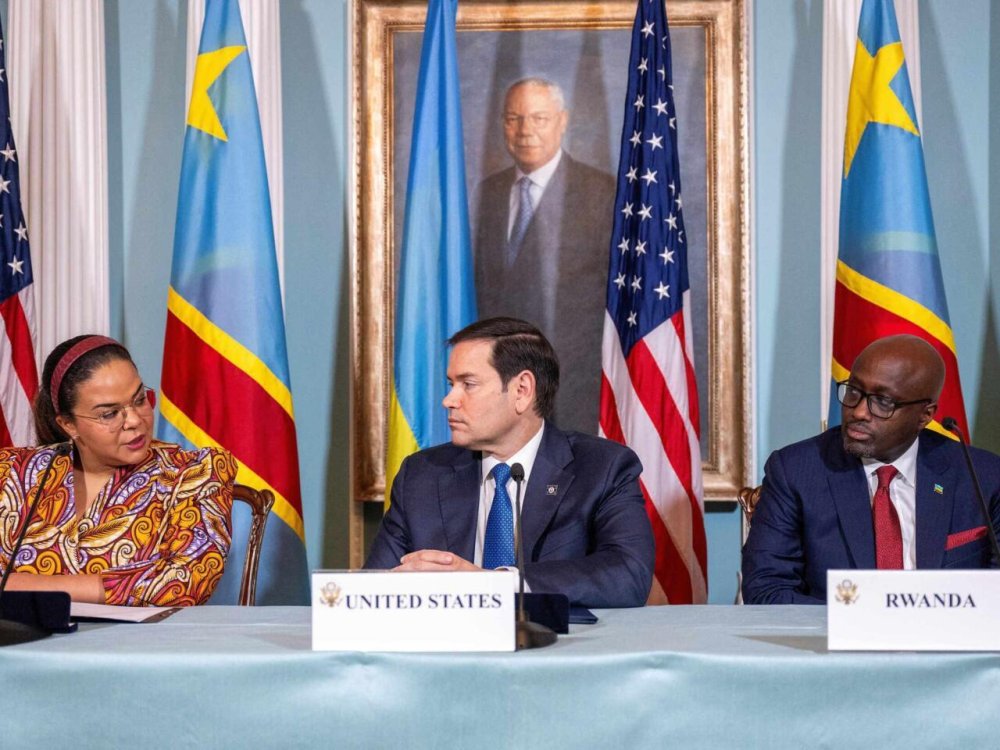
The International Contact Group (ICG) for the Great Lakes region said Kinshasa must ensure that its recently announced disarmament and demobilization arrangement with the militia group is implemented in accordance with obligations under the Washington Agreement signed in June last year and the subsequent CONOPS agreement on the lifting of Rwanda’s defensive measures.
The ICG, chaired by France and comprising the United States, Belgium, Canada, Denmark, the European Union, France, Germany, the Netherlands, Sweden, Switzerland and the United Kingdom, urged the Congolese authorities to immediately develop an operational plan and a realistic timeline for the “effective FDLR neutralization.”
The call comes after the Congolese government announced on July 28 that the FDLR had formally accepted and signed a protocol for voluntary disarmament, demobilization and cantonment.
The ICG stressed that any continued colocation or operational collaboration between Congolese forces and elements of the FDLR would be “fundamentally at odds” with the commitments made in the Washington Accords.
The firm statement comes amid reports that the FDLR group has continued to coordinate militarily with forces fighting the AFC/M23 coalition in North and South Kivu.
The ICG has called on the Congolese government to ensure that the neutralisation protocol is actually implemented and to clarify the mechanisms for combating impunity referred to in the agreement.
It also urged Kinshasa to work with MONUSCO, the UN peacekeeping mission in the DRC, as a key partner in carrying out the process.
The Washington Agreement has placed the dismantling of the militia group formed by individuals involved in the 1994 Genocide against the Tutsi among the key security commitments linked to broader efforts to end tensions between Rwanda and the DRC.
Rwanda has consistently maintained that the FDLR must be dismantled rather than accommodated, and has rejected the arrangement announced by Kinshasa on the grounds that it does not provide for the kind of alternative process proposed by the DRC.
According to Congolese authorities, the arrangement provides for fighters to surrender their weapons, move to secured transit centres and eventually be reintegrated into civilian life.
The FDLR has also proposed that fighters who do not want to return to Rwanda be assisted in resettling in third countries.
In a recent interview with BBC Gahuza, FDLR political spokesperson Cure Ngoma acknowledged that no timeline had been established for disarmament and reintegration.
Ngoma said the FDLR had conditions that it wanted addressed first, including guarantees for the security and dignity of people it describes as Rwandan refugees living in the DRC.
He further said the FDLR’s objective, after those issues were resolved, would be to participate in Rwanda’s political process.
That position has been rejected by Rwanda.
Foreign Minister Olivier Nduhungirehe has dismissed the idea of voluntary dissolution and insisted that no political platform can be opened to the FDLR.
He has maintained that the group must be dismantled as stipulated in the Washington Agreement and that its fighters should be repatriated to Rwanda without additional conditions.
The ICG’s latest statement effectively reinforces the centrality of that agreement, putting the focus back on whether the DRC’s actions will fulfil or undermine the commitments made in Washington.
The group said it was ready to welcome concrete steps by either the DRC or Rwanda to advance the peace process, but urged all parties to the Washington Accords and Doha Framework to implement the commitments they have already undertaken.
It also called on the African Union and other mediation efforts to continue pushing the parties towards implementation.
The group also welcomed the prisoner exchange agreement between the DRC and the AFC/M23 rebel coalition, describing it as an important confidence-building measure, and commended the International Committee of the Red Cross for facilitating a recent transfer of individuals released by Congolese authorities.
The Washington Agreement, signed by DRC President Félix Tshisekedi, Rwanda’s President Paul Kagame and U.S. President Donald Trump, commits the parties to the dismantling of the FDLR.
According to a military source and eyewitnesses, the attacks targeted Khartoum, as well as El Obeid, the capital of North Kordofan State; Kadugli, the capital of South Kordofan State; and Atbara and Al-Damar in River Nile State, while the army’s air defenses and ground-based anti-aircraft systems confronted a new wave of drones.
A Sudanese military source told Xinhua that the army’s ground and air defenses repelled widespread drone attacks on Wednesday and Thursday targeting several cities and military positions. The source said more than 35 drones, which he attributed to the paramilitary Rapid Support Forces (RSF), were shot down on Wednesday over areas including Atbara, Al-Damar and El Obeid.
On Thursday, the forces shot down 10 drones in Omdurman, three in River Nile State and five in South Kordofan State, the source said, adding that the defenses prevented drones from reaching a number of vital targets.
An eyewitness in Omdurman told Xinhua that loud explosions were heard and columns of smoke rose over the city as air defenses engaged a swarm of drones. In El Obeid, another eyewitness reported successive explosions and the activation of army ground defenses as several drones attacked the city.
In Kadugli, an eyewitness said ground defenses engaged drones targeting the city and shot down several before they reached their targets.
The attacks also reached Atbara and Al-Damar in River Nile State, relatively far from the front lines, highlighting the expanding geographical scope of drone warfare in Sudan.
The Sudanese army has not issued an official statement on the latest attacks, while the RSF has not commented on allegations that it was responsible.
The escalation comes amid heavy fighting on several fronts, particularly in North Kordofan and Blue Nile.
In North Kordofan, clashes continued after the army retook several strategic areas in recent weeks and reopened parts of the vital export road linking Kordofan with Khartoum.
The general command of the Sudanese Armed Forces (SAF) said Thursday that its forces and allied troops had repelled an RSF attack on the Jabrat Al-Sheikh area in North Kordofan involving more than 250 combat vehicles. It said the attackers suffered losses in personnel and equipment and were forced to withdraw toward the outskirts of Darfur.
In Blue Nile State, fighting continued in Geisan, a locality on the border with Ethiopia, following an attack by the RSF and the Sudan People’s Liberation Movement-North, according to local authorities.
The authorities said in a statement that the attack began Wednesday morning and targeted the town during the agricultural season, describing it as a “full-fledged war crime.”
The International Organization for Migration reported that around 2,500 people, or about 500 families, were displaced from Geisan following the clashes. Most moved to other areas within the locality, while others crossed the border into Ethiopia.
Sudan has been mired in an armed conflict between the SAF and the RSF since mid-April 2023, which has claimed tens of thousands of lives and displaced millions both domestically and abroad.
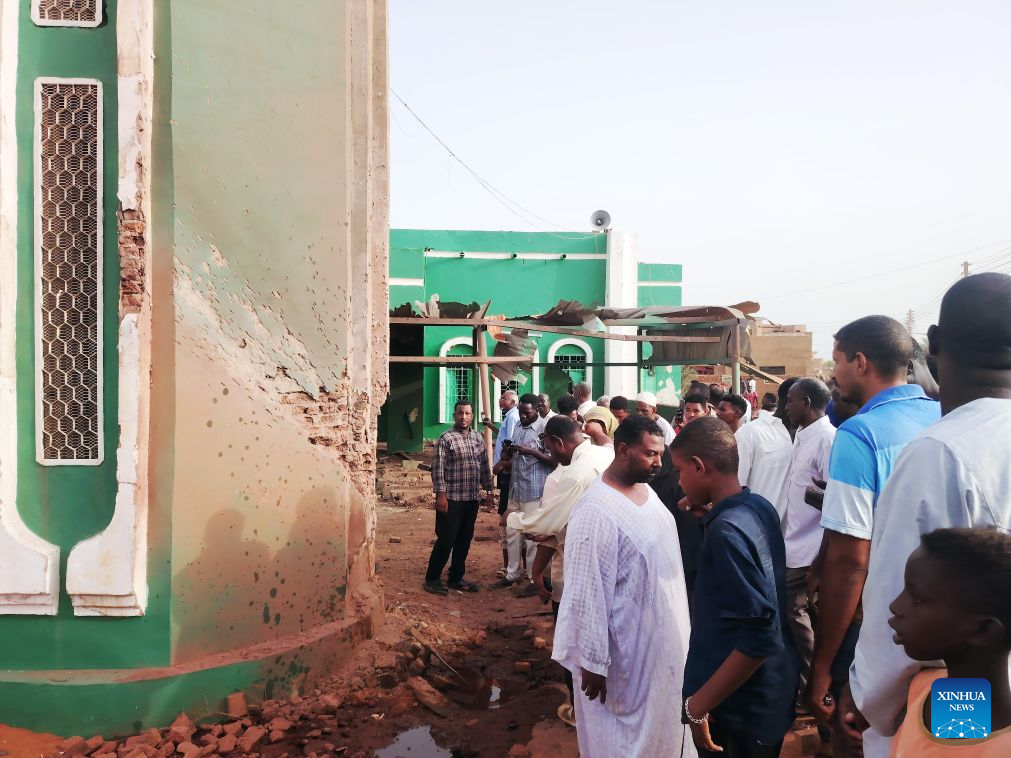
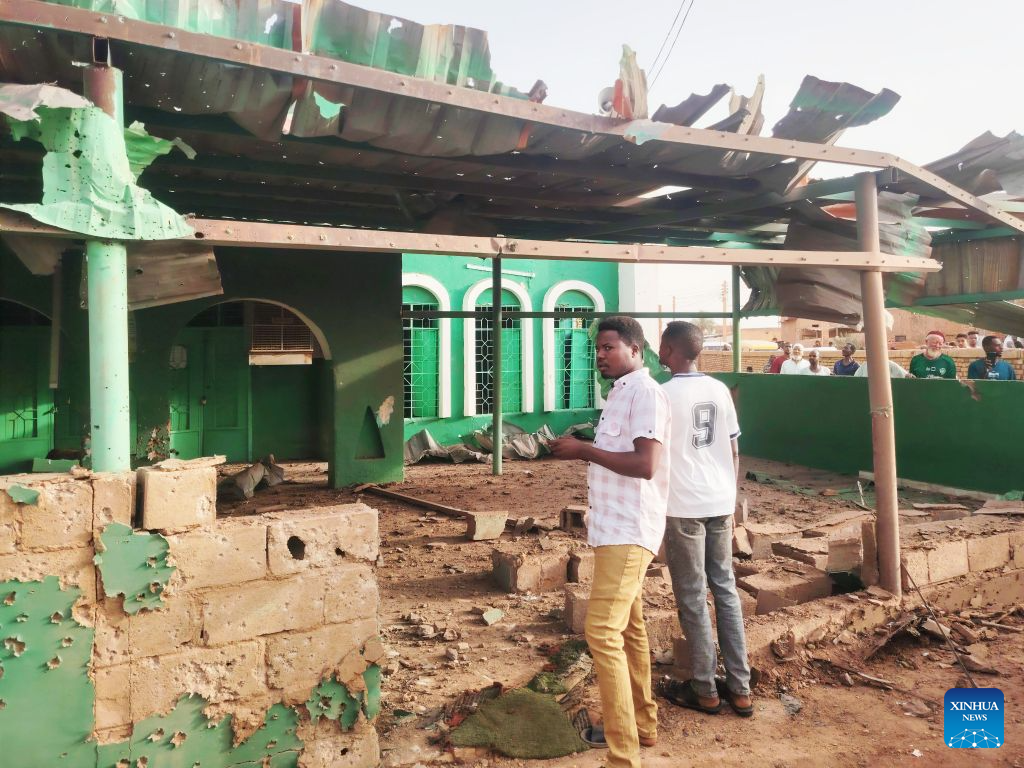
This photo taken with a mobile phone shows residents inspecting a drone-attacked mosque in Al-Droshab, north of Sudan’s capital Khartoum on August 12, 2026.