The veto power is a special right held exclusively by the five permanent members of the UN Security Council (China, France, Russia, the United Kingdom, and the United States). Under this system, a single negative vote from any of these five nations can block the adoption of any “substantive” resolution, regardless of how much international support it receives from the rest of the world.
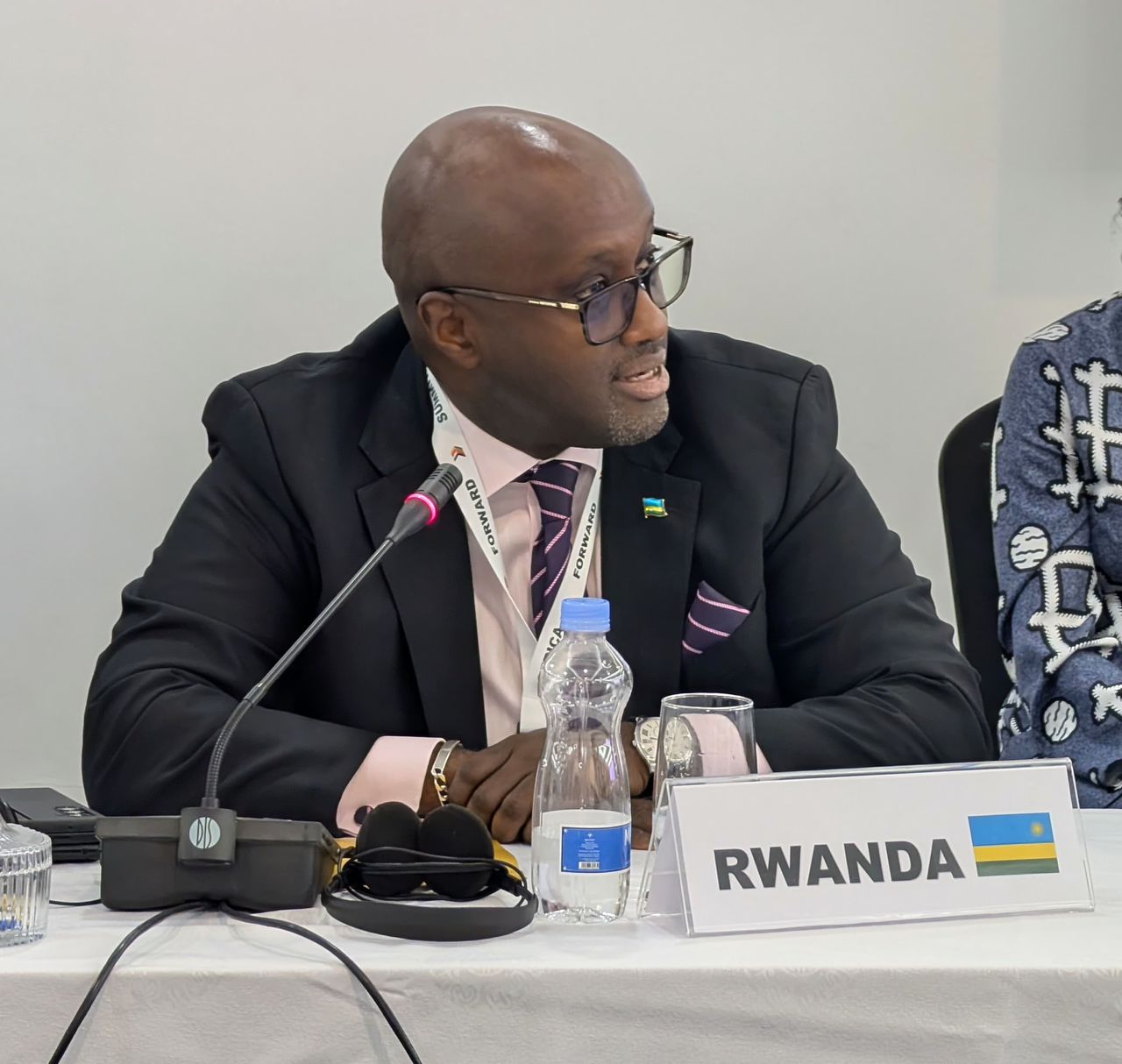
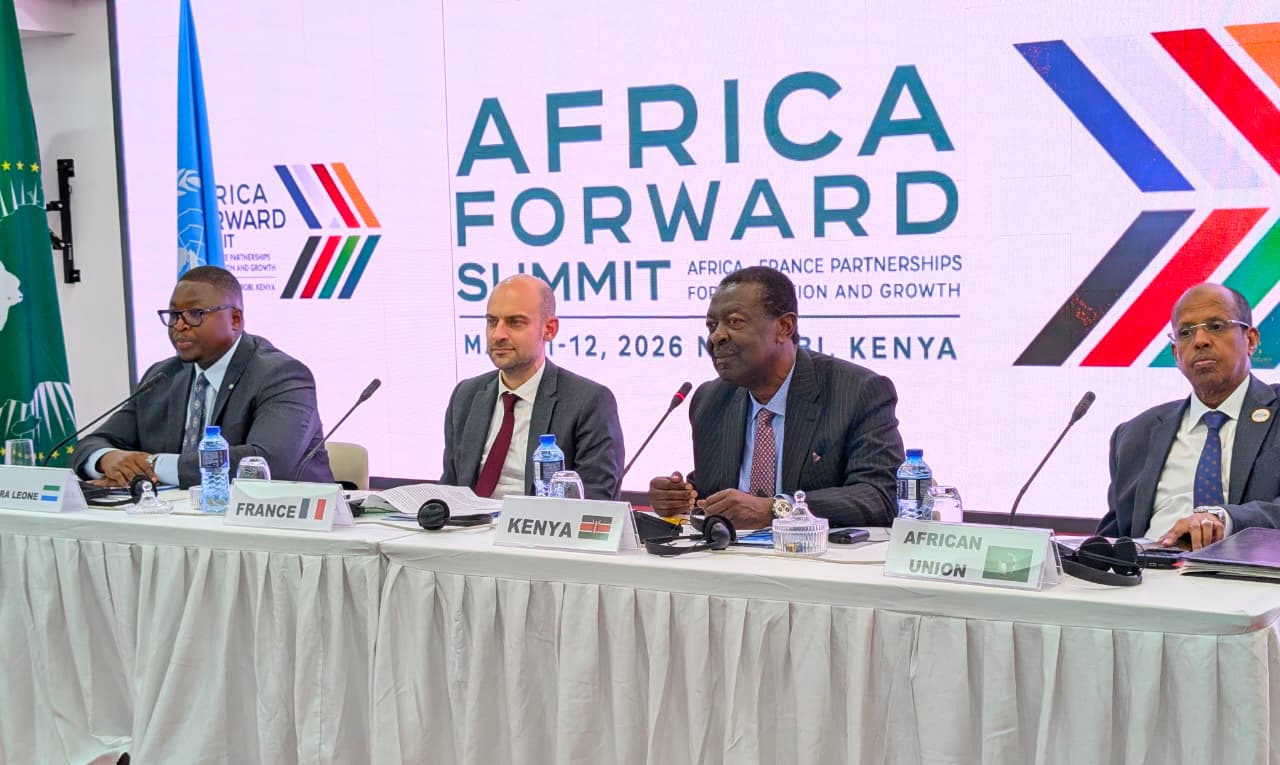
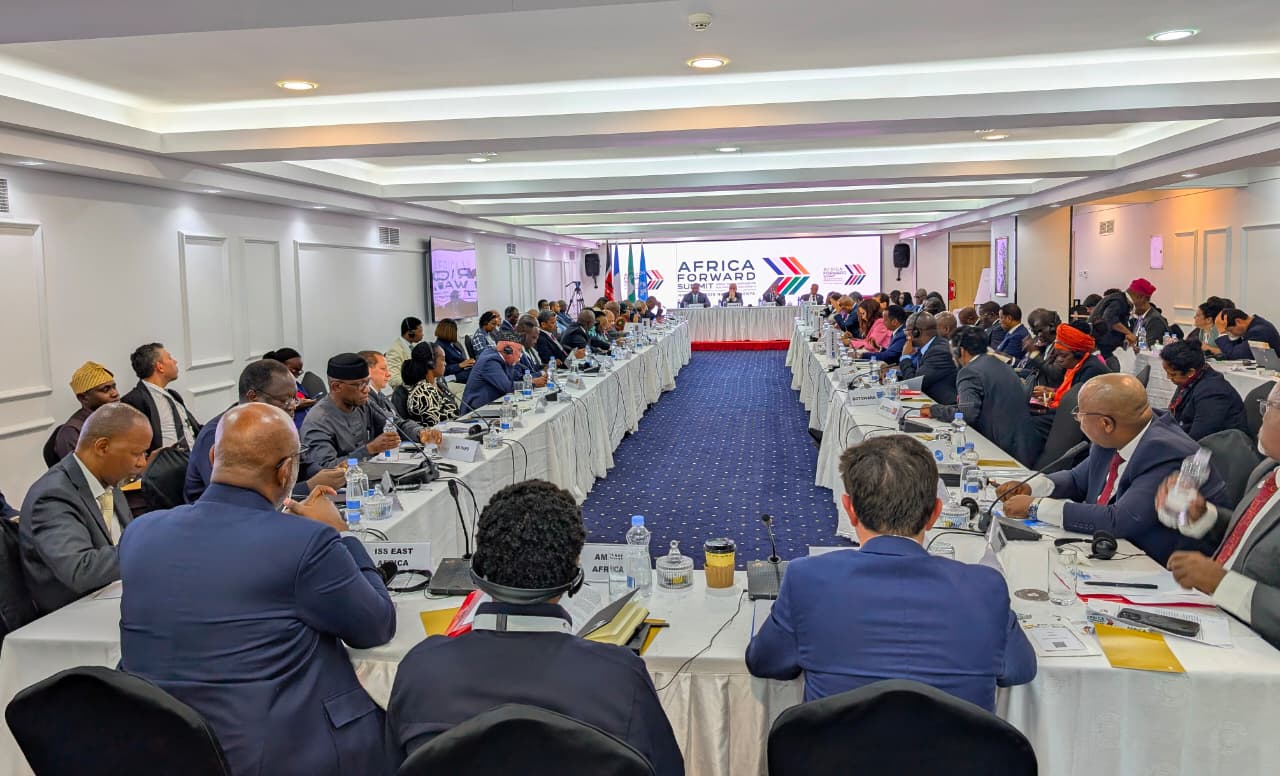
Speaking during a ministerial-level strategic dialogue on UN Security Council reform on the sidelines of the Africa Forward Summit in Nairobi, Nduhungirehe said the use or threat of veto has frequently been used to pressure member states and prevent serious consideration of humanitarian interventions.
“For a long time, the use of veto rights or the threat of its use has repeatedly been employed to pressure member states or block serious consideration of humanitarian interventions, thereby paralysing the Council’s primary responsibility for the maintenance of international peace and security,” he said.
He warned that this has contributed to delays or obstruction in addressing urgent humanitarian situations, undermining the Council’s core mandate.
Nduhungirehe reiterated Rwanda’s alignment with the Common African Position, which calls for equitable representation of Africa on the UN Security Council, including permanent seats with full rights and privileges.
However, he stressed that reform efforts must go beyond representation to also address how the Council operates.
“Structural reform must go hand in hand with reforms to the Council’s working methods, including improvements in transparency and accountability,” he said.
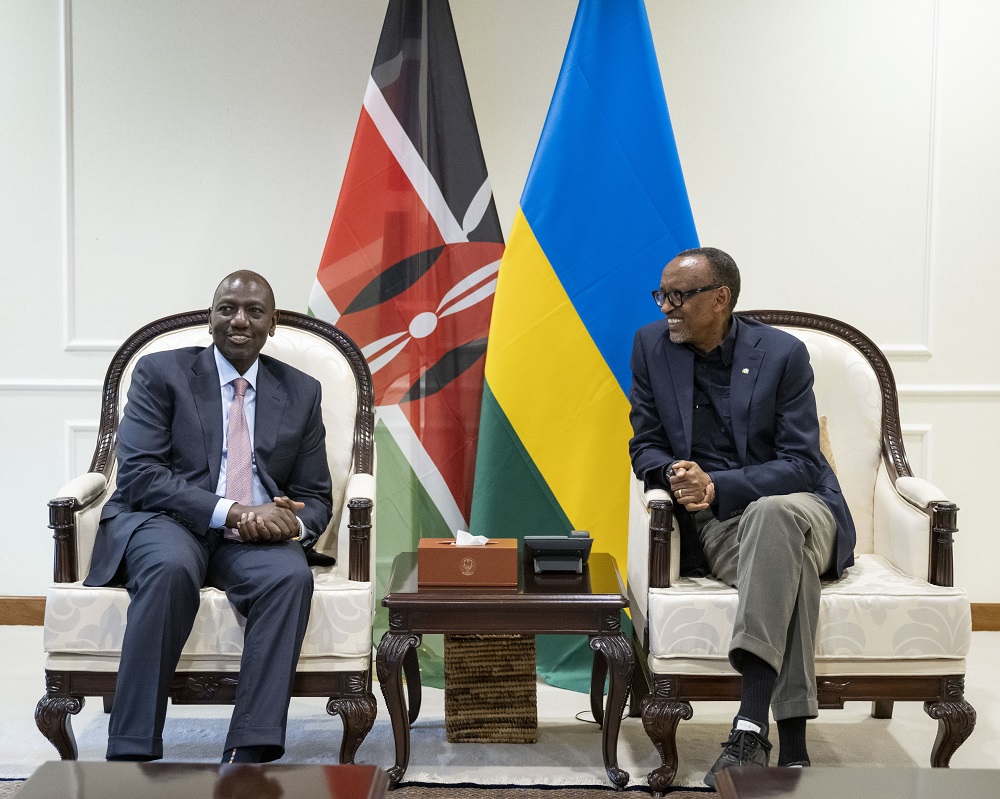
The summit, which closes today, is being co-hosted by Kenyan President William Ruto and French President Emmanuel Macron, with President Paul Kagame among the heads of state in attendance.
The two-day gathering has attracted more than 4,000 participants, including over 25 African heads of state and government, according to organisers.
Rwanda’s Minister of Foreign Affairs and International Cooperation, Olivier Nduhungirehe, has raised concern over the use of veto powers at the United Nations Security Council, saying the practice has often blocked humanitarian action and weakened the body’s ability to respond to global crises.Nduhungirehe raised the concerns during a ministerial-level strategic dialogue on UN Security Council reform on the sidelines of the Africa Forward Summit in Nairobi.
Speaking at a weekly news conference in Tehran, Baghaei said Iran’s demands included ending the war in West Asia, lifting the U.S. naval blockade on Iranian shipping, releasing Iranian assets frozen abroad, ensuring safe passage through the Strait of Hormuz and restoring regional stability.
“We have not demanded any concession. The only things we demanded are the Iranian nation’s legitimate rights,” he said.
Baghaei described Tehran’s proposal as “reasonable and responsible,” saying it was aimed at protecting Iran’s interests as well as regional and global security.
He also noted that nuclear issues would be discussed later as Tehran was currently focused on ending the conflict.
U.S. President Donald Trump branded Iran’s terms for ending the war “totally unacceptable.” Baghaei accused Washington of pursuing “unreasonable demands” influenced by Israel.
Commenting on reports that European countries, including France and Britain, had deployed warships to safeguard shipping in the Strait of Hormuz, Baghaei warned against outside involvement in the region.
“Any interference in issues on the Strait of Hormuz and West Asia will only further complicate the situation,” he said.
Iran, the United States, and Israel agreed to a ceasefire on April 8 after 40 days of fighting triggered by U.S. and Israeli strikes on Iran on Feb. 28.
Iranian and U.S. delegations later held talks in Islamabad on April 11-12 but failed to reach an agreement. Since then, the two sides have exchanged several proposals through Pakistan, while sporadic clashes have continued in and around the Strait of Hormuz.
Separately, Baghaei denied Western media reports that Iran had been dumping oil into the sea because its storage facilities were full.
He called the claims “complete lies” and dismissed reports of an oil slick near Iran’s Kharg Island as “fabricated.”
London-based maritime risk intelligence firm Windward said Friday that satellite imagery had detected an oil spill near Kharg Island, Iran’s main oil export terminal. The company said the spill was first identified on May 5 and later confirmed through three satellite observations over 20 hours.
After post-ceasefire talks collapsed, the United States imposed a naval blockade in the Strait of Hormuz aimed at restricting vessels traveling to and from Iranian ports, which Tehran says is intended to curb its oil exports.
Iranian Foreign Ministry spokesperson Esmaeil Baghaei said Monday that Tehran had sought only its “legitimate rights” in a new peace proposal delivered to the United States through Pakistan.
Museveni, 81, was declared the winner of the presidential poll by the Electoral Commission in January, securing a seventh term in office. Official results showed that he obtained about 72 percent of the vote, while his closest challenger, Bobi Wine, garnered around 25 percent.
Tuesday’s swearing-in ceremony unfolded under heavy security and strict protocol, bringing together regional heads of state, senior government officials, diplomats, and dignitaries from across Africa.
Security was visibly heightened across Kampala ahead of the event, with security agencies deploying personnel to manage crowds, secure key routes, and ensure a smooth and orderly inauguration process.
Grand ceremonial display at Kololo
The ceremony featured elaborate military and constitutional rituals at Kololo Independence Grounds. President Museveni arrived under heavy security escort, with supporters lining the venue to witness the occasion.
He received the final salute of his outgoing term as Commander-in-Chief, followed by the national anthem, marking the formal commencement of the inauguration proceedings. Museveni later inspected a ceremonial parade and briefly interacted with visiting heads of state and foreign dignitaries, underscoring the diplomatic significance of the event.
The presidential standard was later lowered, symbolically marking the end of his previous term and temporarily rendering the presidency vacant in line with constitutional procedure.
Prayer, electoral declaration, and oath of office
Religious leaders led national prayers, with Archbishop Samuel Stephen Kaziimba Mugalu offering blessings for wisdom, justice, and good health for the President and First Lady Janet Museveni.
Vice President Jessica Alupo presided over the constitutional segment of the ceremony before Electoral Commission Chairperson Justice Simon Byabakama officially declared Museveni the winner of the election.
“From the declared results, Museveni emerged winner after satisfying the legal requirement that a candidate must obtain more than 50 percent of valid votes cast,” Byabakama said.
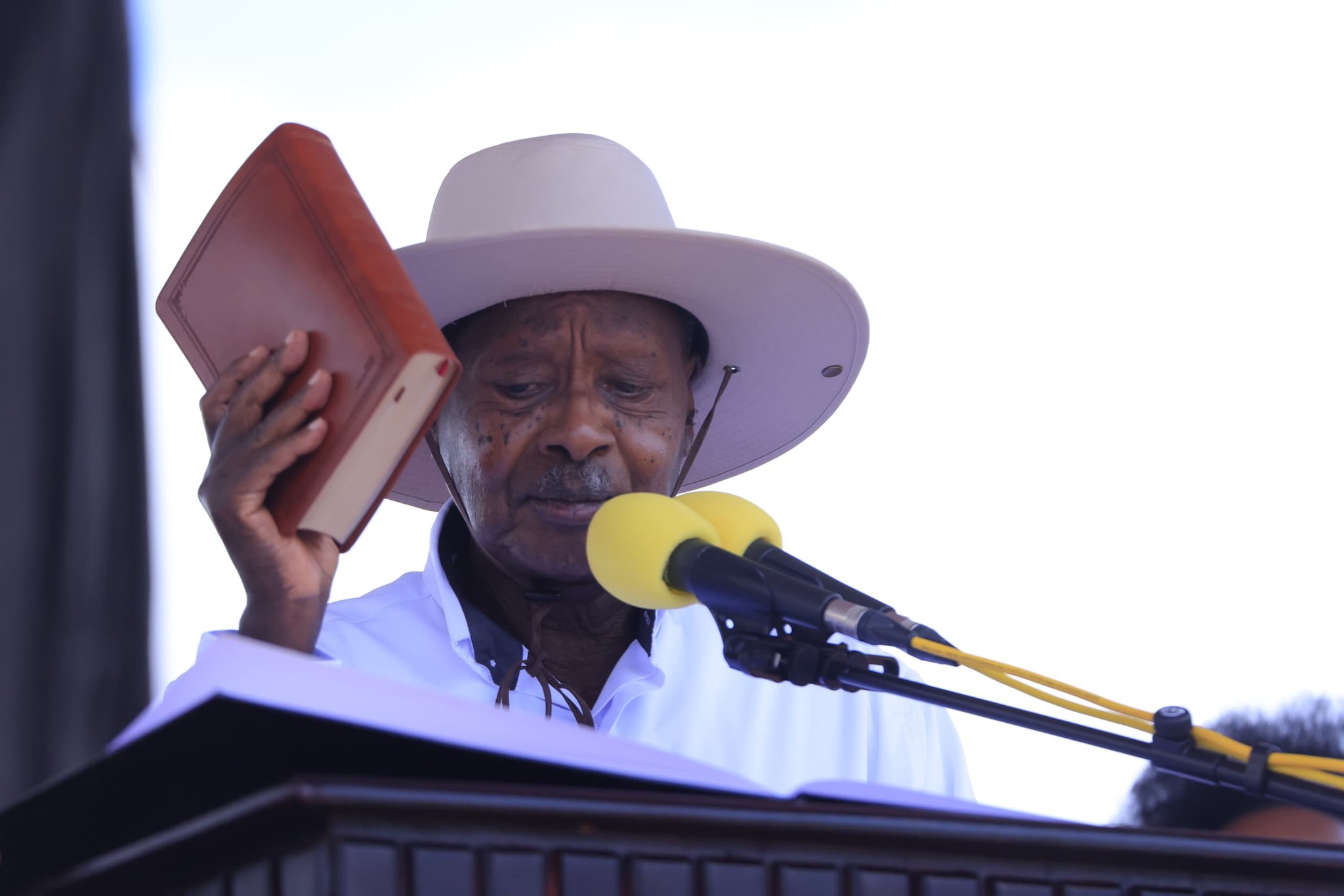
Museveni then took the oath of allegiance and the presidential oath before Flavian Zeija, accompanied by his daughter Natasha Karugire. Military honours were rendered as he stepped forward, drawing applause from attendees.
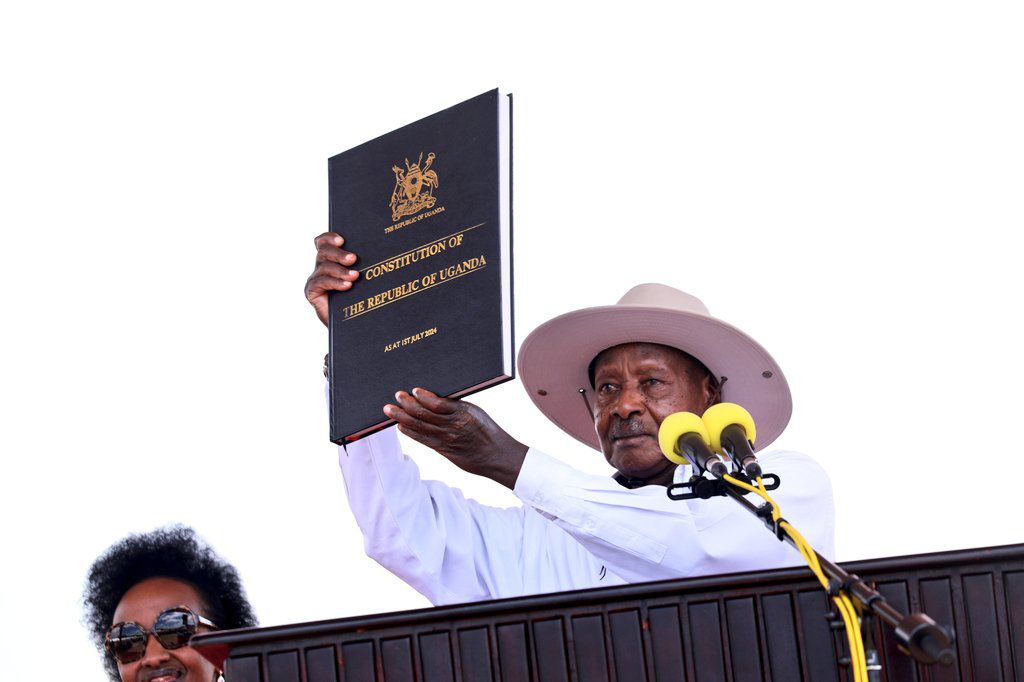
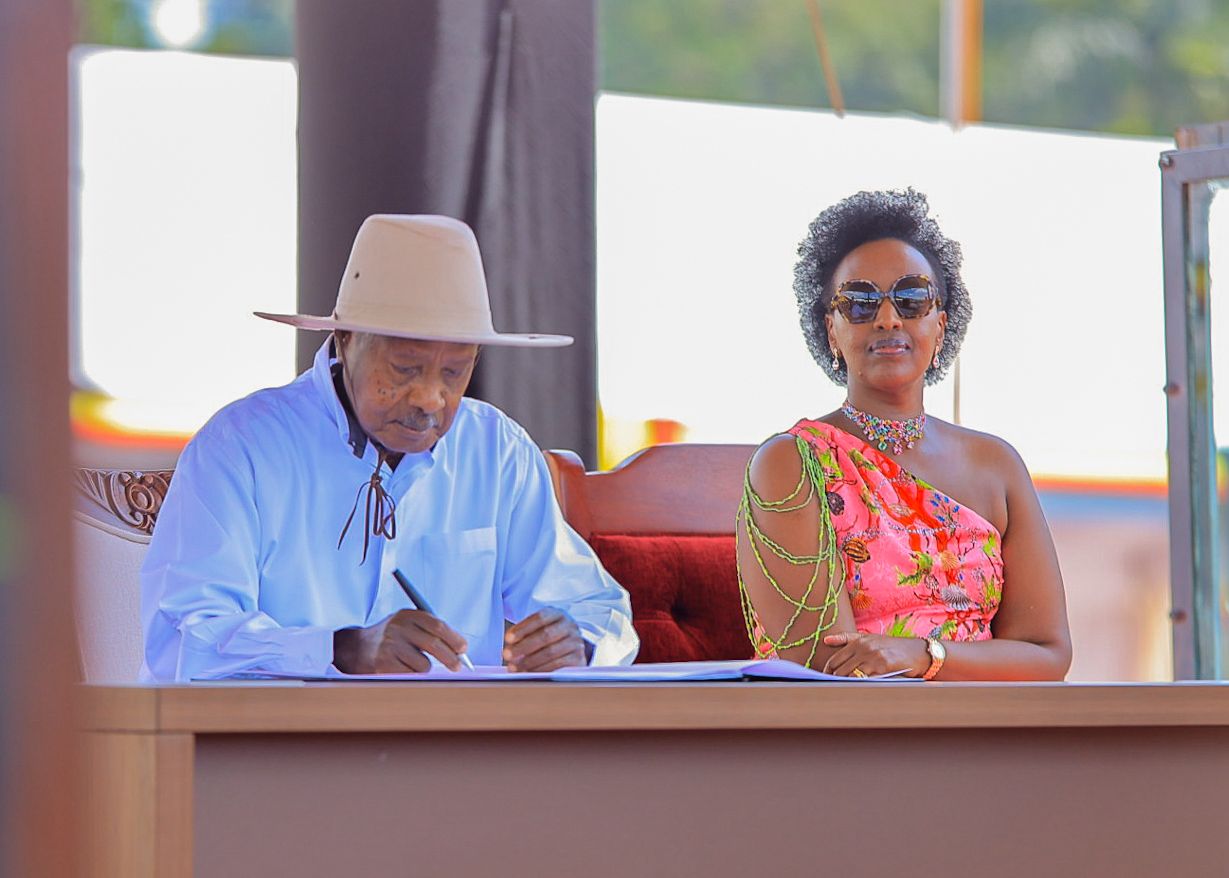
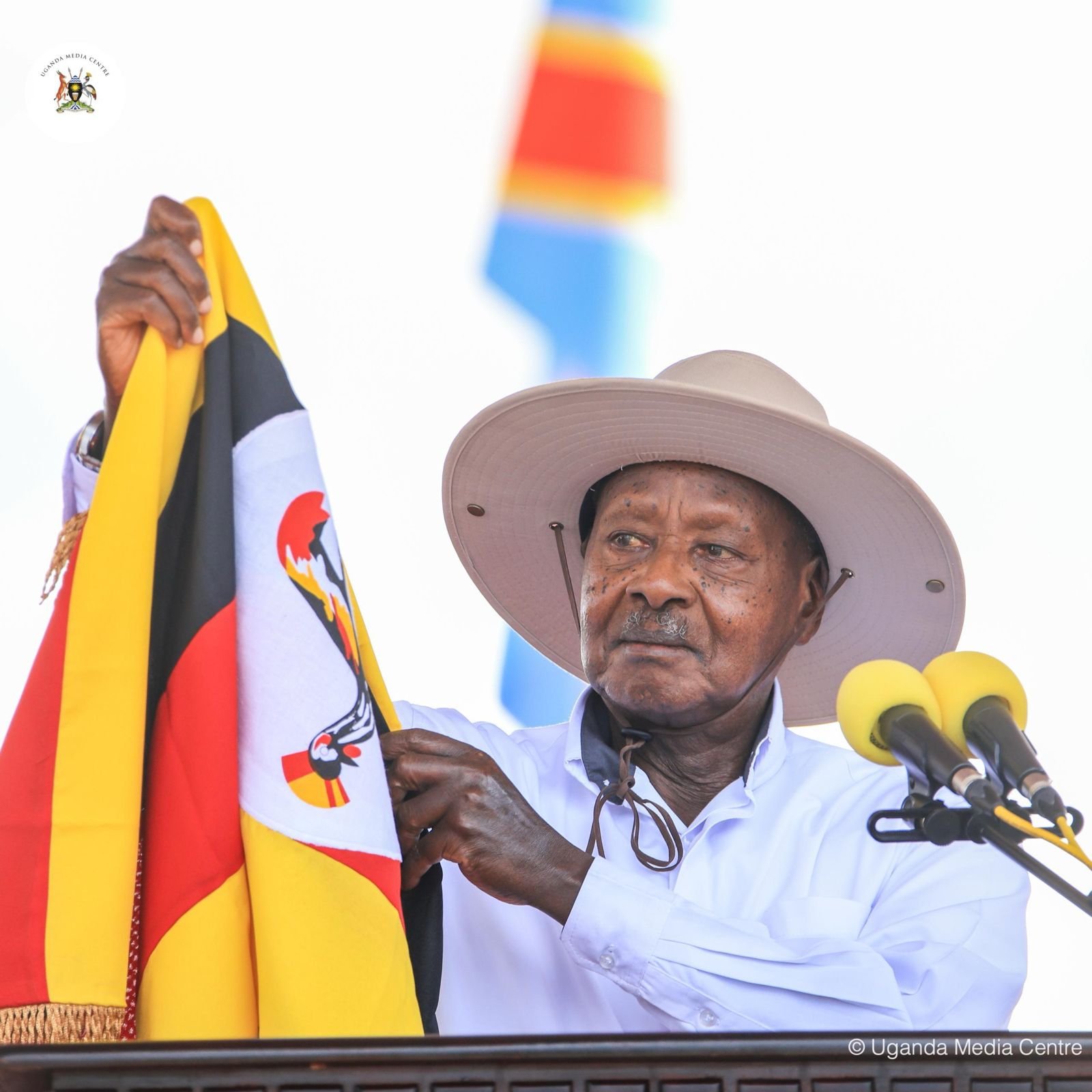
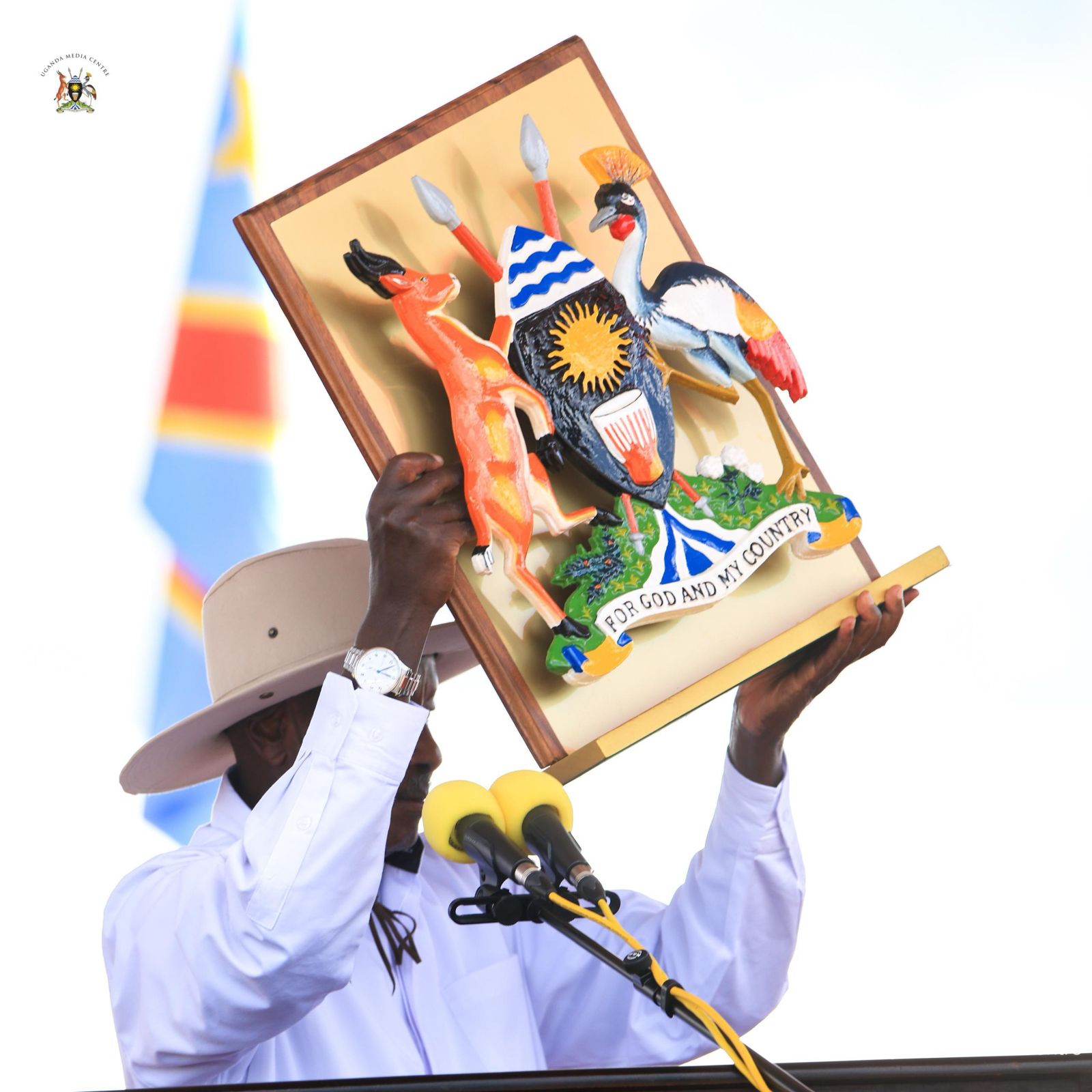
Following the swearing-in, President Museveni signed official instruments and received key national symbols, including the Constitution, the national flag, the presidential standard, the coat of arms, and the public seal.
A presidential salute was fired, followed by the national anthem and a 21-gun salute as the presidential standard was raised again, signalling the formal start of his new term in office.
Museveni later inspected the military parade as the newly inaugurated President and Commander-in-Chief of the armed forces.
Regional significance and policy direction
Museveni has consistently emphasised priorities such as infrastructure expansion, economic transformation, and regional integration. In his renewed mandate, he pledged to continue advancing Uganda’s development agenda while strengthening regional cooperation and promoting economic growth and stability.
The ceremony comes as East African nations increasingly focus on improving trade links, enhancing security cooperation, and expanding regional connectivity initiatives aimed at boosting economic integration.
President Yoweri Kaguta Museveni has been sworn in for a new presidential term following a vibrant and tightly orchestrated inauguration ceremony.Following the swearing-in, President Museveni signed official instruments and received key national symbols, including the Constitution, the national flag, the presidential standard, the coat of arms, and the public seal.President Museveni holding the Constitution.President Museveni receives the national flag of Uganda.President Museveni receives the coat of arms.
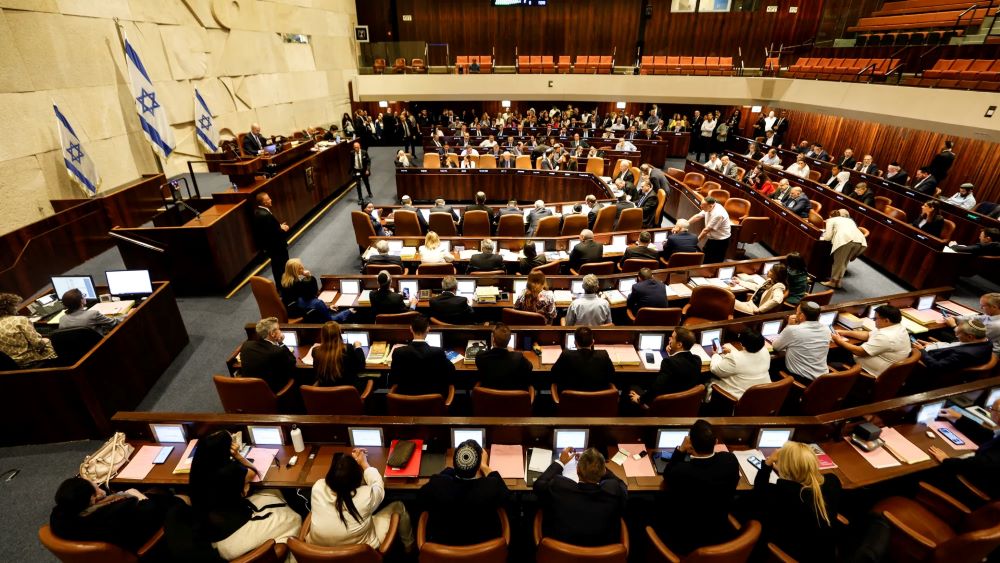
The tribunal is authorized to impose the death penalty, a sentence that has not been carried out in Israel since 1962.
The law has drawn widespread criticism from rights groups. “The bill denies suspects the basic procedural protections essential to a fair trial,” Adalah, a legal group for Arab minority rights in Israel, said in a statement.
It added that any resulting death sentence would constitute “an arbitrary deprivation of life, absolutely prohibited under international law and potentially a war crime.”
The new law follows a legislation approved in late March that made the death penalty a default punishment for Palestinians convicted of deadly attacks.
The Oct. 7 attack killed about 1,200 people in Israel, with over 250 hostages kidnapped, according to Israeli figures. It triggered the massive Israeli military operation across Gaza that left the Palestinian enclave in ruins and killed at least 72,737 people, according to Gaza-based health authorities.
Israeli lawmakers could approve a bill that would see Palestinian detainees face the death penalty [FILE: Amir Cohen/Reuters]
Speaking at a weekly news conference in Tehran, Baghaei said Iran’s demands included ending the war in West Asia, lifting the U.S. naval blockade on Iranian shipping, releasing Iranian assets frozen abroad, ensuring safe passage through the Strait of Hormuz and restoring regional stability.
“We have not demanded any concession. The only things we demanded are the Iranian nation’s legitimate rights,” he said.
Baghaei described Tehran’s proposal as “reasonable and responsible,” saying it was aimed at protecting Iran’s interests as well as regional and global security.
He also noted that nuclear issues would be discussed later as Tehran was currently focused on ending the conflict.
U.S. President Donald Trump branded Iran’s terms for ending the war “totally unacceptable.” Baghaei accused Washington of pursuing “unreasonable demands” influenced by Israel.
Commenting on reports that European countries, including France and Britain, had deployed warships to safeguard shipping in the Strait of Hormuz, Baghaei warned against outside involvement in the region.
“Any interference in issues on the Strait of Hormuz and West Asia will only further complicate the situation,” he said.
Iran, the United States, and Israel agreed to a ceasefire on April 8 after 40 days of fighting triggered by U.S. and Israeli strikes on Iran on Feb. 28.
Iranian and U.S. delegations later held talks in Islamabad on April 11-12 but failed to reach an agreement. Since then, the two sides have exchanged several proposals through Pakistan, while sporadic clashes have continued in and around the Strait of Hormuz.
Separately, Baghaei denied Western media reports that Iran had been dumping oil into the sea because its storage facilities were full.
He called the claims “complete lies” and dismissed reports of an oil slick near Iran’s Kharg Island as “fabricated.”
London-based maritime risk intelligence firm Windward said Friday that satellite imagery had detected an oil spill near Kharg Island, Iran’s main oil export terminal. The company said the spill was first identified on May 5 and later confirmed through three satellite observations over 20 hours.
After post-ceasefire talks collapsed, the United States imposed a naval blockade in the Strait of Hormuz aimed at restricting vessels traveling to and from Iranian ports, which Tehran says is intended to curb its oil exports.
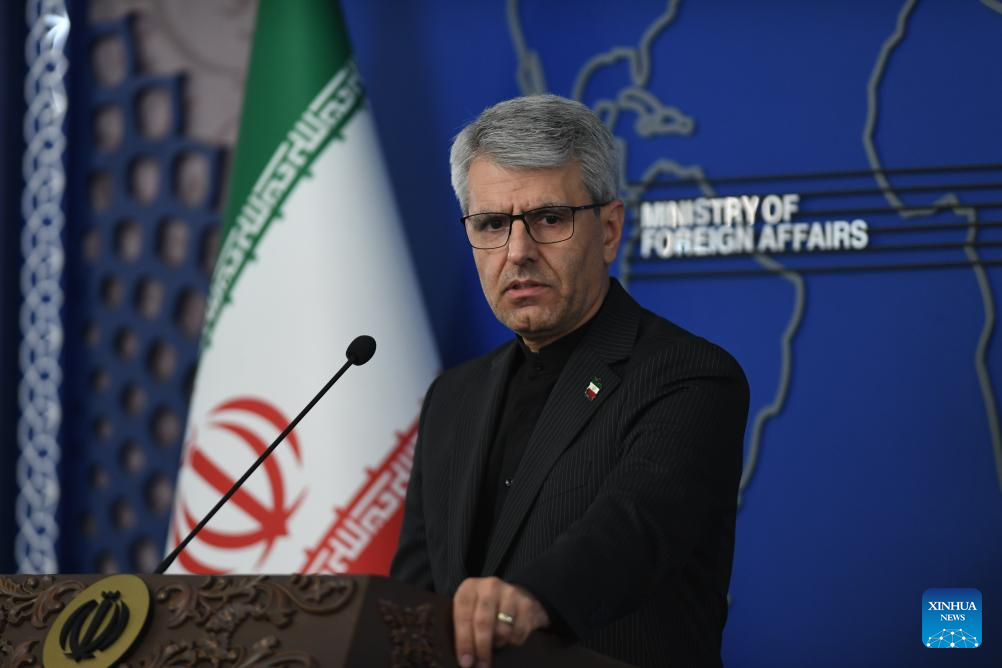
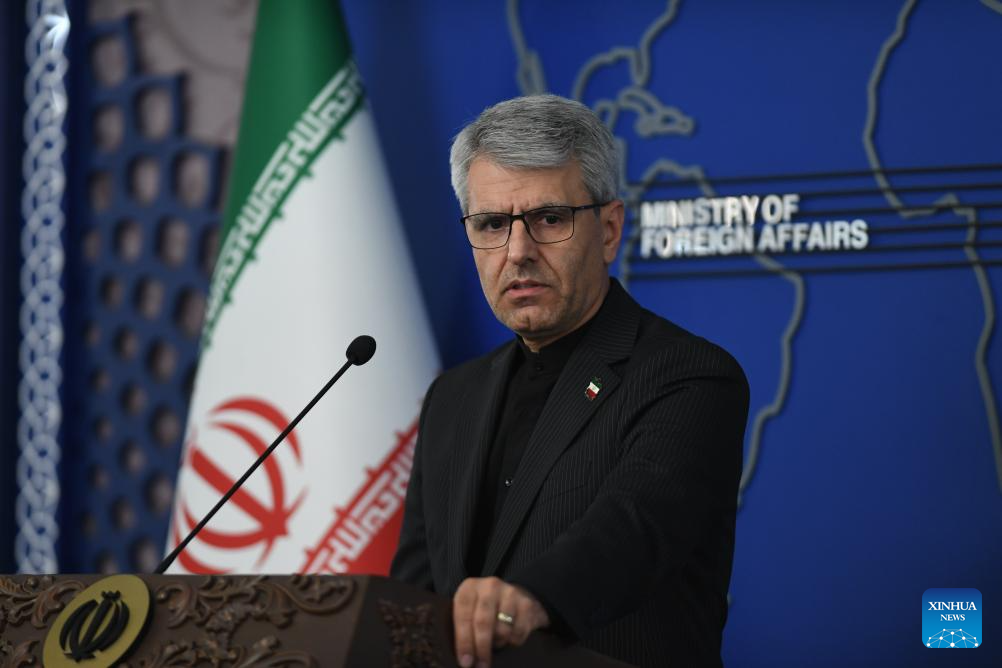
Iranian Foreign Ministry spokesperson Esmaeil Baghaei speaks at a weekly press conference in Tehran, Iran, May 11, 2026. Baghaei said Monday that Tehran had sought only its “legitimate rights” in a new peace proposal delivered to the United States through Pakistan, which has been mediating between the two sides. (Xinhua/Shadati)
The move marked the second withdrawal by AFC/M23 from the region in recent months. In January 2026, the coalition pulled its fighters out of Uvira town and surrounding areas, redeploying them to northern localities including Sange, Lubirizi, Bwegera and Luvungi.
Before the latest withdrawal, AFC/M23 had called on the international community to deploy neutral monitoring forces in the area, arguing that the return of Congolese troops and Wazalendo militias would once again expose civilians to insecurity, as had allegedly happened before the coalition took control of the region.
However, with no neutral force deployed, AFC/M23 remained relatively close to Uvira. At the same time, the United States reportedly continued pressing the coalition to return to positions it occupied before fighting intensified in the Ruzizi Plain in December 2025.
Reports indicated that Washington wanted AFC/M23 fighters to pull back as far as Kamanyola Centre in Walungu Territory, a proposal that reportedly created a dilemma for the coalition, which maintains that many residents in the newly captured areas viewed it as a source of protection.
According to the coalition, the United States had assured AFC/M23 that if it withdrew within a distance of about 75 kilometers, neutral forces would then be deployed to freely monitor the vacated zones. Despite those assurances, confidence in such guarantees remained low.
The skepticism stems partly from previous AFC/M23 withdrawals, after which Congolese troops and Wazalendo militias quickly re-entered the areas. The coalition claims many civilians fled during those developments, while international actors, including the United States, remained largely silent.
AFC/M23 has also argued that since the return of Congolese forces, Wazalendo militias, Burundian troops and FDLR elements to Uvira, security conditions in the city have deteriorated, with civilians facing increasing insecurity.
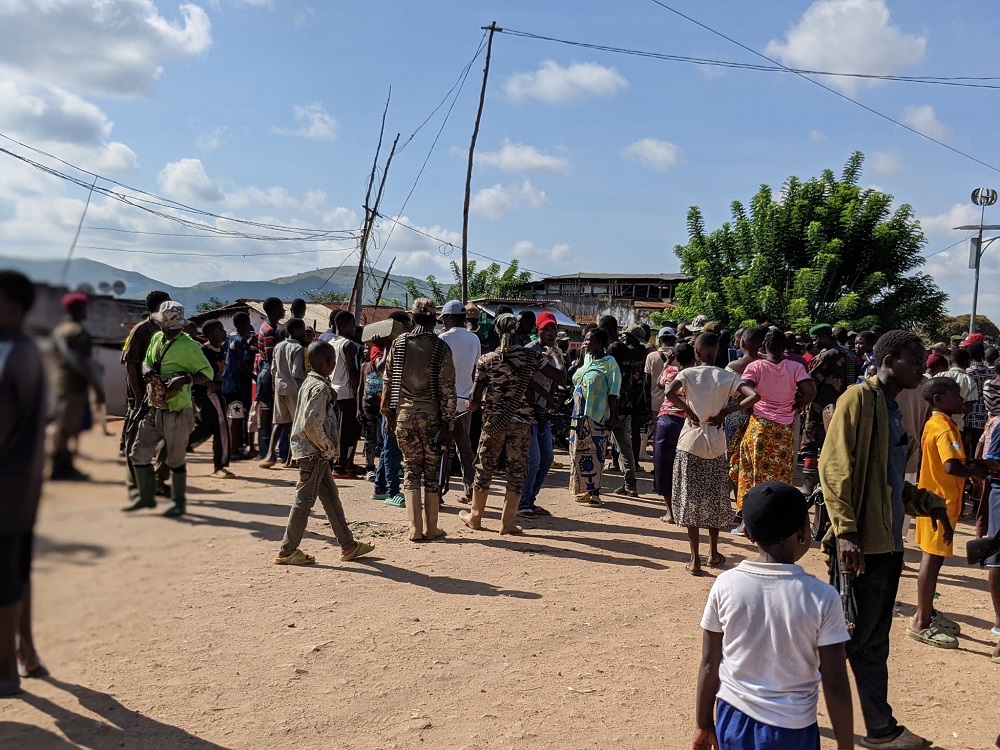
On May 10, as AFC/M23 fighters withdrew from areas including Sange, Lubirizi and Kabunambo, some residents reportedly followed them out of fear of possible reprisals from opposing forces. Shortly afterward, Congolese troops and Wazalendo fighters moved in and took control of the vacated areas.
According to Radio Maendeleo, large numbers of AFC/M23 fighters were seen on the morning of May 11 in Luvungi Centre, occupying roads and sports grounds in the area.
Civilian movement between Uvira and Bukavu along the RN5 highway has meanwhile been disrupted due to the movement of AFC/M23 fighters and ongoing clashes near the road.
Prospects for the deployment of neutral forces remain uncertain. Current discussions are reportedly focusing instead on the possible deployment of ceasefire monitors from the Expanded Joint Verification Mechanism Plus (EJVM+), who are expected to work alongside United Nations peacekeepers.
The agreement launching EJVM+ operations was signed in Montreux, Switzerland, in April 2026 during peace talks between the Congolese government and AFC/M23.
However, fighting has continued in eastern DR Congo, and no monitoring mechanism has yet publicly identified violations of the ceasefire.
Amid the ongoing tensions, AFC/M23 coordinator Corneille Nangaa wrote to U.S. Secretary of State Marco Rubio on May 7, accusing Washington of siding with the Congolese government.
Nangaa argued that Kinshasa had failed to honor commitments made during negotiations, including the release of 317 AFC/M23 detainees and the suspension of military offensives. He maintained that AFC/M23 had respected its own commitments, including releasing government prisoners and withdrawing from parts of Uvira and Walikale.
In December 2025, the United States and the Congolese government signed a minerals cooperation agreement. Nangaa alleged that Kinshasa was using the partnership as political cover while continuing what he described as a strategy of escalating the conflict.
On May 10, as AFC/M23 fighters withdrew from areas including Sange, Lubirizi and Kabunambo, some residents reportedly followed them out of fear of possible reprisals from opposing forces.
Rwanda’s Minister of Foreign Affairs and International Cooperation, Olivier Nduhungirehe, said the summit will bring together nearly 30 heads of state and focus on innovation, economic transformation, peace, and international finance. It marks the first time such a high-level gathering is being held in an English-speaking African nation.
“Nearly 30 heads of state are expected to attend the summit. Discussions will centre on peace and security, international finance and how African countries can benefit from it, as well as innovation. Industries and business companies from Africa and France will also take part,” he said.
Nduhungirehe noted that the summit will also examine mediation efforts aimed at promoting peace across Africa, migration challenges, and broader cooperation between African countries and France. He added that the discussions will be open and interactive, allowing participants to exchange views freely.
Rwanda is also expected to feature prominently in discussions on artificial intelligence, with President Kagame set to co-chair a high-level roundtable on AI, underscoring the country’s growing role as a continental leader in digital innovation and technology-driven development.
The cultural and creative industries are also expected to receive attention during the summit, with internationally recognised Rwandan choreographer and creative artist Sherrie Silver set to participate in discussions on the role of African creativity in economic transformation and youth empowerment.
Nduhungirehe said Rwanda’s participation reflects its strong ties with both Kenya, the host nation, and France, which co-organised the summit, as well as the country’s interest in advancing economic and diplomatic cooperation.
“As you know, Rwanda is a country that promotes innovation, economic transformation, trade, and investment. We will therefore participate in all discussions to ensure Africa continues to progress and that cooperation between Africa and France advances on the basis of mutual interests,” he said.
French President Emmanuel Macron arrived in Kenya on May 10 ahead of the summit. He stressed that cooperation between Africa and France should deliver mutual benefits and be built on mutual respect.
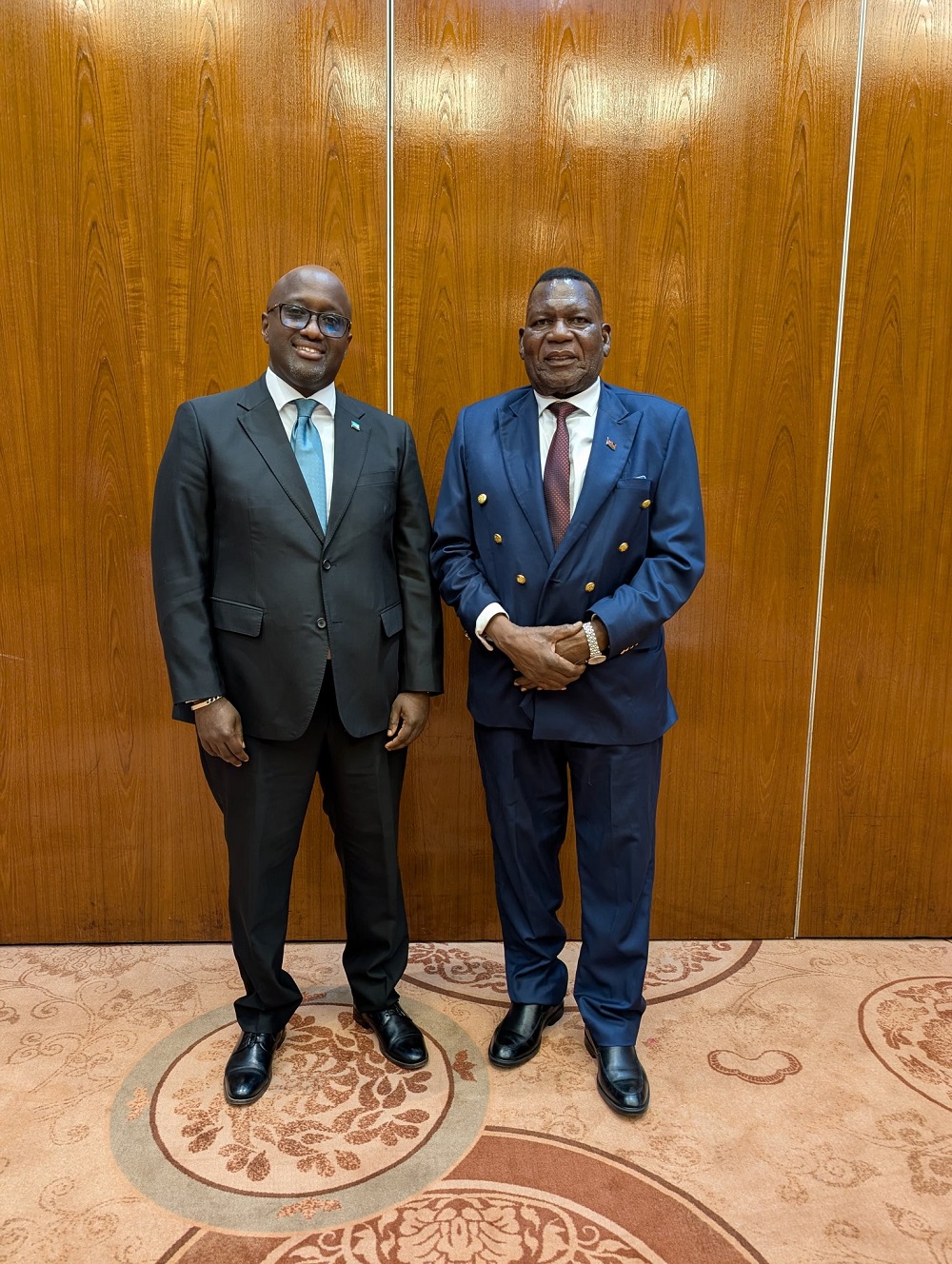
President Paul Kagame is expected to take part in the Africa Forward Forum, slated for May 11–12, 2026.Minister Olivier Nduhungirehe, already in Nairobi for the summit, met Dr George Chaponda, Malawi’s Minister of Foreign Affairs, on the sidelines of the Africa Forward Summit to discuss strengthening bilateral ties, multilateral cooperation, and sharing experiences in socio-economic transformation.
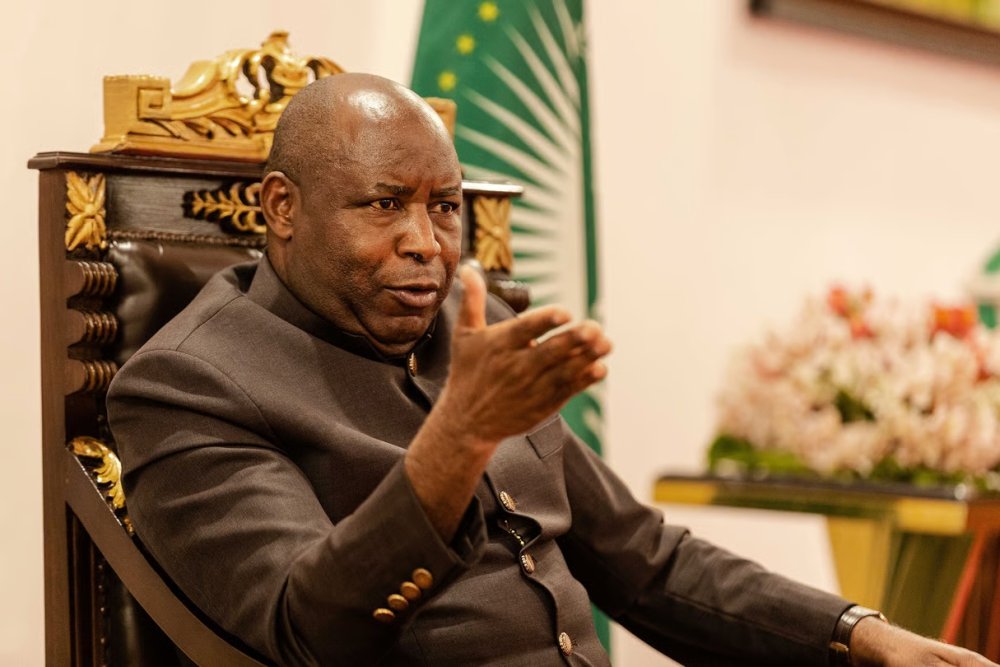
In an interview with Jeune Afrique published on May 10, 2026, Ndayishimiye discussed the closure of the Gatumba and Vugizo border crossings between Burundi and DR Congo on the South Kivu side. He claimed the decision was linked to the proximity of M23 fighters near Burundi’s borders, alleging that the group operates with Rwanda’s backing.
According to Ndayishimiye, Burundi considers the presence of M23 fighters near its borders as a security concern, although he expressed hope that the Washington peace agreement would increase pressure aimed at ending the tensions.
The Burundian leader also repeated accusations that Rwanda supports RED Tabara, a group Burundi describes as a terrorist organization responsible for attacks inside the country. Rwanda has consistently denied the allegations, insisting that it does not support any group seeking to destabilize Burundi.
Under bilateral agreements signed between Burundi and DR Congo in 2022 and 2023, Burundi deployed more than 20,000 troops to South Kivu. The deployment was reduced in early December 2025 after M23 fighters captured several areas in the Ruzizi Plain and the city of Uvira.
Ndayishimiye maintained that Burundian troops were sent to DR Congo to assist Congolese forces against their enemies rather than to defend Burundi itself. He explained that the deployment was carried out under regional arrangements that assigned South Kivu as Burundi’s operational zone.
He further argued that despite efforts by regional actors, fighting continued because some countries failed to contain the conflict. According to him, only Uganda and Burundi remained actively engaged, with Burundian troops operating under the directives of the Congolese army.
Between 2022 and 2023, Burundi maintained two categories of troops in DR Congo. One contingent operated under bilateral agreements between Burundi and DR Congo, while another formed part of the East African Community Regional Force (EACRF), which had been deployed to separate warring parties and create conditions for peace talks.
The bilateral contingent, known as TAFOC, began operations in South Kivu in 2022 alongside Congolese forces against armed groups including RED Tabara, FOREBU, FNL and Twirwaneho.
Meanwhile, Burundian troops under EACRF were deployed to Masisi Territory in North Kivu in 2023. The regional force had not been mandated to conduct offensive operations but rather to position itself between M23 and FARDC forces in order to support de-escalation and encourage dialogue.
However, the Congolese government later requested that troops from Burundi, Kenya, Uganda and South Sudan join military operations against M23. While the EACRF leadership rejected the proposal, Burundi increasingly aligned itself with FARDC and the Wazalendo militias.
At the end of 2023, the East African Community resolved to withdraw its regional force. Troops from participating countries returned home, but Burundi kept its forces in Masisi, where they continued operating alongside Congolese forces in a manner similar to deployments in South Kivu. The former EACRF Burundian contingent effectively became integrated into TAFOC operations.
Since November 2021, Uganda has also maintained troops in North Kivu and Ituri under “Operation Shujaa,” targeting the Allied Democratic Forces (ADF). Although Ugandan troops serving under EACRF later withdrew, those operating under the anti-ADF arrangement remained in place.
Unlike the EAC regional force, whose mission focused on preventing clashes, both Burundian and Ugandan troops currently operating in DR Congo are deployed under bilateral agreements that permit combat operations.
Reports have also suggested that Ndayishimiye initially sought to avoid international attention regarding Burundi’s continued military presence in Masisi after the withdrawal of other EACRF troops. During a regional summit, while discussions emerged about Burundian soldiers allegedly captured by M23, he reportedly denied that the fighters were members of the Burundian army.
At one stage, Ndayishimiye claimed that the individuals presented by M23 as captured Burundian soldiers were in fact RED Tabara fighters because they spoke Kirundi. However, the explanation later faced scrutiny after the individuals were reportedly found carrying identification documents issued by the Burundian military.
Questions over alleged cooperation with FDLR
During the interview, journalist Romain Gras also raised Rwanda’s accusations that Burundi collaborates with the FDLR, a errorist group founded by individuals responsible for the 1994 Genocide against the Tutsi and which Rwanda accuses of threatening its security from eastern DR Congo.
In response, Ndayishimiye argued that he had previously asked President Paul Kagame to provide intelligence on FDLR positions, insisting that Burundi would attack the group if such information were made available.
He maintained that Burundi could not be accused of supporting FDLR without proof, arguing that military action against the group would demonstrate Burundi’s willingness to dismantle it.
When asked how Burundian troops could avoid cooperating with FDLR while operating alongside FARDC, which has repeatedly been accused of collaborating with the group, Ndayishimiye acknowledged that Congolese forces work with FDLR. However, he argued that Burundian troops operate separately under Congolese command structures and do not mix with those groups because each force has distinct operational methods and areas.
He also indicated that he had advised Congolese President Félix Tshisekedi to avoid situations likely to fuel suspicions regarding cooperation between Burundian troops and FDLR.
Ndayishimiye further stated that regional leaders, including Tshisekedi, agreed on the need to fight FDLR, though he argued that limited operational capacity remained a challenge. He proposed coordinated military action involving Rwanda, DR Congo, Burundi and Uganda against armed groups operating in the region, saying such cooperation could help reassure Rwanda about its security concerns.
Despite Ndayishimiye’s denials, reports by United Nations experts indicate that relations between Burundi and Rwanda deteriorated again in late 2023, accompanied by increased cooperation between Burundi and armed groups opposed to Rwanda.
Reports also emerged alleging that Burundian military officials met in Bujumbura with leaders of FDLR and CNRD-FLN to discuss plans related to destabilizing Rwanda.
Burundian President Évariste Ndayishimiye has again attracted attention following false remarks on the strained relationship between Burundi and Rwanda.
This decision follows Iran’s submission of a counterproposal, which U.S. officials deemed “unacceptable.” The U.S. stance has intensified the growing tension between the two nations, each holding firm on key demands.
Iran’s counterproposal, presented through intermediaries, outlined several terms, including the lifting of U.S. sanctions, an end to military operations across the region, and a shared control over the strategic Strait of Hormuz.
These demands were meant to ensure Iran’s security while reopening vital oil trade routes. However, the U.S. rejected these terms, as they failed to address key issues such as Iran’s nuclear program and its military presence in neighboring countries.
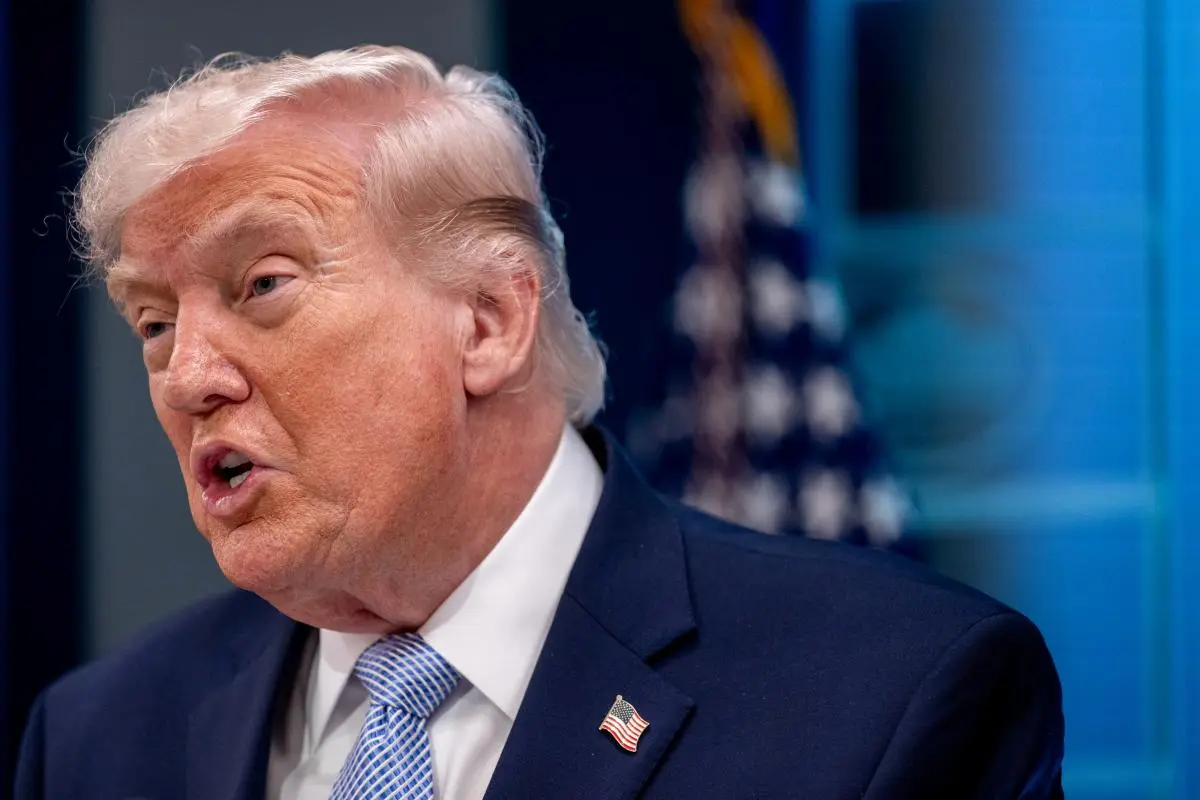
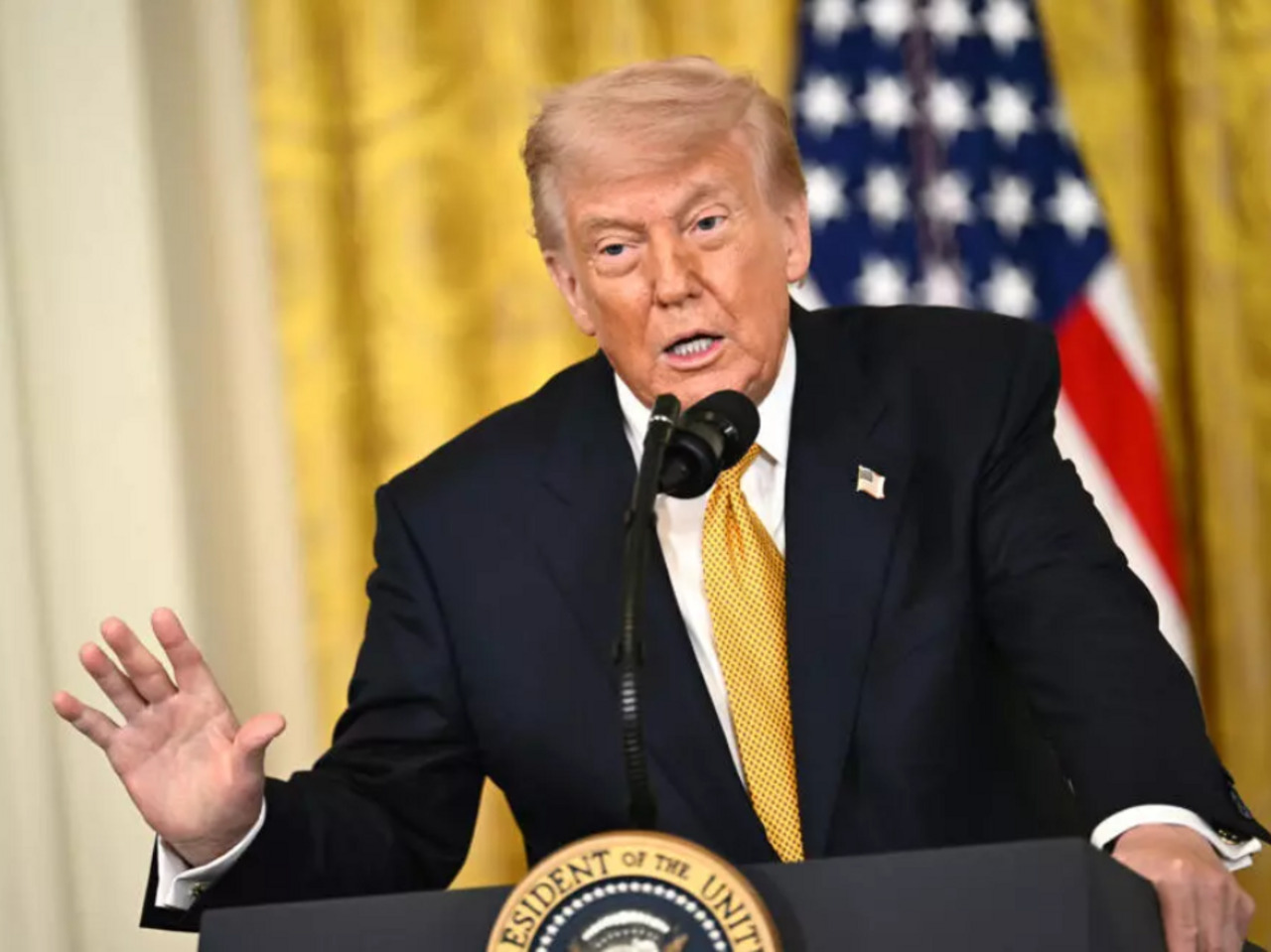
President Trump made the rejection public, stating on social media that Iran’s response was “totally unacceptable.” He underscored that any peace deal must align with U.S. interests, particularly in limiting Iran’s nuclear capabilities and curbing its influence in the region. The President’s firm rejection has cast doubts on the prospects of reaching a peaceful resolution in the near future.
The decision to reject Iran’s response has broader consequences, particularly for global oil markets. The ongoing tensions and the potential for extended conflict have led to sharp rises in oil prices, with concerns about the stability of the Strait of Hormuz an essential shipping route for global oil exports. The disruptions in this region could have far-reaching effects on global energy security.
Despite this setback, diplomatic channels remain open. Future talks between U.S. and Chinese leaders are expected to address not only trade but also Iran’s situation, with China holding a significant interest due to its trade relationships with Tehran.
However, experts warn that without concessions from both sides, the conflict could continue to drag on, with severe humanitarian and economic costs for the region and beyond.
As the U.S. and Iran stand at an impasse, the world watches closely, hoping that future negotiations will lead to a more sustainable peace agreement that addresses the core concerns of all parties involved.
President Donald Trump has dismissed Iran’s reply to the peace proposal as unacceptable, sending oil prices higher.
The remarks were released in a post on social media platform X, following sporadic clashes that erupted between Iran and the United States in and around the Strait of Hormuz on Thursday and Friday.
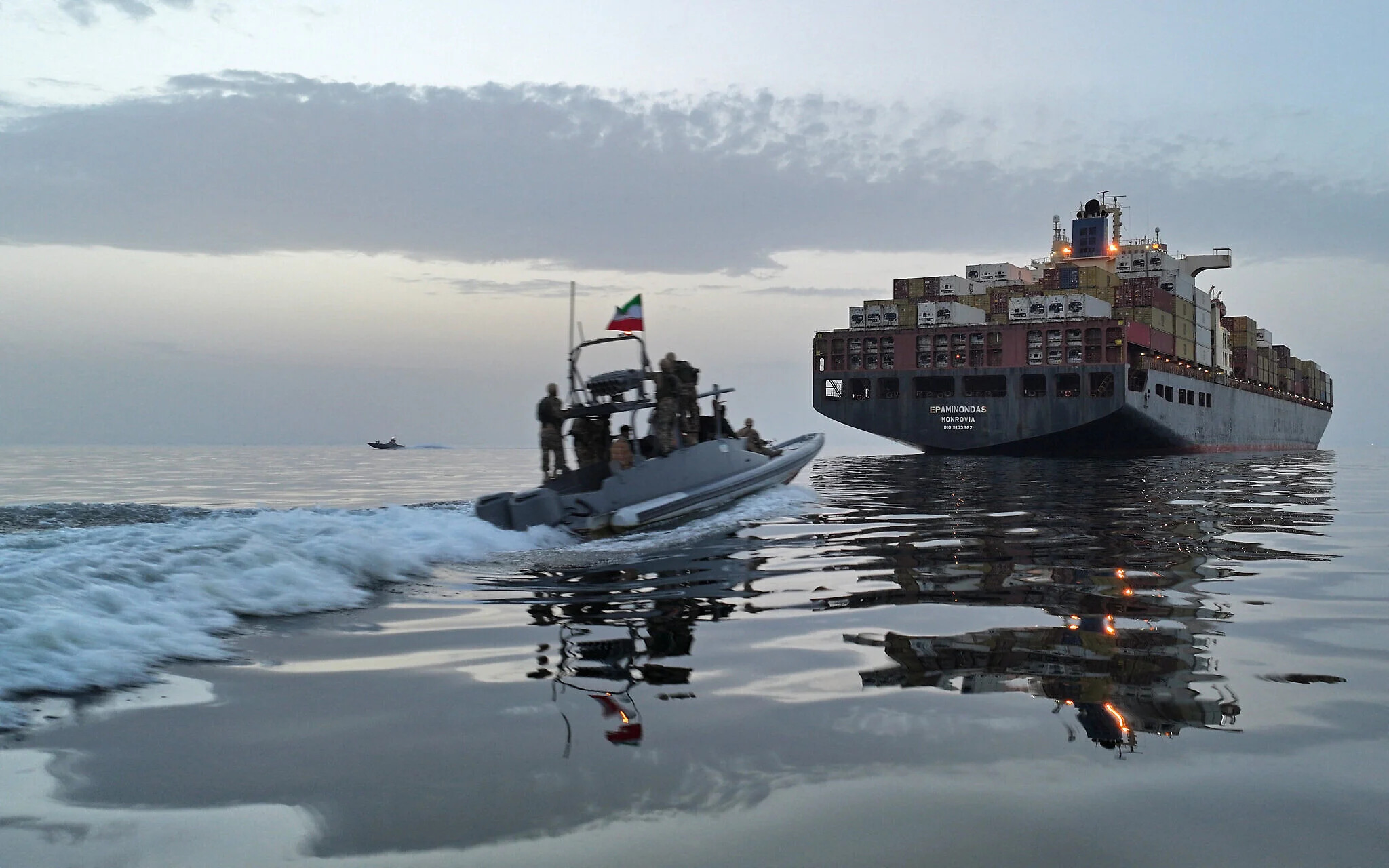
Iran tightened control over the Strait of Hormuz beginning February 28, when it barred passage for vessels belonging to or affiliated with Israel and the United States after the two countries launched joint strikes on Iranian territory.
The United States has also imposed a naval blockade on the strait, preventing ships to and from Iranian ports from transiting the waterway. The U.S. military has attacked several Iranian ships and oil tankers over the past days.
In another post on X, the IRGC’s Aerospace Division said that its missiles and drones have locked onto U.S. targets in the region and ships of the “aggressive enemy.”
“We are awaiting the order to fire,” it added.
Iran tightened control over the Strait of Hormuz beginning February 28, when it barred passage for vessels belonging to or affiliated with Israel and the United States after the two countries launched joint strikes on Iranian territory.