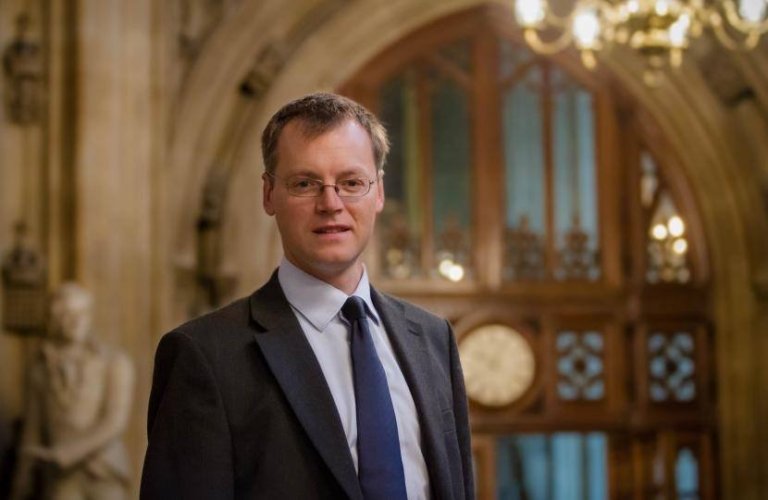
Fu welcomed Brooks to attend the Fifth World Media Summit in China, saying that Reuters was the first major western news agency to establish a partnership with Xinhua.
Since the signing of the news cooperation agreement in 1957, the two sides have achieved fruitful cooperation on news exchange and photo agency, Fu said.
Noting that the two organizations are both initiators of the World Media Summit and members of the summit’s presidium, Fu said the two sides should strengthen exchanges and mutual learning and make joint efforts to enhance the communication, guidance, influence and credibility of news reports in the era of mobile Internet.
Brooks said Reuters values friendly relations with Xinhua and is willing to deepen exchanges with Xinhua in areas such as media application of new technologies and strengthen cooperation under the framework of the World Media Summit.
In an exclusive interview with IGIHE, Mugabo sheds light on the genesis of this visionary project, its goals, practical functionalities, and the numerous advantages it offers to its members.
{{Excerpts: }}
{{IGIHE: What is this network? Where did the idea come from?}}
{{Mugabo:}} The objective is to strengthen the sense of belonging and solidarity within the Rwandan diaspora in Belgium. We aim to create a platform for exchanging knowledge, ideas, and opportunities. Our ambition is to contribute to the socio-economic development of Rwanda by facilitating cooperation with the diaspora.
{{IGIHE: What are your goals?}}
{{Mugabo:}} Our ambition is to facilitate professional and personal connections within the diaspora, as well as with friends of Rwanda. We aspire to play a role in connecting entrepreneurs with various Belgian and Rwandan institutions. Additionally, we want to promote collaboration and business opportunities among network members. Lastly, we aim to share experiences and advice to foster personal and professional development.
{{IGIHE: How does this network function in practical terms?}}
{{Mugabo:}} The network organizes events, meetings, and training sessions for its members. Conferences, workshops, and seminars are organized to encourage exchanges among entrepreneurs and share knowledge and experiences. We also encourage network members to support each other by sharing advice, contacts, and business opportunities.
{{IGIHE: What are the advantages of joining this network?}}
{{Mugabo: }} Joining DRB Business offers numerous advantages. Firstly, it allows you to connect with other Rwandan and Belgian entrepreneurs and build professional and personal relationships. The network also provides collaboration and business opportunities by facilitating connections with Belgian and Rwandan institutions. Additionally, by sharing experiences and advice, network members can promote their own personal and professional development.
{{IGIHE: How do you plan to promote this network?}}
{{Mugabo: }} We will work closely with other Rwandan organizations and associations in Belgium, which will allow us to reach a wider audience.
{{IGIHE: What are your expectations for the future of this network?}}
Mugabo: We hope that DRB Business will become a key player in promoting entrepreneurship and cooperation between Belgium and Rwanda. We want to create a strong and dynamic community where members can find support, opportunities, and resources to develop their projects and activities. In the long term, we also hope to contribute to the economic development of Rwanda by facilitating investments and exchanges between the diaspora and the home country.
{{IGIHE: Thank you very much, Pierre Mugabo. Good luck with DRB Business.}}
{{Mugabo: }} I would like to thank “Kunoza,” Gilles Bazambanza’s coffee brand, for sponsoring the DRB – Business event, as well as Rayane Kamandali, who is part of our organizing team and responsible for communication.
Thank you, it was a pleasure to share our project with you. We hope to count on the support of the community in the development of this network.
Here is some essential information worth knowing about the World Media Summit.
{{WHAT IS WORLD MEDIA SUMMIT?}}
The notion of holding the summit was first proposed by Xinhua in 2008 with the aim of facilitating exchanges among leading media groups worldwide on the challenges posed by the emergence of the “New Media” and enhancing their win-win cooperation.
Co-initiated by a collection of media organizations with global influence — including Xinhua News Agency, the Associated Press, Reuters, TASS Russian News Agency, the first summit, organized by Xinhua, was held in Beijing in 2009.
With Moscow hosting the second in 2012, followed by the third in Doha, Qatar, in 2016, and Beijing in 2021 for the fourth summit via video link, the World Media Summit has demonstrated its commitment to inclusivity and a diverse representation of global media perspectives.
From top executives and editors-in-chief to seasoned journalists and media scholars, as well as press officials, the summit seeks to foster dialogue, share insights and collectively address the multifaceted challenges confronting contemporary media.
{{WHAT HAS BEEN ACHIEVED BY THE SUMMIT?}}
Since its inception, the summit has achieved remarkable progress in its effort to promote international people-to-people exchanges as well as exchanges and mutual learning among civilizations.
A series of documents have been issued to strengthen media connections and promote cooperation, including the World Media Summit Joint Statement, the World Media Summit Convention on the Protection of Intellectual Property Related to Media Results, the World Media Summit Doha Statement, the Fourth World Media Summit Presidium Meeting Shanghai Consensus, and the joint statement of the 4th World Media Summit.
Multiple activities have been successfully held to enhance practical cooperation.
For instance, the World Media Summit Global Awards for Excellence were organized in 2014 and 2021. Training programs for media professionals from Asia, Africa and Latin America were set up, and several large-scale international public welfare projects were initiated, like the Global News Day for Children with a global live broadcast around the clock, the Zoom-in on Poverty Global Photo Contest, as well as media campaigns focused on Africa.
Through establishing the presidium, the supreme decision-making body of the summit, and the Secretariat as part of the daily administrative structure, the summit has made significant strides in institutional building, which ensures the long-term stability and development of the summit.
{{KEY FACTS OF THE FIFTH WORLD MEDIA SUMMIT}}
The fifth summit will be hosted by Xinhua on Dec. 2-8, in China’s Guangzhou city of Guangdong Province and Kunming city of Yunnan Province.
Over 450 attendees from 101 countries and regions — representatives from nearly 200 mainstream media outlets, think tanks and government agencies, as well as international organizations — will participate in the event this year in the hope of reaching practical cooperation.
Themed “Boosting Global Confidence, Promoting Media Development,” the summit will address topics including bolstering media confidence, coping with opportunities and challenges presented by new technologies, exploring new markets in the digital age, and striving for a shared future in global media cooperation.
Born on August 14, 1945, in the former Cyangugu Prefecture, the Rwandan politician, especially prominent after the 1994 Genocide against the Tutsi, served as Prime Minister from July 1994 to August 1995. He held this position within the first government established by the Rwandan Patriotic Front (FPR) after putting an end to the Genocide against the Tutsi.
Twagiramungu had been residing in Belgium since 2003, where he sought refuge after his resignation in August 1995.
Prior to his political career, he studied and worked in Quebec, Canada, between 1968 and 1976. Upon returning to Rwanda, he led a transport company called STIR – Société des Transports Internationaux au Rwanda.
The challenge of adherence to daily medication is recognized, with some individuals facing difficulties in following the prescribed regimen, leading to deviations or discontinuation of treatment.
According to figures from the Rwanda Biomedical Centre (RBC), the number of patients taking antiretroviral drugs in Rwanda currently stands at 218,314.
RBC’s data highlights a positive response to treatment, with 95% of patients actively using retroviral drugs and 90% displaying positive changes in HIV severity. Access to medications has been extended to all health centers across the country.
On the occasion of International AIDS Day on November 30, 2023, Minister Dr. Nsanzimana acknowledged the challenges faced by individuals taking antiretroviral drugs for over two decades.
He hinted at the potential introduction of a long-lasting injection as an alternative to the daily dose.
Expressing the desire to transition from daily medication to a more convenient injection administered over several months, Dr. Nsanzimana emphasized the potential comfort it could provide to long-term antiretroviral drug users, preventing monotony.
He encouraged those currently on medication to adhere to their daily routine until the new injection method is implemented, expressing hope for its prompt introduction through collaborative efforts with the government and partners.
Dr. Nsanzimana highlighted the significant progress in changing perceptions of HIV infection, emphasizing that individuals with the virus can now lead fulfilling lives. He underscored the importance of protecting the youth, as they are the future leaders, workers, and parents. Current new infection rates stand at 0.08%, with 35% of these cases occurring among the youth.
The Rwanda Network of People Living with HIV/AIDS (RRP) emphasized the positive shift in societal attitudes towards HIV-infected individuals. The organization cited the active involvement of 500 cooperatives and 756 supporting organizations in development initiatives, fostering empowerment and inclusivity.
Dr. Munana Gilbert, the Rector of UTAB emphasized the unique nature of the counseling evening, designed to provide guidance to the graduating class. Unlike traditional celebrations of knowledge, this event aimed to underscore that the graduands not only acquired knowledge but also received valuable education.
During the event, UTAB graduates, who have gained considerable experience in the job market, along with other experts, shared insights with the graduands. The discussions centered around instilling values that characterize Rwandans and fostering personal and national development.
Dr. Munana highlighted the focus on talks about the attitudes essential for thriving in the competitive job market. Tito Rutaremara, the Chairperson of the Council of Elders Advisory Forum , stressed the importance of having a dream, stating that it not only guides one’s aspirations but also motivates hard work, contributing to personal and national development.
Several students expressed gratitude for the much-needed advice received after four years of academic pursuit. Twizerimana Katonda Anastase, a graduate from the Department of Education, affirmed their readiness to provide quality education, emphasizing their connection to the institution.
Nyirandashimye Vestine, who completed studies in animal husbandry, appreciated the guidance on transitioning to professional life outside of school. She acknowledged the practical tips on animal care and production, recognizing their value in working with integrity and professionalism.
In total, 788 individuals received degrees from UTAB, marking the culmination of their academic journey and the beginning of their paths towards contributing meaningfully to society.
Rwanda’s Presidency has disclosed that Kagame joined leaders including Sheikh Mohamed bin Zayed Al Nayhan, President of the United Arab States; Antonio Guterres, the Secretary General of the United Nations, and other dignitaries.
Approximately 200 countries were represented at COP28, with attendees ranging from business and financial leaders to civil society representatives.
The primary objective was to collaboratively explore strategies for adopting climate-friendly energy solutions in the future.
Addressing the gathering, UN Secretary-General, Antonio Guterres emphasized the urgency of addressing the issue of extreme heat, which has significant economic implications, impacting global price fluctuations and increasing the cost of living.
Guterres highlighted the potential benefits of renewable energy, describing it as a valuable asset for both the well-being of the planet’s inhabitants and the global economy.
A noteworthy development on the first day of COP28 was the official launch of a fund dedicated to assisting developing nations most severely affected by climate change. This initiative, spearheaded by COP28 President and the United Arab Emirates Minister of Industry and Technology, Dr. Sultan Al Jaber, gained approval at the preceding COP27 conference in Sharm El Sheikh, Egypt.
Dr. Sultan Al Jaber expressed gratitude for the collaborative effort that transformed the fund from a commitment made in Sharm El Sheikh to a tangible reality in Dubai within a year. He praised the collective dedication of the involved teams, underscoring the accomplishment as evidence that the world can unite to achieve significant goals.
Xi, also general secretary of the Communist Party of China (CPC) Central Committee and chairman of the Central Military Commission, made the remarks while chairing a symposium on advancing the integrated development of the Yangtze River Delta.
Xi underlined the importance of advancing the region’s integrated development, improving its innovation capacity, industrial competitiveness and development quality, and forming a new pattern of higher-level reform and opening up.
These are of great significance for China to build a new development paradigm, promote high-quality development, and advance the building of a strong country and national rejuvenation through a Chinese path to modernization, he said.
Xi said that it is necessary to fully and faithfully apply the new development philosophy on all fronts, focus on integration and high quality, establish a global vision and strategic thinking, unswervingly deepen reform and expand high-level opening up, and coordinate scientific and technological innovation with industrial innovation, hardware connectivity with mechanism coordination, and environmental protection with economic development, so as to make new major breakthroughs in the integrated development of the Yangtze River Delta.
Premier Li Qiang, also a member of the Standing Committee of the Political Bureau of the CPC Central Committee, and Cai Qi, a member of the Standing Committee of the Political Bureau of the CPC Central Committee and director of the General Office of the CPC Central Committee, attended the meeting.
The overall strength and comprehensive competitiveness of the Yangtze River Delta continue to rank among the top in the country, Xi said.
Noting that major progress has been achieved since the strategy of the region’s integrated development was put forward five years ago, Xi said that there are also some deep-seated problems to be solved.
Advancing the integrated development of the Yangtze River Delta is a major undertaking, and making steady progress and continuing the hard work are necessary to write new chapters of the region’s integrated development, he said.
On future development, Xi stressed the need to strengthen cross-region collaboration in sci-tech innovation and industrial innovation.
Efforts should be made to generate new industries, business formats and models, and nurture new development momentum.
The region is urged to become a source of sci-tech innovation by integrating sci-tech innovation forces and advantageous resources across regions and departments, and participate in international sci-tech cooperation to create a globally competitive ecosystem for innovation.
He also underscored the importance of making institutional improvements for the region’s integrated development.
Regional segmentation and administrative obstacles should be broken down at the institutional level so as to provide institutional guarantee for integrated development, while greater institutional innovation in key areas is to be made.
The synergy and collaboration among various reform measures should be strengthened, Xi said. Concerning basic public services, efforts should be made to promote the gradual alignment of relevant mechanisms, policies and standards and facilitate the accessibility and sharing of public services in different spheres.
On transport, Xi urged enhancing the alignment of the standards of transportation networks within the region to improve infrastructure connectivity.
He also called for efforts to accelerate the construction of a demonstration area in the Yangtze River Delta on integrated ecologically-friendly development, and promote industrial relocation and reasonable allocation of production elements across the region to turn the Yangtze River Delta into a community for shared regional development.
The region should vigorously promote high-level coordinated opening up, Xi noted.
He called on the region to push forward high-level opening up with an emphasis on institutional opening up, and strengthen mutual learning and promotion of related reform experience.
Xi urged efforts to expand the influence of the Hongqiao International Open Hub, vigorously implement the upgrading strategy of the China (Shanghai) Pilot Free Trade Zone (FTZ), and promote the opening up of the Lingang new area of the Shanghai FTZ to a higher level.
The region’s development should be well integrated with the high-quality development of the Belt and Road Initiative, he said.
Xi also stressed further improving the business environment for private companies to promote their sound and high-quality development.
More efforts should be made to strengthen joint protection and governance of the ecological environment, he said.
In this regard, Xi called for concerted efforts in the protection of key ecological barriers and corridors in the region as well as integrated prevention and control of air, water and soil pollution.
The region should go full steam ahead with clean production, facilitate energy conservation and decarbonization in key fields and sectors and pick up pace in fostering a sustainable production and lifestyle, he said.
A cross-region pollutant discharge rights trading mechanism needs to be established so as to make active yet prudent advancement in achieving the country’s carbon peaking and carbon neutrality goals, Xi said.
Xi also stressed the need to enhance the region’s capability to coordinate development and security.
The region needs to pay attention to major infrastructure facilities as well as sci-tech, industrial and financial areas that are essential to national and regional security, and step up relevant risk prevention and control, Xi noted.
The region should also enhance industrial chain resilience and security, consolidate industrial collaboration with the central and western areas, expand the institutional opening up in the financial sector and facilitate cross-border investment and financing, he added.
The CPC’s overall leadership must be upheld and strengthened in promoting the region’s integrated development, Xi stressed.
Li Qiang delivered a speech at the symposium. He emphasized the need to consider the integrated development of the Yangtze River Delta in the context of overall national development, and give full play to the region’s roles as a growth pole, a development engine, and an experimental field for reform so as to better support and serve Chinese modernization.
Here is some essential information worth knowing about the World Media Summit.
{{What is World Media Summit?}}
The notion of holding the summit was first proposed by Xinhua in 2008 with the aim of facilitating exchanges among leading media groups worldwide on the challenges posed by the emergence of the “New Media” and enhancing their win-win cooperation.
Co-initiated by a collection of media organizations with global influence — including Xinhua News Agency, the Associated Press, Reuters, TASS Russian News Agency, the first summit, organized by Xinhua, was held in Beijing in 2009.
With Moscow hosting the second in 2012, followed by the third in Doha, Qatar, in 2016, and Beijing in 2021 for the fourth summit via video link, the World Media Summit has demonstrated its commitment to inclusivity and a diverse representation of global media perspectives.
From top executives and editors-in-chief to seasoned journalists and media scholars, as well as press officials, the summit seeks to foster dialogue, share insights and collectively address the multifaceted challenges confronting contemporary media.
{{What has been achieved by the summit?}}
Since its inception, the summit has achieved remarkable progress in its effort to promote international people-to-people exchanges as well as exchanges and mutual learning among civilizations.
A series of documents have been issued to strengthen media connections and promote cooperation, including the World Media Summit Joint Statement, the World Media Summit Convention on the Protection of Intellectual Property Related to Media Results, the World Media Summit Doha Statement, the Fourth World Media Summit Presidium Meeting Shanghai Consensus, and the joint statement of the 4th World Media Summit.
Multiple activities have been successfully held to enhance practical cooperation.
For instance, the World Media Summit Global Awards for Excellence were organized in 2014 and 2021. Training programs for media professionals from Asia, Africa and Latin America were set up, and several large-scale international public welfare projects were initiated, like the Global News Day for Children with a global live broadcast around the clock, the Zoom-in on Poverty Global Photo Contest, as well as media campaigns focused on Africa.
Through establishing the presidium, the supreme decision-making body of the summit, and the Secretariat as part of the daily administrative structure, the summit has made significant strides in institutional building, which ensures the long-term stability and development of the summit.
{{Key facts of the fifth World media Summit}}
The fifth summit will be hosted by Xinhua on Dec. 2-8, in China’s Guangzhou city of Guangdong Province and Kunming city of Yunnan Province.
Over 450 attendees from 101 countries and regions — representatives from nearly 200 mainstream media outlets, think tanks and government agencies, as well as international organizations — will participate in the event this year in the hope of reaching practical cooperation.
Themed “Boosting Global Confidence, Promoting Media Development,” the summit will address topics including bolstering media confidence, coping with opportunities and challenges presented by new technologies, exploring new markets in the digital age, and striving for a shared future in global media cooperation.