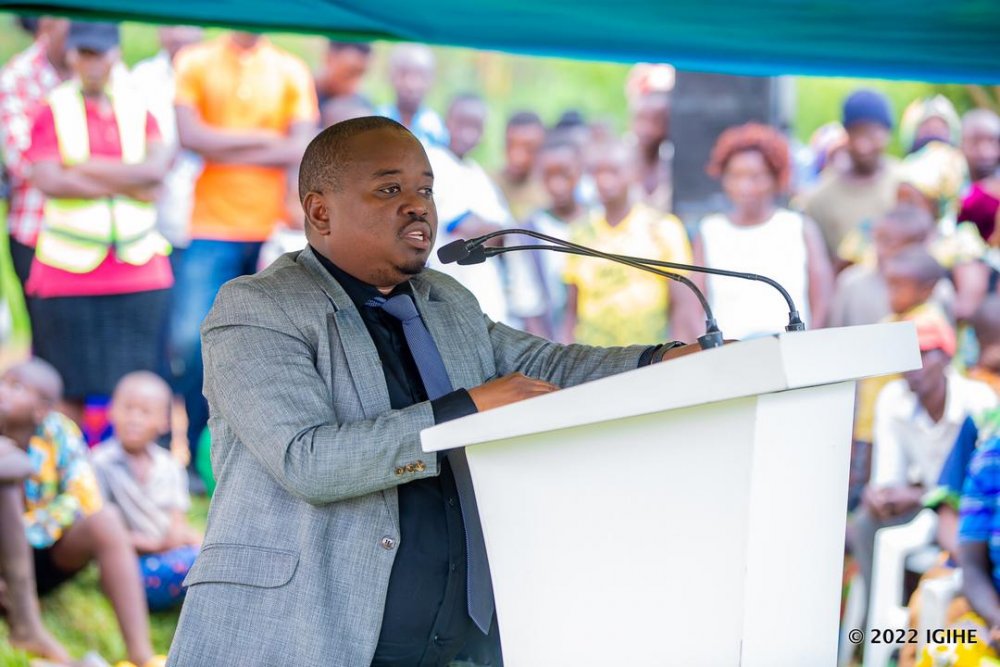
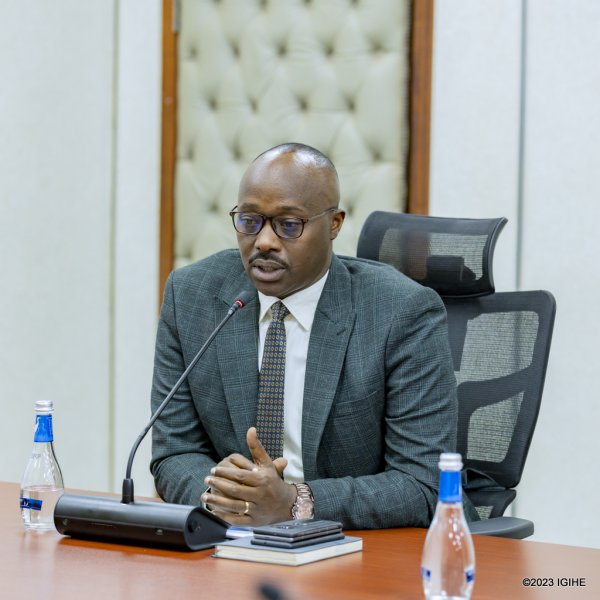
“Our opportunity will be in video.”
As the 5th World Media Summit opens in China, global media executives have eyed new trends and opportunities in the industry in 2024.

“Our opportunity will be in video.”
As the 5th World Media Summit opens in China, global media executives have eyed new trends and opportunities in the industry in 2024.

Themed “Boosting Global Confidence, Promoting Media Development,” the 5th WMS has gathered over 450 participants from 101 countries and regions, including representatives of 197 mainstream media outlets, think tanks, government agencies and diplomatic missions to China, and UN agencies and international organizations.
The event, co-hosted by Xinhua News Agency and the provincial governments of Guangdong and Yunnan, runs from Dec. 2 to 8 in the cities of Guangzhou and Kunming.

“Joe Biden is not a defender of American democracy; Joe Biden is the destroyer of American democracy,” Trump declared, attempting to counter the anti-democratic allegations against him.
According to USA Today, Biden’s team and supporters rejected Trump’s claims, pointing out his proposals to fill the civil service with politically motivated loyalists and his promise to use the Justice Department against Biden and others.
It remains uncertain whether Trump will adopt this argument as a new direction for his campaign, but his remarks could indicate that voter rights and other democratic issues will be central to the 2024 election.
Ammar Moussa, a spokesperson for the Biden campaign, dismissed Trump’s democracy argument as “his latest desperate attempt at distraction” from crucial issues such as healthcare. Moussa emphasized that the American people see through these tactics.
Biden and Trump have recently intensified longstanding debates, including disagreements over healthcare, which are expected to be significant in the upcoming election. Biden criticized Trump’s consideration of alternatives to the Affordable Care Act, accusing him of wanting to eliminate the healthcare legislation.
While Trump and Biden engage in clashes reminiscent of a general election, democratic institutions are poised to be a major focus in the 2024 contest. In Cedar Rapids, Trump continued to accuse Biden of orchestrating the criminal cases against him, despite federal and state prosecutors bringing those charges.
The clash over democracy occurs amid increasing concerns about Trump’s impact on democratic principles. Some political leaders, including former U.S. Rep. Liz Cheney, describe Trump as a significant threat to democracy, citing his plans to enhance presidential power. Trump, however, insists he is fighting against what he calls “the anti-Democratic Party,” predicting that the upcoming election will be a “political earthquake that will echo around the world.”
Before facing Biden, Trump must navigate the delegate race against Republican rivals such as former South Carolina Gov. Nikki Haley and Florida Gov. Ron DeSantis. Despite criticism from a few prominent conservatives, Trump maintains a substantial lead in national polls, emphasizing the need for vigilance among his supporters: “Nothing’s over; bad things can happen.”


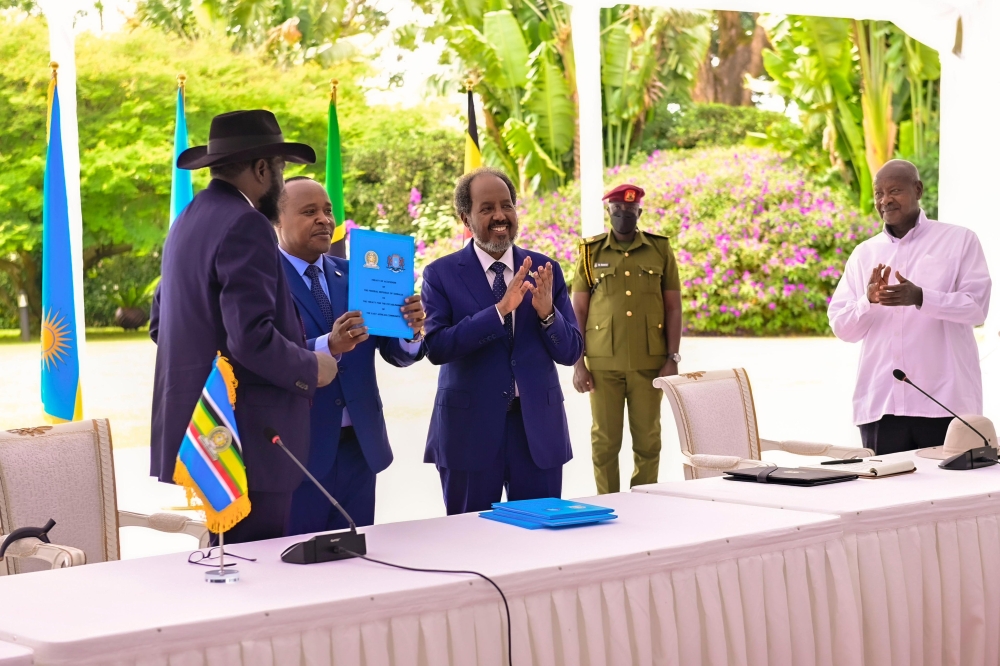
These troops, engaged in a peace-restoration mission in the eastern part of the Democratic Republic of Congo (DRC), announced their withdrawal, commencing on December 2, 2023, from North Kivu Province and returning to their respective countries. The DRC had set a deadline of December 8, 2023, for the forces to exit its territory.
On December 3, 2023, M23 spokesperson Lawrence Kanyuka conveyed in a statement that once the East African Community Regional Force (EACRF) left the DRC, M23 would reclaim and retain all areas previously relinquished during peace talks, emphasizing this move as essential for the welfare of the civilian population.
A released statement from the EACRF revealed the absence of security in North Kivu, attributed to the resurged conflict since October 2023, compelling numerous residents to evacuate their homes.
Kanyuka reported ongoing attacks on M23 bases by a coalition of government forces, FARDC, and armed groups, including the FDLR implicated in the 1994 Genocide against the Tutsi. Despite these challenges, M23 affirmed its commitment to preserving security and safeguarding civilian lives.


The European Investment Bank (EIB) and the Bank of Kigali, in a landmark collaboration announced at COP28 in Dubai, are spearheading this pioneering effort, marking the largest-ever EIB support for private sector investment in Rwanda.
This sustainable agriculture financing initiative, anticipated to launch early next year, seeks to alleviate long standing credit constraints hindering private sector agriculture investment in Rwanda. The scheme will provide dedicated, long-term loans, fostering climate resilience and empowering farmers, agribusinesses, and agricultural cooperatives.
The partnership, facilitated by the EIB and the Bank of Kigali, with support from the European Union, aspires to unlock EUR 100 million in climate investments. This includes improved financial accessibility for businesses owned by women, addressing the significant gender gap in agricultural loan access.
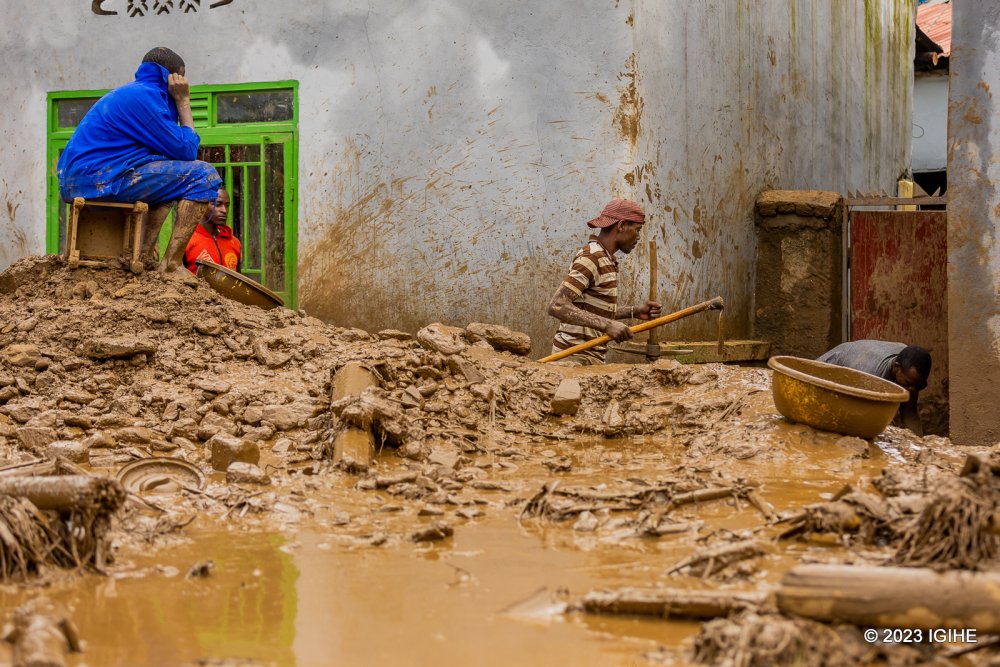
Rwanda, having experienced a temperature rise of 1.4 degrees Celsius since 1970—exceeding the global average—faces intensified rainfalls that contribute to floods and landslides. The climate finance scheme seeks to enhance agricultural productivity, enabling smallholders to adopt modern farming technologies, increase crop yields, and adapt to changing climate conditions. With agriculture contributing over 60% to Rwanda’s economy, the initiative also aims to stabilize the food supply by fortifying smallholders against climate-induced disruptions.
The financial collaboration between the EIB and Bank of Kigali, supported by the European Union, exemplifies how committed partnerships can mitigate the impact of the climate emergency and uplift vulnerable communities. The initiative not only addresses the broader economic stability of agribusinesses in Rwanda but also aligns with the country’s ambitious climate action plan, urging global participation in achieving a 38% reduction in carbon emissions by 2030.


At the age of 54, Colonel Ruhinda led a specialized unit within the FDLR known as the Commando for Research and Action in Depth (CRAP). Credible information reported by IGIHE confirms that Colonel Ruhinda lost his life on Sunday, December 3, in the confrontations between the March 23 Movement (M23) and the coalition of FARDC, FDLR, Mai-Mai, Nyatura, and Wazalendu in the Masisi territory in North Kivu.
Last year, Colonel Ruhinda had been featured in reports by UN experts on security in Eastern Congo.
These reports exposed his involvement in multiple meetings organized by the Congolese government to garner support from armed groups in countering the M23.
Moreover, Colonel Ruhinda has been identified as the individual responsible for ordering the launch of bombs that struck Rwandan territory in June 2022. These attacks resulted in significant damage, especially as Rwanda was gearing up to host a summit of Commonwealth Heads of State.


Fu welcomed Kondrashov to lead a TASS delegation to attend the fifth World Media Summit in China. He said that TASS is an important partner of Xinhua News Agency and the two news organizations share broad space for cooperation.
He hoped that the two sides will further tap the cooperation potential, keep closer personnel exchanges, push for new achievements in practical cooperation, and jointly play a positive role in promoting people-to-people exchanges between China and Russia.
Fu said that Xinhua looks forward to continually strengthening cooperation with TASS under multilateral mechanisms and frameworks including the BRICS Media Forum, the Belt and Road Economic Information Partnership and the Organization of Asia-Pacific News Agencies.
Kondrashov said that Xinhua has great influence in the world and its various businesses have developed rapidly in recent years. TASS is willing to strengthen practical cooperation with Xinhua and promote exchanges and mutual learning between the two agencies.

“We are looking forward to exchanging experience with media from different countries at the upcoming summit, particularly with regard to the coverage of sustainable development, socio-economic and humanitarian issues,” Tolstikova told Xinhua in a recent interview ahead of the fifth World Media Summit, which will be held in China’s southern cities of Guangzhou and Kunming in December.
The summit “provides a platform that encourages the exchange of experience between the world’s media, that helps to identify the main trends and key challenges in the media industry and determine how to jointly respond to these,” she said.
It will present a valuable occasion not just to showcase one’s resources and work to colleagues from across the world, but also an opportunity to forge new partnerships, conduct practical negotiations and foster lasting connections for the future, she added.
Highlighting media’s increasingly significant role in building relationships between countries and fostering dialogue between states, the CEO of TV BRICS said, “It is the work of the media that allows us to ‘build bridges’ between countries and entire civilizations, to introduce them to each other, to unite and bring them together.”
“The media coverage of certain problems allows us to quite literally highlight some of the most important topics amidst the endless flow of information,” she said.
Noting that there has been a noticeable increase in coordination between major media outlets of the BRICS members, she said, “BRICS countries have worked to strengthen media cooperation in recent years.”
“We are seeing an intensification of information exchange, we can see how the media of BRICS countries are jointly working to cover the association’s common agenda, and it is the bilateral contacts between the media of the BRICS countries that have been the most active,” Tolstikova said.

The meeting among leaders of Xinhua News Agency, Reuters, The Associated Press (AP), and Agence France-Presse (AFP) was the first of its kind. Fu Hua, president of Xinhua, hosted the event in downtown Beijing.
“The global media industry is undergoing a significant transformation,” Fu said, citing factors such as technological innovation that is reshaping the industry, and the spread of fake news that is challenging journalistic ethics.
He proposed establishing a high-level dialogue and cooperation mechanism of the four within the framework of the World Media Summit (WMS).
“By engaging in such dialogues, we can inspire one another and promote mutual development,” Fu said.
Reuters Head of Agency Sue Brooks said the content produced by the four reaches around 75 percent of the global population.
“Therefore, it is very important that the information we gather and the journalism that we produce tells the world the truth and is trusted by them,” she said.
The executives agreed that international news agencies should work together and stay committed to providing users with objective, fair and accurate information.
“We view collaboration with fellow news agencies as paramount,” said AP Vice President YK Chan.
“Collaboration allows us to tell important stories, keep our journalists safe and address more pressing challenges facing our industry,” he said.
The topics discussed at Friday’s meeting ranged from coping with the emergence of new technologies such as artificial intelligence (AI) and combating fake news, to improving ways to better protect journalists covering wars and natural disasters.
Fu suggested mutual humanitarian assistance during news reporting in conflict zones, natural disasters and other dangerous areas, and proposed building on existing text and photo service cooperation to expand collaboration, particularly in video content commercial distribution.
On meeting the challenges brought by technological advancement, media leaders concurred that while the application of the technologies can aid in news collection and dissemination, it should not replace the media industry itself, nor should it compromise news ethics and authenticity.
Michael Mainville, member of the AFP Executive Committee and AFP Asia-Pacific regional director, said while AI can help media outlets boost productivity, “we believe it is also very important to discuss the principles of how we will use artificial intelligence.”
Fu suggested that the four global wire services deepen exchanges and communication while conducting operational training in international media development trends, cutting-edge media technology applications, and combating fake news through information verification.
He said that in recent years, Xinhua, Reuters, the AP and AFP have proactively adapted, innovated, and utilized technological achievements, standing at the forefront of media transformation.
Friday’s meeting took place before the fifth WMS to be held in the cities of Guangzhou and Kunming.
Themed “Boosting global confidence, promoting media development,” the fifth WMS, which runs from Dec. 2 to 8, gathers over 450 participants from 101 countries and regions, including representatives of 197 mainstream media outlets, think tanks, government agencies, diplomatic missions to China, as well as UN agencies and international organizations.


As important media organizations in China and Japan, Xinhua News Agency and Kyodo News have witnessed and participated in the development of bilateral relations. The cooperation between Xinhua News Agency and Kyodo News is solid and fruitful, Fu said.
Fu added that Xinhua News Agency is willing to further strengthen exchanges and cooperation with Kyodo News to jointly promote people-to-people exchanges and contribute to the steady and long-term development of China-Japan relations.
Noting that the two organizations are both initiators of the World Media Summit, Fu welcomed Mizutani to attend the fifth edition of this summit in China and thanked Kyodo News for its strong support for the development of the summit mechanism.
Expressing gratitude for the invitation to attend the fifth edition of the summit, Mizutani said he expects the two media organizations to further their already solid partnership and enhance personnel exchanges.