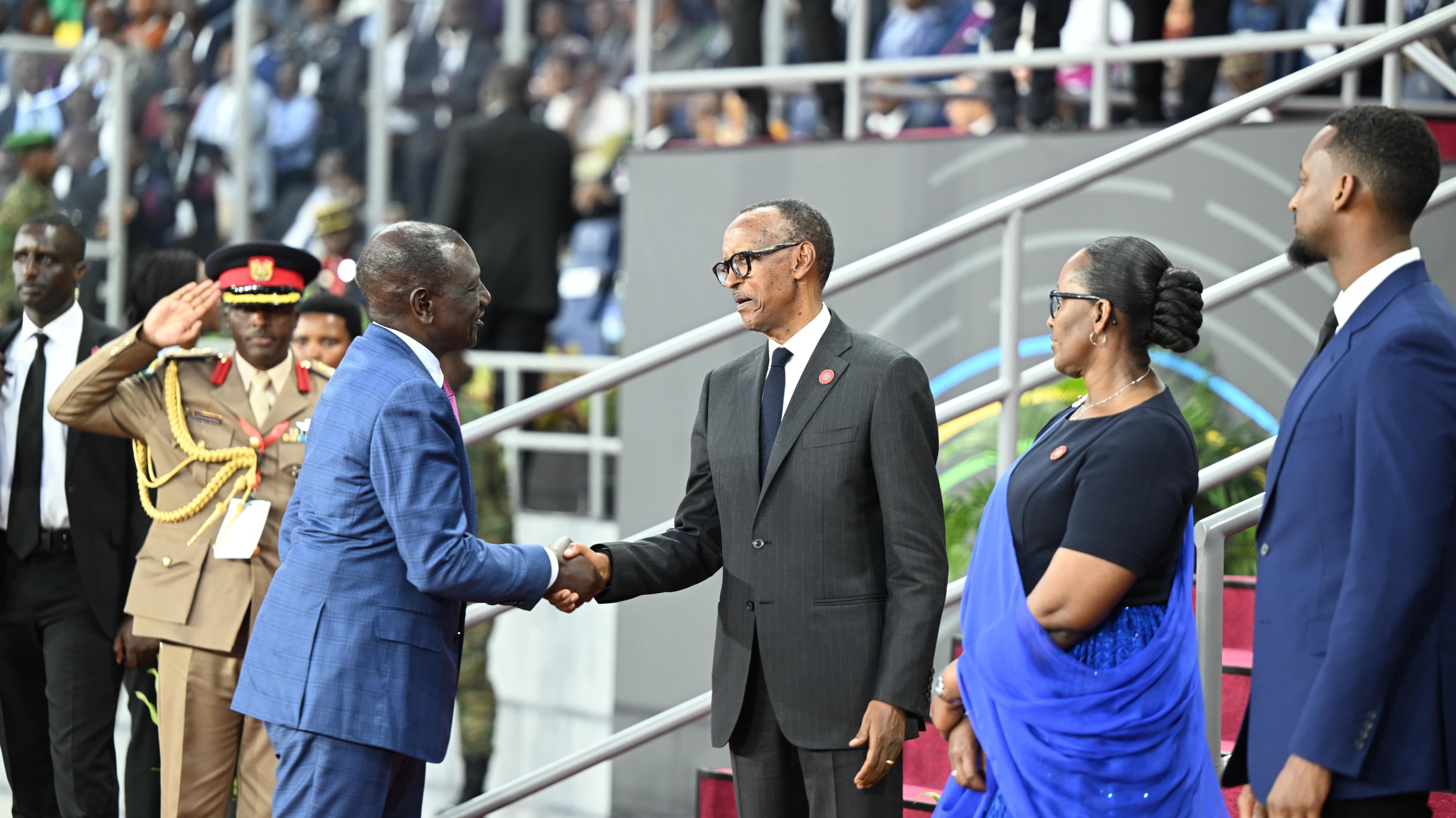
The Kenyan Head of State praised Rwanda’s tremendous growth in the political, democratic, and economic spheres since the 1994 Genocide that left the country in ruins.
He made these remarks while congratulating President Paul Kagame after he was sworn in for another term in office on Sunday, August 11, 2024.
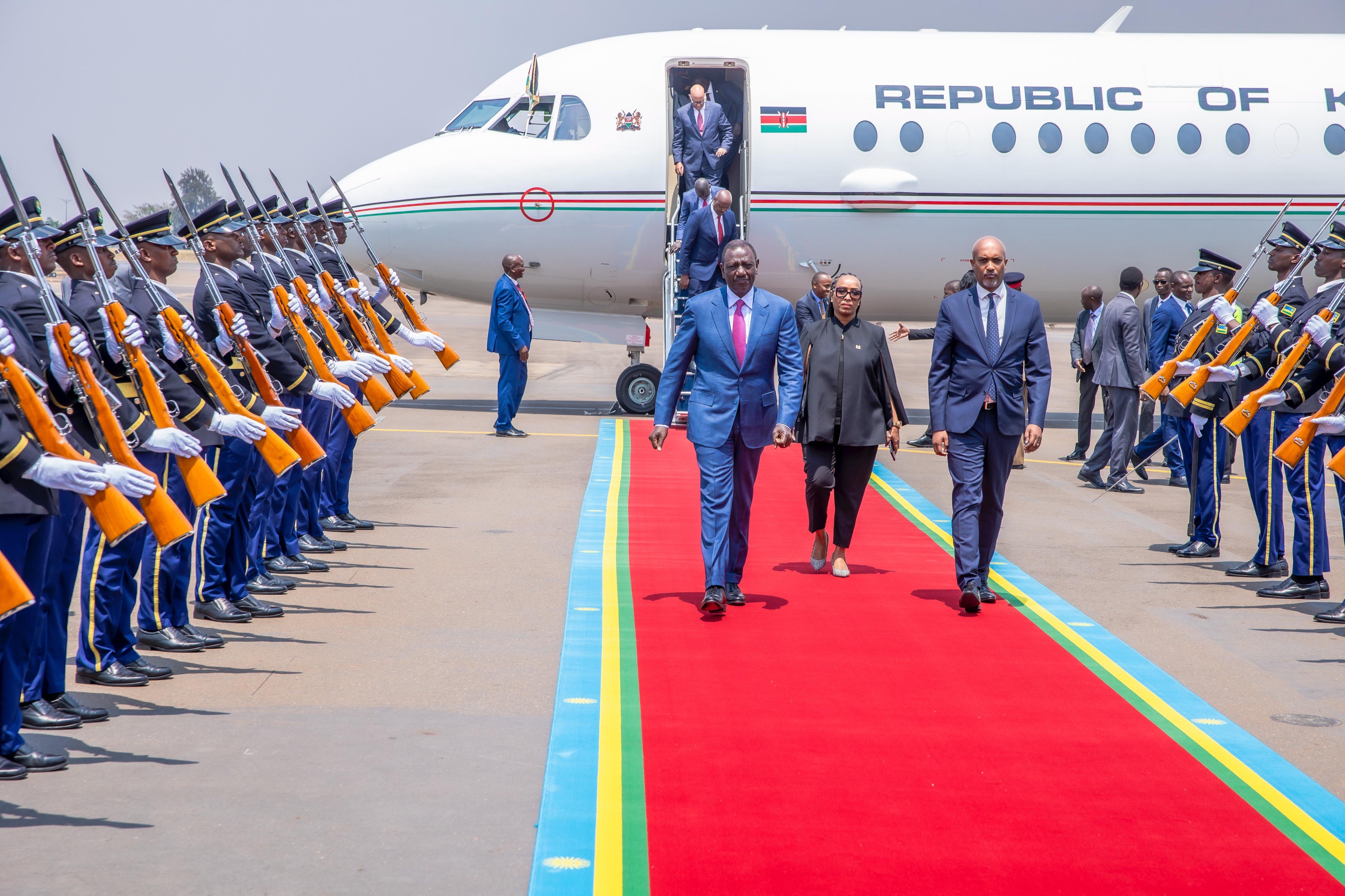
President Ruto was among more than 20 Heads of State who attended Kagame’s inauguration for a fourth term at Amahoro Stadium.
Taking to X after the event, President Ruto noted that the new term presents an opportunity for Kagame to continue his transformative leadership in Rwanda.
“Congratulations to my brother, President Paul Kagame, for being sworn in for another term to continue transforming your country, Rwanda,” President Ruto wrote.
“In the past 30 years, the people of Rwanda have risen from the devastating ashes of the 1994 Genocide and undergone tremendous progress in the political, democratic, and economic spheres.”
He also lauded Rwanda as a valuable member of the East African Community, the African Union, and the international community.
President Kagame, who led the Rwandan Patriotic Army to liberate Rwanda in July 1994 was officially first elected president in 2000 after his predecessor, Pasteur Bizimungu resigned.
The RPF Inkotanyi flag bearer secured a landslide victory in the latest polls held in mid-July, garnering 99.16% of the votes cast. He defeated Frank Habineza of the Democratic Green Party of Rwanda, who got 0.5% of the vote, and independent candidate Philippe Mpayimana, who managed a minute 0.32%.
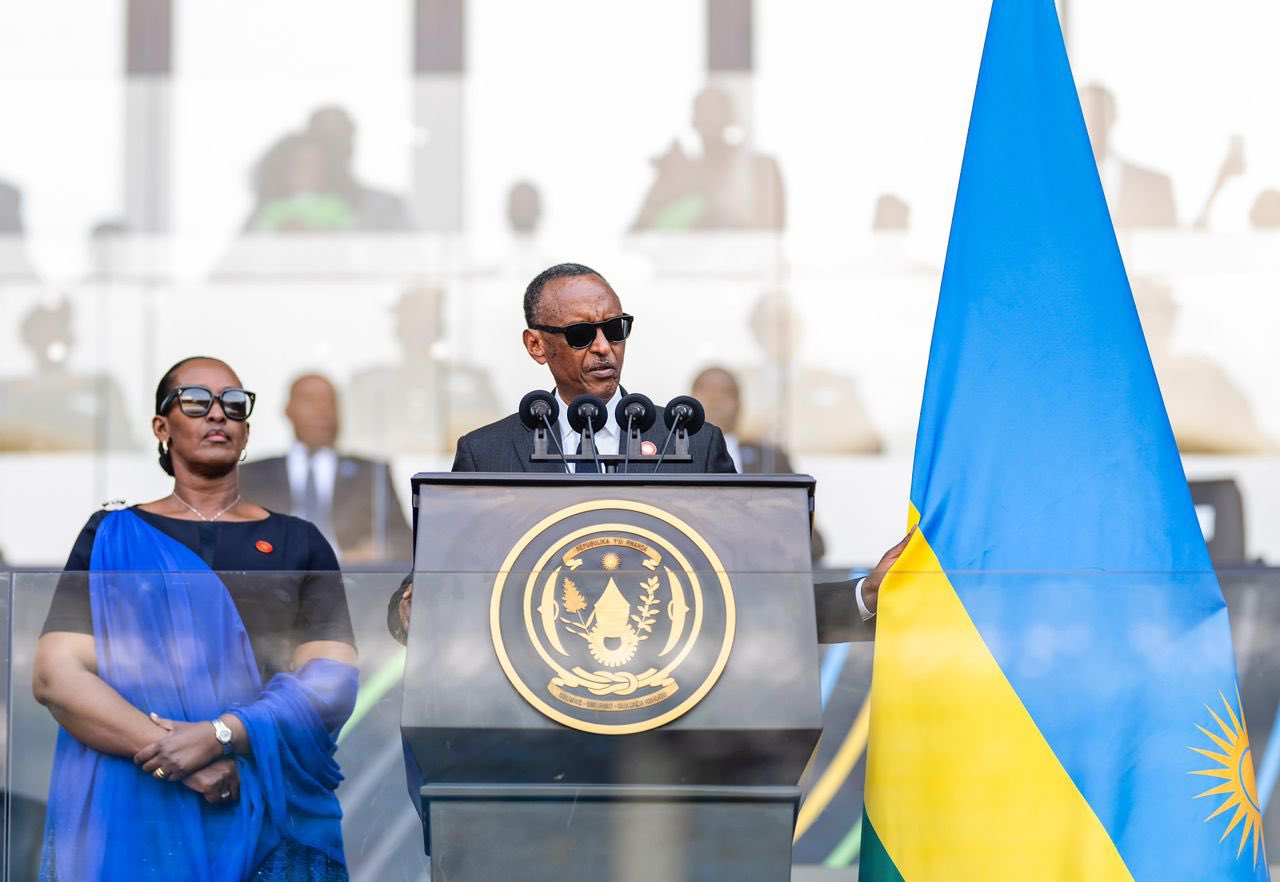
In his inauguration speech, the Head of State acknowledged that much has been achieved over the past 30 years, surpassing expectations. He pledged to continue efforts to build and advance the country.
“Our focus now returns to the future. For the last thirty years, our country has been a good work-in-progress. This new mandate means the beginning of even more hard work,” he told thousands of citizens and other dignitaries who attended the colourful ceremony.
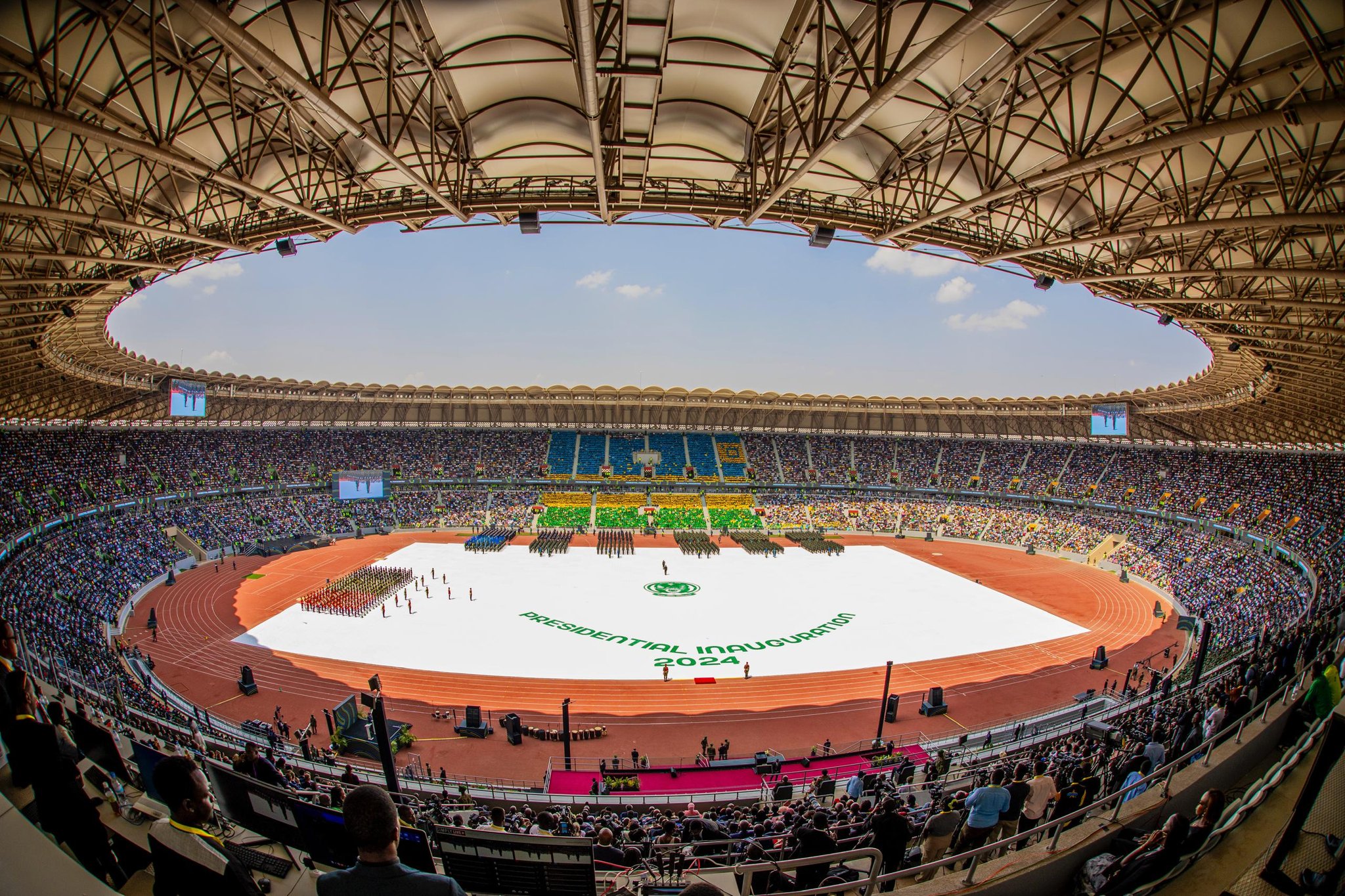
Addressing thousands of citizens and other dignitaries who gathered at Amahoro Stadium to witness the momentous occasion, the Head of State began by thanking Rwandans for granting him another term to continue his development agenda.
“The electoral campaign was a period of joy and satisfaction for all of us. Millions attended rallies, and almost everyone went to vote,” President Kagame commended Rwandans.
He noted that much has been achieved over the past 30 years, surpassing expectations.
“Over the past three decades, what Rwandans have managed to accomplish is even more than we expected. Indeed, it is beyond what words can describe, given where we started from,” Kagame said amid chants of jubilations with more than 20 Heads of State in attendance.
Recounting Rwanda’s rise from the ashes of the 1994 Genocide against the Tutsi, President Kagame revealed that the new term presented another opportunity to achieve even more.
“Our tragic past ignited a fire in each one of us: a fire of hope, resilience, and justice. This is who we have become as Rwandans,” he noted.
“Our focus now returns to the future. For the last thirty years, our country has been good work-in-progress. This new mandate means the beginning of even more hard work.”
He affirmed that with exemplary leadership and collaborations, no goal is beyond reach and all aspirations are achievable.
“Why not do even better than we have done? That expectation to keep improving is not a dream, it is realistic. We can do it, and we will do it,” President Kagame added.
Kagame, who led the Rwandan Patriotic Army to liberate Rwanda from the Genocidal regime of Juvénal Habyarimana in 1994, was re-elected with 99.18% of the votes cast in the July elections.
He ran against two competitors: Dr. Frank Habineza of the Democratic Green Party of Rwanda, who got 0.50% of the vote, and independent candidate Philippe Mpayimana, who managed only 0.32%.
In the coming days, the newly elected Parliament is expected to take oath and begin its term before which the President will later present his appointed cabinet for approval.
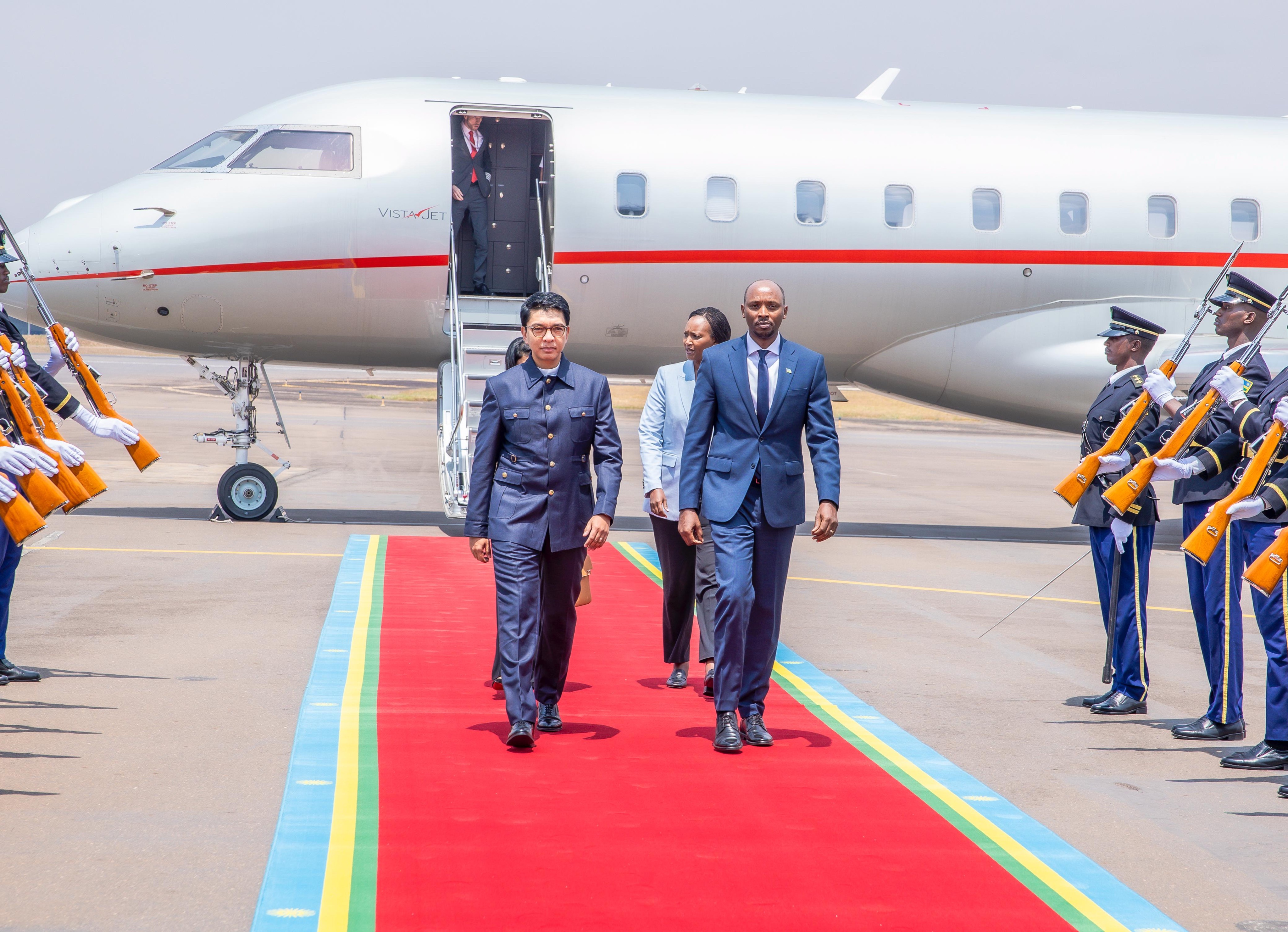
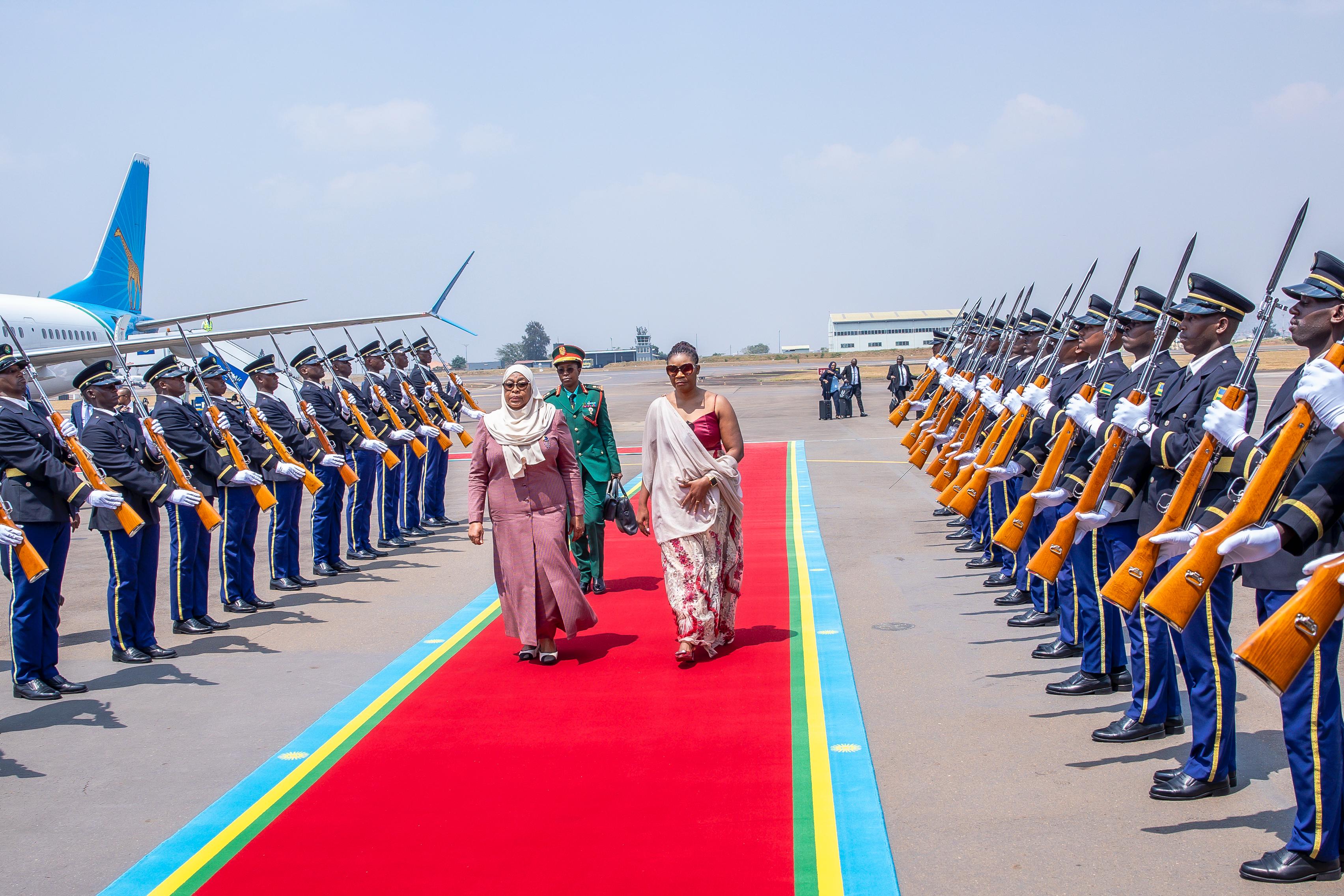
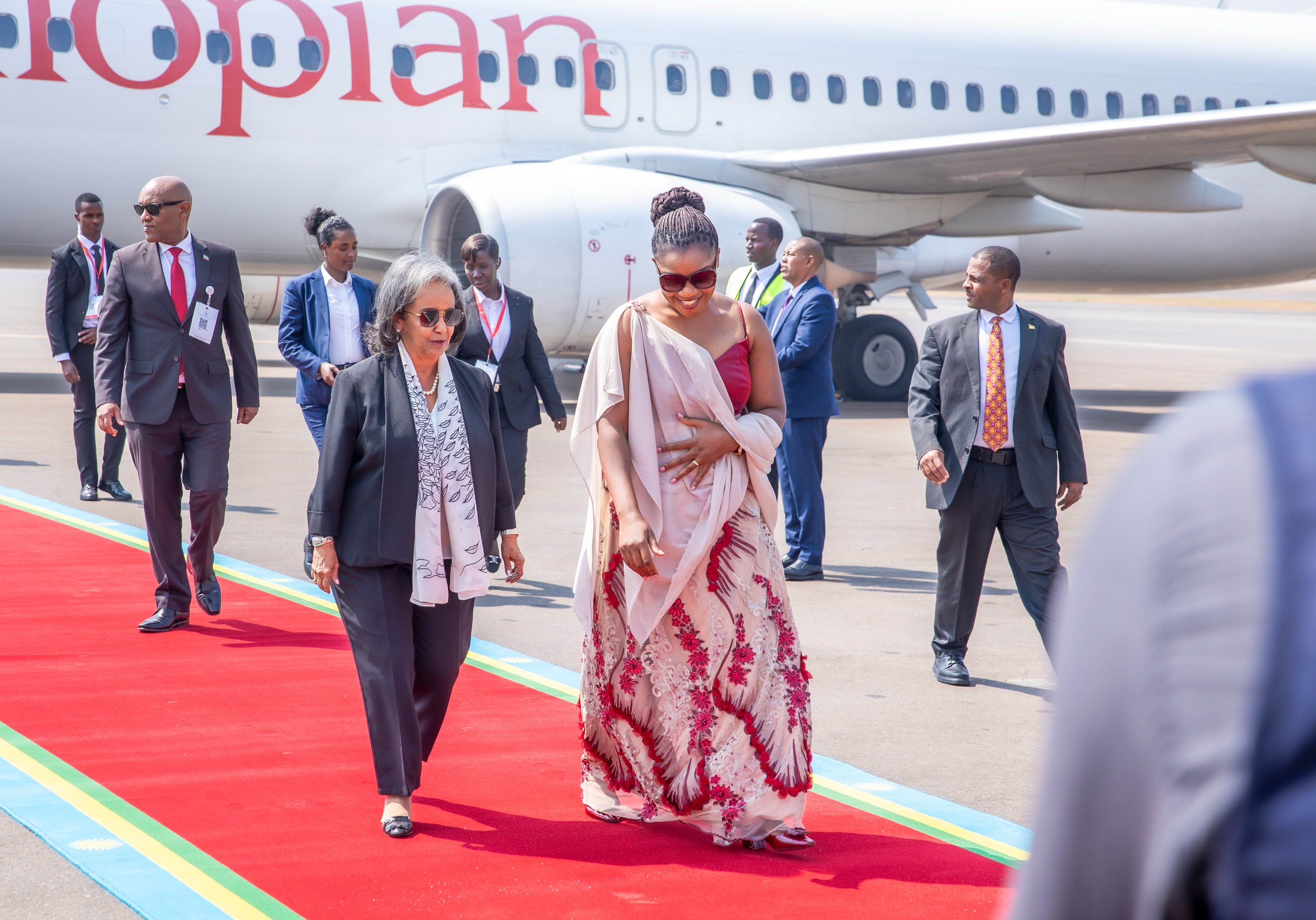
The Heads of State began arriving in the country on the evening of Saturday, August 10, 2024, while others jetted in on Sunday morning to witness the momentous occasion.
The leaders were accorded a guard of honour by the Rwandan Defence Forces (RDF) and a warm welcome by senior government officials at the Kigali International Airport.
And on Sunday afternoon, the presidents were escorted to the state-of-the-art Amahoro Stadium, where they joined thousands of ecstatic citizens gathered at the newly refurbished facility to witness the swearing-in of their Head of State.
It was a spectacular scene at the stadium as the leaders were welcomed to the venue with traditional songs, dances, and cheers from the crowd.
The Presidents who attended the event included Andry Rajoelina of Madagascar, João Lourenco (Angola), William Ruto (Kenya), Samia Suluhu (Tanzania), Hassan Sheikh Mohamud (Somalia), Sahle-Work Zewde (Ethiopia), Emmerson Mnangagwa (Malawi), Faure Essozimna Gnassingbé (Togo), Faustin-Archange Touadéra (Central Africa Republic), Denis Sassou Nguesso (Republic of the Congo) and Ismail Omar Guelleh (Djibouti).
Others were Nana Akufo-Addo (Ghana), Wavel Ramkalawan (Seychelles), Mamady Doumbouya (Interim President of Guinea), Mokgweetsi Masisi (Botswana), Emmerson Mnangagwa (Zimbabwe), Umaro Sissoco Embaló (Guinea-Bissau), Salva Kiir (South Sudan) and Filipe Nyusi of Mozambique.
King Mswati III of the Kingdom of Eswatini, Abdel Fattah al-Burhan, Chairman of the Transitional Sovereignty Council of Sudan, and Brice Oligui Nguema, President of the Transition of the Gabonese Republic, also attended the ceremony.
Malawi, Ivory Coast, and Uganda were represented at the inauguration by Vice Presidents Dr. Michael Usi, Tiemoko Meyliet Koné, and Jessica Alupo, respectively.
The event was also graced by former Nigerian President Olusegun Obasanjo, Ibrahim Boughali, the Assembly President of Algeria, and Patrice Trovoada, the Prime Minister of São Tomé and Príncipe.
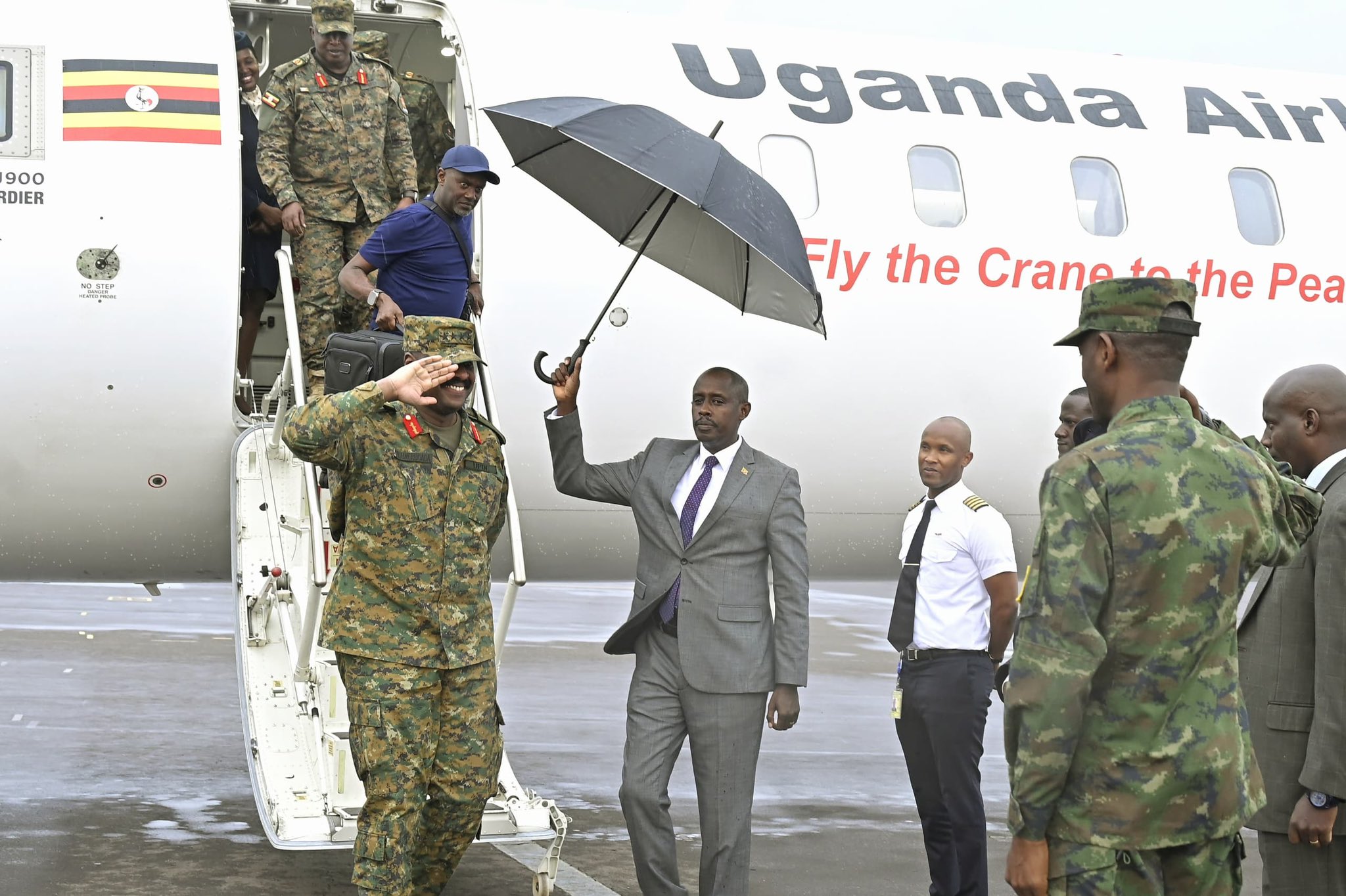
Ousmane Sonko, the leader of Senegal’s opposition, and Muhoozi Kainerugaba, Uganda’s Army Chief, also attended, underscoring the broad international representation at this momentous occasion.
Kagame, the flagbearer of the RPF-Inkotanyi, secured 99.18% of the votes cast in the elections conducted in July. His challengers, Dr. Frank Habineza of the Democratic Green Party of Rwanda, came in second with 44,479 votes (0.50%), while Philippe Mpayimana finished third with 28,466 votes (0.32%).
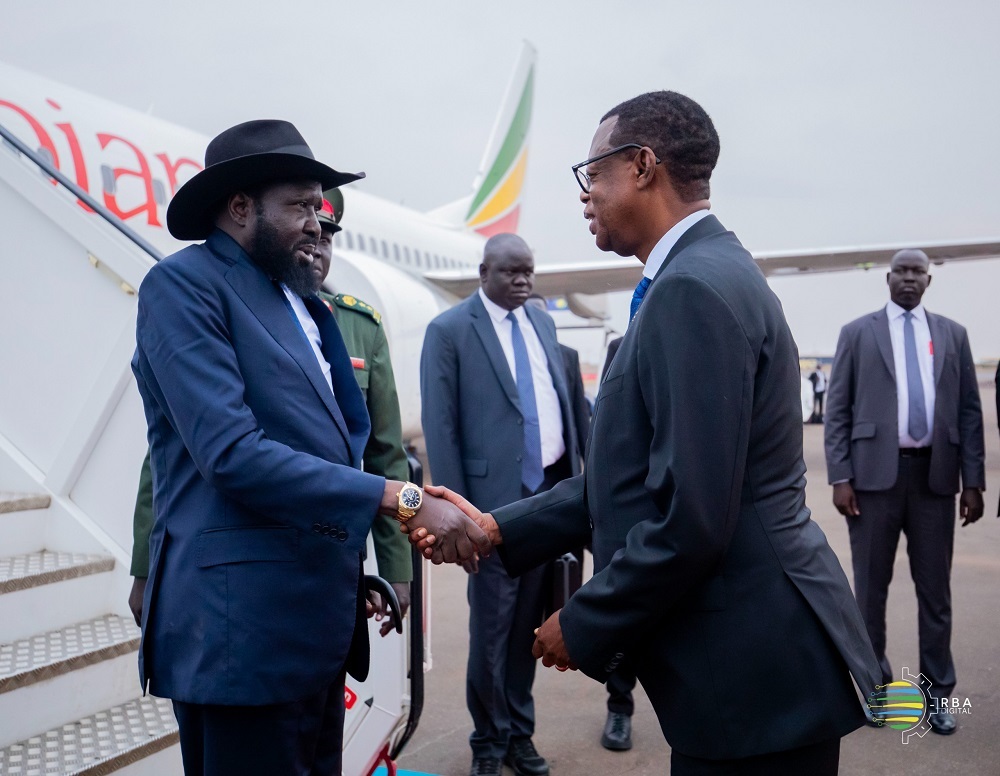
The first to arrive was President Salva Kiir Mayardit of South Sudan, who touched down at Kigali International Airport in Kanombe. His arrival was marked by a warm welcome from the Minister of State for Regional Cooperation, Gen (Rtd) James Kabarebe.
President Kiir’s visit is yet another testament to the enduring relationship between Rwanda and South Sudan. As the current chair of the East African Community (EAC), President Kiir’s frequent engagements with Rwanda, including his visit in February 2024, highlight the deepening ties within the region.
Following closely, President Umaro Sissoco Embaló of Guinea-Bissau arrived in Kigali, greeted by the Minister of Finance and Economic Planning, Yusuf Murangwa. A light rain shower, a brief respite after days of dry weather, accompanied his arrival.
The bond between Rwanda and Guinea-Bissau is steeped in history, with numerous agreements in place, including those related to trade, education, tourism, and air transport, further solidifying their long-standing relationship.
Gen Muhoozi Kainerugaba, Chief of Defence Forces of Uganda, also arrived in Kigali to represent Uganda at the inauguration. His reception by his Rwandan counterpart, Gen Mubarakh Muganga, reflects the close military ties that bind the two nations.
Adding to the growing list of dignitaries, President Emmerson Mnangagwa of Zimbabwe arrived in Kigali, where he was welcomed by Francis Gatare, CEO of the Rwanda Development Board (RDB). The relationship between Rwanda and Zimbabwe has flourished under the leadership of both Kagame and Mnangagwa, evidenced by high-level visits and the signing of over 26 cooperation agreements across various sectors, including education, energy, justice, economy, social welfare, and culture.
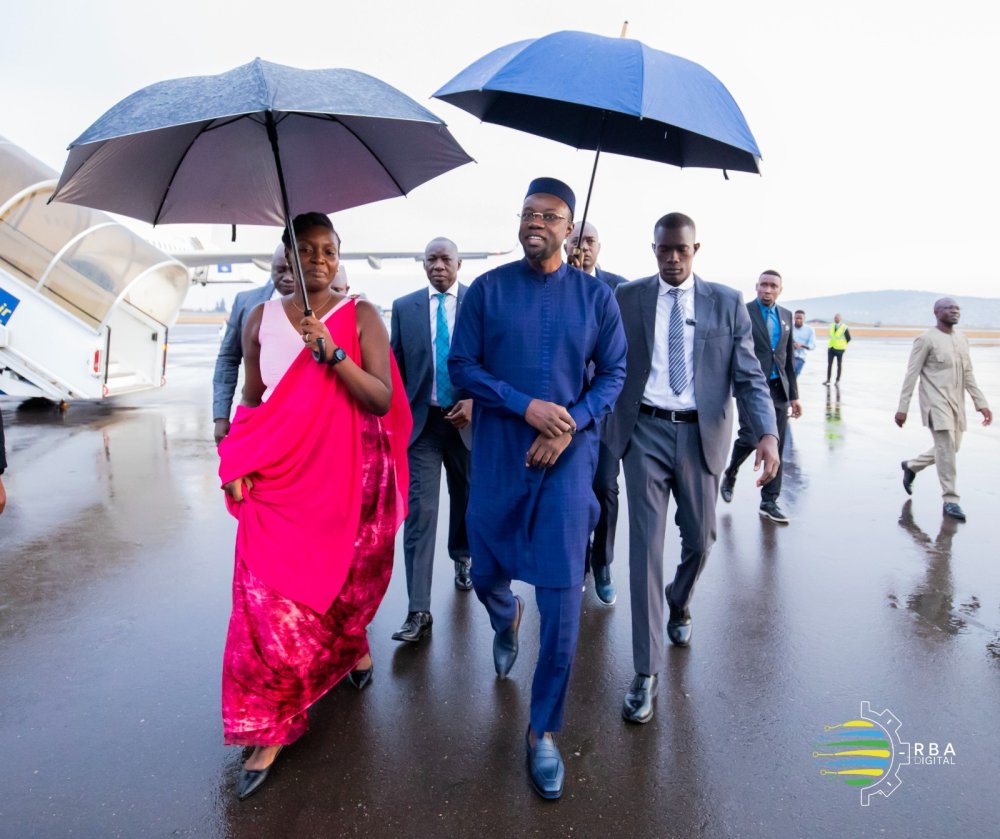
Senegal’s Prime Minister Ousmane Sonko, representing President Bassirou Diomaye Faye, was also among the distinguished guests. Upon his arrival, he was received by the Minister of State in the Ministry of Education, Irere Claudette. The strong bilateral relations between Rwanda and Senegal, highlighted by the opening of the Rwandan Embassy in Senegal in 2011 and a series of agreements, including cultural cooperation dating back to 1975, are further strengthened by his presence.
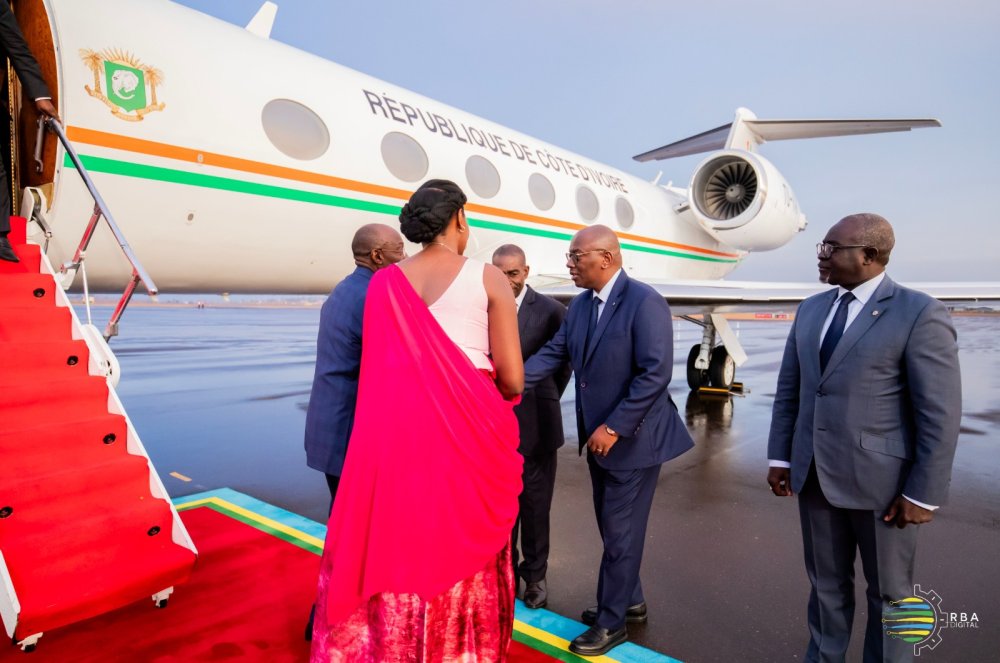
Ivory Coast is represented by its Vice President, Tiemoko Meyliet Koné, who arrived on Saturday evening. He was also welcomed by the Minister of State in the Ministry of Education, Irere Claudette. His attendance at the inauguration scheduled on Sunday 11th August 2024, signifies the continued collaboration between Rwanda and Ivory Coast, as both nations look forward to furthering their mutual interests under President Kagame’s leadership.
These leaders are among the many dignitaries expected to attend President Kagame’s inauguration, symbolizing the global recognition and support for Rwanda’s continued progress under his leadership.
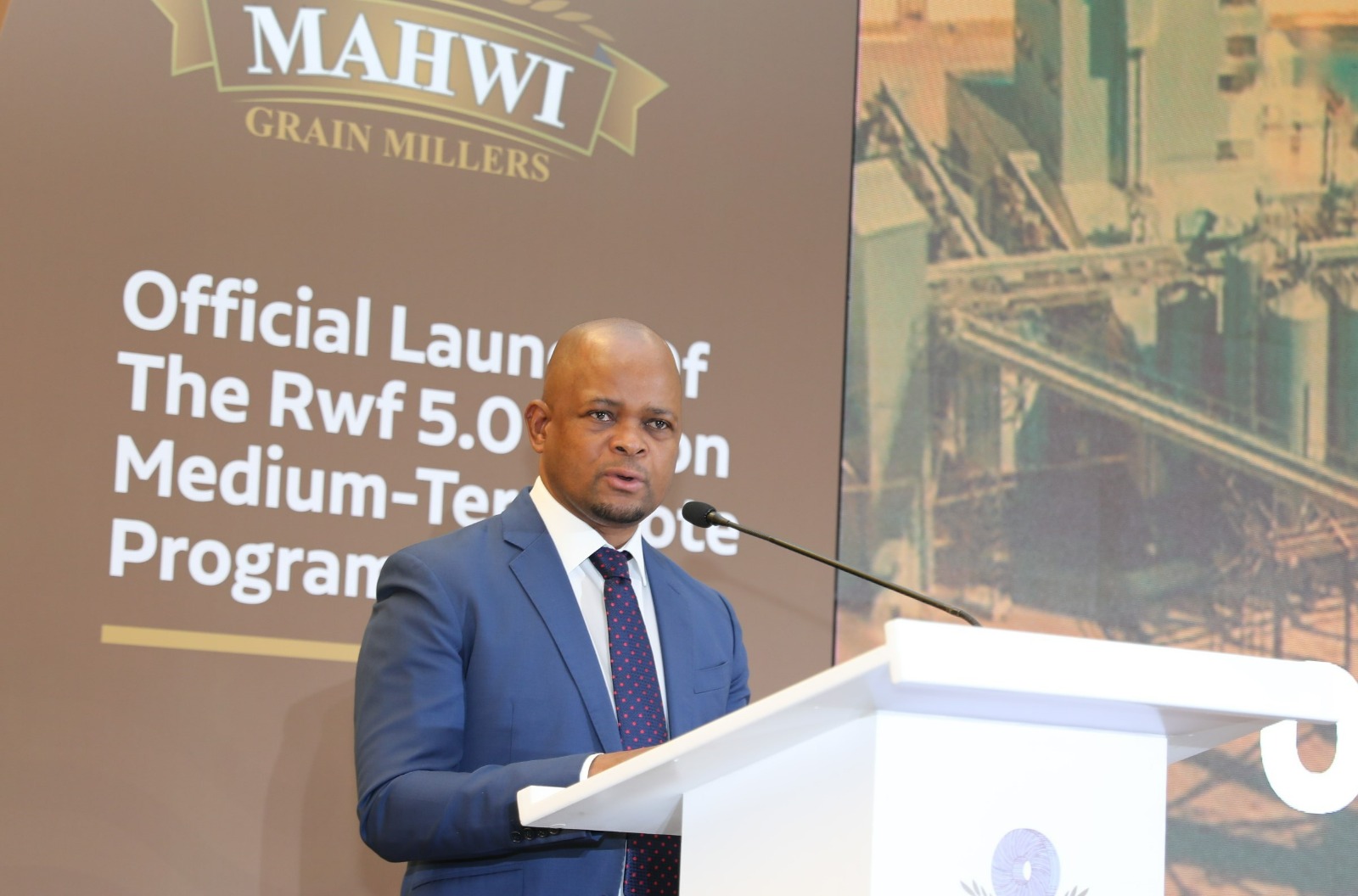
It floated a Rwf5billion corporate bond, marking a significant milestone as the first ever Agri Business SME to hit the market.
Mahwi Grain Millers join the stock market to provide investors with a broader range of opportunities to diversify their portfolios, invest in different sectors, and participate in the country’s economic growth.
To achieve this, the company’s annual turnover surged from Rwf78 million in 2021 to Rwf3 billion in 2022, Rwf75.7 billion in 2023, and Rwf15 billion in 2024.
This remarkable growth underscores the opportunities available to investors who engage with Rwanda’s stock market, particularly in sectors as fundamental as agribusiness.
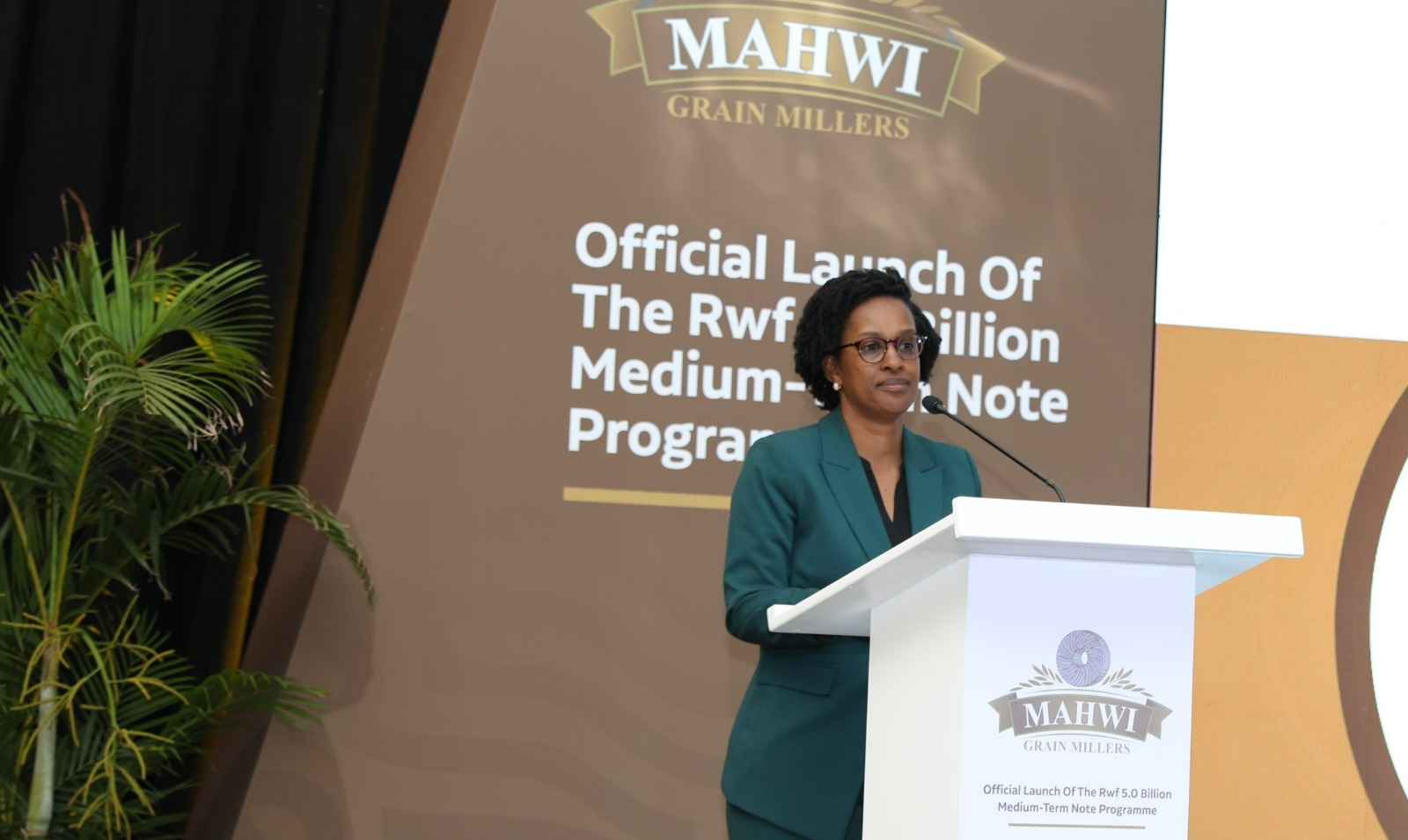
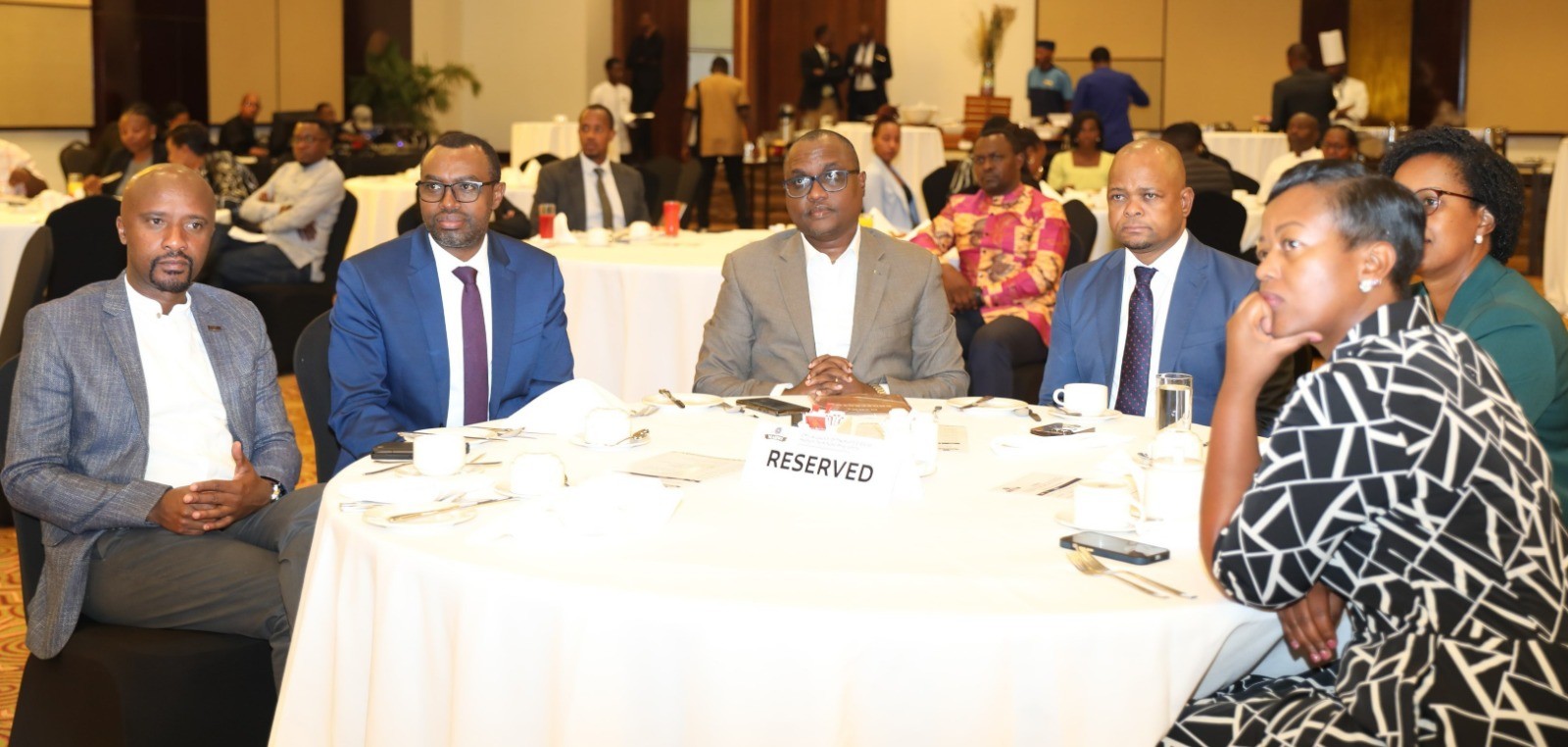
Chantal Habiyakare, Chairperson of the Board of Directors at Mahwi Grain Millers, expressed confidence in the company’s growth and the opportunities available to investors.
“This is a very big source of growth, and as investors, your money will be safe with us. Being involved in the agriculture sector, we cannot go wrong,” she affirmed.
Her statement highlights the stability and potential of investing in Rwanda’s agribusiness sector, a sentiment that is likely to resonate with both local and international investors.
This development is part of a broader trend that is transforming the country’s economic landscape, driving growth, and offering new opportunities for investors.
Rwanda’s stock market has been steadily expanding, with an increasing number of companies opting to go public. This trend reflects the maturation of the financial sector in Rwanda, where the stock exchange is becoming a critical platform for raising capital, fostering economic growth, and promoting financial inclusion.
The addition of Mahwi Grain Millers to the exchange is particularly noteworthy, as it highlights the vital role that the agribusiness sector plays in the country’s economy.
The listing on the stock exchange also aligns with global economic dynamics that increasingly influence local markets.
As Thapelo Tsheole, CEO of the Capital Markets Authority (CMA), noted, “As more companies list on the Rwanda Stock Exchange, we see a positive cycle where businesses gain access to capital, investors grow their portfolios, and the economy as a whole.”
The CMA’s role in facilitating these listings is crucial to ensuring that the market remains accessible and beneficial to all stakeholders.
Rwanda’s stock market has become an essential tool for economic development. The increasing number of listings sends a strong signal to both domestic and international investors about the stability and potential of Rwanda’s economy.
The government has also recognized the importance of a robust stock market as part of its broader economic strategy.
Dr. Jean Chrysostome Ngabitsinze, the Minister for Trade and Industry, highlighted Mahwi Grain Millers’ role in ensuring food security and stabilizing the economy, particularly during challenging periods.
“Upon realizing that the company had the capacity to continue processing their products to support the food value chain, we provided the necessary grants, and the market has stabilized in a short time,” Dr. Ngabitsinze explained.
This support reflects the government’s commitment to bolstering sectors that are critical to both economic stability and growth. The growing activity on the Rwanda Stock Exchange also has significant implications for the personal development of investors.
With more companies listing, individual investors have greater opportunities to diversify their investments and build wealth. This process not only contributes to their financial growth but also enhances financial literacy, empowering more Rwandans to actively participate in the country’s economic development.
The interconnectedness of the global economy further underscores the importance of strengthening local financial markets. Decisions made in major economic centers, such as those by the Federal Reserve in Washington, D.C., can have far-reaching impacts, even in Kigali.
For instance, the U.S. economy, valued at $26 trillion and accounting for nearly 25% of global output, plays a significant role in shaping global financial trends. Recent market fluctuations in Japan and Europe, spurred by developments in the U.S., demonstrate how global economic dynamics can affect local markets.
In this context, the listing of companies like Mahwi Grain Millers on the Rwanda Stock Exchange is not just a local success story but a strategic move that positions Rwanda to better navigate and benefit from global economic trends.
As the stock market grows, so too does Rwanda’s ability to attract investment, drive economic development, and empower individual investors.
The listing of Mahwi Grain Millers on the Rwanda Stock Exchange is a key milestone in the ongoing development of Rwanda’s financial markets.
It reflects the growing strength and resilience of the economy, offers new opportunities for investors, and highlights the government’s commitment to fostering a vibrant and inclusive financial sector.
The conflict between the Sudanese Armed Forces and the Rapid Support Forces (RSF), which escalated in April 2023, has claimed more than 15,500 lives to date. According to the United Nations High Commissioner for Refugees (UNHCR), this war has led to a massive displacement crisis, with over 6.1 million people displaced within Sudan and more than 1.5 million seeking refuge in other countries.
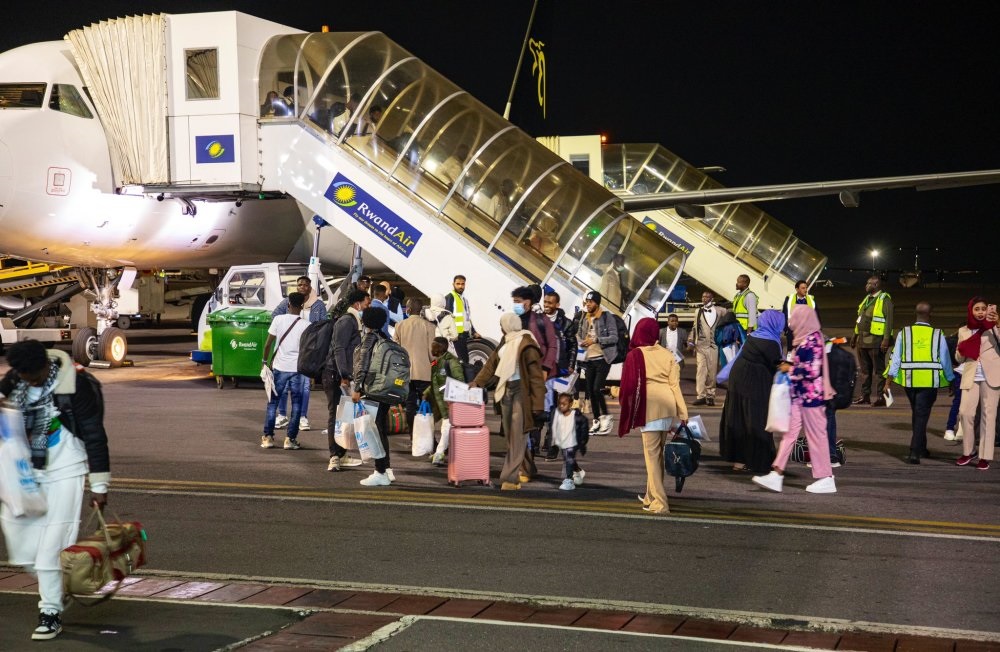
UNHCR’s Rwanda branch reports a significant increase in Sudanese asylum seekers in Rwanda in 2024. As of August 6, 2024, 89 Sudanese refugees had arrived, including 58 individuals from 17 families living in Kigali and another 31 individuals from 20 families residing in the Mahama Refugee Camp in Kirehe District.
Among the 718, 354 individuals are from 197 families settling in Kigali and 364 individuals from 209 families residing in the Mahama camp.
In addition to these refugees, Rwanda received over 200 students from the University of Medical Sciences and Technology in Sudan at the end of 2023. These students continued their education at the University of Rwanda, with the partnership expected to extend to over 7,000 students. Prior to this, Rwanda had also welcomed refugees from Afghanistan.
Rwanda is currently home to over 130,000 refugees, many of whom have been in the country for more than a decade. Approximately 90% of these refugees reside in camps such as Kiziba, Nyabiheke, Kigeme, Mugombwa, and Mahama, while others live in various urban areas.
Rwanda has consistently emphasized the need for long-term solutions to the refugee and migrant crisis. In recent years, the country received thousands of migrants evacuated from camps in Libya, with 90% of them resettled in other continents. These migrants have come from various countries, including Eritrea, Sudan, Ethiopia, Somalia, and South Sudan.
Speaking to the youth during the 14th cohort of the Indangamirwa civic training program on August 9, 2024, Dr. Bizimana traced the roots of ongoing regional insecurity to the 1885 Berlin Conference and the subsequent formalization of borders on May 14, 1910, by Belgium, Britain, and Germany.
These decisions, he explained, led to the dismemberment of Rwanda, with several provinces, including Masisi, Rutshuru, Fizi, and Uvira, being annexed to the Democratic Republic of Congo (DRC) and others to Uganda.
“These provinces were given to DRC even though they were inhabited by Rwandans. The people living in those provinces continued to speak Kinyarwanda because it was their language,” Dr. Bizimana stated. He further emphasized that “the consequences are evident, as in the eastern part of DRC, some of these residents are treated as outsiders, labeled as Rwandans, even though they are Congolese.”
This colonial redrawing of borders stripped Rwanda of territories that were predominantly inhabited by Rwandans.
Despite becoming Congolese citizens, these communities in eastern DRC have been subjected to persistent violence and discrimination, often labeled as outsiders simply because of their language and cultural ties to Rwanda.
Dr. Bizimana underscored that the violence against Kinyarwanda-speaking communities in eastern DRC is deeply rooted in these historical injustices. “This was the first harmful decision made by the Europeans. Had these provinces remained part of Rwanda, the current issues of injustice, killings, and hate ideologies in eastern Congo would likely not exist today,” he asserted.
The colonial-era decision to fragment Rwanda created deep-seated divisions that continue to manifest in the form of ethnic discrimination, killings, and systemic exclusion of these communities from leadership and governance in the DRC.
Ambassador Vincent Karega, Rwanda’s former representative in Kinshasa, reinforced this perspective by drawing parallels between the current governance challenges in the DRC and Rwanda’s past struggles from 1959 to 1994.
“The problem is that DRC is poorly governed, with divisions similar to those we experienced, where ethnic discrimination led to the exclusion of certain groups, particularly the Kinyarwanda-speaking community, to prevent them from competing for leadership positions,” Karega noted.
The Kinyarwanda-speaking population in the DRC is diverse, consisting of groups who settled there before colonization, those brought by Belgium during colonial rule, and Rwandan refugees who fled from 1959 onwards due to escalating insecurity. Despite a 1971 law granting these refugees Congolese citizenship, they have continued to face systemic violence and mistrust, a direct legacy of the colonial border realignments.
Dr. Bizimana’s remarks highlight the far-reaching consequences of colonialism, particularly how the arbitrary partitioning of Rwanda has fueled long-standing regional insecurity.
“The legacy of colonialism continues to cast a long shadow over the region,” Dr. Bizimana observed, noting that the scars of history are still deeply felt in eastern DRC, where violence, discrimination, and instability persist.
Had the territorial integrity of Rwanda been preserved, the region might have experienced a different trajectory- one of greater unity and peace.
UGHE stands as one of Rwanda’s premier institutions. Founded in 2015 with the support of Partners in Health (PIH), UGHE has grown into a beacon of global health education in Rwanda. PIH, established by the late Dr. Paul Farmer in 2022, was bolstered by contributions from the Cummings Foundation, the Bill & Melinda Gates Foundation, and the Government of Rwanda.
UGHE operates two campuses: one in Kigali, focusing on postgraduate programs in Global Health Delivery, and another in Butaro, closely integrated with the Butaro Hospital, a cancer treatment center inaugurated by President Kagame in January 2019. Recently, Times Higher Education ranked UGHE as the eighth top university in Sub-Saharan Africa.
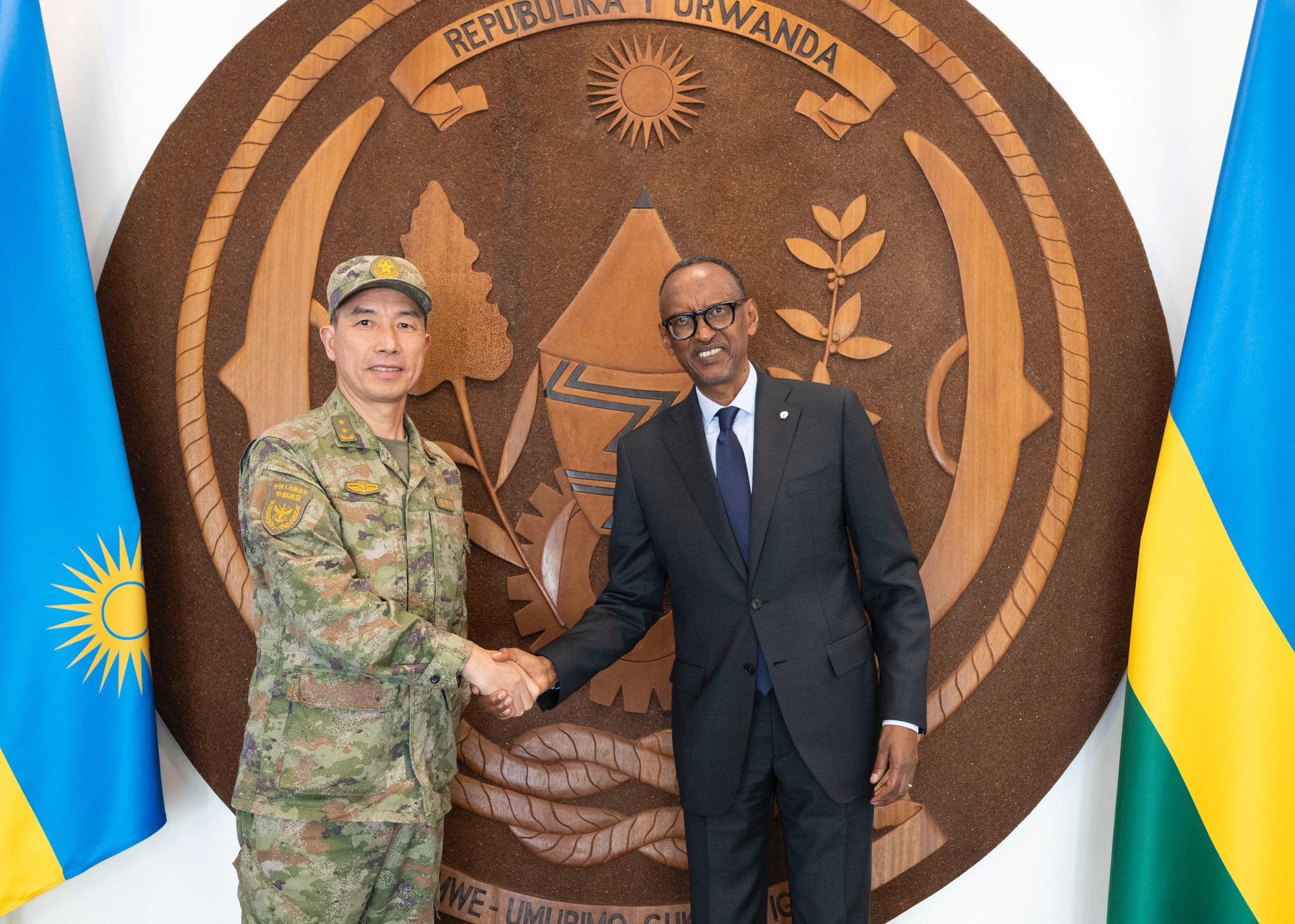
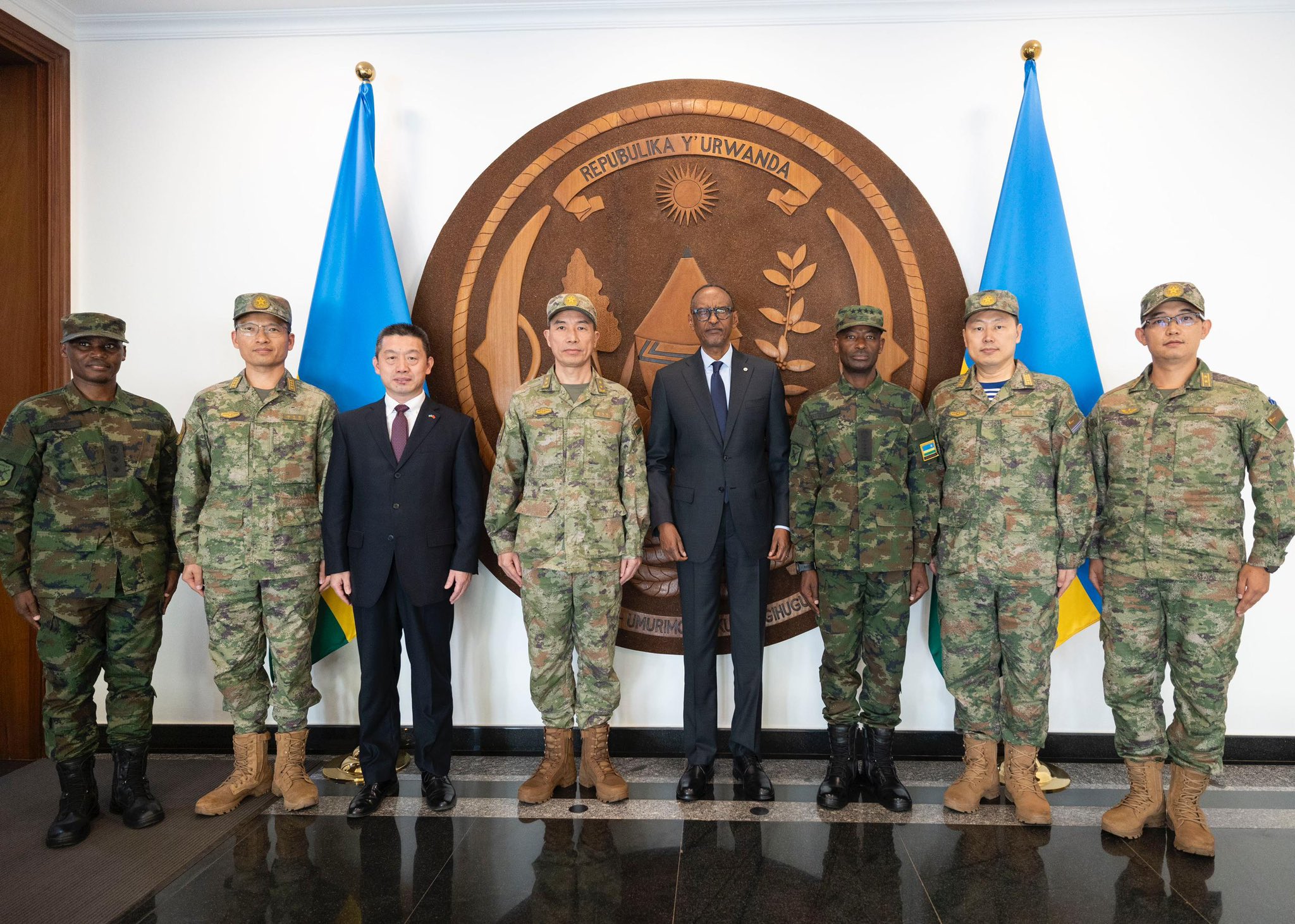
On the same day, President Kagame also met with Lt. Gen. Huang Xucong, Deputy Commander and Chief of Staff of the Central Theater Command of the Chinese People’s Liberation Army, who was on a four-day official visit to Rwanda. Their discussions focused on strengthening the existing cooperation between the Rwanda Defence Force and the Chinese People’s Liberation Army.
This meeting followed earlier engagements where Rwanda’s Minister of Defence, Juvenal Marizamunda, and Chief of Defence Staff of the RDF, Gen MK Mubarakh, hosted Lt. Gen. Huang Xucong and his delegation on Thursday. Their talks also centered on enhancing military cooperation.
During their visit, the Chinese delegation paid their respects to the victims of the 1994 Genocide against the Tutsi at the Kigali Genocide Memorial. They also toured the Campaign Against Genocide Museum and the Combat Training Centre in Gabiro, Eastern Province among others.
Adams made these remarks on Thursday at an IOC daily briefing at Paris 2024, addressing questions from journalists in the wake of a recent scandal involving the U.S. Anti-Doping Agency (USADA).
The scandal was exposed by a statement issued by the World Anti-Doping Agency (WADA) on Wednesday, which revealed that USADA had allowed U.S. athletes who had violated anti-doping rules to compete without disclosing their violations or imposing any sanctions.
“Obviously, we’re working with all of our stakeholders and continue to work with all our stakeholders to ensure we have a good and robust world anti-doping system,” said Adams.