The report presents the AG’s findings and respective recommendations on matters which were identified during the execution of Financial, Compliance, Performance, IT and Special audits conducted during the period from May 2019 to April 2020.
The focus for the audits was on high risk entities and those that implement programs that are of national importance. Those include; 5 GBEs (RSSB, WASAC, BDF, SGF &RPC Ltd) and 10 boards.
Other entities audited include; twenty eight (28) local governments, sixty nine (69) projects, eleven (11) ministries, nineteen (19) central government entities and twenty-six (26) district hospitals. In addition, as it has been before, OAG participated in the audit of EAC and its organs.
“This year, unqualified opinion makes 33% of opinion on the audit of compliance with laws and regulations and realization of value for money while 55% of opinions are unqualified on Financial Statements. The number of adverse opinions reduced by 3% and 5% compared to the last year in compliance and financial audit respectively. This indicates that public entities are improving towards a better audit opinions as qualified audit opinions increased by 3% compared to the last year” the Auditor General told parliament.
However, this improvement in better opinions is significantly dominated by projects and Ministries& other central government clusters which made up 82% of unqualified audit opinions and 67% of qualified audit opinions. Boards and GBEs results are still undesirable yet they are responsible for executing key national programs which significantly impact on the lives of citizens.
Entities audited represent 80% of the reported Government Expenditure for the year ended 30 June 2019 compared to the 86.6% audited last year. This decrease of audit coverage recorded this year was due to the COVID-19 pandemic that disrupted the availability of auditees.
The audit of 9 entities that were still work in progress by the time of tabling the current annual audit report shall be concluded once the situation of COVID-19 pandemic will be stabilized.
In the current year, there has been a significant increase by 51% in irregular expenditure in form of unsupported expenditure, partially supported expenditure, wasteful expenditure, unauthorised expenditure and funds diverted or fraudulently utilised amounting. This year we have Frw 8.6 billion from Frw 5.6 billion in the year 2018.
Other cross cutting findings identified during audits include cases of delayed and abandoned contracts, continuing cases of idle assets; stalled projects. These problems, according to the AG, need adequate attention since they may threaten smooth implementation of National Strategy for Transformation (NST1).
The Auditor General also noted in his report that the level of implementation of his recommendations has deteriorated by 5% in the current audit. 44 % of recommendations were fully implemented compared to 49% implemented in the previous year 2018.
“With a continuing low rate of implementation of recommendations, I call upon public entities to recognize the audit reports as a management tool meant to enhance their improvement of PFM country system” The Auditor General pleaded.
“I recognize that the audit would be of little value if recommendations are not implemented to address issues highlighted in audit reports” he added.
European countries are among the most heavily affected. At the time of writing, five of the six most-affected countries are in Europe.
And yet, even as Europe is fighting to bring COVID-19 under control at home, it is also playing a leading role in building global solidarity.
Even as we are physically distancing as individuals, we need to pull together collectively as actors on the world stage.
The European Union and WHO share a commitment to supporting vulnerable communities and countries around the world. Standing together as a global community is particularly crucial now, because we are all in this together as the disease knows no borders and does not discriminate. As long as it affects some of us, none of us is safe.
To support the global response to COVID-19, the European Union and its Member States recently put forward a Team Europe package, which is growing to be well over €23 billion. Of course, Team Europe will be delivering parts of its response to the coronavirus pandemic with the United Nations.
Like in so many crises, the most vulnerable suffer the most, and they must be our focus. The EU is supporting the WHO Strategic Preparedness and Response Plan with €30 million in new funding to strengthen emergency preparedness and response in countries with weak health systems or which are affected by humanitarian crises.
In addition, the European Commission, WHO, and partners from around the globe have also teamed up to launch ‘The Access to COVID-19 Tools Accelerator’, to speed up the development, production and equitable distribution of vaccines, diagnostics, and therapeutics for COVID-19, so that all people have equitable access to these lifesaving products.
Building on this historic commitment, the European Commission hosted a pledging event on 4 May at which more than 40 countries came together to pledge some €7.4 billion to support research and development for vaccines, diagnostics and therapeutics.
But our partnership extends well beyond the current crisis.
The pandemic exploits the gaps and inequalities in health systems, underscoring the importance of investing in health workers, health infrastructure and systems to prevent, detect and respond to disease outbreaks.
Strong health systems are the best prevention not only against outbreaks and pandemics, but also against the multiple health threats people around the world face every day.
And yet, on current trends, more than 5 billion people will lack access to essential health services by 2030 – including the ability to see a health worker, access to essential medicines, and running water in hospitals.
Even when services are available, using them can mean financial ruin for millions of people.
These gaps don’t only undermine the health of individuals, families and communities; they also undermine global security and economic growth.
That is why the EU has contributed €102 million to the Universal Health Coverage Partnership with WHO, supporting health system strengthening in 115 countries in Africa, the Caribbean, the Pacific, Eastern Europe, and Central and South East Asia.
The world spends around US$7.5 trillion on health each year – almost 10 percent of global GDP.
But too many countries spend too much of their health budget on managing diseases in hospitals – where the costs are higher and the outcomes are often worse – instead of promoting health and preventing disease at the primary health care level.
The COVID-19 pandemic will eventually recede, but there can be no going back to business as usual.
As we work on responding to this pandemic, we must also prepare for the next one. Now is an opportunity to lay the foundations for resilient health systems around the world.
Investments to strengthen health infrastructure and workforce are the only way to avoid future global health crises like the one we are facing now.
If we learn anything from COVID-19, it must be that investing in health now will save lives later.
History will judge us not only on whether we got through this pandemic but on the lessons we learned and the actions we took once it was over.
{{Dr. Tedros Adhanom Ghebreyesus
Director-General
World Health Organization}}
{{Jutta Urpilainen
Commissioner for International Partnerships
European Commission}}
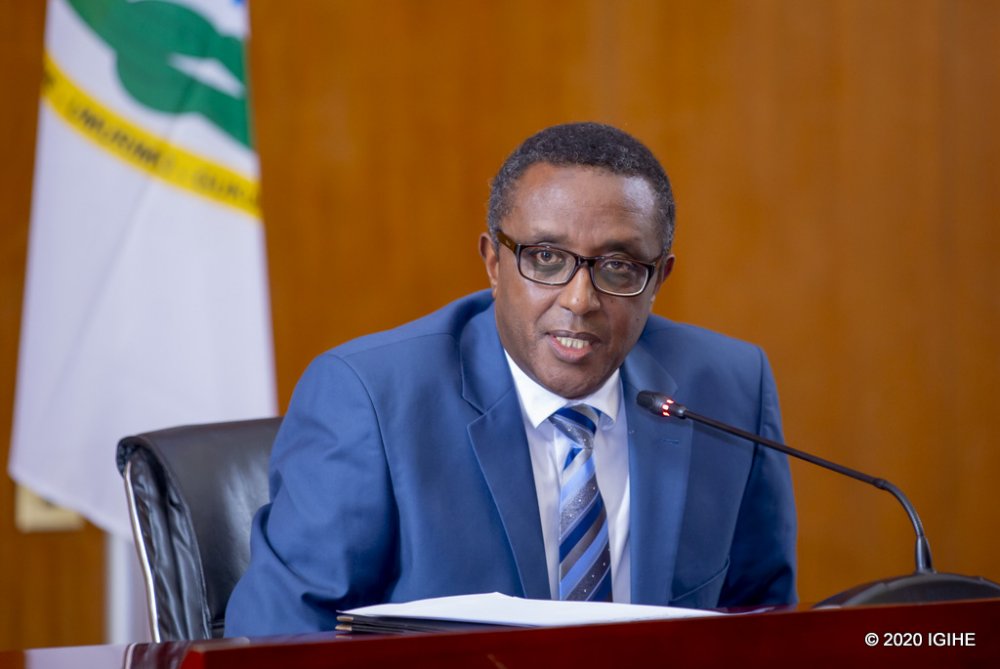
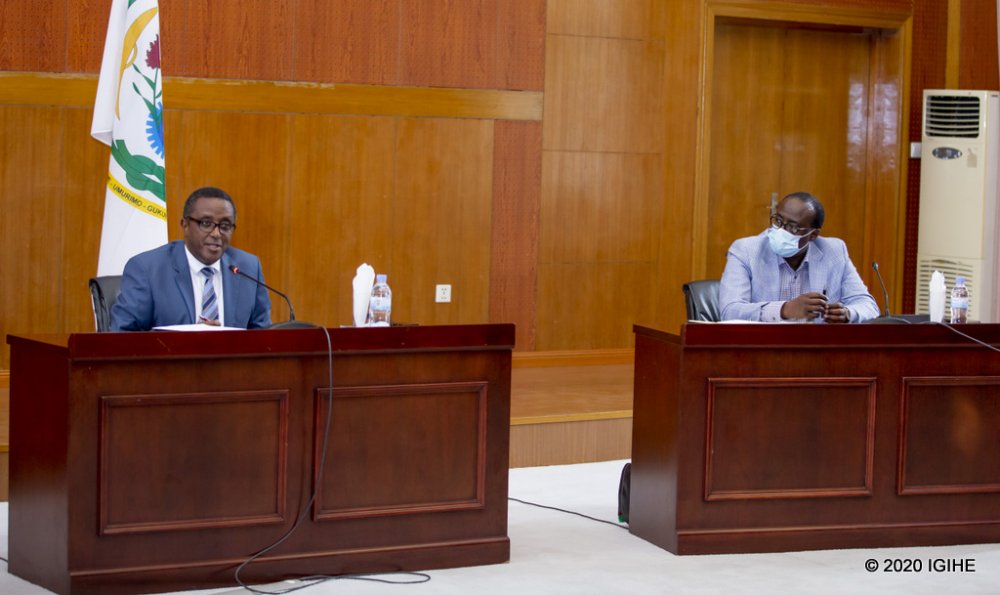
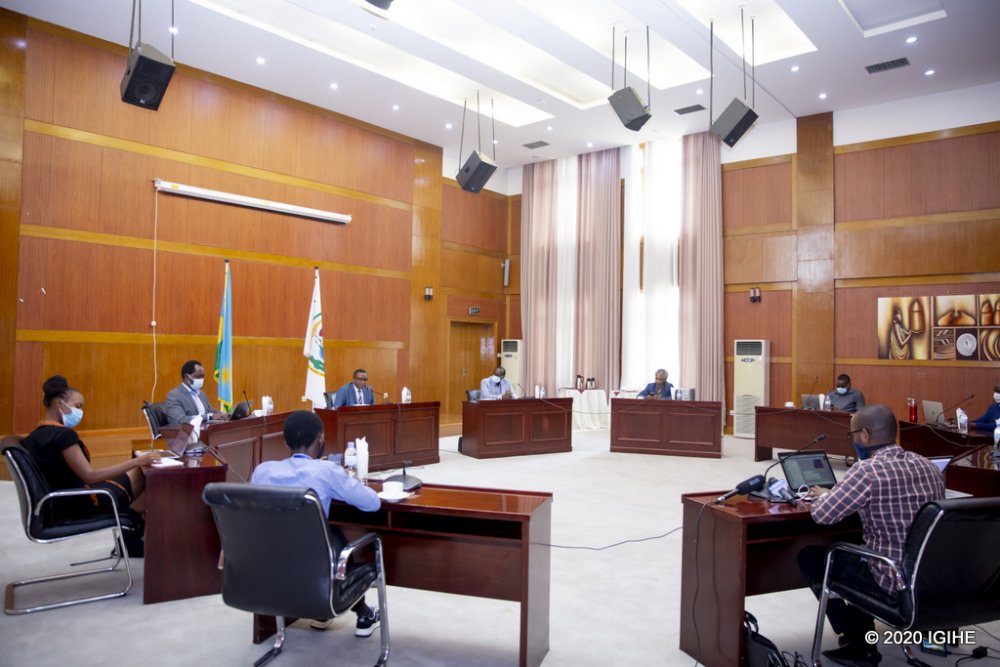
The Minister made the remarks in a press conference on Friday which was also attended by State Minister in charge of the East African Community, Prof Nshuti Manasseh.
Dr. Biruta said that there are significant improvements in Rwandan-Ugandan relations despite some negative acts of violence against Rwandans.
“We have been talking to Uganda for days, we have been talking to Angola for days through teleconferencing,” Biruta said.
“We have a list of Rwandans who will be released from Ugandan prisons, we are checking to see if they have been convicted of crimes […] and we are still looking to find out how they were arrested,” he said.
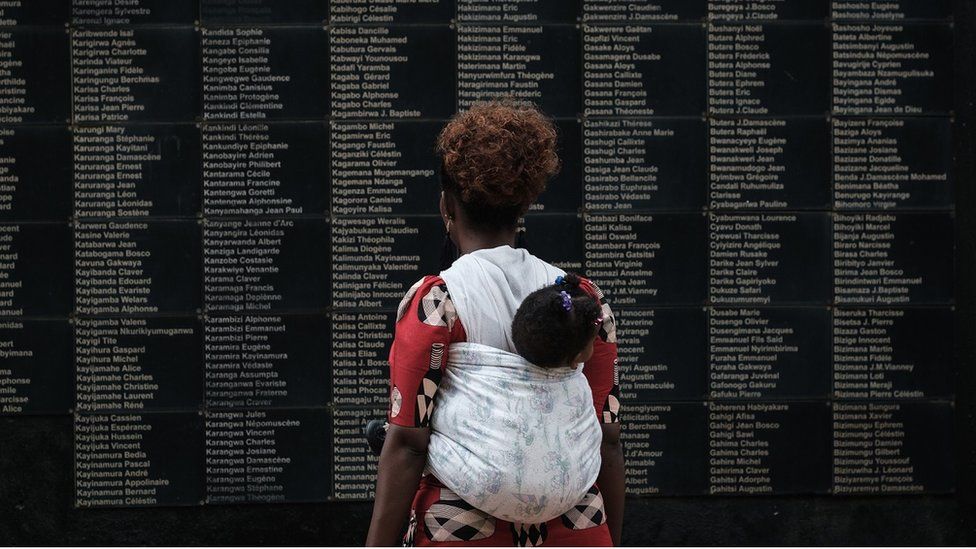
Last time we introduced you to the doctors and nurses who committed genocide in Butare town, Huye District. In this article we highlight the role of some of the doctors and nurses who worked in hospitals, health centers, clinics and health institutions in the Southern Province.
In this document, CNLG shows fifty-six (56) doctors and seventy-three (73) nurses who committed the crime of genocide.
{{I. HOSPITALS}}
{{1. Kabgayi Hospital, Muhanga}}
Dr Niyitegeka Théoneste was born in Cyeza, Muhanga District in 1964. He graduated from high school in Rilima, 1984 and attended university education in Russia where he specialized in paediatrics. In 1994 during genocide and after, he worked at Kabgayi Hospital. On 05/02/2008, the Gacaca Court of Appeal of Gihuma in Nyamabuye Sector (Muhanga) convicted him of complicity in the Genocide committed at Kabgayi Hospital and sentenced him to fifteen (15) years of imprisonment. Dr Niyitegeka Théoneste is detained in Rubavu Prison.
{{2. Nyanza Hospital, Nyanza}}
Dr Higiro Pierre Celestin alias Majambe was one of the organizers and implementers of the Genocide in Nyanza. He was a key member of the CDR. On 02/06/2009, the Gacaca Court of Nyanza City convicted Dr Higiro Pierre Celestin of genocide, which included the killing of Tutsi hospital staff, demonstrating a plot to carry out genocide through planting a bomb at his residence and spreading lies that it was planted by Tutsi for them to be killed and making a list of Tutsi to be killed.
Dr Higiro was charged in the same case with Basomingera Wellars who was sentenced to nineteen (19) years in prison and Mwemezi Bertin who was sentenced to seven years (7) years in prison and he died there. They collaborated in the killings at the hospital and in Nyanza City. Dr Higiro Pierre Celestin was sentenced to life imprisonment with special provisions by the Gacaca court. The defendant is being held in Nyanza Prison.
{{3. Kaduha Hospital, Nyamagabe}}
No doctor committed genocide in Kaduha hospital except other staff including a nurse called Rutaboba Tasiyani who was born in Cyangugu. He pleaded guilty and was released. In addition, he testified in Gacaca Courts but he died suddenly and was said to have been poisoned by those who feared he would expose their role in genocide. Others are two nurses called Mukamana Lidia who has been sentenced to nineteen (19) years and Nyiramana Catherine who has been sentenced to 25 years. Both are being held in Nyamagabe Prison.
{{4. Kigeme Hospital, Nyamagabe}}
Dr Twagiramungu Edson was in charge of Kigeme Hospital during the genocide and committed genocide at the hospital. He currently lives in Kenya. In addition, nurses Munyentwari Rodrigue and Mutiganda Evariste were also involved in the massacre of Tutsi at Kigeme Hospital.
{{5. Munini Hospital, Nyaruguru}}
No doctor committed genocide in Munini Hospital. The nurse called Nyirinkindi Thomas, participated in the massacre at Munini and Kibeho. He was sentenced in absentia by Gacaca.
{{II. HEALTH CENTERS }}
{{1. Ruhashya, Huye}}
Léopold Munyakayanza was a nurse, and had run the Ruhashya health center since the 1980s. He was initially a soldier in the ex-FAR, after his demobilization he worked as a nurse. He lived in Mahembe in the former commune of Ruhashya, in Butare. He played a very big role in the extermination of Tutsi together with Nyawenda Esdron who was bourgmestre of Rusatira and who fled to Belgium.
Leopold Munyakayanza and bourgmestre Esdron Nyawenda led meetings that planned the extermination of Tutsi from Rusatira, such that when President Theodore Sindikubwabo and the Prime Minister of the genocidal government Jean Kambanda came to Butare on April 19, 1994 to incite to begin the genocide in this region, Léopold Munyakayanza and Esdron Nyawenda were already ready to begin the extermination of Tutsi in the commune of Ruhashya.
On April 23, 1994, Léopold Munyakayanza led attacks against the Tutsi of Rusatira, who made several victims, including Twagiramutara Laurent who was a veterinarian at ISAR Rubona, and who was killed with all his family, were also exterminated, Kanyandekwe who was an accountant at ISAR Rubona and all his family, Ruzindana who is agronomist of Rusatira Commune and his family and many other Tutsi killed particularly at Kinkanga.
The wife of Léopold Munyakayanza, whose name was Iyamuremye Apolinariya, head of the social service (social worker) at the Rusatira health center also participated in the massacre of Tutsi. The two fled Rwanda after the genocide. Munyakayanza is probably died in exile and his wife lives Iyamuremye Apollinarie lives now in France.
{{2. Mugina health center, Kamonyi}}
Budengeri Jean Chrysostome was a nurse and was also in charge of child immunization program in Mugina and Ntongwe communes. He committed genocide in Mugina and Kinazi in collaboration with Bourgmestre Martin Ndamage, Major Pierre Claver Karangwa, a businessman called Francois Twagiramungu, Bourgmestre of Ntongwe Charles Kagabo and other interahamwe. After leaving Rwanda, he first settled in Zambia, became one of the founders of the FDLR in Zambia, and was its first vice president. He has since fled justice in Norway to date. Another nurse who committed genocide at Mugina health center was Umurerwa Annonciata who completed her sentence.
{{3. Kinazi health center, Ruhango}}
KAGABO Charles, was the head of the Kinazi dispensary in the former Ntongwe commune. During the genocide, he was appointed the Bourgmestre of Ntongwe by the Interim Government, after the assassination of Bourgmestre Alfred Habumugisha. Charles Kagabo was born in the former Nyakabungo sector of Ntongwe, studied in Butare – Indatwa (GSOB) in the medical assistant department. He first worked at Nyanza Hospital and was famous for exterminating Tutsi in Ntongwe and in Mugina Communes.
He circulated in the entire commune telling Tutsi to go to the commune’s office to be protected there, once they became a big number, he took away their traditional weapons that they had come with, and then sent soldiers, Interahamwe and Burundians to kill them. He is also accused of Nyamukumba massacre at a football ground where many Tutsi that he had sent to Ruhango were killed.
In 2008 he was tried in absentia by several Gacaca Courts: Gikoma Assembly in Ruhango Sector, Gitisi Assembly in Bweramana Sector; Rutabo Assembly in Kinazi Sector and Nyakabungo Assembly in Ntongwe Sector. All of these Gacaca assemblies sentenced him to life imprisonment with special provisions.
{{4. Gatagara health center, Nyanza}}
Dr Hakizimana Jean Marie Vianney, who headed the health center, was involved in the killing of patients at the health center and in the killings at the Center for the Disabled (HVP Gatagara) in collaboration with Brother Jean Baptiste Rutihunza, who headed HVP Gatagara. Dr Hakizimana lives in Uganda and Brother Rutihunza Jean Baptiste lives in Italy.
{{5. Nyamure health center, Nyanza}}
Ndahimana Matthew, was the director of the health center and was born in Mbuye in Nyanza District, Kibilizi Sector. He concluded high school from the Groupe Scolaire Officiel de Butare (GSOB) in 1985 in the Department of Medical Assistants. He worked for CHUB and CHK in Kigali but during the genocide he was the director of the Nyamure health center in the former Muyira commune.
He was involved in the killings that took place in the entire Nyanza District. Ndahimana fled to the Democratic Republic of Congo (DRC) and Congo-Brazzaville and later to Gabon. When he returned to Rwanda, he was aware that he would inevitably be held accountable for his role in the genocide. He has been in Nyanza (Mpanga) prison since 1997.
During his trial with Gacaca, he acknowledged his role in the genocide, claiming that he used hospital ambulance to carry out the killings, and participated to numerous attacks in Nyanza, Kibilizi, Nyamure, Rwezamenyo, Karama and many other parts of Nyanza and Amayaga.
He was the one who brought gendarms from Nyanza to fight the Tutsi who had previously resisted in the Mayaga area where they had taken refuge. He pleaded guilty to multiple offenses that he was accused of. Nyamure Sector Court of Appeals sentenced him to 30 years imprisonment in December 2009.
{{6. Ntyazo health center, Nyanza}}
Kabanda Alexis, who was the director of the health center, chaired the genocide preparations meetings and completed his sentence.
{{7. Kibilizi health center, Nyanza}}
Karasanyi Esdras, was the director of the health center, killed wounded Tutsi who were brought at the health center and took part in the attacks and he died.
{{8. Gikongoro health center, Nyamagabe }}
Rwasa Eugene was a nurse from Nyaruguru District (Ruramba). He was convicted by the Gacaca Court of Ngiryi Sector (Gasaka Sector) on 05/03/2010 on charges of handing over Tutsi girls who had taken refuge in Nyamagabe Health Center to be raped and killed.
After he was sentenced to life imprisonment, he immediately disappeared. He is said to have fled to Uganda. His wife, Kabarere Venantie worked at SOS / Gikongoro and has been sentenced to life in prison for killing 29 orphans who had fled from Kigali SOS Kacyiru. She is being held in Nyamagabe Prison.
{{9. Jenda health center, Nyamagabe}}
Mugwaneza Léonard was the director of the health center. He is from the former Cyangugu Prefecture, Kirambo Commune. He was involved in the massacre of Tutsi who were hospitalised at Musange Health Center and those who had taken refuge at Musange Commune office. He was sentenced to life imprisonment in absentia and lives in Uganda (Kampala) where he works in a clinic.
{{10. Kibeho health center, Nyaruguru}}
Mutazihana Nathanael was the director of Kibeho dispensary. He was sentenced on 05/7/2007 by the Gacaca Court of Kibeho Sector to 25 years imprisonment to be served as follows: 12.5 years doing Travaux d’Intérêt Général (TIG), 8.5 years in prison and to end up with a 4-year suspended imprisonment sentence. He only carried out the imprisonment sentence but he has not yet done the TIG and he works in Rwinkwavu.
{{11. Busanze health center, Nyaruguru}}
{{Munyankindi Thomas}}, a former medical assistant who committed genocide in the former Nshili commune. He fled to Burundi.
{{Conclusion}}
This list (those that CNLG managed to find out) of some of the doctors and nurses who committed genocide is published in addition to the one published yesterday about the City of Butare. It shows that many of those who were in charge of treatment of people but betrayed the standards of their profession. It also shows how the Genocide against the Tutsi was a supernatural crime where doctors and nurses quit their careers of protecting lives and chose to kill.
The CNLG calls on the countries hosting these doctors and nurses who committed genocide, and has given them the job of treating people, to suspend them from the medical profession and to remove them from the list of doctors and nurses who are allowed to practice medicine and to be brought to justice as soon as possible.
CNLG commends all those who continue to take part in this international justice campaign so that the perpetrators of the Genocide who fled the country can be held accountable for their actions.
Done at Kigali on May 15, 2020
{{Dr. BIZIMANA Jean Damascène
Executive Secretary
National Commission for the Fight Against Genocide (CNLG)}}
According to the daily updates from the Ministry of Health, no new case was recorded among 895 samples that were tested in the previous 24 hours. The total cases are 287 and active cases remain 119, many of wo were truck drivers and their assistants from Tanzania.
Since the ease of the lockdown, on May 4th to May 18th, which allowed most businesses to resume operations for two weeks’ time, eryone has been urged to put on facemasks in public and in multi-family compounds, to continue washing hands regularly, and to practice social distancing among other directives.
The public is also reminded to always call 114- the toll-free line of Rwanda Biomedical Center, whenever they experience symptoms of this pandemic such as fever, dry cough and shortness of breath.
The latest statistics released by the Rwandan Ministry of Health indicate a better future. Early this week, there were more recoveries than active cases and the trend has continued till now. From May 4th, the lockdown measures have been partly eased and people’s life and work are returning to normal at a steady pace.
What’s more, Rwanda contributed one million USD to the funding of the African Union and Africa Center of Disease Control to fight the pandemic. On different occasions, President Paul Kagame has firmly supported the leading role of the WHO in coronavirus fight and called for closer collaboration among members of the EAC, AU and international community. Rwanda truly sets a good example for outbreak response.
As China’s Ambassador to Rwanda, I’m deeply encouraged by Rwanda’s counter-virus efforts and achievements. We, the Chinese can empathize with Rwandan people’s experiences in this fight. China is the first country hit hard by the pandemic. We made huge sacrifices to push back the virus and know how tough the battle is.
COVID-19 is a public health crisis and seriously threatens the safety and health of people, poses big challenge to the governance of government, and severely undermines the social economy. Virus knows no borders. No country can shield itself from its impact. It’s a living proof that the world all belongs to a community with a shared future and a common stake.
China stands with Rwanda and other African countries in this fight. Together, we have demonstrated to the world that solidarity and cooperation can create a positive momentum.
When China was in the most difficult days, African friends including Rwandan people, assisted us to the best of the capabilities and voiced firm solidarity with China. Now China has achieved major and strategic success in containing the virus and the economy is showing steady recovery.
China is repaying kindness from Africa friends and working hand in hand to navigate the tough times. China has donated medical supplies to the African Union and all the African countries having diplomatic relations with China. Chinese public health experts have traveled to Africa to save lives.
The two sides have had frequent exchanges of views online. Going forward, China will continue to provide support to African countries, promote the development of Africa CDC, and enhance cooperation between China and Africa on public health and disease control. I’m sure together, China and Africa can beat COVID-19 and build a public health community with a shared future.
However, unlike in China and Africa where people closely coordinate and cooperate to fight the epidemic, in some parts of the world there have been unpleasant talks about COVID-19. At this critical juncture, it’s really a time for solidarity, collaboration and mutual support, not a time for finger-pointing or blame-shifting. In fighting the virus, fortunes of every country are closely inter-connected. In sustaining social and economic growth, interests of every country are closely aligned.
Facts already prove that no country can tackle this disease on its own. We are all in it together. Chinese President Xi Jinping said mankind belongs to a community with a shared future and in this community, solidarity and cooperation are the most powerful weapons to defeat COVID-19. Viruses are the common enemy of humanity.
Working together in partnership is only the right way forward.
Guided by this vision, we insist it is absolutely important that the international community should uphold fairness and justice, rather than politicize the public health issue and stigmatize other countries; different countries need act with a greater sense of common purpose and stronger resolve, rather than engage in a smear and scapegoating campaign.
We propose to improve global governance on public health and support the WHO in playing an important role in the global response to the pandemic.
We hope to enhance the coordination of social and economic policies to stabilize society, ensure economic recovery and guarantee people’s livelihoods. The global industrial and supply chains should keep open, stable and secure.
All these are integral parts of a community of public health for mankind. Hand in hand, we will prevail over the epidemic and make concrete contributions to global public health security.
{{RAO Hongwei
Ambassador Extraordinary and Plenipotentiary of
the People’s Republic of China to the Republic of Rwanda}}
The money was recovered Wednesday from one Samuel Mbatezimana, 22, who was a domestic worker for the victim at her residence in Kicukiro District.
Mbatezimana allegedly stole a bag containing Rwf1.2 million, after breaking into his boss’ bedroom, recently.
Chief Inspector of Police (CIP) Hamdun Twizeyimana, the police spokesperson for Eastern region, said that Police first got to know about the theft through related messages which were circulating on social media.
“We first say the alleged theft on messages, which were circulating on WhatsApp, but we were later formally informed that the prime suspect could have escaped to Nyagatare,” CIP Twizeyimana said.
“Law enforcement organs worked together to locate and arrest Mbatezimana, the prime suspect in Rukomo Sector, Rurenge cell. We found only Rwf612, 000 on him,’’ he added.
The money was less Rwf600, 000, which the suspect had already spent buying different items like smartphone and clothes, among others, the spokesperson said.
The victim, CIP Twizeyimana said, was informed of the recovery of her remaining money.
Theft, under article 166 of the penal code, attracts an imprisonment of between one and two years and a fine of Rwf1 million to Rwf2 million, a community service of not more than six months or one of the two penalties.
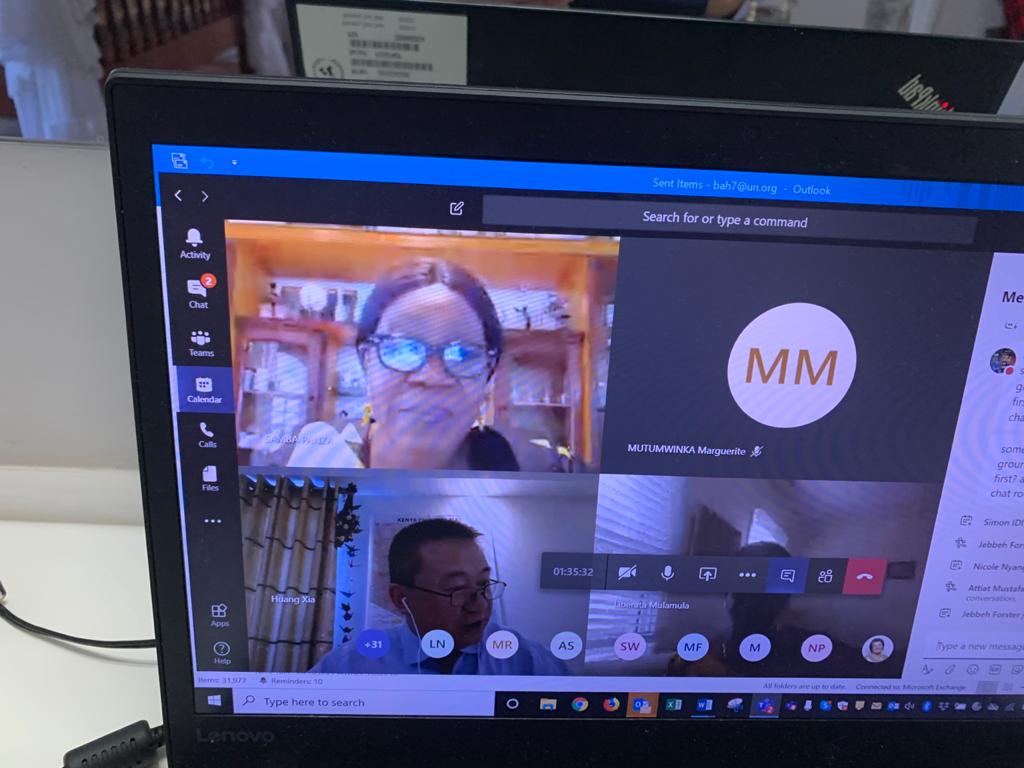
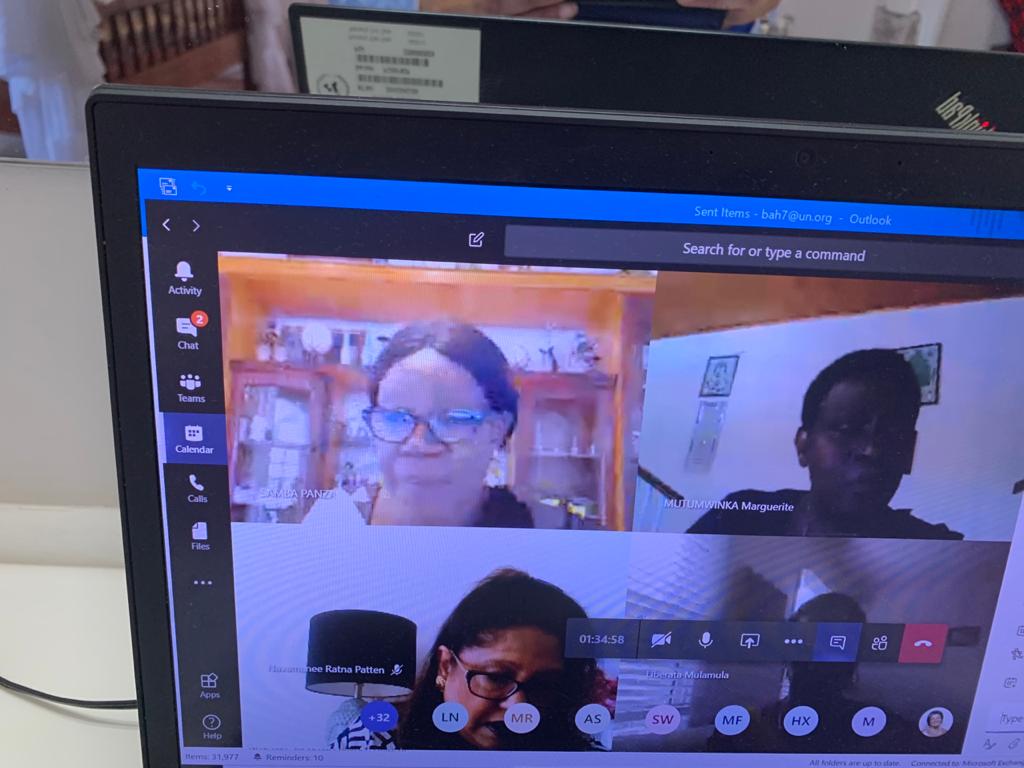
The Board convened virtually on 12th May 2020 with the purpose of making strong advocacy for Great Lakes women, in several areas as the world battles COVID-19 pandemic.
Participants expressed concerns that women in the Great Lakes region of Africa are facing various social and economic challenges at this particular time.
The Special Envoy of the UN Secretary-General for the Great Lakes region, Mr. Huang Xia, who was the Chair of the meeting, expressed this concern saying that women are the most victim of the social-economic effects of the pandemic.
He stated: “COVID-19 is increasing the vulnerability of people who are already in fragile situations, thereby increasing poverty particularly among women and girls . .”
The 12th meeting of the Advisory Board set its agenda to include mobilization of the regional and international community to contribute to the fight against COVID-19 and to preserve the achievements recorded in relation to the Women, Peace and Security component; participation of women in the political and electoral process in the region; and engagement of member states to ensure prevention, protection and economic recovery and implementation of the Regional Action Plan.
The meeting discussed the COVID 19, its impact on women, the girl child and other vulnerable groups of the Great Lakes Region as well as the efforts to preserve the gains relating to Women, Peace and Security (FPS), The meeting was also an opportunity to review the operationalization of the Regional Action Plan of resolution1325 (2000) of the Great Lakes Region and to examine the role of Gender Ministers in national, regional and international response to the ongoing health crisis as well as participation of women in forthcoming elections.
“In the great lakes region, women are the most active in business, especially informal sector. When borders are closed, and movements restricted, they cannot generate income. Therefore they cannot provide family basic needs such as food, health services, to mention, just a few,” said Ambassador Eliane Mokodopo, the Director of Gender in International Conference on the Great Lakes Region (ICGLR) and member of the advisory board.
She said that due to this situation, many families emptied their stores which caused problems for most of the families.
Marguerite Mutumwinka, the Chairperson of COCFEM GL, a Consultative organization of 13 Umbrella of Women Associations in the Great Lakes Region (Rwanda, Burundi and DRC) said that this economic impact brings another challenge that will still affect the woman.
From Rwanda, Mutumwika said that the lockdown did not only affect women financially but also created condition for increased domestic.
She raised a concern about a potential increase of gender-based violence (GBV) in some countries of the region under COVID-19 lockdown.
Need to ensure peace and security for women during and after Covid-19
The 12th Advisory board recommended member states to establish national, regional, and continental mechanisms to ensure peace and security for women and girls.
“There is a need to work in synergy in order to initiate a common front to identify actions that should be implemented at the national, regional and continental level to fight against COVID – 19,” suggested Ambassador Mokodopo.
“We recommended to Ministers of gender in the region to meet and assess how to take into account gender into all mechanisms of protection, prevention and treatment of COVID – 19. This will reduce both the long term and short term negative impact of the pandemic among women in the region.”
The advisory board recommended to States in the region to think about gender in all their socio-economic planning as their efforts to mitigate the COVID-19 aftermath.
“For example, keeping in mind that both boys and girls have stopped their studies due to the lockdown, we recommend to our governments to assess how COVID-19 affects both girls and boys,” Mutumwika proposed.
Mutumwinka further proposed: “We assume that consequences of stopping studies can be more harmful to girls than they would be to boys. Our governments need to put in place strategies to prevent unwanted pregnancies among girls who currently cannot go to school.”
Other recommendations made to the governments in the region are to sensitize men and women to share responsibilities and tasks at home to reduce the heavy domestic work normally done by women.
They suggested also putting in place strategies to secure fund for women in order to allow them restart their financial activities when countries start the new normal.
The Advisory Board for Women, Peace and Security for the Great Lakes Region was initiated in 2013 under the support of the office of the UN special Envoy to provide recommendations on issues related to women, peace and security.
As Rwandans grapple with the consequences of this pandemic, the two institutions have committed to provide relief to customers as they navigate through this difficult period.
Effective 15th May, all customers who are not able to pay their MoKash loans within 30 days of taking the loan will not be charged a late repayment fee. The late repayment penalty has been extended by 30 days. Customers who fail to repay their loans by 60 and 90 days thereafter will not have their loan limits reduced or cancelled respectively. An additional 30 days have been granted before a customer’s loan limit is reduced or cancelled.
Accessible via MTN Mobile Money (by dialling *182*5#), MoKash is a loan product offered by NCBA and MTN. MoKash provides 30-day term loans at 9% interest. Through MoKash, customers can also open savings accounts with interest of up to 7% per annum.
“As the Coronavirus continues to stir global economic fears, NCBA will continue to support our customers who may be financially affected by the outbreak” said Lina Higiro, Chief Executive Officer, NCBA Rwanda.
She added, “We would like to urge customers to be responsible with the credit solutions to ensure that as a collective we care for each other during this tough time. The Bank shall through MoKash continue to responsibly support all customers through this difficult period”
In addition, in a bid to promote cashless payments, customers will be able to move any amount between their MTN MoMo wallets to MoKash at no additional cost.
Speaking about this Corporate Social innovation, MTN Rwanda’s CEO, Mitwa Ng’ambi said, “We have taken a very frontal approach in engaging our partner NCBA and together we have come up with interventions to support Rwandan citizens and assist in the overall fight of the pandemic. MTN will also leverage its knowledge and infrastructure in the continued participation in the many forums that have been set up to assist those in need.”
NCBA and MTN will continue engaging and working with customers during this time to ensure that they can manage loan repayments.
Rwanda National Police (RNP), CP John Bosco Kabera said that they were caught at about 9 am.
Curfew starts at 8 pm up to 5 am.
Besides violating the curfew, CP Kabera said, they were traveling in a vehicle authorized to carry only four people in this period as part of the measure adopted to prevent the spread and combat the pandemic of Coronavirus.
One of those arrested, Jean Nzabihimana and Aboubakar Nibonshuti, while speaking to the media at Kicukiro Police station, said that they traveled to Rusumo border post in the same Toyota Hilux, RAB 394Q.
“We left Kigali for Rusumo on May 13, at about 11:00 Hrs, we were nine in the same vehicle, which should only transport four people as per the government directives,” said Nzabihimana.
He added: “We were fortunate that we were not caught along the way. When we arrived in Rusumo we took separate vehicles to Kigali. We linked up again in Kigali and traveled in the same car to Kicukiro where we were intercepted.”
Nibonshuti, on his part, said that they were aware of the violated directives only that they hoped they would not be caught.
CP Kabera said that they were caught in varied violations put in place to prevent the spread of Coronavirus.
“In this period, vehicles are also required to carry a specific number of people to ensure social distancing. A vehicle licensed to transport say, 70 people will only take 35; those licensed to take 30 will be carrying 15.
Unfortunately, they understand these directives and they breached them intentionally, including violating the curfew,” said CP Kabera.
He explained that the main focus is not to arrest or to use force but for the public to understand and heed the call to respect the measures put in place for everyone’s safety.
He warned that RNP will continue to ensure that the measures put in place by the government to prevent the spread of the pandemic, are understood and respected, and those violating them detained or fined.