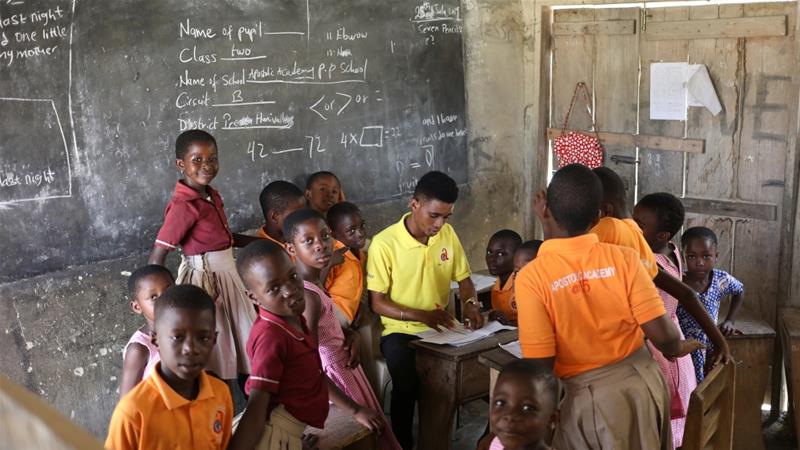
Some parents made arrangements with teachers for home-based learning, after the government directives to close schools until September due to the virus, where children from different families are brought together in groups to take lessons.
“People who are bringing teachers to their homes are violating the directives to prevent COVID-19. It is not allowed,” CP John Bosco Kabera, the spokesperson for Rwanda National Police, said in a tweet.
Kabera said that in response to a tweet from one Sylvie Nsanga, who pointed out that it was difficult for teachers and their students to observe physical distancing during home-schooling, especially during grouped sessions.
“We are bringing teachers in our homes to teach our children not knowing where they have touched and we are doing homeschooling in groups of different families,” reads one of her series of tweets.
The Police spokesperson explained that teachers were not allowed to find students in their homes.
He urged parents to adopt e-learning practices or following lessons that are being broadcast of public radio and television.
“Coaching in a sense where a teacher will bring together a few students to teach them is against the directives on social distancing that is in place, and so is prohibited at the moment,” Gaspard Twagirayezu, State Minister for Primary and Secondary at the Ministry of Education, said.
Irenee Ndayambaje, the Director-General of the Rwanda Education Board (REB) encourages students to study using the available online platforms, saying that the online learning materials are available for free for those who have access to the internet.
“The systems are interactive since there are tutors to help students and other users. The lessons on YouTube will not require internet charges after partnering with Telecom companies to finance the project,” Ndayambaje added.
For the students who are unable to access the e-learning platforms, the option is to follow the lessons through radio and television.
The sad news of his death was confirmed by one of his family members who was attending to him at the time.
Born March 20, 1950, Prof Laurent Nkusi served in different government positions.
Nkusi served as literature and language lecturer at the University of Rwanda for 24 years between the years of 1976 and 2000, before he was appointed Minister of Land and Environment for three years.
Nkusi was later appointed Information Minister before he served as the vice-rector in charge of academics at the Institute of Agriculture, Technology, and Education of Kibungo (INATEK).
Thereafter Nkusi was elected to the senate and completed his term last year.
He leaves a widow and five children.
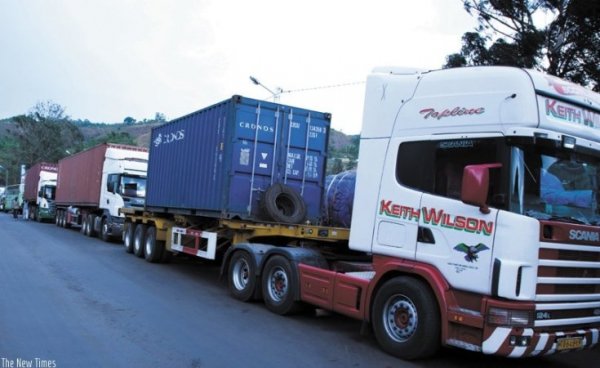
The Minister of Foreign Affairs and International Cooperation Dr Vincent Biruta confirmed, in a press briefing on Friday that an agreement had been reached with Tanzania and trucks would resume moving on Saturday morning.
“Talks have been concluded. Movement of trucks to start tomorrow,” Dr. Biruta told the Press in a short message.
Tanzanian truck drivers were resistant to adhere to the measures put in place by Rwanda, where they would be required to hand over their trucks to their Rwandan counterparts who would transport the goods to their final destination, in order to minimise cross border transmission of COVID-19.
Similarly, Rwandan trucks in direction to Dar es Salaam were blocked by protesting Tanzanian drivers in revenge for the measures instituted by Rwanda. Dr. Biruta said that since the implementation of the measures, cross-border infections of coronavirus cases declined tremendously.
“We had a previous meeting where we were not able to conclude on two particular points,”
“One was on swapping of drivers at Rusumo border post. The other one was related to the escorting of trucks with perishable goods and fuel because those ones could not offload at Rusumo. So, we were stuck on those particular points,” Dr. Biruta had said earlier before the countries reached an agreement.
He said Rwanda had made proposals to Tanzania which would be discussed on Friday afternoon, adding that there was no option of not agreeing because both countries were looking to ensuring that the central corridor route is restored as soon as possible.
Dr Biruta said that businesswise, both Rwanda and Tanzania were losing given the situation in Rusumo and Benaco and both needed to find a solution.
“What we are discussing here is business. Rwanda is not the only party to lose in this standoff. It is business, I guess Rwanda is losing money in this situation, Tanzania, the same. We need to find a solution,” Dr Biruta said.
The Minister of State for Foreign Affairs in charge of the East African Community (EAC) Prof Manasseh Nshuti said that Rwanda remains focused on the measures to stop the spread of New Coronavirus, including cross border transmissions which are proving to be a problem in the region.
Dr Biruta explained that Tanzania had opted out of the Consultative Meeting of EAC Heads of State which was held on Tuesday, chaired by President Paul Kagame, the sitting chair of the EAC. Tanzania said it was more interested in bilateral talks with Rwanda to resolve the standoff.
At the same time, Kenyan Truck drivers were also protesting measures of handing over trucks to Rwandan drivers at Kagitumba One Stop Border Post but the situation has been resolved and trucks have started moving according to Dr Biruta.
Prof Nshuti said that a solution had been agreed on with Kenyan, which would see Kenya test truck drivers before arriving setting off for regional countries and they would be tested again at the destination, those tested positive are not cleared to ferry the goods.
He said relations with Tanzania remained jovial despite the situation, but the two countries would arrive at a solution, citing the deal for Rwandair to transport Tanzanian fish from Mwanza to the European market as an example of positive relations between the two countries.
Dar es Salaam Port handles 80 percent of the goods imported into Rwanda.
The development has been announced during the daily update from the Ministry of Health. The two cases were obtained from 2,041 tests- the highest since March 14 when the country confirmed the first case of Coronavirus.
In total, the country has so far conducted 48,239 tests of COVID-19 since the outbreak.
As a result of strict directives in the fight against the COVID-19, Rwanda’s recovery cases have since May 11 surpassed active ones and the country has reported no deaths from the virus so far.
Rwanda recently eased COVID-19 lockdown and allowed some businesses to continue operations for two weeks, and the government is expected to give an update on the partial lockdown on Monday, May 19.
Meanwhile, citizens are still urged to abide by COVID-19 precautionary measures such as regular washing of hands and self-distancing and the wearing of face masks when in public or multi-family compounds.
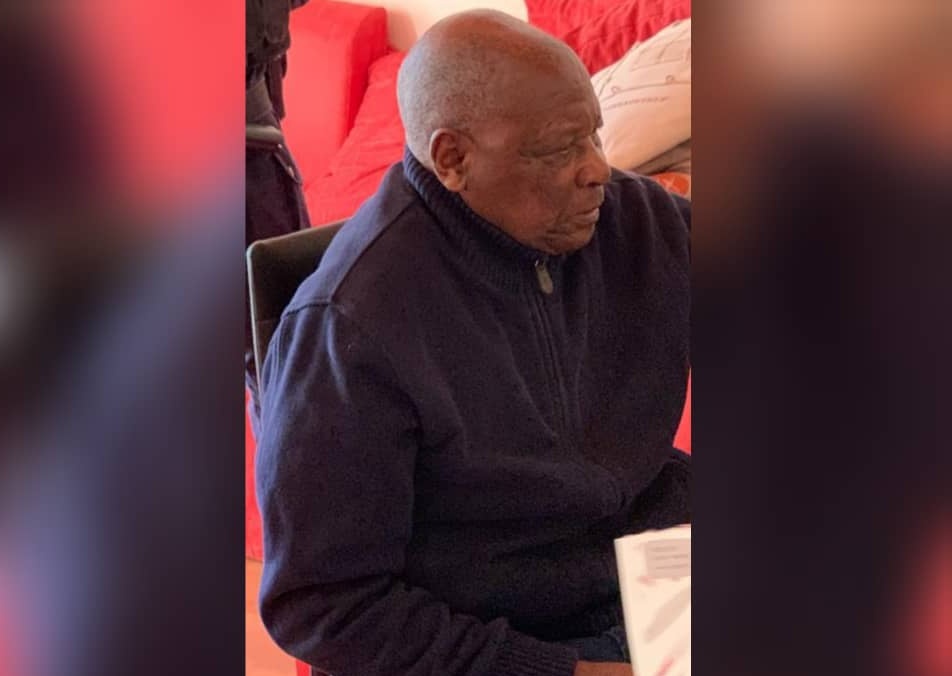
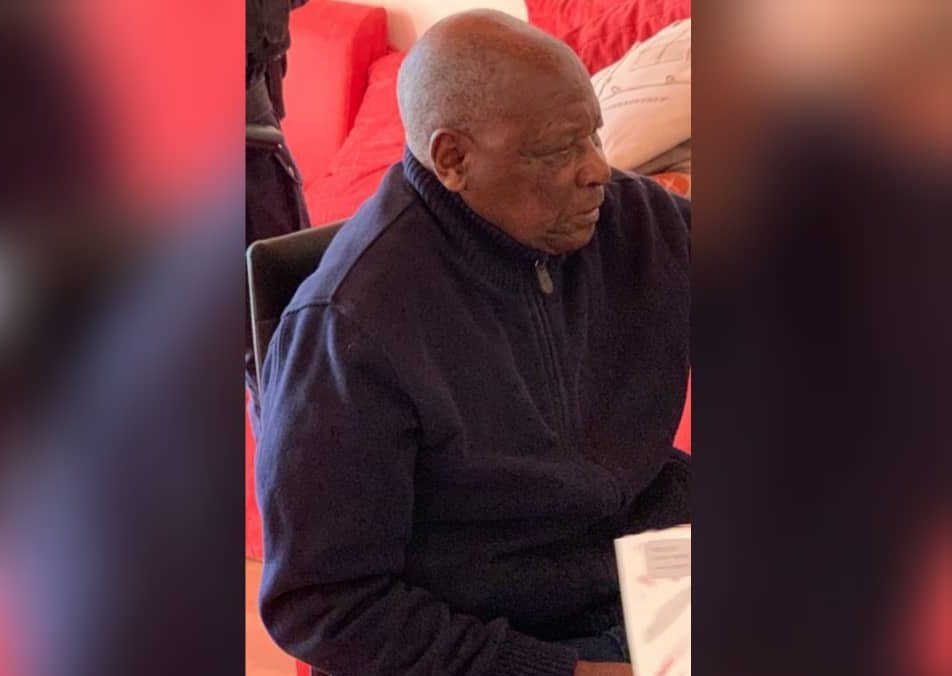
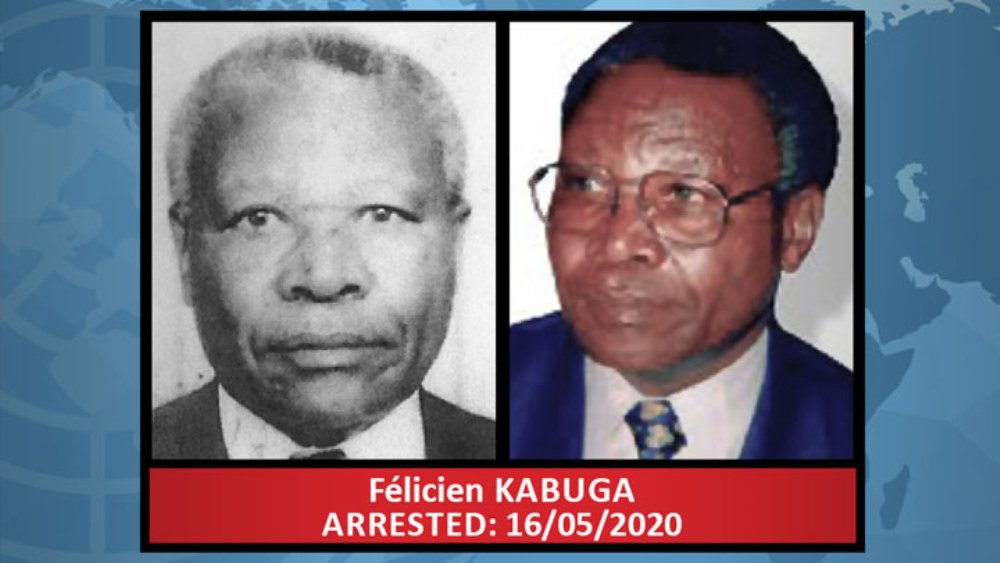
“The arrest of Kabuga today is a reminder that those responsible for genocide can be brought to account, even 26 years after their crimes,” said Serge Brammertz, chief prosecutor of The Hague-based Mechanism for International Criminal Tribunals (IRMCT).
“Our first thoughts must be with the victims and survivors of the Rwandan genocide. Advocating on their behalf is an immense professional honour for my entire office.”
Kabuga was indicted by the UN International Criminal Tribunal (ICTR) for Rwanda in 1997 on seven counts of genocide, complicity in genocide, direct and public incitement to commit genocide, attempt to commit genocide, conspiracy to commit genocide, persecution and extermination, all in relation to crimes committed during the 1994 genocide against the Tutsi in Rwanda.
Rwandan prosecutors say Kabuga was the chief financier during the 1994 Genocide against the Tutsi.
The 100-day pogrom left at least a million Rwandans, the majority of them Tutsi, dead.
Kabuga held the purse-strings of hate media Kangura newspaper and RTLM radio, which incited ethnic Hutu to kill minority Tutsi, according to the Genocide Fugitive Tracking Unit (GFTU), a special team created in 2007 to prosecute the architects behind the ethnic slaughter.
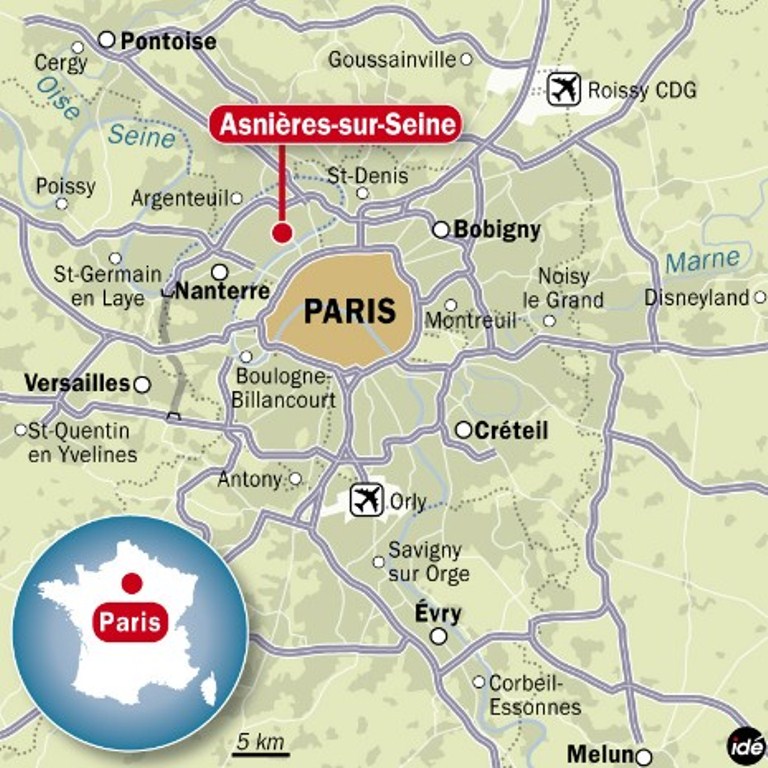
The operation to arrest Kabuga was run by French authorities in conjunction with the IRMCT. It involved “a sophisticated, coordinated operation with simultaneous searches across a number of locations,” the French justice ministry said.
He was arrested him at 0530 GMT (8930am) on Saturday.
{{Patched ties}}
Rwanda government has for long accused France of complicity in the genocide and of frustrating justice for the victims since many of the suspects fled to the European country when the government of Juvenal Habyarimana fell in July 1994.
France has admitted it made mistakes but insists it never had a role in the massacre.
In April 2013, Pascal Simbikangwa, a former Rwandan army captain, became the first fugitive to face charges of complicity in genocide and complicity in crimes against humanity in a French court.
Simbikangwa, arrested in the French island of Mayotte in 2008, was a month later joined in the dock by Octavien Ngenzi, 58, and Tito Barahira, 64, two former mayors accused of playing a direct role in the massacre of hundreds of Tutsi refugees in a church in the eastern town of Kabarondo on April 13, 1994.
However, the current government of Emmanuel Macron has appeared more forthcoming with Kigali after several meetings with President Paul Kagame.
In May 2018, Macron hosted Kagame and then openly backed Rwanda’s Louise Mushikiwabo to head the world association of French-speaking nations.
Mushiwabo won the seat, Rwandan fugitives lost their haven. The arrest of Kabuga could send strong signals to the rest of the fugitives in France.
It is not yet clear if Kabuga will be extradited to Rwanda to face justice but Brammertz suggested that the suspect will be transferred to the custody of the Mechanism, where he will stand trial.
Rwanda’s Genocide Fugitive Tracking Unit has issued 1,012 international arrest warrants for suspects in 32 countries.
Several are in neighbouring nations like DR Congo, Uganda and Tanzania. Others are further afield in Kenya, Malawi and Zambia. And still others fled to Europe, North America or even Australia.
GFTU listed Kabuga on its top list. The other is Augustin Bizimana, a former defence minister believed to be hiding in DR Congo.
{{Who is Kabuga?}}
Félicien Kabuga was born in 1935 in Muniga, in present-day Gicumbi district, 30km from Gatuna-Katuna border. He was an extremely rich businessman who was closely allied to the family of President Habyarimana.
He was also the main financial contributor to and silent partner of Habyarimana’s party, National Republican Movement for Democracy and Development MRND, and led an extremist wing of the party.
When he bankrolled Kangura newspaper and RTLM radio, he reportedly used them for such fierce ethnic propaganda that the Information ministry was once compelled to order him to cease distribution of messages aiming at inciting inter-racial hatred.
In June 1994, confronted with the advance of RPF troops, Kabuga fled Rwanda. He first reached Switzerland but on receiving an order to leave, he then went to Kinshasa in DR Congo. He later hid in Nairobi, Kenya, until he found haven in France.
{{Genocide suspects transferred or extradited to Rwanda
Name From Date}}
-* Charles Bandora: Norway, March 2013
-* Jean-Paul Birindabagabo: Uganda, May 2017
-* Enos Kagaba: US, May 2005
-* Jean-Pierre Kwitonda: Uganda, November 2010
-* Jean-Claude Iyamuremye: Netherlands, November 2016
-* Emmanuel Mbarushimana: Denmark, July 2014
-* Jean-Marie Vianney Mudahinyuka: US, January 2011
-* Léon Mugesera: Canada, January 2012
-* Jean-Baptiste Mugimba: Netherlands, November 2016
-* Marie-Claire Mukeshimana: US, December 2011
-* Bernard Munyagishari: ICTR, July 2013
-* Léopold Munyakazi: US, September 2016
-* Jean de Dieu Munyaneza: Netherlands, March 2015
-* Augustin Nkundabazungu: Uganda, August 2010
-* Ladislas Ntaganzwa: ICTR, March 2016
-* Agnès Ntamabyariro: Zambia, 1997
-* Henry Jean Claude Seyoboka: Canada, November 2016
-* Jean Twagiramungu: Germany, August 18, 2017
-* Jean Uwinkindi: ICTR, April 2012
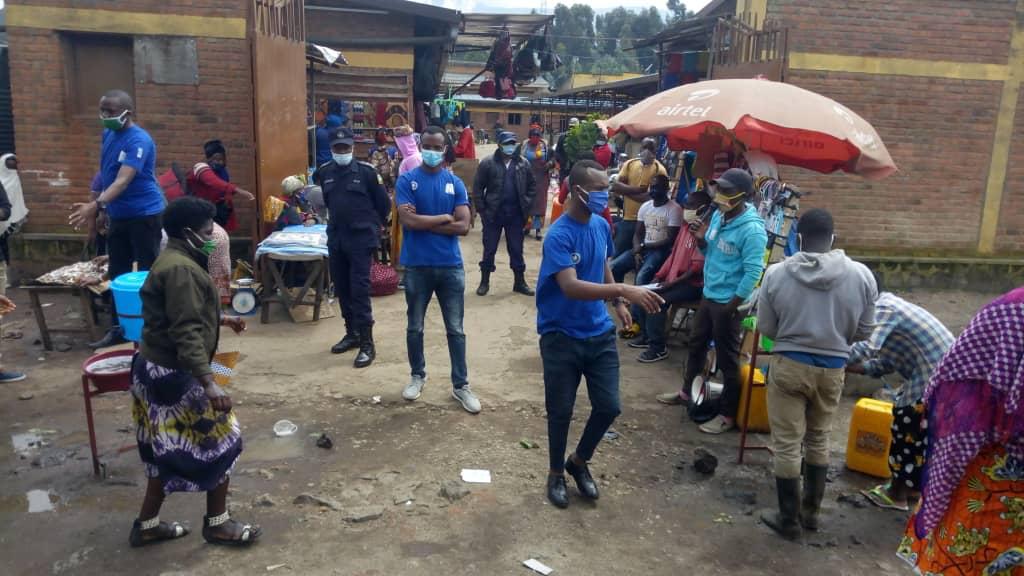
The awareness activities, according to RYVCP leadership, were initiated to supplement the government efforts and Rwanda National Police (RNP) in particular, to fight and prevent the spread of Coronavirus especially in business centres like markets and trading centres.
On May 15, awareness activities were conducted in different markets in Nyabihu and Burera districts.
Jean Baptiste Bunezero, the District Youth Coordinator for Nyabihu said that the outreach activities on their first day, were conducted in the markets of Kora, Gasiza and Gashusha in Bigogwe, Rambura and Rugera sectors, respectively.
“Our public awareness campaign aims at educating people that go to markets on safer and healthy practices as recommended by our government, to prevent them from either spreading or contracting Coronavirus,” said Bunezero.
He added “Traders and people who came to these markets were educated on how to wear face masks, those who don’t have them asked to acquire them first; how to wash hands and doing it regularly even in their homes and communities; social distancing and urging them to avoid unnecessary movements.”
The outreach activities, Bunezero said, will be expanded to other business centres in Nyabihu.
In Burera, the district youth coordinator, Gervais Ngemba said that they started the campaign in business centres in the sectors of Butaro, Gahunga and Kagogo.
“In partnership with the Police, local leaders and other security organs, we took the awareness campaign on prevention of COVID-19 to Gahunga, Rusumo and Mugo markts and many other places including trading centres,” said Ngemba.
“We want Rwandans to understand the importance of washing hands with soap, planning their shopping carefully to avoid unnecessary movements, social distancing and wearing face mask at any time they leave their homes,” Ngemba explained.
The youth volunteers are also measuring body temperature at entry points of markets and trading centres.
“Thousands of people who came to these business centres washed their hands, exercised social distance and went home with face masks.
We believe that continuous awareness will influence positive actions as recommended by our leadership for everyone to be safe from Coronavirus,” Ngemba said.
“We want to be the voice of our government in our respective communities because the measures are meant for us to stay safe.”
Rwanda National Police spokesperson, CP John Bosco Kabera commended the role of youth volunteers in security, health and development activities.
“Over the years, youth volunteers have been central to community policing; raising awareness on fighting and preventing crimes, supporting disadvantaged Rwandans in varied human security activities and the overall community security and development programmes,” said CP Kabera.
He added: “Raising awareness to influence positive attitudes on COVID-19 is, therefore part of of their usual actions of patriotism and individual responsibility which should define everyone to achieve the intended results.”
The youth group, which started in 2013, currently has over 300, 000 members across the country.
According to Chief Inspector of Police (CIP) Marie-Gorette Umutesi, the Police spokesperson for the Central region, the suspect identified as Chantal Uwamaliya, 25, was arrested in Kanombe Sector for allegedly circulating counterfeit money amounting to Rwf25, 000.
“Uwamaliya is a telecom banking agent in Kanombe, she tried to fleece her fellow agents with fake currency notes,” CIP Umutesi said.
She added: “Her criminal actions came to light after one of her colleagues realised that a note of Rwf5,000 she got from her was counterfeit. When other agents also checked the notes they allegedly received from Uwamaliya, they found they were also fake, which prompted them to call the Police.”
The suspect currently detained at Kanombe Police station, claims that she was duped by a client, who gave her fake notes amounting to Rwf25, 000 in the denominations of Rwf5, 000, which she was trying to spend to avoid losses.
“Circulating fake money knowingly is equally a crime punishable by law,” said CIP Umutesi.
The article 269 of penal code states: “Any person who, fraudulently counterfeits, falsifies or alters coins or bank notes which are legal tender in Rwanda or abroad, notes issued by the Treasury with its stamp or brand, either banknotes or alike that have legal tender in Rwanda or abroad, or one who introduces or issues in Rwanda such effects or notes with knowledge that they are forged or falsified, commits an offence.
Upon conviction, he/she is liable to imprisonment for a term of not less than five (5) years and not more than seven (7) years.
CIP Umutesi warned against such fraudulent tendencies and called for vigilance and information on anyone they suspect to be behind these criminal acts.
Rwanda has been relatively unscathed by the pandemic so far, registering a few hundred cases. The country is gradually coming out of a nationwide lockdown and Rwanda Development Board Chief Executive Officer Clare Akamanzi views it as a time to embrace a new digital future.
{{Q: How has your team adjusted?
A: }} We’re doing things we were not planning to do this year. All our efforts have gone into the mobilisation of the private sector to fight the pandemic – such as shifting manufacturing capacity towards the production of personal protective equipment, keep revenue streams open and protect jobs.
The sources of growth [in the future] are not going to be the same. We have to rethink how hospitality and tourism are going to recover. We will probably have to focus more on domestic tourism, adjust our agriculture policies to be able to provide food security. But information and communications technology (ICT) and digital inclusion, as well as e-commerce, will be boosted.
{{Q: How has your strategy evolved?
A:}} This is not a time to look for new investors. We have focused on maintaining communication with existing investors and investors that have already expressed a level of commitment in Rwanda, while we wait to resume investment promotion activities.
{{Q: Will investment promotion increasingly rely on digital services ?
A:}} Covid-19 will lead to a more digital society. At the Rwanda Development Board we are already providing many services digitally. Investors can register a local company and get tax certification online, they can also apply for a mortgage, an environmental impact assessment and an investment certificate digitally.
After the crisis is over, we should insist on keeping everything digital, thereby saving money on physical services. It’s a new way to connect with the world – a new normal. Marketing functions will be online, supply chain functions will be online. It’s been a good lesson for IPAs – like the Rwanda Development Board – on how to become more digital.
{{Q: What leadership have you provided during the crisis?
A:}} The most important thing is to keep communicating with staff, investors and other stakeholders; manage expectations, share information and keep people comfortable and engaged and committed.
Another important element is solidarity. We need to be transparent about the challenges we’re facing, but also emphasise that we’re in this together. It’s also important to be an advocate of the private sector to the government and a voice for the policy adjustments the private sector needs.
{{Q: What do you expect over the mid-to-long-term?
A}}: Countries around the world have come to realise they’re heavily dependent on others for supply chains, and this has led to a standstill. Many countries are now leaning towards more domestic supply chains. That’s not an option for every country though; a diversified supply chain base might be a more feasible option for them.
From an investment promotion perspective, it’s interesting to think of positioning Rwanda as one of those alternatives. We’re a landlocked country, right in the middle of the African continent. We’re not a manufacturing base for low-end products, but high-end electronics, mineral processing and jewellery. We need to think about how Rwanda can improve its proposition to investors willing to relocate.
In reaction to today’s arrest, Mechanism Chief Prosecutor Serge Brammertz stated:
The arrest of Félicien Kabuga today is a reminder that those responsible for genocide can be brought to account, even twenty-six years after their crimes.
Our first thoughts must be with the victims and survivors of the Rwandan genocide. Advocating on their behalf is an immense professional honor for my entire Office.
For international justice, Kabuga’s arrest demonstrates that we can succeed when we have the international community’s support. This result is a tribute to the unwavering commitment of the United Nations Security Council, which established the Mechanism to continue the accountability process in Rwanda and the former Yugoslavia.
I would like to extend our appreciation to France and its law enforcement authorities, particularly the Central Office for Combatting Crimes Against Humanity, Genocide and War Crimes and the Office of the Procureur Général of the Paris Cour d’Appel. This arrest could not have been made without their exceptional cooperation and skill.
It is important to also recognize the many other partners whose contributions were essential, including law enforcement agencies and prosecution services from Rwanda, Belgium, the United Kingdom, Germany, the Netherlands, Austria, Luxembourg, Switzerland, the United States, EUROPOL and INTERPOL. This arrest demonstrates the impressive results that can be achieved through international law enforcement and judicial cooperation.
Earlier this year my Office visited the Ntarama genocide memorial in Rwanda to honor the memory of the victims and renew our commitment to justice. Today’s arrest underlines the strength of our determination.
Kabuga was indicted by the United Nations International Criminal Tribunal for Rwanda in 1997 on seven counts of genocide, complicity in genocide, direct and public incitement to commit genocide, attempt to commit genocide, conspiracy to commit genocide, persecution and extermination, all in relation to crimes committed during the 1994 genocide against the Tutsi in Rwanda.
Following completion of appropriate procedures under French law, Kabuga is expected to the transferred to the custody of the Mechanism, where he will stand trial.
French police arrested Kabuga in a sophisticated, coordinated operation with simultaneous searches across a number of locations
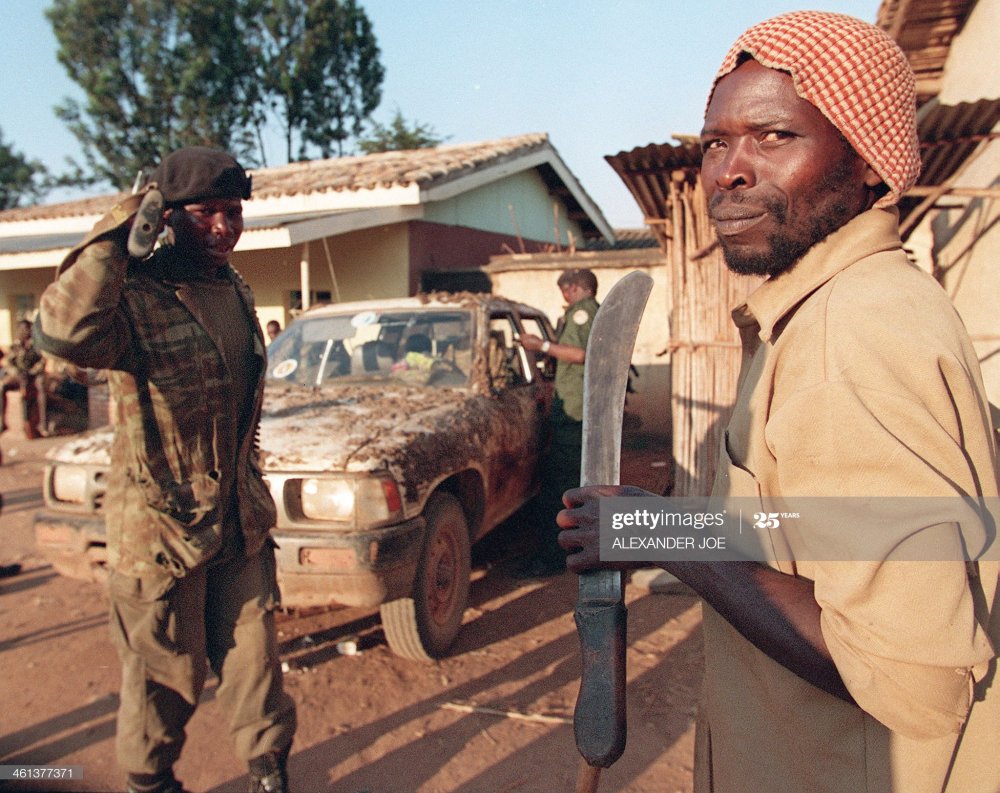
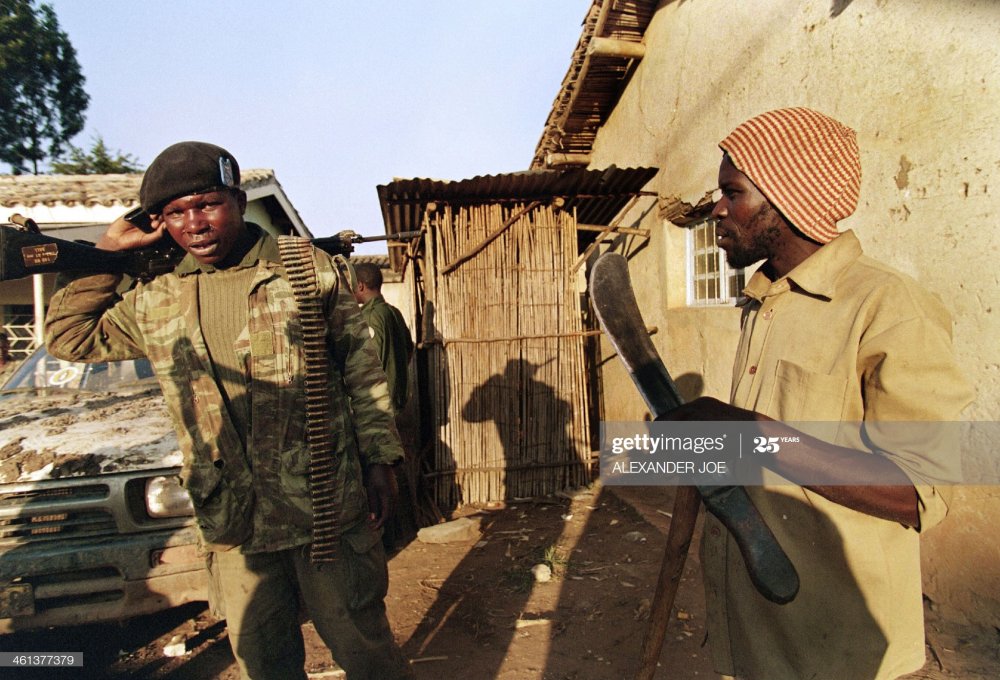
It is a photo taken during the Genocide against the Tutsi. Getty Images, a website that sells photos, said the photo was taken on June 12, 1994, in Gitarama by photographer Alexander Joe of AFP, the French Press Agency, although there was a lot of information provided by Genocide survivors.
It turns out that the soldier and the “Interahamwe” [as Getty Image called him] were together killing Tutsis while the Inkotanyi were fighting to end the Genocide. A few days ago a name was put to the photo.
The man in the photo is Ramadhan Muhire, who is still living in Zimbabwe, from Rukira in Ngoma. He is said to have played a big role in the massacre of Tutsis.
Muhire’s profile IGIHE was able to see was that he was the son of Gasekuru and Nyirabungura Thérèse, a former resident of Nyagasozi in Birenga. It has now been transformed into Amahoro Village, Nyaruvumu Cell, Rukira Sector in Ngoma District.
It is said that Muhire lived in Kibungo before the Genocide where he worked as a driver. He was an Interahamwe youth.
Many of the IGIHE interviewees agreed that he was the person who appeared in the photo.
One of Muhire’s neighbors told IGIHE that he knew him well and that he was the one in the most famous photo, he didn’t not only kill Tutsis but also looted a bag containing dollars in the économat in Kibungo and fled to Tanzania.
“He continued to Malawi. I heard he is living in Zimbabwe. That’s where he lives because even his relatives go to visit him, they come and tell us, he is a businessman.”
{{He cut me in the arm}}
One of the drivers who was working in Kibungo at the same time as Muhire, says that he knows him well because he once cut him.
“He once stabbed me. At the time, there was an Arusha negotiation and a signed the agreement, which the Interahamwe refused. They were protesting everywhere. They forced us on the way to go to the protest, to lift stones and block the road.
They took the Tutsis as cockroaches (nyenzi) and took them away to block the road with stones. That’s where he stabbed me and I still have the scar.”
{{He is a great man in Zimbabwe}}
“He is a trader in Harare City. He owns shops and factories and there are reports that he supports these groups in Congo where he acts as their coordinator in Zimbabwe,” One of the informants living in Zimbabwe told IGIHE.
IGIHE journalist found one of the members of the Muhire family at his shop in Kigali City, showed him a photo that is circulated and asked him if he knew the occupant.
He replied that he did not know him.
The Executive Secretary of the National Commission for the Fight against Genocide, CNLG, Bizimana Jean Damascène, told IGIHE that he had also heard reports that the person in the photo was Muhire but that “I have no evidence”.
Around the world, there are still people accused of involvement in the Genocide against the Tutsi but roam freely about. Apart from hiding, many are now engaged in the process to belittle genocide and even more so in pursuit of cooperation with insurgents in Rwanda.
The Rwandan prosecution has already issued arrest warrants for 1,144 people in 33 countries.