Niringiyimana, who was arrested Monday, is among the prime suspects in the recent separate cases of theft in Huye and Nyanza districts.
In one theft case, Niringiyimana together with his accomplices still at large, allegedly stole two generators in Huye, Rwaniro Sector in Mwendo Cell before stealing Rwf50, 000 from an elderly woman in Nyanza.
Chief Inspector of Police (CIP) Sylvestre Twajamahoro, the Southern region Police spokesperson, said that Niringiyimana was arrested due to information provided by those who witnessed the theft.
“They stole the generators and money in the same night. Fortunate enough, a neighbour of one of the victims, managed to get their identities and shared the information with the Police,” CIP Twajamahoro said.
He added: “Niringiyimana has been handed over to Rwanda Investigation Bureau at Rusatira and law enforcement are still searching for his accomplices.”
CIP Twajamahoro thanked residents, who called the Police after witnessing the crime and called for continued partnership and real time information sharing on such wrongdoers.
Theft, under article 166 of the law determining offences and penalties, is punishable with an imprisonment of between one and two years, and a fine ranging between Rwf1 million and Rwf2 million; community service of up to six months or one of these penalties.
Information on the death of the 29-year-old woman was first provided by a resident who was going to cultivate his garden and found a headless corpse in his garden.
Rulenge Sector Executive Secretary, Mapendo Gilbert, told IGIHE that the woman’s decapitated body was found in a bush but without ahead.
He said they were still searching for the culprits. Muhawenimana, who lived in a rented house and provided casual labour is survived by two children.
The body of the deceased was taken to Kibungo Hospital for autopsy.
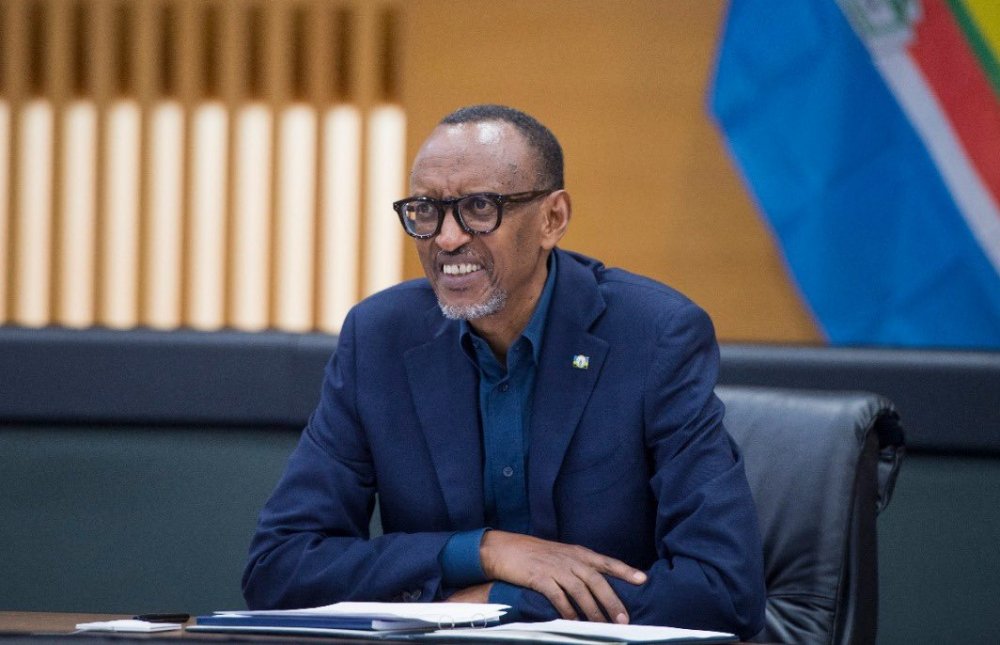
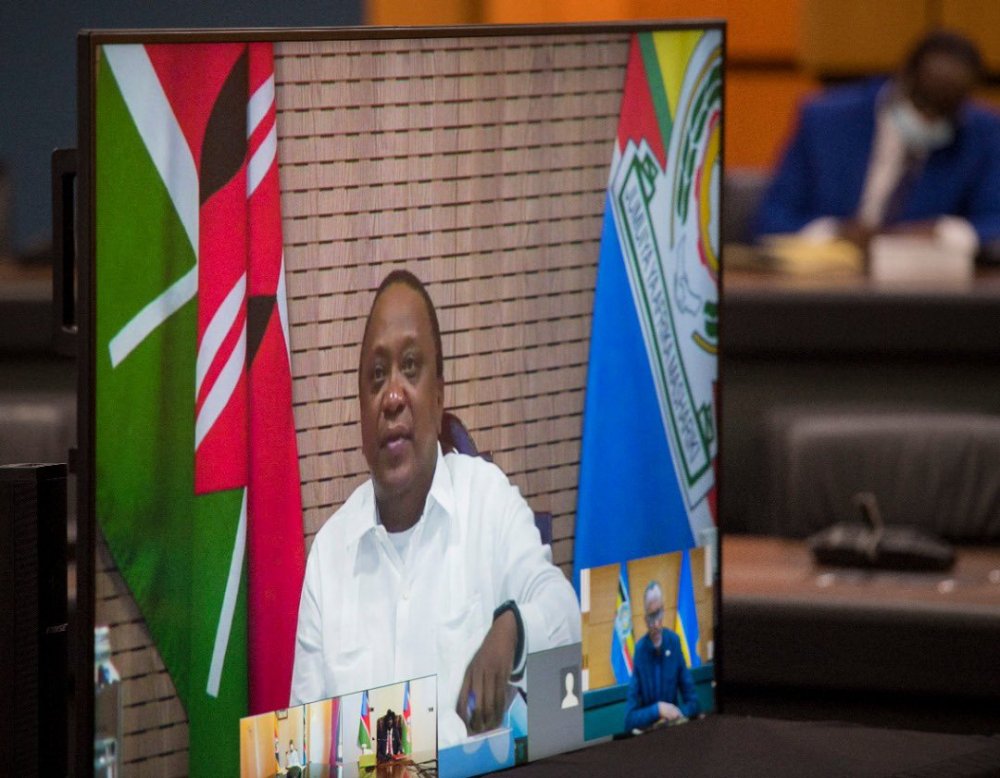
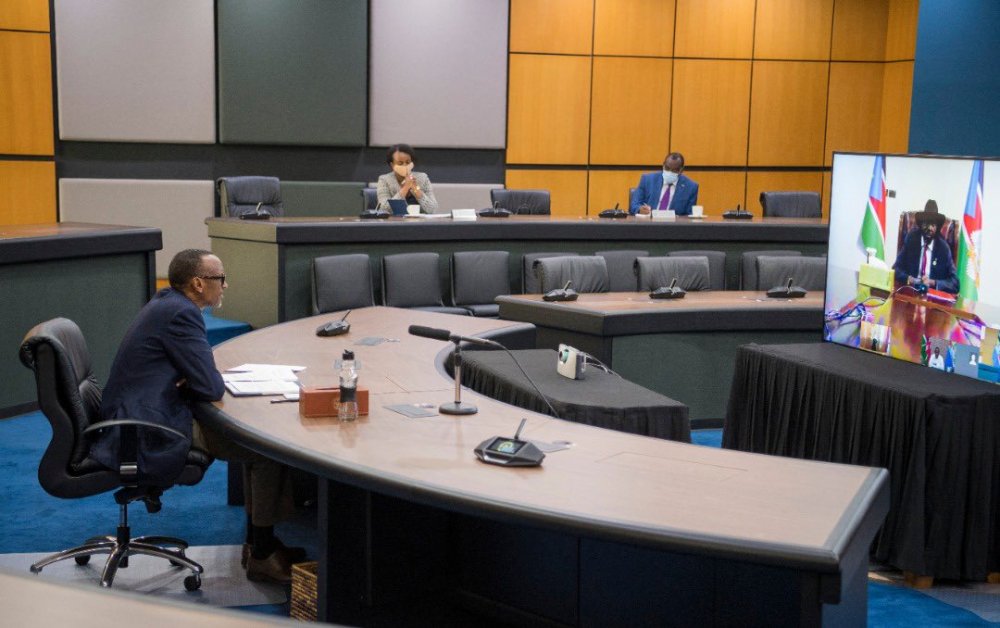
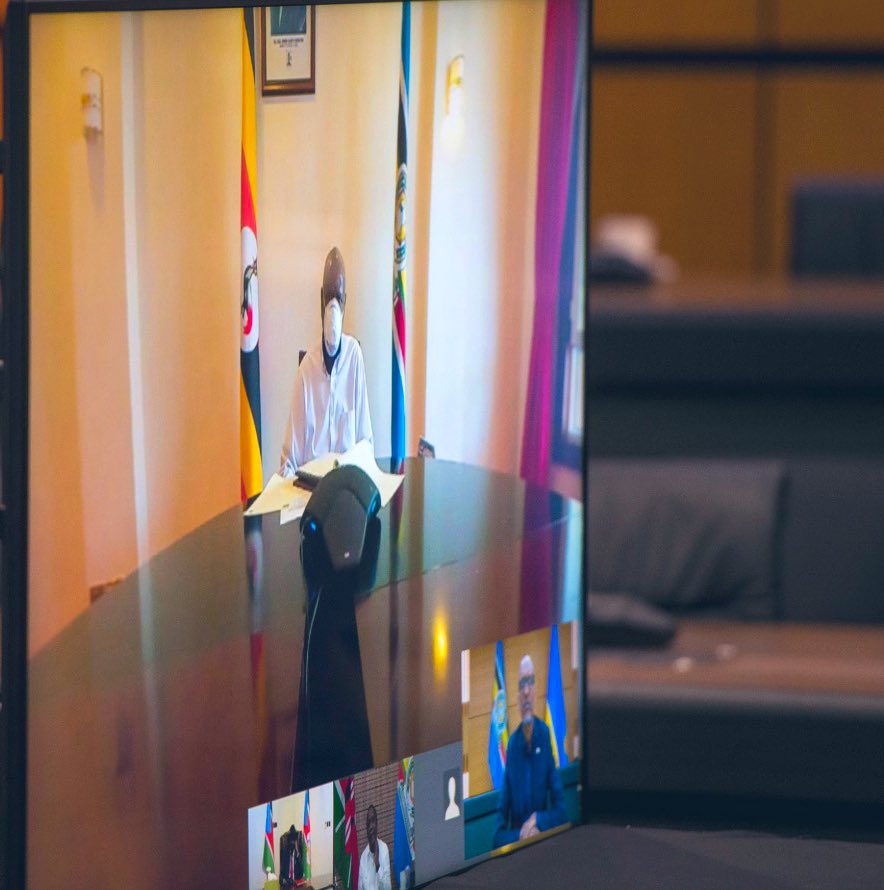
The four leaders, being Their Excellencies President Paul Kagame of the Republic of Rwanda; President Uhuru Kenyatta of the Republic of Kenya; President Yoweri Kaguta Museveni of the Republic of Uganda and President Salvar Maryardit Kiir of the Republic of South Sudan, decided that partner states adopt a harmonized system for certification and sharing of COVID-19 test results.
The leaders took note of the current status of the COVID-19 Pandemic in the region and commended the ministers responsible for health, trade, transport, and EAC affairs for their initiative in adopting a regional approach to the COVID-19 pandemic.
According to a subsequent announcement, the four Presidents also took note of the regional response plan and directed the ministers responsible for health, trade, transport and EAC affairs “to ensure that it complements the partner states’ national COVID-19 response plans.”
The heads of state commended partner states, the World Health Organization (who) and African Centre for Disease Control (ACDC) for the efforts being made towards addressing the COVID-19 pandemic, and the steps taken to contain the disease and prevent further spread in the EAC region.
EAC heads also agreed to undertake bilateral engagements to address cross-border challenges and recognized findings of the EAC Secretariat mission that assessed the situation on clearance processes at the borders during the pandemic.
The Presidents directed partner states to prioritize regional value/supply chains to support local production of essential medical products and supplies including masks, sanitizers, soaps, coveralls, face shields, processed food and ventilators as part of efforts to combat COVID-19 in the region.
Also, in the post-COVID-19 period, countries are also directed to support agro-processing and value chains as an import substitution measure and establish special purpose financing schemes for small and medium enterprises, to cushion them from the negative effects of the pandemic.
The leaders agreed to establish special purpose financing schemes for small and medium enterprises, to cushion them from the negative effects of the COVID-19 pandemic.
The statement from the meeting says “The Heads of State designated the ministers responsible for Health, Transport and East African Community affairs to be the focal persons for the regional COVID-19 response under the leadership of the Ministers of Health,”
The Heads of State directed the focal persons to immediately work on a regional mechanism for testing and certification of truck drivers prior to their departure at the point of origin and every two weeks, and report to the Heads of State.
They agreed to meet regularly to address the response efforts. And they expressed the need for flexibility in the application of the EAC rules and procedures when faced with a crisis such as the current pandemic.
Bisesero was a home to Tutsi population of about 60,000, and during the Genocide there was a history of Tutsi self-defense that reached the point where till May killers were unable to break through. Many Tutsi had also fled to Bisesero and were all killed during the 1994 Genocide against the Tutsi.
Many Tutsi decided to flee to Bisesero because there were many Tutsi living there and in 1959 and beyond, they were able to resist the massacre of Tutsi. Tutsi from different parts of Kibuye and Gikongoro prefectures; Rubengera, Rutsiro, Rwamatamu, Gisovu, Gikongoro, Gishyita and Gitesi had taken refuge in Bisesero. They hoped that if they came together and join their efforts they would fight the attacks together and defeat them. This was even so because till May, killers had not been able to set fire on a single house or eat any of their cows.
On april 7, 1994, after the news broke that Habyarimana had died, in some areas of Kibuye and Gikongoro, local Tutsi started to be killed and fled to Bisesero. Soon, the Basesero also had to leave their homes and flee to Muyira and Gitwe hills. Other Tutsi who fled to Bisesero were survivors from other parts like Mubuga Church, Rwamatamu, Gitwa, Gatwaro Stadium, Kayove and elsewhere.
{{1. Tutsi who fled to Bisesero resisted the attacks }}
They spent a long time confronting killers’ attacks and retaliating them and even killing some of the killers and taking away their guns even though they did not know how to use them for self-defense. Their history of self-defense lasted for long time, fighting against killers with various weapons including guns while Basesero used sticks, stones, spears and bows.
Tutsi from Gisovu and Rwankuba (the northern part of Bisesero) fought on Mount Muyira while others rallied on Mount Gitwe (southern part) and that is where they were fighting the Killers’ attacks. Their tactic was to confront killers and fight them even though some would be killed but they also had to kill some of the killers and they often defeated the killers and the latter became discouraged and ran away, especially since their weapons were taken away.
The Interahamwe attacks started on April 7, 1994, and the Tutsi of Bisesero would get together to identify the source of the attacks and stop them to prevent them from entering Bisesero. In the morning, when the killers came, the Tutsi would be gathered on the top of the mountains and assault them with stones and when the stones got finished, they would all go down the hill at once and confront them to prevent killers from killing women and children as well as their cows. They would fight until killers get tired and run away. The Tutsi who were about to be overpowered by the Interahamwe, would join their comrades on other hills and join forces to ensure their victory.
The attacks came from various places: from Gisovu Commune, Rwamatamu up to Ngoma, in Mubuga Commune, and others from Gishyita Commune. Despite the attacks were from the above mentioned areas, the killers were from all communes of Kibuye prefecture and from some communes of Gikongoro. The Tutsi fighters were led by Birara Aminadabu, his son Nzigira, Segikware, Habiyambere and Paul Bitega who were later killed. There are also some survivors including Karamaga Simeon, Aron Gakoko and Vincent Munyaneza.
As Tutsi in Bisesero had been fighting the Interahamwe for days till the end of April, officials, including former Kibuye Prefect KAYISHEMA Clement and others, wrote a letter to the former Minister of interior government called Eduard KAREMERA who was from Kibuye.
They requested him for help to expel the Inkotanyi from Bisesero (at that time Tutsi were called Inkotanyi who were threatening people’s security in Bisesero), he also agreed that he would seek help from the former army chief in Gisenyi and Kibuye, Colonel Anatole NSENGIYUMVA with whom they started to prepare it.
From 01/05/1994 to 12/05/1994, there were no further attacks on Bisesero, the Tutsi started to rest and thought that there would be no more attacks and some started to return to their normal activities such as agriculture, animal husbandry and others. However, the killers had gone to plan for exterminating attacks. For the 2 weeks, the killers were planning to exterminate the Tutsi who had taken refuge in Bisesero.
{{2. Exterminating attacks on Bisesero on 13/5/1994}}
Friday 13/05/1994 was the first day of the relentless attacks on Bisesero, which consisted of soldiers from Presidential Guard, other soldiers who fled the fighting, the Interahamwe from different parts and habituated killers from Bugarama in Cyangugu, Gisenyi, Ruhengeri and Gikongoro.
The top leaders all possessed guns including Eliezer Niyitegeka, former minister, Clement Kayishema, Kibuye prefect, Alfred Musema, who ran Gisovu tea factory, Obed Ruzindana, a prominent businessman, and his brother Joseph Mpambara, Charles Sikubwabo, the Bourgmestre of Gishyita commune, Aloys Ndimbati who was the Bourgmestre of Gisovu Commune, Gerard Ntakirutimana who was in charge of Mugonero Hospital, John Yusuf Munyakazi who was the leader of Interahamwe in Bugarama, Cyangugu and others.
All of these were familiar in leading attacks on Tutsi in different parts of Kibuye and Cyangugu. The killings started on April 13, 1994, from 9 am till 4pm. The ONATRACOM buses, trucks of Tutsi who had been killed, the COLAS trucks usually used to construct the Kibuye-Gitarama road and other small vehicles full of government officials, soldiers and members of the Presidential Guards, many Interahamwe started killing Tutsi in Bisesero where they had taken refuge in the Muyira and Gitwe hills. Tutsi failed to hit them back as usual due to the fact that the attacks were so intense and they could not withstand the heavy weapons carried by killers.
The killers attacked the Tutsi while shouting “Let us destroy them”. They shot on Tutsi, threw grenades at them and other killers used traditional weapons and the bodies of many children, women, and the elderly filled the place. The attack weakened the Basesero and killed many of them. More than 30,000 Tutsi reportedly were killed that day. The killings stopped at around 5:30 pm that day and afterwards killers had a meeting at a place called ” Ku Cyapa” between Gishyita and Gisovu communes to plan how the killings would be carried out next morning.
At that place, Eliezer NIYITEGEKA grabbed a Tutsi girl, stripped her off her clothes and raped her in front of other killers, and immediately threw her at the Interahamwe who cut her off.
The killers returned again on May 14, 1994 and also killed Tutsi living less than 10,000 Tutsi. Survivors of the massacre started to hide in the bushes and running in the mountains, fleeing from the Interahamwe who shot at them and killed them gradually. Those who had been injured were hunted by dogs.
Most of top perpetrators of genocide in Bisesero were convicted, others are still wanted:
-* KAREMERA Edouard sentenced to life imprisonment by the International Criminal Tribunal for Rwanda;
-* NIYITEGEKA Eliezer, sentenced to life imprisonment by the International Criminal Tribunal for Rwanda and died in the prison;
-* NTAKIRUTIMANA Elizaphan, convicted of genocide crime by the International Criminal Tribunal for Rwanda and sentenced to 10 years in prison;
-* Col. NSENGIYUMVA Anatole, convicted of genocide crime by the International Criminal Tribunal for Rwanda and sentenced to 15 years in prison.
-* NTAKIRUTIMANA Gerard , convicted of genocide crime by the International Criminal Tribunal for Rwanda and sentenced to 25 years in prison;
-* MUHIMANA Mika, convicted of genocide crime by the International Criminal Tribunal for Rwanda and was sentenced to life imprisonment;
-* MPAMBARA Joseph, convicted of genocide by Dutch courts and sentenced to life imprisonment;
-* KAYISHEMA Clement, convicted of genocide by the International Criminal Tribunal for Rwanda and sentenced to life imprisonment;
-* MUSEMA Alfred , convicted of genocide by the International Criminal Tribunal for Rwanda, sentenced to life imprisonment;
-* RUZINDANA Obedwas convicted of genocide crime by the International Criminal Tribunal for Rwanda and sentenced to 25 years in prison;
-* MUNYAKAZI John Yusuf was convicted of genocide crime by the International Criminal Tribunal for Rwanda and sentenced to 25 years in prison;
-* NDIMBATI Aloys, escaped justice and is wanted by the International Criminal Tribunal for Rwanda;
-* SIKUBWABO Charles, escaped justice and he is wanted by the International Criminal Tribunal for Rwanda.
-* FURERE Abel (formerly the Bourgmestre of Rwamatamu Commune);
-* SEGATARAMA Simon (Was the councillor of Gitabura Sector);
-* SEBAHIRE John (was a Police Officer and died in Bisesero);
-* RUTAGANIRA Vincent (he was a Councilor of Mubuga Sector);
-* RUKAZAMYAMBI (he was a Police Officer from Rutsiro and died in Bisesero).
Many perpetrators involved in the genocide against the Tutsi in Bisesero and fled justice:
-* NYAKANA HABIMANA Joseph: former councilor of the Twumba sector, he is suspected to be living in Congo;
-* NZIHONGA Elysée: He was a teacher in the Gitabura sector, he lives in Congo forests;
-* MUSABYIMANA Pierre: An ex FAR from Gisovu sector and he is suspected to be in the Congo forests;
-* NDAMAGE: former Secretary of Gisovu Commune who fled and never returned;
-* KAYIGEMA Alexis: who was the Director of IGA Gisovu and lives in France;
-* KAMILI (son Mpamira) was a trader in Mubuga, fled to Uganda;
-* TWAGIRAYEZU Jean Baptiste, was sentenced by Gacaca;
-* NGERAGEZE Dan, former assistant mayor of the Gishyita commune;
-* BUGINGO Joseph ex bourgmestre of the commune of Gisovu;
-* Abbe TWAGIRAYEZU Marcel ex-parish priest of the Catholic parish of Mubuga, fled to France;
-* BIZIMUNGU ex FAR;
-* KARIBANA Uziah ex assistant bourgmestre of Gishyita commune, fled after the genocide;
-* MUHIRWA Uzziel former advisor to the Musenyi sector and others.
Done at Kigali on May 13, 2020
{{Dr. BIZIMANA Jean Damascène
Executive Secretary
National Commission for the Fight Against Genocide (CNLG)}}
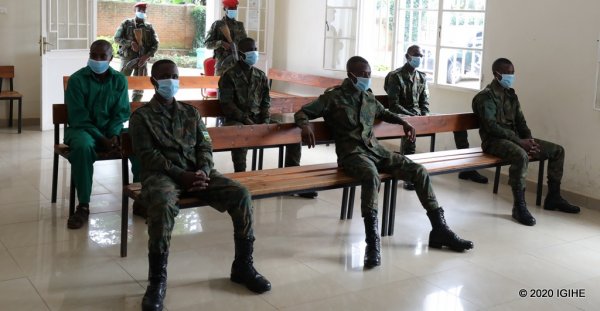
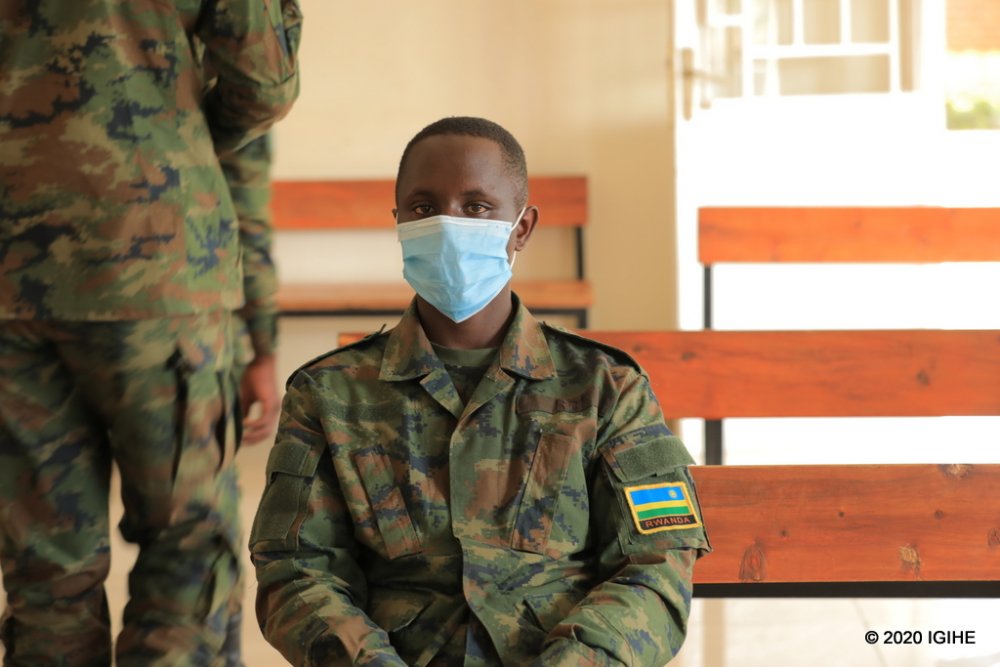
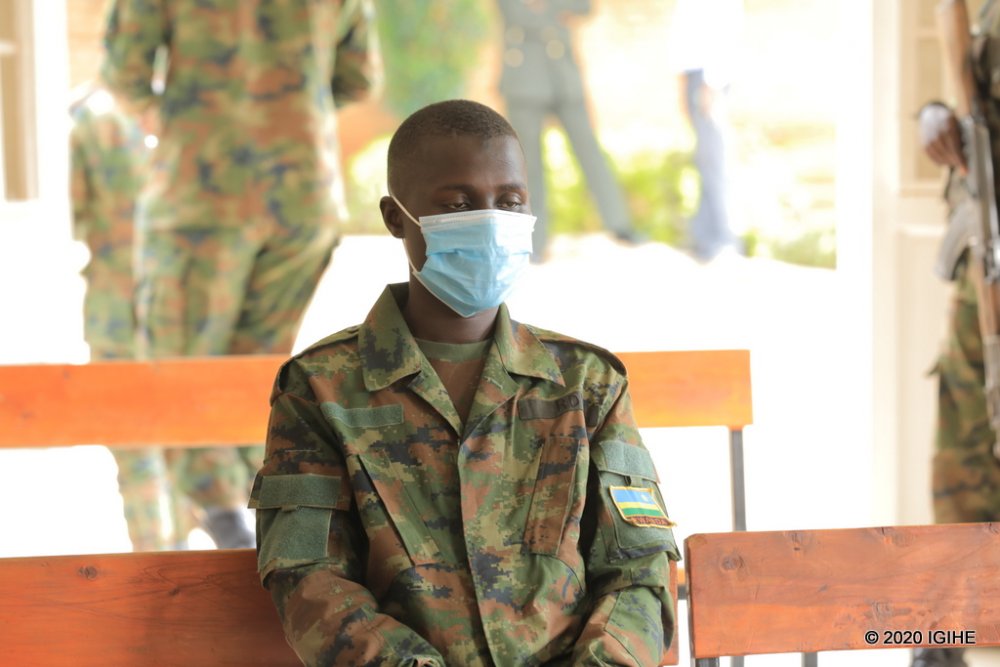
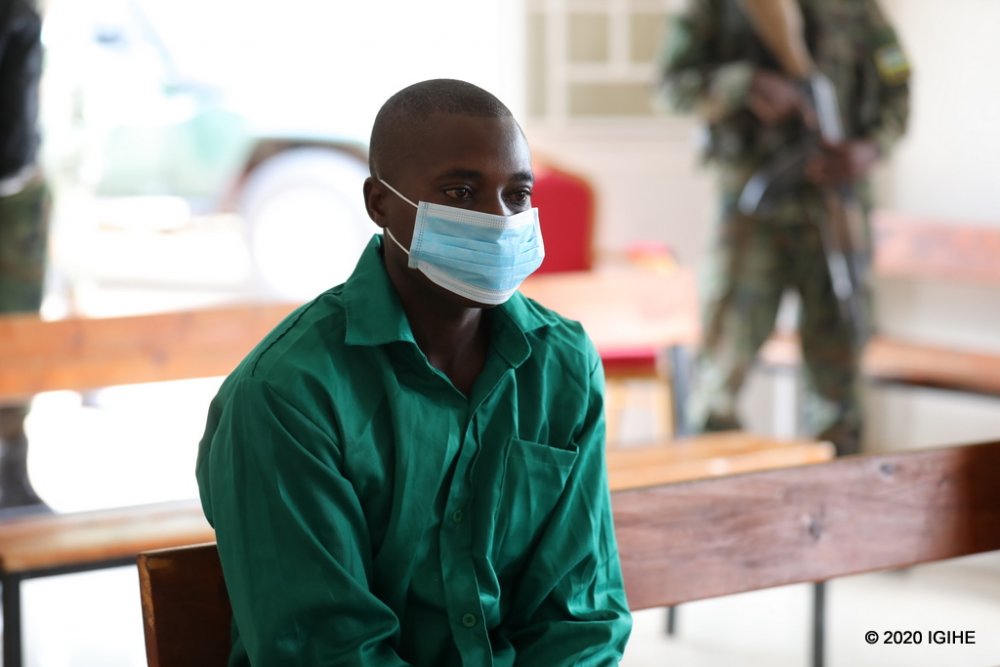
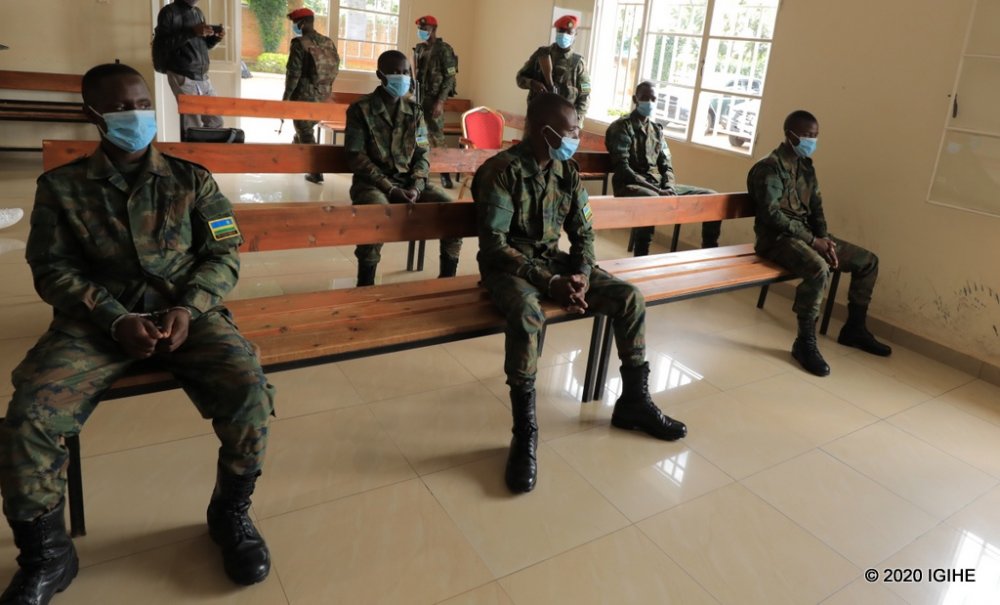
The trial of Rwanda Defence Force (RDF) soldiers and civilians accused of raping three women after beating them up kicked off in Kigali with prosecution asking the military high court to send them on remand pending further investigations.
The case involves five non-commissioned soldiers, at rank of Private, identified as Pvt Patrick Ndayishimiye (the patrol leader), Pvt. Fidele Nishinwe, Pvt. François Gatete, Pvt. John Gahirwa and Pvt. Theoneste Twagirimana.
The case also involves two civilian accomplices namely Donat ‘Rajab’ Ntakaziraho and Mukamulisa Diane who have also commissioned community-based night patrols officials in Kangondo 1 cell where the alleged crimes happened on different dates in the month of March 2020.
During the 5-hour hearing of a 30-day remand hearing, six suspects were present in court and all denied charges leveled against them with consultation of their defense lawyer, Moses Sebudandi. One suspect, Diane Mukamulisa was missing on grounds of her maternal rights to take care of her newborn baby.
Military prosecution led by Captain JB Maniraguha presented evidence from the victim’s testimonies and investigation reports conducted by the military teams on several incidents in which the suspects are accused of the six counts.
Prosecution says that both Patrick Ndayishimiye (the patrol leader) and Fidele Nishinwe were directly involved in committing all six charges especially raping three women at different occasions, and being involved in physically assaulting suspects in a place where they were not assigned duty.
Prosecution alleges that Patrick Ndayishimiye was at the time of the crime, the group commander. Some of his colleagues testified against him on physically assaulting and harming Joseph Niyobuhungiro and Ngabonziza Shema who were found in the houses of the female victims.
“Patrick also has a criminal record of theft and was in 2018 released after serving a one year sentence. In his affidavit he methodically confesses and narrates how he raped one, Madeleine Uwamariya as evidenced by testimonies from his colleagues (Gahirwa John and Gatete François),” the prosecution said.
It is also said that his counterpart Nishimwe, also raped two women, starting with Chantal Uwamariya and Angelique Cyuzuzo on two separate occasions.
“We have testimonies of citizens who were able to identify the two suspects during an identification parade that was done soon after,” Prosecutor Maniriguha said.
On other suspects Donat ‘Rajab’ Ntakaziraho and Mukamulisa, Pvt. Twagirimana Theoneste, the Prosecutor Captain Maniriguha said that they were present during the crimes and concealed information about what had transpired.
The prosecutor asked the court to remand the suspects for 30 days pending further investigation, though, he said, they already have enough evidence that pins the suspects.
The accused Ndayishimiye and Nishimwe defended themselves saying that they have never been assigned to the Kangondo zone and on the said dates in which the citizens accuse them of committing the crimes, they were in the Kami Barracks on other duties.
“In the month of March I didn’t get assigned in Kangondo but I used to pass by the area doing surveillance work. I am surprised prosecution says it was me who committed the crimes yet the description of the uniforms and soldiers identified by residents do not match my description,” Patrick Ndayishimiye said.
He added that during the patrols he used to be assigned to the areas of Batsinda and Utexrwa where he worked with many other soldiers who are not in court.
In his defense, Nishimwe also said that he does not know the area and never stepped in Kangondo zone.
“ I only knew the name when I was arrested and paraded among suspects who were accused of committing these crimes. I am innocent,” Nishimwe said.
Their defense attorney, Sebudandi intervened saying that the prosecution accusations are not in line with the penal code and also that the fact of being present during a crime doesn’t make one an accomplice unless they assisted in one way or the other.
“For example the so-called terror group would be valid if there was intent or purpose and evidence that the accused had met and planned on their actions. We cannot call some of my clients as accomplices just because they were there,” Sebudandi said.
On the case of rape, he said he agrees with the investigation (testimonies) collected by the prosecution but there must be more evidence to prove this happened.
The lawyer dismissed the theft charges saying that there must be more evidence to show it really happened.
From that background, he asked the court to immediately release one suspect, Twagirimana Theoneste because “there is nothing leveled on him either in testimonies of victims or evidence of prosecution.”
This thinking was also backed by one of the suspects, Donat ‘Rajab’ Ntakaziraho who told court that Twagirimana actually was the only soldier who tried to stop his patrol commander (Ndayishimiye Patrick) from beating citizens but in vain.
“That tall soldier (Twagirimana ) is innocent. He asked Ndayishimiye why he was canning citizens with no reason but this didn’t make any difference,” Ntakaziraho said.
After listening to all sides and requests of both prosecution and defense team, Military Judge Major Gerald Muhigirwa assisted by three other judges ruled that the reading of the case outcomes will be pronounced on Wednesday, May, 13.
Some of these revisionists claim to be genocide survivors so that they can win favour and sympathy from the international community, including the host countries where they sought refuge after their 1994 atrocities. How ironic that genocide perpetrators have turned into genocide deniers and then claim to be genocide survivors.
These chronic sowers of hatred and merchants of death are scattered throughout the world in both developed and developing countries including the United States, the United Kingdom, France, Belgium, Canada, and even in countries such as Australia and New Zealand where genocide ideologists founded an outfit of Rwandan Association of Queensland to promote the lethal thinking.
Some of the individuals that are bent on promoting genocide ideology are profiled below.
{{Bene Gatebuke}}
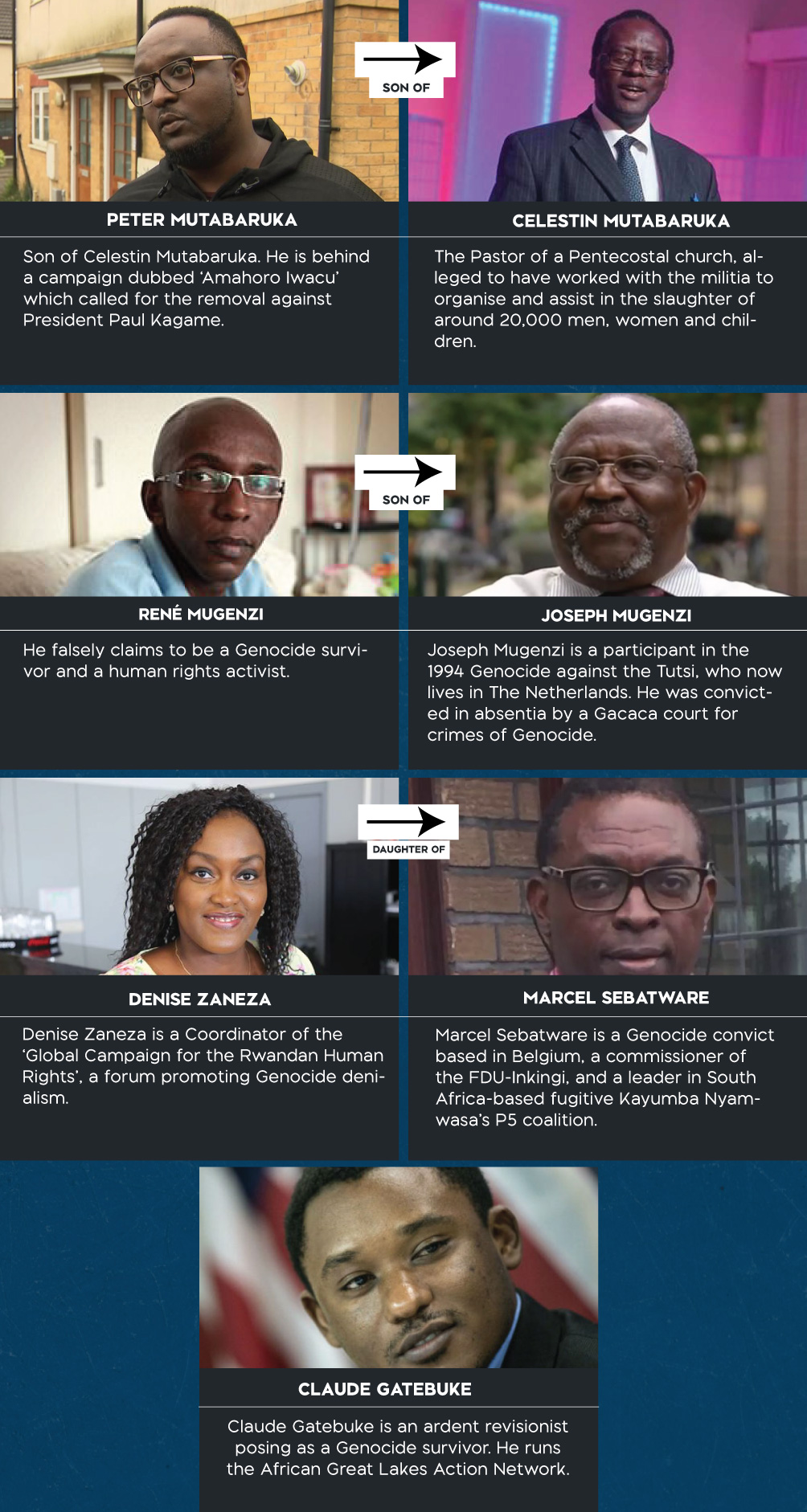
Claude Gatebuke and his sister Alice, who live in Nashville, Tennessee, are descendants of Gatsinzi Gatebuke, a native of Gisenyi in the former Kayove Commune.
They both claim to be genocide survivors. But those who knew Gatsinzi Gatebuke testify that he hated Tutsis so much so that he could not sit at the table to eat with them.
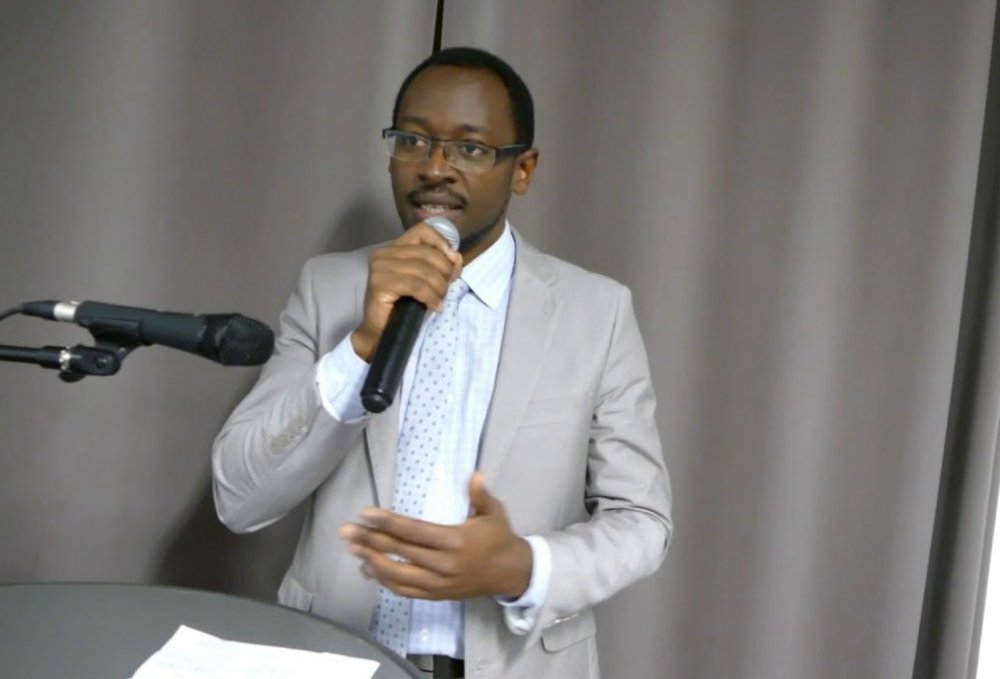
Gatebuke runs the African Great Lakes Action Network (AGLAN), made up of himself, his sister, and Lauren Brinkley-Rubinstein, who use it to raise money from those who do not know the truth about Rwandan history.
{{Denise Zaneza, Europe Coordinator of “Global Campaign for Rwandans’ Human Rights”}}
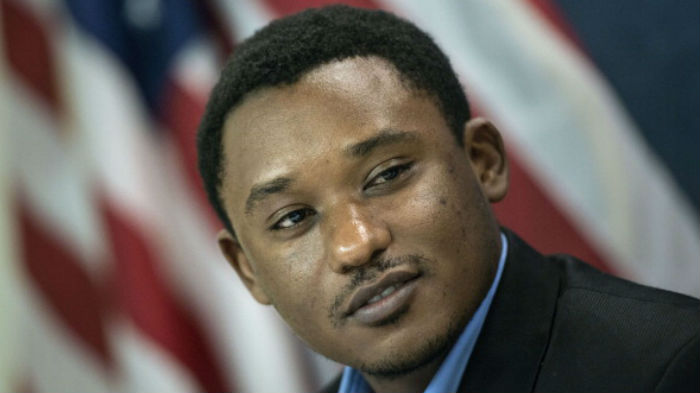
Claude Gatebuke works closely with Denise Zaneza, a prominent woman who denies the 1994 Genocide against the Tutsi. She is the eldest daughter of [Marcel Sebatware->https://cnlg.gov.rw/index.php?id=87&tx_news_pi1%5Bnews%5D=3979&tx_news_pi1%5Bcontroller%5D=News&tx_news_pi1%5Baction%5D=detail&cHash=b5ae79ff1006adb91b4862c19a8e6f9b] from Mukingo commune in Ruhengeri, who lives in Belgium and is accused of[involvement in the Genocide.
->https://cnlg.gov.rw/index.php?id=87&tx_news_pi1%5Bnews%5D=3979&tx_news_pi1%5Bcontroller%5D=News&tx_news_pi1%5Baction%5D=detail&cHash=b5ae79ff1006adb91b4862c19a8e6f9b]
The National Commission for the Fight against Genocide [CNLG] indicates that Sebatware is in self-exile in Belgium, hiding behind political activities to obscure his role in the Genocide against the Tutsi. He is a commissioner and one of the founders, along with Victoire Ingabire, of the FDU-INKINGI party in Belgium.
Denise Zaneza claims to be a human rights activist and is the Europe coordinator for the denialist organisation called “Global Campaign on Rwandan Human Rights”, “and a genocide survivor.” It is all a disguise because she is not a Genocide survivor.
{{Jambo Asbl}}
Jambo Asbl, operating in Belgium, is an organization that claims to protect humanity, yet aims to deny and belittle the 1994 Genocide against the Tutsi.
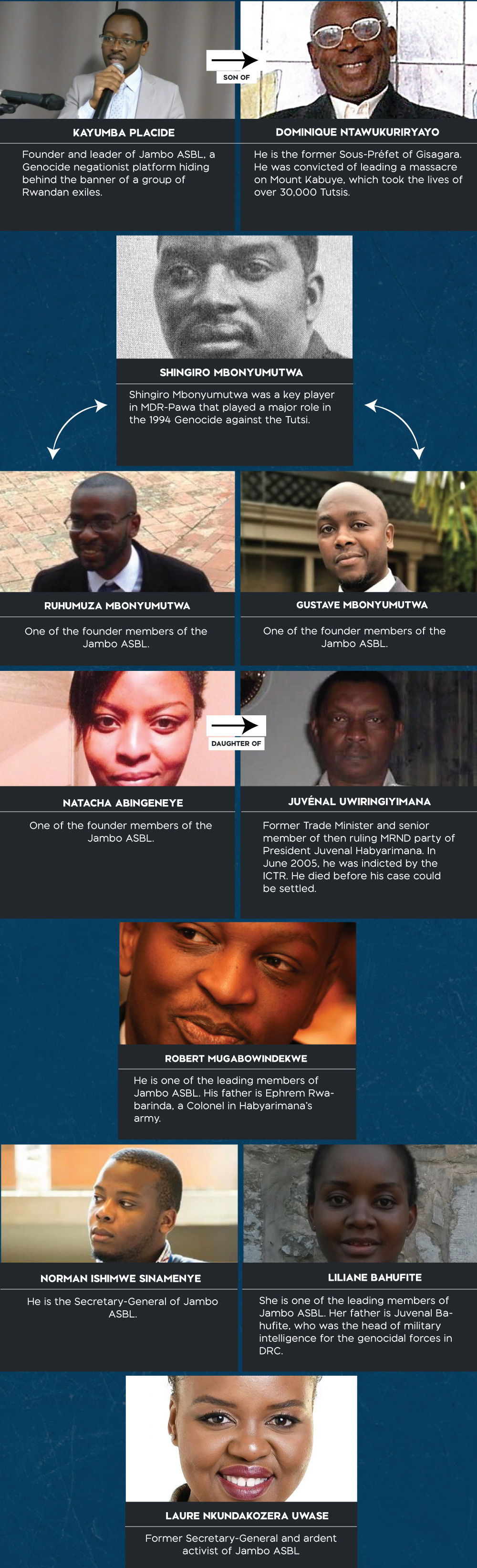
Among its leaders is Placide Kayumba, founder and CEO of Jambo Asbl, the son of [Dominique Ntawukuriryayo->https://unictr.irmct.org/en/cases/ictr-05-82], who became Sous-Prefet of Gisagara during the 1994 Genocide against the Tutsi.
In 2010 he was [sentenced by the ICTR to 25 years in prison->https://unictr.irmct.org/sites/unictr.org/files/case-documents/ictr-05-82/trial-judgements/en/100803.pdf]. He was convicted of leading a massacre on Mount Kabuye, killing more than 30,000 Tutsis.
There is also Natacha Abingeneye, the President of Jambo Asbl, the daughter of Juvénal Uwiringiyimana who became the Minister of Trade and was an MRND activist. In June 2005 he was summoned by the ICTR, where he died before his trial ended.
Another one is Gustave Mbonyumutwa, son of Shingiro Mbonyumutwa, who prosecuted by the Gacaca courts for his role in the Genocide against the Tutsi, and the grandson of Dominique Mbonyumutwa, one of the founders of MDR Parmehutu, who became the first President of Rwanda in 1961.
Also among the members of Jambo Asbl is Liliane Bahufite, daughter of Colonel [Juvenal Bahufite who led the massacre in Gisenyi in 1990-1993->https://www.nytimes.com/1995/07/18/world/mugunga-journal-a-refugee-camp-hums-with-the-spirit-of-home.html]. He was also a spokesperson for the militia that carried out the Genocide after they fled to Zaire.
Laure Nkundakozera Uwase, former Secretary-General of Jambo Asbl, and editor-in-chief of Jambo News in collaboration with Ruhumuza Mbonyumutwa, is the daughter of Anastase Nkundakozera, who was convicted by the Gacaca Courts of genocide against the Tutsi, and whose mother, Agnès Mukarugomwa, was a prominent MRND activist.
The current leader of Jambo Asbl, Robert Mugabowindekwe, is the son of Lt Col Éphrem Rwabalinda who served as Adviser to the Commander-in-Chief of Habyarimana’s Armed Forces. During the Genocide, Lt Col Rwabalinda was sent to Paris between 9-13 May 1994 to meet with French military leaders.
The message that he had brought when he was received by General Jean-Pierre Huchon included demands for weapons to confront the RPF Inkotanyi.
The Jambo team also includes Norman Ishimwe Sinamenye, the Secretary-General. His father, André Sinamenye, was born in Gikongoro, he was not involved in the Genocide but was against the government that organized it. From 1991 to 1994 he was a member of the PSD.
IGIHE has since learned that Norman Ishimwe’s father was unhappy with the path his son has taken, and even tried to get him out of the Jambo Asbl but wasn’t successful.
Unlike Robert Mugabowindekwe, Laure Uwase, Natacha Abingeneye, Placide Kayumba, Ruhumuza, and Gustave Mbonyumutwa and others, Norman Ishimwe, was not indoctrinated into genocide denial by his parents, but through his friend in Jambo Asbl.
Jambo Asbl uses many tactics to minimise and negate the Genocide against the Tutsi. Despite their recent pretence of using of UN-accepted language, they are quick to add to the “genocide against the Hutus.” They do not agree with the role of the Interim Government (that executed the Genocide), the MRND, the Hutu Power, and the FAR were involved in the genocide, but claim that the Interim Government wanted to restore peace.
{{René Mugenzi in the UK}}
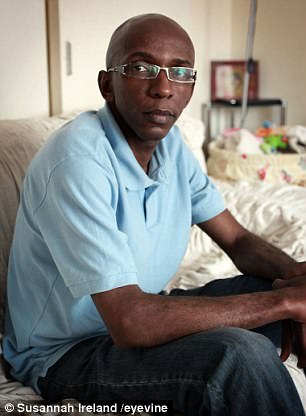
René Mugenzi last year appeared on Al Jazeera television claiming to have survived the Genocide. However, his father, Joseph Mugenzi, is suspected of involvement in the Genocide, has fled justice, and is believed to be hiding in the Netherlands.
{{Peter Mutabaruka, of Peace at Home (Amahoro Iwacu)}}
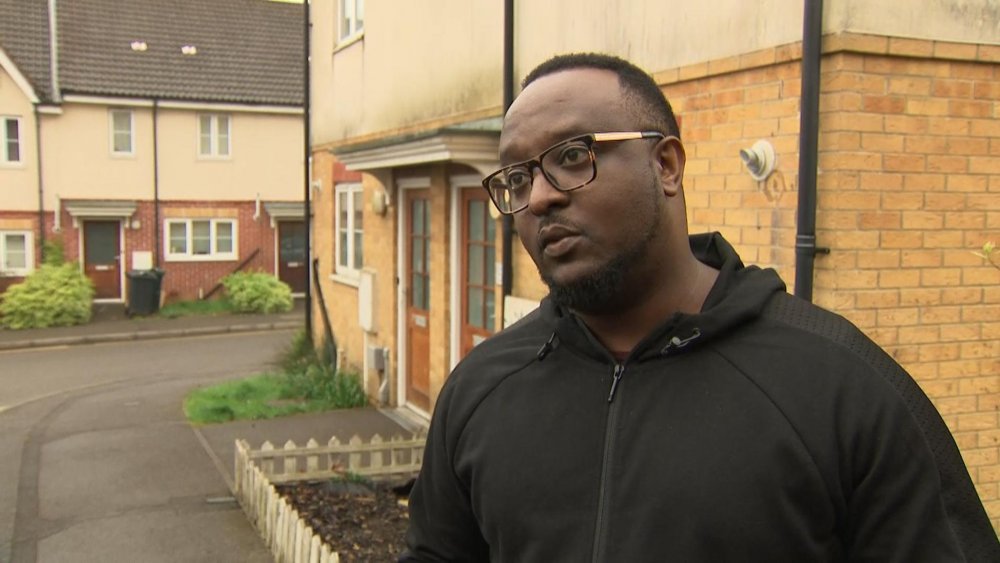
Peter Mutabaruka lives in the UK with his father, Celestin Mutabaruka, one of the infamous “UK Five” fugitives who are suspected of involvement in the Genocide against the Tutsi. The 64-year-old Celestin Mutabaruka, a pastor in the Community Church, is accused of being involved in the massacre of Tutsis of Bisesero at Kibuye in 1994.
Despite his father’s actions, Peter Mutabaruka continues to accuse the Rwandan government of violating human rights, and in 2017 launched a campaign called Amahoro Iwacu, in which he called for the removal of the President of Rwanda. He uses social media sites extensively, particularly Facebook and YouTube.
{{Deniers in Australia, New Zealand, and Canada}}
Others continue to deny the Genocide and have already multiplied in Australia and New Zealand, where their activities have been highlighted during the #Remembrance26. They continue to use the “Genocide in Rwanda”, instead of the UN-mandated name, Genocide against Tutsis.
These include Nelson Muhirwa and his wife Yvette Muhirwa from Australia, who use social media sites such as YouTube, to allege that the RPF has committed crimes against Hutus. Others are RNC militants, including Robert Mukombozi and Kalisa Mubarak.
In countries such as Canada, there is Louise Uwacu, who also claims to have survived the Genocide. She spreads genocide denial working closely with Claude Gatebuke and other genocide deniers.
Louise Uwacu’s family fled from Ruhengeri to Zaire after the RPF defeated those carrying out the Genocide.
Other influencers include Eric Udahemuka, spreading falsehoods on YouTube and other hate speech broadcasters, especially through Ikondera Libre TV, which is widely used by genocide deniers.
One of the political analysts who spoke to IGIHE said that the new generation of Tutsi Genocide deniers is using social media to spread genocide ideology and minimise the Genocide. “Such acts have to be fought until they stop.”
Last week the government announced that there was an undergoing review of how college and university students were to be helped to return home.
The University of Rwanda immediately asked students to approach its nearest branches and register. UR reports that the registration of 1661 students indicates that they want to return home after a difficult life due to the postponement of the school year.
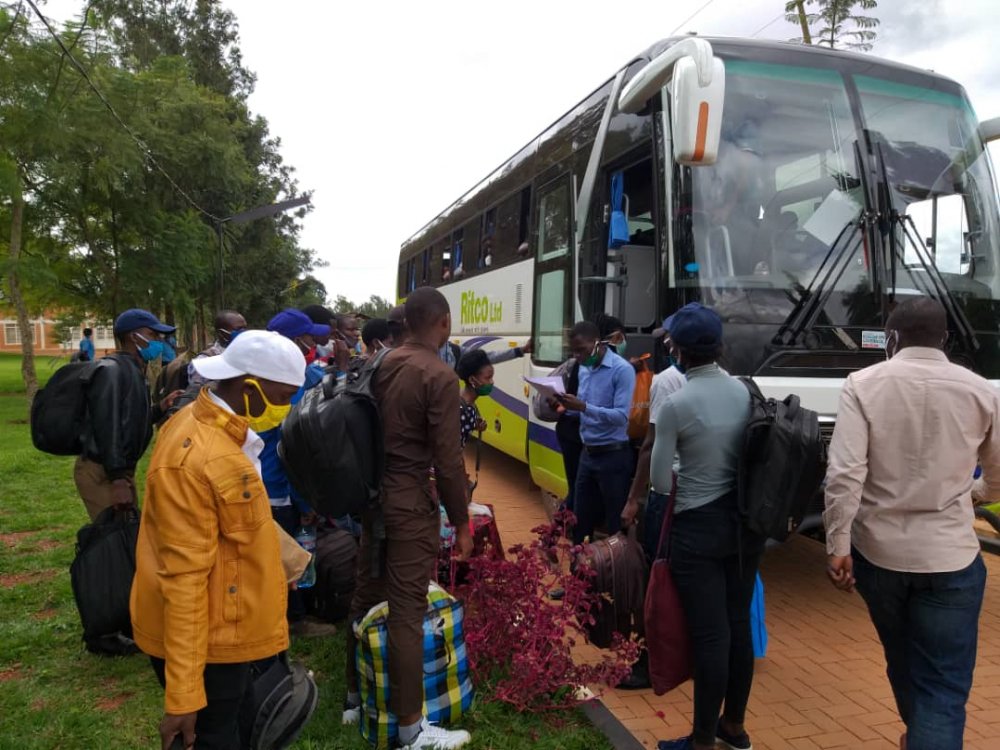
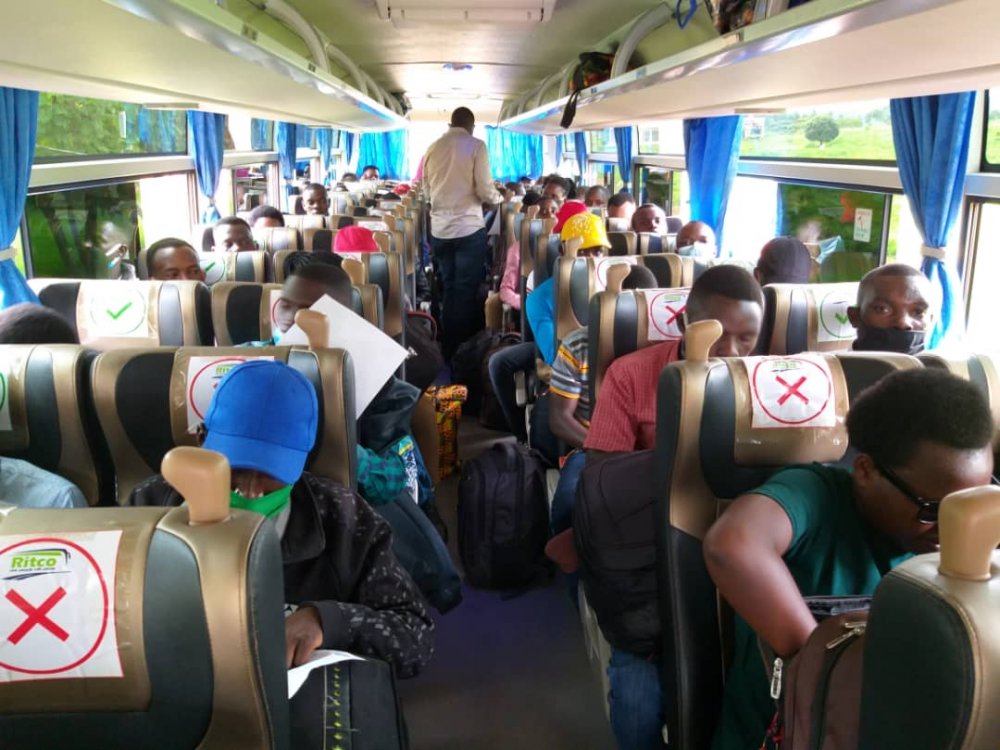
On May 11, 2020, students from the faculties of the University of Rwanda in Nyagatare, Rukara, Busogo, Rwamagana, Huye and Rusizi happily boarded vehicles to various destinations from where they will connect with their families.
Everyone was wearing a mask, and at 7 a.m. they were ready to start the journeys after undergoing coronavirus tests and being reminded of measures to prevent the spread of Covid-19.
Students have expressed their gratitude, to the Government of Rwanda for keeping in mind that wherever they were, they should go to their families. 23 Ritco buses have been hired to transport the students home.
The victim was Bapfakurera Théoneste, a Pastor at the Hope of Jesus Church whose church building had previously been closed for lack of requirements.
Muyumbu Sector Executive Secretary, Bahati Bonny, told IGIHE that security personnel and local authorities were alerted of the attack where culprits carried both real and toy guns. They left one of the toy guns at the scene of crime.
He said that the criminals’ aim was to take the life of Bapfakurera since they did not take with them any valuable from the victims. “It was just a plot to kill,” he said.
Bapfakurera’s body was taken to Kacyiru Hospital for examination as the hunt for the criminals gets underway.
Some Tutsi had taken refuge at the church but there were also the so-called Kivuye and Nyacyonga refugees who were camping there. The latter had fled from some of the war zone communes of Byumba Prefecture, comprising Kivuye Commune, where their name came from.
Hence, refugees at Nyabisindu became so many and some of them were living in the primary schools of the Church. ADEPR officials categorized the refugees based on their ethnicity. Pastor SAGAHUTU and another lady were sitting in front of the church, one was in charge of counting Hutu and the other in charge of Tutsi.
Hutu refugees from Kivuye and Nyacyonga as well as other refugees from Kigali were taken to a better place and they mistreated Tutsi refugees.
Among the Tutsi refugees, some were from various parts of Gitarama like Kibilira. Hutu refugees were involved in fetching the attackers that would kill Tutsi gradually till the last day when they massacred them all. Raping of women and girls was committed, and even young children were called to watch the transgression and some of the children were also forced to rape them.
Before the D-date was reached, the prefect of Gitarama prefecture, Major UKURIKIYEYEZU and the sous prefect MISAGO RUTEGESHA Antoine, together with the ADEPR head Pastor, called NYANDWI Enock, ordered that the Tutsi refugees should be taken to a place called “Misizi” because they intended to kill them far away from the city. They escorted the refugees, the killers accompanied them with traditional weapons including axes, one vehicle was in front of them and the other behind them, all the way to Gitarama town. Along the journey, killers would kill some and dump them in rain drainages.
When the refugees arrived in Gitarama town, at the market, they revolted as they refused to go to Misizi, they rather tried to flee towards Kabgayi by force and that is where some of them were killed but others managed to reach Kabgayi. They were the first refugees to be housed at the “CND” in Kabgayi. Because of awful life at CND and constant attacks that killed Tutsi gradually, some refugees decided to return to ADEPR in Nyabisindu secretly.
Consequently, on May 12, 1994, the Interahamwe attack with painted faces, wearing dried banana leaves armed with weapons like knives, axes, machetes, and clubs with nails arrived and killed all the Tutsi. On that day, at around 2 pm, prisoners came to throw the corpses into the pits. They dragged them down and some of them were still breathing, some were asking for forgiveness, others were praying and others just crying out…
While killing the Tutsi who had taken refuge at ADEPR, they first left women and girls so that they could rape them first. Various tools were used to torture them including bottles, sharpened sticks, and banana buds.
Around 121 ADEPR victims are buried at Nyabisindu Genocide Memorial.
Among the perpetrators of the massacre at ADEPR Nyabisindu were:
-* The Prefect, Major Jean Damascene UKURIKIYEYEZU;
-* the sous prefect MISAGO-RUTEGESHA Antoine;
-* Pastor NSANZURWIMO Joseph, national spokesperson of ADEPR (live in Belgium);
-* Pastor NYANDWI Enock;
-* Pastor GATERE Simon Pierre;
-* UPFUYISONI Marie Goretti who was a Member of Parliament and Secretary General of the UNSODC party created by ADEPR authorities (she live in Belgium);
-* Pastor SAGAHUTU Jean who led Nyabisindu parish and lives in Zambia;
-* Pastor MUNYEBOYI Amon also living in Zambia;
-* Pastor KAGURANO Gerald;
-* Pastor GAKWERERE Cyprien (they both live in Uganda);
-* Pastor UTAZIRUBANDA Leon, who lives in Tanzania;
-* Pastor NKUBITO Noel;
-* NZIGIRA who was a staff of Gitarama prefecture;
-* Andre also called Ruhurwinda;
-* NIYIREMA Theodomire who was the Councillor;
-* RWAJEKARE, Tito, and others.
{{Conclusion}}
The genocide against the Tutsi involved various categories of Rwandans including religious people. Some of them were prosecuted, others are still on trial including Pastor Jean UWINKINDI of ADEPR who was transferred by the International Criminal Tribunal for Rwanda to face Rwandan courts.
In 2016, the leadership of the ADEPR Church apologized for the role of some of its members in the Genocide against the Tutsi, including their former spokesperson, Pastor Joseph NSANZURWIMO who fled to Belgium and continues his contempt and denial of the Genocide against the Tutsi.
Done at Kigali on May 12, 2020
{{Dr. BIZIMANA Jean Damascène
Executive Secretary
National Commission for the Fight Against Genocide (CNLG)}}
This brought the tally of COVID-19 recovery cases in the country to 150, and 135 active cases.
The latest update by the Ministry of Health was from 380 sample tests, the lowest sample since last week.
The country has not registered any death. Rwanda recently eased the COVID-19 lockdown allowing most businesses to resume operations for 15 days.
However, everyone has been urged to put on facemasks in public and in multi-family compounds, to continue washing hands regularly, and to practice physical distancing among other practices.
Citizens are also reminded to always call 114- the toll-free line of Rwanda Biomedical Center, whenever they experience symptoms of the pandemic such as fever, dry cough, and shortness of breath.