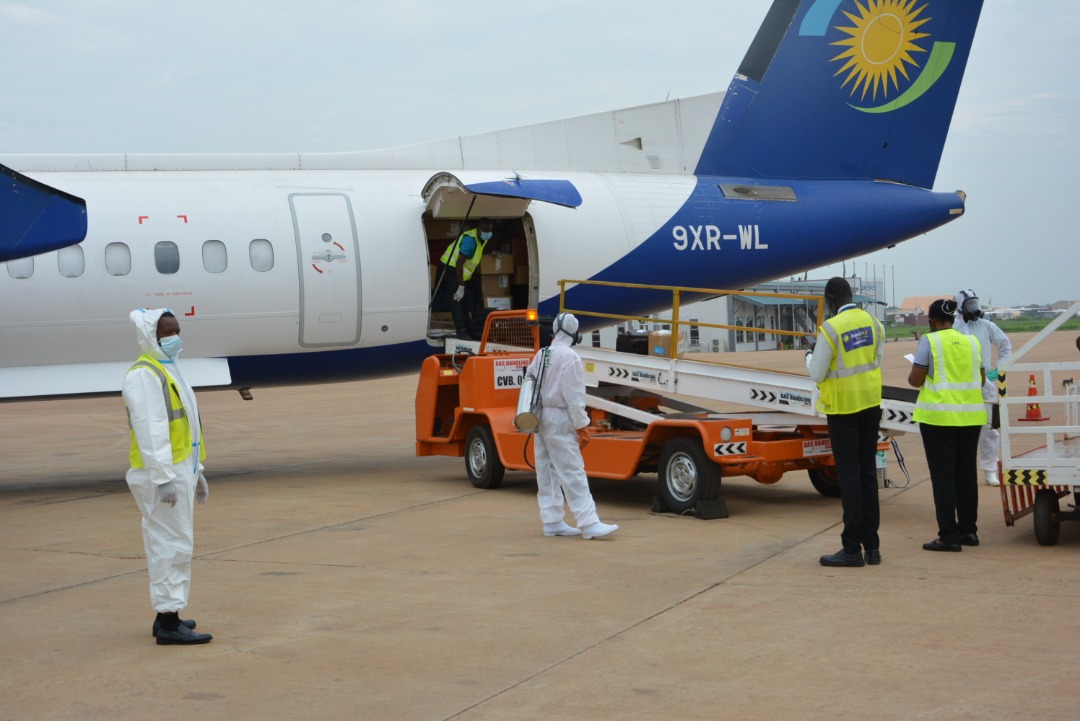
This is part of the earlier pledged test kits and personal protective equipment to the mission to increase its capacity to test and treatment to staff as the world continues to battle the Coronavirus disease.
The donation comes particularly in support of international peacekeeping efforts to contain the spread of the virus and in light of the lack of enough testing kits in some countries.
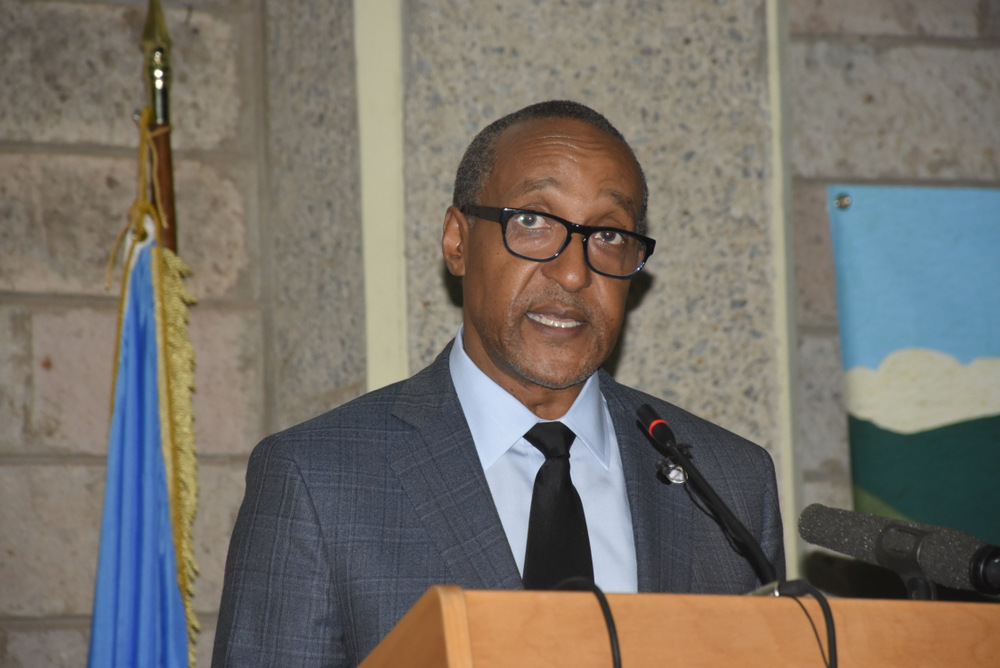
Brig. Gen. Eugene Nkubito, UNMISS Sector Commander in Juba, handed over the kits on behalf of Rwanda.
Brig. Gen. Nkubito explained that the remaining lot of the equipment will be availed soon to UNMISS during force rotation exercises slated for next month.
Brig. Gen. Nkubito said that the Coronavirus is a “common enemy to mankind’, and cooperation is the way to defeat the pandemic.
Joan Segui Barber, UNMISS head of the Laboratory section thanked Rwanda for the support adding that it will significantly boost the mission capacity against Covid-19.
“We have always sought for testing kits from the World Health Organization office in South Sudan whenever we want to make tests, these kits are definitely augmented to our speed in testing staff,” Barber said.
The South Sudan government has taken several measures such as imposing a partial curfew, suspending schools and universities, and shuttering non-essential businesses, to curb the spread of the novel Coronavirus.
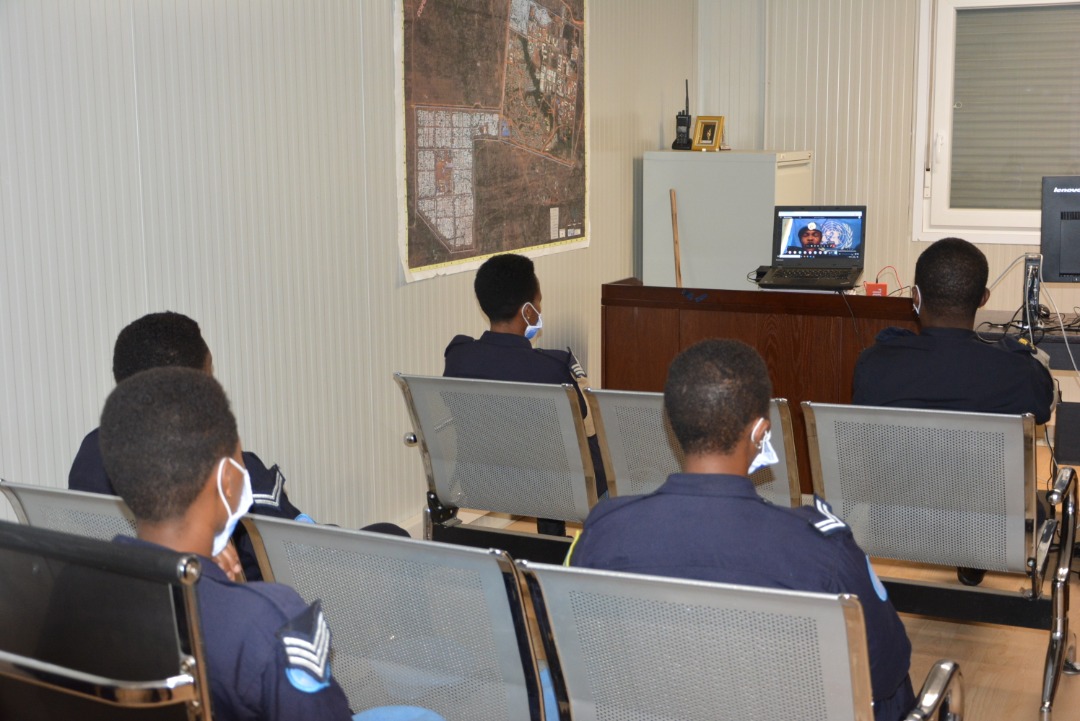
Early this week, Rwanda also started testing and sampling for novel Coronavirus targeting its Police, military and prison warden peacekeepers deployed in South Sudan.
Vedaste Hakizimana, 38, was using his shop as cover to sell cannabis to consumers.
He was arrested on Thursday after 98 pellets of cannabis were recovered from his shop located in Rusumo Cell of Gatumba Sector.
Chief Inspector of Police (CIP) Bonaventure Twizere Karekezi, the Police spokesperson for the Western region, said that Hakizimana had used his shop as address for cannabis abusers.
“Residents reported Hakizimana to local leaders that he sells cannabis in his shop; local authorities in turn called the Police,” CIP Karekezi said.
“We later conducted an operation recovered the pellets in his shop, which were concealed in other goods,” he added.
“It is said that Hakizimana was a retailer of cannabis in Gatumba Sector and is connected to a ring of drug traffickers; some of them have been arrested and others still at large.”
CIP Karekezi said that there is a ring of cannabis traffickers and retailers, some of whose particulars have been discovered through information sharing with the public, including Hakizimana.
He warned that operations are continuous for any drug dealer to “face the wrath of the law.”
“The law is very clear and the punishment for engaging in drug related crimes is severe. We appeal to the public to maintain the spirit of information sharing so as to prevent such people from poisoning Rwandans and the young people in particular, who are the majority of victims,” CIP Karekezi warned.
Anyone convicted of trafficking and selling narcotic drugs faces a sentence of between 20 years and life in prison, and a fine of up to Rwf30 million, as stipulated under article 263 of the penal code.
The genocidal government, intensified its extermination policy by setting up “crisis committees”, that is to say extermination committees which started to wipe away genocide evidences especially destruction of houses and traces of Tutsi who had just been massacred.
Nyiramasuhuko Pauline played a leading role in putting genocidal policy into practice in the Butare prefecture. She was born in April 1946 in Rugara cell, Ndora sector, Ndora commune, Butare prefecture. During the genocide perpetrated against the Tutsi, she was the Minister of Family and Women Advancement in the Genocidal Government led by Jean Kambanda.
{{1. The Policy of Tutsi extermination called “pacification” by the genocidal government}}
The genocidal government implemented pacification as the policy of exterminating the Tutsi. For the Kambanda government, Pacification meant the elimination of Tutsi. The criminal government sought at all costs to better control the massacres and to ensure that they were perpetrated according to the extermination plan put in place by the same government.
A minister responsible for extermination had been appointed for each prefecture to ensure that the directives and instructions of the genocidal government were implemented. For Butare it was Nyiramasuhuko who had been assigned the task.
Each minister had to make the population understand the measures adopted by the government aimed at the extermination of Tutsi.
The speeches made during the “pacification campaign” in Butare were extermination speeches which were the same across the country.
{{2. The extermination of Tutsi in the Butare prefecture was assigned to Nyaramasuhuko Pauline}}
Nyiramasuhuko participated in all meetings of the genocidal government led by Kambanda Jean, between April 9 and July 14, 1994. On May 7, 1994, in Murambi, Nyiramasuhuko participated in the meeting of ministers dedicated to civil defense. The genocidal government’s “civil defense” program was a component of the genocidal strategy.
Numerous meetings of this government were held in Kigali, Gitarama and Gisenyi and during this period the ministers, including Nyiramasuhuko, were regularly informed of the massacres which were perpetrated against the Tutsi. During these meetings, the ministers demanded that weapons be supplied to them for distribution in their respective prefectures, in order to speed up the massacres against the Tutsi.
During these meetings, the genocidal government adopted directives and gave instructions to the prefects and bourgmestres, which were transmitted to the population and which aimed to continue the genocide throughout the country.
A minister had been appointed for each prefecture, with the mission of overseeing what was then called “pacification”, that is, the extermination of Tutsi. Nyiramasuhuko was one of the most assiduous members of these meetings where extermination decisions were made.
{{3. The extermination agenda in the hands of Nyiramasuhuko Pauline
}}
Nyiramasuhuko had a Tutsi extermination agenda in her bag, which showed the planning of the Tutsi massacres in general and the personal role to play during the implementation. Nyiramasuhuko wrote personal notes at meetings of the genocidal government which she put into practice in Butare prefecture.
The diary presented the scene of the massacres and the central role of the genocidal government. That agenda constitutes a written proof of the planning of the genocide perpetrated against the Tutsi by the MRND, the CDR and the other parties grouped within the Hutu Power.
This diary shows that during the period from April to July 1994, the Kambanda genocidal government had an essential function and was indeed a place where the Tutsi extermination decisions were discussed and where they were taken.
{{Nyiramasuhuko Pauline perpetrated several massacres in the prefecture of Butare}}
{{- Nyiramasuhuko caused death of Tutsi on April 21, 1994 at the IRST}}
Nyiramasuhuko participated in the installation of roadblocks in the city of Butare used to identify the Tutsi, in order to eliminate them. Her son Arsène Shalom Ntahobali toured the Butare prefecture in search of Tutsi. After locating the victims, Nyiramasuhuko and her son captured them and took them to different places to be executed. Nyiramasuhuko ordered the Interahamwe, who controlled the roadblocks to take them to the place where the other Tutsi had been taken to be killed.
{{- Nyiramasuhuko called Tutsi « dirt ».}}
One day, in front of the Butare prefecture headquarters with the prefect Sylvain Nsabimana, she scratched her head and said angrily and aloud: “This place is dirty, this place stinks. There is dirt here. This dirt must be removed; I must not find this dirt again here.” Nyiramasuhuko pointed to the Tutsi refugees who were in the courtyard when she spoke of “dirt”. Nsabimana then asked the Interahamwe and the soldiers to evacuate the refugees and force them to stay in the back of the prefecture office during that day. The refugees who were at the prefecture office were beaten and killed.
{{- Nyiramasuhuko ordered to evacuate and massacre Tutsi refugees}}
Nyiramasuhuko returned to the prefecture office another time. She asked Nsabimana to convene a meeting of the mayors of the prefecture, to ask them to evacuate the refugees to the communes where they belonged to. This order had been carried out, and after the evacuation the Tutsi were killed.
{{-The massacre of Tutsi at the roadblock established by Nyiramasuhuko at the Ihuliro hotel}}
Since April 1994, a roadblock had been established near the Nyiramasuhuko and Ntahobali residence, “the Ihuliro Hotel”. The Ihuliro Hotel also served as a gathering place for planning the genocide. Nyiramasuhuko and the Interahamwe held regular meetings at the Ihuliro hotel during which they discussed the implementation of the genocide in Butare prefecture. Interahamwe and soldiers used this roadblock to identify, kidnap and kill Tutsi. For example, on April 21, 1994, a Tutsi called Léopold Ruvurajabo was killed near the Ihuliro hotel on the instructions of Nyiramasuhuko and Ntahobali.
{{- Nyiramasuhuko ordered the Interahamwe to kidnap Tutsi women, to rape them before killing them.}}
It was at the Ihuliro hotel roadblock that Tutsi girls and women were kidnapped and raped under Nyiramasuhuko’s instructions before killing them. This rape policy had been widely used by Nyiramasuhuko throughout the city of Butare. The rape of Tutsi women was used as a weapon of genocide, which formed part of the general extermination plan. Nyiramasuhuko encouraged the Interahamwe, including her son, to rape Tutsi women.
{{-Nyiramasuhuko ordered the massacre of Tutsi who had taken refuge at the EER}}
After Nyiramasuhuko and Ntahobali attacked the refugees at the Butare prefecture office between April 19 and the end of June 1994, those who survived were taken to various parts of the prefecture to be executed, including in the forest adjoining the EER. There, Tutsi were ill-treated before being exterminated.
Nyiramasuhuko was found guilty of genocide crime and sentenced to life imprisonment at first instance, but the sentence was reduced to 47 years on appeal. Her son Shalom Ntahobali was sentenced to the same 47-year prison term as his mother.
{{CONCLUSION}}
Tutsi massacre continued in the area controlled by the genocidal government, which intensified its extermination policy by setting up “crisis committees”, that is to say extermination committees, and the policy of the civil defense which aimed to leave no Tutsi living in Rwanda. It was that time that the criminal government started to get rid of evidence of the genocide, comprising the destruction of houses and traces of massacred Tutsi.
{{Done at Kigali on June 12, 2020
Dr. BIZIMANA Jean Damascène
Executive Secretary
National Commission for the Fight Against Genocide (CNLG)}}
Kenya is persuaded that global challenges are only surmountable if the world’s rules based multilateral system is deployed in a manner that attracts consensus not only in the appreciation of the challenges, but also in the evolution of practical response strategies.
The 10-point Agenda that Kenya promises to champion in the Security Council is largely premised on the SDGs. The process leading to the adoption of the SDG’s was multilateral diplomacy at its best demonstrated by building of bridges between diametrically opposing opinions resulting in some of the most profound commitments ever by Member States in the history of the United Nations. Kenya was at the very centre of this process.
In 2013-2014, the world entrusted Kenya and Hungary with co-facilitation of the international negotiation process that created the global sustainable development goals (SDGs).
The mandate was clear but the task was not easy. Collecting and collating ideas from all stakeholders and refining them into simple consumable thoughts was just one part. Moderating the concepts and diverse schools of thought and building consensus around them was another critical part.
Most importantly was to provide sound leadership to guide the parties navigate the complex terrain of positions held by different countries and groupings.
The end of the SDGs formation ushered in deliberations on the Post 2015 development Agenda in September, 2014. Because of its impressive leadership in the SDGs process, Kenya was again appointed by the President of the 71st session of UN General Assembly to co- facilitate the 2030 UN Agenda design process together with Ireland. The process successfully culminated in the adoption of the 2030 UN Agenda for sustainable development at a summit in New York in September, 2015.
Subsequently, and as a follow up, Kenya has, and continues to work on global multilateral projects, such as the Sustainable Blue Economy Conference with Japan and Canada, and many others on various issues of interest and concern, ranging from climate change, among others, to the International Conference on Population 2 Development (ICPD), co-hosted in November 2019 with UNFPA and Denmark. These milestones are a seminal legacy of Kenya’s great multilateralism spirit.
Kenya’s skills in multilateral diplomacy, as demonstrated in the SDG process, SBEC and others, will be exemplified in the Security Council in at least three ways:
First, Kenya will bring on board consensus building capabilities, more so within the context of unprecedented challenges occasioned by the global COVID-19 pandemic and other existential threats.
Second, the Council will benefit from Kenya’s objectivity and trustworthiness which is necessary particularly in helping countries in conflict to arrive at common understanding of various issues.
Third, Kenya’s consistency will bring in an element of certainty particularly on any Kenya-led agenda. These three qualities are crucial for building peace and security in our world. Kenya’s leadership in multilateral diplomacy has stood out even during these extraordinary times of global COVID-19 pandemic.
For instance, President Uhuru Kenyatta, who is the current chair of the Organization of African, Caribbean and Pacific States and a member of the Bureau of African Union Heads of State and Government, has been engaging world leaders and institutions in proffering solutions for concerted response measures to the COVID-19 pandemic. He hosted the First Extra Ordinary Summit of the OACPS on 3rd June 2020 under the theme “Transcending the COVID-19 Pandemic:
Building Resilience through Global Solidarity” whose focus was addressing current and post COVID-19 challenges. Additionally, Kenya has initiated many webinars and virtual meetings at technical and ministerial levels. The SDGs/2030 Agenda process is only one of many instances that show cases Kenya’s leadership in multilateral diplomacy.
The country has demonstrated thought and practical leadership in many other areas which will be useful in the pursuit of the 10 point agenda once in the Council. As a proven team player and stickler of a rules based multilateralism as well as its rich experience, Kenya is a safe pair of hands and stands ready to deliver on its promise as a non-permanent member of the United Nations Security Council. Kenya is ready to serve.
{{Amb. Macharia Kamau
CBS Principal Secretary, Ministry of Foreign Affairs}}
The vehicle, plate RAC 526F Hiace was intercepted in Rugabano Sector, Gitega Cell loaded with the jerrycans of illicit drinks. Three people, who were aboard were taken into custody. The seized psychotropic substances were also disposed of.
Chief Inspector of Police (CIP) Bonaventure Twizere Karekezi, the police spokesperson for the Western region identified the suspects as Damascene Niyomugabo, 29 (driver), Pascal Habineza, 34, and Hamisi Iraguha, 44.
“The suspects had ventured into this business and were collecting the illicit brew from different distillers in the area. They were at the time going to sell them to local bars located in the trading centres of Rambura, Rutovu and IDP Model Village in Kabuga, Rugabano Sector,” said CIP Karekezi.
He commended the “general sense and understanding” among the public to fight crimes and drug abuse in particular.
“These are harmful substances, seizing and destroying them is in the general interests of ensuring a healthy living, preventing other crimes these drugs bring along especially after consumption.”
The spokesperson noted that most cases of assault and domestic violence recorded are related to the consumption of such illicit substances.
All drinks with alcoholic content above 45 percent or with unknown alcoholic content are considered as a psychotropic substance.
Article 263 of Rwanda penal code stipulates that any person who, unlawfully, produces, transforms, transports, stores, gives to another or who sells narcotic drugs and psychotropic substances commits an offense, with a sentence upon conviction, ranging between seven years and life in prison, and a fine of between Rwf20 million and Rwf30 million.
This change also made Rwanda the fourteenth most peaceful country in Africa, from the 17th position in the previous report.
GPI is a peace metric produced by the Institute of Economics and Peace (IEP), a global think tank dedicated to analyzing peace and quantifying its economic benefits.
The index defines peace as the harmony achieved by the absence of violence or fear of violence.
It uses qualitative and quantitative indicators grouped into three key domains: ongoing conflict, safety and security, and militarization.
The 2020 GPI released Wednesday revealed that Rwanda performed best in militarization with a score of 1.6, ranking 34th globally; this domain includes various indicators such as military expenditure, weapon imports and armed forces rate among others.
According to the report, the economic cost of peace in Rwanda was $1.4 billion or 5 percent of its GDP.
Regionally, Rwanda is the second most peaceful country after Tanzania which has maintained the top position since 2008.
Uganda, Kenya and Burundi follow in that order.
The Democratic Republic of Congo, Somalia and South Sudan came in the nine least peaceful countries in the world.
Mauritius is the most peaceful country on the continent and 23rd globally, followed by Botswana, Ghana and Zambia.
Worldwide, Iceland leads the global ranking, a position that it has held since 2008.
It is joined at the top by New Zealand, Austria, Portugal, and Denmark. Afghanistan remains as the least peaceful country, a position it has held for two years, followed by Syria, Iraq and South Sudan.
The 2020 GPI shows that the world is now less peaceful than it was in 2008. Civil unrest has doubled since 2011, writing a sustained rise which is set to worsen with the economic impact of COVID-19 take hold.
IEP says the economic downturn as a result of the pandemic pause a significant threat to peace. Many African countries are expected to face famine conditions, creating further stress in fragile populations.
However, the report notes that countries able to maintain peace have higher resilience to absorb, adapt and recover from shocks, such as COVID-19 and the ensuing recession.
The Ministry of Health said that the new cases were a combination of those in Rusizi cluster and the repatriated Rwandans. They have been isolated and contacts traced.
The number of COVID-19 cases is surging, with the total confirmed cases increasing to 494 as of Thursday, and active cases, 179. It can’t go without saying that for the country, the treatment cost is becoming heavy.
So far, 313 patients recovered, including 6 on Thursday.
Late Mbabazi, who was a member of Rwanda Formed Police Unit-One (FPU-1) hybrid of 240 Police officers deployed in Malakal, succumbed to COVID-19 on June 2, at the King Faisal Hospital after she was evacuated back home for further treatment.
The virtual memorial function was held across all UNMISS field offices where fellow UN Police peacekeepers eulogized Mbabazi’s amiable character; how she touched hearts of all she met or worked with, and condoled with her country and family.
Orowo Regina Omuyeh from Nigeria, the chairlady of UNMISS-UNPOL Women network said that as they mourn for Mbabazi, they should also exhibit the spirit of teamwork to support fellow UNPOL women to overcome unique challenges female officer encounter everyday to give peace to fellow women in South Sudan.
“We should work and support each other as women on the frontline because we face exceptional challenges as women, as mothers who left behind our families… our children behind to bring people to fellow women in South Sudan,” Orowo said.
Eileen Jane Pickering from Fiji, the FPU Gender Focal Person Coordinator in UNMISS, said: “To the people of Rwanda, Rwanda Police and Enid’s young family, our thoughts and prayers are all with you.”
Pickering, who spoke in grief, said that PC Mbabazi left an irreplaceable impact to the women of South Sudan and fellow female officers.”
UNMISS Police Commissioner, Unamisi Vuniwaqa, stated that Mbabazi was a dedicated officer from the Rwanda Contingent who served well during her tour of duty.
Madam Vuniwaqa explained to fellow police officers who were in somber mood, the daily risks encountered by peacekeepers worldwide.
“I urge you all to remain strong, resilient and united as we serve the people of South Sudan. Take care of each other as sisters in the UN family. In moments like this, we come together as one to show the families and the world how much we care for each other as female officers in uniform,” Madam Vuniwaqa said.
Quoting from a Bible verse Matthew 5:9, Vuniwaqa said: “Blessed are the peacemakers for they shall be called the children of God.
As we pay tribute to her life, we must look at the bigger picture that we as UNPOL carry the symbol of peace for the community that needs it most.”
She urged them to look at this as a challenge to stay focus, encourage and tap one another.
“This is not about men and women; this is about how we should persevere, how we move-on and harness our energy as we continue to move forward in this highest standing and selfless calling,” Madam Vuniwaqa emphasized.
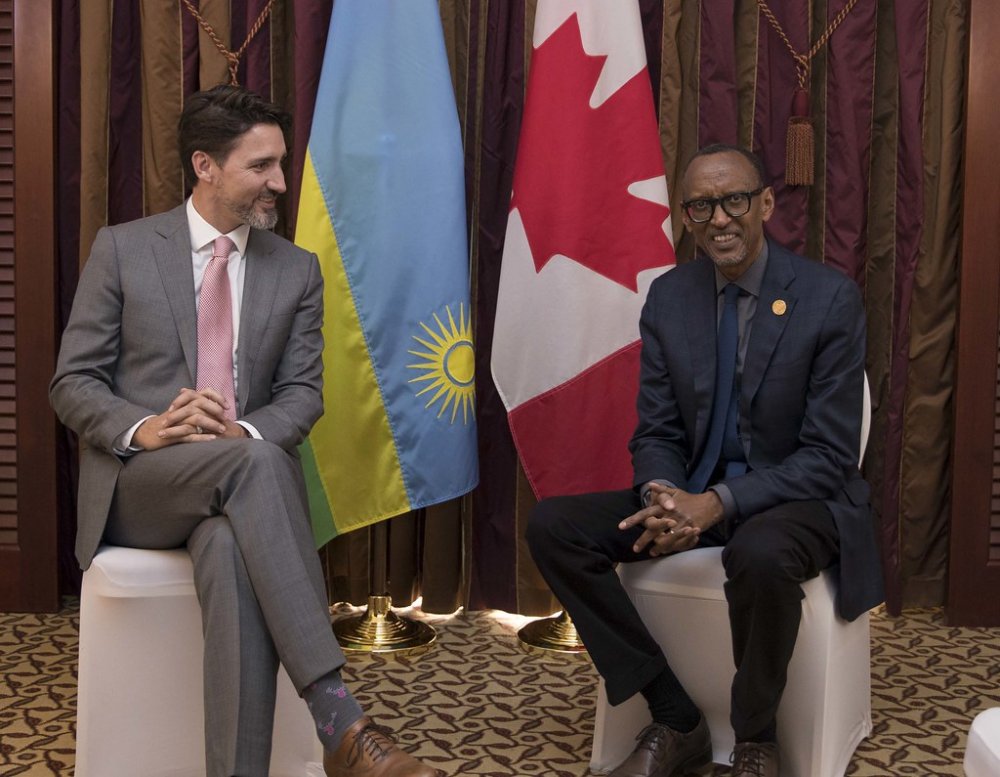
In His Twit the president said that the discussion between the two Heads of State, which were held on telephone, was around the cooperation between the two countries and Africa at large.
Kagame said he had expressed gratitude to the Canadian Premier for his country’s support in Rwanda’s fight against the Covid-19 fight among other things.
“Had a call with PM @JustinTrudeau and thanked him for Canada’s strong partnership with Rwanda and Africa, and support against #COVID19 and toward @AIMS_Next and for the Africa Center of Excellence for Children Peace and Security,” he said in a tweet.
The Canadian Prime Minister’s Office stated that the two leaders also spoke about the strong friendship between Canada and Rwanda, and discussed opportunities to further advance shared priorities in education, research, and the Vancouver Principles.
The discussion follows a March 24, conversation that the two leaders held, also virtually, which also focused on measures to curb the global Coronavirus pandemic.
Rwanda and Canada work together on a wide range of issues, including environmental protection, peacekeeping, trade and investment promotion among others.
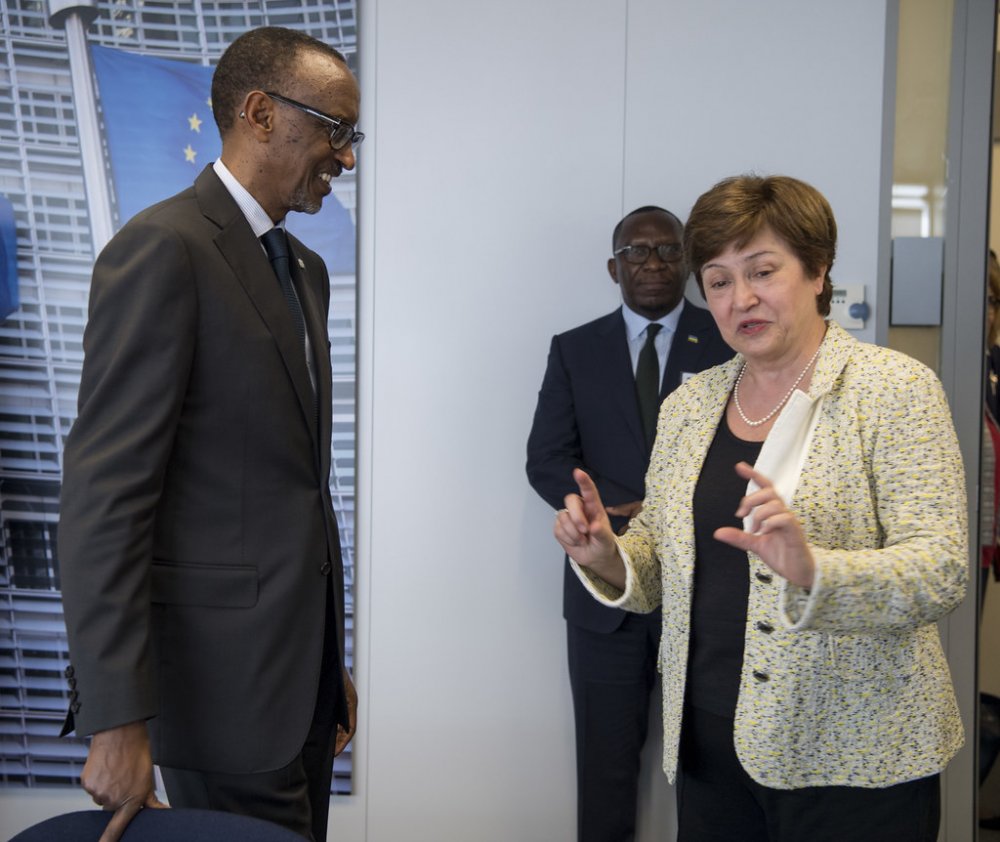
This is the second emergency disbursement since the onset of the pandemic and will help finance the country’s urgent balance of payments (BOP) and budget needs. It follows from the Executive Board’s decision on April 9, 2020 to double the annual access limit under the RCF to 100 percent of quota and brings the total IMF COVID-19 support to Rwanda to $ 220.46 million.
Rwanda’s economic outlook has worsened since the approval of the first RCF request on April 2, 2020, leading to a further downward revision in the 2020 GDP growth forecast from 5.1 to 2.0 percent due to deepening of the COVID-19 impact.
The unprecedented spending needs generated by the pandemic, combined with losses of revenues, are putting significant pressures on public finances and compounding the impact of sharp declines of exports and remittances on the balance of payments.
The additional disbursement under the RCF will provide much needed support for critical COVID-related spending under the government’s Economic Recovery Plan, but further support will be needed from the international community.
The authorities have committed to transparency and accountability to ensure the appropriate use of emergency financing, building on their strong public financial management framework.
Following the Executive Board’s discussion, Mr. Tao Zhang, Deputy Managing Director and Acting Chair, issued the following statement:
“The COVID-19 pandemic continues to severely impact the Rwandan economy. The global and domestic macroeconomic outlook has further deteriorated. Growth projections have been revised down, and revenue losses and spending needs are more than twice the size estimated at the time of the first RCF request.
“The policy measures deployed by the authorities to respond to the pandemic and accelerate economic recovery are appropriate. The additional fiscal spending should help mitigate the impact of the pandemic while ensuring that spending is well-targeted and cost-effective so as not to crowd-out other priority areas. Additional financing from the international community remains critical to ease the adjustment burden.
The authorities’ commitment to high standards of transparency and accountability in the management of emergency financial assistance is welcome.
“It will also be important to maintain data-driven monetary policy and continue to provide liquidity support to cushion the impact of the pandemic as well as step up supervision to safeguard financial stability.
“Once the crisis abates, it will be critical to adopt a credible fiscal adjustment path to maintain debt sustainability in the medium-term and preserve Rwanda’s development gains over the last two decades.”