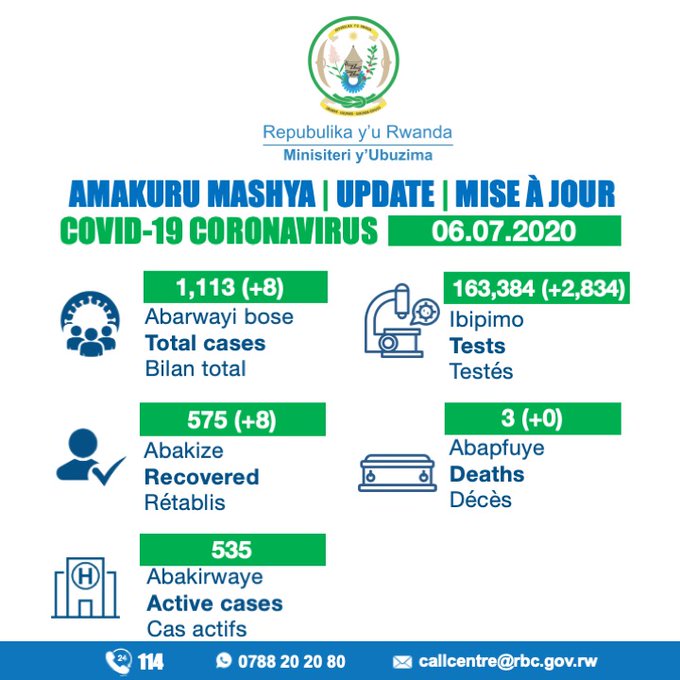
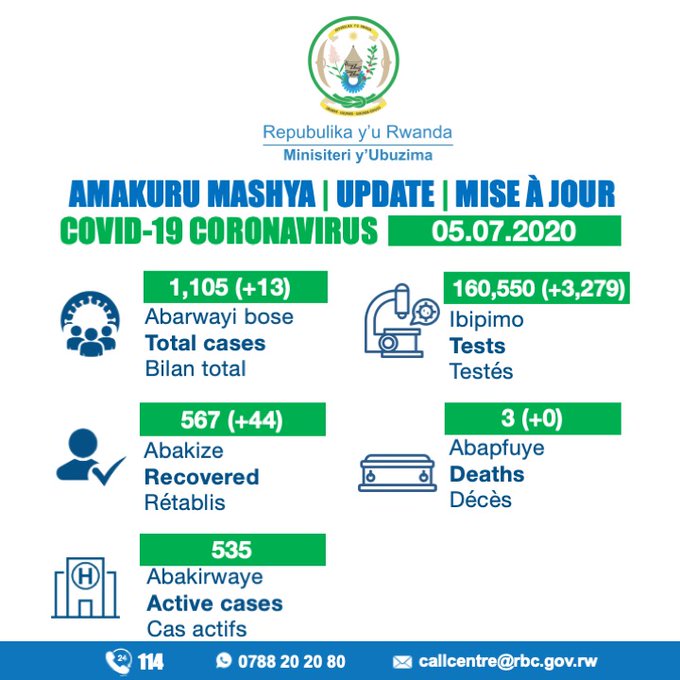
A statement from the Ministry of Health on Monday stated that the number of new Coronavirus patients included “truck drivers who have been in quarantine since their arrival n the country: 3, Kigali: 2, Nyamagabe: 2, Rusizi: 1.”
So far no cure for Coronavirus has been found, using only the treatment of the symptoms of the pandemic, until the human body builds up its immunity, and the virus infects the bloodstream disappear.
Coronavirus symptoms include coughing, flu, and difficulty breathing. It is transmitted through the mucous membranes of the respiratory tract.
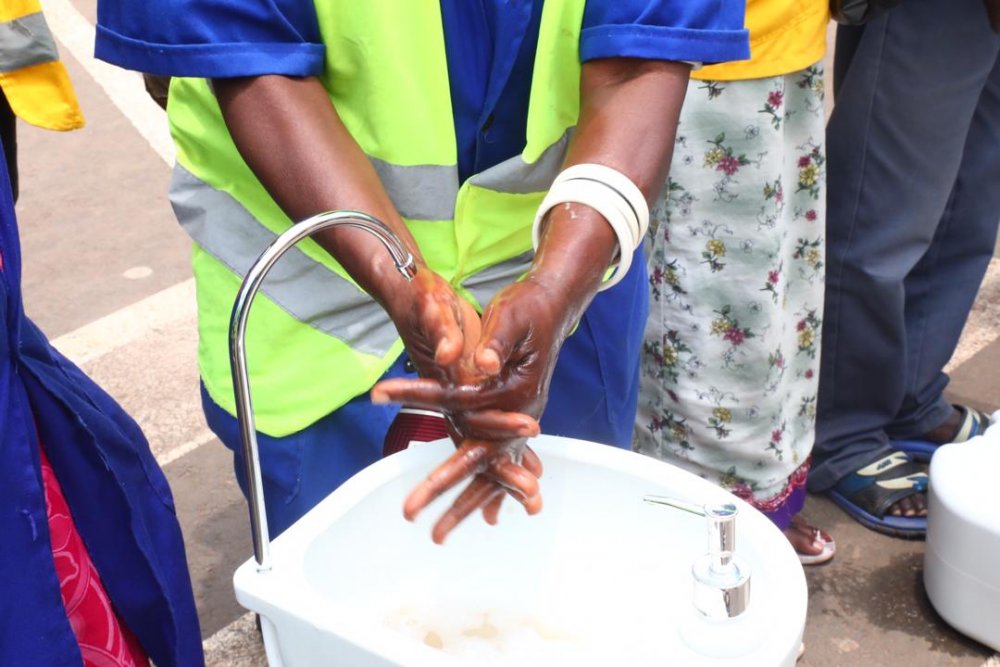
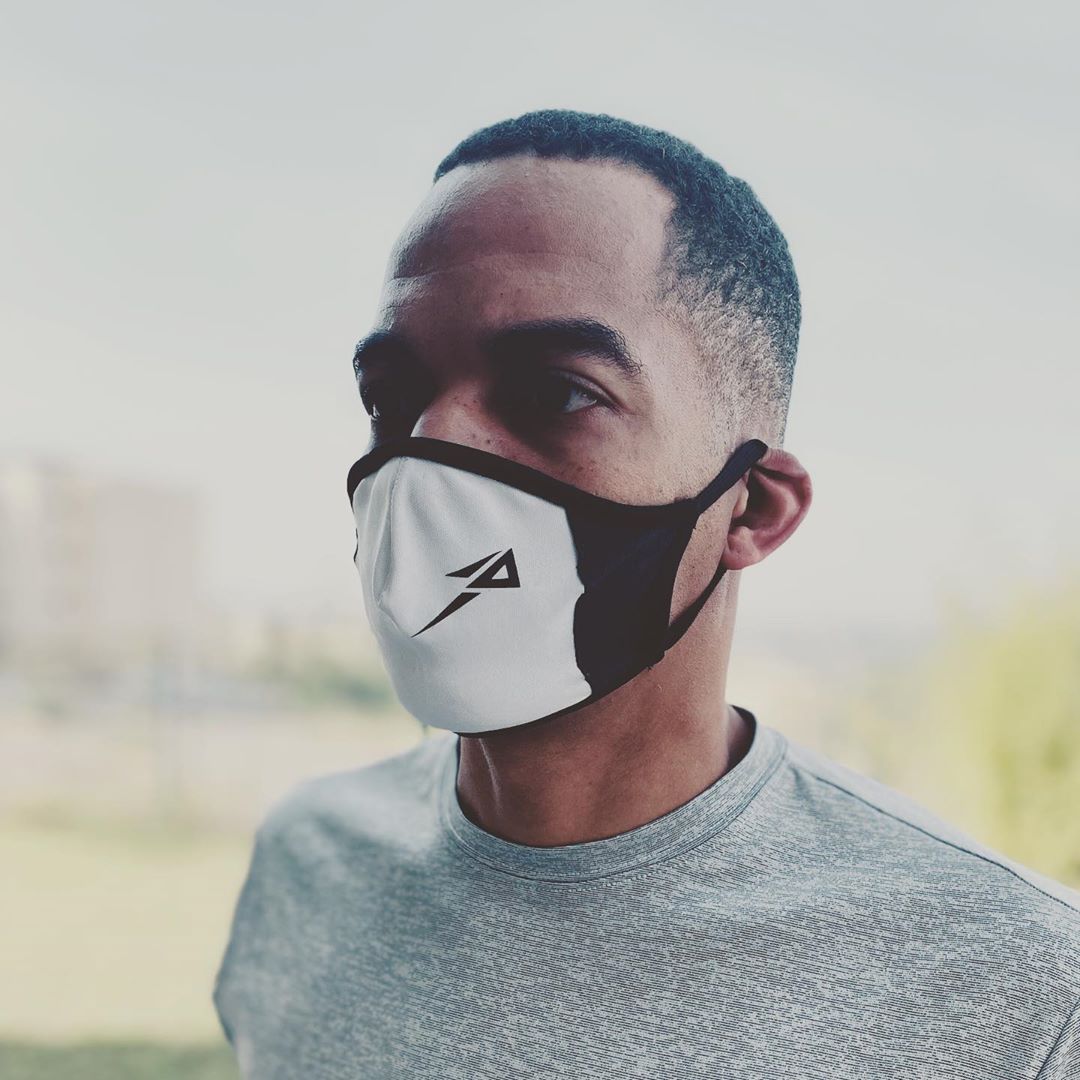
To avoid this, Rwandans are required to abide by government regulations, especially by washing their hands frequently with water and soap, wearing masks when a person leaves home or meets many people in a village or a multi-family area.
AOS Ltd Management and staff wish all Rwandans a Happy Liberation Day as we celebrate 26 years of liberation. This is a day when friends of Rwanda and Rwandans across the world come together to reflect on the time when the 1994 Genocide against the Tutsi was stopped and to celebrate the transformation journey.
AOS Ltd started its operation in 2014, and have contributed to the development of the ICT sector in Rwanda; developed and deployed various systems for both the public and private sectors. AOS developed and deployed the electronic procurement system (e-Procurement) of Rwanda called “Umucyo” in collaboration with Minecofin and RPPA which has increased accountability, transparency, and efficiency in the public procurement process.
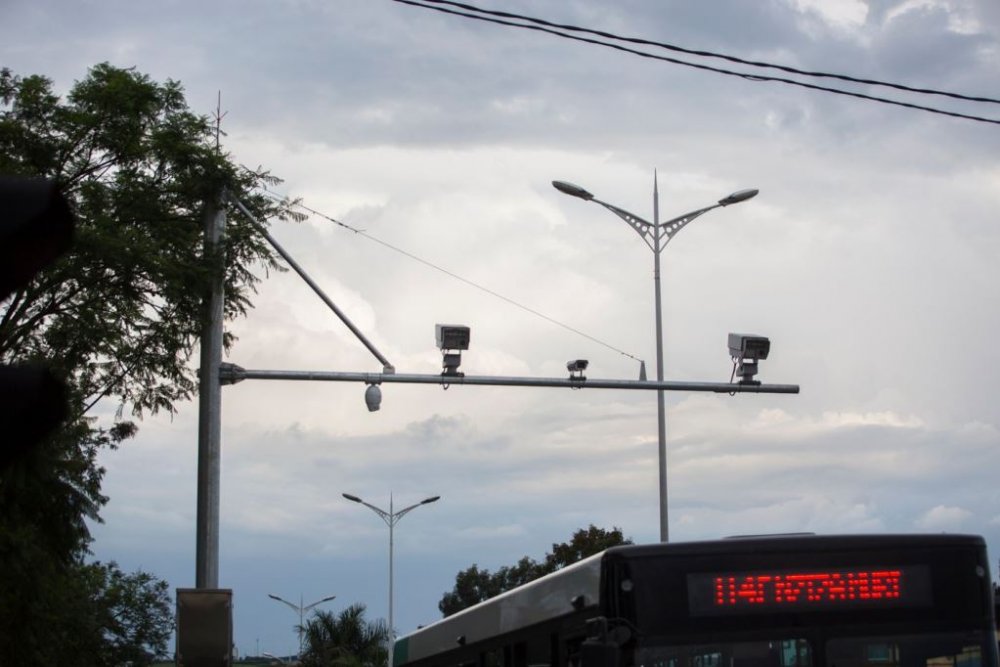
AOS also deployed the public surveillance CCTV and vehicle enforcement system in collaboration with Rwanda National Police that contributes to the safety and security of Rwandans by providing real-time accurate information.
The company has been managing and operating the National Data Center of Rwanda hosting both the public and private sector offering various hosting services including cloud computing, server colocation, web and email hosting, Backup as a service and disaster recovery services to suit customer needs and improve the way they are doing business.
AOS has implemented the Government smart administration system in collaboration with RISA to improve collaboration system and ensure paperless communication between Government institutions and private customers. The project is ongoing.
There are ways AOS uses to minimize the cost of hosting websites locally.
AOS is minimizing the cost of acquisition by using customized home grown solutions and growing customer base to capitalize on the volume of sales and not on the price. The company has made a significant drop in service charges for hosting websites locally with the lowest option being Rwf2,025 per month (24,300 Rwf annually) and a price reduction for cloud computing services as well for the private sector.
AOS Ltd aims to provide good quality of service at an affordable price and will continue to offer better affordable rates to its customers.
AOS says there are several benefits of local web hosting.
The Chief Marketing Officer of AOS, Mr. Manzi Olivier Rwaka said that “Hosting locally contributes to the development of the economy by employing the Rwandan workforce and promoting made in Rwanda solutions. End users hosted locally will have a better experience reducing the network latency, therefore, enjoying faster browsing, more website uptime, and better loading time while accessing their data especially if the data hosted is mostly accessed by users in Rwanda,”
“Another advantage is that users hosted locally can get better support from the local hosting provider when needed at any time with an advantage of using our local language Kinyarwanda. There’s also a security aspect knowing that your data is locally hosted especially sensitive data for Rwandans.”
According to Mr. Manzi Olivier Rwaka, they see an increase in web and mail hosting customers over the years in the private sector. Customers look for good quality of service, good support at an affordable price. The price reduction has also contributed to attract more people to host locally but there’s still more to be done to bring back local content in Rwanda and AOS Ltd is committed to provide the best service at good rates and to contribute in the growth of the private sector in Rwanda.
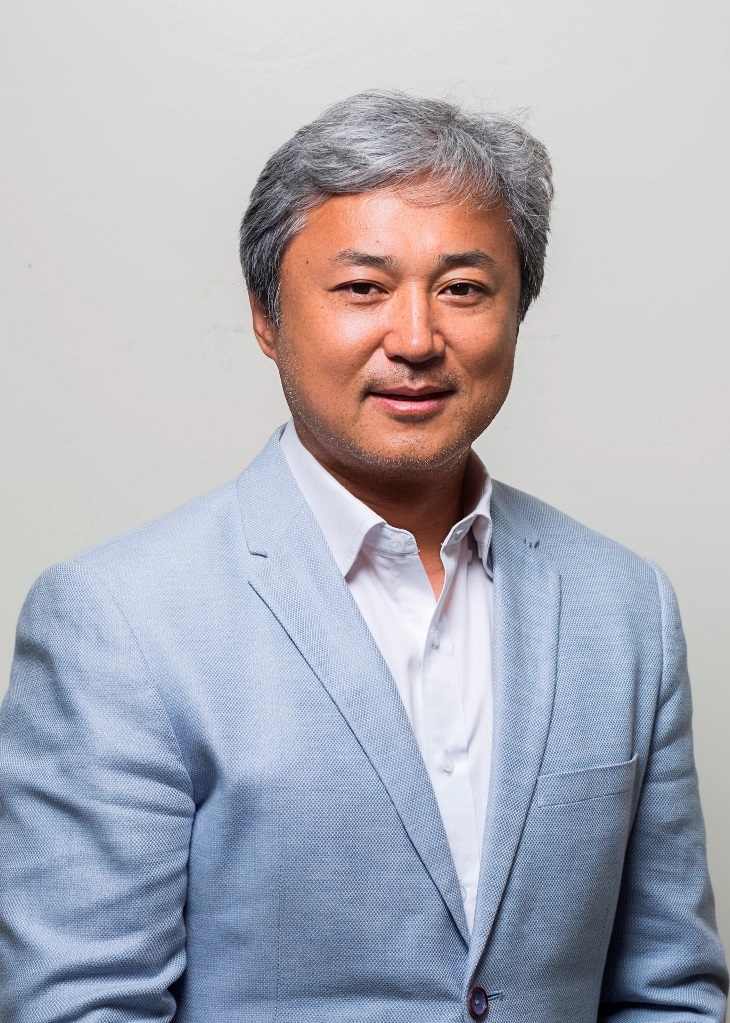
The interviewer asked the Chief Executive Officer of AOS, Mr. Seong Woo Kim how AOS services are sharpening Rwanda’s vision of becoming an ICT Hub.
“We are contributing to make Rwanda an ICT hub by providing Data Center services not only to local customers but also to regional as we have been targeting the EAC market and international customers.
“As of September 2018, the World Bank officially acknowledged that Rwanda e-procurement system “Umucyo” is the first successful case in Africa. The system has attracted interest from various African countries that would like to have a similar system in their countries.”
Back in 2018, several websites went down in the country including some of the government-owned websites. The interviewer asked AOS what are the measures that have been taken to get this issue answered once and for all.
“We have reviewed policies and procedures in place to avoid incidents or technical problems and we have put in place a mitigation plan to the issues that were noticed,” The Chief Marketing Officer of AOS, Mr. Manzi Olivier Rwaka assures.
In the level of the continent when it comes to its mission of bringing ICT solutions and services that will transform Africa, AOS place themselves as an ICT provider company with expertise and experience in Data Center operations, solution development, systems integration that can be exported to other African countries. They are challengers on the market and believe to be competitive in the EAC market.
AOS Ltd has initiatives to help Rwanda to turn into a high-tech hub as well as channels that will foster their targets.
The Chief Executive Officer of AOS, Mr. Seong Woo Kim said that “We need to develop more homegrown solutions. In the beginning, we start developing our solutions with the support from others with more expertise which will increase the knowledge and skills of our local engineers in various aspects and enhance our understanding of the end-users. Then, there will be more local engagement for other solutions and at the end, we will be able to successfully deliver ourselves by given the focus to the people who are engaged in these efforts such as software developers, network and security engineers, sales and marketing experts who interact with end-users.
“We need to keep them and give them the tools that they need so that they can build their experience and build their know-how. Finally, knowledge sharing and training should be done. We also plan to have an ICT academy to teach various IT skills to Rwandans.”
They will also export those successful solutions to other African countries as Made in Rwanda products, therefore, boost the economy and turn Rwanda into an ICT hub.
The grant approved on June 26, is part of $10 billion the bank approved in April 2020, to help regional member countries across the continent cope with the Coronavirus pandemic.
The beneficiaries are Burundi, Comoros, Djibouti, Eritrea, Ethiopia, Somalia, Kenya, Rwanda, South Sudan, Sudan, Tanzania, and Uganda. The support will be used to supply medical equipment needed to fight Coronavirus including testing and training for health workers.
The grant will be used to strengthen the health sector, enhance infection prevention and control, and improve regional coordination by the East African Community (EAC) and the Intergovernmental Authority Development (IGAD) to prevent cross-border transmissions.
Country Manager for African Development Bank in Rwanda, Martha Phiri, said: “The main purpose of this grant is to reduce the incidence of Coronavirus and other deaths in East Africa and other pandemics.”
The EAC Secretariat will receive $ 8.79 million in tranches, where it will initially receive $ 8.16 million and $ 629,582 while $ 729,581 will go to IGAD.
Kenya is the most infected country in the EAC, where 7,886 people have been infected with Coronavirus, and 160 deaths; 1,105 have been infected in Rwanda and 3 deaths; Uganda has 939, Burundi has 191, Tanzania has 509, and South Sudan has 2021, and 38 deaths.
From last year, a large number of Rwanda-bound containers stayed at the Dar port and the delay was made more grievous by COVID-19 pandemic restrictions.
Rwanda Private Sector Federation (PSF) reports that at that time there were containers that came from China, they could not leave the port because Chinese and other exporters delayed the delivery of supporting documentation so that the transit goods could be released.
Another problem was that the goods reached at the port at a time when Rwanda went under lockdown, making it difficult for importers to clear them.
Rwanda Private Sector Federation (PSF) Chief Executive Officer Stephen Ruzibiza, told The East African that more than 2,000 containers had been released last week.
“At least between 250 and 300 of the affected containers have been cleared to leave the port daily ever since the port authority responded to our request to waive the charges, and asked for supporting documentation,” he said.
“We are in talking to the importers and the cargo owners, and we have given them the whole of next week to indicate to us how many of the containers are remaining, Ruzibiza added.
Figures of overstayed containers provided by the chamber of commerce and service show Dar es Salaam accounting for 2000 while the other 64 were stuck at Kenya ports of Mombasa and Naivasha.
These containers are released if there is concern that they could be auctioned off because the fees charged for warehousing, customs and penalties are already higher than the value of the goods.
The port authorities in Tanzania and Kenya wanted to release the cargo only if all the required fees were paid in full, while the Rwanda Private Sector Federation continued to demand the facilitation of traders.
On June 22, 2020, PSF Chief Executive Ruzibiza wrote to the management of the Kenya Port Authority (KPA), as well as the Tanzania Port Authority (TPA), calling for the lifting of the sanctions.
Ruzibiza pointed out that exporters continue to face obstacles due to the Coronavirus pandemic, where they face delays in access to documents from suppliers, new border regulations, and drivers’ protests in Benaco and Maraba.
He further called for the abolition of penalties for warehouses, customs delays, and daily shipments of containers, as agreed by the EAC.
The Rwanda Revenue Authority (RRA), which has also written to the Tanzania and Kenya Revenue and Customs Enforcement Agencies, is calling for the lifting of sanctions on Rwandan traders as agreed in the EAC Trade Agreement.
The RRA said sanctions were unnecessary because people were facing the scourge of global catastrophe, reminding them that Rwandans are already working together well, so today it is not the time to risk them.
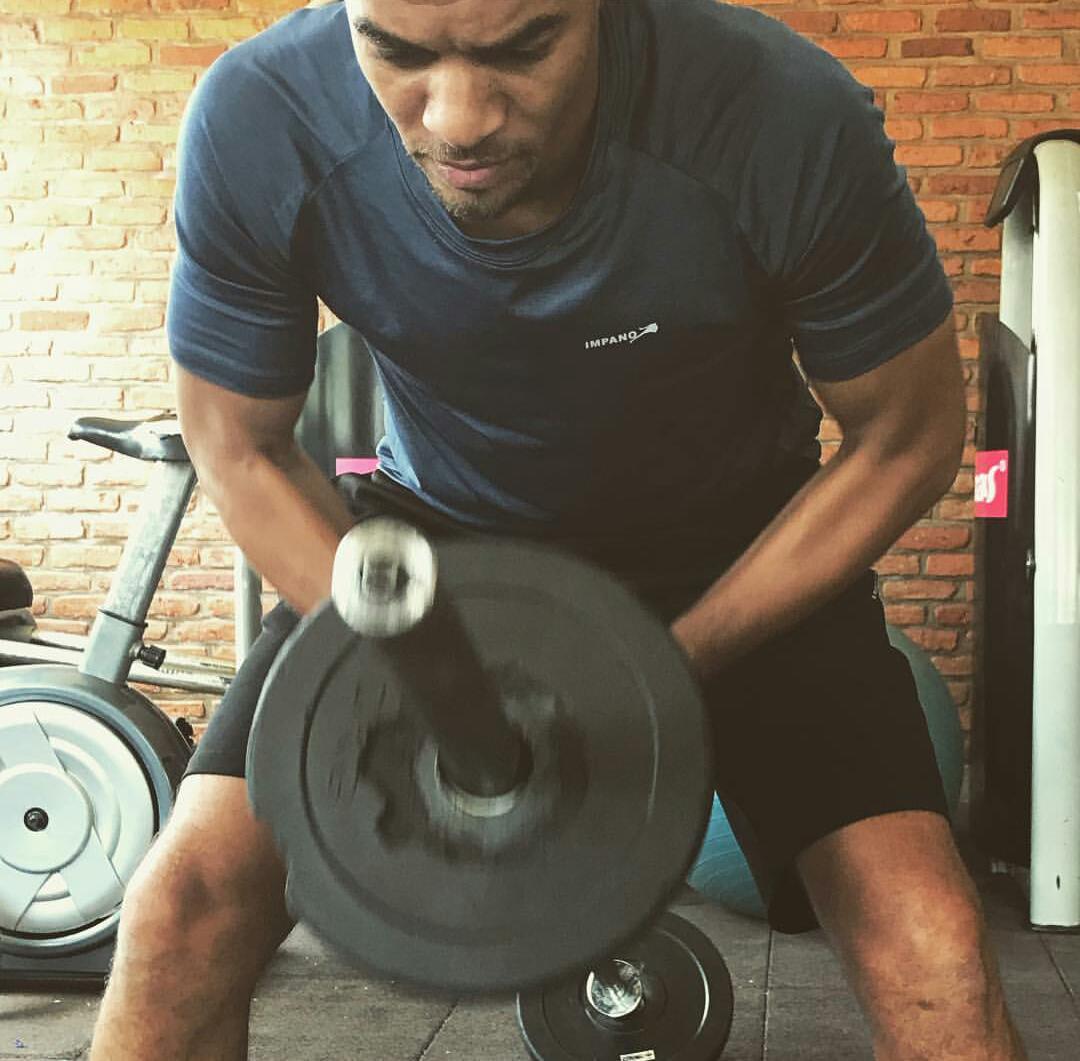
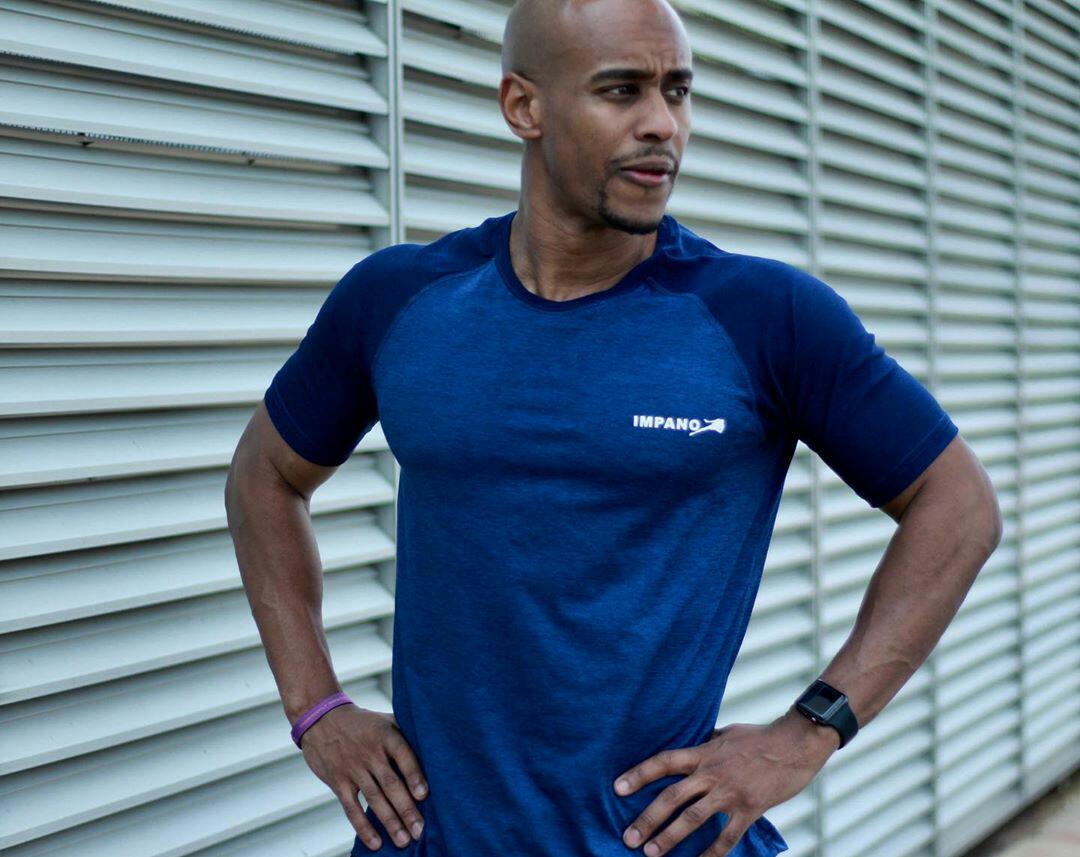
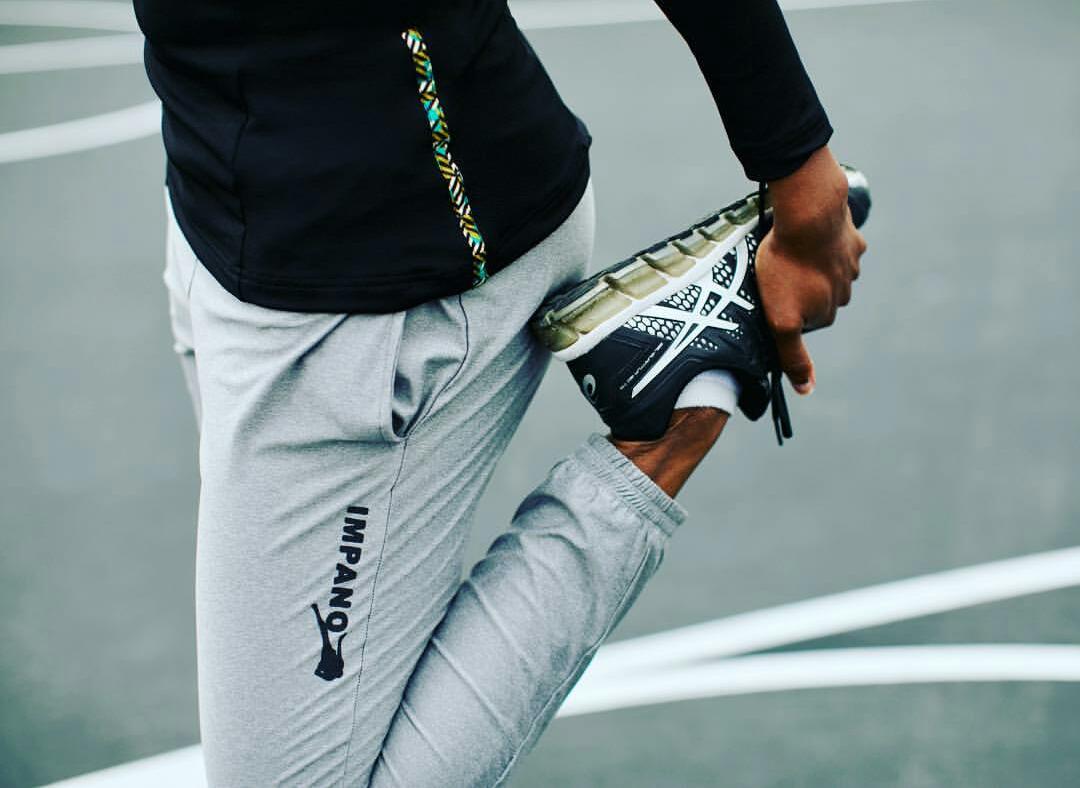
Impano Sports Ltd is a company that manufactures and sells quality affordable sportswear here in Rwanda since 2018.
In an interview with IGIHE, Allen Simms, who is also a professional fitness and sports coach of Athletics, said that sports are important in the ongoing vision to build Rwanda after 26 years since the Genocide against the Tutsi.
As a coach who was also once a professional athlete for USA, Allen says that sports can heal people’s wounds and unite people from different backgrounds.
“For example when we take a professional football team that has players from different towns, cultures, races, or countries the fans only see 1 united team, not the players differences or backgrounds. This sports team can join people together under a common goal, to win thus helping in healing from past wounds. As with Car Free Day that unites several people, you see people happy even though there are those with differences from the past and normally would not gather together in peace.”
After two years in the clothing industry, Impano Sports Ltd aims to support the ‘Made in Rwanda’ program so that even Rwandan teams will start getting affordable, made-in-the-country team sports uniforms rather than purchase from Europe or Asia at high cost.
“We have to destroy the second-hand ideology on all levels and value what can be designed and produced here because the development of the country and its future depends on it, not what the outside world can sale to Rwanda. We at Impano have worked very hard with customer service to establish a quality affordable brand, without outside assistance. We rely on our customers to give us feedback to help us improve our product, we strive to build from within,” he said.
“I’m the only non-Rwandan in the company, our products are designed and produced by Rwandans, there should pride in that.”
“Our goal is to join the sportswear market in Rwanda and to dress teams participating in various sports including the Olympics, the World Championships, and other competitions. We believe that if Rwandans feel that what is being produced at home is of good quality, it will bring more trust and comfort in supporting made in Rwanda products in the future.”
Impano urges Rwandans that during this period of celebrating the 26th anniversary of the liberation of Rwanda, everyone should strive for sustainable development of the country and to liberate our minds holistically from second-hand products and cheap goods being passed as original products from outside of Rwanda.
The substances were impounded in separate operations conducted in June in the sectors of Rugera and Shyira.
The psychotropic substances were disposed-of in a public exercise held in Rugera Sector.
Chief Inspector of Police (CIP) Bonaventure Twizere Karekezi, the Police spokesperson for the Western region, said that the operations were conducted by Rugera Police station, which oversees the two sectors.
“There was information about people venturing in illegal breweries producing psychotropic substances especially in Gicumbi District and supplying other dealers in Musanze District. Rugera and Shyira sectors in Nyabihu were, therefore, found to be their main trafficking routes,” CIP Karekezi said.
“Two vehicles were impounded during the operations; one Daihatsu was transporting 2, 200 liters of illicit brew while another had over 1,000 liters. Other psychotropic substances were being transported on motorcycles and bicycles,” he added.
He explained that through communication between District Police Units, they traced the sources where the substances were produced, dismantled the illegal distilleries and owners handed varied penalties as the law specifies.
He observed that besides being unhygienic and harmful to consumers, these psychotropic substances have been found to be the source of other crimes related to gender and domestic and fighting.
“We commend the role of the public in these successful operations, which were mainly based on credible information they shared with the Police on producers, traffickers and routes used,” CIP Karekezi said.
All drinks with alcoholic content exceeding 45% or with unknown alcoholic content are prohibited in Rwanda and classified as psychotropic substances.
Under article 263 of the law determining offences and penalties in Rwanda, anyone convicted for producing, trafficking or selling narcotic drugs and psychotropic substances faces between seven years and life imprisonment and a fine of up to Rwf30 million.
“It is true; Dr. Habumuremyi has been arrested over offering bounced cheques” said the RIB twit.
Habumuremyi issued the said cheques in several instances, in order to keep his university running after it faced financial difficulties in the past years.
Among the arrest was also Prof. Egide Karuranga, Vice-chancellor of University of Kibungo(UNIK) over misuse of university funds and nepotism.
Valentine Uwamariya, the Minister of Education said that the universities had provisional licenses but failed to fulfill the requirements for them to be accredited.
“They have been closed and some of the owners arrested by Rwanda Investigations Bureau (RIB),” said Dr. Uwamariya
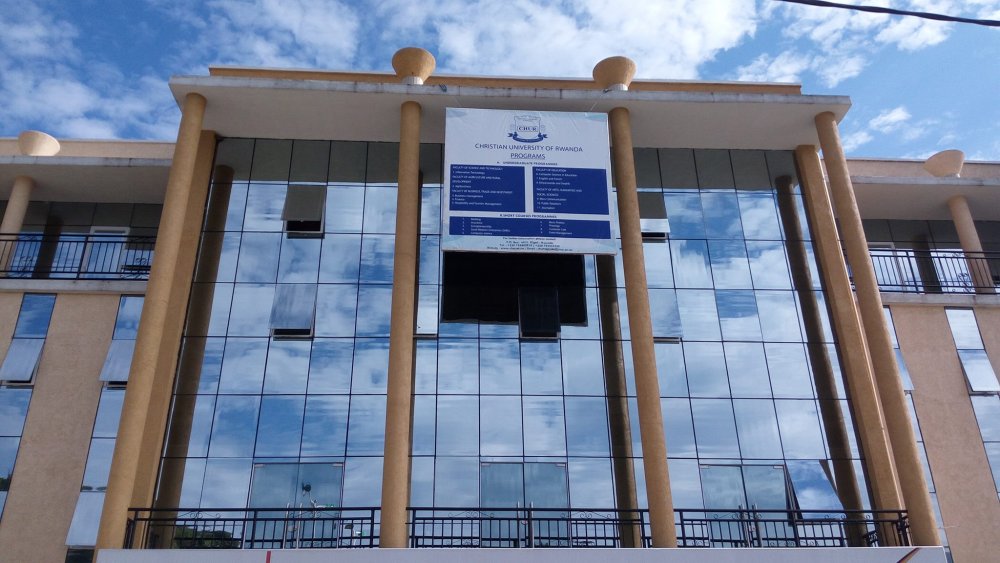
Rwanda Investigations Bureau (RIB) confirmed the arrest of the owner of the Christian University of Rwanda, who is also the former Prime minister Dr. Pierre Damien Habumuremyi, accused of committing financial crimes in his role as the President of the Board of Trustees of the University.
Prof. Egide Karuranga, Vice-chancellor of the University of Kibungo (UNIK) was also among those arrested over misuse of university funds and nepotism after the closure of the university last week.
As for students who have been going to these Universities, the Minister said that “They (closed universities) are expected to help students who were studying in their universities to get admissions in other institutions when schools resume by providing their academic performance results.”
The new cases were recorded out of 3,279 tests conducted over the last 24 hours. This brings the recoveries to 567 while active cases are now 535.
According to Dr. Sabin Nsanzimana, the majority of the recoveries were registered in the southwestern district of Rusizi.
“Today, 44 people recovered, 38 of them are from Rusizi district. This means that recoveries have once again exceeded active cases. We wish them a speedy recovery,” Dr. Nsanzimana said.
The Sunday update brought the total cases to 1,105; eight of the new cases were registered in Rusizi while 5 are in the City of Kigali.
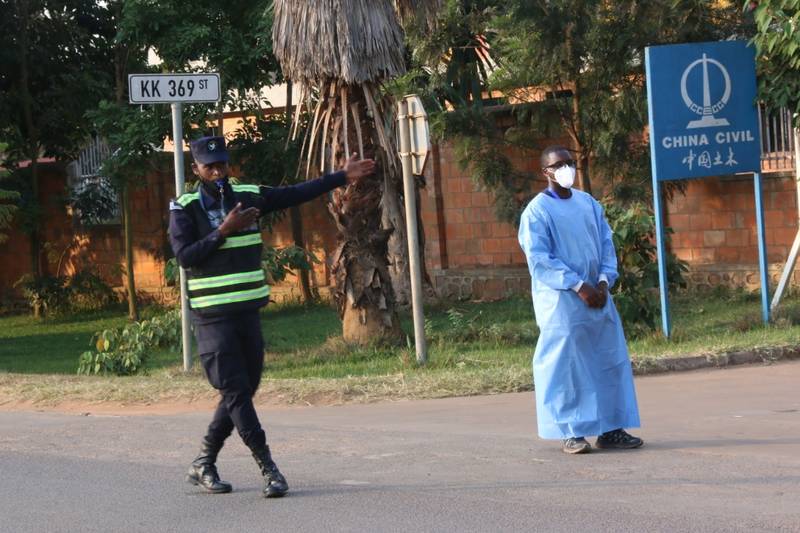
RNP spokesperson, Commissioner of Police (CP) John Bosco Kabera appealed to those going about their errands to exercise patience to be tested to facilitate the national efforts against the pandemic.
“Rwanda Biomedical Centre (RBC) started mass testing in Kigali on Thursday, and testing units are stationed at different points on streets of Kigali and its entry points. Police officers have also been deployed to facilitate the medical exercise.
They are deployed at these testing points to direct people, including pedestrians, those in vehicles and motorcycles. We urge the public to be collaborative and responsive to the Police officers’ instructions,” CP Kabera said.
He added: “This is a drive or ride through testing where passengers remain in their respective automobiles as medics collect samples. Motorists and pedestrians will be stopped briefly, this is a medical exercise meant to keep everyone safe from the pandemic, so there is every reason for everyone to exhibit voluntary behaviors.”