In a statement issued on June 16, 2026, the ministry said that health authorities remain vigilant and are strengthening preventive measures following the declaration of an Ebola outbreak caused by the Bundibugyo strain in Ituri Province, Democratic Republic of Congo (DRC), about a month ago.
“There are currently no cases in Rwanda and no active cases in areas bordering Rwanda. While the risk is low, Rwanda remains vigilant and continues to strengthen surveillance and preparedness,” the statement read.
Minister of Health Dr. Sabin Nsanzimana also reaffirmed that surveillance efforts will continue to ensure timely response and prevention.
“No Ebola cases in Rwanda or neighboring areas. The risk of transmission to Rwanda is low. With the epicenter still active, vigilance remains as usual,” he said.
The announcement comes at a time when a patient previously identified in Goma has recovered, and all 255 people who had contact with the case tested negative for the virus.
In Bukavu, another affected city, one person died from the disease, while around 200 suspected cases were placed under quarantine. No further infections were confirmed among them.
In Uganda, Ebola has also been detected in Kampala. According to the Ugandan Ministry of Health on June 9, 2026, 19 cases were confirmed in the capital, including 12 patients still in hospital, five recoveries, and two deaths.
Ebola is a highly contagious viral disease transmitted through contact with infected bodily fluids such as blood, sweat, saliva, urine, vomit, and other secretions.
The first fatality in the current outbreak of the Bundibugyo strain was recorded in Bunia, Ituri Province, on April 24, 2026, although the death was confirmed to have been caused by Ebola six weeks later.
As of June 16, the DRC had recorded 837 confirmed Ebola cases,including 196 deaths including 192 deaths, as health authorities and international partners warned that the outbreak continues to deteriorate with sustained community transmission and geographic expansion.
Minister of Health Dr. Sabin Nsanzimana also reaffirmed that surveillance efforts will continue to ensure timely response and prevention.
According to the latest figures released by the DRC health ministry, the case fatality rate stood at 23.4 percent. A total of 49 patients had recovered, while 376 patients remained in isolation.
The outbreak, caused by the Bundibugyo Ebola virus, remains concentrated in major hotspot zones, particularly Bunia, Mongbwalu and Rwampara in the Ituri province.
According to a report published Tuesday by the World Health Organization (WHO), the widening geographic distribution of affected health zones, persistent transmission in urban and mining-linked settings, suboptimal contact follow-up rates in some provinces and ongoing insecurity in affected areas continue to complicate response operations and increase the risk of further spread within the DRC and to neighboring countries.
WHO said that the outbreak continued to deteriorate, with sustained community transmission, increasing numbers of cases and deaths, and ongoing geographic expansion across Ituri and North Kivu provinces. Spread into newly affected zones highlighted continued expansion beyond the initial epicenters, the report said.
In neighboring Uganda, according to WHO, no new confirmed cases were reported during the reporting period. However, the continued epidemiological link to transmission in the DRC underscores the ongoing risk of cross-border spread and secondary transmission. Uganda has reported 19 confirmed cases, including 2 deaths, said on Tuesday the Africa Centres for Disease Control and Prevention in a daily update.
In North Kivu, provincial health authorities said that a woman and her child who had tested positive for Ebola were taken away late Monday by “armed men”. The WHO said that response efforts remain constrained by multiple factors, including community resistance in affected areas.
The DRC declared the latest Ebola outbreak on May 15. The affected areas are located in the country’s conflict-hit east, where armed violence, displacement and weak health infrastructure have posed persistent challenges to the response.
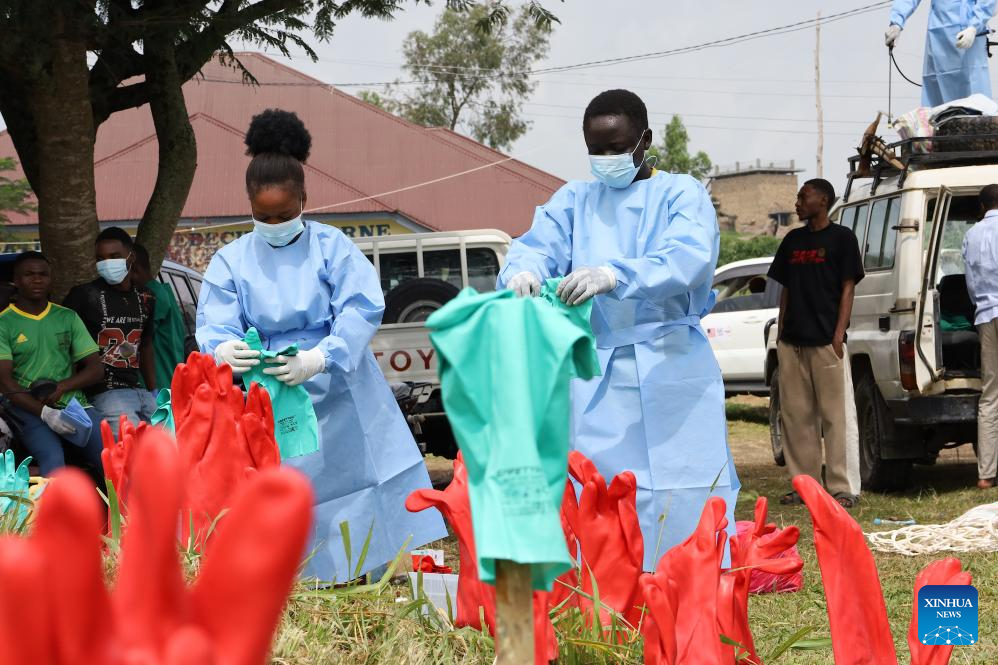
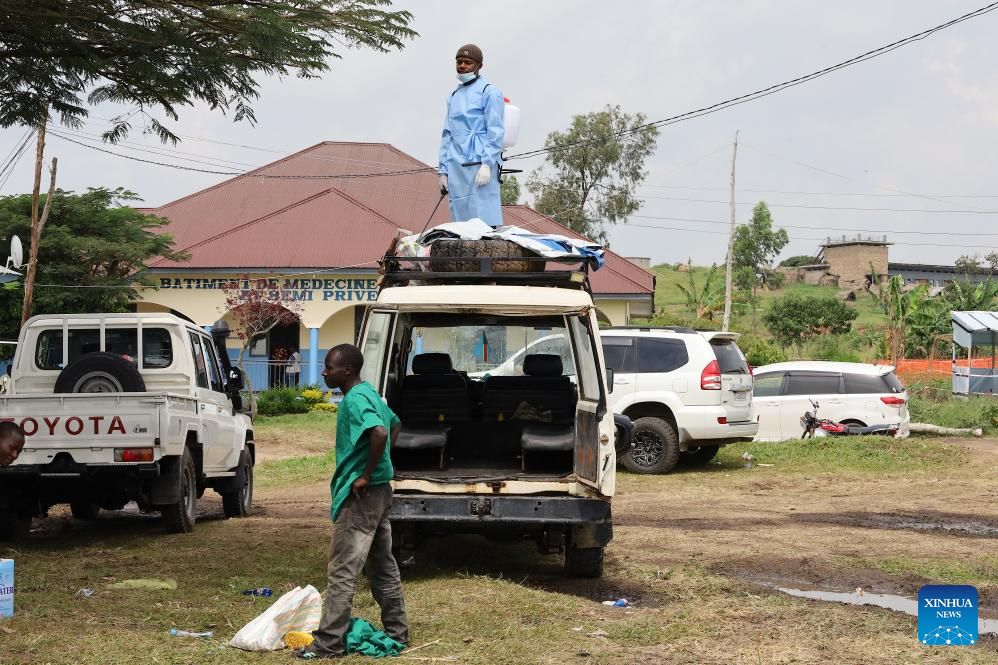
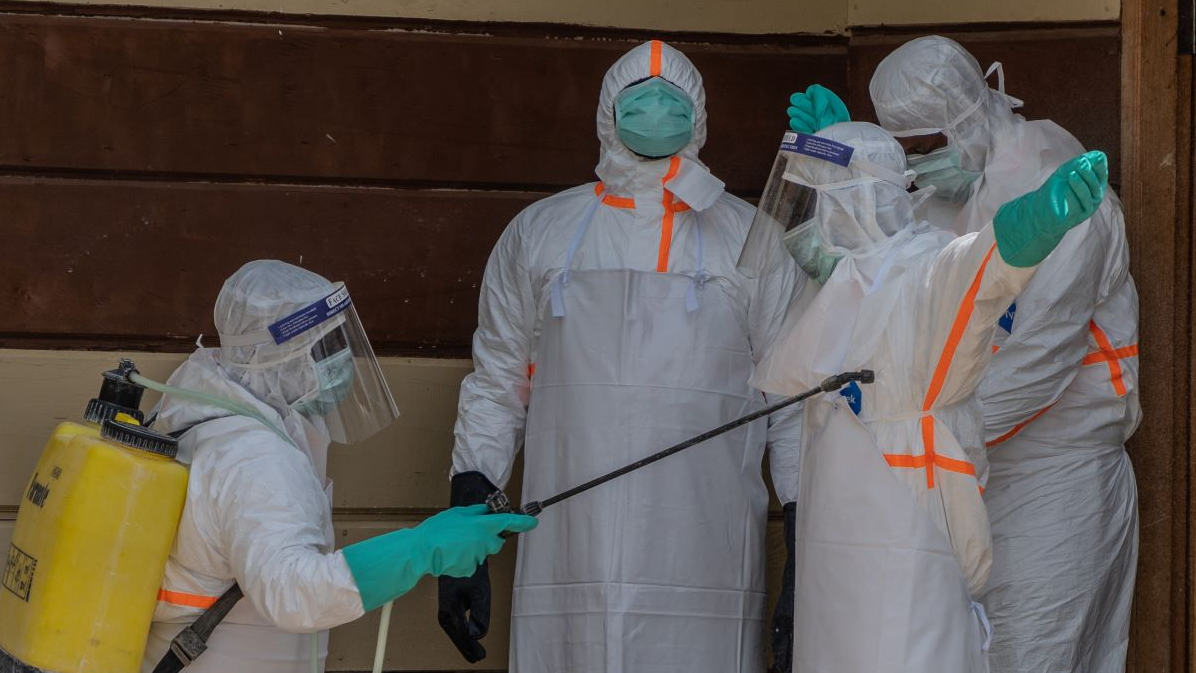
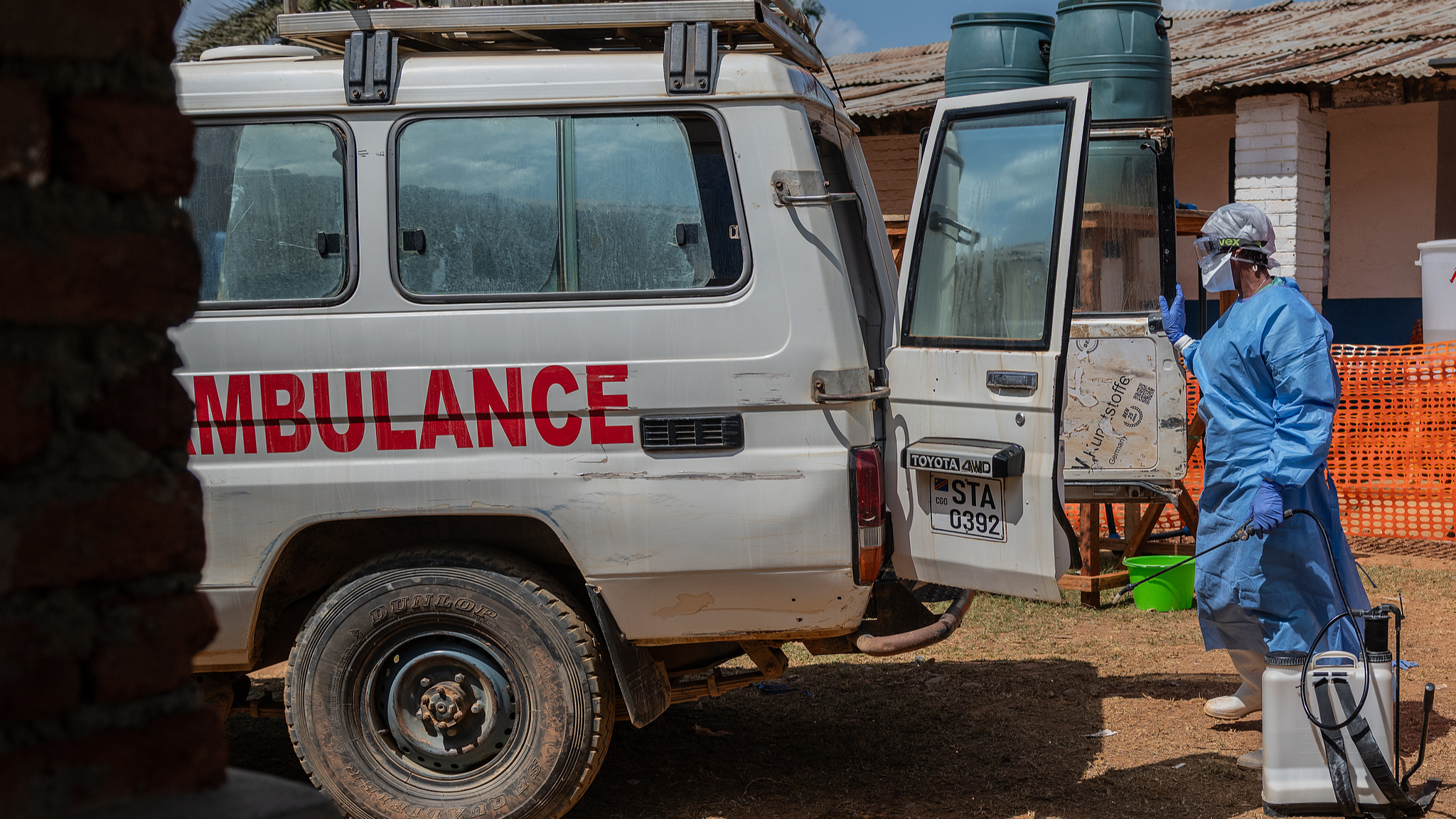
A health worker disinfects a vehicle at an Ebola treatment center in Rwampara in eastern Democratic Republic of the Congo, on June 16, 2026. The number of confirmed Ebola cases in the Democratic Republic of the Congo has risen to 837, including 196 deaths, as health authorities and international partners warned that the outbreak continues to deteriorate with sustained community transmission and geographic expansion.
According to the Ministry of Health, heart disease was previously the second-leading reason Rwandan patients were sent overseas for treatment. However, investments in specialist training and healthcare infrastructure have enabled the country to provide advanced cardiac care domestically.
State Minister for Health Dr. Yvan Butera said Rwanda has made substantial progress in cardiac treatment compared with its position four years ago.
“Four years ago, heart disease was the second-largest reason for referring patients abroad,” Butera told Rwanda Broadcasting Agency (RBA). “Since launching this program, we have treated 1,100 patients here in Rwanda.”
The achievement is part of broader efforts to strengthen Rwanda’s healthcare system and position the country as a regional medical hub. Authorities have invested in medical infrastructure and specialist training to improve access to high-quality healthcare services.
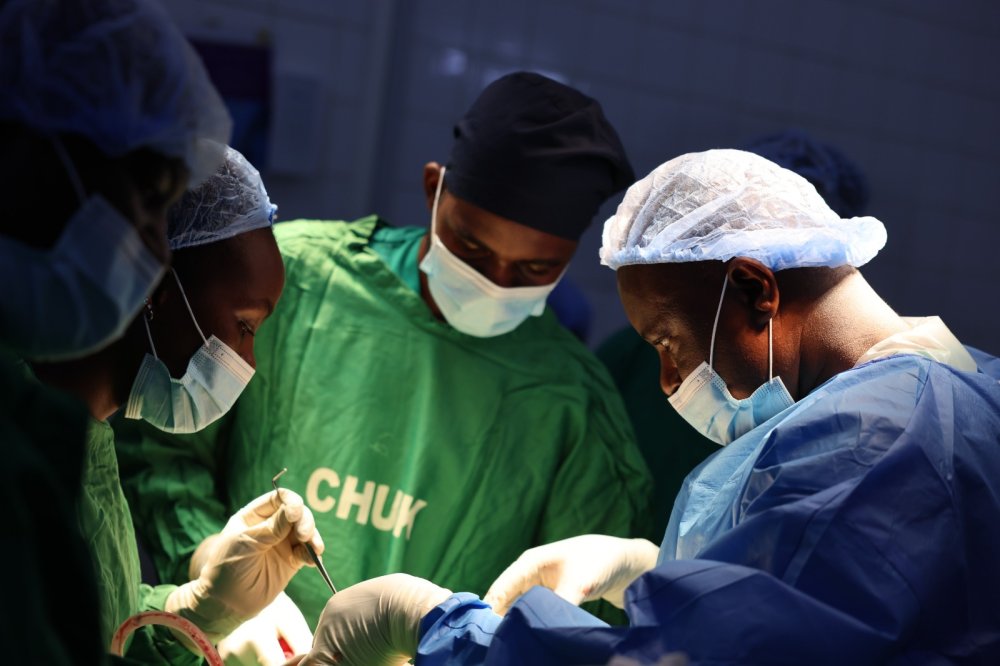
As part of these efforts, Rwanda has sent doctors to Israel for specialised training in cardiac surgery. The Ministry of Health said some physicians are still undergoing training and are expected to contribute to cardiac care services in Rwanda and the wider region upon their return.
Butera said the program has enabled the treatment of both children and adults with complex heart conditions that previously required referral abroad.
“We are not only treating patients but also training Rwandan professionals to ensure these services are sustainable in the long term,” he said.
Cardiac care requires multidisciplinary teams that include diagnostic specialists, surgeons, anesthesiologists, intensive care physicians, and other healthcare professionals. While such services demand significant resources, Butera said Rwanda has steadily built the capacity needed to deliver them.
The growing expertise has also begun attracting patients from neighbouring countries and beyond.
“We are increasingly seeing people from across the region and even farther afield coming to Rwanda for treatment, which is a positive development,” he said.
The progress comes amid broader government efforts to expand access to healthcare nationwide. Rwanda currently has more than 520 health centers, 57 hospitals, and 1,280 health posts distributed across the country.
The government has also launched the 4×4 program, an initiative aimed at quadrupling the number of doctors in Rwanda by 2028. The program seeks to achieve a ratio of four doctors for every 1,000 residents and is expected to attract investments exceeding $395 million.
Rwanda has treated 1,100 heart disease patients over the past four years, marking a significant milestone in the country’s efforts to expand specialised healthcare services and reduce the need for medical referrals abroad.
“With no approved vaccine or specific treatment for the Bundibugyo strain, classic public health measures are decisive – early detection, rapid isolation, contact tracing, safe care, infection prevention and control, community trust, and strong coordination,” Kaseya told Xinhua in a recent interview.
The two affected countries have recorded a cumulative 827 confirmed cases and 194 deaths, including 19 cases and two deaths in Uganda, according to the latest Africa CDC data. A total of 53 patients have also recovered from the virus.
Kaseya warned of critical operational constraints, including gaps in contact tracing capacity, financing, logistics, informal cross-border travel, limited laboratory capacity, ambulances, trained response personnel, and infection prevention and control supplies.
“Strengthening contact tracing, active case finding, and community engagement is a priority,” he said, highlighting the growing number of affected districts with the outbreak currently active across 31 health zones in the DRC and one district in Uganda.
He further warned that the outbreak is unfolding in zones plagued by insecurity, which is further compounded by intense population movement and fragile health systems.
“This complicates access, surveillance, contact follow-up, safe transport of samples, and the delivery of essential supplies,” he said.
Kaseya said the Africa CDC is currently working closely with the governments of the DRC and Uganda, the World Health Organization (WHO), and other partners to stop transmission, support health workers, strengthen surveillance, reinforce infection prevention and control, and support risk communication and community engagement.
He reiterated that the African Union’s continental public health agency and the WHO continue to advise against unnecessary trade and travel restrictions.
“Health and humanitarian corridors must remain functional while screening, surveillance, and preparedness are strengthened at points of entry,” he said.
Kaseya further called on African governments and global partners to rapidly mobilize flexible financing, diagnostics, and support for frontline workers and to invest in preparedness systems that will outlast the current emergency.
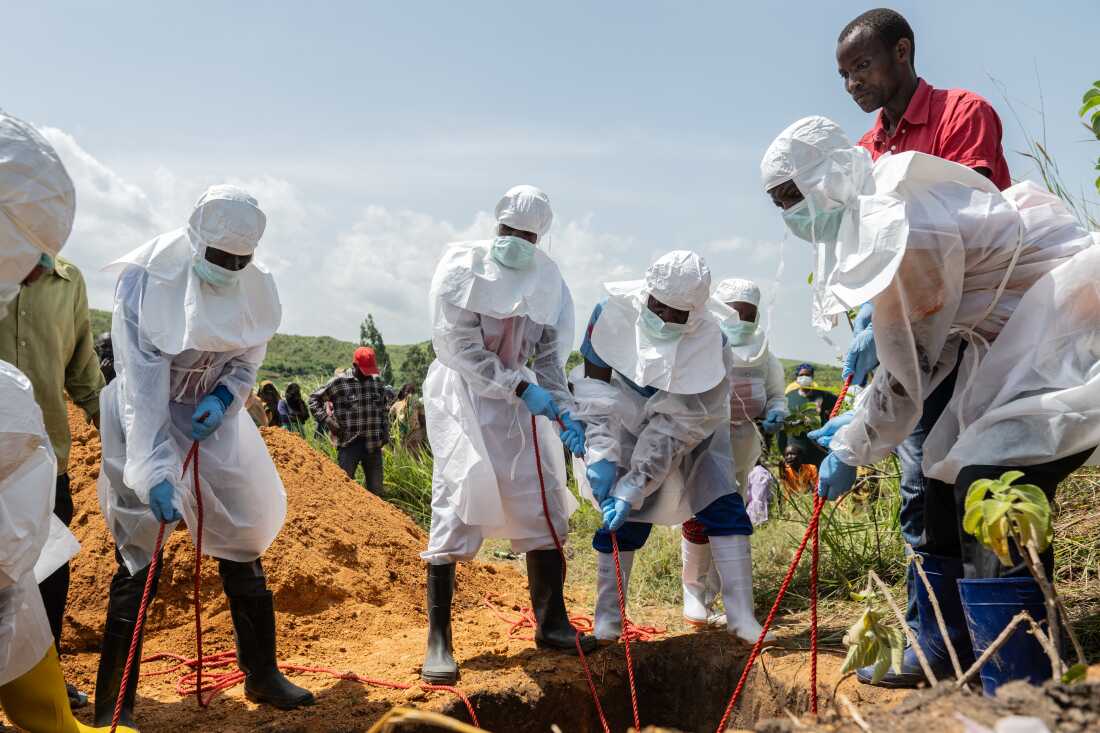
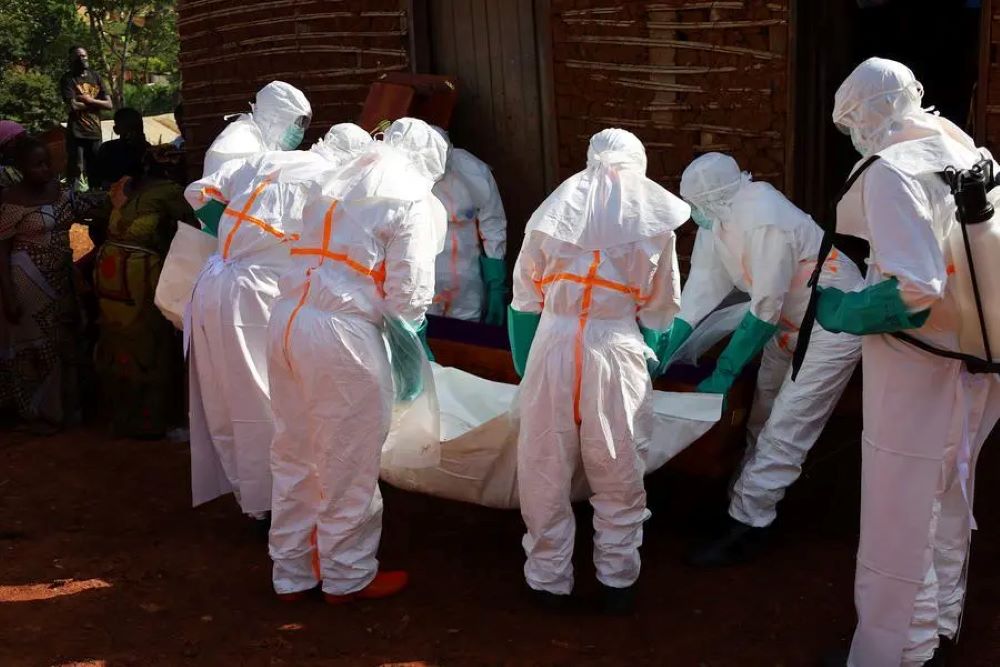
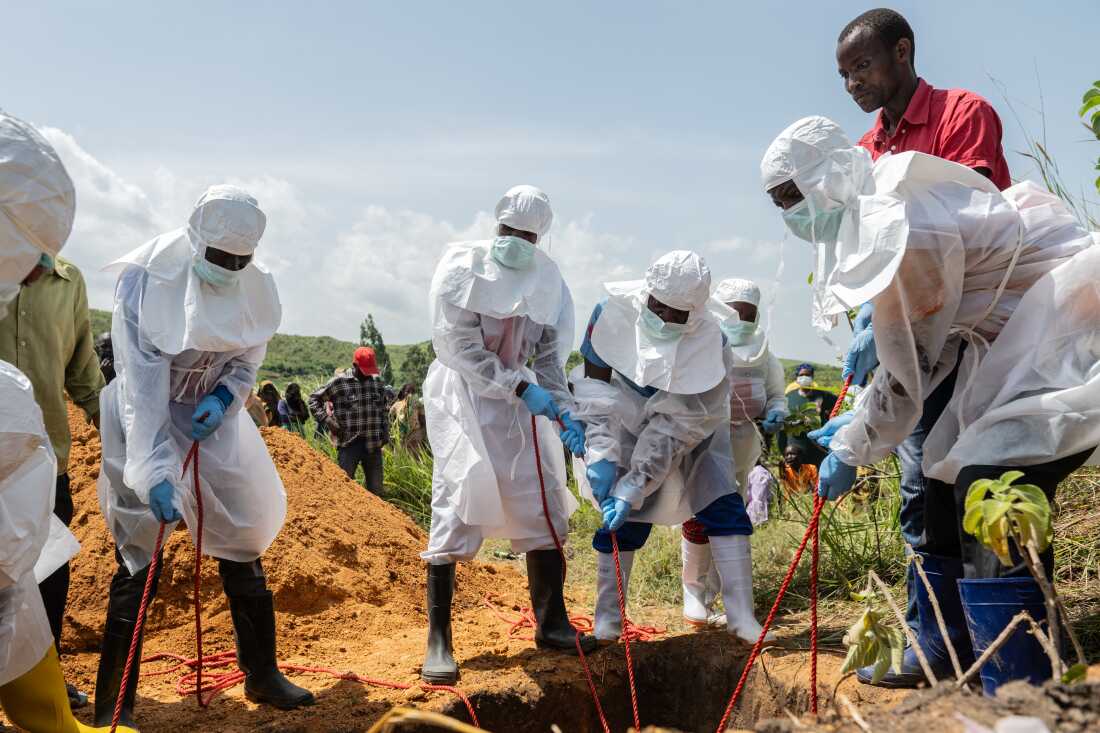
Red Cross workers bury an Ebola victim at the Rwampara Cemetery, in Rwampara, Congo, Saturday, May 23, 2026.
In a statement issued by Israel’s Ministry of Health, the authorities confirmed the decision following a reassessment of the situation.
“We are pleased to announce that Israel’s Ministry of Health has decided to remove Kenya and Rwanda from the list of countries subject to temporary Ebola-related entry restrictions,” the statement read.
The restrictions, introduced as a precaution amid Ebola concerns in the region, had also applied to Uganda, South Sudan and the Democratic Republic of the Congo.
Under the suspended measures, airlines were instructed to deny boarding to any foreign national who had visited the listed countries within 21 days prior to travel, regardless of nationality or residence status. The rules did not apply to Israeli citizens or legal residents.
Air carriers were also required to screen passengers and verify recent travel history before allowing boarding.
“Airlines must question every foreign passenger prior to boarding, which includes verifying whether they have stayed in any of the restricted countries listed above during the past 21 days,” the ministry stated. “If the answer is affirmative, they must not be permitted to board the flight to Israel.”
The earlier decision had drawn criticism from Kenya’s Foreign Affairs Principal Secretary Korir Sing’oei, who described it as unjustified, noting that the country had recorded no Ebola cases despite extensive testing.
The Ebola outbreak, caused by the Bundibugyo strain, was first reported in the Democratic Republic of the Congo on May 15, 2026.
As of June 13, 2026, the country had recorded 782 cases, including 181 deaths. Uganda has confirmed 19 cases, including two fatalities, while no other country in the region has reported infections.
Rwanda has been removed from Israel’s Ebola travel restriction list
Seventy-two new confirmed cases, including 29 deaths, were reported on Saturday in the eastern provinces of Ituri and North Kivu, according to the report published Sunday by the country’s public health authorities.
The two newly affected health zones are Nia-Nia in Ituri and Mabalako in North Kivu, bringing the total number of affected health zones to 31 across three provinces: Ituri, North Kivu and South Kivu. A health zone is a local public health management unit responsible for surveillance, case reporting and response coordination.
The outbreak, caused by the Bundibugyo Ebola virus, was officially declared on May 15.
A total of 359 patients were in isolation or hospitalized as of Saturday, while 40 patients had recovered, the report said.
Authorities also reported 136 suspected cases, including 49 deaths, on Saturday. A total of 6,275 contacts were under follow-up in the three affected provinces, but only 3,548 were seen, putting the overall contact follow-up rate at 56.5 percent, well below the 95 percent target.
The report listed several challenges facing the response, including reluctance to undergo post-mortem swabbing, insufficient capacity in Ebola treatment centers, weak contact tracing, shortages of infection prevention and control materials in North Kivu, weak alert reporting and a funding gap of 21.5 million U.S. dollars.
Seventy-two new confirmed cases, including 29 deaths, were reported on Saturday in the eastern provinces of Ituri and North Kivu
The case fatality rate stood at 21.0 percent, according to figures released by the ministry. A total of 324 patients were in isolation or hospitalized, while 35 people had recovered.
The ministry said the government, together with provincial authorities, response partners and local communities, was continuing public health interventions aimed at breaking chains of transmission and protecting the population.
Response teams on the ground are carrying out epidemiological surveillance, patient care, contact tracing, targeted vaccination, risk communication and community engagement.
The ministry said no lockdown had been ordered in the affected areas and no such measure was under consideration, urging the public not to spread unverified information and to rely on official channels for updates.
In a disease outbreak update published Saturday, the World Health Organization said the outbreak in the DRC continued to evolve rapidly, with rising case numbers and geographic spread.
The reported case fatality rate was likely an underestimation, as many deaths that occurred before the outbreak was declared remain under investigation, the WHO added.
A health worker disinfects an ambulance at the Mongbwalu treatment center that transported a suspected Ebola patient in Mongbwalu, the Democratic Republic of the Congo, June 5, 2026.
A total of 17 new confirmed cases, including five deaths, were reported on Thursday, all in the eastern province of Ituri, the report said. The outbreak, caused by the Bundibugyo strain of the Ebola virus, has affected 29 health zones across three eastern provinces, namely Ituri, North Kivu and South Kivu.
A total of 168 suspected cases, including 64 deaths, had been reported as of Thursday.
The report also highlighted several operational challenges, including reluctance to undergo post-mortem swabbing, insufficient capacity in Ebola treatment centers, shortages of infection prevention and control materials in North Kivu, weak alert reporting across the three provinces, and a funding gap of 21.5 million U.S. dollars.
Two Ebola-related deaths have been reported in a camp for internally displaced people in Ituri, according to a report released on Thursday by the United Nations High Commissioner for Refugees.
The current outbreak, officially declared on May 15 by the DRC’s health ministry, is the country’s 17th Ebola outbreak since the virus was identified in 1976.
The number of confirmed Ebola cases in the Democratic Republic of the Congo (DRC) has risen to 689, including 139 deaths,
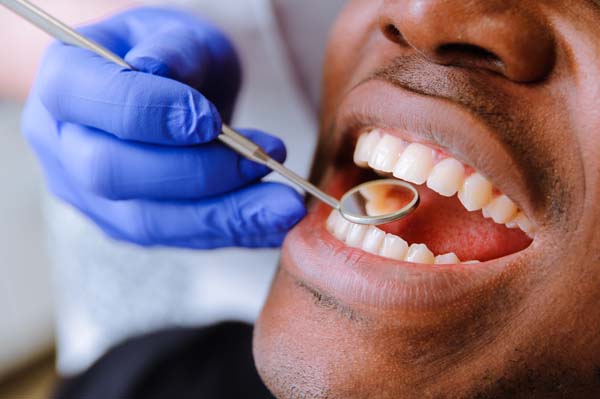
Neoderma Clinica is among the healthcare facilities contributing to this shift. The clinic, based in Kibagabaga, Kigali, was founded with a focus on combining science, aesthetics, and patient care. Today, it offers services in aesthetic treatment, dermatology, plastic surgery, and dentistry.
IGIHE spoke with Dr. Burhan Dini Hirwa, a dental surgeon at Neoderma Clinica, about oral health, patient behaviour, and the role modern dentistry plays in confidence and quality of life.
Neoderma Clinica was founded with a focus on combining science, aesthetics, and patient care. Today, it offers services in aesthetic treatment, dermatology, plastic surgery, and dentistry.
Wide range of dental services
The clinic, Dr. Hirwa noted, handles both basic and advanced dental care, including preventive care, restorative treatment, orthodontics, oral surgery, and cosmetic dentistry.
Preventive care includes cleaning, scaling, sealants for children, and oral hygiene education. Cosmetic services include teeth whitening and veneers, both direct and lab-made.
The clinic also treats misaligned teeth using braces and clear aligners, and carries out procedures such as tooth extractions and dental implants. Restorative work includes fillings, crowns, and bridges for damaged or missing teeth.
According to Dr. Hirwa, many patients only seek dental care when they are already in pain, an approach that often leads to more complex and expensive treatment.
“It is important to start dental visits early, even when the first teeth come in. Regular check-ups help us monitor development and prevent serious problems later,” he explained.
Early care, he added, leads to better outcomes and simpler treatment plans.
Dr. Hirwa notes that oral health problems can significantly affect confidence in everyday life. One common issue is bad breath, often linked to poor oral hygiene.
“It can affect people socially and psychologically,” he observed.
The clinic addresses this through education on proper brushing techniques and daily care. Patients also seek treatment for stained teeth caused by habits such as smoking or frequent coffee consumption, with whitening procedures offering visible improvement.
Orthodontic treatment, veneers, and implants are also used to restore both appearance and function in patients with crooked or missing teeth.
“These treatments help patients feel more comfortable with their smiles,” Dr. Hirwa stressed.
What sets the clinic apart
With more dental clinics opening in Kigali, Dr. Hirwa emphasises that Neoderma Clinica focuses on service quality and cosmetic dentistry.
“Our focus is patient care and specialised cosmetic treatment, especially whitening, veneers, and orthodontics,” he stated.
The clinic aims to ensure patients receive consistent care from the moment they arrive to the end of their treatment. First-time visitors can expect a structured and welcoming process.
“We aim to give patients the best possible service from reception to consultation and treatment. We want to meet their expectations and help them achieve what they came in for,” he affirmed.
Teaching proper oral hygiene
During the interview, Dr. Hirwa demonstrated brushing techniques using a dental model, stressing that technique matters more than force.
“A soft toothbrush is best. What matters most is how you brush,” he advised.
He recommends starting at the gum line and using gentle vertical strokes across all surfaces of the teeth, including inner, outer, and chewing areas, and also cleaning the tongue to reduce bacterial buildup.
Dr. Hirwa advises brushing twice a day: after breakfast and before bed.
“Brushing at night helps remove food particles accumulated during the day, while brushing in the morning clears out the bacteria and plaque that multiplied while you sleep,” he explained.
He recommends using a pea-sized amount of toothpaste for adults and a smaller amount for children, brushing for three to five minutes with gentle movements. He also cautions against rinsing immediately after brushing, as fluoride continues to protect the teeth.
“Spit out the toothpaste but do not rinse. It helps protect your teeth for longer,” he urged.
Dr. Hirwa encourages people not to wait for pain before visiting a dentist.
“One visit every six months is enough to prevent many problems. Early care is always easier than emergency treatment,” he concluded.
For Neoderma Clinica, oral health should be maintained regularly, not only treated when problems arise.
The clinic is located at Covenant Plaza in Kigali’s Kibagabaga neighbourhood.
According to the latest situation report released on Thursday by the DRC’s health authorities, 41 new confirmed cases, including nine deaths, were reported on Wednesday in the provinces of Ituri and North Kivu.
The outbreak, caused by the Bundibugyo strain of the Ebola virus, has so far affected 29 health zones across three eastern provinces: Ituri, North Kivu and South Kivu.
The latest official assessment said confirmed cases have been increasing from week to week, indicating continued community transmission. It warned that a sudden geographic expansion of the outbreak is feared if public health measures are not implemented quickly.
Health authorities also said 5,768 contacts were under follow-up across the three affected provinces, with a follow-up rate of 71.8 percent. The report listed weak contact tracing as one of the main challenges, saying the current rate remains below the 95-percent target and could compromise efforts to interrupt transmission chains.
Two Ebola patients in Bunia, the capital of Ituri Province, were declared recovered, bringing the cumulative number of recoveries to 32, the report said.
The current Ebola outbreak in the DRC, the country’s 17th since the disease was first identified in 1976, was officially declared on May 15. The affected provinces, with a combined population of nearly 15 million, are marked by large-scale internal displacement and cross-border population movements toward neighboring countries, according to the report.
Red Cross workers bury an Ebola victim at the Rwampara Cemetery, in Rwampara, Congo, May 23, 2026.