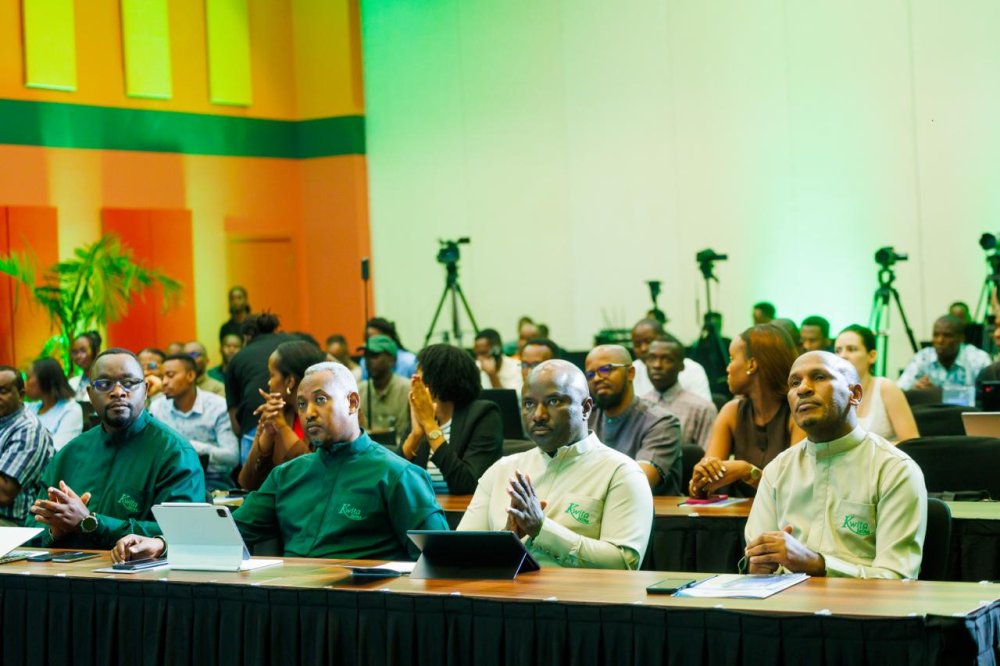
The delegation included Prof. Subra Suresh, Founder and President of the Global Learning Council; Michelle Gyles-McDonnough, Executive Director of the United Nations Institute for Training and Research (UNITAR); Dr. Lee Howell, Executive Director of the Villars Institute; and Dr. Gururaj Deshpande, Co-founder of the Deshpande Foundation.
The conference’s objectives focus on the intersection of education, health, environment, and sustainability. The conference is designed as a practical forum to co-design new learning models, with sessions exploring how artificial intelligence and exponential technologies can be harnessed responsibly to expand access to quality education.
It will also highlight the integration of human health and planetary sustainability into lifelong learning, the alignment of education with the green economy and entrepreneurship, and innovative approaches for governments, NGOs, and the private sector to fund education at scale. Alongside the main conference sessions, an AI hackathon and a student robotics competition will engage young innovators in shaping the future of learning.
Each guest brings a wealth of experience and forward-thinking ideas to the conversation. Prof. Subra Suresh is known for pioneering initiatives in global learning and science policy through the Global Learning Council, while Michelle Gyles-McDonnough drives innovative approaches to UN training, capacity building, and sustainable development education at UNITAR.
On the other hand, Dr. Lee Howell focuses on environmental sustainability and systemic change as Executive Director of the Villars Institute, and Dr. Gururaj Deshpande has championed entrepreneurship and innovative educational initiatives through the Deshpande Foundation.
The delegation included Prof. Subra Suresh, Founder and President of the Global Learning Council; Michelle Gyles-McDonnough, Executive Director of the United Nations Institute for Training and Research (UNITAR); Dr. Lee Howell, Executive Director of the Villars Institute; and Dr. Gururaj Deshpande, Co-founder of the Deshpande Foundation.
Speaking at the country’s First National Conference on Digital Transformation in Maputo last week, President Daniel Francisco Chapo framed digitalisation as a governance reform rather than a purely technological upgrade.
“Countries are not transformed only with physical infrastructure. They are also transformed through digital infrastructure that connects citizens to the State and to opportunity,” he said.
At the heart of the initiative is the creation of a Multi-Sector Technical Commission on Digital Services, tasked with delivering a national roadmap for integrating public digital systems by mid-2026. The Commission will map existing platforms, promote interoperability, eliminate duplication, and define a strategy for a fully connected government.
President Chapo acknowledged that fragmentation across government institutions—such as separate databases and non-communicating systems—creates inefficiencies and administrative burdens.
“There must be no technological islands within the State,” he said.
The reform aims to enable citizens and businesses to access services such as identity documentation, licensing, tax payments, and business registration remotely through interoperable platforms and a central Citizen Portal.
Officials say digital integration could reduce bureaucratic delays, improve transparency, and strengthen Mozambique’s investment climate, a key priority as the country seeks to expand private-sector participation and align with regional digital trade frameworks under the African Continental Free Trade Area (AfCFTA).
Mozambique has already established a dedicated Ministry of Communications and Digital Transformation, consolidating institutional leadership of the digital agenda. The initiative comes amid recent floods affecting several provinces, with President Chapo noting that digital platforms are vital for disaster preparedness, early warning systems, and secure preservation of administrative records.
“Yesterday, independence was measured by control of territory. Today, it is also measured by the ability to govern the digital space,” President Chapo said, framing digital transformation as a pillar of national sovereignty.
The conference also saw the unveiling of a new electronic visa (e-Visa) platform, which allows remote applications and faster processing to streamline entry, boost tourism, and improve the ease of doing business.
Mozambique’s “one-click” ambition reflects a broader effort to learn from successful ICT integration models in Africa, including Rwanda’s Irembo platform and Kenya’s M-Pesa system, which Mozambique has recently adopted to expand access to mobile money.
Last August, President Chapo visited Rwanda, including the Kigali Special Economic Zone, where he explored the country’s industrial, manufacturing, and business infrastructure and held discussions with President Paul Kagame on economic and technological cooperation.
“We want to move at the same pace as those ahead, learning from those who have done it already, understanding the challenges they faced and how they overcame them to bring about the same level of services that can be found in those countries,” said Mozambique’s Américo Muchanga, Minister of Communications and Digital Transformation, adding that tech companies from the region can compete for tenders to help transform the country.
While the digital reform signals strong political commitment, implementation will depend on institutional coordination, infrastructure expansion, digital literacy, and sustained financing. Mozambique’s internet penetration, rural connectivity gaps, and cybersecurity capacity remain structural factors that will influence the pace of transformation.
President Daniel Francisco Chapo framed digitalisation as a governance reform rather than a purely technological upgrade.Mozambique’s First National Conference on Digital Transformation was held in Maputo last weekMozambique’s ICT Minister Américo Muchanga addresses the conference.
The race, which will be staged for the 18th time since attaining international status, is scheduled to run from Sunday, February 22 to March 1, 2026. It will traverse various regions of the country and feature 18 teams.
Four Rwandan teams will take part: Team Rwanda (the national team), May Stars, Benediction Banafrica Team and Team Amani. The remaining 14 teams will come from abroad.
Rembe–Rad-Net Pro Cycling Team touched down in Kigali on Tuesday, February 17, 2026, becoming the first international squad to arrive. On Thursday, February 19, four additional teams are expected: Picnic PostNL of the Netherlands, Lotto Intermarché of Belgium, Soudal Quick-Step of Belgium and Movistar of Spain.
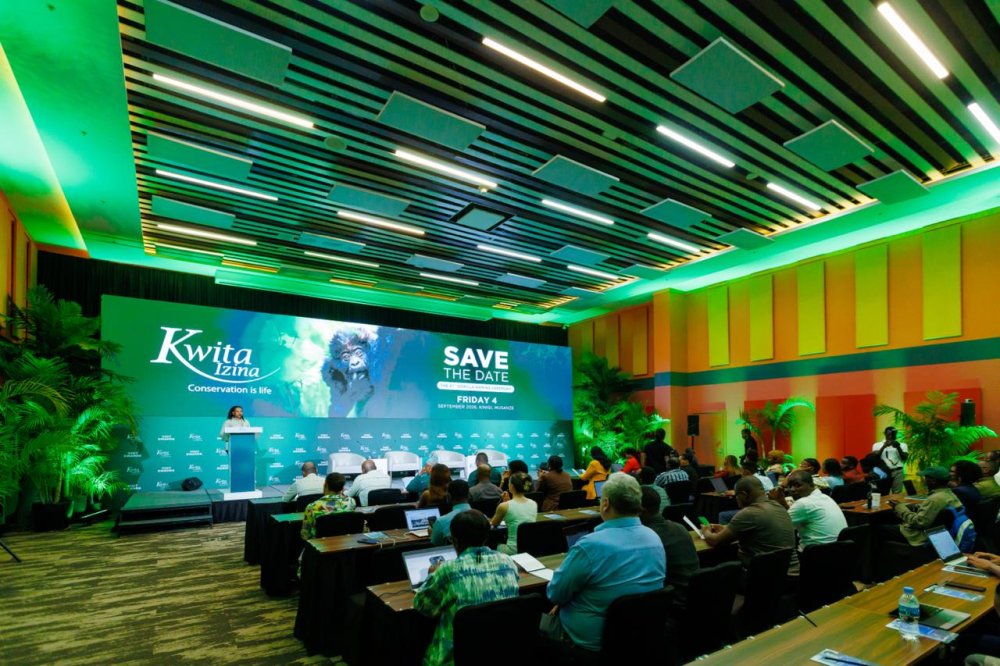
The official team presentation will take place on Saturday, February 21, at 6:00 p.m. at the Kigali Convention Centre. All 18 teams and the 90 riders set to compete will be unveiled during a ceremony open to the public.
UAE Team Emirates Gen-Z, which had initially been listed among the participants, will no longer compete but has since been replaced.
Teams confirmed for Tour du Rwanda 2026
National teams: Rwanda, Eritrea, South Africa and Ethiopia.
Continental teams: Amani, Benediction Banafrica, May Stars, Madar, Rembe–Rad-Net, Localiza Meoo, Bike Aid, Istanbul and Tshenolo Pro.
World Tour development teams: Movistar, NSN, Soudal Quick-Step, Picnic PostNL and Lotto Intermarché.
German club Rembe Rat arrived in Kigali on Tuesday ahead of the race which starts on Sunday, February 22.
The Grammy-winning rapper addressed the breakup while responding to a social media post from her rival, rapper BIA, during her Little Miss Drama Tour performance in Los Angeles on Sunday. BIA had written amid rumours of the split: “Can u name someone with more bms than receiving yards? I can! and I know that. ykwnvm.”
Cardi B responded firmly to both the rumours and BIA’s jab, telling the crowd, “Let me tell you somethin’, just because I ain’t f–kin’ with my baby daddy doesn’t mean you get to talk about my baby daddy. B*tch this is for you.” She then performed the BIA diss track Pretty & Petty, according to TMZ.
Reports indicate that Cardi B and Diggs ended their relationship after allegations of infidelity on the footballer’s part. Their split comes just three months after the couple welcomed a child together, all while Cardi B navigates a divorce case with her ex-husband, Offset.
The rumours of a breakup intensified following Super Bowl 2026, in which the Seattle Seahawks defeated the New England Patriots 29-13. Both Cardi B and Diggs appeared to unfollow each other on social media after the game. During that season, Diggs, 32, recorded three receptions for 37 yards in his first year with the Patriots after signing a three-year deal in free agency.
Diggs also recently faced legal troubles, appearing in court for an arraignment after being accused of attacking his personal chef. He pleaded not guilty and is set for a pretrial hearing on April 1.
The couple had made their relationship Instagram official in the summer of 2025. Cardi B, 33, continues to tour on her Little Miss Drama Tour, which runs through mid-April, performing across major cities in the U.S.
Cardi B and Stefon Diggs at New York Knicks game in May 2025.
In mid-2025, at least 73 applications were received for 10 mining blocks, underscoring growing enthusiasm for the country’s mineral resources.
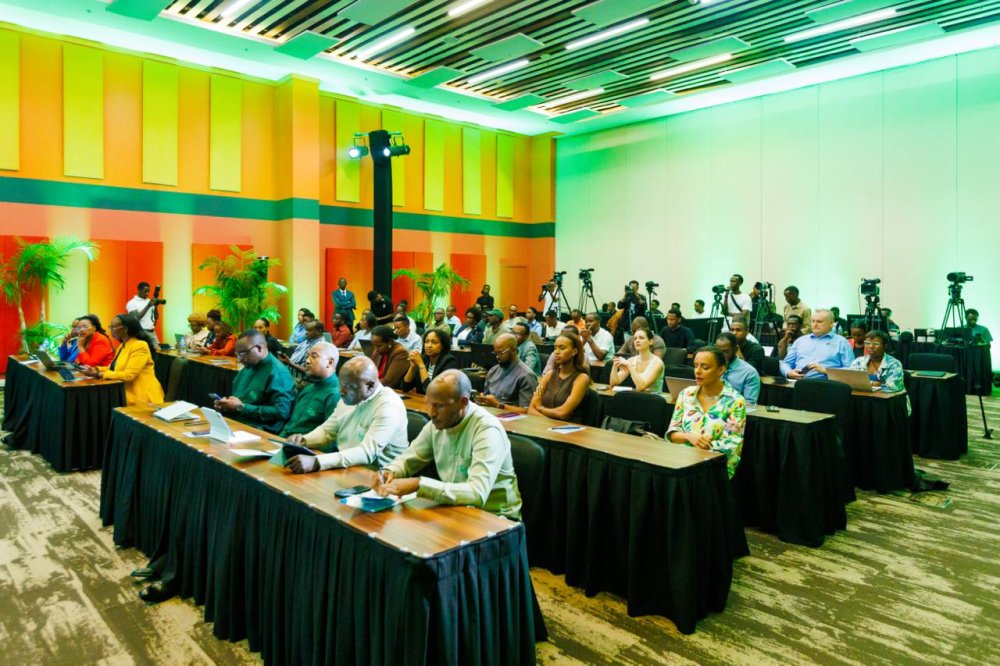
The new blocks are available for field visits from February 16 to 20, 2026. Interested investors must submit signed applications by March 3 through the Rwanda Mines, Petroleum and Gas Board (RMB).
“From our previous experience, competition was intense. We hope to see even more investors this time,” said Alice Uwase, CEO of RMB.
The newly available blocks include Bihembe, Rubiha, Musenyi, Nyamyumba–Kivumu, Shyorongi & Binyeri, Kanama, Minazi, Bushekeri–Rangiro, and Kabagari–Kinihira. Four of the blocks have been explored previously and are considered highly promising, targeting tin, tantalum, tungsten, beryllium, and lithium. Four others are earmarked for fresh exploration focusing on the 3Ts, while two blocks are dedicated to gemstones, including sapphires.
RMB emphasised that technical expertise and local capacity remain key for successful bids.
“Finances alone are not enough—you need the right people and equipment on the ground. This is what we assess first,” Uwase said, urging investors to consider joint ventures to strengthen compliance and operational capacity.
Each block offers unique opportunities: Binyeri and Musenyi show strong potential for lithium, beryllium, cassiterite, and columbite-tantalite. Rubiha and Minazi are rich in tin and tantalum, with Minazi also featuring gemstones and gold.
Shyorongi and Bihembe are linked to rare metals, including niobium and tungsten, while Bushekeri–Rangiro and Kanama are focused on gemstones such as sapphire, ruby, and tourmaline.
By promoting exploration and investment in these new blocks, Rwanda aims to attract a broader pool of investors, foster technical partnerships, and accelerate growth in its mining sector, moving closer to its goals for increased mineral production and export revenue.
In mid-2025, at least 73 applications were received for 10 mining blocks, underscoring growing enthusiasm for the country’s mineral resources.
The talks come at a time when Rwanda–EU relations are undergoing a notable shift from traditional development assistance toward strategic, high-value economic cooperation. This transformation is largely driven by the EU’s Global Gateway strategy, a multi-billion-euro initiative aimed at building sustainable partnerships through investments in digital, energy, transport and health infrastructure.
Under the current multiannual financial framework, the EU allocated €260 million in grant funding to Rwanda for the 2021–2024 period, including €49 million in EFSD+ provisioning. For 2025–2027, an additional €134 million has been earmarked, alongside Rwanda’s participation in several multi-country EU programmes.
Through the “Team Europe” approach in Rwanda, the EU works alongside the European Investment Bank and member states including France, Germany, Belgium, Luxembourg, the Netherlands, Lithuania, Greece, Sweden, Austria and Denmark.
A key highlight of the evolving partnership has been support for Rwanda’s ambition to become a regional biotechnology and pharmaceutical hub. In October last year, during bilateral talks in Brussels between President Paul Kagame and Ursula von der Leyen, the EU announced €95 million in new funding to strengthen vaccine manufacturing in Rwanda.
The financing builds on earlier EU support of more than €93 million toward BioNTech’s Kigali facility, inaugurated in 2023 as the company’s first mRNA manufacturing site in Africa. The project is seen as a major step toward ensuring equitable access to vaccines and strengthening Africa’s capacity to respond to future health emergencies.
Rwanda’s development ambitions are guided by the National Strategy for Transformation and Vision 2050, which aim to achieve upper-middle-income status by 2035. The EU has positioned its cooperation framework to align with these goals, supporting economic transformation, green transition efforts and inclusive growth.
The discussions focused on further strengthening the longstanding partnership between Rwanda and the EU.
The clarification followed remarks by Jeune Afrique journalist Romain Gras, who appeared to question why President Kagame did not attend the summit, noting that he had been in the United States over the weekend attending the NBA All-Star Game.
Responding to the comments, Nduhungirehe emphasized that many African leaders were also absent and that Rwanda had official representation at the highest level.
“President Paul Kagame did not personally attend the 39th Session of the African Union Assembly, just like nearly half of the African Heads of State. In Addis Ababa, he was duly represented by Prime Minister Justin Nsengiyumva. So, there is nothing new under the sun!” the minister said.
The AU summit was held in Addis Ababa, Ethiopia, on February 14 and 15, 2026. Rwanda was represented by Prime Minister Justin Nsengiyumva, who addressed key continental priorities, including health and security, in line with the AU’s Agenda 2063 framework.
On regional security, Nsengiyumva told fellow African leaders that the government of the Democratic Republic of the Congo continues to violate the Washington peace agreements and the Doha principles. He stressed that all parties concerned must honour their commitments to create conditions for sustainable peace.
The Prime Minister further argued that actors directly involved in the conflict in eastern DRC should not participate in mediation efforts led by the AU, warning that such involvement undermines trust and raises concerns over impartiality.
Meanwhile, President Kagame was in Los Angeles on a working visit. He met with Adam Silver, Commissioner of the National Basketball Association, and Deputy Commissioner Mark Tatum, to discuss ongoing cooperation between the league and Rwanda in developing basketball talent.
He also held talks with Steve Ballmer, owner of the Los Angeles Clippers, whose franchise promotes Rwanda’s tourism brand through the “Visit Rwanda” partnership launched in September 2025.
The NBA All-Star Game took place at the Intuit Dome, the Clippers’ 18,000-seat arena in Los Angeles, where Visit Rwanda branding has been displayed since last year.
Nduhungirehe emphasized that many African leaders were also absent and that Rwanda had official representation at the highest level.President Paul Kagame was represented by Prime Minister Justin Nsengiyumva.
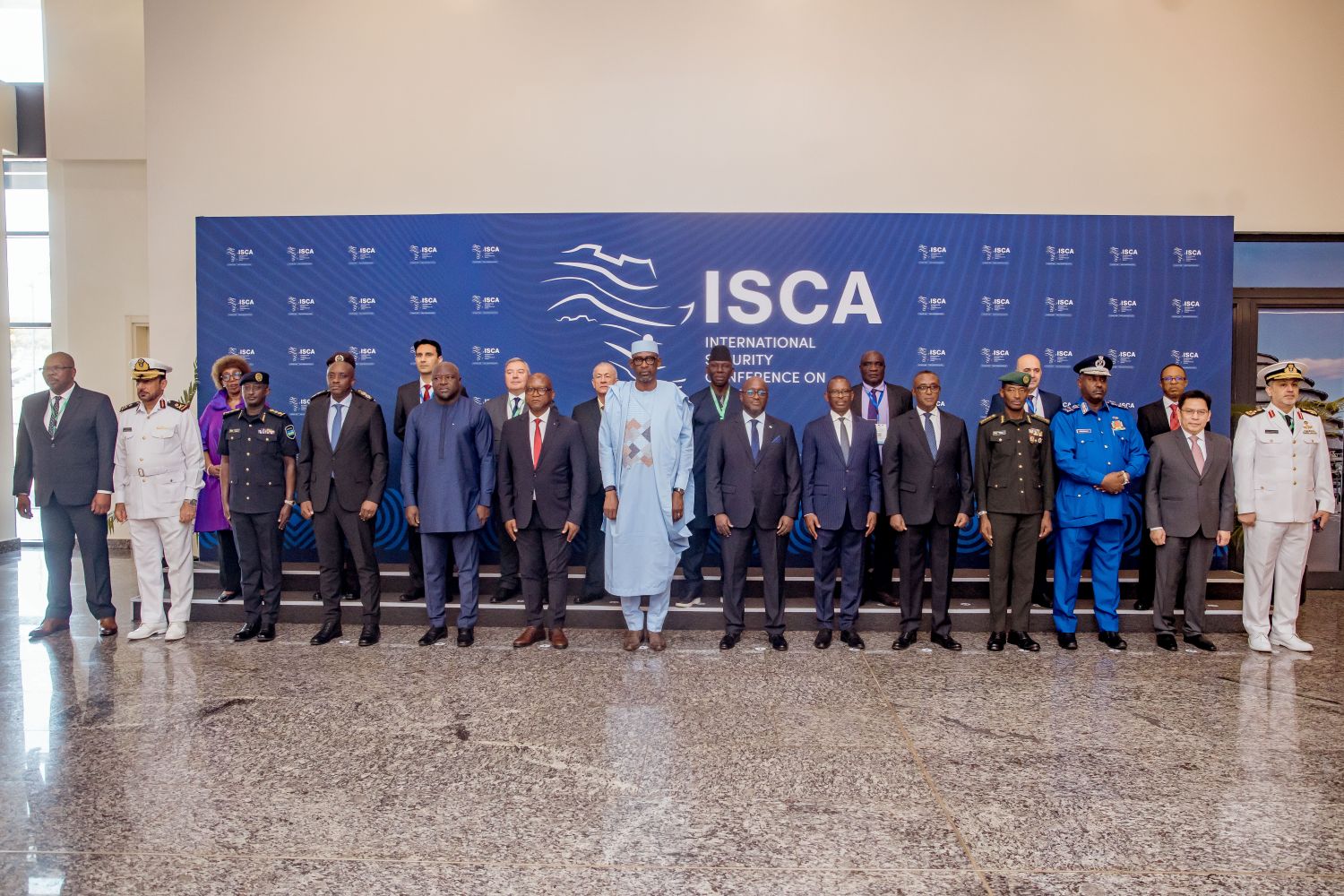
The summit, taking place from February 14–15, 2026, is being held under the theme: “Assuring Sustainable Water Availability and Safe Sanitation Systems to Achieve the Goals of Agenda 2063.” It marks the pinnacle of the AU Summit and brings together African leaders to deliberate on key political, security and development priorities.
Upon arrival at Bole International Airport, the Prime Minister was received by Ethiopia’s Minister of Peace, Mohamed Edris, and State Minister for Foreign Affairs, Ambassador Berhanu Tsegaye.
This year’s theme places water security at the center of Africa’s transformation agenda. With more than 400 million Africans lacking access to clean water, leaders are expected to discuss sustainable water management and sanitation systems as essential pillars for public health, climate resilience and conflict prevention. The discussions align with Agenda 2063, the AU’s long-term blueprint for inclusive growth and prosperity.
Beyond the thematic focus, the Assembly is expected to address high-stakes political and security issues. Leaders will review the situation in Sudan and South Sudan, deliberate on developments in the Sahel region, and appoint 10 new members to the Peace and Security Council, the AU organ responsible for decisions on peace operations and sanctions.
The summit also marks a leadership transition within the Union, as Angola hands over the rotating AU Chairpersonship for 2026 to Burundi.
On the margins of the summit, Prime Minister Nsengiyumva will attend the second Italy–Africa Summit on February 13, which will assess progress under Italy’s Mattei Plan aimed at strengthening political and economic partnerships with African countries.
On February 15, he is scheduled to participate in the AU High-Level Ad Hoc Committee on South Sudan, where regional leaders are expected to review the evolving security situation, assess progress in the implementation of the peace agreement, and deliberate on coordinated efforts to prevent further escalation of tensions.
The concert will take place at BK Arena on March 17, before the tour continues to SunBet Arena in Pretoria, South Africa, on March 20.
Move Afrika blends world-class live music with social impact programs, aiming to create jobs, support youth entrepreneurship, and provide skills training across Africa. The initiative also engages local artists, production crews, and vendors, boosting capacity in host cities while delivering a world-class entertainment experience.
The first Move Afrika in Rwanda, held in December 2023, featured Kendrick Lamar and employed over 1,000 Rwandans, with 75% of the production crew sourced locally. The event showcased African talent including Zuchu, Bruce Melodie, DJ TOXXYK, Sherrie Silver, Ariel Wayz, Kivumbi King, and Bruce The 1st.
The 2025 edition saw EGOT-winning John Legend take the stage at BK Arena, performing hits such as “All of Me” and “Ordinary People” in outfits designed by Rwandan fashion brands Moshions and Tanga. That edition employed 90% local production staff and extended the tour to Lagos, Nigeria.
Move Afrika 2026 promises to continue this tradition, with Doja Cat delivering an electrifying performance while supporting local entrepreneurship and skill development. Tickets for Kigali and Pretoria are [already on sale->https://www.moveafrika.org/tour], with fans encouraged to secure their spots early for one of Africa’s most high-profile music events of the year.
{{Who is Doja Cat?
}}
Born Amala Ratna Zandile Dlamini, Doja Cat is an American rapper, singer, songwriter, and producer who has become one of the most prominent figures in modern pop and hip-hop. Known for her “chameleon” ability to switch between hard-hitting rap and melodic pop, she combines eccentric, internet-savvy personality with bold artistic vision.
The 30-year-old first gained massive attention in 2018 with the viral novelty track “Mooo!”, a DIY music video that showcased her talent for creating viral content. Her 2019 album Hot Pink featured the global hit “Say So”, which topped the Billboard Hot 100 after a remix with Nicki Minaj.
The 2021 album Planet Her solidified her superstar status with hits such as “Kiss Me More” (feat. SZA), “Need to Know”, and “Woman”, earning her a Grammy for Best Pop Duo/Group Performance. In 2023, she pivoted to a darker, rap-focused sound with Scarlet, led by the #1 hit “Paint the Town Red”, and her 2025 album Vie returned to her pop-leaning roots while maintaining her experimental edge.
Doja Cat is also known for her visual artistry, treating fashion and music videos as performance art, and her digital-native approach, often interacting directly with fans on social media. A self-taught musician, she learned to sing, rap, and produce after dropping out of high school at 16, using GarageBand to hone her craft.
With Move Afrika 2026, Kigali audiences will get a front-row experience of one of today’s most innovative and genre-defying artists, combining global stardom with a uniquely African stage experience.
Launched on the sidelines of the 39th AU Summit in Addis Ababa on Thursday, February 12, the platforms, BiasharaLink and Deal House, seek to close what officials described as Africa’s long-standing “execution gap,” where trade opportunities are identified but rarely converted into completed transactions.
The initiative, spearheaded by Kenya’s Ministry of Foreign and Diaspora Affairs in partnership with Real Sources Africa and Equity Group Holdings, positions diplomatic missions as structured commercial pipelines rather than traditional liaison offices.
{{Turning diplomacy into delivery
}}
Speaking at the launch, Kenya’s Prime Cabinet Secretary and Foreign Affairs Minister, Musalia Mudavadi, said the platforms introduce a new model of economic diplomacy anchored in systems, accountability and measurable outcomes.
“BiasharaLink and Deal House represent a new model of economic diplomacy; one that is results-oriented,” Mudavadi said. “It provides a common platform for capturing and organising opportunity. It connects opportunity to execution. Together, the platforms turn diplomacy into delivery.”
Mudavadi noted that while Africa has made significant progress in negotiating trade frameworks, including the AfCFTA, traders and investors still face stalled transactions, fragmented information and weak follow-through.
“This is not a question of political will or commitment,” he said. “It is a failure of systems.”
The new platforms aim to institutionalise how embassies capture, track and convert trade and investment leads, ensuring continuity beyond individual diplomatic postings and creating a structured pipeline from inquiry to execution.
{{Closing the trade execution gap
}}
According to Real Sources Africa founder and CEO, Felix Chege, Kenyan embassies collect an average of 3,500 trade inquiries per month, yet fewer than one percent historically translate into closed deals.
“Our embassies are centres of trust,” Chege said. “But they lacked the infrastructure to transmit inquiries to the right businesses and execute them efficiently.”
BiasharaLink functions as the intake and structuring layer, enabling diplomatic missions, exporters and investors to digitally capture, validate and monitor trade leads. It distinguishes between exploratory inquiries and transaction-ready buyers, supported by due diligence processes and “deal stewards” trained to guide transactions.
Deal House serves as the execution engine, where validated opportunities are matched with counterparties, supported with documentation, and connected to payment and financing solutions. The system integrates escrow mechanisms and trade finance tools to reduce risk for both buyers and sellers.
Chege described the model as “capture, validate and close,” adding that the goal is to build a continental infrastructure leveraging embassy credibility to drive trade, investment and financing.
{{Finance as the lubrication layer
}}
James Mwangi, Group CEO of Equity Group Holdings, framed the initiative as a bridge between policy ambition and commercial reality.
“For years, Africa has had policy frameworks without flow of goods and services,” Mwangi said. “What we are witnessing is a partnership between government and private sector to create an infrastructure that enables people to walk, ride and drive on a trade superhighway.”
He described the platform as “visa-free,” compressing time and distance by connecting buyers and sellers digitally, while reducing reliance on costly physical travel and fragmented networks.
Equity will provide the financing layer, including trade finance, guarantees and payment solutions, to ensure that structured deals become bankable transactions.
“It’s not enough to have a pipeline,” Mwangi said. “You must lubricate the platform by having finance accessible.”
He added that the platform creates equal access for SMEs, women and youth entrepreneurs, reducing gatekeeping and embedding trust through government-backed verification via diplomatic missions.
{{AfCFTA enters implementation phase
}}
The launch comes as the AfCFTA Secretariat prepares for the adoption of remaining legal instruments under the trade pact.
AfCFTA Secretary-General Wamkele Mene said the agreement now provides the regulatory certainty needed to unlock intra-African trade, but warned that execution remains the central challenge.
“In a world moving toward fragmentation and protectionism, Africa is moving in the opposite direction,” Mene said. “We have no alternative but to succeed; we have to build a very strong domestic market.”
He highlighted the AfCFTA’s protocols on digital trade and on women and youth in trade as forward-looking instruments that align with Kenya’s digital approach.
With a market of 1.4 billion people and a combined GDP of $3.4 trillion, Mene said the opportunity is unprecedented, but only if SMEs and young entrepreneurs can access structured trade systems.
The initiative has also received backing from development partners supporting AfCFTA implementation. Mathias Kamp, Regional Director of Konrad-Adenauer-Stiftung, said the launch marks a critical step toward unlocking the bloc’s trade potential.
“The AfCFTA needs to move to the next level. Five years on, the potential remains untapped. I’m convinced that what we are launching today will be a significant step forward in unlocking trade,” he said.
{{From diplomatic hubs to economic hubs
}}
Kenya’s government says the initiative forms part of a broader shift in its foreign policy, which now prioritises commercial diplomacy and diaspora investment.
Mudavadi noted that Kenya recently secured parliamentary endorsement of its updated foreign policy framework, reinforcing predictability and credibility in its external engagements.
“Our diplomatic missions are among Africa’s most valuable assets. They are trusted institutions that already facilitate trade and investment, but today’s economy requires structured pipelines, reliable data, verified partners, and access to finance,” he said.
Officials stressed that while the system begins with Kenya’s 70 diplomatic missions, its ambition is continental, with an invitation extended to other African countries to adopt or integrate into the model.
“The success of this initiative,” Mudavadi said, “will be measured in completed deals, jobs created and enterprises grown. Africa’s next chapter must be written in performance, not promises.”