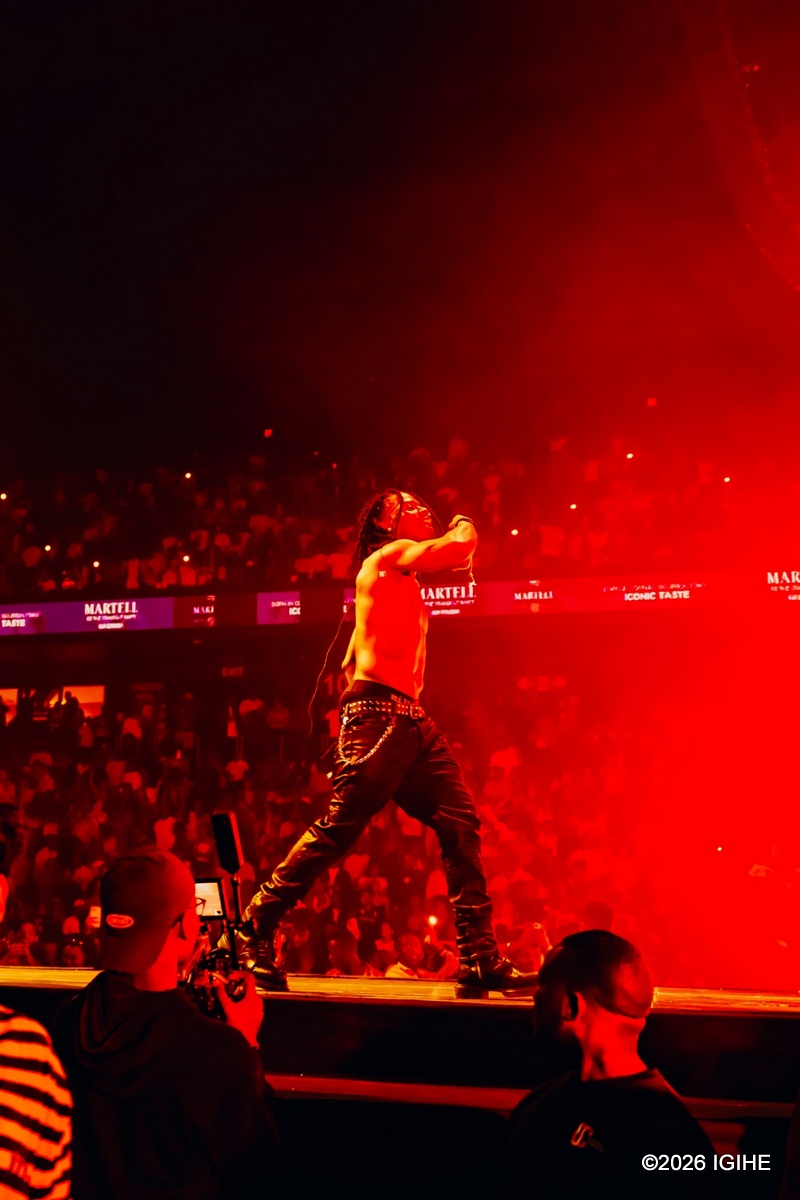
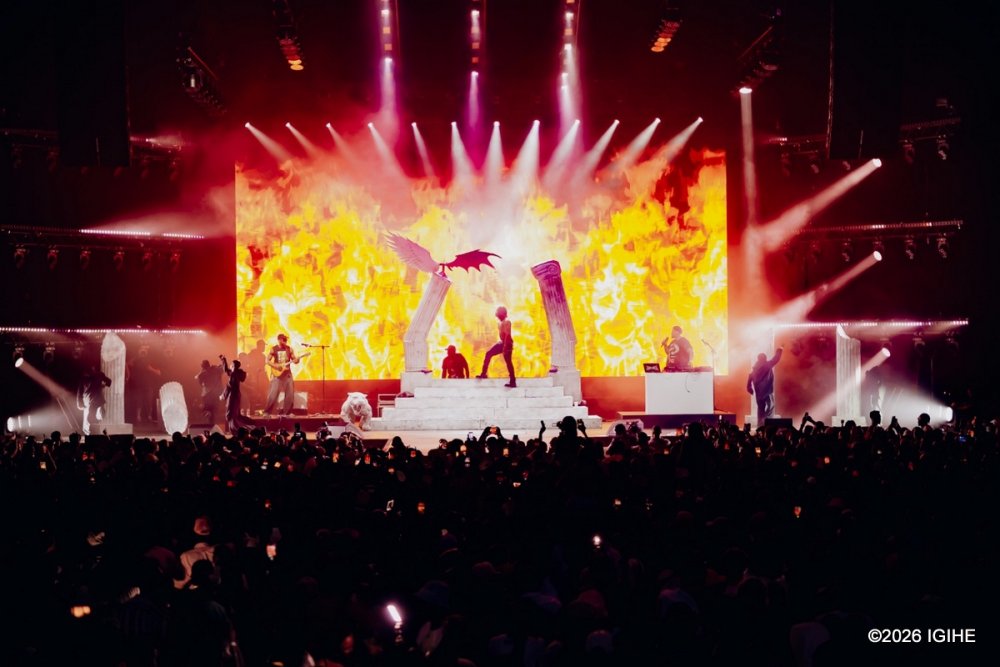
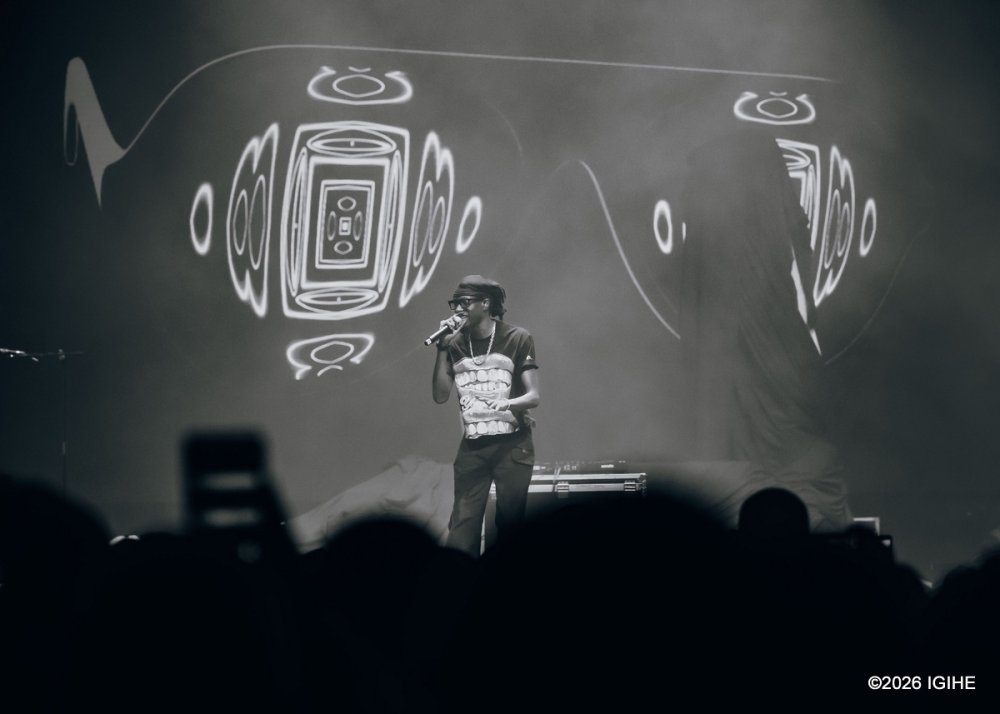
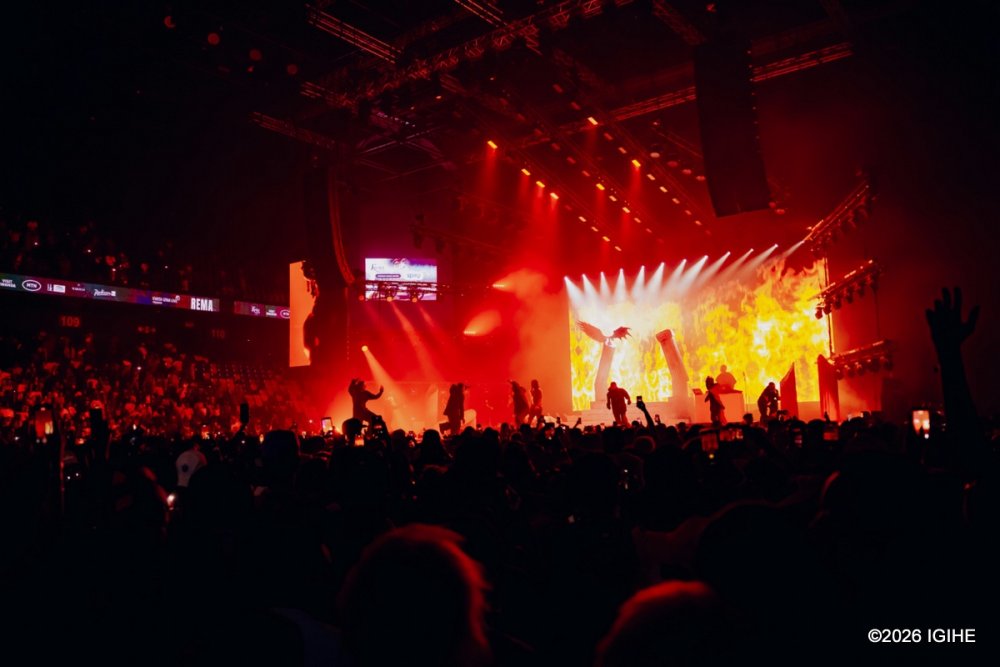
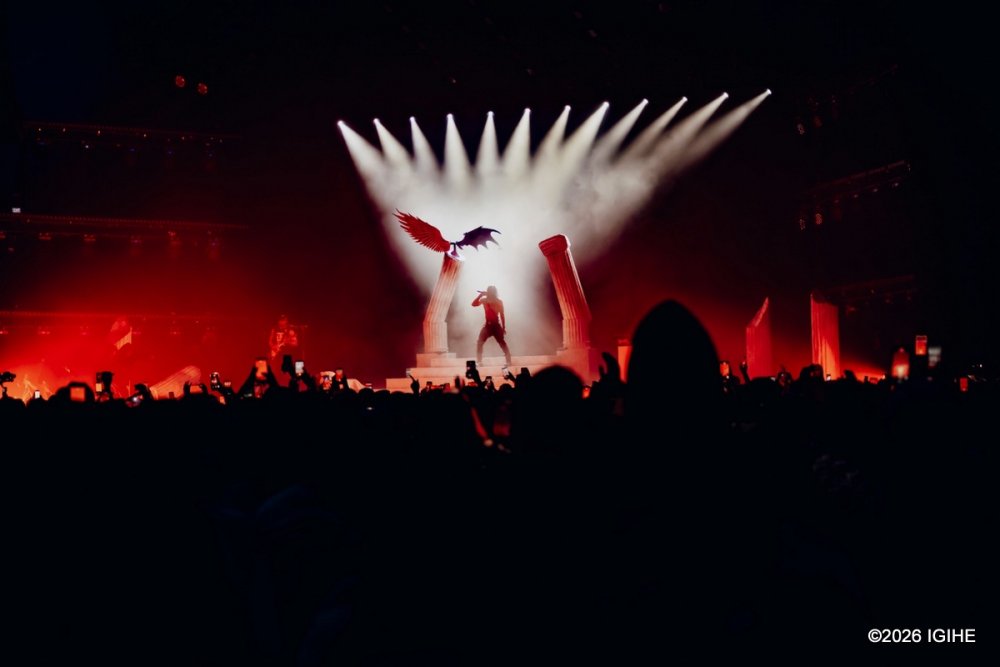
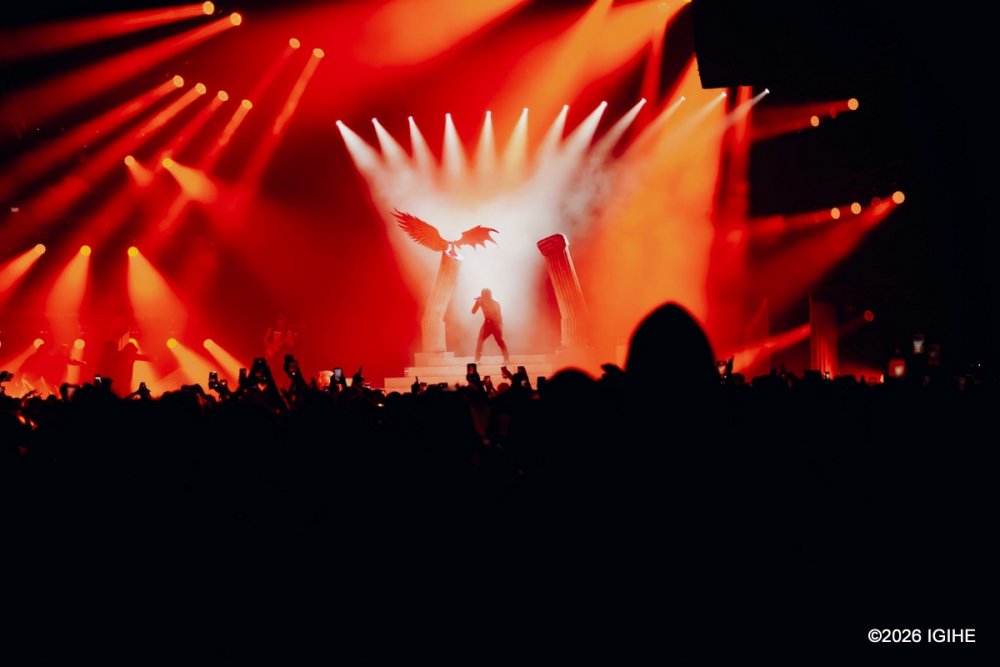
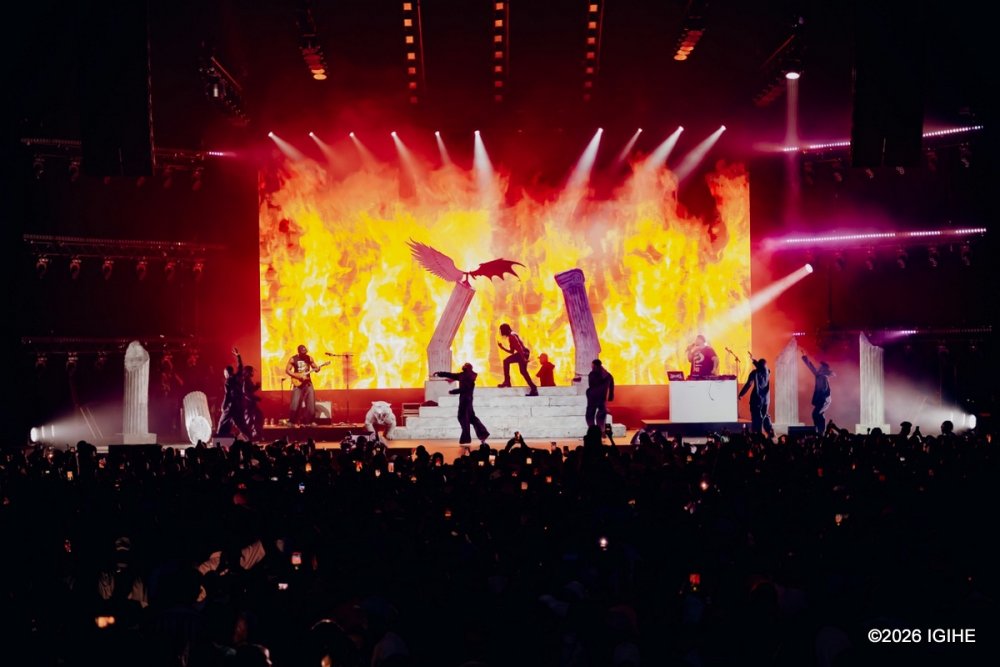
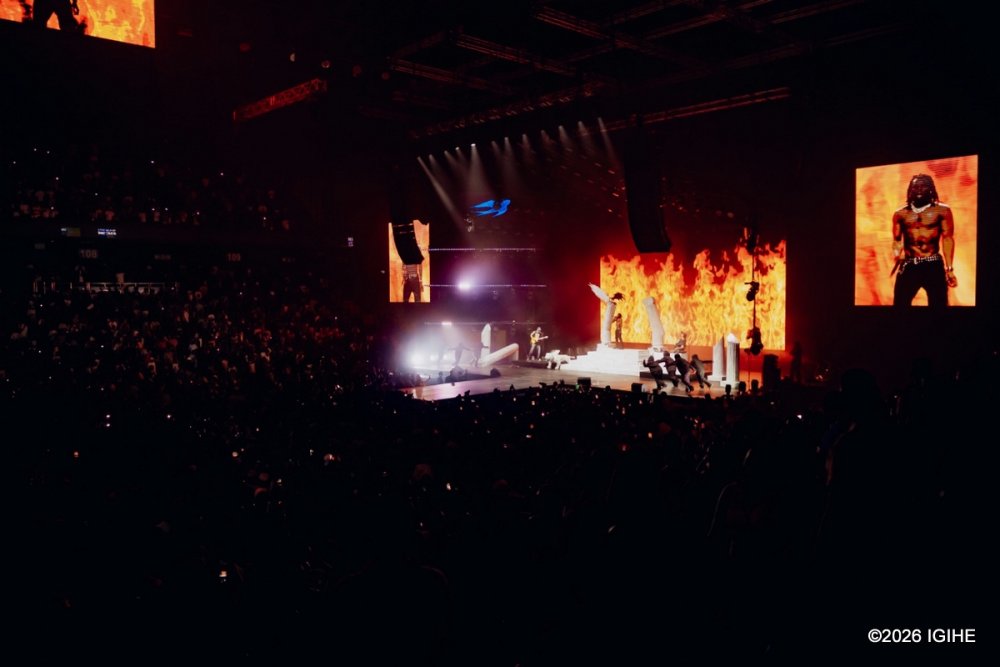
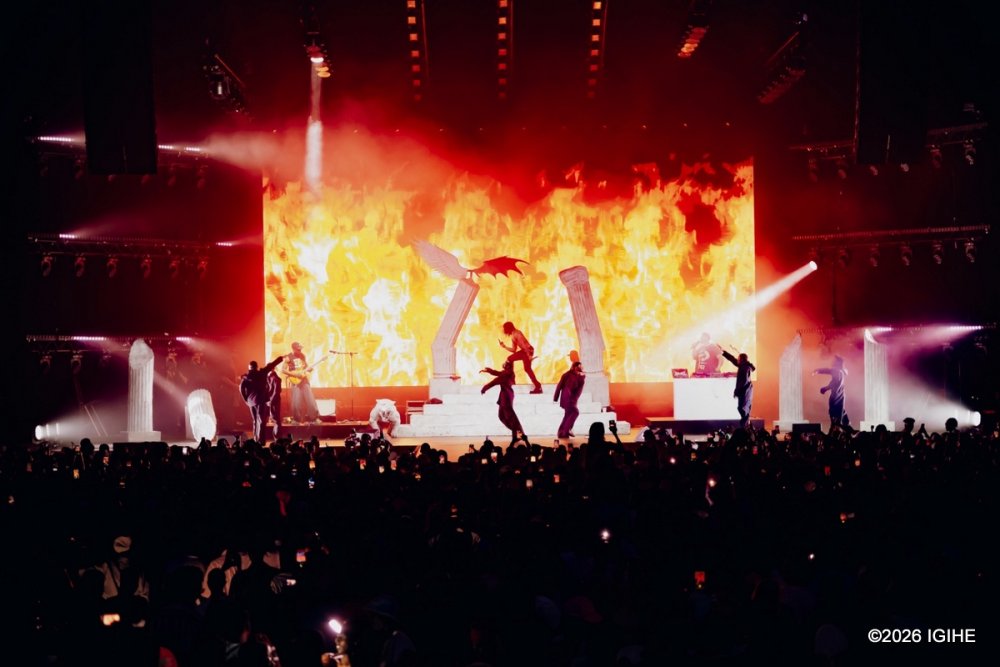
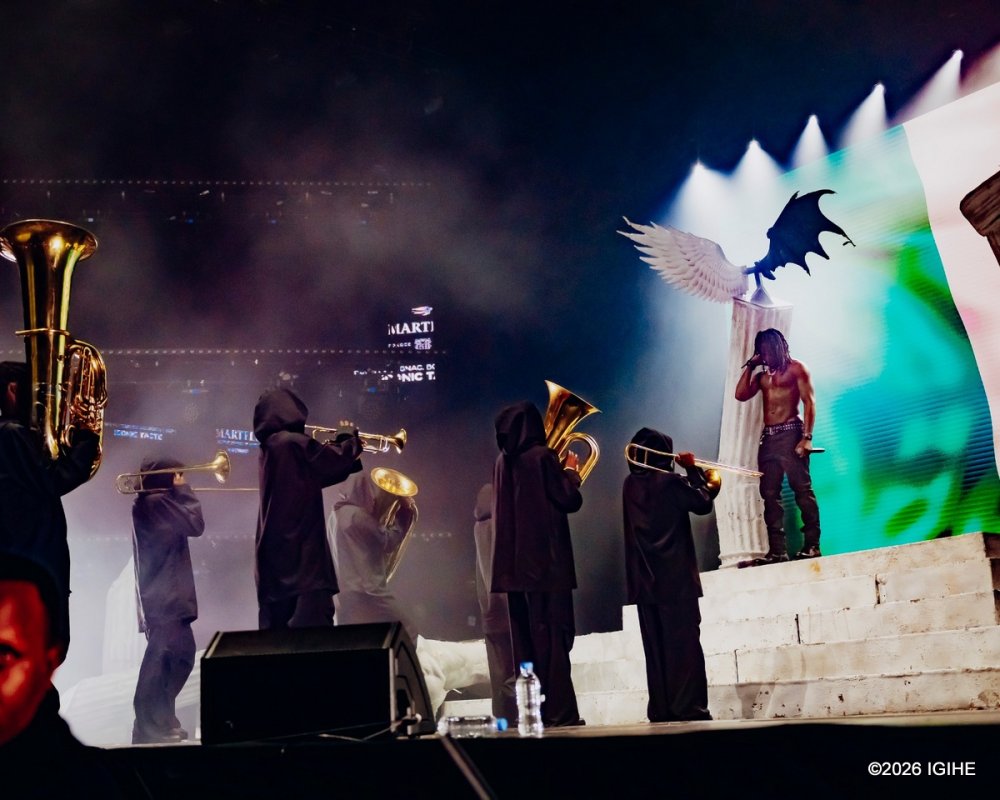
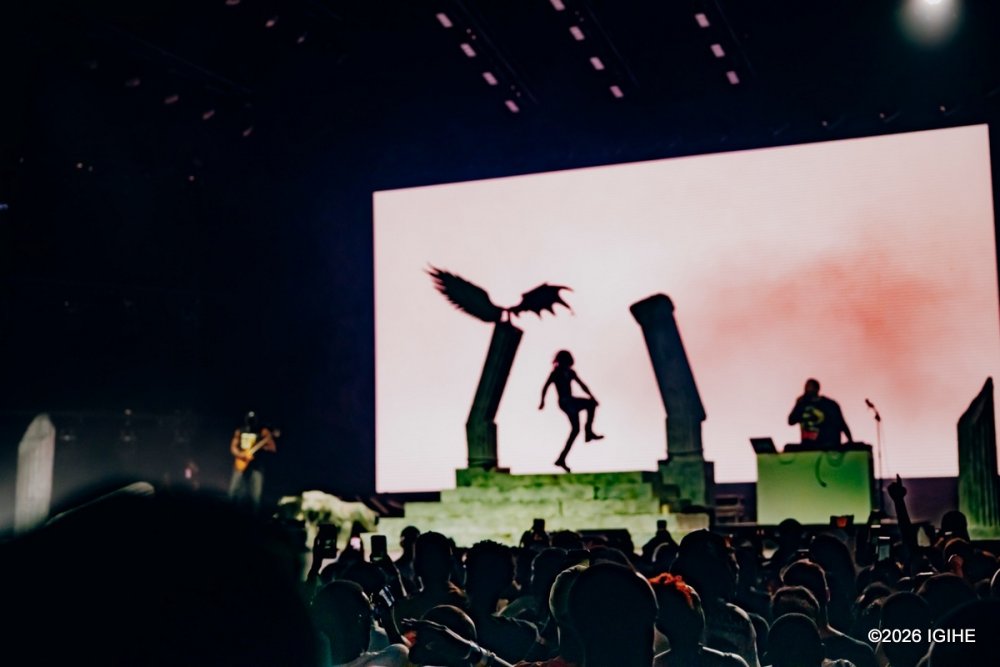
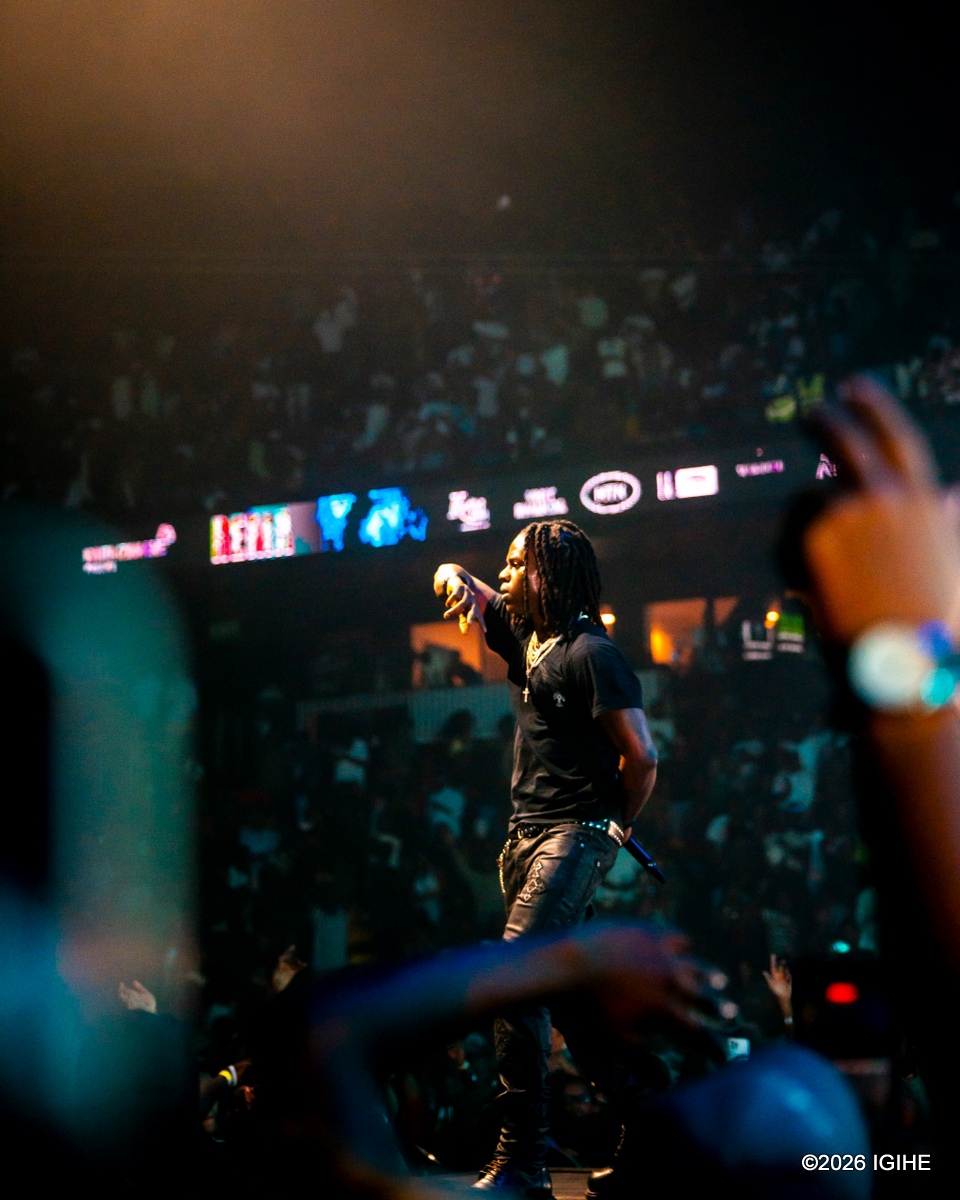
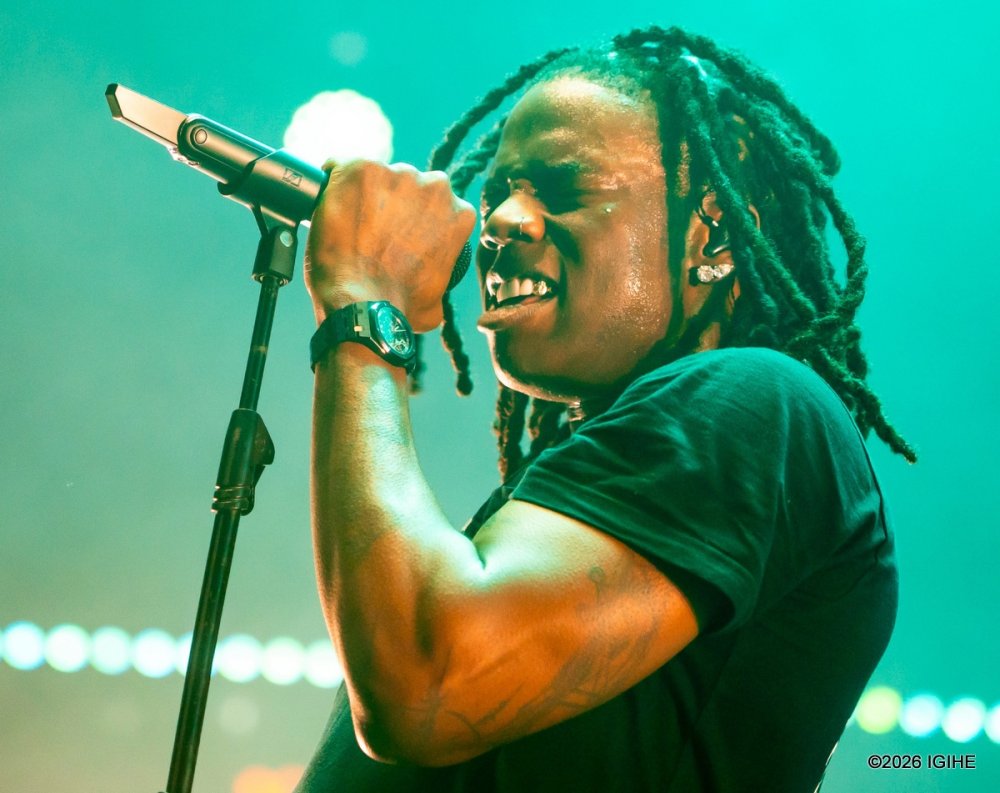
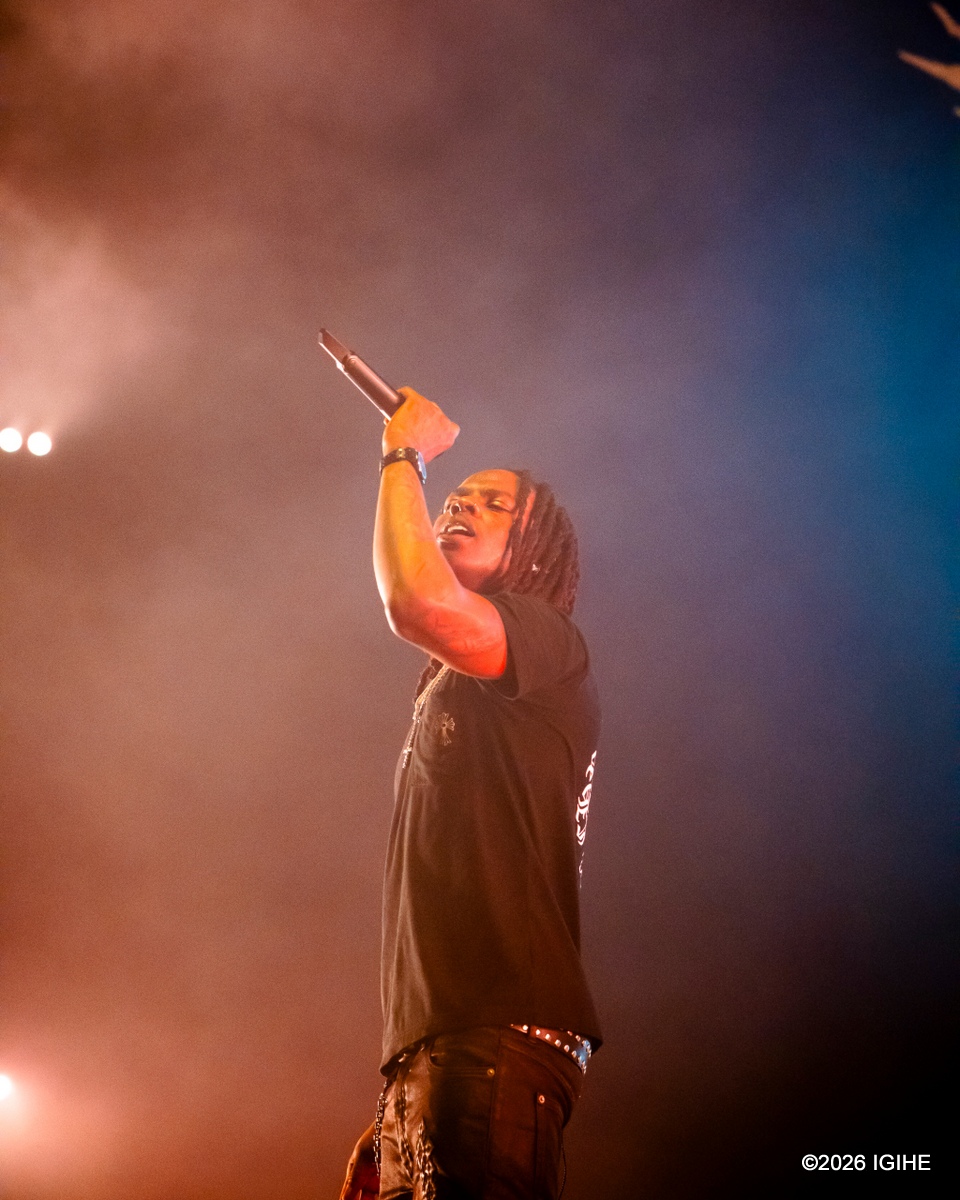
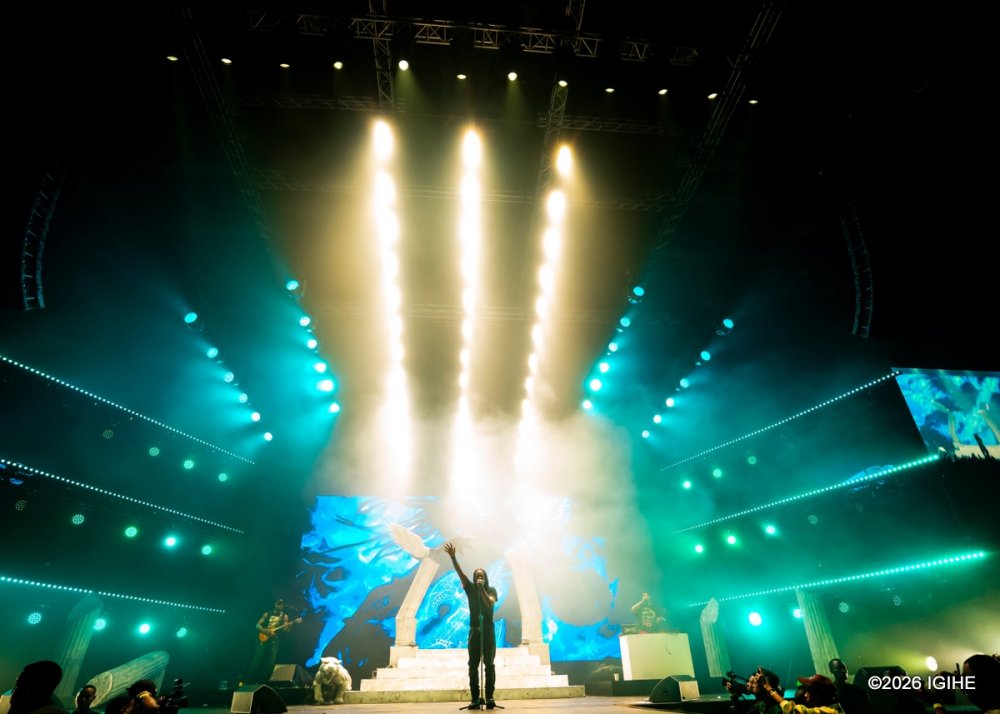
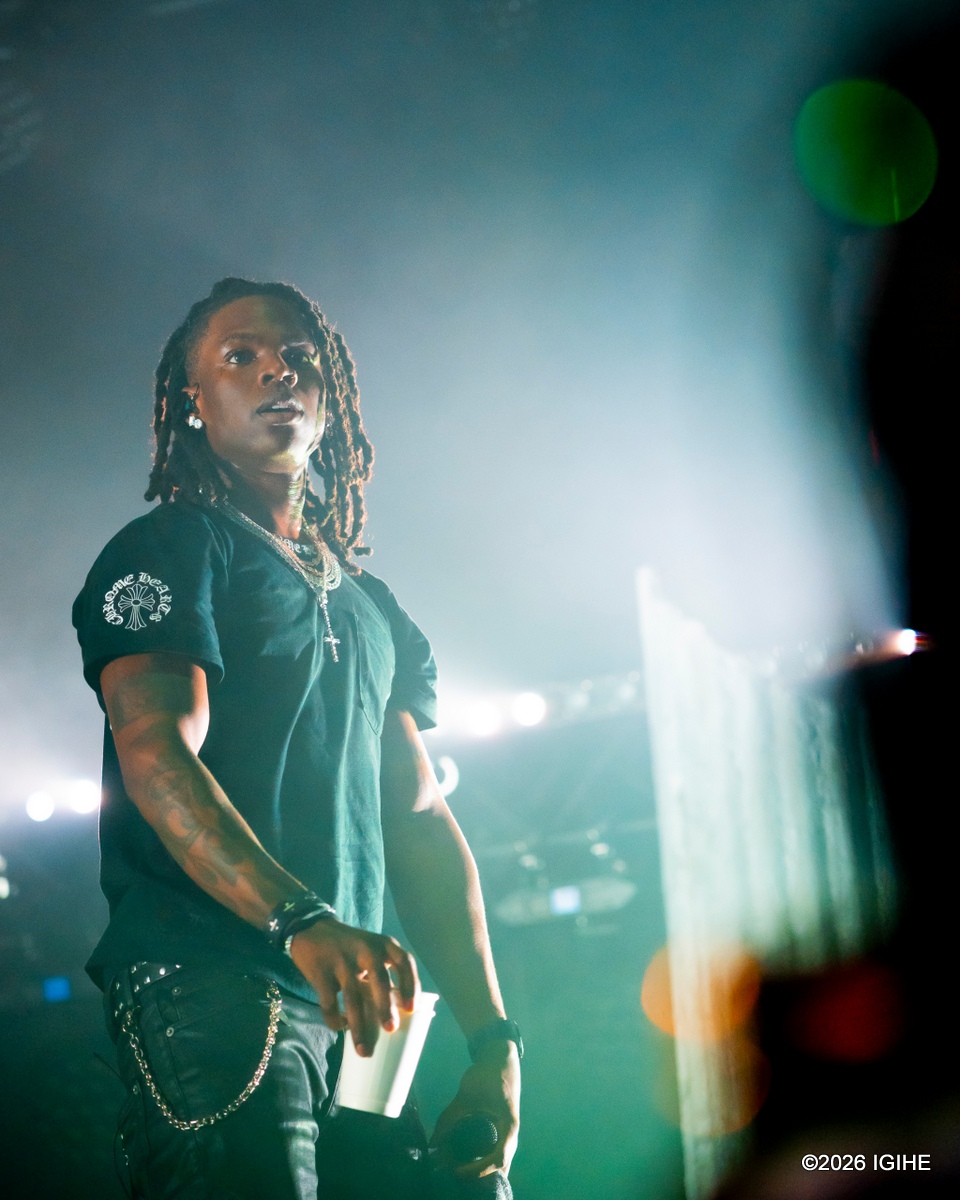
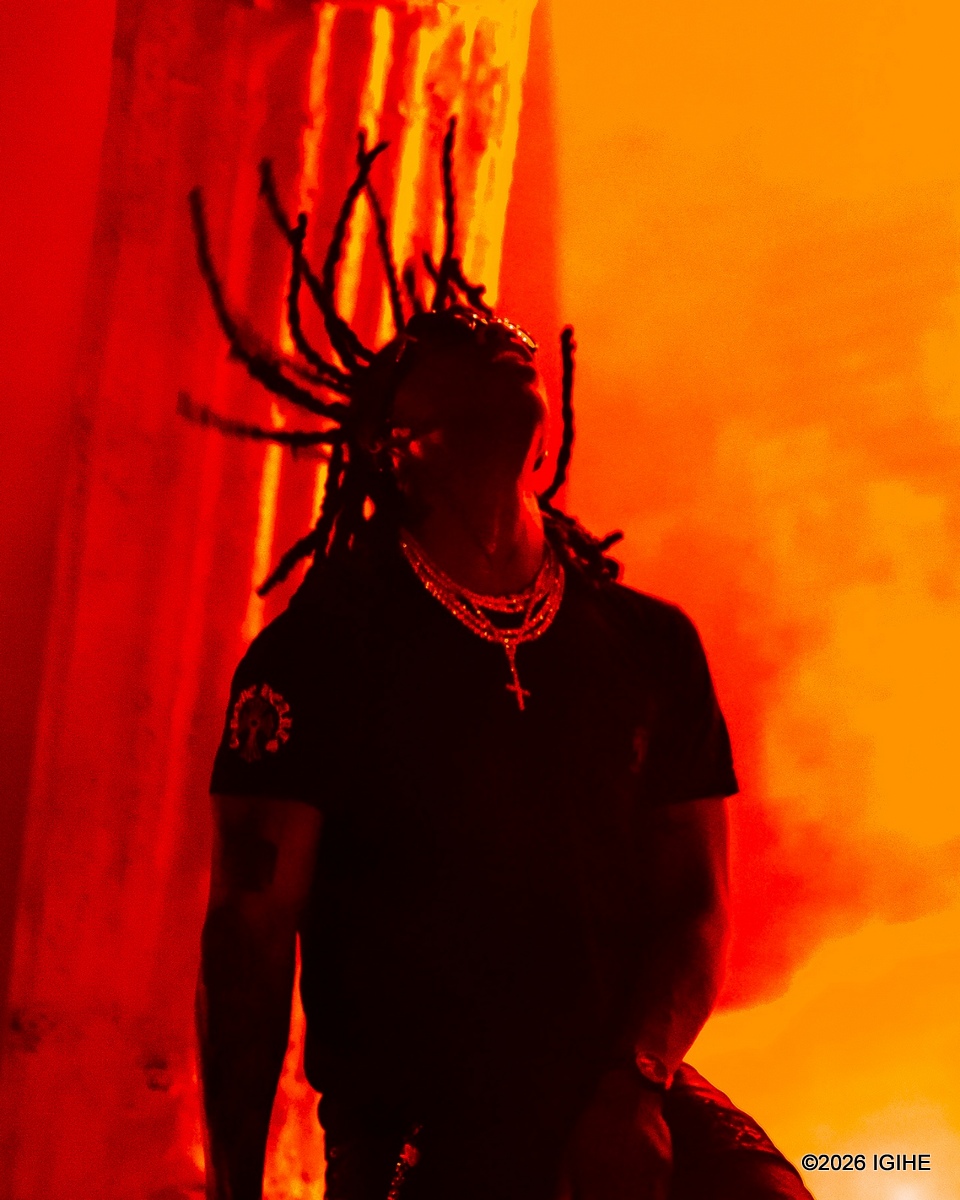
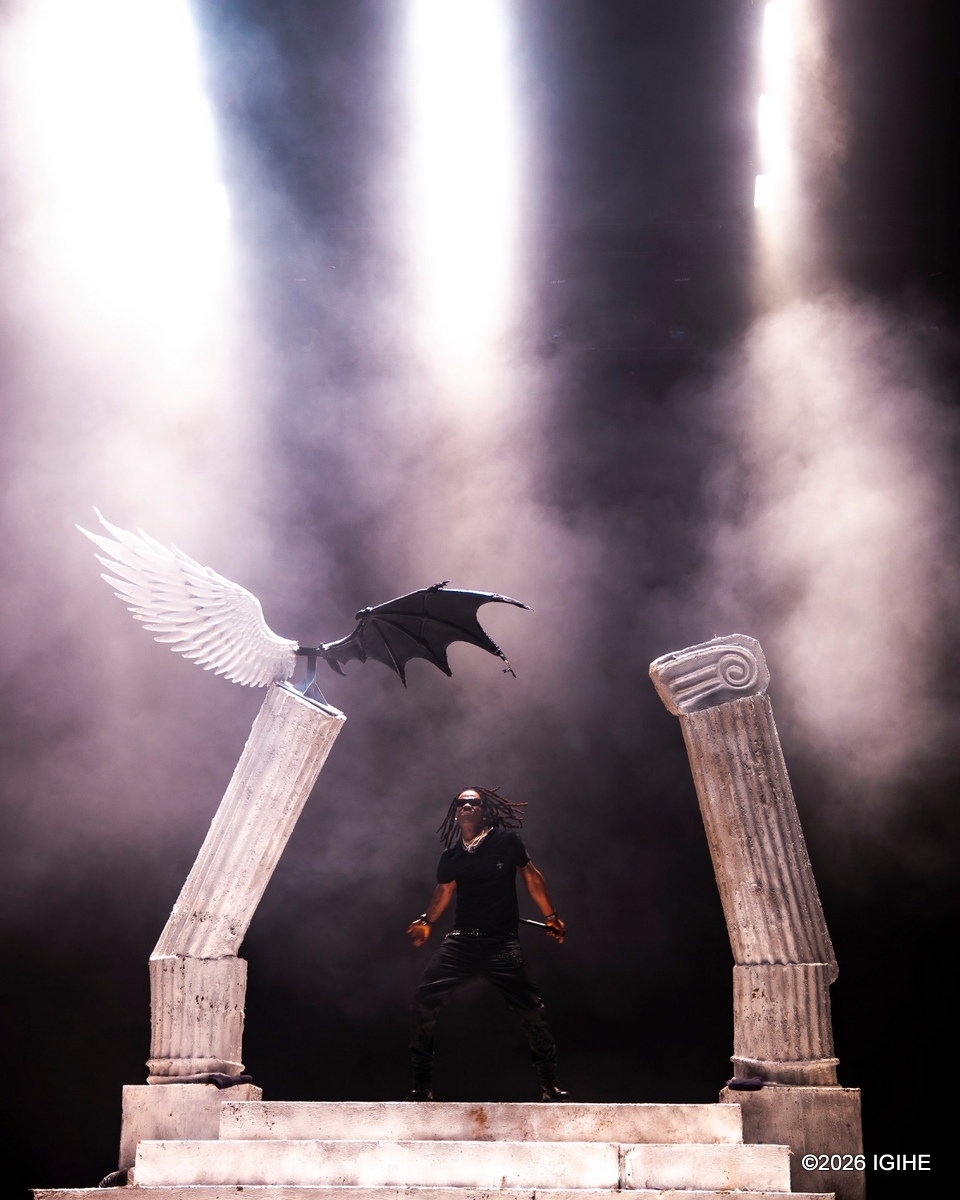
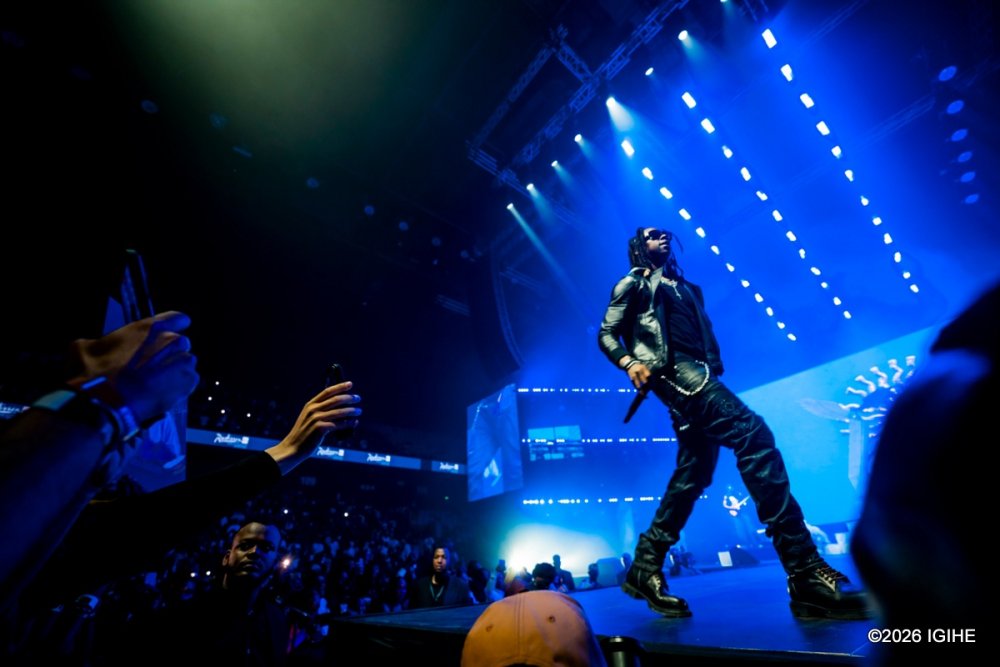
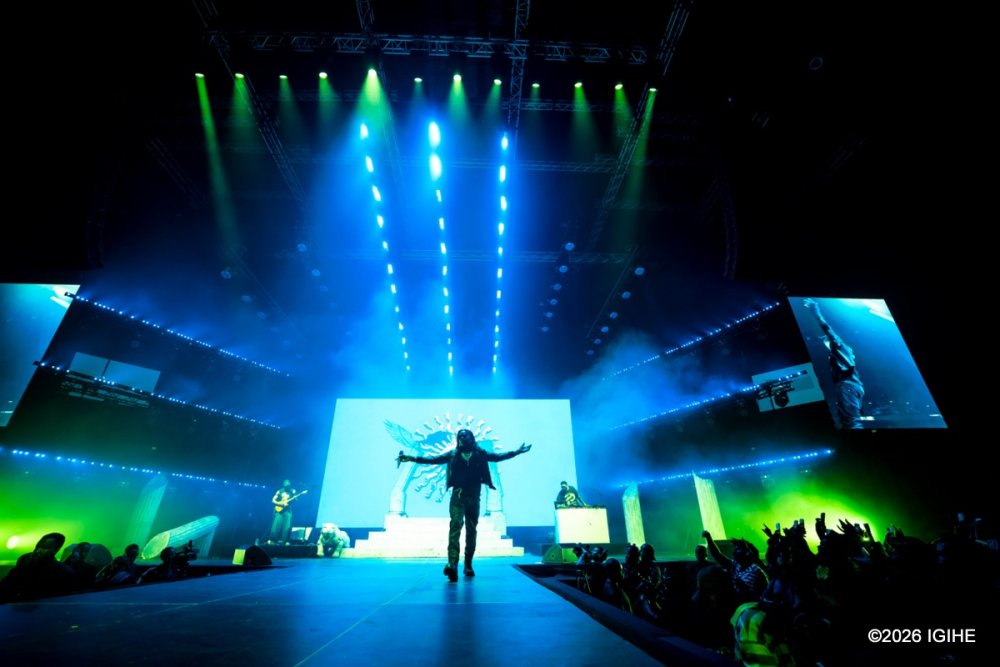
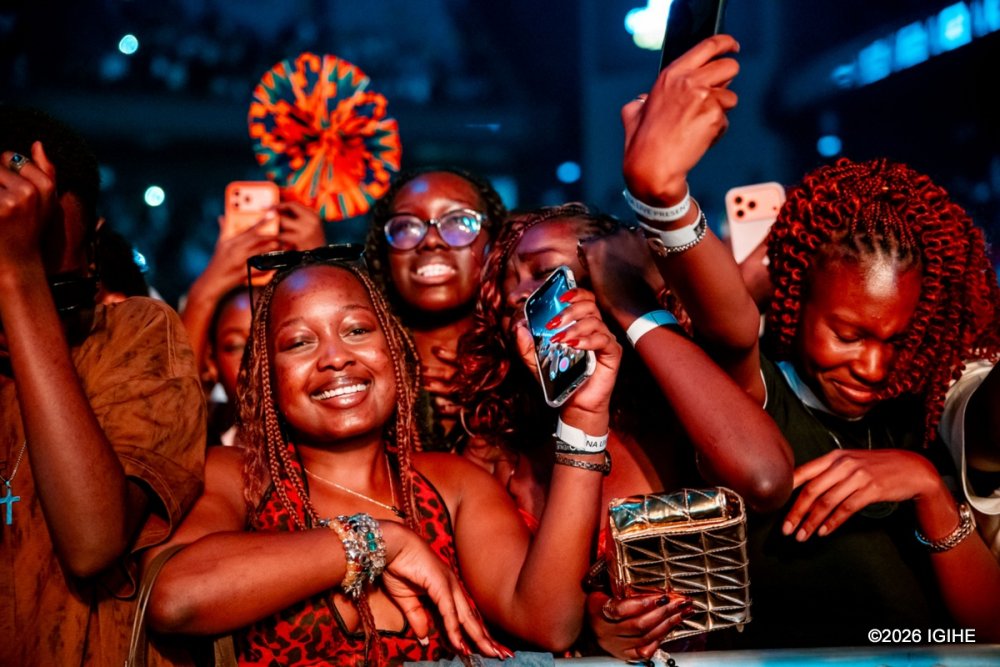
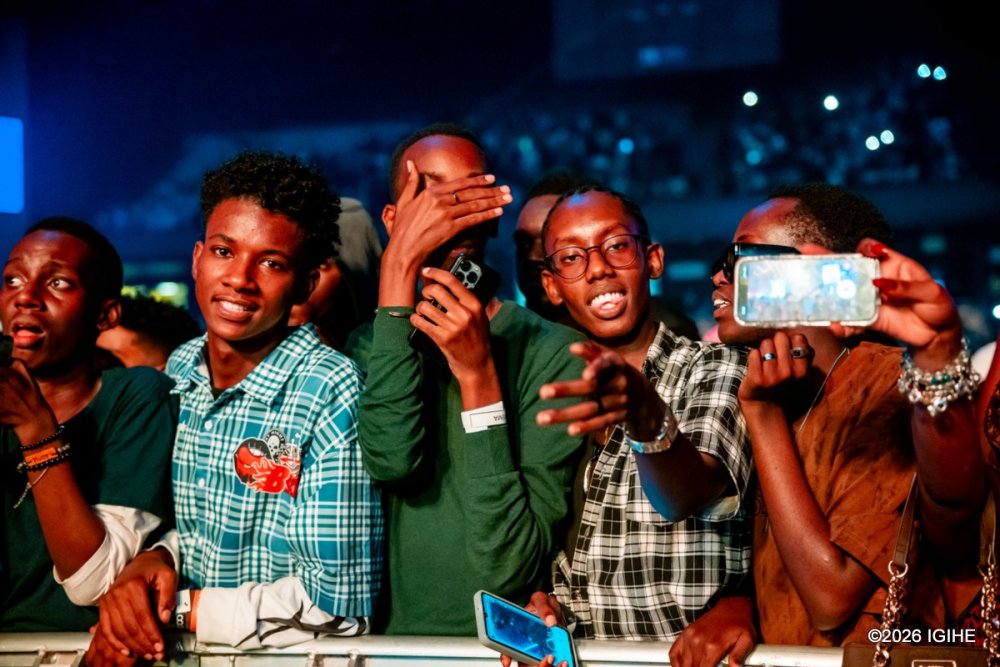
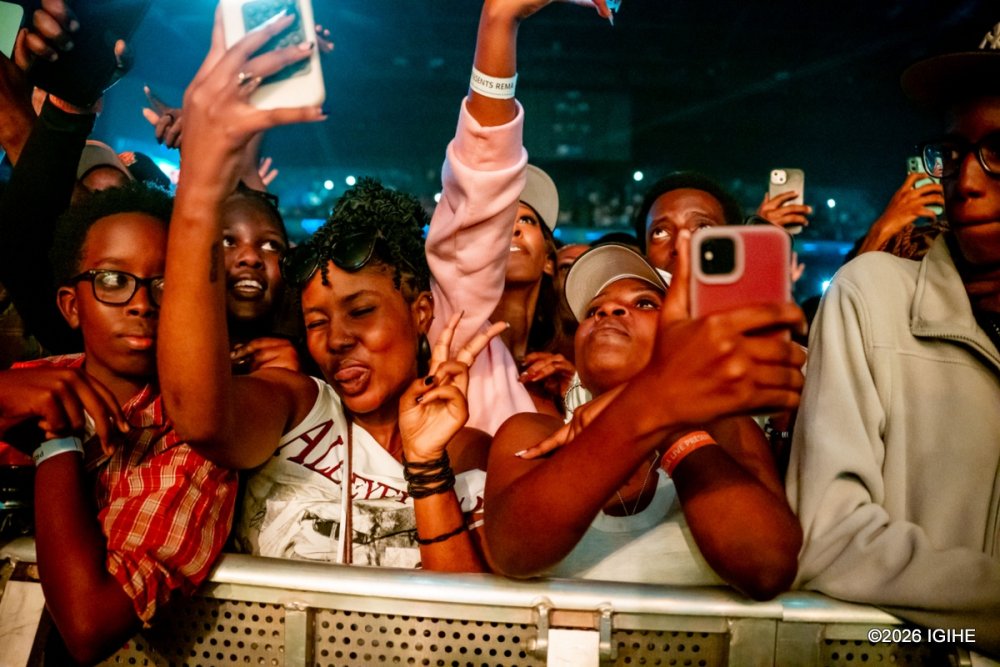
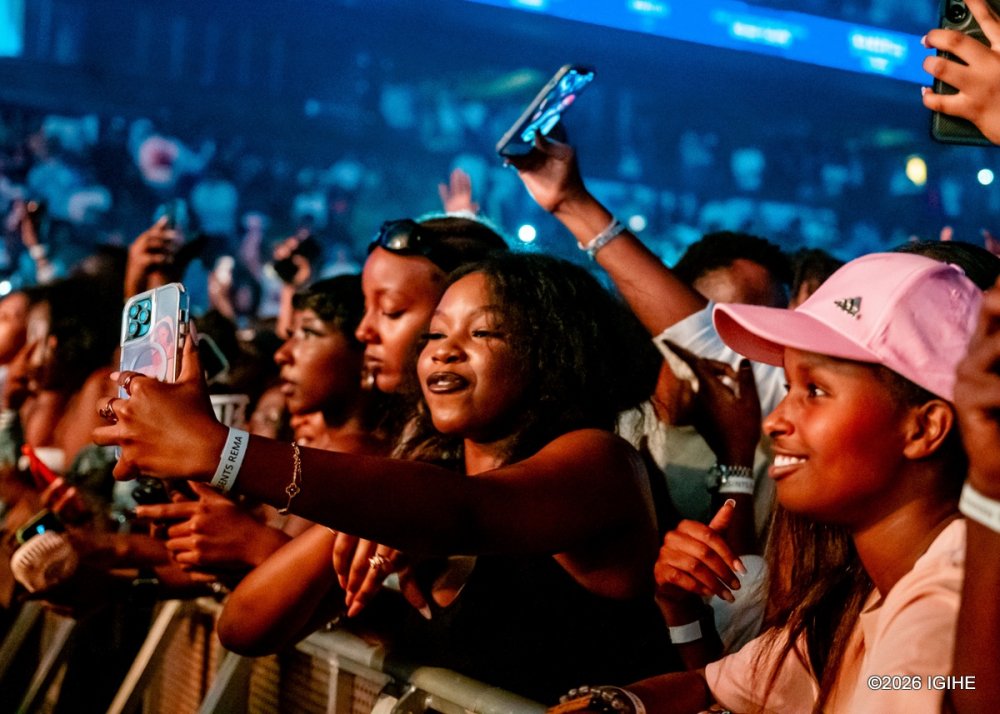
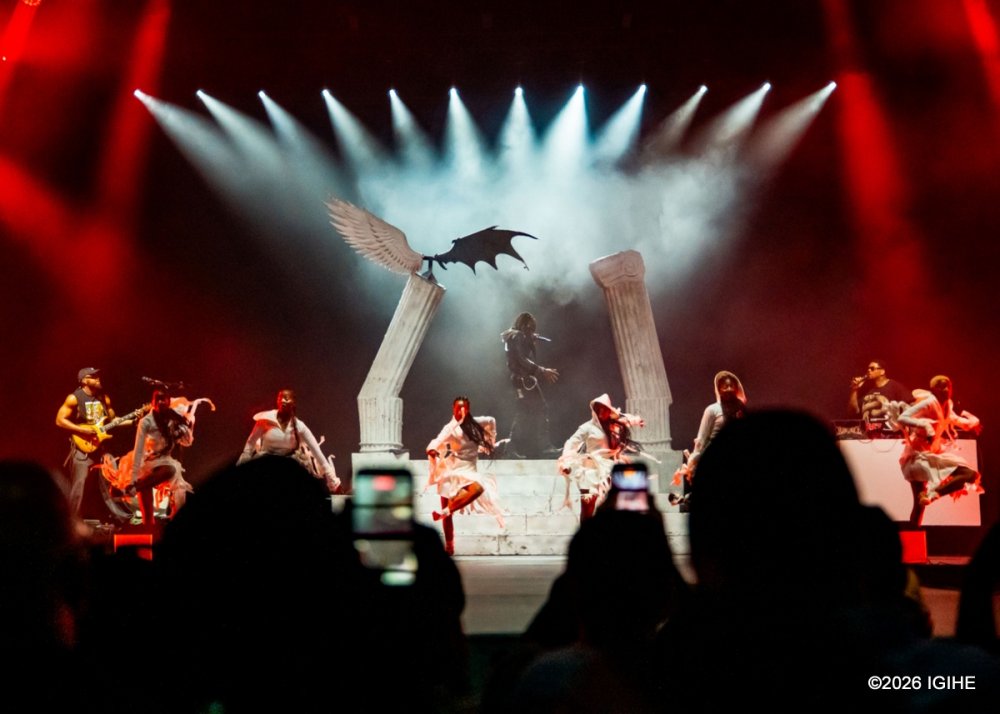
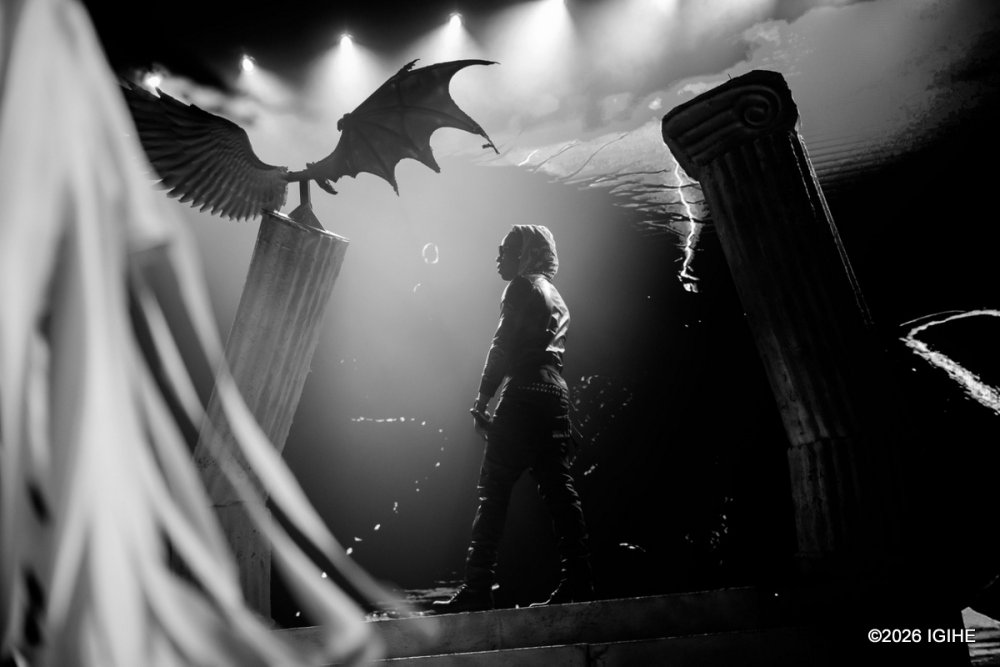
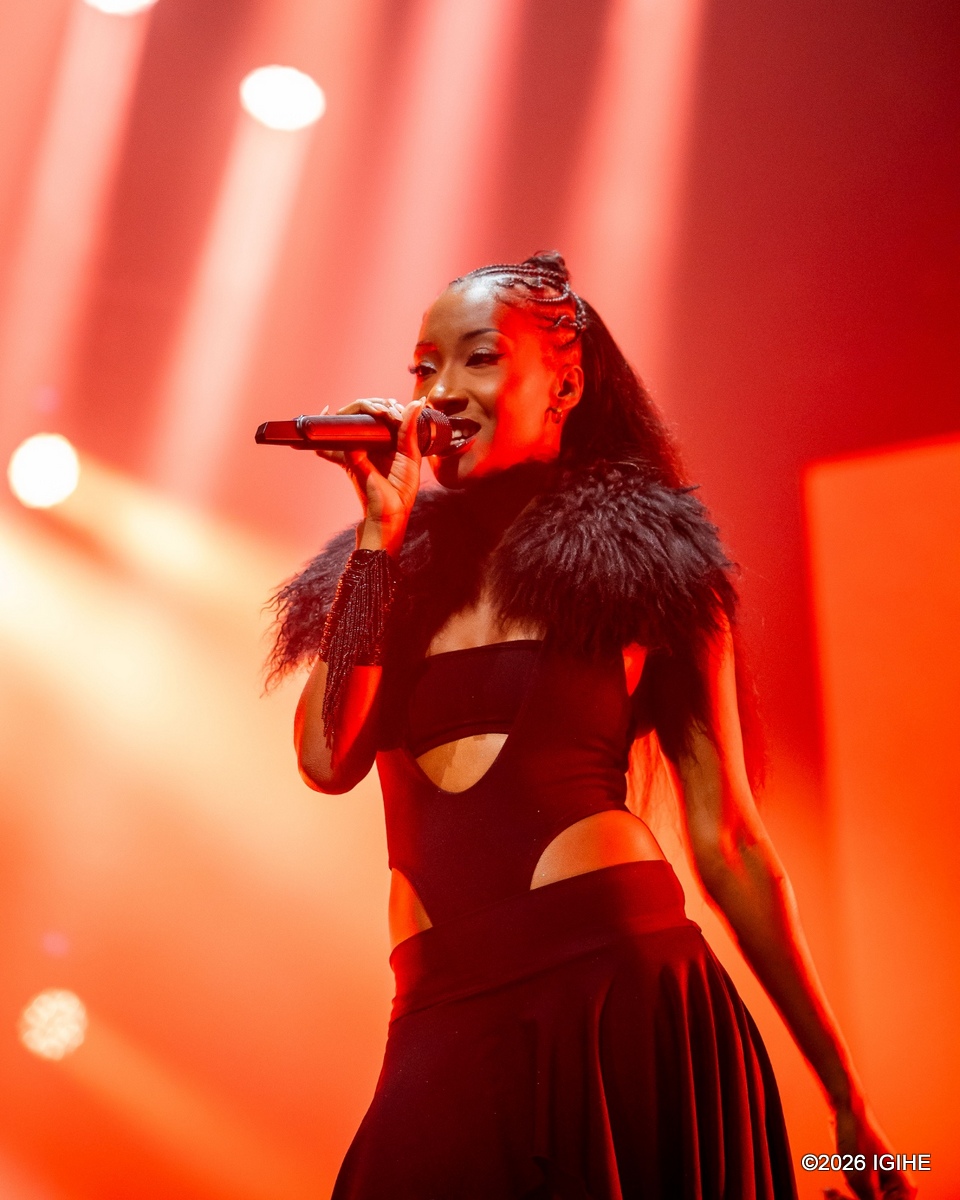
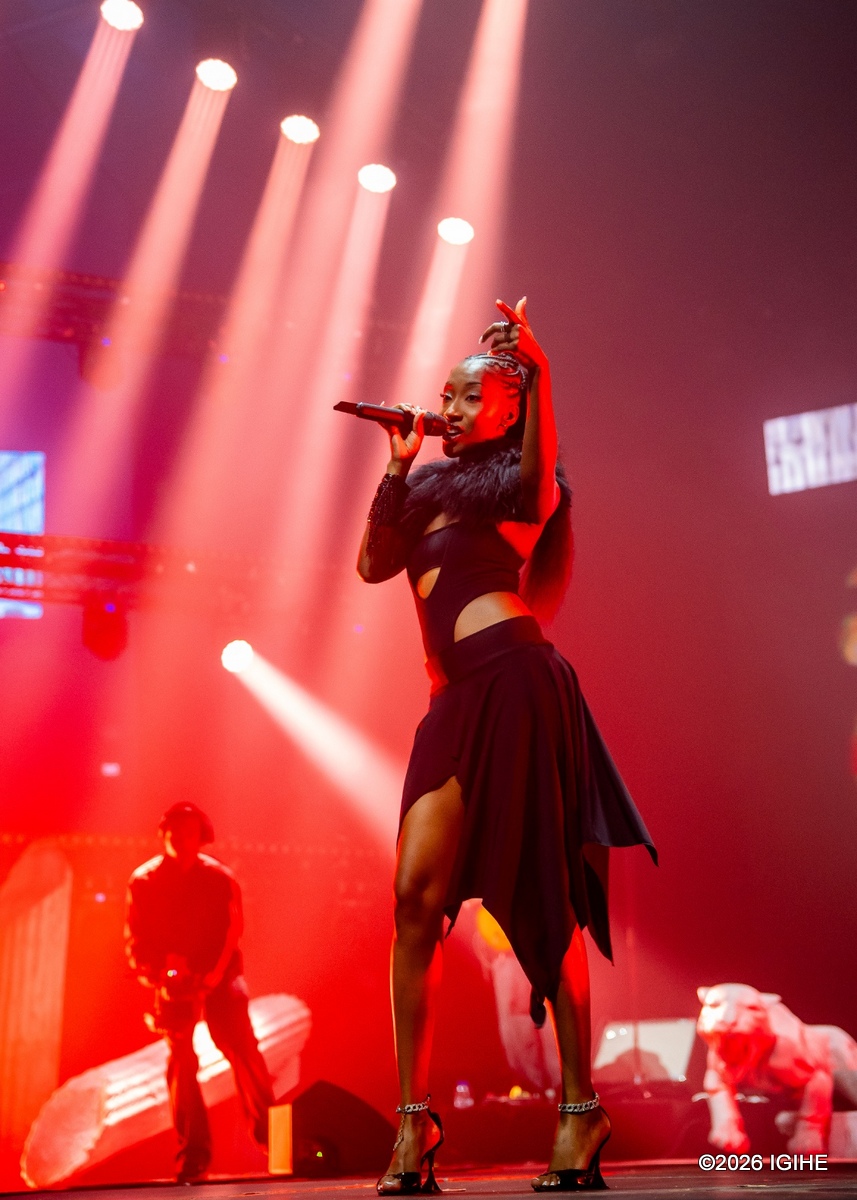
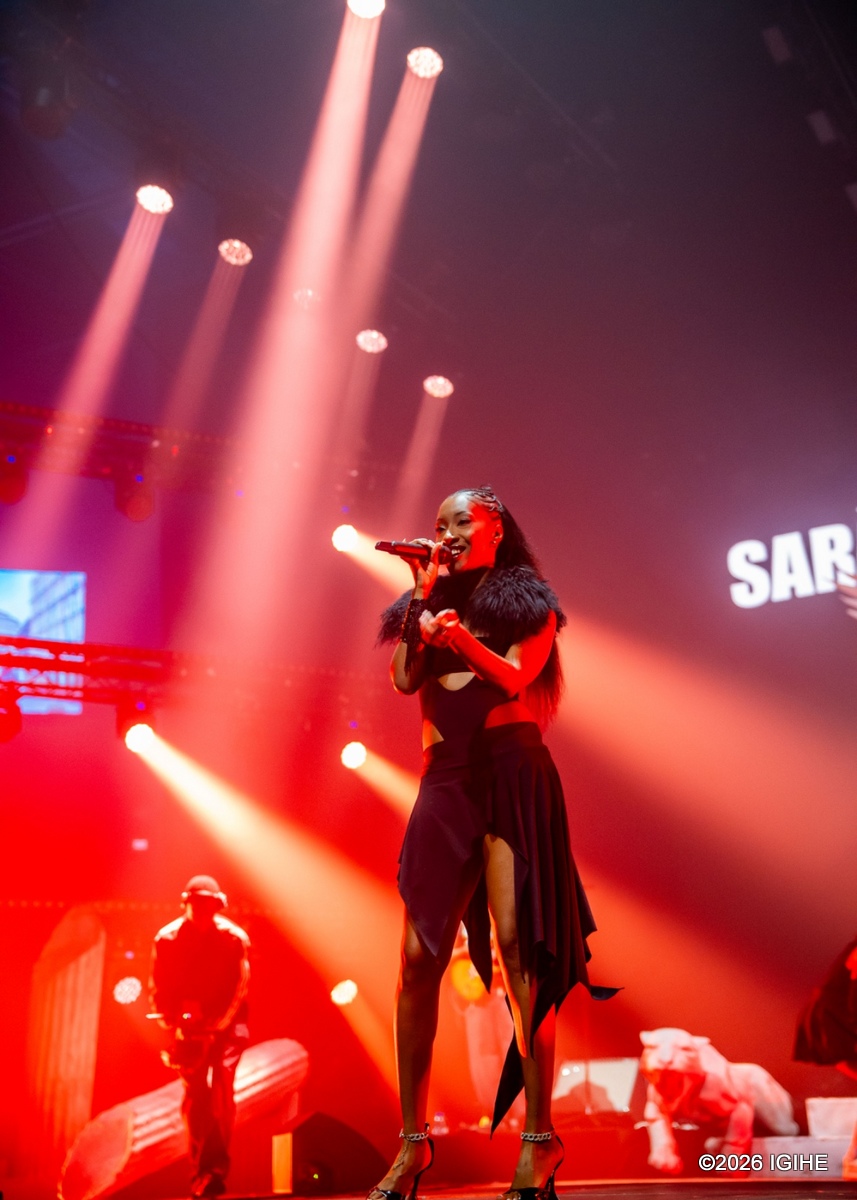
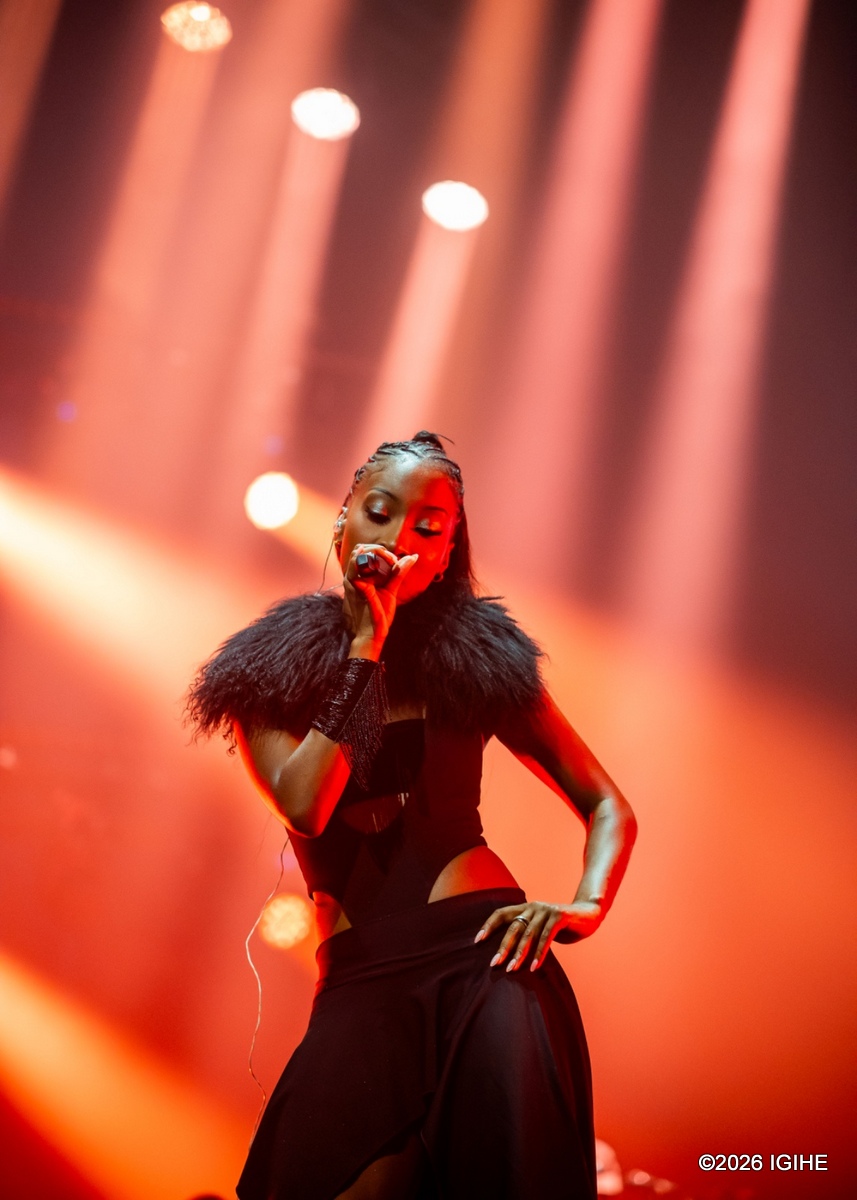
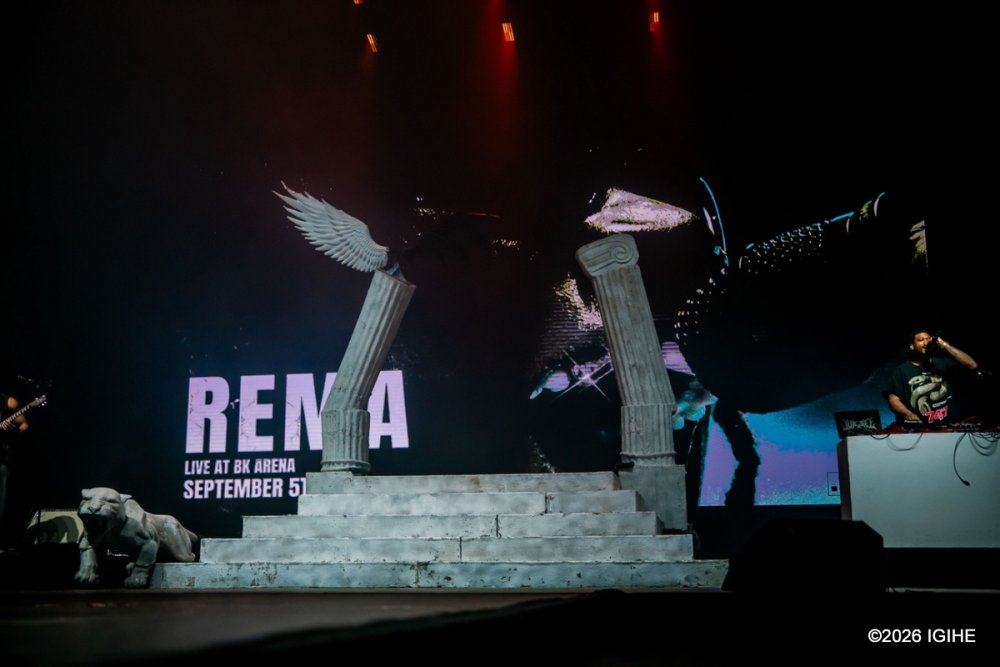
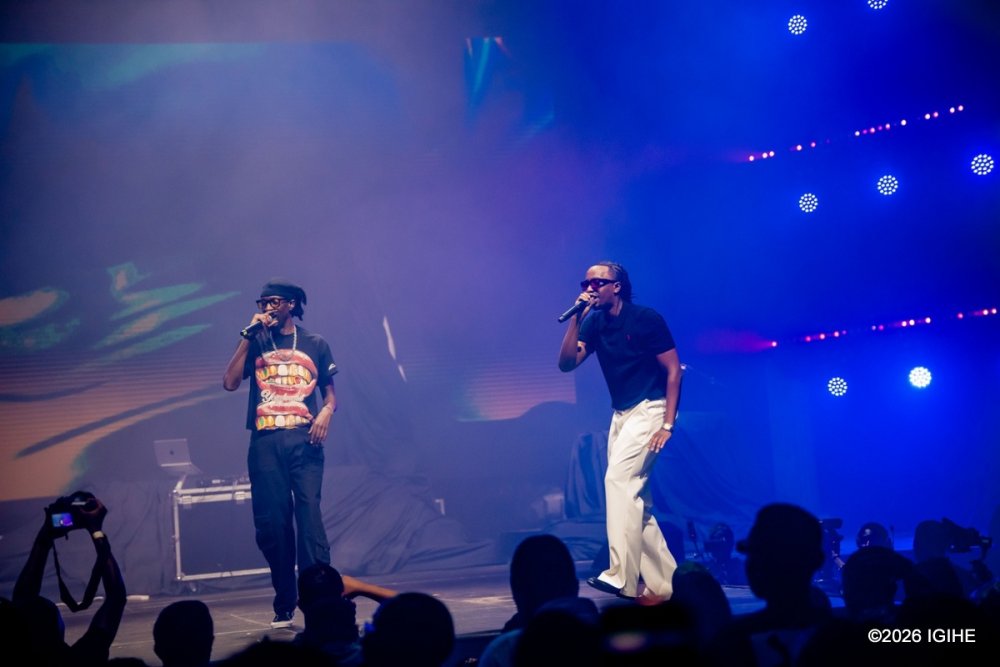
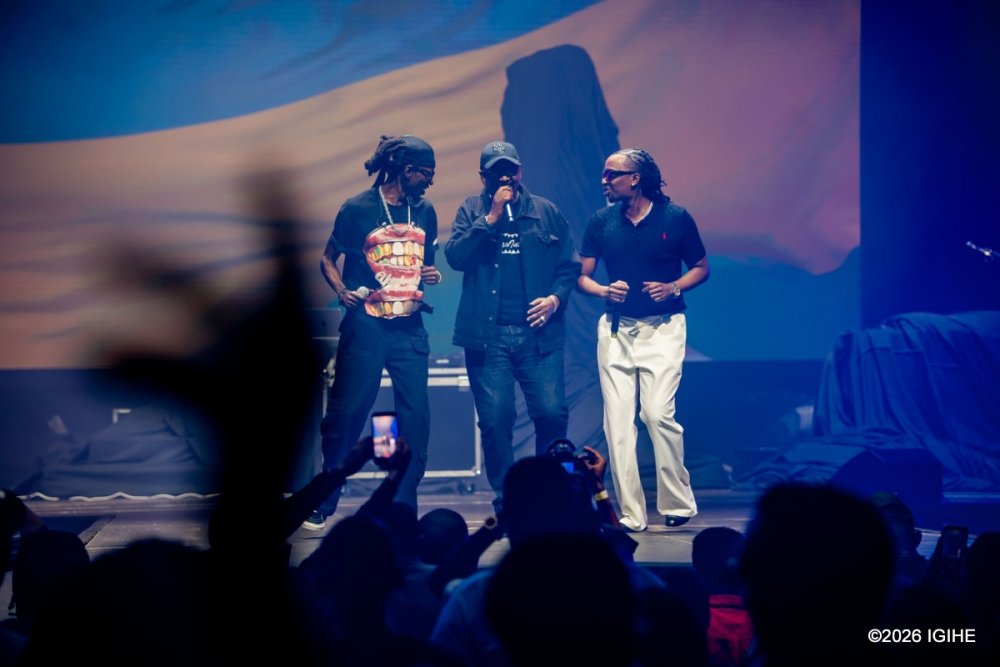
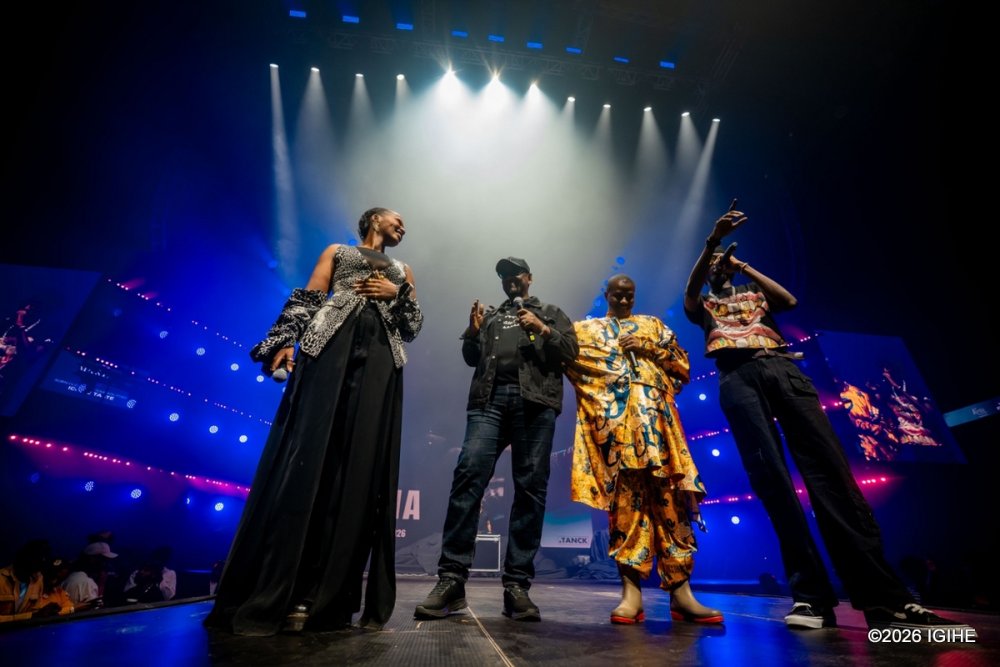
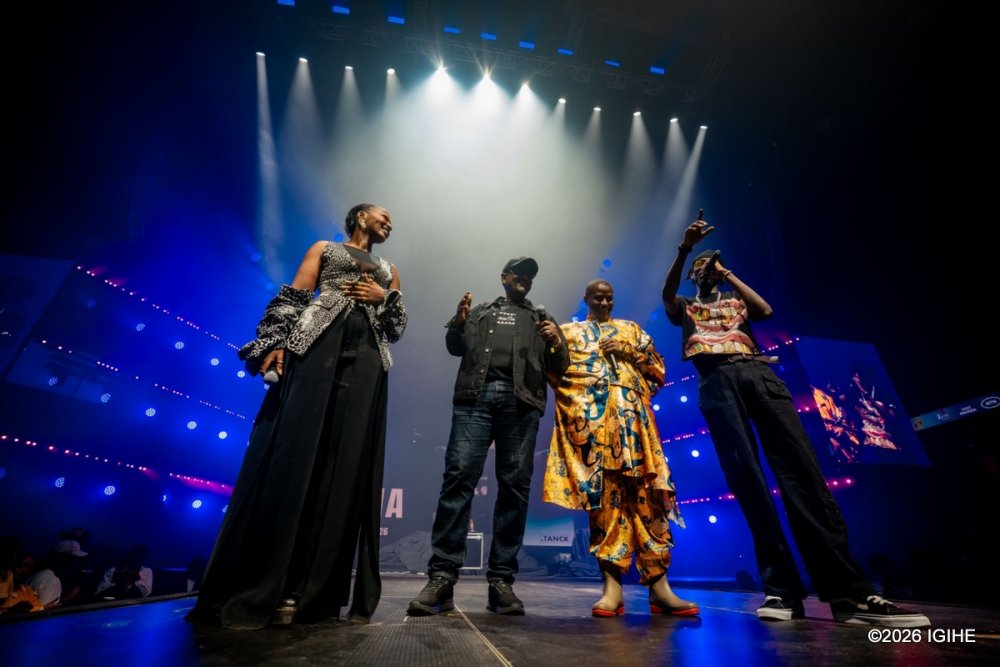
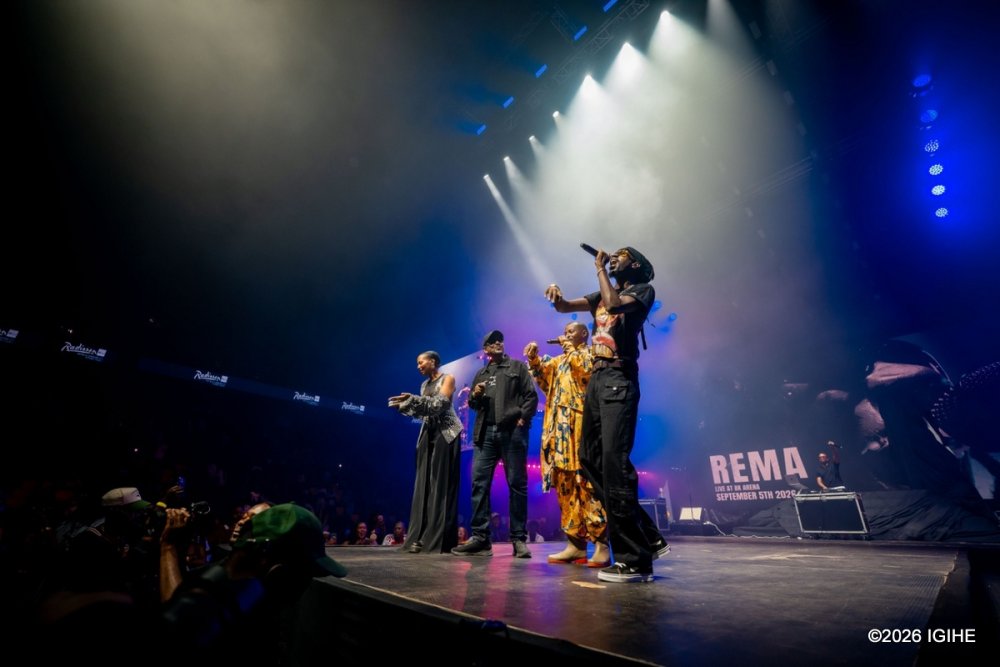
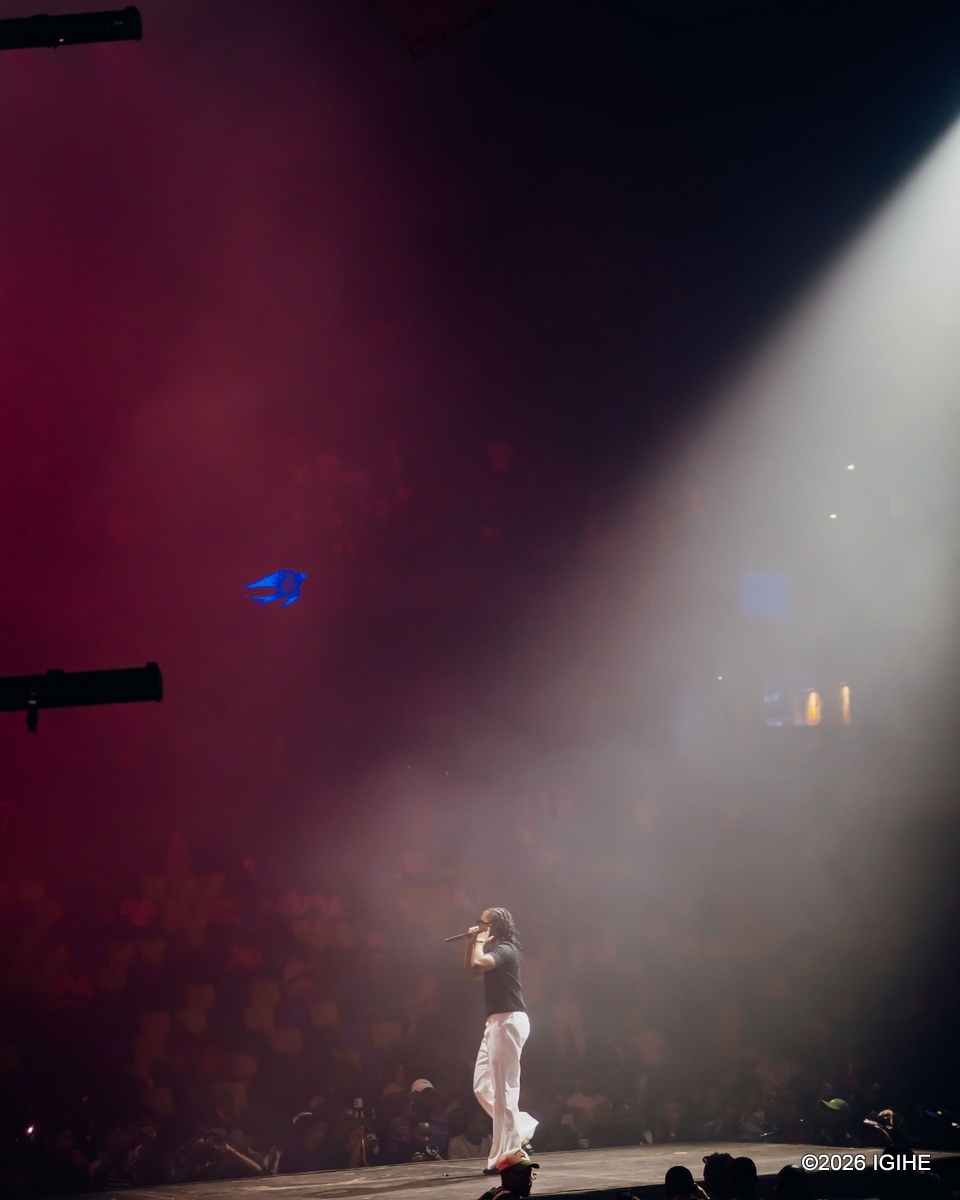
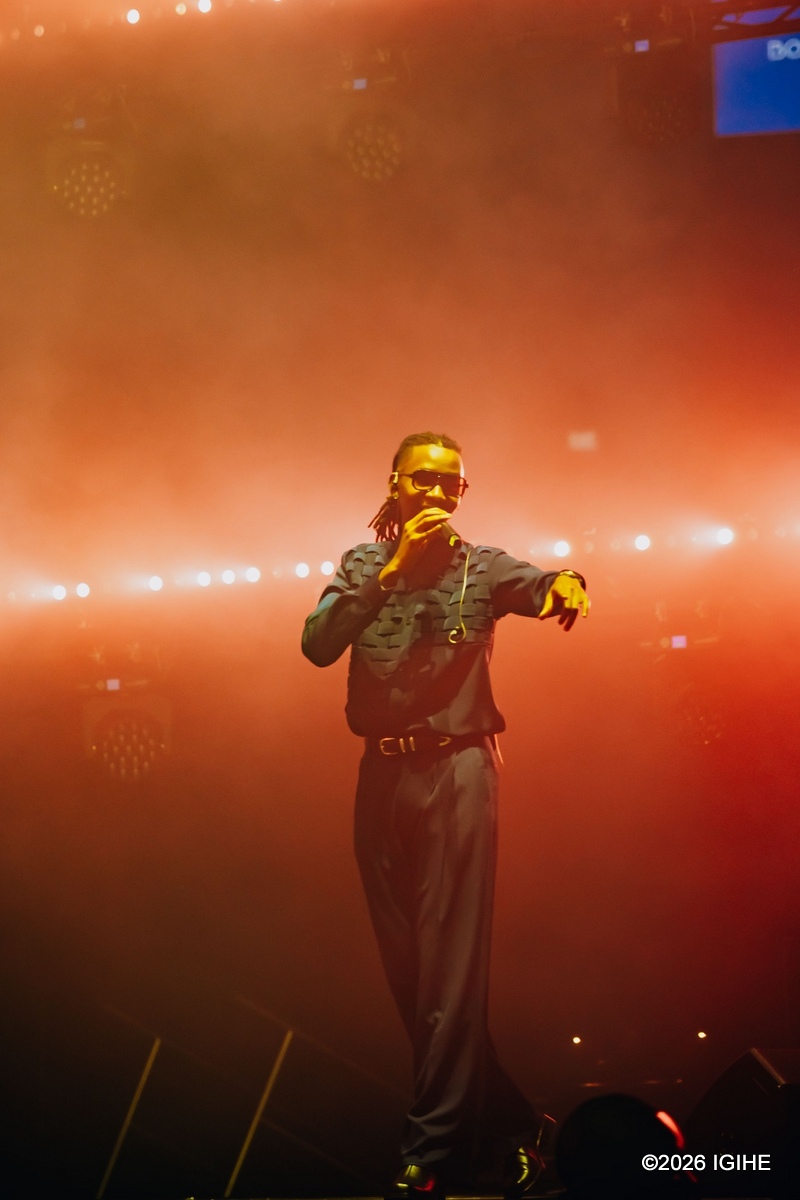
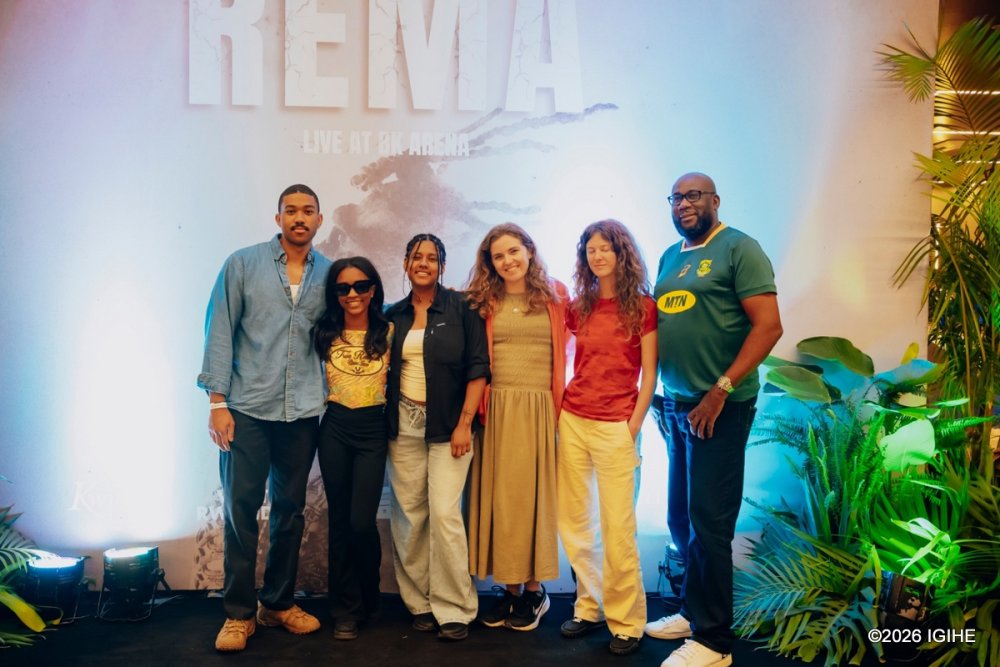
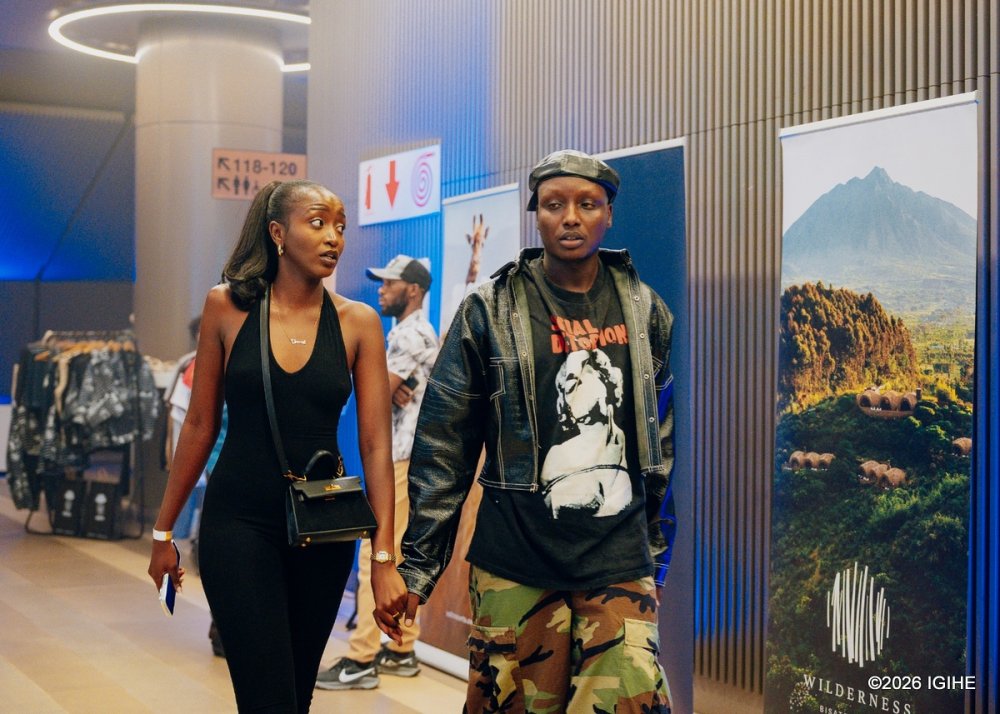
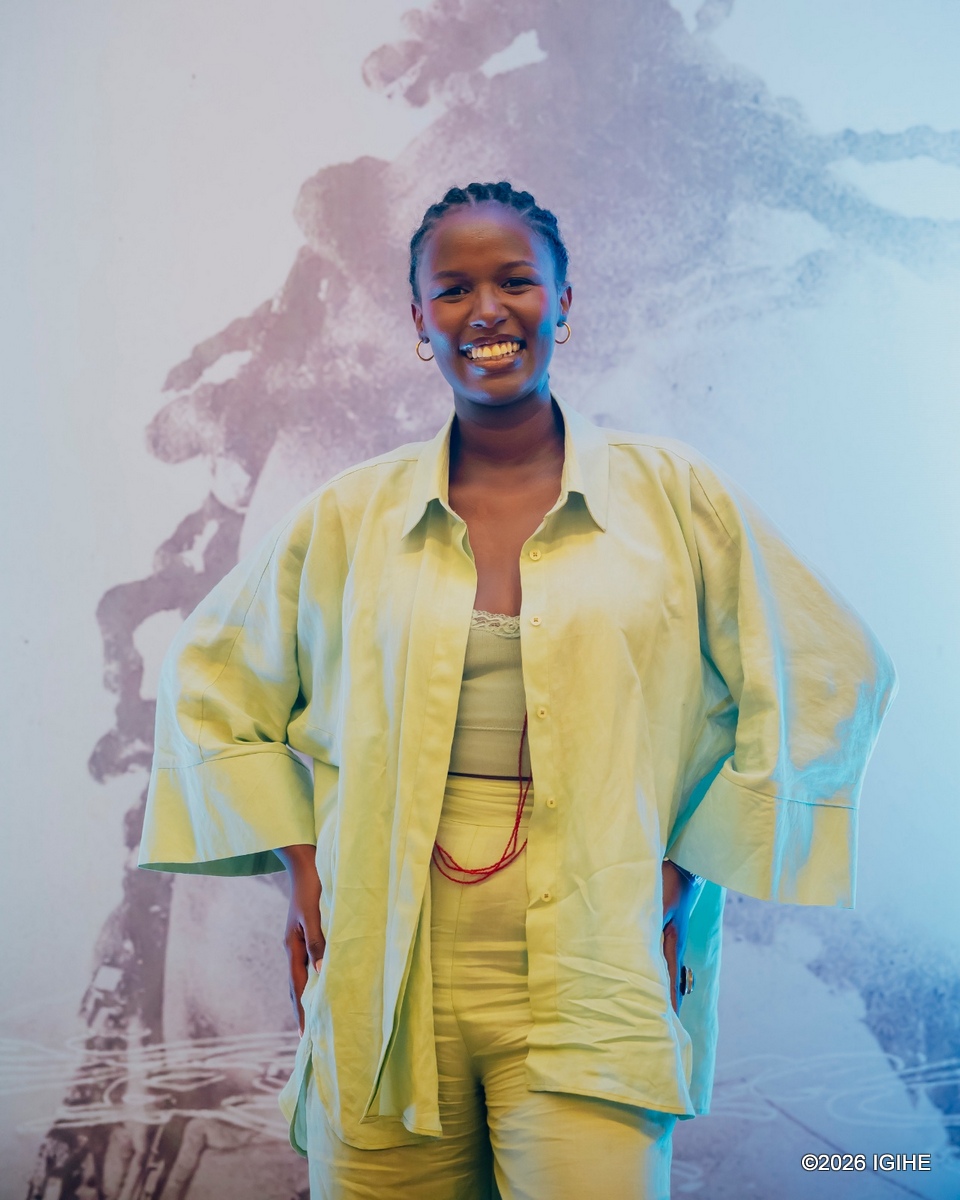
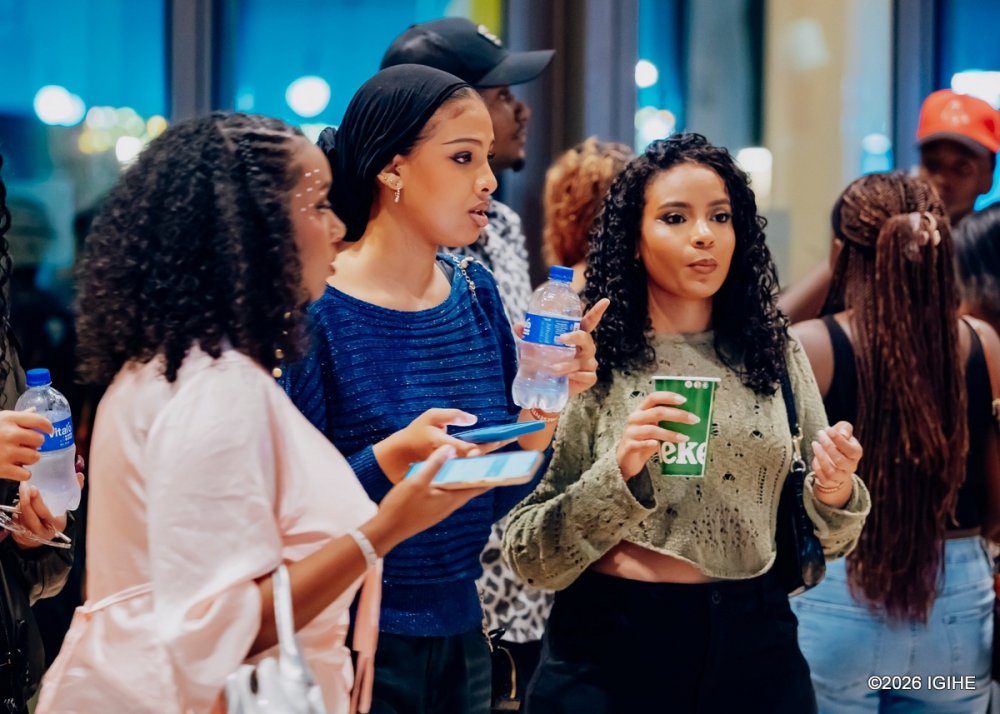
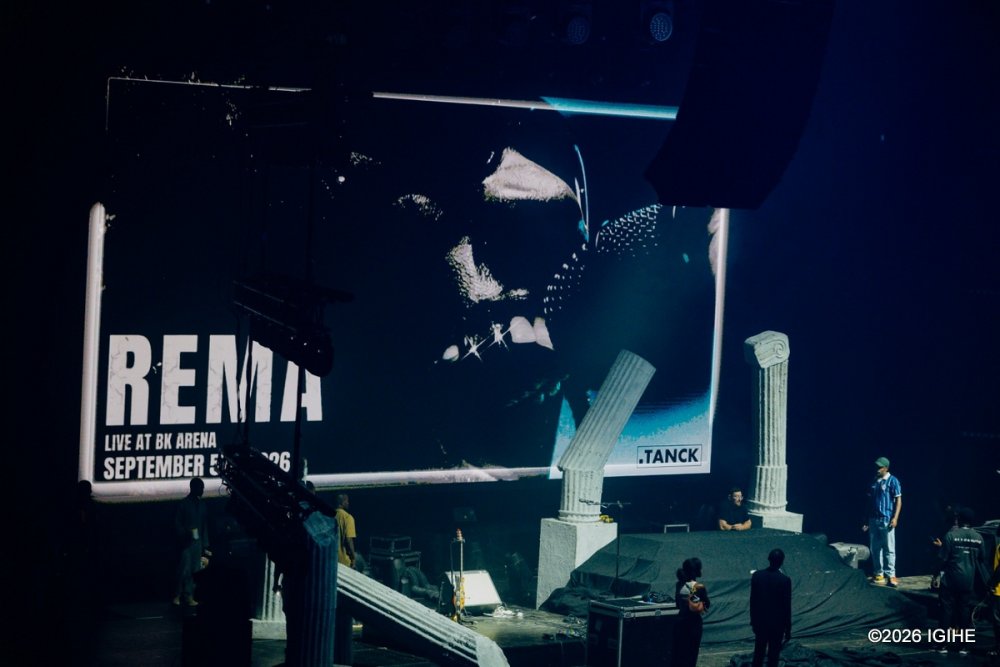
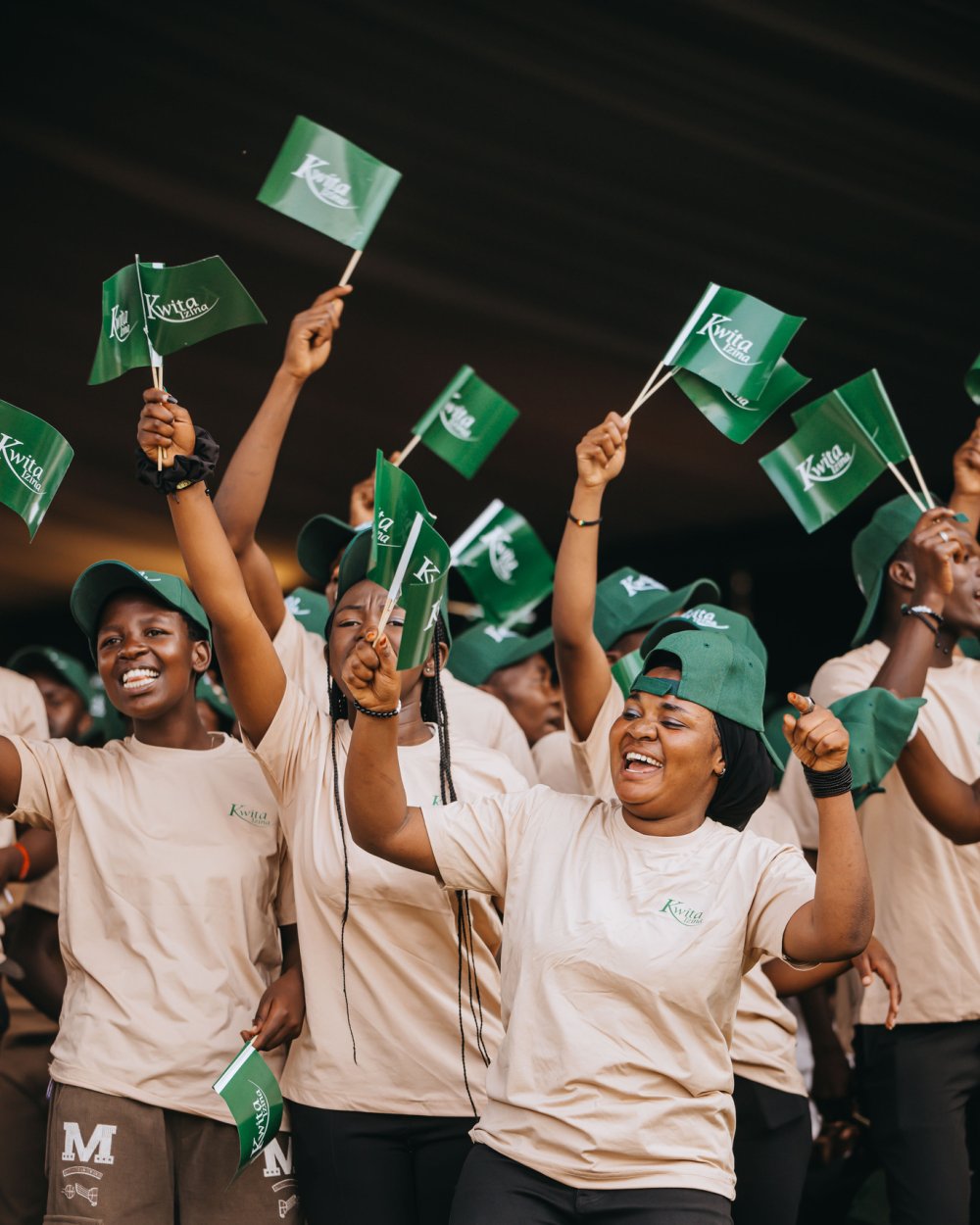
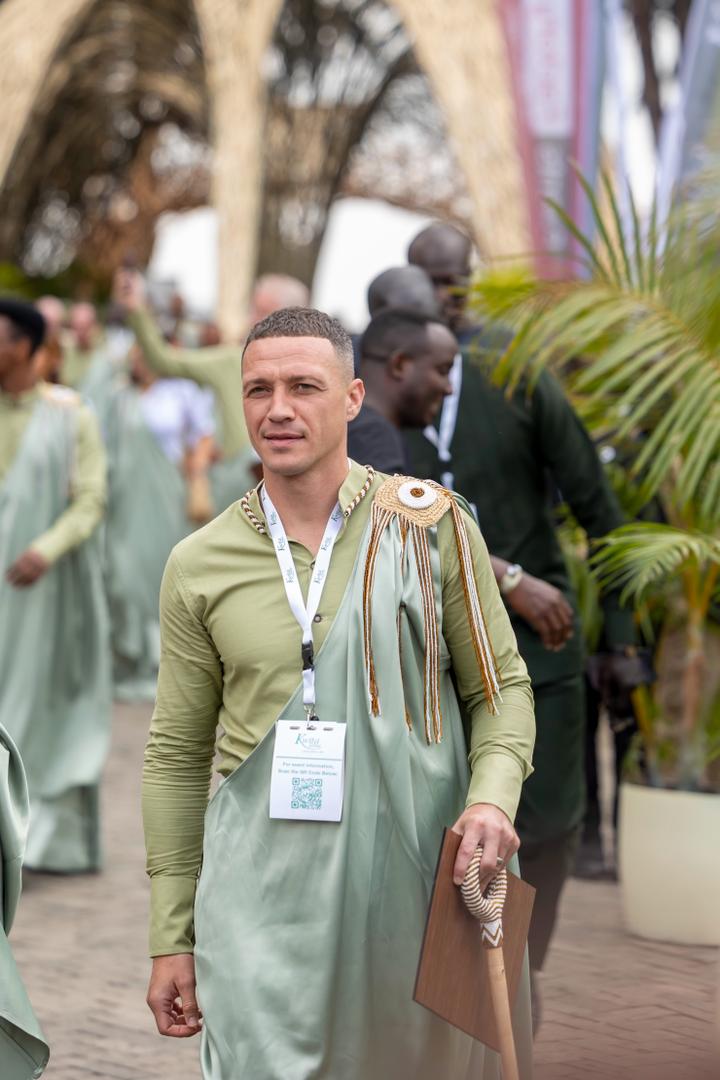
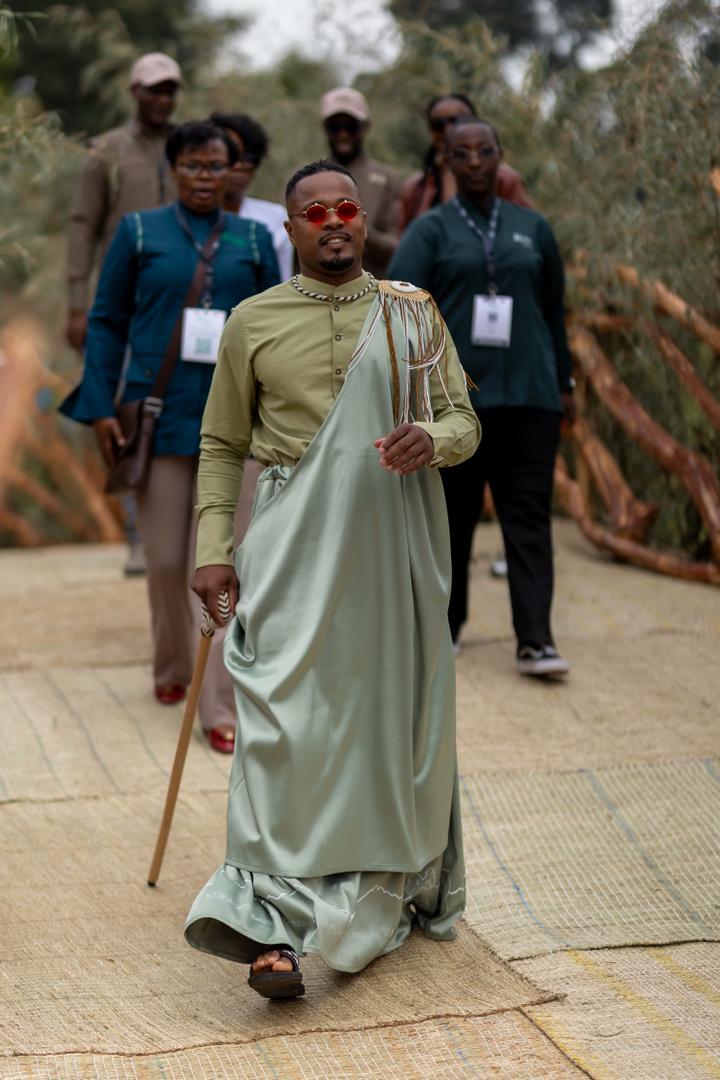
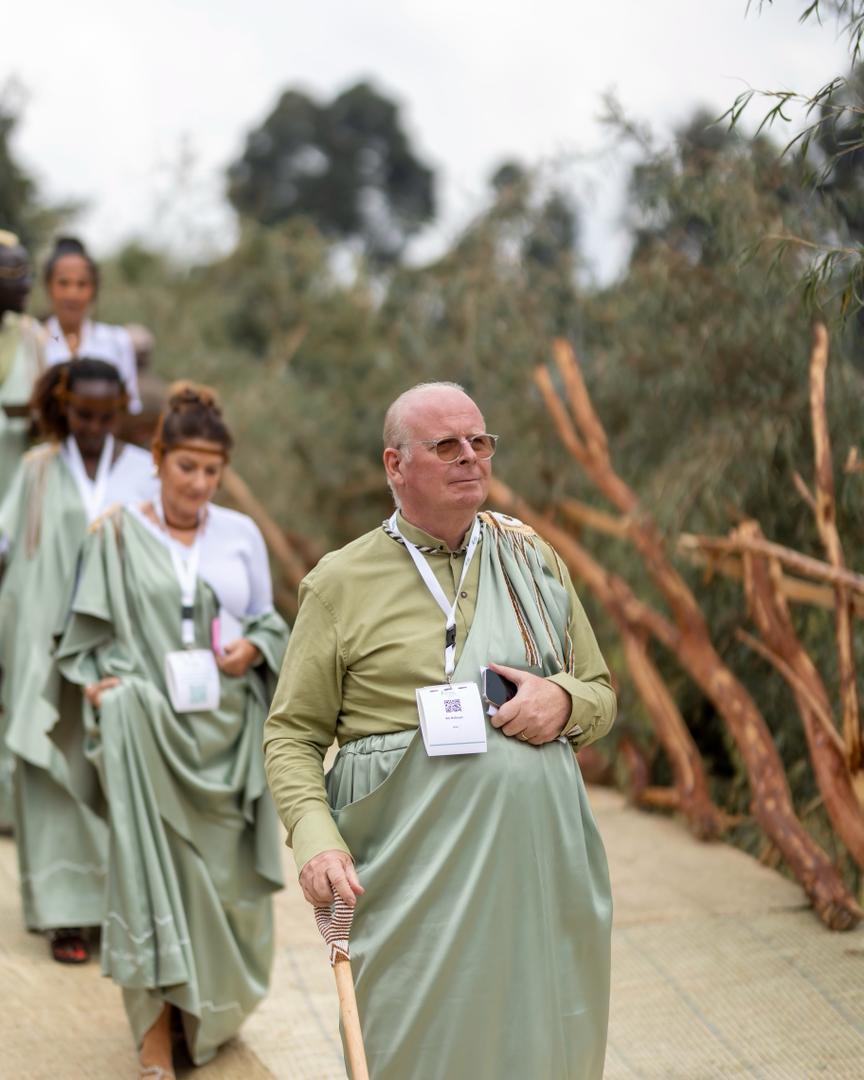
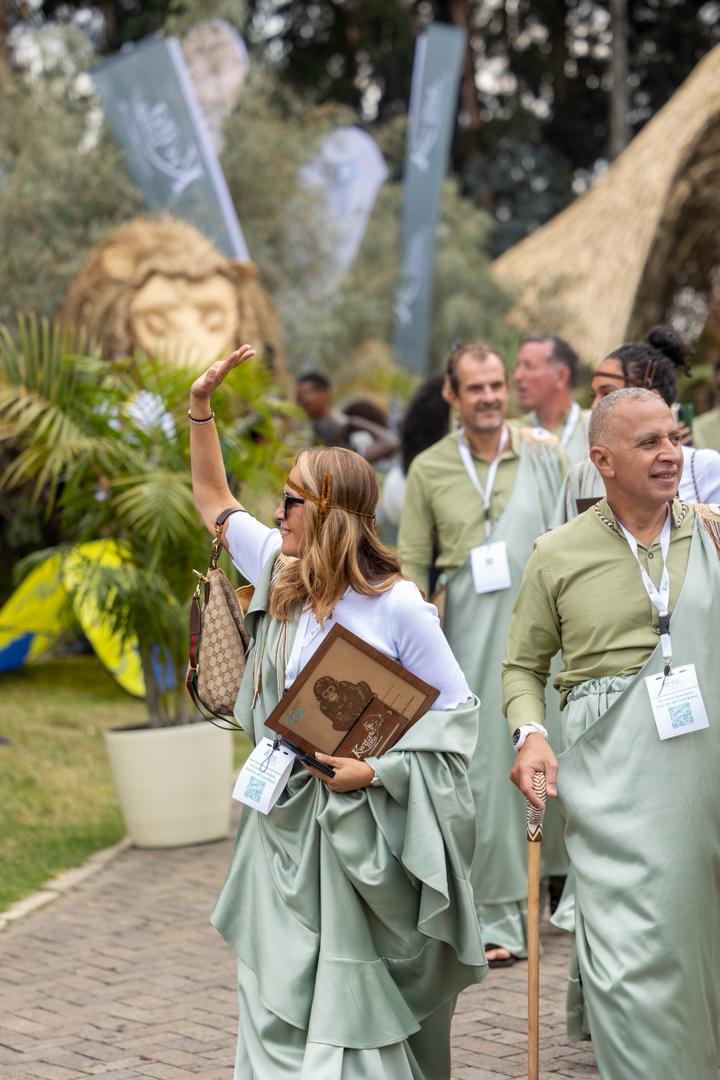
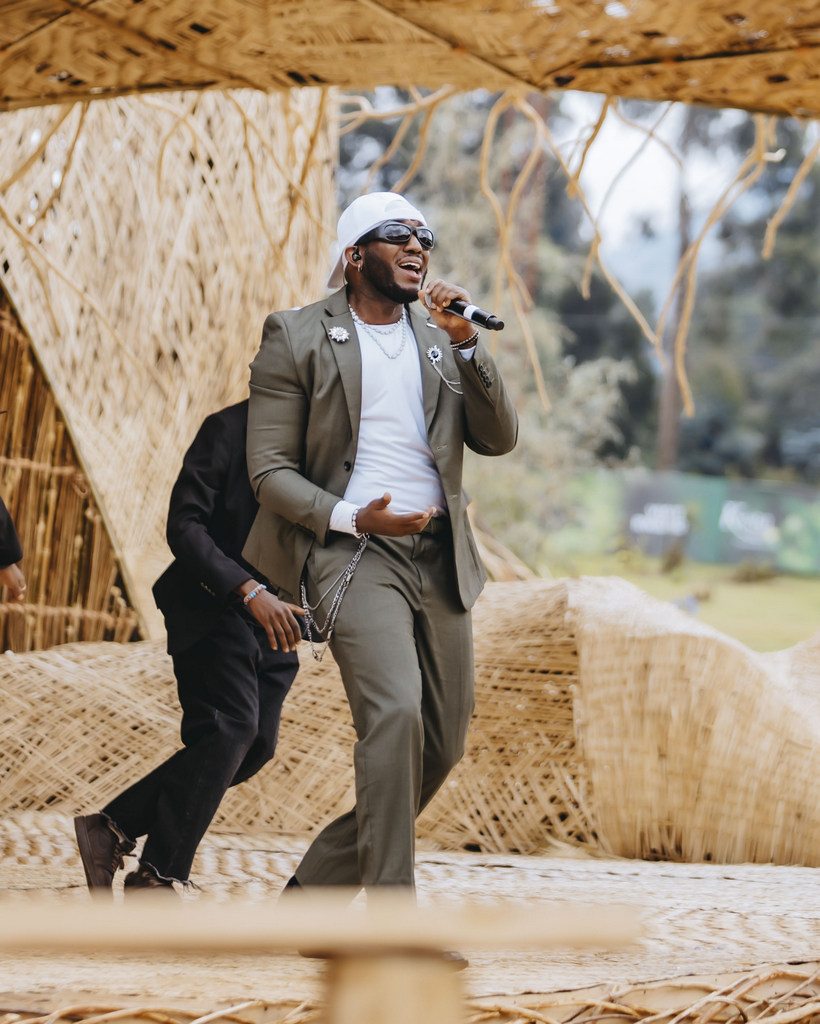
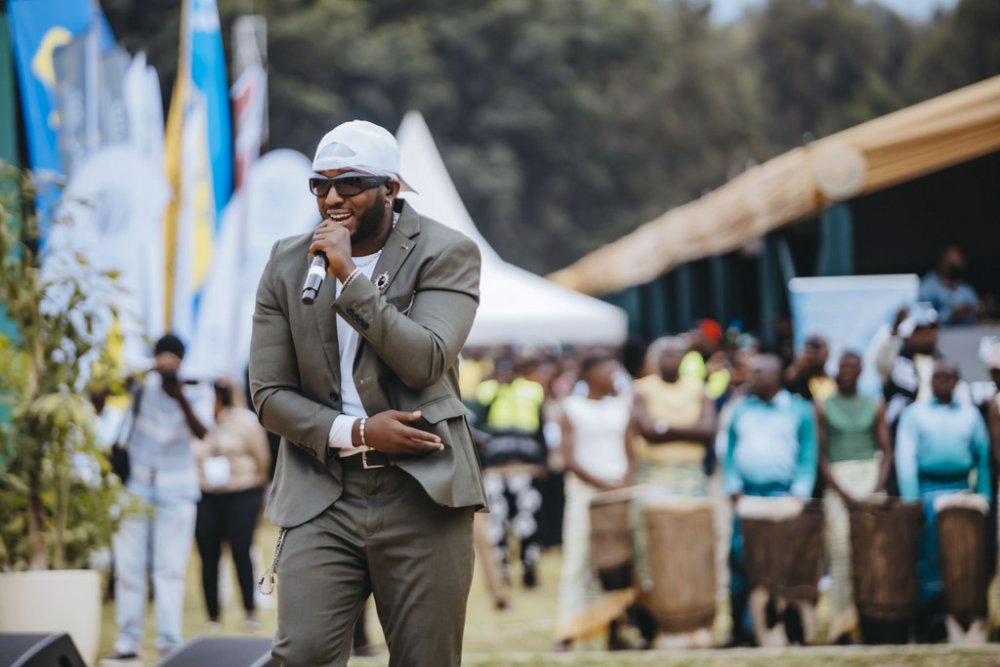
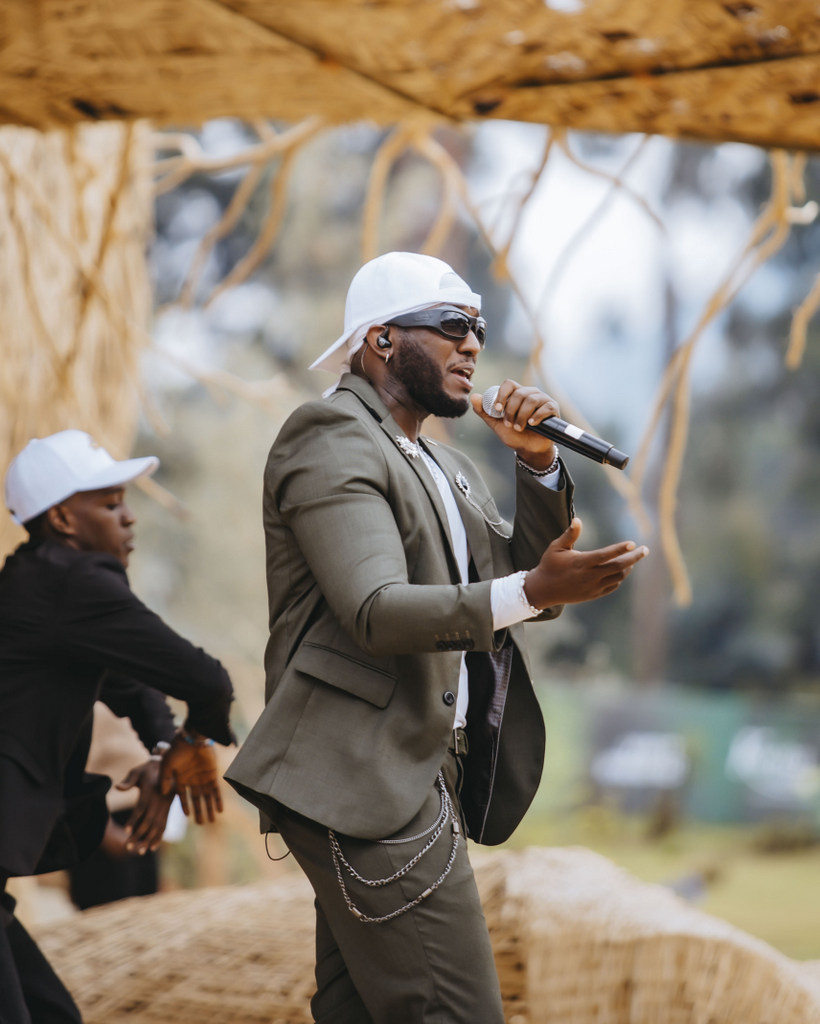
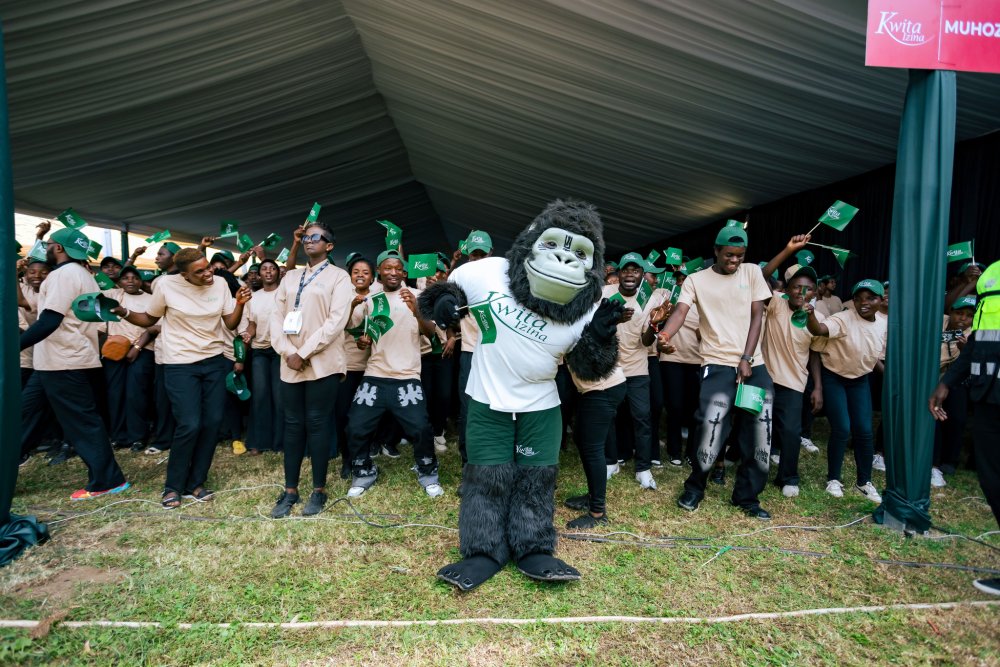
The concert, held on September 5, 2026, was part of the celebrations surrounding Rwanda’s 21st Kwita Izina Gorilla Naming Ceremony, which took place a day earlier in Kinigi, Musanze District.
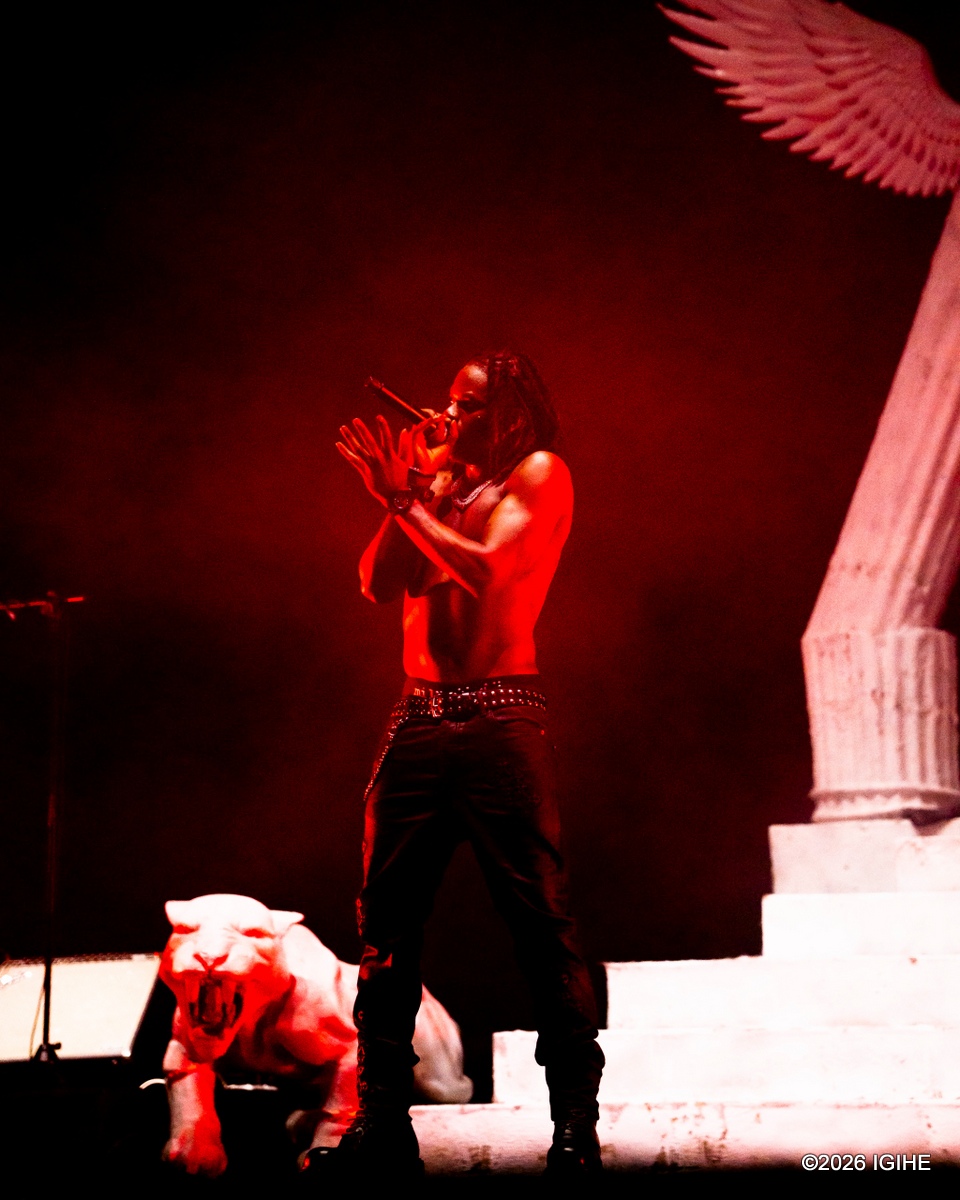
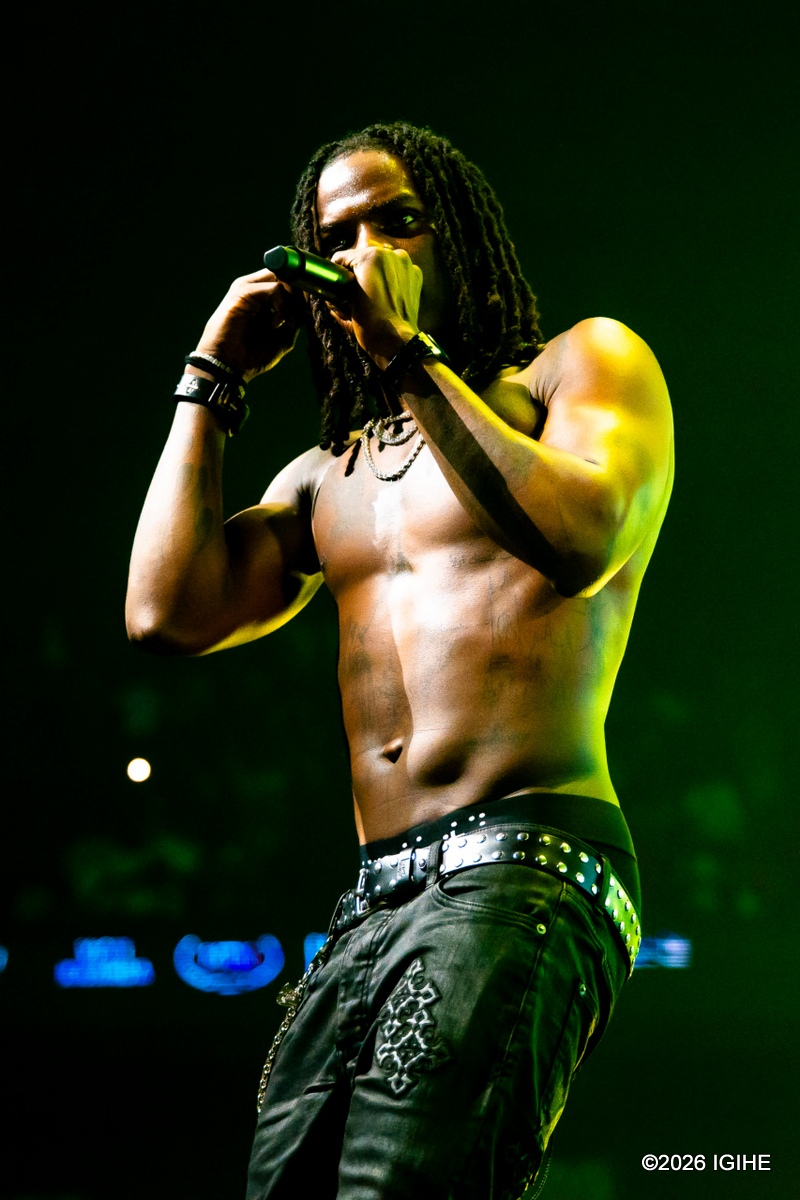
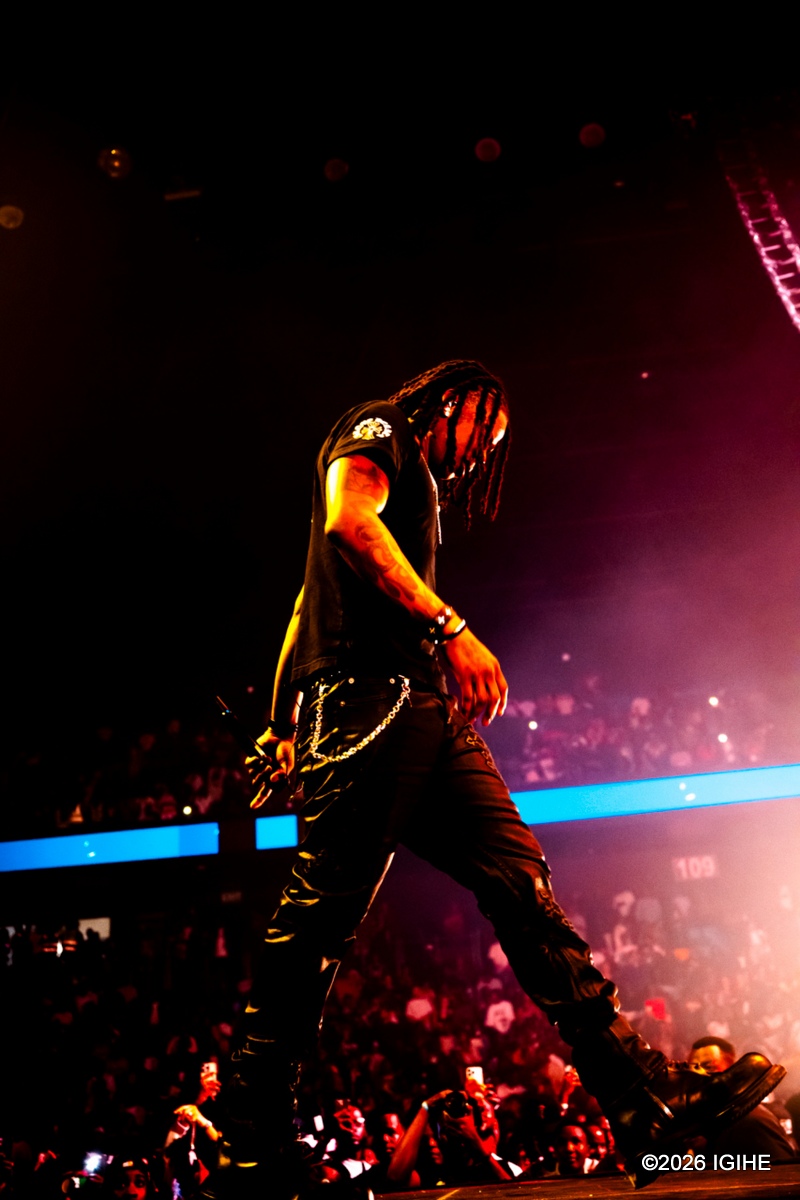
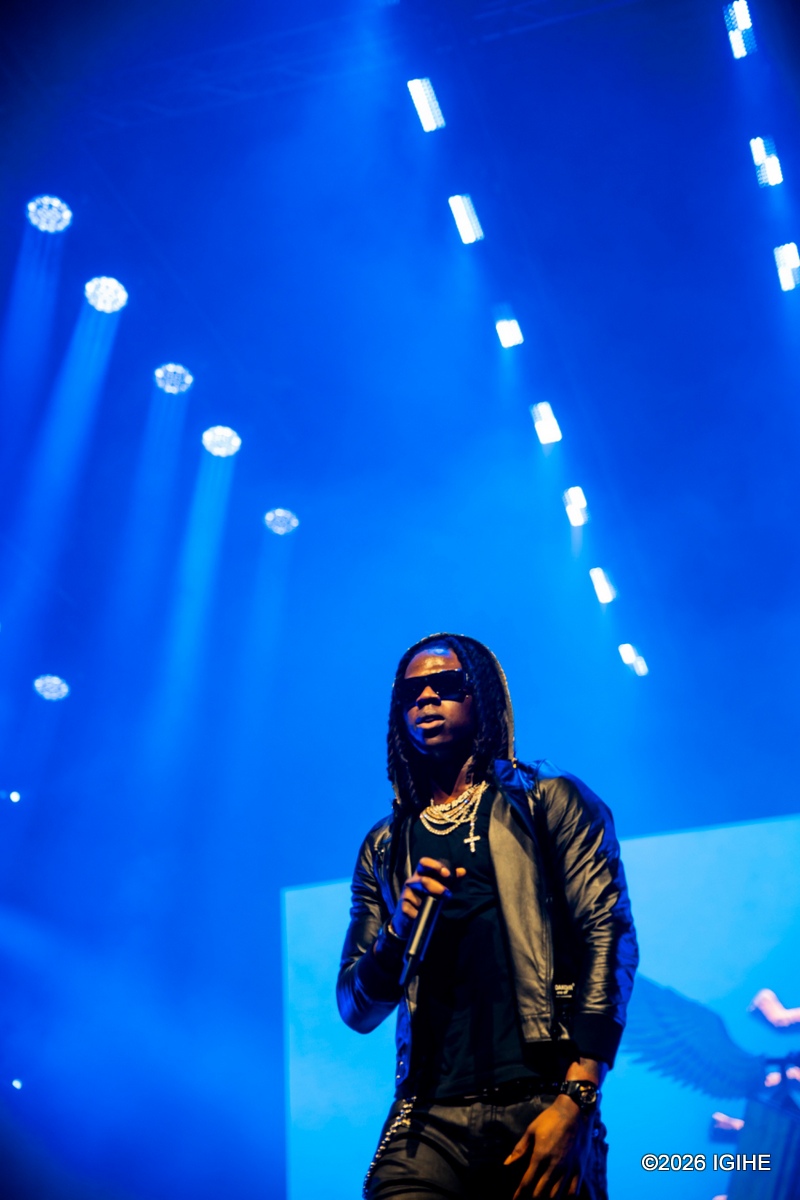
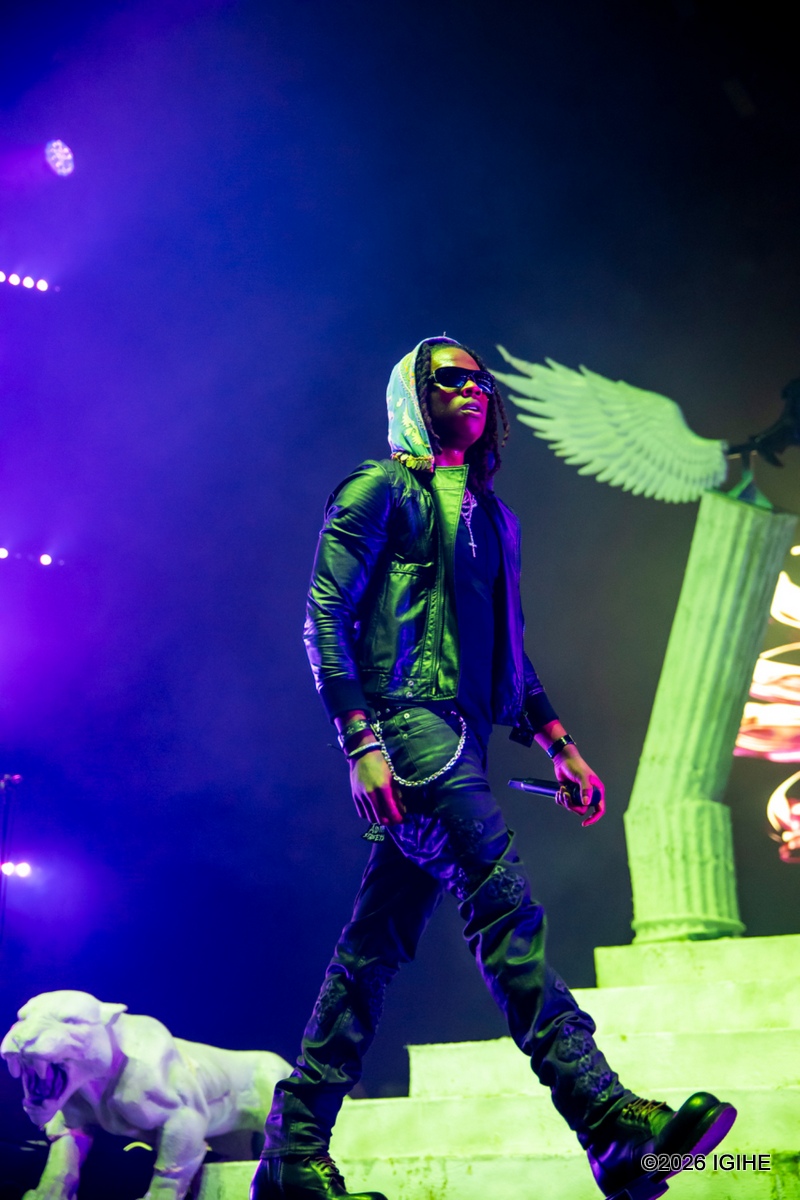
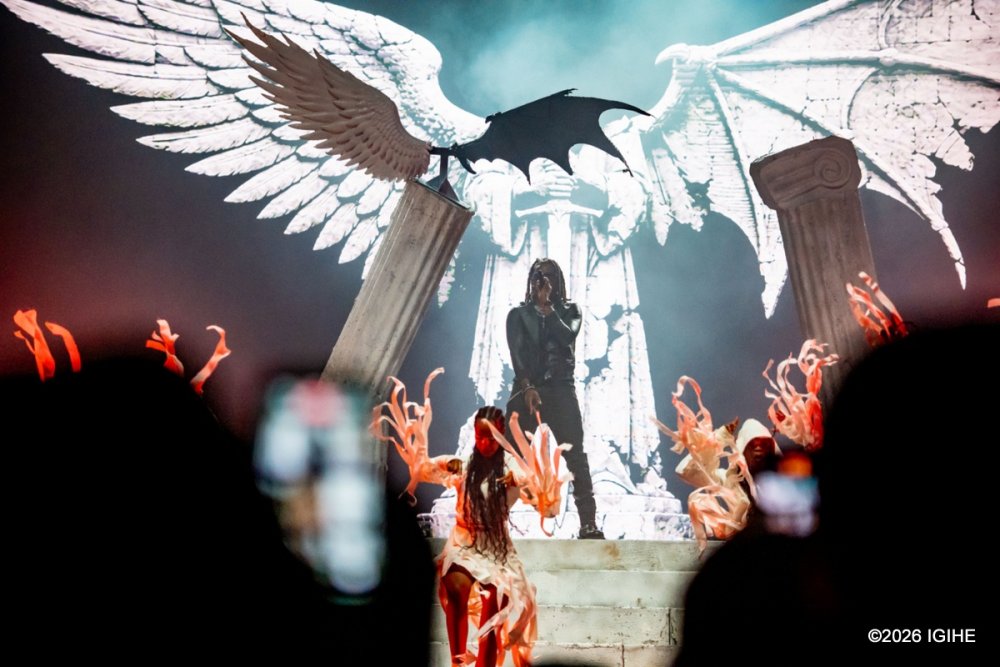
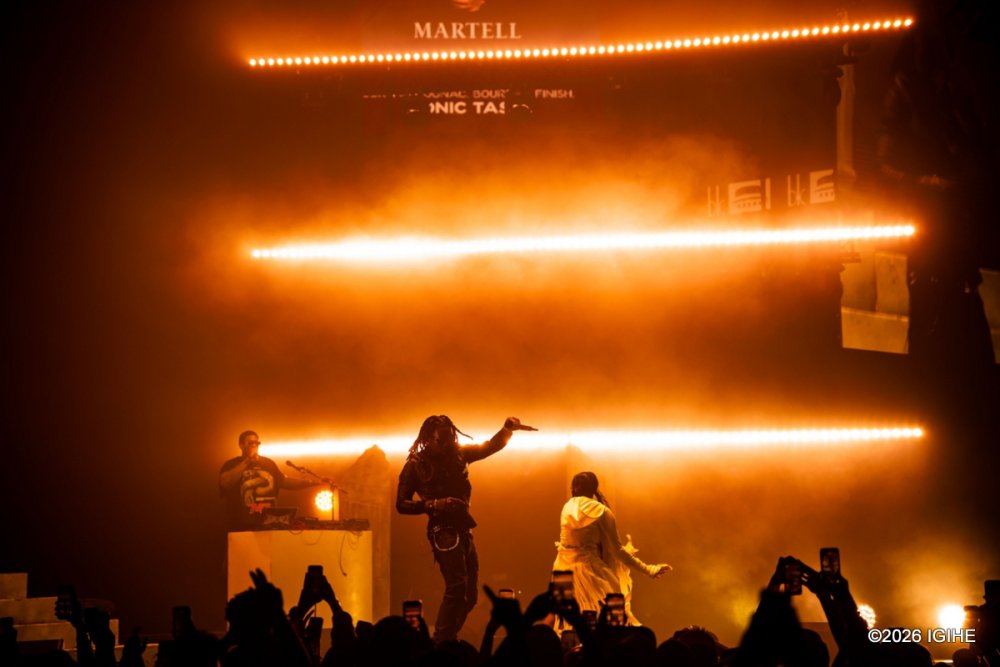
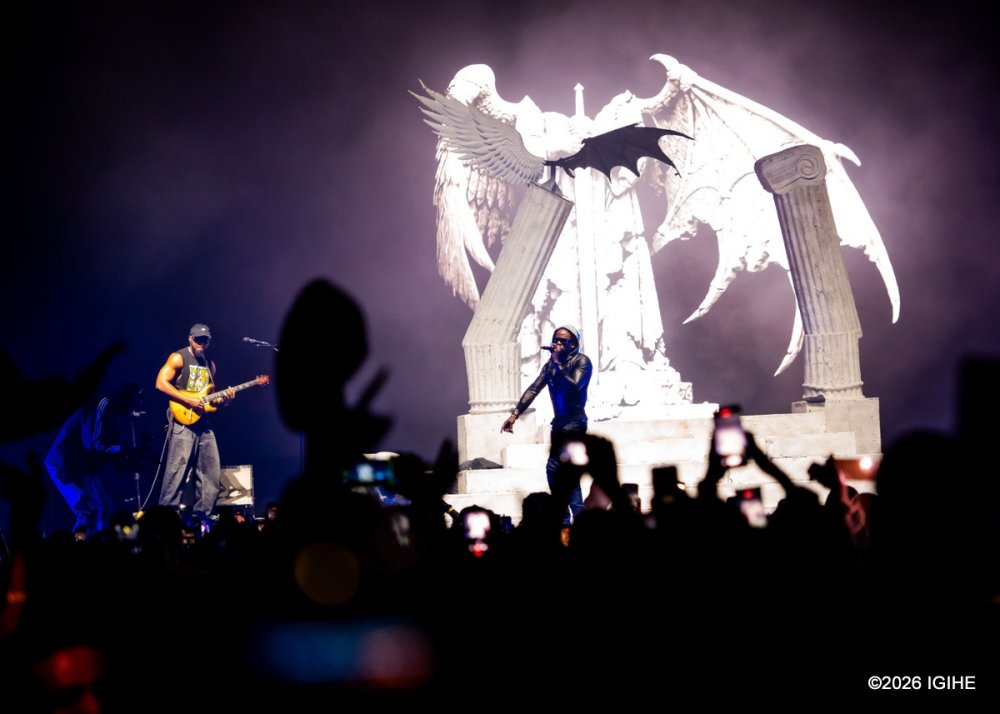
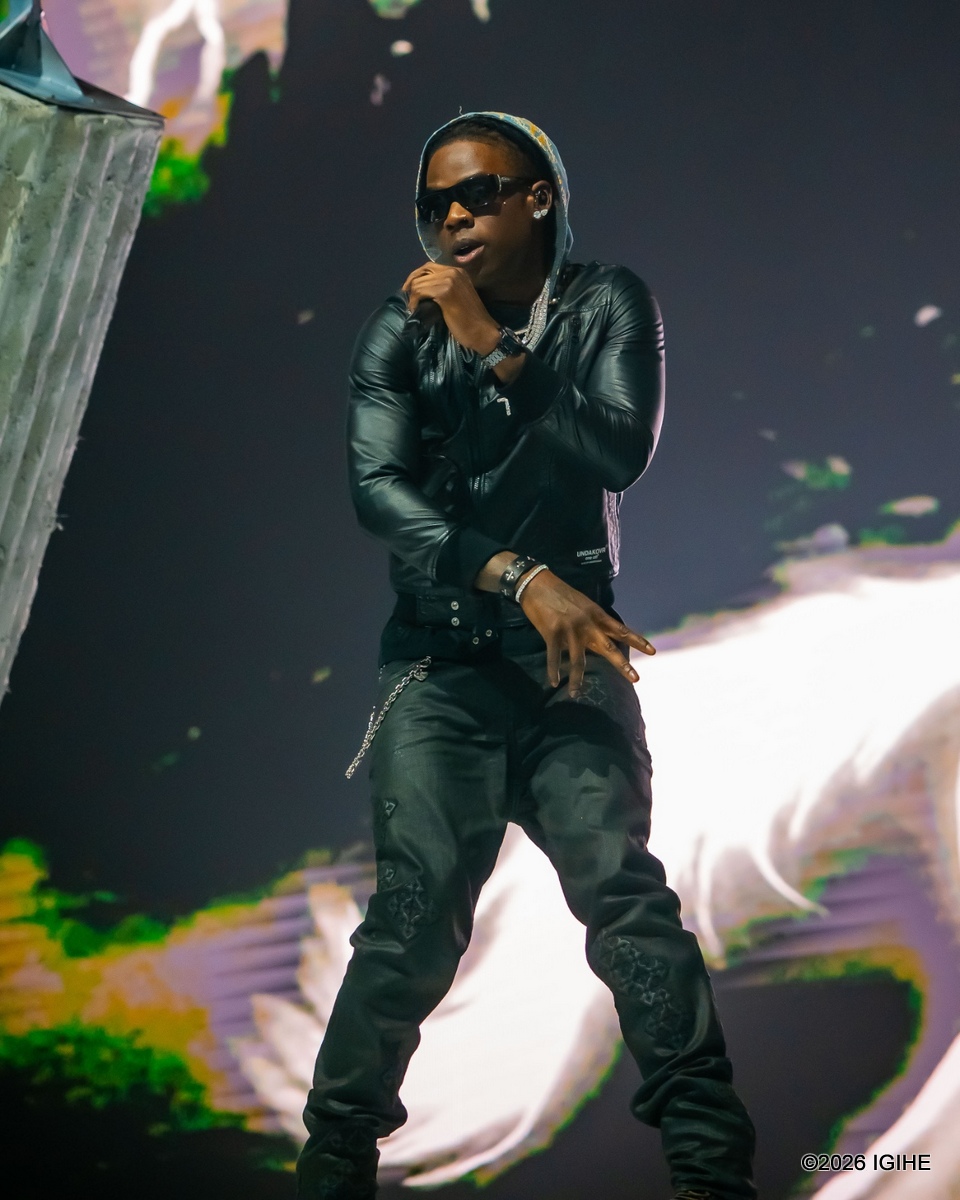
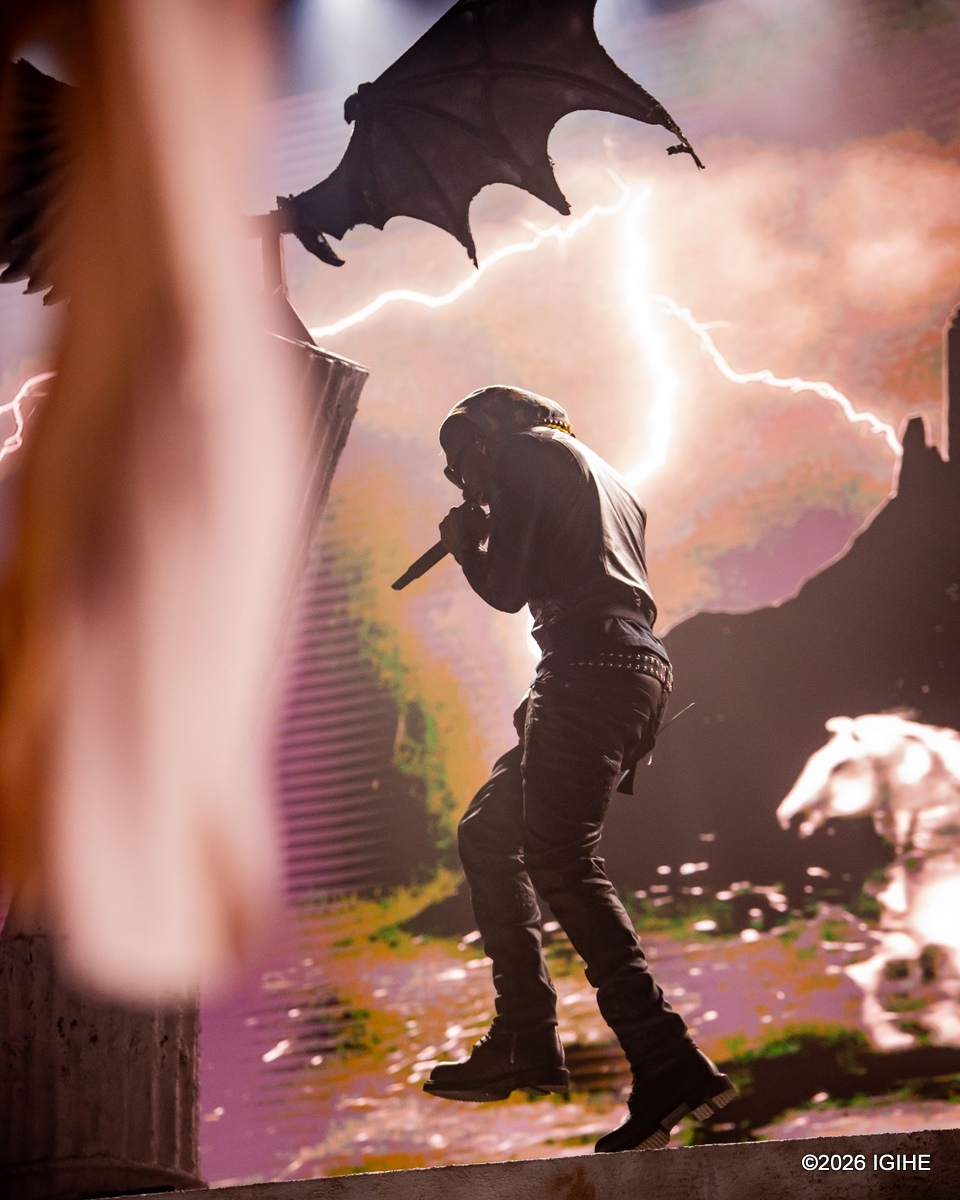
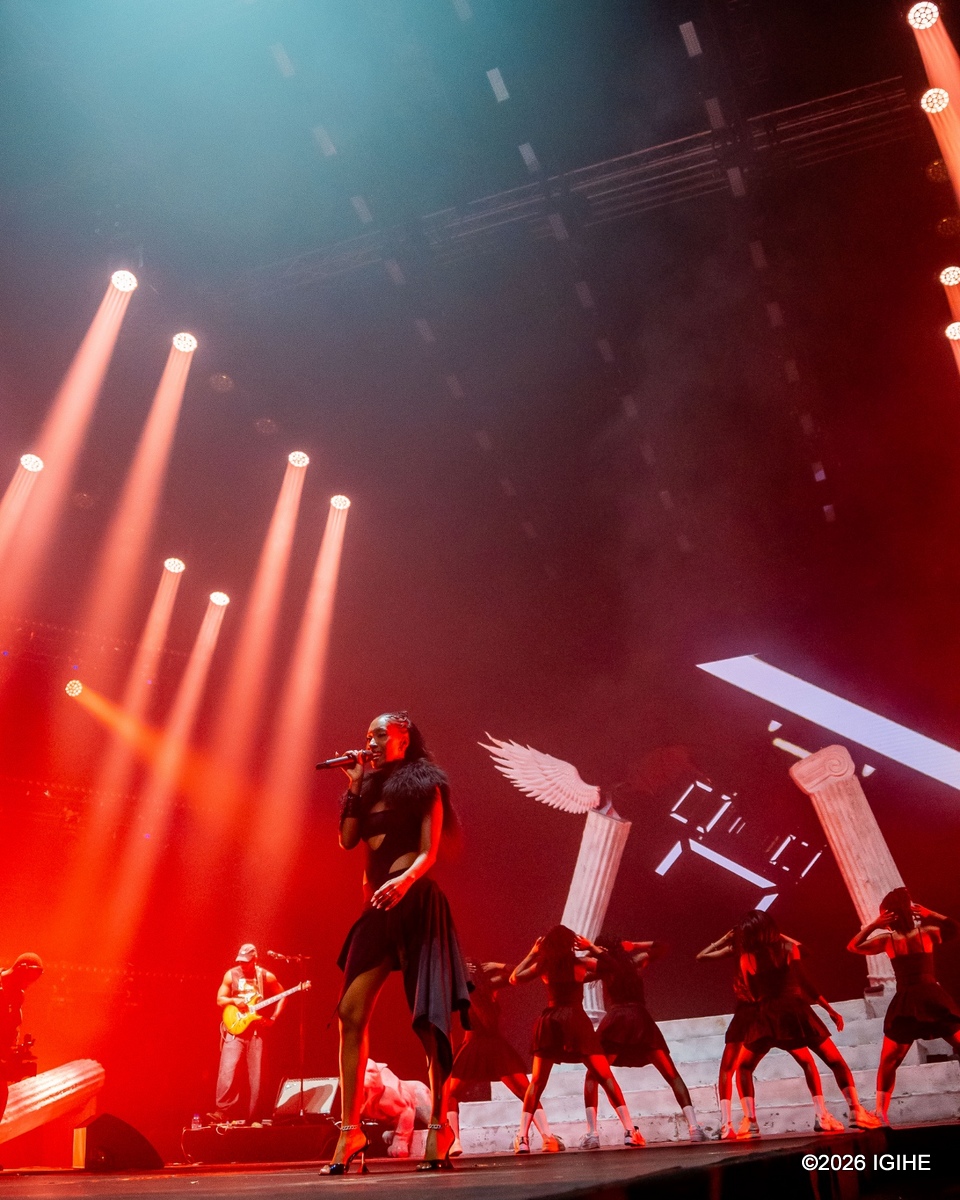
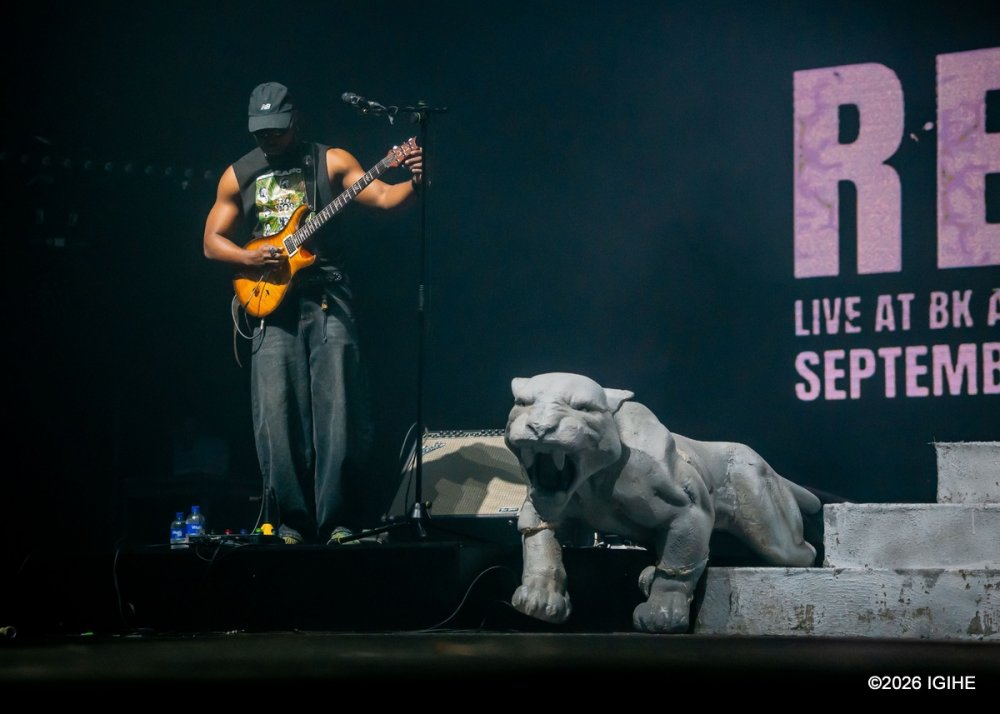
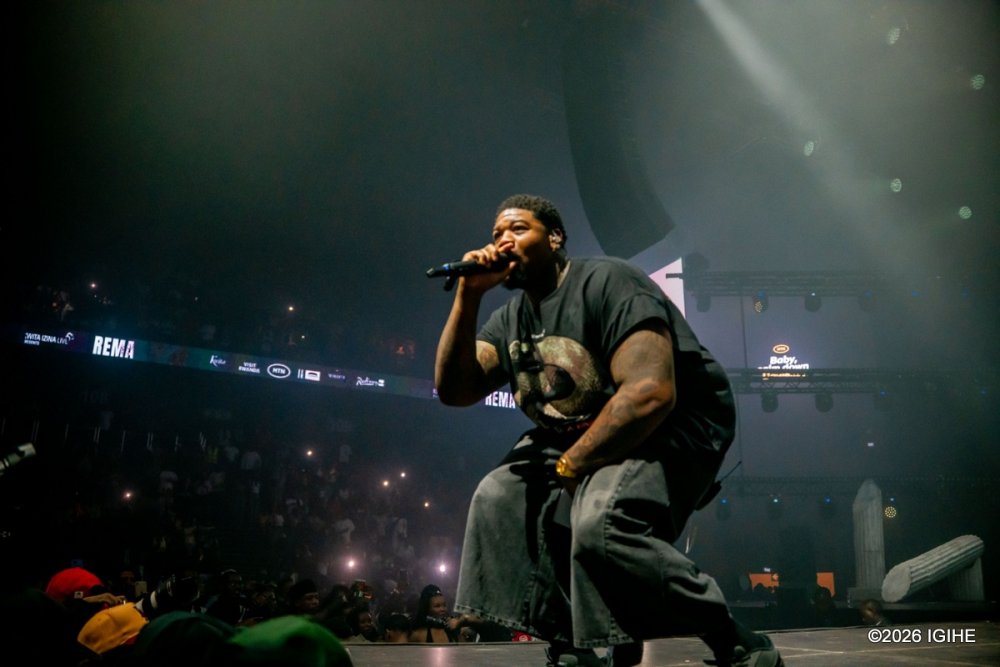
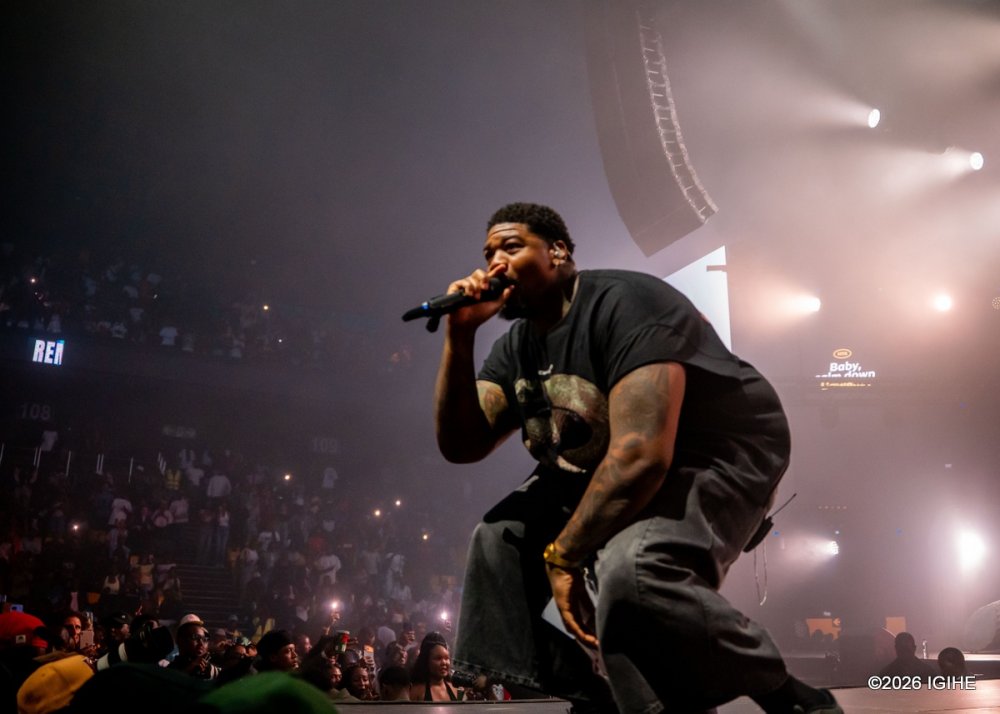
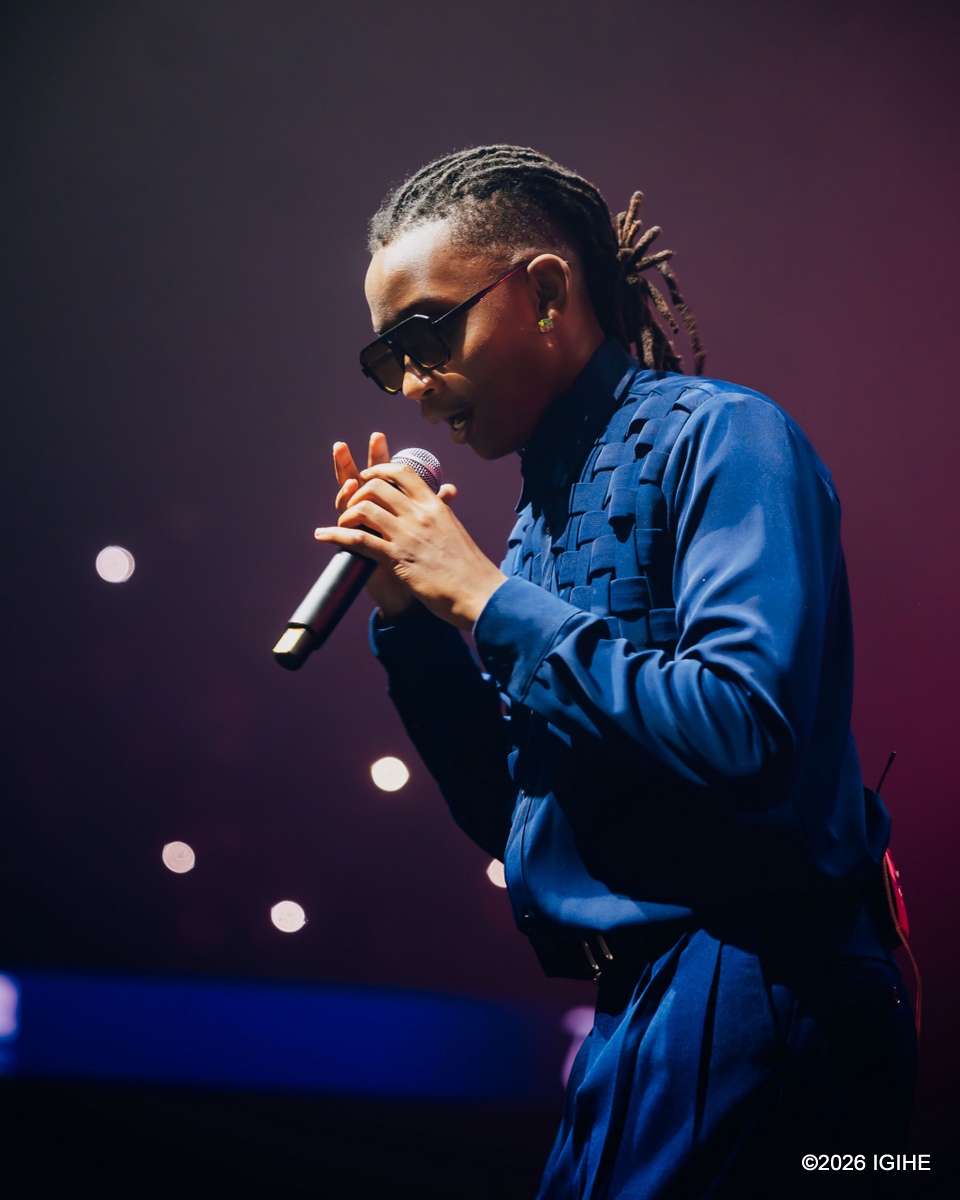
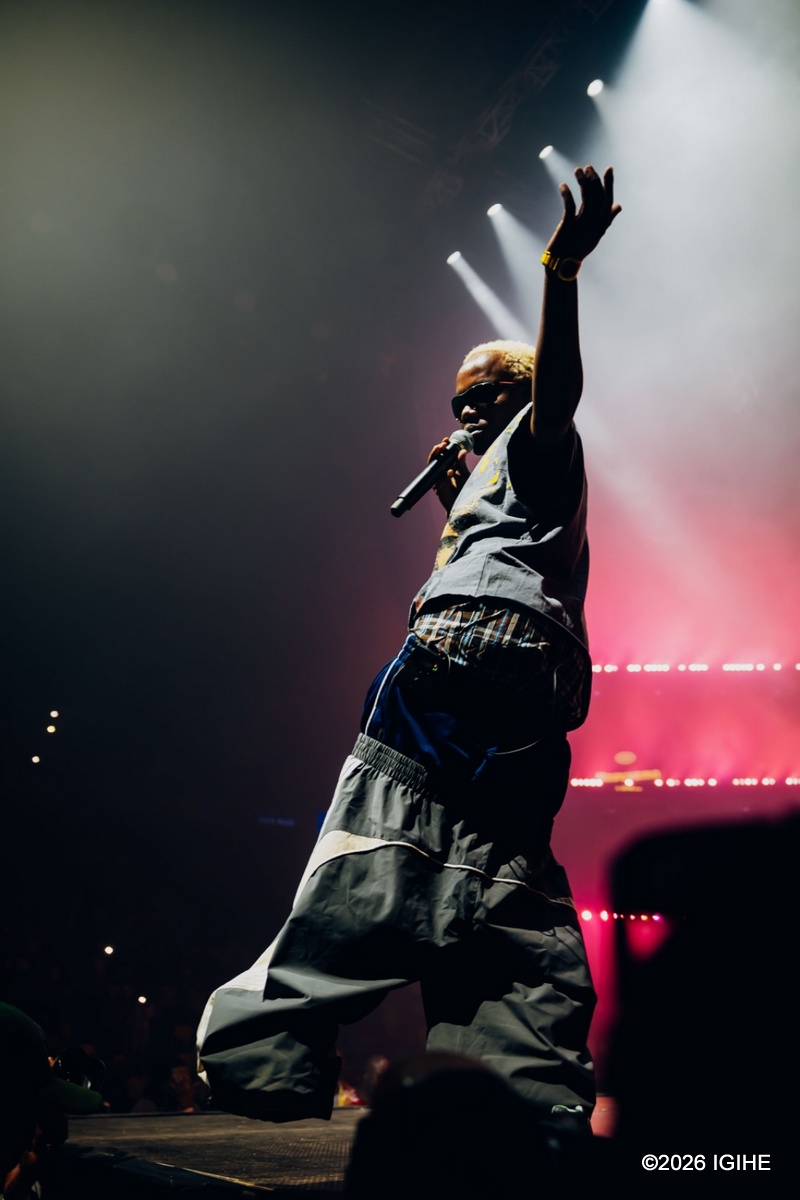
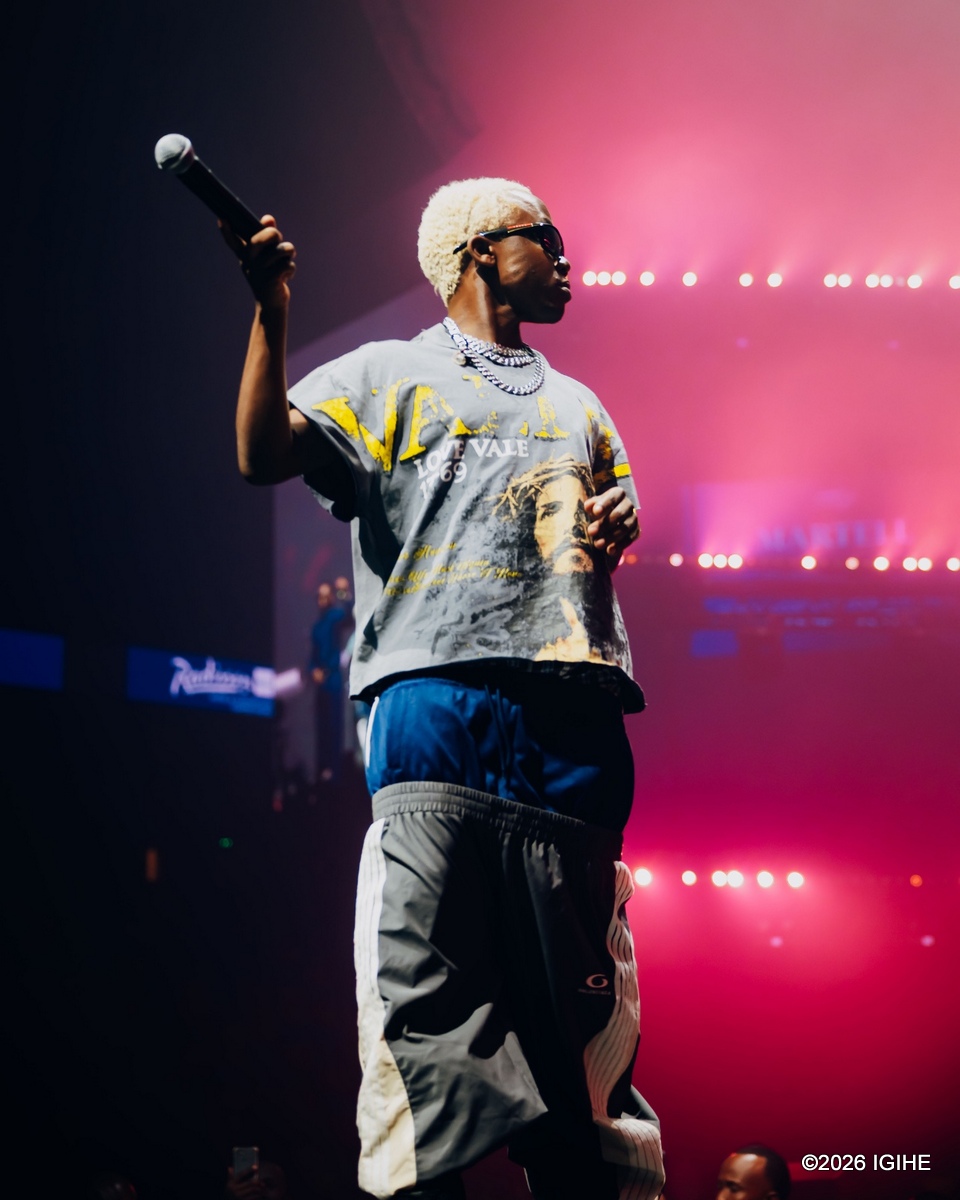
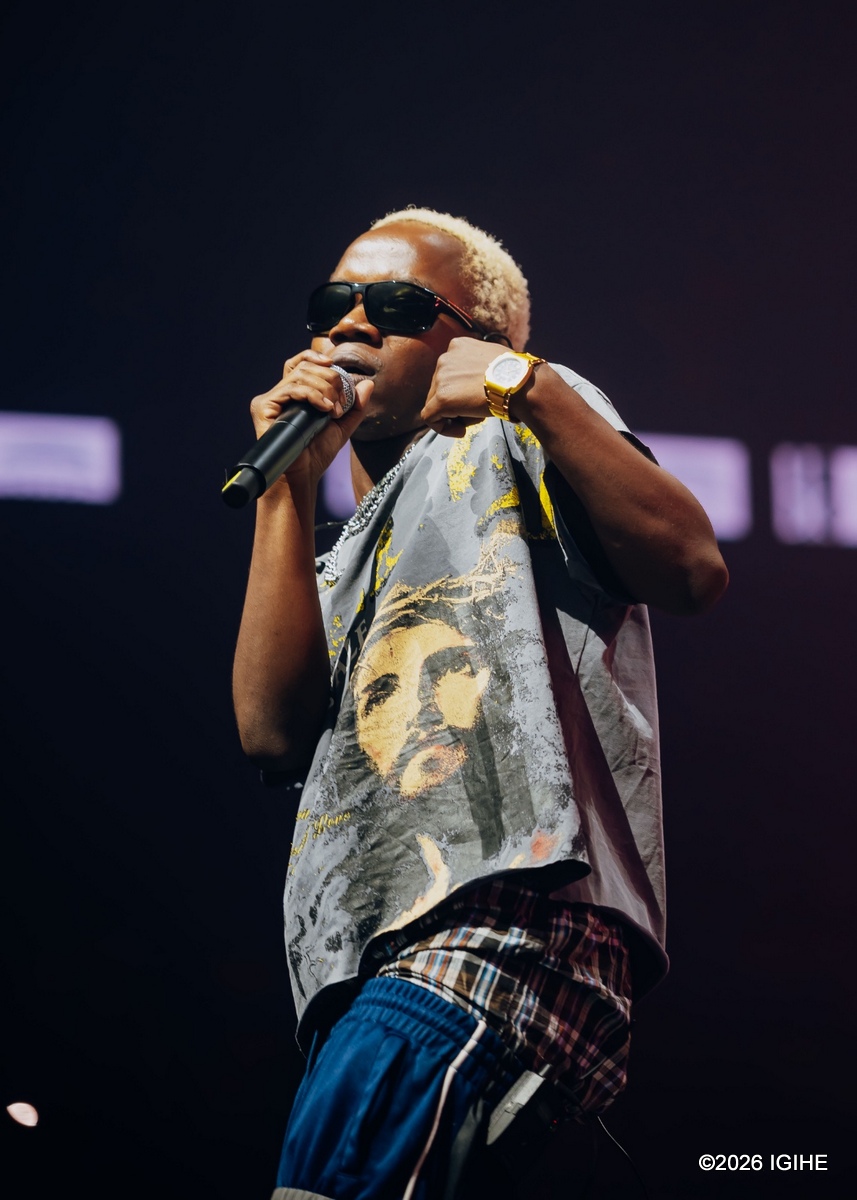
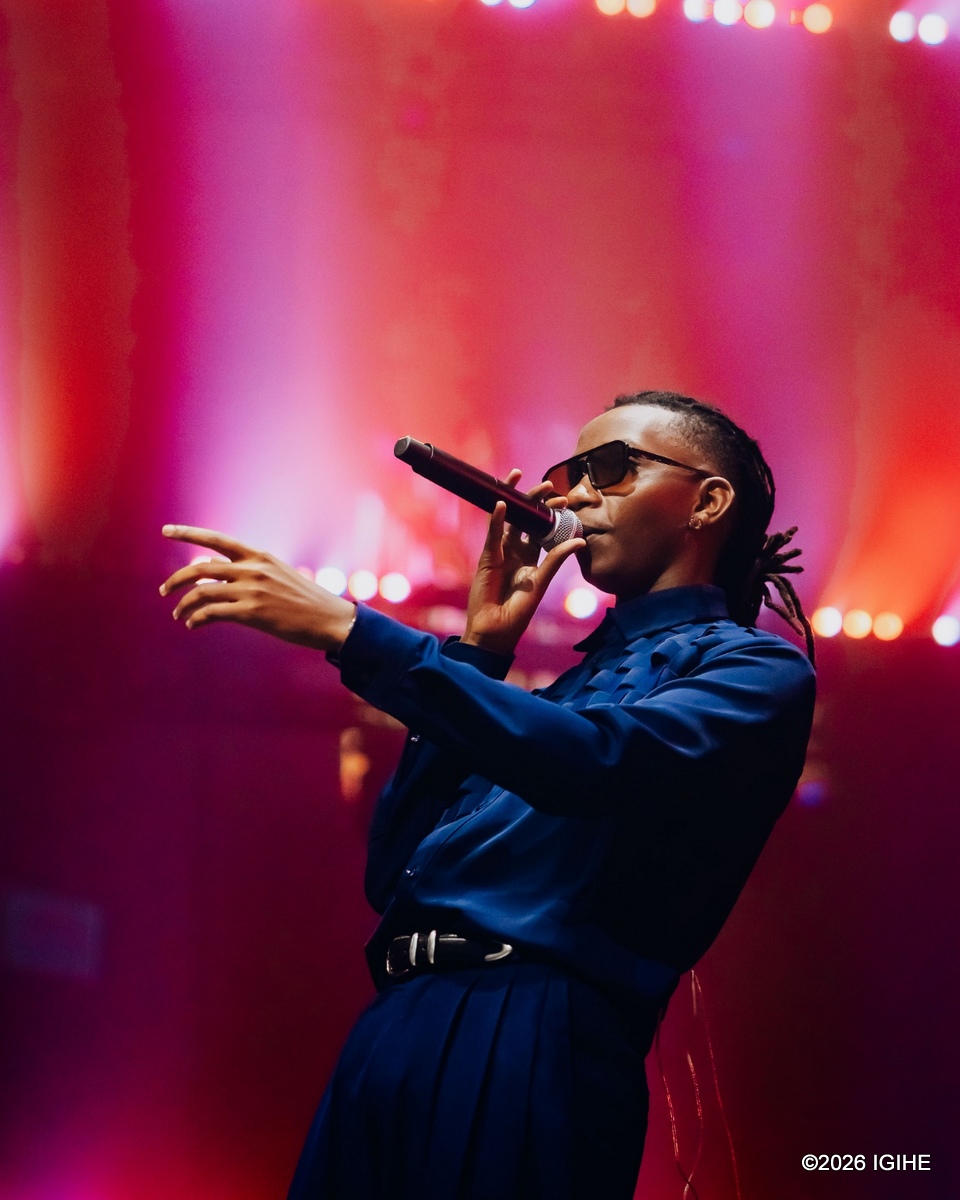
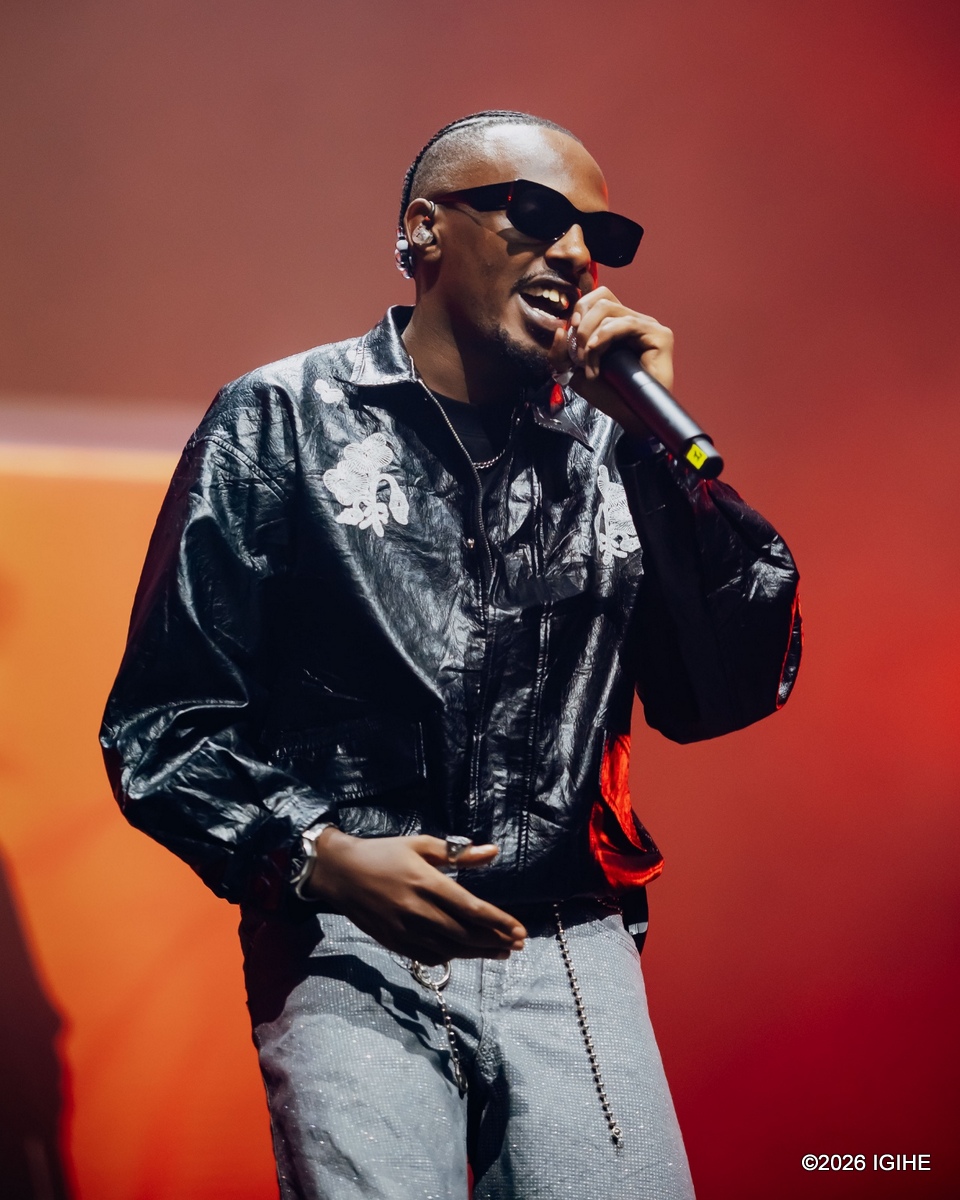
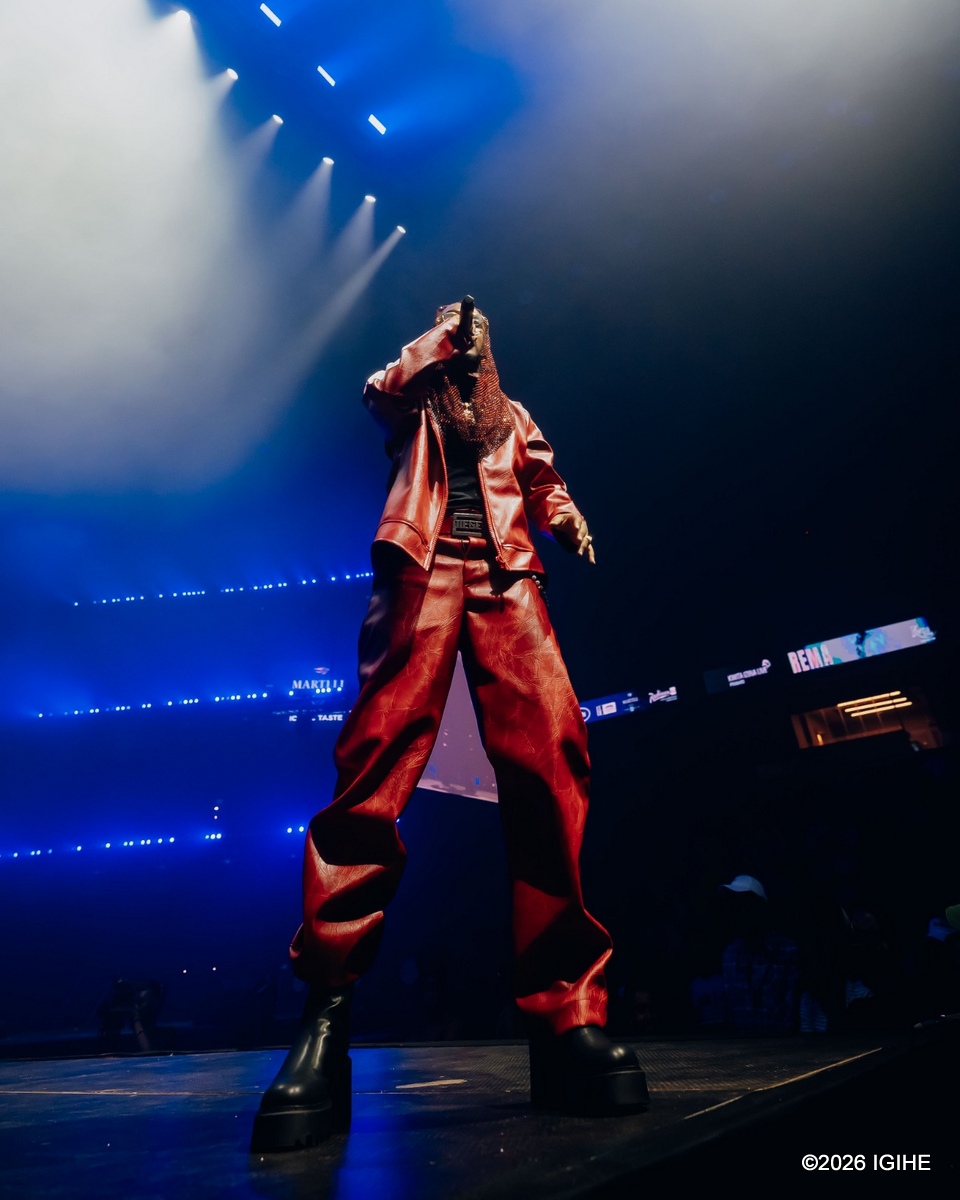
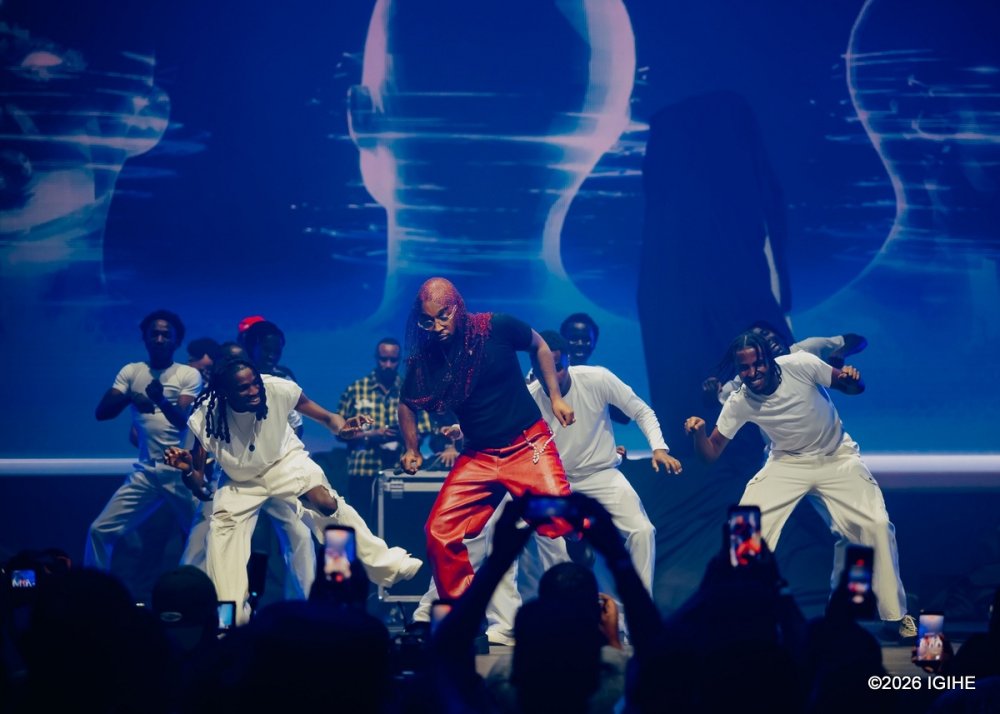
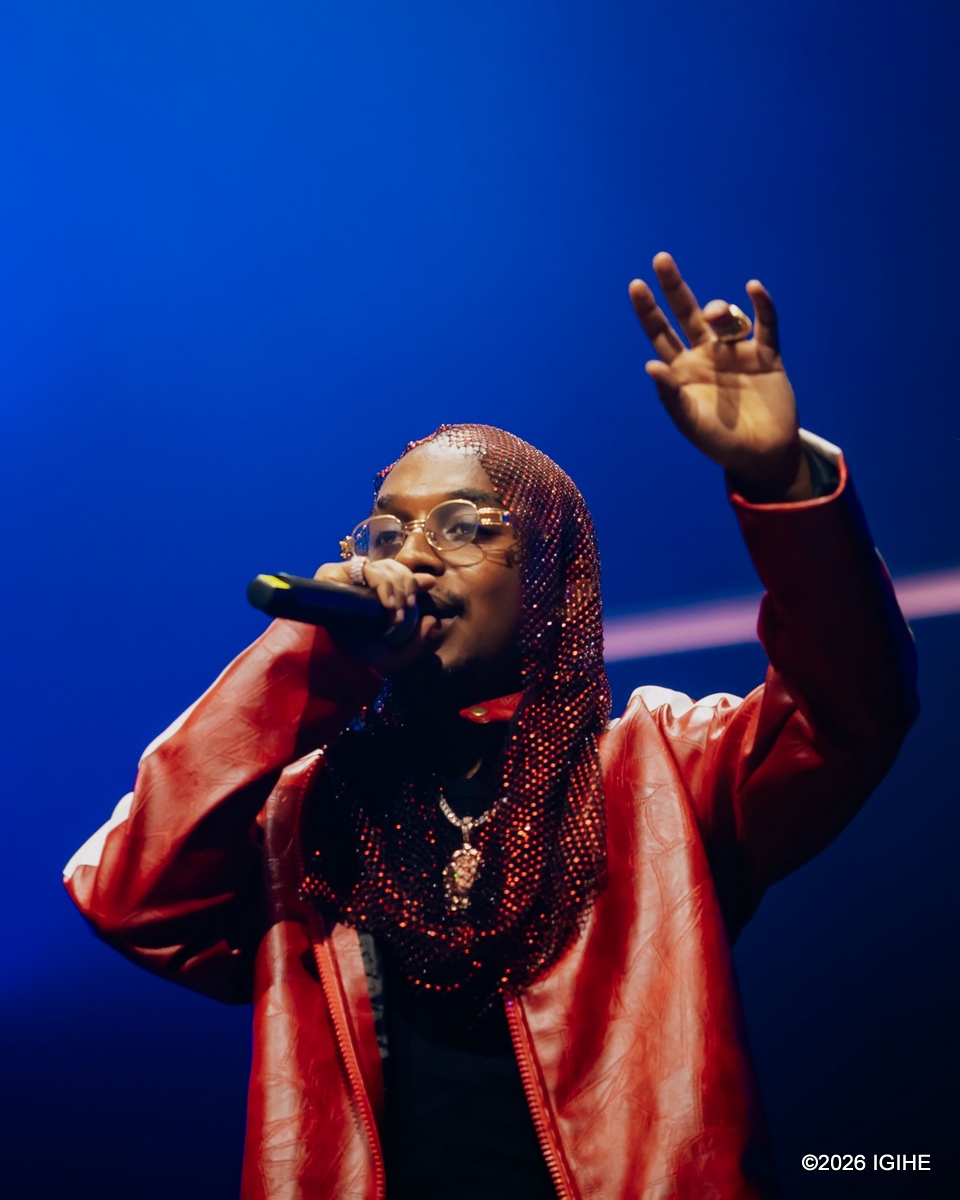
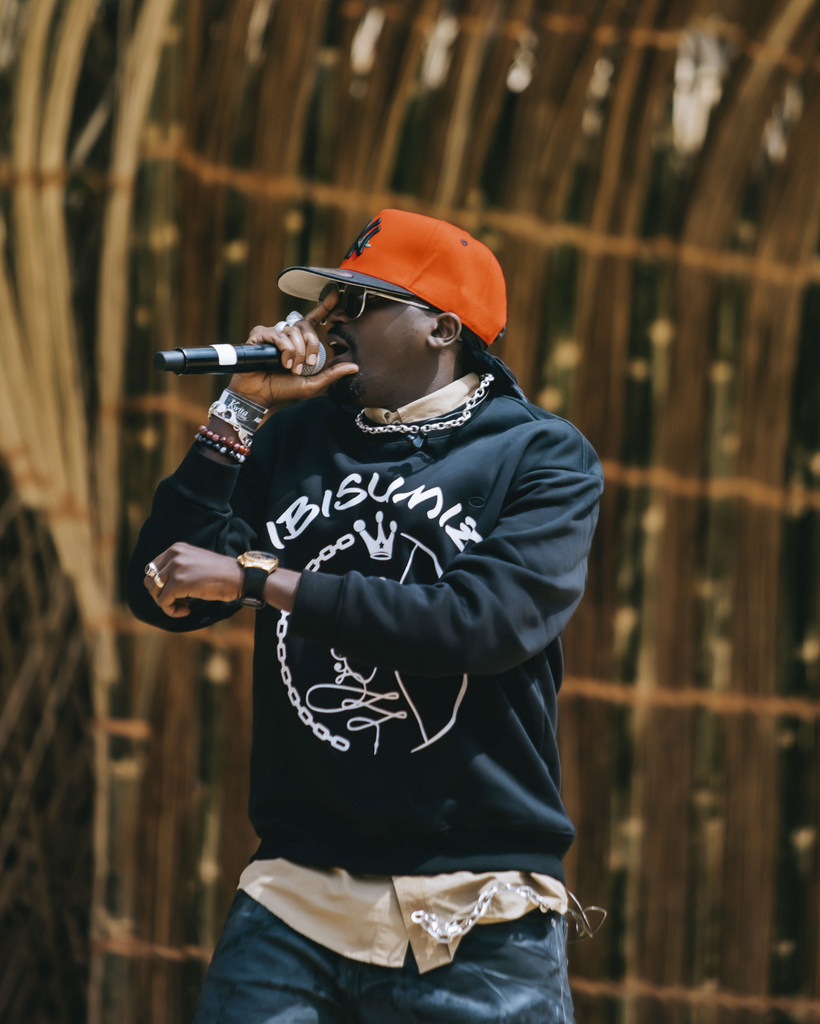
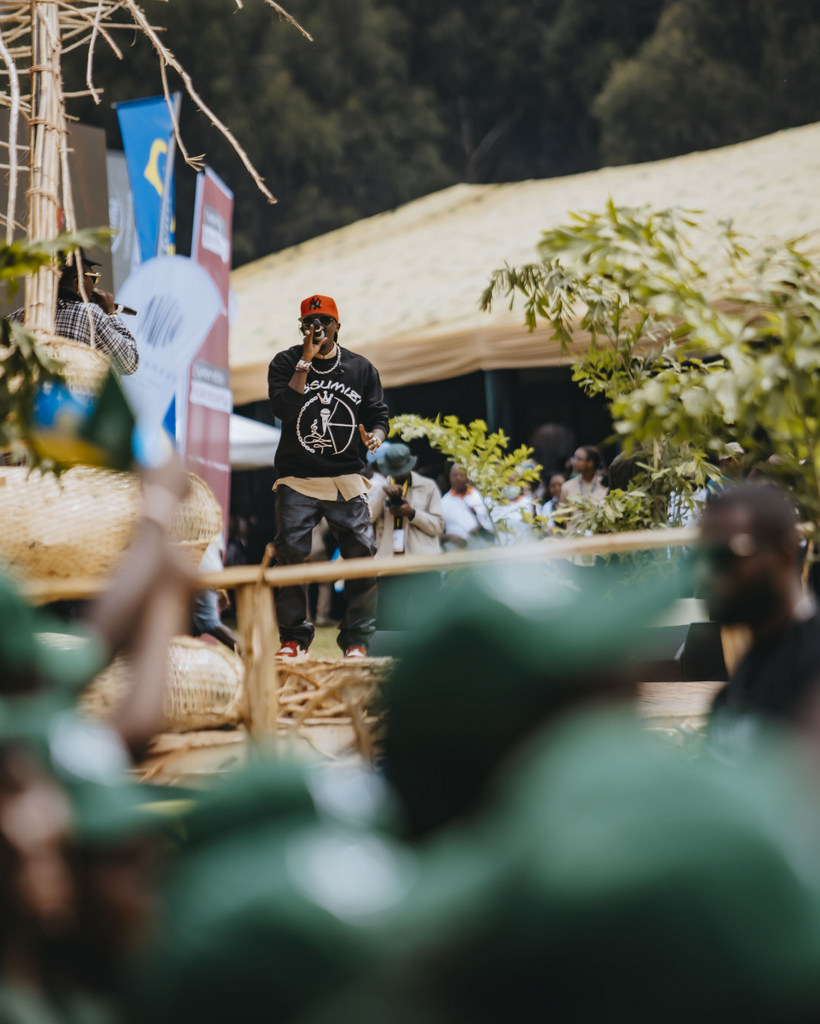
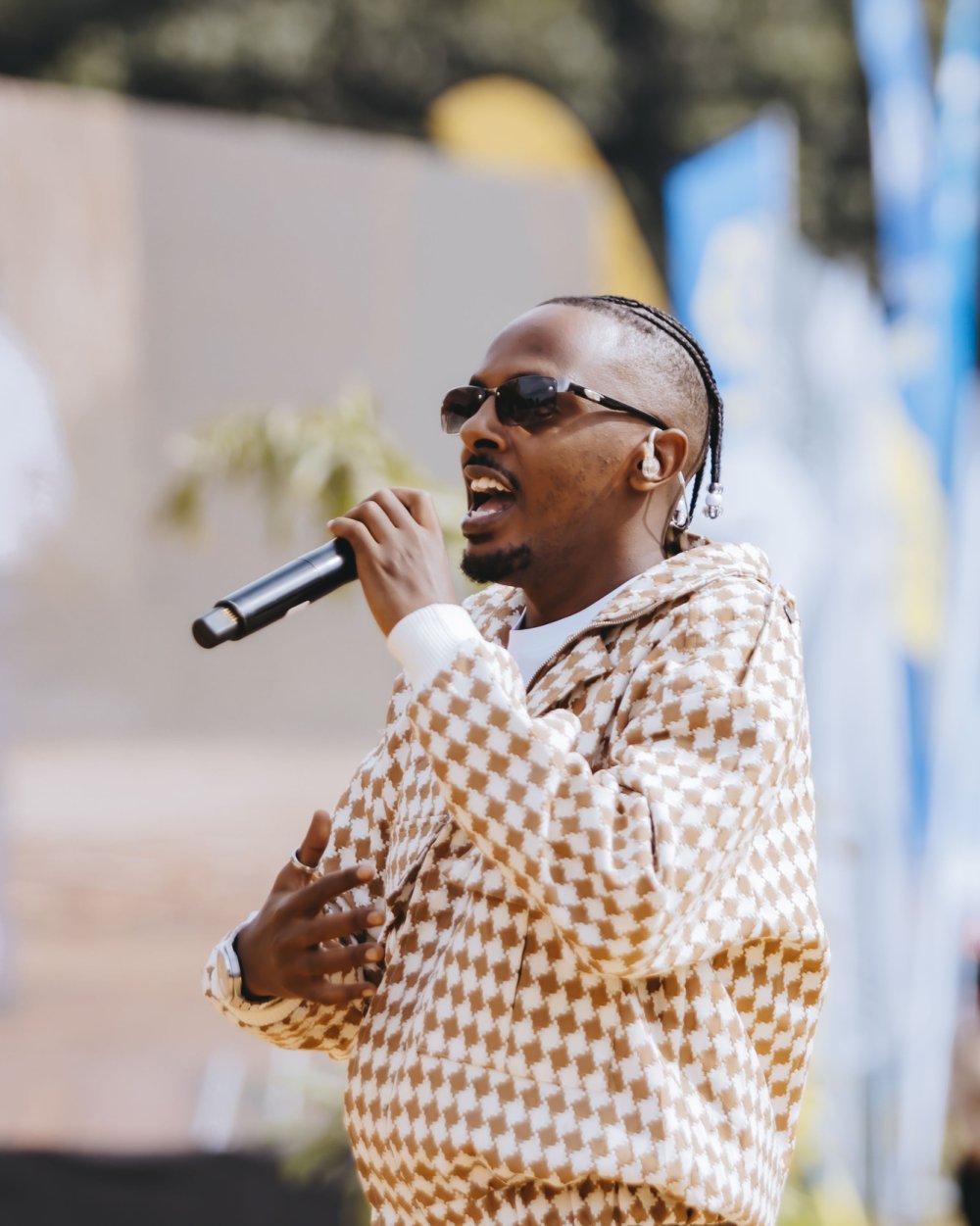
Rema, one of the biggest names in contemporary Afrobeats, headlined the concert and performed for about an hour and 20 minutes, taking fans through some of his biggest hits, including “Calm Down”, “Dumebi”, “Charm”, “Azaman”, “Bounce”, “Holiday”, “Soweto”, “Fun” and “Ozeba”.
The concert was part of the celebrations surrounding Rwanda’s 21st Kwita Izina Gorilla Naming Ceremony.
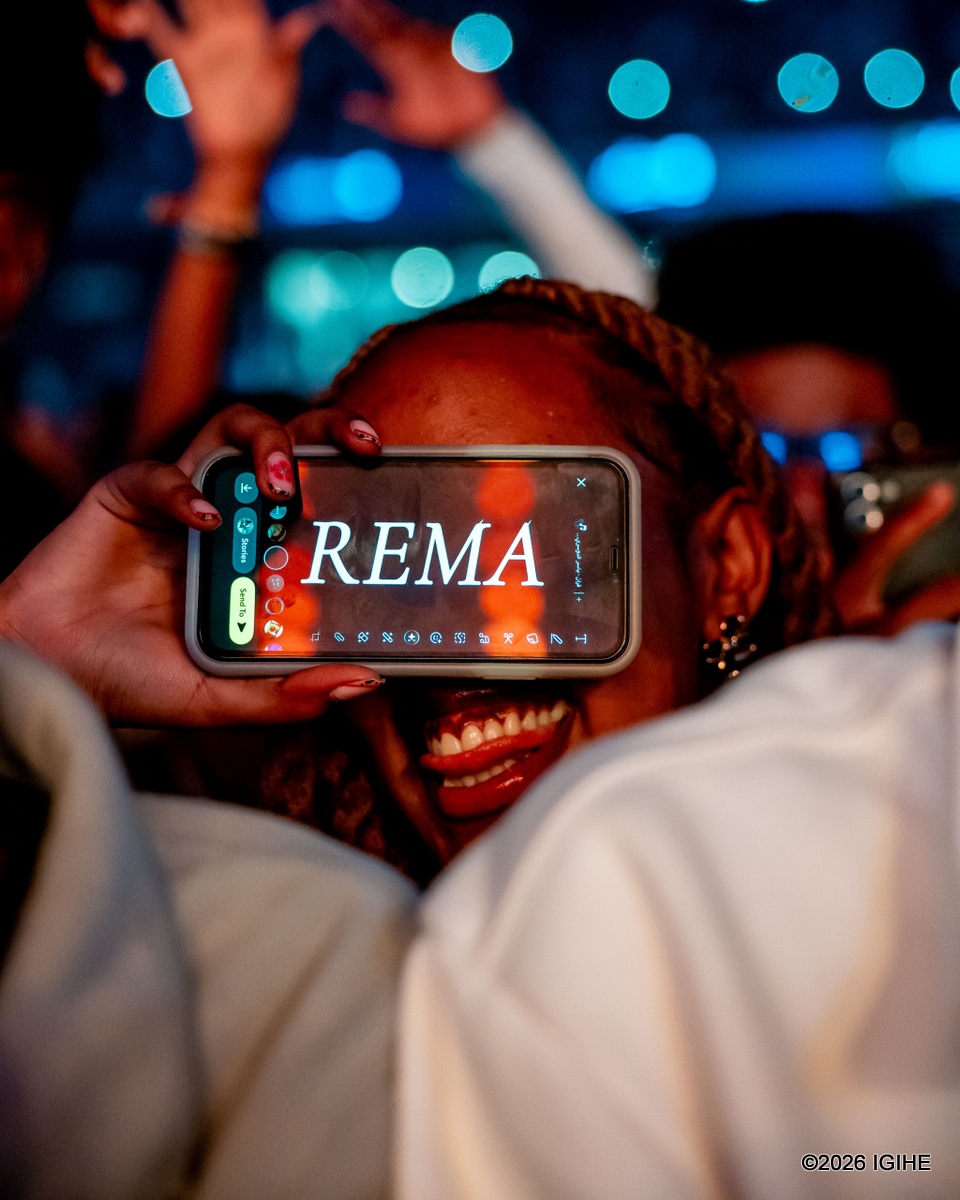
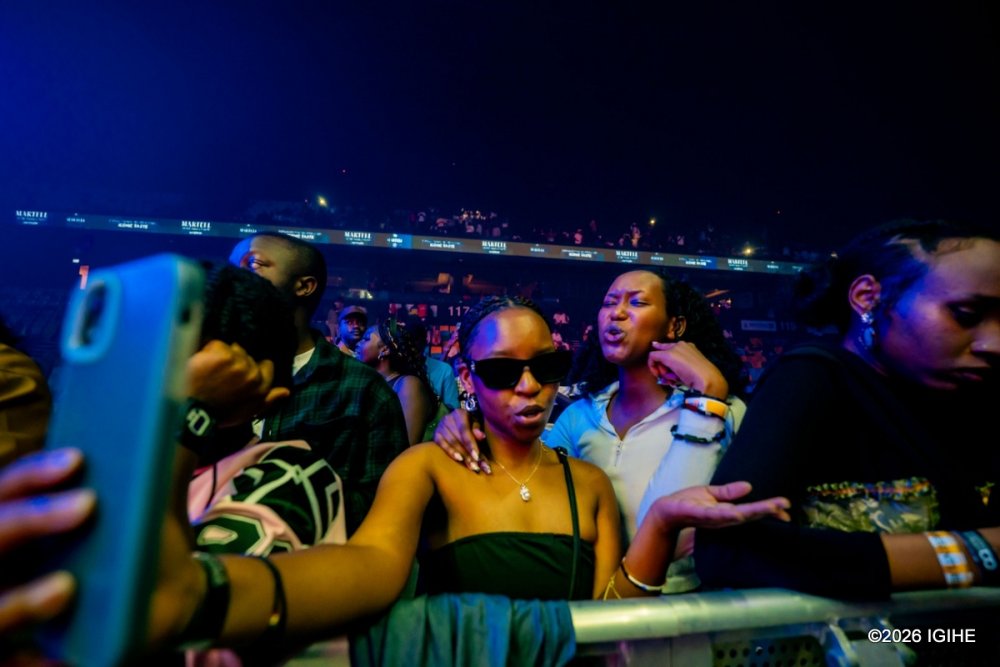
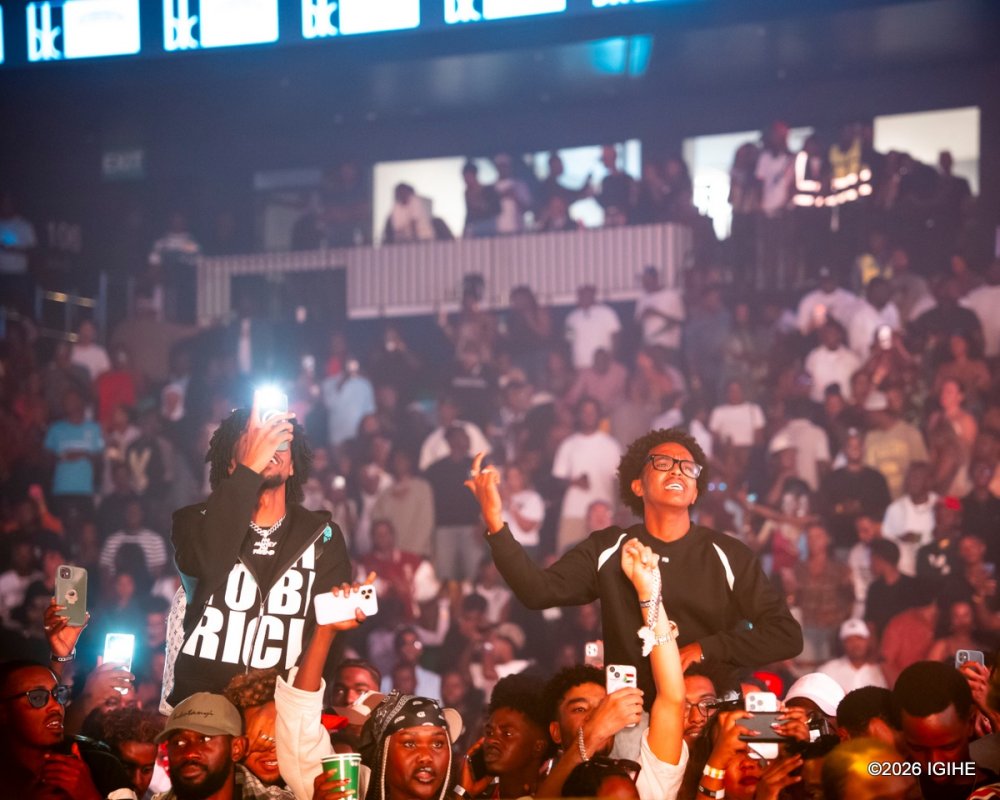
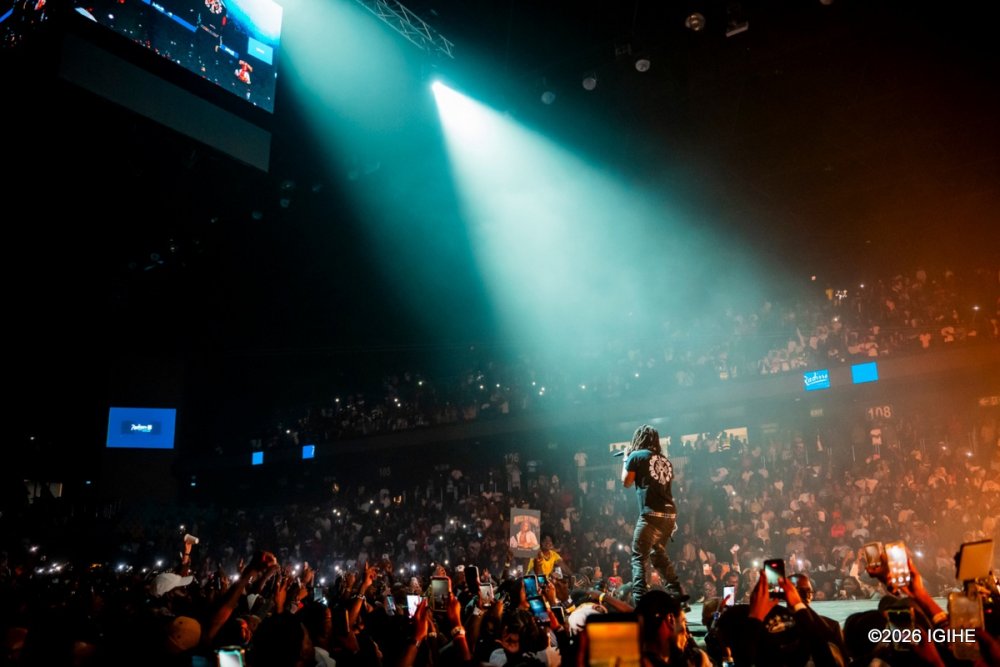
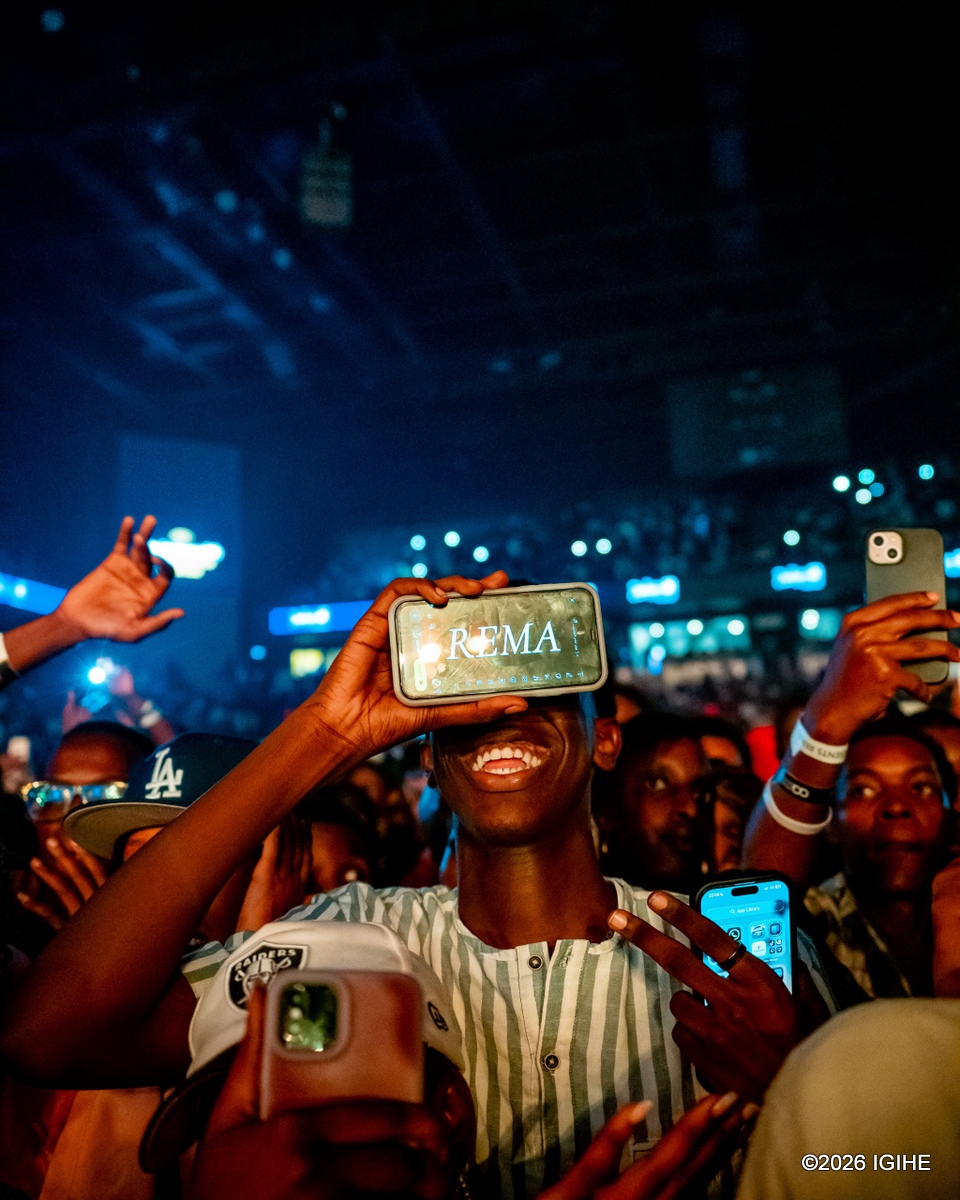
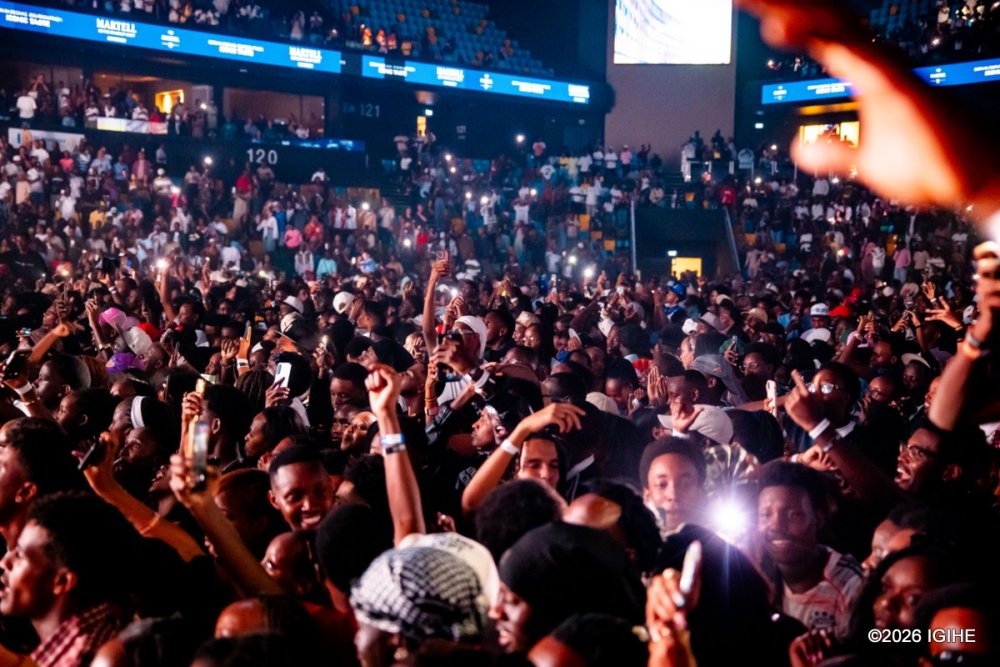
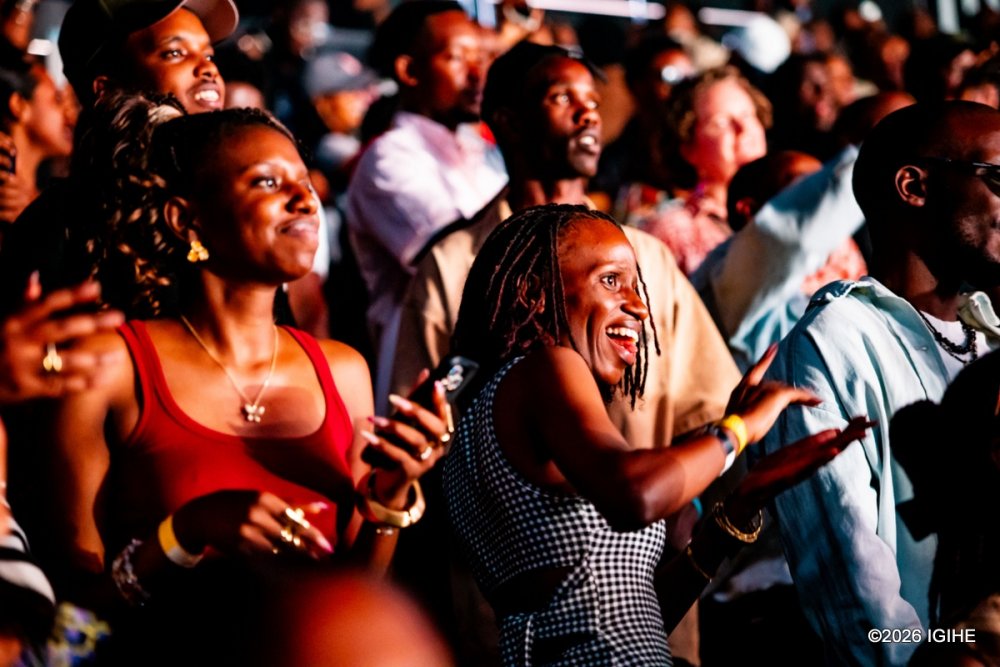
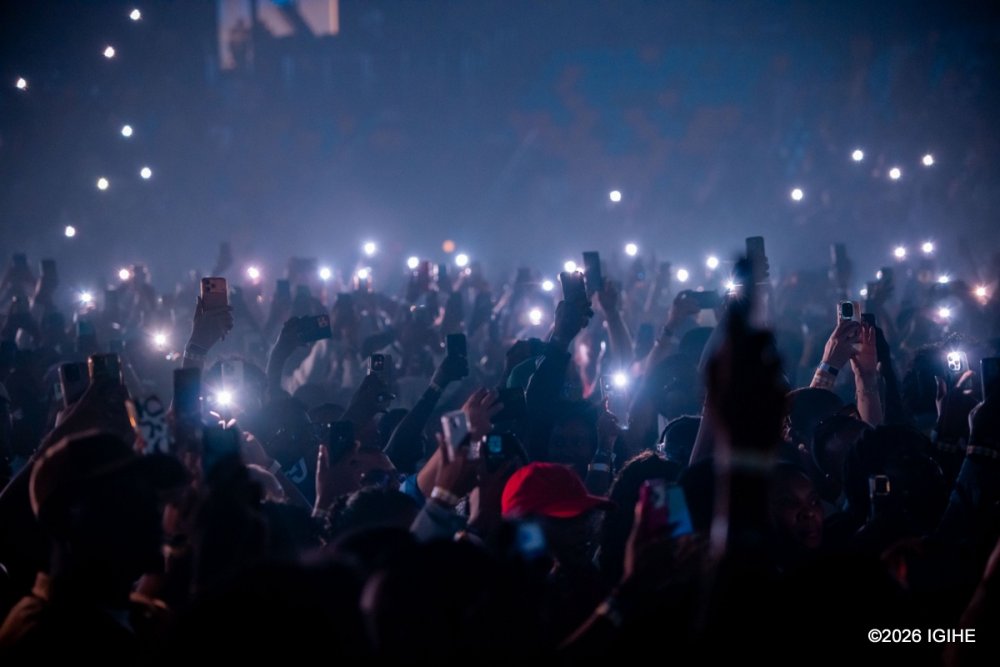
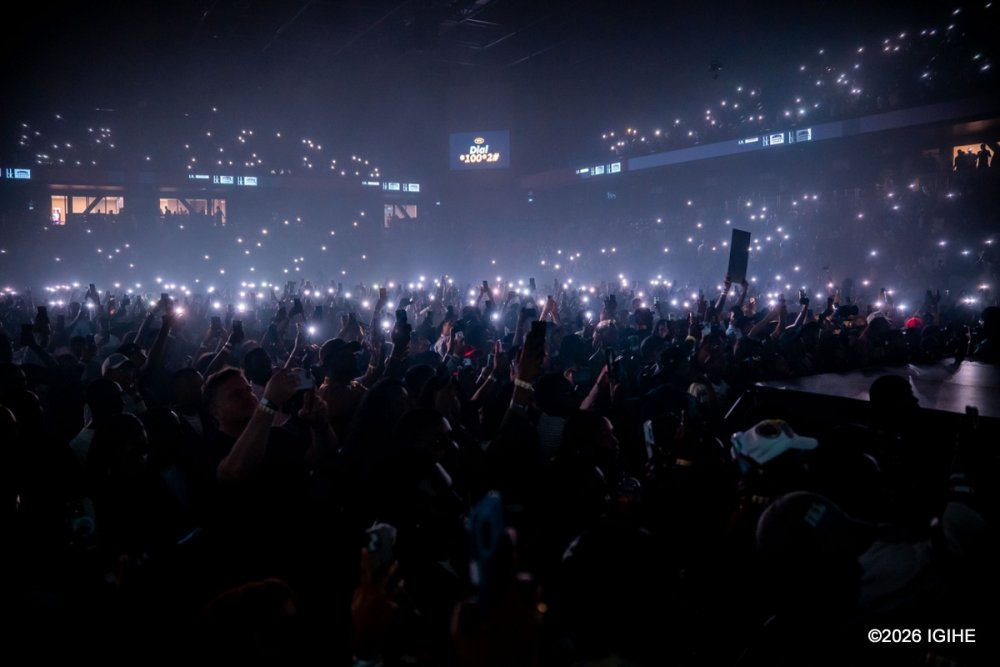
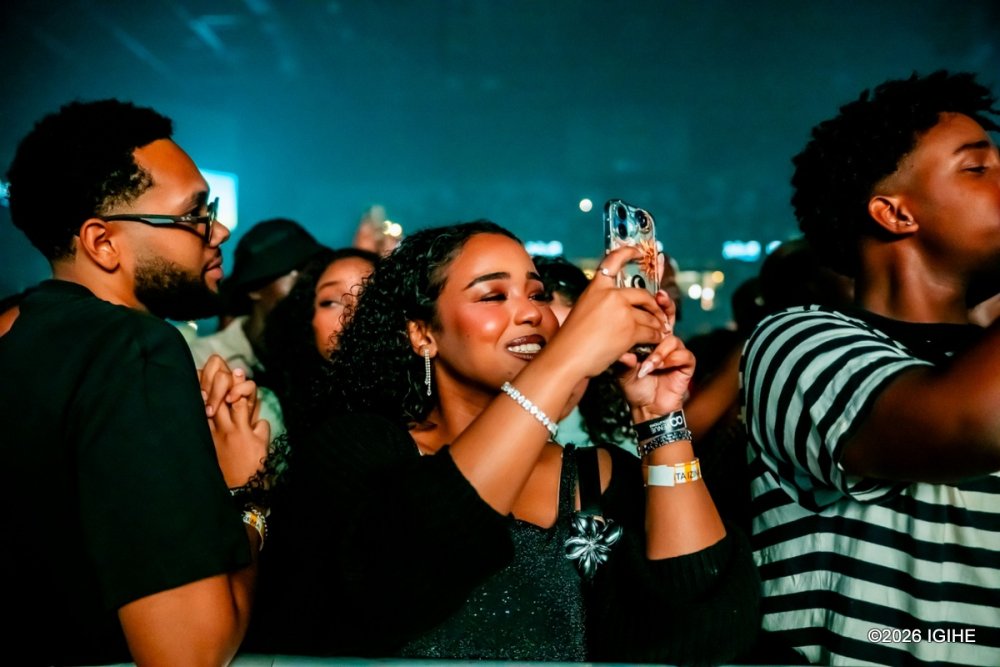
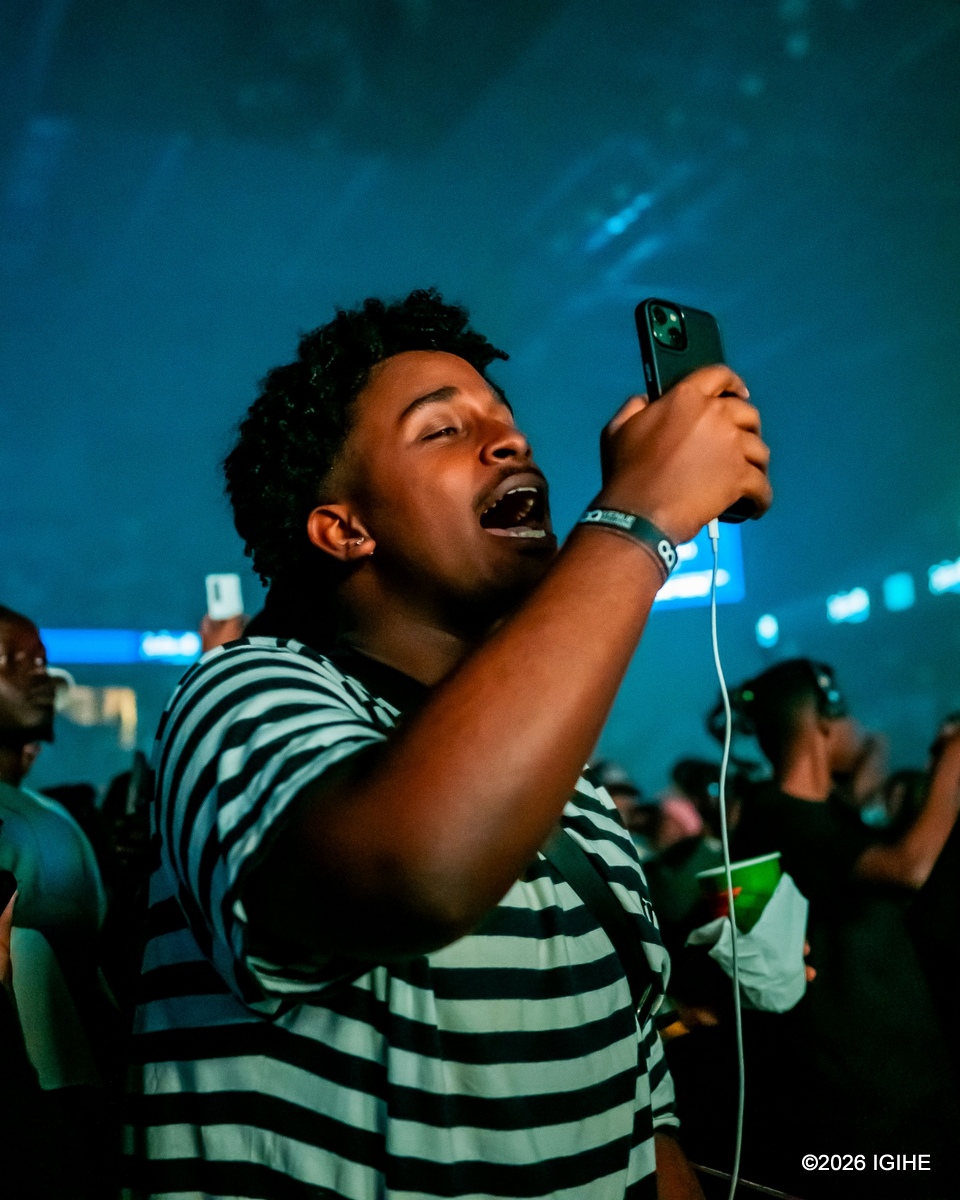
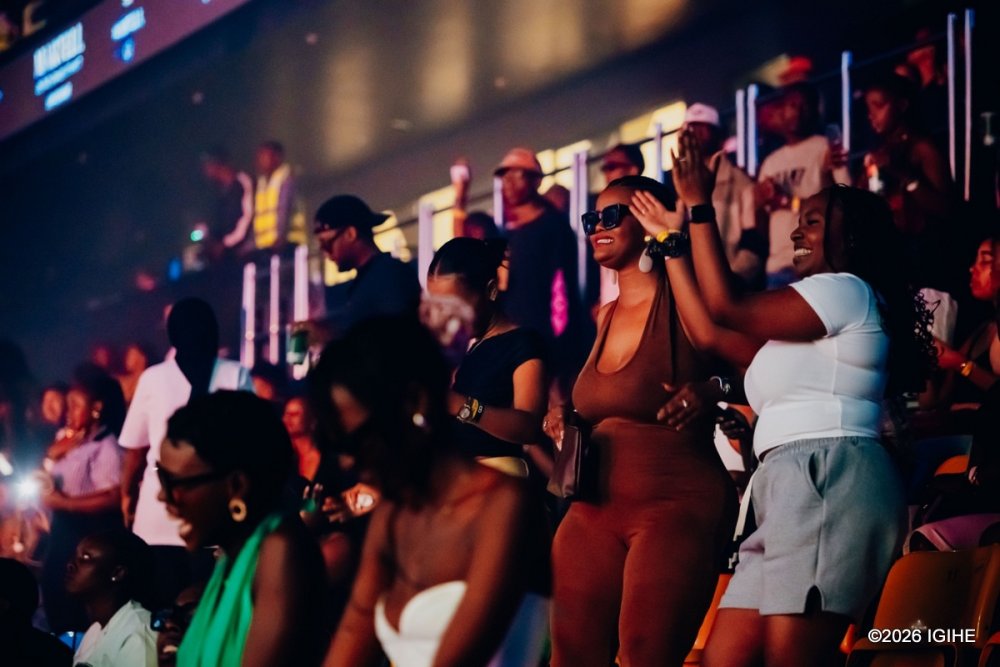
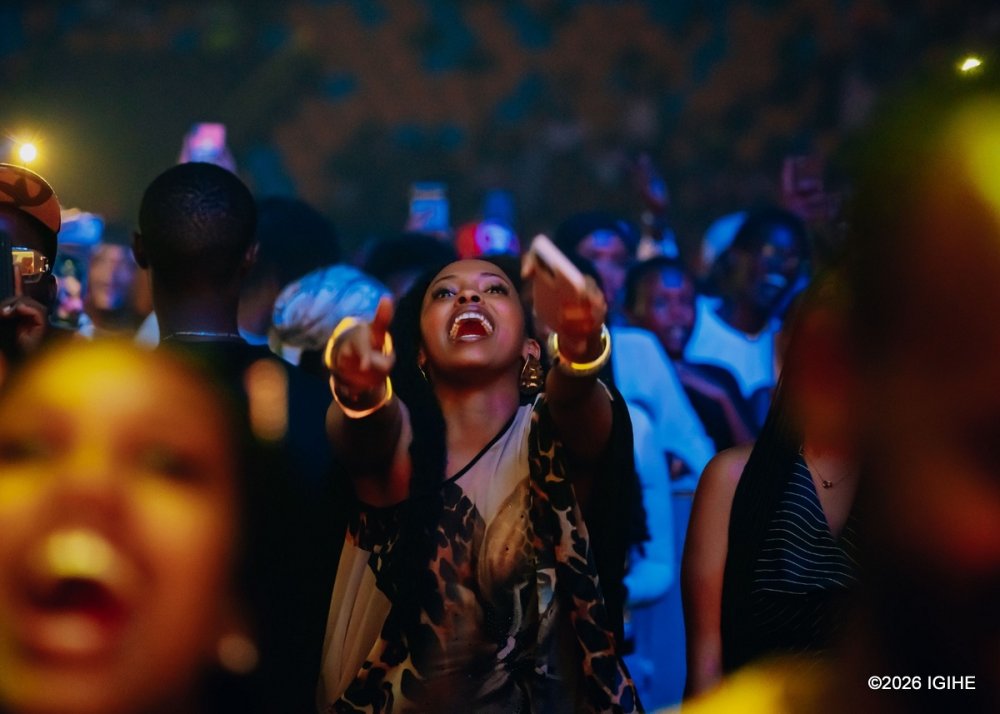
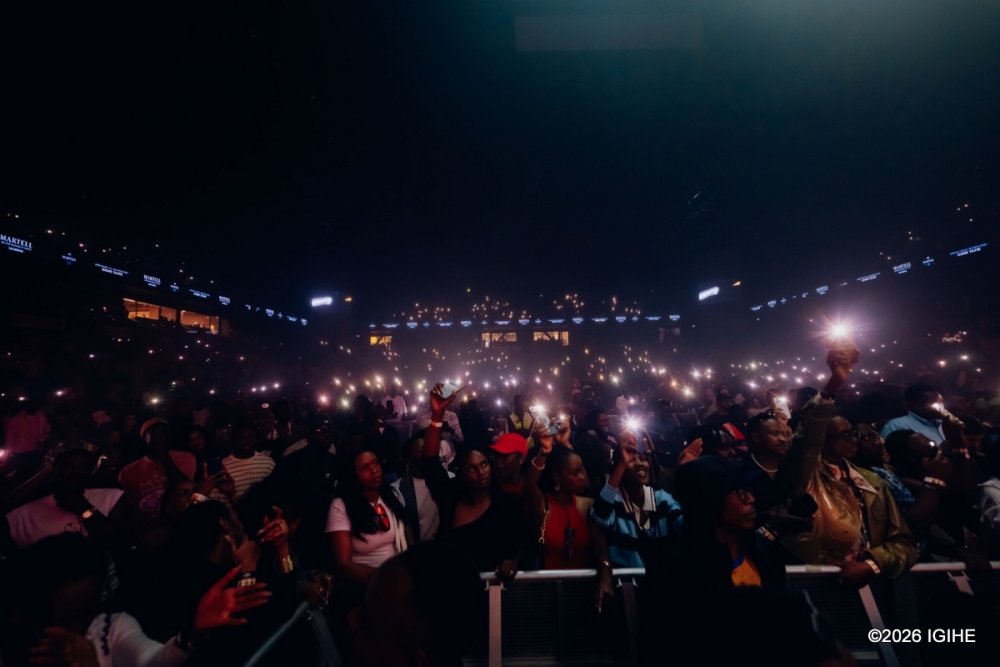
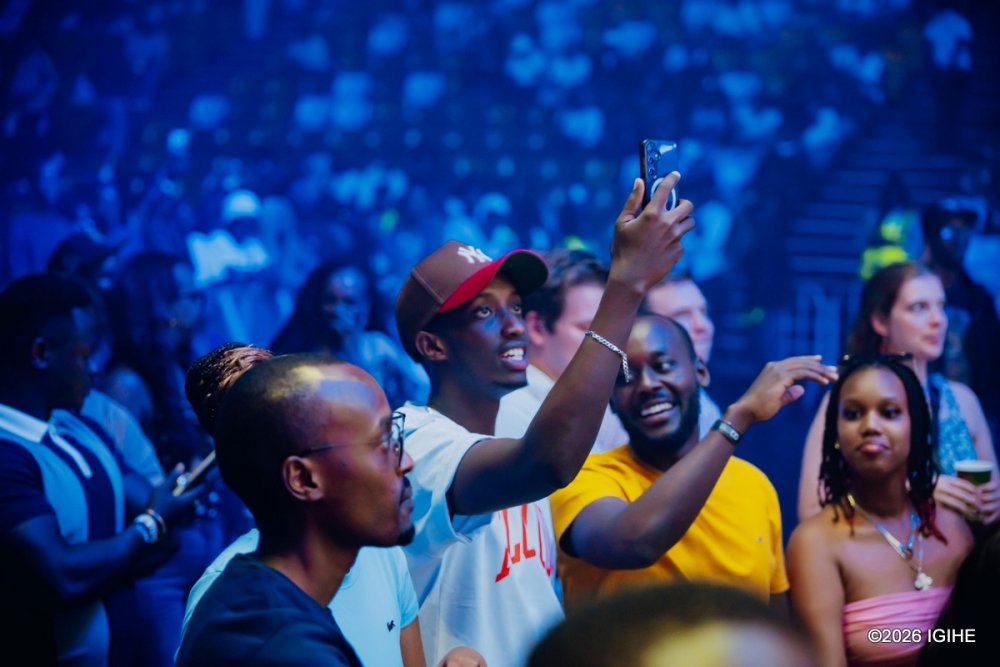
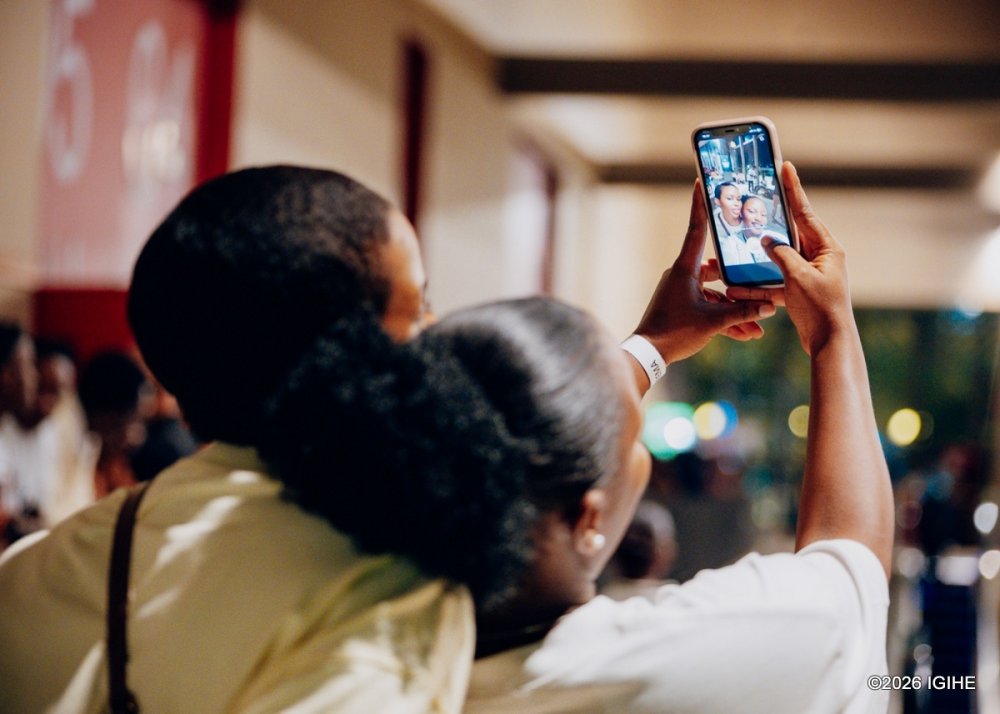
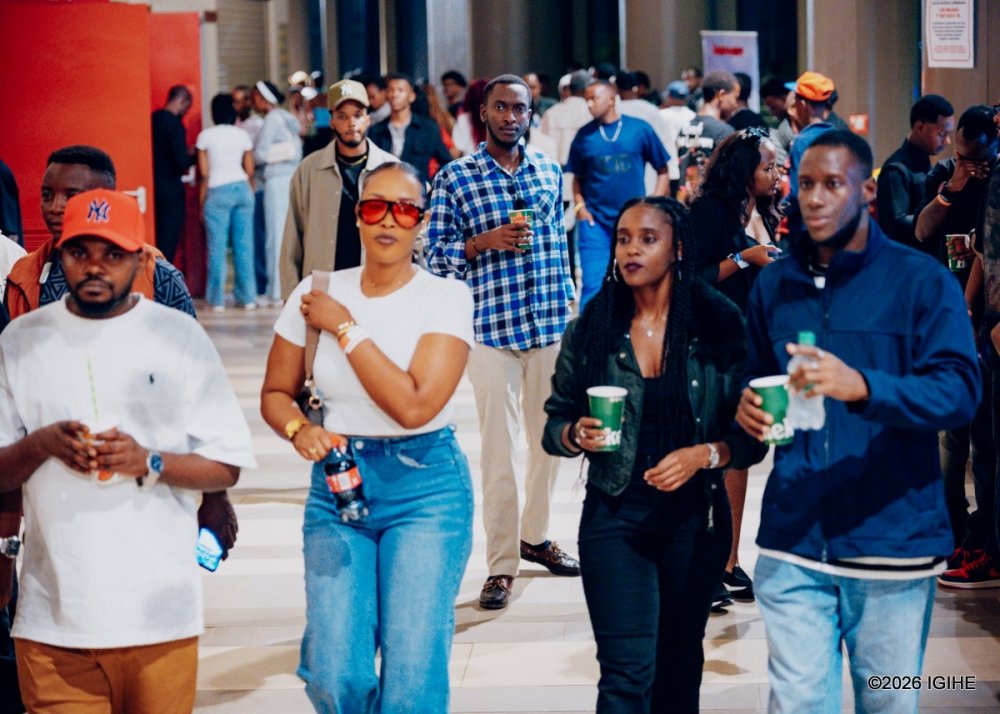
From his opening performance, the atmosphere inside BK Arena was electric, with fans singing along to his songs and showing their excitement through banners and messages displayed on their phones.
Rema last performed in Kigali in October 2023, and his return was met with an enthusiastic reception from fans who had waited nearly three years to see him perform in the city again.
Rema brings his biggest hits to Kigali
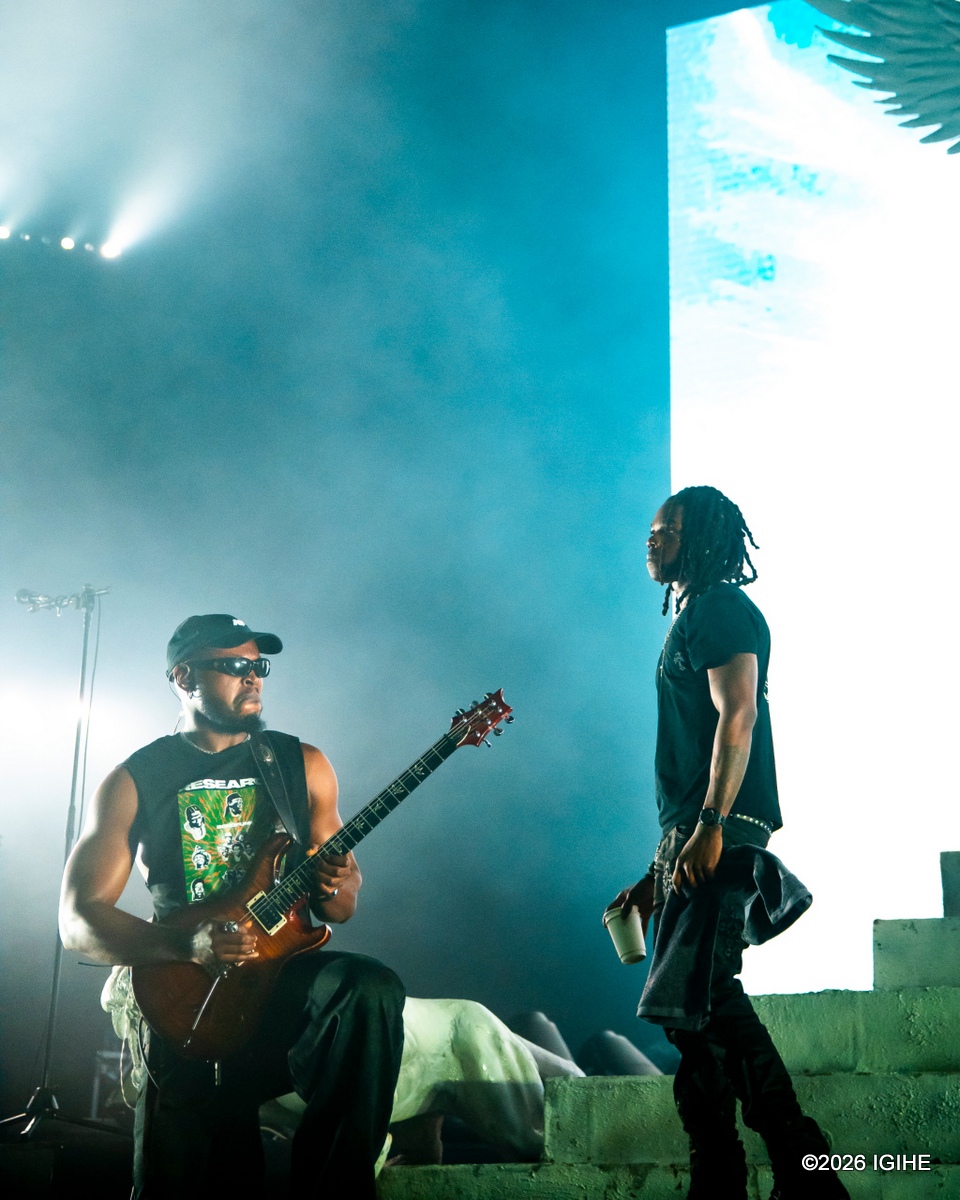
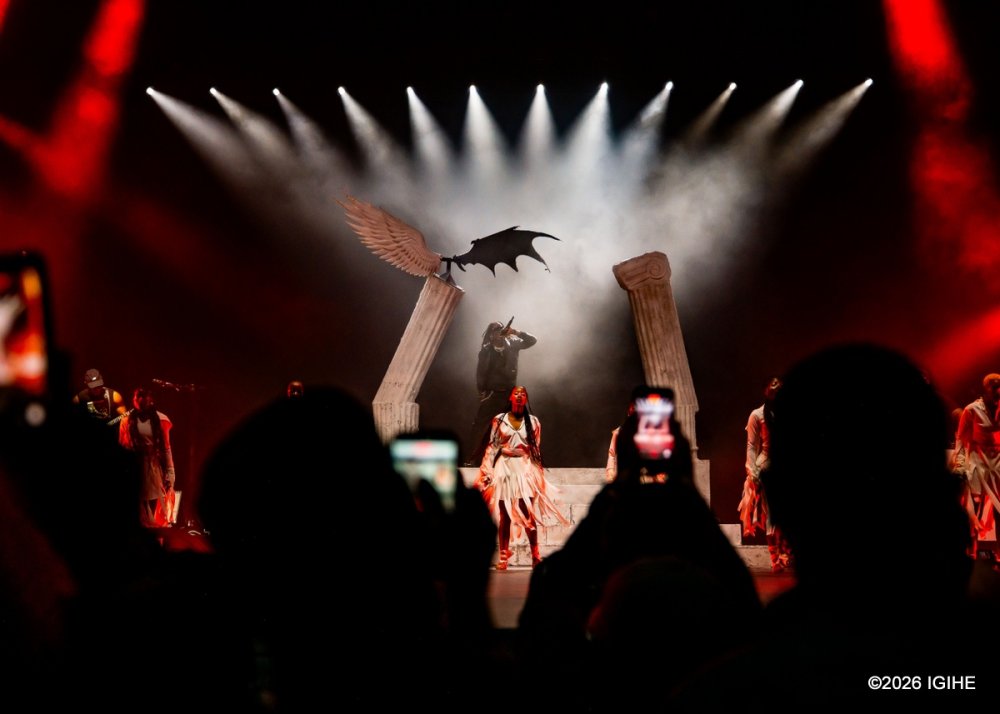
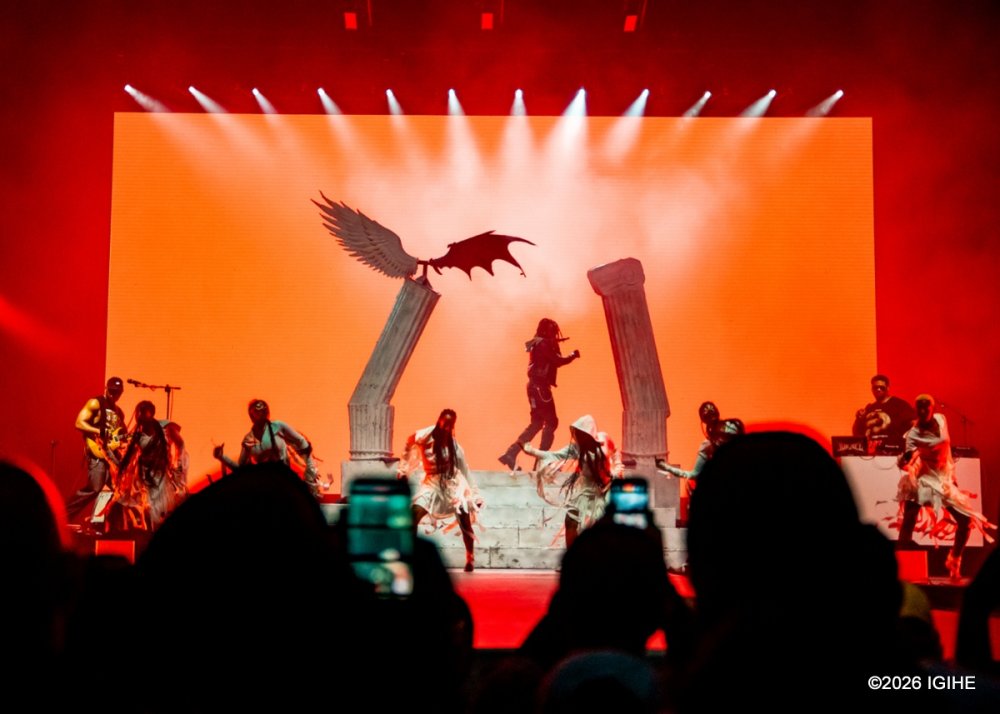
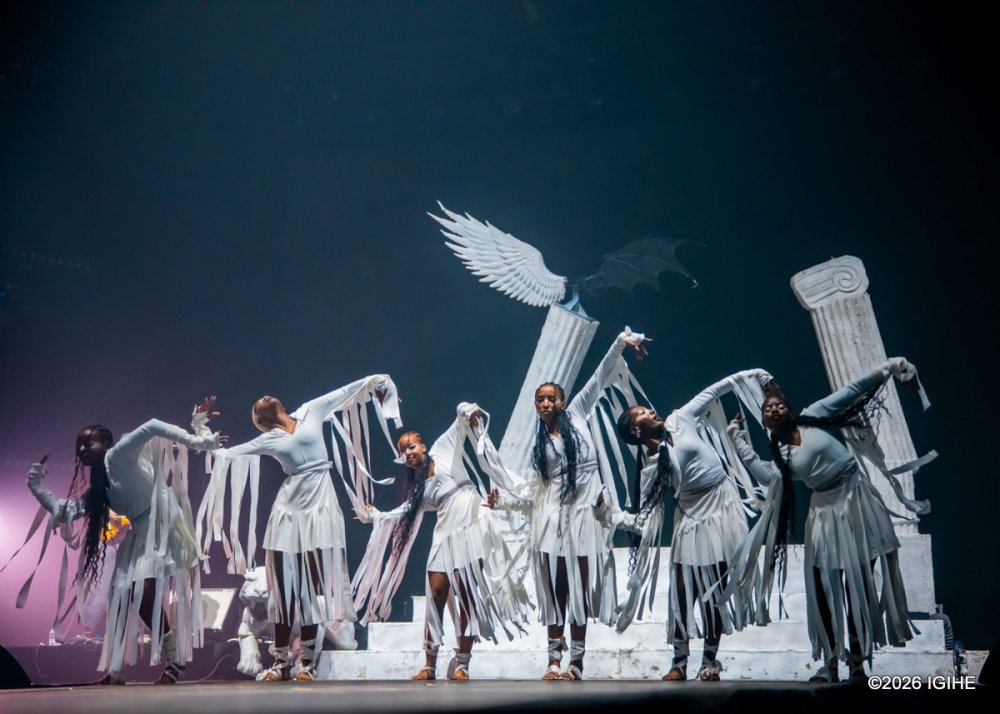
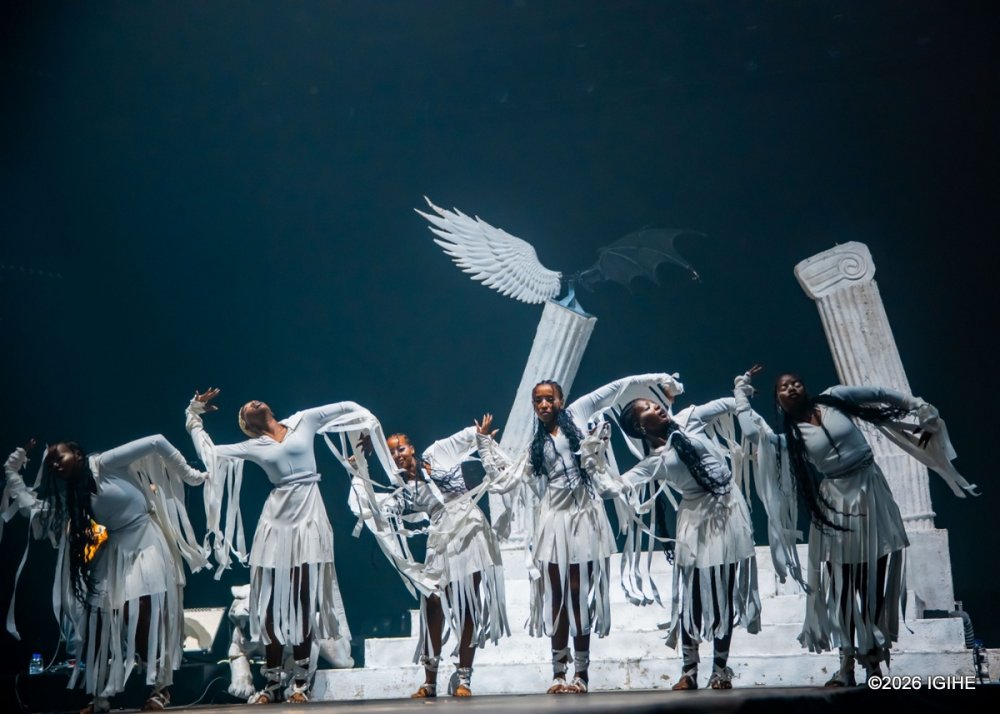
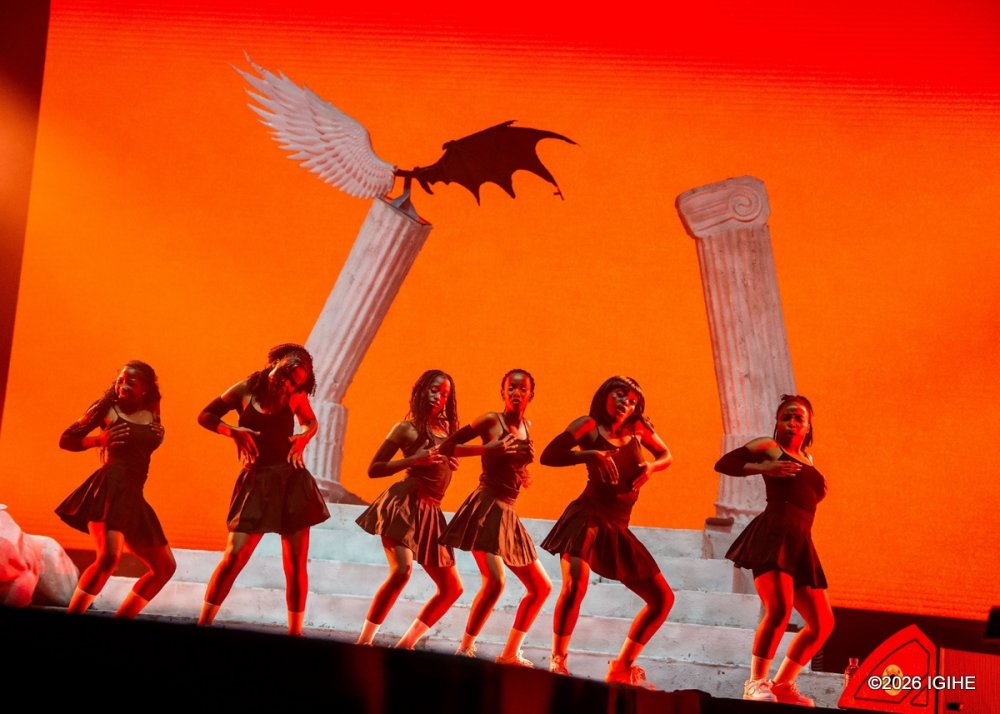
Rema entered the stage a few minutes before 10 p.m., accompanied by a group of dancers, opening his performance with “Azaman”.
He went on to perform a string of popular songs, keeping the crowd on its feet throughout the night.
“Calm Down”, arguably his most recognisable hit, was among the performances that drew one of the strongest responses from the audience. The song, released in February 2022, has become one of the defining records of Rema’s career.
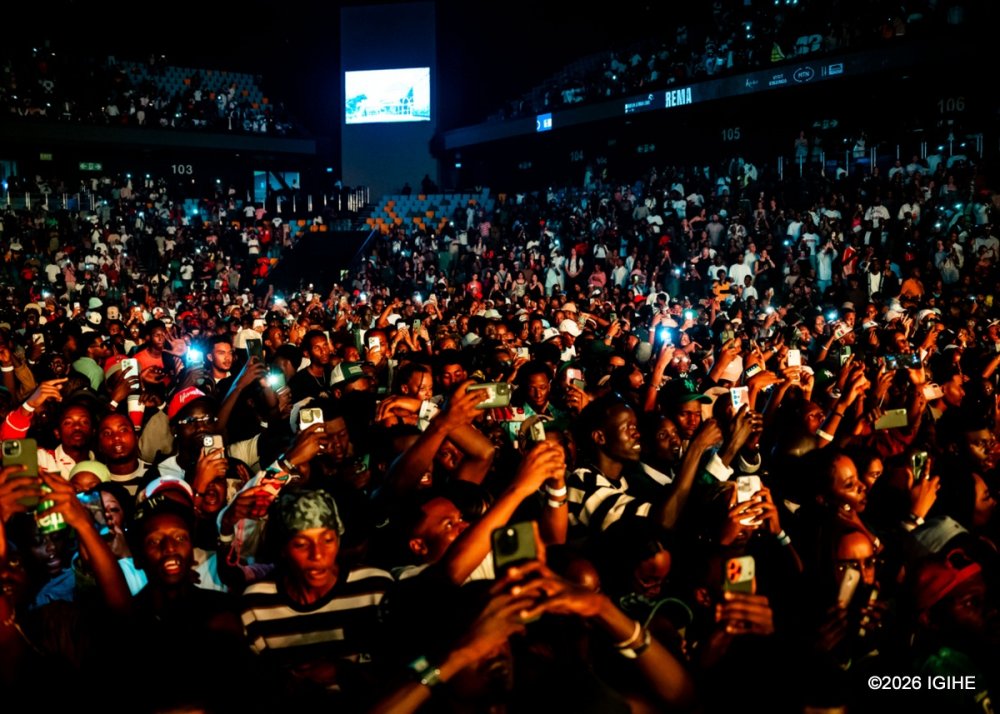
From his opening performance to the closing of the concert, the atmosphere inside BK Arena was electric
His performance of “Soweto”, a collaboration with Victony, Tempoe and Don Toliver, also sparked a major singalong as fans joined him word for word.
Later, Rema performed “Fun”, a song centred on love, good times and socialising. He encouraged fans to enjoy themselves and share a drink as they celebrated the night together.
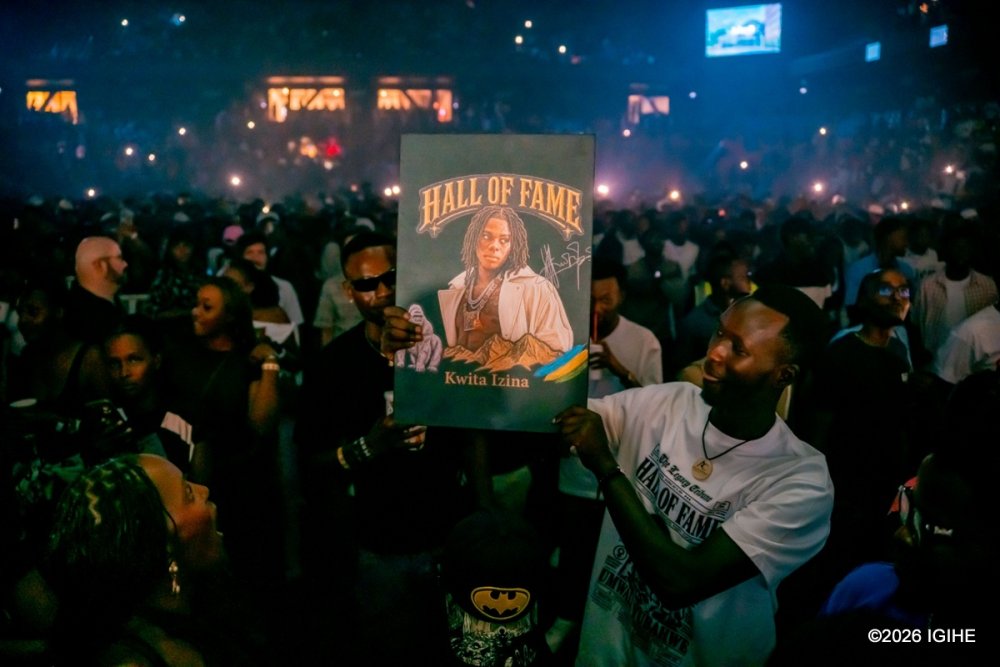
A fan gifted Rema a painting.
The singer also received a special gift from a Rwandan fan midway through his performance. The gift featured Rema’s photograph, a gesture that visibly pleased the Nigerian star.
After around an hour and a half on stage, Rema brought the concert to a close with “Ozeba”, encouraging fans to dance along before ending his performance.
Rwandan stars set the stage
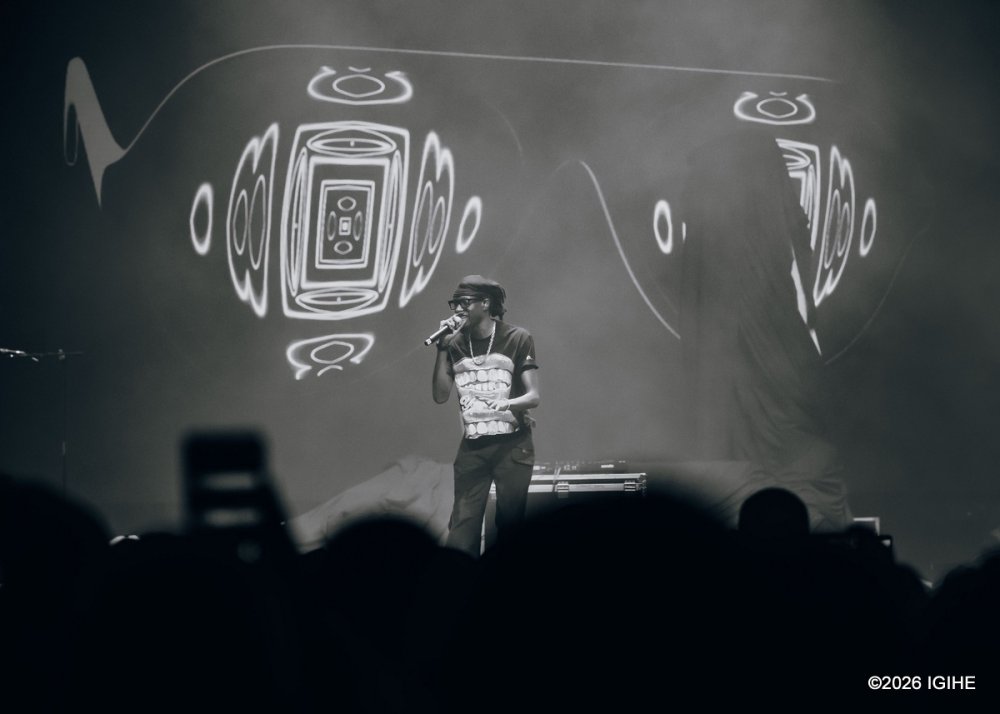
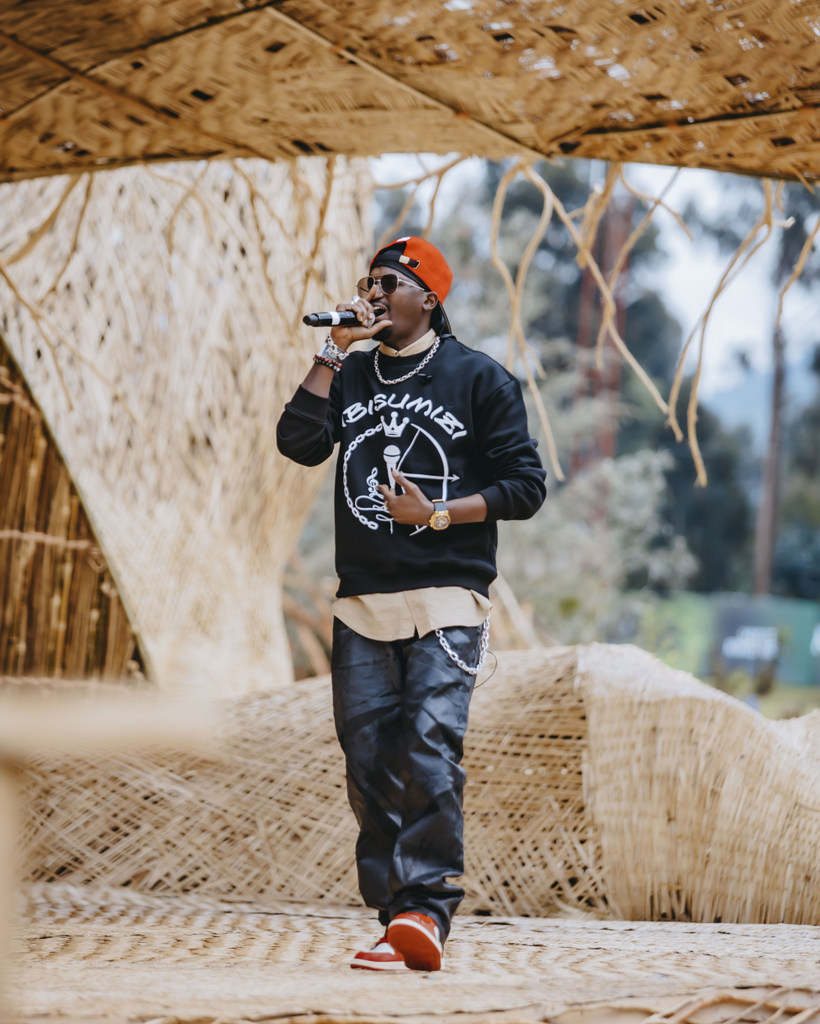
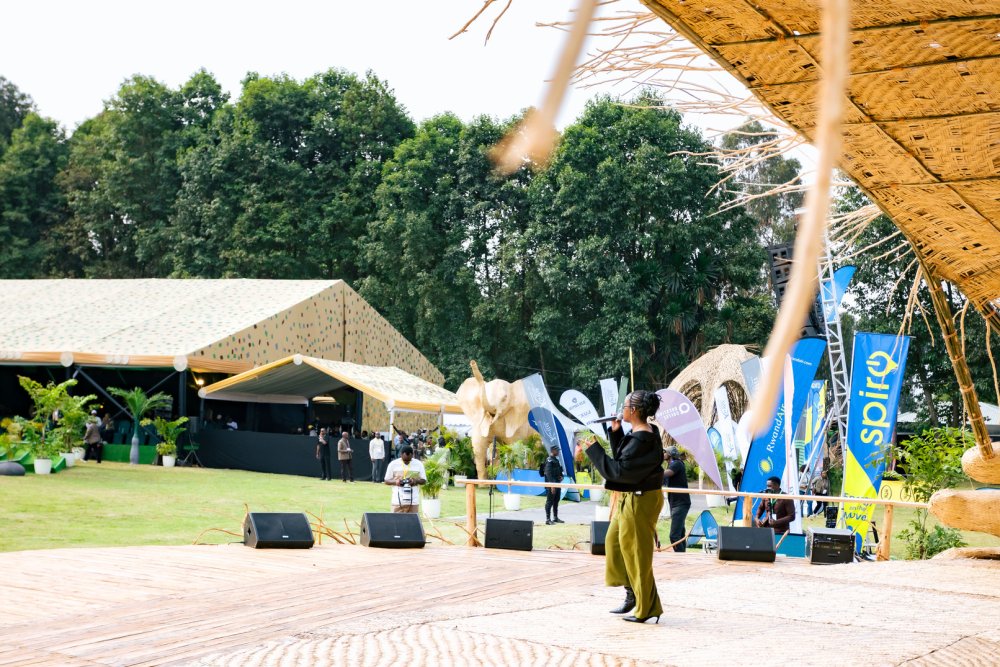
Rema was supported by some of Rwanda’s leading performers, who helped build the excitement ahead of the headline act.
Kenny Sol was the first major performer of the evening, taking the stage at 7:41 p.m. He opened with “Haso”, his 2021 hit, before performing songs including “Haje Gushya”, “Ikinyafu” and “Phenomena” during his 20-minute set.
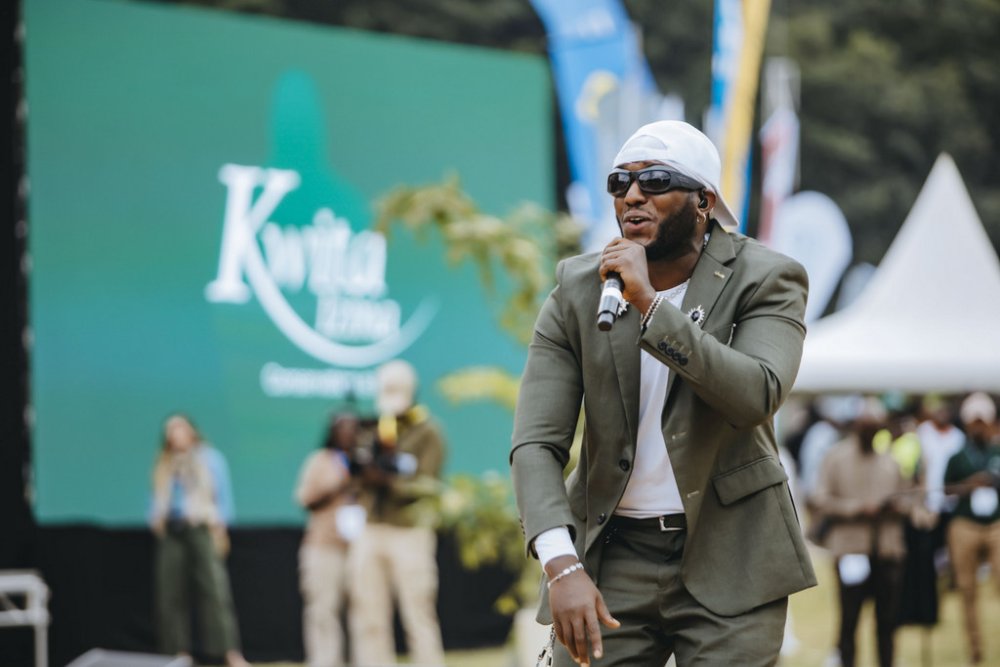
Kivumbi King followed, opening his performance with “Hanze”, which became popular after its release in September 2024.
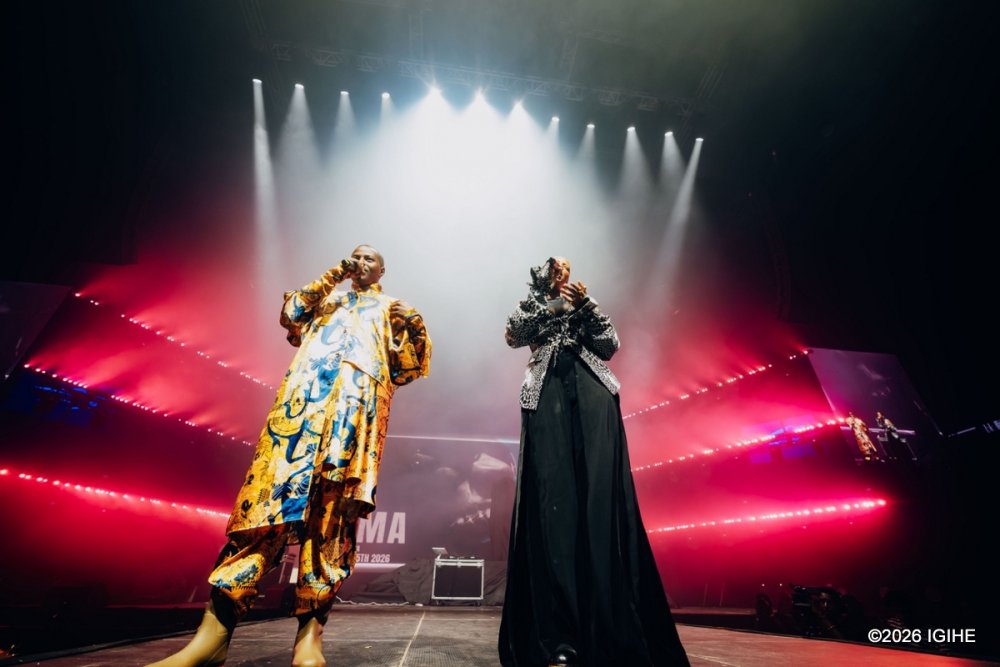
He later brought Burundian artist Kirikou Akili onto the stage to perform “Yampayinka”, their recent collaboration.
Kivumbi also welcomed rapper Juno Kizigenza during “Kirigute”, giving fans another surprise collaboration.
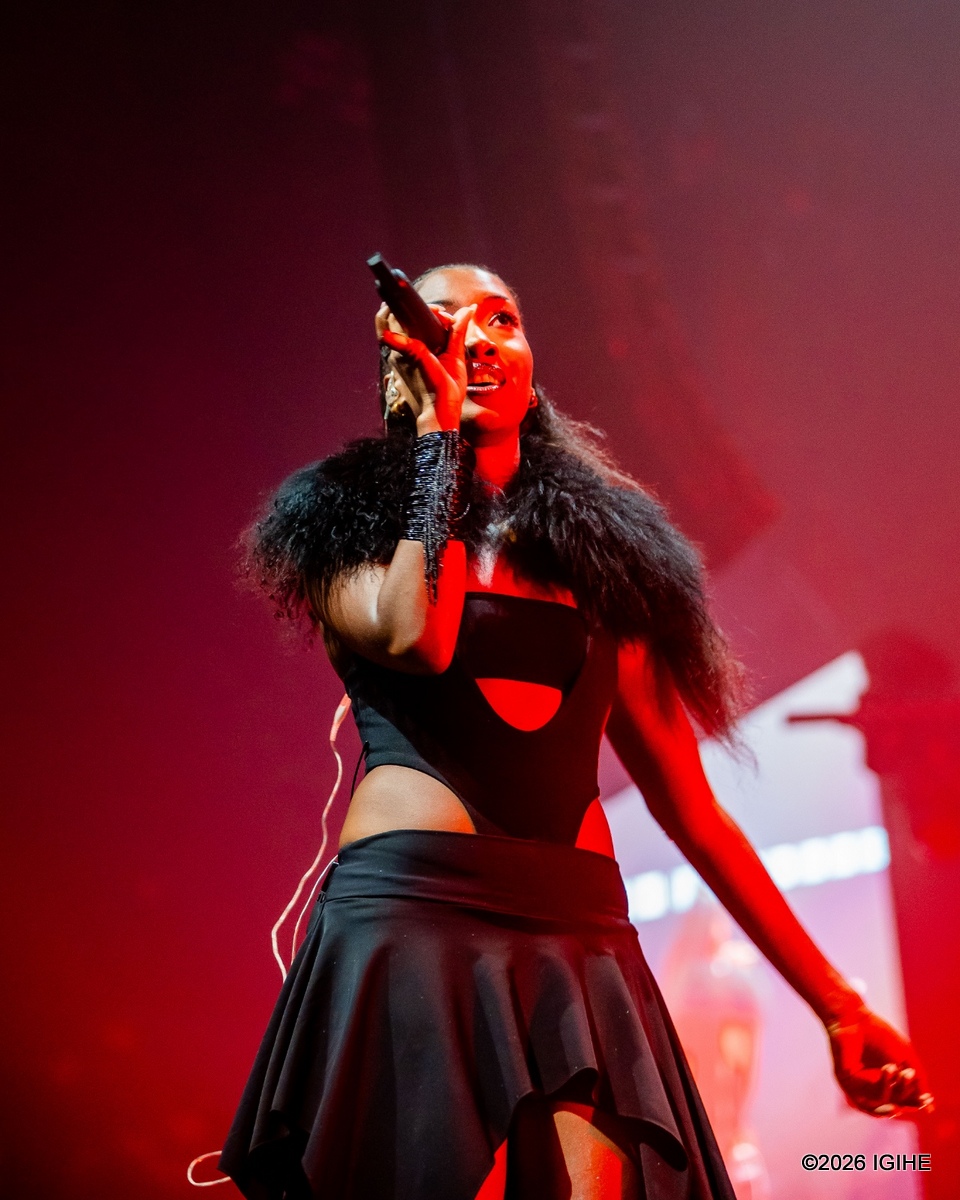
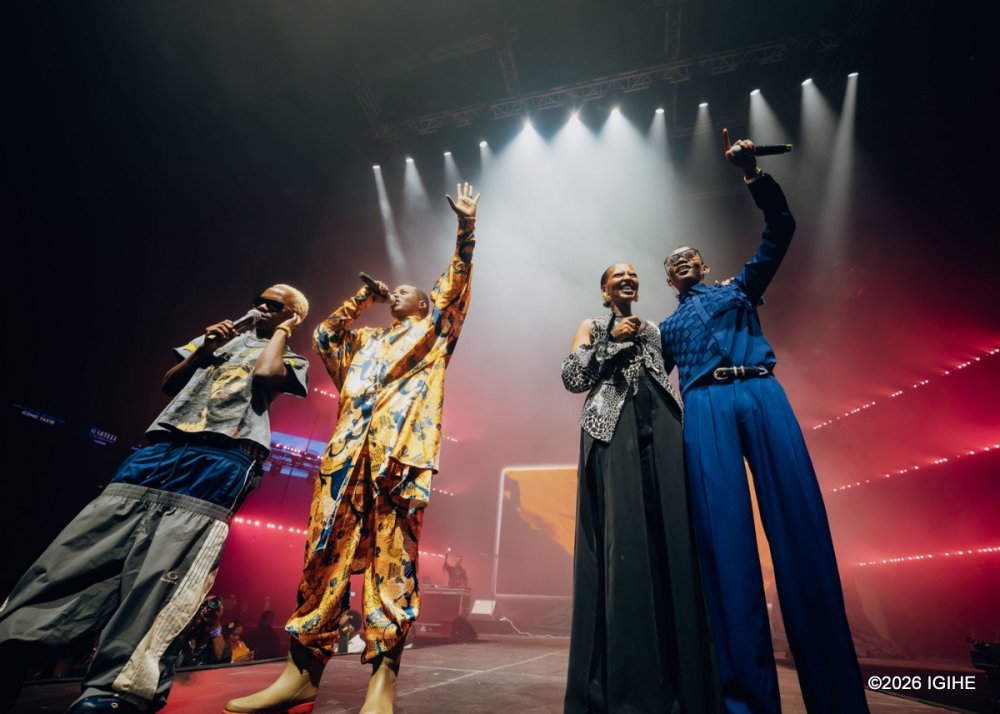
Rwandan singer Saràh Phenom, who recently performed alongside Rema at his concert in Paris, also took the stage before the Nigerian superstar.
DJs keep the crowd moving
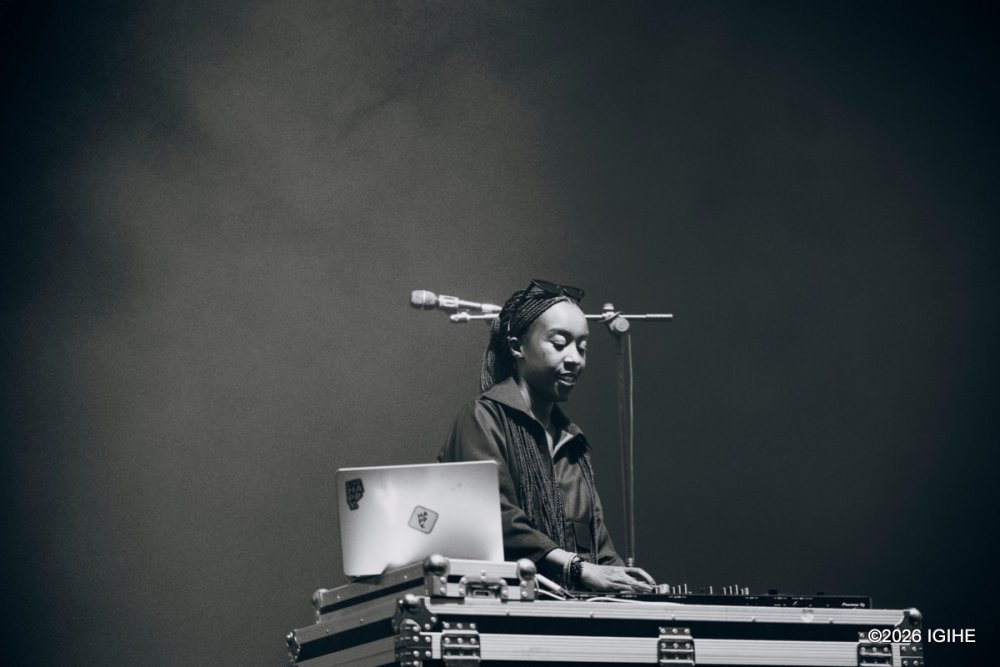
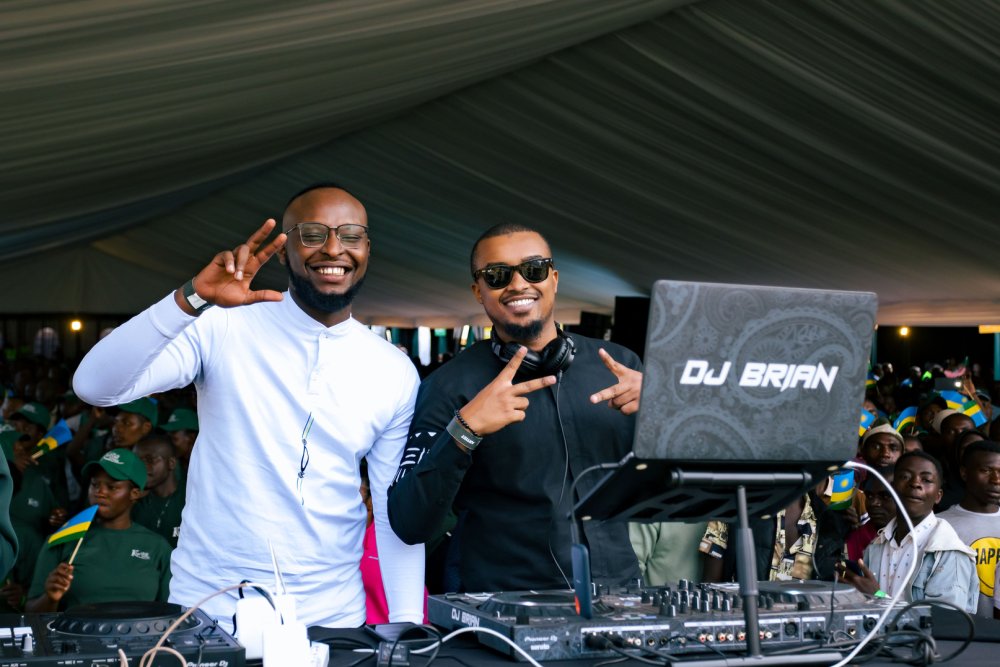
The entertainment continued between performances, with DJs helping maintain the energy inside BK Arena.
DJ Marnaud took over after Kenny Sol and Kivumbi King, later being joined by Intore Massamba and Ruti Joel.
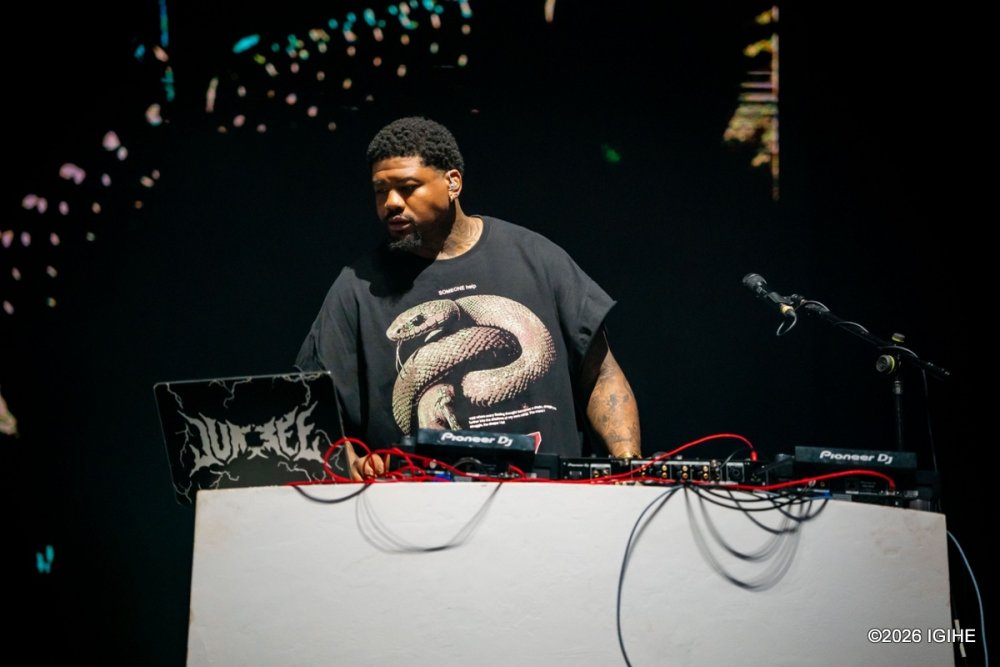
Before Rema’s appearance, DJ Jumbee, who regularly works as Rema’s DJ, was also behind the decks, warming up the crowd for the highly anticipated performance.
Patrice Evra among notable guests
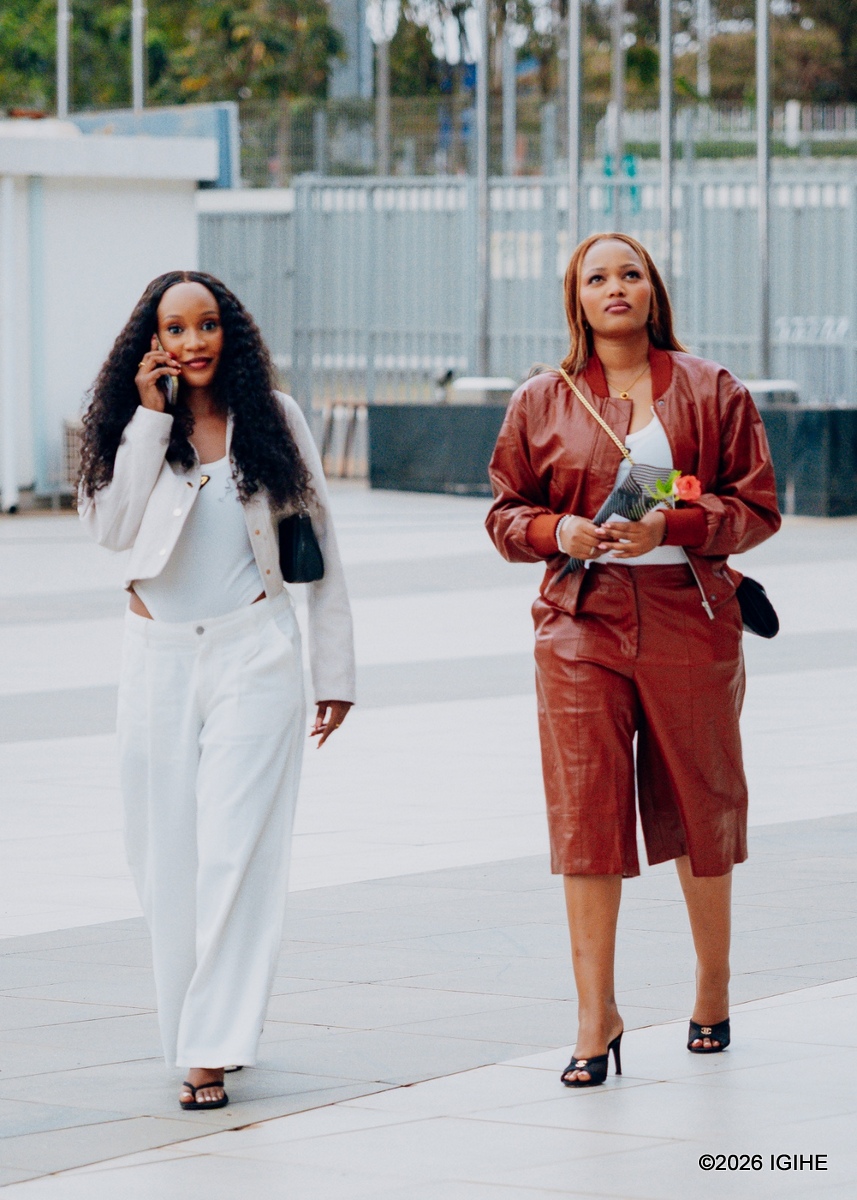
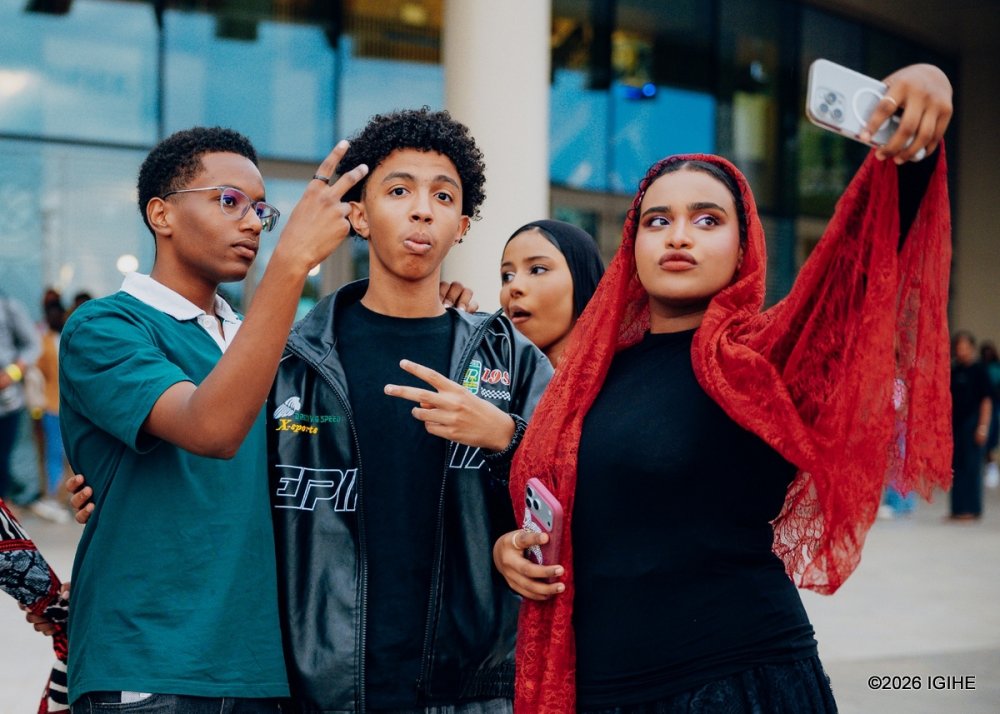
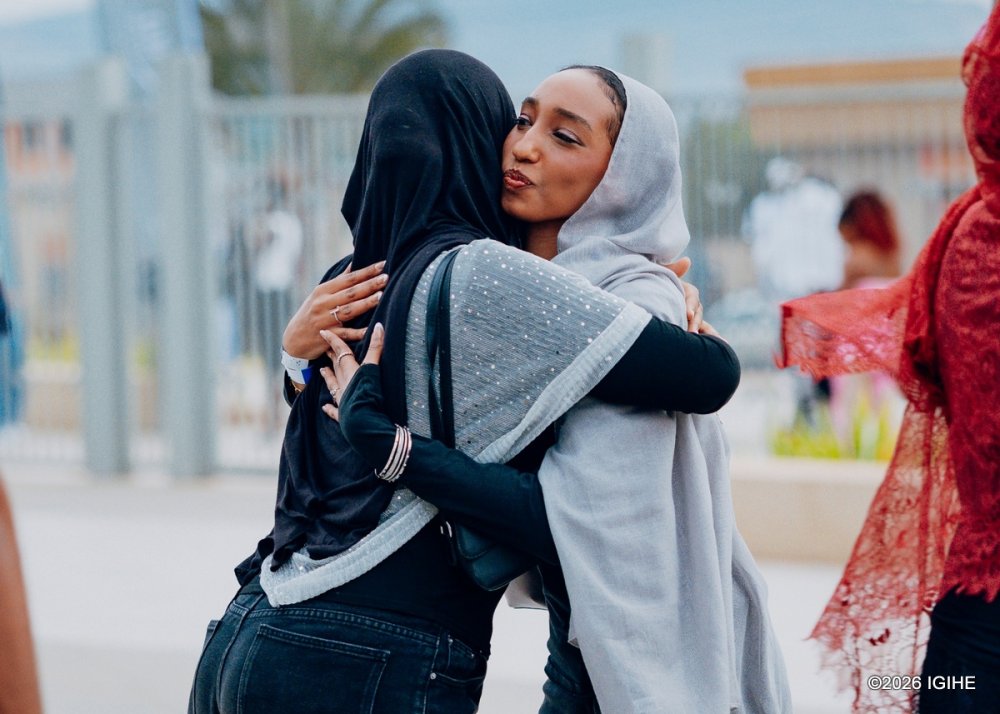
The concert attracted a mix of government officials, musicians, young people, social media personalities and other public figures.
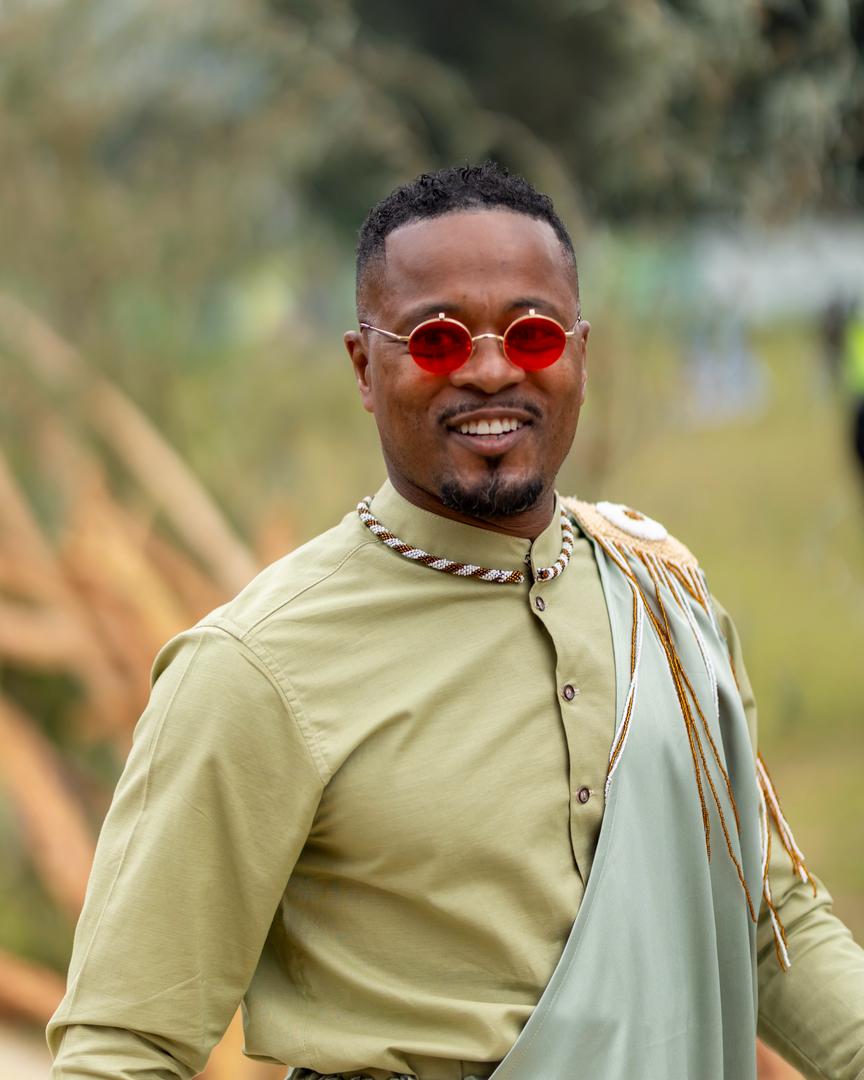
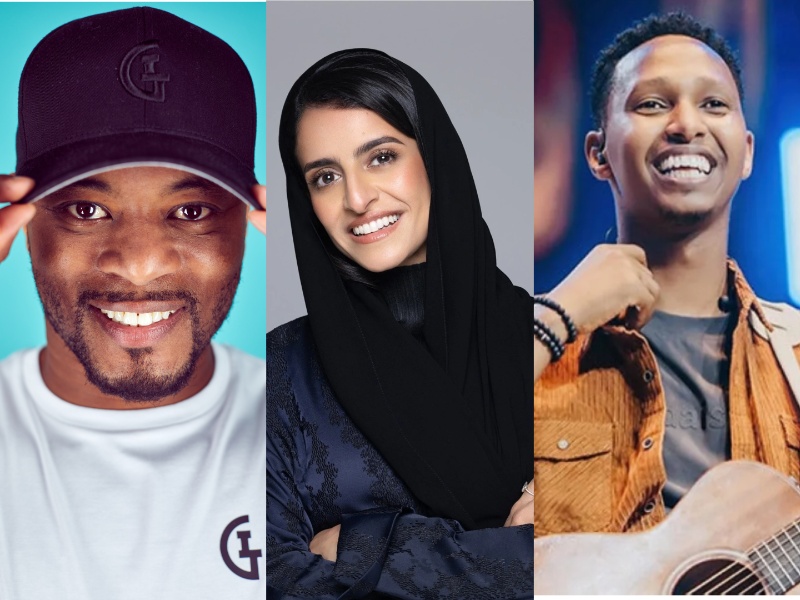
Among those in attendance was former France international Patrice Evra, who played for clubs including Manchester United and Juventus.
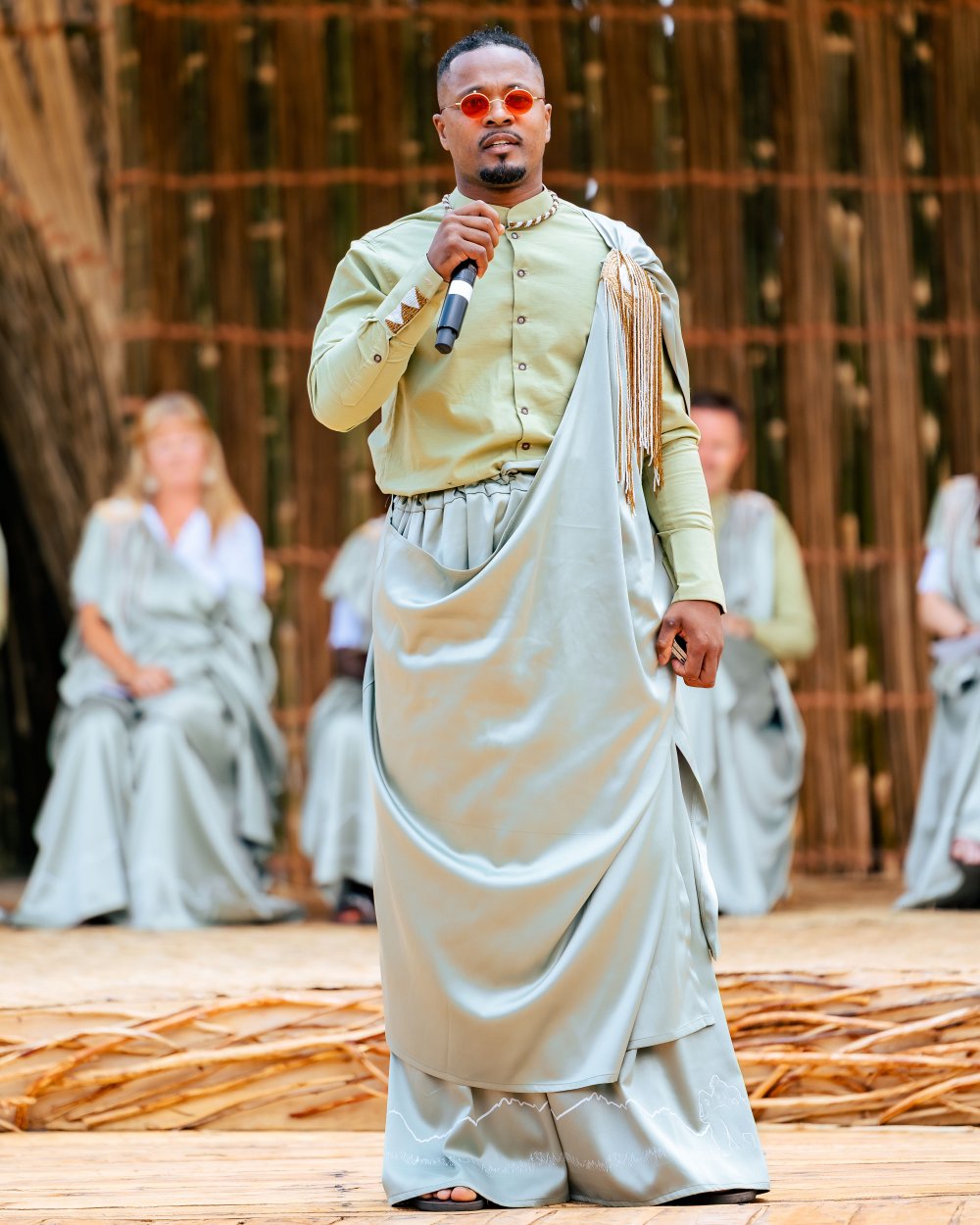
Evra was also one of the distinguished Namers at the 21st Kwita Izina ceremony, where he named Muganura, a baby gorilla from the Izuba family.
Minister of Sports Nelly Mukazayire, Minister of State in the Ministry of Youth and Arts Development Umutoni Sandrine, and Rwanda Development Board Chief Executive Officer Jean Guy K. Afrika were also among the officials who attended.
A night of music and celebration
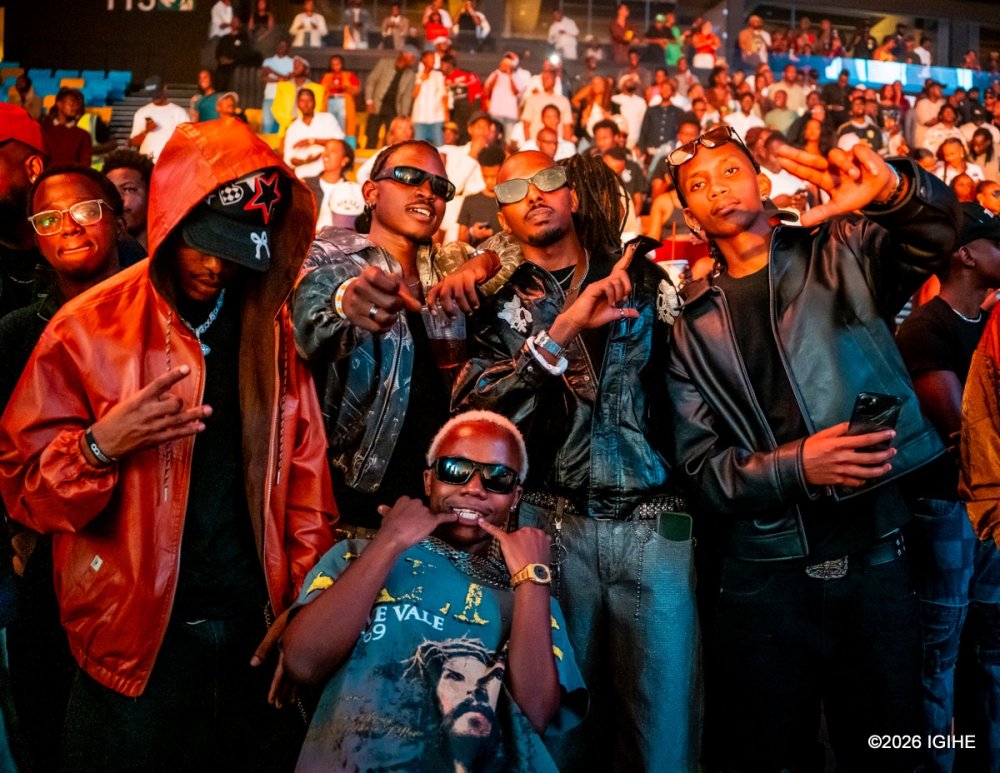
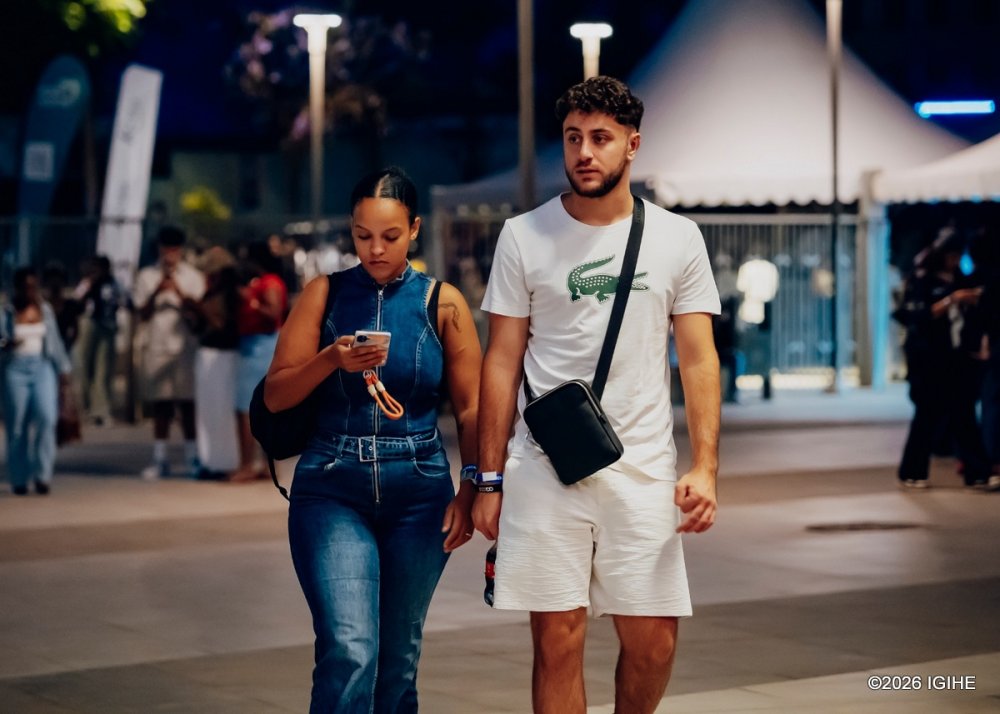
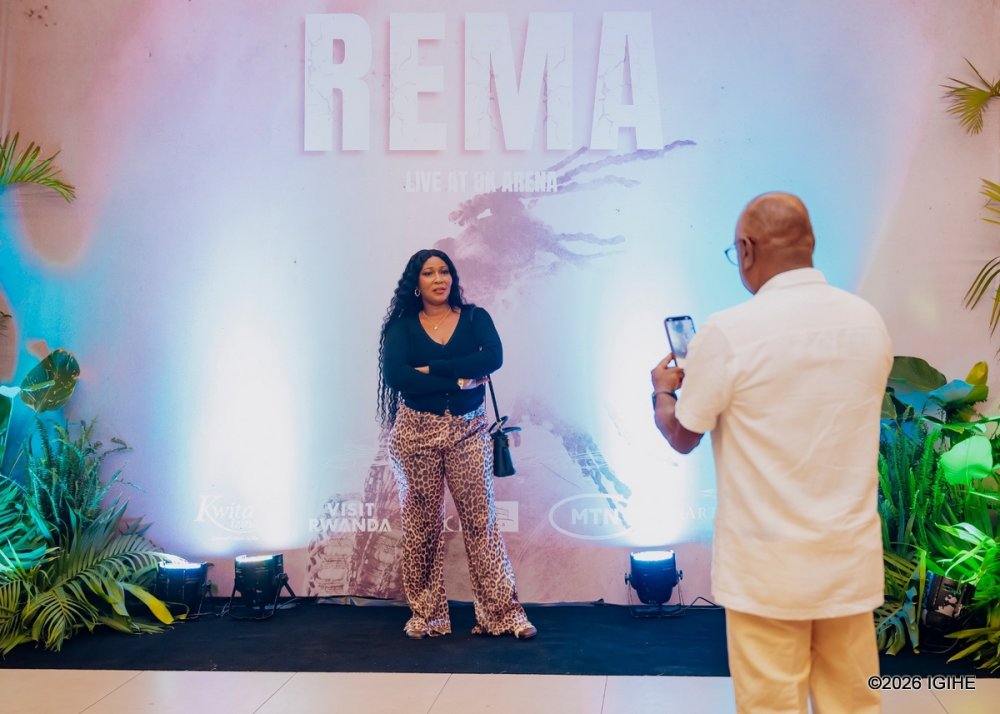
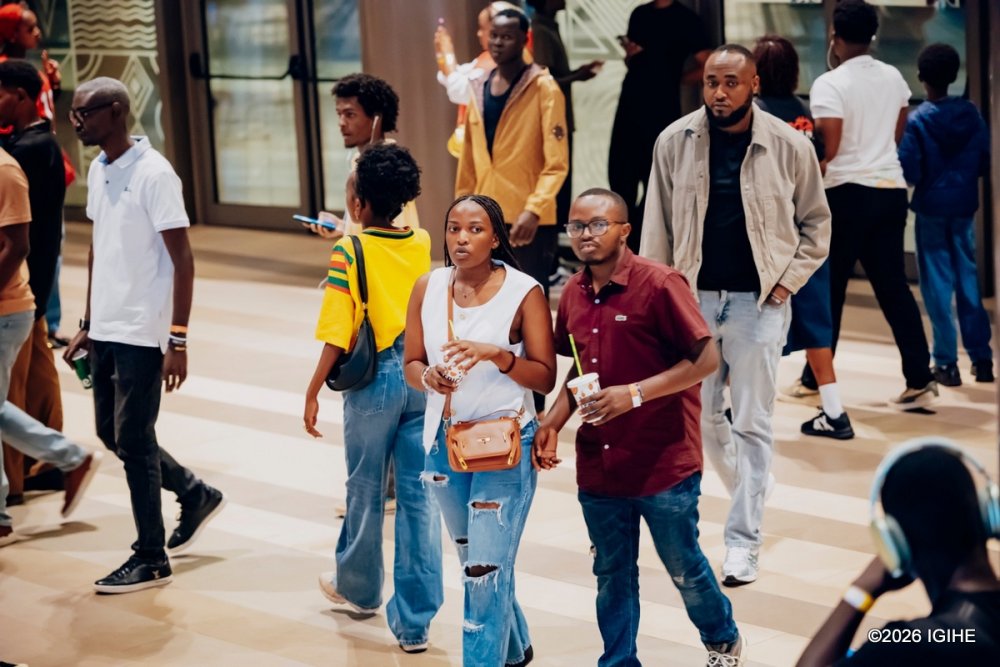
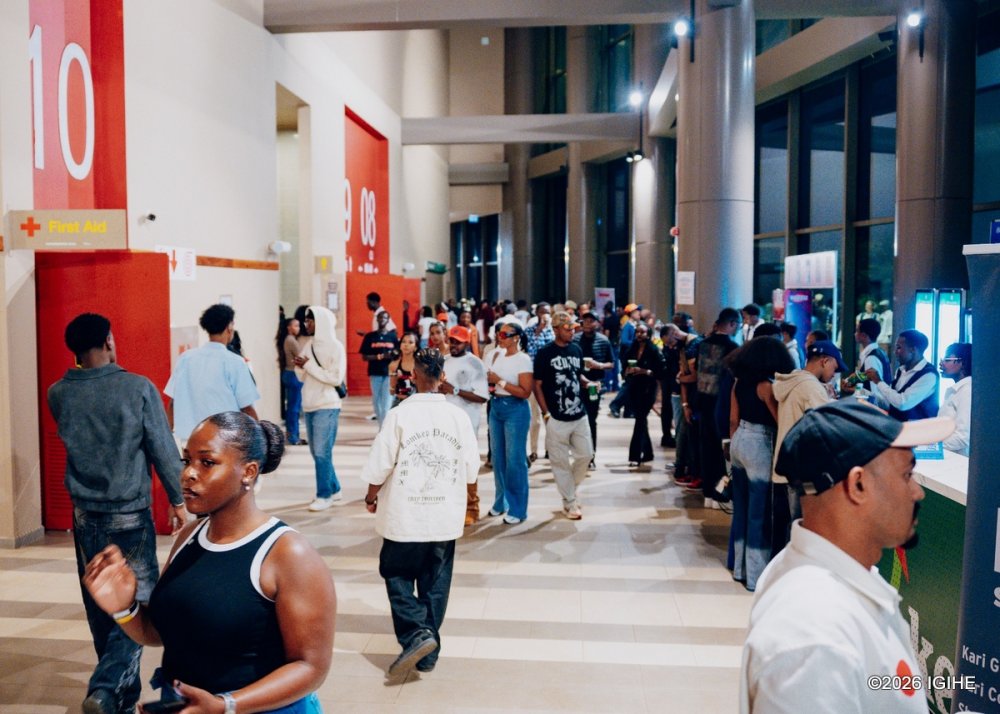
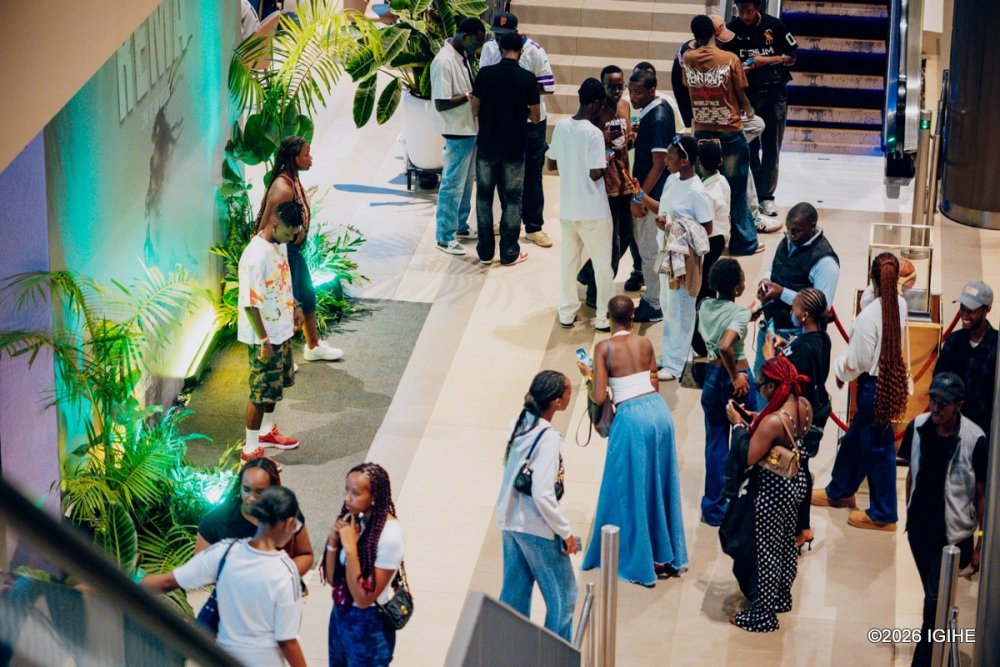
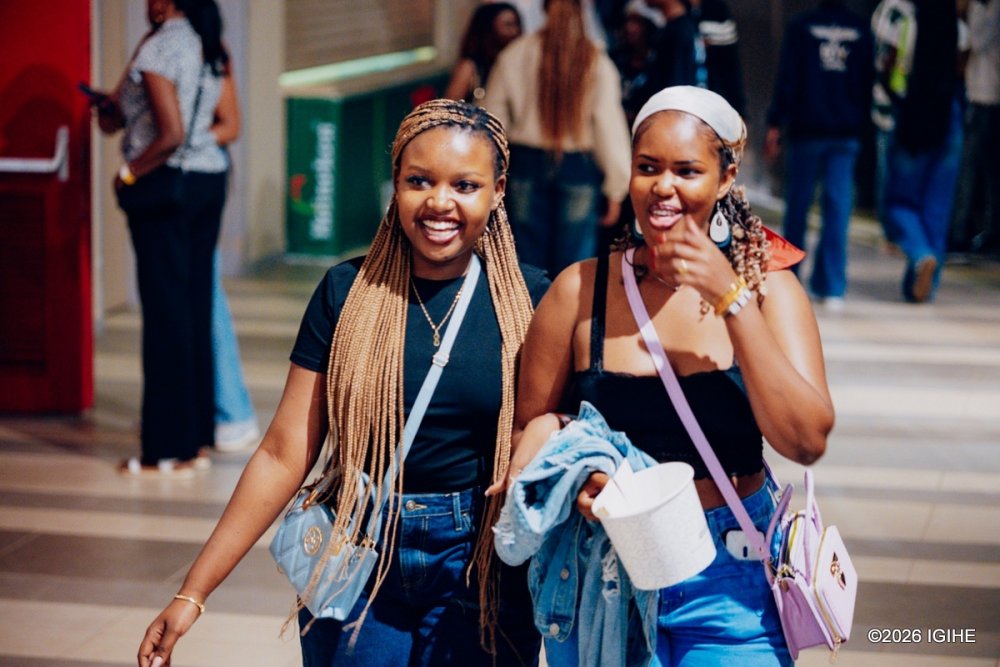
By 6 p.m., crowds had already begun gathering at BK Arena, with young Rwandans making up a large portion of the audience.
The concert provided a musical finale to a week of activities surrounding Kwita Izina, Rwanda’s annual gorilla naming ceremony that brings together conservationists, public figures, artists, business leaders and visitors from around the world.
With Rema delivering a packed set of his biggest hits and Rwandan artists bringing their own energy to the stage, the concert ended the celebrations on a high note.
Rema, one of the biggest names in contemporary Afrobeats, headlined the concert and performed for about an hour and 20 minutes.He took fans through some of his biggest hits, including “Calm Down”, “Dumebi”, “Charm”, “Azaman”, “Bounce”, “Holiday”, “Soweto”, “Fun” and “Ozeba”.
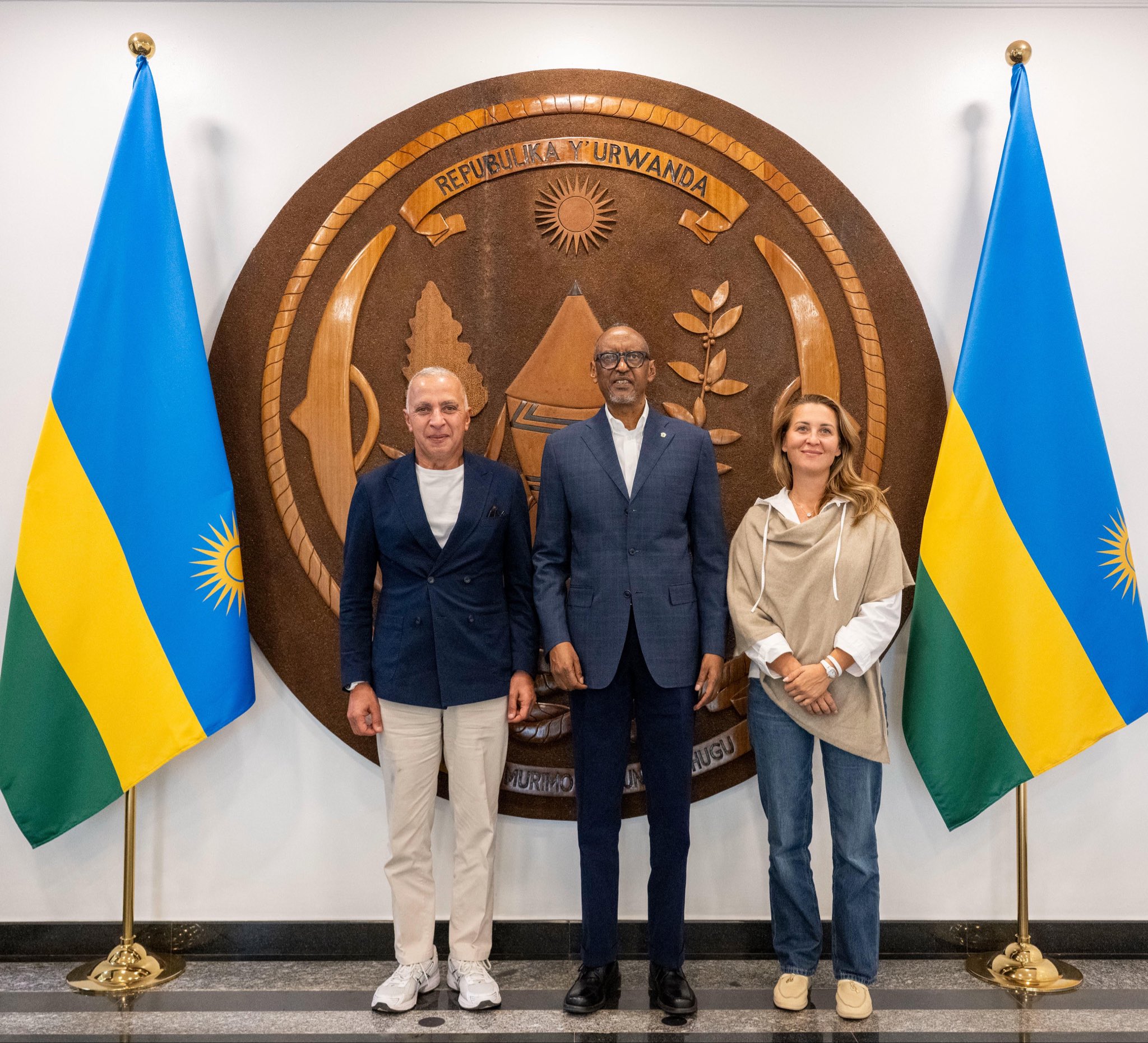
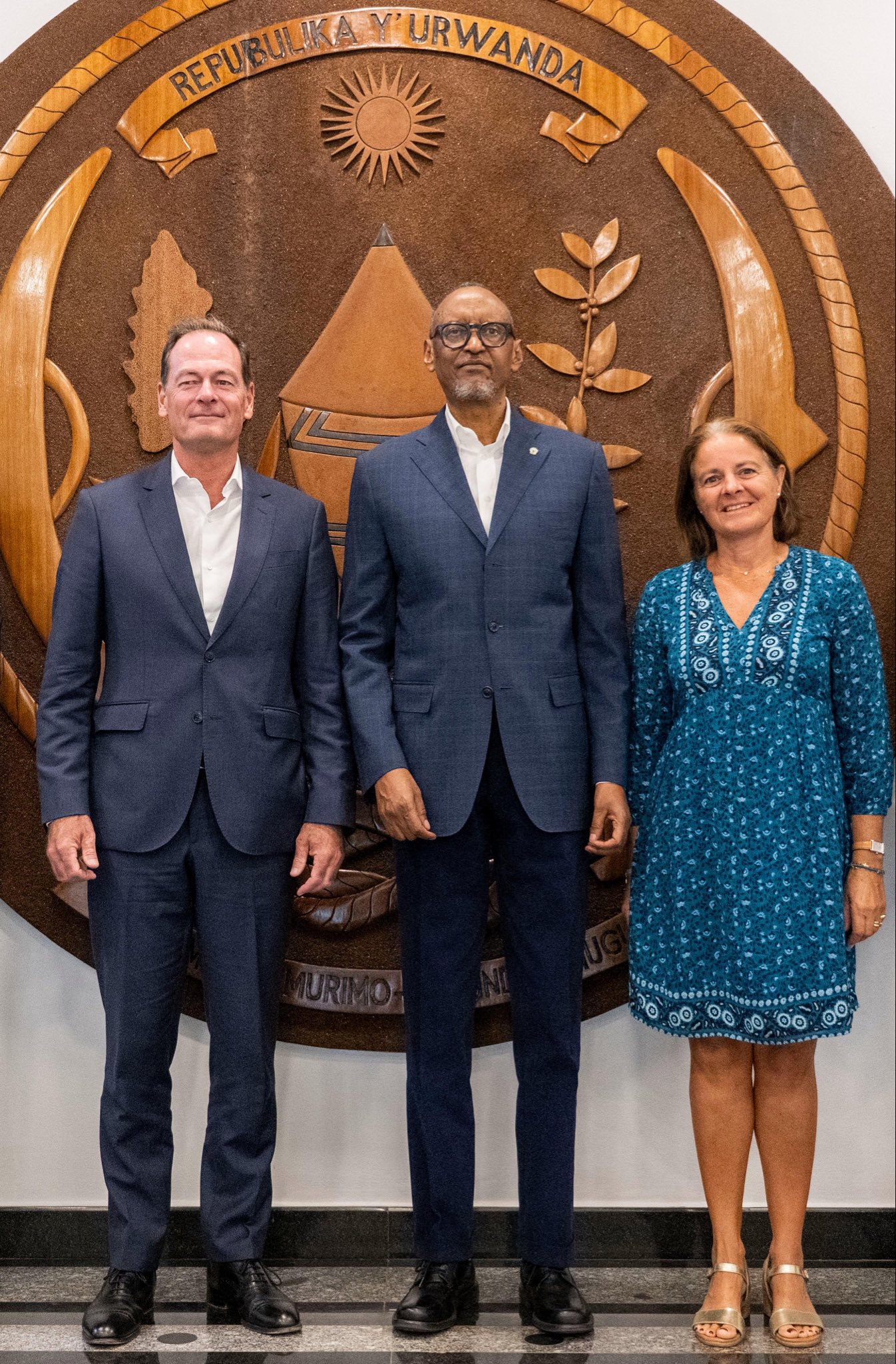
The visitors included Ahmed Sadek Elsewedy, Chairman of Elsewedy Electric, and his wife, Anita Dravec; Miguel Ángel Gil Marín, CEO and majority shareholder of Atlético Madrid; Francesco Calvo, President of Business Operations at Aston Villa; and Olivier Granet, Managing Partner and co-CEO of Kasada Capital, and his wife, Quitterie Granet.
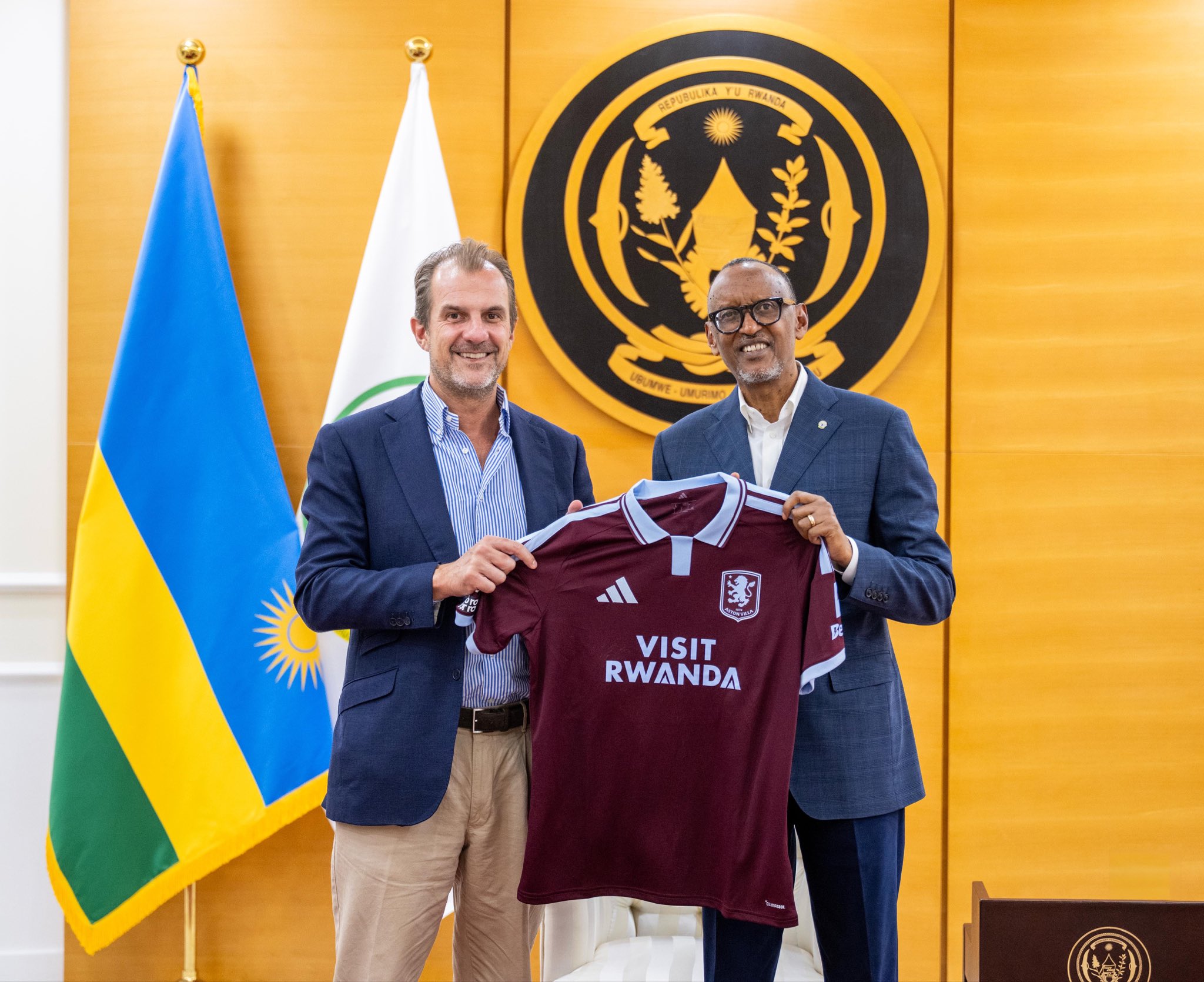
Calvo’s visit comes less than two months after Visit Rwanda signed a landmark partnership with Aston Villa, making the Rwandan tourism brand the English club’s Official Front-of-Shirt Partner, Official Tourism Partner and Official Coffee Provider.
Under the agreement, announced on July 14, 2026, Visit Rwanda branding appears on the shirts of Aston Villa’s men’s, women’s and youth teams, while the partnership also covers tourism promotion, football development, coach education and other exchanges between Rwanda and the club.
Calvo and the other visitors were among the distinguished personalities who named baby mountain gorillas during this year’s Kwita Izina ceremony, held in Kinigi, Musanze District, on Friday, September 4.
The meeting followed a similar engagement on Friday, when President Kagame received several other personalities who participated in the naming ceremony.
Those who met the President included Dominic Barton, Chairman of Rio Tinto and LeapFrog Investments; Shaikha Al Nuwais, Secretary-General of UN Tourism; Paul Danforth, President of CAA Sports; and former Manchester United and France captain Patrice Evra.
The football and business leaders received by President Kagame over the two days were among 22 distinguished namers drawn from the worlds of conservation, tourism, business, sport, entertainment, philanthropy and public service.
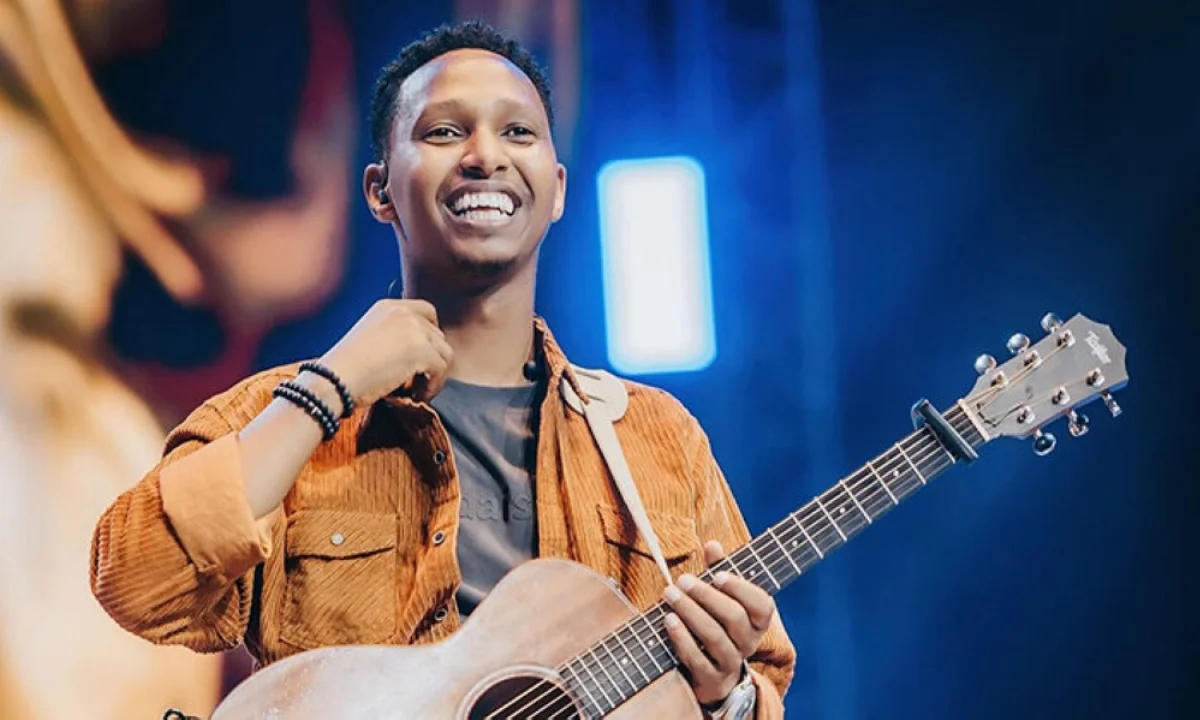
Other personalities who took part in the ceremony included Olympic high-jump champion Mutaz Essa Barshim, UCI President David Lappartient, Rwandan gospel singer Israel Mbonyi, filmmaker Marie-Clémentine Dusabejambo and former French international Mamadou Sakho.
The 21st Kwita Izina ceremony brought together communities, conservationists, government officials, international partners and visitors to celebrate Rwanda’s mountain gorillas and the country’s conservation achievements.
Held under the theme “Conservation is Life: Sustaining the Future,” this year’s ceremony saw 22 baby mountain gorillas given names, bringing the number of gorillas named through Kwita Izina since 2005 to 460.
Kwita Izina, which means “to give a name” in Kinyarwanda, is inspired by Rwanda’s centuries-old tradition of naming newborn children in the presence of family and community.
The ceremony became an official annual event in 2005 and has since grown into an international platform for celebrating mountain gorilla conservation and recognising the role of communities and partners in protecting their habitat.
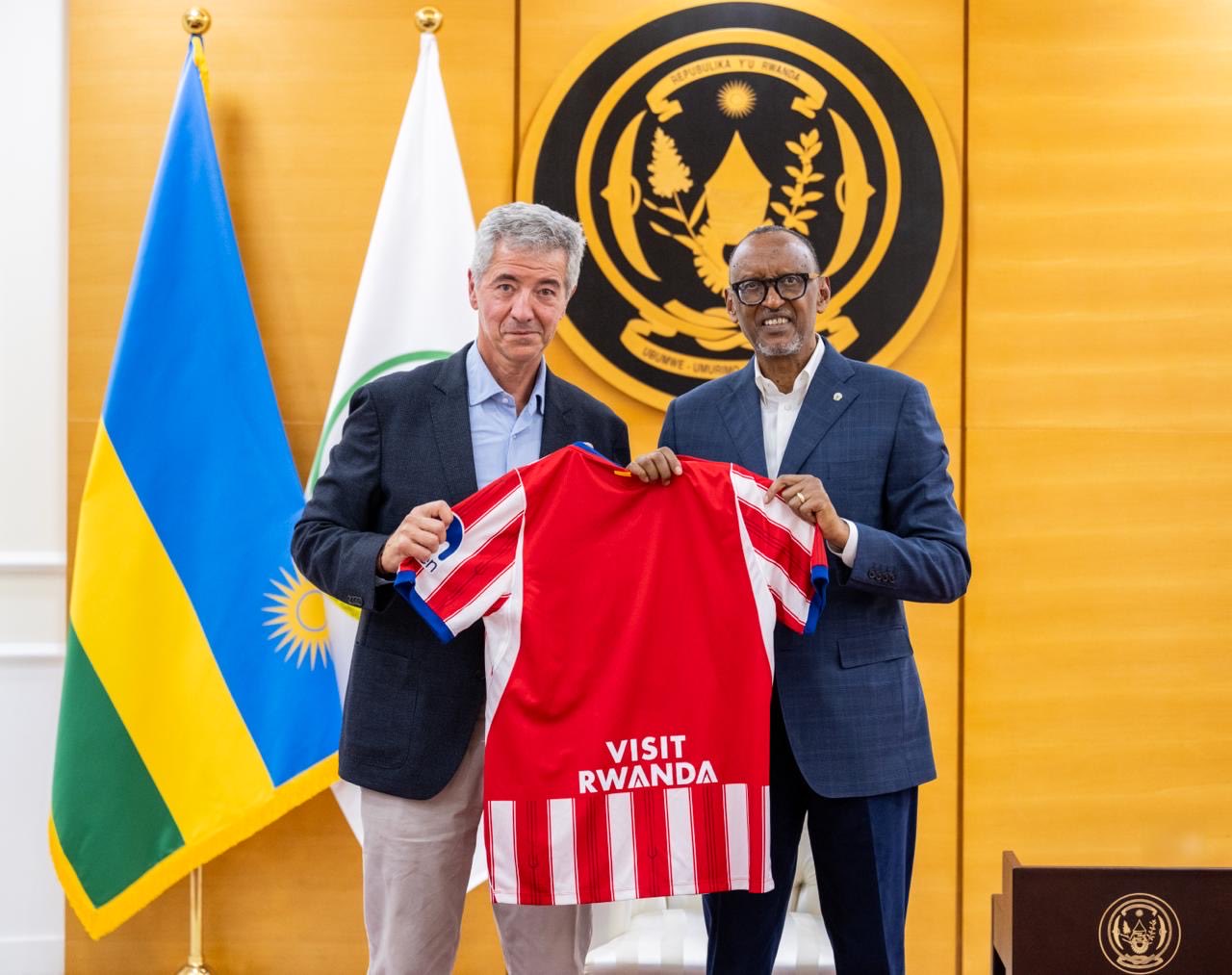
The meetings were held at Urugwiro Village, a day after they took part in the 21st Kwita Izina Gorilla Naming Ceremony.President Kagame poses with Miguel Ángel Gil Marín, CEO and majority shareholder of Atlético Madrid, holding a jersey bearing the Visit Rwanda emblem.President Kagame poses with Francesco Calvo, President of Business Operations at Aston Villa, holding a jersey bearing the Visit Rwanda branding.The visitors were among the distinguished personalities who named baby mountain gorillas during this year’s Kwita Izina ceremony, held in Kinigi, Musanze District, on Friday, September 4.
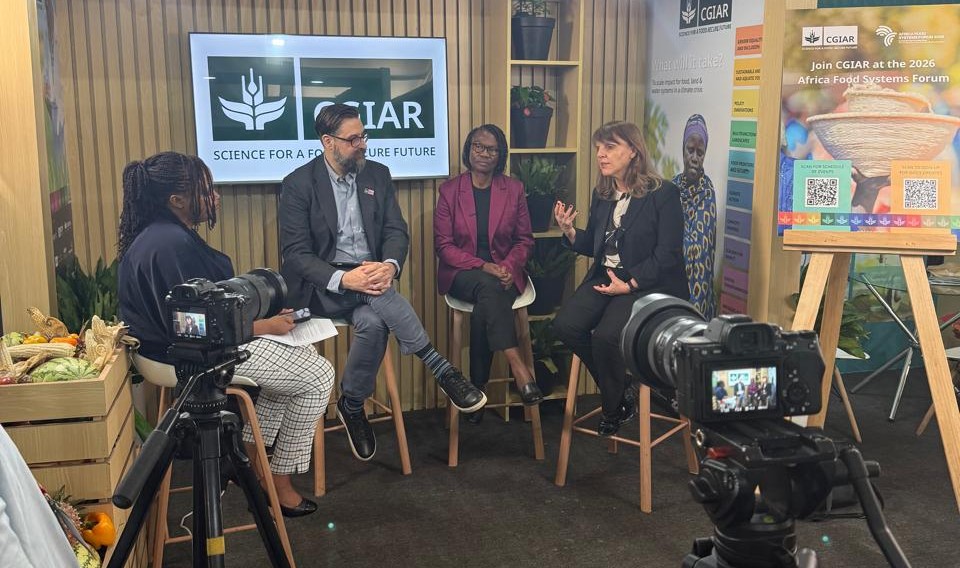
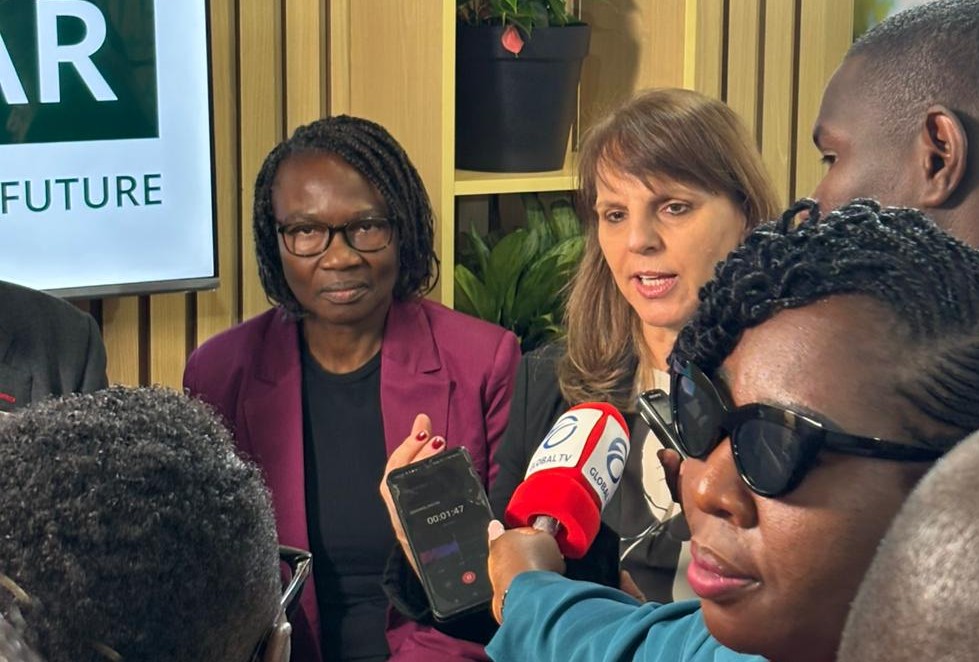
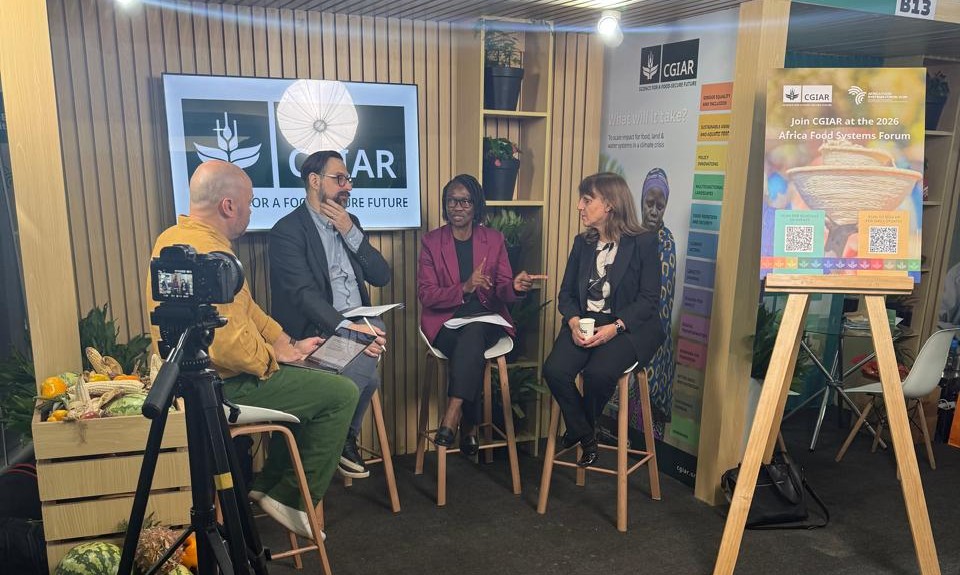
The approach was highlighted by CGIAR Chief Scientist Dr. Sandra Milach during a press briefing on the sidelines of the Africa Food Systems Forum in Kigali, where she outlined how research is being connected to practical interventions in Rwanda’s food system.
Milach explained that CGIAR is working closely with the Rwandan government on school meals, using evidence to determine how locally available foods can contribute to healthier diets while keeping meals affordable.
“We know what it takes to do a healthy plate, but can we afford it?” she posed on Wednesday, highlighting affordability as a central consideration in efforts to improve nutrition.
The work involves examining Rwanda’s food supply, determining what a nutritious and affordable plate should contain and generating evidence that can inform government policy and programmes.
According to Milach, aspects of the school meals programme are currently being implemented in about 195 schools and have reached more than 300,000 children.
She noted that the benefits could extend beyond nutrition, as healthier school meals can support education by helping children remain in school while contributing to their overall wellbeing and, ultimately, the country’s economic development.
The initiative also seeks to connect demand from schools with local agricultural production, including the cultivation of nutrient-rich crops such as high-iron beans.
Through the Alliance of Bioversity International and CIAT and the Pan-Africa Bean Research Alliance (PABRA), CGIAR supports efforts to make high-iron bean varieties available to school gardens and local farming communities, linking research on nutrient-rich crops with food production and school meals.
CGIAR Director of Scaling for Impact Dr. Tim Krupnik pointed to high-iron beans as an example of how school feeding can be used to strengthen an entire agricultural value chain.
Rather than viewing school feeding simply as the delivery of food to children, Krupnik explained that the approach can create a reliable market for farmers producing nutritious crops, allowing food to move from farms through the value chain and onto school plates.
“It’s not just about the supply of food to schools to provide more nutritious meals; it’s about utilizing that as an opportunity to go the whole way back to a farm,” he remarked.
According to CGIAR Chief Scientist Dr. Sandra Milach, aspects of the school meals programme are currently being implemented in about 195 schools and have reached more than 300,000 children.
Closing the gap between research and farmers
The Rwanda example forms part of a wider shift within CGIAR towards ensuring that agricultural research is designed with its eventual use and scale in mind.
Krupnik pointed out that Africa does not lack agricultural innovations. The greater challenge, in many cases, is taking proven technologies from research and development into widespread use by farmers.
Researchers, he argued, need to consider from the outset whether farmers and businesses will have access to finance, whether there will be sufficient market demand and awareness, and whether an innovation is suited to different groups, including women and young people.
“If scientists develop an innovation without thinking about how they would drive it into scale later on,” he cautioned, “the innovation and research stage” can fail to address the obstacles that emerge when the technology reaches the market.
The CGIAR Scaling for Impact programme is intended to address those gaps by assessing whether an innovation is ready, identifying suitable partners and establishing links with private-sector investment before technologies are pushed towards large-scale adoption.
For Rwanda, the school feeding initiative provides an example of how research can be connected to nutrition, agriculture and education rather than remaining within research institutions.
Rwanda’s approach to agricultural recommendations
CGIAR’s Head of the Liaison Office for Africa, Dr. Namukolo Covic, also singled out Rwanda’s approach to implementing recommendations emerging from agricultural reviews.
Covic noted that the Comprehensive Africa Agriculture Development Programme (CAADP) process includes biennial reviews that identify areas where countries are making progress and where bottlenecks remain.
The challenge, she observed, is that countries often identify these obstacles but fail to invest in addressing them.
Rwanda, however, stands out in the process because its joint review mechanism brings recommendations back into the country and brings different sectors together to determine how the identified challenges can be addressed.
“What we have seen, though, is that those countries that actually take those recommendations and go and act on them have actually done better,” Covic remarked.
She stressed that African countries also need greater investment in agricultural research. Countries have long been encouraged to commit at least one percent of their agricultural gross domestic product to research, but investment remains well below that level across the continent.
Research, she argued, should also receive predictable, long-term funding rather than being treated as a one-off intervention because agricultural challenges are constantly changing.
Climate change, in particular, means that innovations that work today may not necessarily remain effective in the future, creating a need for a continuous pipeline of research and technologies.
From farms to school plates
The focus on high-iron beans illustrates the broader effort to connect agricultural science with practical food and nutrition outcomes.
By linking nutrient-rich crops with school meals, the approach has the potential to address several challenges at once: improving children’s diets, creating markets for farmers and strengthening demand for locally produced food.
For Rwanda, the 195 schools and more than 300,000 children reached by the programme offer a significant platform for testing how research can inform food policy and translate into outcomes beyond the laboratory.
Milach maintained that the wider objective is not to identify a single innovation capable of solving Africa’s food challenges, but to apply a systems approach that brings together research, farmers, markets, government and private investment.
That approach, she suggested, could help Rwanda and other African countries move from producing agricultural innovations to ensuring that those innovations deliver measurable benefits to the people and communities they are intended to serve.
Dr. Sandra Milach, Chief Scientist at CGIAR; Dr. Namukolo Covic, CGIAR Head of Liaison Office for Africa; and Dr. Tim Krupnik, Director of CGIAR Scaling for Impact, address the press in Kigali on the sidelines of the Africa Food Systems Forum 2026.
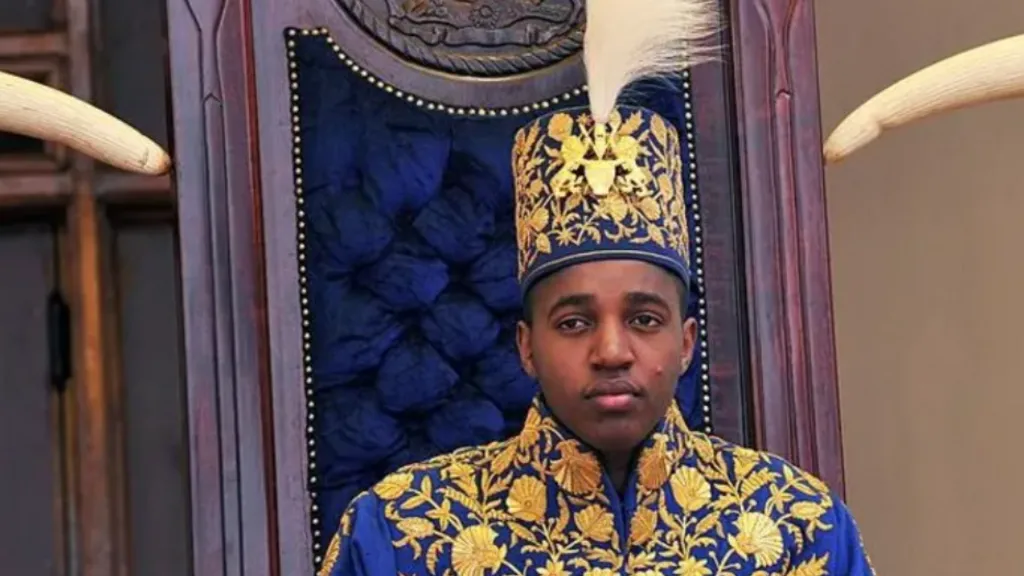
Oyo Nyimba, who died on August 27 aged 34, became king of Tooro in 1995 at just three years old, making him the world’s youngest reigning monarch at the time.
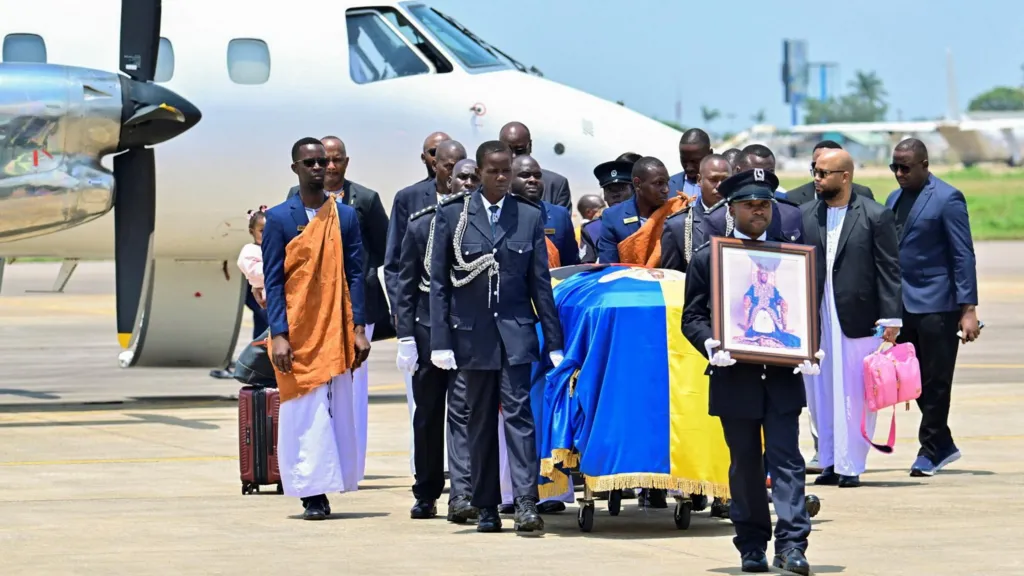
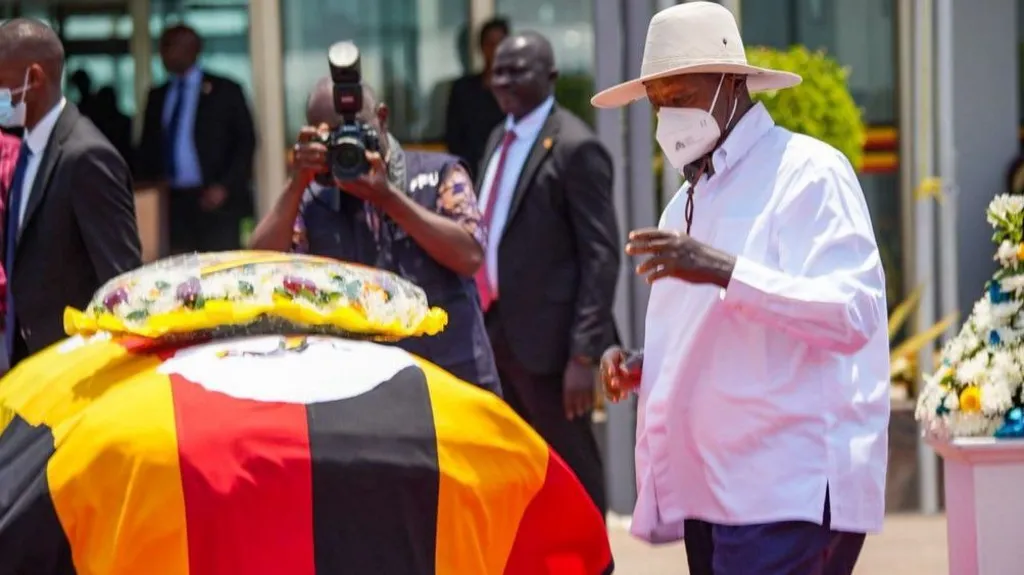
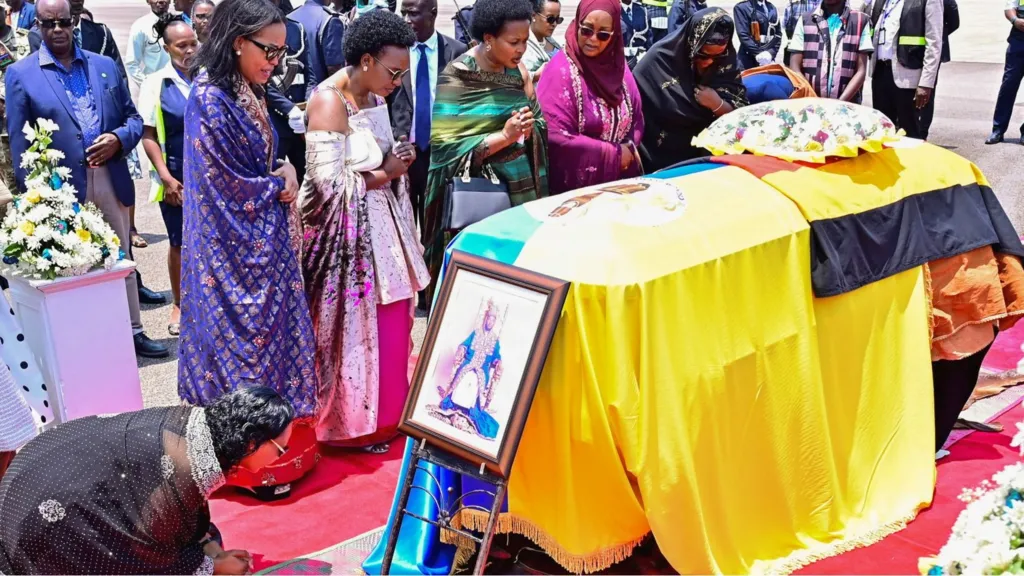
His body arrived at Entebbe International Airport aboard a chartered flight, where President Yoweri Museveni joined a group of dignitaries, members of the royal family and mourners to receive him.
Museveni walked to the casket, which was draped in Uganda’s national flag and the flag of Tooro Kingdom, laid a wreath and bowed before it.
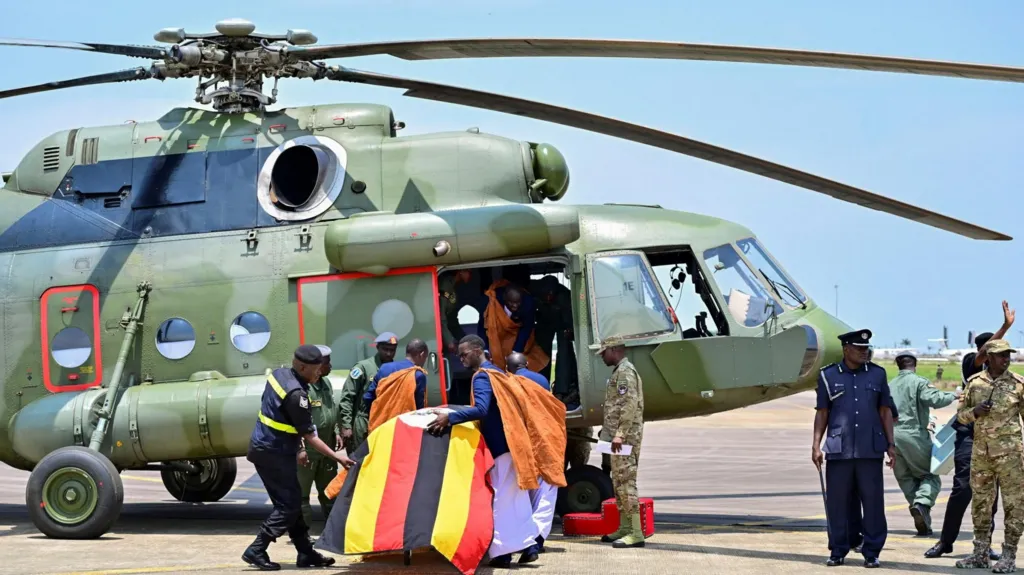
The casket was later transferred to a military helicopter for transportation to Tooro Kingdom in western Uganda, where mourning ceremonies will be held ahead of his burial on September 12.
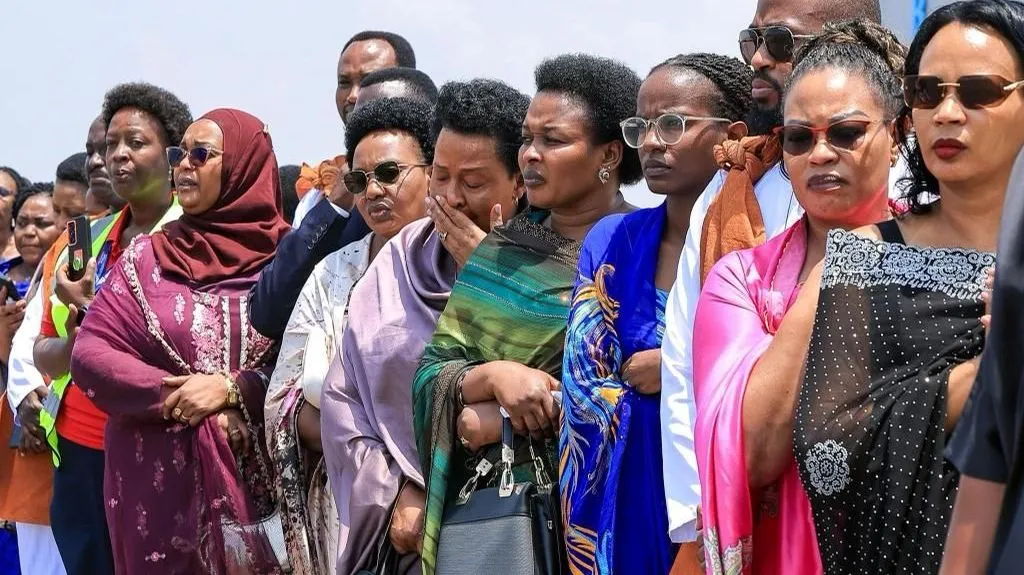
The king’s death has drawn widespread mourning in Tooro, where he remained a prominent cultural figure despite Uganda’s status as a constitutional republic.
“We don’t really believe that his majesty is no longer with us, (it is) as if we are still dreaming and I wish it could really be a dream,” said lawmaker Jennifer Mujungu, whose constituency is within the kingdom.
Davis Mugenyi, a member of the royal family who attended the reception at the airport, described the death as particularly painful because of the king’s relatively young age.
“It is a painful moment for us… someone who went laughing, someone who had a whole life ahead of him,” he said.
Oyo Nyimba was among Uganda’s traditional monarchs whose institutions survived the end of colonial rule and continue to hold cultural and social significance. His accession at the age of three attracted international attention, with images from his coronation showing the young king seated on the throne beneath an oversized crown and royal robes.
Beyond his traditional role, Oyo Nyimba also served as a United Nations ambassador advocating for the fight against HIV and AIDS. The UN joined those paying tribute to him following his death.
The king was unmarried, but Tooro Kingdom Prime Minister Calvin Armstrong Rwomiire Akiiki said last week that he had left an heir, assuring the continuity of the Crown.
King Oyo’s body arrived at Entebbe International Airport aboard a chartered flight. President Yoweri Museveni joined a group of dignitaries, members of the royal family and mourners to receive him.Family members and other officials receive the coffin at Entebbe International Airport.There was a sombre mood as the police escorted the coffin from the plane.Oyo Nyimba, who died on August 27 aged 34, became king of Tooro in 1995 at just three years old, making him the world’s youngest reigning monarch at the time.
Held in Kinigi under the theme “Conservation is Life: Sustaining the Future,” the annual ceremony brought together conservationists, business leaders, sports personalities, artists, philanthropists and public figures from Rwanda and around the world.
The tradition, inspired by the Rwandan practice of naming newborn children in the presence of family and community, has become one of the country’s most prominent conservation events.
This year, the 22 names brought the total number of gorillas named through Kwita Izina since it became an annual event in 2005 to 460.
Here are the stories behind the names and the people who gave them.
Ishakwe – determination
Born on April 1, 2025, to Inkubito of the Muhoza family, the female gorilla was named Ishakwe, meaning “determination.”
The name was given by Shaikha Al Nuwais, Secretary-General of UN Tourism and the first woman set to lead the organisation in its 50-year history.
The name reflects the resilience required to protect the mountain gorilla population and sustain conservation gains for generations to come.
Umukondo – a starting point
Born on June 20, 2025, to Muhabura of the Izuba family, the male gorilla was named Umukondo, meaning “navel” or “starting point.”
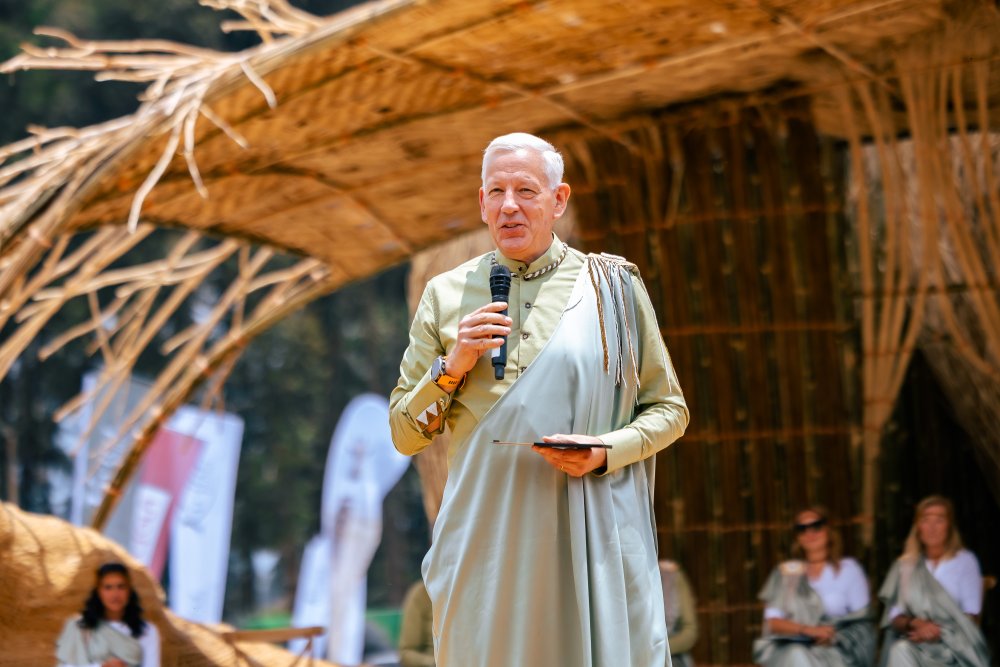
The name was given by Dominic Barton, Chairman of Rio Tinto and LeapFrog Investments and former Global Managing Partner of McKinsey & Company.
The name evokes a beginning, fitting for a young gorilla at the start of its life and for the continued journey of conservation.
Shikama – stand strong
The male gorilla, born on July 3, 2025, to Turimaso of the Susa family, was named Shikama, meaning “stand strong.”
Its namer, Paul Danforth, President of CAA Sports, chose a name that speaks to strength and resilience.
Inkera – traditional festivity
Born on July 31, 2025, to Isangano of the Pablo family, the male gorilla was named Inkera, meaning “traditional festivity.”
The name was given by Miguel Ángel Gil Marín, CEO and majority shareholder of Atlético de Madrid and a member of the UEFA Executive Committee.
The name captures the celebratory spirit of Kwita Izina itself, where conservation is marked through ceremony, culture and community.
Rugamba – the fighter
Born on September 8, 2025, to Gwaneza of the Hirwa family, the male gorilla was named Rugamba, meaning “fighter.”
The name was jointly given by Ahmed Sadek Elsewedy, Chairman of Elsewedy Electric, and his wife Anita Dravec.
Elsewedy Electric has been involved in Rwanda’s electrification efforts, adding another dimension to a name that speaks of strength and perseverance.
Umucyo – light
The male gorilla born on October 14, 2025, to Urahirwa of the Ntambara family, was named Umucyo, meaning “light.”
The name was given by Olivier and Quitterie Granet.
Olivier Granet is Managing Partner and Co-CEO of Kasada Capital Management, an investor in Africa’s hospitality sector.
Ngabonzima – the protector
Born on December 28, 2025, to Ukwiyunga of the Segasira family, the male gorilla was named Ngabonzima, meaning “the protector.”
The name was given by philanthropists Garreth and Nicola Wood, co-founders of Kids Operating Room, a global health charity focused on expanding access to paediatric surgery.
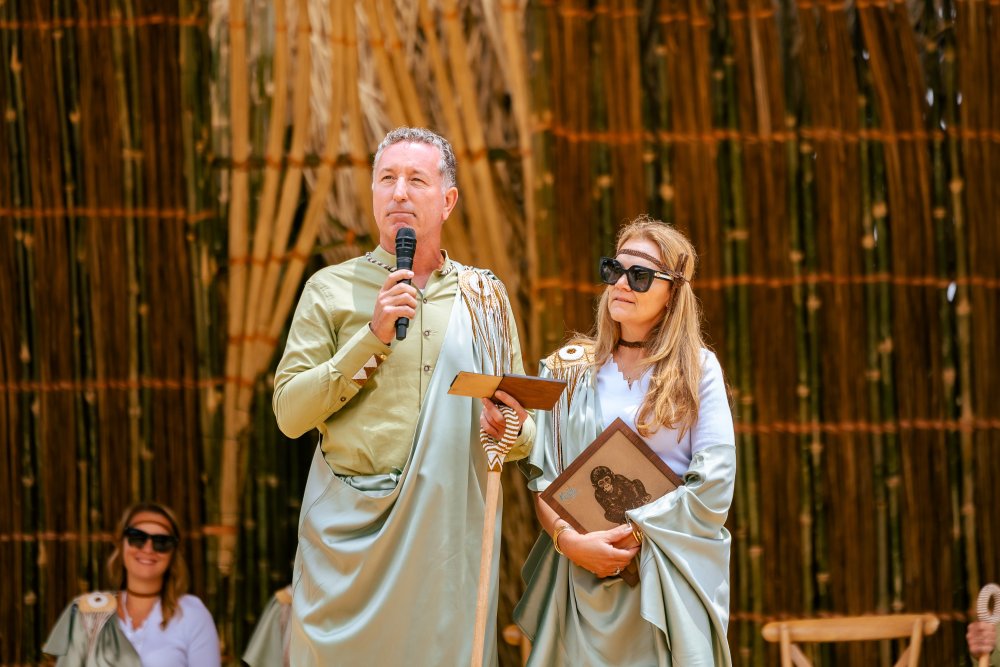
Garreth (far right) named the baby gorilla Ngabonzima.
The name carries a particularly fitting message at a ceremony built around the protection of wildlife and its habitat.
Ikambere – an important place
The female gorilla born on December 5, 2025, to Ntamupaka of the Sabyinyo family, was named Ikambere.
The name refers to “the important place where you receive your esteemed visitors.”
It was given by Susan Hollern, founder and president of Hope Haven Rwanda, who has worked in Rwanda on education and family transformation since 2011.
Ubukaka – majesty, strength and power
Born on July 28, 2025, to Ururabo of the Humura family, the female gorilla was named Ubukaka, meaning “majesty, strength and power.”
The name was given by acclaimed Rwandan filmmaker Marie-Clémentine Dusabejambo, whose film Ben’Imana was selected for the Un Certain Regard section at the 2026 Cannes Film Festival.
Ngoga – courage
The male gorilla born on March 21, 2026, to Ntibisanzwe of the Kwitonda family was named Ngoga, meaning “brave” or “with courage.”
The name was given by Francesco Calvo, President of Business Operations at Aston Villa, who has previously held senior leadership positions at Juventus, FC Barcelona and AS Roma.
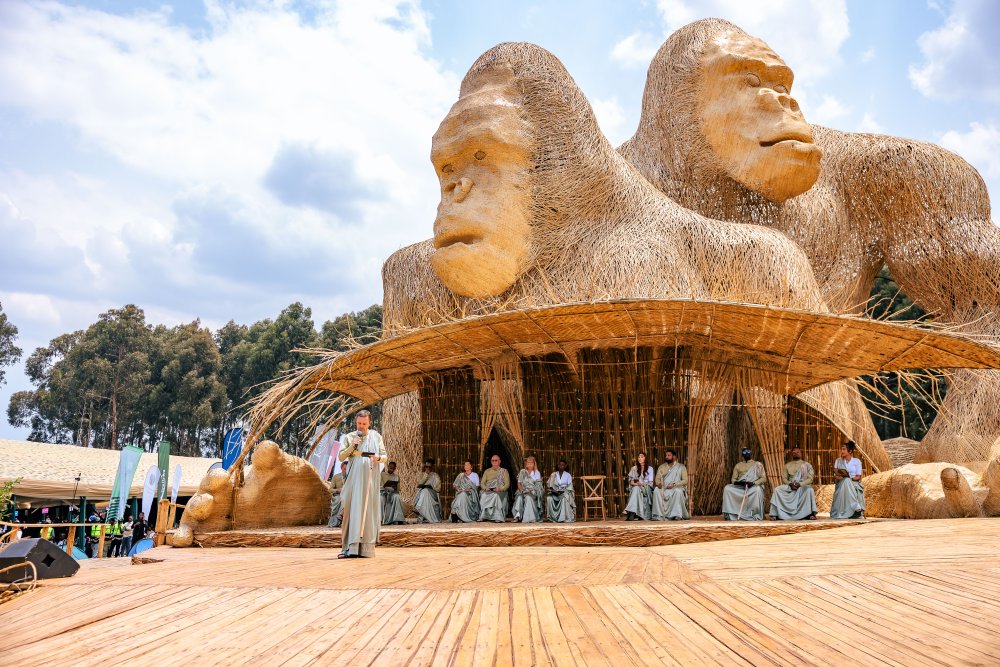
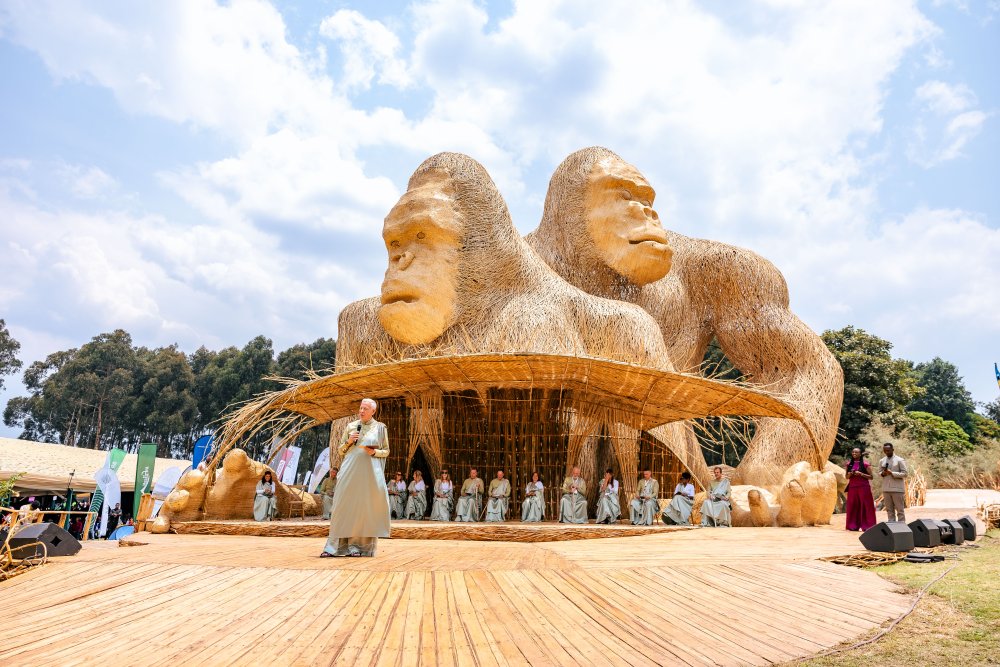
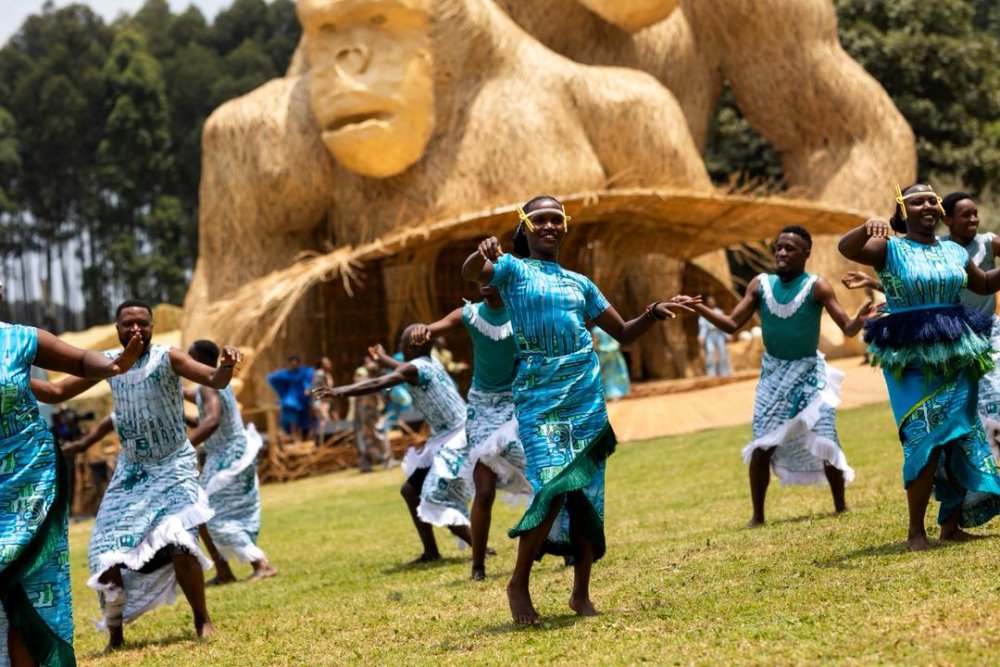
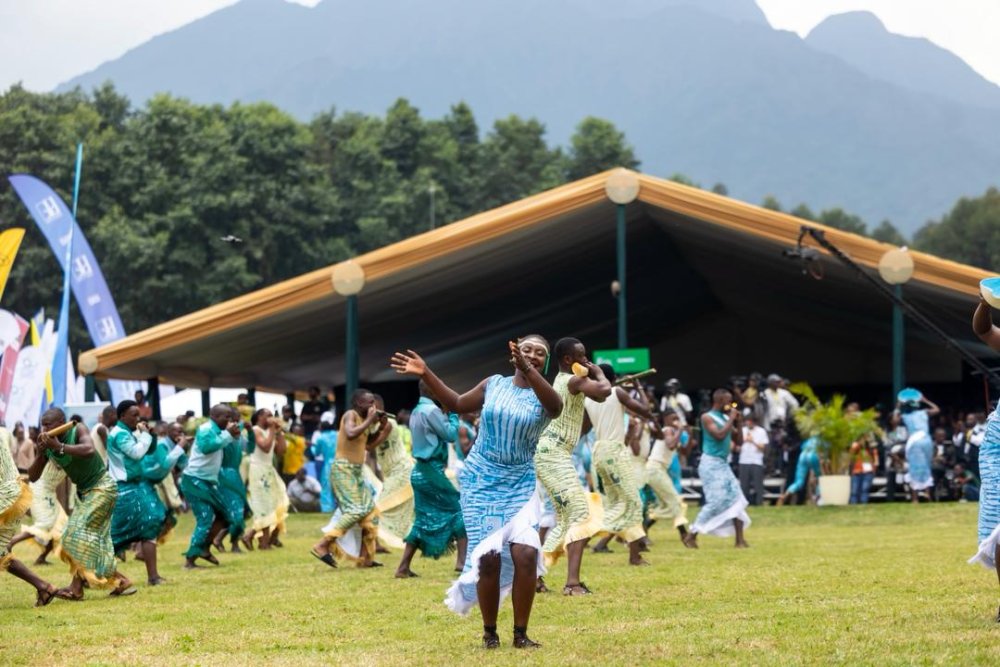
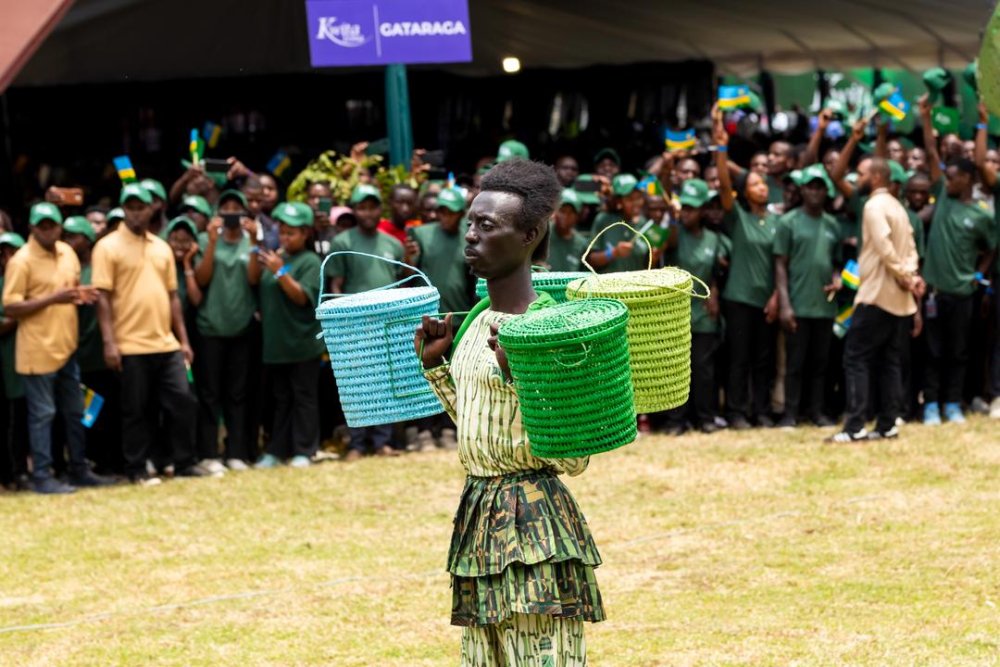
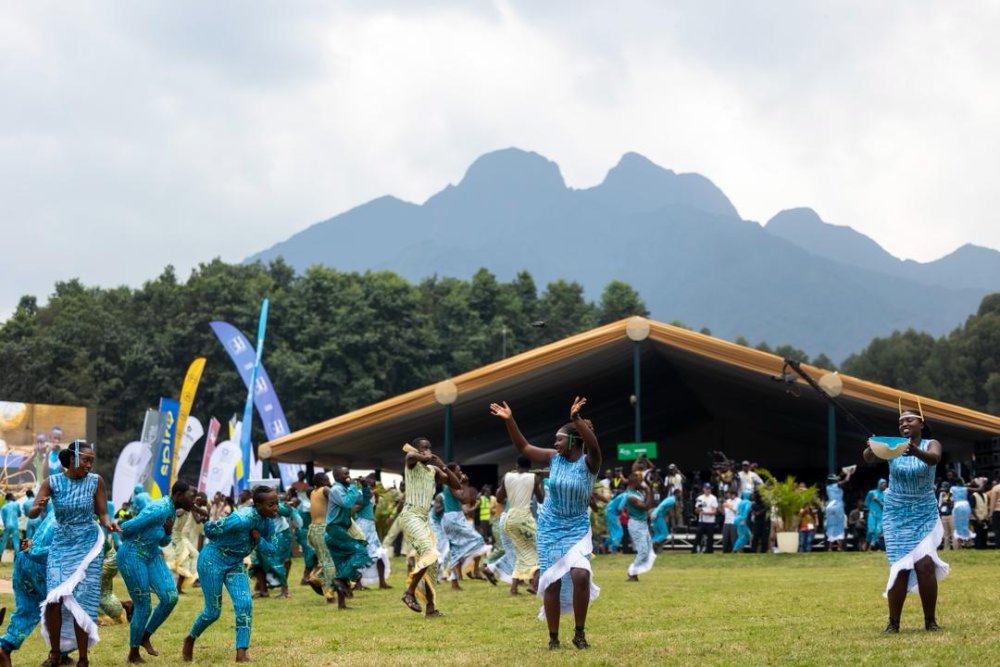
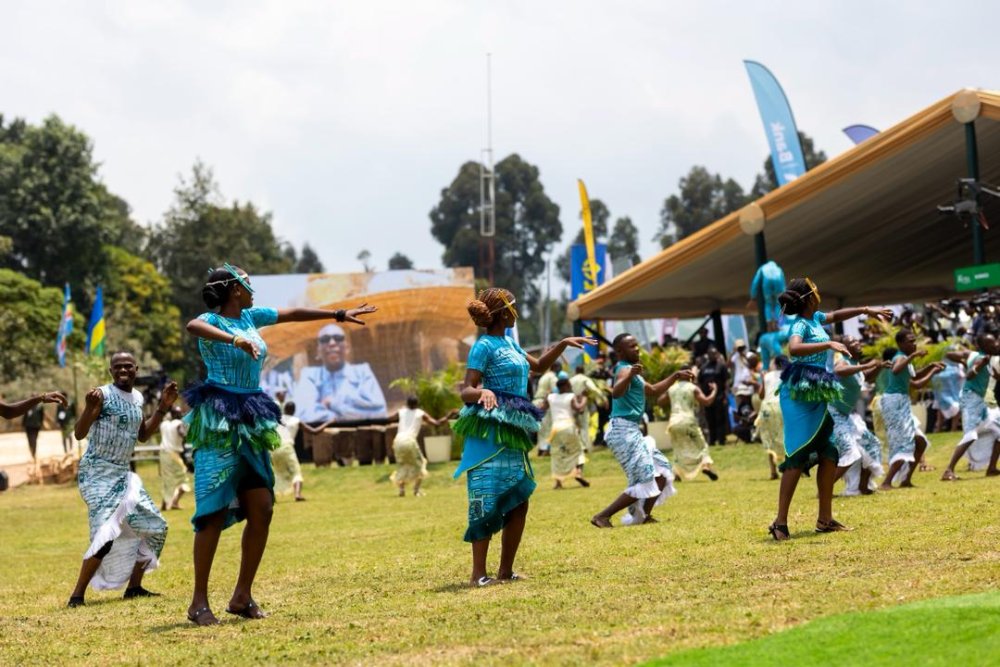
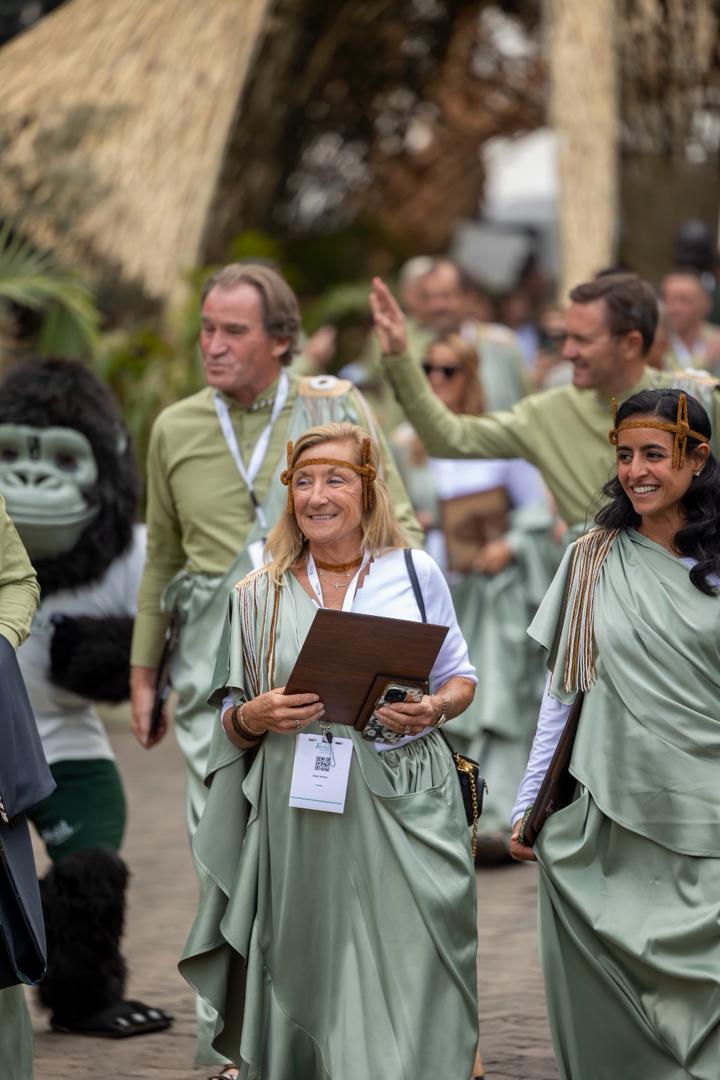
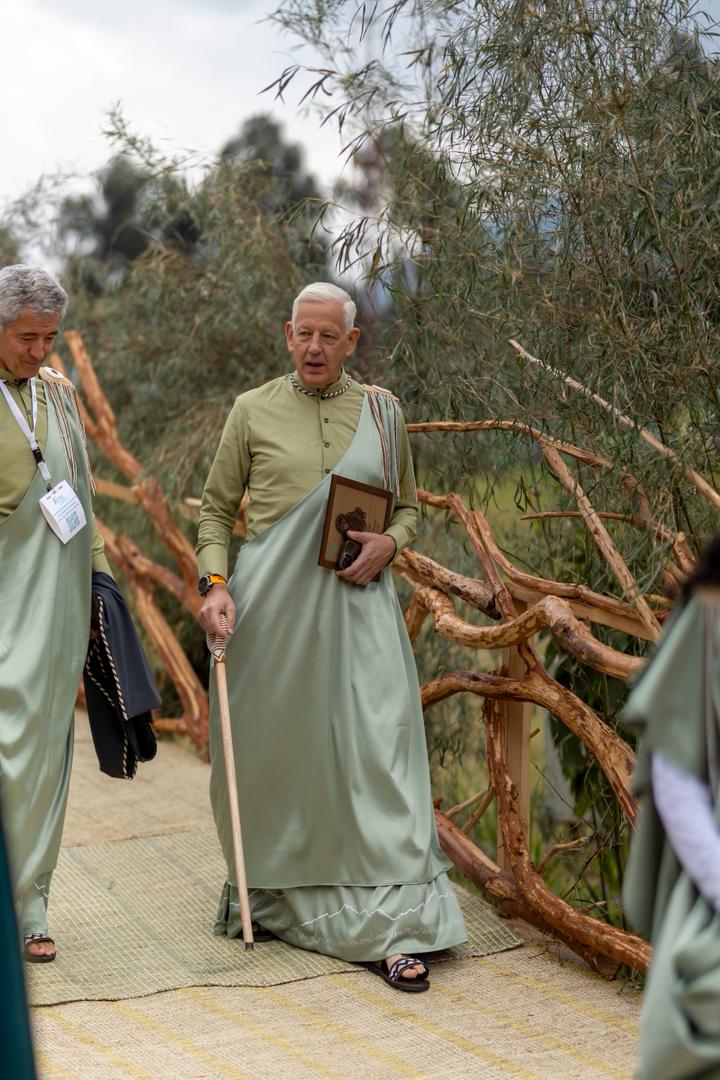
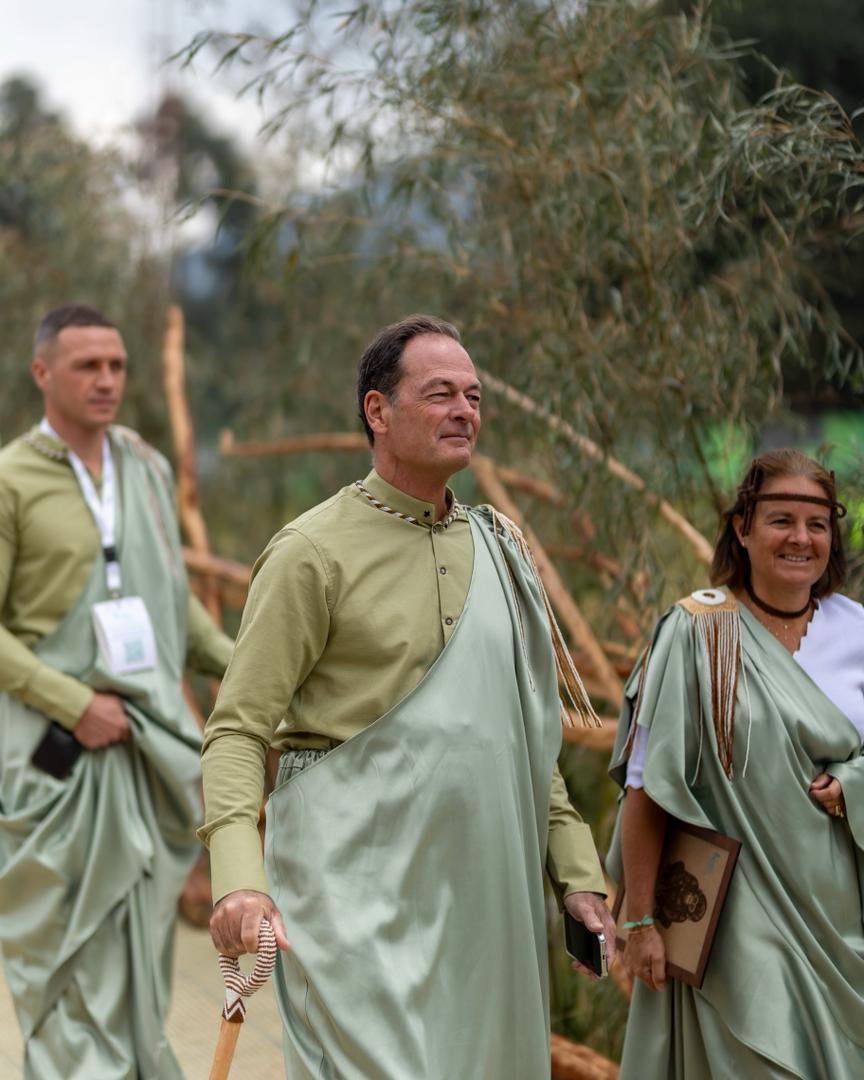
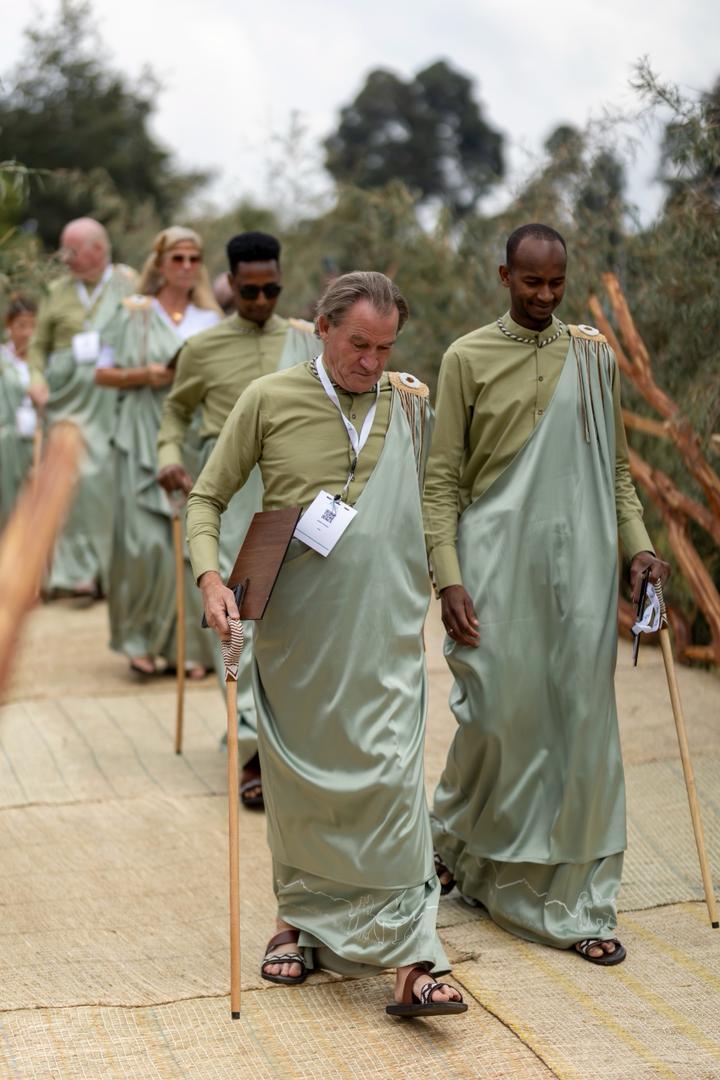
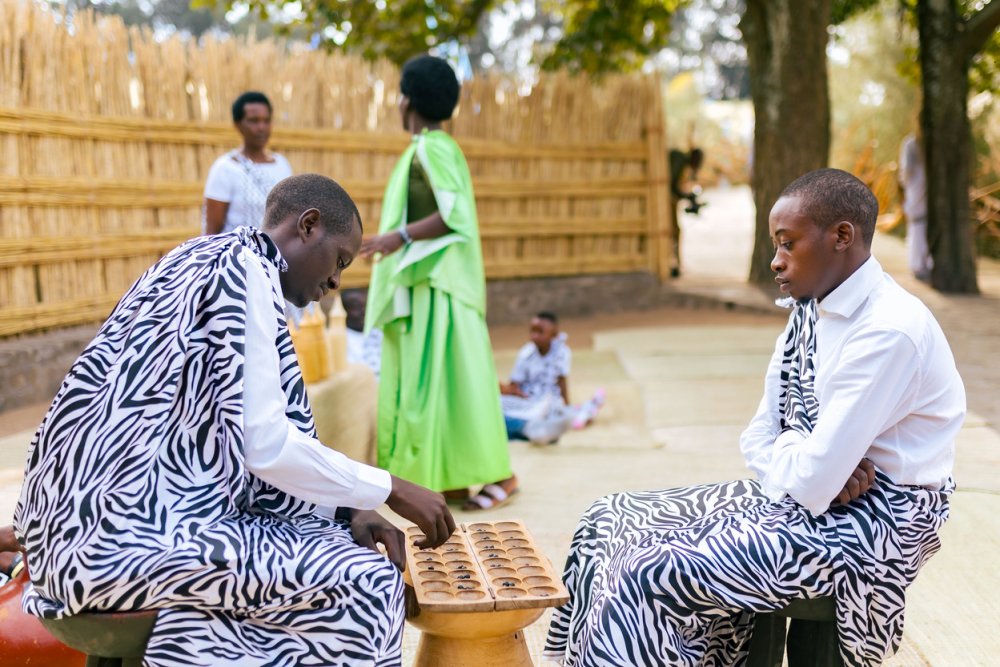
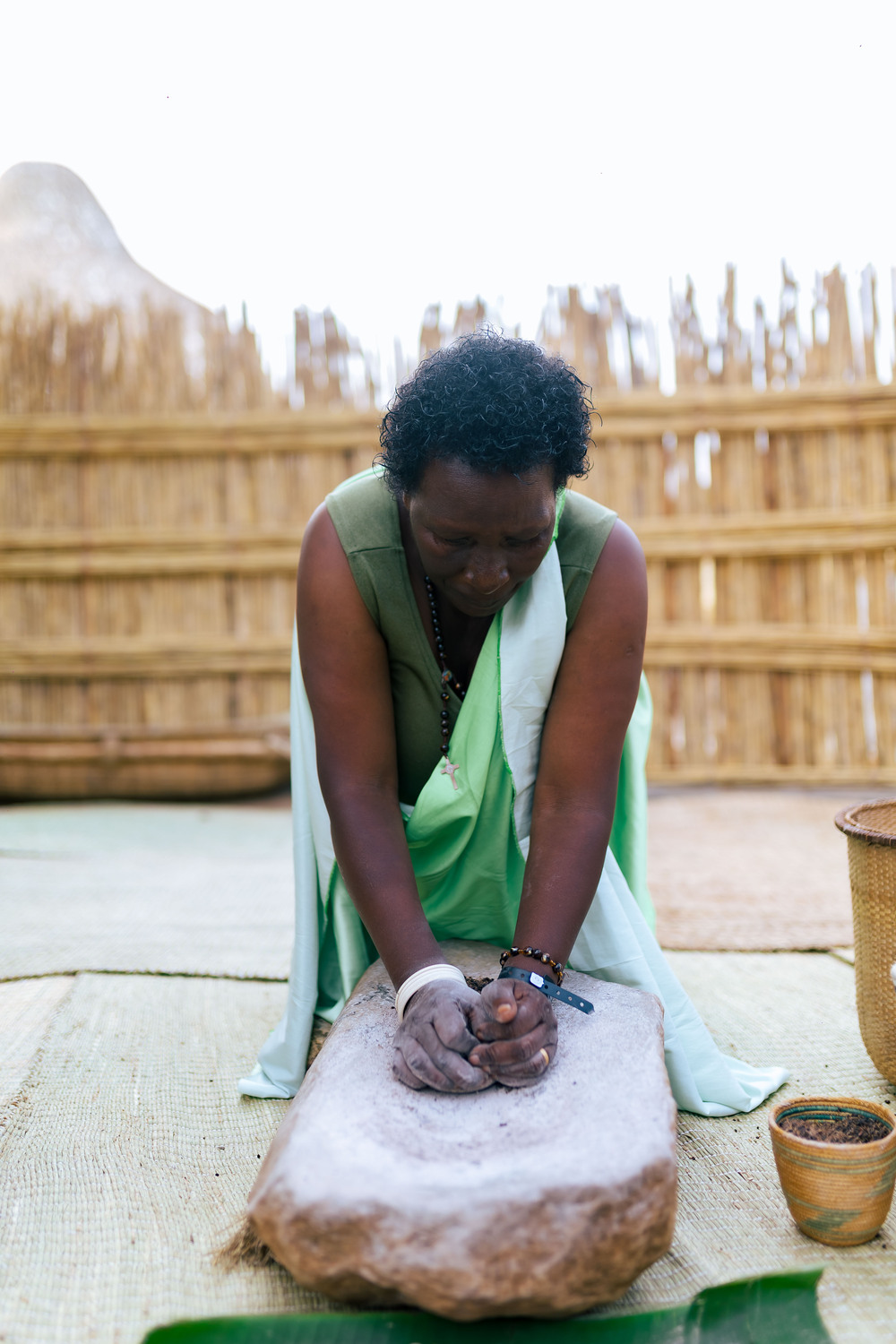
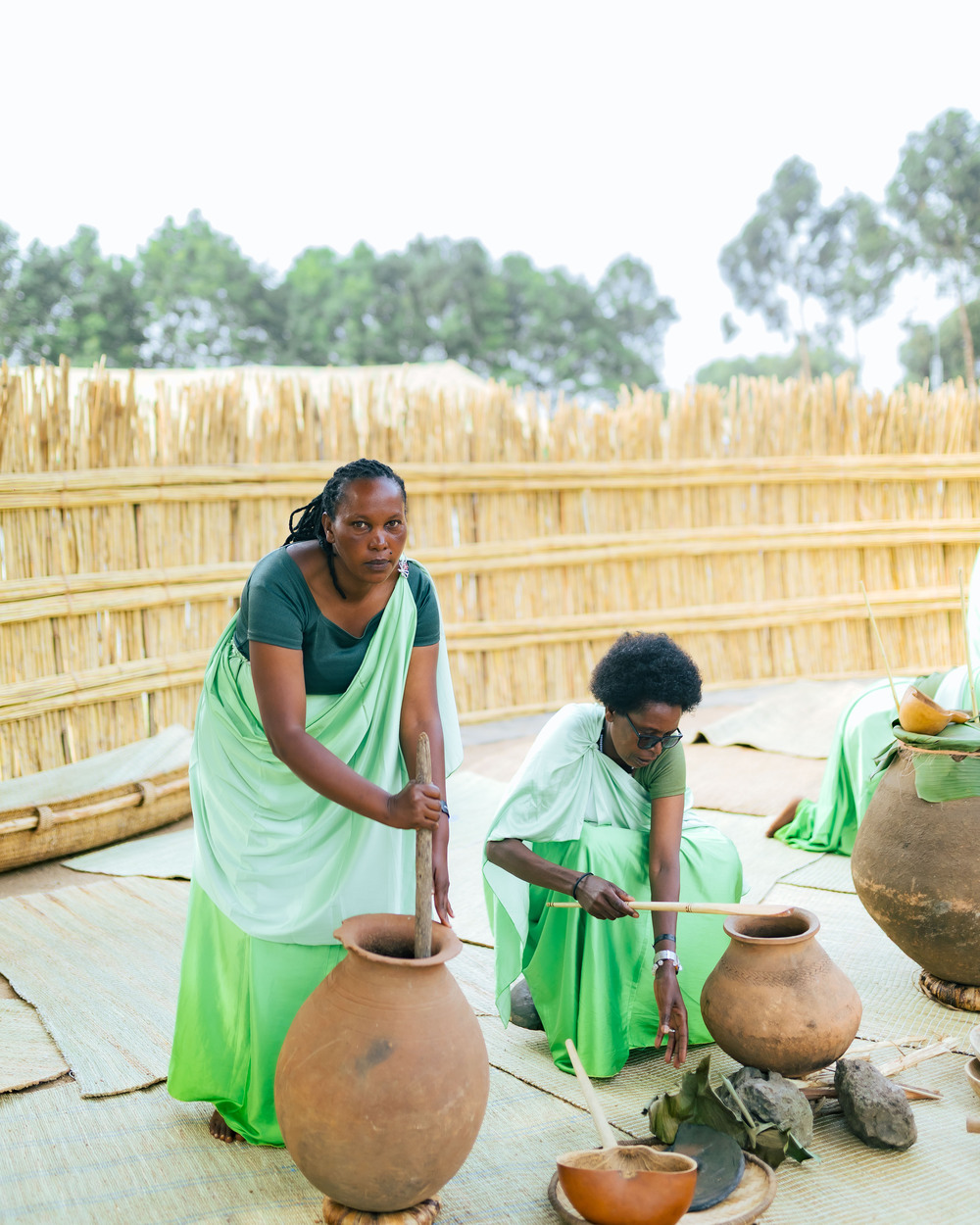
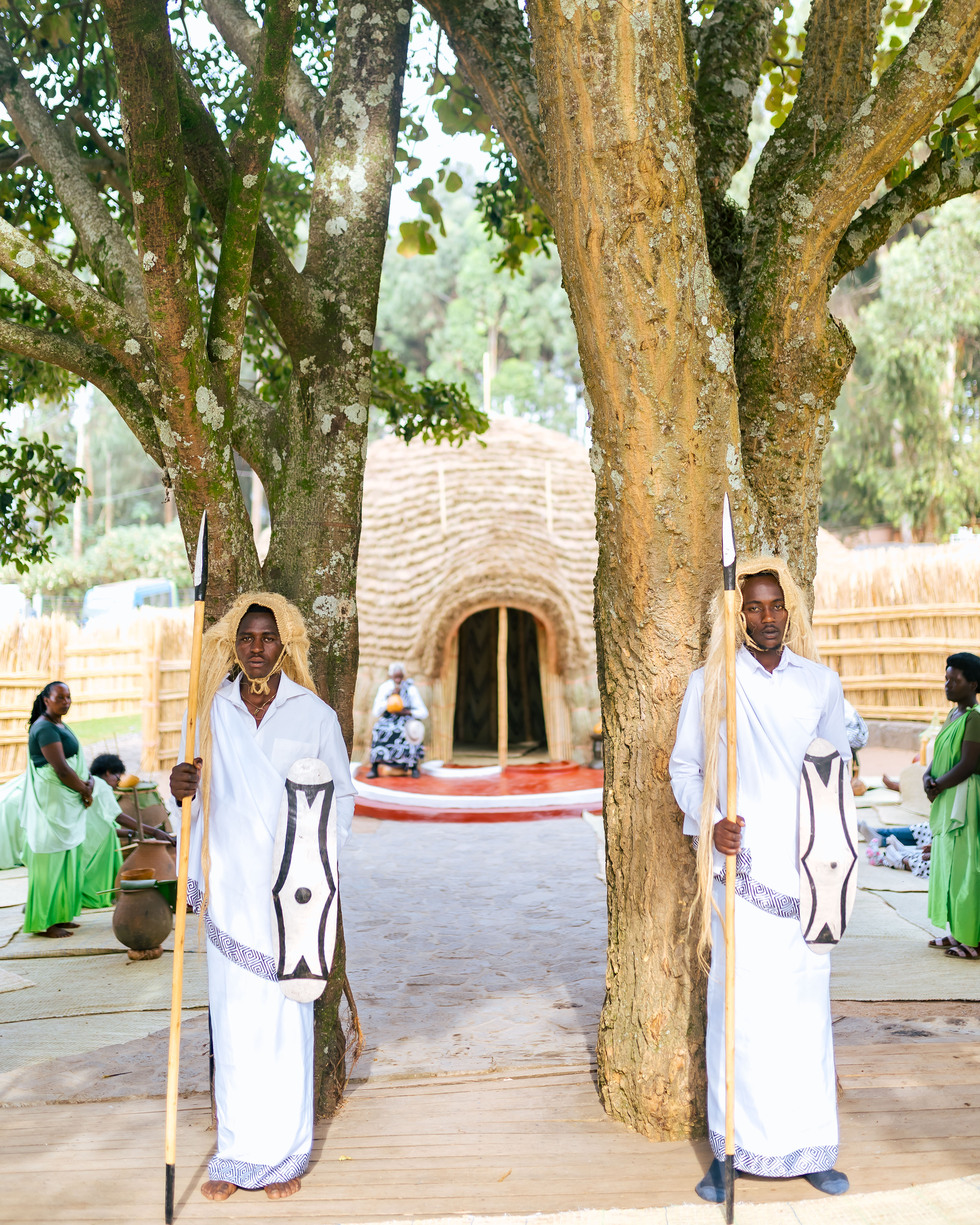
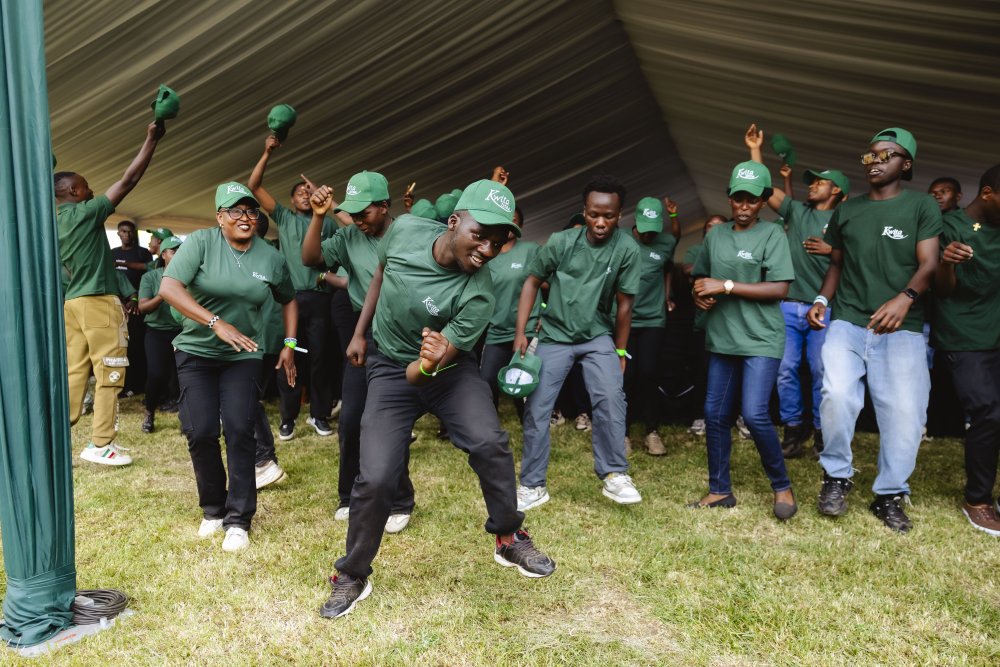
The naming ceremony was marked by tradition, music and celebrations.
Intwarane – fighting for a common goal
Born on January 27, 2026, to Intango of the Muhoza family, the male gorilla was named Intwarane.
The name refers to people fighting for a common goal, a fitting idea for a conservation programme built on collaboration between governments, communities, researchers, rangers, businesses and conservation organisations.
The namer was Mamadou Sakho, former France international and former captain of Paris Saint-Germain, who also played for Liverpool and Crystal Palace.
Tarama – socialise
The male gorilla born on July 21, 2025, to Impuhwe of the Humura family was named Tarama, meaning “socialize.”
The name was given by Mutaz Essa Barshim, the Qatari Olympic gold medallist and three-time world champion in high jump.
The name reflects the social nature of mountain gorillas, which live in close-knit family groups.
Igeno – destiny
Born on March 15, 2026, to Tabaro of the Musilikale family, the female gorilla was named Igeno, meaning “destiny.”
The name was given by Kelly O’Meara, Executive Director of the Pan African Sanctuary Alliance, which works to advance primate protection and welfare across Africa.
Uruhembe – on the frontline
The male gorilla born on August 9, 2025, to Mbele of the Izuba family was named Uruhembe, meaning“on the frontline.”
The name was given by Neil and Susan McDougall.
Neil McDougall is founder and chairman of DelAgua, which works on clean cooking and livelihoods across Africa.
The name also echoes the frontline role played by rangers and conservation teams who work daily to protect Rwanda’s wildlife.
Indahiro – commitment
Born on December 28, 2025, to Bukima of the Musilikale family, the male gorilla was named Indahiro, meaning “commitment.”
The name was given by Jeanette Uwimbabazi, a Nyungwe National Park ranger recognised for her courage in combating wildlife crime and protecting Rwanda’s biodiversity.
Her own conservation work gives particular weight to a name centred on commitment.
Muganura – national harvest
The male gorilla born on March 20, 2026, to Mafubo of the Izuba family was named Muganura, referring to National Harvest Day, a Rwandan thanksgiving celebration.
The name was given by former France and Manchester United captain Patrice Evra, a five-time Premier League champion and UEFA Champions League winner.
Ndongozi – outstanding leader
James Chester, Aston Villa legend and former Wales international, gave a baby gorilla the name Ndongozi, meaning “outstanding leader.”
Chester, who captained Aston Villa and helped the club return to the Premier League, brought a sporting connection to a name centred on leadership.
Muhuza – the one who brings people together
David Lappartient, President of the Union Cycliste Internationale (UCI) and a member of the International Olympic Committee, named a baby gorilla Muhuza.
The name means “the one who brings people together and connects.”
Lappartient played a key role in bringing the 2025 UCI Road World Championships to Rwanda, the first edition of the competition to be held in Africa.
Komezutsinde – keep winning
Dominique Plewes, CEO and philanthropy leader and founder of SOF Support Foundation, gave a baby gorilla the name Komezutsinde, meaning “keep winning.”
She was joined by Steven Kouraas, co-namer.
The name carries a message of perseverance, victory and continued progress, echoing Rwanda’s conservation journey.
The ceremony welcomed a distinguished group of international personalities from sports, business, conservation, entertainment and philanthropy.
Mpinga – on top
Renowned British nature filmmaker and producer Alastair Fothergill, known for major wildlife productions including Planet Earth and Blue Planet, gave a baby mountain gorilla the name Mpinga, meaning “on top.”
Fothergill’s long career documenting wildlife brought a conservation storyteller’s perspective to the ceremony.
Impeta – an award and symbol of recognition
Rwandan gospel singer Israel Mbonyi named a baby gorilla from the Izuba family Impeta.
The name translates to “an award” or “a symbol of recognition.”
The choice connects the ceremony to the achievements of the people and institutions whose work has contributed to the recovery of mountain gorillas.
Nkwakuzi – bravery
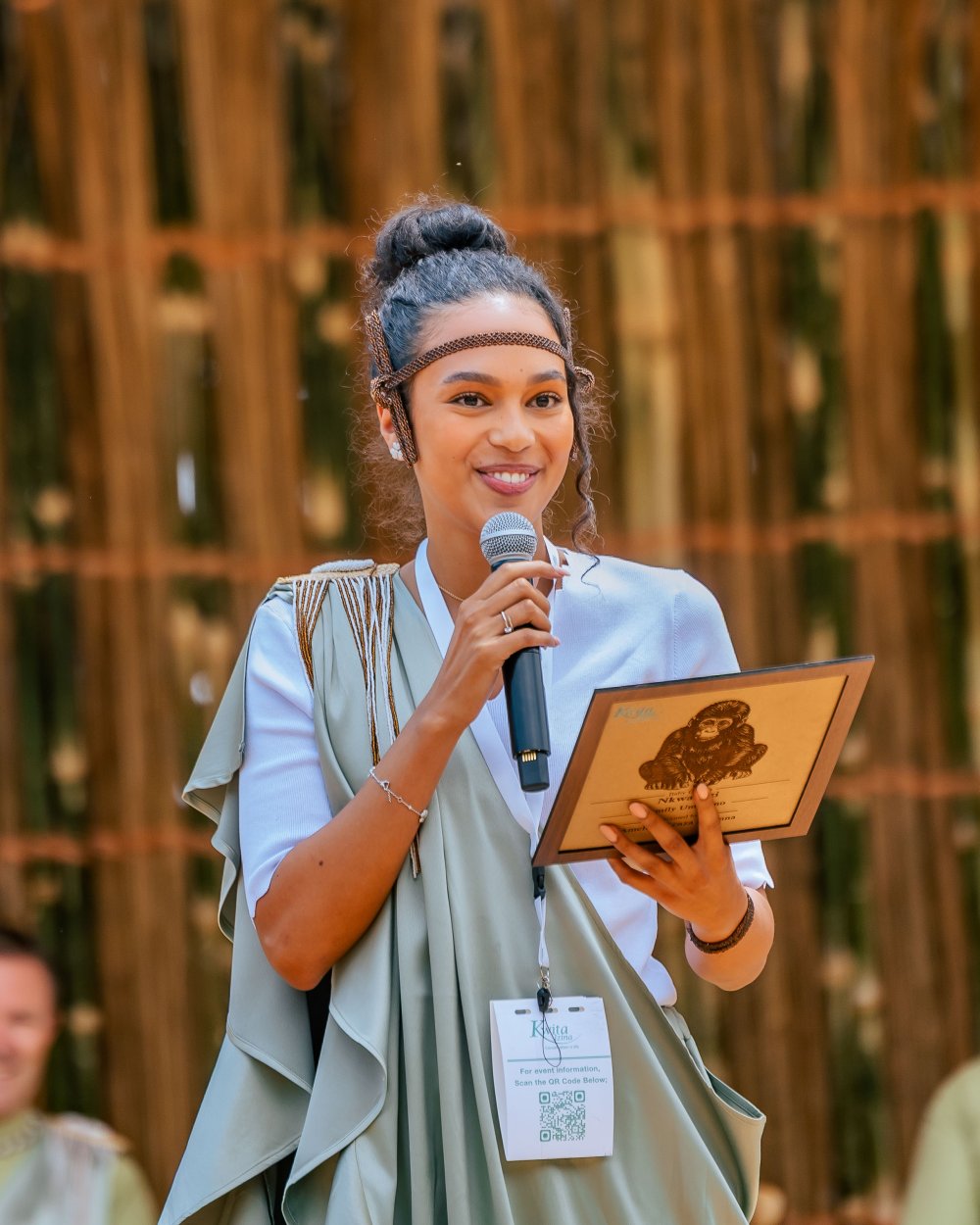
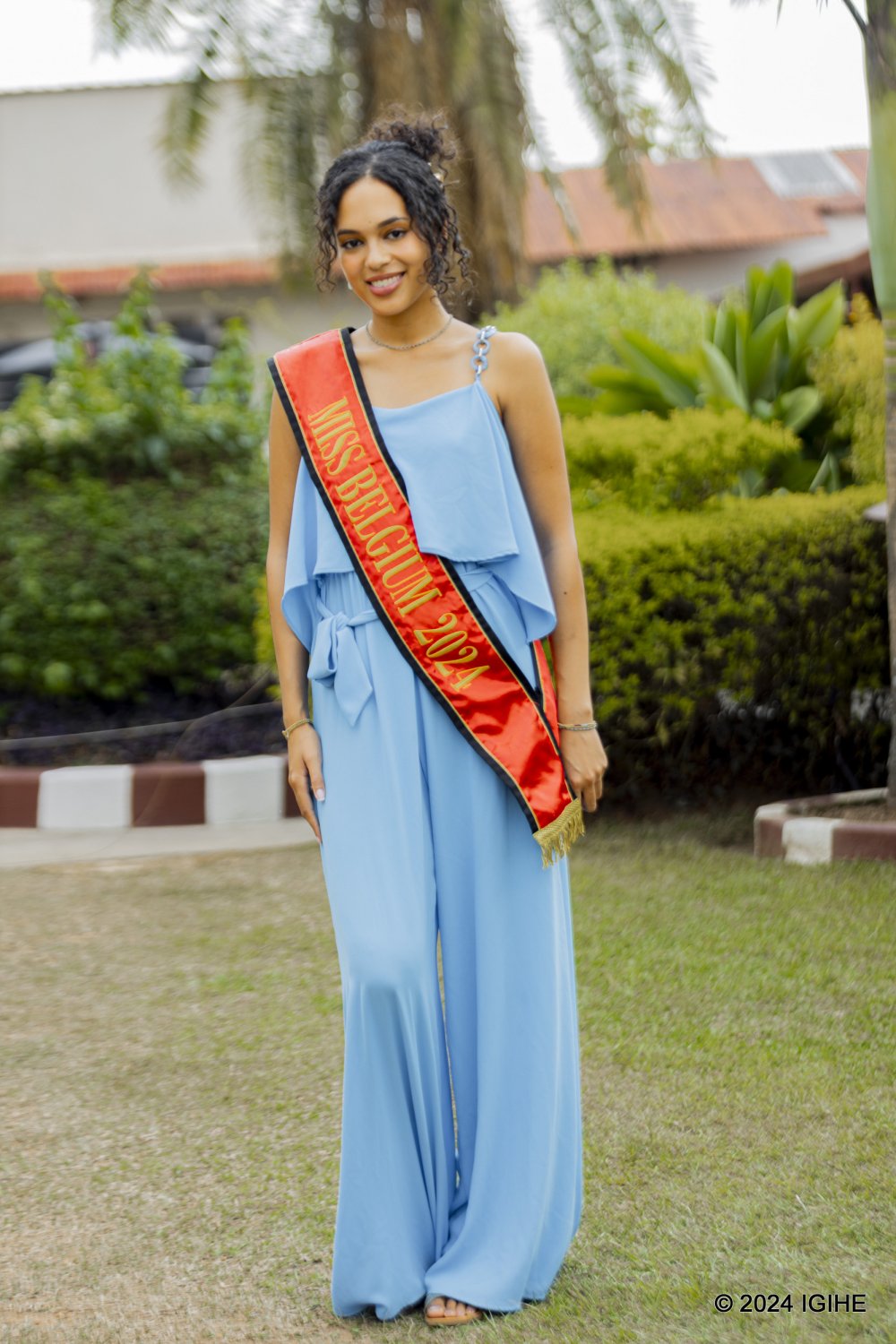
Kenza Johanna Ameloot, Miss Belgium 2024, named a male baby gorilla Nkwakuzi, a name meaning “a brave person.”
Ameloot, who has Rwandan heritage, said she chose the name to honour the strength, courage and resilience of the Rwandan people.
She also uses her platform to advocate for children affected by cataracts while championing her Rwandan heritage.
More than names
Beyond the colour, music and star power surrounding Kwita Izina, the ceremony carries a deeper conservation message.
Rwanda’s mountain gorilla population has grown to more than 1,060 in the wild across the Virunga Massif and Bwindi ecosystem, making the species the only great ape whose population is increasing.
Prime Minister Dr Justin Nsengiyumva said that when Rwanda names a gorilla, it is making a promise to protect it.
“Because a name for us is more than a celebration. It is a promise,” he said.
That promise, he added, means ensuring that the gorillas have the protection, habitat and conditions they need to grow, thrive and reproduce.
The recovery has come a long way from the early 1980s, when only about 250 mountain gorillas were estimated to remain in the Virunga Massif.
Today, Rwanda is also pursuing a major expansion of Volcanoes National Park, alongside investments aimed at improving the lives of communities living around the protected area.
The newly launched Smart Green Village, an investment of more than $49 million, is expected to provide modern housing, services and sustainable livelihood opportunities for 547 households affected by the park’s expansion.
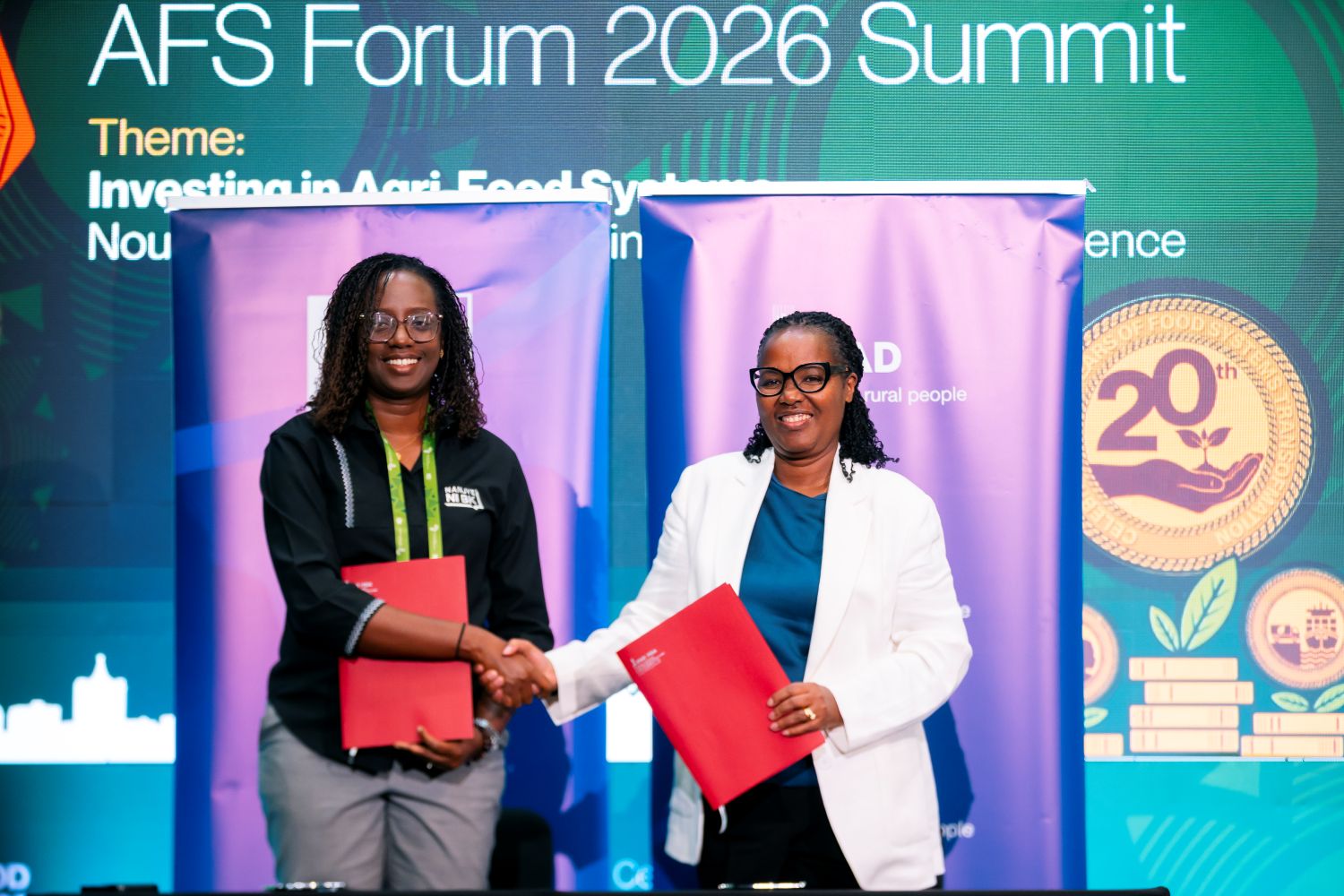
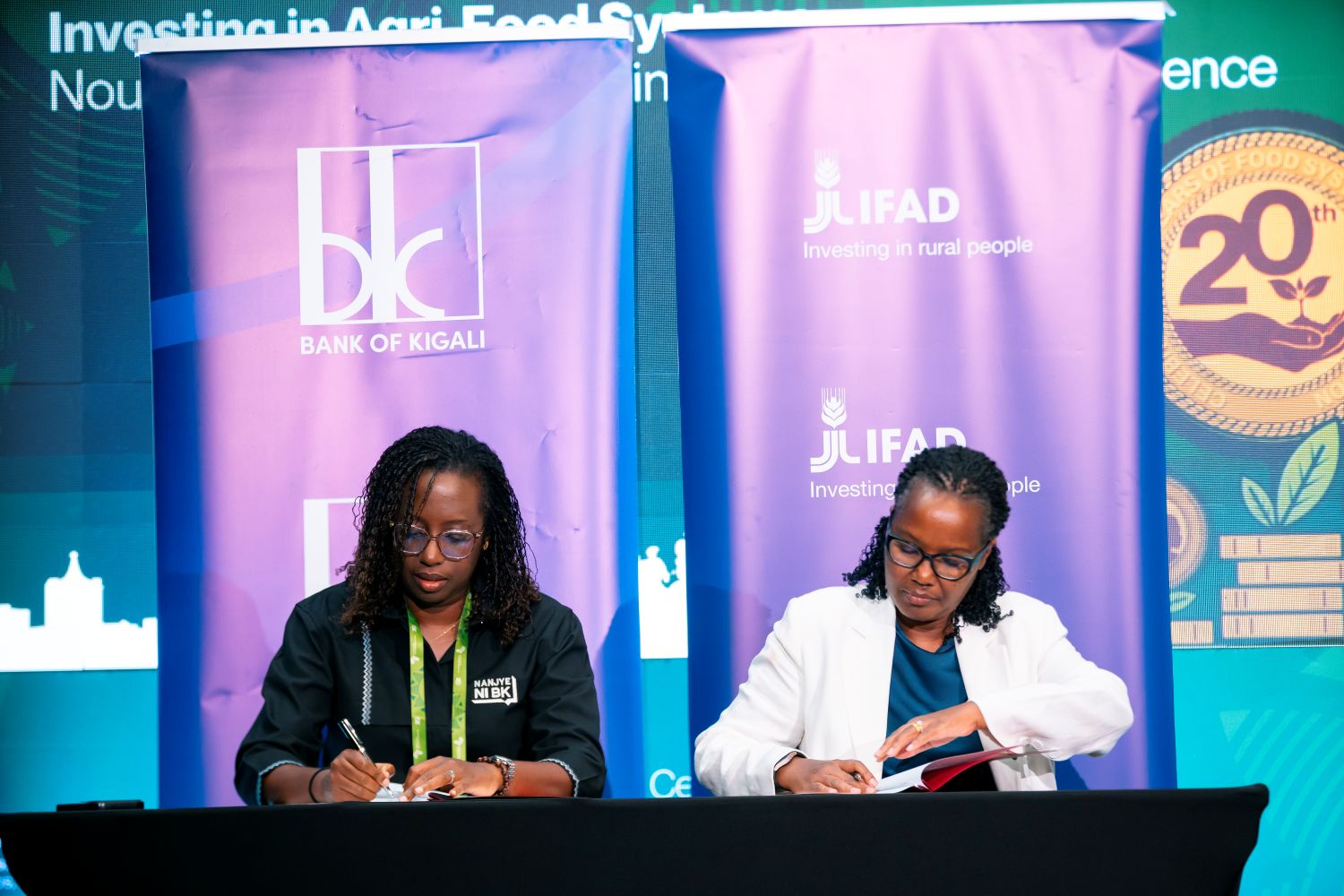
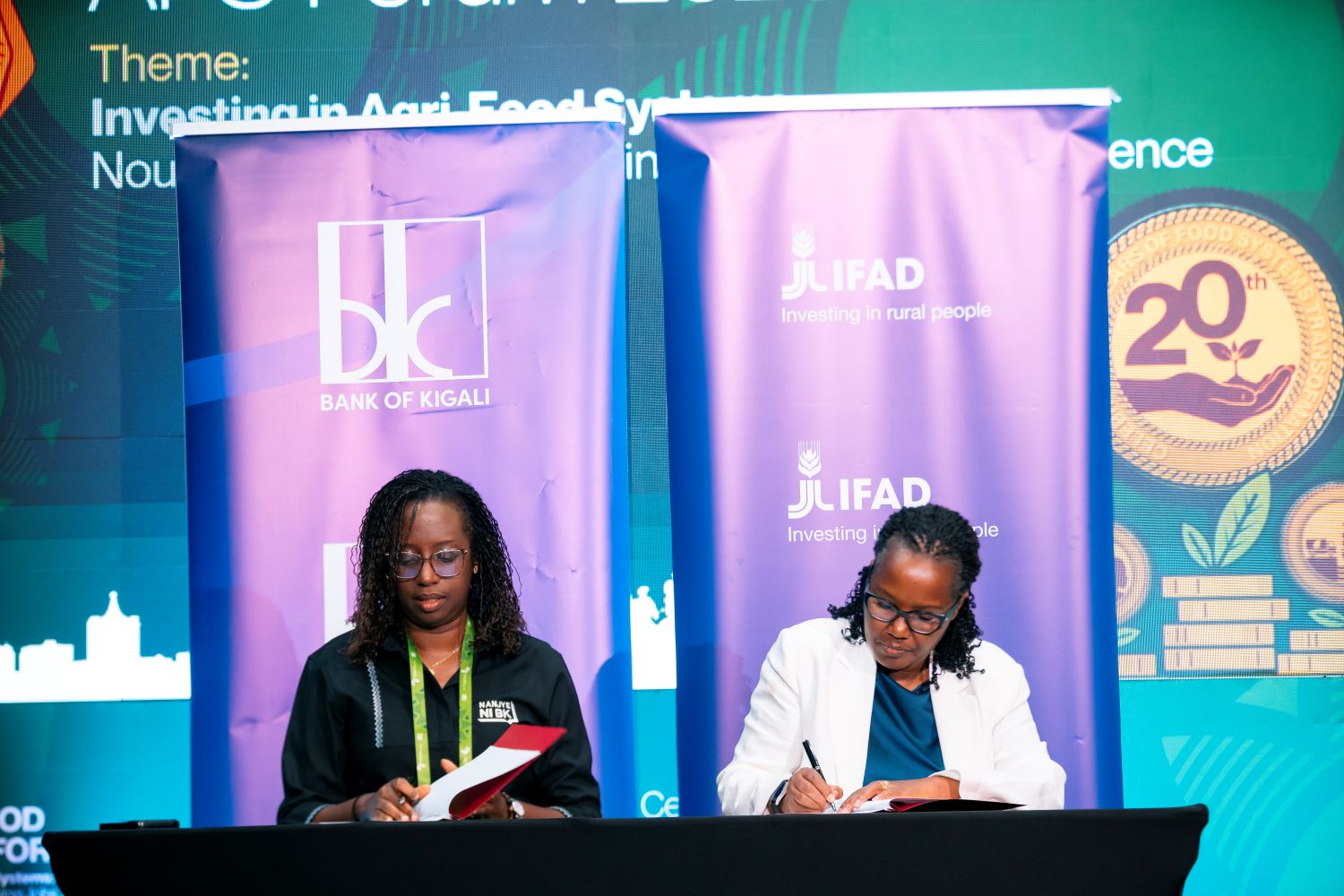
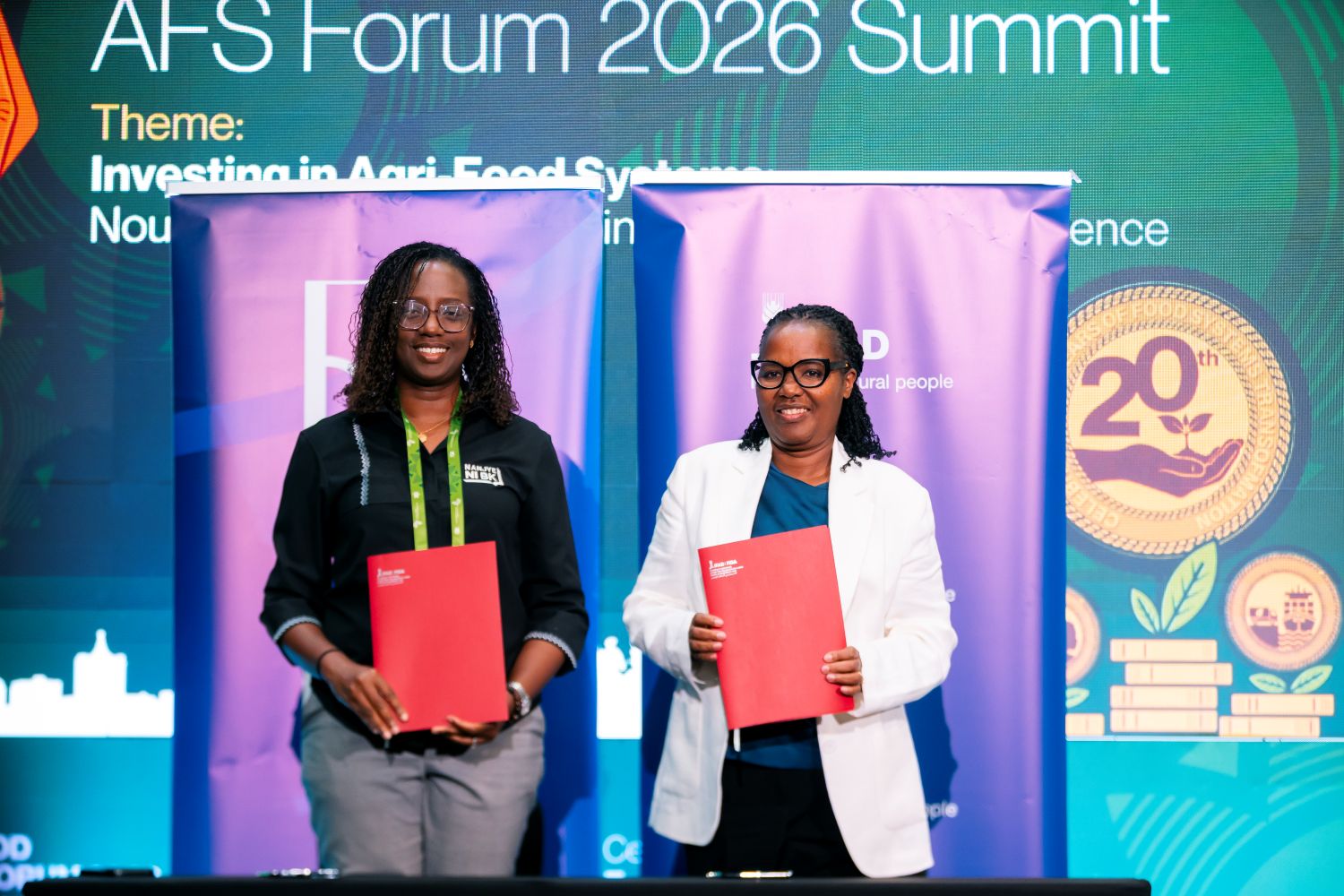
The Farmers’ Organizations Financing Programme-Rwanda (FOFP-R) will combine $12 million in financing from IFAD with $9 million in co-financing from Bank of Kigali.
The deal, signed on the sidelines of the Africa Food Systems Forum in Kigali on Friday, September 4, is expected to strengthen about 215 farmers’ organisations, provide financing to around 172 of them and benefit more than 35,000 smallholder farmers, particularly women and young people.
The programme will target key agricultural value chains, including maize, rice, cassava, dairy and horticulture.
IFAD Vice-President Gérardine Mukeshimana said the programme reflects a broader push towards innovative approaches to agricultural financing.
“The significance of Farmers’ Organizations Financing Programme-Rwanda represents a broader shift towards innovative financing solutions. Innovation goes beyond technology; it is also about finance, institutions, partnerships and entrepreneurship,” she said.
“FOFP-R is expected to reduce risk, attract additional investment and expand opportunities for rural entrepreneurs, farmers’ organizations and small-scale producers.”
Agriculture employs more than 70 per cent of Rwanda’s population and contributes about 25 per cent of the country’s gross domestic product.
However, access to finance remains a major constraint for the sector, with agricultural lending accounting for only a small share of total credit.
Farmers’ organisations play a key role in aggregating production, facilitating access to inputs and markets, and connecting farmers with financial services. However, about 70 per cent of their financing needs remain unmet, according to IFAD.
The financing gap has been linked to challenges including limited collateral, inadequate financial records and low financial literacy, which can increase lenders’ perception of risk.
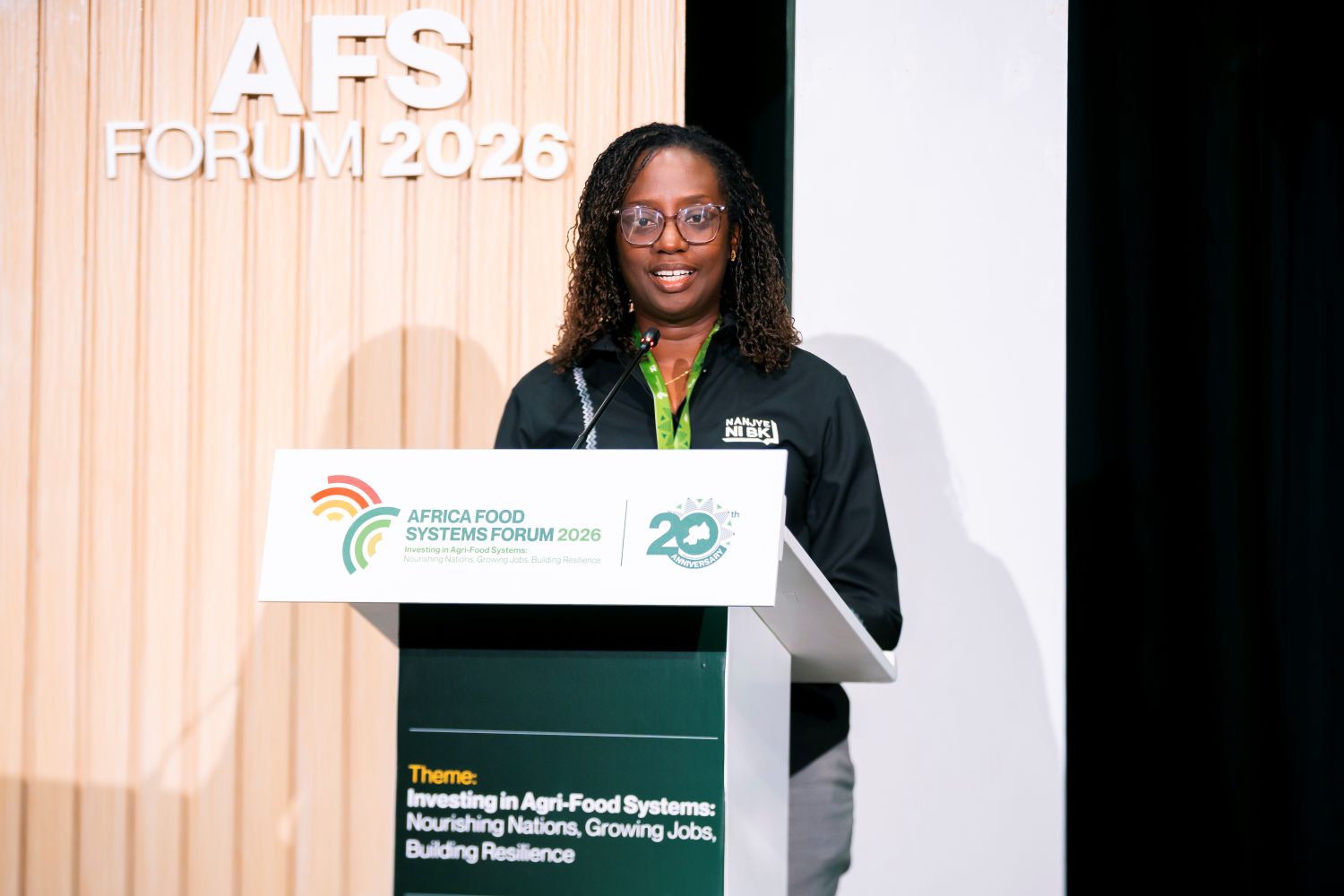
Bank of Kigali Chief Executive Officer Diane Karusisi said the partnership would combine financing with support aimed at strengthening farmers’ organisations.
“Farmers’ organizations are the backbone of Rwanda’s agricultural economy, yet they have long been underserved by traditional financing,” Karusisi stated.
“Through this partnership with IFAD, Bank of Kigali is bringing innovative, inclusive financing solutions to the people who need them most, combining capital with the technical support these organizations need to strengthen their governance and financial systems.”
How the financing will work
IFAD’s $12 million package consists of a $9 million loan, a $1.8 million grant for risk sharing and a $1.2 million technical assistance grant.
The technical assistance component will support farmers’ organisations in improving governance, financial management and digital capacity.
It will also help Bank of Kigali develop the tools and expertise required to sustainably serve farmers’ organisations.
The initiative has also benefited from a $6 million allocation to IFAD through the Business Investment Financing Track (BIFT), a financing mechanism of the Global Agriculture and Food Security Program (GAFSP).
BIFT provides multilateral development finance institutions with flexible grant and concessional financing to support financial innovations targeting smallholder farmers and early-stage micro-, small- and medium-sized agribusinesses in low-income countries.
GAFSP Head Shobha Shetty said the financing mechanism would help expand access to capital in Rwanda’s agri-food sector.
“This innovative finance solution offered by the BIFT will support more inclusive capital markets in Rwanda to help the most vulnerable working in the agri-food sector, including smallholder farmers, women, and youth, make transformative investments for their future,” Shetty noted.
The programme is financed through IFAD’s Private Sector Trust Fund and has received support from GAFSP and the Government of Canada.
The deal was signed on the sidelines of the Africa Food Systems Forum in Kigali on Friday, September 4The Farmers’ Organizations Financing Programme-Rwanda (FOFP-R) will combine $12 million in financing from IFAD with $9 million in co-financing from Bank of Kigali.Bank of Kigali Chief Executive Officer Diane Karusisi said the partnership would combine financing with support aimed at strengthening farmers’ organisations.IFAD Vice-President Gérardine Mukeshimana said the programme reflects a broader push towards innovative approaches to agricultural financing.The programme is financed through IFAD’s Private Sector Trust Fund and has received support from GAFSP and the Government of Canada.
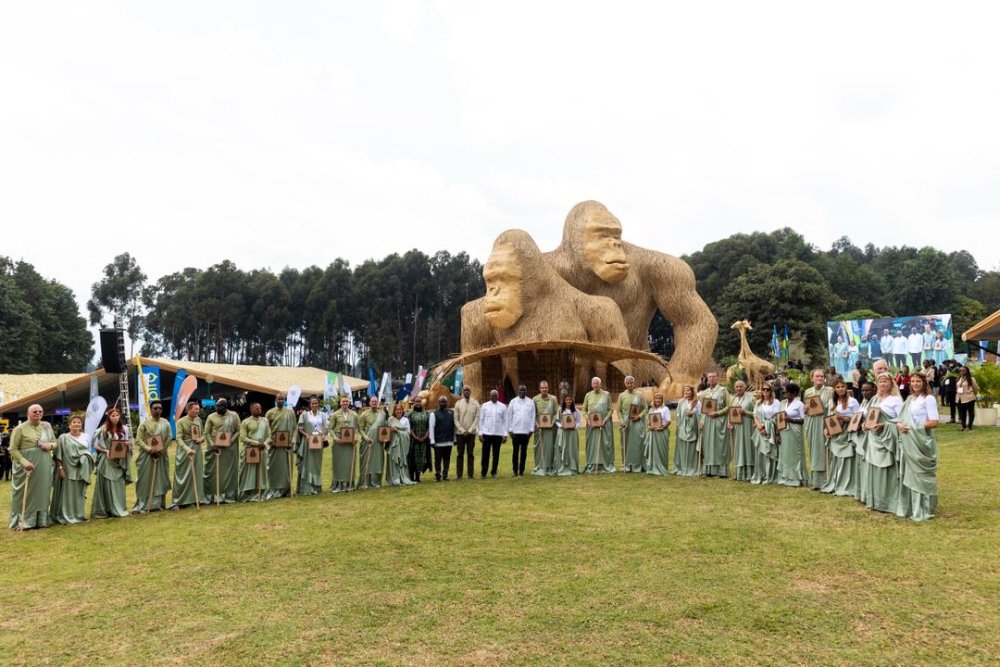
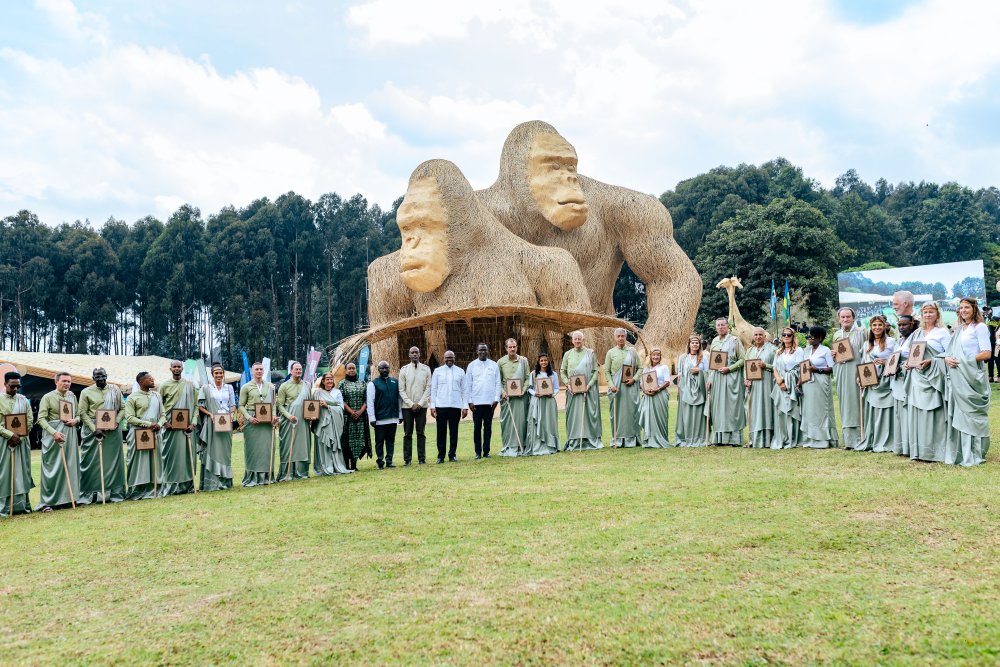
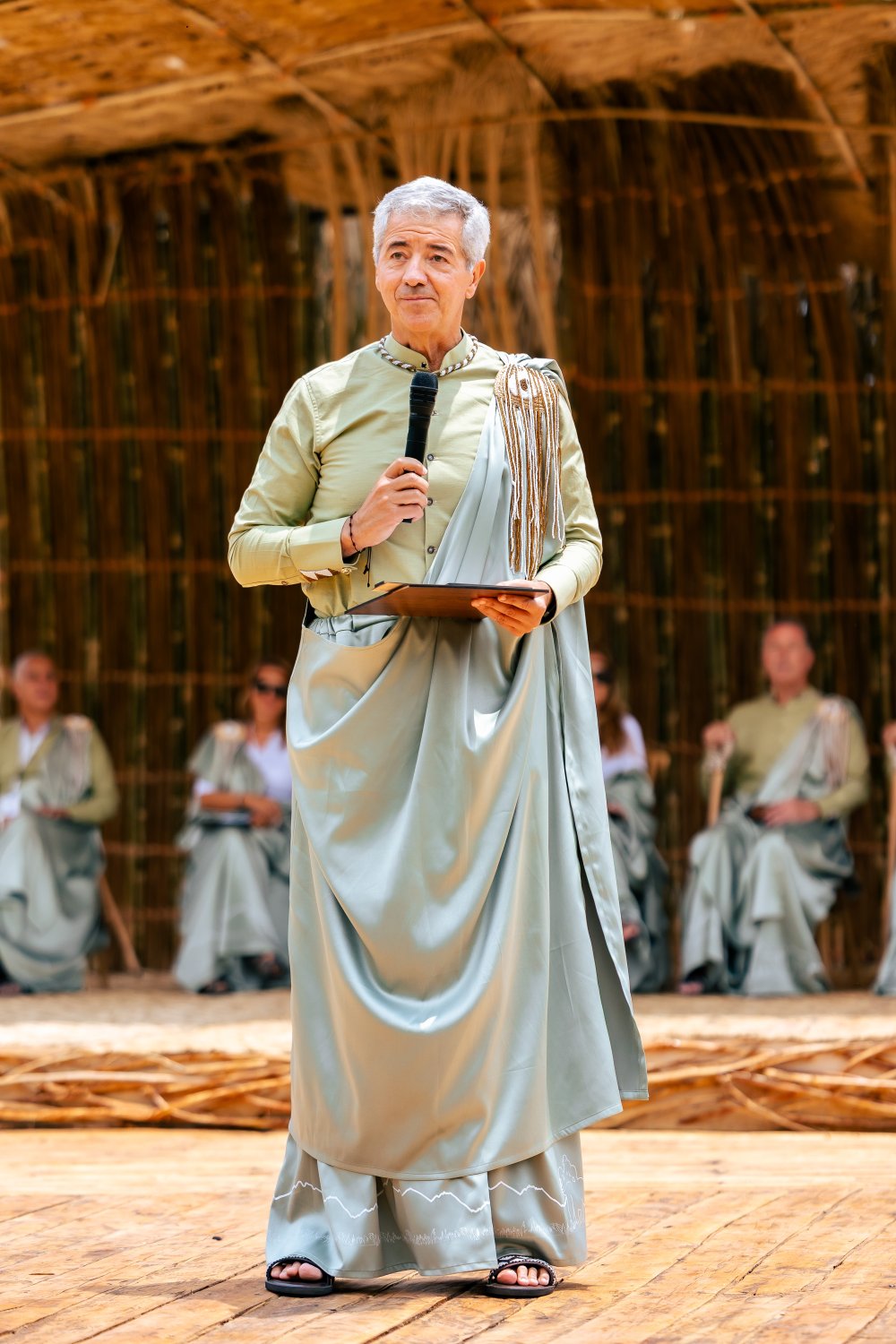
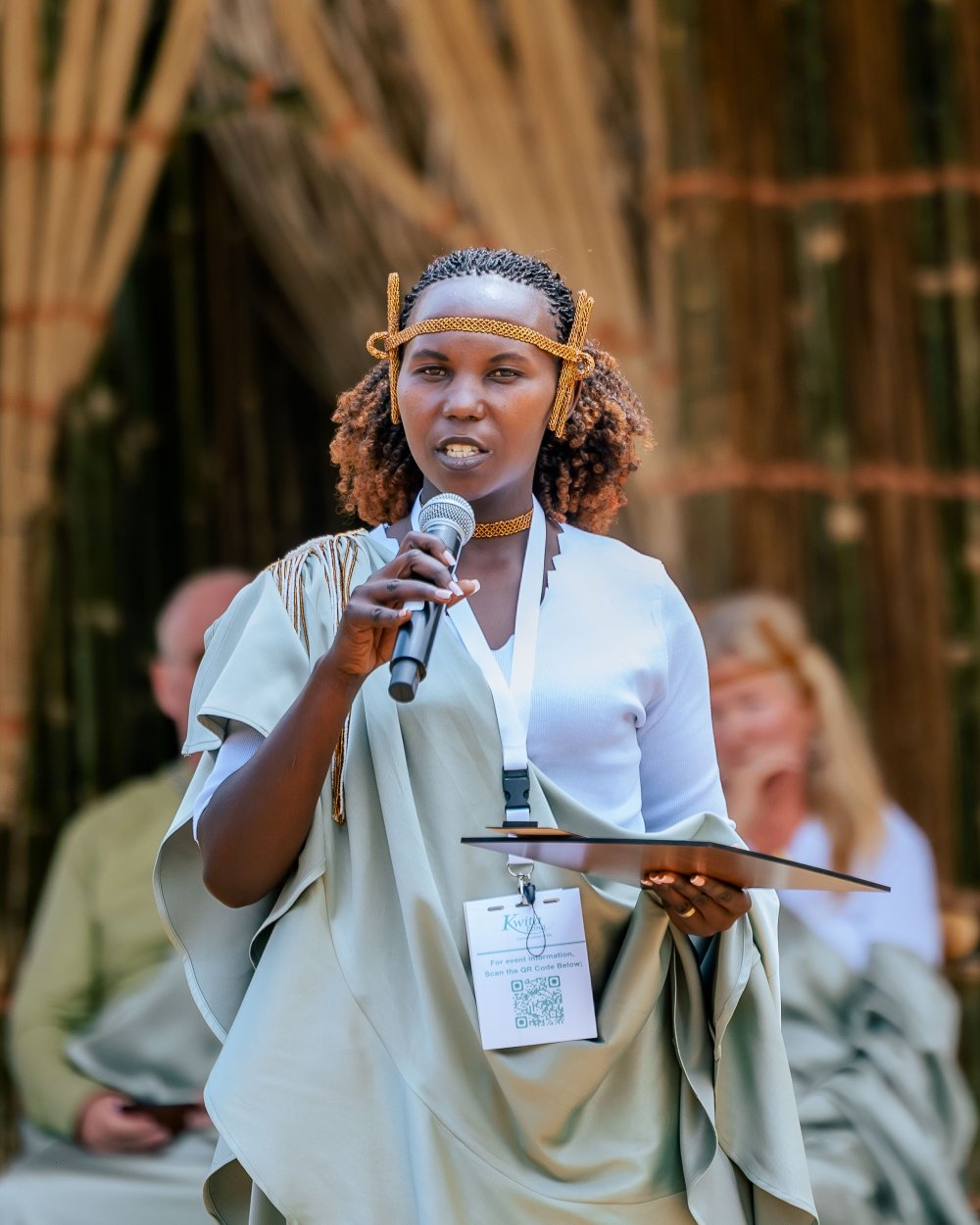
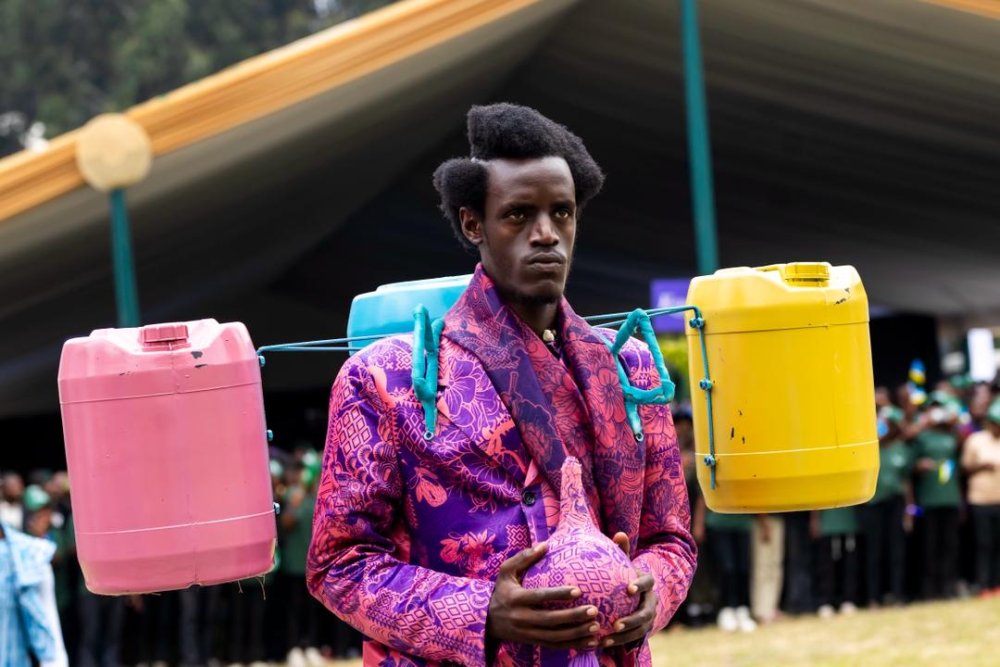
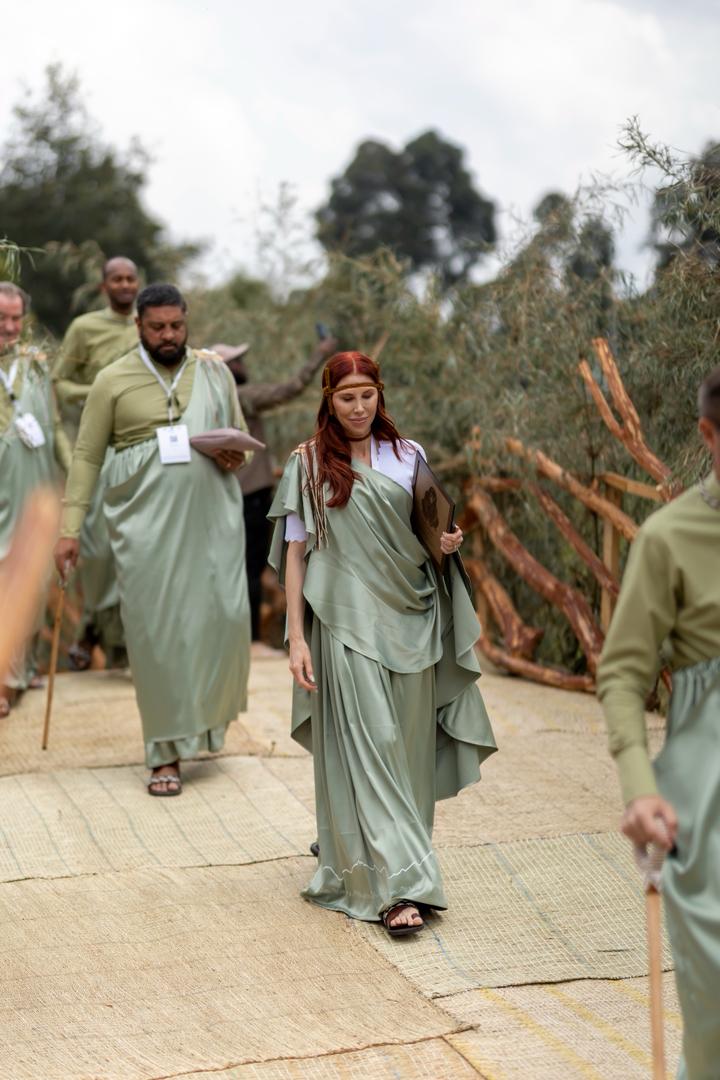
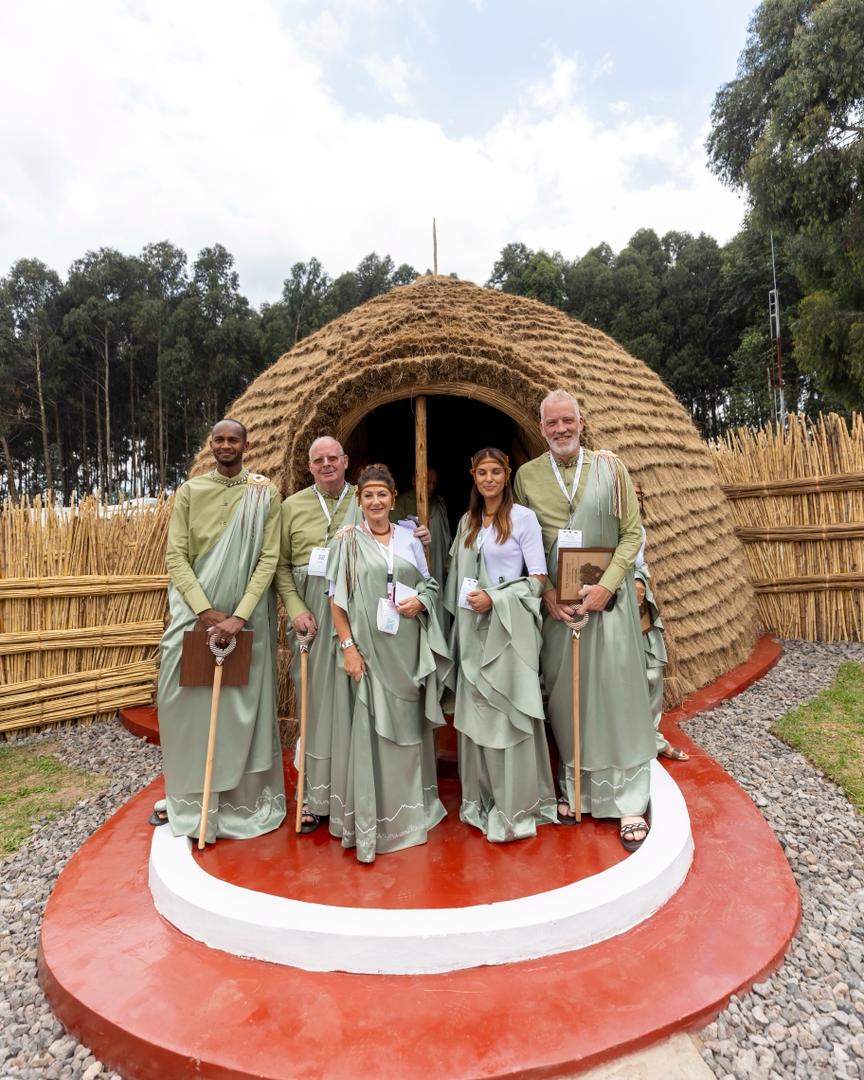
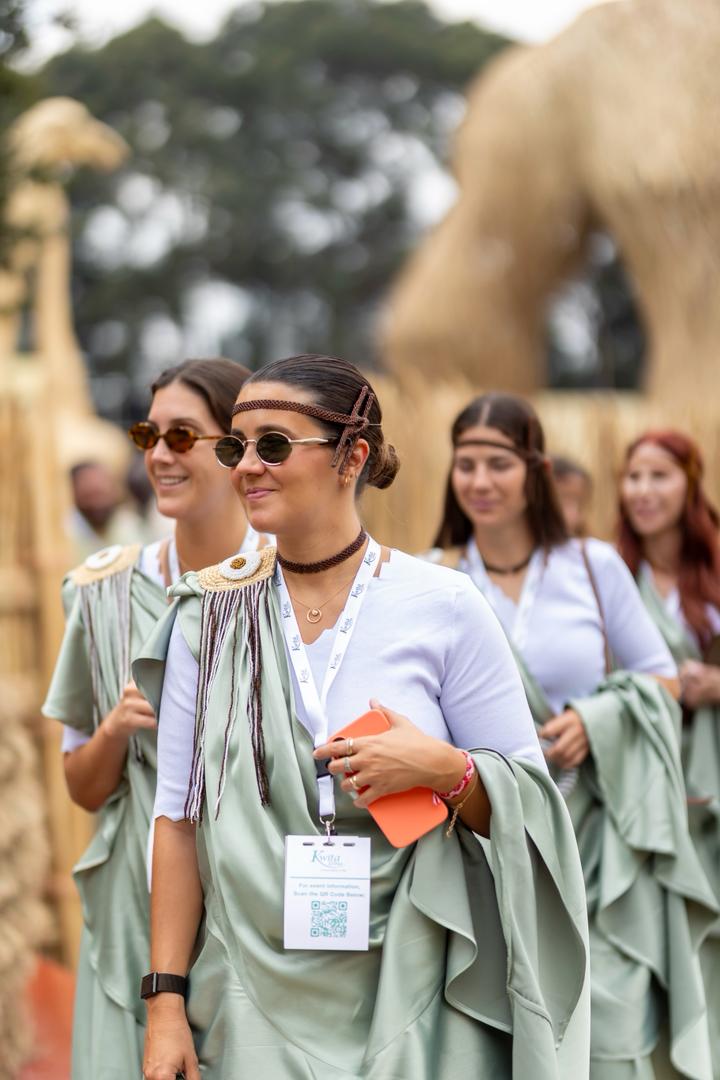
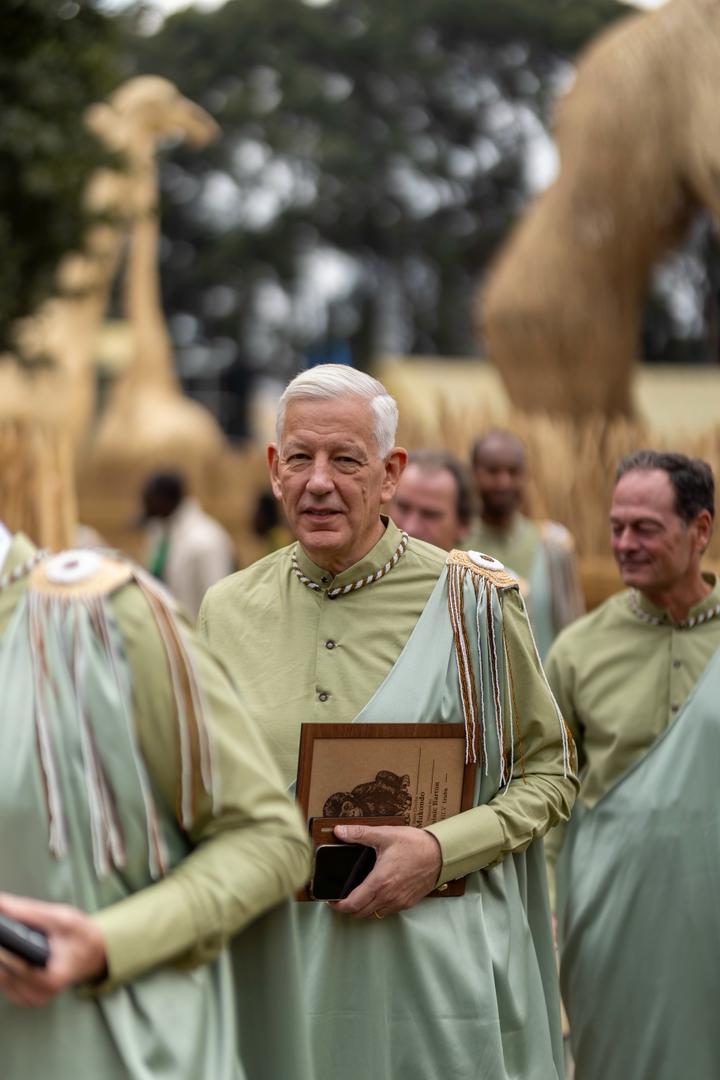
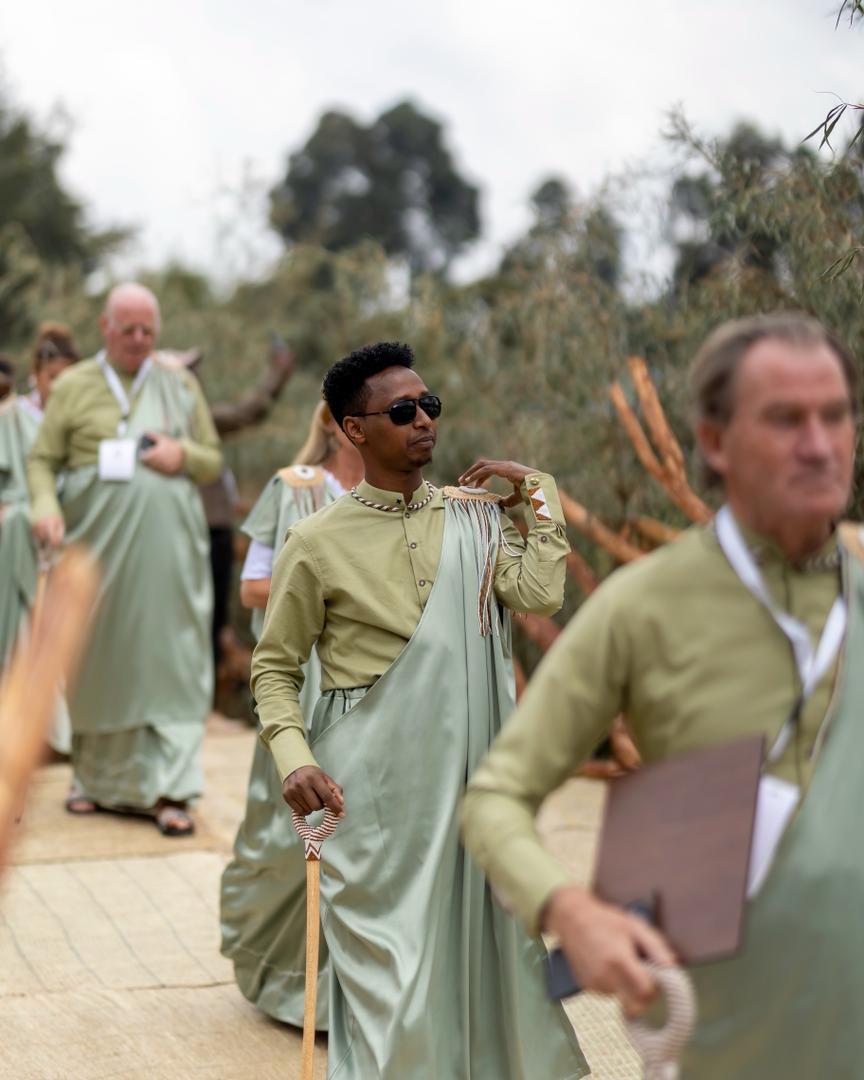
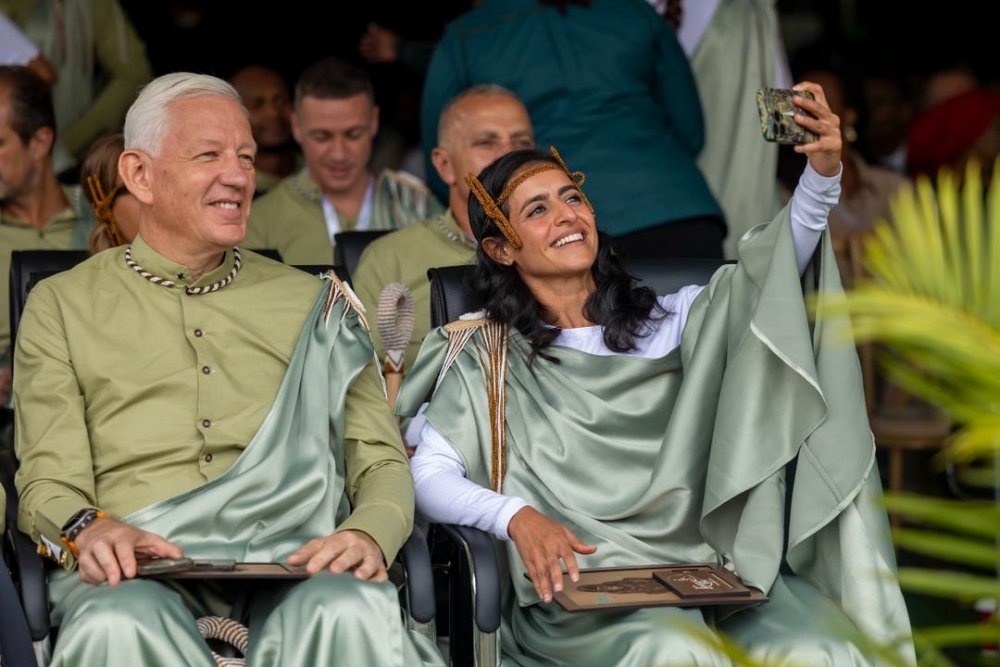
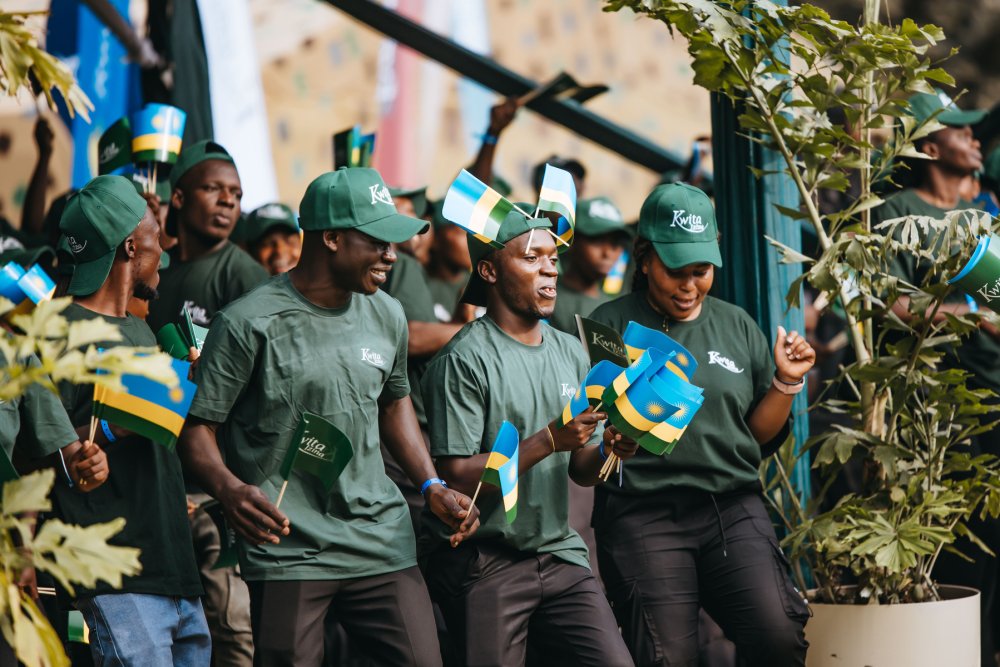
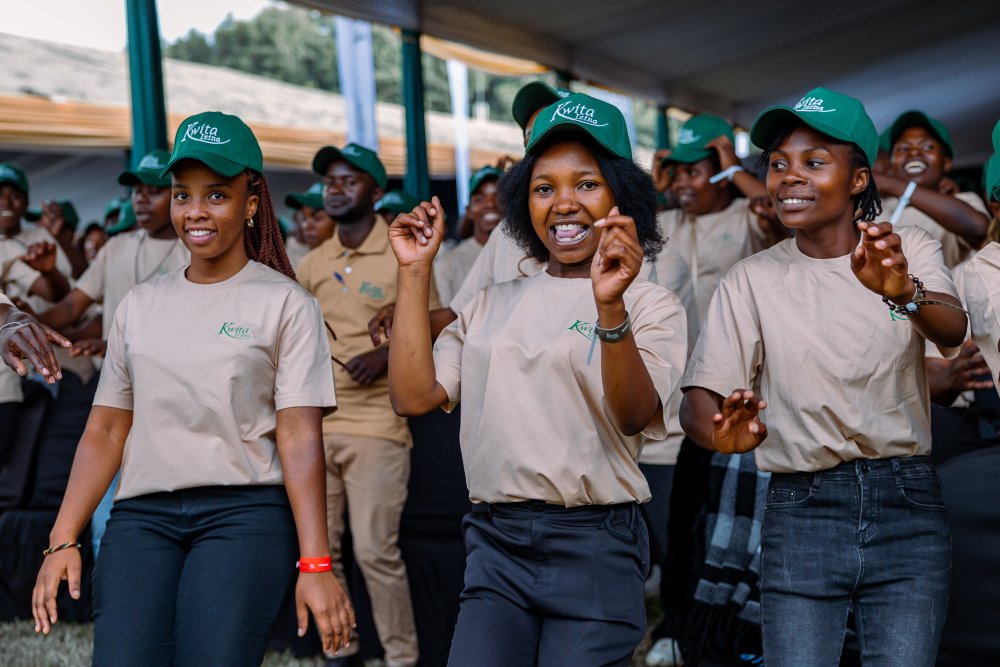
The ceremony, held in Kinigi under the theme “Conservation is Life: Sustaining the Future,” was marked by colourful cultural performances and music, as 22 distinguished namers from Rwanda and around the world gave names to the baby gorillas.
Among those who took part in the celebrations were former Botswana President Mokgweetsi Masisi and former Ethiopian Prime Minister Hailemariam Desalegn, alongside personalities from business, sport, entertainment, conservation and philanthropy.
Rwandan gospel singer Israel Mbonyi named a baby gorilla from the Izuba family Impeta, meaning “an award and a symbol of recognition.”
Miss Belgium 2024 Kenza Johanna Ameloot, who is of Rwandan heritage, named a male baby gorilla from the Umbano family Nkwakuzi, meaning “a brave person.”
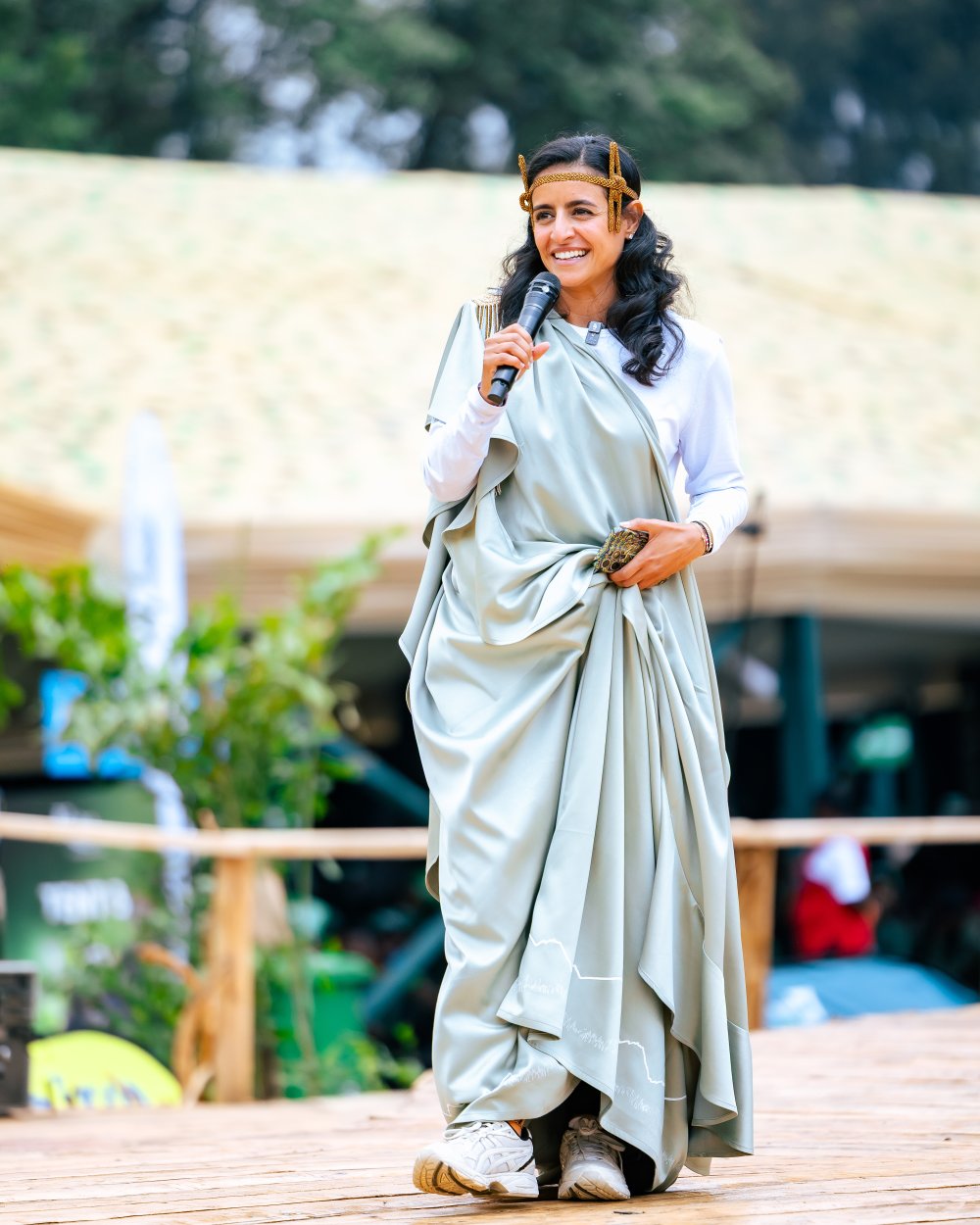
“I am sure he will be the strongest and kindest gorilla in the park,” Ameloot said while announcing the name.
Ahmed Sadek Elsewedy, Chairman of Elsewedy Electric, and his wife Anita Dravec named another baby gorilla Rugamba, meaning “Fighter”.
David Lappartient, President of the Union Cycliste Internationale (UCI) and a member of the International Olympic Committee, named a baby gorilla Muhuza, a name meaning “the one who brings people together and connects.”
The ceremony also featured an energetic performance by Rwandan music star The Ben and his crew, adding to the festive atmosphere in Kinigi.
The event has become one of Rwanda’s most prominent annual conservation celebrations since it was officially launched in 2005. Over the first 20 editions, 438 gorillas had been named, bringing the cumulative number to 460 with the 22 named on Friday.
Speaking at the ceremony, Prime Minister Dr Justin Nsengiyumva said Kwita Izina was inspired by the Rwandan tradition of naming children in the presence of family, friends and neighbours.
“Because a name for us is more than a celebration. It is a promise,” he said, adding that the promise extended to protecting the gorillas, their habitat and the conditions they need to grow and reproduce.
The Prime Minister said the recovery of the mountain gorilla population had taken decades of work involving rangers, veterinarians, researchers, government institutions, conservation organisations, communities and international partners.
In the early 1980s, only about 250 mountain gorillas remained in the Virunga Massif. Today, more than 1,060 mountain gorillas live in the wild across the Virunga Massif and Bwindi ecosystem, making the mountain gorilla the only great ape whose population is increasing.
Jean-Guy Afrika, Chief Executive Officer of the Rwanda Development Board, said the 22 births represented hope and demonstrated what sustained conservation efforts, strong institutions, community ownership and international partnerships can achieve.
“Each new birth represents hope,” Afrika said.
He affirmed that Rwanda’s conservation approach seeks to ensure that protecting nature goes hand in hand with improving people’s lives.
That approach is also reflected in plans to expand Volcanoes National Park by about 3,740 hectares and establish approximately 6,620 hectares of buffer zones to create more habitat for the growing gorilla population.
The government has also launched the Smart Green Village in Kinigi as part of the wider Volcanoes Community Resilience Project. The project is expected to provide modern housing, services and livelihood opportunities to 547 households affected by the park’s expansion, with an investment of more than $49 million.
Prime Minister Nsengiyumva said the expansion demonstrated Rwanda’s belief that conservation and human development should advance together.
The benefits of gorilla conservation have also extended to surrounding communities through tourism and related economic activities.
Under Rwanda’s Tourism Revenue Sharing Programme, 10 per cent of national park tourism revenues is reinvested in communities around protected areas. More than Rwf23 billion has so far supported nearly 1,300 community projects, including schools, health centres, water infrastructure and livelihood initiatives.
Beyond the conservation message, Friday’s ceremony offered Rwanda an opportunity to showcase its tourism and cultural heritage to an international audience.
The gathering brought together personalities such as former football stars Patrice Evra, Mamadou Sakho and James Chester, Olympic high-jump champion Mutaz Essa Barshim, filmmaker Alastair Fothergill, Atlético de Madrid chief executive Miguel Ángel Gil Marín and Rio Tinto Chairman Dominic Barton.
Other Namers included hospitality investor Olivier Granet, philanthropists Garreth and Nicola Wood, Pan African Sanctuary Alliance Executive Director Kelly O’Meara, Nyungwe National Park ranger Jeanette Uwimbabazi and filmmaker Marie-Clémentine Dusabejambo.
For Rwanda, the annual ceremony remains both a celebration of new life in the forest and a reminder of the responsibility that comes with protecting a species once pushed close to extinction.
22 distinguished Namers from Rwanda and around the world gave names to the baby gorillas.
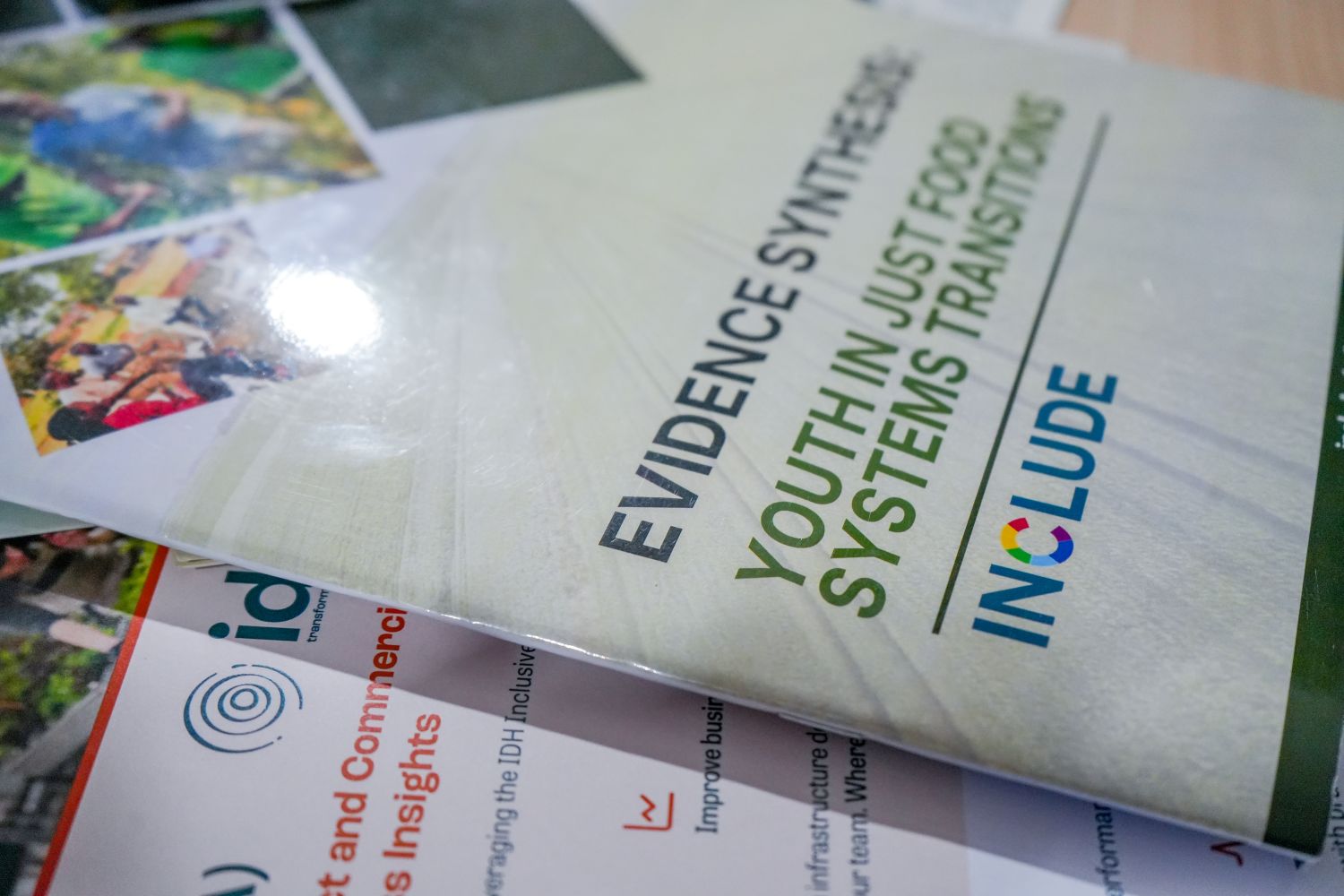
The evidence synthesis by INCLUDE, drawing on country case studies from Benin, Ghana, Rwanda, Somalia and South Africa, found that skills development is important but cannot by itself ensure that young people benefit from emerging opportunities in the agri-food sector.
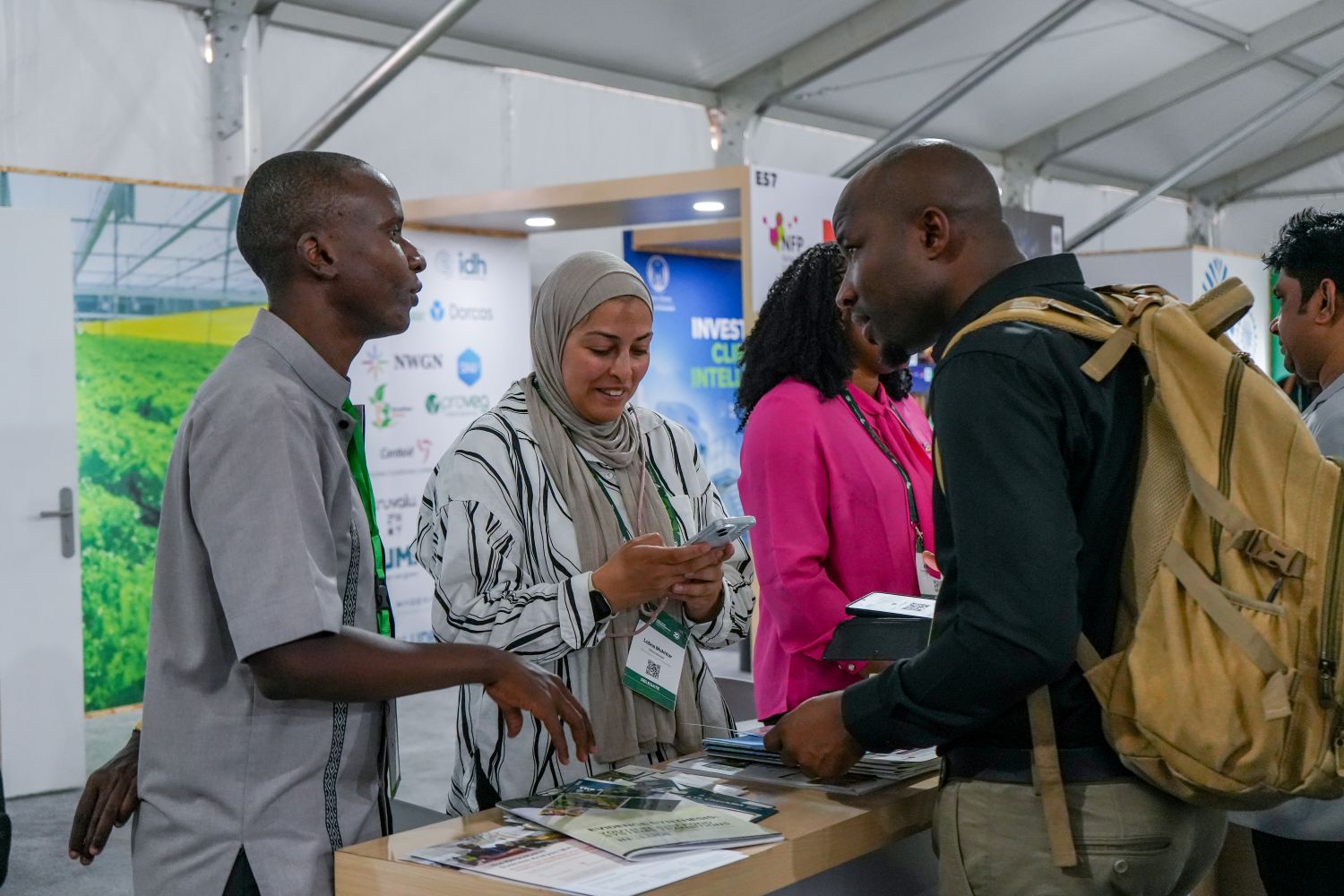
The findings were presented at the Africa Food Systems Forum 2026 in Kigali by Brian Kithinji, a Research Consultant at INCLUDE and Executive Director of Policy Action Initiative in Kenya.
“Skills entrepreneurship is important for young people to be able to engage and benefit from agri-food systems, but more importantly, the structural issues are,” Kithinji said.
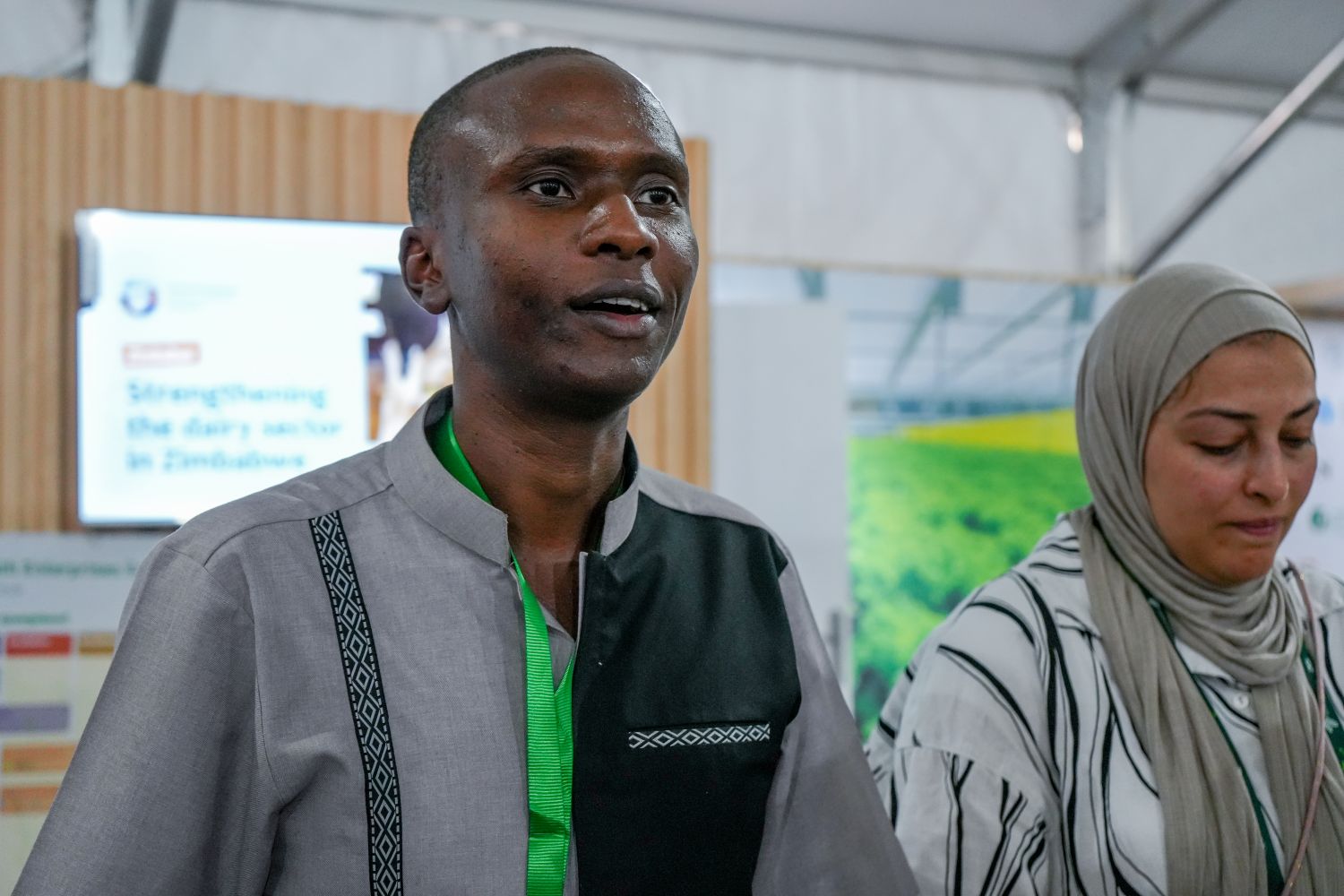
The findings were presented at the Africa Food Systems Forum 2026 in Kigali by Brian Kithinji (far left), a Research Consultant at INCLUDE and Executive Director of Policy Action Initiative in Kenya.
He pointed to access to finance, land and markets, gender-related barriers and regulatory requirements such as licensing and certification as some of the factors that continue to shape young people’s ability to enter and grow businesses in food systems.
The findings come as African governments and investors are placing greater emphasis on agriculture and food systems as engines of employment, resilience and economic growth.
While opening the forum in Kigali this week, Prime Minister Dr. Justin Nsengiyumva urged young Africans to view agriculture as a modern sector offering opportunities in entrepreneurship, technology and investment rather than as a last resort.
“Our youth should start seeing agriculture not as a sector of last resort, but as a modern and dynamic sector full of opportunities,” Nsengiyumva said.
He highlighted opportunities beyond primary farming, including irrigation, energy, mechanisation, digital services, insurance, processing and retail.
The Prime Minister also stressed the need to connect capital with these opportunities, noting that a productive farm also depends on infrastructure, storage, logistics, processing and reliable markets.
Who benefits from growing investment?
The INCLUDE research argues that the success of food-system investment should not be measured only by the amount of capital mobilised or the number of jobs created.
The evidence synthesis by INCLUDE draws on country case studies from Benin, Ghana, Rwanda, Somalia and South Africa.
It also raises questions about who can access those opportunities and whose voices influence the policies and investments shaping Africa’s food systems.
In Benin, for example, the research found significant barriers to land access among young people, while in Somalia more than 70 percent of young agripreneurs surveyed reported difficulty accessing funding for their ventures.
The evidence synthesis also highlights gender as a persistent structural factor.
In Somalia, women make up an estimated 80 percent of agricultural labour but control less than 20 percent of land and receive less than 10 percent of credit.
In South Africa, the research found that digitalisation can increase awareness of jobs and markets without necessarily removing the financial, certification and productive-asset barriers that prevent young people from accessing them.
Kithinji said the findings point to the need to address the conditions around young people’s participation, rather than focusing only on giving them new skills.
“What is more important are the structural issues,” he said, citing access to land, finance and markets, as well as policy and regulatory barriers.
The issue of access to finance has also featured prominently at the Kigali forum.
President Paul Kagame, speaking during a conversation with young entrepreneurs on Thursday, said financial systems are often structured in ways that make capital more accessible to people who already have collateral.
He called for greater risk-sharing between governments and financial institutions to enable more young entrepreneurs to access capital.
“Unfortunately, a number of parts of financial systems on our continent are framed in such a way that they mostly avail capital to those who have collateral,” Kagame noted.
President Kagame said financial systems across the continent are often structured in ways that make capital more accessible to people who already have the resources and collateral required to secure financing.
He said governments can use development financing and other mechanisms to help reduce risks for financial institutions and expand access to capital for people who have viable businesses but lack sufficient collateral.
The discussion comes as new financing commitments are being announced at the forum.
The International Fund for Agricultural Development and partners are launching a $200 million blended-finance facility to expand climate adaptation financing for farmers in Rwanda, Kenya, Tanzania and Uganda.
IFAD is also launching a $10 million facility to support small agribusinesses, while a separate $21 million blended-finance facility is being developed with Bank of Kigali to support farmers’ organisations.
IFAD Vice-President Dr. Gérardine Mukeshimana said public financing alone would not be sufficient to transform Africa’s food systems and should instead help reduce risks and unlock private investment.
Rwanda’s experience offers opportunities to build on
The INCLUDE research also points to positive developments in Rwanda, particularly around youth cooperatives and institutional efforts to connect young people with opportunities in agriculture.
Kithinji said youth cooperatives are creating avenues for young people to build skills, develop businesses and connect with institutions involved in agriculture.
He also highlighted the role of the Rwanda National Youth Council in capacity building and creating linkages between young people and institutions such as the Ministry of Agriculture and Animal Resources and the Rwanda Agriculture and Animal Resources Development Board.
“Rwanda is a leader and it provides a unique model for the entire continent on how you can meaningfully engage young people,” Kithinji stressed.
He said the experience provides a foundation that can be strengthened further by expanding access to productive resources, markets and finance.
The country’s broader approach to youth participation was also visible at the forum, where young entrepreneurs and innovators from across Africa, including a significant number from Rwanda, showcased businesses and solutions across the food value chain.
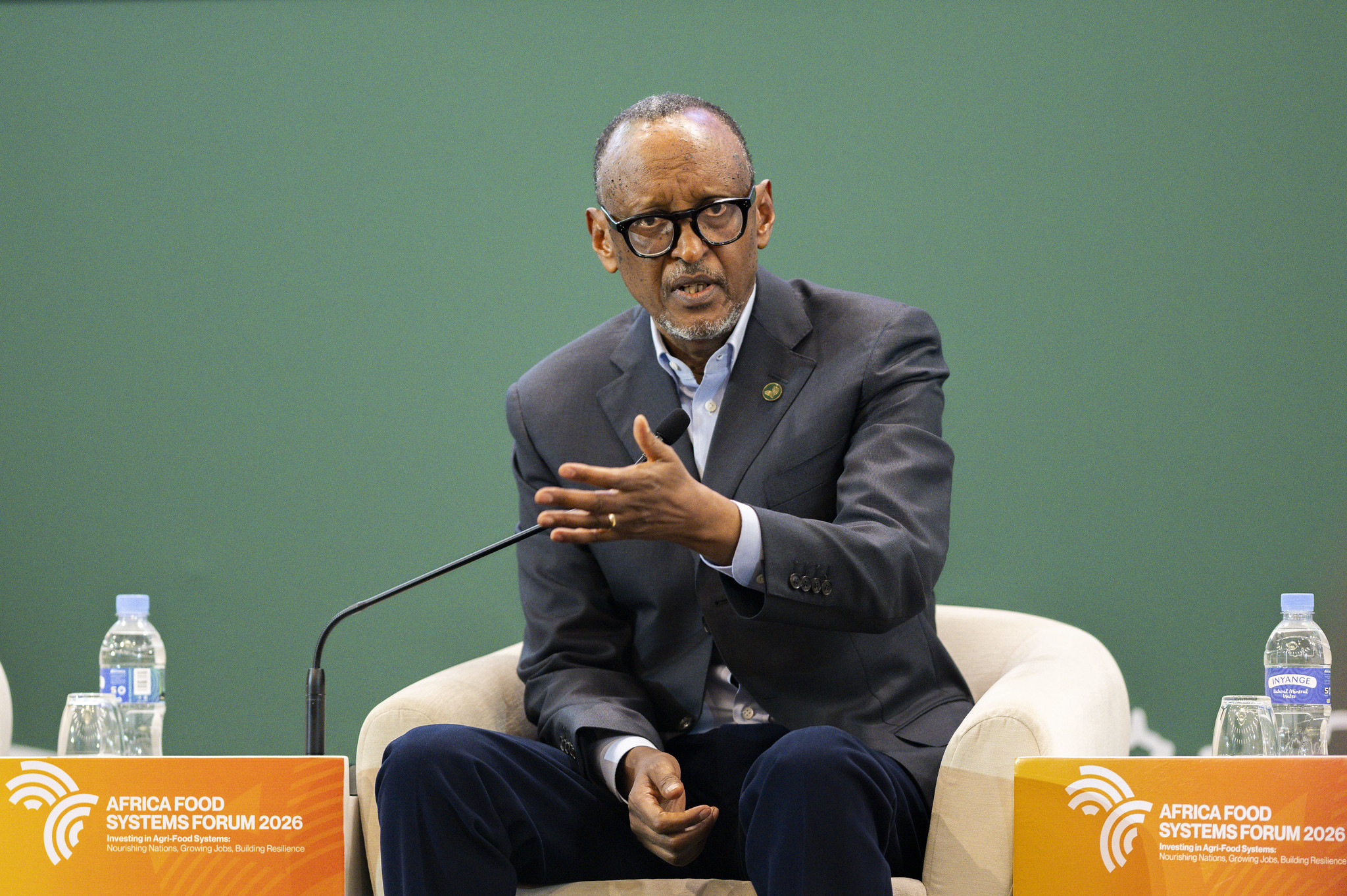
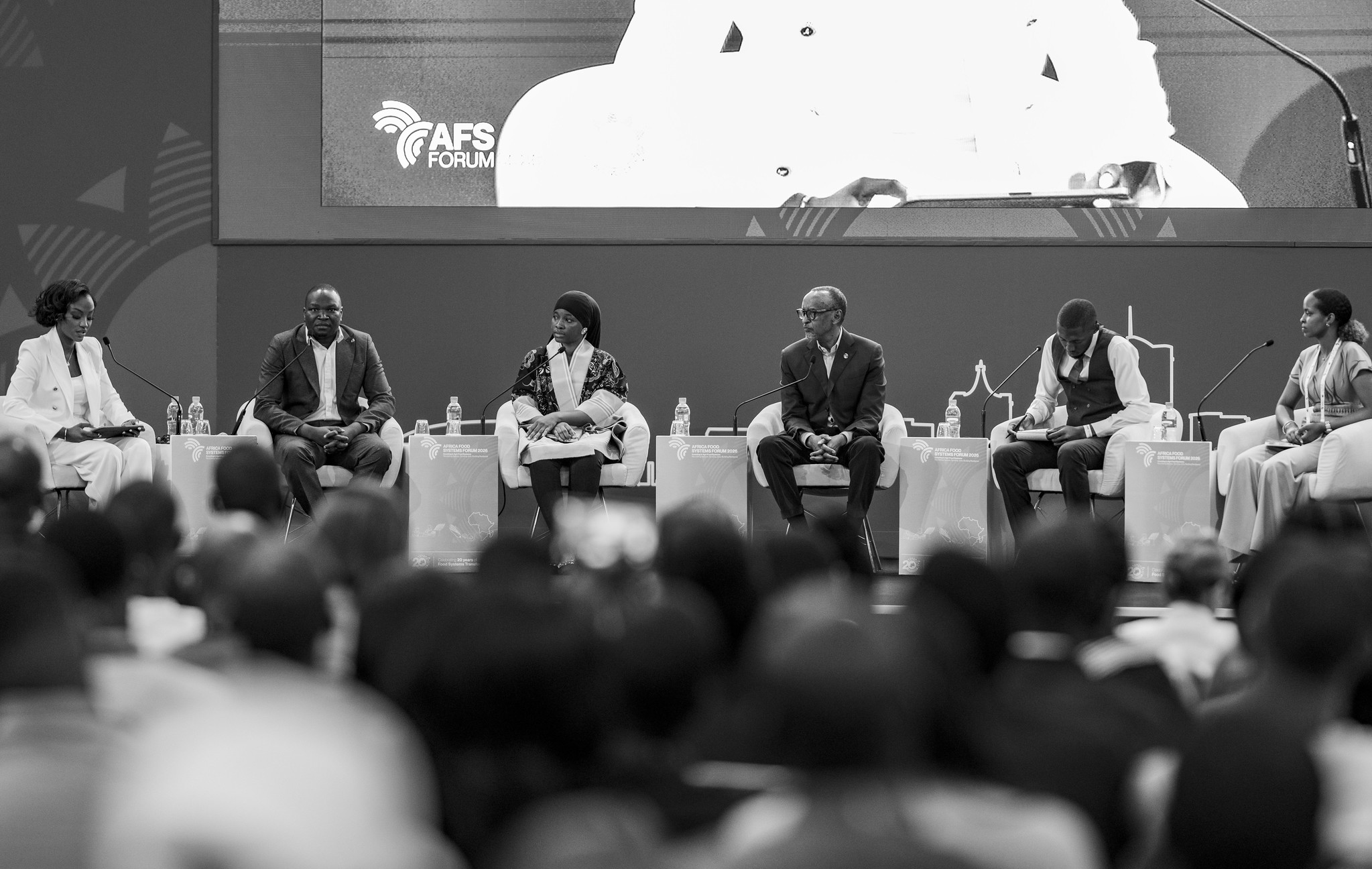
President Paul Kagame speaks during a presidential conversation with young entrepreneurs at the Africa Food Systems Forum 2026 in Kigali on Thursday. Some of the entrepreneurs showcased their products at the forum.
For Kithinji, the next step is to ensure that participation translates into greater influence over the policies and programmes that affect young people’s livelihoods.
From participation to influence
INCLUDE’s second publication presented at the forum focuses specifically on meaningful youth engagement in food-systems research and policymaking.
The publication calls for expanding youth participation from attending workshops, conferences and panel discussions to giving young people greater opportunities to shape the decisions that affect their livelihoods and futures.
It introduces a “4 I’s Framework” for meaningful youth engagement: intentional, inclusive, intersectional and impactful.
The framework encourages policymakers, researchers, funders and programme implementers to involve young people from the design stage through implementation and evaluation.
Kithinji said young people should not only be consulted as respondents but should also have opportunities to shape research questions, methods and policy discussions.
“If you’re going to engage young people, you should engage them at a stage where it’s going to be more meaningful, have more power,” he said.
The framework also recognises that young people are not a homogeneous group, with experiences differing according to gender, geography, socioeconomic circumstances, disability and livelihoods.
This approach aligns with the wider push at the Africa Food Systems Forum to position young people as entrepreneurs, investors, innovators and decision-makers within the continent’s food economy.
During his conversation with young entrepreneurs, Kagame also encouraged them to look beyond farming itself and identify opportunities across the wider food value chain, including logistics, technology, irrigation, storage and markets.
“If we had the opportunity to think about that now, there is actually a whole long chain of things you can think about,” he remarked.
Turning investment into opportunity
The forum’s discussions have increasingly focused on moving from commitments to implementation, with African leaders calling for investment that strengthens entire food systems rather than isolated parts.
African Union Commissioner for Agriculture Moses Vilakati said the continent’s challenge is increasingly one of implementation, calling for stronger political commitment, investment, partnerships and accountability.
Nsengiyumva similarly called for credible, investable agricultural projects backed by clear priorities, realistic financing, strong institutions and measurable targets.
For INCLUDE, ensuring that young people can benefit from these investments will require attention to the structural barriers identified in its research.
Kithinji said African governments should examine the barriers within their own systems, including complicated procedures that can prevent young farmers from accessing existing financing.
He argued that making finance more accessible could be as important as mobilising additional capital.
With more than 5,000 delegates from over 50 countries attending the 2026 Africa Food Systems Forum, the focus is now increasingly shifting from identifying opportunities to ensuring that the continent’s young population is positioned to participate in and benefit from them.
The high-profile namers include former football stars, global business leaders, conservation advocates, artists, sports executives and philanthropists, reflecting the international reach of Rwanda’s conservation efforts.
Among the prominent figures expected at the ceremony is Shaikha Al Nuwais, Secretary-General of UN Tourism and the first woman to lead the organisation in its 50-year history.
The list also features football legends Mamadou Sakho, whose professional career spanned from 2007 to 2025, and Patrice Evra, who played professionally between 1998 and 2018. Both are former France internationals with distinguished club careers.
Manchester United legend Patrice Evra, who played professionally between 1998 and 2018, is among the high-profile personalities taking part in Kwita Izina 2026.
Sakho, who captained Paris Saint-Germain during his six-year senior spell at the club (2007–2013), went on to play for Liverpool (2013–2017) and Crystal Palace (2017–2021) in the English Premier League. He later had a stint at Montpellier before concluding his career at Georgian side Torpedo Kutaisi. He earned 29 caps for the French national team between 2010 and 2018.
Evra, who earned 81 international appearances for France between 2004 and 2016, served as captain for both his country and Manchester United. During his eight-year tenure at Old Trafford (2006–2014), he won five Premier League titles and the 2008 UEFA Champions League, before later playing for Juventus, Marseille and West Ham United.
Rwanda will also be represented among the namers by gospel singer and songwriter Israel Mbonyi, one of the country’s most recognised musical voices.
Mbonyi, who has built a large following in Rwanda and across Africa, joins one of the country’s most celebrated conservation traditions as a namer.
Gospel singer Israel Mbonyi has built a large following in Rwanda and across Africa.
The business and investment community will be represented by Eng. Ahmed Sadek, Chairman of Elsewedy Electric, a global energy and infrastructure company that has been involved in Rwanda’s electrification efforts.
Global business leader Dominic Barton, Chairman of Rio Tinto and LeapFrog Investments, will also join the ceremony. Barton previously served as Global Managing Partner of McKinsey & Company and as Canada’s Ambassador to China.
Miguel Ángel Gil Marín, CEO and majority shareholder of Atlético de Madrid and a member of the UEFA Executive Committee, is another high-profile name on the list.
The hospitality investment sector will be represented by Olivier Granet, Managing Partner and Co-CEO of Kasada Capital Management, a hospitality investment platform and investor in Mövenpick Hotel Kigali.
Sports will also feature prominently among this year’s namers.
Francesco Calvo, President of Business Operations at Aston Villa, will join the celebration, alongside global sports executive Paul Danforth, President of CAA Sports and a former Senior Vice President of Sales for the New York Mets.
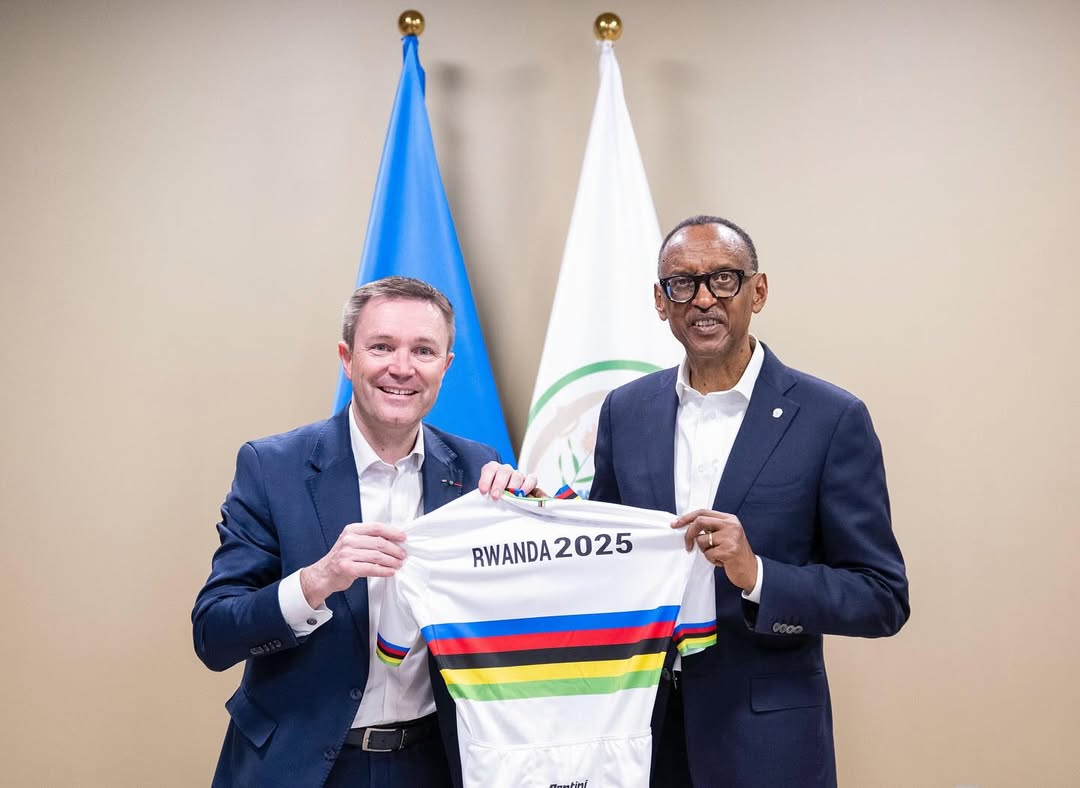
David Lappartient, President of the Union Cycliste Internationale (UCI) and a member of the International Olympic Committee (IOC), will also return to Rwanda. His participation comes after Rwanda made cycling history in 2025 by hosting the UCI Road World Championships.
David Lappartient, President of the Union Cycliste Internationale (UCI) and a member of the International Olympic Committee (IOC), holds the yellow jersey alongside President Paul Kagame during the historic competitions in Rwanda last year.
Olympic champion Mutaz Essa Barshim of Qatar is another prominent sports figure taking part. A three-time world champion, Barshim is one of the most accomplished high jumpers of his generation and will join Rwanda in celebrating mountain gorilla conservation.
Conservation will also feature prominently among this year’s namers.
Jeannette Uwimbabazi, a Nyungwe National Park ranger, has been recognised for her dedication to protecting Rwanda’s biodiversity and will take part in the ceremony as a representative of those working on the front lines of conservation.
Kelly O’Meara, Executive Director of the Pan African Sanctuary Alliance (PASA), is another conservation advocate among the namers. She works to promote primate protection and welfare across Africa.
Neil McDougall, Founder and Chairman of delAgua Group, will also join the 21st Kwita Izina as a namer. He leads efforts to expand access to clean cooking and improve livelihoods across Africa.
The ceremony will also bring together leading voices from wildlife filmmaking. Alastair Fothergill, the award-winning filmmaker behind productions including Planet Earth, Blue Planet and A Gorilla Story: Told by Sir David Attenborough, is among those set to name a gorilla.
Rwandan filmmaker Marie-Clémentine Dusabejambo will also take part. Her film Ben’Imana was selected for the Un Certain Regard section of the 2026 Cannes Film Festival, and she now joins Rwanda’s conservation celebration as a namer.
The list extends to personalities using their public platforms to support social causes.
Kenza Johanna Ameloot, Miss Belgium 2024 of Rwandan heritage, is among the namers. She has used her platform to advocate for children affected by cataracts.
Kenza Johanna Ameloot, Miss Belgium 2024 of Rwandan heritage, is among the namers.
Former Aston Villa captain and Wales international James Chester will also take part. Chester helped Aston Villa return to the Premier League and represented Wales at UEFA Euro 2016.
Philanthropy and social impact will be represented by several namers.
Susan Hollern, Founder and President of Hope Haven Rwanda, will join the ceremony. She has worked to advance education and family transformation in Rwanda since 2011.
Philanthropy leader Dominique Plewes, Founder of SOF Support Foundation, will also take part. The foundation supports research and humanitarian initiatives in conflict-affected communities.
Philanthropists Garreth and Nicola Wood will also join the ceremony.
Garreth Wood MBE, a Scottish entrepreneur and philanthropist, chairs The Wood Foundation. Together with his wife, Nicola Wood MBE, he co-founded Kids Operating Room, a global health charity focused on expanding access to safe paediatric surgery in low-resource settings.
Garreth Wood MBE will attend the baby gorilla naming ceremony with his wife, Nicola Wood MBE, who will also take part as a namer.
Their participation adds a global philanthropy dimension to this year’s ceremony, which continues to use gorilla conservation as a platform for bringing together people from different sectors and parts of the world.
Kwita Izina has grown into one of Rwanda’s most prominent conservation events, drawing international attention to the protection of mountain gorillas and the communities living alongside their habitat.
The 2026 edition will once again bring together personalities whose influence spans sports, tourism, business, conservation, entertainment and philanthropy, with each namer playing a role in celebrating Rwanda’s commitment to protecting its iconic mountain gorillas.
According to the Rwanda Development Board’s (RDB) 2025 annual performance report, Rwanda’s tourism sector generated $685 million in revenue in 2025, nearly four times the $164 million recorded in 2021.
Tourism revenue rose to $455 million in 2022 as the sector recovered from the effects of the Covid-19 pandemic, before reaching $620 million in 2023 and $647 million in 2024.
In 2025, tourism revenue increased by 6% compared with the previous year, supported by growth in visitor numbers and air travel. Revenue from air travel rose by 9% to $594 million.
Gorilla tourism accounted for a significant share of those earnings, generating $248 million in 2025, an increase of 7%.
Rwanda received 1.49 million visitors during the year, up from 1.36 million in 2024, representing a 9% increase. Visitors arriving by air increased by 23%.
The growth illustrates how the conservation of a species once considered highly vulnerable has become closely intertwined with Rwanda’s tourism ambitions.
Bringing tourism benefits to communities
Rwanda has also sought to ensure that the economic value created by conservation reaches communities living near national parks.
Through its tourism revenue-sharing programme, 10% of tourism revenues is allocated to communities living around protected areas.
The funds are invested in projects such as schools, health centres, water infrastructure and other community facilities.
RDB says more than Rwf23 billion has been invested in nearly 1,300 community projects since the programme began.
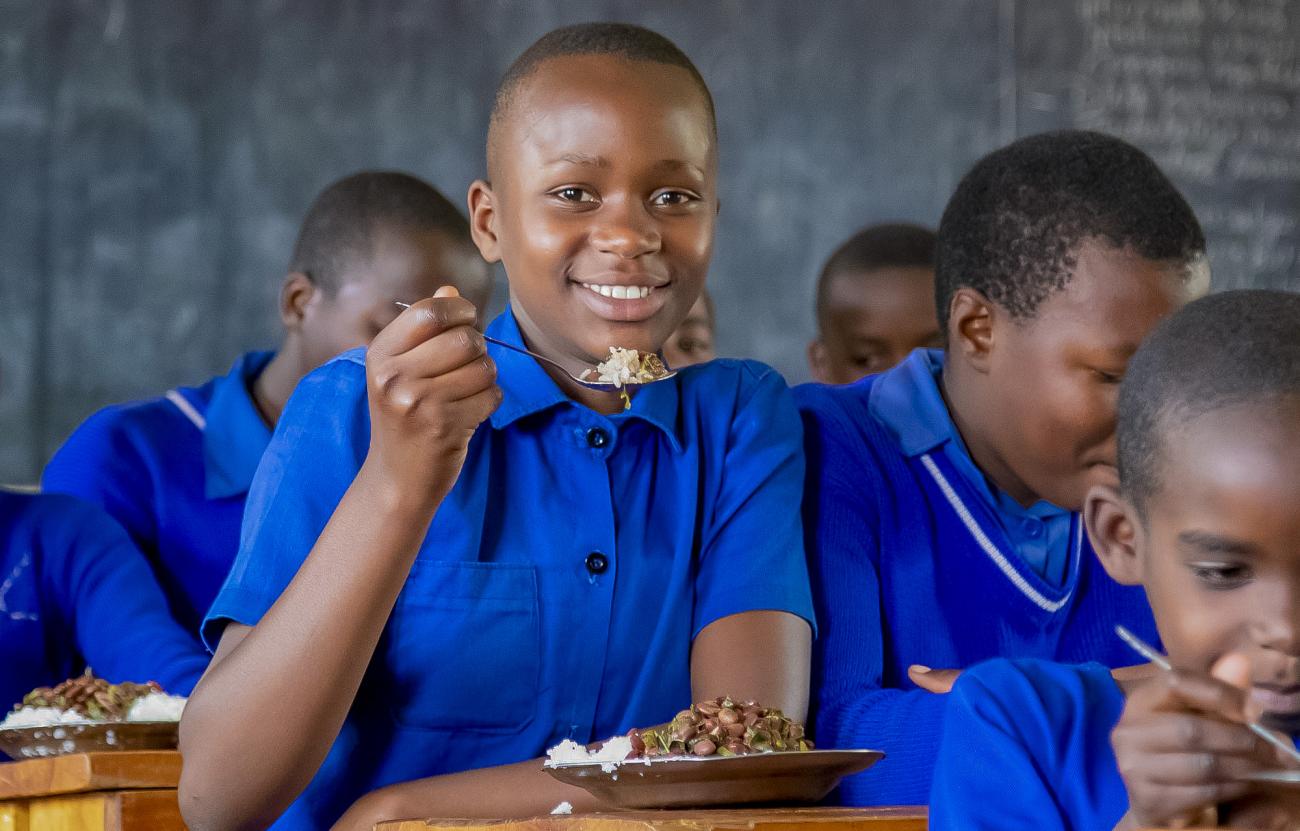
The initiative, supported by The Rockefeller Foundation and implemented with partners including Vanguard Economics and the World Food Programme (WFP), seeks to replace refined maize flour with fortified whole-grain alternatives in school meals.
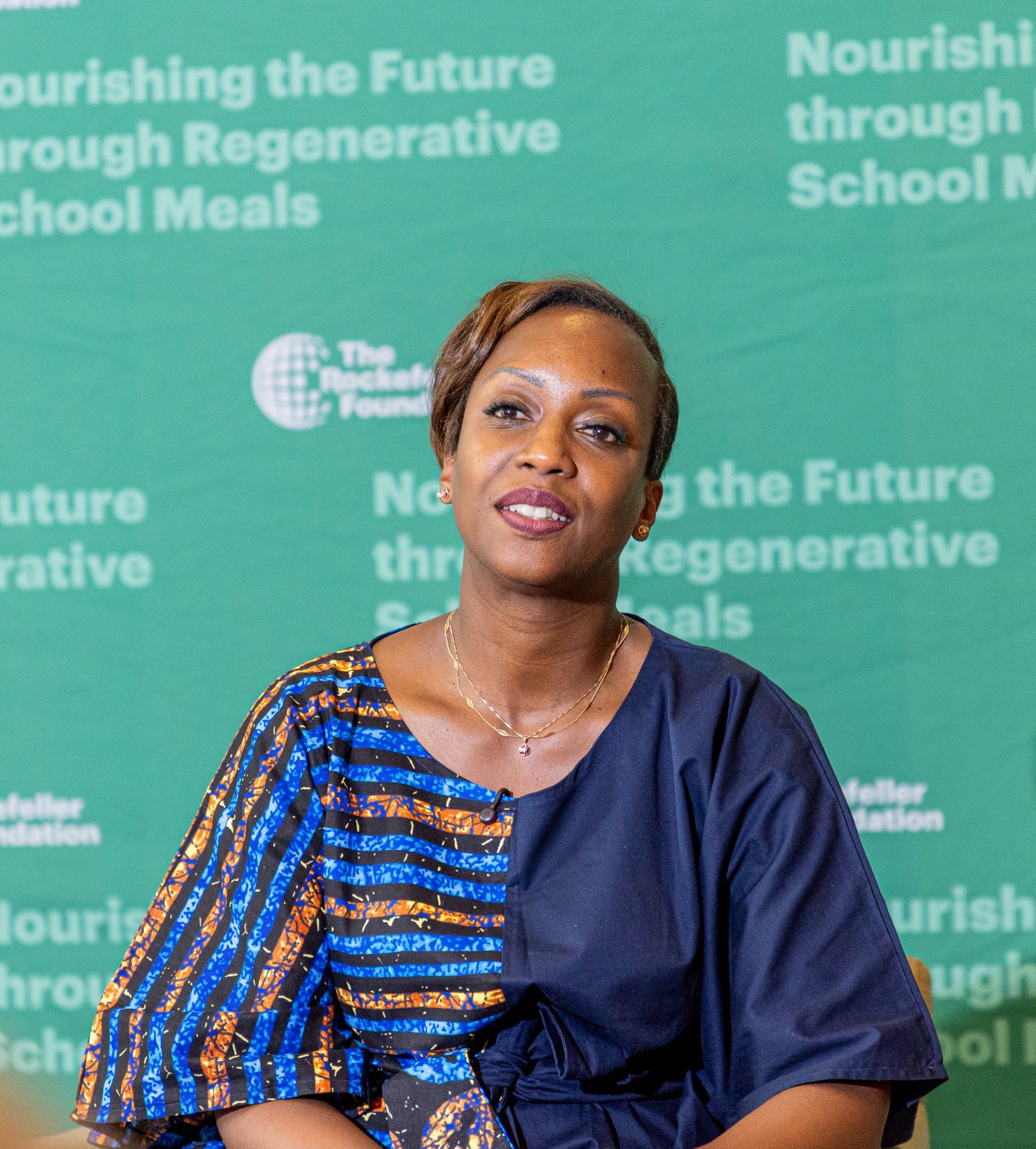
Diane Dusabeyezu, Consultant and Programme Manager at Vanguard Economics, said the initiative is being implemented as part of broader efforts to strengthen regenerative school meals and improve nutrition among children.
Speaking to IGIHE during the Africa Food Systems Forum (AFSF) in Kigali, Dusabeyezu explained that the approach goes beyond simply changing what is placed on children’s plates.
“It’s an entire value chain actor in the initiative program with whom we are engaging in running this project in Rwanda,” she said.
The initiative works with farmers, millers, premix companies, government institutions and other stakeholders to ensure the product can be produced, supplied and accepted at scale.
From farmers to schoolchildren
Dusabeyezu noted that Vanguard Economics has supported food processors through training on fortified whole grain production, access to quality inputs and premix, as well as efforts to ensure millers have the necessary certification to supply school feeding programmes.
Farmers are also being trained and supported with access to appropriate inputs and assistance in developing business cases to help them secure financing.
“We have been providing training to farmers. We have been supporting them in getting the right inputs. We have also been supporting them in writing a business case to get the financial support they need,” she said.
The initiative also involves engagement with Rwanda’s Ministry of Agriculture and Animal Resources and Ministry of Education, as well as private-sector companies and development partners.
Dusabeyezu stressed that such collaboration is important because introducing a new food product requires awareness and acceptance among the different actors who will ultimately be involved in its production and consumption.
The Rockefeller Foundation describes this broader approach as “regenerative school meals”, which connects local farmers with public school procurement systems to improve children’s nutrition while strengthening local economies and food systems.
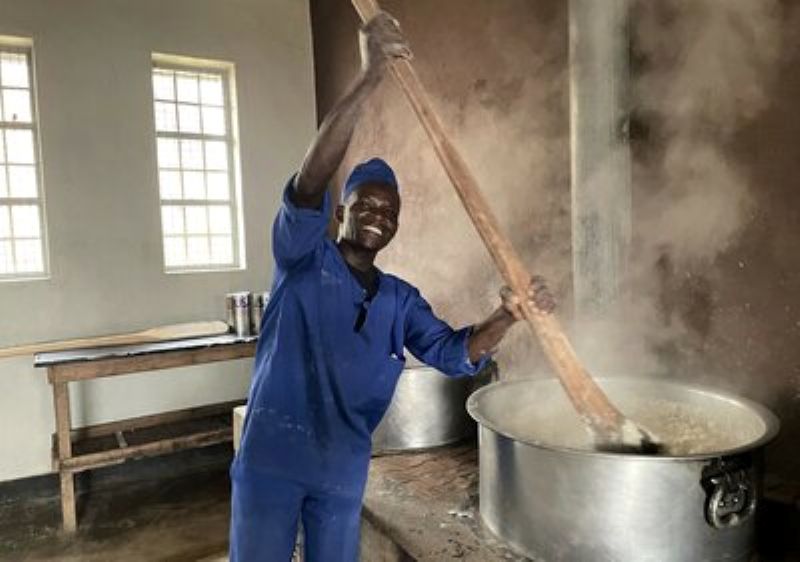
The broader approach was also showcased through Solid Africa, a Rockefeller Foundation grantee working to improve nutrition through school meals and stronger local food systems. During a field visit in Kigali, participants visited Solid Africa’s model, which includes a kitchen garden, nutrition education and a centralised kitchen supplying meals to schoolchildren.
Diane Dusabeyezu, Consultant and Programme Manager at Vanguard Economics, said the initiative is being implemented as part of broader efforts to strengthen regenerative school meals and improve nutrition among children.
Why whole grain?
Unlike refined maize flour, fortified whole grain flour uses the entire grain, including the bran and germ, which contain important nutrients.
The Rockefeller Foundation says fortified whole grain foods can provide substantially more nutrition than refined alternatives, while the Rwanda pilot found that the product could be produced at the same cost as refined maize flour.
Rwanda’s school feeding guidelines also identify fortified maize flour or whole grain meal as an important source of micronutrients in school meals.
The initiative was initially piloted in 18 schools in Rwanda. According to WFP, more than 13,500 children were reached during the initial phase, with 73% of children demonstrating awareness of the nutritional benefits of fortified whole grains and 97% preferring the whole grain product to its refined equivalent.
The programme subsequently expanded, with the Rockefeller Foundation reporting that nearly 74,000 students in 81 schools had been reached in Rwanda by January 2023.
Testing before scaling
Dusabeyezu recalled that the project spent time developing and testing the product before expanding its reach.
“We did consumer research because you need to do a testing of the product. You need to take it to the household. They test, then you improve the quality, the texture, the colour,” she said.
The initiative also worked with early childhood development centres and conducted pilots to establish whether children would accept the product.
She pointed to the experience as evidence that programmes seeking to achieve lasting impact should involve government, private-sector players and food processors from the beginning.
“When the pilot is successful, it’s easy to scale up,” she said.
The initiative is being expanded through a phased approach, with the long-term ambition of reaching more than 3 million schoolchildren across Rwanda.
Rwanda’s experience has already attracted interest beyond the initial pilot. A 2024 initiative involving the National Industrial Research and Development Agency (NIRDA) and Vanguard Economics sought to increase the capacity of local maize millers to produce fortified whole grain maize flour, including through technical assessments, plant upgrades and training.
Unlike refined maize flour, fortified whole grain flour uses the entire grain, including the bran and germ, which contain important nutrients.
Government ownership key to sustainability
For Dusabeyezu, one of the most important lessons from the project is the importance of government ownership.
She argued that initiatives are more likely to become sustainable when they are integrated into existing government policies and programmes rather than operating as separate projects.
“The key, very important point is really the government ownership,” she said.
The fortified whole grain initiative is being implemented within Rwanda’s existing school feeding system, rather than creating a separate programme.
Rwanda formally launched its National School Feeding Programme in October 2021, while its school feeding policy provides for nutritious meals for children in pre-primary, primary and secondary schools.
Dusabeyezu said Rwanda’s adoption of universal school feeding provides an experience that other African countries could study and potentially adapt to their own circumstances.
Measuring acceptance and future nutrition impact
At its current stage, the initiative is primarily tracking product acceptance, certification of millers and the quality of premix used in production.
Baseline and endline surveys are being conducted among schoolchildren to assess acceptance of the fortified whole grain product.
Dusabeyezu indicated that the longer-term objective is to track the nutritional impact on children as the initiative expands.
The broader approach is consistent with the Rockefeller Foundation’s school meals strategy, which seeks to use school feeding not only to address child nutrition but also to strengthen local food systems and create markets for farmers.
A model for other African countries
Dusabeyezu said the Africa Food Systems Forum provides an opportunity for countries to share experiences and identify approaches that can be adapted to different national contexts.
She pointed to Rwanda’s universal school feeding system, local sourcing and the involvement of farmers and food processors as some of the experiences that other countries could examine.
“The delegates that will attend the forum will learn from what is already being implemented in Rwanda,” she said, adding that they could take lessons from the country’s experience and consider how to replicate them in their own contexts.
The 20th Africa Food Systems Forum is being held in Kigali through September 4, 2026, bringing together more than 5,000 delegates from over 50 countries to discuss investment, nutrition, food security, climate resilience, youth, technology and intra-African trade.
The Rwanda initiative forms part of a broader effort by The Rockefeller Foundation to strengthen school meal programmes globally. In 2025, the Foundation committed $100 million over five years to support efforts to provide more nutritious school meals to 100 million children worldwide, with a focus on locally and regeneratively grown food.
For Rwanda, the fortified whole grain initiative represents an attempt to make school meals serve a broader purpose: improving children’s diets while creating demand for locally produced food, strengthening value chains and demonstrating how public food programmes can support wider food-system transformation.