“U.S. and Saudi fighter aircraft struck multiple terrorist logistics and weapons sites across eastern Iraq in a strong response to over 30 IRGC-directed aerial drone attacks in the last 72 hours,” the command said on X, referring to the Islamic Revolution Guard Corps (IRGC).
“The unwarranted attacks against U.S. forces were not successful,” it said.
Noting that Iran-aligned militias in Iraq had conducted more than 600 attempted attacks on U.S. citizens and facilities from February through April, the command warned that the IRGC and its “proxies” must cease such attacks or face further U.S. military response.
Shortly after the release of the statement, an explosion struck the headquarters of Iraq’s paramilitary Popular Mobilization Forces, according to media reports.
Tuesday’s strikes came amid heightened tensions following months of U.S.-Iran hostilities, during which alleged Iraqi attacks on U.S. forces in the country and elsewhere in the region have been reported.
US and Saudi warplanes carried out strikes on Tuesday against Iran-backed militants in Iraq who launched more than two dozen drone attacks in recent days, the US military said.
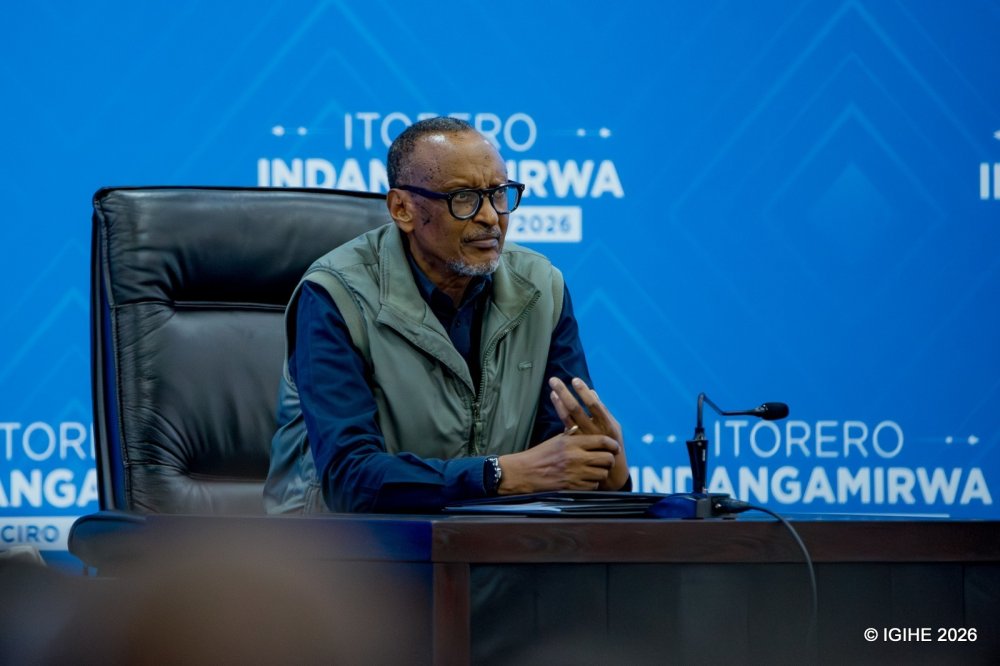
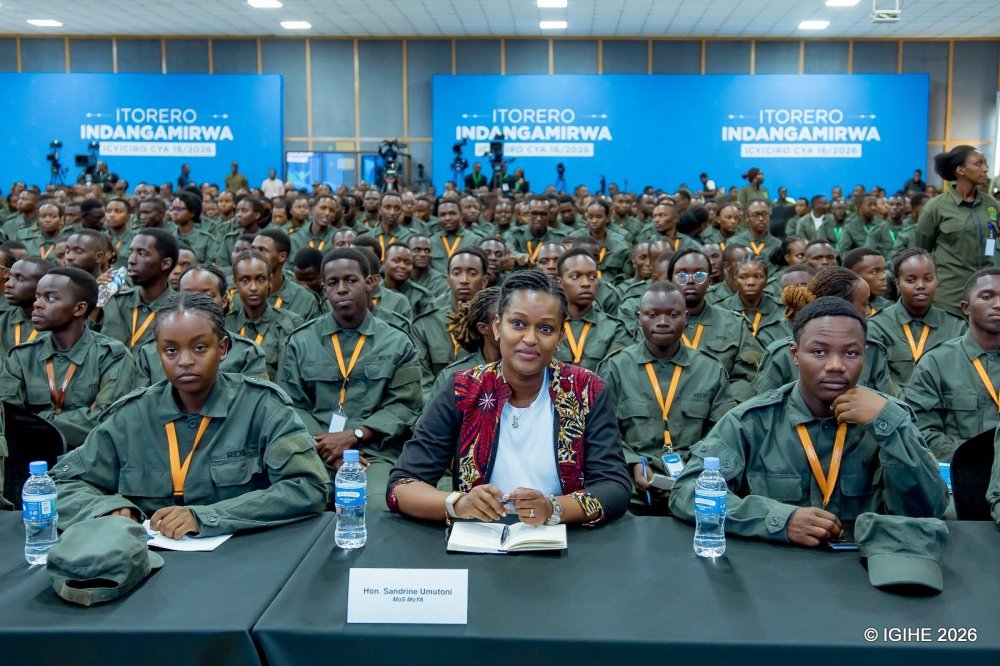
The President made the remarks on July 28, 2026, while meeting with the 16th cohort of Itorero Indangamirwa, the civic and national values training program for Rwandan youth, organized by the Ministry of National Unity and Civic Engagement at Gabiro Combat Training Centre.
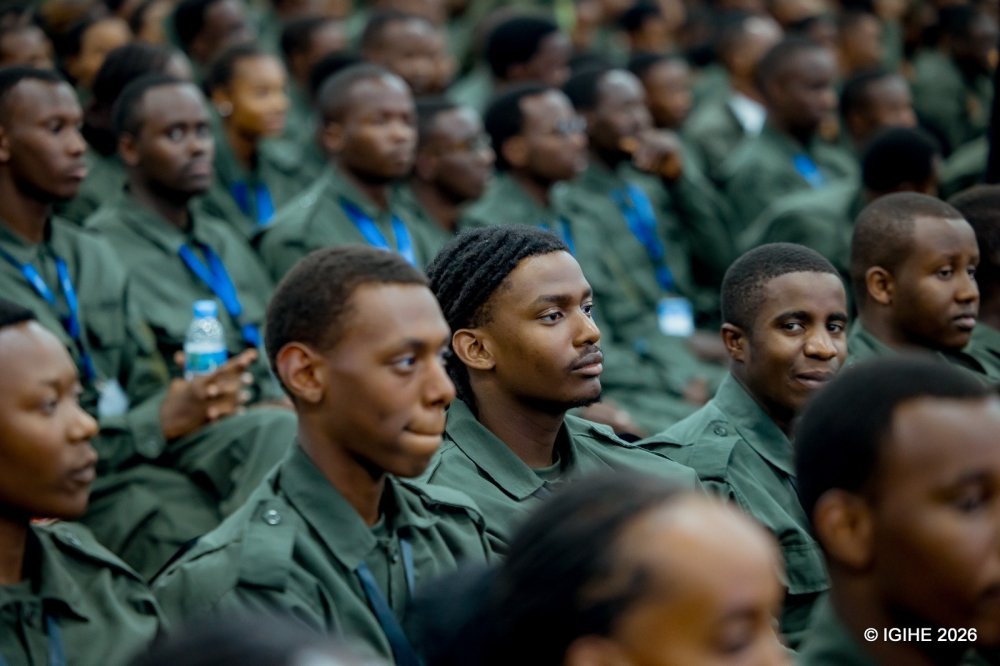
This year’s program has close to 800 participating youth between the ages of 18-23 including Rwandans living abroad, and students from across high schools and higher learning institutions in Rwanda.
Kagame explained to the young people the difficult history Rwanda went through, including the displacement of thousands of Rwandans who fled the country from 1959 following waves of violence targeting sections of the population.
“Unlike you, I did not have the opportunity to start from where you are, being told that there is Itorero and learning what happens there. No, I never attended Itorero. Where I got my lessons was not called Itorero,” Kagame said.
He explained that he lived in Uganda from the age of four or five because of these historical circumstances and began searching for solutions when he was around 20 or 21 years old. By the age of 23, he said, he met others who shared the same concerns and joined efforts to address the issue.
Kagame urged the youth to start thinking early about their interests and those of their families and country, commending them for choosing to attend Itorero, a programme aimed at instilling values among Rwandans.
During the interaction, the President asked the Indangamirwa participants whether they had learned how to accurately use firearms. After they responded that they had, he told them that weapons should only be used when necessary and not against every situation.
He said: “Everything has its time. When the time has not come to resort to weapons, there is no reason to use them. When that time comes, it does not come because of one individual alone.
“It comes when people’s rights have been taken away, when they have been pushed as far as we were pushed, and when they seek other ways to resolve the problem but those options fail. Then it becomes a matter of saying: ‘Now you know? We are going to fight over this.’”
Kagame said that when one person denies another person their rights and prevents a country from living in peace, the first step should be to seek dialogue and peace. However, if that fails, he said, the use of force may become necessary, citing the Rwanda Patriotic Army’s (RPA) liberation struggle that began on October 1, 1990.
He recalled that while he and his colleagues were refugees, they believed they should not remain in exile. However, he said officials from the Habyarimana government who came to Uganda argued that Rwanda was too small to accommodate all refugees returning home.
“But the country is small. These people don’t have a place,” Kagame said.
President Kagame said it was inconceivable that Rwandan refugees could be denied the right to return to their own country while the Habyarimana government believed they, and even their descendants, would remain in exile indefinitely despite having a homeland.
He explained that at the start of the liberation struggle, he told those fighting alongside him that he did not blame the country that had given them refuge, even if it had treated them unfairly, but instead held responsible the government that had refused to allow them to return home.
“My problem was with the person who was supposed to determine my rights in my own country and denied me those rights. That was the person we had to confront, and that is what happened,” Kagame said.
“I would not start a war against those who had hosted us because they had not given us something or had denied us something.
“No. They were free to give us what they wished or not, even if one might consider it unfair. The real responsibility lay with the person who had denied you peace in your own country.
Kagame told the youth that one of the important lessons they should learn is how to defend their rights and understand that no one should dictate how they should live or determine how Rwandans should live.
The Indangamirwa programme brings together young Rwandans to strengthen patriotism, leadership skills and national values.President Paul Kagame addresses the 16th cohort of Itorero Indangamirwa during a session at Gabiro Combat Training Centre.Nearly 800 young Rwandans, including students and youth from the diaspora, are taking part in the 16th Indangamirwa training programme.
Its chairman, Xiang Wenbo, sees that as a floor rather than a ceiling.
“I think this is only the beginning. There are still huge opportunities ahead,” Xiang said in a recent interview with Xinhua in the Kenyan capital, Nairobi.
Sany’s trajectory tracks a broader shift in China-Africa economic ties, moving beyond the export of goods toward industrial presence on the ground — in infrastructure, clean energy, servicing networks, and workforce training.
Taking root
Xiang has lost count of how many times he has visited Africa since Sany first entered the continent more than two decades ago. He said he is drawn to the continent’s unspoiled character and the beauty of its natural environment.
What has changed, in his telling, is the built environment. Infrastructure across Africa has been transformed over the past decade, he said, “especially in Kenya, where the change is striking. So I believe Africa is now in a very good period of development.”
The commercial case has moved with it. China has been Africa’s largest trading partner for 15 consecutive years, according to China’s Ministry of Commerce, and the stock of Chinese direct investment on the continent continues to grow. Beyond capital and equipment, Xiang argued, Chinese firms have brought technology transfer and supply-chain depth that turn industrialization plans into productive capacity.
Many of those firms have become significant taxpayers and employers in their host countries, he said.
“We have created a lot of local jobs. We directly employ more than 1,000 people here, and we have sold more than 40,000 machines in Africa over the years. Most of the operators were trained by us, which means we have trained a large number of industrial workers,” Xiang said.
“We have established sales and service operations, including repair centers, in almost every African country. Those skilled service personnel are, in effect, the foundation of Africa’s modern manufacturing industry in the future.”
That picture is broadly consistent with outside assessments. A McKinsey study of Chinese enterprises in Africa found that local staff account for close to 90 percent of their workforce.
Roads first
Drawing on China’s own development experience — captured in the saying that to get rich, you build roads first — Xiang argued that infrastructure must be built with foresight and should never become a bottleneck on growth.
By that standard, he said, Africa’s build-out “is still far from sufficient, and there is a great deal Chinese companies can do.”
He pointed to the cost of moving goods. “Logistics here is still very inadequate, and because of logistics, many things in Africa remain expensive,” he said, noting that a road journey in some major African cities can take more than 14 hours. “That would be unimaginable in China.”
The gap is well documented. The African Development Bank estimates the continent’s annual infrastructure financing shortfall at between 68 billion and 108 billion dollars, and infrastructure deficits are widely identified as a principal constraint on Africa’s competitiveness and on realizing the potential of the African Continental Free Trade Area.
A white paper issued by China’s State Council Information Office, “China and Africa in the New Era: A Partnership of Equals,” says Chinese companies have built or upgraded more than 10,000 km of railways and nearly 100,000 km of roads in Africa and helped create over 4.5 million local jobs.
Africa’s transport and network infrastructure remains nowhere near complete, Xiang concluded, so concerns about over-building are beside the point.
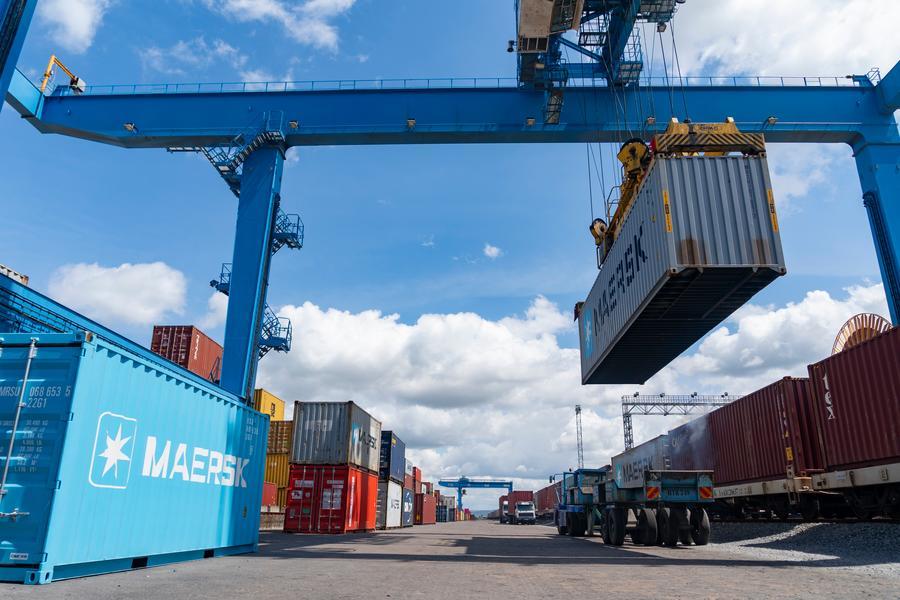
A crane hoists a container at Port Reitz Station on the Mombasa-Nairobi Standard Gauge Railway (SGR) in Mombasa, Kenya, July 9, 2026. (Xinhua/Xie Jianfei)
Two revolutions
Looking ahead, Xiang said Chinese companies should shift from exporting products to exporting industry, helping African partners build modern management practices and industrial systems. China and Africa pursuing modernization together, with no country left behind, is “a very large undertaking,” he said.
He sees a particular opening in timing. The fourth industrial revolution, driven by artificial intelligence, is unfolding alongside a clean energy revolution led by wind and solar, he said. The overlap gives latecomer economies a historic chance to leapfrog older technologies.
Sany is pursuing a strategic transition centered on new energy, promoting green mining, microgrids, and utility-scale solar to cut African mining operations’ reliance on costly conventional power. Last year, the company donated 500 household solar systems to Malawi.
Xiang acknowledged that the operating environment is not without friction, citing logistics costs, financing constraints, and the long lead times required to build service networks from scratch.
As Europe and the United States turn to non-market measures to shield domestic industries, he added, third-party markets are becoming the main arena of competition. The long-standing relationship between China and Africa offers a comparatively stable environment for two-way trade and investment, he said, and that is where Chinese firms’ durable advantage lies.
Sany’s African story began in 2002 with two motor graders delivered to Morocco. Nearly a quarter of a century later, its machines work across the continent.
“The real curtain,” Xiang said, “is only now going up.”
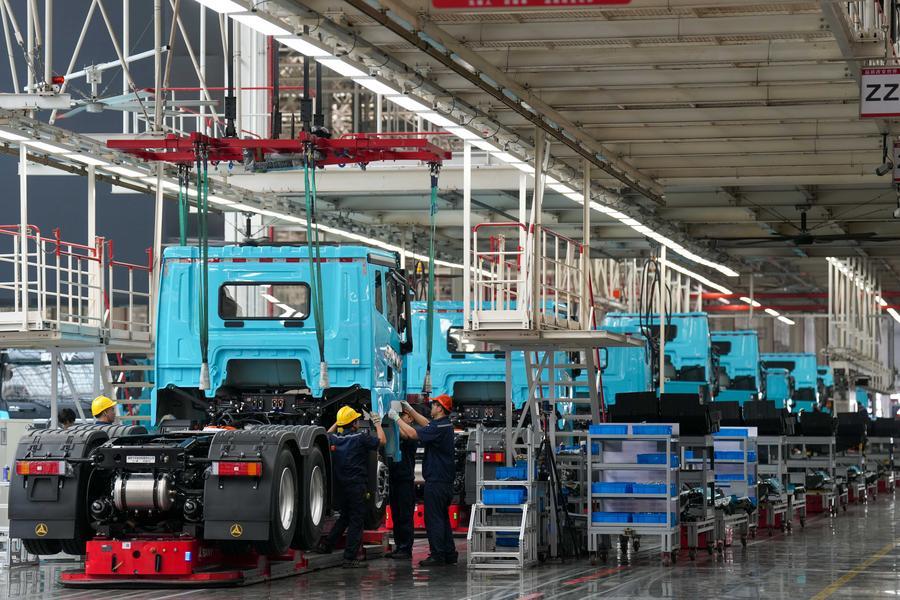
Workers work at an industrial park of Sany, China’s leading heavy equipment manufacturer, in Changsha, central China’s Hunan Province, May 12, 2026. (Xinhua/Xue Yuge)
On Saturday, the Jingdezhen Handicraft Porcelain Industry Sites were inscribed on the UNESCO World Heritage List, marking global recognition of a living tradition that remains a treasured gem of Chinese civilization.
The inscription also reflects China’s years of efforts to preserve and make alive this centuries-old craft — a cause that Chinese President Xi Jinping has consistently championed.
Passing on
Porcelain has been widely taken as one of the most representative symbol of Chinese civilization. For years, Xi has remained deeply committed to China’s cultural heritage and emphasized its preservation as a way to promote the finest traditional Chinese culture.
In October 2023, Xi visited Jingdezhen, globally renowned as the “Porcelain Capital,” where the glow of kiln fires has illuminated 2,000 years of ceramic history. At the Taoyangli Historical and Cultural Block, he toured the Nanlu Ruins, the Ceramic Museum, and the Ming and Qing Dynasty (1368-1911) kiln complex, learning about the intricate processes and cultural legacy behind the city’s celebrated porcelain craft.
During the visit, Xi met Sun Lixin, a fourth-generation craftsman carrying forward his family’s porcelain-making tradition. Admiring the craftsmanship, Xi asked, “Do you paint according to a design, or do you rely on your sense of touch?”
“It’s all in my heart,” Sun replied.
“Devoting one’s entire life to a single craft, with generations of a family committed to the same pursuit, is no simple undertaking,” Xi said.
“The fine traditional culture passed down by our ancestors is something we must continue to hold in our hands, adapt to the times, and carry forward,” he added.
Xi’s long-standing commitment to preserving Chinese porcelain culture can be traced back to his years working in east China’s Zhejiang province in the early 2000s, when he placed great importance on protecting and promoting the country’s rich ceramic heritage.
Xi made several visits to Longquan, a city in southwestern Zhejiang known for its centuries-old celadon tradition. He emphasized that Longquan celadon was a Chinese cultural treasure and called for the establishment of a museum to preserve and showcase this valuable heritage.
In 2009, the museum was officially opened. That same year, the traditional firing techniques of Longquan celadon were inscribed on UNESCO’s Representative List of the Intangible Cultural Heritage of Humanity.
Longquan would become one illustration of a much broader agenda. Over the years, Xi has made cultural heritage protection a recurring theme of his domestic inspections, visiting sites ranging from the Forbidden City and the Grand Canal to Jiayuguan Pass and the Yin Ruins. With his push, more Chinese cultural sites have been added to UNESCO’s World Heritage List.
“Protecting, preserving and making good use of these invaluable treasures is our shared responsibility,” Xi once said. “It is also essential to ensuring the continuity of human civilization and advancing sustainable development around the world.”
Traversing civilizations
Beyond its artistic value, porcelain has long served as a bridge fostering mutual learning among civilizations. Through the ancient Silk Road, porcelain vases, jars and bowls adorned the royal courts of Europe, becoming collectors’ highly coveted items.
For Xi, porcelain is more than a craft; it is a cultural ambassador that carries China’s artistic traditions and civilizational heritage to the world. From presenting porcelain as state gifts to foreign dignitaries to showcasing historic masterpieces at major international gatherings, Xi has used the timeless art form to tell the story of China’s rich cultural legacy.
In May 2019, Xi highlighted a rare Yuan Dynasty (1271-1368) blue-and-white porcelain vase to foreign leaders while touring a cultural exhibition ahead of the Conference on Dialogue of Asian Civilizations held in Beijing.
He noted that very few blue-and-white porcelain vases from the Yuan Dynasty have survived, describing the precious artifact as “the panda of ceramics.”
Xi, on many occasions, has also used porcelain to illustrate the transformative power of exchanges between civilizations. In a signed article published ahead of his state visit to Portugal in 2018, Xi wrote, “China’s blue and white porcelain, which was first shipped to Portugal centuries ago, inspired a fusion of Chinese and local techniques, producing a unique form of art Azulejo.”
Chinese ceramics have had a wide influence on art throughout the world and the artistic trends in the West, like Europe, and other places, said Jad Tabet, a Franco-Lebanese architect and former representative to the UNESCO World Heritage Committee.
The enduring vitality of China’s ceramic art and the global growth of the porcelain industry offer a vivid example of how civilizational exchange can promote common development and progress. As Xi once noted in a speech at UNESCO headquarters, civilizations have become richer and more colorful with exchanges and mutual learning.
“Such exchanges and mutual learning form an important drive for human progress and global peace and development,” he said.
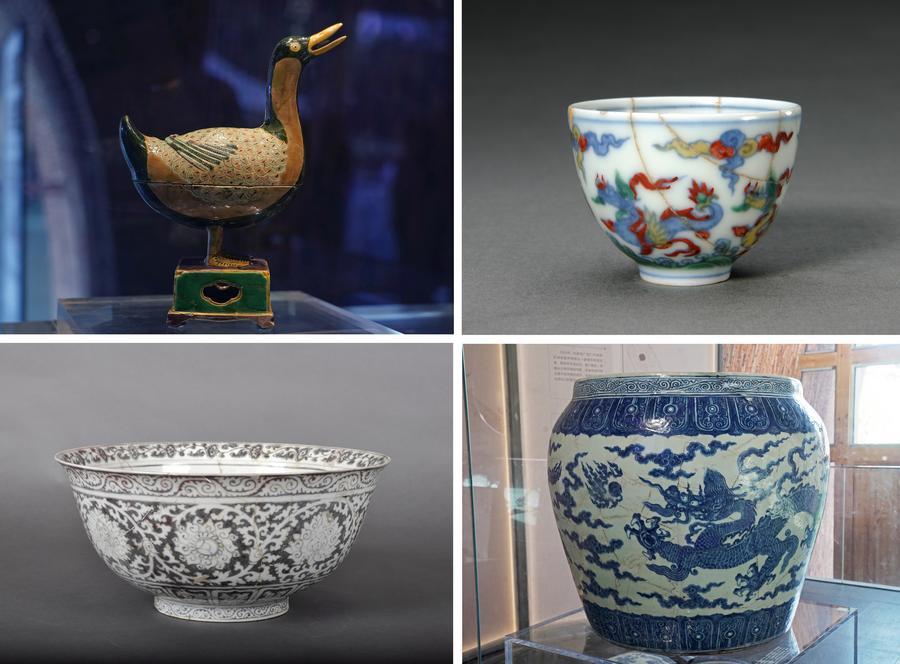
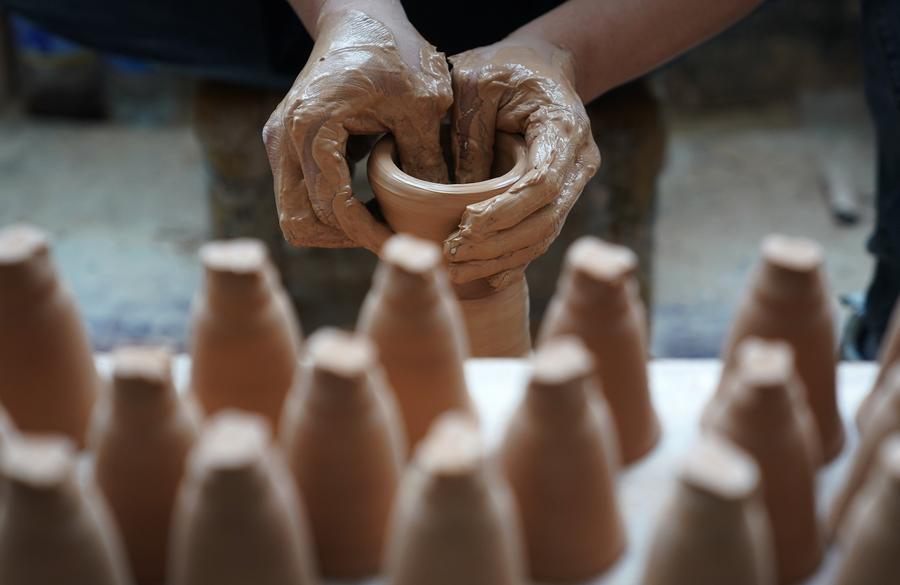
This combo photo shows porcelain wares unearthed from the imperial kiln site in Jingdezhen, east China’s Jiangxi Province. (Xinhua)This file photo taken on Aug. 28, 2024 shows a craftsman making the clay body on the wheel at a studio in Jingdezhen, east China’s Jiangxi Province. (Xinhua/Wan Xiang)
The demonstrations were organized by civil society organizations operating in the two cities, which are under the control of AFC/M23. Organizers described the sanctions imposed by the UN Security Council on AFC/M23 Coordinator Corneille Nangaa, the coalition’s intelligence chief, Col. Nzenze Imani, and MRDP Twirwaneho commander Brig. Gen. Charles Sematama as biased.
The civil society groups also accused President Tshisekedi of seeking to remain in power beyond the constitutional two-term limit by changing the Constitution. They argued that his administration has failed to govern effectively and called for him to step down in favor of new leadership.
Ahead of the demonstrations, on July 27, representatives of the civil society organizations formally notified the mayors of Goma and Bukavu, requesting authorization to hold the protests and ensure the safety of participants. Local authorities reportedly assured them that security would be provided.
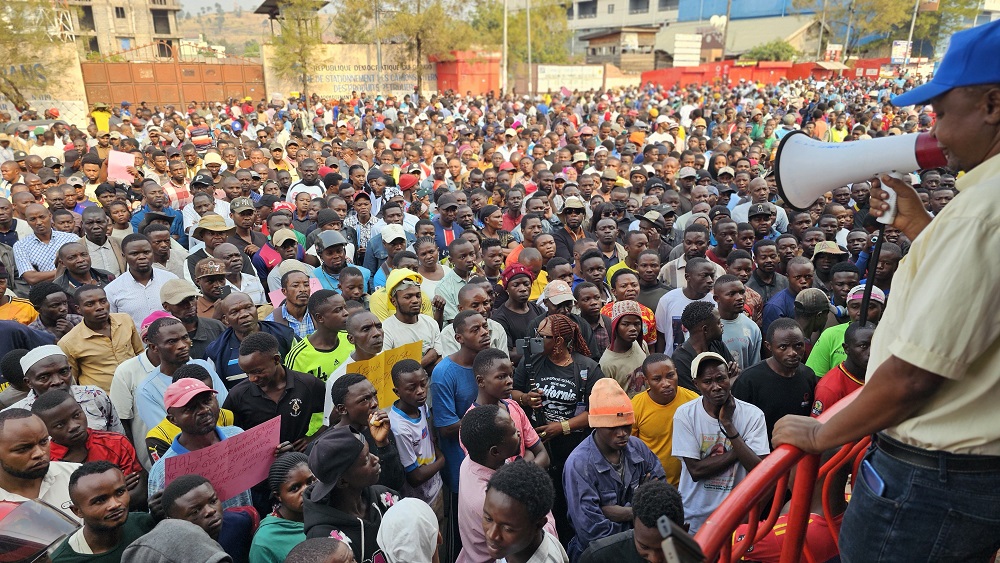
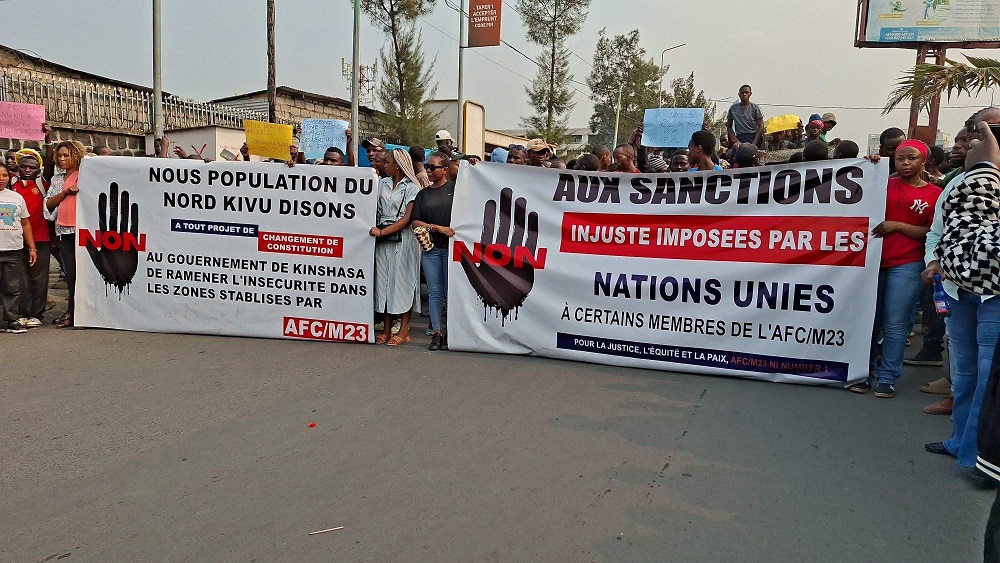
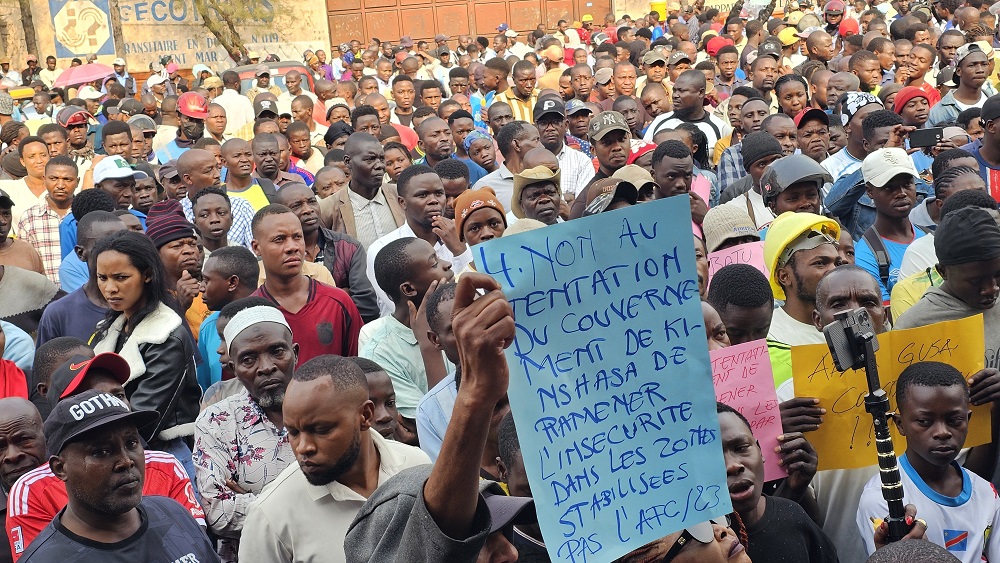
Following days of mobilization, large crowds gathered in both cities, with demonstrators expressing support for AFC/M23 and seeking to show that areas under the coalition’s control have remained peaceful since early last year. Protesters contrasted the security situation in those areas with territories controlled by the Kinshasa government.
Many demonstrators carried placards denouncing President Tshisekedi’s administration, the long-running attacks by the Allied Democratic Forces (ADF) in Beni, North Kivu Province, and military operations by the Congolese government in Minembwe Commune in South Kivu Province.
Some banners read, “We reject the UN sanctions imposed on AFC/M23 members without any valid justification.” Others claimed that since AFC/M23 took control of Goma and Bukavu, the cities have become more secure and united, with improved access to clean water, electricity and continued development.
In Goma, protesters displayed banners stating: “We, the people of North Kivu Province, reject the constitutional amendment project and the Kinshasa government’s actions aimed at destabilizing areas where AFC/M23 has restored security.”
Speaking during the protest in Bukavu, one civil society representative said the demonstrators opposed constitutional changes and wanted peace through dialogue.
“We are demonstrating because we reject any amendment to the Constitution and we want peace. We want negotiations to begin as soon as possible so that lasting peace can be achieved,” she said.
She also criticized the UN sanctions, saying: “How can you sanction a citizen in a sovereign country? It is unacceptable for this to happen to a Congolese citizen who is fighting for his rights, seeking peace and advocating peaceful coexistence.”
North Kivu Deputy Governor Manzi Willy expressed support for the demonstrations, arguing that what he described as one-sided sanctions would not contribute to peace in the DRC.
“A conflict involves two parties, yet only one continues to face punitive measures while the other is spared comparable scrutiny,” Manzi said.
“Such an approach is unlikely to advance peace; it risks deepening divisions and undermining confidence in the negotiation process.”
Demonstrators display banners during protests against Tshisekedi and sanctions targeting AFC/M23 leaders.Civil society-led protests in Goma and Bukavu draw thousands opposing Tshisekedi’s policies and UN sanctions on AFC/M23.Demonstrators expressing support for AFC/M23 and seeking to show that areas under the coalition’s control have remained peaceful since early last year.
According to a statement issued by the Ministry of ICT and Innovation on July 27, 2026, the nationwide switch-off of 3G services is scheduled for June 30, 2027, while the retirement of 2G services will follow after an assessment of network coverage, service continuity and the adoption of compatible devices.
The transition is being coordinated by the Ministry of ICT and Innovation (MINICT) and the Rwanda Utilities Regulatory Authority (RURA) in collaboration with mobile network operators, government institutions, the private sector and the public.
“This transition will free up network capacity currently used to run two generations of aging technology, allowing mobile operators to invest fully in expanding and strengthening 4G and, over time, 5G coverage across the country,” the statement reads.
For consumers, the change is expected to translate into faster internet speeds, clearer voice calls, fewer dropped connections and improved access to services that increasingly rely on modern mobile networks, including mobile banking, government e-services, education and digital health platforms.
The implementation will be guided by several readiness indicators before the shutdown is completed.
These include ensuring reliable nationwide 4G coverage and quality of service, maintaining uninterrupted voice calls, text messaging, mobile money and emergency services, migrating services that still depend on USSD, 2G or 3G technologies, ensuring the availability of affordable compatible devices, and conducting extensive public awareness campaigns and customer support.
As part of the transition, pilot shutdowns of older networks will be carried out during 2026 while authorities continue expanding 4G coverage and monitoring the country’s readiness for the nationwide 3G switch-off.
MINICT has urged mobile phone users to verify whether their devices and SIM cards support 4G technology. MTN Rwanda customers can check their SIM compatibility by dialing 4561#, while Airtel Rwanda customers can dial 2555*4#. Mobile operators will also notify customers who need to upgrade their devices or SIM cards.
Businesses and public institutions operating equipment or services that still rely on 2G or 3G; including systems used for mobile money, payment platforms, utilities, transport, healthcare, public safety and government services, have also been advised to begin planning for upgrades or replacements.
MINICT and RURA said additional guidance will be issued to service providers and the public as the migration progresses.
The move comes just over a year after MTN Rwanda officially launched its 5G network in June 2025, describing the technology as a key driver of innovation and digital transformation.
At the time, the operator said 5G would deliver significantly higher speeds, lower latency and greater network capacity, with initial deployment focusing on Kigali and selected high-demand locations before wider expansion.
Rwanda is among Africa’s leading countries for internet speed and also ranks among the world’s top-performing nations for internet connectivity.
The latest government roadmap is expected to further support the country’s long-term transition toward advanced mobile connectivity.
The nationwide switch-off of 3G services is scheduled for June 30, 2027, while the retirement of 2G services will follow after an assessment of network coverage.
A statement issued by the Directorate General of Immigration and Emigration shows that among those granted Rwandan citizenship, 26 were born in Burundi, 20 in the DRC, nine in Uganda and eight in the United States.
The group also includes six people born in Belgium, five from Cameroon, four from Kenya and three born in Rwanda to parents of foreign origin.
Canada, the Netherlands, the Republic of Congo, Switzerland and Tanzania each had two nationals among those who acquired Rwandan citizenship.
About 60 percent of the newly naturalised citizens are aged between 30 and 49 years, a demographic group considered to have strong potential to contribute to the country’s social and economic development.
They are followed by those aged between 50 and 64, people above 65 years, and young people below 30 years.
The youngest among the new citizens is five years old, while the oldest is 81.
The newly granted Rwandan citizenship became effective on July 24, 2026, according to a notice published in the Official Gazette of the Republic of Rwanda.
Rwanda has granted citizenship to 105 people from 27 countries.
At the centre of this transformation is the Rwanda Institute for Conservation Agriculture (RICA), which is helping build the knowledge and skills needed to move the approach from research and demonstration plots into farming communities across the country.
Through its role in a four-year Conservation Agriculture (CA) mainstreaming and scaling-up project worth $5 million, RICA is training agricultural professionals who will support farmers in adopting practices designed to protect soil while improving yields.
The project, implemented jointly by the Ministry of Agriculture and Animal Resources (MINAGRI), the Rwanda Agriculture and Animal Resources Development Board (RAB) and RICA, aims to integrate conservation agriculture into Rwanda’s agricultural extension system ahead of a nationwide rollout starting with the 2027A agricultural season.
Rather than training every farmer directly, RICA is focusing on strengthening the capacity of the people who work closest with farmers, including district agronomists, agricultural extension officers, environmental officers, Crop Intensification Programme focal persons and young agricultural professionals.
So far, 168 agricultural officers have been trained, while 889 technicians are expected to receive training before the start of the 2027A season.
On July 22, 2026, RICA hosted a two-day training session for 52 young agricultural professionals from districts across the country at its campus in Bugesera, equipping them with practical knowledge they will later transfer to farming communities.
Learning before teaching
At RICA, conservation agriculture training goes beyond classroom lessons.
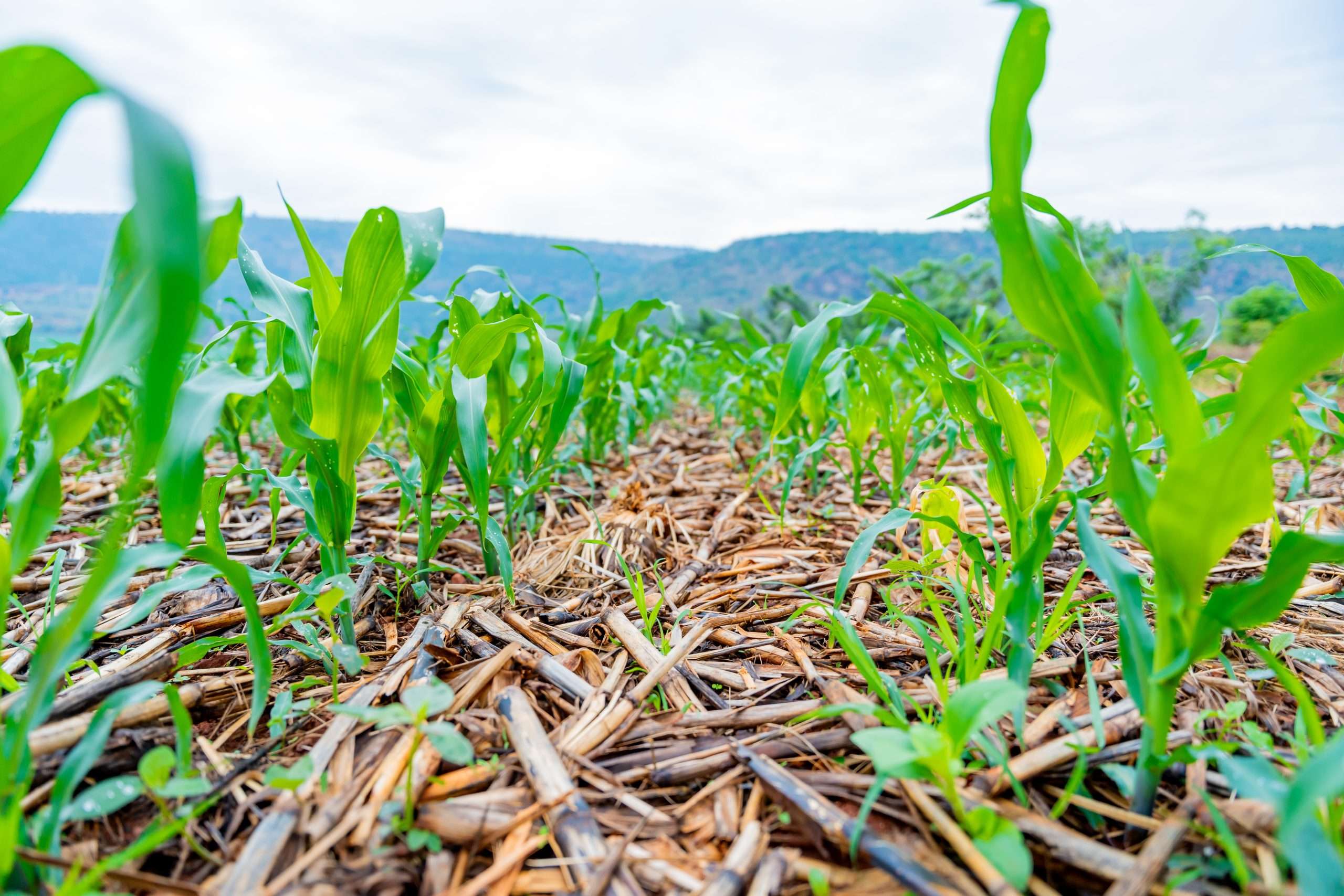
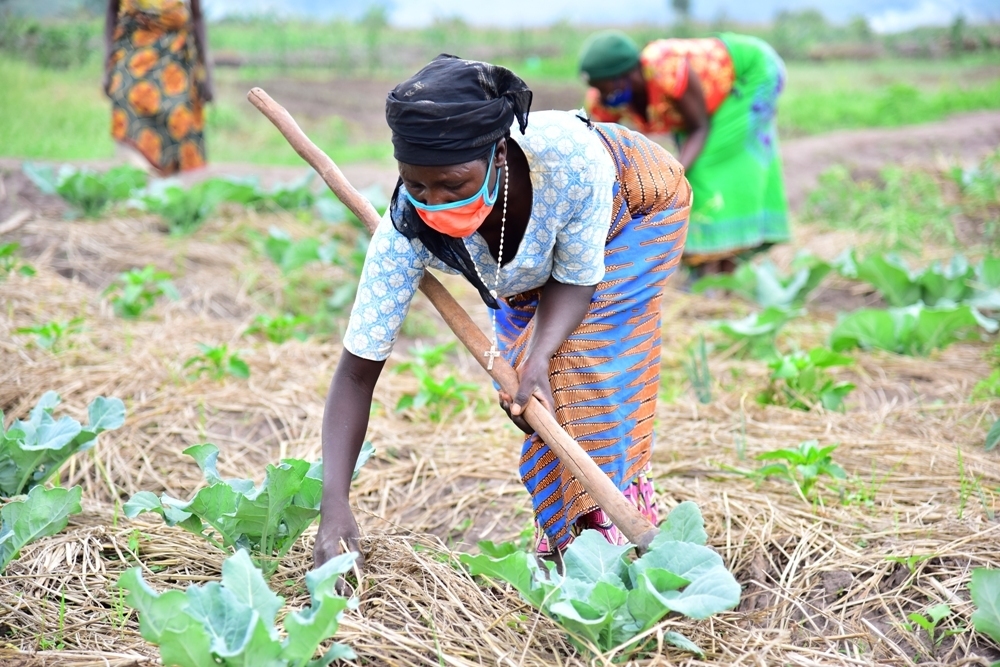
Trainees are taken through demonstration plots where they observe the difference between conventional farming methods and conservation agriculture practices.
Plots managed through conventional tillage show how repeated soil disturbance can contribute to erosion and nutrient loss, while conservation agriculture plots demonstrate how minimum tillage, soil cover and crop diversification help restore soil health over time.
For RICA, the goal is not only to introduce new farming techniques but also to change long-established perceptions among farmers about what makes a productive field.
For generations, many farmers have considered a well-prepared field to be one that is deeply tilled, free of weeds and cleared of all crop residues after harvest.
However, agricultural experts warn that such practices can gradually damage soil quality, reduce moisture retention and lower productivity.
Heavy rains can wash away exposed topsoil, while uncovered land loses moisture quickly under intense sunlight. Over time, farmers may be forced to invest more in fertilisers and other inputs while getting lower returns.
Dr. Léonce Harerimana, Director of Extension and Irrigation and Water Management Lecturer at RICA, said the institution’s mission is to promote farming methods that protect Rwanda’s limited agricultural land while increasing production.
“As an institution dedicated to conservation agriculture, climate resilience and sustainable farming on small pieces of land, we promote minimum tillage, permanent soil cover, crop rotation, quality seed use, efficient irrigation and fertiliser management,” he said.
“Our mission is to ensure these practices go beyond the campus. We want farmers across Rwanda to embrace conservation agriculture because it protects the soil while improving productivity.”
Changing farming mindsets
Harerimana said one of the biggest challenges is changing traditional beliefs around farming practices.
He explained that excessive ploughing and removing crop residues from fields can negatively affect soil health.
“Sometimes we dig too deeply because that is what we have always done. But excessive tillage makes the soil more vulnerable to erosion. Many farmers also believe that a clean field is a good field, so they remove every residue after harvesting. Yet those residues are exactly what help protect the soil and improve its fertility as they decompose into organic matter with time,” he said.
Under conservation agriculture, farmers are encouraged to leave crop residues on the soil surface, where they act as natural mulch, helping retain moisture, reduce weed growth and restore organic matter.
The approach also promotes efficient use of fertilisers instead of simply increasing the quantity applied.
“Sometimes farmers apply more fertiliser thinking it will increase production. But what matters is applying the right quantity in the right way while maintaining healthy soils,” Harerimana said.
Protecting soil, increasing yields
According to Dr. Christian Nkurunziza, Conservation Agriculture Promotion Project Manager at MINAGRI, the approach is built around three main principles: minimum soil disturbance, permanent soil cover and crop diversification.
“Conservation agriculture is a type of farming that protects the soil through minimum tillage, recycles nutrients through crop residues, and protects crops by maintaining soil cover. As a result, plants grow under more favourable conditions, and agricultural production naturally increases,” he said.
The benefits of conservation agriculture are already reflected in research findings.
Nkurunziza said maize yields under conservation agriculture can increase by about 40 per cent, while bean production can rise by approximately 70 per cent.
RICA also highlights that maize production can reach up to seven tonnes per hectare when farmers combine conservation agriculture practices with quality seeds, compared with less than two tonnes on degraded soils.
For beans, conserved land can produce more than 1.6 tonnes per hectare, while poorly managed soils may produce below 500 kilogrammes per hectare.
Nkurunziza said protecting soil is becoming increasingly important because Rwanda’s available agricultural land is limited.
“Today, the amount of land available for farming is not increasing, but we want the same land to produce more. Without protecting it, soil would lose its natural qualities. In the past, farmers could leave fields fallow, but that is no longer possible because land must be cultivated every season,” he said.
Taking lessons to farming communities
Among those preparing to take conservation agriculture knowledge to farmers is Vivine Umubyeyi, a young agricultural professional who will work under MINAGRI in Kirehe District.
She said the training changed her understanding of farming and equipped her with skills to help farmers adopt new practices.
“I acquired training in conservation agriculture and I understand how it works and how it can positively affect farmers’ yields while protecting our soils. I will use these skills to help farmers practice conservation agriculture. Most importantly, I want them to understand why these methods work so they willingly adopt them,” she said.
Another trainee, Eric Uwitoze from Ruhango District, said the programme helped him understand the importance of practices such as crop rotation in reducing crop diseases and improving productivity.
He added that conservation agriculture could also help farmers reduce unnecessary costs by improving soil quality and efficiency.
Scaling up across Rwanda
The initiative will initially focus on Rwanda’s major food production areas and districts where land consolidation farming is practised.
It will start with 100,000 hectares during the 2027A agricultural season, expand to 150,000 hectares in the following season and eventually reach 600,000 hectares by 2029.
Priority crops include maize, beans, Irish potatoes and soybeans.
The programme is aligned with Rwanda’s Fifth Strategic Plan for Agriculture Transformation (PSTA 5), which seeks to improve productivity while ensuring sustainable management of natural resources.
As Rwanda’s population continues to grow while farmland remains limited, RICA says conservation agriculture will be critical in ensuring that the country produces more food without exhausting the soil that supports agriculture.
Rwanda is set to introduce conservation agriculture practices on 600,000 hectares of farmland across the country under a $5 million project.
“We are in very deep talks with Iran. If they don’t work out, we will go back to very strong military action,” Trump said in an interview with U.S. online news outlet Axios.
Asked how long he was willing to give diplomacy, he said, “Not much time. Either it goes fast or not at all.”
Trump said he decided to pause strikes on Friday because the countries that are mediating as well as other countries in the region had asked him to give talks with Iran another chance.
Later, the president told reporters that Iran sought talks only after its military was battered by the U.S. military.
“I think there’s a good chance that something could happen,” Trump said aboard Air Force One en route to an event in Michigan. “And if it does, good, if it doesn’t, we go back to doing what we were doing two days ago.”
Trump said that his administration and the Israeli government are “pretty close” to being on the same page regarding Iran.
“We have a little difference, but pretty close,” he said of Israeli Prime Minister Benjamin Netanyahu, who is expected to visit the White House on Tuesday.
Trump also reiterated that Iranian assets controlled by the United States will be used to cover damage to ships attacked when transiting the Strait of Hormuz. “We’re going to use Iran’s money to pay for the damage they did,” he said.
Negotiations between Oman and Iran have made progress, though no deal has been reached, according to reports citing regional sources.
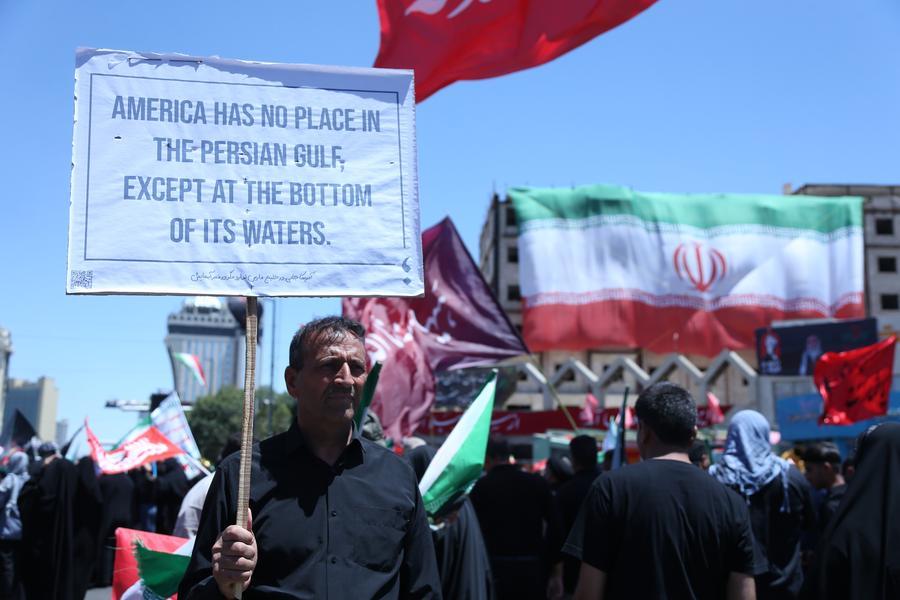
People attend the funeral procession of Iran’s late Supreme Leader Ali Khamenei in Mashhad, Iran, July 9, 2026. (Xinhua/Shadati)
Vivo Energy and Mount Meru Group have signed a sale and purchase agreement for Mount Meru’s acquisition of Vivo Energy’s shareholding in Vivo Energy Rwanda and Vivo Energy Malawi, in a combined transaction.
The transaction includes the network of Vivo Energy’s over 40 service stations in Rwanda and over 50 service stations in Malawi, together with the commercial fuel and lubricants operations.
Vivo Energy identified Mount Meru Group as a partner well placed to bring focused investment, local and regional expertise as well as long-term ambition to its businesses in Rwanda and Malawi.
Mount Meru Group, which first entered Rwanda in 2007 and Malawi in 2013, brings an established regional presence and a strong track record in downstream fuel distribution across Africa. The transaction will see the Group significantly deepen its footprint in both markets.
Commenting on the development; Atul Mittal, Director, Mount Meru Group, said: “We are proud to be growing our existing, long-standing presence in Rwanda and Malawi.
“We are committed to investing and growing these businesses and on completion of the transaction look forward to strengthening relationships with channel partners, customers and employees while expanding our reliable service, customer satisfaction, and environmental responsibility to more consumers.”
Stan Mittelman, CEO, Vivo Energy, said the decision reflects ongoing commitment to ensuring every part of their portfolio has the ownership best placed to take it forward.
“Mount Meru brings deep local and regional expertise and a genuine ambition to invest in these markets, and we are confident this transaction provides a strong opportunity for our employees, dealers and customers in both countries. We have valued working closely with the Mount Meru team throughout this process and look forward to a smooth transition,” he noted.
The transaction is subject to approval from the relevant authorities and the fulfilment of other conditions precedent, and we expect this process to take some months before it completes.
Until completion, Vivo Energy Rwanda and Vivo Energy Malawi will continue to operate as normal, maintaining their focus on the safe, reliable and high-quality service they provide to customers.
Mount Meru Group is a diversified African conglomerate operating in more than 15 countries across energy, consumer products, and logistics.
It runs over 330 fuel stations, supported by strong storage and distribution networks, and offers a wide energy portfolio including LPG, lubricants, jet fuel, and heavy fuel oil. The Group also operates in agro-processing and edible oil refining, backed by an integrated logistics fleet of more than 1,000 trucks.
Meanwhile, Vivo Energy operates across Africa, the Indian Ocean Islands, and Jordan, managing more than 4,200 service stations in 29 markets under the Engen and Shell brands. The company supplies fuels, lubricants, LPG, and chemicals to retail and industrial customers, supported by over 6,000 employees and more than 2.1 billion litres of fuel storage capacity.
Vivo Energy Rwanda was established in 2019, providing Engen products and services as a licensee of the Engen brand.