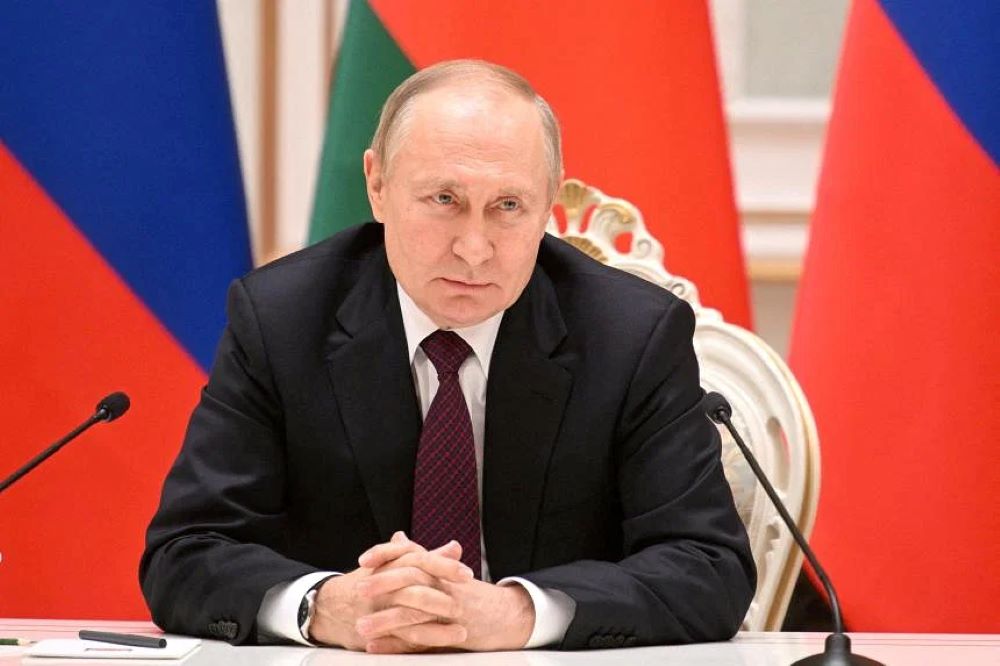
“By the decision of the Supreme Commander-in-Chief of the Armed Forces of the Russian Federation, Vladimir Putin, a ceasefire has been declared in view of the upcoming Orthodox holiday of Easter, from 16:00 on April 11 until the end of the day on April 12, 2026,” the Kremlin said in a statement.
According to the statement, Russia’s Defense Minister Andrei Belousov and Chief of the General Staff of the Russian Armed Forces Valery Gerasimov have been instructed to cease combat operations along all fronts during this period.
“Troops must be prepared to thwart any possible provocations by the enemy, as well as any aggressive actions,” the Kremlin said, adding that it expects that the Ukrainian side will follow Russia’s lead.
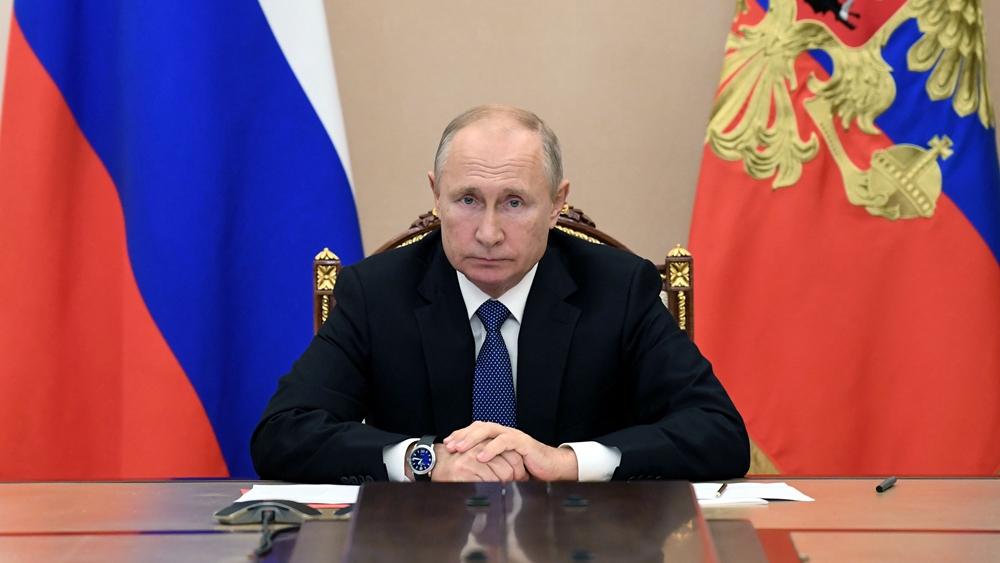
Russian President Vladimir Putin listens to Deputy Prime Minister, Chief of the Government Staff Dmitry Grigorenko during their meeting at the Kremlin, in Moscow, Thursday, April 9, 2026. (Alexander Kazakov/Sputnik, Kremlin Pool Photo via AP)
He was speaking during the 32nd commemoration held at the Canadian Museum of History.
“We remember the lives that were lost. We honour the dignity that was denied. And we reaffirm the responsibility that history has placed upon all of us. Kwibuka is not only an act of memory. It is an act of truth, an act of resistance, and a call to action,” he said.
Amb. Higiro also emphasized the urgent need to confront genocide denial wherever it appears, warning that indifference is never neutral: “Indifference is not neutral. It never was.”
The commemoration, organized by the High Commission of the Republic of Rwanda in Canada in collaboration with RCA Ottawa-Gatineau, the Humura Association, and PLP Canada, drew approximately 800 participants, including members of the diplomatic corps, Canadian government representatives, Members of Parliament, the Rwandan community, and friends of Rwanda. The event was held under the theme “Remember — Unite — Renew.”
The afternoon began with the Walk to Remember, a symbolic procession led by the Humura Association along the Ottawa River, culminating in a flower release. The formal ceremony followed, featuring a moment of silence, candle lighting, a nondenominational prayer, survivor testimony, artistic performances, and remarks from distinguished speakers.
Canadian government engagement was notable.The Office of the Prime Minister posted on X: “Today, we remember and reflect on the horrific 1994 Genocide against the Tutsi in Rwanda. We honour the victims, survivors, and everyone whose lives were changed forever by the atrocities and commit to building a better world where such horrors are never forgotten or repeated.”

Greg Fergus, Member of Parliament, expressed solidarity with the Rwandan people, while Ms. Cheryl Urban, Assistant Deputy Minister, delivered remarks on behalf of the Government of Canada, reaffirming Canada’s commitment to remembrance and genocide prevention.
Arielle Kayabaga, MP for London West, sent a formal message recognizing the Humura Association’s role in fostering community unity and remembrance.
The keynote address was delivered by Dr. Bojana Coulibaly, PhD, Harvard University, who stressed the importance of confronting revisionist narratives: “Denial is not an opinion, it is part of the genocide process.”
A moving testimony from genocide survivor Diane Muberarugo reminded attendees of the human cost of the tragedy and the enduring resilience of survivors. The event concluded with closing remarks by Ms. Denyse Umutoni, President of the Humura Association, reflecting the strength of community partnership in Canada.
The 32nd commemoration of Genocide against the Tutsi , known as Kwibuka32, continues over a 100-day period, with commemorative activities taking place across Canada and worldwide, reinforcing the global commitment to remembrance, truth, and the prevention of genocide.
Prosper Higiro, Rwanda’s High Commissioner to Canada, has urged that remembrance of the 1994 Genocide against the Tutsi must go beyond reflection and become an active commitment to truth and justice. Dr. Bojana Coulibaly, PhD, Harvard University, stressed the importance of confronting revisionist narratives.The afternoon began with the Walk to Remember, a symbolic procession led by the Humura Association along the Ottawa River, culminating in a flower release.Various Canadian officials attended the event. The 32nd commemoration of Genocide against the Tutsi was held at the Canadian Museum of History on April 7, 2026.
The message was delivered during the Kwibuka32 commemoration held in Seoul on April 7, 2026, where diplomats, government officials, members of the Rwandan community, and friends of Rwanda gathered under the theme “Remember – Unite – Renew.”
The event began with a Walk to Remember, honoring the victims, supporting survivors, and paying tribute to those who stopped the Genocide and contributed to Rwanda’s liberation.
Participants reflected on the historical reality of the Genocide against the Tutsi, which was planned and executed, leading to the killing of more than one million innocent Tutsi in just 100 days, from April to July 1994.
Representing the Government of the Republic of Korea, Chung Kwangyong, Director-General for African and Middle Eastern Affairs, noted that Rwanda’s journey of recovery and transformation resonates with the Korean people, who have also overcome the devastation of war to rebuild their nation.
He commended Rwanda’s resilience and highlighted its emergence as a hub of innovation and a model for sustainable development.
Speaking at the event, Chafik Rachadi, Ambassador of the Kingdom of Morocco and Dean of the Diplomatic Corps, emphasized the importance of vigilance against hate speech and division, calling for continued global commitment to human dignity and the prevention of atrocities.
Rwanda’s Ambassador to South Korea, Bakuramutsa Nkubito stressed that remembrance must remain active and grounded in truth.
He highlighted that ‘genocide denial and distortion, particularly in the digital age, constitute a continuation of genocide ideology and must be firmly confronted’.
He further underscored Rwanda’s continued commitment to unity, reconciliation, and resilience, noting that these values have been central to the country’s rebuilding process over the past three decades.
Thirty-two years after the Genocide, concerns remain over the persistence of denial and distortion, increasingly spread through digital platforms and transnational networks, a trend the Embassy warned must be actively countered.
The commemoration also highlighted Rwanda’s progress in rebuilding a united nation founded on the principle of Ndi Umunyarwanda, reflecting inclusive governance, justice, and reconciliation.
The Embassy called on the international community to uphold the truth, combat genocide denial and hate speech, and ensure accountability by bringing genocide fugitives to justice in line with international obligations.
Rwanda’s Ambassador to South Korea, Bakuramutsa Nkubito stressed that remembrance must remain active and grounded in truth. Chung Kwangyong, Director-General for African and Middle Eastern Affairs, noted that Rwanda’s journey of recovery and transformation resonates with the Korean people.Chafik Rachadi, Ambassador of the Kingdom of Morocco and Dean of the Diplomatic Corps, emphasized the importance of vigilance against hate speech and division.A Walk to Remember preceded commemoration talks.
American diplomat James Swan has officially assumed leadership of the United Nations Organization Stabilization Mission in the Democratic Republic of the Congo (MONUSCO).
António Guterres appointed Swan as his Special Representative for MONUSCO early March 2026, succeeding Bintou Keita of Guinea, who left office on November 30, 2025.
Upon his arrival in Kinshasa on April 7, Swan underscored that the crisis in eastern DRC cannot be resolved through military means, pointing instead to dialogue, regional engagement, and the implementation of existing agreements as essential pathways to progress.
He reaffirmed that the protection of civilians remains MONUSCO’s central responsibility.
Swan further indicated that the mission will continue to support efforts aimed at reducing violence and creating conditions conducive to sustainable peace in the eastern region.
Swan assumes his duties at a time when MONUSCO has been tasked with overseeing the implementation of a ceasefire in Uvira territory, South Kivu Province, following the Doha negotiations between the Congolese government and the AFC/M23 coalition.
The United Nations Security Council has maintained that MONUSCO’s core mandate includes protecting civilians, preventing and responding to attacks on displacement camps, supporting the reintegration of former combatants, and monitoring compliance with sanctions related to arms flows.
In addition, the mission’s Force Intervention Brigade has been restructured to enhance its effectiveness in restoring stability in eastern DRC, with a strengthened mandate to conduct operations against armed groups independently or in coordination with national forces.
MONUSCO staff members welcomed Swan upon arrival The United Nations Secretary-General António Guterres appointed Swan as his Special Representative for the United Nations Organization Stabilization Mission in the Democratic Republic of the Congo (MONUSCO) early March 2026. Upon his arrival in Kinshasa on April 7, Swan underscored that the crisis in eastern DRC cannot be resolved through military means.
The event was attended by several guests, including Hans Docter, Deputy Secretary General at the Ministry of Foreign Affairs of the Netherlands, as well as local authorities such as Flora Breemer, representing the Municipality of Amsterdam, and Joseph Rutazihana, President of Ibuka Netherlands.
In his remarks, Rwanda’s Ambassador to the Netherlands, Dushimimana Lambert, emphasized that this moment is not only for remembrance but also for renewing the collective responsibility to combat genocide ideology.
He recalled that 32 years have passed since the Genocide began on April 7, 1994, claiming the lives of over one million innocent people.
Women, men, and children were killed simply because of who they were, and their dreams and aspirations were forever destroyed by hatred and discrimination.
Amb. Dushimimana paid tribute to survivors of the Genocide against the Tutsi, commending their resilience and courage, which continue to serve as a source of strength in rebuilding Rwanda.
Reflecting on the aftermath of the Genocide, he noted that Rwanda faced immense challenges across all sectors; human, economic, institutional, and moral but chose a path of rebuilding founded on unity, justice, and reconciliation.
He expressed gratitude to countries that supported Rwanda throughout this journey, particularly the Kingdom of the Netherlands, for its significant role in strengthening the justice sector and supporting efforts to prosecute genocide suspects.
However, the Ambassador also raised concerns about ongoing challenges. Despite the global commitment to “Never Again,” there are still alarming signs, including the resurgence of genocide ideology, the spread of hate speech, and attempts to distort historical facts.
He warned that such developments should not be taken lightly, as history has shown that unchecked hate speech can escalate into extreme violence.
Amb. Dushimimana called on the international community to take stronger action in identifying, arresting, and prosecuting genocide fugitives, stressing that justice must neither be delayed nor selective.
He also addressed the Rwandan community in the Netherlands, urging them to preserve memory, promote unity, and actively oppose denial and distortion of the Genocide against the Tutsi.
Amb. Dushimimana further stated that commemoration is not only about reflecting on the past but also a call to act in the present, to ensure that the words “Never Again” carry real and lasting meaning.
The event began with a Walk to Remember, followed by a wreath-laying ceremony.
Among the speakers, the President of Ibuka Netherlands, Joseph Rutazihana, thanked the Government of the Netherlands for its continued support to Rwanda, particularly in the area of justice.
He emphasized that remembrance is essential and must remain ongoing, while encouraging survivors to stay strong during this 32nd commemoration period.
Representing the Dutch Ministry of Foreign Affairs, Hans Docter reaffirmed the Netherlands’ commitment to continue working with Rwanda on justice related to the history of the Genocide against the Tutsi.
Walk to remember
Members of the Rwandan community in the Netherlands joined the Walk to Remember, honoring the memory of victims of the 1994 Genocide against the Tutsi.
Commemoration talksand laying of wreaths
Amb. Dushimimana Lambert addresses attendees in the Netherlands, urging continued vigilance against genocide denial and the distortion of history.Hans Docter, Deputy Secretary General at the Ministry of Foreign Affairs of the Netherlands delivering his remarks. Joseph Rutazihana, President of Ibuka Netherlands, spoke on the importance of remembrance and international support for justice.
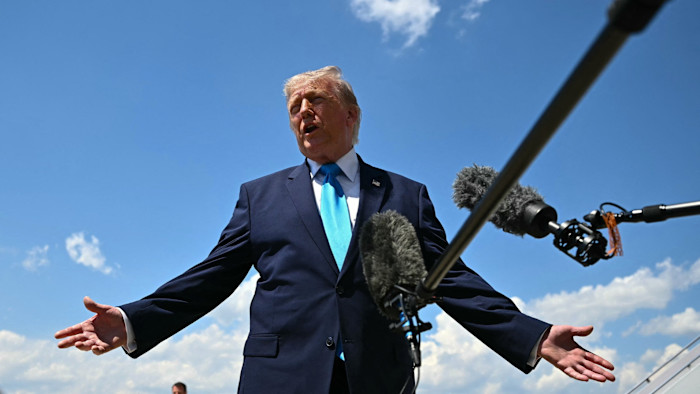
The whiplash was breathtaking, even by Trump’s own standards. On Tuesday morning, Trump posted on his Truth Social platform that “a whole civilization will die tonight, never to be brought back again” if Iran failed to meet his deadline to strike a deal.
He had set 8 p.m. ET as the cutoff, threatening to target Iran’s power plants and bridges — actions that legal experts warned could constitute a war crime.
Hours later, the same man was singing a very different tune.
In announcing a two-week ceasefire deal brokered by Pakistan, Trump wrote that Iran had proposed a “workable” 10-point peace plan and declared: “This will be a double-sided CEASEFIRE!”
Then came the Trump Social post captured in the viral screenshot circulating on X: “A big day for World Peace! Iran wants it to happen, they’ve had enough!”
He predicted “lots of positive action,” said “big money will be made,” and invited Iran to “start the reconstruction process” — concluding that “this could be the Golden Age of the Middle East!!!”
The contrast left much of the world blinking. The abrupt pivot came just two hours before his own self-imposed deadline, after Pakistani Prime Minister Shehbaz Sharif asked Trump to extend the ultimatum and urged Iran to reopen the Strait of Hormuz as a goodwill gesture.
It was not the first time. Since the war began on February 28, Trump has repeatedly imposed deadlines linked to threats, only to extend them.
This particular escalation-and-retreat cycle was sharper than most. Just hours before the ceasefire announcement, Trump had described the looming crossroads as “one of the most important moments in the long and complex history of the world,” and warned that “47 years of extortion, corruption, and death will finally end.”
Critics were quick to point out the contradiction. As commentator Mario Nawfal noted on X: “Twelve hours ago he threatened to end an entire civilization. Now he’s…” — with the rest of the sentence left to speak for itself.
The ceasefire marks the most significant pause in a war that has rattled global energy markets, sent oil prices soaring, and drawn in regional powers since the United States and Israel launched their campaign against Iran’s military and nuclear infrastructure in late February.
Pakistan’s Prime Minister Sharif declared that “both parties have displayed remarkable wisdom and understanding,” and invited delegations from the U.S. and Iran to Islamabad on April 10 to continue negotiations toward a permanent peace.
Whether this latest ceasefire holds, and whether Trump’s “Golden Age” rhetoric lasts longer than a news cycle, remains very much an open question.
Donald Trump had threatened Iran with severe consequences, warning that an entire civilization could be destroyed if his demands were not met.
He made the remarks during the 32nd commemoration of the 1994 Genocide against the Tutsi, held in Berlin under the theme “Remember – Unite – Renew,” where government officials, representatives of IBUKA Germany, members of the Rwandan community, friends of Rwanda, and other distinguished guests gathered in solidarity.
After a Walk to Remember, the commemoration continued with commemoration talks held at the Westin Grand Hotel, featuring a testimony by Umubyeyi Constantine, a poem recited by Sugira Hubert, and a theatrical performance by youth from Germany, all centered on the history of the Genocide against the Tutsi in Rwanda.

The representative of IBUKA in Germany, Philbert Gakuba, expressed gratitude to friends of Rwanda who attended.
He reflected on the history of the Genocide against the Tutsi, which left him orphaned, noting that today he has rebuilt his life, become a father, and moved forward with resilience.
Gakuba encouraged survivors to remain strong during this period of commemoration, acknowledging that it is a particularly difficult time, even though remembrance is something they live with every day.
He also addressed the youth, emphasizing that they are the ones who will carry forward the responsibility of remembrance. He noted that the commitment and actions already demonstrated by young people show that they are capable of sustaining this duty in the future.
Gakuba further reminded the international community of its inaction during the Genocide, stating: “This is why we remember, so that it never happens again.”
He also expressed sincere appreciation to Lise Nirk, a resident of Lauchringen, who played a significant role in supporting the establishment of the first genocide memorial in Germany.
Dr. Charity Wibabara also delivered a presentation addressing genocide denial and minimization, and the ongoing efforts to combat them.
In his speech, Ambassador Igor César expressed sincere gratitude to participants for honoring the occasion, noting that their presence reflected a shared commitment to preserving memory and strengthening the global fight against genocide and hate speech.
He warned that genocide ideology, denial, and distortion are not only persisting but spreading rapidly across borders, often amplified by digital platforms and emerging technologies such as artificial intelligence.
“This makes our shared responsibility to remember, to educate, and to act more urgent than ever,” he stated.
Reflecting on the events of 1994, the Ambassador emphasized that the Genocide against the Tutsi was not spontaneous, but the result of a carefully orchestrated plan rooted in decades of division, discrimination, and dehumanization.
Long before 1994, Tutsis faced repeated persecution, exclusion, and violence, forcing many into exile. These injustices culminated in April 1994, when roadblocks were erected, lists of victims were used, and militias carried out killings with brutality.
In just one hundred days, more than one million people were killed, leaving behind devastating consequences. Approximately 250,000 women were widowed and around 300,000 children were orphaned, many forced to survive under unimaginable conditions.
Despite clear warning signs, the international community failed to act decisively, with the crimes denied, minimized, or mischaracterized.
“History will forever bear witness to that failure,” the Ambassador noted.
Ambassador Igor César explained that Kwibuka, meaning “to remember” in Kinyarwanda, reflects Rwanda’s commitment to honoring victims while firmly confronting denial. However, he cautioned that the ideologies that led to the genocide have not disappeared.
In some regions, particularly in the Great Lakes region, such narratives continue to fuel violence, persecution, and displacement, underscoring the need for constant vigilance.
“Silence in the face of such warning signs is complicity.”
He also urged governments to strengthen legal frameworks against genocide denial and revisionism, while highlighting the crucial role of education in ensuring younger generations safeguard the truth.
The Ambassador further highlighted Rwanda’s recovery since 1994, noting that the country emerged from devastation marked by collapsed institutions, a crippled economy, destroyed infrastructure, and a deeply traumatized population.
Rebuilding required restoring trust, delivering justice while fostering reconciliation, and reconstructing a fractured society. Through strong leadership, inclusive governance, and homegrown solutions, Rwanda chose a path of unity and nation-building.
Today, Rwanda stands as a testament to resilience, determination, and transformation.
Ambassador Igor also expressed gratitude to those who supported Rwanda’s reconstruction and continue to stand in solidarity, stressing that remembrance must be matched with action.
“‘Never Again’ must be a lived reality, not just a slogan.”
Additional remarks were given by invited guests, including German national Lise Nirk, a resident of Lauchringen, who was recognized for her key role as a friend of Rwanda in the establishment of the country’s first genocide memorial.
The discussions were moderated by Ngarambe Rwema and Samantha Umurera Kayitete.
The representative of IBUKA in Germany, Gakuba Philbert, expressed gratitude to friends of Rwanda who attended and reflected on the history of the Genocide against the Tutsi.Ambassador Igor César addresses attendees during the 32nd commemoration of the Genocide against the Tutsi in Berlin.Rwanda’s Ambassador to Germany, Igor César, has called for renewed global commitment to confronting genocide ideology.Attendees gather in Berlin for the 32nd commemoration of the Genocide against the Tutsi under the theme “Remember – Unite – Renew.”A walk to remember preceded commemoration talks.
Heads of delegations who attended included Deputy Army Commander (FADM)- Brig Gen Tomás Mponha, Mr Savio- TotalEnergy GP, and leaders from different religious faiths residing in Mocímboa da Pria District.
Addressing the gathering, Brig Gen CM Mujuni, the Joint Task Force Commander (JTFC) reiterated the importance of remembrance as a reminder to deter any acts of Genocide from happening again.
The JTFC noted that genocide stems from divisive ideologies rooted in colonial influence and poor leadership that had been adopted in the post-colonial Rwanda.
The divisive politics led to the extermination of over one million Tutsi people who perished in only 100 days while the International community watched.
Had it not been RPA’s intervention, even those who survived would have perished
Brig Gen Mujuni reaffirmed Rwanda’s commitment to unity, peace, and ensuring that such atrocities never happen again
On behalf of the Mozambican delegation, the Deputy Army Commander, Brig Gen Tomás Mponha, noted that Rwanda’s history especially the 1994 Genocide against the Tutsi offers significant lessons to Mozambique in particular and the world in general.
The FADM Gen further commended the sacrifice made to stop the genocide against the Tutsi and acknowledged the efforts made by the Rwanda Security Force to combat terrorism in Mozambique- Cabo delgado province.
The ceremony was concluded by listening to the televised strong message of remembrance, solidarity, and a shared commitment for peace and stability, delivered by Paul Kagame, the President of the Republic of Rwanda.
The commemoration event was held on April 7, 2026.Brig Gen CM Mujuni, the Joint Task Force Commander (JTFC) reiterated the importance of remembrance as a reminder to deter any acts of Genocide from happening again.Heads of delegations who attended included Deputy Army Commander (FADM)- Brig Gen Tomás Mponha, Mr Savio- TotalEnergy GP, and leaders from different religious faiths residing in Mocímboa da Pria District.
The walk concluded at BK Arena, where a vigil for the 32nd Commemoration of the 1994 Genocide against the Tutsi took place, with the President and First Lady joining participants in honoring the victims.
The walk began at the Gasabo District offices and was attended by youth from various sectors, artists, social media influencers, journalists, football players, film actors, government officials, and other members of the community.
April 7 is recognized globally as the International Day for Reflection in the 1994 Genocide against the Tutsi.
According to the census conducted by the Ministry of Local Government between 2000 and 2002, 1,074,017 Tutsis were killed over a span of 100 days, from April 7 to July 1994.
The 2004 report documented where the victims lived, their ages, their names, and in many cases, the circumstances of their deaths.
At the start of the 32nd Commemoration Week and the 100 days of remembrance, President Kagame reassured that the dark chapter in Rwanda’s history would never happen again in Rwanda.
President Kagame also highlighted that remembrance carries deep significance for Rwanda, serving as a way for the nation to overcome divisions that once threatened to destroy it.
He delivered the message on April 7, 2026, at Kigali Genocide Memorial, where genocide commemoration at national level brought together Rwandans, friends of Rwanda, and members of the diplomatic corps, among others, to honor the victims.
Rwanda’s commemoration period, known as Kwibuka, begins on April 7, with a week of national mourning and continues over 100 days, reflecting the duration of the genocide in which more than one million victims were killed.
This year’s commemoration is observed under the theme “Remember, Unite, Renew”.
In his address, Kagame emphasized the importance of survivor testimonies in preserving the truth about what happened in 1994, describing them as a vital foundation for collective memory and national identity.
“These testimonies keep memory alive for all of us and for those who will follow us,” he said.
He added that survivors are not alone, noting that their stories form a shared moral resource for the country. “They provide a reservoir of humanity that feeds our nation’s soul,” he said.
Kagame stressed that remembrance goes hand in hand with responsibility, saying every Rwandan has played a role in rebuilding the country, from documenting crimes through community-based justice systems to rejecting division and choosing unity.
The President also pointed to ongoing challenges in how the genocide is understood and described globally, warning against efforts to distort or minimize the truth.
“In 2018, the United Nations General Assembly adopted a resolution that called the genocide against the Tutsi by its proper name. The truth is undeniable, and yet we still find people sowing doubt and twisting the facts up to today. This is not just a matter of ignorance, but something much deeper,” he said.
“It means that the risk of seeing history repeat itself is a constant danger, if we allow ourselves and our friends to become indifferent.”
President Paul Kagame and First Lady Jeannette Kagame lit the flame of hope at the start of 32nd commemoration of Genocide against the Tutsi.
Kagame warned that genocide denial often begins long before violence erupts, taking root in subtle and dangerous ways.
“Genocide denial begins long before the genocide itself is committed. There is a pattern of looking away from the warning signs or taking them lightly,” he said.
“Hate speech turns into hate acts, dismissed as expressions of popular discontent. Behavior that should be immediately condemned is rationalized and minimized. The preparations are masked by narratives of popular grievance and fear.”
He rejected claims that the genocide was spontaneous, insisting it was deliberately planned and executed.
“All of these elements were present in our own history. There are some who pretend that the Genocide against the Tutsi was a spontaneous event. That’s not true. It was carefully prepared and carried out in plain sight.”
President Kagame delivers remarks at the Kwibuka 32 launch in Kigali, where he warned against genocide denial and global indifference.
Kagame also criticized the international community’s failure to act despite clear warning signs, noting that more lives could have been saved.
“The lives saved by the United Nations peacekeepers who were allowed to remain makes clear how much more could have been done with political will. Even as the killings accelerated, the language used to describe what was happening itself became a matter of calculation.”
Despite that failure, he highlighted the role of the former Rwandan Patriotic Army (RPA), now the Rwanda Defence Forces (RDF), in stopping the genocide and protecting civilians, saying its legacy continues to shape Rwanda’s security philosophy.
“It guides the conduct of our forces who serve abroad in peace-building missions, earning universal respect. Indeed, no sanctions or insult from outside can ever tarnish the honor and integrity of Rwanda’s Defense and Security Forces who are among the finest that can be found anywhere.”
President Kagame highlighted the dangers of moral passivity and the global failure to act during the 1994 Genocide against the Tutsi.
Reflecting on post-genocide security challenges, Kagame recalled the insurgency that followed the collapse of the genocidal regime in 1994.
“This was the period known as the Abacengezi Insurgency. And the western border was only fully secured by the end of the 1990s through the combined efforts of our army and the brave residents of those areas.”
“And since then, our defensive measures have been aimed at ensuring that such attacks can never again be made across our borders. This is not a problem that should be left to Rwanda alone. Doing so only rewards those behind the threat, while Rwanda is penalized for standing up for itself.”
He warned against double standards in addressing security concerns and used a metaphor to illustrate the dangers of inaction in the face of rising threats.
Kagame likened it to a farmer watching a small fire spread while others assume it will burn out on its own, even as “a pyromaniac is secretly adding fuel to the fire.”
Turning to the broader African context, he called for vigilance and responsibility across the continent.
“Africans, more than most, should understand the danger of moral passivity in the face of hatred and violent extremism,” he said.
While acknowledging the importance of national sovereignty, Kagame cautioned against its misuse.
“Bad actors must not be allowed to hide behind the principle of sovereignty,” he said, warning that “we cannot afford to repeat the mistakes of the past,” as genocide ideology spread in the region has the power to take people backwards again, if left unchecked.
President Kagame used a powerful metaphor of a spreading fire to illustrate the dangers of inaction in the face of rising extremism.