During the talks, which are guided by the important consensus reached by the two heads of state, the two sides reached some new consensus and agreed to continue consultations.
Under the strategic guidance of the important common understandings between the two heads of state, and following five rounds of economic and trade consultations last year, China and the United States have reached a series of outcomes in the economic and trade area, said Chinese Vice Premier He Lifeng during the new round of China-U.S. economic and trade talks with U.S. lead person Treasury Secretary Scott Bessent and U.S. Trade Representative Jamieson Greer.
These outcomes have injected greater certainty and stability into bilateral economic and trade relations as well as the global economy, He said.
Recently, the U.S. Supreme Court ruled that the tariffs imposed by the U.S. government under the International Emergency Economic Powers Act were unlawful, said He, noting that subsequently, the U.S. side levied an additional 10 percent import surcharge on all trading partners under Section 122 of the Trade Act of 1974, and successively introduced a series of negative measures concerning China, including the Section 301 investigations, corporate sanctions and market access restrictions.
China has consistently opposed the unilateral tariffs imposed by the United States, He said, urging Washington to completely remove such tariffs and other restrictive measures.
China will take necessary steps to firmly safeguard its legitimate rights and interests, He added.
China expects the United States to move in the same direction, follow through on the important consensus reached by the two heads of state, expand areas of cooperation and reduce problems, so as to promote the healthy, stable and sustainable development of China-U.S. economic and trade relations, He said.
The U.S. side said that a stable China-U.S. economic and trade relationship is of great importance to both countries and the world, and helps promote global economic growth, supply chain security and financial stability. Both sides should reduce frictions, avoid escalation of the situation, and resolve differences through consultation.
The two sides agreed to study the establishment of a cooperation mechanism to promote bilateral trade and investment, continue to make good use of the China-U.S. economic and trade consultation mechanism, strengthen dialogue and communication, properly manage differences, expand practical cooperation, and promote the sustained, stable and sound development of bilateral economic and trade relations.
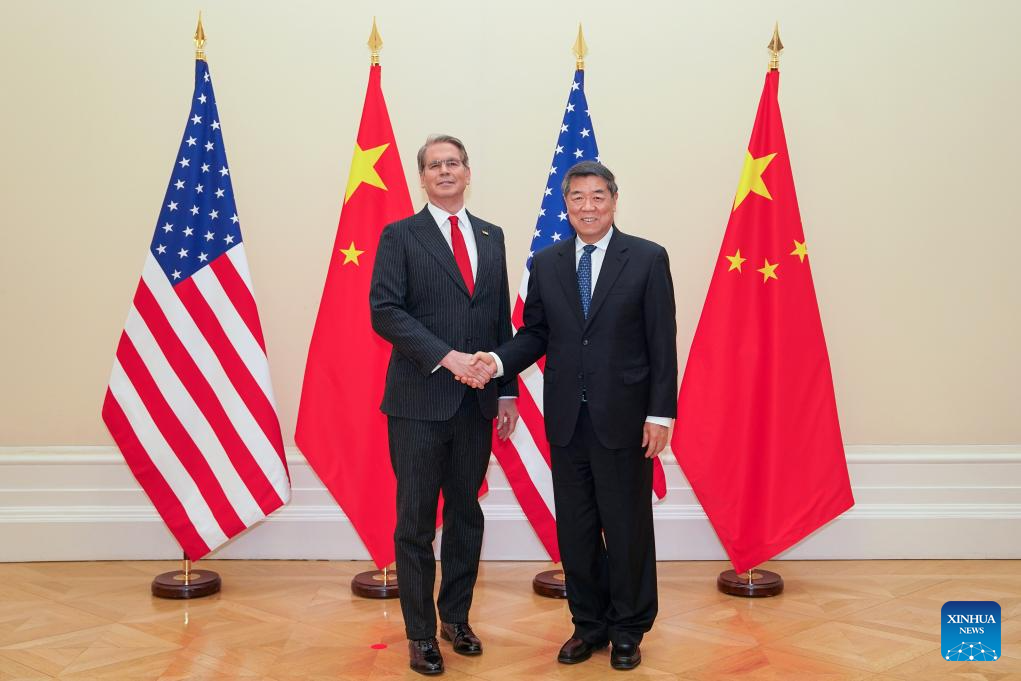
Chinese Vice Premier He Lifeng, also a member of the Political Bureau of the Communist Party of China Central Committee, shakes hands with U.S. Treasury Secretary Scott Bessent prior to their talks in Paris, France, March 15, 2026. The Chinese and U.S. delegations convened on Sunday and Monday for talks on economic and trade issues in Paris.
In the latest episode of China Economic Roundtable, an all-media talk show hosted by Xinhua News Agency, officials, economists and business representatives shared their views on China’s economic and social development priorities and prospects for the next five years.
Crucial five years
“Realizing Chinese modernization is a historical process that unfolds in stages and moves forward step by step,” said Liu Rihong, an official with the Research Office of the State Council.
Liu said that in the next five years, the country will build on the foundation laid over the past five years to further strengthen the basis of development and enhance its resilience. It will also make coordinated efforts across various economic and social fields to achieve systemic breakthroughs and an overall improvement.
The country has mapped out major projects in areas including the development of new quality productive forces, modern infrastructure, urban-rural integration, and the improvement of people’s well-being, according to Hou Yongzhi, a researcher at the Development Research Center of the State Council.
Those projects cover various aspects of China’s modernization drive, balance short-term and long-term priorities, combine “hard investment” with “soft development,” and promote both material and cultural-ethical advancement, said Hou.
Some projects will focus on strengthening industrial foundations and competitiveness, fostering emerging industries and new arenas, advancing frontier technologies, and enhancing innovation capacity, said Hou.
The projects will help nurture and expand new quality productive forces and enable China to gain a stronger edge in the increasingly intense global industrial and technological competition, Hou added.
Advancing high-quality development
High-quality development will continue to be a key focus of social and economic development over the next five years, experts said.
To advance high-quality development, efforts should be made to consolidate and strengthen the real economy and build a modern industrial system led by advanced manufacturing, said Liu.
It is also important to boost sci-tech self-reliance and strength through stronger innovation and breakthroughs in core technologies, advance the construction of a Digital China, and promote greener ways of production and life, Liu added.
Developing new quality productive forces is an inherent requirement for high-quality development, and strengthening innovation-driven development and fostering new quality productive forces should be prioritized, experts said.
Enterprises should strengthen their basic research and intensify efforts to achieve breakthroughs in key core technologies, aiming to develop products with fully independent intellectual property rights, said Chen Zhilie, chairman of EVOC Group.
Chen called for forming innovation consortia with universities and research institutes to accelerate the translation of scientific and technological advances from laboratories to production lines and promote deeper integration between frontier technologies and manufacturing applications.
Reform and opening up
During the period, China will need to deepen reforms in key areas and expand high-standard opening up to inject fresh momentum into high-quality development, experts said.
Huang Hanquan, head of the Chinese Academy of Macroeconomic Research under the National Development and Reform Commission, said efforts will be made to continue fostering a unified national market and to deepen market-based reform in the allocation of production factors.
China will deepen the reform of state-owned enterprises and state capital while implementing regulations related to private-sector development, ensuring that private firms can compete fairly in the market, said Huang.
On opening up, Huang said key steps include proactively aligning with high-standard international economic and trade rules, promoting trade innovation such as digital trade, expanding two-way investment cooperation, and pursuing high-quality Belt and Road cooperation.
For private high-tech manufacturing firms long engaged in high-end equipment manufacturing and industrial artificial intelligence, high-standard opening up represents a major opportunity to further tap global markets and connect with global innovation and industrial resources, said Chen.
Leading enterprises should work with upstream and downstream firms in the industrial chain to foster an open, win-win industrial ecosystem and advance the digitalization of research and development, the intelligent transformation of manufacturing, and more resilient supply chain management, Chen said.
A drone photo shows an automated production line at the Seres Super Factory in Liangjiang New Area, southwest China’s Chongqing, Sept. 19, 2025.
The announcement was made by Israel’s Defence Minister, Israel Katz, on Tuesday, though Iran has not confirmed or denied the claims.
Larijani, who was last seen publicly at an Al-Quds Day rally in Tehran on Friday, had been a prominent political figure in Iran for years, even leading the country’s nuclear negotiations with the West.
He was also the speaker of Iran’s parliament. If true, his death would be one of the highest-profile killings in the ongoing conflict, following the assassination of former Supreme Leader Ayatollah Ali Khamenei earlier in the war.
Israeli military officials also reported killing Soleimani, the Basij commander, with an airstrike in Tehran, claiming it was a strategic success.
Soleimani has long been reportedly involved in suppressing dissent within Iran, particularly during protests. Despite the claims, experts caution that these deaths may not signify the collapse of the Iranian regime.
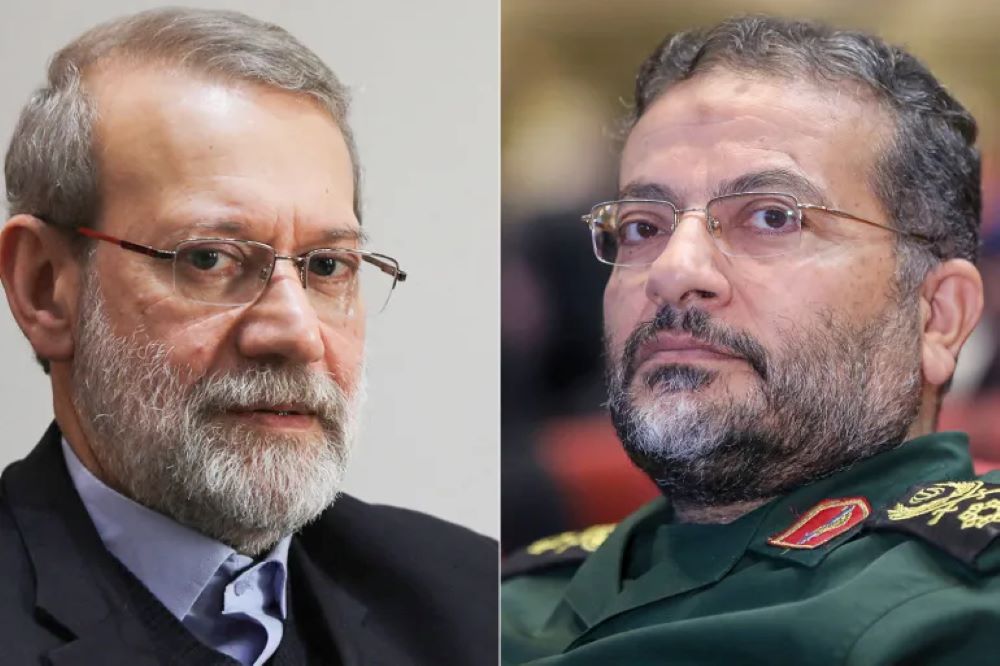
Israel has claimed the death of Ali Larijani and Gholamreza Soleimani
A team from the University of Arizona’s Lunar and Planetary Laboratory has created simulations to better understand Psyche’s interior by studying the formation of a large crater near its north pole. Their research, published in JGR Planets, suggests that craters can reveal key information about the asteroid’s composition.
The study found that Psyche’s internal porosity, the amount of empty space within it, plays a crucial role in how craters form. Asteroids with more voids absorb impact energy differently, creating deeper, steeper craters with less debris scattered around.
This finding is important as it could help scientists interpret the data NASA’s spacecraft will collect, including whether Psyche has distinct layers of rock and metal or is a chaotic mixture of materials.
Scientists also modeled an impact on Psyche using a 3D shape model and found that a 3-mile wide impactor could create the type of crater seen on the asteroid. This result could indicate whether Psyche’s interior is made up of a metallic core surrounded by a thin rocky mantle, or a mixture of metal and rock.
The upcoming NASA Psyche mission will analyze Psyche’s surface, gravity, magnetic field, and composition to confirm these predictions. With these simulations, scientists are hopeful that the spacecraft will uncover whether Psyche holds the secrets of a lost planet’s core.
This illustration, created in March 2021, depicts asteroid Psyche, which lies in the main asteroid belt between Mars and Jupiter. Psyche is the focal point of NASA’s mission of the same name.
On Sunday, March 15, 2026, a letter from the City of Kigali circulated, asking AS Kigali to make a decision on whether to dissolve and merge with other teams supported by the city, namely Kiyovu Sports and Gasogi United.
At the time, Kiyovu Sports spokesperson Minani Hemed stated that the plan had been poorly considered and that it would erase the history of the club’s establishment.
Gasogi United also expressed its opposition, claiming that such a merger was not feasible.
Speaking to Radio Rwanda, Emma Claudine Ntirenganya, spokesperson for Kigali City, stated that if the teams refuse to merge, the city will stop its support for them.
“If these teams [AS Kigali, Kiyovu, and Gasogi] fail to merge and decide to continue separately, the city will stop providing its support. However, we are still awaiting their response,” she noted.
The teams have been given a deadline of March 30, 2026, to notify Kigali City of their decision.
She added, “If all of them refuse, we plan to start with a new team and build it from the ground up. If they agree to merge, we will continue together in the top league.”
Kigali City emphasizes that the goal of merging these teams is to pool resources and help the new team become stronger and more competitive in fighting for trophies.
Kigali City spokesperson, Emma Claudine Ntirenganya speaking to the press at a past event. The City of Kigali has proposed the merger of AS Kigali and Kiyovu Sports
This fighting comes just two days after FARDC, Wazalendo, and other allied groups blocked the RN5 road, which connects the city of Uvira to Bukavu, citing security concerns.
AFC/M23 spokesperson, Lawrence Kanyuka, reported that as of 06:00 AM on March 17, 2026, FARDC forces began firing heavy artillery in the Kabunambo area, forcing many residents to flee.
Benjamin Mbonimpa, the Permanent Secretary of AFC/M23, stated that Kabunambo residents had been peaceful and safe while under AFC/M23 control, but that the Congolese government chose to threaten their security with artillery strikes.
Kanyuka further emphasized that AFC/M23 is prepared to protect the people of Kabunambo and their property as long as FARDC continues its aggressive actions.
The Ruzizi Plain has been a hotspot for intense fighting since early December 2025, triggered by attacks from FARDC forces against areas controlled by AFC/M23, including the Kamanyola sector.
AFC/M23 responded with force, gaining control of several territories including the city of Uvira, which was vacated in January 2026 to resume peace talks.
As FARDC returned to the city, they made it clear they would stabilize the region once they retake all areas controlled by AFC/M23, including the city of Bukavu, Goma, and Bunagana, which had been captured in December 2022.
The ongoing drone strikes by FARDC forces on Minembwe commune and neighboring regions indicate their intent to continue military operations in areas under AFC/M23 control.
In the early hours of February 24, FARDC launched a drone attack near Rubaya, which killed their former military spokesperson, Lt. Col. Willy Ngoma.
On March 11, FARDC conducted another drone strike in the city of Goma, killing three civilians, including French national Karine Buisset, a UNICEF worker.
AFC/M23 reported that from the night of March 16 to March 17, FARDC, Burundian forces, FDLR, Wazalendo, and mercenaries launched additional drone strikes on Minembwe and surrounding regions.
The alliance warned that the Congolese government would be held accountable for the continued bloodshed of innocent civilians under the sielnce of the international community.
This seemingly straightforward capability removes a longstanding obstacle that once discouraged people from exploring better options, as changing providers previously meant adopting an entirely new number and the inconvenience of notifying contacts, updating registrations, and disrupting daily communications.
The concept first emerged in Singapore in 1997, marking the beginning of a global shift toward greater consumer choice in mobile services.
The momentum continued across Europe with nations like Germany, France, and Italy introducing it in the early 2000s. In more recent years, many African countries have followed suit, including South Africa in 2006, Ghana and Kenya in 2011, Nigeria in 2013, and others such as Tanzania and Tunisia, reflecting a growing recognition of its value in dynamic markets. At the heart of mobile number portability lies a sophisticated yet efficient technical framework.
A central database, often referred to as a number portability clearinghouse, maintains up-to-date records of which operator currently serves each mobile number and manages the porting process between all mobile operators.
When a call or SMS message is placed to a ported number, the originating network queries their own copy of the database updated in real-time as each mobile number is ported to determine the correct routing path, ensuring seamless delivery of voice and SMS traffic regardless of the recipient’s provider.
The process itself is led by the new, or recipient, operator. A user approaches the desired provider, submits identification details, and addresses any outstanding obligations with their current operator, such as settling unpaid bills or fulfilling contract terms. The recipient operator manages the porting process on behalf of the subscriber by sending a porting request to the number portability clearinghouse.
The subscriber then sends a free SMS to a special porting shortcode number which is sent to the number portability clearinghouse. After verification and approval, the transfer usually completes within a day or a few working days, accompanied by a brief period of service interruption as the new SIM card activates. The number portability clearinghouse sends SMS messages to update the subscriber during the porting process.
While certain network-specific features like voicemail or stored messages may require reconfiguration, and unused airtime will not transfer, the core experience prioritizes continuity and ease for the user.
The fundamental rationale for introducing mobile number portability stems from the need to lower switching barriers in telecommunications markets and stimulate increased competition in terms of consumer value, quality of service and innovation, encouraging mobile operators to work harder to retain and attract subscribers.
Regulators worldwide view it as an essential mechanism to prevent restrictive tendencies, encourage infrastructure investment, and drive broader improvements across the sector. The advantages extend far beyond individual convenience.
Studies examining its impact have shown that effective implementation, particularly with rapid porting times, tends to exert downward pressure on prices, accelerate innovation, and enhance overall affordability and quality in competitive environments.
Operators, in turn, face stronger incentives to innovate, expand coverage, and prioritize satisfaction to retain subscribers. On a larger scale, the service contributes to healthier markets, greater economic efficiency, and alignment with digital inclusion goals, especially in regions where mobile connectivity underpins financial services, education, governance, and commerce.
In a country like Rwanda, where mobile penetration has surged and services increasingly support mobile money, e-government initiatives, business operations, and everyday connectivity, the introduction of mobile number portability will prove particularly transformative.
It will enable users to switch providers freely in pursuit of better network coverage, more competitive pricing, or enhanced data experiences without sacrificing their established number.
For Rwanda’s ambitions as a regional digital hub, such a measure will reduce user lock-in, foster innovation, and reinforce consumer empowerment, ultimately contributing to a more responsive, inclusive, and efficient telecommunications ecosystem.
RURA is currently working with the country’s three mobile network operators to prepare for the launch of MNP in Rwanda in 2026.
Through her book launched on Friday, February 27, at Kigali Genocide Memorial, the author seeks to preserve the memory of the students who were victims of the genocide on the campus of the National University of Rwanda in Butare, while also questioning the moral responsibility of educational institutions in the face of hatred and violence.
A childhood built around education and values
The story begins with the author’s childhood in Kigali, in a family deeply committed to Christian values, solidarity and the importance of education.
Despite economic difficulties and the unstable political context of Rwanda at the time, her parents encouraged their children to pursue their studies and to believe in the future.
Assumpta Numukobwa recalls her early school years with emotion, retracing her educational journey from primary school to her admission to Lycée Notre‑Dame de Cîteaux in Kigali.
At this renowned school, she discovered a world of learning, cultural activities, and youth movements that played an important role in shaping her personal development.
These experiences helped build her character, develop her sense of responsibility, and nurture her ambition to pursue higher education.
Yet behind this relatively normal school life lay a darker reality: Rwandan society was already marked by deep ethnic tensions and persistent discrimination against the Tutsi.
The dream of university
After completing her secondary education, Numukobwa briefly taught in a primary school. Encouraged particularly by her brother Emmanuel, she decided to pursue her dream of higher education.
Numukobwa eventually obtained a scholarship that allowed her to join the Faculty of Medicine at the National University of Rwanda in Butare.
For the young student, university represented the fulfillment of a dream. She imagined it as a space of intellectual freedom, discovery, and the construction of the future.
The Butare campus appeared dynamic and stimulating: university buildings, libraries, gardens, student residences, and meeting spaces created an environment conducive to exchanges and the training of the country’s future leaders.
However, the author quickly realized that the university was not entirely sheltered from the political tensions affecting Rwandan society. Students began to divide along political and ethnic lines, and the influence of political parties increasingly infiltrated university life.
Despite these tensions, student life continued; classes, discussions, friendships, and future plans shaped the daily lives of the young students.
Numukobwa has recounted her heartbreaking journey before, during, and after the 1994 Genocide against the Tutsi.
Warning signs
At the beginning of the 1990s, Rwanda entered a period of deep political turmoil. The liberation war launched in 1990 by the Rwandan Patriotic Front, the introduction of multiparty politics, and rivalries between political parties contributed to the radicalization of public discourse.
On the university campus, these divisions became increasingly visible. Students participated in political meetings, and hate speech circulated openly.
Media propaganda, particularly broadcast by Radio Télévision Libre des Mille Collines, fueled hatred against the Tutsi. The climate of mistrust and tension gradually intensified.
On April 6, 1994, when President Juvénal Habyarimana’s plane was shot down, this event was immediately exploited by the extremist faction of Hutu Power as a pretext to trigger the genocide against the Tutsi, which had been planned for long time.
What was meant to be a place of knowledge and dialogue gradually turned into a space of fear and violence.
University turned into a place of betrayal
In her testimony, Numukobwa painfully describes how the university, supposed to protect its students, became a place of denunciation and persecution.
Tutsi students were hunted, isolated, and threatened. Some classmates, as well as members of staff and even teachers, actively participated in their persecution.
This betrayal was particularly painful for the author because it often came from people she knew personally: dormitory neighbors, classmates, or teachers with whom she had previously shared everyday spaces.
Gradually, fear spread across the campus. Meetings organized under the pretext of security were sometimes used to identify Tutsi students. Information broadcast on the radio was used to publicly designate certain individuals as enemies.
Numukobwa also recounts the tragic disappearance of many classmates and friends. Many students were stopped at roadblocks, while others were killed on campus or in nearby areas.
The book pays tribute to those students whose dreams and ambitions were brutally cut short.
Surviving the unspeakable
For several months, the author lived in constant fear of death. Numukobwa had to hide, flee, and attempt to escape militias and killers.
Like many other survivors, she witnessed the loss of members of her family and friends.
Numukobwa speaks about the psychological trauma left by these events; painful memories, nightmares, and the difficulty of rebuilding a life after experiencing such violence. To survive also means carrying the weight of memory and the burden of irreparable loss.
Rebuilding and passing on memory
After the genocide, Numukobwa embarked on a long process of personal reconstruction in a country deeply marked by tragedy.
Institutions gradually resumed their activities, and survivors attempted to rebuild their lives.
The author eventually succeeded in rebuilding a professional and family life, but the memories of the genocide remained deeply embedded in her mind.
This duty of remembrance pushed her to testify regularly, particularly during commemorations organized on the Butare campus, now part of the University of Rwanda.
These testimonies ultimately led her to write ‘L’Université m’a trahie’ in order to preserve the memory of the students who were victims of the genocide and to pass on their story to future generations.
A reflection on the role of education
Beyond personal testimony, the book raises a fundamental question; how could an institution meant to transmit knowledge become a place that participated in genocide?
For the author, the tragedy highlights a profound gap between academic knowledge and human values. She argues that diplomas and scientific knowledge do not inherently guarantee morality or respect for human life. Without ethics and conscience, education, she warns, can be manipulated to serve destructive ideologies.
Her book serves as a powerful reminder that memory is crucial for understanding the past and preventing such tragedies from recurring.
Education, she asserts, should not only transmit knowledge but also shape citizens who are equipped to defend human dignity and resist hatred.
These services, which are generally unavailable in provincial hospitals, often require patients to travel to Kigali, where specialized professionals provide such treatments.
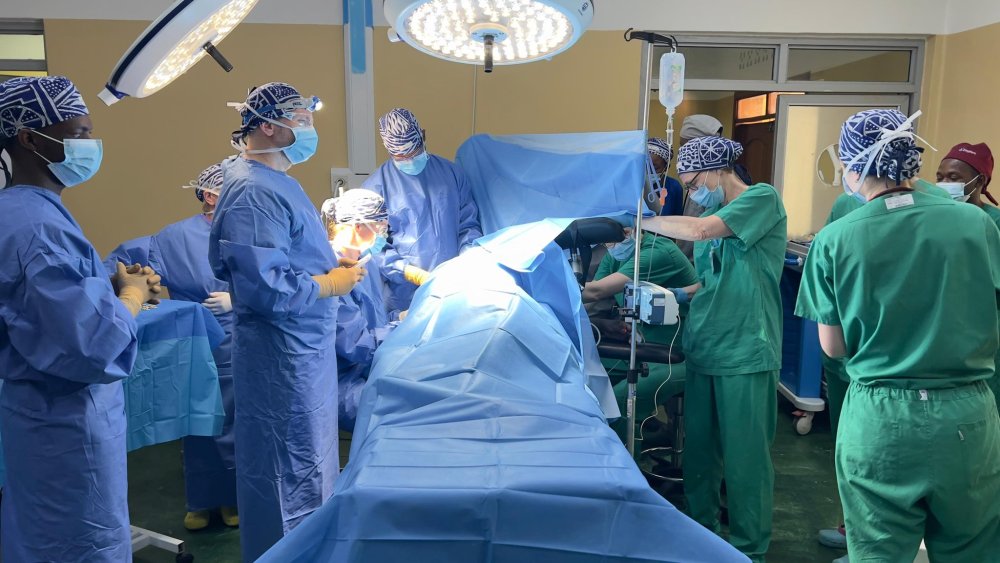
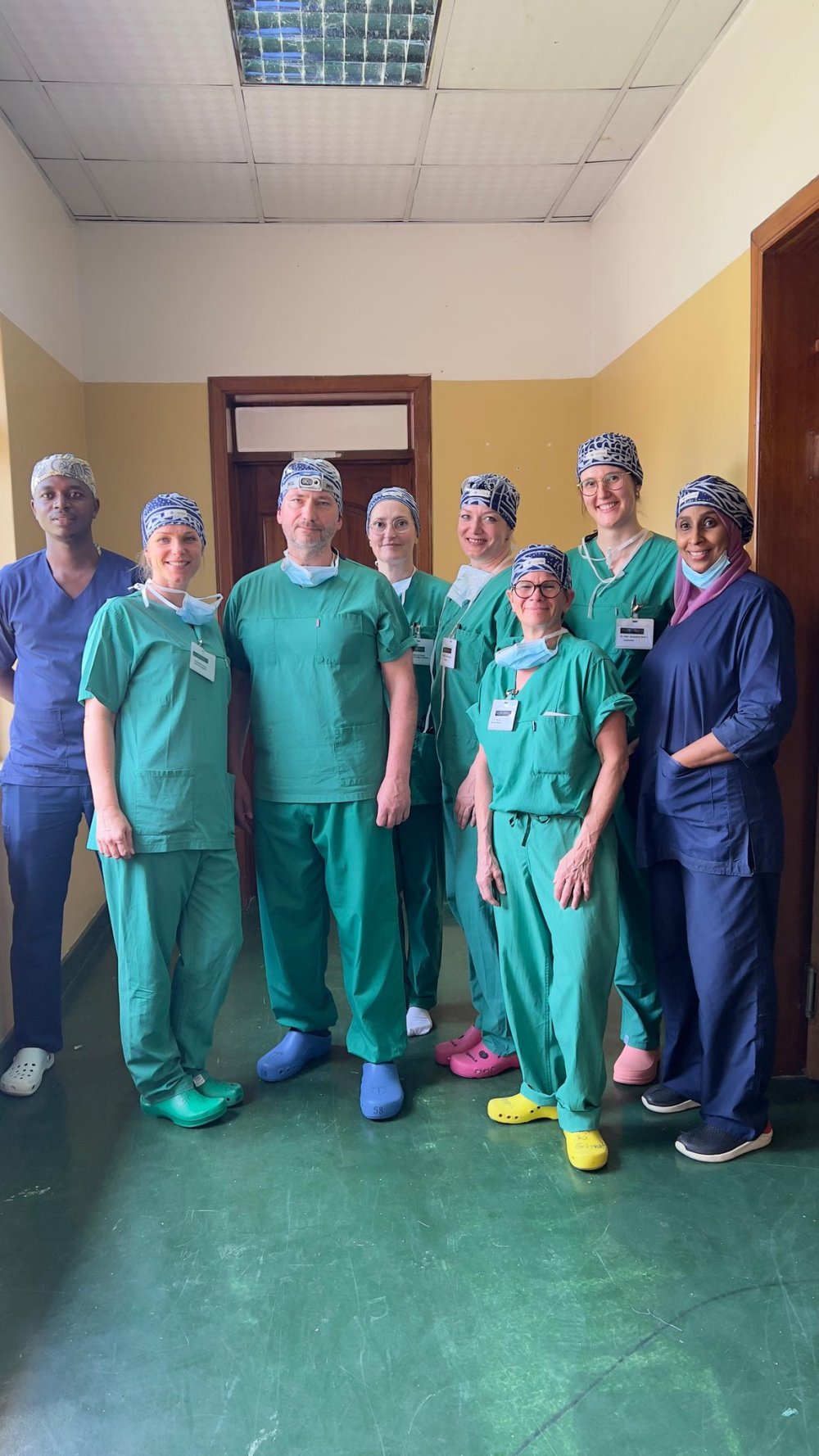
The surgery was performed by a team of experts from Germany. These specialists examined 40 people and performed surgeries on 25, including 17 individuals who received plastic surgery to correct various body deformities.
The event began on March 8th, with an expected end date of March 17th, 2026. However, it was concluded on March 13th due to the passing of one of the specialists’ child.
Among the patients treated were those with hypertrophic scars. Augustin Sibomana, who had a raised scar on his chest, was one of the beneficiaries of body contouring surgery.
“I had previously visited Kanombe Hospital but I was told that surgery was not possible because the scar might return. I am grateful to the Ministry of Health for thinking of us and sending these specialists. After the surgery, I feel much better and am hopeful that things will continue to improve,” he said.
Benimana Joyeuse, who had suffered from an enlarged abdomen for five years, expressed her gratitude to the specialists after her surgery. “I am so happy because I didn’t have the money to go to Kigali for treatment.”
Dr. Laura Thomara, who led the surgical team, mentioned that some of the patients had scars from previous burns. “We have shown our colleagues working here how they can treat such patients.”
Osée Ntavuka, the founder of Rwanda Legacy of Hope, an organization that has been bringing international specialists to Rwanda for 14 years to provide plastic surgery services, stated that over 8,500 patients have benefited from these services.
“When we come, we bring our own equipment. Here at Kibuye Hospital, we brought equipment worth 45 million Rwandan Francs, and after we finish, we will leave it for the hospital.”
Jean Claude Muhirwa, the head of the surgery department at Kibuye Referral Hospital, thanked the specialists for their knowledge and noted that the new equipment was different from what they normally use.
“This new equipment adds to what we already have here at Kibuye Referral Hospital, and it will help us deliver better services.”
Over the past 10 years, Kibuye Referral Hospital has seen a growth in the number of specialized surgeons, now totaling around 30, not including those who come temporarily.
The surgeries were performed by a team of experts from Germany. The specialists diagnosed 40 patients and performed surgeries on 25, with 17 receiving plastic surgery to address various body deformities.
Regional experts and scholars have taken varied positions on the U.S. military presence. While some argue that the bases help maintain a regional deterrence balance, others believe that such deployments instead expose the states to retaliation and heighten security risks.
Damage to U.S. military bases
Qatar — Al Udeid Air Base in Qatar, the largest U.S. military command center in the Middle East, has been hit by multiple missile and drone attacks since Feb. 28, including from Iran. While Qatari defenses intercepted many threats, at least one missile or drone impact was reported, causing explosions.
Kuwait — At least six satellite communication radomes at Camp Arifjan, a key U.S. logistical hub in Kuwait, were destroyed, likely impacting U.S. Central Command networks, according to reports. The site, along with Camp Buehring, sustained damage from missile strikes, featuring multiple craters and burnt areas near facilities.
Bahrain — Iran’s Islamic Revolution Guards Corps said on Thursday its Navy has hit the headquarters of the U.S. Fifth Fleet in Bahrain’s Mina Salman port with missiles and drones. It added that it carried out precision strikes with its kamikaze drones as well as cruise and ballistic missiles against an anti-drone system and a depot of remotely operated underwater vehicles, among others.
The United Arab Emirates — Satellite imagery indicates Iran’s attacks on Al Dhafra Air Base, located south of Abu Dhabi in the United Arab Emirates (UAE), caused significant damage to infrastructure. A compound, satellite systems, and radar equipment were damaged, according to reports.
Varied stances
Charbel Barakat, head of international news department at Kuwait’s Aljarida newspaper, said that recent conflicts in the region have highlighted the limits and unpredictability of U.S. security guarantees, prompting Gulf states to reassess their defense strategies.
Qatari political analyst Anas bin Ziyad said that the U.S. military bases in the Gulf were originally established within security arrangements that emerged after major transformations in the region.
Anas said that, however, recent developments have revealed a more complex dimension. On one hand, the U.S. military presence has contributed for decades to maintaining a regional deterrence balance. On the other hand, the escalation of regional conflicts and the transformation of some bases into launch points for military operations have made them part of the conflict equation itself.
The Qatari analyst added that the issue is not purely military; it also has political and strategic dimensions. Heavy reliance on an “external security umbrella” may sometimes limit the ability of states to develop more independent security approaches, while also linking regional security to the fluctuations of international politics, he said.
Future strategies
Emirati journalist Mohammed Al-Hammadi said that the ongoing war in the region has raised fundamental questions about the role of foreign military bases and the future of defense strategies in the Gulf states, emphasizing that balancing international partnerships with the strengthening of national capabilities has become the most realistic option.
Hamad Al Hosani, director of the Political Islam Studies Department at TRENDS Research & Advisory in Abu Dhabi, said that the UAE’s defense strategy will likely evolve along three parallel tracks: strengthening national defense capabilities, expanding regional defense cooperation, and maintaining strategic partnerships with global allies.
Hosani added that the balanced approach enables the UAE to ensure security and stability without relying exclusively on any single external power.
Saudi scholar Fahad Araeshi also noted that, to further enhance security, Saudi Arabia is pursuing a broader strategy of diversifying its defense partnerships.
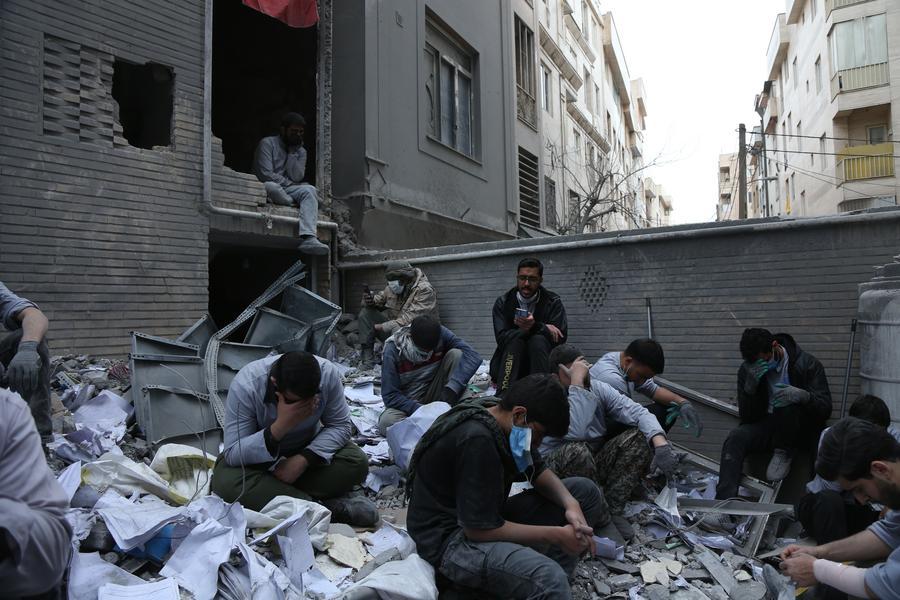
People sit on the debris of destroyed buildings at a residential area in Tehran, Iran, March 15, 2026.