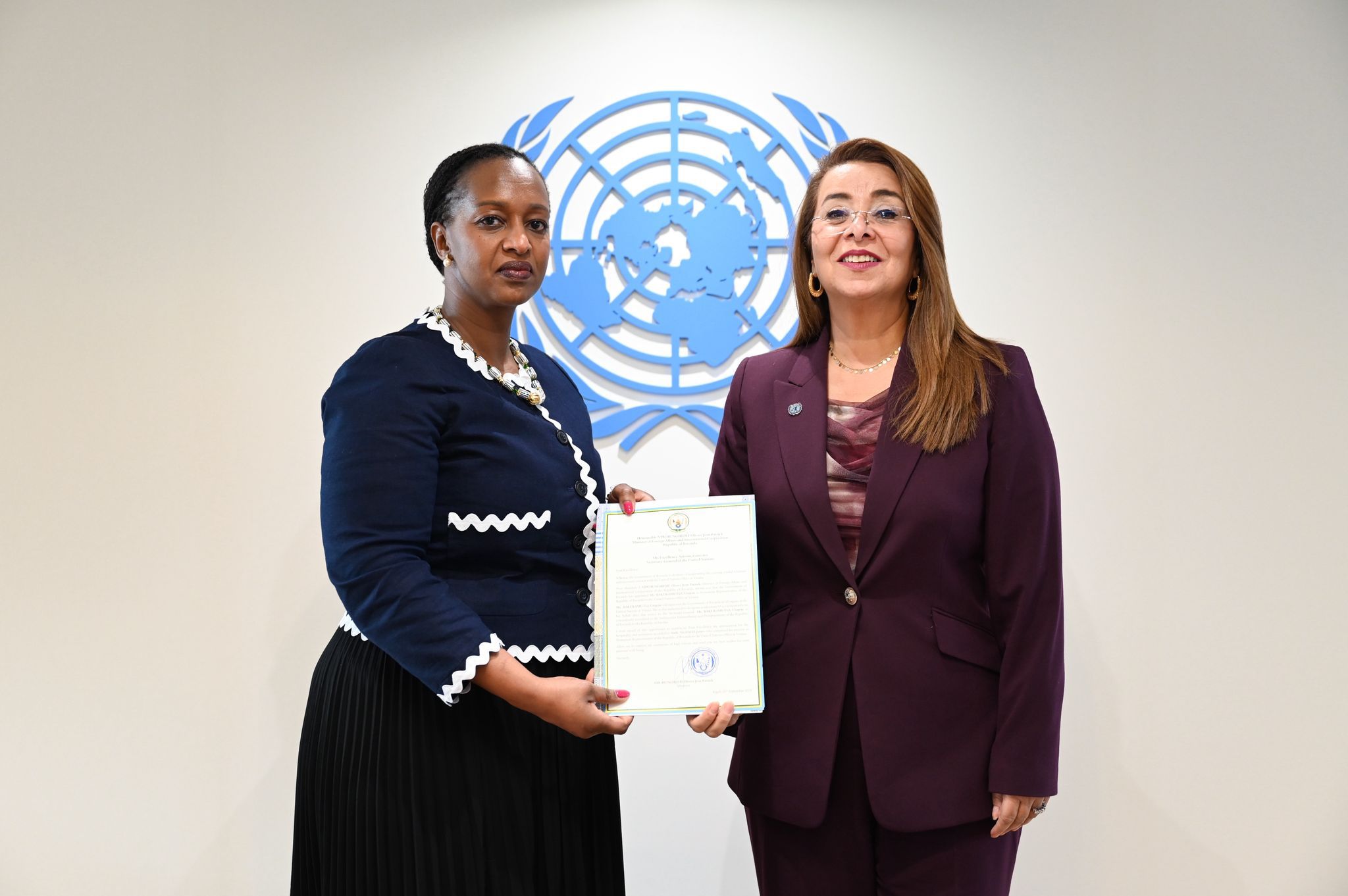
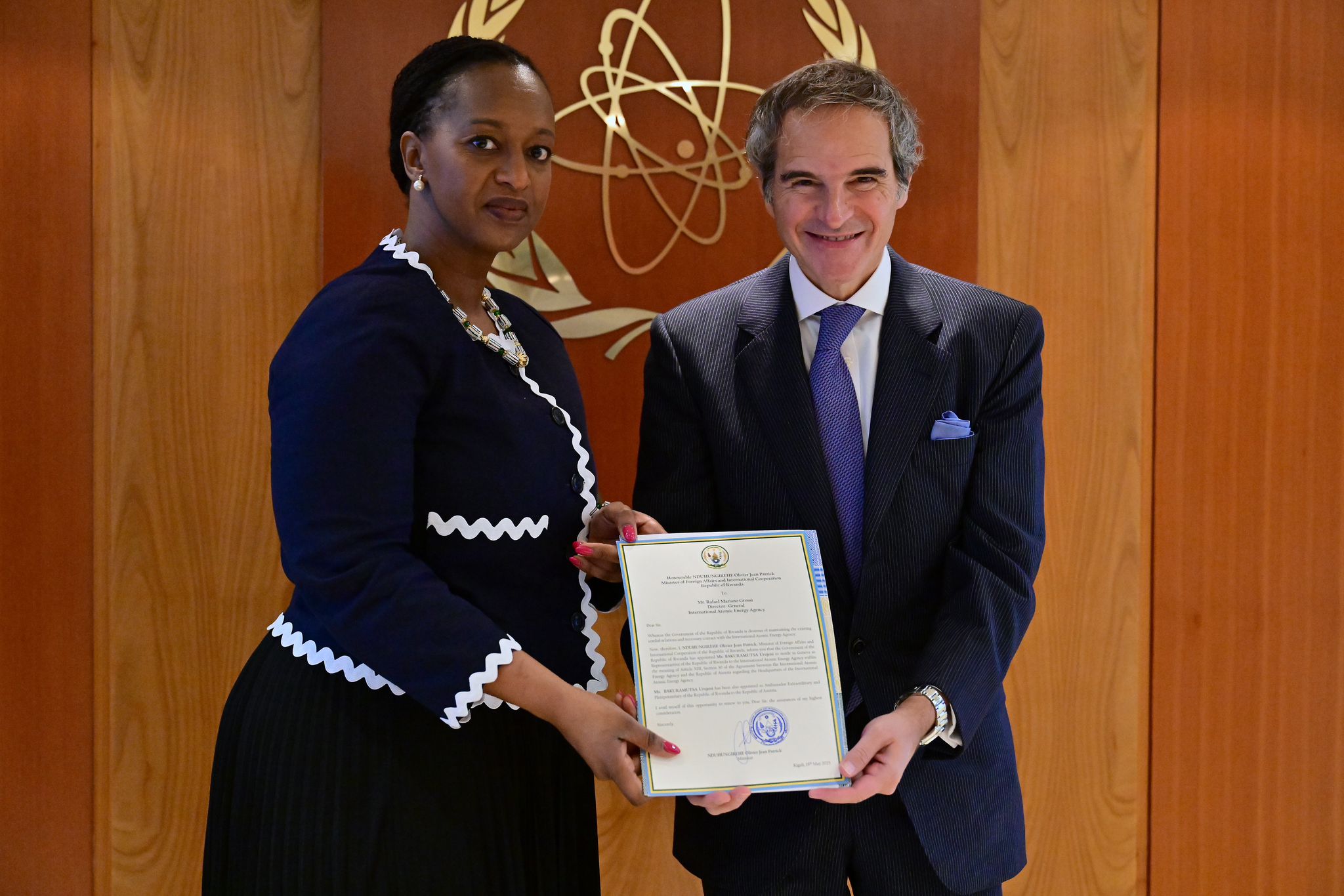
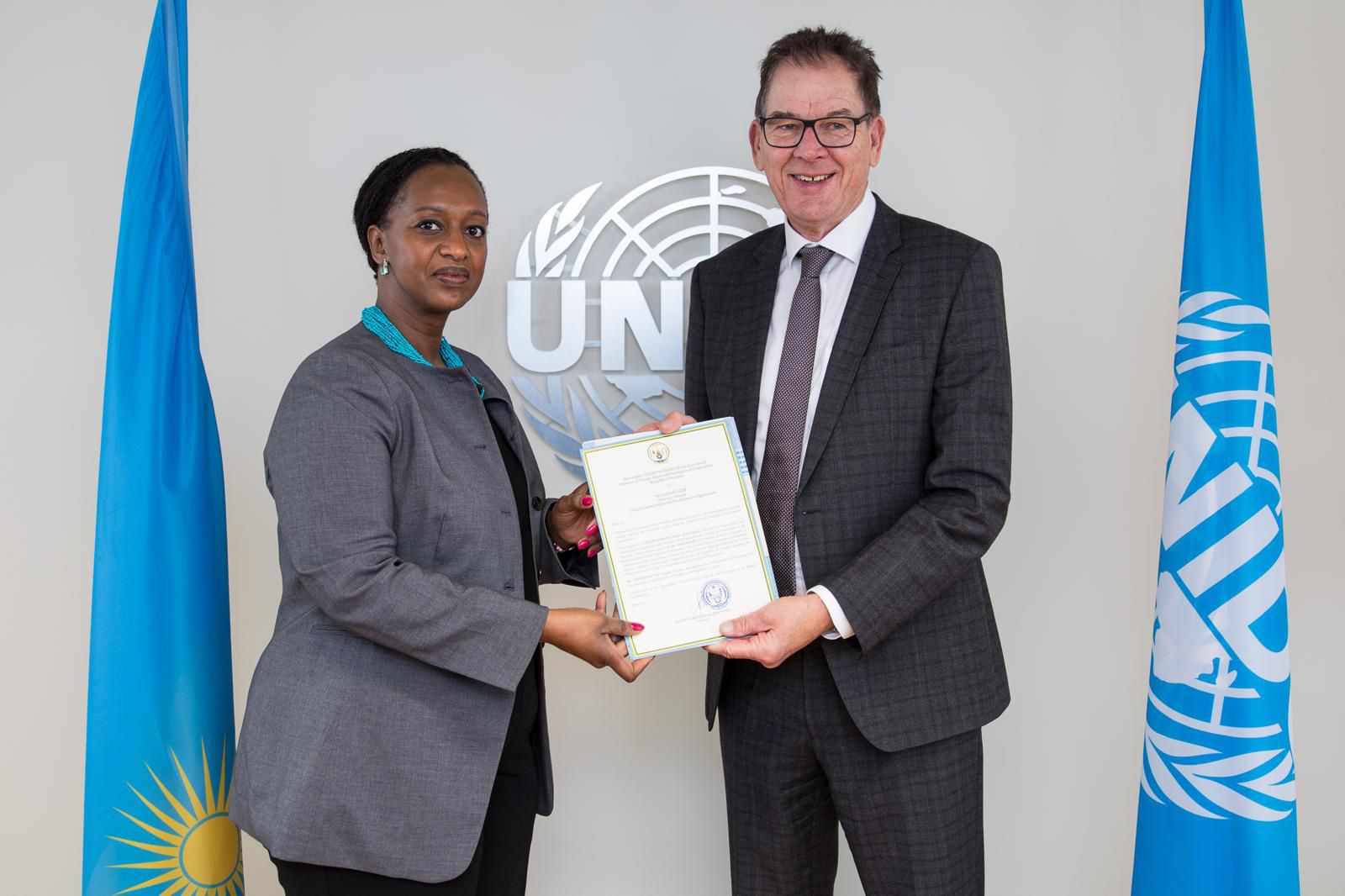
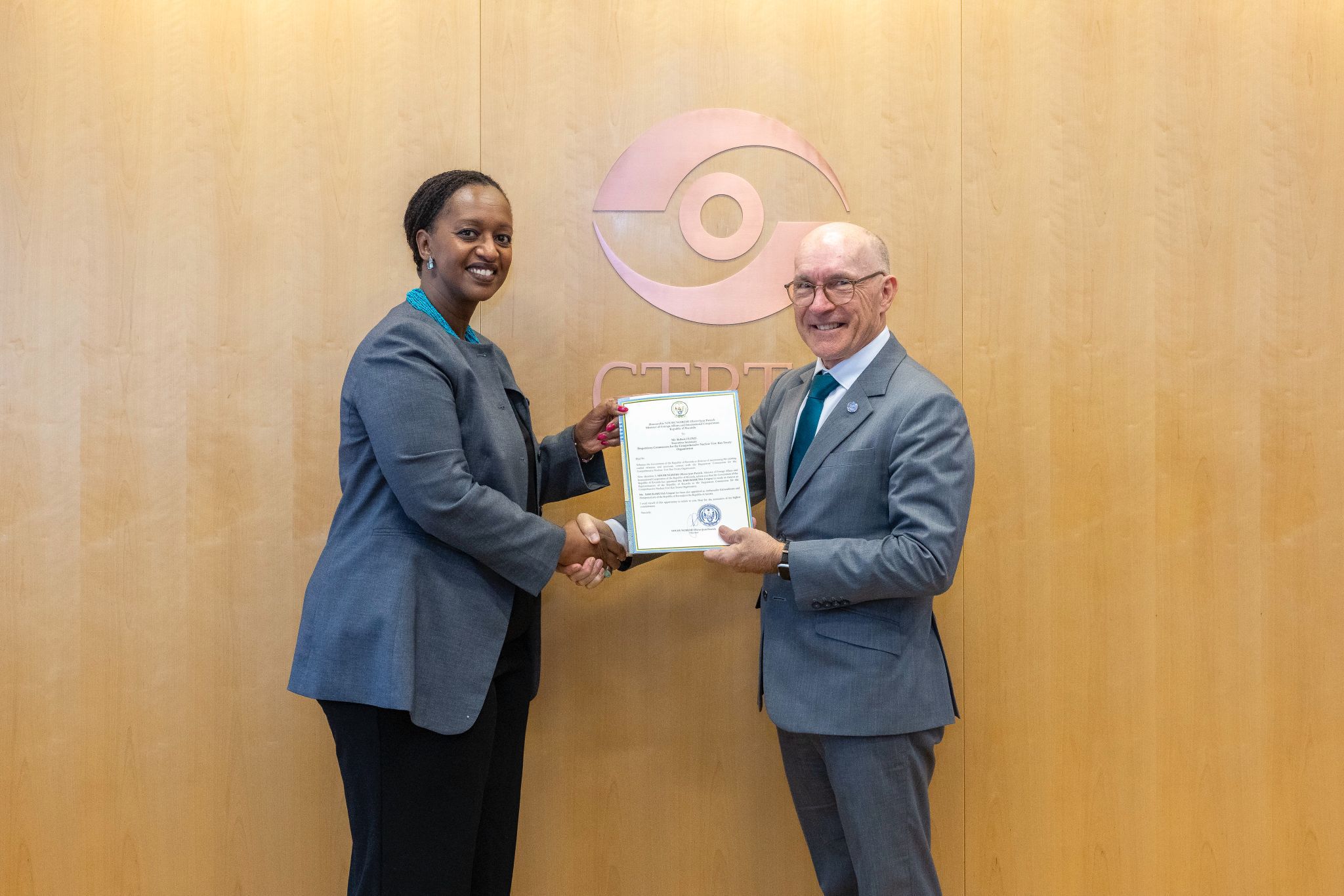
These include Ghada Waly, Director General of UNOV; Rafael Mariano Grossi, Director General of the International Atomic Energy Agency (IAEA); Gerd Müller, Director General of the United Nations Industrial Development Organization (UNIDO); and Dr. Robert Floyd, Executive Secretary of the Comprehensive Nuclear-Test-Ban Treaty Organization (CTBTO).
On November 11, 2025, during her meeting with Director General Waly, Amb. Bakuramutsa commended UNOV’s role as a coordination platform for Vienna-based UN entities and emphasized Rwanda’s collaboration with the United Nations Office on Drugs and Crime (UNODC) in areas such as anti-corruption and crime prevention.
At the IAEA, discussions focused on strengthening cooperation in nuclear science and technology, underscoring its potential to drive socio-economic development in Rwanda.
Amb. Bakuramutsa emphasized Rwanda’s continued collaboration through the IAEA’s Technical Cooperation Programme and other IAEA flagship initiatives.
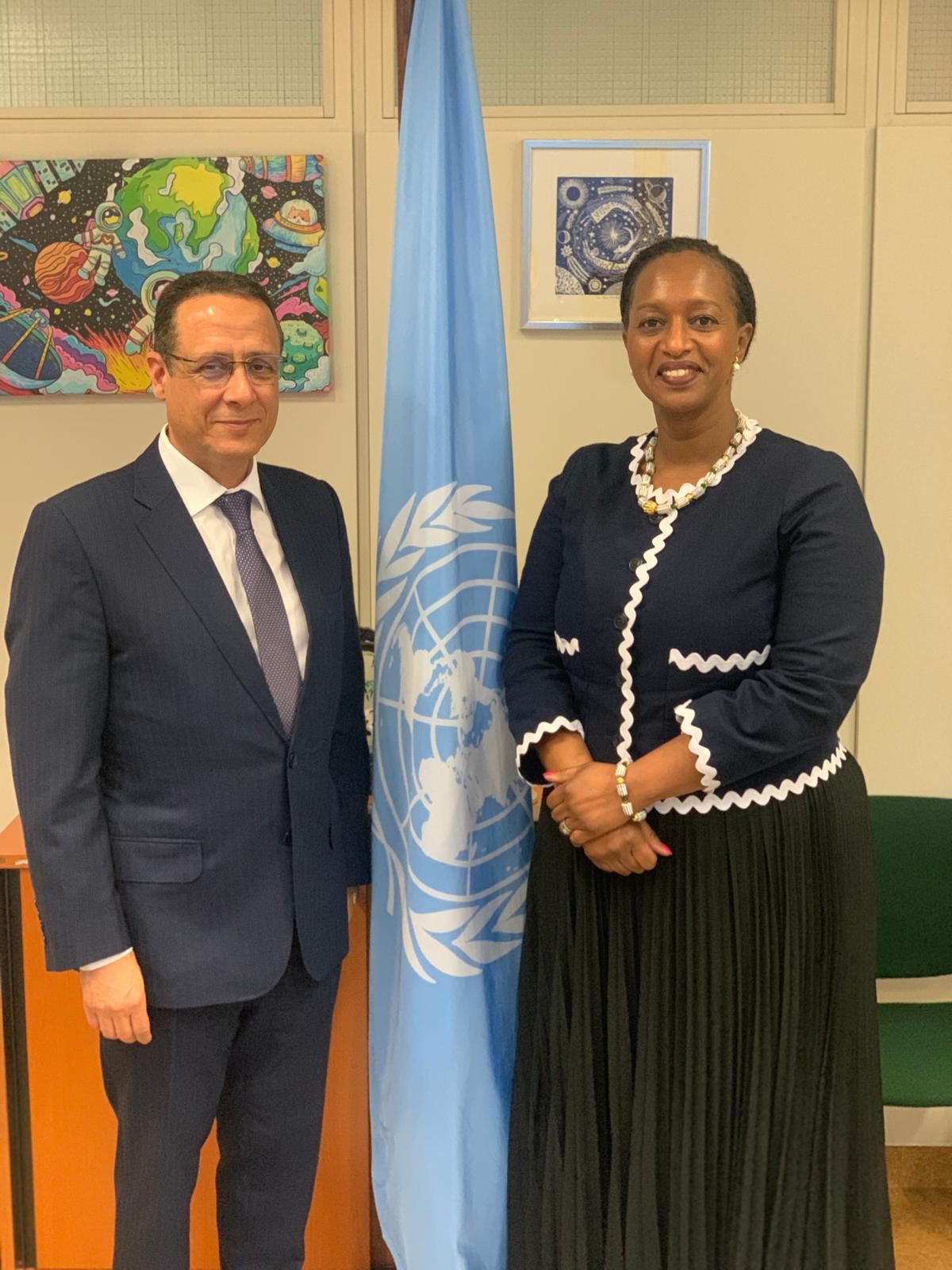
Amb. Bakuramutsa also paid a courtesy call to Dr. Driss El Hadani, Deputy Director of the United Nations Office for Outer Space Affairs (UNOOSA), where discussions focused on enhancing cooperation in space science to support sustainable development.
On November 12, 2025, at UNIDO, Amb. Bakuramutsa met with Director General Gerd Müller.
The two officials discussed industrial cooperation for sustainable economic development and signed the project “Strengthening Rwanda’s capacities to respond to industrial and natural hazards,” implemented by UNIDO in cooperation with the Ministry of Interior and the Fire and Rescue Brigade of the Rwanda National Police.
Also present during the ceremony was Ambassador Marek Szczygieł, Permanent Representative of Poland to UNIDO. The project is funded by Poland.
Amb. Bakuramutsa also presented her Letters of Credence to Dr. Robert Floyd, Executive Secretary of the CTBTO. Discussions focused on the role of the CTBTO in fostering global peace and security, and the scientific and research benefits of CTBTO data centers.
In addition to the credentials presentation, Amb. Bakuramutsa held several side meetings with senior IAEA officials to discuss ongoing technical cooperation and strategic partnerships.
These included exchanges with Dongxin Feng, Director of the FAO-IAEA Joint Center for Nuclear Techniques in Food and Agriculture; Peri Lynne Johnson, IAEA Assistant Director General and Legal Advisor; Hua Liu, IAEA Deputy Director General and Head of the Technical Cooperation Department; and Najat Mokhtar, IAEA Deputy Director General for Nuclear Sciences and Applications.
She also met with Victor C. Diwandja Djemba, Chief, UNIDO Regional Bureau for Africa, and engaged with representatives of the Rwandan community living in Austria.
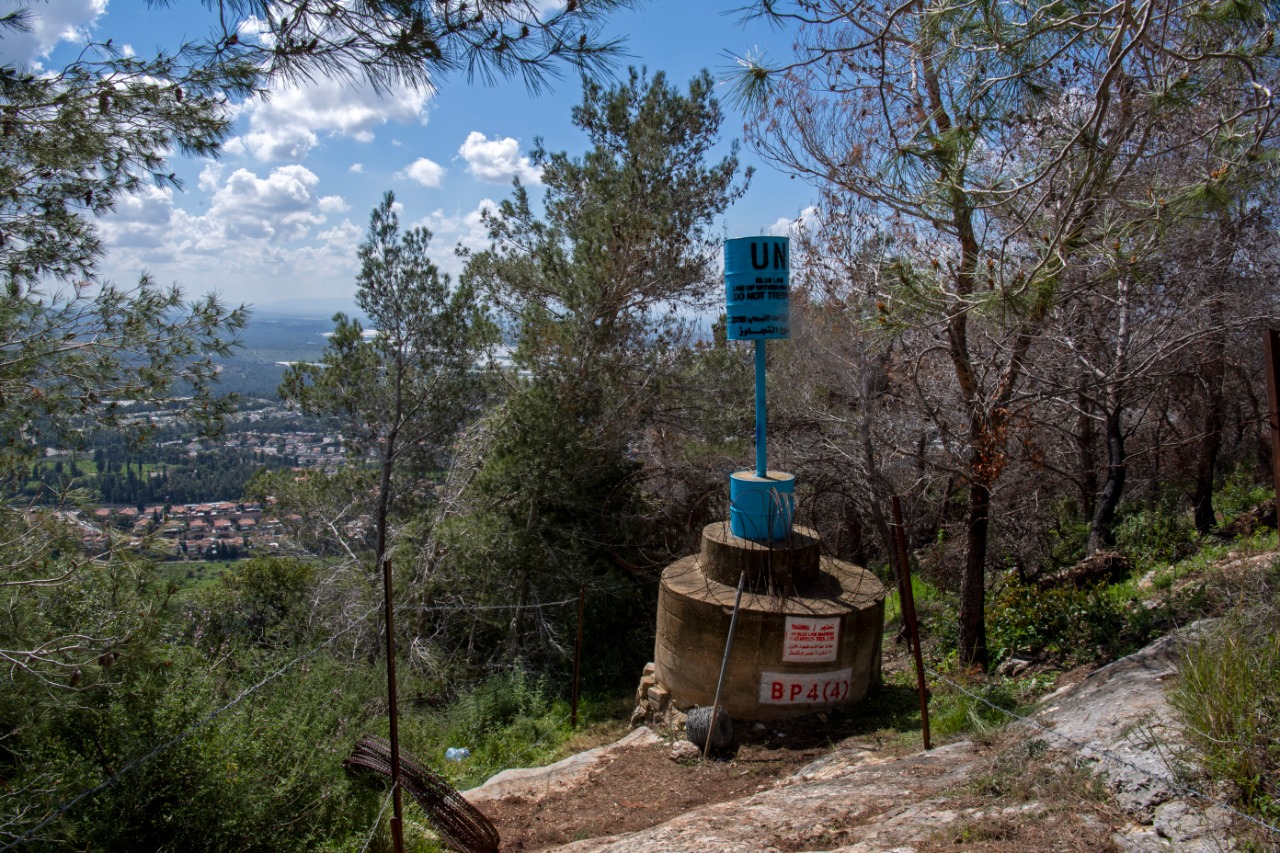
The markers, damaged last year, are intended to prevent misunderstandings, accidental crossings, and help maintain stability in the area, Pokharel said in a statement.
The Blue Line, established by the UN in 2000 to confirm Israel’s withdrawal from Lebanon, was further formalized with marker installations agreed to by Lebanon, Israel, and the UN in 2007.
Meanwhile, according to UNIFIL sources, Lebanese army intelligence, and local witnesses, the Israeli army has begun building a concrete wall at Jal al-Deir, behind a newly established military post in Mount al-Bat, about one kilometer inside Lebanese territory.
A Lebanese intelligence source said Israeli forces, backed by tanks, have completed roughly 35 meters of a six-meter-high wall.
However, the Israeli military told the Jewish News Syndicate that the barrier lies fully within Israeli territory, rejecting “unverified reports” of extensions beyond the Blue Line into southern Lebanon.
Lebanese President Joseph Aoun said on Wednesday that Beirut has yet to receive an official Israeli response to proposals for negotiations to reclaim occupied territory. “Talks have only addressed the principle of negotiation, not the details,” he said.
A ceasefire between Hezbollah and Israel, brokered by the United States and France, has been in effect since Nov. 27, 2024, largely ending the clashes triggered by the war in Gaza.
Despite the agreement, Israel continues occasional strikes in Lebanon, citing threats from Hezbollah, and maintains forces at five key points along the border after a Feb. 18 deadline for full withdrawal passed.
Okowa will serve the remainder of Yusuf’s term, which runs until Feb. 5, 2027.
She is a Kenyan lawyer and professor of public international law at Queen Mary University of London and has served as a member of the UN International Law Commission since 2023.
Under the ICJ’s Statute, judges are elected by secret ballot in both the Security Council and the General Assembly.
To be elected, a candidate must obtain an absolute majority in both chambers, which vote concurrently but separately.
There were four candidates for the post. Okowa won after three rounds of voting in the Security Council and four rounds of voting in the General Assembly.
The Hague-based ICJ has 15 judges elected to nine-year terms of office. Judges are eligible for re-election. Should a judge die or resign during his or her term of office, a special election will be held to choose a judge to fill the unexpired part of the term.
The 15 judges must come from 15 different countries. The court as a whole must represent the main forms of civilization and the principal legal systems of the world.
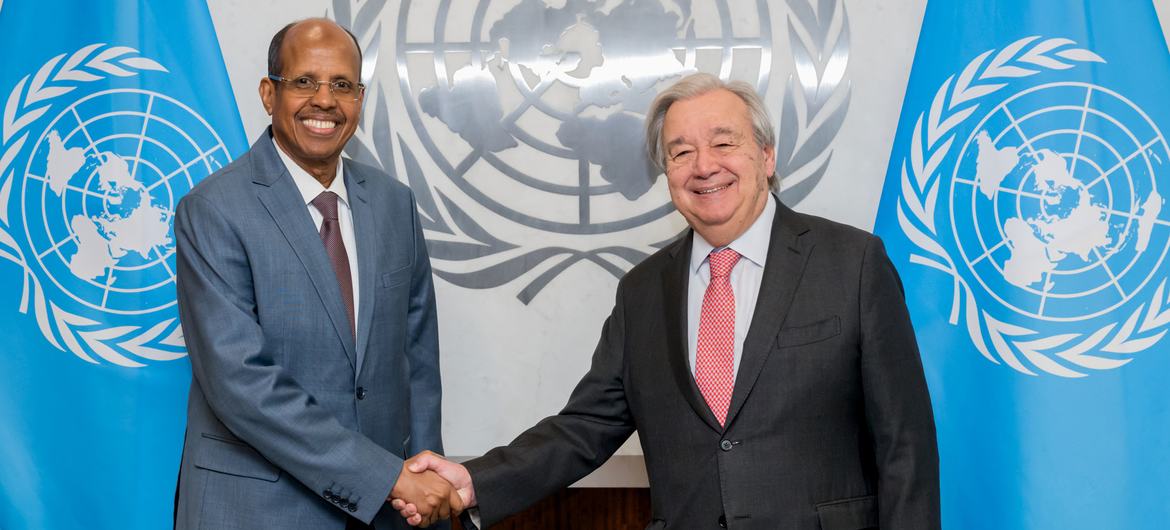
António Guterres was speaking at UN Headquarters in New York following the ninth conference between the global body and the African Union (AU).
The high-level talks focused on progress in implementing cooperation frameworks but also on joint action and challenges in the areas of peace, security, development, human rights and climate action.
“Cooperation between our organizations has never been stronger — or more necessary,” the Secretary-General said at a press briefing alongside the Chairperson of the AU Commission, Mahmoud Ali Youssouf.
“Our world is in turmoil, rocked by deadly conflicts, widening inequalities, climate chaos and runaway technologies. The impacts are felt deeply on the African continent.”
Youssouf said the partners have aligned their respective development agendas.
They also are working closely on flagship peace programmes, including the AU’s efforts to ‘Silence the Guns’ by 2030, and are now “very much involved” in advancing climate justice and energy transition.
He also highlighted commitment to work with all parties and stakeholders at the UN on Security Council reform.
“These reforms are indeed of paramount importance and would ultimately consolidate the multilateral system,” he said.
The two organizations also face financial strains and “need to adapt our actions and programmes to the new realities.” They also must continue to support peace operations, the fight against terrorism, conflict prevention and resolution, and focus most of their efforts on humanitarian affairs.
The Secretary-General outlined three areas where decisive action is needed, starting with simply prioritizing Africa.
He noted that the Pact for the Future, adopted last year by Member States, also called for Africa to have permanent seats on the Security Council, “correcting once and for all an intolerable injustice faced by the African continent.”
His second point concerned financing for development and innovation. Although Africa has vast resources, “its progress is held back by an outdated and unfair global financial system,” he said.
“The time has come to reform this financial architecture – so it reflects the world of today and better serves the needs of developing countries, particularly in Africa.”
He recalled that “African leadership helped secure the Sevilla Commitment,” an agreement reached by Member States this year, which includes steps to advance issues such as easing debt burdens and lowering borrowing costs.
The Secretary-General will urge the G20 group of industrialized nations “to lead on these long-overdue reforms” when he attends their summit in Johannesburg, South Africa, later this month.
Finally, turning to investing in peace, the UN chief reaffirmed his full support for the Silencing the Guns initiative.
“And its time is now,” he added. “Today, Africa is home to too many conflicts and too much suffering.”
On Sudan, he expressed grave concern over recent reports of mass atrocities and gross human rights violations in El Fasher and worsening violence in the Kordofans.
He also voiced alarm over rising insecurity in the Sahel, and highlighted other situations across the continent, including in Mali, South Sudan, Somalia, Libya and the Democratic Republic of the Congo (DRC).
“The world must not turn its back on Africa, home to nearly one-fifth of humanity,” the UN chief underlined, warning that “the stakes are too high. And the potential is too great.”
The House voted 222-209 to pass the deal, two days after the Senate voted 60-40 to approve the spending package. The legislation now goes to President Donald Trump, who is expected to sign it soon.
The package would fund most federal agencies at current levels through Jan. 30, while providing full fiscal year funding for the Agriculture Department, the Veterans Affairs Department and military construction projects and the operations of Congress as well as the Supplemental Nutrition Assistance Program, whose funding was put in jeopardy amid the prolonged government shutdown.
The latest measure rescinds layoffs implemented by federal agencies since the government shutdown began on Oct. 1 and prohibits any further reductions in force before the expiration of the continuing resolution on Jan. 30.
The bill also provides back pay to all federal employees who did not receive pay during the shutdown. Although providing back pay after a shutdown is standard practice, Trump has warned that furloughed federal employees may not receive such payments.
As part of Democrats’ agreement to end the shutdown, Senate Majority Leader John Thune promised Senate Democrats a vote “no later than the second week in December” to enhanced Affordable Care Act subsidies.
Some Democrats voiced objection, arguing that the agreement merely promises a vote and does not ensure the continuation of the subsidy, which is set to expire at the end of the year. Protecting health care benefits remains the Democrats’ central demand in the record-long shutdown standoff.
Bernie Sanders, a Vermont independent who caucuses with Democrats, called the deal a “disaster,” saying that Democrats gained almost nothing from it except a symbolic vote on health insurance subsidies. Illinois Governor J.B. Pritzker wrote on X that this was not a deal but an “empty promise.”
Senate Democratic leader Chuck Schumer of New York is among those who voted against the package. However, some Democrats are still furious with him and believe that he should be removed from the leadership position.
U.S. media have widely described the eight Democrats as “caving in,” but the lawmakers said that their compromise with the Republicans was primarily driven by the fact that the government shutdown had already caused too much pain for the American people.
This package covers only three of the 12 annual appropriations bills Congress must pass each year, leaving nine bills to be finalized.
During the period when the temporary funding measure is in effect, both parties will continue negotiating the remaining appropriations, meaning the U.S. government could face another potential shutdown in just over two months.
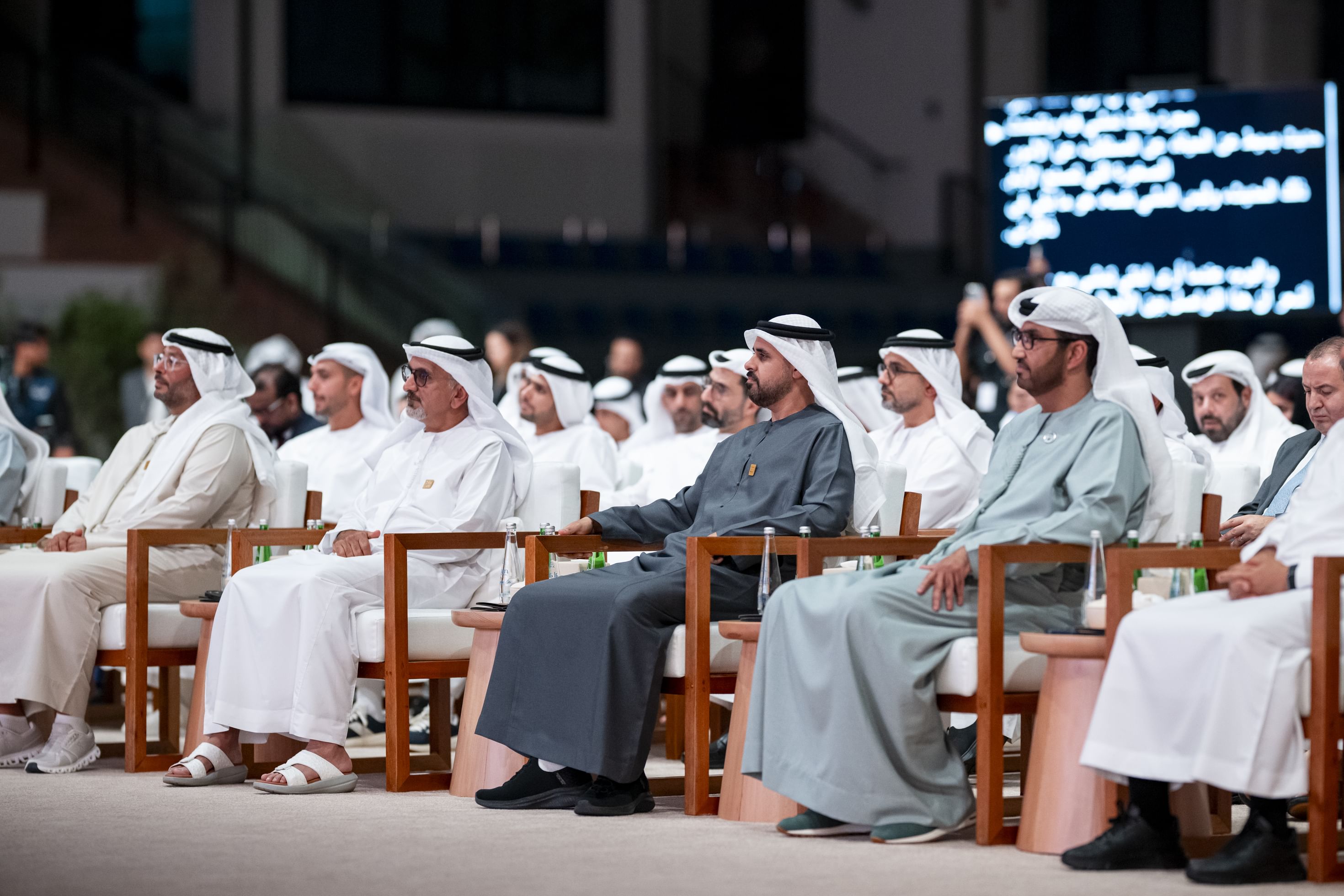
The event was attended by Dr. Sultan bin Ahmed Al Jaber, Minister of Industry and Advanced Technology, and Sarah bint Yousef Al Amiri, Minister of Education, in addition to a number of senior officials and partners.
The event concluded with the participation of public figures from different sectors, who took the very first steps “towards Mars” on the stationary treadmills, marking the initial contributions to the national collective countdown and goal.
The national ‘Walk to Mars’ initiative looks to transform movement into achievement, encouraging participants to collectively cover 54 million kilometres together, equivalent to the distance between Earth and Mars, and thereby also marking the 54th year of the nation.
Through walking, running, cycling, swimming, and other physical activities, participants of all ages and fitness levels are invited to take part under the theme “Every Step Makes a Difference.”
The initiative aims to promote daily movement, community wellbeing, and a culture of active living across the UAE, ensuring that the goal is attained in time for the upcoming Games.
Sarah Al Amiri said, “Walk to Mars embodies the spirit of the continual pursuit of progress that distinguishes the United Arab Emirates. Just as our passion for science led us to explore space and reach Mars, today this national, social movement leads us toward a unified goal that reflects the power of will and collective action.
“Every step we take is not merely a distance covered, but an investment in our health and in a more prosperous, vibrant future for coming generations. Through this journey, we affirm that ambition begins with each and every individual, and their constant ability to move, learn, and grow.”
Aref Hamad Al Awani, Secretary-General of Abu Dhabi Sports Council, stated, “This first-of-its-kind national movement embodies the spirit of collective ambition that defines the UAE. Through this initiative, we aim to inspire every individual to move with purpose and take part in a collective challenge that goes beyond fitness, it’s about unity, progress, and pride. Together, we can show the world what it means to dream big and achieve as one community.”
Following the event, interactive and community activities will be held to encourage participation and raise awareness of healthy lifestyles.
The Open Masters Games Abu Dhabi 2026 application will allow participants to track progress and record their contributions from across the Emirates. It is open to everyone aged 30 and above, with no fitness or experience limits.
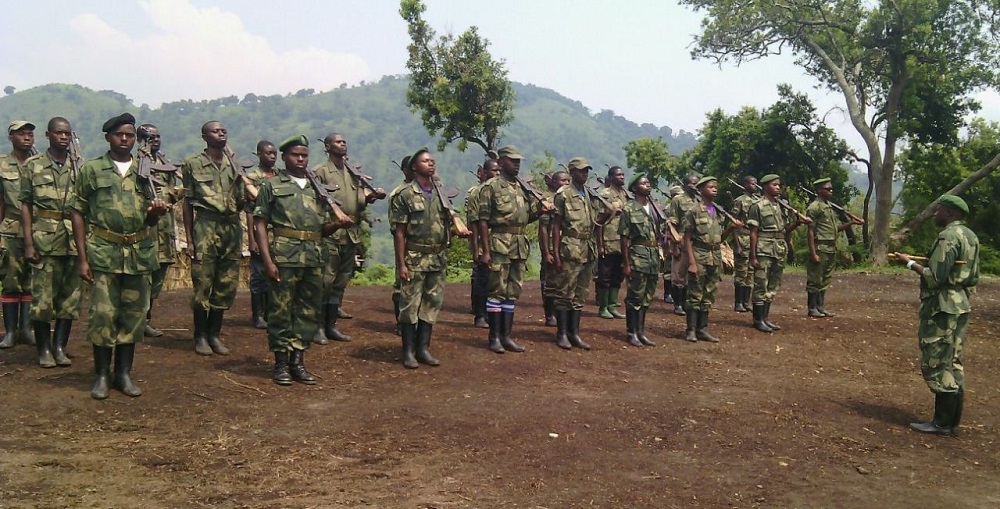
The Congolese army had previously stated that it was on a mission to eliminate the FDLR. However, skepticism surrounding this statement arises from the group’s longstanding ties with the Congolese army, which has collaborated with the militia for years.
The FDLR emerged in 2000, originating from the ALiR group. Its founders were former members of the Interahamwe, the militia responsible for the 1994 Genocide against the Tutsi, along with defeated soldiers (Ex-FAR) and some Rwandan refugees.
On June 27, 2025, Rwanda and the DRC, with the support of the United States, signed a peace agreement that included clauses for dismantling the FDLR. According to the Concept of Operations (CONOPS), before launching the operation, an awareness campaign would first urge the group’s fighters to surrender their weapons and prepare for repatriation.
On October 10, 2025, the DRC army called on FDLR fighters to surrender their arms to the DRC government or to the United Nations peacekeeping forces (MONUSCO). Following this, a group of DRC soldiers, led by Brigadier General Patrick Sasa Nzita, head of the country’s military intelligence, was sent to Walikale to lead a “campaign” urging the FDLR fighters to disarm.
However, the soldiers reported that “no FDLR fighters were seen.” When asked why the campaign was conducted in areas where the fighters were not present, they explained that these areas were the closest to the militia’s main strongholds.
{{Where is the FDLR located?}}
FDLR fighters were initially based in various areas of North Kivu, such as Rutshuru and Masisi, but attacks by the AFC/M23 group forced them to retreat to remote areas controlled by the DRC army and local militias, including Wazalendo.
AFC/M23 has indicated that some FDLR fighters have sought refuge in South Kivu, where they are collaborating with Burundian forces and other groups to launch attacks on the Banyamulenge people in the Fizi, Uvira, and Mwenga territories.
According to Rwanda’s Financial Intelligence Centre (FIC), senior leaders of the FDLR are located in the Walikale territory, areas controlled by the DRC government, such as Buhaya.
These leaders include FDLR President Lt Gen Gaston Iyamuremye and the group’s military commander, Pacifique Ntawunguka, also known as ‘Gen Omega.’
The DRC army has suggested that FDLR fighters are now located in areas controlled by AFC/M23, attempting to evade responsibility for dismantling the group, although it has not officially acknowledged this.
{{FDLR’s resistance to disarmament}}
In an interview with Radio France Internationale (RFI), Lt Col Octavien Mutimura, the spokesperson for FDLR-FOCA, reiterated the group’s stance that its fighters remain in the forests of the DRC to protect “abandoned Rwandan refugees.”
Lt Col Mutimura stated that the FDLR has no intention of laying down arms, asserting that its fighters are not afraid of potential attacks in the future.
He said, “We are here to defend ourselves and protect the abandoned Rwandan refugees. Asking us to lay down our arms without honoring our request is just a dream.”
Although the FDLR claims to be protecting Rwandan refugees, Rwanda continues to receive many individuals who were held captive by the group, with support from the United Nations High Commissioner for Refugees (UNHCR).
The Rwandan government reports that over 5,000 Rwandans have returned since January 2025, with 222 returning in the most recent repatriation on November 6, 2025.
The FDLR targets those it knows are planning to return to Rwanda, either killing them or subjecting them to severe punishments, including torture.
Ntawiha Feza, a returnee, shared her experience with IGIHE, saying, “I feel relieved because I have made it back home. I have three children. My husband was killed. We were about to return when they killed him, and I came back alone. I am hopeful we will live well now that we’re home.”
{{Fighters}}
As AFC/M23 resumed fighting in November 2021, the DRC government repeatedly claimed that the FDLR was a small group of aging fighters, incapable of threatening Rwanda’s security.
In September 2022, President Félix Tshisekedi stated that his country had disarmed hundreds of FDLR fighters more than twice, claiming this demonstrated political will. He further asserted that the FDLR was no longer a security threat.
However, the DRC army’s collaboration with this terrorist group has been confirmed by UN experts, who have documented the ongoing ties in reports approved by the UN Security Council.
Various reports estimate the number of FDLR fighters to be between 1,500 and 3,000. Lt Col Mutimura disputed these figures, stating that the number of fighters is much higher.
In June 2025, Rwanda’s military spokesperson, Brig. Gen. Ronald Rwivanga, stated that the FDLR’s fighters were estimated to number between 7,000 and 10,000. He also noted that when they expect an attack, they blend in with civilians to shield themselves.
{{Repeated shielding patterns}}
Under international pressure, in September 2024, the DRC army initiated operations aimed at dismantling FDLR strongholds in areas near the city of Sake, including Shove, Kimoka, Lupango, and Mubambiro.
Before these operations began, Gen Maj Peter Cirimwami, the then Governor of North Kivu, notified senior FDLR leaders, prompting them to relocate their positions.
On September 23 and 24, elite forces led by Lt Col Donatien Bawili carried out attacks in these areas. On September 25 and 26, the 11th Brigade, led by Gen Papi Lupende, also launched an assault in Rusayo. It was later revealed that the forces fighting the DRC army were members of the APCLS group, led by Janvier Karairi, not the FDLR.
While UN experts suggest that these attacks were not specifically targeting the FDLR, Lt Col Mutimura reported that the group lost “many fighters and significant equipment” during the September 2024 operations.
Lt Col Mutimura’s statement attempts to clarify that the FDLR is not collaborating with the DRC army, but strong evidence points to a partnership, particularly in the context of their shared fight against the AFC/M23.
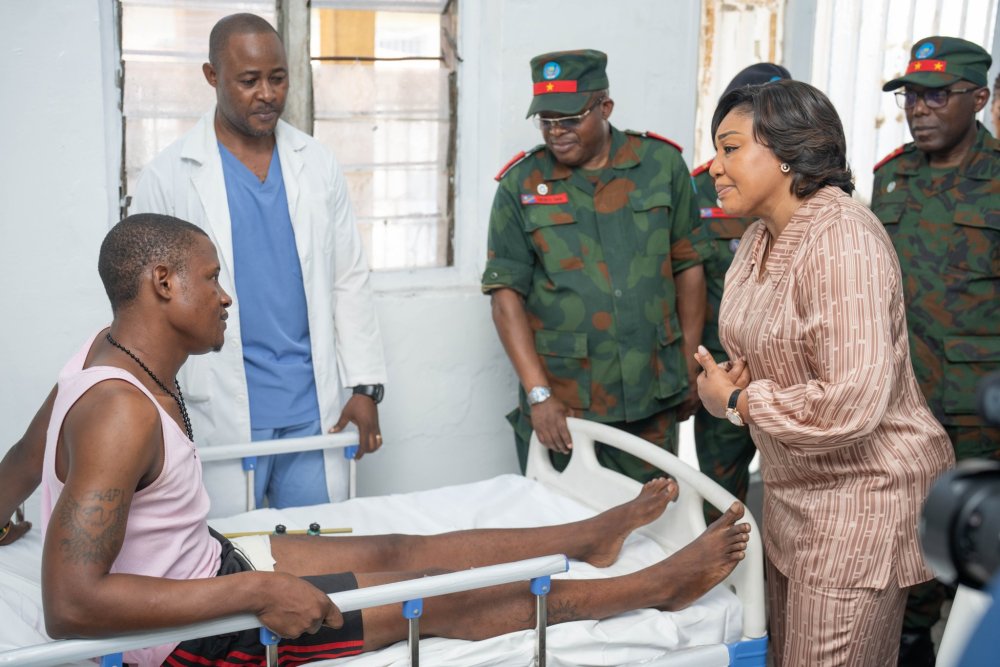
On January 25, 2025, the wife of President Tshisekedi visited wounded soldiers being treated at the Kokolo and Tshatshi military hospitals. Among the injured, one soldier was found with a tattoo representing the elite FDLR unit, known as CRAP.
Ahead of the World Cycling Championship, which took place from September 21-28, 2025, several roads in Kigali were temporarily cleared of speed bumps to ensure smooth traffic flow and facilitate the event’s organization.
Some of the roads affected include Downtown – Nyamirambo, Nyabugogo-Kimisagara – Nyamiramo, and Sopetrade-Kimihurura.
City of Kigali spokesperson Ntirenganya Emma Claudine clarified that the removal of the speed bumps is not permanent, as they play an important role in reducing vehicle speeds.
“The reinstatement of speed bumps will depend on the specific location and its conditions. In some areas, the speed bumps will be restored, while in others, alternative traffic signs and measures will be put in place to manage speed more effectively. Each area will be assessed individually. Reducing speed on the roads is not only about speed bumps; other methods, such as signage, will also be used,” she explained.
Although Ntirenganya did not provide a specific date the work will begin, she confirmed that relevant authorities are currently evaluating the logistics of the restoration, based on the characteristics of each area.
The seventh biennial Scientific Conference on Medical Products Regulation in Africa (SCoMRA VII) was held in Kenya’s coastal city of Mombasa, with delegates reflecting on the growing urgency to address vulnerabilities exposed by emergencies like the Ebola outbreak and COVID-19.
John Munyu, chairperson of Kenya’s Pharmacy and Poisons Board, said unlocking Africa’s potential in health product manufacturing and trade is a continental priority.
“Africa imports over 90 percent of its medicines and produces less than one percent of its vaccines. This is not just a statistic; it reflects our dependence and vulnerability, which the COVID-19 pandemic painfully exposed,” he said.
“SCoMRA VII is not merely a conference; it is a strategic platform to make this vision real to catalyze local manufacturing, support intra-African trade under the Africa Continental Free Trade Area, and ensure that quality, safe, and effective medical products reach every African,” he added.
African Medicines Agency (AMA)’s Director-General Delese Mimi Darko underscored the institution’s commitment to supporting local pharmaceutical manufacturing across Africa.
Darko said increased regional production will improve access to safe, affordable, and high-quality medical products, while reducing dependence on imports.
Symerre Grey-Johnson, director of human capital and institutional development at the African Union Development Agency-New Partnership for Africa’s Development, said Africa has made strategic moves to actualize medical product manufacturing through the establishment of the AMA.
Grey-Johnson noted that the establishment provides predictable regulatory functions and authoritative continental leadership, ensuring long-term sustainability for Africa’s health future.
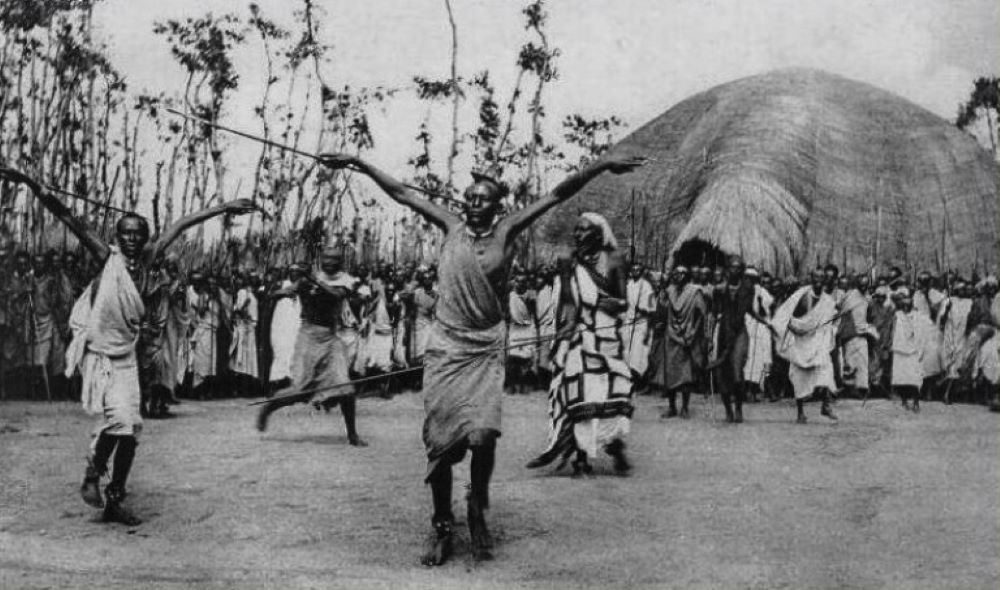
In today’s digital age, while social media serves as a tool for sharing ideas and promoting businesses, it is also misused to distort historical facts and spread misleading narratives.
To help provide a clearer understanding of Rwanda’s true history, we’ve compiled a list of books that offer valuable insights into the nation’s past, from its foundation to its post-genocide rebirth.
These books are available in various libraries in Rwanda and accessible via online bookstores.
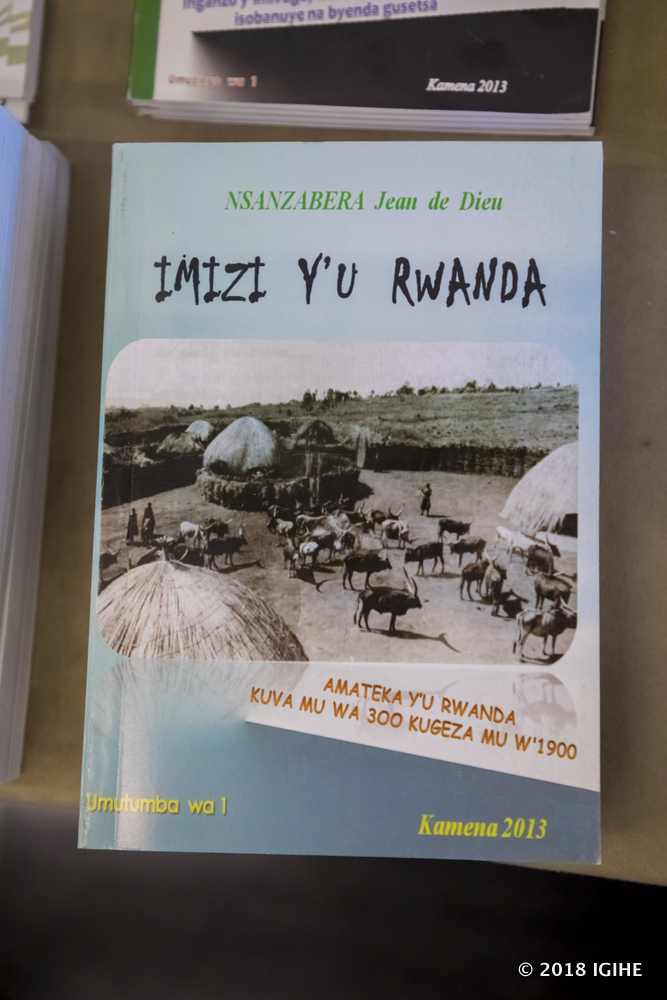
{{1. Imizi y’u Rwanda (Umutumba wa Mbere, 2013)}}
Written by Jean de Dieu Nsanzabera, Imizi y’u Rwanda (Roots of Rwanda) is an essential read for anyone seeking to understand the origins of Rwanda.
It describes how Rwanda was founded, through the unification of 29 kingdoms, and the significant efforts of the kings of Gasabo in creating a unified nation.
The book details the historic agreement made in Nkotsi and Bikara (Musanze), which led to the formation of Rwanda.
This 440-page book is packed with details about the heroic struggles for Rwandan unity and the leaders who fought to preserve it.
{{2. Ibitaramo ku Mateka y’u Rwanda by Kagiraneza Zephyrin}}
This book, written by Kagiraneza Zephyrin and published in 1990, traces the history of Rwanda from its creation. It discusses the country’s borders at that time, the advent of white people, how its territories were taken away through deceit, and its early foreign diplomacy.
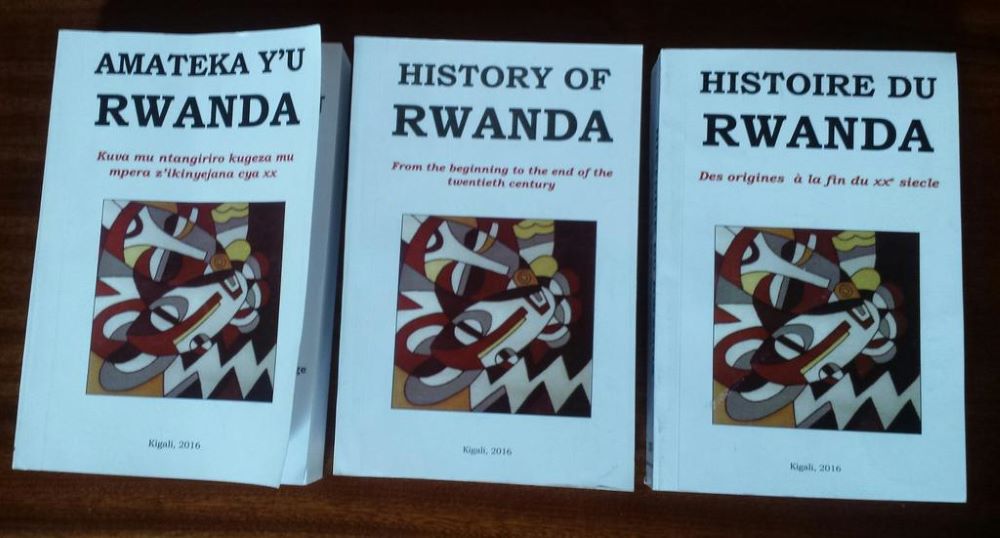
{{3. History of Rwanda: From the Beginning to the End of the 20th Century by the National Unity and Reconciliation Commission}}
This book was published by the National Unity and Reconciliation Commission in 2016, under supervision of Déo Byanafashe in collaboration with Paul Rutayisire.
It traces the origins of German influence in Rwanda and how they were later replaced by the Belgians, who immediately began efforts to divide the country and its people, leading Rwandans to realize that their situation had drastically changed.
The book also focuses on Rwanda’s history from the early 20th century until its end, examining the lives of Rwandans, politics, social relations, and development. It particularly highlights the impact of colonialism and how it sowed divisions, which ultimately led to the 1994 Genocide against the Tutsi.
{{4. A Thousand Hills: Rwanda’s Rebirth and the Man Who Dreamed It by Stephen Kinzer}}
In this book, author Stephen Kinzer, published in 2008, focuses extensively on Rwanda’s journey after the 1994 Genocide against the Tutsi, highlighting the leadership of President Kagame, whose visionary approach enabled the country to rebuild and emerge stronger, leading to the Rwanda we see today.
Kinzer discusses Kagame’s early life, from being born and then sent into exile at just four years old, to developing revolutionary ideas that eventually led to the struggle for the country’s liberation. He also details Kagame’s role in halting the Genocide against the Tutsi.
The author further explores the journey of unity and reconciliation, as well as Rwanda’s development. Anyone who reads this book will gain a clear understanding of the political transformations, particularly the recent history of Africa.
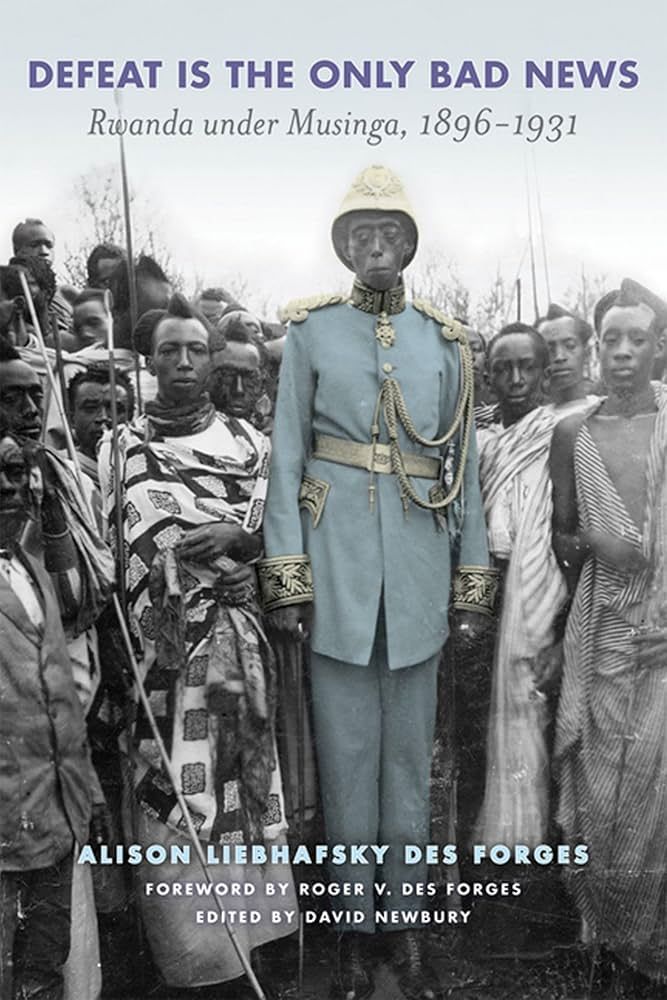
{{5. Defeat Is the Only Bad News: Rwanda Under Musinga (1896-1931) by Alison Liebhafsky Des Forges}}
This book, written by Alison Liebhafsky Des Forges and published in 2011, focuses primarily on the reign of King Yuhi V Musinga and examines the colonial era during his reign, extending into the early 20th century.
Des Forges highlights the difficult times King Musinga faced, as the Belgians arrived during his rule and sought to impose their colonial ideas and governance on the Rwandan people.
The book explores the origins of the divisions in Rwanda that ultimately led to the 1994 Genocide against the Tutsi.
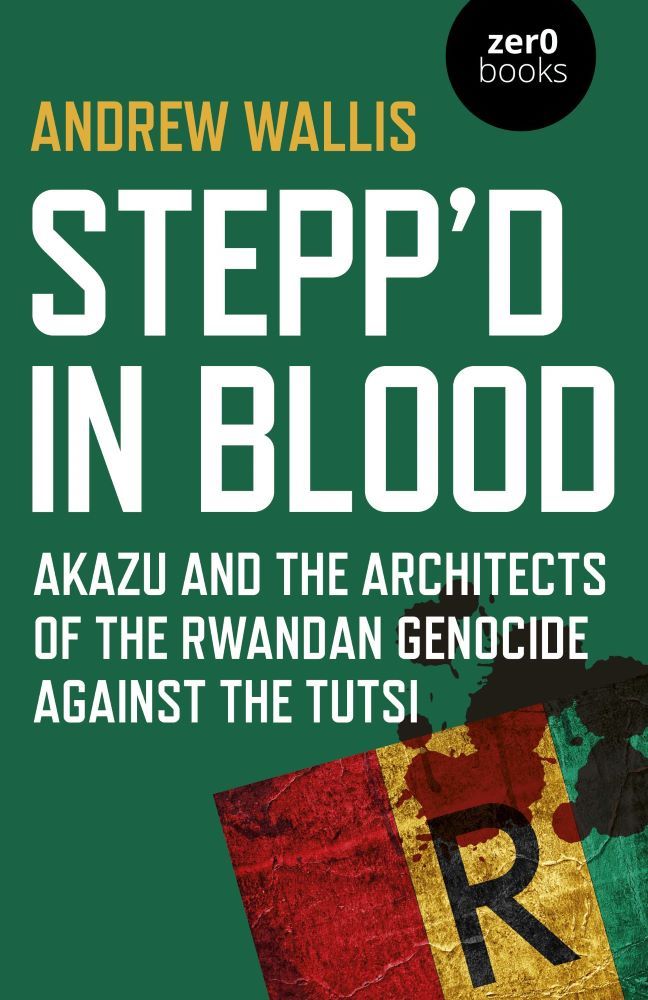
{{6. Stepp’d in Blood: Akazu and the Architects of the Rwandan Genocide Against the Tutsi by Andrew Wallis}}
In this book, published by Andrew Wallis in 2018, the focus is on the history of Juvénal Habyarimana’s regime and the members of the ‘Akazu,’ (inner circle) a group largely composed of his family members, including his wife Agatha Kanziga, his brothers-in-law, and others known for their key roles in planning and executing the Genocide against the Tutsi.
The book delves into both the direct and indirect involvement of the Akazu members, their propaganda efforts, and their illicit business activities, including trading in precious minerals, drugs such as cocaine, trafficking of gorilla babies, and their role in the death of Dian Fossey, who had conducted research on gorillas.
Additionally, Wallis examines how the international community stood by while the Genocide against the Tutsi unfolded, failing to intervene or stop it.
This book provides a thorough understanding of the political landscape that led to the 1994 Genocide, which resulted in the deaths of over a million Tutsi.
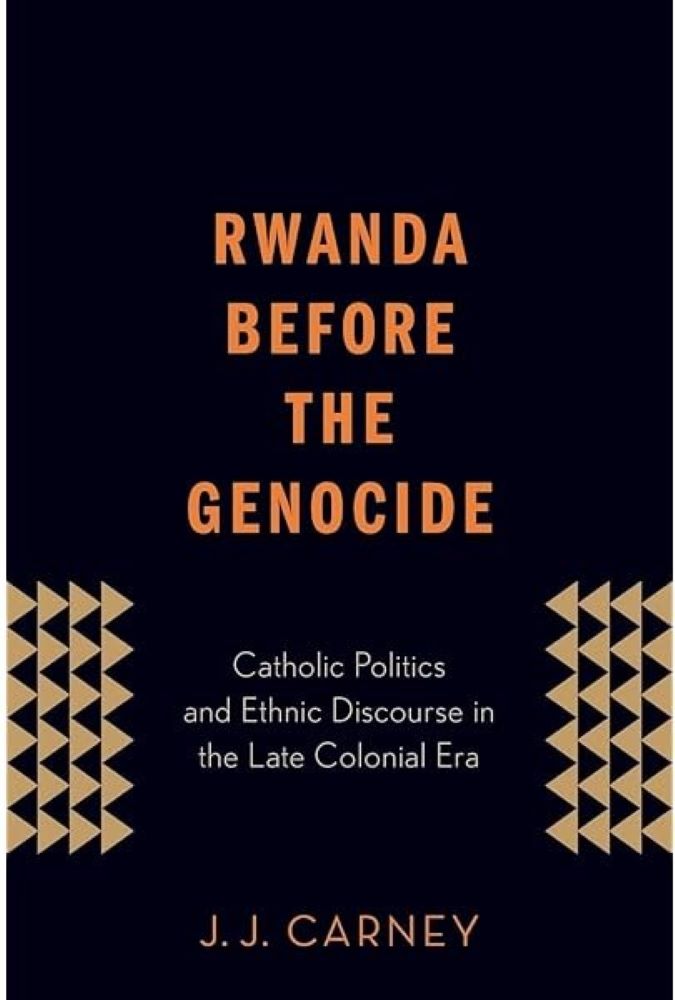
{{7. Rwanda Before the Genocide: Catholic Politics and Ethnic Discourse in the Late Colonial Era by J.J. Carney}}
This book authored by Carney, focuses extensively on the significant role the Catholic Church played in the governance of Rwanda, particularly its involvement in politics and ethnic divisions before the Genocide against the Tutsi.
The author investigates the Church’s collaboration with the colonizers and its role in the establishment of ethnic classifications and the ideologies associated with them.
He examines how these factors ultimately contributed to the 1994 Genocide against the Tutsi.
{{8. L’État Français et le Génocide des Tutsis au Rwanda by Raphaël Doridant and François Graner}}
This book focuses on the role that France played in the Genocide against the Tutsi in Rwanda.
The author explains that France supported Habyarimana’s government both politically and militarily, which made the preparation and execution of the genocide possible.
The book discusses France’s actions both before and during the Genocide, as well as its post-genocide involvement.
It argues that these actions led Rwanda into a period of darkness, causing immense destruction and turning the country into a site of devastation.
Additionally, the book explores the roles of other countries in Rwanda’s history and their conduct during the Genocide against the Tutsi.
{{9. The Struggle for Liberation: War and Militarism in African History by John Burton Kegel}}
This book by John Burton Kegel was published in 2025. It discusses Rwanda from its roots, covering the periods before independence, as well as the administrations of Habyarimana and Kayibanda.
The book also explores the birth of the Rwandan Patriotic Front (FPR Inkotanyi), the Rwanda Patriotic Army (RPA), and the launch of the struggle to liberate the country. It traces the journey of Rwanda’s reconstruction after the Genocide against the Tutsi.
{{10. Intwari z’Imbanza, zubatse u Rwanda rugahamya igitinyiro (Umutumba wa mbere, 2018)}}
This is one of the comprehensive books that documents the history of Rwanda, authored by the expert in Rwandan culture and history, Jean de Dieu Nsanzabera. The book covers the significant events in the history of the foundation of Rwanda (1091-2017).
It provides a thorough overview of the country’s evolution, from its establishment to its eventual decline and subsequent rebirth. It details how the process of building Rwanda was planned, implemented, and where it stands today, highlighting the contributions of those who shaped the nation during their time.
The book serves as a guide for those seeking to understand the history of each king who ruled Rwanda over the course of 870 years (1091-1961) and the impact of their reigns.
It also covers the actions taken by the Presidents after the monarchy transitioned to a republic. The history is traced from the era of King Gihanga Ngomijana to the time of President Paul Kagame, who was in power when this history was documented.
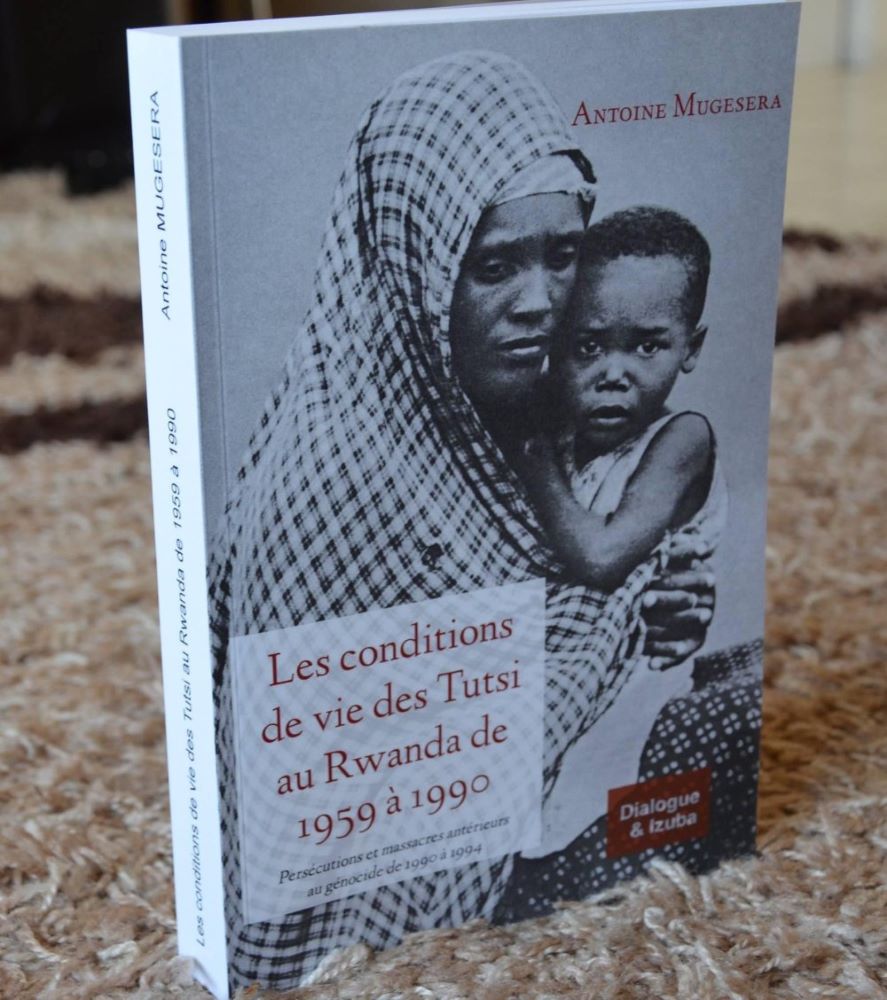
{{11. Les conditions de vie des Tutsi au Rwanda de 1959 à 1990 : Persécutions et massacres antérieurs au génocide de 1990 à 1994 by Antoine Mugesera}}
This book, written by Antoine Mugesera and published in 2015, focuses on the severe conditions that the Tutsi population endured between 1959, when they began to face persecution, killings, and displacement, and 1990, when those in exile decided to launch the struggle for the country’s liberation, allowing refugees to return home.
Antoine Mugesera, along with Kayitesi Judence who co-authored this work, were recently recognized as one of the top writers in 2025.