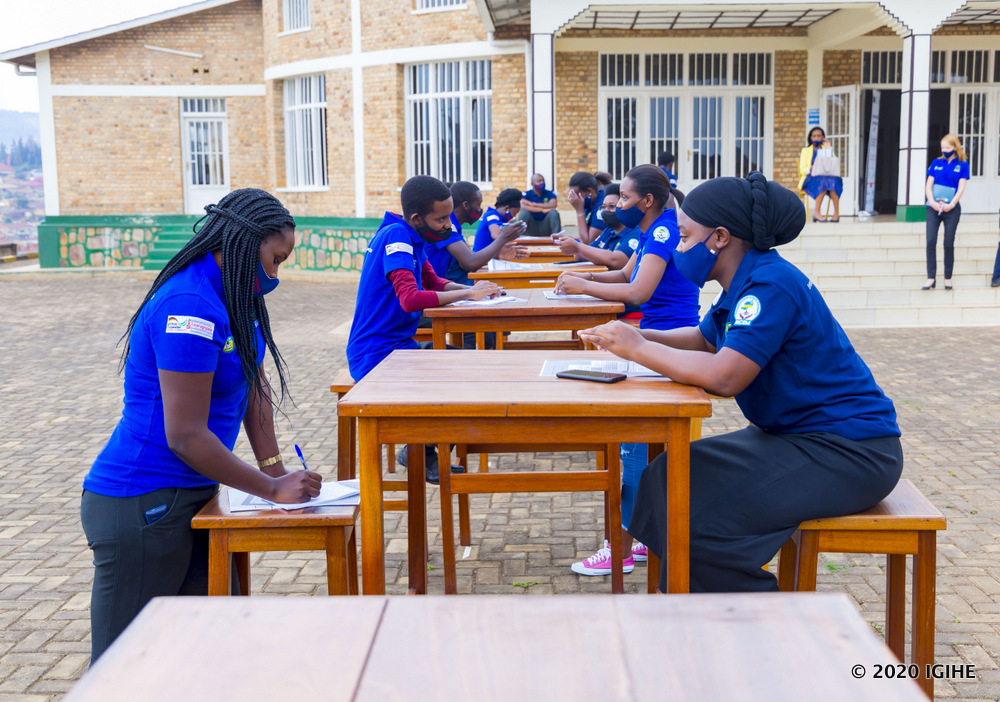
The launch of the Shupavu in Rwanda is part of the Mastercard Foundation’s COVID-19 Recovery and Resilience Program which has two main goals; to deliver emergency support for health workers, first responders, and students and, Secondly, to strengthen the diverse institutions that are the first line of defense against the social and economic aftermath of this disease.
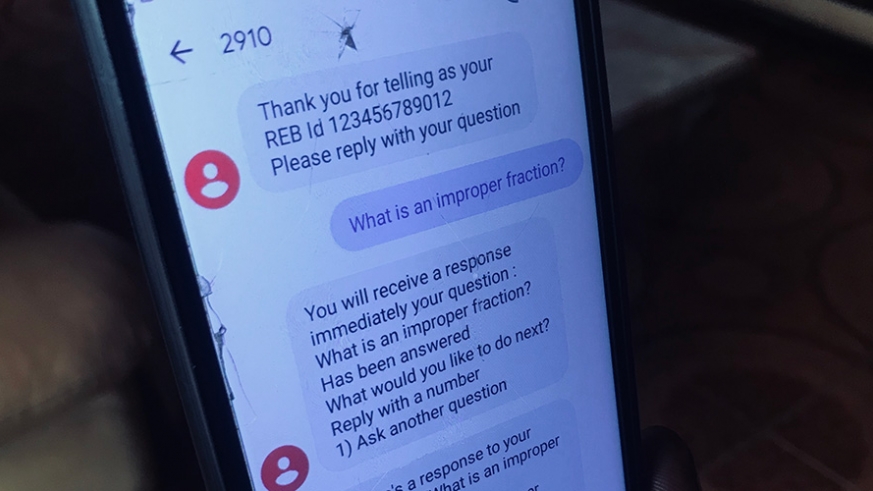
The SMS platform will provide access to the Ask a Teacher feature where students can ask questions to a pool of teachers and receive responses via SMS shortcode 2910 on the MTN network. On the 1st of November, they will also be able to access lessons and quizzes aligned to the Rwandan curriculum via the same shortcode. The service will be free to students in Upper Primary and Lower Secondary till 31st July 2021. Students will register using their ID number used for accessing REB eLearning.
“Our Shupavu platform digitizes the local curriculum and makes it available to any mobile phone, however basic. We have had the privilege of serving millions of learners in Kenya, Ghana, and Cote d’Ivoire and we look forward to serving millions of Rwandese learners too. We hope learners in Rwanda will find our Ask A Teacher Platform that will be linked to REB eLearning to be a valuable study companion at this time,” said Wambura Kimunyu, Eneza Education CEO.
Since mid-March, 3,161,990 students in Primary and Secondary school are currently out of school in Rwanda as part of social distancing measures put in place by the government due to COVID19 pandemic. With uncertainty prevailing about when schools will be able to reopen again, we face the spectre of children from economically disadvantaged backgrounds falling even further behind their peers in their learning.
We leveraged the most widely available tools and technologies to support continued learning for those who would otherwise be left behind. Our aim is to complement lessons being broadcast via Radio by the Rwanda Education Board to the students.
“While many educational technologies rely on an internet connection, Eneza is fairly unique in its focus on enabling learning via SMS with no data or connectivity requirement. This makes it accessible to the majority of households, including the most vulnerable. We’ve seen how impactful this model has been in Kenya and other countries and look forward to seeing it support thousands, if not more, of young Rwandans,” said Rica Rwigamba, Country Head, Rwanda at the Mastercard Foundation.
“Since the pandemic began, we have launched several initiatives including TV and Radio airing lessons, to ensure that students continue to learn while at home. Using low-tech is key to ensure wide access. Ongoing TV and Radio lessons will be complemented by Eneza education’s SMS based platform by adding interaction between teachers and students. Furthermore, SMS based lessons and assessment delivery will support our eLearning to reach as many students as possible.” said Christine Niyizamwiyitira, Head of Department of ICT in Education at Rwanda Education Board.
{{About Eneza Education}}
Eneza Education is an education technology company founded in 2013 that provides learning and revision materials via any phone however basic. Eneza is based in Kenya, Ghana and Cote d’Ivoire.
Eneza’s mission is to make 50 million learners in Africa through mobile technology. We believe that any phone can be turned into a classroom and that levels the playing field when it comes to content delivery.
Msheireb Properties and Qatar Foundation collaborated with Harvard University to undertake a multi-year research study to establish a holistic framework documenting, analyzing and deciphering the principles of urban sustainability of selected case study cities in the Gulf region.
The launch of the book will bring together experts and professors from Qatar and the wider region, in addition to professors from Harvard University and guests. A unique blended in-person and virtual event will be hosted by Msheireb Properties and held simultaneously at Msheireb Museums.
The launch event will be followed by on-line panel discussions on October 14 and 21 to discuss topics related to ‘the historic environment, culture, and economy of the Gulf region’, ‘the development of urbanism, and public health of the Gulf region’, ‘the traditional neighborhoods and architecture of the Gulf region’, and a special session titled ‘The study of the past informs future sustainable urbanism in the Gulf.’
Eng. Ali Al Kuwari, Acting CEO, Msheireb Properties, said: “We are proud to launch this important book that provides a comprehensive and in-depth study on sustainable urbanism in the Gulf region and its impact on other aspects of life.
Sustainability, which is a core value of Msheireb Properties, has a huge impact on our present and future. This value is clearly reflected in our flagship development project, Msheireb Downtown Doha, which is an exemplary model of modern sustainable cities. We thank Harvard University for the great effort to conduct this study, which is the main reference for Qatar and the whole Gulf region”.
Msheireb Properties and Qatar Foundation sponsorship and funding of the book reflects their effort in supporting sustainable urbanism and preserving the environment through funding field researches, building strong relationships with scientific and research institutions such as Harvard University, and supporting the studies that have a direct benefit on Qatar and the region.
The GSU book is a reference for academic institutions, universities, libraries, and researchers in sustainability and urban planning. This ground-breaking body of research holds the potential to be transformed into useful guidance for making holistic, sustainable decisions for the future urbanism of the Gulf region.
The Gulf Sustainable Urbanism book is available in an electronic version and a special print edition of 900 pages, with nearly 1,000 illustrations/analytical diagrams in high-quality graphics.
The GSU book results from more than nine years of research; it started in 2011, with the first phase completed in 2020. The study covers three periods: past, present, and the future. Harvard University has completed the first phase, “The Past,” and released the first part of the book, which covered eight countries and ten cities bordering the coastal zone of the Gulf: Qatar, Saudi Arabia, UAE, Kuwait, Bahrain, Oman, Iran, and Iraq.
For more information and registration, visit: https://www.gsubooklaunch.com/
Follow our social media channels for updates:
The decade-long Gulf Sustainable Urbanism research project, commissioned from Harvard University by Msheireb Properties, part of Qatar Foundation, will release its findings on Wed 7th October – 6:30 PM (Doha Time). To register for the online launch, visit https://t.co/cbRgIGbpWapic.twitter.com/k8iBa7yJNx
— Msheireb Properties | مشيرب العقارية (@MsheirebDoha) October 3, 2020
The Rwandan Government had to set up measures and postponed the classes. Students had to return home and adapt to a new e-learning system.
Covid-19 has had a significant impact on the education sector, including disrupting the normal schedule in this area. In search of answers, some schools have introduced a new online-based learning method. The process is slow and still facing some challenges.
In light of the reopening of schools and universities, leaders in the Education sector will gather at the Leaders Roundtable to discuss the Education in the New Normal. The program is organized by Kora Coaching Group (KORA) together with IGIHE
and the University of Rwanda.
The purpose of the event hosted as a Live Stream this Friday 9th of October at 14:0 is to inform and ensure that no one is left behind through EdTech.
The #LeadersRoundTableSeries is a monthly live discussion organized by KORA. This platform is mainly aimed at educating and advising leaders in Rwanda, Africa and the world on how to solve certain issues that affect communities around the world.
Among the panelists are the Vice Chancellor of the University of Rwanda, Prof. Phillip Cotton and the former VP of the African Institute for Mathematical Sciences (AIMS), Dr. Youssef Travaly, who’s currently Executive Chairman of AllSightsAfrica.
KORA Coaching Group (KORA) is a pan African company with operations in Rwanda and South Africa. KORA provides bespoke coaching and consulting services to clients around the globe.
Its subsidiary, Kora Coaching & Business Academy (KCA) is the first Rwandan Coaching Academy, which provides Global Coach Training Certification Programs in Executive & Leadership Coaching as well as Life Coaching.
Certified Professional Coaches graduating are Business Leaders who serve Rwanda and export their expertise to Africa and the rest of the world.
Hence putting Rwanda on the map of the Global Coaching Industry. For more information, please visit www.kora-coaching.com
Over the last decade, Davis College and Akilah have made strategic investments in a competency-based education model, designed to be delivered through both face-to-face and online instruction. Yet in response to COVID-19, campuses in Rwanda and across the globe were forced to close in March and halt in-person education, and immediately transition to distance learning.
With the Mastercard Foundation’s support, Davis College and Akilah will now have the resources needed to ensure that young people are able to continue learning online during the current COVID-19 crisis and that its incoming students and educators are prepared for the digital future of education.
“Through years of testing and refining our model, we’ve learned that online learning entails so much more than making lectures and coursework digitally accessible. It requires a holistic approach to the student experience, ensuring that learners have both the support they need to successfully complete their coursework, as well as the mentorship to thrive as independent learners facing new challenges. We’re grateful that with the Mastercard Foundation’s commitment, we will be able to provide students with financing support during this difficult time—and in particular, young women—while also investing in both the infrastructure and support systems that drive the success of online learning,” shared Akilah Institute President Karen Sherman.
The faculty at Davis College and Akilah will be equipped with the resources and skills needed to fully facilitate online competency-based education for students, and investments in its online learning platform and digital coursework will ensure that the transition to learning and studying from home continues to be as seamless as possible for its students as they navigate the COVID-19 pandemic.
Through its COVID-19 Recovery and Resilience Program, the Mastercard Foundation is assisting institutions like Davis College and Akilah, and communities in Africa, to withstand and respond to the short-term impacts of this pandemic, while strengthening resilience in the long-run.
“To build resilience, education institutions are increasingly leaning into the concept of principled flexibility—focusing on delivering high-quality learning opportunities through different modalities. We’re seeing this more and more, and Mastercard Foundation is committed to enabling this shift for the benefit of students both in Rwanda and across the continent,” says Rica Rwigamba, Rwanda Country Head of the Mastercard Foundation.
The COVID-19 global pandemic also shows how desperately the world needs ethically-minded, creative, collaborative leaders; those who can help their communities navigate widespread challenges like the one we are facing today. With the Foundation’s support, students are being positioned to effectively step into those leadership roles and ultimately help build sustainable and resilient communities. The success of students at Davis College and Akilah has never been confined to or reliant on a physical space. The College remains committed more than ever to its mission to equip students with the mindset and knowledge to solve the world’s most pressing challenges.
Davis College and Akilah look forward to collaborating with the Mastercard Foundation on promoting the positive impact that this partnership will have on the lives of its students and the broader community.
{{About the Mastercard Foundation}}
The Mastercard Foundation works with visionary organizations to enable young people in Africa and in Indigenous communities in Canada to access dignified and fulfilling work. It is one of the largest, private foundations in the world with a mission to advance learning and promote financial inclusion to create an inclusive and equitable world. Mastercard created the Foundation in 2006 as an independent organization with its Board of Directors and management. For more information on the Foundation, please visit www.mastercardfdn.org.
{{About the Mastercard Foundation COVID-19 Recovery and Resilience Program}}
The Mastercard Foundation COVID-19 Recovery and Resilience Program has two main goals. First, to deliver emergency support for health workers, first responders, and students. Second, to strengthen the diverse institutions that are the first line of defense against the social and economic aftermath of this disease. These include universities, financial service providers, businesses, technology start-ups, incubators, government agencies, youth organizations, and non-governmental organizations. For more on the Mastercard Foundation COVID-19 Recovery and Resilience Program, please visit https://mastercardfdn.org/covid19-recovery-resilience-program/. Follow the Foundation on Twitter at @MastercardFdn.
“The Covid-19 pandemic has claimed nearly one million lives and pushed hundreds of millions into unexpected hardship. It is not a time for doubt or hesitation. It is not a time for doubt or hesitation. We have the tools to meet this test and prevail,” President said.
The President said that the cooperation of the countries will be the key to achieving the goals of sustainable development that the World had set in 2015.
“Although the Sustainable Development Goals (SDGs) were adopted five years ago, most countries, especially in Africa, were already off-track, before 2020”.
He also stressed that the vaccine is the hope of a return to normalcy, explaining that Coronavirus should be a lesson to all countries, and encourage investment in the health sector.
“Ensuring equitable access to vaccines, therapeutics, and diagnostics will speed up the end of the pandemic for everyone. This pandemic has highlighted the importance of resilient national health systems and strong domestic health financing”.
President Kagame also highlighted the importance of the United Nations World Health Organization (WHO), saying, “We will continue to work to reinforce WHO to make it more effective.”
President Kagame talked of the importance of gender equality, saying that ‘gender equality has still not been fully attained in any country ‘, and it has become the foundation of global development in the world, urging that gender equality efforts continue.
He also returned to the role of technology in the future of the world, saying that it is important to support projects aimed at bringing technology to all. He stressed that this should also go hand in hand with respect for human rights around the world.
Addressing the issue of climate change, President Kagame argues that the agreement to reduce the impact of climate change signed in Kigali and Paris should be complied with to achieve its goals.
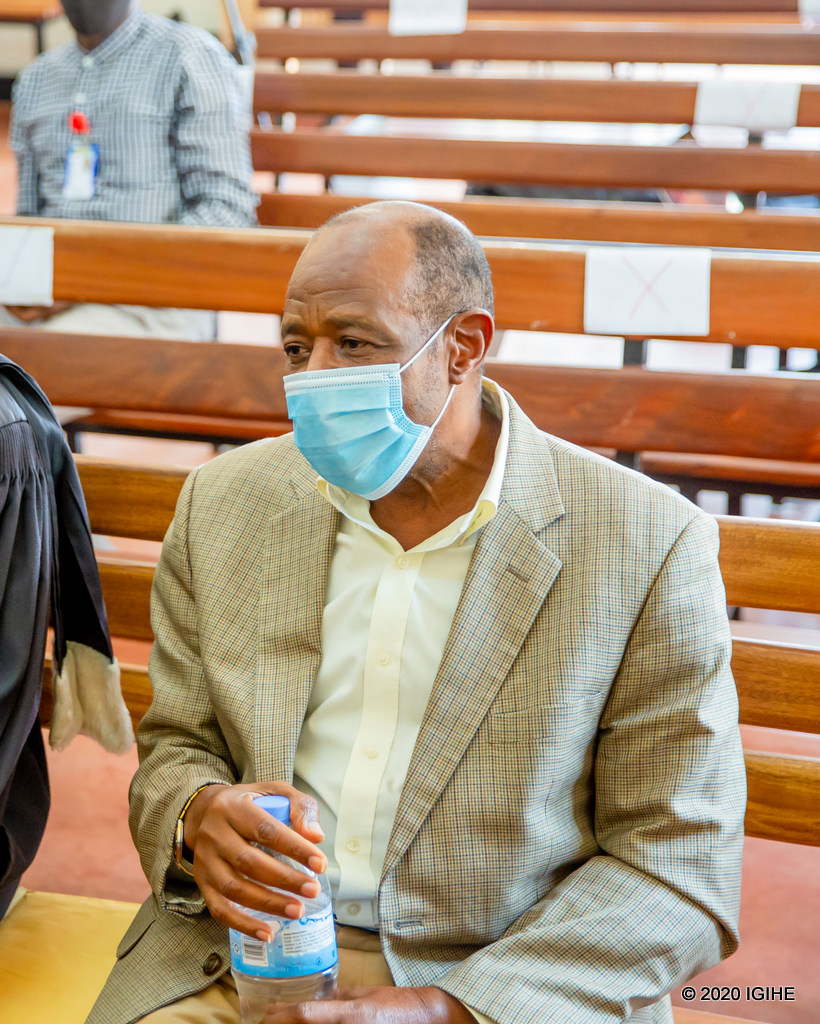
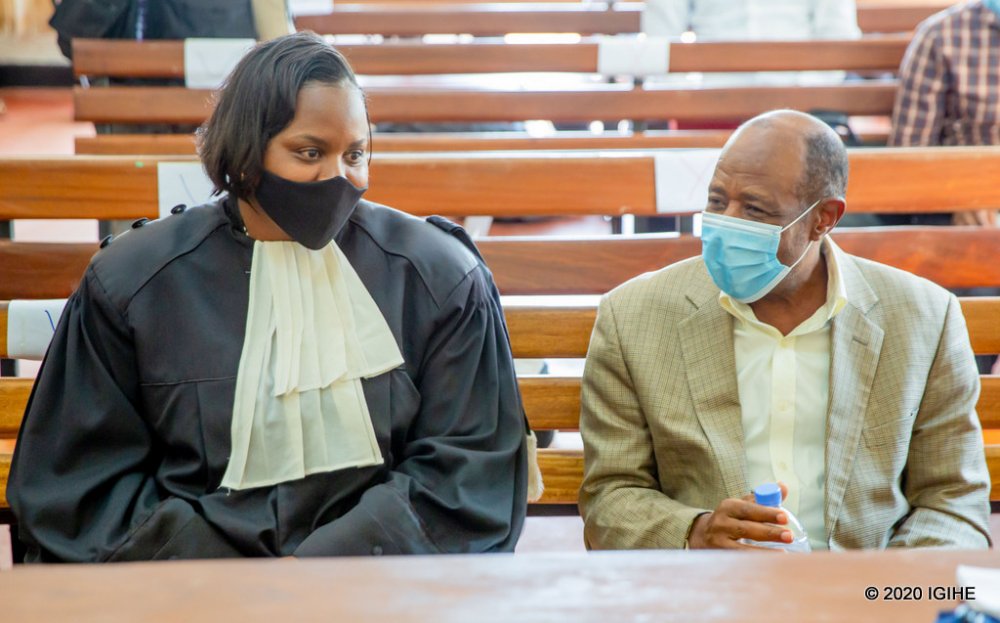
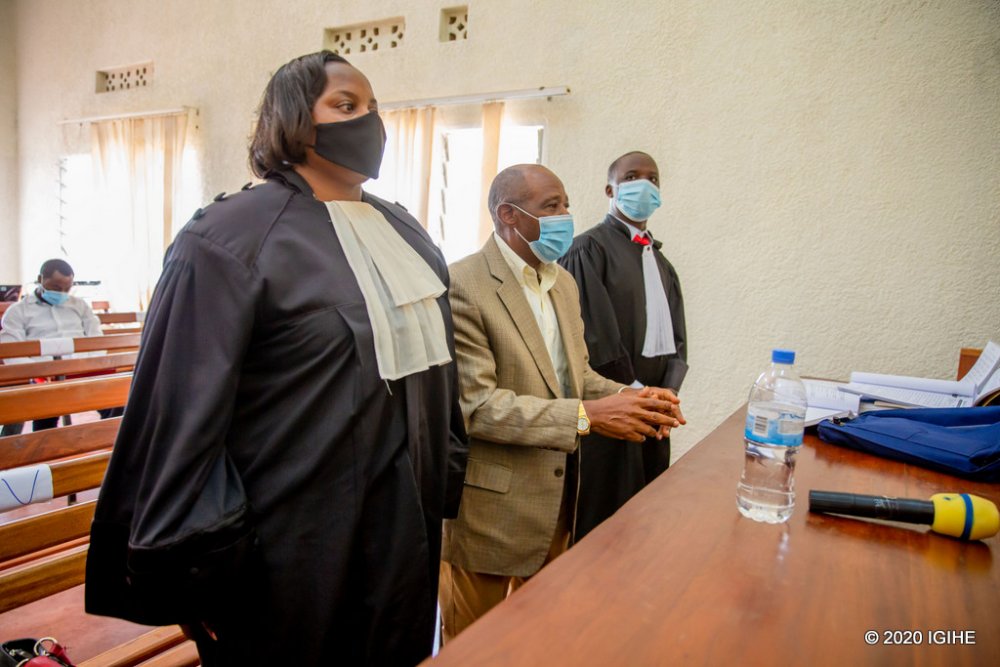
The 66 year old, arrived at the court premises in a RIB detainees van under tight security. Before attending the court proceedings, everybody was required to pass a COVID-19 test, and before passing the gate, there was someone checking the pandemic symptoms.
The Judge informed Rusesabagina that is suspected of 13 counts and asked him if he is pleading guilty but he refused to answer. Instead, he said that he has answered on every count during interrogation, before an investigator and a prosecutor.
However, he told the judges that he regrets the killings carried out by FLN belligerents in Nyaruguru, asking for forgiveness from the affected families and the nation.
The Proceedings
15:55: The judge says the hearing is completed and the Court is scheduled to pronounce on 17 September 2020 at 2:00 pm.
15:52: Rusesabagina was given an opportunity to speak and tells the court he has ailing health as proven by the three times he was taken to the hospital during the last two weeks, and assures the court that he will not escape once the provisional release is granted.
15:50: As for the bail, the Prosecution said that Mr. Rugaza did not know what he was asking for because during the interrogation he said that Rusesabagina is bailed out by a surety, and today he said that he would use a cash bond.
They said Mr. Rugaza should specify a cash bond bearing in mind the lives of the dead and the material damage. Prosecution prayed for his stay in custody.
15:30: Prosecution tells the court that Rusesabagina as a suspect, refusing to respond to each charge and saying he had no list of crimes while his lawyers had them, is evidence that he tried to avoid the interrogation.
The prosecution says the accused is mired into a lot of controversies, for though he said he regrets the FLN killings, his words are contrary as he is denying his role as the president of the MRCD, the mother organ of FLN.
The prosecution says it is not a question of whether he was sick or not, but the fact that he could stand before the court today for his trial means that he has been well treated since his arrival in Rwanda, treated, and taken to the doctor whenever he wanted.
The prosecutor says that while they were interrogating him, they had to suspend his interrogation so he could be taken to the hospital, therefore, being in custody cannot prevent Rusesabagina from accessing any medical attention he needs.
15:20: About the conversation between Rusesabagina and Twagiramungu, Mr. Rugaza said it should have been presented to the suspect so that he should answer on it. He insisted the defendant should be granted bail on account of his good conduct and that he had no prior convictions.
He said Rusesabagina was a good person, who had been given various awards as an honest person, therefore, the court should base on that to grant him bail.
15:00: The fact that the FLN has committed crimes, Rugaza said, should not be tied on Rusesabagina because the group was no longer affiliated with the MRDC, but that members of the group should be held accountable.
Rugaza said that in regards to the testimony of people injured in the FLN attacks and photos of the burnt vehicles, although Rusesabagina regrets, the court should consider whether any of their burns are related to the FLN activities.
15:00: Mr. Nyambo, one of Rusesabagina’s lawyers said his client should be released and tried as a free man because he was ill and, if necessary, he should be restricted to a certain area since his traveling documents were seized.
14:45: As for the audio and video that the prosecution claims to have, he said he wanted to check and see if it was him or not. In regard to other written documents demonstrating that he sent money to people in FLN, he said he had no knowledge of some of them.
“I have personally regretted and apologized to the families of those affected and to the country,” he said, referring to the criminal activities committed in Nyaruguru.
14:40: Talking about the money he allegedly sent to Sinayobye, Rusesabagina said that he sent him three thousand euros because he “called me crying” and then sent him the money as a parent; that the money was not sent to the FLN.
In regard to the money his wife sent to Comoros, he said, was “sent to Sankara by my wife” because Sankara’s mother and his wife were neighbors in the same area. His wife allegedly sent Sankara money to help her child.
On the money he sent to Noel Habiyaremye, he said the same thing to the FBI and all investigative agencies. He said that by the time movie Hotel Rwanda was released, many Rwandans, refugees, thought that he had become a millionaire; that everyone sought him out individually, at that time he had not entered politics.
14:25: When asked if he pleaded guilty, Rusesabagina said he had discussed the allegations during the investigation and had responded to each case.
He said he would like to voice his thoughts as soon as the trial begins in substance.
“The questions I answered were not many, one is that I helped FLN, I said yes I helped FLN, I gave 20 thousand euros,” he said. The fact that he gave them the money and the used it for their killings, he said that it was not the agreement he shared with the FLN.
14:24: The prosecutor said that if Rusesabagina was released, he would escape justice based on the gravity of the crimes he is suspected of; also, he was arrested after a long search, so if he was released it would not be easy to find him again.
In addition, he is well-aware that Belgium investigated him the same as the FBI in the United States, with regard to financing terrorist groups, so keeping him behind bars looks to be the only way to prevent him from tampering with the evidence and pressuring witnesses, or to meet other suspects in Belgium for treason.
14:15: The prosecutor said 82 children that made statements and their testimony showed that they had been abducted and taken to militia services in violation of Rwandan and international law.
He said there were medical records showing that nine people had been killed in the FLN terrorist attacks in Nyabimata and Cyitabi Sectors and all of them had died as a result of the attacks.
14:00: The prosecutor said there were various documents provided to Rwanda by the Belgian Police indicating the amount of money that had been sent by Rusesabagina, which was provided by the Western Union.
Some of the money sent to Madagascar and Comores to Nsabimana Callixte and others to FLN fighters in the DRC.
13:45: As the serious reasons for Rusesabagina to remain in custody, the prosecution recounted every one of his 13 charges.
• On the charge of the formation of an irregular armed group or joining it: The prosecutor relied on a statement from the FLN stating that it was a group formed by the MRCD, made by its former spokesman, Nsabimana Callixte.
He talked about Rusesebagina’s footage where he and Twagiramungu Faustin were discussing on the FLN establishment, and a two-page document found in Rusesabagina’s computer in a search conducted by the Belgian police at his home in 2019.
Another reason the prosecution relies on is the statements of FLN soldier Col Nizeyimana Marc describing how the FLN was set up, Sankara’s statement, and Paul Rusesabagina’s statement confirming that he went to the FLN but did not create it.
• On charges of financing terrorism, the prosecution said the reason for keep Rusesabagina in detention was based on an interview with Wilson Irategeka on May 19, 2019, in which Irategeka accuses Rusesabagina of trying to divide the army [called farmers] with money.
This was based on the fact that Rusesabagina had sent Gen Sinayobye Bernabe three thousand dollars. It is also alleged that Rusesabagina’s wife sent 1,000 euros to Comoros, at this time the money was sent to Nsabimana Callexte alias Sankara.
13:30: The prosecution was given the floor and they are praying to the court that the accused be remanded in custody on the ground of all the crimes he is suspected of. He said the alleged activities of Rusesabagina began in 2009 when as the leader of the PDR Ihumure party; Rusesbagina approached Lt Col Habiyaremye Noel, formerly known as Banga Banza Lambert.
He was a member of the FDLR terrorist group, urging them to join him together with his FDLR fighters. The prosecutor said that Habiyaremye later went to Burundi and Rusesabagina kept sending him money. The money was alleged to form a military unit against the Rwandan government.
Because of the good relations between Rwanda and Burundi at the time, Habiyaremye was arrested and sent to Rwanda, where he then spoke about his cooperation with Rusesabagina.
Rusesabagina later worked with Gen Wilson Irategeka who founded CNRD Ubwiyunge. They later formed the FLN and were joined the RRM party of Nsabimana Callixte alias Sankara.
They added another party to the coalition, Rwanda Rwiza led by Faustin Twagiramungu; in order to work together. They all shared a common plan to overthrow the government in Rwanda. The plan was to be achieved by using force, the reason why they founded the FLN. The MRCD was a four-party coalition, with the FLN as its military wing.
13:15: After examining all the objections raised, the court ruled that the arrest of Rusesabagina in the Nyarugunga Sector which is in the territory of Kicukiro Primary Court, ordering the trial to proceed immediately.
13:10: The court is set to announce its decision on the objections raised by Rusesabagina’s lawyers. Both parties have returned to the waiting pending a hearing.
The 13 crimes of which Rusesabagina is accused of:
• Formation of an irregular armed group or joining it
• Financing terrorism
• Terrorism for political purposes
• Committing and participating in terrorist acts
• Giving orders in a terrorist act
• Membership of a terrorist group
• Conspiracy and incitement to commit a terrorist act
• Complicity voluntary murder
• Complicity in taking a person hostage
• Complicity in armed robbery
• Complicity in arson
• Complicity in assault or battery;
• Complicity in children in warfare or other military activities
11:05: The judge said the court would examine in private, which they will resume at 1 p.m., announcing decisions taken in regards to the objections identified by the defense lawyers.
10:50: The prosecutor said Rusesabagina could not be separated from the FLN’s actions because he himself said he regretted it when he was questioned by the prosecution. They said that Rusesabagina did not donate as to a charity when he sponsored the FLN, adding that during his interrogation he said, “I financed the FLN with 20,000 euros”, and that the FLN was not a charitable organization.
10:45: Me. Rugaza said the $ 900 Rusesabagina donated was not the money someone can use to attack the country.
10:40: The prosecutor said Rusesabagina admitted that he had acted as a Rwandan and there is no surprise that even as a foreigner can be prosecuted by Rwandan courts.
The prosecutor said Rusesabagina had every right to his freedom of speech, but when one goes on the radio or television and points out that the FLN, affiliate to the MRCD of which he was the rightful President started attacks in Rwanda, that should be called freedom of speech.
In addition, the fact that Rusesabagina acknowledged that some of the money he donated to the FLN was used to assassinate Rwandans, should not be considered a freedom of speech while supporting people who want to kill Rwandans.
10:35: As for Me Rugaza’s claim that Rusesabagina is in court as a Belgian, the Prosecutor stated that in his interrogation he admitted that he had Belgian citizenship and that anyone who committed a crime in Rwandan territory should be prosecuted regardless of his nationality. That means Rwandan courts have the power to prosecute him.
10:30: The prosecutor insisted that arguing on the jurisdiction of the court is unfounded because the law on the jurisdiction of the courts, the primary courts were the ones that had jurisdiction over the trial of detention and provisional release.
He said Rusesabagina had been arrested in the territory of Kicukiro Primary Court, and that is where he should be tried.
Regarding the fact that Rusesabagina had a building in Nyarutarama, the Prosecutor said the fact that he had bought the plot and built it did not mean that he lived in it or that he was arrested there. “It does not mean that he was living there at the time of his arrest, nor was he there at the time of his arrest,” they said mentioning that during the interrogation, Rusesabagina said he lived in Belgium.
10:25: His lawyer went on to say that Rusesabagina’s charges were not right because some were attributed to other political parties not his own, saying that everyone should be held accountable for his actions.
10:15: Rugaza said Rusesabagina had never set foot on Rwandan soil so as to be suspected of involvement in the 2018 crimes. He added that from 1996 to 1999, Rusesabagina had no citizenship, and at the time the documents he was using were given to him by the United Nations. It was in 1999 that he was granted Belgian citizenship.
Me Rugaza said the prosecution cited a meeting he had held in the United States, said that as a Belgian citizen, his country looked at what he said and found it to be a freedom of expression, so nothing he should be accused as a Belgian.
He said the FBI also in the United States called him and saw that the meeting he addressed itself was based on freedom of expression. With reference to the Rwanda Penal code of 2012, Rusesabagina shouldn’t be accused of anything because what he did was exercising his freedom of expression.
10:09: One of Rusesabagina’s defense team, Mr. Rugaza David, began by saying that there were objections, referring to the jurisdiction of the Kicukiro Primary Court to try his client. He said that only the Primary court where the man lived had jurisdiction to try his cases of provisional detention and release.
He said that in 2004 when Paul Rusesabagina lastly came to Rwanda, bought a plot of land in Nyarutarama, so that should be considered as his residence. That means he should be sent to the Gasabo Primary Court and be tried there instead of in the Kicukiro Primary Court.
10:00: The court began by reading Rusesabagina’s profile, and when asked if the profile they read belonged to him, and he replied, “That’s right.” The judge read the crimes he is accused of and asked if he heard them, his response was “I heard.”
The judge said that Paul Rusesabagina is the son of Rupfure Thomas and Nyirampara Keiza, born on June 15, 1954, in Nyakabungo Cell, Nkomero Sector, Murama Commune, Gitarama Prefecture; it’s now in Ruhango District, Southern Province. He said he lives in Belgium in the Kraainem-Banlieu area of Brussels where he has Rwandan and Belgian citizenship. He is married to Mukangamije Tatiana and is a hotelier.
Rusesabagina was paraded in front of the media on August 31, 2020, RIB explained that he was arrested at Kigali International Airport and arrived in Kigali voluntarily, contrary to reports that say he had been abducted in Dubai. On the other hand, there are reports that Rusesabagina arrived in Dubai on August 27, 2020, at 7:10 p.m.
Unconfirmed reports say that he left Al Maktoum Airport in Dubai on a private jet of the Bombardier Challenger 605 of GainJet, late in the night and arrived in Kigali on Friday morning.
This is carried out under the invitation of the health authorities in South Korea back on 24th, asking Shincheonji Church to cooperate for donating additional plasma for the development of the vaccine.
Early this year, around 5,000 confirmed cases were found in Shincheonji Church members with most infections from the city of Daegu, while most of them recovered from the virus with 11 deaths.
According to the report from the Korea Centers for Diseases Control and Prevention (KCDC), 562 recovered members from the church registered to donate plasma and 409 completed donation in July through the cooperation between KCDC and Shincheonji Church. Facing the need for “facilitation of developing a cure through plasma donation and clinical trial”, the KCDC asked another round of a large-scale donation by members of Shincheonji Church in August.
The KCDC in its official document expressed appreciation to Shincheonji Church (Chairman Lee, Man Hee) for “active participation in the collection of plasma as a group for the development of corona(virus) cure for the purpose of national health safety under the global crisis caused by the COVID-19.”
“With the cooperation of Daegu city, Daegu Athletics Center plans to provide the space, and GC Pharma plans to provide the necessary equipment and personnel from 27th August to 4th September. We express our gratitude to the city for providing a location for the group donations. We also express our gratitude to the congregation members of the religious organization, Shincheonji to be specific,” said Mr. Kwon Jun-wook, Deputy Director of the KCDC.
Research and development of the convalescent plasma treatment is underway by National Institute of Health under the Ministry of Health and Welfare in cooperation with Green Cross (GC) Pharma, a biotechnology company in South Korea.
On the same day, the US Food and Drug Administration (FDA) authorized an emergency use of convalescent plasma for the treatment of COVID-19. Experts say that more data need to be collected to see the benefit of such treatment.
Major challenges of researching the effectiveness and the development of convalescent plasma treatment come from limited supply from donors who must be recovered from the virus.
As a religious leader, Chairman Lee, Man Hee of Shincheonji in July said, “This (plasma donation) is the work that needs to be done as citizens of this country and as true believers. It is keeping the command of Jesus of loving your neighbor as yourself (Mt 22:39 of the Bible).”
Ernest is a provider of integrated business and technology solutions and is responsible for the business development and overall operations of the company in the United States and Africa.
He has over a decade of experience solving complex business problems with sophisticated enterprise information and communication technology, networks and applications.
Ernest Kayinamura is the Chief Executive Officer of Hexakomb.
Watch episode below:
www.under40ceos.com
{{About Under 40 CEOs on Television}}
The acclaimed television show Under 40 CEOs launched on TVC Entertainment and TVC News on the 9 th of October, 2015 and subsequently launched on Silverbird Television Network on the 13 th of January, 2016 and has spotlighted inspiring young business leaders aged 40 and under from East, West and South Africa. In addition to the channels above, the series has also aired on or currently running on Africa Magic Family, DBS, ITV Benin, ITV Abuja, RSTV and GHOnereaching a cumulative average viewership of 2.2million people every week.
Under 40 CEOs seeks to research, celebrate and expose the business leaders of the not-so-distant future and tell the stories of these young business leaders in Africa with a focus on the journey, the process and their proposed destination.
With over 100 episodes recorded till date, and serial entrepreneur, Familusi Akin Babajide, Mr FAB as the host, Under 40 CEOs has since gone on to inspire and motivate millions of would-be young business leaders across Africa to take action and join in the rebuilding and re-shaping of the African continent.
Under 40 CEOs currently has a social media following of over 300,000 and growing with a cumulative social media content reach of over 14.3million.
__________________________________
Follow Under 40 CEOs on social media:
StoryKast is targeting to support young people between the ages of 16 and 29 to showcase their skills through the photography profession. Besides the prizes, the company will help participants in the marketing of their skills.
The competition will start from 16 September to 16th November 2020.
Contestants will take photos of their favorite sites and panoramas that may include animals, landscapes, people-interactions or other activities in their reach with unique concepts that trigger awe among the viewers. The captured image will then be posted on the StoryKast website, (https://www.storykast.rw/capturerwanda) for review by experts’ who will appreciate and award marks accordingly.
The winning photograph must have a special meaning for Rwanda, a description that will show the person who photographed it.
All the photos have to be original and special.
Photographers should not have to look for expensive tools, because the competition will not focus on the capabilities of the equipment used, but on the technical, originality, and conceptual details of the photos.
Of course, there is a need for a clear picture, so that the judges of the competition will be able to get the points from the start.
For the winners of this competition, the prizes are very exciting. The first one will be awarded Rwf 300,000, the second one Rwf200, 000, and the third one Rwf100, 000.
Olga Ines, the director of StoryKast, told IGIHE that the competition has been designed to help children who are on vacation and others who have lost their jobs during these difficult times of Coronavirus, to continue their training, and have the opportunity to win money.
She added that the competition is the first of its kind in Rwanda, with a focus on helping people in this industry to be recognized and earn.
Olga encourages competitors to be authentic, original and avoid any reliance on third party skills other than relying on someone’s expertise to make it happen.
“One can use an important device [such as a camera] to take a nice picture which, anyway, may not necessarily be unique. However there is someone else who can use his or her phone and take a photo that has its own character, uniqueness, special message and style; different from other photos. So we will look at a person’s skills, rather than the device,” she added.
She said that they encourage the participants to use the tools that will make the uniqueness of their photos stand out.
The Capture Rwanda competition is being held for the first time, and StoryKast says it will organize the same on a regular basis, expanding to bigger prizes and categories of participants.
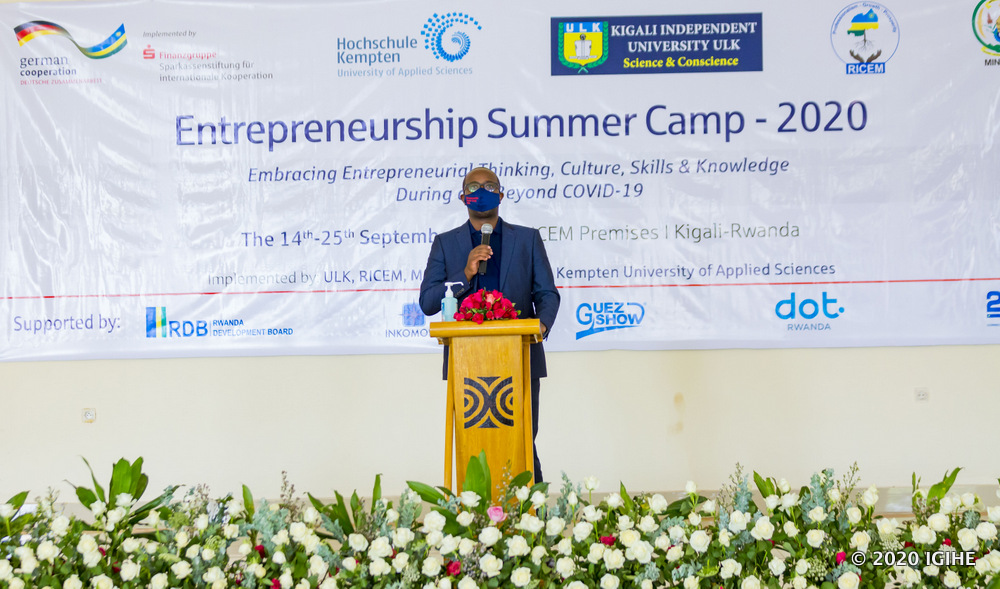
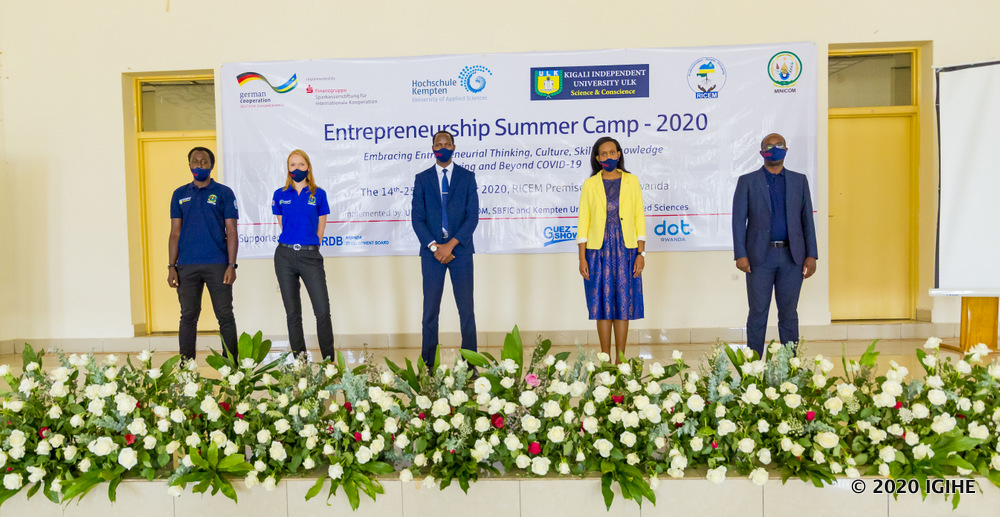
It is a training course called “National Entrepreneurship Summer Camp-2020”, which aims to “help young people develop entrepreneurship and build their skills, hence continuing their work in these critical times of Coronavirus and beyond”.
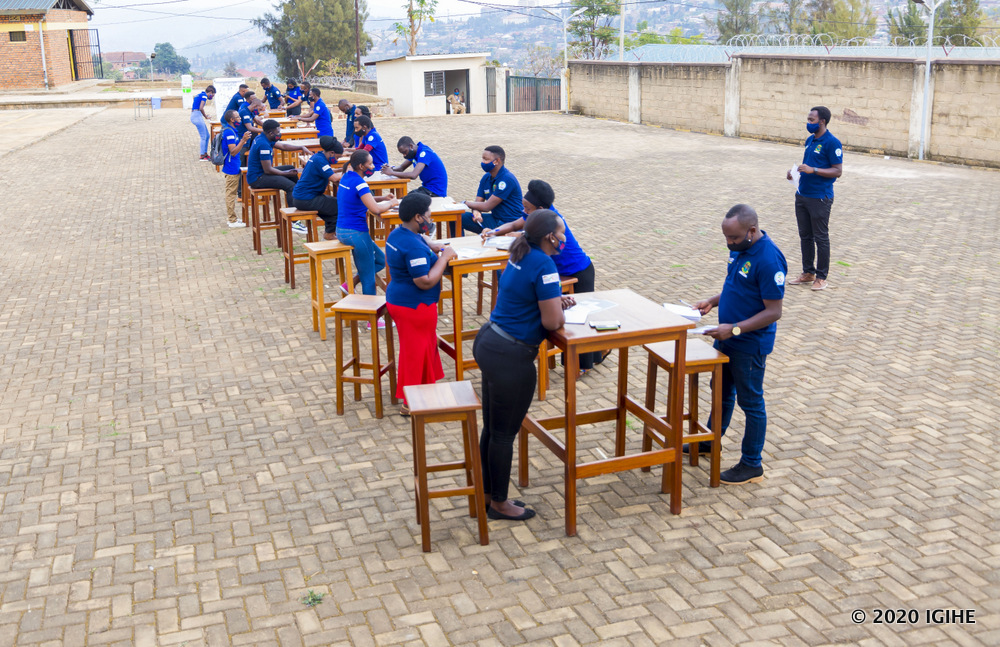
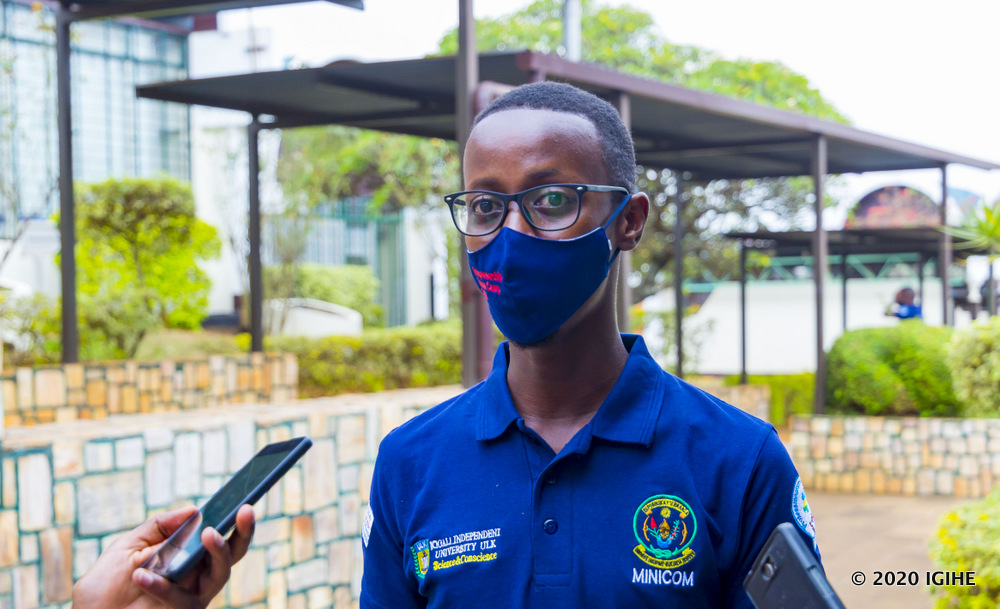
The training will be attended by about 20 young people between the ages of 18 and 35. They are young people who have graduated from ULK University who already have profitable projects, but need technical and financial support.
There will also be young people in their final year of university at ULK, who have a good idea that may produce powerful business establishments, which will provide employment to other young people and benefit the country as a whole.
The training will focus on selected projects in the fields of agriculture, energy, and technology, and will have three objectives, namely: to promote a culture of self-reliance and innovation in the youth, especially in these times of Coronavirus; to enhance the level of knowledge and performance of the private sector, as well as to promote the cooperation of higher education and industry through collaboration and dialogue.
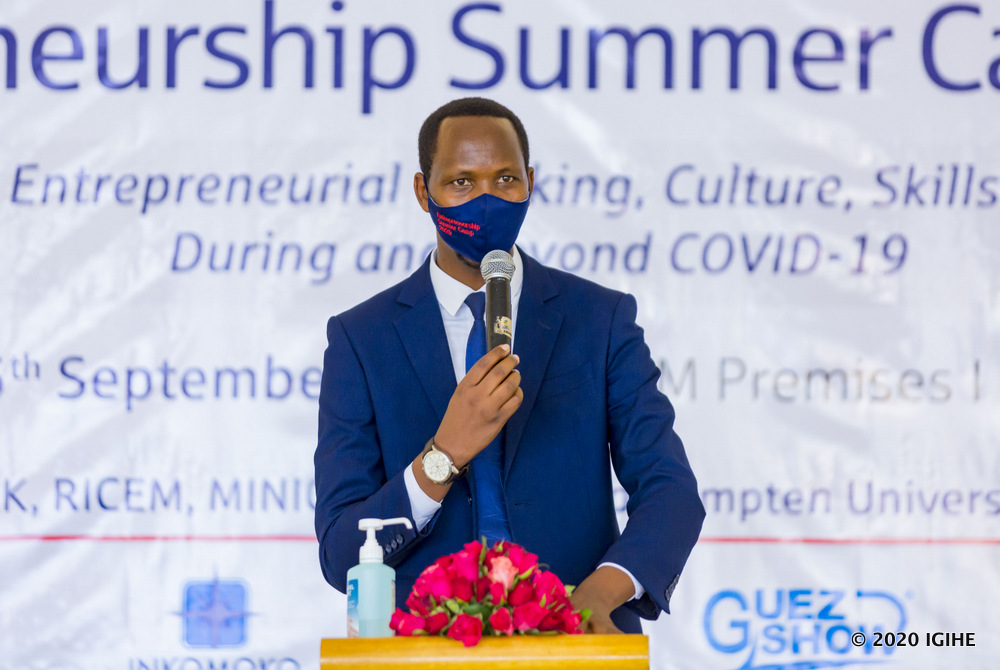
Inaugurating the training, the Director-General of Planning, Monitoring, and Evaluation, Jonas Munyurangabo, said the program would complement the government’s plan to encourage young people to be brave and create jobs, instead of waiting for jobs while they can create it.
“What we are doing is helping young people to have a mentality that leads to where everyone doing business is headed. This will help them to expand their mindset and take advantage of their opportunities, even if others find it difficult. It also builds capacity to help them make the most of the opportunities they have in general,” he said.
The training comes at a time when the global economy is facing the effects of the Coronavirus pandemic, which is particularly affecting small and medium enterprises (SMEs).
Munyurangabo said that to address these challenges, the Government of Rwanda has recently launched the Entrepreneurship Development Policy (EDP), where similar trainings are being advocated for as it does not discourage young people from entrepreneurship through to give them the knowledge they need.
“It’s one of the things that help in implementing that new policy, it will help people have a sense of entrepreneurship,” he said.
He added: “Finding a job is not a bad thing, but there has been a change in the way people go about it, and instead of looking for a job, it would be better [for the national economy]. So that comes from the ideas, as well as from the capabilities and resources that young people receive from the relevant authorities. So today is what we are going to do to help them, to know that they can be self-sufficient, and then to make progress, based on the knowledge they will be given,” he said.
Munyurangabo said that, in particular, the fact these activities are taking place in these difficult times of Coronavirus, there is a lot that will help these young people.
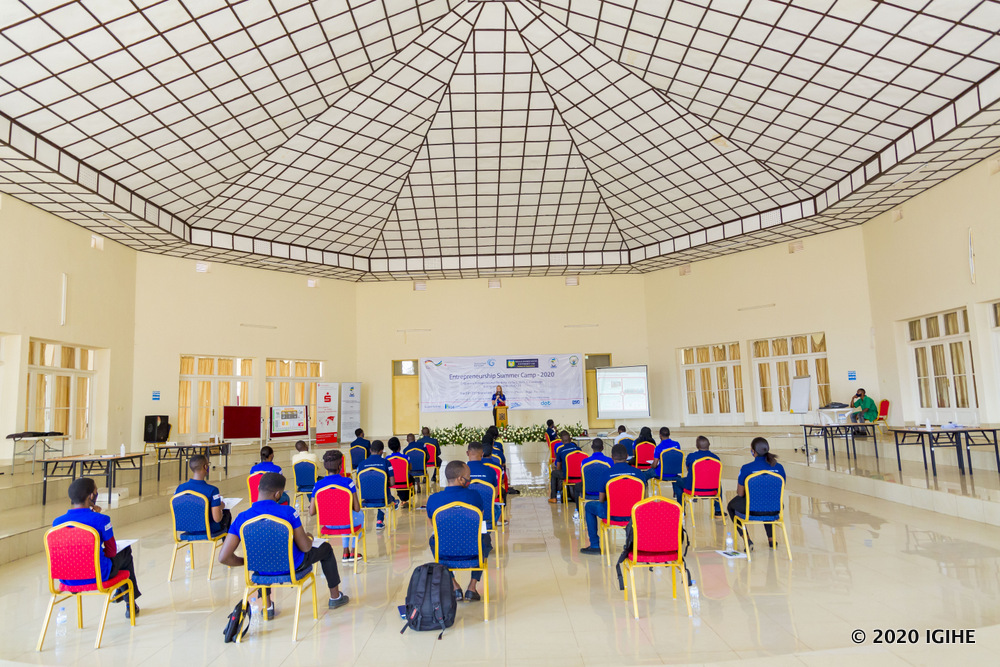
The training will be conducted in a traditional way where the presenter is physically in front of the participants, but there will also be the use of technology while the expert teachers from Kempten University of Applied Science will be contributing to these courses.
One of the directors of Kempten University of Applied Science, Prof. Dr. Tobias Peylo, said the training will not only provide knowledge, as it can also help participants get to know each other and work together in the future.
He added that the training “will help young people to innovate in their work, thus increasing the productivity of what they do”.
“These ideas will help the world to cope with its problems. These are not just money-making ideas, they are ideas that will make the world a better place because it will bring about a change in the lives of its inhabitants through solving the problems that the world has today.”
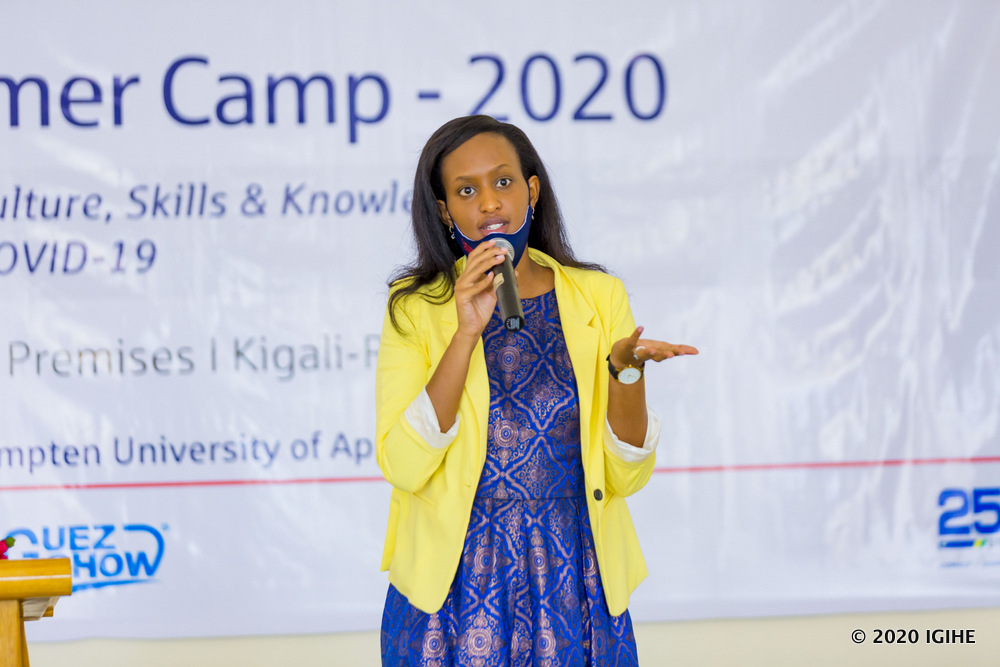
Becky Balinda, Vice-Chancellor of the University of Kigali, ULK, said they would use entrepreneurs who have achieved success and tell these students the process they went through and what they can do to make their ideas more profitable.
“Most importantly, we will bring in other entrepreneurs who have started like them, to tell them their journey from idea to where they are now.
“They will share with them how they got their money, their helpers and so on. The reason we will do this is that these advanced entrepreneurs have also started at the grassroots level, so they will share with them the path they have gone through to make progress,” she said.
She added that they will monitor the development of these entrepreneurs’ projects, two of which will be funded and monitored for six months thereafter.
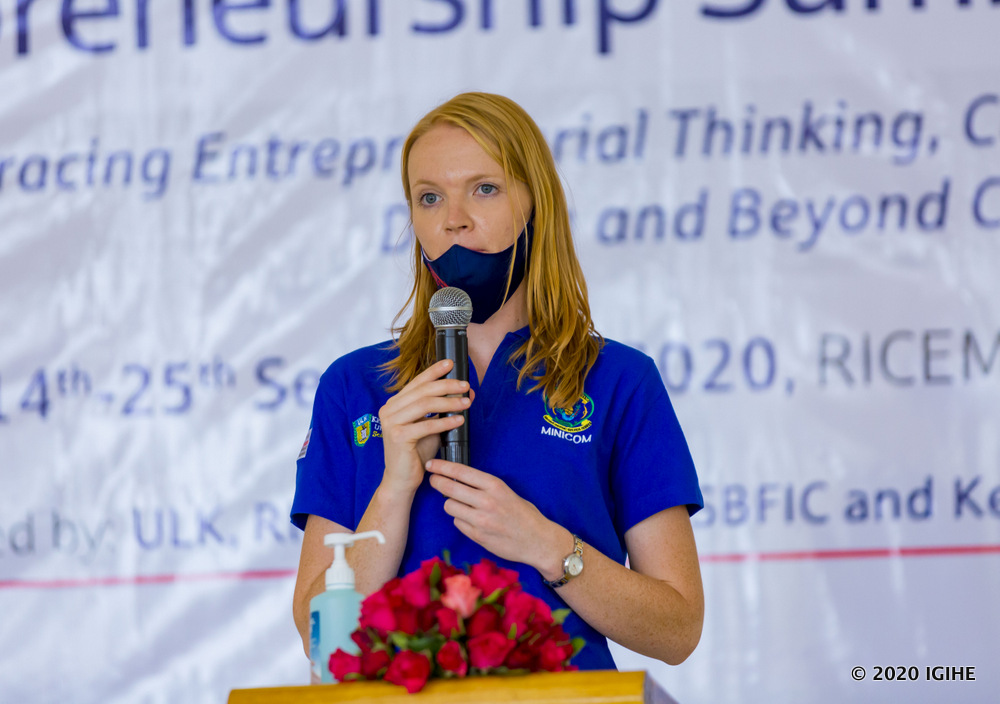
Maria Knappstein, the Country Director of SBFIC said entrepreneurs who saw the opportunity should not waste it, as it was the beginning of their entrepreneurial journey.
“We expect these entrepreneurs to be willing to learn and learn more. We want them to have an entrepreneurial mindset and are willing to implement it. ”
Some of the lessons to be learned from this course include preparing and analyzing ideas for projects that can generate profits, making scholarships for developed institutions, creating ideas that can generate profits, and so on.
The Managing Director of Rwanda Institute for Cooperatives, Entrepreneurship, and Microfinance (RICEM), Dr. Olivier Mukulira as he welcomed the trainees, encouraged them to explore the training to the maximum.
The National Entrepreneurship Summer Camp 2020 is being held for the first time but will continue in the coming years, to help young people with development projects make it productive.
The Coronavirus pandemic has changed the schedule of the workshop, as it was scheduled to take place in July, attended by 20 students from ULK, and 10 others from the Kempten University of Applied Science in Germany. However, as the Coronavirus pandemic subsides, there are plans to continue on that schedule but with just 20 students from the ULK.