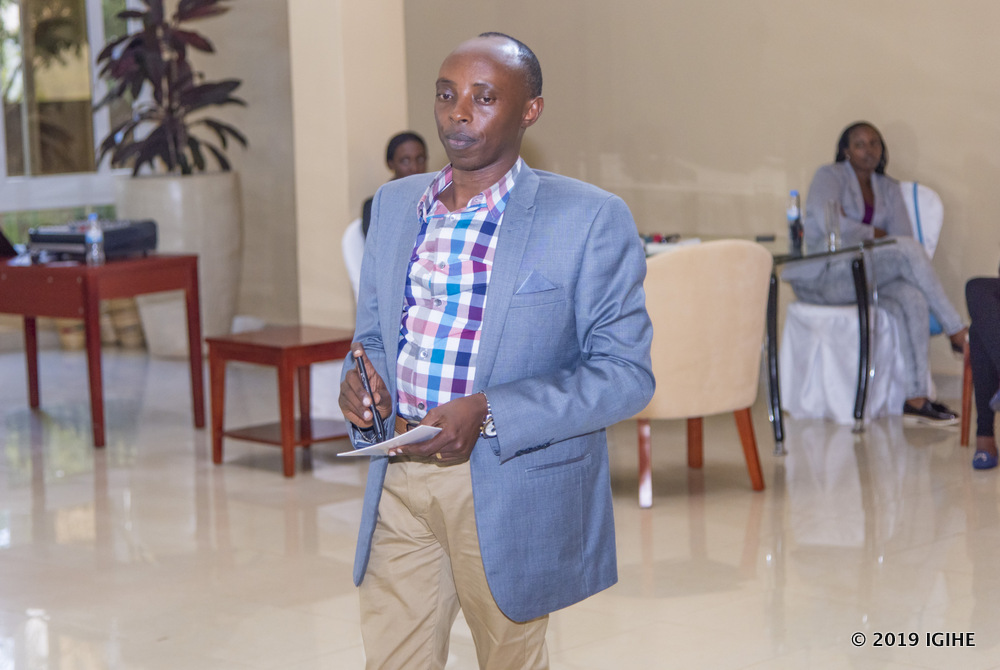
Gasana Emmanuel, South Province Governor confirmed the information in an interview with Radio Huye on Tuesday, March 25th, 2020. He called upon citizens to cooperate in order to be successful in eradicating coronavirus pandemic.
Gasana said that since preventive measures were implemented, some individuals took them lightly and that some received penalties while others were incarcerated. “We have taken drastic measures to reiterate how severe the virus is. 315 people received penalties while 18 are in jail.”
Speaking to IGIHE, Gasana said some of them were arrested for insubordination towards law enforcement orders and local government authorities. Others were caught strolling around in bars despite clear orders not to leave their homes while the rest opened shops with no respect to established health guidelines.
He advised citizens to stay in their homes, practice social distancing and regularly wash hands to prevent coronavirus and to respect health guidelines as it is in our best interest.
Local authorities are advised to work hand in hand with security authorities to reinforce established preventive measures.
Two days ago, new preventive measures were put in place including closing all unnecessary businesses and imposing a 2-week renewable mandatory quarantine.
On Tuesday, March 25th, 2020, Rwanda National Police (RNP) reminded Rwandans that all who will fail to respect established health guidelines will receive severe penalties.
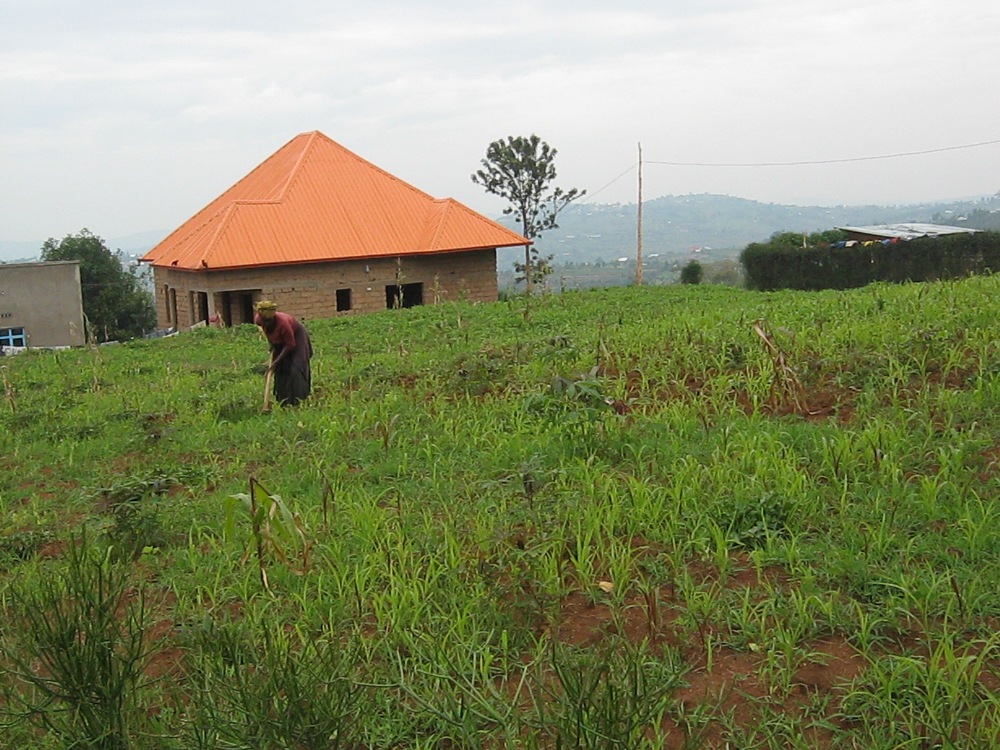
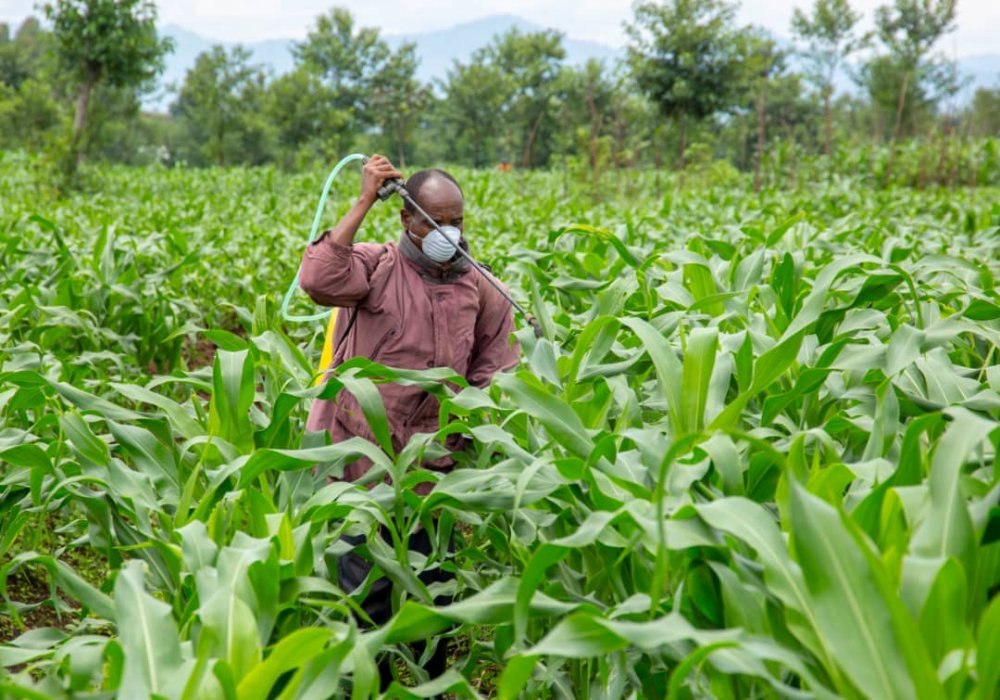
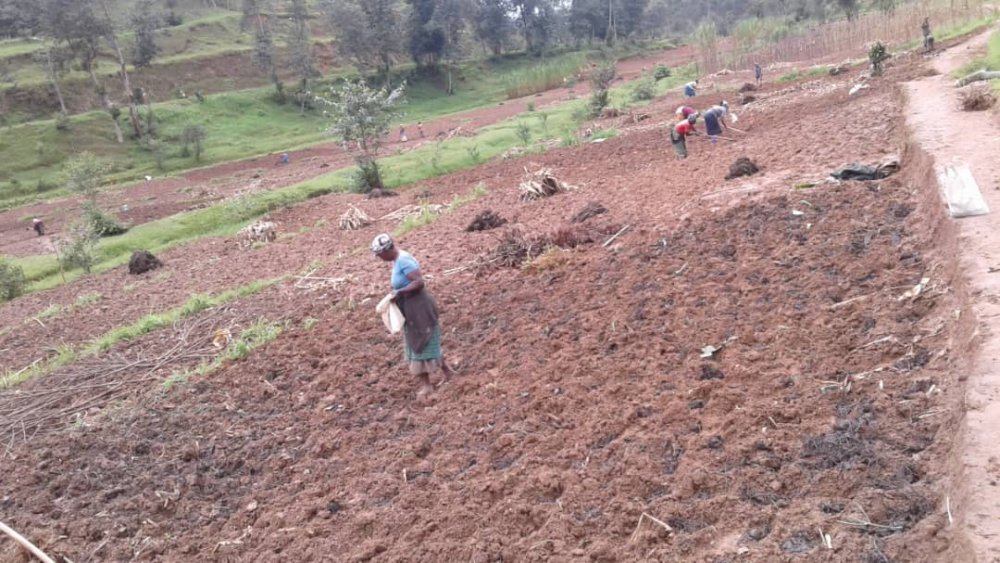
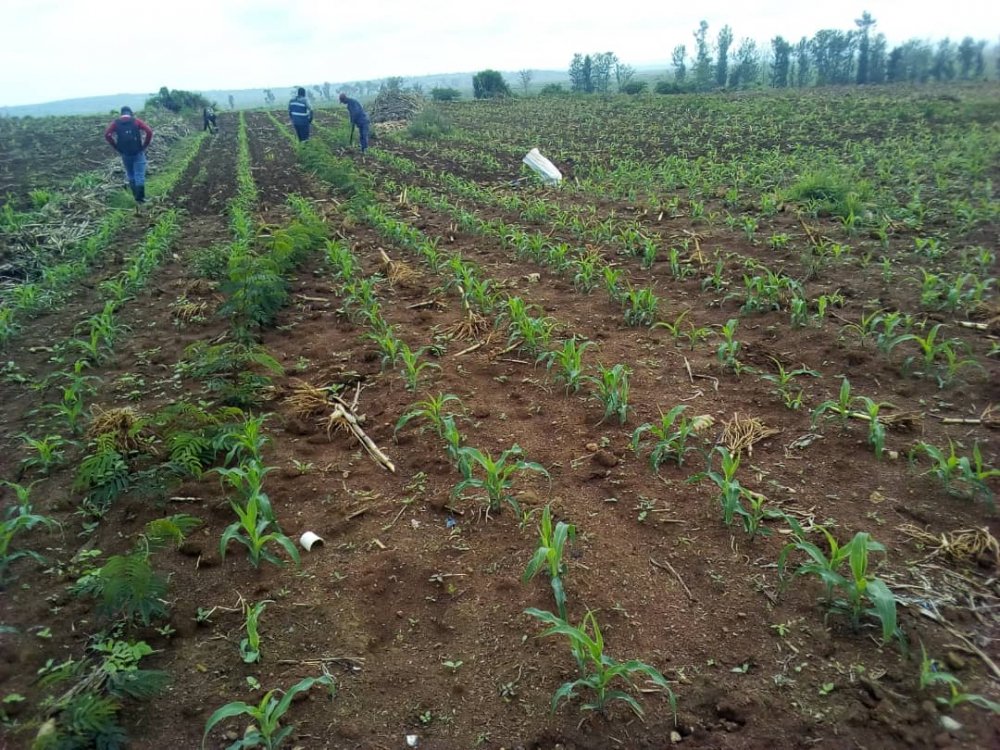
In an announcement published on March 23rd, 2020 via Twitter, MINAGRI explained that farming activities must continue to avoid a shortage of food and animal products during the coronavirus outbreak.
Veterinary services, shops selling animal feed, fertilizers and food industries will continue to operate.
Owners of veterinary pharmacies who order medications from Kigali are advised to request for a permit in their respective sectors.
Industries that manufacture animal feed were advised to use limited personnel to curb further spread of coronavirus but keep the supply to farmers flowing.
To guarantee feed safety whilst minimizing risks for infection for customers, suppliers, and employees, feed manufacturers, and ingredient suppliers will request a transportation permit for each delivery.
Fertilizer suppliers are requested to wear protective masks and gloves while serving customers and keep a meter distance between each other.
Trucks carrying fertilizers and liquid nitrogen for animal sperm preservation are instructed not to carry more than two people.
Although farmers will keep working, they were advised to implement hygiene measures and abide by health authorities’ guidance to prevent the spread of coronavirus.
Large industries, institutions, and cooperatives which produce tea, sugar, milk, rice, coffee, and flour are advised to limit the number of workers.
Patient zero was identified in Rwanda on March 14th, 2020. He is an Indian citizen who arrived in Rwanda from Mumbai, India.
Four days after the first patient was identified, his wife also tested positive for the virus, was quarantined and started receiving medical care.
Currently, the number of COVID-19 patients in Rwanda has reached 36. Most of them are predominantly people with recent travel history.
Dr. Daniel Ngamije, Minister of Health said the patients are in stable conditions and the first to be admitted at Kanyinya Health Center will soon be discharged.
“We are confident that by the end of this week, the Indian citizen who was the first to test positive for COVID-19 in Rwanda and his wife will return home.”
Ngamije said that all the 17 patients who tested positive for coronavirus on March 23rd, 2020, entered quarantine between March 17th-20th, 2020 and were isolated from other patients.
The ministry of health advised for heightened vigilance and cooperation from Rwandans and abiding by certain regulations to stop the spread of coronavirus. All non-essential businesses are closed, travel between cities and districts is prohibited as well as non-essential movements from home.
In addition, Rwandans are recommended to practice social distancing and quarantine for 14 days renewable.

The World Health Organization(WHO) declared the coronavirus a pandemic on March 11th, 2020 following the increasingly big number of patients since it was identified in Wuhan, China.
Up to 378,000 patients have tested positive for coronavirus, 16,000 died from it while 101,600 recovered from the virus.
The ministry of health advises Rwandans to keep observing preventive measures to counter further spread of the virus and to call the toll-free number 114, send an email on callcenter@rbc.gov.rw, or a WhatsApp message on +25088202080 to report any symptoms.
COVID-19 spreads through direct contact with the infected person, sneezing and coughing. To prevent the spread of the virus, regular hand washing with alcohol-based hand sanitizers or clean water and soap is advised, covering mouth and nose when coughing or sneezing and avoiding large gatherings. In addition, it is important to avoid close contact with anyone showing symptoms of respiratory illness such as coughing and sneezing.
Statistics show that globally, 380,000 people contracted coronavirus while 16,000 died from it.
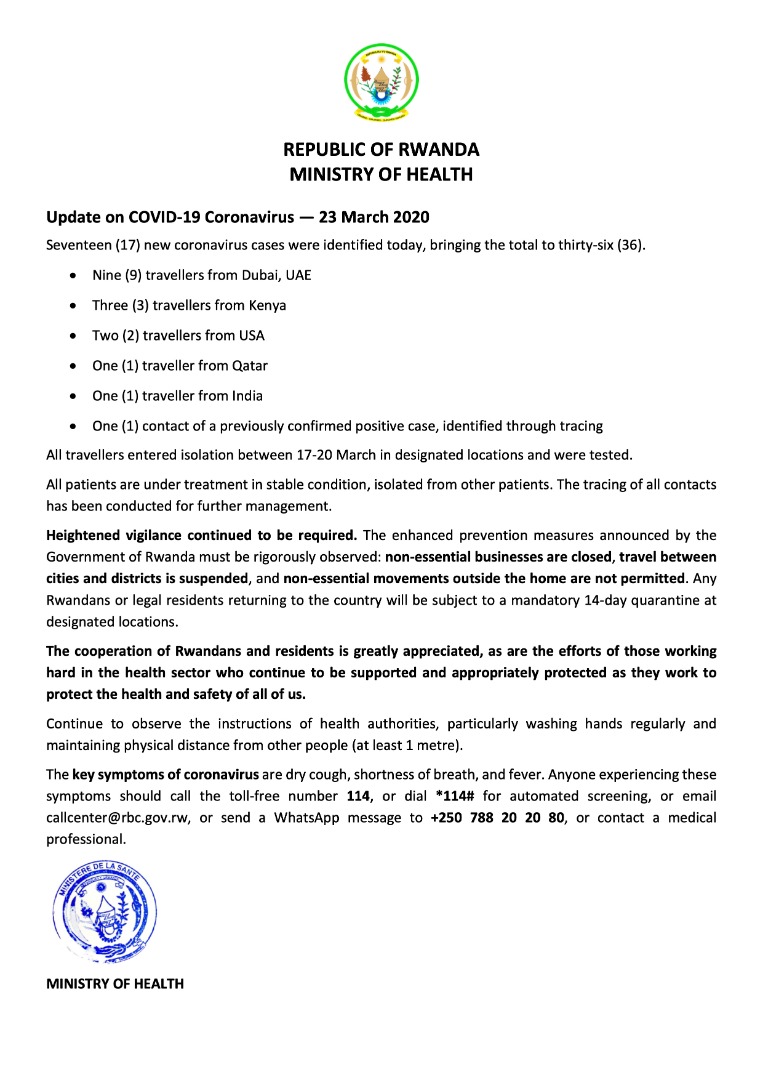
The announcement published by MINISANTE on March 23rd, 2020 states the 17 newly infected patients add on 19 prior patients identified since March 14th when patient zero was identified.
MINISANTE stated that the 17 newly infected patients are:
-# 9 travelers from Dubai, United Arab Emirates
-# 3 travelers from Kenya
-# 2 travelers from the U.S
-# 1 traveler from Qatar
-# 1 traveler from India
-# 1 contact of a previously confirmed case of coronavirus
The ministry of health announced that all the 17 patients entered isolation between March 17th-20th, 2020 and were isolated.
Dr. Daniel Ngamije, Ministry of Health recently announced that 17 patients who were identified last week had contact with 680 individuals in Rwanda. All of them have been tracked and tests were conducted to counter further spread.
With the increase in the number of coronavirus patients, more preventive measures have been adopted including a complete air travel ban and mandatory quarantine for all Rwandans except those who provide essential services.
The ministry of health advised for heightened vigilance and cooperation from Rwandans and abiding by certain regulations to stop the spread of coronavirus. All non-essential businesses are closed, travel between cities and districts is prohibited as well as non-essential movements from home.
In addition, Rwandans are recommended to practice social distancing and quarantine for 14 days renewable.
The World Health Organization(WHO) declared the coronavirus a pandemic on March 11th, 2020 following the increasingly big number of patients since it was identified in Wuhan, China.
Up to 378,000 patients have tested positive for coronavirus, 16,000 died from it while 101,600 recovered from the virus.
The ministry of health advises Rwandans to keep observing preventive measures to counter further spread of the virus and to call the toll-free number 114, send an email on callcenter@rbc.gov.rw, or a WhatsApp message on +25088202080 to report any symptoms.
COVID-19 spreads through direct contact with the infected person, sneezing and coughing. To prevent the spread of the virus, regular hand washing with alcohol-based hand sanitizers or clean water and soap is advised, covering mouth and nose when coughing or sneezing and avoiding large gatherings. In addition, it is important to avoid close contact with anyone showing symptoms of respiratory illness such as coughing and sneezing.
New preventive measures include closing borders and mandatory quarantine for Rwandans who do not provide essential services.
Given that most people in Kigali earn daily income, mandatory quarantine posed a significant challenge for family heads to feed their families.
However, mandatory quarantine was imposed for the greater good and it is primordial that Rwandans adhere to it by staying at home.
For taxi-moto drivers, small scale retailers, carpenters or street sweepers, mandatory quarantine has been challenging since they were deprived of their only source of income.
To prevent further spread of coronavirus, Rwandans must learn at all costs to practice social distancing and work with the available means to cover needs for the entire quarantine period. Since no one knows when life will get back to normal, Rwandans are advised to avoid spending money on unnecessary purchases such as alcohol or other drugs but rather spend on essential needs such as food, hygiene products, electricity, and water.
In an interview with RTV on the challenges posed by coronavirus preventive measures, Prof Shyaka Anastase observed that the government of Rwanda is currently brainstorming ways to support citizens in need especially those who were affected by mandatory quarantine measures.
Time and again, the government of Rwanda has financially assisted Rwandans by building affordable housing for the poor and providing food to families of farmers whose yield was affected by climate change among others.
While the coronavirus outbreak was unpredicted and was not included on Rwanda National Budget for this fiscal year, it is important to remember that Rwandans have always found their way around challenging financial situations.
A remarkable example is the Agaciro Development Fund, Rwanda’s sovereign wealth fund that was initiated by Rwandans to build up public savings, achieve self-reliance, maintain stability in times of national economic shocks and accelerate Rwanda’s socio-economic development goals.
Fighting coronavirus demands a joint effort between citizens and the government of Rwanda. Rwandans should respect established preventive measures such as regularly washing hands, staying at home and practicing social distancing. There is no doubt whatsoever that if Rwandans abide by those measures, coronavirus will be eradicated and life will go back to normal.
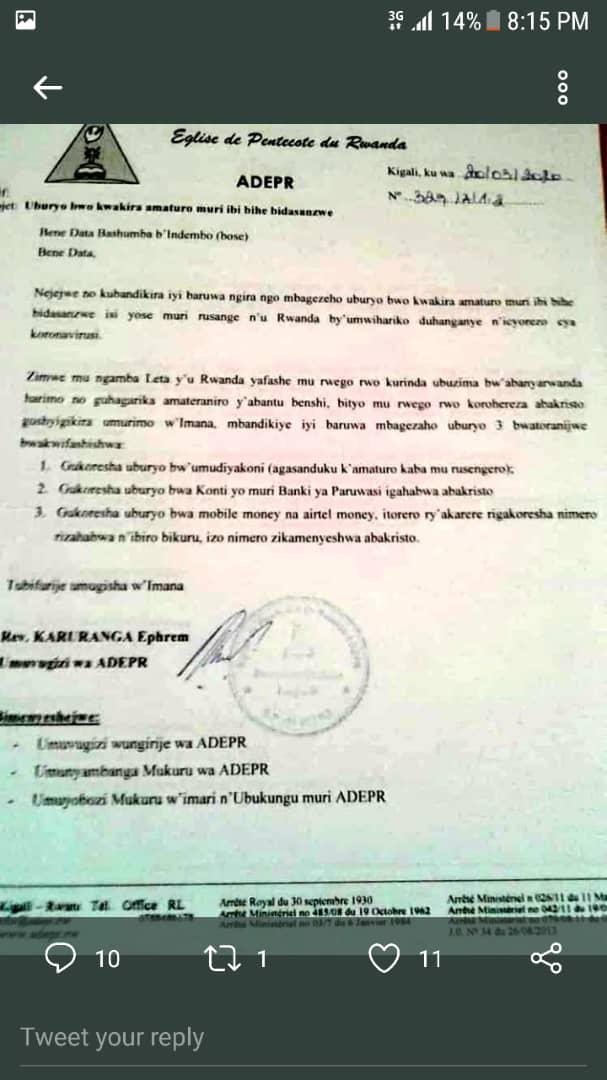
In an ADEPR statement of 20 March 2020, signed by its spokesperson, Rev Karuranga Ephrem, the church outlines new methods to use in the collection of offerings in these difficult times that include; taking offerings to church; bank account and Mobile Money and Airtel Money.
Among those who blamed the move is Bamporoki Edouard, State Minister in the Ministry of youth and culture and a member of the church. He suggested instead of the church demanding offerings from believers in these difficult times, it should instead be giving out something to its poor followers from what Christians have offered over the years.
The Minister of State in the Ministry of foreign affairs and regional cooperation, Olivier Nduhungireye, blamed churches that want to gain from these difficult times.
Another Rwandan, Ndayishimiye Jean Claude supported the Minister. He cited what has been said calling churches business places and not different from businesses hiking prices in these hard times.
The ministry of health announced that 19 patients have so far tested positive for coronavirus and strict preventive measures have been established to counter further spread.
In a bid to successfully fight the virus, medical doctors have been trained about the symptoms of coronavirus, prevention, and treatment.
Rwandans who completed Nursing programs but don’t work in the health sector have pledged support to medical doctors amidst coronavirus outbreak.
Kirenga Juvens, one of the nurse practitioners told IGIHE “during this crisis, it is our responsibility as Rwandans to contribute to curbing the spread of the virus. My contribution as a certified nurse practitioner will undoubtedly come in handy. We have seen over the past years Rwandans who have made a contribution to various initiatives in Rwanda such as unity and reconciliation, Gacaca without prior knowledge to it. We believe our support is needed given that we have completed studies in the health sector,”
Currently, 67 nurse practitioners and midwives have pledged their support and have received certification from Rwanda Nurses and Midwives Union (RNMU)
Kirenga said that they have already requested for permits to various health institutions in Rwanda to start working as soon as possible.
“We are waiting for work permits from concerned authorities so we can start supporting medical doctors in the fight against coronavirus.”
On Saturday, March 21st, 2020, Dr. Utumatwishima Abdallah, Rwamagana Hospital Director General wrote via Twitter that a bigger task force was needed for Rwanda to successfully combat coronavirus.
“There are a lot of nurse practitioners and other Rwandans who completed studies in the health sector but took a different career path. We need their support during this critical time because COVID-19 patients need appropriate care but other patients too cannot be left unattended to.”
Rwanda is one of the countries with a relatively low number of health care specialists compared to the needed number.
In January 2020, André Gitembagaza, RNMU President told Rwanda Broadcasting Agency (RBA) that one midwife in Rwanda cares for 4700 patients.
Patient zero was identified in Rwanda on March 14th, 2020 and since then the number has hiked to 11. Patients are currently receiving medical care at Kanyinya health center in Nyarugenge district and are quickly recovering.
The ministry of health advises Rwandans to keep observing preventive measures to counter further spread of the virus and to call the toll-free number 114 to report any symptoms.
COVID-19 spreads through direct contact with the infected person, sneezing and coughing. To prevent the spread of the virus, regular hand washing with alcohol-based hand sanitizers or clean water and soap is advised, covering mouth and nose when coughing or sneezing and avoiding large gatherings. In addition, it is important to avoid close contact with anyone showing symptoms of respiratory illness such as coughing and sneezing.
Other measures taken by the ministry of health to counter coronavirus are closing all public and private schools as well as higher education institutions, banning public gatherings and advising citizens to work from home.
During Sunday service broadcast on Rwanda Broadcasting Agency (RBA) channels on March 22nd, 2020, Kambanda reminded Christians to show empathy and love towards poor and sick people during coronavirus outbreak and to abide by the government’s preventive measures to counter further spread of the virus.
The government of Rwanda has adopted new preventive measures against coronavirus by imposing a complete air travel ban and imposing a quarantine policy to all Rwandan citizens.
Following mandatory quarantine, Rwandans have voiced out concerns about people who survive on daily income. Mgr. Kambanda urged Christians to have a generous heart and give out to those who are confined in their homes and cannot provide for their families.
On March 14th, 2020, patient zero was identified in Rwanda and the number has since grown to 19. The Ministry of Health has prohibited all public gatherings including church gatherings and other social events to intercept and stop the spread of coronavirus.
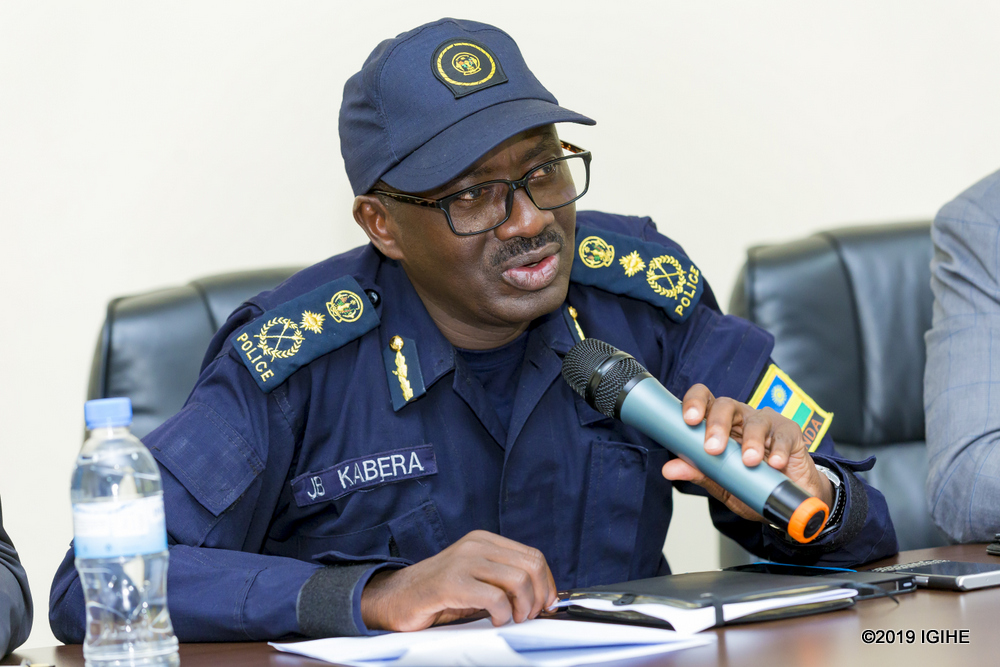
RNP spokesperson, Commissioner of Police (CP) John Bosco Kabera has said that the force is working with all relevant institutions to ensure that these measures are implemented and respected.
Under the directives issued by the Prime Minister, Rt. Hon. Dr. Edouard Ngirente, all unnecessary journeys and movements out of homes, and travel between different cities and districts of the country, is not permitted.
All borders and bars are closed. Shops and markets are also closed, except those selling food, medicine (pharmacies), hygiene and cleaning products, fuel and other essential items.
Motorcycles are not permitted to carry passengers. The orders will last for two weeks, but could be extended depending on the situation.
“We urge the public to comply with these instructions, which were adapted to protect and save lives from this pandemic. Remember, protecting yourself and others is your responsibility,” CP Kabera said.
He added: “Police officers across the country are working with other security organs, local authorities and other relevant institutions to ensure that no one violates all the issued directives, including traders who inflate prices, worship and prayer activities including in homes and caves.”
CP Kabera called for continued cooperation and information sharing on people, who violate these safety orders.
“Violating these directives designed to prevent the spread of Coronavirus is punishable by law,” he warned.
CP Kabera further disclosed that in accordance with these government instructions, all RNP services related to driver’s license and motor-vehicle inspection were also suspended for two weeks.
For more information related to the suspended traffic services, the public is urged to call the following contacts:
Commissioner for Traffic and Road Safety: 0788311110
Commanding Officer MIC: 0788311512
The virus is transmitted through droplets, or little bits of liquid, mostly through sneezing or coughing, Dr. Maria Van Kerkhove, head of WHO’s emerging diseases and zoonosis unit, told reporters during a virtual news conference on Monday.
“When you do an aerosol-generating procedure like in a medical care facility, you have the possibility to what we call aerosolize these particles, which means they can stay in the air a little bit longer.”
She added: “It’s very important that health-care workers take additional precautions when they’re working on patients and doing those procedures.”
World health officials say the respiratory disease spreads through human-to-human contact, droplets carried through sneezing and coughing as well as germs left on inanimate objects. The coronavirus can go airborne, staying suspended in the air depending on factors such as heat and humidity, they said.
Kerkhove said health officials are aware of several studies in a number of countries looking at the different environmental conditions that COVID-19 can persist. Scientists are specifically looking at how humidity, temperature and ultraviolet lighting affects the disease as well as how long it lives on different surfaces, including steel, she said.
Health officials use the information to make sure WHO’s guidance is appropriate, and “so far … we are confident that the guidance that we have is appropriate,” she added.
Health officials recommend medical staff wear so-called N95 masks because they filter out about 95% of all liquid or airborne particles.
“In health-care facilities, we make sure health-care workers use standard droplet precautions with the exception … that they’re doing an aerosol-generating procedure,” she said.