In March that the government suspended several activities to prevent the spread of Coronavirus in the country, but at a cabinet meeting on April 30, it was decided that some activities would be opened.
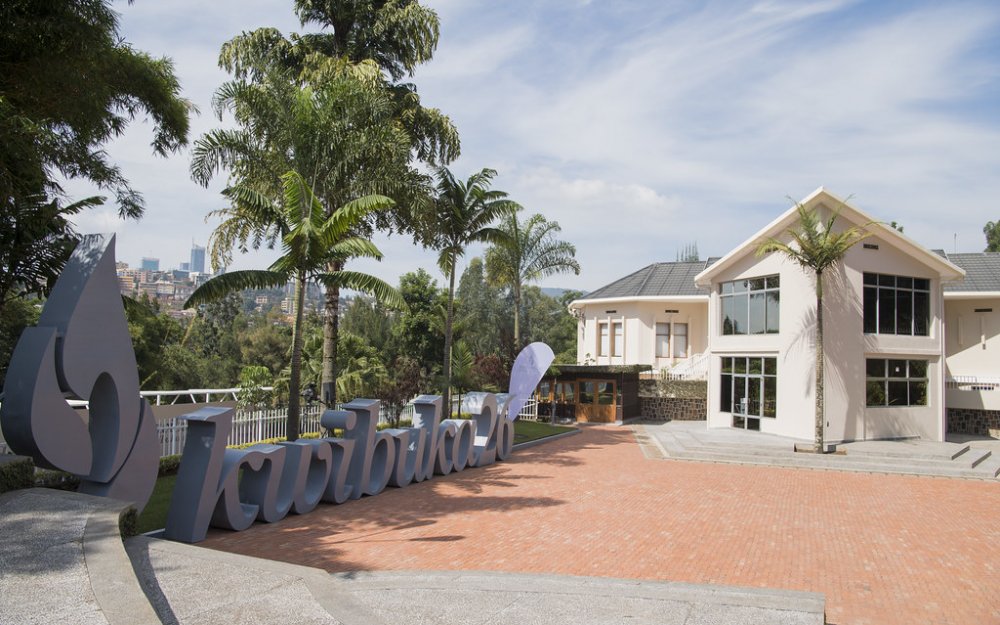
In a statement issued on Tuesday, the administration of the Kigali Genocide Memorial said that the memorial was “reopened to visitors every day, between 9 and 4 p.m.”
As Rwanda commemorates the 26th Genocide against the Tutsi, people can now pay their respects to the victims of the Genocide against the Tutsi at the memorial.
The Kigali Genocide Memorial is one of Rwanda’s largest memorials where remains of over 250,000 innocent people killed in the April 1994 Genocide against the Tutsi are laid to rest.
The village of Taba is inhabited by survivors of the 1994 Genocide against the Tutsi, ex-military men and returnees expelled from Tanzania.
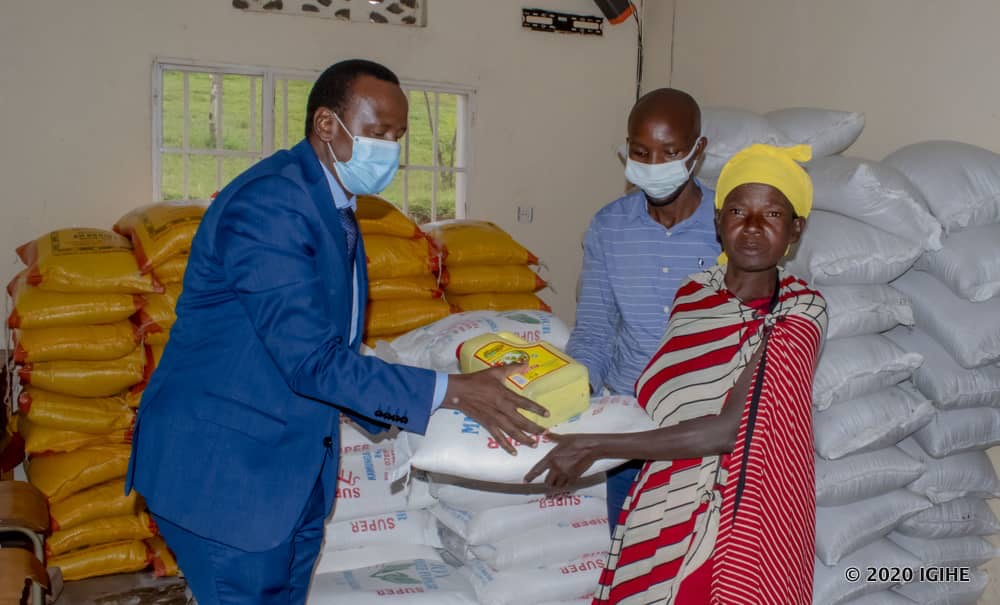
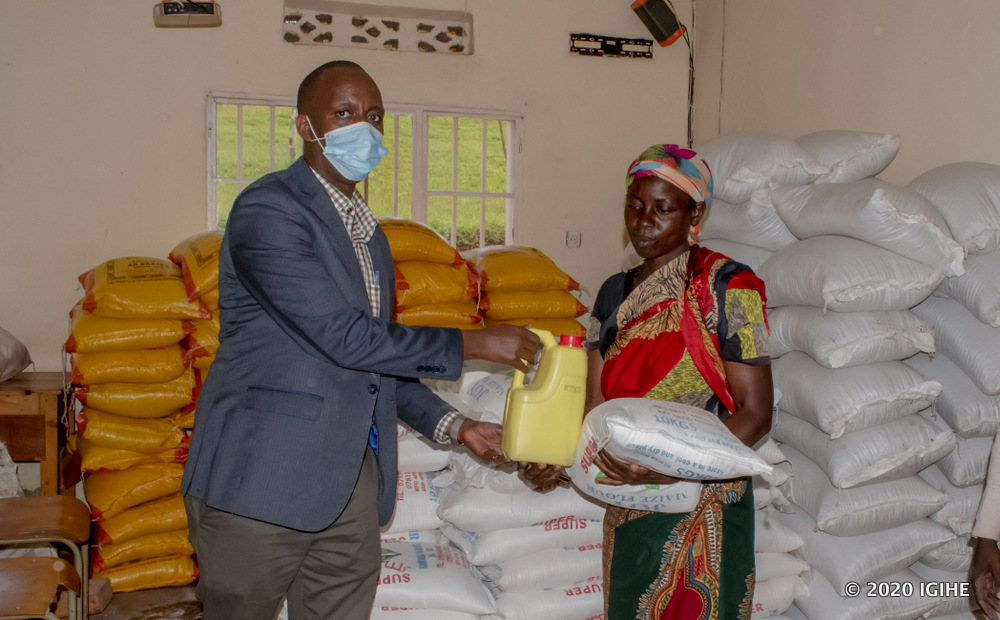
Erick Mugesera, the Kigali Serena Hotel Human resources Manager said they selected the village because there are a number of vulnerable families that needed support.
The food items given out include beans, rice, maize flour, and cooking oil. Each family was given 10 kg of rice, three liters of cooking oil, 10 kg of beans, and 10 kg of maize flour.
The Kanyinya Sector Executive Secretary Rutubuka Emmanuel said the suport has come in handy. “They were already in trouble, as genocide survivors, as those who had been expelled from Tanzania who had nothing else to do to improve their lives. Even the ex-military needed support. The coronavirus has affected their economic and social well-being. So this support is valuable,”
Rutubuka said the food is normally delivered to the underprivileged to prevent the spread of Coronavirus.
The Managing Director, Kigali Serena Hotel, Daniel Sambai, said the epidemic had affected all the world’s population but it’s important to work together with all people to overcome it which informed their support.
Sambai also encouraged Rwandans to adhere to the Coronavirus prevention guidelines by following the instructions of the Ministry of Health, which includes frequent washing of the hands and wearing a mask.
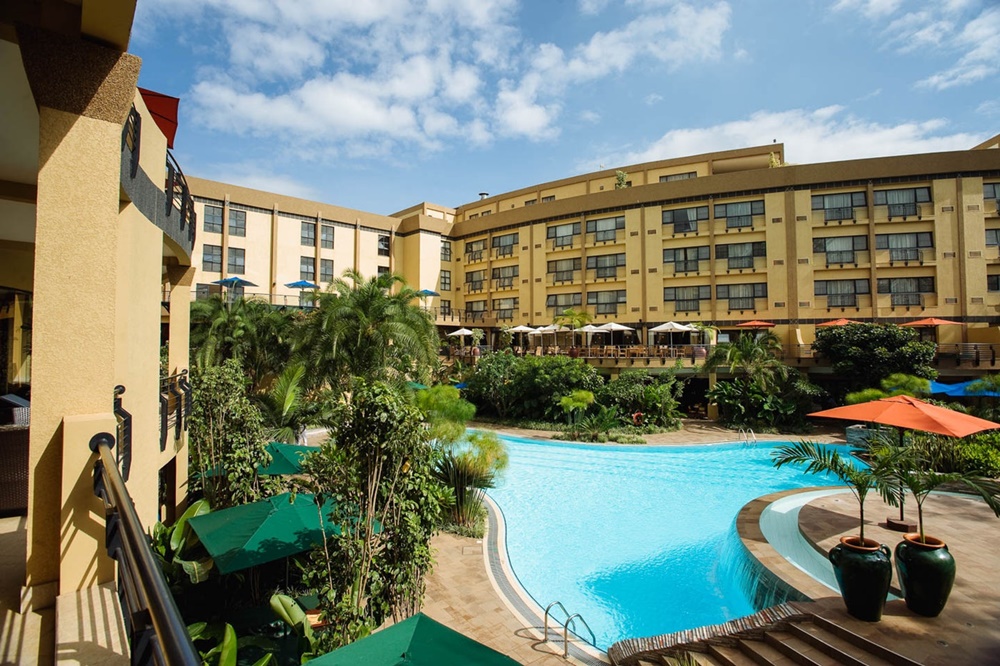
Kigali Serena Hotel is a five-star hotel that started operating in Rwanda on February 1, 2007. It is a branch of Serena Hotels operating in other countries including the East African Community.
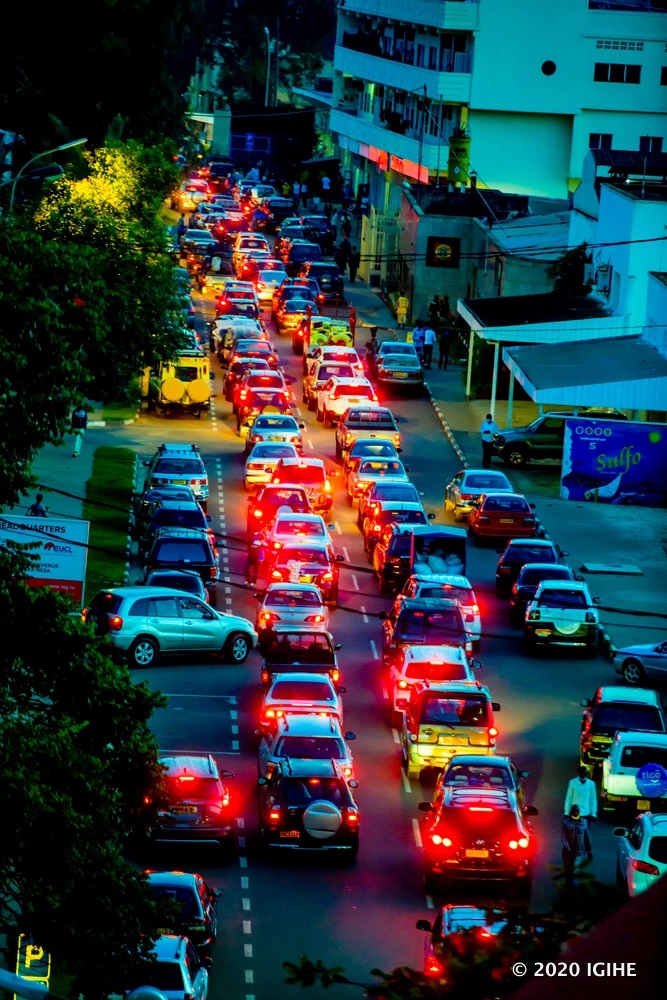
On Monday, May 4, 2020, the influx of people resumed in Kigali City and elsewhere, as people returned to work after 43 days in their homes, following lockdown as one of the coronavirus prevention guidelines.
The Mayor of the City of Kigali, Pudence Rubingisa, said that in the markets they followed the rules of traders operating at 50% capacity.
He said traders in market places opened their workplaces for general cleaning while hotels and hotels largely remained closed for fear of making losses and rendering their consumables to waste.
The Cabinet meeting of April 30, 2020, ruled that travel was prohibited from 2:00 pm to 5:00 am unless the person was authorized for serious reasons.
Rubingisa said those who broke the rules for the first time were brought together for pacification, but repeat offenders will face punitive actions as they put their lives and of other to infection risks.
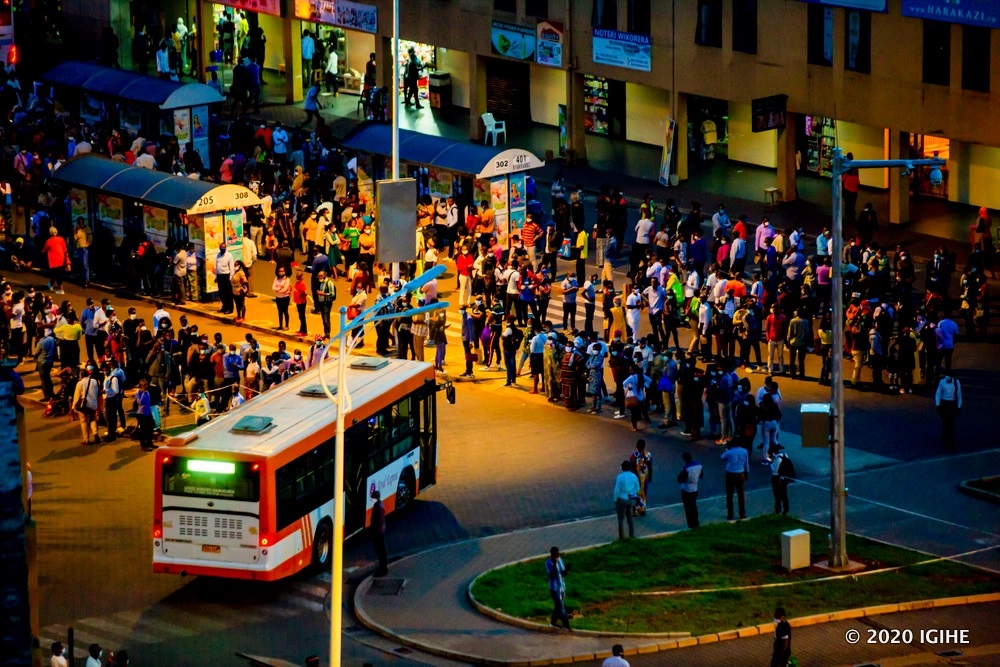
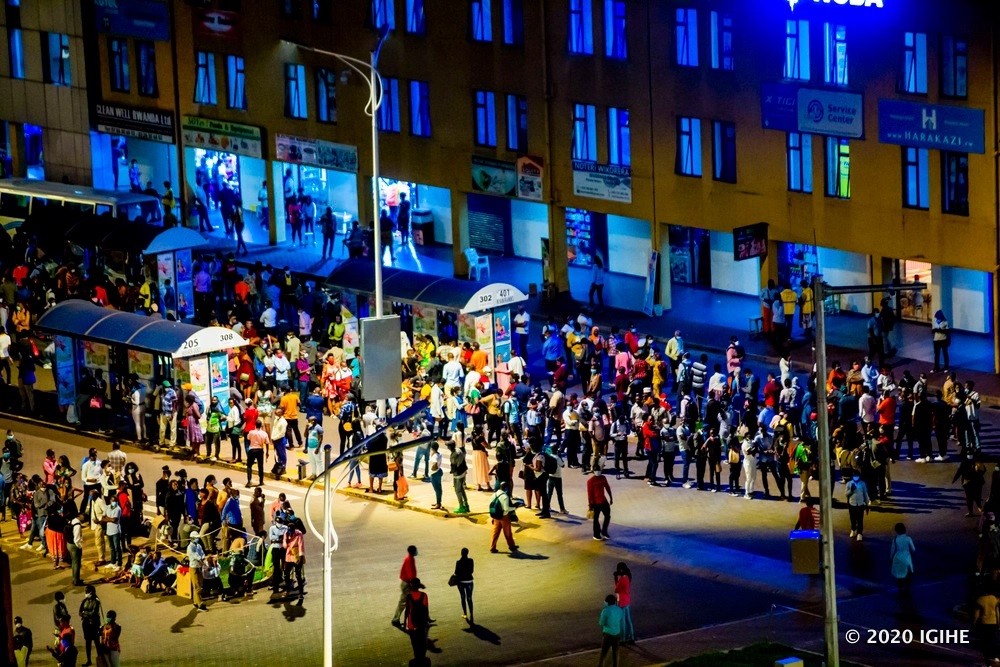
It was however observed that some people failed to make it back to their homes after the agreed time for reasons beyond their control, including waiting for the buses for a long time.
Rubingisa said that the problem of buses’ scarcity during and after work has been identified, but they are working with drivers in Kigali to find solutions that will include increasing the number of public passenger vehicles.
Rubingisa also said that yesterday buses started late in ferrying passengers, an anomaly that has been since rectified.
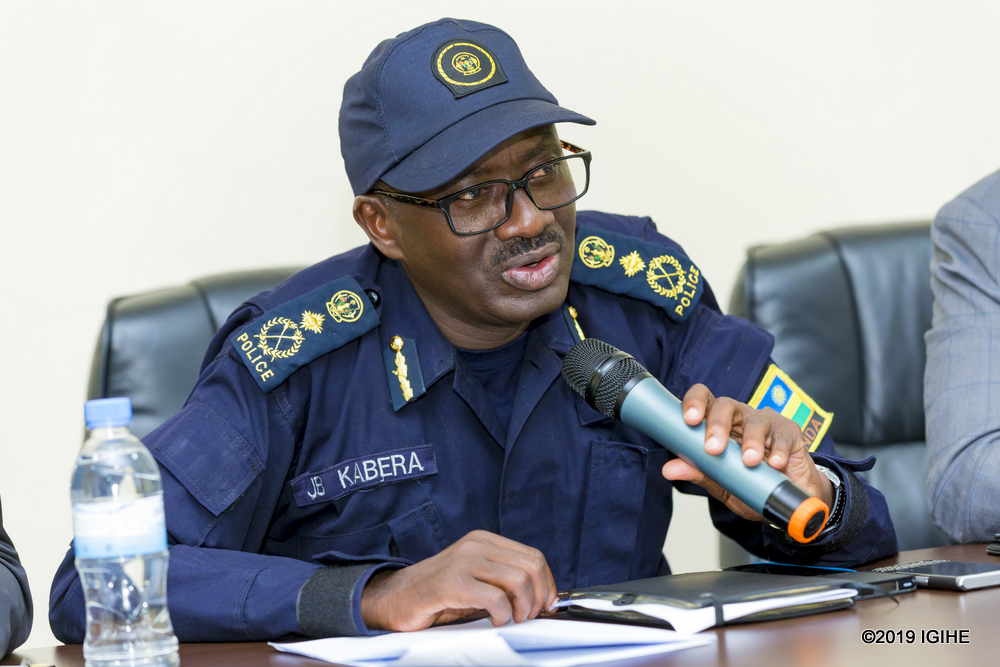
Commissioner of Police (CP) John Bosco Kabera said that the new measures have boundaries for every authorized services and movements, which must be respected to prevent getting infected or infecting others.
“Acceptable movements whether by public, private transport or pedestrians will resume but only within provinces and in City of Kigali. Movements beyond provinces and City of Kigali are prohibited and Police officers were deployed to ensure that this is respected,” CP Kabera said.
He emphasized wearing face-mask in public at all times, practicing social distancing in markets, shops, restaurants, hotels, buses, and while walking outside your home.
“Following separate meetings we had with other relevant institutions, Police have deployed the force to monitor and inspect these places to ensure compliance.
Specific areas of concern include markets, business centres, bus stations, and operating hospitality facilities.”
“Passengers are required to wear face masks, wash hands before boarding, and should always ensure distancing even in the bus. All movements after 8 PM are prohibited unless one has an emergency; the curfew will last up to 5 AM.
We urge authorized services providers such as hotels and restaurants to operate within the set measures and safety guidelines and respect the specified hours of operating, 7 PM.”
Enforcement, he said, was preceded by awareness campaign to explain the new measures. “Awareness has always been the key success factor in policing.”
CP Kabera further reminded those falling under the prohibited services to adhere to the directives.
Among the prohibited services are bars, churches, schools, sports, and recreational facilities as well as motorcycles and bicycles, which are not permitted to carry passengers.
“Those who will not comply with these directives shall face the law. You will be arrested, your vehicle, impounded and your business closed.”
He commended the public for the continued support and cooperation during this period to collectively fight COVID-19 pandemic.
CP Kabera urged the general population to call the Police on 112 or 0788311155 (also on WhatsApp) for information on people who violate the directives putting others at high risk and hampering national efforts against the virus.
The competition which attracted 11 drone companies from across the world was aimed to help advance the safe implementation of electric cargo UAS transport, digital aviation solutions and related infrastructure in the Lake Kivu region.
Winners of the competition “For many of these organizations, the awards represent a unique opportunity to scale up their businesses and get exposure to international operators in their sector,” ADF said in a statement this Monday.
The online event is to be officiated by Rwanda’s Minister of ICT and Innovation, Paula Ingabire, leaders from within the World Bank and the United Kingdom’s Department for International Development (DFID), joined by other experts from across the drone ecosystem in Rwanda.
The LKC Flying Competitions were designed to address real use cases for drone operation in Africa and the winners of the challenge are positioned as drone companies (local and foreign) able to solve real challenges on the African continent like delivering emergency blood packs, collecting medical samples and scanning disaster areas for survivors.
To further push this agenda and generate critical data, the ADF has put out a survey for countries and companies that have been using drones to provide support in response to the Covid-19 pandemic.
Rwanda is among the few countries that have used or deployed drones, during the Covid-19 lockdown to raise awareness on the virus spread, prevention and communicating key safety information to the public, especially in rural areas.
Further south in Africa, a mayor in Limpopo has implemented UAS tech in their monitoring efforts in which drones were equipped with a megaphone or speakers to send messages to people.
In Ghana, renowned drones for good company, Zipline, has started delivery of COVID-19 tests in the country’s largest cities, Accra and Kumasi.
To follow the event online, one is required to register https://bit.ly/LKCAwardsCeremony and Click Here to Join.
For those who can call in during the event, International numbers available are: https://us02web.zoom.us/u/kdt5rEJOxn
While the government has partially lifted lockdown, some people remain jobless; the system will help to easily identify those in need due to the effects of COVID-19.
“The government through a consulting company has developed a donation collection and distribution tool in order to help in the management and follow up on food distribution to families affected by COVID-19,” says the announcement.
‘Ngira Nkugire Management system’ is intended to facilitate the government in identifying and registering affected people, to manage and to distribute aid being provided. The system will ensure that beneficiaries get donations properly and also identify those who are yet to get foods and other basic living needs.
“The system will have the list of needy people, show those who have received the aid and quantity of the foods as well as those who are yet to get food and ensure they get it the next round.”
Prof.Anastase Shyaka, the Local Government Minister explained that the number of people who receive food rations could decrease following the partial lifting of the lockdown.
“People who will resume work will no longer receive food,” he said.
He stated that reforms are going to be undertaken among those who were getting food aid so as to remain with those whose jobs are still on lockdown.
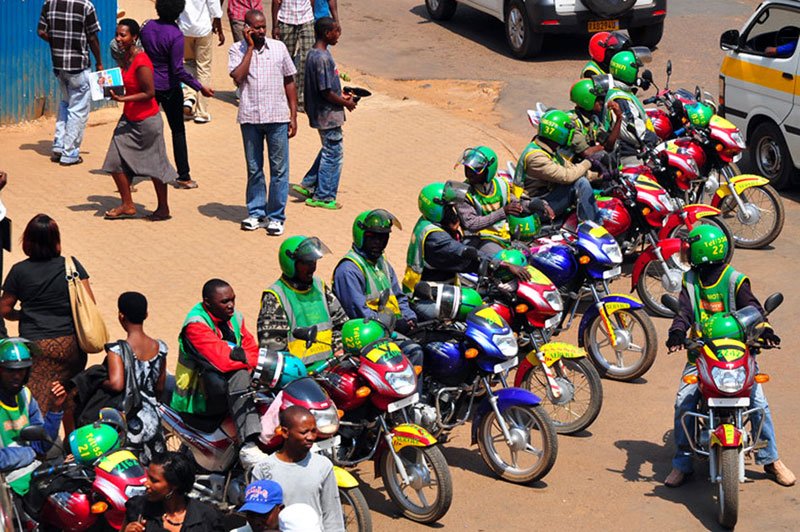
“Those to continue getting support include motorcyclists whose jobs are still under lockdown and many others. We are going to discuss with concerned institutions to identify people whose jobs are still on lockdown,” he said.
The International Labour Organization (ILO) says that as a result of the current economic crisis caused by the pandemic, almost 1.6 billion informal workers, out of the global workforce of 3.3 billion, have suffered great damage to their capacity to earn a living.
Cogebanque PLC fraternity have also come up with a grand contribution of Rwf100 million to be injected in supporting government efforts in preventing the spread of the virus as well as strengthening resilience efforts.
A full statement from the Bank reads:
In view of the extraordinary challenges of COVID 19 pandemic,
Cogebanque PLC fraternity will contribute part of their remuneration to
the Government’s COVID 19 social protection programmes.
Cogebanque Management will make available a sum of RWF 100 million
to be handed over to the Government as it continues to oversee relief
efforts for families most affected by the ongoing crisis.
As we continue to work together as a community to curb the spread of
the virus, Cogebanque will continue to devote all necessary resources
to ensure our client’s personal safety, and that the community at large,
while also maintaining all the services that our customers count on.
We would also like to encourage all our clients, partners as well as the
general public to continue using e–banking channels such as our mobile
application Coge mBank, USSD solution *505# and Internet banking.
The federation that oversees Moto riders nationwide, has identified 7 Cooperatives namely Gecomo, Korandebe Motari, Koranumucyo Motari, Nyamocoop, Cyinyoni, Twiyubake and GCM Gatsata whose members will be beneficiaries of this initiative.
Based on FERWACOTAMO’s selection criteria of the most vulnerable households, 1,500 riders have been identified and will each receive Rwf 10,000 into their MoKash Savings Account.
Mitwa Ng’ambi, CEO of MTN Rwanda said, “We believe it is the responsibility of all organisations to assist where they can during the pandemic. With the necessary restriction on movement to curb the spread of Covid-19, we acknowledge motorists to be one of the groups most affected. In partnership with NCBA and Huawei, we saw it important to assist as much as we can. This is one of various initiatives we have put in place to support Rwandans during this difficult time.”
Accessible via MTN Mobile Money (by dialling *182*5#), MoKash is a Savings and Loan product offered by NCBA and MTN. MoKash provides 30-day term loans at 9% interest. Through MoKash, customers can also open savings accounts with interest of up to 7% per annum.
Lina Higiro, CEO of NCBA Bank Rwanda said, “The Moto is synonymous to Kigali living. In this time of crisis, it is a privilege to partner with MTN and Huawei to not only support, 1,500 Moto rider families during these challenging times, but to introduce an easy digital mobile savings option to cushion unlikely events like these in the future.”
Commenting about the partnership, Country Director of Huawei Rwanda, Mr. Toni Yangshengwan said, “We realise the need to support our fellow country people who have been hit hard by the impact of Covid-19 and take the responsibility to reach out to those we can in our capacity. I would like to thank MTN Rwanda and NCBA for this initiative and partnership, as I am sure it will help many. We encourage everyone to follow the guidelines given by the Government of Rwanda. Together, we will win.”
Thanking NCBA, MTN and Huawei, Daniel Ngarambe, Chairman of the FERWACOTAMO Association said, “We are humbled, and deeply appreciative by the generosity and tripartite partnership formed to support our most vulnerable members through this difficult time.
NCBA, MTN and Huawei remain committed to stand ready to leverage their core expertise, technology and infrastructure to support and align their interventions and responses with the efforts of the Government of Rwanda to contain and mitigate the spread of Covid-19.
The substances were seized from three distillers and dealers on Friday in the three districts of Gasabo, Kicukiro and Nyarugenge.
In Nyarugenge, Nyamirambo sector in Rugarama cell, Munanira village, one Pascal Ntamwemezi, 36, was caught with 240 litres of illicit brew.
In Gasabo, Bumbogo sector in Kinyaga cell, Oliver Kubwimana, 58, was found with 540 litres.
Louise Mukarutesi, 50, of Nyenyeri village in Bwerankori cell, Kigarama sector in Kicukiro District, was arrested withe 120 litres.
Chief Inspector of Police (CIP) Marie-Gorette Umutesi, the Police spokesperson for the City of Kigali, said that the targeted and successful operations were informed by credible information from local residents.
“All the three arrested suspects had illegal distilleries in their houses. They had also created bars in their homes selling the distilled substances but were also supplying other local bars,” explained CIP Umutesi.
She added: “Besides having illegal distillers which were unhygienic and producing the poisonous substances, they were doing it and selling them in the period when all bars are closed. At the time, Police and local leaders found them selling the substances to consumers.”
Rwanda Standards Board (RSB) specifies that “only food-grade processing aids recognized as safe for human consumption shall be used during the manufacture.”
All drinks with an alcoholic content exceeding 45 percent as well as all those without the standard mark (S-Mark) issued by Rwanda Standards Board (RSB) are classified as narcotics.
Article 263 of the new penal code partly states that “any person who, unlawfully produces, transforms, transports, stores, gives to another or who sells narcotic drugs and psychotropic substances commits an offence, with a sentence ranging from seven years to life in prison, upon conviction, and a fine of between Rwf20 million and Rwf30 million.
This came after the government, on May 1, announced that schools would reopen in September in a bid to fight the coronavirus pandemic during the cabinet meeting that was assessing Rwanda’s progress in bringing COVID-19 to its knees.
Claudette Irere, Minister of State in the Ministry of education in charge of ICT and TVET Education, said that higher learning institutions would resume while primary and secondary students will start again this academic year.
“For some higher learning institutions, we know that some were left with a few months to finish their academic year, therefore, they will resume once schools reopen while for primary and secondary education, we took them home abruptly and with all this time they will have spent at home, the best thing to do is to start the year afresh,” she said.
The Minister also clarified that teachers will continue to get their monthly salaries.
“Teachers working for public schools will still be paid their monthly salaries because they will still be engaged in helping students on our various learning platforms and also get different training.”
“For teachers in private institutions, who were the most affected during this time, we encourage and will help the institution owners to seek help with the government fund allocated for the private sector.”
This help should mainly be used for the teachers’ welfare during this time and added that the government will closely follow up on use of the money.
According to the Minister of State, the time between now and September is going to be used to build more classrooms to have a convenient student-teacher ratio.