Olivier Rukundo, 33, was arrested on April 30, in Byimana sector, Mpande cell with 37 kilograms of cassiterite and coltan minerals.
Chief Inspector of Police (CIP) Sylvestre Twajamahoro, the Police spokesperson for the Southern region, said that Rukundo was “mining, buying and selling minerals illegally.”
“Police had information that Rukundo heads a group of illegal miners, and use the cover of the night to mine cassiterite and coltan in Kanyarira,” said CIP Twajamahoro.
He added: “Licensed mining companies in the area had also reported Rukundo as the main character in the area, who carries out illegal mineral trade and in most cases buying them from their casual employees.
On Thursday, we had credible information that he had brought a new consignment. When Police searched his house, they recovered 37kgs of casetirite and coltan, and he was immediately taken into custody.”
Rukundo admitted to the crime saying that he was using other people to enter in the concessions at night but also conniving with casual miners of the firm to steal and bring the minerals to him.
CIP Twajamahoro said that illegal mining activities in this area were contributing largely to environmental degradation and affecting legal mineral business especially for the licensed owners of the concession.
He warned residents against such unlawful acts and urged them to report those who break the law.
The Increase, as it has been reported since the last few days, has been attributed to cross-border truck drivers and their assistants. All the active cases are in isolation in stable conditions, according to the Ministry of Health’s daily report.
The Ministry of Health also reported five new recovered patients, putting total recoveries at 109 while active cases are now 140 and zero deaths.
The new numbers come at a time the government partially reopened some businesses while some activities including prayer congregations, weddings, and school remain closed.
“The prevention measures announced by the government of Rwanda must continue to be rigorously observed, especially frequent hand washing and staying at home. In addition, face masks must be worn in public and multi-family compounds,” the Ministry of Health daily report reads.
“Withholding information related to contact tracing or COVID-19 symptoms jeopardizes public safety and will be punished in accordance with the applicable laws,” the report reads.
The key symptoms of COVID-19 are dry cough, shortness of breath, and fever.
Automated screening is available by dialing *114#. Symptoms can also be reported to the medical professional, or as follows; toll-free number 114, WhatsApp number +250788202080, Email: callcenter@rbc.gov.rw.
The warning follows fake messages circulating on social platforms.
Rwanda National Police spokesperson, Commissioner of Police (CP) John Bosco Kabera said that individuals behind such forgeries will be located and brought to justice.
“It has been observed that some people forge or alter messages issued by Rwanda National Police to those cleared to go for essential services in this period when movements from homes are restricted to prevent the spread of Coronavirus,” said CP Kabera.
“These misleading forgeries will not go unnoticed. Anyone caught in such criminal acts will face the appropriate consequences as the law stipulates,” he added.
Forgery, under article 276 of the penal code, attracts imprisonment of between five and seven years and a fine of between Rwf3 million and Rwf5 million or one of these penalties.
He reminded those cleared to go for essential services to use the pass for the intended purpose rather than seeing it as an opportunity to engage in other “unnecessary and non-essential acts.”
The essential services that can be requested online are:
Shopping for food, banking services, pharmacy, medical, funeral, and emergencies.
The applicant can log on to www.mc.gov.rw or dial *127# and follow the prompts.
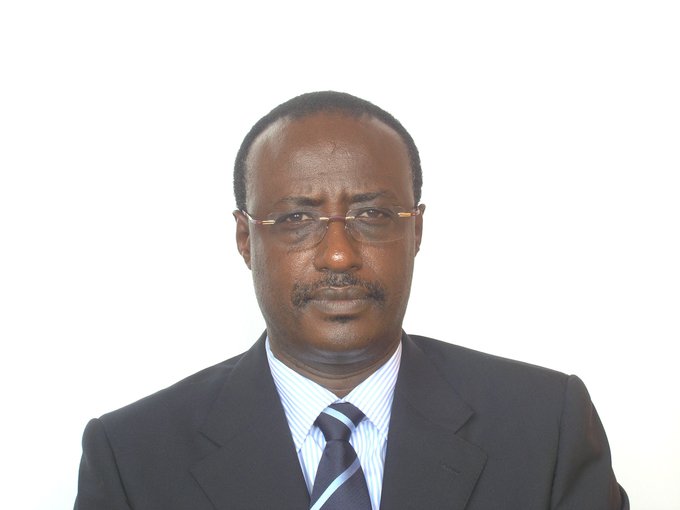
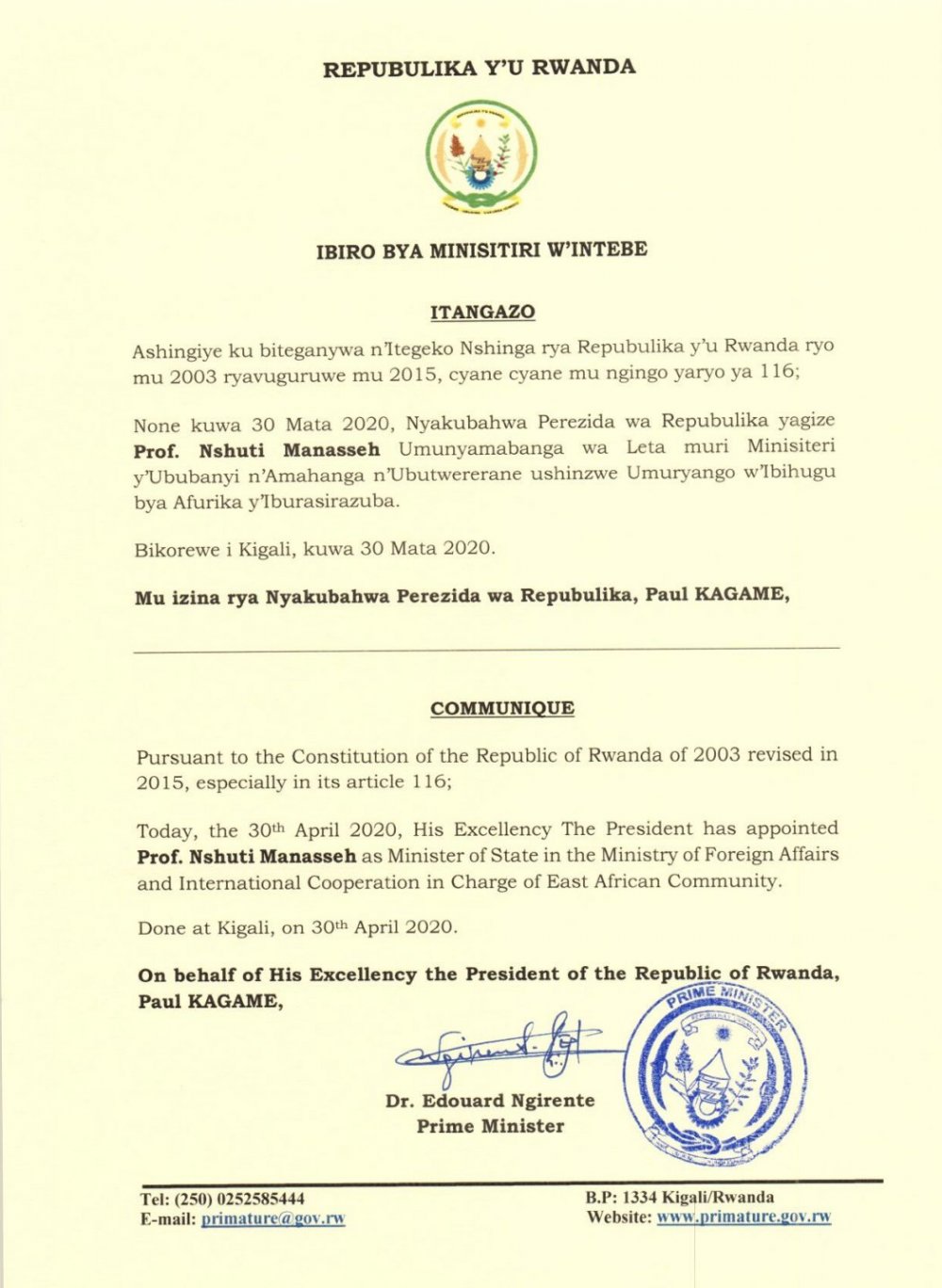
Nshuti comes as a replacement for Oliver Nduhungirehe who was removed from cabinet in April, under accusations of letting his personal opinions prevail over those held by the government.
Nshuti previously served in different positions in the government.
Nshuti was formerly the Minister of Commerce, Industry, Cooperatives, and Tourism; he served as Minister of Finance as well as Minister of Public Service and Labour.
Nshuti holds a Ph.D. in Finance. He also holds a Masters degree in Business Administration in Accounting.
He has also served as the Chairman Board of Promoters assigned to set up Umutara Polytechnic (University).
Nshuti served as the Chairman Board of Governors, which was tasked to turn round the School of Finance and Banking (SFB).
Umutara Polytechnic and SFB have since merged with other public Higher Learning Institutions to form the University of Rwanda (UR).
Heavy rains recently caused a landslide in Nyange, leaving the Muhanga-Ngororero-Karongi road unoccupied.
This meant that those wishing to travel through these roads use the Muhanga-Huye-Nyamagabe-Nyamasheke-Rusizi and Rutsiro-Rubavu-Kigali roads.
Apart from that, other roads across the country were blocked by the effects of the rains, including Kigali-Gicumbi, Muhanga-Ngororero-Mukamira.
On the morning of April 30, 2020, the Rwanda National Police announced that all roads were opened.
“The Rwanda National Police has informed them that the Muhanga-Ngororero-Mukamira road is now used,” reads the statement on The National Police Twitter Wall.
He added that the Kigali-Gicumbi road is also used.
The National Meteorological Agency, Meteo Rwanda, recently announced that between 21 and 30 April 2020, heavy rainfall is expected in the country compared to previous days.
The Ministry of Emergency Situations (Minema) said heavy rains on the night of April 25, 2020, caused disasters, killing three people, injuring three others and destroying 215 houses.
The rains also damaged crops on 66.3 hectares, 11 roads, and its six bridges as well as two water pipes, killing five small animals.
Heavy rains on April 17, killed three people, injured two others, and destroyed many properties.
On April 22, a torrent of rain fell across the country, killing over 12 people and injuring 18 others, while destroying various properties, including 32 houses.
This move comes after several petroleum transporters were reportedly stuck in Kigali with their truck drivers at a loss on how to offload the fuel.
The drivers, mainly from regional countries, say that they have spent days with trucks loaded with petroleum and cannot return to their countries of origin. When importers explained their lack of storage, they said it is due to the low demand caused by the COVID-19 lockdown which stopped traffic and affected previous stocks.
One driver, Yusuf Salim, from Tanzania said that he has to pay for a parking fee of Rwf1000 per day and has so far spent three weeks in Kigali.
“This parking fee was reduced from Rwf2000 but it is still a challenge since we also have other expenses such as food and other needs,” Salim said.
Local petroleum importers on their side said that the Covid-19 pandemic caught them off-guard after ordering more products, and now they have to spend more on the maintenance of transporters.
“We have to pay $100 per day to the suppliers for their hired trucks that are spending extra days waiting to be offloaded. This is because we have nowhere to store their fuel; as the previous orders did not get consumers,” said Joseph Akumuntu, the chairperson of Petroleum importers in Rwanda.
The Minister of Trade, Soraya Hakuziyaremye said that the government will discuss ways of supporting Petroleum transporters to resolve the challenge of expenses caused by difficulties of finding storage facilities.
“We have received their complaints and we are considering providing customs facilitation where they can store this petroleum at some of the privately-owned petrol station storage facilities,” Hakuziyaremye said.
Rwanda has a capacity to store over 110 million liters of petroleum products per year, and the local market demand of about 600 million liters per year.
According to Minister Hakuziyaremye, the domestic economic impact of Covid-19 on the petroleum sector shows that a drop in local market demand for petroleum products has affected the sector by 50% and this is expected to continue.
“We, like any other country, have been affected negatively by low demand for petroleum products. We shall do an economic impact assessment on this area as we find ways of easing business for fuel importers, “Hakuziyaremye said.
On Wednesday, the trade ministry deployed a task force to evaluate the situation of the petroleum transporters and importers who are currently stationed in Gatsata and Rusororo sectors in Kigali.
This is brought to you by Rush Foods, a company that offers an extensive service of food and package delivered at your doorstep in Kigali.
The company that prides itself on maintaining the highest quality of services also delivers different supermarket goods and drinks to customers who need the service anywhere in Kigali.
Rush foods have announced that the company is committed to helping Rwandans who are not able to move during the Coronavirus outbreak.
“We want to contribute our part to the wellness of Rwandans in these challenging times, and this is why we have decided to waive delivery fees for people who buy food and drinks using our services anywhere they are located in Kigali.” says the Chief Executive Officer of Rush Foods, Naeem Ali.
Rush Foods services are available on the Rush Foods application which is available on Android and IOS. All you have to do is to install the application, follow guidelines and you can receive your order anywhere in Kigali.
Other services that are offered by Rush Foods include parcel and medium package delivery to people around Kigali.
Rush Food Chief Executive Officer, Naeem Ali noted that sometimes people want to send packages to their friends and family, but they are not able to because of conditions imposed by the Coronavirus pandemic.
“We also help those people where we charge them only Rwf 1000 for package delivery, which is a very low price compared to the transportation cost he/she would pay.” He further added
Rush Foods began its operations in Rwanda in 2018.
New results from a clinical trial conducted by the National Institute of Allergy and Infectious Diseases establish the drug as the standard of care for Covid-19, which has killed 50,000 people in the U.S. so far, said agency Director Anthony Fauci. He likened the good news about remdesivir to the discovery of the first medication found to help treat HIV more than three decades ago.
“The data shows that Remdesivir has a clear-cut, significant, positive effect in diminishing the time to recovery,” Dr. Anthony Fauci said at the White House during a meeting with President Donald Trump.
Results from the preliminary trial show Remdesivir improved recovery time for coronavirus patients from 15 to 11 days. That’s similar to the effect that the influenza drug Tamiflu has on flu. Tamiflu also doesn’t cure patients quickly, but can reduce how long they are sick.
“Although a 31% improvement doesn’t seem like a knockout 100%, it is very important proof of concept,” Fauci said of Remdesivir. “What it has proven is that a drug can block this virus.”
Remdesivir also may reduce the likelihood that patients will die.
“Results also suggested a survival benefit, with a mortality rate of 8.0% for the group receiving Remdesivir versus 11.6% for the placebo group,”
Remdesivir is among several drugs being tested against Covid-19, but the NIAID trial is the first conducted according to rules aimed at gaining FDA approval.
About 1,090 people participated in the trial internationally, but the World Health Organization said it’s too early to comment on the remdesivir trial results released.
“Typically, you don’t have one study that will come out that will be a game changer,” said Dr. Maria Van Kerkhove, the WHO’s technical lead for the coronavirus response.
She said the agency generally pulls together evidence from several studies before reviewing and critiquing the evidence.
“It can sometimes take a number of publications to determine (what) the ultimate impact of a drug is,” said Dr. Mike Ryan, executive director of the WHO’s health emergencies program.
Four people including the driver, rider, and two other people, who were aboard the vehicle, were also arrested.
The Chief Inspector of Police (CIP) in Muhanga, Sylvestre Twajamahoro, who is also the Police spokesperson for the Southern region, said that the two motorcycles RD 318F and RB 213V were intercepted in Rongi sector, Karambo cell with combined 12, 000 pieces of polythene bags.
“One rider identified as Jean Bosco Nshimiyimana, 25, was arrested but the other runaway abandoned the motorcycle and the polythene bags,” said CIP Twajamahoro.
The information was provided by residents and Police officers were deployed at about 1 pm when the traffickers were intercepted, the motorcycles and their illegal goods impounded.
In Burera District, a vehicle RAA 649G was intercepted in Gahunga Sector, Rwasa Cell with three sacks of non-biodegradable products.
The driver identified as Jean de Dieu Shingiro, 30, alongside two other men on board; Alexis Nshimiyimana, 28, and Clementine Nyirabazungu, 25, were taken into custody.
CIP Alexis Rugigana, the Police spokesperson for the Northern region, said that the vehicle was stopped in Mutara village along Cyanika-Musanze road, searched, and recovered the three sacks of polythene bags.
“The vehicle was intercepted at about 6 pm, traffickers didn’t disclose where they were coming from but said that they were taking the plastic bags to Kimisagara in Nyarugenge District in Kigali.”
Under article 10 of law N° 17/2019 of 10/08/2019 on the environment, any person, who imports plastic carry bags and single-use plastic items, is liable to the dispossession of those plastic carry bags and such items, and to an administrative fine equivalent to ten times of the value of those plastic carry bags and single-use plastic items.
In article 12, a retailer of plastic carry bags and single-use plastic items is liable to an administrative fine of Rwf300, 000 and dispossession of those plastic carry bags and such items.
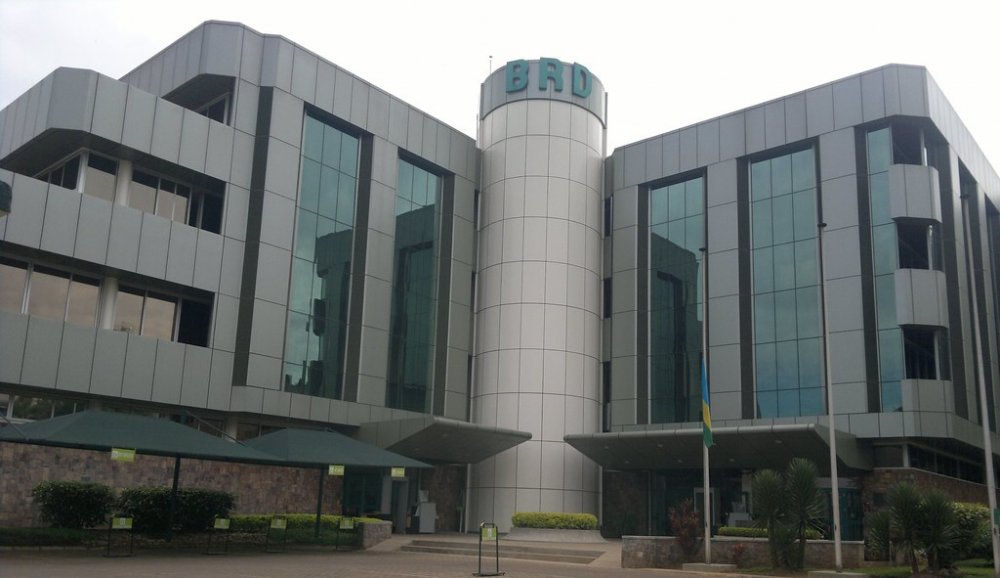
The Development Bank of Rwanda (BRD) Plc is the first Bank in Rwanda to be rated by Fitch. In the past, Fitch has only rated the Sovereign (i.e. Government). Through this inaugural rating, Fitch has rated BRD as a B+ Stable outlook which is the same rating as the Government of Rwanda.
This underlines the Institution’s standing compared to the best banking standards and practices. The rating further validates the Bank’s recent improvements, growth prospects, and continued expected financial stability.
The rating will also play a major role in strengthening BRD’s capability to attract new strategic financial partners to enable it to play a more prominent role as the only development bank in Rwanda. One of the strategic objectives of BRD in the medium term is to increase its capacity to leverage longer term funding at attractive rates for economic actors in Rwanda.
BRD Management welcomed the news with great optimism. The CEO, Ms. Kampeta SAYINZOGA stated “We have come a long way and we are very encouraged by this rating which comes amidst tough times. Our rating is attributed to the strong support BRD has received from its shareholders to turn the Bank around in a very determined way.
The BRD team is working relentlessly to live up to the expectations of its shareholders and ensure productive use of capital. This rating will also be instrumental in supporting our upcoming effort to diversify our capital base in the medium term. It re-energizes our endeavours to deliver on our mandate to sustainably improve the socio-economic development of Rwandans.”
{{What are the key drivers for the rating?}}
BRD’s ratings reflect Fitch’s view of the current financial status of the Bank and the commitment of its majority shareholders (i.e. the Government of Rwanda) to position the Bank as a strategic vehicle to implement the National Strategy for Transformation (NST1) and the Sustainable Development Goals (SDGs). BRD is indeed expected to play a major role in driving Rwanda’s transformational economic agenda.
The Bank’s strategy has been assessed in this light and has been rated accordingly. As Rwanda’s sole development bank, it has been found by Fitch that its unique business model would be difficult to be replicated by other domestic financial institutions. BRD Plc is 97%- owned by the government, via the Agaciro Development Fund (Rwanda’s sovereign wealth fund, 55%) and the Rwanda Social Security Board (42%) and is overseen by the Ministry of Finance.
BRD has recently benefitted greatly from several capital injections which have strengthened its ability to deliver on its ambitious developmental objectives. The Bank is regulated by Rwanda’s Central Bank, and is subject to compliance with the prudential requirements, albeit with certain exemptions (in particular for asset quality, loan restructuring, and FX risk management).
Since 2016, BRD and its Stakeholders started initiating turnaround and transformation strategies that have concretely strengthened the Bank and contributed to its improving financial profile. The Bank’s performance has significantly improved with losses reduced by more than 77% in 2019 compared to the previous two years.
This performance has mainly been driven by the recovery efforts on the written off book and stopping the migration of good loans to bad loans which has made the Net impairment charge on loans and advances to significantly reduce by 31% compared to the previous year. The close monitoring of our customers has resulted into significant improvements of the Bank’s non-performing ratio that has dropped from 19.34% 2018 to 7.52% end 2019.
It is worth noting that BRD’s performance continues to be affected by relatively high funding costs and large FX translation losses due to its unhedged foreign currency funding. Measures are being taken by management to address these issues in consultation with the regulator. Like all policy banks, BRD has a higher risk appetite and finances emerging industry sectors and customers that commercial banks tend to view as “too risky”. Lending is typically longer term (average tenor in the book is 84 months) and on more favourable terms, including longer grace periods.