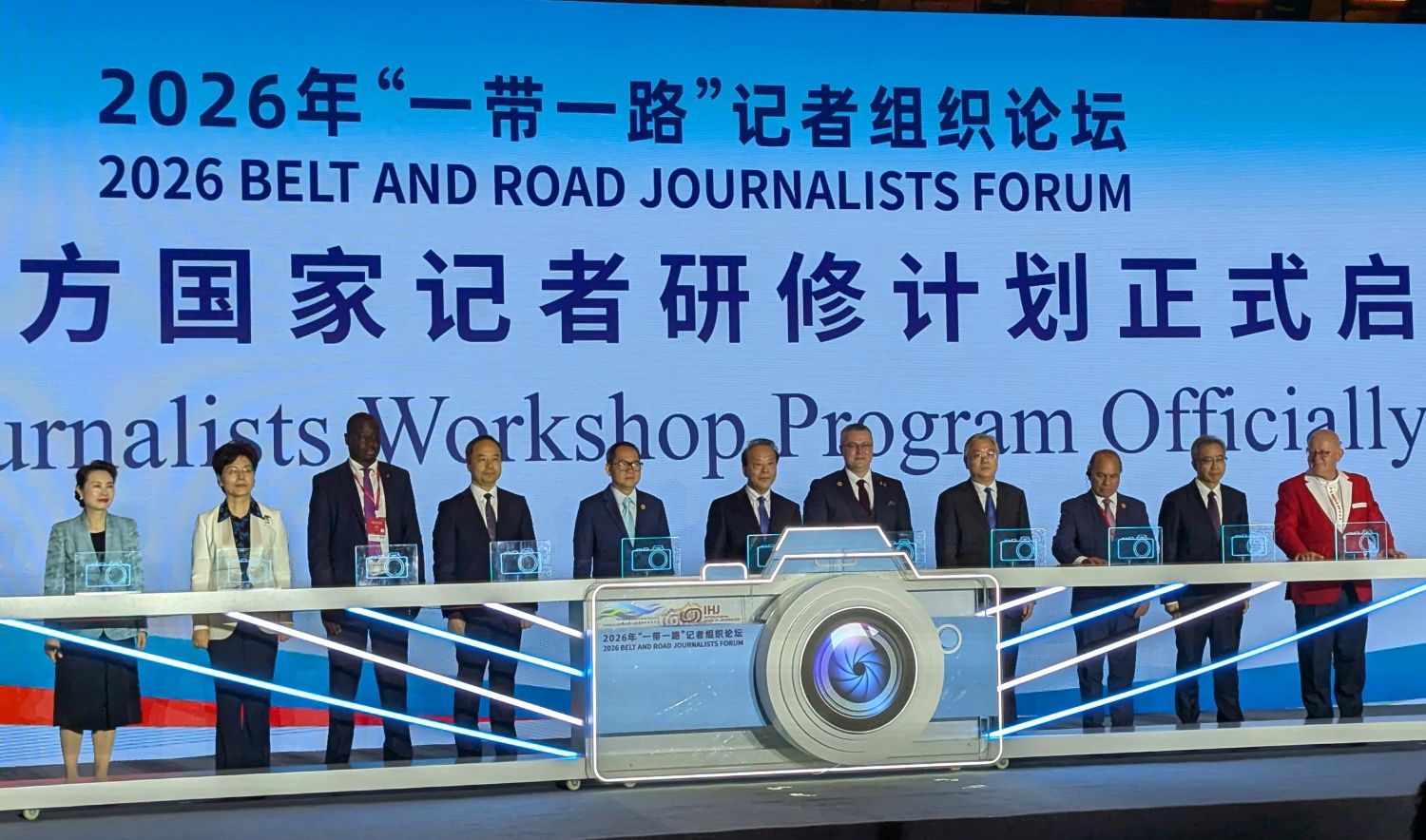
The call was made by He Ping, President of the Belt and Road Journalists Network and a member of the Presidium of the All-China Journalists Association, during the official opening of the Belt and Road Journalists Forum in Nanjing, the capital of Jiangsu Province, China, on October 17, 2026.
Held under the theme “Convergence and Connectivity, Innovation and Progress, Media Transformation Amid Global Changes,” the forum brought together media representatives from more than 50 countries and regions.
He said the imbalance raised fundamental questions about who shapes international narratives and determines how countries and their histories are understood.
“Who gets to draw the map of humanity and human history? And who gets the right to define it for us in the new media landscape?” he asked.
He described addressing the imbalance as a historic responsibility, urging journalists to document the transformations taking place across Global South countries, including their pursuit of independent development paths, preservation of cultural heritage and efforts towards unity, self-reliance and progress.
“We must tell the stories of profound transformation across their vast lands, document the enduring legacy of ancient civilizations, and reflect their tireless efforts towards unity, self-reliance and progress,” he said.
He added that the stories of the Global South should be seen, its voice heard, its interests protected and its contributions recognized.
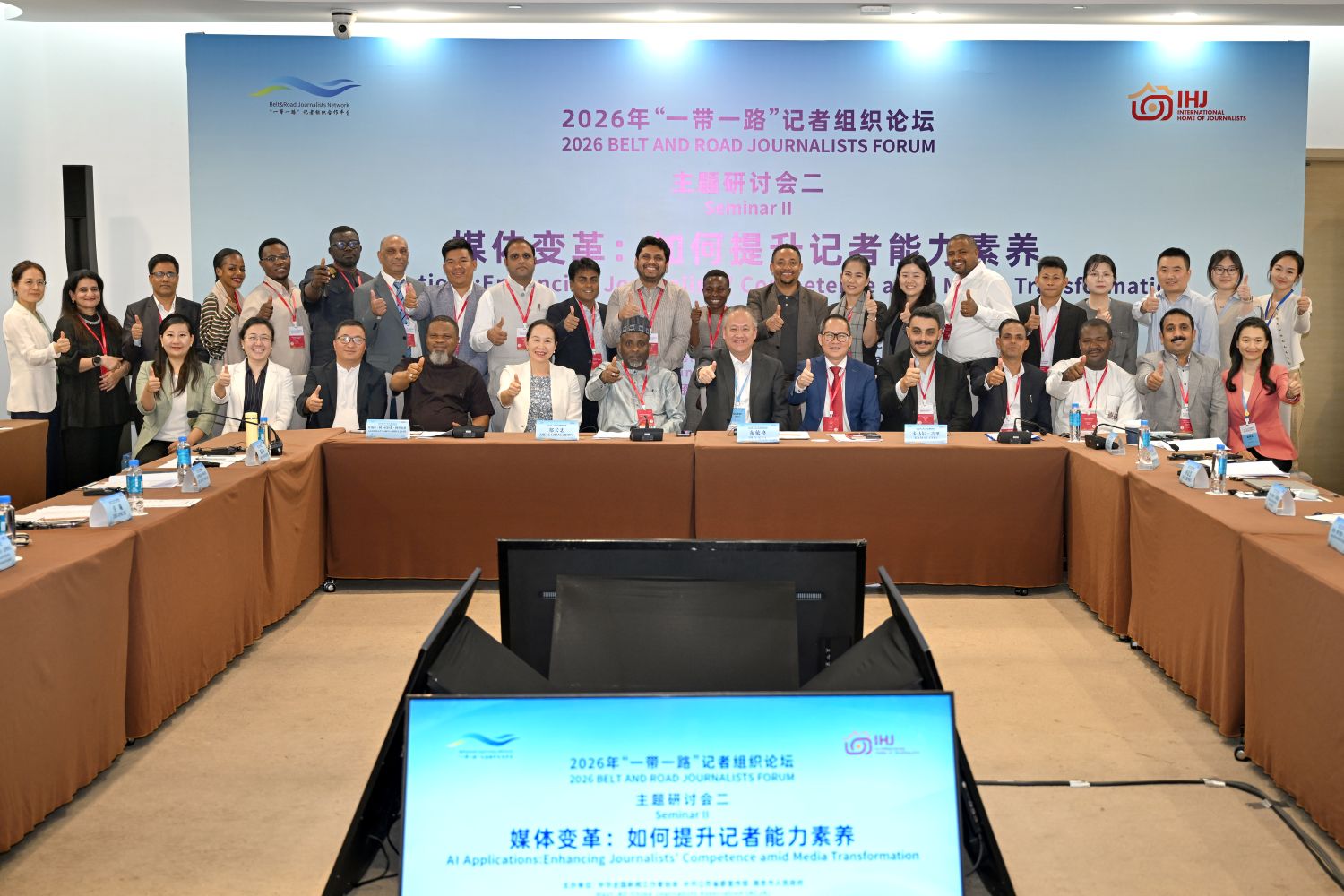
‘AI must not compromise journalistic credibility‘
He also called on media professionals to promote peace, fairness and cooperation through reporting that challenges prejudice and moves beyond narratives shaped by confrontation and zero-sum thinking.
Citing Chinese President Xi Jinping’s Global Development Initiative, Global Security Initiative, Global Civilization Initiative and Global Governance Initiative, he said international cooperation was essential to addressing challenges related to development, security and governance.
Turning to technological change, he said artificial intelligence was reshaping news production and editorial workflows, making adaptation essential for media organizations.
“Adapting to change and embracing new technology is no longer a matter of choice; it is an imperative,” he said.
However, he cautioned that AI adoption must not undermine factual accuracy, originality or human editorial responsibility.
“How can we uphold the essential purpose of human editorial responsibility, factual accuracy and originality?” he asked, highlighting questions journalists must address as AI becomes increasingly integrated into newsrooms.
“AI can be a powerful tool, but we must never surrender our responsibility to artificial intelligence,” he said, emphasizing the need to balance technological innovation with established journalistic principles.
Mo Gaoyi, Deputy Head of the Publicity Department of the CPC Central Committee and Minister of the State Council Information Office of China, highlighted the Belt and Road Initiative’s contribution to international economic cooperation.
China’s trade with Belt and Road partner countries reached RMB 23.6 trillion (over US$3.5 trillion) in 2025, increasing by 6.3% and accounting for 51.9% of the country’s total foreign trade.
Mo called on media organizations to strengthen international understanding and amplify Global South perspectives, while Puy Kea, rotating President of the Belt and Road Journalists Association, emphasized inclusive representation, credible reporting and the responsible use of technology to bridge information gaps.
Xi Ying, a member of the Standing Committee of the CPC Jiangsu Provincial Committee, urged journalists to document the outcomes of Belt and Road cooperation, including technological innovation, rural development and cultural exchanges.
He also stressed the importance of countering disinformation and safeguarding a fair and rational global communication environment.
Leave a Reply