The announcement marks the official confirmation from Maputo following concerns over the future financing of the mission after the European Union signalled reluctance to continue supporting the deployment through the European Peace Facility (EPF).
Speaking to reporters in Maputo on Friday, government spokesperson and Minister of State Administration Inocêncio Impissa said the presence of Rwandan troops remains essential as Mozambique continues to strengthen its own security capabilities.
“I do not know the costs or how long they will stay, but the agreements will strictly clarify this matter in the near future, but having this reinforcement allows us to continue to build our country’s capacity,” Impissa said.
He added that the continued support of Rwandan forces gives Mozambique time to reorganise and modernise its armed forces.
“This gives us time to continue reorganising our forces in terms of capacity, equipment, and technology, among others, while we also benefit from the support of friendly forces who secure the region,” he said.
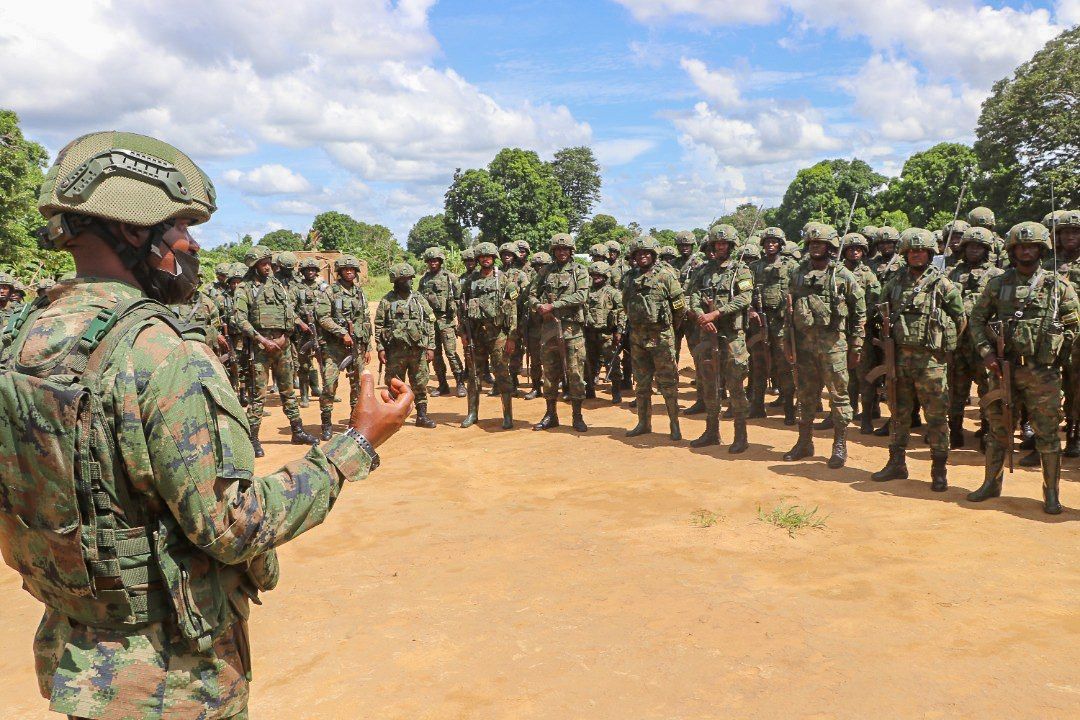
Rwandan forces were deployed to Cabo Delgado in July 2021 at the request of the Mozambican government to help contain an Islamist insurgency that has plagued the province since 2017. Their intervention has been widely credited with helping recapture key towns, restoring stability in strategic districts such as Palma and Mocímboa da Praia, and enabling displaced residents to return home.
The confirmation from Maputo follows remarks made in March by Rwanda’s Minister of Foreign Affairs and International Cooperation, Olivier Nduhungirehe, who said the Government of Mozambique had committed to directly financing the mission after some European Union member states became reluctant to continue funding support.
“Rwanda came back to the basics and decided to deal exclusively with the Government of Mozambique,” Nduhungirehe said at the time, stressing that the partnership between Kigali and Maputo remained strong and effective.
He noted that the mission had delivered significant results over the past several years, including improved security, the reopening of businesses and schools, and the return of displaced families.
Nduhungirehe also argued that the intervention created the conditions necessary for major international energy investments to resume, including an estimated $50 billion in liquefied natural gas (LNG) projects led by European and American companies.
The EU has provided approximately €20 million in support for the Rwandan deployment through the EPF. However, Kigali has consistently maintained that the contribution covered only a fraction of the actual costs incurred by Rwanda, which it says has spent at least ten times more on the mission.
The funding question gained prominence after Rwandan authorities warned earlier this year that the deployment could be reconsidered if sustainable financing was not secured.
In August last year, Rwanda and Mozambique renewed their Status of Forces Agreement on Support to the Fight Against Terrorism during a visit by Mozambican President Daniel Chapo to Kigali. The agreement extended Rwanda’s military support in Cabo Delgado, with Chapo praising the partnership for helping restore peace in the region.
The security gains achieved by Mozambican and Rwandan forces have also helped revive confidence in Cabo Delgado’s economic prospects. The insurgency had forced French energy giant TotalEnergies to suspend construction of its LNG project and declare force majeure in 2021. Following improvements in security, the company lifted the declaration and, in January this year, agreed with the Mozambican government to resume construction activities.
As Mozambique continues efforts to build the capacity of its own security forces, officials say the presence of Rwandan troops remains a critical component of maintaining stability and preventing a resurgence of insurgent activity in Cabo Delgado.
Leave a Reply