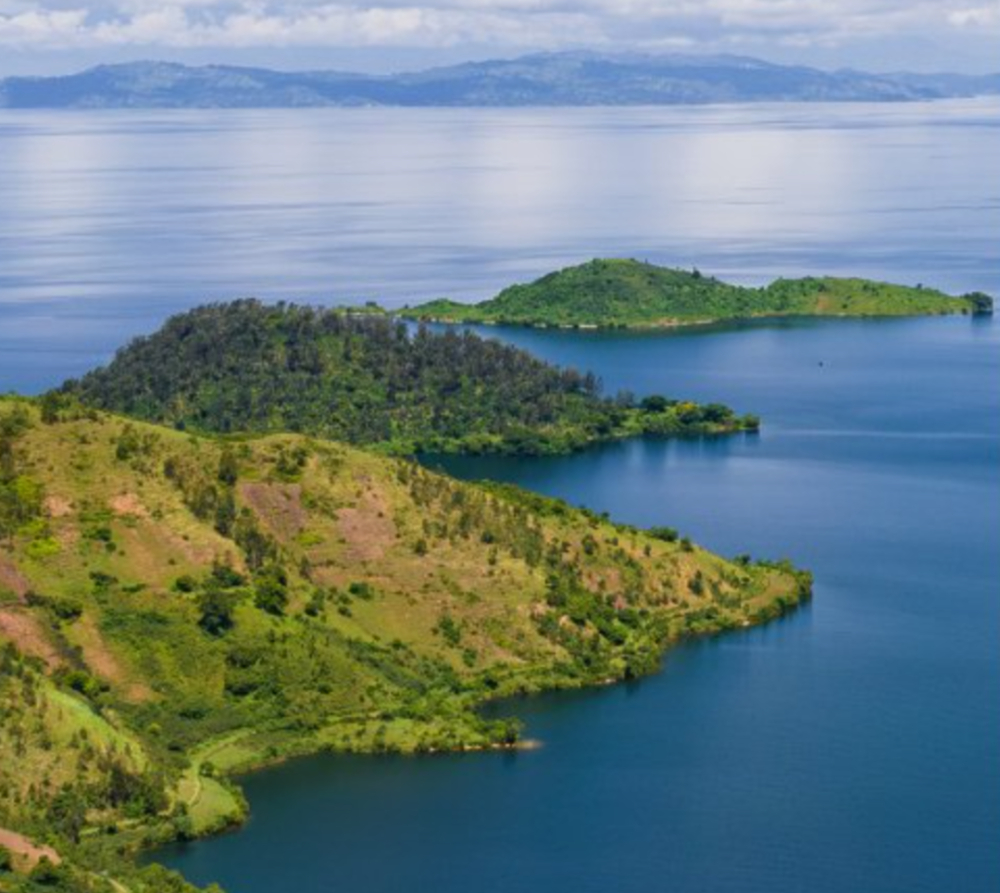
The islands, located in Nkora Cell, Kigeyo Sector, have experienced significant environmental degradation due to human activities, including deforestation and the expansion of coffee farming, which have disrupted natural habitats and reduced biodiversity.
Residents say the islands once supported rich indigenous vegetation and abundant wildlife, much of which has now disappeared.
Nsengiyumva Jean Baptiste, a local resident, recalled the former richness of the area, saying: “There used to be many guinea fowls that hunters would go after. The trees that were there were cut down by residents who planted coffee instead.”
The degradation has also affected fish breeding grounds in Lake Kivu, contributing to reduced catches of species such as isambaza.
According to BIOCOOR and district officials, the project will cover 250 hectares and involve planting 14 tree species, 10 indigenous and four fruit trees, while creating employment for more than 500 residents. BIOCOOR said the area was selected following assessments that confirmed severe shoreline degradation.
Rutsiro District environmental officer Innocent Kamayirese said the restoration will deliver wider ecological benefits.
“Trees purify the air we breathe, they help bring rainfall, and they provide habitats for biodiversity. We urge residents to take care of the trees that will be planted,” Kamayirese said.
The project is expected to cost over Rwf 300 million by 2032 and is part of broader efforts to restore Lake Kivu’s island ecosystems, which include 142 islands, 42 of them in Rutsiro District.
Leave a Reply