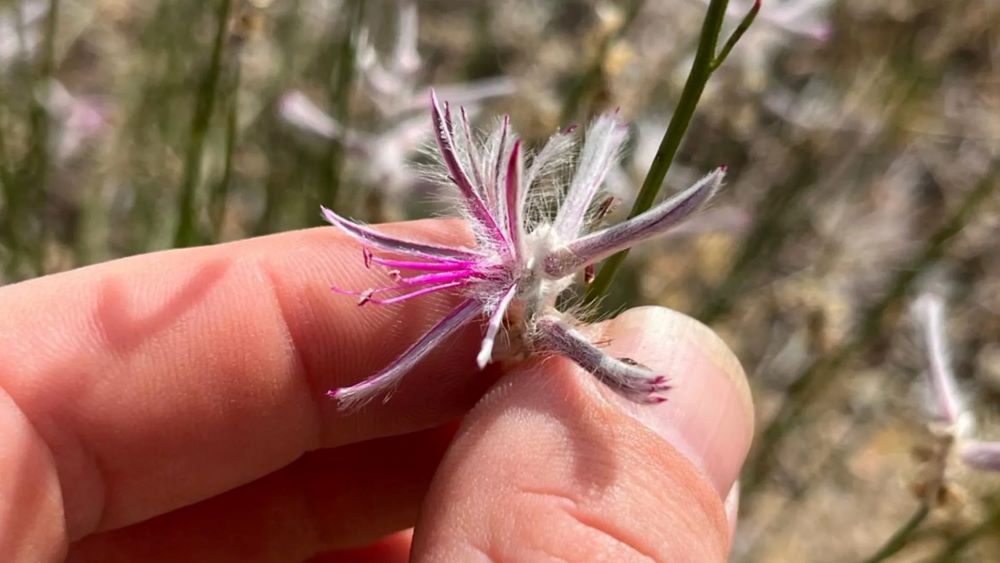
The plant, known as Ptilotus senarius, had not been officially recorded since 1967 and was widely feared extinct.
The discovery began when horticulturalist Aaron Bean spotted an unusual plant while helping with bird banding on a remote property in Queensland. He took photographs of the plant and later uploaded them to the online platform iNaturalist once he regained phone service.
The images eventually caught the attention of botanist Anthony Bean from the Queensland Herbarium, who immediately recognized the species as the long-lost Ptilotus senarius — a plant he had personally described years earlier.
Scientists later confirmed that the species still exists with help from the property owner, who assisted in collecting samples for study.
Researchers say the rediscovery was a combination of luck, technology, and public participation in science.
The plant, known for its purple-pink flowers, grows in rugged parts of northern Australia near the Gulf of Carpentaria. Its rediscovery means it will now be classified as critically endangered instead of extinct, allowing conservation efforts to begin.
Experts say the case also shows the growing importance of citizen science platforms like iNaturalist, where ordinary people share photos of plants and animals they encounter.
Scientists believe such platforms are becoming essential in countries like Australia, where vast remote areas and private land make it difficult for researchers to survey biodiversity alone.
Researchers are now encouraging more people to document wildlife and plants, saying even simple observations can sometimes lead to major scientific discoveries.
Leave a Reply