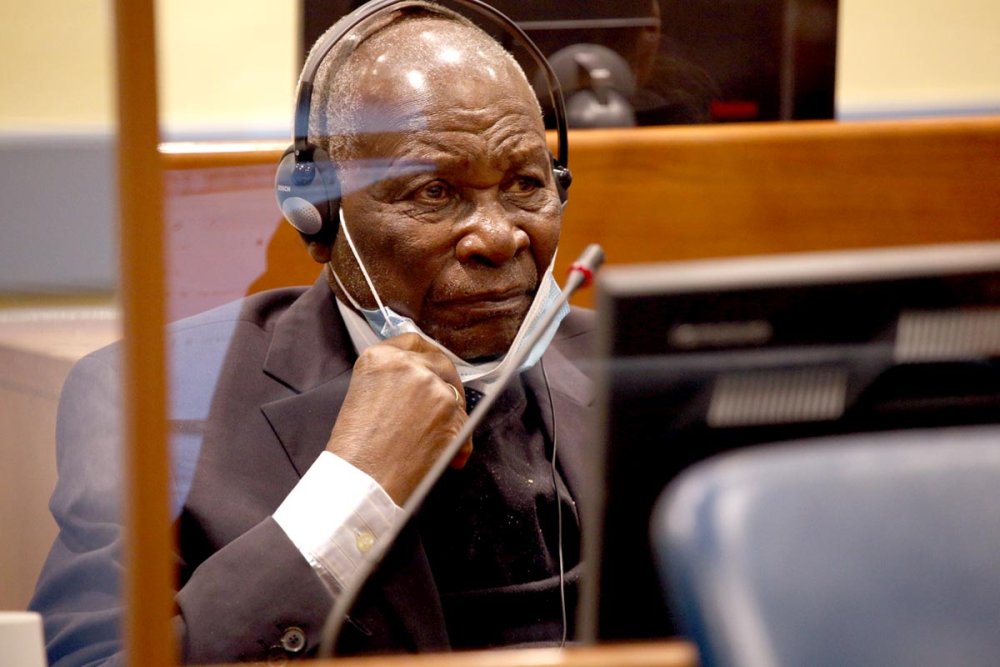
For many survivors, Kabuga’s death is not the end of justice. It is the story of justice delayed until time itself intervened.
Born in 1935 in Byumba, Kabuga rose to become one of Rwanda’s wealthiest businessmen and one of the most influential figures behind extremist structures that fueled the 1994 Genocide against the Tutsi.
Prosecutors accused him of being a central architect of the machinery that enabled mass murder, not only through money, but through propaganda, logistics, and political coordination.
Kabuga was the President of the Comité d’initiative of RTLM, the infamous radio station whose broadcasts dehumanized Tutsi, openly called for their extermination, and in some cases directed killers to specific targets and hiding places.
He was also accused of supporting and financing Interahamwe militias, including a notorious group in Kigali reportedly known as “Kabuga’s Interahamwe.”
According to prosecutors, he helped mobilize funds for weapons and ammunition, imported machetes distributed to militias and used his influence to sustain the genocide campaign between April and July 1994.
Yet after the genocide ended, Kabuga disappeared.
For 26 years, one of the world’s most wanted fugitives managed to evade arrest despite an international warrant issued by the ICTR and repeated global efforts to capture him.
His long escape fueled persistent questions about the networks and powerful connections that may have protected him abroad. Many survivors have long believed that such a high-profile fugitive could not have remained hidden for decades without external support and complicity.
When French authorities finally arrested him near Paris in May 2020, it appeared history was finally catching up with one of the genocide’s most notorious suspects. His trial opened in The Hague in September 2022, where he faced charges including genocide, conspiracy to commit genocide, incitement to genocide, persecution, extermination and murder as crimes against humanity.
But the long-awaited reckoning never came.
As proceedings unfolded, judges received constant medical assessments showing Kabuga’s deteriorating physical and cognitive condition. In 2023, the court ruled that he was no longer fit to stand trial and indefinitely suspended proceedings, concluding that he was unlikely to ever regain capacity.
Now, Kabuga has died in detention in The Netherlands without hearing judgment pronounced against him.
For Rwanda, his death leaves behind more than silence. It leaves the bitter feeling that one of the men accused of financing and enabling genocide ultimately escaped a full judicial reckoning, not through innocence, but through time, delay and decades spent beyond the reach of justice.
Leave a Reply