The discovery results from a collaboration between University College London, Mahasarakham University, Suranaree University of Technology, and Thailand’s Sirindhorn Museum.
Fossils were first unearthed near a pond in Chaiyaphum province about ten years ago, but it took extensive study to fully describe the bones and confirm the species. The fossils include vertebrae, ribs, pelvis fragments, and leg bones, which helped researchers estimate the dinosaur’s size.
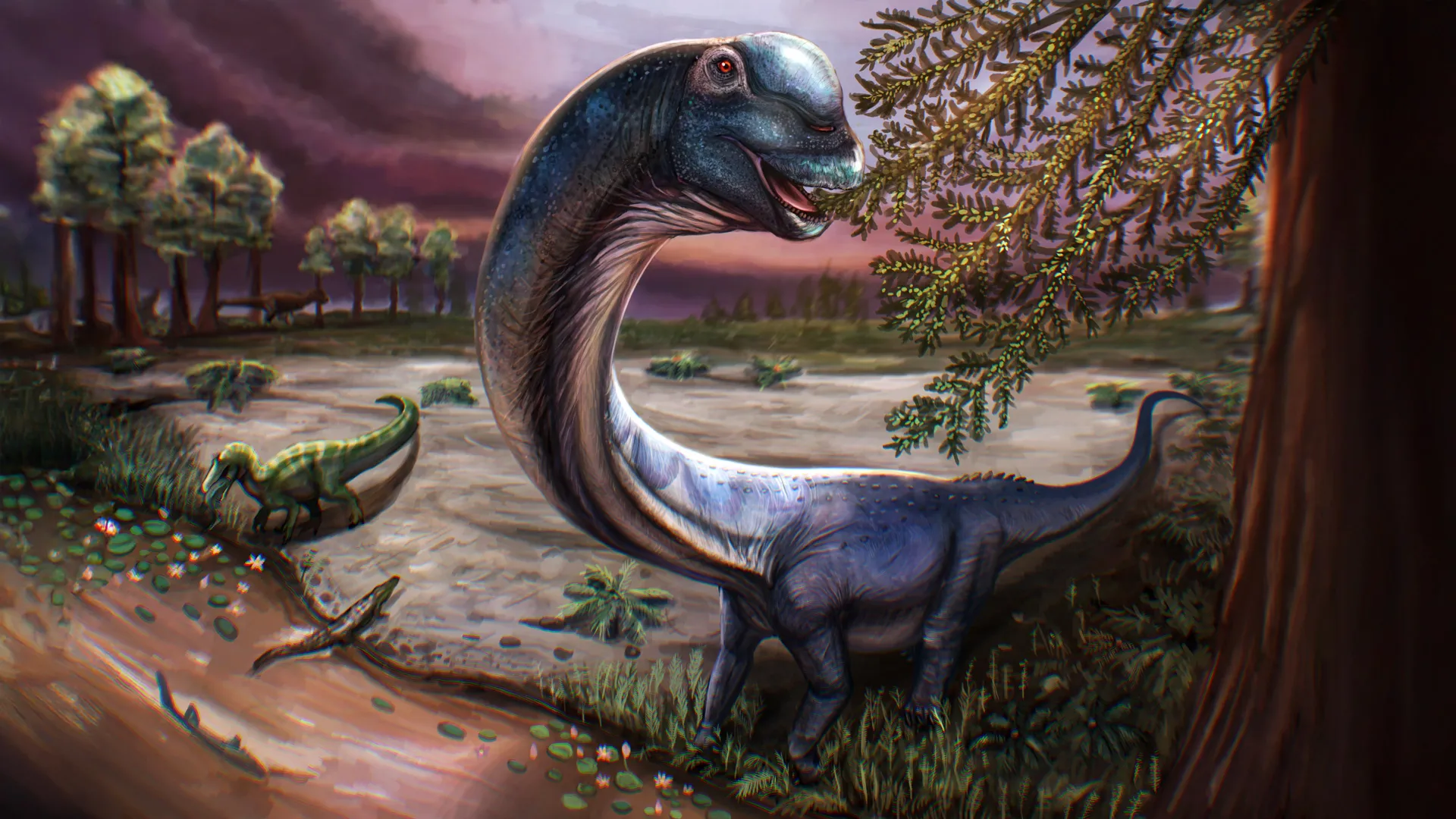
Measurements indicate that Nagatitan measured approximately 27 meters (nearly 90 feet) in length and weighed around 27 tonnes, roughly equivalent to nine adult Asian elephants. One of its front leg bones alone was nearly 1.8 meters long, illustrating the incredible scale of this sauropod.
Belonging to the sauropod group, which includes long-necked giants like Diplodocus, Nagatitan lived during the Early Cretaceous period, around 100–120 million years ago.
During that era, northeastern Thailand featured dry to semi-dry landscapes with rivers and rich vegetation that could support such enormous herbivores.
The dinosaur’s name reflects both local and global influences: “Naga” references a mythical Southeast Asian serpent, “Titan” evokes the legendary giants of Greek mythology, and “chaiyaphumensis” honors the province of discovery. Nagatitan is now the 14th officially named dinosaur species in Thailand.
Researchers suggest that Nagatitan might be the “last titan” of Southeast Asia, representing the final wave of giant sauropods before rising seas altered habitats and made survival challenging for such massive land animals.
Its fossils come from some of the youngest dinosaur-bearing rocks in Thailand, highlighting its significance in understanding the end of the sauropod era in this region.
Nagatitan’s discovery also points to a rich prehistoric ecosystem that included smaller herbivores, fierce predators like spinosaurids, and flying reptiles such as pterosaurs.
Scientists say the find underscores the growing strength of paleontological research in Thailand, with many more fossil remains awaiting study. This discovery not only fills important gaps in the fossil record but also promises further exciting revelations about Southeast Asia’s prehistoric past.
Leave a Reply