“Our officers just arrested a person with what appears to be a gun near the West Front of the U.S. Capitol Building. Please avoid the area,” U.S. Capitol Police said on social media platform X.
In a statement released later, it said officers surrounded and arrested a man who ran toward the U.S. Capitol with a “loaded shotgun” shortly after noon on Tuesday, on the Lower West Terrace.
The suspect also had “multiple rounds of ammunition” and a tactical style vest, it added.
The incident comes as threats against members of Congress have skyrocketed. Last year, the U.S. Capitol Police opened 14,938 cases into “concerning statements, behaviors, and communications” directed at congressional offices and family members in 2025, a nearly 60 percent increase from 2024, said a report by Axios.
Four people were killed on the first vessel in the eastern Pacific, four on the second vessel in the eastern Pacific, and three on the third vessel in the Caribbean, the command said on X.
“Intelligence confirmed the vessels were transiting along known narco-trafficking routes and were engaged in narco-trafficking operations,” the command claimed.
It added that no U.S. military forces were harmed.
The U.S. administration has not provided evidence supporting its allegations about the boats, cargo or the people killed.
Since early September, the U.S. forces have launched about 40 known strikes on alleged drug-smuggling boats in the Caribbean and the eastern Pacific, killing more than 130 people.
The Pentagon resumed strikes on boats in late January following a Jan. 3 U.S. military raid in which Venezuelan President Nicolas Maduro and his wife were forcibly seized.
The mission, carried out by the Hope Probe, was originally launched as a two-year project and entered Mars’ orbit in 2021. The extension seeks to maximize the scientific return on the UAE’s space investments and gain valuable operational experience for future deep-space missions.
Since its arrival at Mars, the Hope Probe has gathered around 10 terabytes of data, shared in 16 datasets with over 200 global research institutions. The mission has also supported pioneering discoveries, including new observations of Mars’ auroral activity and close fly-bys of Deimos, the smaller outer moon of Mars.
In October 2025, the probe expanded its scientific scope by capturing images of Comet 3I/ATLAS, the third known interstellar object that passes through our solar system, offering a rare opportunity to study material from beyond the solar system.
Officials said the decision demonstrates confidence in the probe’s technical readiness and national team capabilities, while supporting the rapid growth of the UAE’s space ecosystem through expanded research and aerospace education.
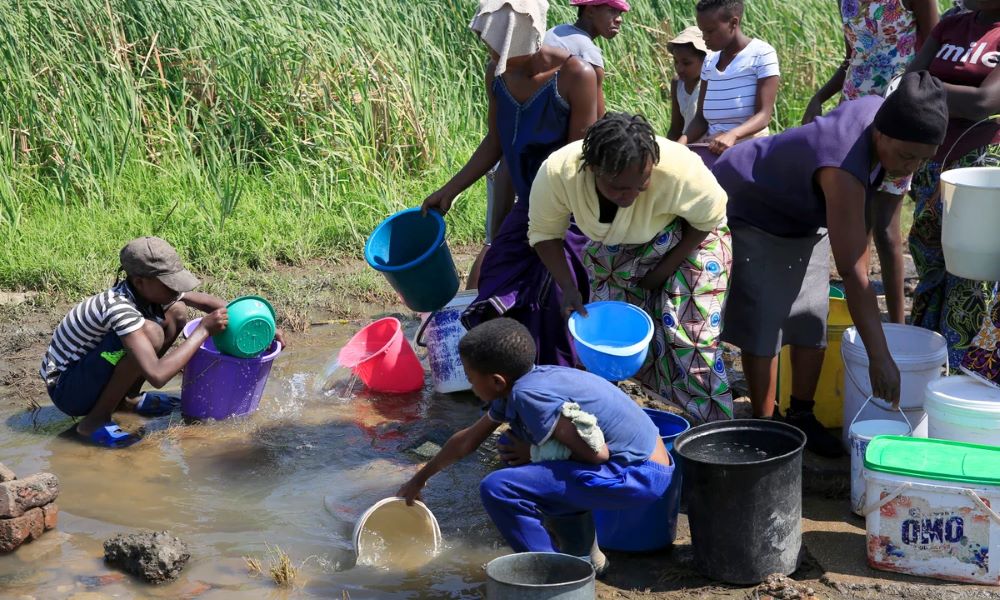
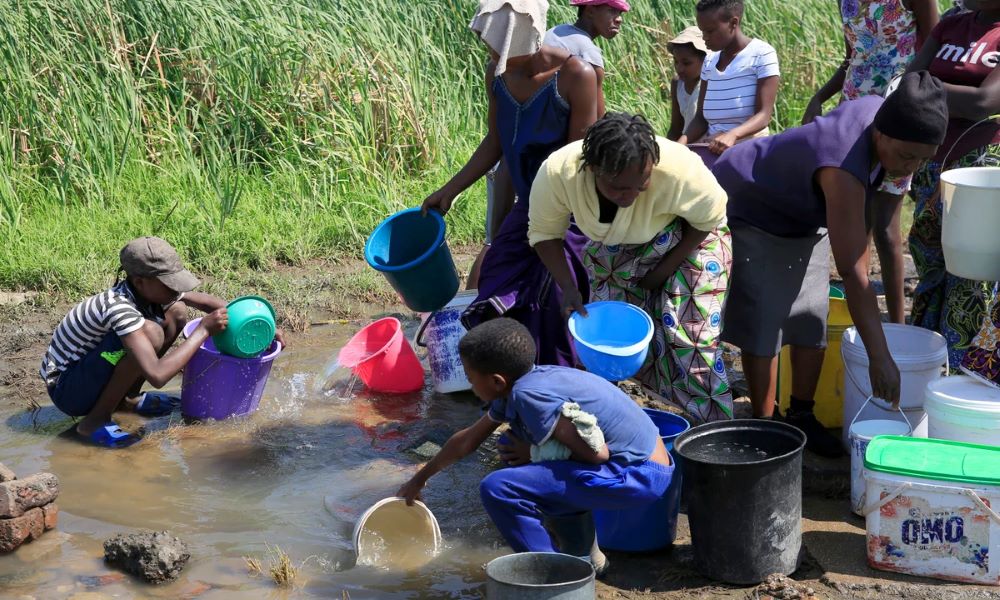
So far, the country has experienced sporadic and isolated outbreaks of water-borne diseases typically associated with the rainy season, Information, Publicity and Broadcasting Services Minister Zhemu Soda said during a post-cabinet media briefing.
He said that although no major outbreaks have been officially declared, risks remain elevated due to current wet conditions, population movements, and increased strain on water and sanitation infrastructure.
“In response, the government of Zimbabwe has intensified its preparedness efforts by conducting comprehensive risk and hazard mapping, enhancing alertness among response agencies, and expanding public health communication initiatives,” Soda said.
He said the measures aim to prevent isolated cases from developing into large-scale outbreaks, and to reduce undue pressure on the healthcare system.
Additionally, the Zimbabwean cabinet on Tuesday approved a contingency fund to support the country’s preparedness and early response activities for seasonal disease outbreaks, Soda said, adding that a multi-sectoral approach involving relevant ministries and agencies responsible for water and sanitation, local government, transportation, education, environment, and social services will be strengthened.
Zimbabwe’s rainfall season typically runs from October to March, with the wet conditions heightening the risk of water-borne disease outbreaks.
Women and children fetch water in the township of Luveve in Bulawayo. Photograph: Aaron Ufumeli/EPA
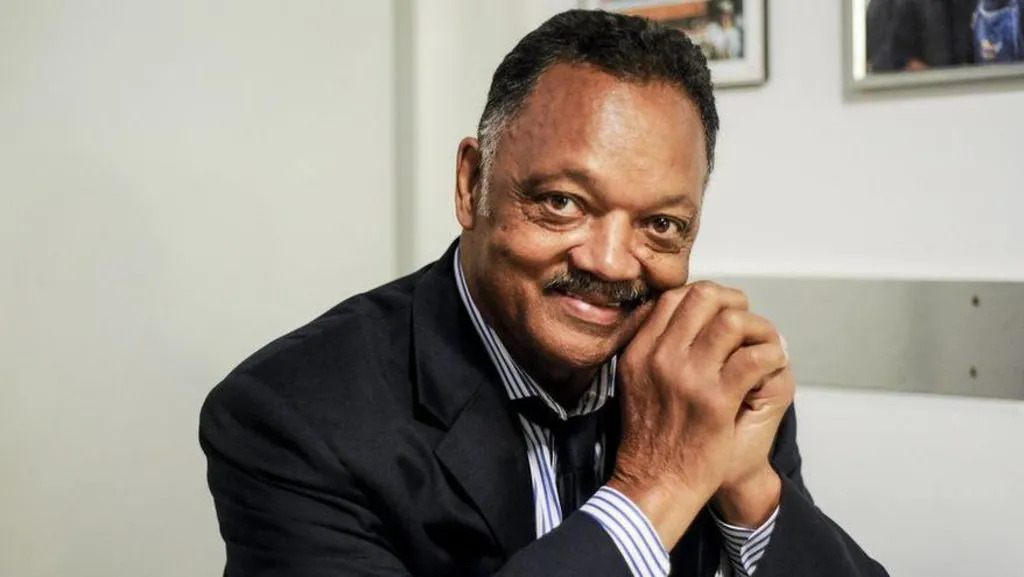
Jackson marched alongside Martin Luther King Jr. and led the Civil Rights Movement for decades after the latter’s assassination.
“He died peacefully on Tuesday morning, surrounded by his family,” the statement posted on Instagram said.
“His unwavering commitment to justice, equality, and human rights helped shape a global movement for freedom and dignity. A tireless change agent, he elevated the voices of the voiceless — from his presidential campaign in the 1980s to mobilizing millions to register to vote — leaving an indelible mark on history,” the statement said.
In 2017, Jackson revealed that he had been diagnosed with Parkinson’s disease, which affects the nervous system and slowly restricts movement and daily activities.
Jackson had built a very strong political influence both inside the United States and abroad, and he spent his life dedicated to pursuing civil rights for disenfranchised groups.
“Our father was a servant leader — not only to our family, but to the oppressed, the voiceless, and the overlooked around the world,” the statement said.
Jesse Jackson, the famed U.S. civil rights leader, has died at the age of 84.
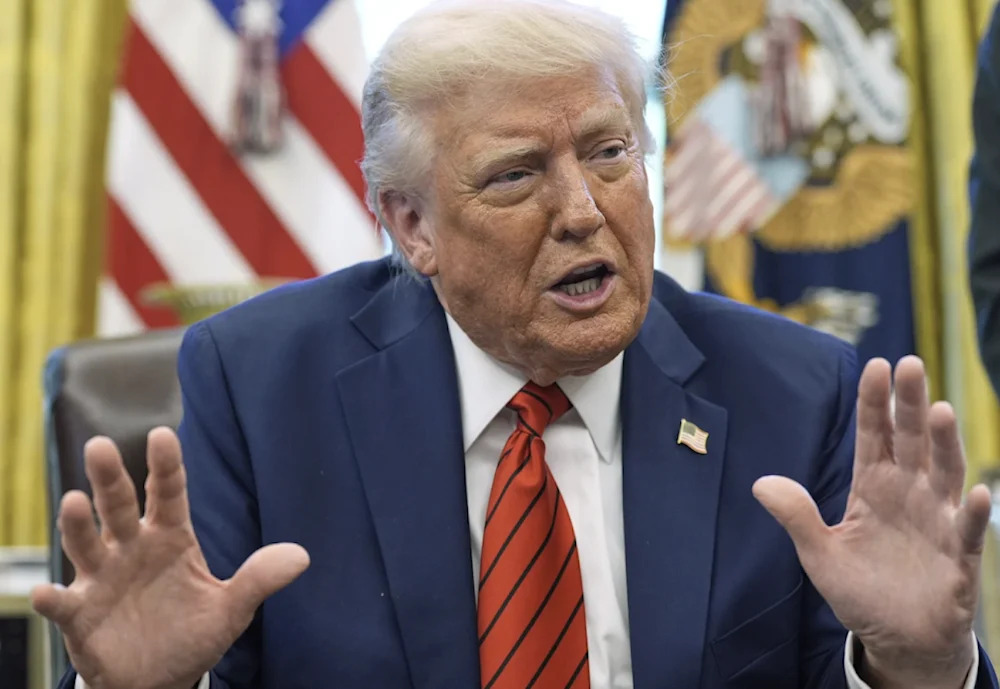
The remarks were made aboard Air Force One as Trump prepared for the high‑profile discussions, which come against a backdrop of rising tensions and intense diplomatic pressure.
“I’ll be involved in those talks, indirectly. And they’ll be very important,” Trump said, signaling Washington’s continued engagement in the effort to resolve long‑running disputes over Iran’s nuclear program.
The planned negotiations aim to address issues that have stalled diplomacy for years, especially Tehran’s uranium enrichment activities that Washington fears could pave the way for nuclear weapons development. Trump said he believed Iran wanted a deal, suggesting that Tehran may be motivated by a desire to avoid serious consequences if talks fail.
Tensions in the region remain high. The United States has deployed a second aircraft carrier strike group to the Middle East and U.S. military officials are preparing for the possibility of a sustained campaign if diplomacy does not succeed.
Last year, the U.S. and Israel conducted strikes on Iranian nuclear sites, actions Trump referenced as a factor that may now influence Iran’s willingness to negotiate.
Iran’s delegation led by Foreign Minister Abbas Araghchi, has emphasized that negotiations should focus on nuclear issues in exchange for sanctions relief, and that Tehran is committed to a “fair and equitable deal.” Araghchi has also called for respect and fairness in talks, rejecting any approach based on coercion.
Meanwhile, the International Atomic Energy Agency (IAEA) is pressing Iran to clarify what happened to its stockpile of enriched uranium and to allow full inspection access at sites damaged during the previous year’s strikes.
Iran also staged a military drill near the Strait of Hormuz, one of the world’s most important oil transit routes, underscoring the potential for escalation if negotiations break down.
U.S. Secretary of State Marco Rubio described the diplomatic path as challenging but said there was still an opportunity to reach a deal though success would depend on both sides’ willingness to compromise.
Xi, also Chinese president and chairman of the Central Military Commission, sent the greetings while attending an annual gathering with non-CPC personages at the Great Hall of the People in Beijing.
Addressing the gathering, Xi noted that 2025 was an extraordinary year. He said that facing profound and complicated changes at home and abroad, the CPC Central Committee united and led the entire Party and all Chinese people to overcome difficulties and work hard to achieve the year’s main economic and social development targets and tasks.
These hard-won achievements stemmed from the Party’s strong leadership and the joint efforts of all Chinese people, including those from non-CPC political parties, the ACFIC and personages without party affiliation, Xi said.
Noting that 2026 marks the beginning of the 15th Five-Year Plan period, Xi urged non-CPC political parties, the ACFIC and personages without party affiliation to actively fulfill their duties and responsibilities, contributing to the implementation of the CPC Central Committee’s decisions and plans.
He called on them to strengthen political guidance, forge unity, contribute to the country’s development in the 15th Five-Year Plan period, and strengthen their own development to show a fresh look as political parties and forces participating in state governance under socialism with Chinese characteristics.
Xi also urged them to rigorously improve their conduct and enforce discipline, with the aim of consolidating a sound political environment.
The gathering was also attended by Wang Huning, chairman of the National Committee of the Chinese People’s Political Consultative Conference, Cai Qi, director of the General Office of the CPC Central Committee, and Vice Premier Ding Xuexiang. Wang, Cai and Ding are also members of the Standing Committee of the Political Bureau of the CPC Central Committee.
Xi, also general secretary of the Communist Party of China Central Committee and chairman of the Central Military Commission, made the remarks in a recent instruction on work related to the National Natural Science Foundation of China (NSFC).
Noting the NSFC’s positive role in advancing basic research and nurturing innovators over the past four decades, Xi urged the foundation to seize the opportunities presented by the new round of scientific and technological revolution and industrial transformation, and deepen the reform of the science funding system to further refine the funding framework and enhance funding efficiency.
He called on the NSFC to help foster a sound research ecosystem and expand international collaboration, thereby empowering scientists and researchers to yield a greater output of original innovations, and to contribute more to achieving greater self-reliance and strength in science and technology.
The NSFC was established in February 1986 and has become a major channel for national funding of basic research.
Against this backdrop, the vision articulated by Chinese President Xi Jinping in multiple past speeches stands out, offering a clear and consistent compass for global economic governance, one that underscores openness and justice as fundamental anchors for stability and growth.
Translating that vision into concrete actions, China has stepped up development-oriented cooperation with other Global South countries, aligning with their shared concerns amid rising uncertainties and reinforcing calls for a more inclusive and predictable world economic order.
{{Unilateralism exacts heavy toll}}
Indeed, global economic growth faces significant headwinds as escalating unilateralism and protectionist measures dampen international trade and investment flows. Indermit Gill, the World Bank Group’s chief economist, warned that the world economy is set to grow more slowly in the coming years than it did even in the troubled 1990s.
A significant factor behind this slowdown is a new round of tariffs and trade restrictions rolled out by Washington over the past year. As these measures accumulated, the average U.S. import tariff surged from 2.4 percent in early 2025 to nearly 18 percent — the highest level since the 1930s.
Such arbitrary tariffs are exacting a heavy toll. According to the United Nations Conference on Trade and Development (UNCTAD), U.S. growth is expected to slow to 1.8 percent in 2025 and 1.5 percent in 2026, down from an average of 2.5 percent between 2015 and 2019. In Europe, U.S. tariffs on steel, aluminum and automobiles have squeezed supply chains and weakened competitiveness, prompting firms to delay investment, with the UNCTAD forecasting EU growth at just 1.3 percent in 2025.
Furthermore, Washington has wielded tariffs as a tool of geopolitical coercion, not least by threatening to impose punitive tariffs on countries that do not support the U.S. plan to “obtain” Greenland.
The weaponization of U.S. financial tools and rising unilateralism have destabilized global markets, severely constraining the strategic autonomy of developing states, Herman Tiu Laurel, president of the Asian Century Philippines Strategic Studies Institute, a Manila-based think tank, told Xinhua.
World leaders have voiced opposition to such unilateral actions. Italian Prime Minister Giorgia Meloni has said, “Imposing new sanctions today would be a mistake,” while Malaysian Prime Minister Anwar Ibrahim has warned against global trade being weaponised against weaker countries.
In a world fracturing along economic faultlines, Xi offered a clear compass. “Countries cannot thrive without an international environment of open cooperation, and no country can afford to retreat into self-imposed isolation,” he reminded global audiences.
Addressing the 2025 Virtual BRICS Summit, he reinforced the point: “Economic globalization is an irresistible trend of history.”
{{China’s approach}}
China’s approach to the global economy, as Xi observed, has consistently emphasized openness, cooperation and a long-term perspective on economic globalization.
“Whether you like it or not, the global economy is the big ocean that you cannot escape from,” Xi said in his 2017 WEF speech, warning that attempts to cut off the flows of capital, technology and people would only run counter to economic reality.
In July 2025, he told a group of new ambassadors to China that China will steadfastly expand high-standard opening up and share the benefit of its supersized market, so that the country’s advancement will bring new opportunities for other countries and inject greater certainty into global economic growth.
“China’s emphasis on openness, inclusiveness, and fairness speaks directly to the core aspirations of developing countries, which have long sought a global economic system that enables growth rather than constrains it,” Lewis Ndichu, director of research at the Nairobi-based Centre for China Africa Policy, told Xinhua.
“For many in the Global South, openness is not about unfettered liberalization but about meaningful access to markets, technology and finance on equitable terms. China’s proposals resonate because they recognize this distinction and place development at the center of globalization,” he said.
Amid evolving global dynamics, China has been resolutely committed to reform and opening-up. The launch of the Hainan Free Trade Port (FTP) in December 2025 exemplifies China’s push for high-standard opening up, with expanded zero-tariff coverage and more market-oriented, business-friendly rules facilitating freer flows of goods.
During a trip to Hainan, Xi described the FTP as a landmark move reflecting China’s commitment to unwaveringly expand high-standard opening-up and promote an open world economy.
Hainan should play a leading role in advancing high-standard opening up through strengthening coordinated development with the neighboring Guangdong-Hong Kong-Macao Greater Bay Area and deeply integrating into the Belt and Road cooperation, he added.
Thanks to its strategic location, the Hainan FTP is expected to serve as a new platform for international engagements in various sectors — from tourism and modern services to high-tech industries and agriculture — benefiting ASEAN countries in particular, said Christine Susanna Tjhin, director of strategic communication and research at Indonesia’s Gentala Institute.
{{Fairer economic order}}
Amidst global economic storms, Global South countries bear the brunt of the economic squeeze, a fact crystallized in a recent World Bank finding: by the end of 2025, nearly all advanced economies had seen per capita incomes rise above their 2019 levels, while about one in four developing economies remained below pre-pandemic income levels.
“Rising uncertainty and geopolitical fragmentation, alongside slower growth, are currently the most worrying challenges for the global economy, especially for developing countries that depend on open trade and stable investment flows,” Deni Friawan, an economic researcher at the Jakarta-based Center for Strategic and International Studies, told Xinhua.
As a result, more developing countries are increasingly calling for fairer participation in economic globalization.
In December 2024, Xi held a meeting with the leaders of major international economic organizations, reaffirmed China’s commitment to collaborative global progress: “China is ready to work with the major international economic organizations to practice multilateralism, promote international cooperation and support the development of Global South countries, so as to advance an equal and orderly multipolar world and a universally beneficial and inclusive economic globalization, and build a just world of common development.”
“Global South economies require a balanced international environment that combines openness, stability, and access to affordable financing,” said Asif Javed, associate research fellow at Pakistan’s Sustainable Development Policy Institute. “Trade and investment should be fair and inclusive so that developing countries may integrate into global value chains.”
This growing chorus for partnership is now materializing in the economic realm. The expansion of trade and supply chain cooperation under the upgraded China-ASEAN Free Trade Area 3.0 framework and the steady implementation of the African Continental Free Trade Area both underscored a growing willingness among emerging economies to seek stability through more coordinated economic engagement.
“There is a clear convergence between President Xi’s emphasis on dialogue-based governance and the Global South’s aspiration for a more balanced and cooperative global economic order,” Alok Kumar Pathak, associate fellow at the BRICS Institute India, told Xinhua.
That convergence, observers noted, is increasingly reflected in projects under various initiatives. In Africa alone, China has helped build and upgrade over 10,000 km of railways, nearly 100,000 km of roads, while rolling out more than 200,000 km of fiber-optic cable, supporting industrialization and regional connectivity.
The Chinese-built Magufuli Bridge across Lake Victoria in Tanzania was inaugurated in June 2025, marking another landmark project under the Belt and Road Initiative. As the longest bridge in East and Central Africa, it not only improves local transportation but also enhances connectivity with neighboring countries. The bridge stands as a symbol of Tanzania’s self-reliance and a catalyst for regional development, Tanzanian President Samia Suluhu Hassan said at the inauguration ceremony.
On top of infrastructure, China’s growing role in technology transfer and digitalization is reshaping development possibilities, said Ndichu. “Its engagement increasingly emphasizes capacity building, skills development, and value-chain integration rather than simple resource extraction.”
“China functions as both a stabilizing anchor and a key driver of industrial upgrading across the Global South,” said Herman Tiu Laurel.
“By prioritizing infrastructure development and technological innovation, China offers developing countries the practical means to build sustainable growth and achieve genuine economic autonomy,” he said.
Ismael Buchanan, senior lecturer in the Department of Political Science at the University of Rwanda, said China’s emphasis on inclusiveness aligns with the desire to ensure that the benefits of globalization are shared more broadly, rather than concentrated in a few advanced economies.
“China has offered additional development options for Global South countries. This engagement complements existing international efforts and contributes to a more diversified and balanced global economic system,” he added.
It is Lee’s first visit to China since he took office, and the two heads of state have met twice and conducted reciprocal visits, reflecting the importance both sides attach to China-ROK relations.
ENHANCING STRATEGIC PARTNERSHIP
China has consistently placed relations with the ROK high on its regional diplomatic agenda and maintained continuity and stability in its policy toward the ROK, Xi said, adding that China is willing to work with the ROK to firmly uphold the direction of friendly cooperation, adhere to the principle of mutual benefit and win-win outcomes, promote bilateral strategic partnership along a healthy path, effectively enhance the well-being of both peoples, and contribute positively to regional and global peace and development.
Xi called on both sides to enhance mutual trust, respect each other’s development paths, accommodate each other’s core interests and major concerns, and resolve differences properly through dialogue and consultation.
Lee said the ROK side hopes to use the first head-of-state diplomatic meeting of the year as an opportunity to consolidate the momentum of the comprehensive recovery and development of bilateral relations, seek common ground while reserving differences, deepen the ROK-China strategic cooperative partnership, and open a new chapter of bilateral relations.
He emphasized that the ROK respects China’s core interests and major concerns, and adheres to the one-China principle.
Dong Xiangrong, senior fellow at the Chinese Academy of Social Sciences, said that head-of-state diplomacy has played a significant guiding role in China-ROK relations, sending a clear positive signal to foster better bilateral ties, and greatly contributing to deepening political mutual trust and promoting economic and trade cooperation.
In the future, both sides need to accommodate each other’s major concerns including the Taiwan question, and maintain a stable cooperative relationship as important trading partners, Dong said.
ACHIEVING MORE COOPERATION RESULTS
China and the ROK share close economic ties with industrial and supply chains deeply interwoven, and the bilateral cooperation is mutually beneficial, Xi said.
He said the two countries should further align their development strategies, strengthen policy coordination, expand the pie of common interests, and achieve more cooperation results in emerging fields such as artificial intelligence, green industries, and the silver economy.
Bilateral economic and trade cooperation has played a positive role in the economic and social development of both countries, Lee said, noting that the ROK looks forward to seizing the opportunities brought by China’s 15th Five-Year Plan to achieve more results in practical cooperation with China.
After their talks, Xi and Lee witnessed the signing of 15 cooperation documents in fields including scientific and technological innovation, ecological environment, transportation, and economic and trade cooperation.
Yang Xiyu, a researcher from the China Institute of International Studies, said that since the establishment of diplomatic relations between China and the ROK, bilateral economic and trade cooperation has always been the stabilizer and propeller of the development of bilateral relations.
He said China and the ROK should leverage their long-standing traditional advantages, and strengthen cooperation with a focus on economy, trade, and technology.
BEARING RESPONSIBILITIES IN PEACE, DEVELOPMENT
China and the ROK shoulder important responsibilities in maintaining regional peace and promoting global development, and share a wide range of common interests, Xi said, noting that the two countries should firmly stand on the right side of history and make the right strategic choices.
More than 80 years ago, the two peoples made tremendous national sacrifices and won the victory against Japanese militarism, he said, adding that the two countries should join hands to safeguard the fruits of the victory in World War II and protect peace and stability in Northeast Asia.
As beneficiaries of economic globalization, China and the ROK must work together to oppose protectionism and practice true multilateralism, contributing to the advancement of an equal, orderly multipolar world and a universally beneficial, inclusive economic globalization, Xi said.
Lee said the ROK is willing to strengthen its multilateral coordination with China and contribute to global prosperity and development, and wishes China every success in hosting this year’s Asia-Pacific Economic Cooperation Economic Leaders’ Meeting.
Dong said amid the recent resurgence of Japanese militarism, China and the ROK should share a common position to maintain regional peace, and the two sides need to jointly address protectionism and defend free trade.