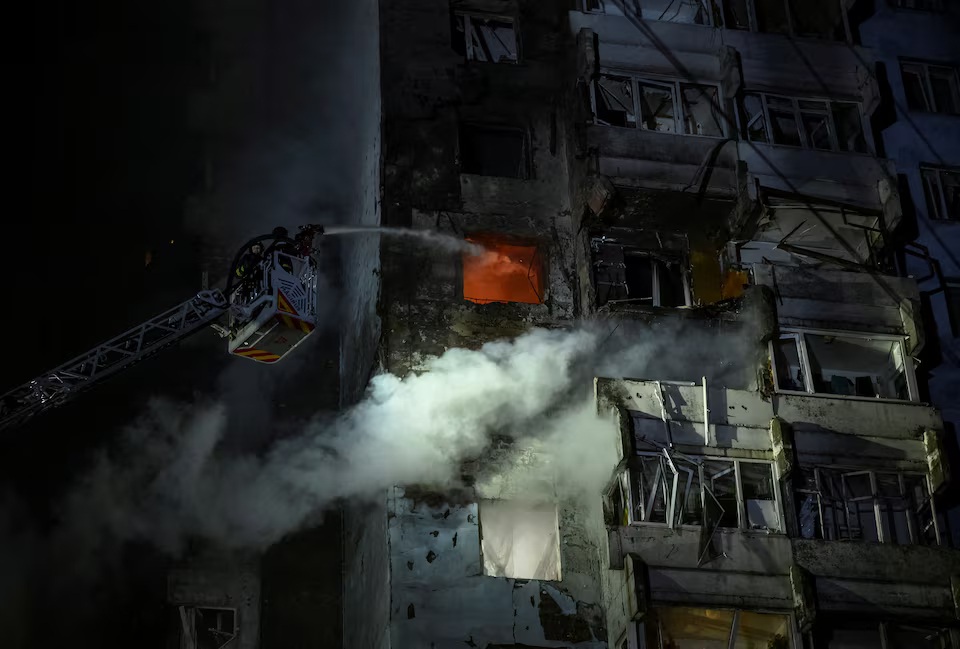
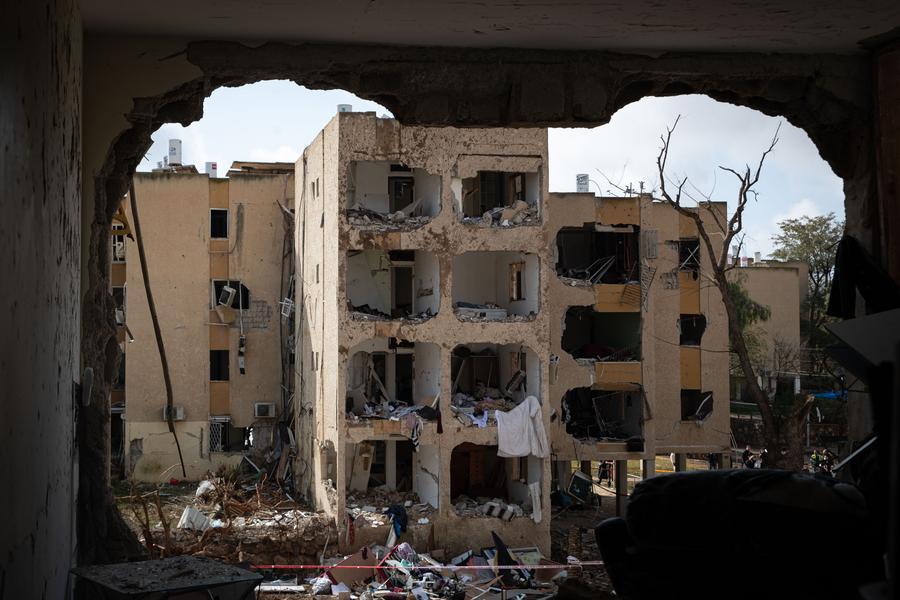
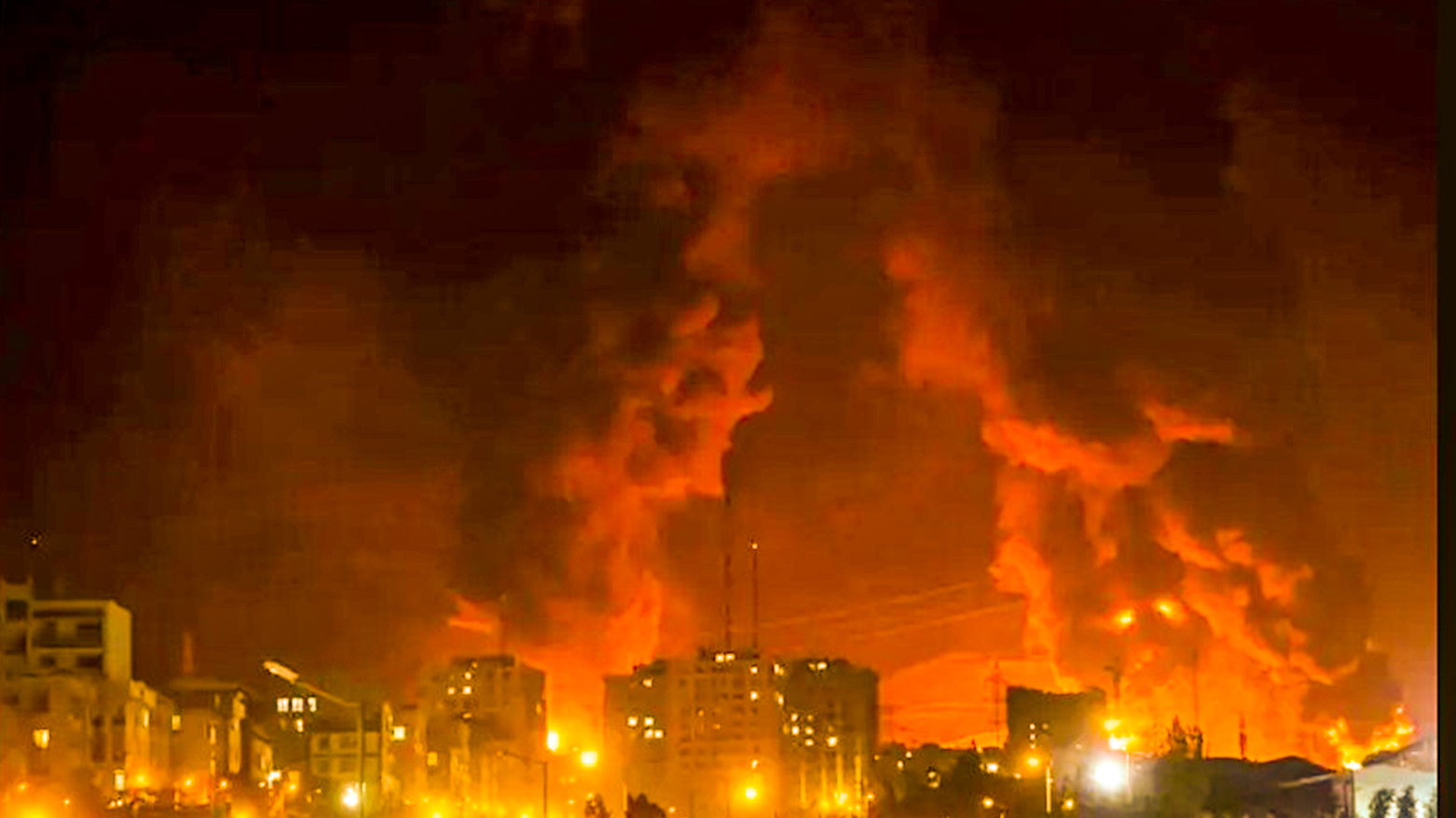
In the southeastern city of Zaporizhzhia, one person was killed, and five more were wounded when drones and missiles hit residential areas. Several apartment buildings, private homes, a shop, and an industrial facility were damaged, according to regional governor Ivan Fedorov, who shared photos showing fires and destruction.
“Russia launched a massive combined strike on Zaporizhzhia using drones and missiles,” Governor Ivan Fedorov said.
In the eastern Poltava region, two people died and 11 others were injured in similar attacks that struck homes and a hotel.
The strikes come shortly after Ukrainian President Volodymyr Zelenskiy on Monday warned that intelligence reports showed Russia preparing a new, large‑scale offensive.
Russian drone, missile attack kills three in Ukraine.
Friendly countries recently sent messages to Iran indicating Washington’s desire to begin talks on ending the war, but Iran has not responded, the IRNA reported, citing Iranian Foreign Ministry spokesperson Esmaeil Baghaei.
Baghaei said Tehran’s stance on the Strait of Hormuz, as well as its conditions to end the war, have not changed, the IRNA reported.
Iranian Parliament Speaker Mohammad Bagher Ghalibaf also denied the claim on social media platform X, saying “no negotiations have been held” with Washington.
Meanwhile, several media reports quoted Ebrahim Rezaei, spokesperson for the Iranian parliament’s National Security and Foreign Policy Committee, as saying that talks with the United States are meaningless in the current conditions.
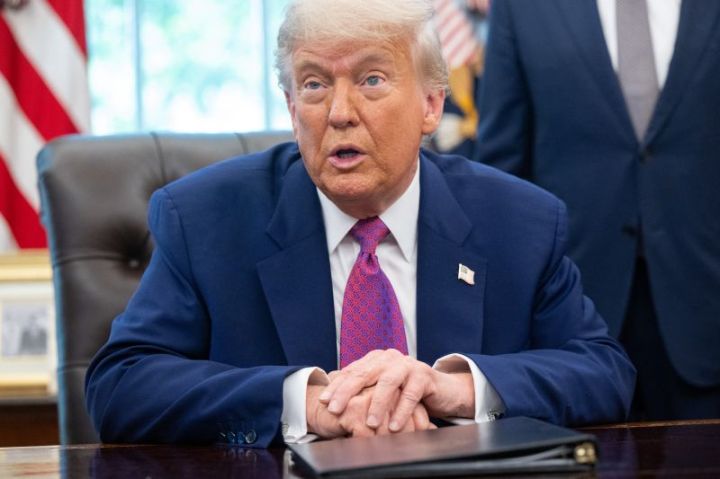
Earlier in the day, Trump said he had ordered a five-day delay of planned strikes on Iranian power plants and energy facilities, citing what he described as “very good and productive conversations” over the past two days aimed at easing tensions in the Middle East.
Reuters, citing Israel officials, later reported that the United States is holding negotiations with Ghalibaf, and that the two sides could hold talks in Pakistan’s Islamabad as early as this week.
The developments came amid heightened regional tensions following joint U.S.-Israeli strikes on Iran starting on February 28, to which Iran and its regional allies responded with attacks on Israeli and U.S. interests across the Middle East.
Iran’s declaration comes hours after President Trump said he had ordered a five-day delay of planned strikes on Iranian power plants and energy facilities, citing what he described as “very good and productive conversations” over the past two days aimed at easing tensions in the Middle East.
In a Truth Social post, Trump said the two sides had held “very good and productive conversations” over the past two days aimed at resolving hostilities in the Middle East.
Based on the “in-depth, detailed, constructive” nature of the talks, he had instructed the Pentagon to postpone any strikes on Iranian energy infrastructure for five days, pending further discussions.
Iran’s primary military command, Khatam al-Anbiya Central Headquarters, warned on Sunday that power plants in countries hosting U.S. bases would be considered legitimate targets if the United States attacks Iran’s power facilities.
The statement came in response to remarks by Trump threatening to target Iran’s power infrastructure, according to Iranian state media Islamic Republic of Iran Broadcasting.
The Strait of Hormuz has not been fully closed and remains under Iran’s “smart control,” with non-harmful transit continuing under specific regulations to ensure national security and interests, the statement said.
If U.S. threats are carried out, Iran would immediately adopt several punitive measures, including the full closure of the Strait of Hormuz until damaged Iranian facilities are rebuilt, it said.
Other measures would include large-scale strikes on Israel’s power, energy and communications infrastructure, attacks on regional companies with U.S. capital ties, and targeting power facilities in countries hosting U.S. military bases.
The statement stressed that Iran would take “all necessary measures” to defend its national interests and would continue operations against U.S. and allied economic and energy infrastructure in the region.
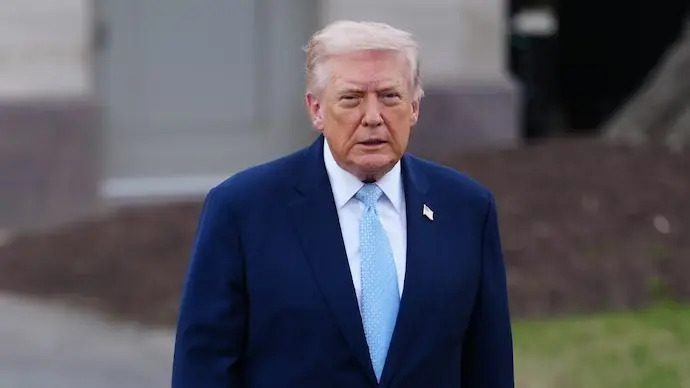
U.S. President Donald Trump said Monday that he had ordered the military to delay strikes on Iranian power plants and energy facilities for five days after what he called “productive” talks with Iran.
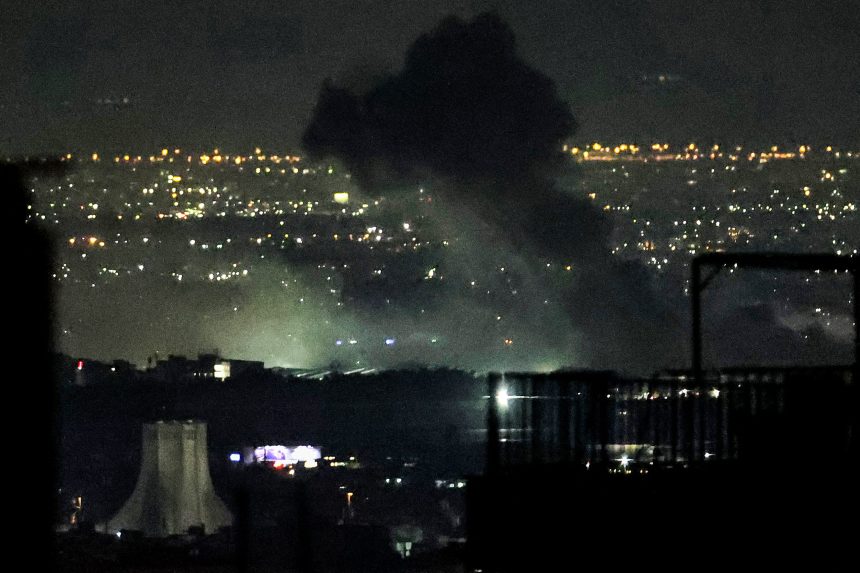
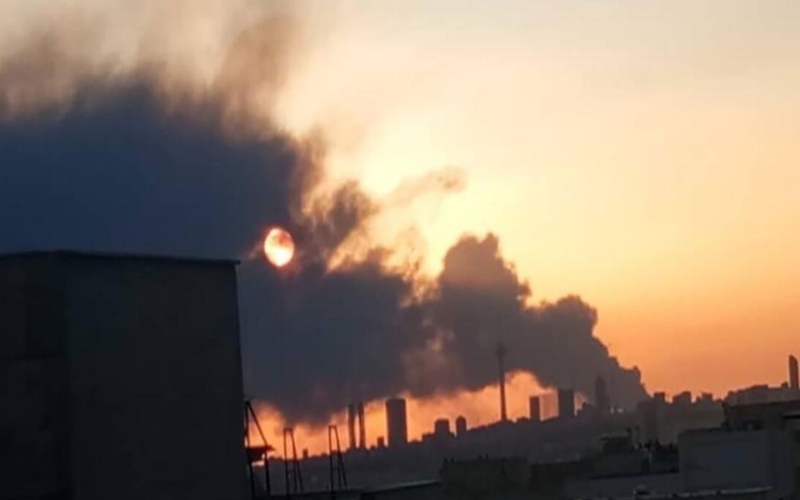
The Israeli military said it had begun a “wide-scale wave of strikes” targeting infrastructure in Tehran, though it did not provide further details. The attacks come as tensions between Iran, Israel, and the United States continue to rise.
During the ongoing conflict, Iran tightened control over the Strait of Hormuz, a key route for nearly a fifth of the world’s oil supply, raising concerns about disruptions to global trade.
US President Donald Trump issued a 48-hour ultimatum on Sunday demanding Iran reopen the strategic Strait of Hormuz to all shipping. He warned that failure to comply could result in US strikes on Iranian power plants.
Iran responded with strong warnings. The Islamic Revolutionary Guard Corps said any US attack would trigger retaliation against energy infrastructure supplying American bases, as well as wider economic targets in the region.
Amid the escalating threats, civilians have been urged to take shelter with US Central Command chief Brad Cooper advising Iranians to remain indoors, warning that further strikes could target areas where military assets are allegedly embedded in civilian zones.
The conflict is also spreading across the Gulf where air defenses in countries including the United Arab Emirates and Saudi Arabia intercepted missiles and drones on Sunday.
Israel has launched a new wave of strikes targeting infrastructure in Iran
The statement came in response to remarks by U.S. President Donald Trump threatening to target Iran’s power infrastructure, according to Iranian state media Islamic Republic of Iran Broadcasting.
The Strait of Hormuz has not been fully closed and remains under Iran’s “smart control,” with non-harmful transit continuing under specific regulations to ensure national security and interests, the statement said.
If U.S. threats are carried out, Iran would immediately adopt several punitive measures, including the full closure of the Strait of Hormuz until damaged Iranian facilities are rebuilt, it said.
Other measures would include large-scale strikes on Israel’s power, energy and communications infrastructure, attacks on regional companies with U.S. capital ties, and targeting power facilities in countries hosting U.S. military bases.
The statement stressed that Iran would take “all necessary measures” to defend its national interests and would continue operations against U.S. and allied economic and energy infrastructure in the region.
The paramilitary Rapid Support Forces (RSF) said the strike on Friday evening also injured 113 people, completely destroyed the upper floor of the hospital’s emergency department, and caused extensive damage to the hospital’s infrastructure and medical equipment, adding that a number of victims remain trapped under the rubble as search and rescue operations continue.
The RSF called the strike a “blatant violation of international humanitarian law,” urging an independent international investigation to hold those responsible accountable.
Meanwhile, Mohamed Idris Khater, head of the civil administration in East Darfur, put the injuries at more than 90, and noted that most of the victims were women and children.
He said the strike, which completely destroyed the hospital’s emergency department, was a “direct targeting of a vital civilian institution.”
In a post on social media platform X, the UN Office for the Coordination of Humanitarian Affairs in Sudan said it is “appalled” by the strike, and stressed the need to protect civilians and healthcare workers.
The Sudanese Armed Forces (SAF) has not immediately commented on statements accusing it of launching the strike.
The SAF and RSF have been at war since April 2023. The conflict has killed tens of thousands of people and displaced millions inside Sudan and across the region. East Darfur, including its capital Al-Daein, has been under the control of the RSF since the early months of the conflict.
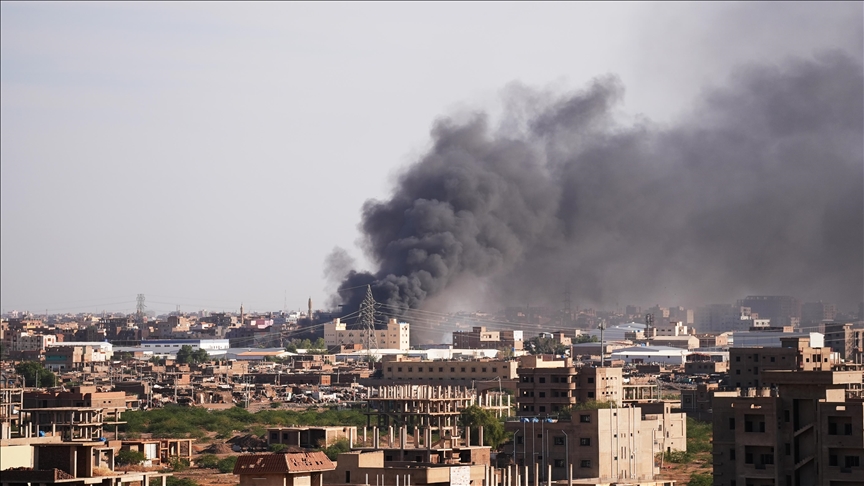
More than 60 people, including 12 children, were killed in a drone strike on Al-Daein Teaching Hospital in East Darfur, western Sudan, local and UN sources said.
What are these additional forces, what is their mission, and can they achieve it?
What are the additional forces?
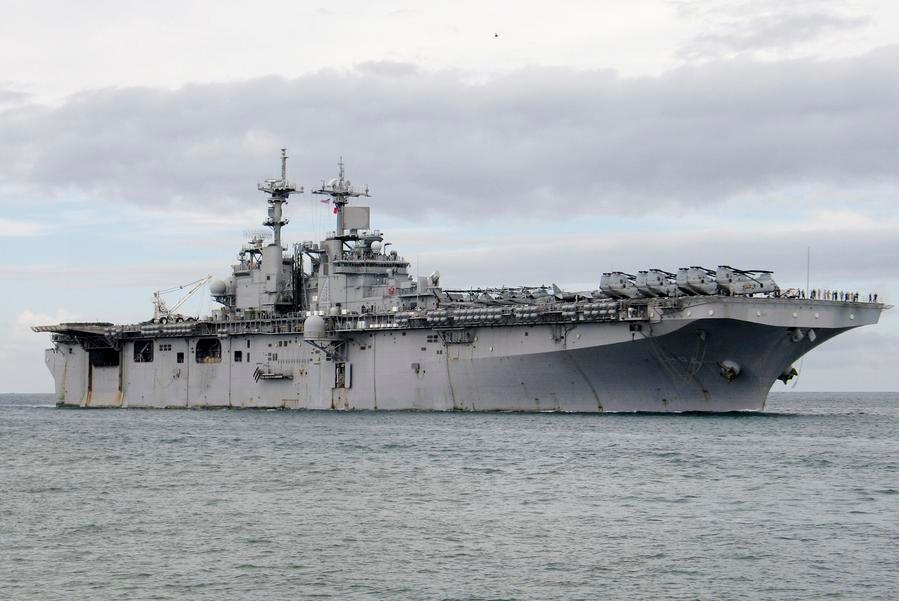
U.S. media reported on Friday that the U.S. military’s amphibious assault ship USS Boxer, accompanied by the dock-landing ship USS Comstock and amphibious transport dock USS Portland, had left San Diego, California. They are transporting the 11th Marine Expeditionary Unit, comprising about 2,500 Marines, to the Middle East.
On Tuesday, maritime tracking data showed the amphibious assault ship USS Tripoli, carrying Marines and sailors to the Middle East, was nearing the Malacca Strait off Singapore as it made its way to the region. The Tripoli is the Navy’s most updated amphibious warship, known as a “big deck.”
A U.S. Marine Expeditionary Unit typically has over 2,000 Marines. Its ground forces are equipped with armored vehicles and artillery, while its air combat element features Osprey aircraft, helicopters, and F-35 fighter jets.
Based on their location, it will take at least three weeks for the three warships, including the USS Boxer, to reach the Middle East. The USS Tripoli had already reached waters near Singapore earlier this week. Once assembled, U.S. troops in the region will reach 50,000.
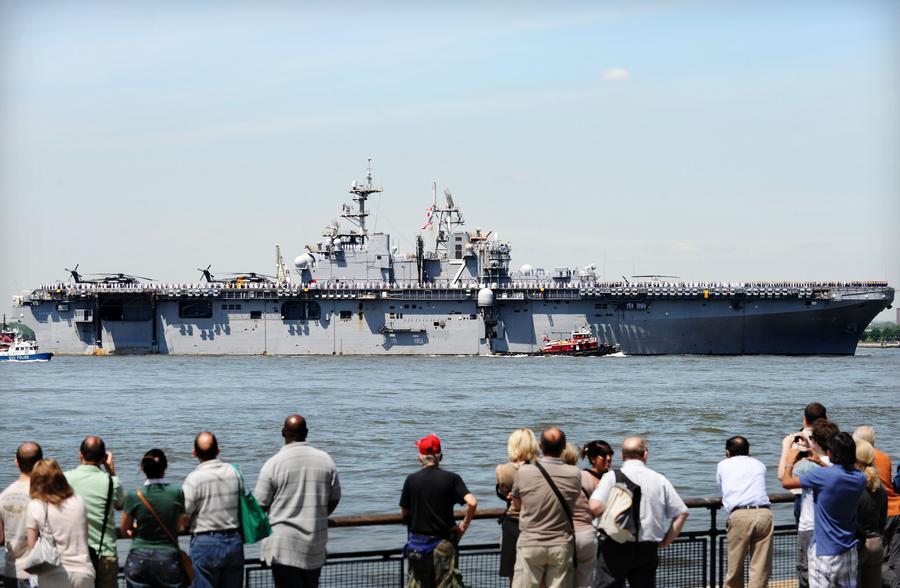
A Marine Expeditionary Unit was last used in a U.S. raid on Venezuela earlier this year. The amphibious assault ship USS Iwo Jima transported the 22nd Marine Expeditionary Unit, along with Delta Force, for that military operation.
This file photo shows visitors watch the USS Iwo Jima as it sailed on the Hudson River during the “Parade of Ships” in New York, the United States, on May 25, 2011.
What is their mission?
Iran has restricted navigation through the Strait of Hormuz, targeting ships associated with the United States and Israel. Blockade of this vital global energy route has driven up oil and gas prices worldwide, exacerbating inflation in the United States. Trump recently called on allies to send warships for escort operations in the strait, a request that has so far garnered little response.
U.S. media reported that the Trump administration is also considering deploying ground forces to Kharg Island, Iran’s key oil export hub, to seize it as leverage for restoring free passage through the Strait of Hormuz.
Kharg Island lies about 25 km off Iran’s northwestern Gulf coast. Roughly 6 km long and 3 km wide, it handles about 90 percent of Iran’s crude exports because much of Iran’s coastline is too shallow for large tankers.
On March 12, U.S. forces carried out heavy strikes on the island, while deliberately sparing its oil facilities. Trump warned that any interference with shipping through the Strait of Hormuz, by Iran or any other party, would prompt him to “immediately reconsider” that decision, leaving open the possibility of future strikes on the island’s energy infrastructure.
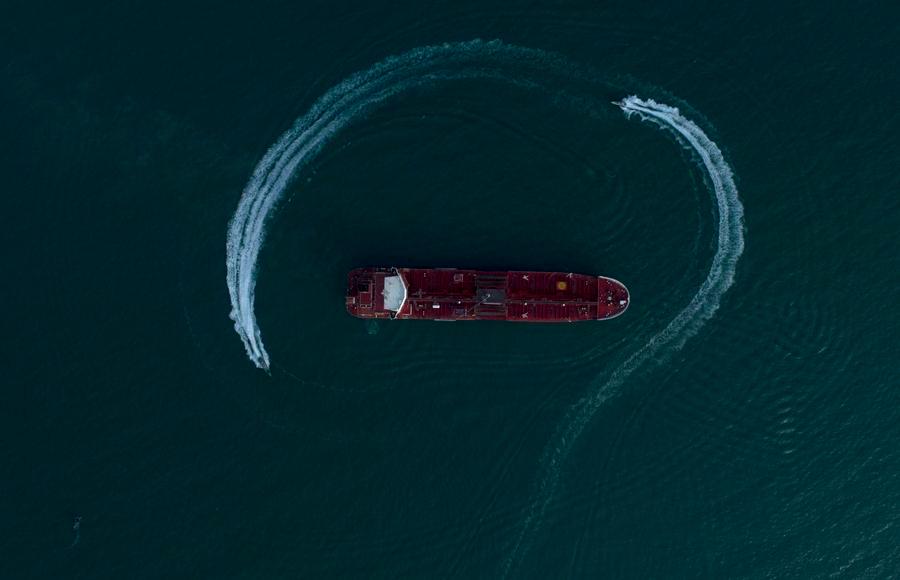
The photo released on July 21, 2019, shows the British oil tanker “Stena Impero” surrounded by speedboats of Iran’s Islamic Revolution Guard Corps (IRGC) in the Strait of Hormuz, Iran.
Can they achieve it?
Regarding the U.S. plan to reopen the Strait of Hormuz, military experts have said that success is unlikely without deploying ground forces to control Iran’s coastline.
“You’ll need to create a buffer zone on the ground if it’s determined that air strikes do not sufficiently decrease Iran’s ability to fire onto traffic transiting the straits,” said retired Army General James A. Marks. “That’s why Marines are en route. It’s a contingency force.”
Jason H. Campbell, a senior fellow on defense and security issues at the Middle East Institute in Washington, also said U.S. forces would need to take control of the Iranian coastline bordering the Strait and create a buffer zone.
However, analysts noted that, given low U.S. public support for military action against Iran and the failure to achieve a quick victory, using ground forces could pose significant political risks for the Trump administration.
A joint public opinion poll completed by Reuters and Ipsos on Thursday showed that 59 percent of Americans disapprove of the U.S. taking military action against Iran, while only 7 percent support sending ground troops to fight in Iran.
A White House official, speaking on condition of anonymity, recently told the media that Washington has not yet decided whether to deploy ground forces to Iran, “but President Trump wisely keeps all options at his disposal.”
The measures, worth over 5 billion euros (5.75 billion U.S. dollars), were laid out in two decrees. The first was aimed at supporting businesses, while the second focused on curbing rising housing and rental costs.
Speaking to the press, Sanchez admitted that the measures “won’t prevent the effects of this illegal war from reaching Spain,” but promised that “at least they will make them less corrosive and somewhat more bearable.”
Among the measures approved in an emergency cabinet meeting were a reduction of VAT from 21 percent to 10 percent on automotive fuels, electricity, and natural gas, as well as a reduction on special tax on hydrocarbons.
The Spanish government will also temporarily suspend its tax on electricity generation, while introducing a 15 percent personal income tax deduction for the purchase of electric and plug-in vehicles, along with additional tax deductions to support energy efficiency improvements, self-consumption and heat pumps, according to the measures.
“Extraordinary situations require extraordinary measures,” insisted Sanchez, who highlighted the decrees contain “80 measures that will come into effect as soon as they are published in the Official State Gazette (BOE).”
The United States and Israel launched massive attacks on Iran on Feb. 28, disrupting global shipping, sending oil prices soaring and shaking the global economy.
European gas and oil prices rose sharply in early trading on Thursday. The Dutch TTF benchmark, a key reference for European gas supply contracts, surged more than 30 percent to 70.7 euros (81.3 U.S. dollars) per megawatt-hour at the open, before easing to around 67 euros (77 dollars) per megawatt-hour. The price has more than doubled from around 32 euros (37 dollars) megawatt-hour before the conflict began.
Oil prices also moved higher. Brent crude, the international benchmark, rose to above 116 dollars per barrel in early trading on Thursday.
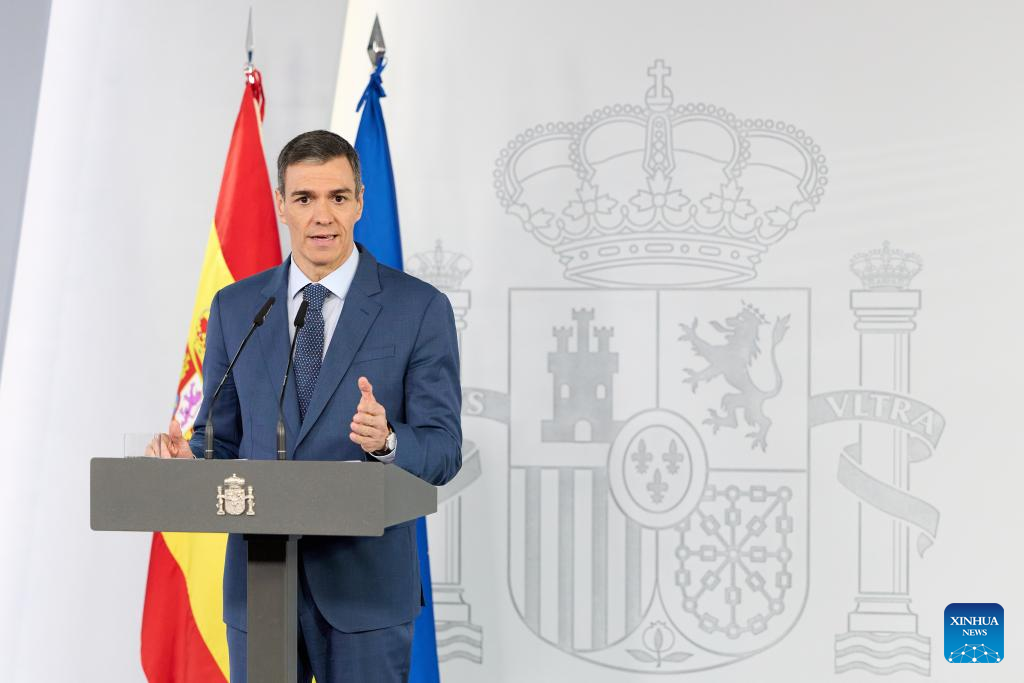
Spanish Prime Minister Pedro Sanchez attends a press conference in Madrid, Spain, on March 20, 2026.
“A well-conceived 15th Five-Year Plan and its effective implementation will ensure we have even stronger foundations for basically achieving socialist modernization by 2035,” Xi Jinping, general secretary of the Communist Party of China (CPC) Central Committee, once said.
Xi, also Chinese president and chairman of the Central Military Commission, stressed that socialist modernization can only be realized through a historical process of gradual and ongoing development. It requires the unremitting hard work of one generation after another.
Building new growth momentum
The world is undergoing accelerated changes unseen in a century, with the challenges of securing peace, development, security and governance intensifying, while geopolitical risks are increasing, and global economic growth momentum remains weak.
Notably, China’s economic transformation and upgrading are deepening, with reform efforts tackling deep-seated problems. In addition, new quality productive forces are being fostered at an accelerated pace.
“Efforts should be redoubled to gain experience in analyzing new situations and solving new problems,” Xi said during China’s “two sessions” earlier this month.
Developing new quality productive forces is an essential requirement for building a modern industrial system and fueling a powerful engine for advancing high-quality development.
As a new driver of future development, new quality productive forces should be cultivated in line with local conditions. It is necessary to leverage local resource endowments, industrial foundations and research capabilities to selectively foster emerging industries, new business models and new growth drivers.
Guided by scientific and technological innovation and anchored in the real economy, efforts should be made to speed up the transformation and upgrading of traditional industries and foster the growth of emerging industries and future-oriented industries, so as to accelerate the development of a modern industrial system.
Meanwhile, improving the national innovation system and stimulating the vitality of various innovation entities remain key priorities. With a focus on the frontiers of global science and technology, sustained efforts should be made to strengthen basic research and enhance original innovation capacity, while intensifying breakthroughs in core technologies in key fields and frontier technologies.
Amid a rapidly changing international environment and various uncertainties, focusing on managing the country’s own affairs well and enhancing its development quality is crucial in ensuring a good start to the 15th Five-Year Plan.
For China, it is imperative to advance high-quality development, build a unified national market and expand high-standard opening up to explore global markets.
China still faces challenges of uneven and inadequate development, including declining labor demand in traditional industries due to technological and industrial transformations, and growing pressure on public services and social security because of an aging population. Addressing these issues is essential for sustaining growth and ensuring that development benefits all.
Global vision of China’s modernization path
“Chinese modernization delivers benefit to the Chinese people and also advances common development of the world. It is a sure path for us to build a stronger nation and realize the rejuvenation of the Chinese nation. It is also a path we must take to seek progress for humanity and harmony for the entire world,” Xi said in a keynote address at the CPC in Dialogue with World Political Parties High-level Meeting in 2023.
These remarks situated Chinese modernization within the historical context of China’s relations with the world, highlighting its inclusive character and pursuit of win-win outcomes.
Chinese modernization is fundamentally characterized by proactive global engagement. Since the reform and opening up, China’s developmental trajectory, guided by successive five-year plans, has been inseparable from international cooperation.
Openness has always been the defining feature of Chinese modernization. From “the world factory” to “the world market,” and from a land for global investment to a global innovation hub, each leap in China’s development drives cooperation with the world into broader areas and deeper levels.
As industrial transformation accelerates, China’s massive market will continue to offer significant demand for countries worldwide. In pursuit of smart, green and integrated growth, China aims to share its manufacturing experience and technical innovations to drive global sustainable development.
Beyond that, the global significance of the Chinese model of modernization lies in its success in shattering the myth that modernization is synonymous with Westernization, thereby creating a new form of human advancement.
“China will do well only when the world does well, and vice versa,” Xi once said.
Leveraging the China-proposed Global Development Initiative, Global Security Initiative, Global Civilization Initiative and Global Governance Initiative, the world’s second-largest economy is committed to the building of an open, inclusive, clean and beautiful world of lasting peace, universal security and common prosperity.
Faced with global changes not seen in a century, China will continue to stand on the right side of history and remain a steadfast, reliable and constructive force in a turbulent world.
CPC leadership as core
Chinese modernization is characterized by unique features: the modernization of a huge population, the modernization of common prosperity for all, the modernization of material and cultural-ethical advancement, the modernization of harmony between humanity and nature, and the modernization of peaceful development.
In advancing Chinese modernization, the key lies in upholding the overall leadership of the CPC, which has been the strong leadership core in developing socialism with Chinese characteristics.
By integrating the basic tenets of Marxism with China’s specific realities and its fine traditional culture, the Party has, through years of dedicated efforts, deepened its understanding of the laws that underlie governance by a communist party, the development of socialism, and the evolution of human society.
The Party has led China in building one of the world’s most complete industrial systems, in eliminating absolute poverty, in growing into an economy of 140 trillion yuan (about 20.32 trillion U.S. dollars), and in becoming a major trading partner for more than 150 countries and regions.
Advancing Chinese modernization requires solid work and sustained efforts over time, and sound planning must go hand in hand with effective implementation. Party members and officials are urged to establish and practice a correct view on governance performance, remain committed to serving the public and improving people’s well-being, make well-grounded decisions, and focus on practical work.
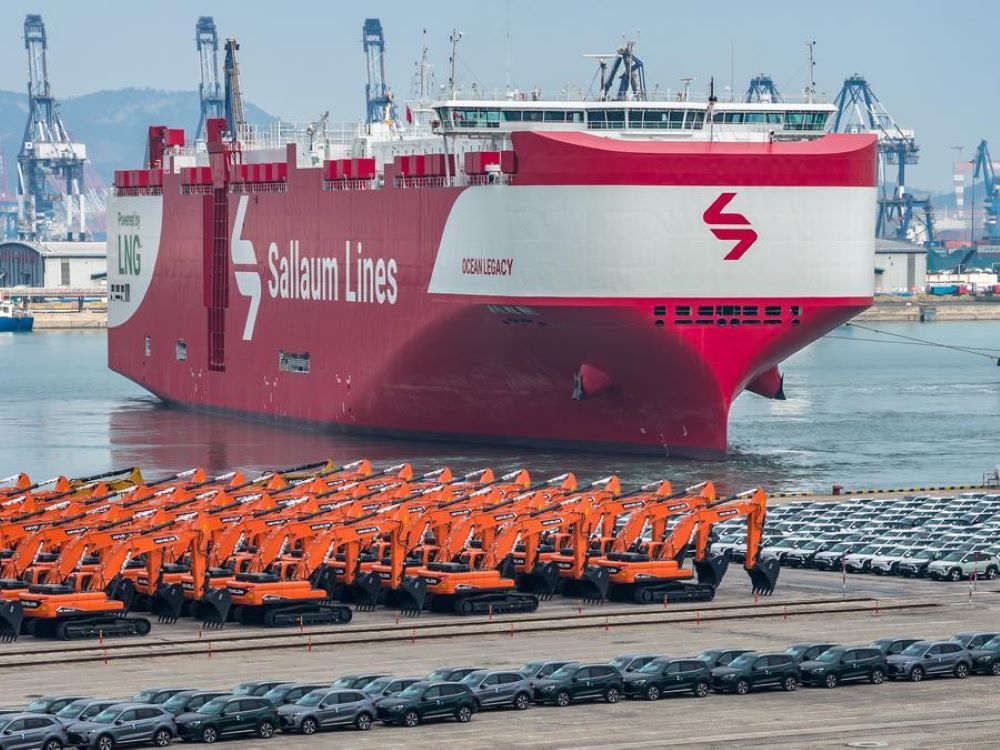
An aerial drone photo taken on Feb. 10, 2026 shows a dual-fuel car carrier loaded with vehicles for export setting sail at Yantai Port in Yantai, east China’s Shandong Province.
The complaint, filed in the United States District Court for the District of Massachusetts, accused the Ivy League university of violating the civil rights of Jewish and Israeli people and turning “a blind eye” to antisemitism and discrimination against Jews and Israelis.
Jewish and Israeli students were subjected to severe, pervasive, and objectively offensive harassment on the ground of their race or national origin, and they were excluded from participation in and denied the benefits of a Harvard education because of their race, ethnicity, or national origin, the complaint alleged.
The complaint also contended that Harvard had actual knowledge of and was “deliberately indifferent” to the harassment and exclusion of Jewish and Israeli students, and that it “intentionally” discriminated against Jews and Israelis.
Since January 2025, the U.S. administration has issued threats to several U.S. universities, warning them of potential funding cuts if they fail to adjust their policies. The main demands included eliminating what was described as antisemitism on campus and dismantling diversity initiatives that favor certain minority groups.
In April 2025, after Harvard rejected the U.S. administration’s demands, the administration announced it would freeze 2.2 billion U.S. dollars in multiyear grants and 60 million dollars in multiyear contract funds for the university.
In February, U.S. President Donald Trump announced that his administration was seeking 1 billion dollars in damages from Harvard University.
This photo taken on May 24, 2025 shows a view of the Harvard University campus in Cambridge, Massachusetts, the United States